Category: Application Performance Management/Monitoring

  • Three Manual Accessibility Testing Pain Points

    Three Manual Accessibility Testing Pain Points

    According to industry research, the vast majority of IT leaders view test automation as the single most important factor in accelerating software innovation. This also applies to automated accessibility testing – a great first step for making websites accessible to persons with disabilities. The new breed of automated tools can catch nearly 83% of all accessibility issues (not to be confused with overlays, which claim 100% automatic compliance.)

    Automation does not, however, replace the need for manual testing, which is the only surefire way to ensure all users can access the information on your website without difficulty. To get complete coverage, you also need to perform manual accessibility testing (which requires a human to complete using the various assistive technologies that people with disabilities depend on) with multiple browsers and interfaces. However, manual testing comes with several challenges, which is why testers often perceive it as painful or complicated.

    Pain Point One – WCAG Has Many Success Criteria

    The most widely-accepted set of accessibility standards are the Web Content Accessibility Guidelines (WCAG), created by the W3C. WCAG criteria are classified by various versions and levels. Versions include WCAG 1.0, 2.0, and most recently 2.1, with version 3.0 actively under development. Success criteria under each of these versions are further broken down into conformance levels A, AA and AAA, with each level adding criteria.

    Depending on which WCAG conformance level you choose, you could reasonably expect to check somewhere between 25 to 50 success criteria when assessing the accessibility of your site or app. As you can see, a significant amount of familiarity and expertise is required with WCAG success criteria to be able to perform accurate, full-coverage accessibility testing on a site or app.

    Fortunately, software has reached the point in testing maturity where there are guided instructions for testing for specific criteria that must be manually tested. One example is keyboard navigation, often used by persons with motor disabilities. In this instance, the tool would simulate a user who interacts with a web page solely by using their keyboard; then the tool would describe a step-by-step instruction to identify accessibility issues during keyboard navigation. One such example: a news site with a carousel featuring five news stories, only one of which is visible at a time. There needs to be ‘previous’ and ‘next’ buttons that can be accessed and triggered using a keyboard so that keyboard users can navigate through the stories just as easily as they could with a mouse.

    Pain Point Two – Screen Readers Take Time and Expertise to Learn

    In addition to understanding numerous success criteria, accessibility testers also need to understand how to use a screen reader, a popular form of assistive technology. There are numerous screen readers available including JAWS, NVDA, VoiceOver and Talkback. Now, imagine having to memorize more than 50 success criteria that need to be tested across three different screen readers in multiple testing environments (desktop, responsive web, native mobile, etc.).

    Luckily, customized testing methodologies have been developed based on a chosen ruleset and testing environment. This reduces the amount of memorization and prior experience the tester needs to run effective tests. With specific screen reader testing steps outlined for each ruleset and testing environment, accessibility teams can improve their efficiency and create a standardized testing process for the whole testing team to follow—whether they are screen reader experts or not—resulting in a significant productivity boost.

    Pain Point Three – WCAG Success Criteria Can Be Open to Interpretation

    Some WCAG success criteria can be very contextual. Criteria that appear simple to test for, like color contrast requirements, can sometimes be tricky to analyze. For example, imagine a black, bold-faced word featuring dark gray shadowing against a light gray website background.

    In this image, which two colors should be compared to verify whether the minimum color contrast requirements are satisfied? Light gray and black, dark gray and black or light gray and dark gray?

    In scenarios like this, different accessibility experts can (and will) have different opinions. For a developer, there is nothing more frustrating than receiving different remediation requirements for the same issue. This can create confusion and introduce significant delays in the release of a product.

    The solution is clearly documented and detailed requirements to help reduce the potential number of issues that can be interpreted differently. Properly documented testing processes can help ensure that the results coming from an accessibility test team will be consistent, and significant time will be saved communicating issues back and forth between testers and developers.

    Automated testing is great for addressing many ‘low-hanging fruit’ problems without having to be an accessibility expert or hire one, but it does not eradicate the need for manual testing. While there are certain characteristics of manual testing that can make it onerous, fortunately, there are guided testing tools, auditors, methodologies and more available to take the pressure off accessibility teams. This will enable development teams to strike the ideal composition of manual and automated accessibility testing that helps them identify and repair the highest possible number of issues.

  • ServiceNow Shifts to Single Unified Agent

    ServiceNow Shifts to Single Unified Agent

    ServiceNow today unveiled an Agent Client Collector (ACC) that makes it possible for IT teams to capture data from software, hardware and cloud infrastructure.

    Jeff Hausman, vice president and general manager for IT operations management at ServiceNow, said this unified agent will enable IT teams to reduce the number of agents they would otherwise have to deploy to collect the data required to monitor IT environments.

    IT teams will also be able to employ incident management tools that can view that data in a way that eliminates the need to install any remote desktop software, Hausman noted. At a time when many employees will be splitting their time between working from home and the office, that approach reduces the level of IT service management (ITSM) friction that many IT teams today regularly encounter, added Hausman.

    ACC surfaces both configuration and performance data in real-time to provide IT teams with greater visibility. That data can then be used to drive a variety of workflows and playbooks that trigger automated incident responses.

    ServiceNow will employ ACC both within its ITSM platforms and IT operations management (ITOM), hardware asset management (HAM), software asset management (SAM), and security operations (SecOps) tools.

    Hausman said ServiceNow will employ ACC alongside agentless tools for managing IT environments as part of an effort to strike a balance between the amount of software that needs to be deployed and the capabilities that agent software enables. Ultimately, ServiceNow will also open up ACC to third-party tools that offer complementary capabilities, he added.

    More than a few IT organizations are suffering today from a phenomenon known as agent fatigue. Each new tool added to the IT arsenal often requires agent software to be installed within a device, application, server or cloud service. The need to reduce the amount of agent software has given rise to agentless approaches to managing IT resources, but the tradeoff is that, in the absence of an agent, the types of data and capabilities that can be enabled tend to be more limited.

    The market research firm International Data Corp. (IDC) is predicting that 75% of Global 2000 IT organizations will adopt automated operations practices by 2023. A major driver of that increased reliance on automation has been, of course, the COVID-19 pandemic. Not only are organizations making greater use of cloud infrastructure, but application users are not often conveniently located behind a firewall in a corporate office. For the last year, IT teams have been tasked with supporting a largely remote workforce. As more of those employees are vaccinated in the weeks ahead, a lot more of them will be returning to the office. However, it’s unlikely most employees will be working in an office full-time even after the COVID-19 pandemic subsides.

    Regardless of how IT is managed, the overall IT environment will continue to become more complex. As such, it’s now more a question of when rather than if organizations will need to revisit how IT gets managed across what has become a highly distributed environment.

  • Survey Shows Acceleration of Centralized IT Management

    Survey Shows Acceleration of Centralized IT Management

    An OpsRamp survey published this week suggests large enterprises are looking to finally unify IT management at at time when it is becoming increasingly complex.

    OpsRamp, a provider of an IT management platform based on machine learning algorithms, polled 132 IT operations directors working for organizations in the U.S. with more than 500 employees that spend more than $5 million a year on IT.

    According to the results, the survey found nearly 73% of respondents plan to roll out a digital operations management platform in 2021. That platform will, hopefully, enable IT teams to unify hybrid cloud computing environments made up of monolithic and microservices-based applications via a single console. Another 21%of respondents expressed interest in such a platform, if budgetary constraints allowed.

    More than half (51%) also noted they expect to employ automation and AIOps (51%) in the form of machine learning algorithms and process automation to reliably cut down on the number of alerts being generated, identify the root cause of issues and eliminate repetitive manual tasks.

    The two main goals identified in the survey are to enable greater agility and resolve issues faster (46%) and reduce costs by consolidating tools (41%).

    While the rise of cloud computing has made IT more agile, each cloud service that is added to the IT firmament tends to increase the total cost of IT. Each IT platform in use today requires a dedicated team to operate, which conspires to increase both the number of tools required and the overall size of the IT staff required to master them.

    In the wake of the economic downturn during the COVID-19 pandemic, the amount of pressure being applied to reduce those costs has increased significantly. Security and compliance concerns are also starting to push organizations toward centralizing the management of IT as much as possible. The OpsRamp survey notes that platform security (59%) is the most critical attribute of a next-generation IT platform, followed by hybrid infrastructure management capabilities (52%) and flexible pricing (37%).

    Deepak Jannu, senior director for product marketing at OpsRamp, said achieving those goals across what has become an extended enterprise requires a platform that has the ability to first capture telemetry data in real-time and then aggregate that data in way that enables artificial intelligence (AI) models to learn how the IT environment actually operates.

    Armed with that data, it then becomes possible to employ AI to both troubleshoot IT issues more easily and surface recommendations that address capacity utilization, noted Jannu.

    It may be a while before AI-enabled IT management platforms are commonplace in the enterprise. However, it’s also apparent a number of factors are driving IT leaders to reevaluate their existing platforms as IT environments become increasingly more complex.

    Regardless of what platform an organization eventually opts to standardize on, the rate at which IT management tasks are being automated is only going to increase as machine learning algorithms become more familiar with the IT environment in which they are deployed. That doesn’t necessarily mean those algorithms will remove the need for IT administrators and DevOps teams, however. It does mean that the tasks the individuals on IT teams are focused on will, hopefully, provide a lot more value to the business.

  • Seeing the Bigger Picture With BizDevSecOps

    Seeing the Bigger Picture With BizDevSecOps

    Not long ago, if you can believe it, software was shipped on physical floppy disks and CDs. These physical relics contained dense paper instruction books that humans read diligently for hours on end (I guess they had more time to spare back then?). Complexity was a given for computer-based tasks.

    Fast forward past the consumerization of IT to 2021, and you’ll find extremely high standards for technology. End users now expect intuitive apps with instant end value and 100% uptime. If they don’t receive gratification within minutes, they’re likely to trash it.

    In the race to meet digital innovation demands, software companies are increasingly tapping new strategies to deliver iteratively. Thus, disciplines like DevOps, DevSecOps, low-code and SRE have flourished. But are we adequately considering the end value of that work? Some feel business leadership needs a larger seat at the table and more input: enter the newest iteration of these disciplines, BizDevSecOps.

    I recently met with Gregg Ostrowski, CTO at AppDynamics, to discuss how to introduce BizDevSecOps in an organization. For Ostrowski, it boils down to having full-stack observability to connect application performance, security threats and revenue generation. Only by democratizing access to important metrics and identifying runtime weaknesses can business outcomes truly drive production.

    Full-Stack Observability

    Within our new pandemic-first reality, all organizations are amplifying their use of digital services to interact with customers. However, software teams are struggling to keep pace in this new environment — 89% of technologists report feeling under tremendous pressure at work, the Agents of Transformation 2021 report found. This strain has only increased as IT complexity soars amid the pandemic — 83% felt their job became more complex over the past year.

    IT staff is under mounting pressure to perform, and they may not have the correct elements in place to support elegant and profitable applications, said Ostrowski. When it comes to monitoring, in particular, alert fatigue could especially hamper innovation attempts and make it difficult to know what to prioritize.

    Instead, Ostrowski advocates for letting tangible business outcomes, such as conversion rates and performance, drive development. To correlate the impact on revenue more directly, he encourages “giving business leaders a seat at table during the entire CI/CD pipeline.” One aspect to roping in business, security, development and operations is unified observability across the entire stack.

    The Pendulum Swings

    But wouldn’t it be challenging to give business leaders a seat within a technical software delivery process? Well, this wouldn’t be the first time business has directed technological change.

    Ostrowski recalls the mid–2000s and the dawn of the mobile market. During this period, IT became consumerized for laypeople, with glossy apps and impressively intuitive experiences. He recalls a general loss of faith in IT staff, as workers often had “better tech at home than they did in the office.” This drove business leaders to invest heavily in modernizing their companies.

    In the following years, cloud solutions quickly re-empowered IT with new computing models, emboldening them to compete using the same tools as tech companies. However, simple deployments using a single server quickly morphed into arranging multiple workloads on various cloud service providers (CSPs). Virtualization, serverless and microservices architectures also brought novel complexities into the stack.

    “The IT staff is being asked to do jobs they’ve never done before,” Ostrowski said. He explained that SREs, for example, must understand networking, infrastructure and security — a vast portfolio for a single person and role. Supporting many disparate paradigms is simply beyond the scope and scale of what a single person can do, meaning new automation must be constructed — because “if you’re too busy debugging, you can’t innovate,” says Ostrowski.

    Amid mounting complexity and the burden of rising cloud costs, it appears business leaders again have a role in directing and prioritizing technological efforts.

    Getting Busy With BizDevSecOps

    According to Ostrowski, connecting IT and business with BizDevSecOps all hinges on collaboration. “If you don’t get to a point where you can collaborate with all these pillars, you’ll degrade your business,” said Ostrowski.

    BizDevSecOps also could help connect the dots to comprehend anomalies. For example, suppose a commerce application is experiencing a 15% conversion rate, but it drops to 7% after an upgrade. In this scenario, collaboration is crucial to identify usability bottlenecks in production and adjust accordingly.

    Tracking business outcomes can align development around improving the user experience. If broken features are hurting conversion rates, all stakeholders need to know to adjust accordingly. “User experience is the golden gem,” said Ostrowski.

    Other benefits of a BizDevSecOps approach may include:

    • Correlating activity and revenue: Ensuring spikes of activity are associated with revenue generation and not attacks or faulty instances.
    • Workload optimization: Monitoring business outcomes can help adjust the scope and size of machines as needed.
    • Before and after: Comparing financial results before and after migrations, new versions or new feature additions.
    • Postmortems: Pinpoint and correlate data when conducting postmortems.
    • Progressive delivery: A more rapid release frequency helps a business retain agility and pivot when needed.

    Visibility Enables BizDevSecOps

    DevSecOps is now a common philosophy — it promotes development with security baked into the application. Now, BizDevSecOps could be the next iteration; a collaborative approach that considers additional perspectives. BizDevSecOps is a vital method to “continue to build trust and collaboration so everyone has a seat at the table,” said Ostrowski.

    Ninety-six percent of technologists agreed that monitoring the entire IT stack to connect technical performance to business outcomes will be important in 2021, the Agents of Transformation Report found. To enable this, business, security and development must inevitably de-silo. According to Ostrowski, adopting BizDevSecOps depends on a window into performance management and business intelligence, because “when changes happen and no one knows about it, it’s a serious problem,” he added.

  • Tasktop Adds Dashboard to Surface VSM Insights

    Tasktop Adds Dashboard to Surface VSM Insights

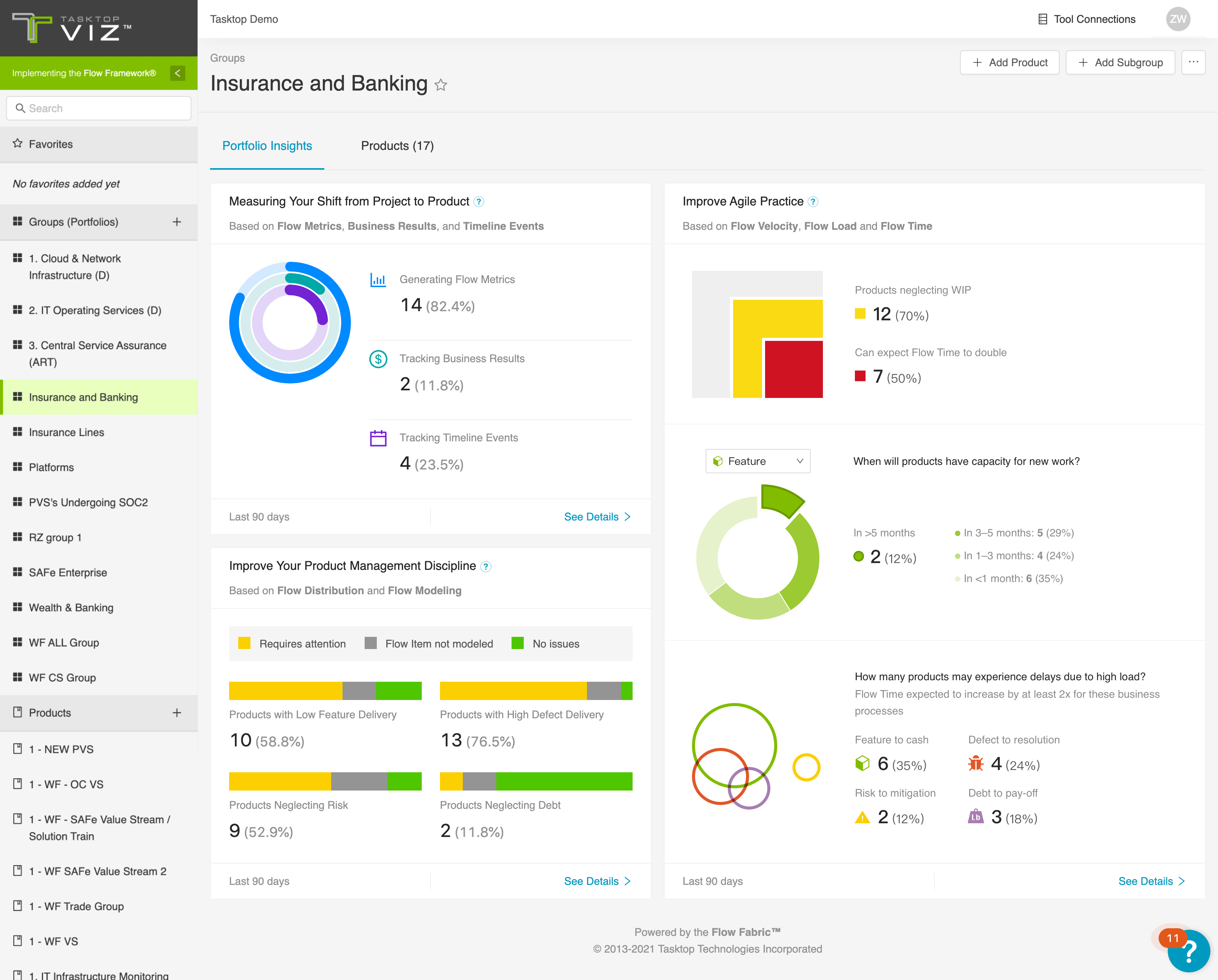
    Tasktop today unveiled a dashboard that it promises will simplify tracking of key performance indicators (KPIs) spanning multiple projects.

    In addition, the value stream management (VSM) platform provider revealed it has garnered an additional $100 million in funding.

    Tasktop CEO Mik Kersten said the Tasktop Viz VSM Portfolio Insights dashboard makes it simpler to surface the insights that the company’s VSM platform aggregates as it collects metrics and analytic data from the tools and platforms that make up a DevOps workflow.

    Organizations are then better able to determine the impact any change to the rate at which an application is being developed will have on the business, noted Kersten. IT and business leaders can also more easily identify how constrained resources or persistent quality control issues might be adversely impacting those business goals, added Kersten.

    As a DevOps discipline, VSM is still relatively new. However, Tasktop claims more than half of the Fortune 100 employ its VSM platform. Customers include BMW, CGI, E*Trade and T-Mobile. Despite the economic downturn brought on by the COVID-19 pandemic, the company reports it saw a 30% increase in revenues driven mainly by organizations that have accelerated multiple digital business transformation initiatives. A recent Forrester Consulting Total Economic Impact Study indicated organizations realize a potential 640% return on investment over a three period after implementing the Tasktop VSM platform.

    Tasktop is also a founding member of the Value Stream Management Consortium, which is seeking to promote adoption of VSM platforms to close the divide that often exists between individual DevOps projects and the strategic business goals of an organization.

    The concept of value stream management traces its lineage back to lean manufacturing methods, which called for each step of a manufacturing process to be continuously measured. As software development has evolved from being a craft to a process that is automated as much as possible using DevOps best practices, the need to monitor the impact of, for example, missed software development deadlines on the business has become more acute as organizations appreciate just how dependent they are on software.

    VSM platforms automatically take technical metrics, gathered via a DevOps process, and match them to a set of key performance indicators (KPIs) defined by business leaders. The challenge many organizations still face is, first, making sure they have the tools in place to collect the appropriate technical metrics and then identifying the KPIs that truly matter to the business. Once those metrics are gathered and KPIs established, organizations are able to apply advanced analytics to optimize allocation of resources that include people, platforms and processes, noted Kersten.

    It may be a while before VSM becomes pervasively applied with organizations. However, those organizations that find a way to consistently deliver quality applications, on time, that have a greater impact on the business will inevitably start to outperform rivals. The challenge and the opportunity is to bring a level of discipline to bear that ensures that goal is always achieved.

  • Apollo GraphQL Makes Federated Server More Accessible

    Apollo GraphQL Makes Federated Server More Accessible

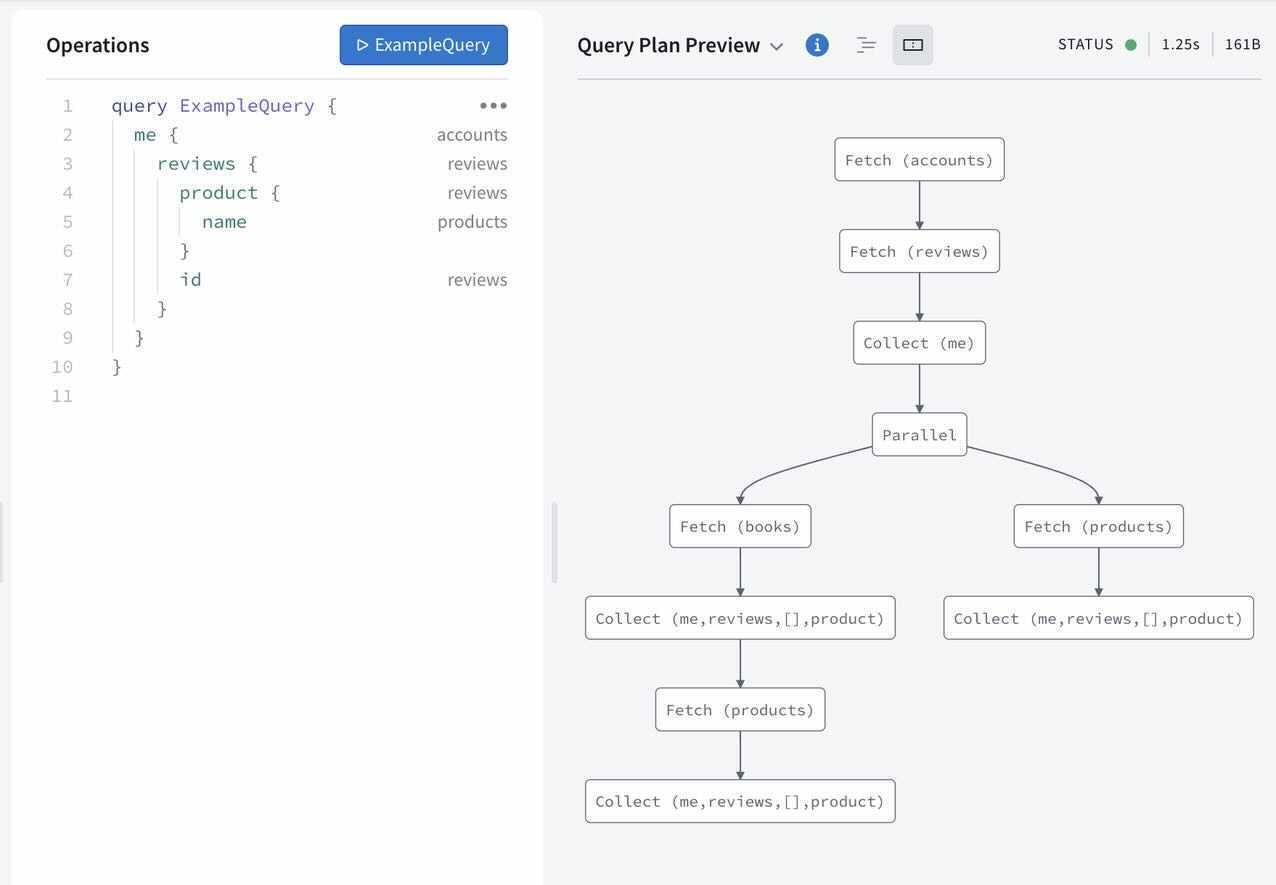
    In advance of its online GraphQL Summit this week, Apollo GraphQL announced today it has updated its Apollo Federation offering that enables a GraphQL Server to span multiple platforms, making it more accessible to a wider range of developers using different tools.

    Apollo Federation is now integrated with both Apollo Studio, a web-based tool for navigating GraphQL application programming interfaces (APIs), and Apollo Workbench, a plugin for Microsoft Visual Studio.

    At the same time, Apollo GraphQL is making available a command line interface (CLI), dubbed Rover, that makes it simpler to integrate Apollo Federation within a DevOps workflow.

    Matt DeBergalis, CTO, Apollo GraphQL, said GraphQL is continuing to gain traction as an alternative to more rigid REST APIs as more organizations begin to appreciate how dependent they have become on software. REST APIs may be simpler for developers to create, but APIs based on GraphQL are easier to update and manage, DeBergalis noted.

    Apollo GraphQL

    The challenge organizations encounter is that a GraphQL Server can become too large to easily navigate. Apollo Federation provides a mechanism that enables of subset of those APIs to be managed on multiple platforms that make up a federated instance of a GraphQL server, DeBergalis explained.

    DeBergalis also noted that IT vendors that have embraced GraphQL are also starting to add support for Apollo Federation. DataStax, a provider of a curated instance of the open source Cassandra database, has added Apollo Federation to the open source data gateway Stargate it provides to access data stored in a Cassandra database.

    At its core, QraphQL provides an open source data query and manipulation language for APIs along with a runtime for fulfilling queries. Originally developed by Facebook, the GraphQL Foundation is now an arm of the Linux Foundation. As more organizations embrace APIs to construct applications based on microservices, GraphQL adoption has steadily increased. It’s not likely GraphQL will completely replace REST APIs any time soon, however, given how pervasively deployed REST APIs already are.

    However, DeBergalis said that organizations that require a more agile approach to building and deploying software are voting with their feet for GraphQL APIs that are easier to update. As the rate of change in software environments continues to increase, the need for a more flexible approach to deploying and updating APIs becomes that much more apparent, added DeBergalis.

    GraphQL is also more efficient than REST APIs in terms how much data is shipped back and forth between a client and a server. At a time when the amount of data that is being consumed is steadily increasing, the need to give clients more control over how data is returned from a server has become more pressing. Apollo GraphQL claims more than two billion queries per day are now being launched against instances of its GraphQL Server.

    Regardless of what types of APIs are employed there are more of them with each passing day. As the number of digital business transformation initiatives increased in the wake of the COVID-19 pandemic, so too did the number of internal and external facing APIs. Developers may have their own individual preference for the type of API they want to use, but as developers are increasingly being tasked with both building and managing APIs after they are deployed, the appeal of GraphQL becomes harder to ignore.

  • 42Crunch API Security Platform Now Available On-Premises

    42Crunch API Security Platform Now Available On-Premises

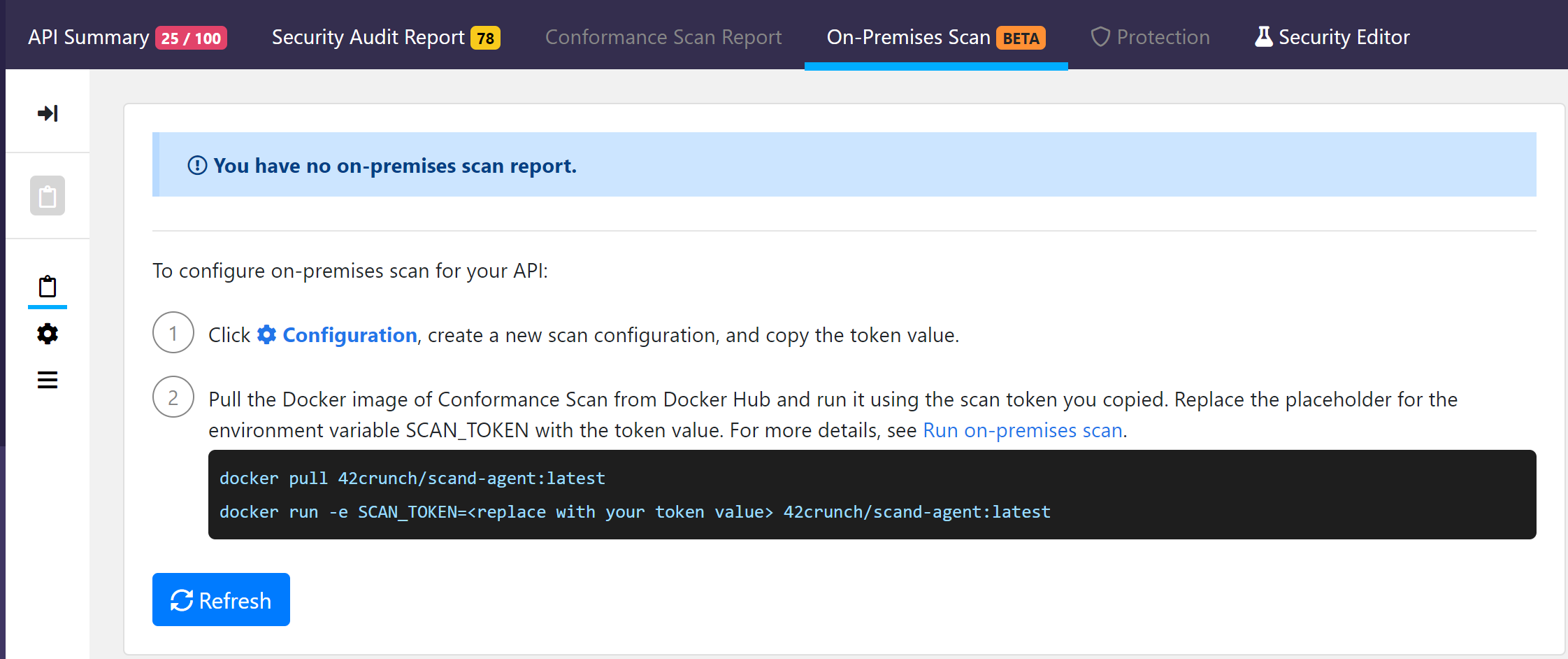
    42Crunch has announced that the scanning tools it provides to enable DevOps teams to secure application programming interfaces (APIs) can now be deployed in on-premises IT deployments.

    Previously only available as a cloud service, the 42Crunch API Security Platform has also been updated to provide expanded support for the OpenAPI specification for REST interfaces defined by the OASIS standards body.

    Finally, the 42Crunch API Security platform now allows IT teams to share collections of APIs among specific teams and users with different levels of access in addition to providing integration with third-party identity management platforms.

    Dmitry Sotnikov, chief product officer for 42Crunch, said the on-premises edition of the API scanning platform will make it possible for IT organizations, including those that require all the platforms they run to be deployed in an IT environment, to exercise more control over and extend their DevSecOps workflows to include scans of APIs.

    Cybercriminals are increasingly targeting insecure APIs because they potentially provide access to a trove of data, Sotnikov noted. Those same APIs also enable cybercriminals to compromise an entire software supply chain, Sotnikov added.

    At a time when more organizations are deploying APIs, thanks to the rise of microservices, it’s apparent there is a greater need for a tool that dynamically scans APIs for vulnerabilities before they are deployed, said Sotnikov.

    In general, Sotnikov said IT organizations are becoming more sophisticated in their approach to securing software. Ford Motor Co., for example, is using the 42Crunch API Security Platform to secure both internal and external APIs, Sotnikov said. 42Crunch claims its revenues increased 900% in 2020, with more than 150,000 users of the platform.

    As organizations of all sizes become more dependent on software, cybersecurity teams are now reviewing how that software is constructed. Of course, responsibility of security is still shifting left as part of the overall transition to DevSecOps best processes, but Sotnikov said cybersecurity teams still want to verify for themselves that whatever software is deployed is secure. IT organizations are moving away from a “whack-a-mole” approach to security as they embrace DevSecOps, Sotnikov added.

    Unfortunately, APIs don’t always receive the level of attention they deserve. Many developers still tend to view them as an afterthought, and once deployed, it’s not uncommon for APIs to languish for years without being reviewed or updated. Making sure APIs are secure requires dynamic scanning processes to be baked into DevOps workflows if organizations want to ensure the integrity of their software, said Sotnikov.

    APIs are, of course, everywhere now. The days when a handful of APIs were exposed to share data with a limited number of customers and partners are long over. There are almost no applications built and deployed today that doesn’t expose myriad APIs. Cybersecurity teams obviously can’t keep pace with the rate of change being made to those APIs, as new ones are added and others updated or replaced. The onus for securing all those APIs is, now more than ever, clearly on the DevOps team.

  • CircleCI Previews Support for Arm Platforms

    CircleCI Previews Support for Arm Platforms

    CircleCI today previewed the ability to deploy applications on platforms based on Arm processors in a forthcoming release of its namesake continuous integration/continuous delivery (CI/CD) platform.

    Tom Trahan, vice president of business development for CircleCI, said that Arm processors are rapidly being embraced by DevOps teams seeking to take advantage of the price/performance advantages they currently have over conventional x86 processors. Amazon Web Services (AWS), for example, makes available an AWS Graviton2 service based on 64-bit Arm Neoverse processors that it claims provides a 40% advantage in overall price/performance.

    The Arm community, meanwhile, has adopted many of the libraries employed on x86 platforms, Trahan noted, which is making it simpler to automate the deployment of applications on Arm-based platforms using a CI/CD platform.

    It’s not clear how quickly developers are building applications for Arm processors. Historically, Arm processors can be found in a wide range of embedded systems typically deployed at the network edge. However, cloud services based on Arm processors are also becoming more widely available, and it’s only a matter of time before more Arm-based platforms are deployed in on-premises IT environments.

    Arm itself is also in the process of being acquired by Nvidia, which envisions running machine learning algorithms, and other classed of advanced workloads, on both Arm processors and graphics processing units (GPUs). Many of the early efforts to build processors optimized for running AI workloads at the network edge are based on Arm processors.

    The addition of Arm platforms to any IT environment will naturally create some management challenges for DevOps teams. In some cases, developers may even decide to build applications using, for example, the latest generation of machines from Apple, that are based on Arm processors, to streamline the application development and deployment process. In other cases, however, applications that are intended to be deployed on Arm processors might still be built on x86 systems.

    Regardless of approach, the arrival of more Arm-based platforms in the enterprise doesn’t mean other classes of processors are going to fade away. Rather, from a processor perspective, IT environments are about to become a lot more diverse as more workloads are deployed on a wider range of processors. It may be quite a while before Arm-based platforms usurp x86-based systems that still dominate the IT landscape. However, during any turbulent economic time, the number of organizations inclined to reduce the total cost of IT by embracing new platforms always increases.

    Fortunately, as more IT infrastructure is managed as code, the easier it becomes to switch platforms. There may even come a day when the decisions about which platform to employ and when is completely automated by machine learning algorithms trained to maximize IT infrastructure efficiency to the fullest extent possible.

    In the meantime, DevOps teams should expect, to one degree or another, to revisit their workflows processes in the months ahead. Not only are more workloads being pushed out to edge computing platforms where Arm processors are commonly found, those Arm processors will soon find their way into the rest of the extended enterprise.

  • Sysdig Adds CSPM Module to DevSecOps Platform

    Sysdig Adds CSPM Module to DevSecOps Platform

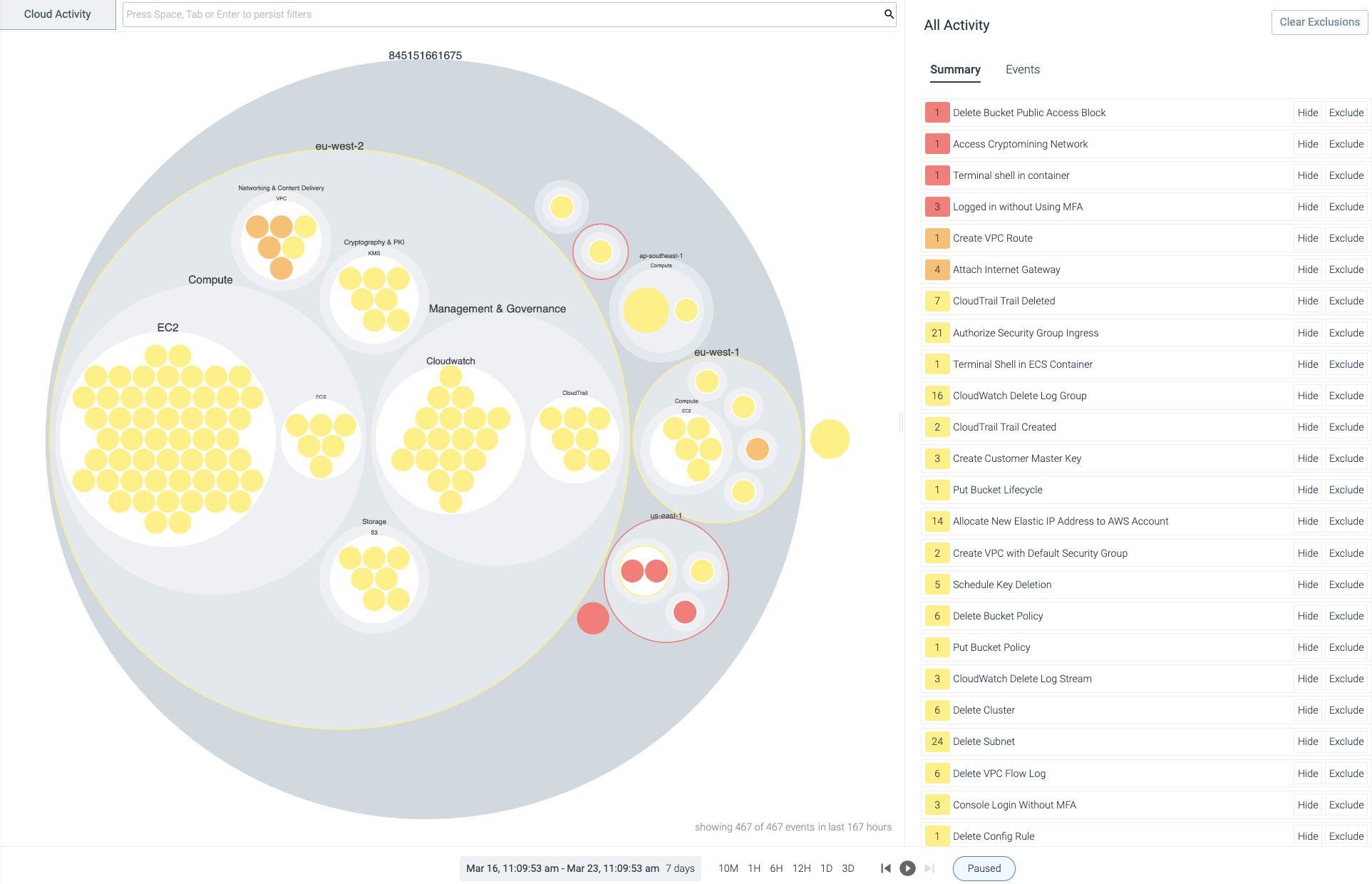
    Sysdig today announced it added a cloud security posture management (CSPM) module to its Sysdig Secure DevOps Platform for monitoring application performance and security to enable IT teams to continuously detect threats.

    Pawan Shankar, director of product marketing for Sysdig, said this CSPM capability is based on an open source Cloud Custodian tool that enables IT teams to define rules for accessing cloud infrastructure. In addition, the tool enables IT teams to collect utilization metrics that could be used to turn cloud resources off when they are not being employed. IT teams can now also automatically discover all cloud services being employed, including identifying which ones are misconfigured or might have compliance and regulatory issues that need to be addressed, via a software-as-a-service (SaaS) platform.

    The overall goal is to help reduce the friction that organizations encounter today as they embrace DevSecOps best practices, added Shankar.

    Sysdig is making its CSPM offering available for free, for one account, to encourage DevOps teams to make use of a CSPM capability along with Sysdig’s open source Falco threat detection capabilities. Sysdig today also announced that it extended its implementation of Falco to consume audit logs created on the Google Cloud Platform (GCP). Sysdig donated Falco to the Cloud Native Computing Foundation in 2018. More recently, Sysdig also contributed a sysdig kernel module, along with libraries for the Falco security platform for Kubernetes, that runs in the extended Berkeley Packet Filter (eBPF) microkernel to further improve Linux security.

    The free tier includes a daily check against CIS benchmarks as well as support for inline scanning of up to 250 container images per month running on either the Fargate or Elastic Container Registry (ECR) services provided by Amazon Web Services (AWS).

    Sysdig has been making a case for the convergence of traditional IT monitoring functions and security for several years now. In the wake of some recent high-profile breaches involving software supply chains, the company is betting that more DevOps teams will soon be revisiting how their software supply chains are managed at a time when it’s become easier for malware to move laterally across an entire IT environment. In fact, Sysdig cited research that estimates that malware moving laterally through an organization is involved in 70% of cyberattacks.

    Of course, with the rise of applications based on microservices, the average IT environment is about to become a lot more integrated, which naturally makes it easier for malware to move laterally. IT organizations now require greater visibility across an entire potential attack chain to combat those threats, Shankar noted.

    As DevSecOps continues to evolve, the relationship between developers and cybersecurity teams is also clearly evolving. Now that developers are being held more accountable for cybersecurity, many of them are gravitating toward tools that can be easily integrated within the context of a larger DevOps toolchain.

    It remains to be seen exactly how security tools will be integrated within those tool chains, but for DevOps teams that already rely on Sysdig to monitor their IT environments, the ability to access a raft of additional security services is only a few mouse clicks away.

  • Tricentis Aquires Neotys to Gain Load Testing Tools

    Tricentis Aquires Neotys to Gain Load Testing Tools

    Tricentis announced today it has acquired Neotys as part of an effort to expand the scope of its tools portfolio into the realm of load testing. Terms of the deal were not disclosed.

    Neotys provides application testing teams with automatic test design and maintenance, user behavior simulation and root cause analysis capabilities using a set of tools that are designed to be integrated within a DevOps toolchain.

    Sandeep Johri, Tricentis CEO, said the Neotys platform will extend the scope of Tricentis’ Tosca testing platform that today enables DevOps teams to employ machine learning algorithms to test the functions within an application.

    In general, Johri said there’s now a lot more focus on load testing, thanks in part to the rise of microservices-based applications that are starting to be deployed at scale. DevOps teams are, first, trying to identify, as early as possible, a single point of failure that might bring down an application. Second, modern microservices-based applications are designed to degrade gracefully when there is no single point of failure. Identifying what issues are leading to that degradation can be challenging, given all the dependencies that might exist within a microservices-based application.

    Neotys claims to have more than 600 enterprise customers, including BNP Paribas, Dell, Lufthansa, McKesson and Verizon. Tricentis claims to have more than 1,800 customers, including McKesson, Accenture, Nationwide Insurance, Allianz, Telstra, Rockwell Automation, Moët Hennessy-Louis Vuitton (LVMH PCIS) and Vodafone. The acquisition of Neotys will reduce the number of vendors that an organization needs to engage to gain access to a portfolio of testing tools, Johri noted.

    As IT organizations embrace DevOps best practices, more responsibility for application testing is clearly shifting left toward developers. However, it’s not quite clear to what degree that shift is either eliminating or reducing the need for dedicated application testing teams at the back end of the application development process.

    At the same time, many rote testing tasks are now being automated using machine learning algorithms. Those algorithms don’t completely eliminate the need for humans to test applications, but they do significantly reduce the testing time required. They should also create more time for developers to collaborate with one another to review more complex interactions within an application that machine learning algorithms are unlikely to be able to automate any time soon.

    The amount of time organizations devote to application testing has always been constrained. As deployment deadlines approach, often the first thing that gets reduced is the amount of time allocated to application testing. In many cases, developers deliberately don’t address some known issues until the first or second update to an application that has already been deployed in a production environment.

    Of course, integrating application testing within a DevOps process enables organizations to identify more potential issues earlier when they are easier and less expensive to fix. The challenge has always been getting developers to appreciate the value of testing early and often in the application development process.

    Regardless of how application testing continues to evolve in the age of DevOps the one thing that is certain is no matter how automated it gets developers are going to be more involved than ever.