Tag: machine learning

  • New Relic Accelerates AIOps with SignifAI Acquisition

    New Relic Accelerates AIOps with SignifAI Acquisition

    New Relic, following its acquisition of SignifAI, is in the process of accelerating its investments in machine learning algorithms and other forms of artificial intelligence (AI) as part of an effort to make it easier to separate the signal from the noise created by all the alerts in an IT environment.

    Aaron Johnson, senior vice president of product management at New Relic, said SignifAI represents an opportunity for New Relic to create a superset platform that can apply advanced analytics to a much wider range of data sources. SignifAI has already created more than 60 integrations spanning open source and commercial monitoring tools that are widely used across DevOps toolchains, he noted, adding that as New Relic moves to add other data sources, there’s an opportunity for the company to distinguish itself beyond providing software-as-a-service (SaaS) tools for monitoring applications and infrastructure.

    It’s obviously still early days for AI in the realm of DevOps. But it’s also clear that with the rise of microservices and containers, soon it will be impracticable for IT organizations to manually manage their IT environments. Various forms of automation based on AIOps platforms infused with machine and deep learning algorithms will be required. As a provider of SaaS-based tools for monitoring applications and infrastructure, New Relic already has access to vast amounts of data required to train AI models on optimizing a specific IT environment.

    Of course, there’s lots of competition across the IT monitoring category, so it remains to be seen which vendors will have the resources required to drive continuing investments in AIOps.

    In the meantime, DevOps teams will need to adjust their processes to take advantage of AIOps. It’s unlikely AIOps platforms will eliminate the need for DevOps teams, but the number of applications and platforms any DevOps team must manage effectively will increase substantially. Rather than replacing humans, AIOps platforms will reduce the pressure to hire additional IT staff when professionals with DevOps skills are already in short supply. The AIOps platform, for all intents and purposes, acts like a co-pilot.

    The biggest issue IT organizations are likely to encounter along that journey is establishing trust with any AIOps platform they implement. It takes a while for most AI models to learn the IT environment before that platform makes any reliable recommendations. In most cases, DevOps teams will have to dedicate staff to train and update AI models continuously as the IT environment changes. It may take years, however, before DevOps teams are comfortable enough to move beyond trusting a recommendation and enable an AIOps platform to automate processes on its own. After all, the only thing worse about being wrong about any IT decision is being wrong about it at scale.

    AI at this point is all but inevitable in DevOps environments. But it doesn’t necessarily follow that just because something is based on AI it always will be smarter than experienced DevOps professionals.

    — Mike Vizard

  • In AI Initiatives and Hybrid Clouds We Trust

    In AI Initiatives and Hybrid Clouds We Trust

    The 2019 State of the Union Address, delivered Feb. 5, was light on anything tech-related. But just a week later, Feb. 11, technology was the focus of an executive order that launched The American Artificial Intelligence (AI) Initiative. Why do we need a national AI initiative, and what does it have to do with DevOps? (Hint: You may need hardware and a hybrid cloud strategy for your AI initiative.)

    Investments in AI technology are exploding worldwide. Most analysts believe that while the total number of startups and equity deals to date still favors the United States, China is spawning startups rapidly, thanks to their recent AI initiative. According to just-released data from CB Insights:

    “While China accounted for only 10% of global AI deals in 2017, Chinese AI startups took 48% of all AI funding dollars that year, surpassing the US in AI funding for the first time.”

    The long tail doesn’t lie. A big global competition here is a good thing, though, and the scoreboard has spurred movement. The American AI Initiative lays out five principles, paraphrased in brief:

    1. We need to drive technological breakthroughs in AI.
    2. We need technical standards for development and testing.
    3. We need workforce training in skills and applications.
    4. We need to be able to trust AI solutions for privacy.
    5. We need both open markets and protection for “critical” technologies.

    Go, Team America! What, you expected more than motherhood and apple pie out of the White House? I’m not going there. I don’t think any administration could prepare the level of technical insight needed for something of this magnitude. It can, however, lay a course and task agencies for technology plans and funding proposals—and about two-thirds of this executive order is devoted to timelines for those.

    Let’s assume this AI initiative comes together with real dollars, and everyone including your competition is at work on AI. You may be thinking, “This is easy. I’m looking at a prominent cloud vendor’s machine learning webpage right now and it says, ‘No machine learning skills required.’ Its solution is based on its libraries of algorithms plus cloud-based workload acceleration hardware.”

    If that approach solves your specific problem, that’s great. Many use cases will fit those offerings. However, I’m thinking that a lot of you out there won’t turn over your data and your privacy control to a single vendor. Based on what I’ve seen, while the public cloud may be fast enough for some use cases, it’s woefully non-deterministic for others. You may be able to afford all kinds of time and elastic cloud resources for training, where time may be measured in weeks or months on bigger machine learning data sets.

    Real-time inference is a different game. There. Will. Be. Slowness. One missed result can be very costly—ask any autonomous vehicle developer, then look at all the hardware sitting in the trunk. Public cloud solutions are woefully non-deterministic, especially as everyone and their dog starts using them. The CEO of another big cloud vendor just said in an event keynote that most AI solutions will split 40/60 private/public cloud. She went on to say if you’re regulated, it’ll be more like 60/40.

    Most current startup investment is headed for AI chips. Machine learning is the ultimate workload optimization problem. By adding compute nodes with clusters of GPUs, FPGAs or dedicated system-on-chip (SoC) designs, inference speed-up is achievable. Whatever approach you chose, you’re probably going to want workload optimization safely in your private cloud instance within a hybrid cloud AI solution.

    You’re also going to want control over differentiation of your solution. Open source AI software solutions are great because they handle a fundamental base of value. However, AI-enabled applications are very likely to run into problems at scale. Open source will get you to prototyping quickly. Your innovation will be tested as real-world, real-time issues develop. If you can get a truly differentiated hybrid cloud AI solution that proves to be fast, reliable and secure, you’ll have a huge competitive advantage.

    Again, this looks like a perfect job for a DevOps team. Here’s where to start on your AI initiative, in increasing order of difficulty:

    • Have someone get familiar with machine learning and AI public cloud solution offerings—those vendors are easily found.
    • Also get familiar with open source frameworks such as TensorFlow, Caffe, Cognitive Toolkit, PyTorch, MXnet, DeepLearning4J and others.
    • Look at your preferred distributed computing framework for recent innovations in AI workload optimization; for instance, a lot of work is happening around Hadoop and Spark.
    • Inventory the problems you think AI might solve in your organization and see how they line up with those potential solutions.
    • Experiment and discover where the bottleneck in your preferred algorithms might be; those will be candidates for a hybrid cloud workflow optimized solution.
    • If there’s a profound bottleneck, you’ll need to evaluate the best hardware solution, meaning someone on your team (or a consultant) should understand GPU code or FPGA design.
    • For the most severe AI challenges, more companies will be considering either off-the-shelf AI chips or custom SoC designs—even companies that have never designed chips.

    My point here wasn’t to provide a primer on AI technology; that’s a huge topic. The American AI Initiative is a call that teams need to move on AI now or risk being left behind in the competitive prop wash. You also shouldn’t wait for someone to generate the exact solution you need out in the marketplace. With the feds driving a sea change in AI, investments and technology will be shifting even more rapidly, and it’s best to get in front of it.

    For the curious, here’s the entire executive order on the American AI Initiative.

    If you’ve started already, how’s your AI initiative going? Are there other areas in AI or machine learning you’re curious about that would be a good topic for future posts? Reach out if you’d like to discuss this.

    — Don Dingee

  • Datadog Acquires App Dev Testing Platform Madumbo

    Datadog Acquires App Dev Testing Platform Madumbo

    Datadog announced it is extending its reach beyond IT monitoring to include application testing by acquiring Madumbo.

    Madumdo CEO Gabriel-James Safar said it’s become increasingly apparent that application testing needs to be more informed by the metrics gathered by IT monitoring tools. The combined Datadog/Madumbo will bring intelligence to automated testing processes using both application and infrastructure data gathered via the Datadog platform.

    The Madumbo platform already makes extensive use of machine learning algorithms and predictive analytics to inject artificial intelligence (AI) into the application testing process. The more data those algorithms can access, the more precise the AI models become over time.

    That approach made it possible for Madumbo to build a bot that checks for errors using code running on a real browser, which Safar said means DevOps teams can capture the same defects as they are experienced by end users. That’s critical because much time is wasted by IT organizations that are unable to prioritize tasks to either identify the root cause of a problem or, arguably more importantly, prevent issues in the first place, said Safar. Because of that issue most organizations lack the time required to develop best-in-class DevOps processes.

    Datadog provides a complimentary set of IT monitoring tools that are consumed as a software-as-a-service (SaaS) application. That data will then become a trusted source for Madumbo, which in turn will increase confidence in the AI recommendations being made by Madumbo, said Safar.

    How many of those customers will wind up replacing whatever application testing tools they currently employ with Madumbo remains to be seen. But if Datadog can provide a more efficient approach to testing, testing tools may wind up driving organizations to replace their monitoring tools. Most organizations spend an inordinate amount of time trying to correlate data across tens of monitoring tools that often generate either conflicting alerts or alerts about issues the IT organization has already been informed of by another tool. Most IT organizations eventually will see the rise of AI platforms that will drive consolidation across the entire DevOps tools category.

    In the meantime, the more issues that get addressed during the application development process, the fewer number of problems that will raise their ugly head in production environments. In fact, it’s arguable the whole point of investing in best-in-class DevOps processes is not just to roll out applications faster, but also make sure those applications are of a markedly higher quality than previous generations of applications. That’s not going to happen, however, unless DevOps teams can derive actionable intelligence from the millions of alerts that get generated up and down the IT stack.

    — Mike Vizard

  • OverOps Employs Machine Learning to Measure Application Reliability

    OverOps Employs Machine Learning to Measure Application Reliability

    OverOps is adding a series of dashboards to its analytics platform that employ machine learning algorithms to identify which software application anomalies in a pre-production environment are likely to have the most impact on a production environment.

    Company CTO Tal Weiss said one of the biggest challenges DevOps teams face is prioritizing which issues to fix first in an application. The Reliability Scoring capability being added to the company’s namesake platform for analyzing code employ machine learning algorithms to keep track of introduced errors, regressions and slowdowns during every phase of pre-production. In addition to enabling DevOps teams to visually identify the root cause of an issue via a single click, that data is then used to identify which issues will impact reliability.

    Weiss noted that the Reliability Scoring can also be employed to set thresholds of acceptable application performance that would also be used to determine whether there is an issue. The data collected using that capability then can be fed back into a continuous integration/continuous deployment (CI/CD) platform to set up gates that would then prevent suspect code from being promoted, he said.

    The primary benefit, however, should be a major reduction in the number of troubleshooting instances any DevOps team should need to engage in after an application is deployed in production, said Weiss. In fact, the Reliability Dashboards will provide a central mechanism through which developers, testing professionals and IT operations teams can collaboratively track and measure the progress of an application development project, he added.

    The Reliability Scoring tool OverOps developed employs “micro-agents” that operate between application code and the hardware. Weiss said those micro-agents can not only capture data that was never previously available, they deduplicate, classify and gate critical issues as they move into staging and production. The Reliability Dashboards visualize that data in Grafana, a set of open source tools for visualizing data. DevOps teams can also opt to feed that data into any existing dashboards they may already have in place.

    In general, Weiss said the metrics surfaced by the Reliability Dashboard are critical to justifying investments in DevOps over the long term. Organizations expend a lot of time and effort making the transition to DevOps. But most of them don’t really know to what degree they are getting better at building and deploying applications. Reliability Scoring dashboards provide the historical context required to make those assessments, he said.

    Far too many DevOps teams are still starved for data needed to make critical decisions. In the absence of that data, teams address issues as they arise, rather than based on the impact they might have on the business. Worse yet, it’s difficult to identify new issues over those that might be another manifestation of a known issue that suddenly becomes a much higher priority.

    Regardless of the root cause of any problem, however, DevOps teams would do well to remember things that get measured are usually the first things to get fixed.

    — Mike Vizard

  • How AIOps Helps You Get More Out of DevOps

    How AIOps Helps You Get More Out of DevOps

    DevOps may seem like an overused term. It involves taking an application’s source code and running it in an environment. It can cover the processes, the technology or even the people that maintain the technology that is running those very processes.

    At its heart, though, DevOps is about helping developers to be self-sufficient when it comes to the basic operations around getting their application to a real environment. Once things are running in a test or production environment, there are other IT functions that are required to keep it running and performing well. While there are teams that specialize in these functions, such as site reliability engineers (SREs) and system administration, they are usually overwhelmed by the sheer amount of data their areas of responsibility generate without considering the data that applications going through their DevOps processes are also creating.

    This is what makes AIOps the perfect complement to the DevOps space.

    What AIOps Does

    What AIOps does best is break down silos within IT. Having data from all the functional areas processed and handled by modern machine learning (ML) in a single place allows correlation, which leads to faster problem identification and resolution.

    Before machine learning was introduced, for humans to process data, more or less they operated in three ways:

    • They knew exactly what data to look for, such as when a specific business function isn’t working. There is a typical message in the monolithic application that handles all the core business.
    • They routinely sifted through data only from their area of expertise.
    • When they went outside their area, any logs and other data they had access to often was summarized data, which has time gaps and can miss a lot of detail that proper correlation needs.

    Now with ML, the AIOps data platform can perform trend analysis, look for patterns and exceptions across all the data that is being generated in the environment and highlight what it considers important through web interfaces or using an event management solution for after-hours support.

    Over time, as the AIOps platform continues to learn the environment, it can be given the ability to automatically resolve certain error conditions, as it will be able to identify them faster than human operators and often resolve them before they become service-impacting.

    How This Helps DevOps

    Machine learning aids DevOps processes in three ways when working with logs and data:

    • Knowing exactly what data to look for: In a true polyglot DevOps environment that is leveraging microservices, it is next to impossible for any one person to know the most common error messages that might occur. In this model where a new business function can be conceived, written in one of many languages, and deployed into production without Operations even being notified, ML allows the AIOps platform to quickly identify what “normal” looks like for a new microservice and start looking for anomalies.
    • Only routinely sifting through data from their area of expertise: When working in DevOps, developers need to be able to quickly find data from multiple areas in IT that is related to whatever they are trying to diagnose. Using AIOps, they will be able to quickly pull data from systems directly related to their incident. Whether it is as simple as using timecodes or a correlation GUID (globally unique identifier) that is put in the logs purposefully to aide tracking, AIOps will guide the developer through the other systems’ data.On the flip side, if there is an infrastructure problem, the same AIOps platform can help correlate what downstream services may have been impacted, from failed builds to Kubernetes pods that were restarted.
    • Summarized and incomplete data: The true value of machine learning is that it has the ability to process a higher volume and variety of data at a much higher speed and accuracy than a human, and sort and index it for later use. Not having to summarize the data to one data point every five minutes could result in a problem being discovered that has occurred often but not consistently, as it may have been dropped in the summarization.

    Conclusion

    AIOps is very young in the technology industry, but has great promise as it builds on previous generations of IT operational analytics products, combined with the latest in machine learning capabilities. DevOps is a key field in IT that has more logs than it knows what to do with. Combining the technologies and expertise in these two growth areas will have a huge positive impact on productivity across enterprises with improved service management.

    — Vince Power

  • VMware Wavefront Adds AI, Distributed Tracing

    VMware Wavefront Adds AI, Distributed Tracing

    VMware has updated its Wavefront monitoring service to include support for distributed tracing along with anomaly detection capabilities enabled by machine learning algorithms.

    Stela Udovicic, senior director for product marketing for Wavefront by VMware, said the addition of the distributed tracing support, now available as part of a public beta, means that a single monitoring service now can provide metrics, histograms and the tracing function required to provide a holistic view of the IT environment. Those capabilities eliminate the need to employ multiple services to achieve the same goal, she noted.

    In contrast, Wavefront makes it easier to search for traces containing a specific service or application programming interface (API) to determine which ones have errors or long response time. Additionally, DevOps teams can filter the trace search to show traces containing spans from a given cluster or shard.

    At the same time, VMware is adding an AI Genie capability that promises to make it easier to troubleshoot existing needs and identify future application and IT infrastructure requirements, said Udovicic. That data is collected in real time and presented in a way that allows even the most novice users to visualize using analytics tools built into the Wavefront services, added Udovicic.

    Wavefront is based on an agentless architecture that in part makes it possible for the service to process millions of metrics, histograms and traces per second. That capability is especially critical in IT environments that have embraced microservices based on containers that tend to expand across an enterprise IT environment, said Udovicic. Wavefront already supports Kubernetes clusters.

    In general, Udovicic noted that developers tend to embrace a variety of open source approaches to monitoring applications as they build their applications. But a SaaS application such as Wavefront makes it easier for enterprise IT organizations to apply monitoring across a broad range of applications. To facilitate that transition, Wavefront provides an OpenTracing/OpenCensus compliant solution that includes a drop-in replacement for the Zipkin and Jaeger distributed tracing software, which is at the core of many open source monitoring tools.

    VMware is clearly betting that increased reliance on AI will push organizations toward relying more on cloud services. Machine learning algorithms require access to massive amounts of data before they can construct AI models capable of accurately predicting events. The cost of collecting and storing all that data, plus the expertise required to train the AI models, are beyond the capabilities of most DevOps teams.

    Most enterprise IT organizations have applied monitoring tools to only their most critical applications, mainly because of cost concerns. But as applications based on microservices proliferate across the enterprise, it’s becoming apparent that all the dependencies that will exist between various application services will need to be continuously monitored. The only issue now is determining how best to achieve that goal as part of an integrated set of DevOps processes.

    — Mike Vizard

  • Cognigo Secures $8.5 Million Series A Round to Transform Data Protection & Privacy via AI

    Funding includes OurCrowd.com, Prosegur (BME: PSG), and State of Mind Ventures

    Tel Aviv – Nov 13th, 2018 – Cognigo, the world’s first AI-driven enterprise platform for data protection and compliance, today announced the completion of a $8.5 million Series A round. The round was led by OurCrowd, with Prosegur (BME: PSG), and State of Mind Ventures. The new funding will be used to support Cognigo’s global sales and marketing expansion and product development, as well as further fuel investment in its Cognitive Computing technology, which helps organizations achieve data protection and privacy regulatory compliance (such as GDPR, PIPEDA, California Consumer Privacy Act and others).

    Cognigo CEO and Founder Guy Leibovitz said, “Data breaches are constantly expanding, and some have a disastrous impact on both the privacy of users and the security posture of the organization. In today’s era data has become the new currency. Regulations like California’s new privacy laws slated to come in effect in January 2020 and the GDPR, require organizations to up their data privacy and protection methodologies. Cognigo’s technology combines cognitive science, AI, and machine learning to reveal dark data at scale in real time and automatically enforce data privacy and protection regulations. We are excited to announce a strategic partnership with Prosegur which will help us expand our reach and deliver our unique solutions to an even wider audience.”

    “We are excited to be working with this impressive team of professionals,” said Alejandro Alonso, Managing Director of Prosegur’s Cybersecurity business. “Cognigo’s technology and solutions introduce a new and innovative approach for organizations to manage their data to comply with data privacy regulations such as the GDPR. We see the market’s demand for a practical and extremely efficient approach to GDPR. We are keen to kick-off this partnership with Guy and his talented team and together deliver innovative solutions that address a real and growing market challenge.”

     OurCrowd CEO Jon Medved said, “Data is today’s most valuable asset for both individuals and companies. Cognigo provides companies with the critical tools and systems they need to get control of their data. With today’s new privacy regulations such as the GDPR and the CCPA, control and protection of data Is crucial not only to avoid regulatory fines, but also to avoid embarrassment and business disruption.”

    About Cognigo
    Cognigo is the world’s first AI-driven platform for data protection and compliance, offering a single point of control to manage and secure critical data, sensitive assets and PIIs. Cognigo’s AI-driven solution provides a human-free data discovery, classification and protection platform, which supports structured and unstructured data – both for on-premise and cloud data silos.  For more information and to schedule a demo visit: https://www.cognigo.com

  • Former Google Sr. Software Engineer and Kythe Project Lead to Join Company Enabling Machine Learning for Code Analysis

    Michael Fromberger joins source{d} to lead Programming Language Analysis efforts

    San Francisco, November 7, 2018 — Today source{d}, the company enabling Machine Learning for large scale code analysis, announced that Michael Fromberger, former senior software engineer at Google, and technical lead/manager for the Kythe open source project (internally named Grok at Google), will join the company to lead its Language Analysis efforts.

    source{d} is now uniquely positioned to be the first independent company that brings the power of Kythe to developers in the open source community and enterprise. By combining the power of Kythe with the source{d} Engine, source{d} offers the most extensive Code As Data product in the market.

    “source{d} has developed some unique, powerful, and insightful open-source projects for language-agnostic source code analysis. After spending the past eight years designing and developing the Kythe project at Google, source{d} is a really compelling opportunity for me,” said Fromberger. “Historically, developers and engineering teams have had to reinvent a lot of the same wheels. As someone who’s passionate about both developer tools and open-source, I’m very excited to help address that issue. I believe the source{d} code-analysis and retrieval projects, combined with Kythe integration, will help boost developer productivity substantially.”

    Prior to joining source{d}, Michael spent eight years at Google working full-time on the Grok project, a high-quality graph-structured semantic index of source code. He was instrumental in re-designing and releasing Grok as an open-source project named Kythe.

    “Michael joining is a major milestone and vote of confidence for the company considering that Kythe is the data layer that powers all of Google’s static analysis over code,” said Eiso Kant, source{d} CEO. “With him on board, source{d} will be able to leverage Kythe’s capabilities to further help companies analyze and modernize their codebases, making it a more productive asset and facilitating the adoption of Inner Source practices.”

    About source{d}

    source{d}, the only open core company to turn code into actionable data and business intelligence, is building the tech stack that enables large-scale code analysis and machine learning on code. Used by top engineers at world leading companies, source{d} develops projects transparently, collaborating with the broader community of Machine Learning on Code researchers. Headquartered in Madrid, with US offices in San Francisco, source{d} has raised $10 million from Otium, Sunstone Capital and others. To learn more, visit sourced.tech.


  • Splunk Aims to Trigger DevOps Processes

    Splunk Aims to Trigger DevOps Processes

    Splunk this week at its .conf18 conference continued a campaign to extend the reach of its operational analytics platform into the realm of DevOps through a partnership with Puppet.

    Spunk also announced the 4.0 release of Splunk IT Service Intelligence (ITSI), which extends a platform for managing IT using machine learning algorithms by integrating it with incident management software Splunk gained via its acquisition of VictorOps. Other new capabilities include support for a set of key performance indicators (KPIs) for tracking metrics such as application workloads and the ability to do root cause analysis on any event the machine learning algorithms predict.

    Andi Mann, chief technology advocate for Splunk, said the alliance with Puppet furthers Splunk’s ambitions to be a primary source of data used to inform automation frameworks that are at the heart of any set of DevOps processes. Over time, Splunk will continue to expand its DevOps partnerships with an eye toward being the analytics platform used to trigger automated processes using frameworks developed by Puppet and others, he said.

    At the same time, Splunk continues to develop orchestration capabilities of its own based on technologies it gained via its acquisition of Phantom. While that orchestration software primarily is used today in a security management application, Mann said Splunk is now looking at applying that software more broadly, as it encouraged developers to build applications using a Splunk Developer Cloud now in beta.

    Mann said that when it comes to machine learning in IT operations, otherwise known as AIOps, the most challenging task ahead is establishing trust. IT professionals are not going to sanction a “black box” approach that doesn’t enable them to see how a machine learning framework is determining what to automate. Because of that issue, Mann said, providing a root cause analysis capability in ITSI is critical.

    The next big issue facing organizations, he noted, is improving the quality of the data being used to inform a machine learning framework. One of the benefits of the DevOps movement is that, as developers take responsibility for both building and running applications, more of them are paying attention to how log data is being created. Mann said the notes developers leave within an application on how to resolve issues are becoming more detailed, a process that Splunk refers to as “semantic logging.”

    Mann noted the goal is to create a closed-loop system where every IT issue eventually creates a ticket in a DevOps system for developers to address. The bridge between those processes will be the chat capabilities provided by the VictorOps incident management platform. In fact, Mann said Splunk is moving from being a provider of log analytics software to being a provider of a continuous monitoring solution that analyzes data both stored in logs and in near real-time using a Splunk Data Stream Processor, which is currently in beta.

    It may take a while for that loop to be completely closed. But it’s clear that many of the tools that IT operations teams rely on today are becoming increasingly DevOps-friendly.

    — Mike Vizard

  • OpsRamp Extends AIOps Visibility

    OpsRamp Extends AIOps Visibility

    OpsRamp has advanced its case for AIOps via a Fall update to its software-as-a-service (SaaS) applications that adds a Topology Explorer alongside an enhanced set of Service Maps.

    In addition, OpsRamp added a cloud database monitoring capabilities for relational databases deployed on public clouds including Amazon Web Services (AWS), Microsoft Azure and Google Cloud Platform (GCP).

    Mahesh Ramachandran, vice president of product management for OpsRamp, said the Topology Explorer makes it possible to automate network and application discovery to accelerate impact analysis and troubleshooting. An existing Service Map capability, meanwhile, has been enhanced to allow DevOps teams to invoke visualizations within an alert to better prioritize responses.

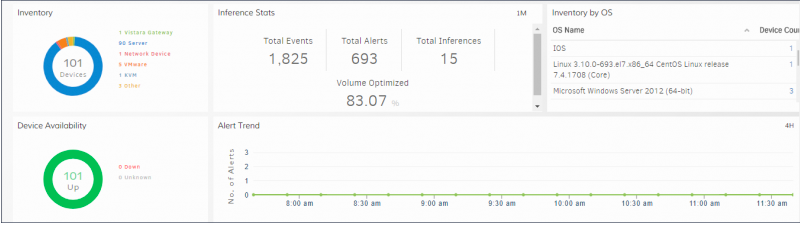
    OpsRamp has also added a pause capability for alerts, intended to be used during maintenance windows to prevent alert floods. Alert filters now include text-based search that, when combined with the AI Inference Engine, helps resolve issues faster. DevOps teams also can create policies to notify them of alert state changes.

    Finally, OpsRamp has added reporting tools that enable DevOps teams to determine not just the amount of resources being consumed on a public cloud, but also which public cloud or on-premises environment is generating the most trouble for the IT organization.

    In general, Ramachandran said most organizations have very little way in the way of tools that enable them to realistically compare how one platform performs over another when running specific classes of workloads. By leveraging the machine learning algorithms that OpsRamp includes in its SaaS applications, enough data becomes available to provide DevOps teams with actionable insights, he said.

    AI tools typically require access to massive amounts of data. By making available IT operations tools available as a cloud service, OpsRamp is trying to make it practical for DevOps teams to employ AI on both tactical and strategic levels without requiring an IT team to acquire special data science skills, Ramachandran said, adding such an approach also provides the added benefit of making it possible to holistically manage IT silos across multiple classes of infrastructure and applications.

    IT organizations are still in the early stages of coming to terms with AIOps and its potential impact on DevOps processes. Many of the manual processes that tend to inhibit widespread adoption of DevOps are clearly going to be automated. In fact, many of those tasks will be accomplished using voice commands that bots will be able to understand. In other cases, the bots will inform DevOps teams when an issue needs to be addressed long before they would otherwise be aware of it. Less clear is how job roles within DevOps teams will evolve as it becomes easier to manage applications and infrastructure comprehensively.

    Of course, the rate that transition will occur will vary widely by organization. But rather than debating the right approach to automation, it’s becoming increasingly apparent that many of those decisions will be made by machines. The unspoken assumption being made is that humans responsible for managing IT will be comfortable that the right decisions are being made on their behalf.

    — Mike Vizard