Tag: cloud services

  • NetApp Acquires Spot to Rein in Cloud Costs

    NetApp Acquires Spot to Rein in Cloud Costs

    NetApp this week announced it has acquired Spot, a provider of a service that enables IT teams to continuously optimize costs for cloud workloads.

    Anthony Lye, senior vice president and general manager for public cloud services at NetApp, said the Spot service is based on an application programming interface (API) that IT teams add to each application workload. That API then makes regular calls to Spot, which leverages algorithms that determine when and on what types of instances a workload should run to reduce cloud costs.

    The Spot service will then move workloads automatically between on-demand, reserve and spot instances on Amazon Web Services (AWS), Microsoft Azure or Google Cloud Platform (GCP). It is not designed to enable arbitrage across different cloud services; rather, it optimizes the allocation of compute resources on whatever cloud platform an IT team decides to deploy a workload on.
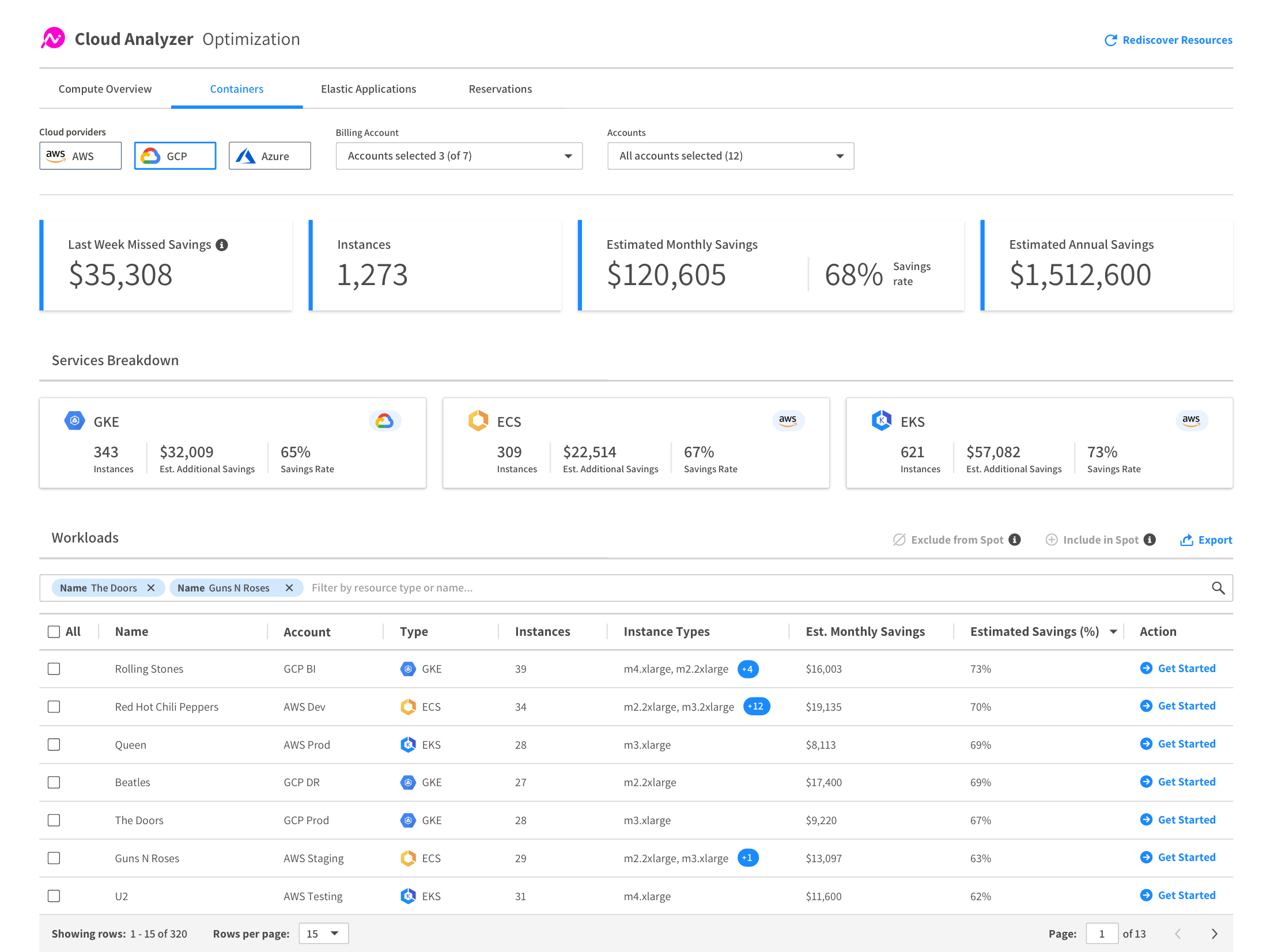
    Lye said cloud computing often winds up being more expensive than on-premises IT environments because IT teams don’t have the tools required to cost-optimize cloud platforms in real-time. Developers often programmatically deploy workloads in the cloud without understanding many of the implications of using one tier of service versus another. Even when they do appreciate the cost, most IT teams don’t provide them with the tools needed to do anything about it. In fact, it’s usually assumed the IT operations team will find some way to optimize costs as they monitor the cloud environment.

    Then, at the end of the month, the IT operations and finance teams receive a bill from a cloud service provider that is all but indecipherable in determining what workloads consumed what level of compute resources and when. In the absence of the Spot service, Lye said the best IT teams could hope for was an analytics report that offered suggestions about how to optimize cloud instances after the fact.

    NetApp views Spot as a complement to its approach to optimizing the consumption of cloud storage resources by deploying its software on a public cloud to manage those resources, said Lye. Collectively, those offerings enable IT teams to address what has now become the single largest cost in the enterprise.

    In addition, Lye noted that Spot can play a key role in enforcing service level agreements (SLAs) because, among other things, it automatically detects whenever a spot instance of a virtual machine is going away. It then automatically spins up additional instances to ensure a workload remains available.

    The debate over the real cost of cloud computing has been going on for years. Initially, most cloud service providers claimed cloud platforms were less expensive than on-premises IT environments because compute resources were paid for on a consumption basis. While that proved to be true for workloads that ran for a finite amount of time, longer-running workloads have proven to be in most cases more expensive to run in the cloud.

    As organizations look to the cloud to deploy cloud-native applications that are more flexible and resilient in the wake of the COVID-19 pandemic, which has made many on-premises IT environments less accessible, the debate over costs is flaring up again. While organizations need a more flexible approach to IT, they are simultaneously trying to reduce the total cost of IT in the wake of the economic downturn brought on by the pandemic.

    It’s too early to say to what degree IT organizations will embrace continuous optimization alongside continuous integration (CI) and continuous delivery (CD). However, given the current economic climate, it’s more now a question of when, not if, cloud cost optimization will become a major area of focus for IT teams large and small.

  • Dell Technologies Advances Hybrid Cloud Strategy

    Dell Technologies, in collaboration with VMware and Google, today advanced its hybrid cloud strategy by making its CloudFS storage system available on Google Cloud Platform (GCP) and adding support for VMware Tanzu Kubernetes Grid and VMware Cloud Foundation 4 to its VxRail hyperconverged infrastructure (HCI) platforms for on-premises IT environments.

    Varun Chhabra, vice president of product marketing for Dell Technologies, said both moves are part of Dell’s ongoing effort to provide IT organizations with a consistent cloud operating model spanning both on-premises IT environments and public clouds.

    In the wake of the economic downturn brought on by the COVID-19 pandemic, Dell is more aggressively making a case for reducing IT costs by consolidating the management of multiple clouds.

    Kit Colbert, vice president and CTO for the Cloud Platform Business Unit at VMware, said current spending levels on multiple cloud platforms are unsustainable. However, that doesn’t mean IT organizations should consolidate clouds. Rather, he said, organizations need to streamline the management of multiple clouds to reduce costs.

    VMware has been making a case for deploying its VMware vSphere platform both on-premises and on public clouds from Google, Amazon Web Services (AWS) and others to make it easier to build and deploy application workloads as organizations best see fit. Just because an application workload was created on a specific public cloud, for example, it doesn’t follow that workload needs to be deployed on that platform, Colbert said.

    At the same time, VMware has been making a case for deploying cloud-native workloads based on Kubernetes on top of VMware vSphere as well. VMware Cloud Foundation 4 provides access to a complete stack of infrastructure software that includes a distribution of Kubernetes that has been embedded in the latest update to VMware vSphere. VMware also provides a VMware Tanzu cloud service that can be employed to build, manage and deploy containerized applications across multiple distributions of Kubernetes.

    In effect, VMware and Dell are pushing to extend a management plane that is already widely deployed in on-premises IT environments to encompass both monolithic and microservices-based applications running in the cloud. There may be more workloads moving into the cloud than ever, but Colbert noted the bulk of application workloads and data still reside in on-premises IT environments.

    While Dell and VMware may have an advantage because of the number of IT organizations that already rely on its platforms to manage IT, every provider of a rival platform is making a similar hybrid cloud computing case. AWS, for example, is enabling VMware vSphere to run on its cloud while simultaneously pushing adoption of its infrastructure in on-premises IT environments as an alternative to platforms from Dell and Hewlett-Packard Enterprise (HPE).

    It may be a while before IT organizations define their hybrid cloud computing strategies. Most IT organizations today continue to manage IT environments in isolation from one another. However, the pressure to reduce the number of specialists required to manage each IT platform is mounting. Most IT organizations are being directed to do more with less regardless of how complex the IT environment becomes. The challenge now is figuring out how best to automate the management of what by any measure is now a confusing mix of platforms and workloads.

  • Lucidchart Launches Tool to Visualize AWS Cloud Environments

    Lucidchart Launches Tool to Visualize AWS Cloud Environments

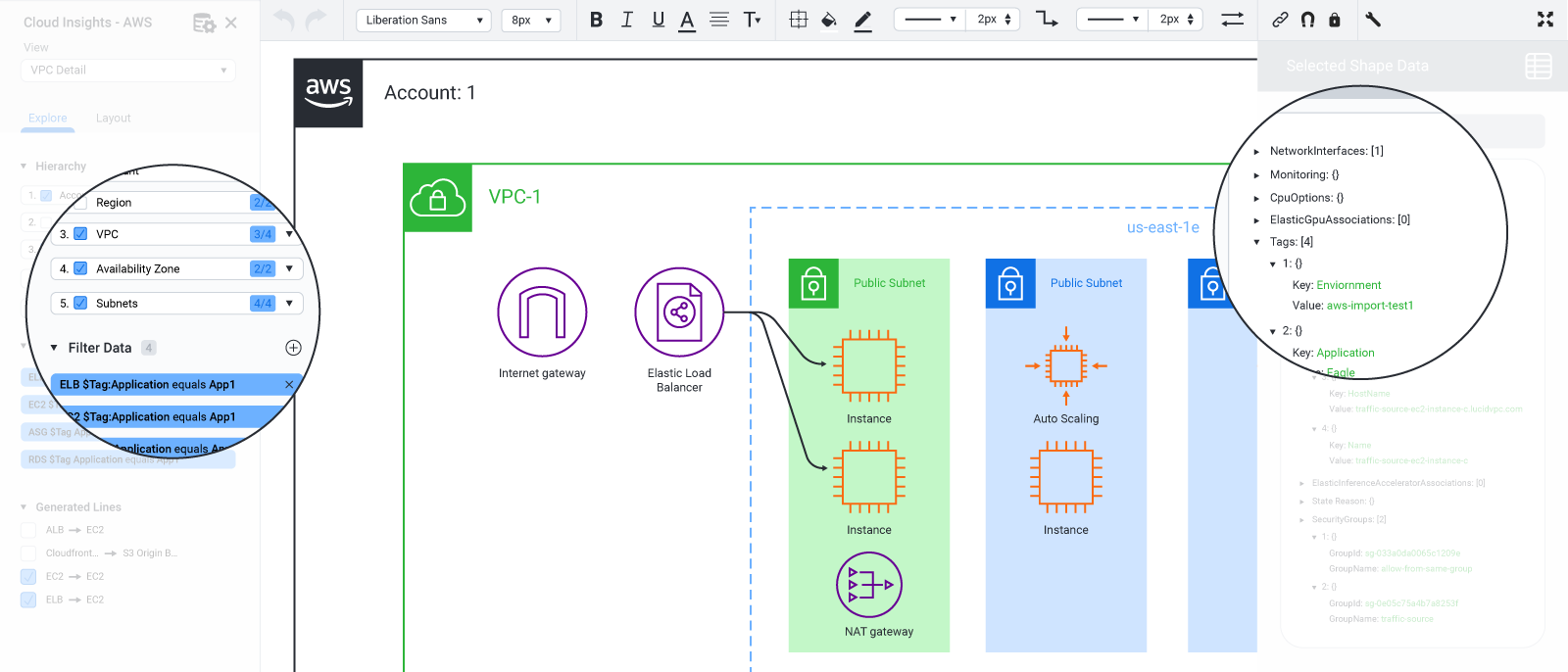
    Lucidchart today added a visualization tool that generates interactive diagrams of an IT organization’s Amazon Web Services (AWS) environment.

    Dan Lawyer, senior vice president of product at Lucidchart, said Lucidchart Cloud Insights makes it possible to automatically visualize all the services an organization is consuming from the cloud service provider, with support for other cloud platforms planned.

    One of the biggest challenges organizations regularly encounter today is the only way they have of understanding what services are being consumed is to analyze the monthly bill made available by a cloud service provider, he said.

    Lucidchart Cloud Insights is designed to make it easy to determine what services are being consumed in real-time, Lawyer said, noting IT teams can also visualize cloud governance data along and apply filters and save views.

    Armed with that information, IT organizations can then better control spending across cloud services that, in terms of costs, are often widely divergent. Developers, for example, don’t always pay close attention to which tiers of service provide the optimal level of cost of a certain class of workloads. A high-fidelity approach to visualizing how services are consumed provides an effective means to have that conversation, noted Lawyer.

    Once an issue arises it can be resolved faster because everyone involved is capable of visually inspecting the same set of interactions occurring at the same time, he added.

    Lucidchart already provides visual workspaces in the cloud that combine diagramming, data visualization and collaboration tools to make it easier for teams to collaborate. Lucidchart Cloud Insight now extends that capability into IT operations, Lawyer said, noting IT teams traditionally have relied on tools such as Microsoft Powerpoint to try and visualize consumption patterns.

    The launch of Lucidchart Cloud Insight comes at a time when more workloads are moving on to public clouds in the wake of the COVID-19 pandemic. Given the uncertainties surrounding when IT staff might be able to access an on-premises IT environment, many organizations are accelerating the rate at which application workloads are being deployed in the cloud.

    The challenge IT organizations face is that moving applications into the cloud doesn’t always yield consistent cost savings. IT teams constantly need to monitor how IT infrastructure resources are being consumed to keep IT budgets under control. The issue is that developers frequently spin up cloud services without telling anyone in IT about it until a bill shows up. Worse yet, many developers often forget to de-provision virtual machines and other cloud resources they’re no longer using.

    Of course, as more cloud platforms are invoked, the management issue only becomes that much more complex. Going forward IT teams will want to visually compare and contrast how services are being consumed across multiple clouds. Whatever the motivation, it’s a lot easier to overlook the implications of a cloud service that is presented as part of a static bill than it is one that visually presents itself as part of an interactive diagram that is always up to date.

  • Fortanix Adds Platform to Manage Confidential Computing on Azure

    Fortanix Adds Platform to Manage Confidential Computing on Azure

    Fortanix today announced that a software-as-a-service (SaaS) platform for managing instances of confidential computing on the Microsoft Azure cloud is now generally available.

    Confidential computing is an emerging approach to encrypting data while it is running in memory. Today encryption is only applied to data at rest. Confidential computing makes it possible to set up secure enclaves for processing encrypted data in memory, which has become an increased source of concern for vulnerabilities in IT environments.

    Faiyaz Shahpurwala, chief product and strategy officer for Fortanix, said Confidential Computing Enclave Manager provides IT teams with a SaaS platform that enables them to provision a confidential computing environment, verify the integrity of those environments and manage the application life cycle for secure enclaves. Applications running on secure enclaves are built using Docker containers and images.

    Fortanix, along with Alibaba, Arm, Baidu, Google Cloud, Huawei, Intel, Microsoft, Red Hat, Swisscom and VMware, is a member of the Confidential Computing Consortium, an arm of The Linux Foundation. Confidential Computing Consortium projects include a Software Guard Extensions (SGX) software development kit (SDK) from Intel, an open source Open Enclave framework that allows developers to build Trusted Execution Environment (TEE) applications using a single enclaving abstraction, and Enarx, a project providing hardware independence for securing applications using TEEs.

    Microsoft earlier this month made available a DCsv2-series of virtual machines (VMs) that provide access to a TEE based on Intel SGX. Fortanix, for its part, already makes available a Fortanix Self-Defending Key Management Service on Azure.

    Shahpurwala said over time most applications will take advantage of trusted computing environments. Most of the initial use cases will focus on applications in which data privacy and securing personally identifiable information (PII) is critically important, he said.

    In the meantime, cloud service providers are racing to make available platforms for building and deploying TEE applications. Less clear is to what degree those environments will be integrated with DevOps platforms. The Confidential Computing Enclave Manager provides a management framework from which to begin that process. The Confidential Computing Enclave Manager also provides tools to convert applications to enable them to run on Intel SGX.

    There may come a day when confidential computing makes security a core element of any DevOps process. As such, the idea that there needs to be a distinct approach to DevSecOps may in time fade away as security becomes a series of infrastructure capabilities that are invoked programmatically. As that approach matures, application security would simultaneously evolve to become a natural extension of any quality assurance process.

    Of course, it may be a while before confidential computing is employed pervasively. Not every IT team has made the switch to containers to build applications. However, given all the focus these days on data privacy regulations it’s clear the requirements for protecting data within an IT environment are becoming more stringent with each passing day. The challenge now is finding a way to address those concerns during the entire application lifecycle management process in a way that doesn’t slow down the rate at which applications are being built and deployed.

  • Chef Adds Support for Arm Graviton 2 Processors on AWS Cloud

    Chef Adds Support for Arm Graviton 2 Processors on AWS Cloud

    Chef announced this week that its offerings for managing and testing infrastructure as code now support Graviton 2 processors from Arm on the Amazon Web Services (AWS) cloud.

    AWS this week announced the availability of an M6g instance of processors on its public cloud. Based on a 64-bit Arm Neoverse N1 architecture, the M6g processors were jointly designed by Arm and Annapurna Labs, a unit of Amazon.

    According to AWS, during a preview program platforms such as Honeycomb consumed 30% fewer instances on M6g than the widely employed AWS C5 instances. Treasure Data, a provider of data analytics software, reported a 30% performance increase while seeing a 20% cost reduction compared to similarly sized M5 instances. The Amazon ElastiCache service team found that M6g instances deliver up to 50% throughput improvement over M5 instances on Redis.

    In addition, AWS this week revealed it also plans to add compute-optimized C6g instances and memory-optimized R6g instances based on 64-bit Arm processors.

    The Arm processors in the cloud are expected to provide a foundation for building hybrid internet of things (IoT) applications spanning AWS cloud services and instances of Arm processors that are widely employed in embedded systems. Previously, AWS launched an AWS Greengrass initiative through which it encourages developers to build and deploy cloud-enabled IoT applications on edge computing platforms.

    Vikram Ghosh, vice president of business development for Chef, said DevOps teams can now automate the provisioning of Arm processors using the same Chef tools they employ to provision instances on other types of processors running on the AWS cloud.

    It won’t be long before 64-bit instances of Arm processors start showing up on other cloud computing platforms, noted Ghosh. In fact, between the rise of Arm processors alongside graphical processor units (GPUs) the types of processors readily available in the cloud have never been more diverse, which Ghosh said is driving increased demand for tools to manage infrastructure as code.

    It’s still early days as far as adoption of best DevOps practices to build and deploy IoT applications is concerned. However, the highly distributed nature of IoT applications—which in many cases will need to be updated frequently—lend themselves to being managed more efficiently using DevOps processes. In most cases, these IoT applications represent “greenfield” applications where there is no legacy process in place that potentially would create a culture clash.

    Forecasting demand for edge computing applications in the wake of the COVID-19 pandemic is difficult. However, the general expectation remains that more application code will be moving closer to the point where it is being consumed, especially when 5G wireless networking services become more available. In fact, many of those applications are being built now in anticipation of those networking services being able to connect edge computing applications with backend cloud resources.

    Once those applications are built, the next big challenge will be finding a way to secure and continuously update them. In the meantime, however, the number of edge computing applications being built today in the cloud for edge computing platforms based on Arm processors is about to increase substantially.

  • Red Hat Extends Scope of Ansible Tools

    Red Hat Extends Scope of Ansible Tools

    Red Hat today announced it has extended the analytics capabilities it makes available for instances of the Ansible IT automation platform and has made the Ansible Automation Services Catalog now generally available.

    In addition, Red Hat has increased the number of certified playbooks it makes available from both the company and third-party partners within the Ansible Content Collections. That repository now houses more than 1,200 certified Ansible Modules.

    Announced prior to the Red Hat Summit, which is taking place online this week, these offerings are part of a series of cloud services the company has developed to foster the adoption of Ansible to automate a wide range of processes.

    Tom Anderson, vice president for the Red Hat Ansible Automation Platform at Red Hat, said that as Ansible is employed to automate more IT processes, more IT teams want to better understand how the playbooks being created using Ansible are being used within their organizations. The latest updates to the Ansible Analytics module add the ability to filter analysis by Red Hat Ansible Tower cluster, by date and between organizations. IT teams can also discover job statistics by total runs, total time, average time, success rate, most failed tasks and the failure percentage of that task.

    At the same time, the Ansible Services Catalog makes it easier to access curated playbooks that have been vetted thoroughly, he said.

    Anderson noted Ansible continues to gain traction because it provides a declarative approach to automating IT processes that can span multiple platforms. Interest in automation has increased substantially in the last several years. The challenge that many organizations now face is that as various providers of platforms have made IT automation tools available, organizations now are managing multiple islands of automation, he said, adding Ansible provides a means to unify IT automation under a common open source framework.

    The pace at which organizations have been automating the management of IT is expected to increase substantially in the weeks and months ahead. In the wake of the economic downturn brought on by the COVID-19 pandemic, organizations that are reducing IT staff will look to automate processes to enable the remaining IT employees to manage more efficiently IT environments that continue to grow in size and complexity.

    That increased reliance on automation should also advance adoption of best DevOps practices, as more IT operations teams embrace managing IT infrastructure as code.

    Ansible, of course, is not the only platform capable of automating IT processes. However, because of its reliance on a declarative approach, Ansible is more accessible to IT operations staff who lack programming skills. In theory, DevOps teams are increasingly taking control over the management of IT infrastructure using programmatic tools. However, there are still many IT organizations that prefer to have access to IT infrastructure centrally managed by IT operations teams that typically make resources available to developers via a self-service portal. However, while there may be a debate over who will automate IT processes, the one thing everyone does agree on is the time to do so is now more than ever.

  • Google Names CloudBees App Dev Partner of the Year

    Google Names CloudBees App Dev Partner of the Year

    Google this week named CloudBees its 2019 Cloud Technology Partner of the Year for Application Development at a time when the rate at which application workloads are heading into the cloud is expected to accelerate.

    Beyond the Jenkins continuous integration/continuous delivery (CI/CD) platform on the Google Cloud Platform (GCP), CloudBees also makes available a software-as-a-service (SaaS) edition of Jenkins X, a CI/CD platform optimized for Kubernetes, along with a CloudBees Software Delivery Management (SDM) service for managing DevOps processes.

    François Dechery, chief strategy officer for CloudBees, said CloudBees chose to partner with Google at that level versus other cloud service providers because Google made it clear it would partner at both the technology and business development level. In addition, given Google’s long history with Kubernetes, it also made sense to leverage existing Kubernetes expertise, he noted.

    In the wake of the COVID-19 pandemic, more application development work will be moving onto cloud platforms that can be remotely accessed more easily by development teams, he added.

    In some cases, organizations will opt to self-manage those platforms or rely on a traditional managed service provided by a third-party IT services firm. However, Dechery said there also has been a significant increase in the number of organizations willing to consume a DevOps platform such as Jenkins X as a SaaS application, as long as the IT environment is proven secure. SaaS platforms are now a mainstream element of any enterprise IT environment, said Dechery.

    Many of those decisions will be predicated on what degree of abstraction any organization is comfortable with as IT platforms become both more complicated and diverse, added Dechery, noting one thing that attracts organizations to Jenkins X is that it abstracts away the complexity associated with deploying Kubernetes. The Kubernetes deployment process is automated by Jenkins X, which essentially provides a level of abstraction on top of another abstraction.

    Dechery conceded there is some level of inherent competition with cloud service providers that provide their own DevOps tools. However, most of those DevOps platforms are not up to the task of building and deploying applications at scale, he said. In addition, platforms such as Jenkins and Jenkins X make it feasible to manage application development projects at scale without having to worry about becoming locked into a single cloud service provider, he added.

    Competition across the CI/CD platform space remains fierce. CloudBees has long benefited from a large open source Jenkins community that often leads to organizations implementing an enterprise edition of Jenkins supported by CloudBees. However, as organizations embrace microservices-based applications based on containers, many of them are revisiting their platform options. That doesn’t necessarily mean they will rip and replace existing investments in Jenkins platforms; however, given the rate and scale at which modern applications are being built and delivered today, many organizations may be moving toward more prescriptive approaches to bring some order to the chaos.

    — Mike Vizard

  • Sysdig Extends Cloud Monitoring Alliance With IBM

    Sysdig Extends Cloud Monitoring Alliance With IBM

    Sysdig and IBM announced they have extended their alliance to make Sysdig monitoring tools more broadly available across IBM public cloud services.

    IBM first adopted the Sysdig platform to enable DevOps teams to monitor workloads running on a subset of the IBM Cloud in June 2018. Now the company will extend those managed instances of the Sysdig monitoring platform running on its own public cloud to include additional cloud services such as IBM Watson, Event Streams, Cloud Databases, Cloud Object Storage and Cloud Foundry.

    Janet Matsuda, chief marketing officer for Sysdig, said monitoring capabilities as especially critical as the number of microservices-based applications running on public clouds continues to increase. IBM also makes use of the open source Prometheus monitoring platform to monitor many of those applications. Sysdig last month announced compatibility with Prometheus as a data source.

    In the wake of the COVID-19 pandemic, it’s probable that more monolithic applications will also be moving into the cloud as part of organizations’ business continuity strategies. Applications that run in the cloud are easier to manage remotely. Regardless of whether applications are monolithic or based on microservices, it’s clear IT teams will be “flying blind” unless they have access to monitoring tools, Matsuda noted.

    Over time, many of the monolithic applications being moved into the cloud will be transformed into a more flexible set of microservices that are easier to update. As that transition occurs, the need to observe the myriad microservices running on a public cloud becomes an even bigger challenge for IT teams.

    Of course, some IT teams will prefer to employ their own monitoring tools versus relying on a managed service, especially if they are trying to centralize the management of IT across multiple public clouds and on-premises IT environments. However, for now, at least, the bulk of IT teams are still employing various public clouds in isolation from one another.

    Longer-term, the relationship between Prometheus and commercial monitoring platforms is still being defined. Many application developers are relying on Prometheus to observe applications during the development process. Many IT teams, however, are already making extensive use of commercial monitoring platforms to identify and correlate issues in production environments. Sysdig is betting most of those organizations will continue to rely on those tools because they are easier to set up and navigate. In addition, each instance of a Kubernetes cluster currently requires its own instance of Prometheus.

    On the plus side, the amount of time and effort being applied to instrumentation and observability as part of any set of best DevOps practices continues to increase sharply. Furthermore, the need to combine security and operational IT metrics and analytics to advance DevSecOps adoption is also going to push IT organizations toward more robust monitoring platforms. Arguably, the real challenge is no longer finding a way to instrument applications as much as it will be turning all the data being collected into actionable intelligence that can be relied on to automate the management of IT at an unprecedented scale.

    — Mike Vizard

  • Nerdio Unfurls Management Tools for WVD on Azure

    Nerdio Unfurls Management Tools for WVD on Azure

    Nerdio has launched a management tool that makes it easier to provision large numbers of virtual desktops on the Microsoft Azure public cloud.

    Company CEO Vadim Vladimirskiy said that now that Microsoft is finally encouraging organizations to embrace desktop virtualization in the form of its Windows Virtual Desktop (WVD) service, there is a need for tools to manage all those desktops.

    Nerdio Manager for WVD fills that gap by providing support for, among other things, dynamic host pools that automatically grow and shrink depending on workload and desktop images that can be employed across thousands of users.

    Vladimirskiy said Nerdio Manager for WVD runs natively on Azure, which among other things allows all the data it collects to remain within the geo-boundaries of the selected Azure region. No additions to an Azure subscription are required to store that data, he noted.

    Fresh off raising an additional $8 million in funding, Nerdio is riding the coattails of a relatively newfound enthusiasm at Microsoft for virtual desktops. While the concept of a virtual desktop has been around for the better part of two decades, Microsoft has only been encouraging IT organizations to embrace virtual desktops since the WVD Service became available on Azure in the last several months. Previously, Windows licensing restrictions tended to make virtual desktops less economically attractive.

    Rather than organizations relying on Citrix or VMware for virtual desktops, Microsoft is now making a case for employing its Azure cloud service to subscribe to virtual desktops as a less complicated alternative that also supports both Windows 10 and Windows 7. That means IT teams that embrace Windows 7 on Azure will be supported by Microsoft.

    It’s not clear to what degree Windows desktops will move into the cloud now that Microsoft has embraced the concept. In addition, it’s also worth noting that rivals such as Amazon Web Services (AWS) now provide similar desktop virtualization services. What is clear is many fewer instances of Windows will be running locally as more organizations determine it might be easier for them to manage Windows desktops via the cloud than on each individual machine. At the same time, many organizations are also looking at ways to more easily enable remote computing to help limit potential employee exposure to the COVID-19 virus.

    Whatever the path forward, it’s not likely large enterprise IT organizations will make the jump to WVD or any other cloud service all at once. IT administrators may find themselves managing a hybrid desktop computing environment for many years to come. There are also, of course, organizations operating in highly regulated industries where virtual desktops running on a public cloud are simply not an option.

    Nevertheless, it’s apparent the time when IT administrators had to spend time visiting individual desktop machines is coming to an end. The management of both virtual desktops and physical endpoints is becoming more automated with each passing day. The only real question is what degree of automation can be achieved based on where the desktop actually resides.

    — Mike Vizard

  • Mission Makes AWS Expertise Available for Free

    Mission Makes AWS Expertise Available for Free

    Mission, a provider of managed services for the Amazon Web Services (AWS) cloud, this week announced it will make its cloud optimization expertise available free of charge for any IT organization that acquires AWS licenses through it.

    Alex Beal, director of product for Mission, said as cloud sprawl continues to be an issue, many internal IT teams simply don’t have the expertise required to rein in those costs. However, rather than charge extra for the expertise Mission will now make its tools and consultants available for free under the auspices of the Mission Cloud Foundation service to any organization that employs Mission to acquire AWS licenses, he said, noting every Cloud Foundation customer will get access to a designated Mission Cloud Analyst who will provide regular account reviews and guidance on implementing best practices.

    Mission can provide the free service because it acquires licenses from AWS at a lower cost. Effectively, AWS is paying for the services being provided by Mission, said Beal.

    As more workloads move into the public cloud, IT teams are struggling to navigate a complex mix of service levels from AWS that range from spot pricing options to reserved instances that can be licensed for specific periods of time at a deep discount. However, determining which workloads lend themselves best to various AWS pricing options can be challenging to determine, especially for developers who spin up virtual machines without consulting with internal IT teams. Collectively, organizations are wasting millions of dollars each year because of suboptimal usage of public cloud resources. Beal estimated that the average IT organization is wasting about $5,000 a year on cloud infrastructure resources that could be better allocated to other IT initiatives.

    Beal said Mission will work with those internal IT teams to identify unused resources and rightsizing candidates, set up budget alerts and recommend better options for specific types of workloads using a combination of monitoring tools from third parties such as CloudHealth and one developed by Mission. Those monitoring tools are also employed to enforce budget constraints and run security checks.

    Mission Cloud Foundation also includes tools to reallocate charges, reference purchase order numbers and set up automated custom reports.

    Most IT organizations could develop much of this expertise on their own. However, Beal said most IT teams also have better things to do with their time that add more value to their organization. Instead of acquiring licenses direct from AWS, Mission is making a case for an alternative approach that provides a level of service and support that AWS generally only provides to Global 2000 customers.

    Other managed services providers (MSPs) may or may not also provide tools and expertise free of charge. Savvy IT teams, however, may soon force the issue. After all, while public cloud represents the most widely employed form of IT infrastructure as code, from a cost perspective it’s also clear public clouds can also quite easily become too much of a good thing.

    — Mike Vizard