Tag: cloud services

  • Perfect Sense Open Sources Gyro to Automate Cloud Provisioning

    Perfect Sense Open Sources Gyro to Automate Cloud Provisioning

    Perfect Sense has launched an open source project dubbed Gyro that provides an alternative approach to automating cloud infrastructure provisioning and management.

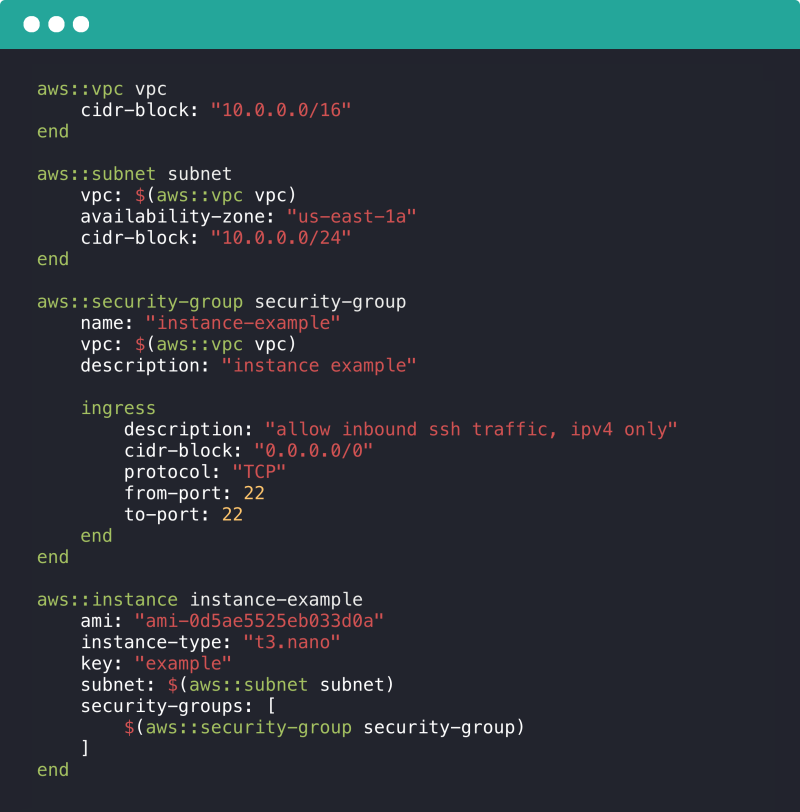
    Gyro was developed as an alternative to other open source projects such as Terraform and Pulumi, said CTO Jeremy Collins. It is designed from the ground up around a programming language that allows DevOps teams to define infrastructure as code, and features logic built into configurations to make it easier to create more precise workflows, he said.

    Adding logic to create equivalent workflows in rival platforms is more complex, Collins noted, adding the ability to add logic makes it easier to not only provision cloud infrastructure but also to roll it back when necessary.

    Perfect Sense developed Gyro to make it easier to manage the infrastructure for its Brightspot content management system (CMS). As such, Gyro can support multiple cloud computing platforms.

    In addition to making it possible to add cloud platforms to an existing configuration, Collins said it can be used to create custom commands and define multiple extension points directly within the Gyro language.

    Perfect Sense Gyro

    Perfect Sense developed Gyro to automate the provisioning of virtual machines. Since then, the company has extended its capabilities to add support for emerging cloud-native platforms such as Kubernetes.

    Collins said Gyro provides a single extensible tool spanning a broad range of DevOps processes, from provisioning infrastructure to discovering what services already exist.

    Despite the popularity of rival tools such as Terraform, it’s still early days in the adoption of infrastructure as code. Most IT organizations are a long way from standardizing on any one platform for automating the provisioning of infrastructure. In fact, it may not be uncommon for different DevOps teams within the same organization to employ different platforms for provisioning infrastructure.

    Gyro’s ultimate success will depend much on Perfect Sense’s ability to foster an open source community. The Brightspot CMS is used by the Los Angeles Times, Walmart, Mattress Firm, Univision, Sotheby’s and US News and World Report, so Collins said there is a base of support for Gyro on which to build a community. Perfect Sense is looking to build a community that will continue to extend the reach and scope of the platform by adding additional plugins.

    Regardless of the approach taken, as the number and rate at which workloads are being deployed on cloud platforms increases, it becomes critical for IT organizations to find a way to automate processes. It’s not clear to what degree those workloads will be provisioned by developers themselves versus traditional IT operations teams that have learned how to program. However, one way or another the provisioning of cloud infrastructure is going to be automated.

    — Mike Vizard

  • Opsani Applies AI to Rein in Cloud Costs

    Opsani Applies AI to Rein in Cloud Costs

    Opsani has added support for cloud computing environments to its namesake software-as-a-service (SaaS) platform that leverages machine learning algorithms and other forms of artificial intelligence (AI) to optimize the IT environment.

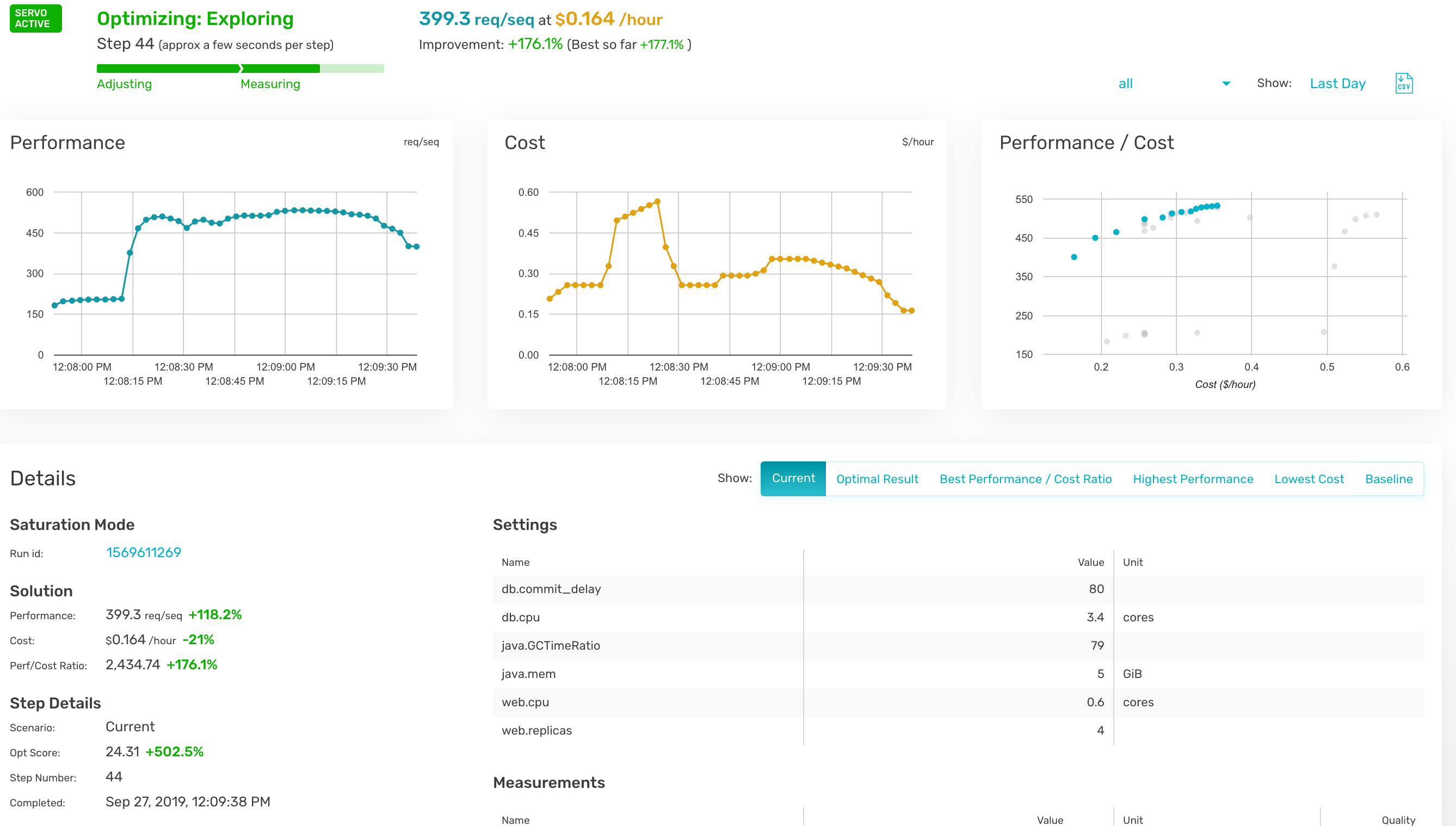
    Company CEO Ross Schibler said Opsani AI not only proactively tunes resources such as CPU and memory, but it also can optimize middleware configuration variables such as Java virtual machine (JVM) type and pool sizes; kernel parameters such as page sizes and jumbo packet sizes; and application parameters such as thread pools, cache timeouts and write delays.

    Given the size and dynamic nature of most cloud computing environments, Schibler said it’s not possible for IT administrators to manually optimize cloud computing environments to match the specific needs of each class of application workload being deployed. The Opsani platform makes it possible to leverage AI to optimize settings for the lowest cost or best performance every second, he said.

    Opsani claims existing customers are seeing more than 200% increases in performance per dollar while saving up to 80% on their cloud spend.

    In addition, Opsani has made available plugins for a variety of DevOps tools including GitHub, Terraform, Jenkins, Spinnaker, Wavefront, DataDog, SignalFX, Prometheus, Splunk and New Relic, on all the major cloud computing platforms.

    Schibler said Opsani can be applied to existing monolithic applications as well as emerging microservices-based applications based on containers running on Kubernetes clusters. The goal is to make it possible for IT teams to rein in cloud costs at a time when most cloud resources are being employed inefficiently, he said.

    Individual developers are deploying applications on virtual machines in the cloud with little to no appreciation for total cost, noted Schibler. Before most IT organizations realize it, the cost of running applications on a public cloud has far exceeded budget allocations. IT organizations not only need tools to rein in those costs, but Schibler noted Opsani also makes it possible to model those costs before an application is deployed or upgraded.

    The adoption of public clouds and DevOps often go hand in hand. The challenge organizations are encountering more often is that as the number of applications running in a public cloud computing environment increases, they often wind up overprovisioning resources. Over time, the need to optimize the consumption of cloud resources becomes a more pressing financial concern. However, most IT organizations don’t have the resources or expertise needed to manually tune each instance of cloud workload. At the same time, the typical IT organization doesn’t have the ability to build its own AI engine. Opsani is making the case for a SaaS platform that provides that capability without requiring an IT organization to build its own AI models from scratch.

    Naturally, many IT professionals are dubious of AI because there may not be enough transparency into the AI models being employed. However, because Opsani is a SaaS platform, the risk of experimenting with AI to optimize cloud workloads is relatively slight. Of course, there’s no absolute requirement to employ AI at all. However, as financial pressure on IT organizations continues to mount, there doesn’t seem to be much of an alternative either.

    — Mike Vizard

  • DevOps Chats: 1-Click Vulnerability Scanning on GCP, With Qualys

    DevOps Chats: 1-Click Vulnerability Scanning on GCP, With Qualys

    Sometimes the best way to accomplish something is to choose a path requiring the least friction, or amount of change.

    Qualys customers now have that path available to them in bring vulnerability scanning into Google Cloud Platform. Qualys’ recent announcement means a one-click configuration change enables vulnerability scans in GCP with the results appearing in both Qualys Cloud Center and GCP Security Command Center.

    Join me on this DevOps Chats to explore this announcement with Sumedh Thakar, Qualys President and Chief Product Officer. We discuss Qualys’ and Google’s collaboration and how this benefits DevOps teams.

    Transcript

    Mitch Ashley: Hi, everyone. This is Mitch Ashley with devopsy.kinsta.cloud and you’re listening to another DevOps Chat podcast. Today I’m joined by Sumedh Thakar who’s President and Chief Product Officer with Qualys. We’re talking about an important announcement that just happened with Qualys and with Google about security natively embedded within Google. Welcome to the podcast, Sumedh.

    Sumedh Thakar: Hey, Mitch. Thank you for having me.

    Ashley: Great to have you. Well, let’s start by just having you introduce yourself and, of course, as President and Chief Product Officer we can imagine what you might do at Qualys, but go ahead and tell us a little bit about what you do.

    Thakar: Yes, I’m not sure you can imagine because I’ve been here for 16 years, so I’ve done a lot.

    Ashley: Okay. [Laughs]

    Thakar: Today, as President and Chief Product Officer, I’m responsible for product strategy and implementation of Qualys product and where we have come from where we were many years, mainly focused on just vulnerability assessment. So today I have the engineering product management support operations team as well as the sales team and that kind of gives a pretty unique perspective because of the engineering and the DevOps teams within Qualys. Also, part of the organization for me helps me to really get a very good understanding of today what are the needs for DevOps and what evolution we’re going through with the DevOps team internally within Qualys, and being a massive SaaS platform ourselves I think that that’s something that I’d really like to focus on when we develop security solutions for DevOps teams.

    Ashley: Well, it does give you a very hands-on perspective, both _____ as well as living with DevOps in your own products internally. It’s great.

    Thakar: Exactly.

    Ashley: It’s good for you. Great role to have. Well, let’s dive into this announcement. So, security that’s natively embedded within Google – Google Cloud I think we’re talking about.

    Thakar: Right.

    Ashley: Tell us a little bit about what it is.

    Thakar: Yeah, we’ve had a fantastic partnership with the Google team and, you know, I think as digital transformation, moving things into cloud container and DevOps have been really getting traction for us to _____ differently than what we have done in the past, which has always been after the fact, adding security solutions. So, today with DevOps and DevSecOps the opportunity to embed security upfront into the infrastructure in an automated way so that you can ensure that you’re not missing – you know, that’s always the biggest issue with security is, oh yeah, I did all of that, but then I missed that one thing because I didn’t know that existed.

    So today, Google Cloud has a fantastic solution that really allows DevOps team, as they’re pushing code continuously into the cloud, to have the ability with this new Qualys integration to automatically have that capability of assessment of the security of that virtual machine embedded directly and done transparently so that the end user does not really have to go about installing agents and consoles and all of that. It’s done; completely embedded in the platform.

    Ashley: Excellent. So interesting, and we’d love to dive into this some more, because you’re talking about not bolting things on after the fact. You know, this is the whole shift left idea within DevOps.

    Thakar: Yes.

    Ashley: So, I imagine with the Qualys cloud agent for Google that’s something that you’re embedding within the software platforms that developers test production environments you’re using.

    Thakar: Yes.

    Ashley: Is it that kind of a lifecycle?

    Thakar: Yes, exactly. So, developers today use that solution to first of all ensure that in their – whether it’s Jenkins or whatever it is that they don’t even push solutions out to production that already have vulnerabilities, right? The unfortunate side effect of doing this bolting on after the fact is that the moment you spin up a new machine it already has so many vulnerabilities in the last two years, you spend all your time trying to patch them. So, this DevOps pipeline does give us the opportunity to ensure that first of all in your build process you already eliminate and patch your images so that you don’t go out with images that are already vulnerable, and _____ customers absolutely use the Qualys agent and scanning to really achieve that.

    But then once it gets pushed out to product you also want to have a monitoring to ensure that somebody doesn’t go to an S3 bucket or to a Google storage unit to pull down a vulnerable version of some sort of a software in their virtual image and create new vulnerabilities, so you also need to have that monitoring. And so that native embedding ensures that once you have done your DevOps process and cleaned the image, as the image is being pushed into the production environment in the cloud, in Google cloud, it is going to have that monitoring capability already embedded transparently without having to do additional effort.

    Ashley: Great. I imagine it’s not a heavy lift for developers to install this in the development test environment, right?

    Thakar: Yeah, and that’s the beauty of it is everything is automated, right? So, once you write the scripting it’s not a process that requires you to run commands every time and do all of that. Once you push that into the CD process then it’s really transparent, because in this case the developers don’t even need to run any command to get the agent onboarded. It’s an option that they check in the Google security center and then every single image that spins up will have that sort of one-click integration and automatically embedded in there.

    Ashley: Great. I imagine then you’re also tying back into integrating into the security consoles both within the Qualys environment and also within Google?

    Thakar: Yes, absolutely. That’s a unique ability here, because you have multiple business units for organizations. Different teams have different accounts in Google and they are, of course, only looking at their own application or their own account. And so the second part of this announcement really is also the fact that those vulnerabilities and those issues that are detected are then pushed back into the security center from Google so that the individual owners of the accounts can see all of the vulnerabilities on all of the issues that they need to fix right there within their console and they can create playbooks and use the automation that is available to quickly fix those issues so that they don’t have to know go to another tool and go to another console and try to do all of that.

    For the IT folks and the DevOps folks who are pushing these applications into the cloud, they just see their own individual view directly in Google, but then of course this information also is available in the Qualys console, which is a wider visibility into the overall risk posture because it will also include the security and vulnerability findings from other types of infrastructure that the customer also has, things like laptops and handheld devices and containers and other things as well. And so the security team will leverage the Qualys platform because then they get a holistic view of the entire outside vector. The individual team in Google will get their view within the Google console so that they can really focus on fixing what they need to fix.

    Ashley: Really kind of empowers that idea of SecOps, right?

    Thakar: Right.

    Ashley: Better right upfront.

    Thakar: Exactly.

    Ashley: Now I imagine that the security engineers – you know, usually there’s some kind of a corporate security team maybe involved in operations, maybe not, but also would be super pleased about having this implemented earlier into the dev cycle and also that it’s pre-integrated already into the Qualys platform, Qualys monitoring as well as Google’s cloud monitoring.

    Thakar: Right. And that’s really a very good point because that’s a big struggle for security teams, right, is that just getting – ensuring that the entire infrastructure is covered by the security solution is a challenge when you do it after the fact, because they may not even know that there’s a new instance that was pushed by the dev team overnight into the Google account, the security may not know. So, with this integration of course it ensures that no matter what gets pushed Qualys is always monitoring every single image that goes out. Now the security team is good for them because they don’t have to spend a lot of time as they have been doing so far trying to get the security solution implemented.

    So instead of focusing on the findings of the security solution a lot of security teams just spend time trying to get that actually installed and making sure it’s up and running and it’s connecting and all of that. So, having the DevOps team actually do all of that work is fantastic because now the security team can only focus on what is important, which is your policy. So, they can be the one that says, “Well, this is a failure if you have a _____,” and they don’t have to worry about how the thing is installed or whatever it is. Qualys is then the third party that ensures that the policy that the security team has defined is actually tested and a pass or a fail is given to both sides of the house and then they each can go ahead and do what they need to do in terms of fixing and reporting those issues.

    Ashley: Now, you described in the announcement sort of one-click integration. What does one-click mean? Can you visualize that for us, how that works?

    Thakar: Yeah. So we say one-click because if you have ever deployed security solutions they are absolutely painful, you know, trying to get the multiple commands –

    Ashley: Or like one month or one quarter. [Laughs]

    Thakar: Yeah, it’s a thousand clicks and multiple consoles and whatever it is. So the one-click is really because when you go and look at that integration, once you kind of go in Google security center and define that Qualys account that you connect to, then after that it’s really just checking one box that says that include the Qualys agent in every single image and then you don’t have to do anything after that, like you don’t even have to run a separate command every time you initiate a new image because that is already taken care of in a very easy manner with the automation that is provided by Google.

    Ashley: Wow. So it truly is a checkbox kind of process.

    Thakar: Right.

    Ashley: Just included.

    Thakar: Exactly.

    Ashley: Are there any other things that maybe you’re already doing or that are part of this announcement in terms of what you’re doing to monitor scan and report vulnerabilities in the Google cloud environment?

    Thakar: Yeah. I mean we have a very strong partnership with them. We’re listed, of course, in the marketplace as well, and with this sort of integration it really provides sort of a security reference architecture where, you know, Google can now provide along with Qualys customers the ability to make it significantly easy by defining the architecture of how you want to secure your workload that you’re putting in Google and then have – not only define the right solutions that should be used but then also work with vendors like Qualys to get those directly implemented with a single click so you also remove the resistance at integration and really simply that overall process. And so that will enable existing Qualys customers as well as new customers who already are going through the digital transformation, they may have Qualys already on their on-prem infrastructure; now it makes it – it removes another hurdle for them to really move into Google cloud because they can get the same kind of reports and the same kind of analysis as they have been used to because their auditors are very comfortable and used to having the Qualys reports so now they can get the same reports and don’t have to go through an entire process to recertify another solution, so there’s a lot of these kind of benefits that go across the board, and just having that embedded I think really helps.

    Ashley: Yeah. It certainly lowers the bar to entry –

    Thakar: Right, right.

    Ashley: – into the Google cloud if it’s already integrated into the Qualys and Google platforms. Let’s circle back to talking about what are some of the benefits to the DevOps teams getting the Qualys agent into their environment earlier? What kind of things do they learn in the dev cycle and the test cycle group normally they would’ve skipped and not found out till way later when they’re ready to go to production or in production?

    Thakar: Yeah. So because the way the platform is structured with APIs, the biggest advantage, there is automation of – and that’s what DevOps is all about, right? How can I script? You know, you talk about infrastructure as a code. I talk about security as a code, right? Can you just code in to say – you know, like you do your infrastructure, can you say if vulnerability is greater than this than failed _____ or, you know, can you write that as a thing?

    And with the way the Qualys platform is and being a cloud-based platform ourselves and with AP as available, that makes it extremely easy for the DevOps folks to really create directly these scripts that they can basically say, “In your pipeline I got a new image, bring that image up, Qualys agent gets already embedded, it does its analysis and the findings show back up in the console and now you can really code that thing with a human, never having to go in and verify and look at the scans or whatever it is, right?” The way the architecture of the Qualys platform and the agent is, is that agent is an extremely lightweight agent that is not focused on doing just vulnerability assessment.

    It does inventory assessment. It does vulnerability, also configuration assessment. And so what happens is that single agent can be used to look at a larger picture of the security of the device and not just if the software is not updated, right? You can do everything from is unauthorized software being put on this build, is end-of-life software being put on this build, is there configuration that is incorrect even though you may have patch or all your vulnerabilities, and so on and so forth. With that sort of an integration, what happens is that once you have done that one task of getting that agent on the virtual machine you can now suddenly with just APIs do a lot more to get a broader view and make sure that that overall workload is heavily locked down, because now you really are ensuring that all the configurations are as per the golden images and all of the CIS benchmarks are followed and all the software is updated and unauthorized software is already eliminated from that whole thing. DevOps is all about how do I eliminate the manual work and how do I use automation and reduce the amount of work that I have to do, and that’s exactly what that architecture enables us to do.

    Ashley: I think it’s an extremely good point; with all the automation, the increase in speed, the decrease in manual intervention or tasks that are being performed. It’s easy for something to slip in.

    Thakar: Yeah.

    Ashley: New opensource code we haven’t used before or something now has got a vulnerability that didn’t two hours ago and you’ll find out right away.

    Thakar: And, you know, one of the things that we have seen is the DevOps push to go quickly into production and sort of was that initial thing of, “Oh, I want to bypass my operations team, I want to bypass my security team,” and the flipside of that is like now your code that goes directly to production and has an issue, that’s on you as a DevOps – like you cannot blame the security person because, you know, they are not really involved anymore. And so that also incentivizes the developers up front to ensure that they’re doing all the right things from a security perspective also so it’s not their microservice that goes out that has their name on it that gets compromised, right? Because then you can basically say, “I’ve coded everything, done everything on my side up front so that what I am pushing out to production using automation is not something that is already vulnerable.”

    Ashley: Excellent. So, let’s talk about how do you get access to this with the release of this capability? Is it already native within Google cloud? You just connect to it and say, “Here – you know, I’m already a Qualys customer,” or do you have to go to Qualys to sign up for something or how do you get access to this?

    Thakar: Yeah. So, we – and as Qualys we provide directly – if you go to Qualys.com there’s – you can sign up for a free trial if you’re not a Qualys customer and, you know, we’re a SaaS service so you immediately get credentials that you need to access the platform, but then it’s completely embedded in the Google cloud console, so when you got there and there’s the configuration settings you will be able to now pick Qualys as a vulnerability management capability that you would like to add and, you know, there’s a one-time configuration where you provide your Qualys agent information and from that point on, once you have that done, every single – you know, do that one-click checkbox, after that that embedding will happen automatically and Google cloud will be the one doing that for you. So within a few minutes you can be up and running with this integration and starting to see the results in a couple hours.

    Ashley: Excellent. Is there any incremental cost for this or is it already included, just an added capability in the Qualys product?

    Thakar: Yeah. So, it’s a cost that the license of vulnerability management that customers already have. They can basically just take that license or use that or they can come and purchase additional licenses to run additional infrastructure in Qualys, but it’s the same license that they would otherwise use that they can use – that they get from Qualys and they can use in Google Cloud as well.

    Ashley: Yeah. Just the licenses they would need to manage a Google could environment anyway.

    Thakar: Exactly.

    Ashley: Okay. Excellent. Well, great. Fantastic news. Anything else we should know before we wrap up?

    Thakar: No, I’m really – you know, as heading the product, I’m always curious to get feedback, and so I encourage as many of your listeners to go and sign up and, you know, send us feedback on how they feel it helps simplify, and if there’s opportunities for us to simplify the DevOps process even more with better integration we’ll be happy to hear that.

    Ashley: Great. Well, let us know how it goes and we encourage our listeners, go check out Qualys. Qualys.com. And especially if you’re an existing customer, it sounds super easy to start to use this, and I know – I’ve been a Qualys customer and also worked with Qualys before as a partner and super easy to get set up and going, so I encourage folks to check that out. Well, thanks for joining us, Sumedh. Congratulations on the announcement.

    Thakar: Thank you very much. Thanks, Mitch. Good talking to you.

    Ashley: Nice to talk with you. I’d like to thank my guest, Sumedh Thakar, President and Chief Product Office of Qualys, and of course, thank you our listeners for joining us today. This is Mitch Ashley with devopsy.kinsta.cloud. Have a great day and be careful out there.

    — Mitchell Ashley

  • The Accelerating Cloud Wars

    The Accelerating Cloud Wars

    Enterprises have embraced cloud computing at a phenomenal clip, according to newly-released report, A for Adoption, from cloud access security broker provider Bitglass.

    Over the past five years, the report found cloud penetration grew from 24% (in 2014) to 86% of organizations today. Last year, that adoption rate was 81%. Yet, while cloud has helped enterprises to reduce IT capital expenditures and become more agile in meeting business demands, these organizations need to be cognizant of the impact the shift to the cloud has on securing user access—something the report hints as an area where organizations lack.

    For instance, the Bitglass report found, of the 86% of organizations that adopted cloud, only 34% of those have implemented single sign-on (SSO). In addition to tracking SSO usage, Bitglass uncovered adoption rates for a host of different cloud-based tools, including Microsoft Office 365, Google’s G Suite, Amazon Web Services (AWS), Slack, Salesforce, Box and ServiceNow.

    The annual report highlighted the rapid increase in the adoption of a number of services, such as Salesforce and Slack, which respectively increased by 55% and 44%.

    The survey also found that Google’s G Suite, with a 33% adoption rate, is still struggling to regain headway on Microsoft Office 365 and that productivity suite’s 79% adoption rate. At 82%, financial services organizations are the fourth largest adopters of Office 365, while 79% of healthcare organizations have done so.

    Those enterprises that have deployed AWS increased by 43% in one year, reaching 20% adoption across all industries this year. Not surprisingly, the technology industry is the leading implementer of AWS at a 32% rate and is also the leading industry using Slack at 79%.

    One of the greatest challenges when it comes to effectively managing and securing access to the cloud is access management. Interestingly, only 34% of enterprises have implemented SSO for cloud access. However, the amount of SSO adoption varies significantly from industry to industry.

    For instance, the adoption of SSO in financial services grew nearly 41% year over year, while in healthcare that growth reached 30%. However, the technology industry hasn’t embraced SSO much more, having reached a 33% adoption rate. Interestingly, education led SSO adoption at 61%, with the government firmly in second with 46%.

    The adoption of SSO also varied by organizational size. As it turned out, larger organizations are the leading adopters of SSO. In fact, 64% of large firms said they utilize SSO, which is nearly 50% more than what medium-sized organizations reported. That’s more than twice the adoption of small organizations.

    The Bitglass report is based on the company’s scanned analysis of cloud to identify which cloud services were in use across a sample of more than 138,000 companies. According to the company, the analysis included productivity suites such as Office 365, G Suite and messaging apps such as Slack, as well as file-sharing apps such as Box.

    — George V. Hulme

  • CNCF Advances CloudEvents Specification

    CNCF Advances CloudEvents Specification

    In a move that portends well for future cloud interoperability initiatives, the Cloud Native Computing Foundation (CNCF) today announced that the open source CloudEvents specification for describing event data had achieved a version 1.0 milestone.

    Doug Davis, senior technical staff member of IBM and co-chair of CNCF’s Serverless WG and the CloudEvents project, said CloudEvents will make it possible to not only define common attributes of an event to facilitate interoperability, but also make it easier to share those attributes between, for example, a repository such as GitHub and an application or tool that needs to consume those events.

    With that foundation in place, it also should become easier to build tools spanning serverless and event-driven architectures, he added.

    Work on the CloudEvents specification began in May 2018 as a sandbox project. With the release of CloudEvents 1.0, the CNCF Technical Oversight Committee (TOC) is now designating CloudEvents as an incubation project. Active contributors to the CloudEvents project include Amazon Web Services (AWS), Google, Microsoft, IBM, SAP, Red Hat and VMware. In fact, CloudEvents has already been implanted within the Eventing framework of Knative, an open source middleware project led by Google to integrate Kubernetes with various serverless computing frameworks. Other platforms that support CloudEvents include Microsoft Azure Event Grid, Red Hat EventFlow, Eclipse Vert.x and Debezium, SAP Kyma and the Event Gateway from Serverless.com.

    Davis said given the level of support for CloudEvents project, there is reason to be optimistic for future cloud interoperability initiatives. Cloud interoperability has been hampered by a dizzying array of application programming interfaces that often are proprietary. CloudEvents represents one of the few interoperability projects that has drawn support from all the major cloud service providers. Part of the success CloudEvents has enjoyed in that regard can be attributed to the limited scope of the initiative, he noted.

    It may be a while before organizations don’t have to worry about being locked into a cloud. However, as a general rule of thumb the more they focus on de facto specifications and application programming interfaces (APIs) exposed by platforms such as Kubernetes, the easier it will be to move applications from one platform to another. In many cases, DevOps teams today routinely struggle with moving applications that might have been developed on a public cloud onto an on-premises production environment. Longer term, it’s also expected IT leaders will want to be able to negotiate lower rates from cloud services providers by threatening to move workloads between cloud service providers.

    In the meantime, as event-driven architectures such as serverless computing frameworks continue to become more popular, IT leaders can take some comfort in the fact that interoperability across these architectures is advancing. Of course, it’s too early to say when the CloudEvents specification will become a fully graduated CNCF project, but it is already apparent many cloud service providers are not waiting on that official recognition before implementing it. The challenge and opportunity for DevOps teams now are to figure out how best to employ this capability to create new applications that previously would have been too difficult even to attempt.

    — Mike Vizard

  • Render Taps Manifold to Expand Cloud Services for Developers

    Render Taps Manifold to Expand Cloud Services for Developers

    The rate at which DevOps teams that rely on cloud services from Render will be able to discover new tools is about to increase significantly, thanks to Render’s new alliance with Manifold, a provider of a marketplace-as-a-service platform.

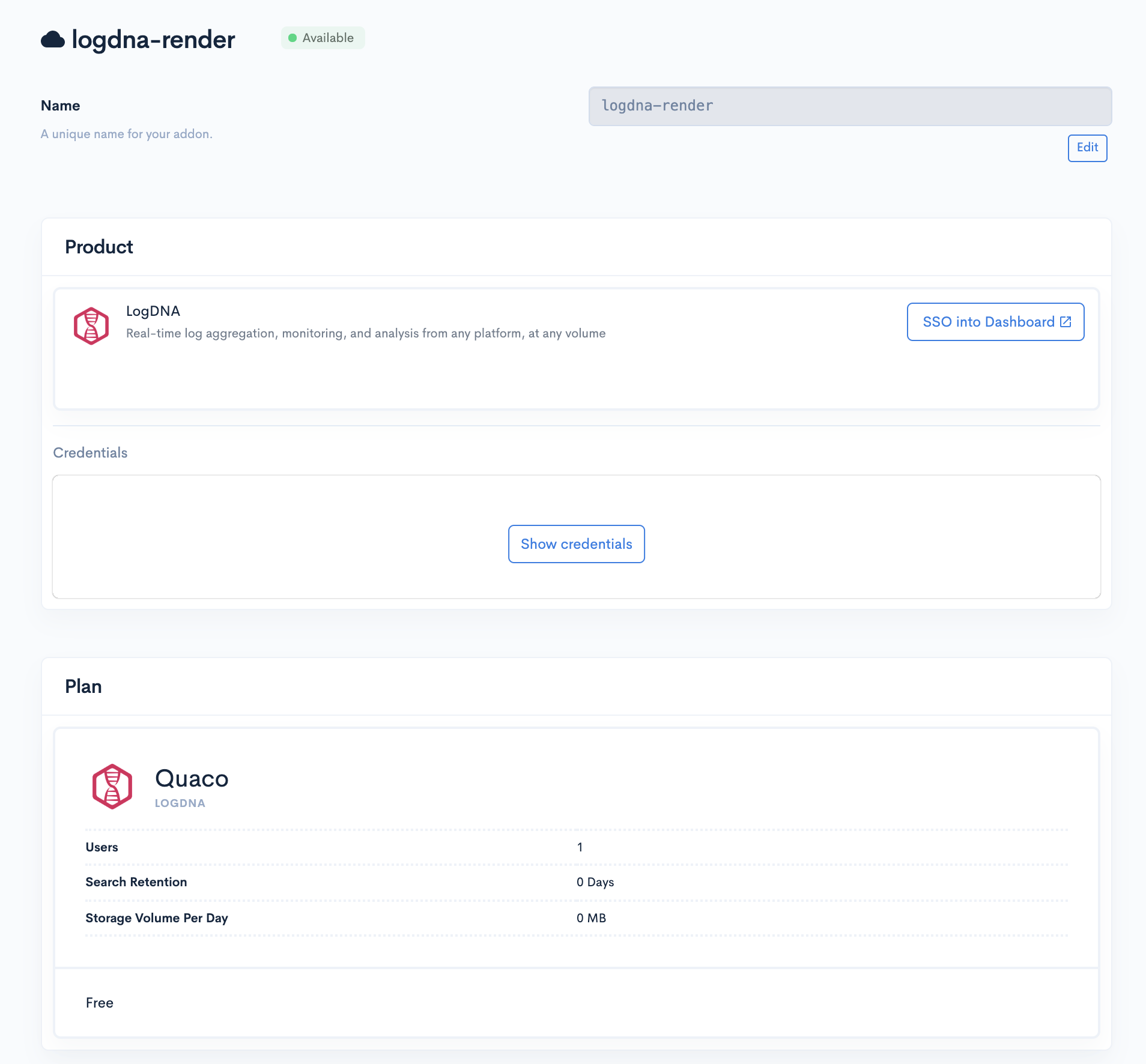
    Render already offers logging, monitoring and other DevOps tools, and will use the Manifold technology to create its own marketplace. Render CEO Anurag Goel said the partnership will provide his company with a platform that enables instant access without having to navigate as many configuration steps because Manifold has automated those processes.

    Goel said Render has been growing at a rate of 50% per month by focusing on the needs of developers, a strategy that has resulted in more than 100 million http requests a week on the Render platform. That approach has allowed the company to differentiate its cloud platform from much larger rivals such as Amazon Web Services, Microsoft Azure and Google Cloud Platform, which are not as focused on the developer experience, he said.

    Manifold CEO Jevon MacDonald said Manifold has focused its efforts on building a marketplace that allows smaller cloud service providers to offer tools and applications with a user experience that rivals any of the marketplaces provided by the big three cloud service providers but without having to build and maintain that marketplace themselves. Manifold also works with each provider of tools and applications on the marketplace to automate the configuration process, he said.

    Over time, marketplaces have proven to be critical for cloud service providers because they provide the foundation on which developer ecosystems are created. The easier a cloud service provider makes it for DevOps teams to discover new tools and applications, the larger that ecosystem tends to become.

    Obviously, AWS, Microsoft and Google have massive DevOps ecosystems in comparison to Render. However, with the rise of cloud-native platforms such as Kubernetes, it will become much easier for DevOps teams to build applications on one cloud platform and deploy them on another. To attract developers of cloud-native applications, Render has built a containerized platform as an alternative to legacy platform-as-a-service (PaaS) environment.

    Render is betting that cross-platform strategy for building applications becomes more commonplace, more developers will opt to build applications on cloud platforms specifically focused on providing a superior developer experience. Current Render customers include smaller startups such as 99designs, Gatsby and Indie Hackers by Stripe.

    As developers start to shift toward cloud-native technologies, it remains to be seen how many DevOps teams will be willing to consider alternative cloud platforms. The major cloud service providers have built business models around providing as little support as possible. While it may not be possible for cloud service providers to support each DevOps team with an expensive support contract, there does appear to be plenty of room for cloud service providers to create a richer developer experience that goes beyond a basic one-size-fits-all approach.

    — Mike Vizard

  • Pulumi Deepens Cloud Ties to DevOps

    Pulumi Deepens Cloud Ties to DevOps

    Pulumi has made available a framework for automating the management of multiple cloud computing platforms using familiar programming languages such as JavaScript, TypeScript, Python and Go.

    Company CEO Joe Duffy said Pulumi 1.0 provides a framework that enables developers to automate the deployment of applications on public clouds in a way that eliminates having to learn another programming tool or manually employ YAML files that are often at the root of misconfiguration issues. Pulumi also provides access to a software development kit (SDK) through which scripts or code developed for Terraform, CloudFormation, Azure Resource Manager, Kubernetes or Helm can be imported into the Pulumi framework.

    Pulumi also has extended the reach of its automation framework to provide integration with a variety of continuous integration/continuous deployment (CI/CD) platforms including Azure DevOps, AWS Code Services, CircleCI, Codefresh, GitHub, GitLab, Google Cloud Build, Jenkins and Travis. Pulumi also can be embedded with integrated development environments (IDEs) to provide statement completion, interactive documentation and rich error-checking.

    Duffy noted Pulumi also now can be extended to further adoption of best DevSecOps practices. A Pulumi Key Management Service is integrated with the key management tools from Amazon Web Services, Microsoft Azure, Google and HashiCorp. Pulumi also provides role-based access controls and integration with identity management tools spanning GitHub, GitLab, Atlassian, Active Directory, Okta and Google G Suite, among others.

    Pulumi comes in three flavors: A free Community Edition enables individuals to manage their cloud environments, a commercial Team Edition adds support for organizations and an Enterprise Edition provides additional identity options, policies and controls, as well as self-hosting capabilities.

    Duffy said frameworks for automating application deployments on multiple clouds are necessary because enterprise IT organizations now routinely embrace multiple clouds. Rather than requiring IT operations teams to master programming environments, Pulumi makes it possible to shift deployment responsibilities on to the developer, he said, noting that approach should significantly increase the rate of speed at which applications can be deployed using cloud platforms such as AWS, Azure, Google Cloud Platform, Digital Ocean or others.

    While a lot of progress has been made in terms of continuous integration, organizations are finding continuous delivery to be a challenge. Pulumi is betting that by directly involving more developers in the deployment process, organizations will find it easier to extend their DevOps processes in a way that doesn’t require anyone to learn new programming tools.

    In the meantime, the rate at which new applications are being built is only going to accelerate. As development teams embrace a wide range of cloud-native technologies, it’s only a matter of time before the application deployment backlog increases significantly. IT leaders are going to be under a lot of pressure to solve that issue in a way that results in more applications not only being deployed on a timely basis but also deployed reliably. Having more applications running in a production environment that winds up having issues later isn’t necessarily progress. In fact, it’s likely most IT leaders would find themselves in even hotter water for exacerbating cloud security issues that already plague most organizations.

    — Mike Vizard

  • DevOps Deeper Dive: VMware Transformed

    DevOps Deeper Dive: VMware Transformed

    At the VMworld 2019 conference this week, VMware in no uncertain teams made it clear it wants to become a major DevOps force.

    Following the acquisition of sister company Pivotal Software last week, VMware is moving to build out an application development framework for building and deploying cloud-native applications based on Kubernetes. That effort coincides with ongoing investments in its vRealize Suite of management tools, through which VMware is committed to automating IT operations across both on-premises IT environments and public cloud computing environments.

    To advance those twin goals, VMware this week launched a series of Tanzu management tools for managing any distribution of Kubernetes while at the same time launching VMware hybrid cloud platform, which combines everything—from vRealize automation tools to the monitoring tools from Wavefront by VMware—to create a central console through which all of IT can be managed.

    [su_box title=”The VMware DevOps Timeline”]

    • October 2015 – Dell Acquires VMware along with EMC
    • April 2017 – VMware acquires Wavefront monitoring service
    • August 2017 – VMware shifts public cloud strategy via Amazon Web Services (AWS) alliance; VMware and sister company Pivotal Software unveil Kubernetes distribution
    • November 2017 – VMware Launches VRealize Management Suite
    • February 2018 – VMware acquires CloudCoreo to gain cloud configuration tools
    • August 2018 – VMware acquires CloudHealth Technologies to gain governance tools; VMware launches AppDefense to provide a zero-trust framework
    • November 2018 – VMware acquires Heptio for Kubernetes expertise
    • December 2018 – Dell acquires all VMware outstanding shares
    • May 2019 – VMware Acquires Bitnami for application packaging tools
    • July 2019 – VMware Acquires Avi Networks to gain Web Application Firewall (WAF); VMware Acquires Bitfusion for machine learning algorithms and GPU virtualization software
    • August 2019 – VMware Acquires Pivotal Software; VMware Acquires Carbon Black; VMware Launches Tanzu Platform to manage Kubernetes; VMware Unveils Hybrid Cloud Platform

    [/su_box]

    After deciding to launch a series of services through which it manages instances of its software on public clouds such as Amazon Web Services (AWS) and local servers from sister company Dell EMC, VMware has been slowly expanding its reach into the realm of applications. The most significant element of that thrust to date has been its acquisition of Pivotal, a provider of the widely used Spring framework based on Java and a platform-as-a-service (PaaS) environment based on open source software from the Cloud Foundry Foundation (CFF).

    The CFF is in the process of migrating the application development environment created for Cloud Foundry to Kubernetes, a cloud-native container orchestration engine being developed under the auspices of the Cloud Native Computing Foundation (CNCF). Both the CFF and the CNCF are arms of the Linux Foundation. The rise of Kubernetes has resulted in many organizations shifting their application development strategies to a platform capable of supporting multiple application development environments.

    Prior to announcing the deal to be acquired by VMware, Pivotal cut its revenue forecast for fiscal 2020 by $40 to $50 million.

    VMware DevOps
    VMware CEO Pat Gelsinger

    Pivotal Software spun out of VMware in 2013, so to a certain degree VMware’s move to acquire Pivotal represents something of a homecoming that last week was valued at $2.7 billion. Pivotal currently has about 350 customers, many of which are hosting a distribution of the Cloud Foundry PaaS on VMware platforms. VMware also tapped Pivotal to jointly develop a curated instance of Kubernetes, dubbed Pivotal Container Service (PKS), that is optimized for VMware platform. As part of that effort, VMware is also developing an instance of VMware vSphere that will run Kubernetes natively.

    At the VMworld 2019 conference, VMware CEO Pat Gelsinger made it clear VMware plans to leverage Kubernetes to bridge the historical divide between developers and IT operations teams. In fact, he told attendees Kubernetes was the most important technology to emerge since the virtual machine was created. As part of that effort, Gelsinger noted that the acquisition of Pivotal coupled with the recent acquisition of Bitnami, a provider of tools for packaging applications, means there are now more 5 million developers participating in the VMware ecosystem.

    VMware is clearly hoping the developer ecosystem will expand as VMware makes it easier to launch virtual machines on every major public cloud as well as on-premises IT environments. VMware has faced a major challenge over the last several years as DevOps teams have bypassed internal IT teams to deploy applications on cloud services based on alternative virtual machines by AWS or Microsoft. Thanks to the inherent portability of Kubernetes, VMware is hoping organizations will now deploy cloud-native applications on VMware platforms. It remains to be seen, however, to what degree DevOps teams will embrace VMware on public clouds versus continuing to employ those virtual machines.

    When it comes to cloud-native computing, VMware is clearly playing catchup. VMware has 250 PKS customers today, while rivals such as Red Hat (now an arm of IBM) have already redeployed their application development and deployment platforms on Kubernetes as an alternative to the Cloud Foundry PaaS. On the plus side, VMware now claims to be the third-largest contributor to Kubernetes, thanks in part to its acquisition of Heptio, a provider of Kubernetes tools.

    In the meantime, there’s no question VMware is at the forefront of developing tools for automating the management and securing of IT infrastructure running its virtual machine software. Less clear is to what degree VMware will be able to translate that success to also unify application development and IT operations across multiple platforms a truly meaningful DevOps way, rather than merely bundling a suite of disparate tools together at a discount.

    — Mike Vizard

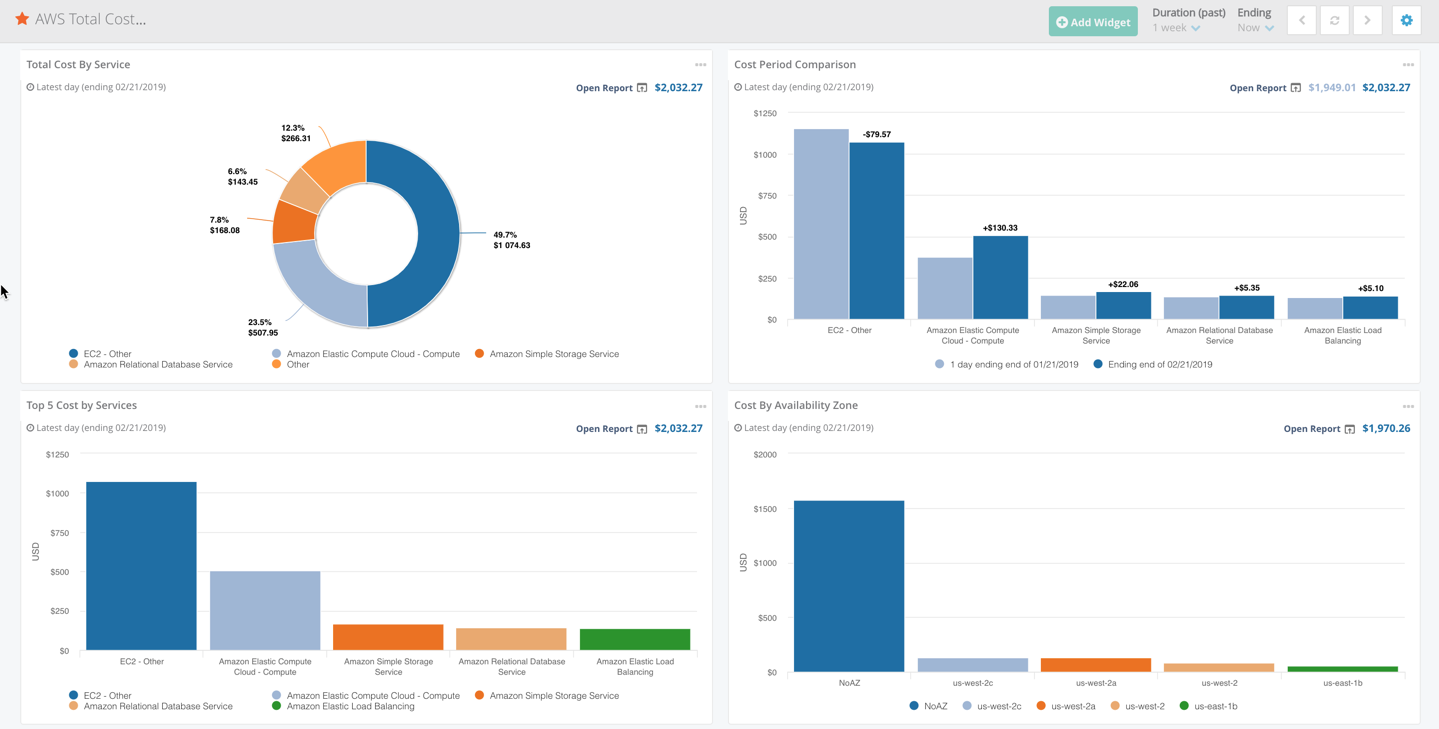
  • Virtual Instruments Acquires Metricly to Monitor Cloud Costs

    Virtual Instruments Acquires Metricly to Monitor Cloud Costs

    Virtual Instruments has acquired Metricly, a provider of a software-as-a-service (SaaS) application that help organizations to optimize the deployment of cloud application workloads.

    Tim Van Ash, senior vice president of products at Virtual Instruments, said Metricly employs machine learning algorithms to identify opportunities to improve performance and reduce costs. Those capabilities complement an existing VirtualWisdom platform from Virtual Instruments to apply machine learning algorithms to optimize IT operations, otherwise known as AIOps.

    Virtual Instruments focused exclusively on enhancing storage I/O performance before extending the reach of its portfolio to include server performance. With the acquisition of Metricly, the company is further extending the portfolio to span hybrid cloud computing environments, said Van Ash.

    Metricly, formerly known as Netuitive, provides analytics tools that are focused on helping organizations contain cloud costs.

    Metricly CEO Bob Farzami said the company’s tools increasingly are being incorporated via application programming interfaces (APIs) into DevOps processes to provide visibility into costs, as the number of applications deployed in the cloud expands and increases. The acquisition of Metricly adds more than 50 integrations to open source DevOps technologies to the Virtual Instruments monitoring portfolio, which spans databases, messaging platforms, containers and cloud infrastructure services such as AWS Lambda, EC2, ECS, ASG, EMR, Microsoft Azure VMs and Load Balancer.

    Those integrations are critical because as the number of services being made available on AWS increases, the visibility organizations have into their real cloud costs becomes more difficult to both discern and limit, said Farzami. There are already hundreds of cloud services on AWS. Cloud service providers often count on organizations to forget how many instances of, for example, virtual machines they have spun up, only to be presented with an unexpected bill at the end of the month. Those issues will be further exacerbated as organizations more aggressively employ multiple cloud platforms.

    Many organizations are also seeing cloud costs rise over time as the volume of data being dynamically accessed by stateful applications increases. Once those costs reach a certain level, those organizations are realizing it costs less to repatriate those applications back on into on-premises IT environments. Metricly provides a mechanism through which organizations gain more visibility into their cloud costs in real-time, but also identify when specific cost thresholds are about to be reached.

    It will be at least somewhere between five to 10 years before even the majority of application workloads are running in the cloud. Today, after more than 10 years, only about 20% of application workloads are running in public clouds. There are a whole host of reasons organizations still prefer on-premises IT environments, ranging from regulatory requirements and performance to cybersecurity and simple inertia. Wherever workloads wind up being deployed, however, the one thing DevOps teams can count on going forward is that someone in the finance organization soon will be asking more pointed questions about how much it costs to run that workload.

    — Mike Vizard

  • Morpheus Data Simplifies Management of Ansible and Kubernetes

    Morpheus Data Simplifies Management of Ansible and Kubernetes

    Morpheus Data is moving to make it easier to adopt and manage both Ansible and Kubernetes. Its Morpheus 4.0 update, announced today, includes a distribution of Kubernetes as well as tighter integration with the open source Ansible automation framework.

    Brad Parks, vice president of marketing and business development for Morpheus Data, said in the case of Ansible, Morpheus 4.0 will eliminate the need for some organizations to employ Ansible Tower, a web-based console and application programming interface (API) used to manage instances of Ansible. The goal is to make it easier for organizations to take advantage of the declarative Ansible automation framework without having to master all the low-level minutiae currently required to deploy and manage it, he said.

    Morpheus 4.0 also makes it possible to view real-time job status updates and detailed log output and execute phased-based and operational workflows using multiple playbooks and brings governance, auditing and reporting tools to Ansible. Morpheus 4.0 also makes it possible to configure Ansible to run over the Morpheus secure agent communication bus, allowing playbooks to be applied to instances where SSH/WinRM access may not be feasible due to security constraints. Available on both Linux and Windows platforms, Ansible also can employ that bus to query secrets securely from the Morpheus Cypher service for storing application secrets.

    In a similar vein, Morpheus Data is also moving to automate the deployment and management of Kubernetes, an open source container orchestration engine developed under the auspices of the Cloud Native Computing Foundation (CNCF).

    By including a distribution of Kubernetes in Morpheus 4.0 that has been certified by the CNCF, Parks said Morpheus Data now makes it possible to federate the management of Kubernetes clusters across a hybrid cloud computing environment. DevOps teams can employ either the distribution of Kubernetes provided by Morpheus Data or Morpheus to provision instances of Kubernetes services provided by public cloud service providers such as Amazon Web Services (AWS), Microsoft and Google.

    Morpheus 4.0 also makes it possible to securely share and govern resources using role-based access controls, optimize resource allocation using analytic tools and audit, monitor and manage logging. DevOps teams also have the choice of provisioning applications using either Morpheus or the Helm templates made available by the CNCF.

    As Kubernetes moves into the enterprise, Parks said IT organizations will need a management framework that can automate the provisioning of application stacks on any combination of legacy virtual machines, Kubernetes clusters and bare-metal servers. Rather than be required to acquire and master separate tools for each platform, Morpheus 4.0 provides a management platform that allows a single DevOps team to manage multiple platforms more easily, he said. As an enterprisewide orchestration and automation platform, Morpheus is designed from the ground up to eliminate the need for DevOps teams to create complex playbooks by providing out-of-the-box integration with wide a variety of IT platforms, Parks added, noting Morpheus 4.0 also now includes Morpheus Jobs, a tool through which jobs can be scheduled or run ad-hoc using Bash, PowerShell, HTTP, Ansible, Chef, Puppet, Groovy, Python, jRuby or JavaScript.

    The number of organizations attempting to unify the management of multiple platforms is expected to increase significantly in the months and years ahead as the number of cloud platforms being employed increases. The challenge those organizations will face involves not only what tools to employ to achieve that goal, but also defining the DevOps processes capable of spanning a hybrid cloud computing environment.

    — Mike Vizard