Category: Blogs

  • Sophos Acquires Refactr to Advance DevSecOps

    Sophos Acquires Refactr to Advance DevSecOps

    Sophos this week revealed it has acquired Refactr, a provider of an automation platform that makes it simpler to add static and dynamic security scanning and application testing to a DevOps pipeline. Terms of the deal were not disclosed.

    Joe Levy, Sophos CTO, said Sophos will extend the Refactr DevSecOps automation platform to add security orchestration automation and response (SOAR) capabilities. This will provide DevOps teams with access to its managed threat response (MTR) and extended detection and response (XDR) platforms. The goal is to make it simpler for DevOps and cybersecurity teams to collaborate once those integrations are achieved in early 2022, added Levy. Sophos will also continue to develop the Refactr platform as a standalone offering in addition to maintaining the current community edition of the platform, noted Levy.

    Refactr Sophos

    Sophos has acquired a range of cybersecurity companies since it rearchitected its core platform to create an extensible security framework known as the Adaptive Cybersecurity Ecosystem. That platform is built on a modern microservices-based architecture that simplifies integration of acquisitions. Collectively, those acquisitions enable Sophos to collect a wider range of data that can be used to train artificial intelligence (AI) models and continuously better automate DevSecOps processes, noted Levy.

    Recent Sophos acquisitions include Capsule8, a provider of a platform for securing containers and BrainTrace, a provider of managed security services. Sophos also acquired Rook Security, another managed security services provider, in 2019.

    In general, Sophos is making the case for a security platform that both DevOps and cybersecurity teams can navigate. In addition to integrating with continuous delivery and continuous deployment (CI/CD) workflows via application programming interfaces (APIs), the Refactr platform can also be accessed via visual tools that can be employed to create launch tests using a drag-and-drop tool.

    In the wake of a spate of high-profile software supply chain breaches, there’s now more focus on implementing DevSecOps best practices. The challenge organizations face is finding a way to achieve that goal without unduly slowing down the rate at which applications are built and deployed. Achieving that goal requires finding more ways to automate, for example, scans of code during the build process.

    In the meantime, however, a recent Sophos Active Adversary Playbook 2021 illustrates how organizations find themselves outgunned by their cybercriminal adversaries. The report details how 37 different attack groups used more than 400 different tools between them to launch cyberattacks. The attackers’ median dwell time before the attacks were detected was 11 days.

    It’s clear that without advances in automation and AI, the odds of securing software supply chains are slim to none. The challenge organizations face is finding a way to affordably tap into AI and automation technology and expertise. Individual organizations are not really in a position to build, for example, AI models capable of automating a cybersecurity process. Most organizations will wind up using APIs to invoke advanced security services delivered via the cloud within the context of a DevSecOps workflow. The issue is determining which service provider offers the most integrated and robust capabilities at the lowest cost.

  • Where Do SREs Go From Here?

    Where Do SREs Go From Here?

    Charlene O’Hanlon talks with Leo Vasiliou, director of product marketing at Catchpoint, about the results of a study the company fielded with VMWare Tanzu and DevOps Institute of nearly 300 site reliability engineers (SREs). This year’s report underscores the challenges of multi-cloud, calls out the underutilization of AIOps and shows a systemic shift in core baselining data. The video is below, followed by a transcript of the conversation.

    Announcer: This is Digital Anarchist.

    Charlene O’Hanlon: Hey, everybody. Welcome back to TechStrong TV. I’m Charlene O’Hanlon, and I’m here now with Leo Vasiliou who is the Director of Product Marketing over at Catchpoint. Leo, thanks so much for joining me today. Really appreciate it.

    Leo Vasiliou: Oh, of course, Charlene. Thank you very much for allowing us to have the conversation today.

    O’Hanlon: Absolutely, absolutely. I want to talk to you about a recent survey study that you guys put out in conjunction with VMware Tanzu and DevOps Institute. What were you guys looking at?

    Vasiliou: Well, from an existential perspective, we hope that the survey that we do leads into the annual report and we’d like for it to be the most data-backed set of insights in its community. There are sort of three underlying constructional essences of the report. One is to provide a core baselining data for the key SRE tenants. So DevOps, who had an amount of time, would call in reported levels of toil. The other essence is to look at what’s trending. And then the third one will generally be around the IT to business relationship. And then with each one of those constructional essences, the context and line items within each section will change from year to year.

    O’Hanlon: Gotcha. Alright. So this one focuses on site reliability engineering and what they’re seeing and what they’re dealing with on kind of a daily basis. Is that right?

    Vasiliou: Yes, yes.

    O’Hanlon: Okay. Alright, great. So tell me a little bit about some of the findings in the study. I know you guys do these, as you just said, reports yearly. So I’m interested in knowing what’s changed from year to year and what really surprised you in this year’s report.

    Vasiliou: Well, I like to say SREs are double struck with challenges because the SRE is essentially two jobs in one, right? They have to increase the efficiency of their operational activities while mitigating the risk of their transformational activities. So one of the key findings this year, which by the way this may be the most provocative dataset we’ve published just because some of the findings conflict with some popular theories in the market, but take the first one just as an example of that, is as part of the baselining set of data there was a self-reported drop in toil, which is the word they use to define repeated, mundane, busywork that doesn’t have any inherent value, of 15 percent. And one of the reasons this is such an insightful nugget to lead us into our various conspiracy theories is it was across the entire distribution of data, across all of their percentiles, as well as across all of the geographies that we looked at.

    O’Hanlon: Wow.

    Vasiliou: And so for me, when I had the blessed opportunity to do the research and sit down and co-write the report, having been stuck in the house for, let’s just call it a year and a half at this point, there was just something different about working on a piece like this and it just felt a bit more meaningful. And the conspiracy theory there or the hypothesis is that if people return to work, or return to the office I should say or some type of hybrid environment, will those reported levels of toil increase again next year as people adjust to the hustle and bustle of commutes just adding to frustration in how they think about things?

    O’Hanlon: That is a really, really fascinating thought process there. We could do an entire conversation about just that and whether what happens this year is going to be indicative of what happens in the future or if this year is going to be like a reset year. So from an SRE perspective though, the fact that the level of toil decreased 15 percent, that seems pretty significant. If you look at the entire spectrum of what they have to deal with on a daily basis, 15 percent, good lord, that’s huge in the SRE space.

    Vasiliou: Yeah. It is huge. I agree. It’s also based on the response of hundreds of survey participants year over year. And what’s interesting, Charlene, is one of the unique tactics we took in this year’s report is before we publish the reports and post survey pre report, we actually showed the results to various industry, let’s just call them, leaders. One of them we shared this particular section to had an alternative theory on why levels of toil dropped, and it had to do essentially with the fact that if people are not in the office, maybe does the very act of them not being observed compel them to do less busywork.

    So there was an alternative theory. But bringing us back to and leading into one of the other essences of the report, which is kind of the trends piece, it had to do with the amount of monitoring data sources, like the volume, variety, velocity of data, and the number of multi same-service platforms, e.g. multi CDN, multi DNS, et cetera, in use. And so will the return to work and the promise of AI ops help them keep toil levels low? Which leads us into the next sort of surprising finding, which is that SREs and their implementation or shift to AI ops is quite slow to maybe what we might be reading about in the industry, which was probably the second most provocative finding in the report.

    O’Hanlon: Yeah. So why do you think it is so slow then? Were there any trends that kind of came out of that? Any reasons why organizations are kind of slow to adopt AI ops?

    Vasiliou: Well, there is obviously a deluge of information and rhetoric in the market on the internet today. We need to seriously consider this idea of an information diet, which is a concept I first heard about a couple years ago. When we think about the idea of the hype cycle versus the challenges SREs face on a day-to-day basis, sometimes the market and the promise of what these types of solutions will offer might outpace actual implementation capabilities from, hey, we’re an SRE, let’s go implement this. I think part of the challenge here is probably the concept of AI ops is too broad and too large for consumption. It’s the idea of just saying, “Hey, let’s go solve world hunger or, hey, let’s go solve or implement AI ops,” right?

    O’Hanlon: Right, right.

    Vasiliou: You’ve got to break it down into smaller components and incrementally develop capabilities from there. Otherwise, how the heck are you going to baseline your progress for when you’re done? I think it’s too big, too broad, and some of the vendor promises may be of self-healing, auto remediation, maybe they were a little more on the hype side, where some of the other AI ops of components like root cause analysis or even correlation, maybe those are truthfully more on the hope and promise side.

    O’Hanlon: Okay. Do you think that AI ops – to your point, it is broad – do you think it just means different things to different people and so somebody actually may be implementing some type of AI ops and actually not realizing it?

    Vasiliou: The short answer is yes. So when we asked the question what monitoring tools or practices are used today, they were presented with seven options, ranging from application, infrastructure, experience monitoring, AI ops, and it was the fifth lowest, meaning that almost 40 percent of respondents said they’d never used it in the first place. The second question we asked is very simply what is the received value from AI ops, where one was the low value, nine was the high, and the range evenly spanned the value scale that was presented in the survey. What was interesting is there were a subset of people who said they never used AI ops but that they still received value, which was an additional dimension we didn’t think about when writing the survey.

    But it kind of brings me back to the essence of your question, which is are you user versus a consumer? And then go back to the previous comments about how big and broad this quote/unquote AI ops idea is, and there’s absolutely a propensity that people hear and think completely different things, unfortunately.

    O’Hanlon: Interesting. Interesting. So one of the things that we’ve been talking about in the SRE space over the last couple years is really how the role is kind of morphing and changing along with the market in general and to address a lot of organizational needs as well. Are there any findings from this year’s study that kind of bear out how an SRE role is changing and even if it is changing?

    Vasiliou: That will go back to what we were saying just a moment ago about mitigating the risk of their transformational activities. When you were asking the question, I’ll just cite the stat from our very first SRE report. We said that 85 percent of respondents said that in order to be successful in this role you have to commute into an office. So that got topsy-turvy turned upside down on its head.

    O’Hanlon: Right. Yeah. [Laughs]

    Vasiliou: But to get back to the essence of the question here, when we looked at the quantity of data sources and the prolific rise of the use of multiplatform providers, we sort of looked at this correlation between how SRE orgs are structured. Are you decentralized, are you centralized, or is there some type of hybrid in between? And then the decentralized piece was broken down even further by stack component, by platform component, or by business product or service. The vast majority of SREs said they are currently decentralized by business product or service, but I think the transformational piece here, which is something we’ll look at next year when we write the report, is because of the prolific rise of multiple third party and multiple same-service third party providers, there is a huge, gigantic spotlight to shift the primary dimension of org structure from product and service to a platform basis.

    And we talk about it like this. If you’ve got 10 different teams assigned to 10 different products or services and one member from each of those SRE teams developing capabilities that happen to be the exact same capabilities in development by those other nine teams, that’s the scalability and efficiency _____ that we start to lead in and talk about in this year’s report. So I think the transformational piece will be the assignment of SRE development engineering resources from product and service as a primary dimension to a platform – for example, cloud, CDN, DNS, API – as the primary dimension where those capabilities will be normalized and developed. Even though underlying platform structures will be different, those capabilities will then be offered as part of, let’s call it, an internal marketplace for use by multiple teams to kind of get away from that concept of silos and being segmented by product or service. So a bit of a long answer but all contextual to the key part there, which is the trend and the transformational piece that we wrote about this year.

     O’Hanlon: Right. Yeah, well it really is food for thought there if you consider how the SRE role was established and how it’s kind of – if you go down that path, how it seems to be changing and evolving as the more technology is adopted and more things are moved out to the edge and the need for SREs at basically all points on the network if you think about it. So great stuff there. Well, Leo, I know we could talk about all of the findings and have a much larger conversation, but unfortunately that’s all the time that we have for this one. But I do want to thank you very much for going through some of the survey findings. If folks are interested in taking a look at the study itself, is it readily available?

    Vasiliou: It is, it is. So it’s available at Catchpoint.com. Just head over to our learning and research section and enjoy the read. Charlene, one of the sentiments we wanted to leave readers with this year was this concept of baselining against Google’s definition of SRE, but we hereby declare by the power vested in us by absolutely nobody at all that you are hereby free to be an SRE.

    O’Hanlon: Oh, wow. Just one more thing to add to my plate. [Laughs] Well Leo, thanks again. I really do appreciate your time, and it’s a pleasure talking to you. I’m sure that we’ll talk again in the future about future studies that you guys have going on. So, thanks again. Really appreciate it.

    Vasiliou: You are quite welcome. Thank you for your time, Charlene.

    O’Hanlon: Alright, everybody. Please stick around. We’ve got lost more TechStrong TV coming up, so stay tuned.

    [End of Audio]

  • EP 15: Why Testing is so Frustrating

    EP 15: Why Testing is so Frustrating

    In this episode of DevOps Unbound, hosts Alan Shimel and Mitch Ashley are joined by Adam Kalsey of Tricentis, Brian Dawson of the Linux Foundation and Caroline Wong of Cobalt to discuss why testing is considered the most frustrating bottleneck for developers and engineers. Panelists will explain the benefits of testing early on in the SDLC and how to accelerate the feedback cycle with automated and continuous testing, as well the pros and cons of testing, the value of shift-left testing and how to effectively balance quality and speed. The video is below, followed by a transcript.

    DevOps Unbound is sponsored by Tricentis, the world wide leader in automated testing. DevOps Unbound airs biweekly on TechStrong TV, with all episodes available on Digital Anarchist. There is also a live monthly roundtable open to audience participation.


    Alan Shimel: Hey, everyone. I’m Alan Shimel, and you’re watching DevOps Unbound. DevOps Unbound is sponsored by our good friends at Tricentis, and it consists of a biweekly, 40, 45 minute video panel on relevant topics within the DevOps sphere, and featuring a panel of experts that rotates every other show, and really great people, and something I personally really enjoy doing.

    And then, about once a month or once every six weeks, we actually have a live studio audience—or there is no studio audiences in COVID, actually, but we have a live virtual audience that participates in our show. Today’s show is just our panel, though, without a live audience, and I’m really looking forward to our discussion.

    Our discussion today is around testing. You know, with the pressure on developers to deliver code faster, sometimes testing is considered a road bump in the way. Testing is considered slowing down the whole process. There are a lot of developers who’d like to push testing off that plate. Of course, no one wants to go back to testing after we’ve deployed software, primarily, but there is that tension there.

    Let me introduce you to our panel today; we’re gonna discuss this in depth. First of all, making his first appearance as a member of The Linux Foundation on our Tech Strong TV network is our old friend, Brian Dawson. Brian, welcome to DevOps Unbound.

    Brian Dawson: Thank you, Alan. Thank you, Alan. And it’s fitting that the first panel, first webinar I do since joining The Linux Foundation is with you.

    Shimel: It’s our pleasure to have you on. Brian, what’s your position at Linux Foundation now?

    Dawson: So, at The Linux Foundation, I am functioning as the VP of Developer Relations and Ecosystem Development. So, just to help, we’re gonna help The Linux Foundation to the development community while driving more of a DevOps opinion into a growing ecosystem of solutions that support open source development.

    Shimel: Fantastic. Next up is my good friend, Caroline Wong. Caroline is—oh, she’s an anchor on many of our different shows here at MediaOps and Tech Strong. Caroline, it’s great to see you again. A little background, maybe, for people who aren’t familiar with you?

    Caroline Wong: Great to be here. Thank you so much. My name’s Caroline Wong, I’m the Chief Strategy Officer at Cobalt. We’re a pen test as a service company.

    I actually started my DevSecOps career 16 years ago leading information security teams at eBay and Zynga. So, in both cases, we were running online operations 24/7 with millions of simultaneous users daily. And now, at Cobalt, we build security software. And, like many DevOps companies, we’ve got data driven, product based teams. We value automation and failing fast, and super excited or today’s conversation.

    Shimel: Fantastic. Welcome. Great to have you, Caroline. Our third panel member is another returning DevOps Unbound veteran, and that’s Adam Kalsey of Tricentis. Adam, welcome.

    Adam Kalsey: Thanks. Thanks for having me. I lead Developer Relations for Tricentis. I’ve been building web applications since 1995, and have always had a soft spot in my heart for bad applications and broken things. And so, I love to help developers build higher quality software and do it in a more efficient, faster way.

    Shimel: Absolutely, and thanks for being on with us today, Adam. Last but not least, in his Florida outfit here, visiting me in Florida, is my Co-host of DevOps Unbound, Mitch Ashley. Mitchell, welcome.

    Mitch Ashley: Coming to you from the MediaOps Studio B.

    Shimel: Yes.

    Ashley: Great to be here. I’m a former product, both security and software SaaS, CTO as well as a CIO, and now I run Accelerated Strategies Group, an analyst firm that focuses on those things.

    Shimel: Absolutely. Hey, Mitch, thank you.

    So, let’s get started. Adam, you’re with Tricentis, the sponsor of DevOps Unbound, and they’re a testing company, probably the leaders, one of the leaders worldwide in automated testing, continuous testing. Have we put too many straws on the developers’ camel’s back by making them, you know, be more responsible for testing to say we need to test more of our code earlier.

    Is it a bridge too far for many developers? Is it making them resent testing? You know, what’s the current state?

    Kalsey: I think where we’re failing developers is by handing them lots of more things to do without giving them any—without giving them what tools, and I don’t mean just necessarily software tools, but without giving them the things that they need to do it effectively. If we just pile things on developers and say, “Oh, this is your job now” but we don’t give them the support, we don’t give them the training, we don’t give them the expertise, we don’t give them anything to make that better—sure, it’s just gonna be harder on ‘em.

    Shimel: To play devil’s advocate—oh, those poor little testers making a quarter of a million dollars a year each. Do we want ‘em to do testing, too? Right? Is there some of that here, Brian? Or—go ahead, Adam?

    Kalsey: No, no, Brian—please, please, jump in.

    Shimel: Well, he’s from The Linux Foundation, he now represents these folks. [Laughter]

    Dawson: Well, first, not all of them make a quarter of a million dollars a year, right? But I do think what you raise is important when you bring up the investment, right? We are hiring talent with a particular expertise in a particular domain, a particular ability to solve problems and innovate.

    And there is an argument to be said, Alan, that, “Do I want to spend this money, this quarter of a million dollars plus 200,000 in RSUs on having somebody write test harnesses?” Now, I think—you know, that can be balanced by what Adam said. Well, first of all, yes, because we want everybody thinking about quality. But you know what, if we want a return on that investment, we wanna free the cognitive load, then you know what? We need to invest in automation, we need to invest in better collaboration and reducing friction from the process.

    Shimel: Agreed, agreed. Caroline, you know, it’s been a big—this whole DevSecOps movement and shift left has been about shifting security testing left and getting developers more involved in security testing, right? Yet another camel on the—yet another straw on the camel’s back. Should we be doing that?

    Wong: So, I—oh, my Internet is awful. Can you hear me?

    Shimel: Yes, we hear you fine.

    Wong: Okay, fantastic, awesome. I’ll just—I know that there’s post editing, so it’s okay for me to say that.

    Shimel: Mm-hmm.

    Wong: So, Alan, I bring a particularly unique perspective to this group in the sense that I actually oversee people at our company, I oversee Human Resources. And I’ve been with the company since we were 10 people, and today we’re 200. And one of the super interesting things that happens is, naturally, as a company grows, what people do, they specialize and then we have to figure out how to communicate more effectively.

    And I think that if you’ve got an engineering team and you say, “Okay, now you’re responsible for Development and you’re responsible for Ops, and your responsible for security, then there’s got to be some level, depending on the maturity and the size of the organization and what the organization’s trying to accomplish of specialized roles and protocols for engagement.”

    And I think that when, either number one, those roles are not clear to, I think Adam was making a point earlier about security folks need to be providing guidance to engineers where—because engineers are not expected to be security experts, frankly. Security experts are not expected to be engineers. And then, at the point where information is being handed off where the responsibility for taking an action, those, all of those sort of procedures, they have to be clear, otherwise they’re simply not going to happen.

    Shimel: Yeah, agreed. I think they have to be clear. But even if we make them as clear as we possibly can, is it just—are we putting too much on developers? I mean, I think fundamentally, that’s the question here, right?

    Wong: There’s—

    Ashley: Alan, it’s not only—sorry, I’m just gonna jump in. It’s not only quantity of work—is it the right work?

    Shimel: Right.

    Ashley: Because I know from writing software and being part of software teams for so many years, there’s this thing called unintended consequences or unintended use. Well, you’re not supposed to use it that way, but the person who designed it intended it to be used a certain way, but one of the important functions of tests is not just to uncover bugs and elicit those things or security issues, it’s also to push the boundaries about how you might use the software and essentially stretch it to try to find where it’s gonna break where they can. And oftentimes, that’s a different mentality than or perspective, certainly, than the person that wrote the code.

    Dawson: And if I may jump in and say maybe part of the discussion can get to generalist versus specialist, right? There is this idea, Alan, that when you talk about putting a lot in the developer’s hands, this idea that there is this prolific person called the full stack developer that can separate themselves from what they develop to look for security vulnerabilities, to test it, then ultimately deploy and run it, right? And I think we need to give thought to, are we trying to build a bunch of generalists, which doesn’t potentially enable them to do any job the best, or are we enabling specialists to better work together, share information, and crowdsource quality and crowdsource security?

    And I’m just curious if any of the other panelists have an opinion on this concept of full stack developers versus, say, needing traditional, lifelong quality experts.

    Kalsey: Yeah, I like to say that we decided to create cross-functional teams and we did it by removing all of the functions, and we centralized them all in a single person—and that’s not a cross-functional team. That’s—

    Shimel: That’s a cross-functional person.

    Kalsey: Yes. Well, and you end up with the jack of all trades, master of none problem. You have to have the specialists on even a cross-functional team. You have to have, there’s a lack of testers, there’s a lack of UX people, there’s a lack of security people. They have to be part of that team. You have to have people that, dedicated folks to do the hard work. A developer may be able, and a generalist may be able to do a lot of the easy things and a lot of the, “Oh, yeah, we’ve done this before or we’ve seen this, and this is a known know, let’s go fix that.”

    It’s the hard work of figuring out—what don’t we know, and then having the expertise to be able to know what that hard work is, even, to go after it. And without that, of course the developers are going to be overloaded, they’re being asked to do everything and they don’t know what everything is.

    Shimel: Agreed, agreed. I mean, I think, again, security is the poster child for this, right? We’re asking developers to be security people or to make security a priority. Now, you ask most security people four or five years ago, they’d tell you you’re smoking your socks. Developers don’t care about security. They never did. Only we care about security.

    It’s changed. It’s changed a little bit. We do think other—no one wants to develop insecure code. But we can’t ask them to be security people—or can we, Caroline?

    Wong: I sort of think we have to. I think that, you know, the big, bad thing that no one wants to happen is a security breach, and a security breach cripples an engineering team’s ability to execute on a roadmap. You know, if something big and bad happens, then entire teams have to rush and commit to fixing this problem sometimes for months, you know, time which, of course, could be invested more profitably elsewhere.

    I have a quote that I’d love to share from a colleague. Denali Lumma is the VP of Engineering over at Project Ronin, and she also makes a really good point about tech debt. She says, at a certain point, it’s too late, there’s too much tech debt, too much complexity, the code base is too big, and it becomes impossible to do anything about it. What you see there is a business will slowly die because shipping features becomes harder and harder, critical vulnerabilities and bugs are introduced more frequently, and eventually it kills the business.

    You know, I often think of software as a living organism, right? Whether you think of it as a tree or as an animal, there is this balance between making sure you’re doing sort of your fun things, your running, but you’re also resting when you need to heal. You’re also—you know, if we’re talking about a human being, you’re also sort of going to the doctor once a year.

    Shimel: Agreed.

    Wong: Yeah.

    Shimel: Agreed. Thoughts?

    Kalsey: Quality has to be a mindset, security has to be a mindset, user experience has to be a mindset on the developer time, among everybody there. The user experience person needs to understand and have a mindset of developing and of creating a secure experience and not, “Well, we’re gonna get rid of all the security because that’s hard for people to use.” Everybody has to have that mindset, but you still need the experts and you still need the expertise to be able to do things well. Just having a mindset doesn’t make you fantastic at it. You can say, “Oh, I love to get out and I’ve got an exercise mindset, so I’m gonna go run a triathlon tomorrow.” It’s probably not going to work.

    Shimel: Probably not.

    Ashley: You know, it’s interesting—we could’ve had this conversation 20 years ago, 10 years ago.

    Shimel: Absolutely.

    Ashley: You know, why are we still frustrated with tests? What is it with tests that is, you know, it used to be sort of the orphan of the development process, you know, the only thing that happens later than test is documentation. Well, now, [Laughter] it’s still an issue. Why is that? Why are we so frustrated with tests today? I’m curious what folks think.

    Dawson: I’m gonna start with one not very complex thought—it’s actually hard.

    Shimel: It damn right is.

    Ashley: A little more respect—we need a little more respect for tests. [Laughter]

    Shimel: Well, but this was like, I remember when we first launched DevOps.com, a popular theme was that, you know, DevOps would kill the testing star, right? That there would be less QA jobs because everything was gonna be automated continuously and shift left, we wouldn’t need testers—poppycock, right? We have as many testers as we ever had, if not more. It didn’t kill off testing jobs. I think it was Adam that said we’ve made testing part of the DevOps team. So, we have people on the DevOps team who are responsible for the various, you know, styles and types of testing that we do, including security.

    I think what’s happened, though, is, these DevOps teams—when I first started DevOps.com, if you spoke to developers, they’d say, “Oh, this DevOps is all about the Ops.” And then you’d talk to the Ops people and they’d say, “This is DevOps, it’s all about Dev, it’s Dev-centric,” right? And that’s the sign of a good compromise when they’re both pointing the finger at that.

    But it has come—at least as far as testing goes, from what I see, it has sort of tilted where, you know, as we’ve shifted testing left, we’ve shifted responsibility left as well, which kinda winds up closer to the Dev, or certainly to the DevOps teams.

    However, though, let’s look at the alternative, and I’m gonna ask all three of you—all four of you have been around the block once or twice. My personal feeling is, is that we do a much better job of test coverage today than we did 7 or 10 years ago, and I think DevOps and continuous automated testing is a big reason for that.

    Thoughts? Anybody disagree? Show me wrong.

    Wong: I will challenge you, Alan.

    Shimel: Okay. I was hoping someone did.

    Wong: I’ll challenge you, and the reason is because—so, we’re all familiar with the OWASP Top Ten.

    Shimel: Very much.

    Wong: There have been a handful of versions of the OWASP Top Ten since the first was produced in 2003. I believe we’re gonna see another version later this year. The current version is from 2017, and if you take the 2017 version of the OWASP Top Ten and you put it right next to the 2003 version, it is sort of mind blowing how similar they are.

    Shimel: Yeah.

    Wong: And what that says to me is, we actually know exactly what the problems are. We know how to find them, we know how to fix them, and we know how to prevent them, but they’re still around, and so I think that’s—

    Shimel: They are, but are there as many of them, right?

    Wong: Absolutely. [Laughter]

    Shimel: You think there’s as many cross-site scripting or buffer overflows than there was 10 or 15 years ago?

    Wong: So, there are some categories that have been eliminated. You know, there are some categories that, for which we can define a secure pattern, and we can encourage folks to use that secure pattern, and for which we can actually eliminate some of these things.

    But there’s others or which we cannot. You know, I think about—I recently visited my sister’s home, and they have two young children, a 2-year-old and a 4-year-old. And at night, what they do is, they run a Roomba, which is brilliant, you know? If you could spend your weekend playing at the park with your kids instead of vacuuming, of course you’d wanna do that. And the Roomba works because they sort of take the time to get all the toys off the floor and make sure everything’s clear and once they use the Roomba, they clean it. There is this different work involved in effectively using a Roomba that’s different from sort of manually using a vacuum.

    And I do think there are these two distinct categories of testing, one category which you could say is known, repeatable, and automatable, and another for which manual testing, I believe, will always need to exist. There are types of security flaws like business logic flaws, race conditions, chained exploits that I don’t believe that in my lifetime, we will be able to figure out how to teach a computer to find these particular types of issues.

    Kalsey: And it’s beyond just security testing. I mean, exploratory testing, from a tester, your automated tests are not going to find, “This error message makes no sense in this context. I did this, I expected—I don’t know what this error message is trying to tell me to do.”

    Your automated tools aren’t going to find that. All they’re going to be able to find is, “It didn’t work, we sent an error message. We had the things we wanted to put in the error message there.” You can test that your code is doing the right thing, but if you didn’t design it to do it right, you’re not gonna find that with an automated test.

    Shimel: Fair.

    Dawson: I would tend to say, for the surveys that we’ve issued and I’ve read, your original statement, “Has test coverage improved significantly?”—yes, I think all indications are, we are getting better at automated testing, we are getting better at that pursuit of that thing we call test coverage.

    But I think what’s more important is, has the quality of test improved? Are we testing the right things, right, from functional testing to security testing, various shades of security testing? And I’d say (1) yes, we have improved there by sort of the qualitative and quantitative measures that I’ve seen. But I also think, as we truly start to focus more on quality, we start to achieve more coverage, we start to implement better tests, it becomes more clear, as I think Adam and Caroline are speaking to how much more work there is to do, how much other things there are to improve testing on. Pair that with a constantly changing technological landscape, right? We’ve gotta learn new stacks, we’ve gotta figure out how to test new stacks. We’ve got half of our put in in a SaaS platform, but then we deploy on prem, et cetera, et cetera, et cetera. And then you add to that that, at the same time, we’re trying to transform organizations.

    So, Adam, you talked about exploratory testing; Caroline, the human element. I think one of the things that pursuit of the full stack Dev, that pursuit of the fully automated processes failed to do in a lot of orgs I speak to is, we talk quality first, but oftentimes, the DevOps transformation doesn’t involve quality engineering first, right? And I think one of the things we need to get better at is engaging with and partnering with Quality and establishing our automated and modern processes.

    Kalsey: Yeah. We talk good in the testing industry a lot about shift left and that testing is moving earlier in in the process, and too many organizations have taken that as, “Well, the developers are the ones that are early in the process, so that means the developers do it.” No! Shift your damn testers left. Get them involved in the design phase. Get them involved in talking about the architecture. Get them involved in the entire thing, not shift the task to the people who are earlier in the process. Shift the whole process, please.

    Dawson: Or to a script, yeah.

    Ashley: I’m gonna take a whole ‘nother tack, and I thought you were gonna go here, Brian, is, I think we need to shift tests down. We need full stack testing. It’s not application testing anymore. Most of the security errors that we have are due to configuration errors. And what Caroline said was absolutely true. We still have SQL injection, cross-site scripting, and overflows may be less so. But why? It’s because it’s not just in the app layer that those things happen, it’s in that software stack. And I know not every tester can be an expert at the stack itself, but maybe that’s, instead of kinda dividing the DAST and SAST and the different kinds of testing that we do and just deciding, can we shift those in one direction is, let’s think about it from a depth perspective, because that’s where a lot of those errors are coming from. It’s not just the app.

    Kalsey: Oh, yeah, and the tooling on this is also, can be super fragmented. You need one thing to test your infrastructure code, you need another thing to test your UI, you need another thing to do the security—and they’re not, consolidating those reports and combining them and figuring out what worked and everything is hard work and there’s nothing that does that. This is a place that Tricentis could definitely improve and improve our own tooling here.

    And then, once you’ve done that testing, the results are often in a silo. Okay, I found out I had a problem—how do I fix it? How do I go see the data behind what was going on in the system to understand this and solve this? And now I’ve gotta dive into a monitoring tool or my logs or an observability tool instead of just having everything all in one place.

    Shimel: So, I think there’s a—I’m sorry, Caroline, you go.

    Wong: No worries, and thank you, Alan. So, we’ve talked about shift left, shift right. Mitch is kinda talking about shift up and down. I think there’s another axis, if you will, which is sort of what I’ll call shift in and shift out. So, you can test things in and out of band, and that’s gonna make sort of a wildly different difference in terms of how those processes run.

    You know, I think 10 years ago, security people appreciated the power that came with being a gate in the process, being an end band process. You know, today, it actually makes sense, I think, for a lot of security testing to be out of band, but that removes the sort of power and authority of security people to say something like, “You must fix this, otherwise you’re not gonna go live if it’s happening out of band.”

    Shimel: Fair. So, I’m getting a little dizzy, we’re going left, right, up, down, in, out. But—

    Ashley: It’s a circle. [Laughter]

    Shimel: Yeah, you know, shake it all about. But here, fundamentally, though, are we just kinda dancing—no pun intended—are we just dancing around the real issue, which is, we wanna do more pre-deploy, we wanna do more, we want better quality software, right? I think we could all wrap our heads around that idea and vote for that. We all want better quality software. Security people are at a premium. We can’t shift security people left or en masse. Testing people are also at a premium, though we’ve integrated them into the DevOps teams. Developers are at a huge premium, they’re probably our most expensive resource in terms of humans.

    What do we need to do to make everyone’s job easier here, to make this function better? Is it a question we’ve gotta automate more? I mean, maybe that’s what it is, if we automate more, or is it a cultural thing, right, where—

    Ashley: There’s also test-driven design, right, which is, as you’re designing it, you talk about, you put together your test strategy of, “Okay, we do it this way. Let’s talk about how we are going to test it, start to lay out the framework for how we think this can be validated.” I mean, it’s not the only thing to do, but I think—so, if you start with that in mind, now you’ve got a path to pursue as opposed to, “Here’s a chunk of software, you folks figure out how to test it, right? We built it, you test it.”

    Dawson: Yeah, and I’d add, I think there’s no—again, not only is the practice of testing harder than we often like to admit, but the, you know, the path to kind of getting to where we fully wanna be, where we don’t dread testing, complex, hard path, and I’d say it’s the DevOps trinity, you know, Alan, and we all can probably hit a few points on each.

    But you have to address people and culture, as Adam brought in earlier. There’s no getting away from, security needs to be a thought for everybody, right? I can install all the locks I want on the front of my door. Actually, over 24 years—today is my anniversary—my wife has programmed me to lock the door when I come in the house without thinking, right? She’s kind of impressed a security culture on me.

    You do have to address people and culture, process, practice, tools and technology. Automation alone will not solve it. A mindset alone will not solve it. All of that needs to come to fruition.

    Shimel: Mitch, make a note—invite Brian’s wife to our next security panel.

    Dawson: [Laughter]

    Ashley: I’ve already looked up her e-mail address—thank you, Brian, appreciate it.

    Shimel: Happy anniversary, by the way, too, Brian.

    Dawson: Thank you, thank you.

    Kalsey: This is one of the places where I think what Caroline said is so important, that this in bound, out of bound—if you’re trying to do everything in line, of course, it’s gonna be harder. In shifting that mindset to doing things continually in the background, we already do so much stuff and process automation in the background where we don’t have people check, “Here’s a step in the process.” No, this is going along in the background, dependency watching and that sort of thing and updates.

    We can be doing testing in the background as well for a lot of it, and identifying what needs to be in the foreground and what needs to be in the background. Look, I’ve seen CI/CD pipelines that take hours and hours and hours to run because the tests take six hours to execute and to build. That can’t work in any sort of a reasonable DevOps system.

    Wong: I think there’s two parts to a solution, and I’m really, frankly, just parroting what Brian said. I think there’s a collaboration piece between the people. You know, to an earlier part of our conversation, you’ve gotta have the folks with those specialized skill sets. Ideally, you’re able to get access to those folks on demand, which historically has not been something that’s been possible, but that’s beginning to happen.

    The second thing is—so, you’ve got your people collaborating, you’ve also gotta have your technology integrated. So, for whatever security tool or processors, how do those outputs actually get to the engineers? What we need is bidirectional integrations for things like Dev ticketing systems. We need things like APIs for test results. I think collaboration at the people place and integration at the technology place—both of which we could call processes—then it’s just, it’s really a repeat of what [Audio skips].

    Shimel: Mm-hmm. I mean, but wasn’t this one of the promises of DevOps? I mean, I got into DevOps because I thought it was a better way to do security, truth be told. But one of the promises of DevOps is, we’re gonna automate more, so we could go faster with more quality—two out of three ain’t bad, right? And, you know, did we lose that somewhere? Is that no longer a goal, or have we taken that as far as it goes?

    Kalsey: We keep trying to solve it with technology instead of by looking at the culture and changing how people think. And you can’t think the same way and apply new technology to it and expect the technology just to magically solve all your problems.

     Shimel: Brian, you agree, or Caroline?

    Dawson: I absolutely 100 percent agree, and I’ll agree and then I’ll just add a point. And I know I’m being a bit nebulous about it, but there’s a human element to this. At the end of the day, it’s humans developing software for humans, right? Whether it’s the code on your electronic control module in your car or Waze on your phone or the OS, at the end of the day, the final endpoint is a human. And you know what? At least now, and I know we’re improving, there’s no way that we can ensure—and I don’t mean to accept security here, but to test the quality of the human experience, right?

    And think about this—at the end of the day, knowing that the language on a screen is self-descriptive and informs me what to do. Testing the fact that, or ensuring that when I submit my credit card number it’s not vulnerable, right? Whether we’re talking API testing, whether we’re talking security testing, all of this at the end of the day boils up to customer or user experience testing.

    And I guess what I’m gonna posit is that we can never entirely automate that. And where we’ve hurt ourselves and possibly made a false promise is, we’re gonna create a bunch of full stack engineers, we’re gonna get rid of, away from operations functions, testing functions, and we’re gonna use TDD and automate everything from the start, Gherkin, yadda yadda yadda. And I believe—look, that has enabled us to go faster, but our impedance mismatch, the limit we’ve hit right now is where we’ve failed to better connect people and enable them to collaborate and share knowledge. So, not just security, not just back end, not just data, but the entire customer experience is of quality. Dev can’t do that alone.

    Shimel: No, sir.

    Dawson: I’m sorry, Alan, did I get, did I—

    Alan Shimel: No, no, that’s all—I’m saying no, sir, you’re 100 percent correct, but I know Caroline wanted to say something.

    Wong: So, I do have a comment about automation. I think that DevOps has figured out how to do automation when it comes to defect discovery. I think we’re sort of good at that. I think what we’re still trying to figure out is automation when it comes to workflow and process so that, actually, again, to Brian’s point, the collaboration can happen automatically, rather than due to a human who’s involved and making it happen. How do we get the right information to the right people in the easiest, most efficient way at the right time, and how do we make it super easy for them to do their jobs?

    I do think that there remains—I do think that the next evolution of automation and DevOps is gonna go from defect discovery automation, which I think we’ve gotten quite good at, to workflow and process automation.

    Shimel: Fair enough. Adam, thoughts?

    Kalsey: I like it. I mean, identifying what you’re automating and what’s working in that automation is important, but also identifying what’s not being automated or what in your automation is broken. And not broken from the standpoint of, it doesn’t execute or it doesn’t run to completion, but broken in, it’s not solving the problem you wanted it to solve.

    Shimel: Fair enough. Guys, we have time for maybe one more question. I’m gonna pose it and throw it out there to you. Is it possible we’ve shifted too far left or that you can shift too far left and we need a little rubber band, here, going the other way, a little pendulum swing? Or you think we just scratched the surface? Caroline, you look like you wanna say something.

    Wong: I think that’s a great question. I do think it’s possible to shift too far left, and the reason is because, while we, I think, are all familiar with the statistics and the studies that say if you fix something earlier in the cycle, it’s cheaper—there’s stuff that exists to the right that doesn’t exist yet on the left. Software development is, you know, to sort of a little analogy that we talked about earlier, I think it’s a dance. I think it’s a dance between people. I think software comes about as a result of the behaviors and the actions and the decisions that various folks take together. And security and quality are emergent properties. They’re not Band-Aids, they’re not vitamins, they’re not painkillers. They have been, as a result of this dance. So, there are some things for which, if you try to test it too early, it doesn’t actually exist in its final form yet. If I take my 6-year-old to the doctor and then I don’t when she’s 21, you know, might we have caught something super important as a 6-year-old that we were able to step in and address right away that would’ve been great? Yes, but as a 21-year-old—guess what? She’s gonna have different problems that were not apparent at age six.

    Shimel: Spoken like a true mom and parent, right? Parents, we worry about that. Anyone else? Thoughts on that? Can we go too far left, or have we gone too far left?

    Dawson: I, Alan, think it just depends. I think we’ve interpreted left different ways. I think it’s a good, catchy term. It’s an important and powerful catchy term, but as I’ve heard others discuss, we sort of overemphasized this idea of left. One, to Caroline’s point, right, we just do everything here and we’re done, good to go, right? But then this idea that we can put everything in Dev? Well, no, I think—I think, for what it’s meant to communicate, shifting left is an apt term.

    I think in terms of ensuring that we’re doing everything we can as far left or as early in the process to mitigate issues later—great. Right? But we don’t just shift security left. Right? Like Caroline said, inbound, out of bound. Actually, we need to shift security everywhere. We don’t just shift quality left, we need to shift quality everywhere.

    So, I think there are—we need to be ensuring that it’s almost zero trust software delivery, right? At every stage of the process, from concept where you should be sitting down with QA and the security team to capture the requirements to test, to deploy, to run, we need to be thinking about it, also.

    Alan, I’d say shift left is good—shift everywhere is really what we meant to be doing, right?

    Shimel: It’s better. Great.

    Kalsey: Any time we engage in sloganeering, there’s gonna be people that pick the wrong things from the slogan. I mean, “Hey, we have DevOps. That means we don’t need Ops anymore!” And that’s not what it meant, and there’s people that have taken the wrong cues from shift left, and instead of shifting the processes left, they shifted the tasks onto the people who were left already, and that’s not gonna work.

    Shimel: Absolutely. Hey, Mitchell, you wanna tie a bow on this?

    Ashley: I’ll put a bow on this. You know, there are admittedly many, many things that I don’t know, but one of the things that I do know is that, if a developer says it’s tested, it’s ready and a QA person says it’s tested and it’s ready, five out of six dentists will choose the QA person. I will, too.

    So, there’s something there. There’s a reason why we don’t have DevQA or DevTest. We don’t talk about it that way, we talk about DevOps or DevSecOps. QA is extremely valid and necessary, and we can’t live without it, and I think we need to invest in helping, elevating how we test and how we think about our software applications to test in. So, those dentists will be happy.

    Shimel: And Crest, the Crest test for QA. Thanks very much, Mitchell. Caroline, Brian, Adam—thanks for joining us on this episode of DevOps Unbound. Great conversation. For our audience out there, do check it out. We have another episode coming up in—well, not next week, the week after, and then I think we have a roundtable the two weeks after that.

    But for now, though, we’re gonna wrap. Many thanks again to Tricentis for sponsoring DevOps Unbound. Thank you for watching, thanks to our panel. This is Alan Shimel, we’re out.

    [End of Audio]

  • Improving Security with Mapping, Automation and DevOps

    Improving Security with Mapping, Automation and DevOps

    Strong cybersecurity is paramount for every organization. But all too often, security teams are disconnected from ongoing development processes and viewed either as an impediment to bringing products to market or as an afterthought. This leads to increased costs and possible gaps in the attack surfaces of new platforms.

    While many organizations are turning to security automation to help them manage and mitigate their expanding threat landscape, quick fixes rarely work. Planning is required to help organizations determine their pain points, add security early in the software development process, and determine where automation can deliver the best ROI.

    What Should Be Automated?

    Security automation can programmatically test, institute guardrails, provide feedback and remediate cyberthreats by executing tasks as part of the continuous improvement pipeline. This, in turn, can help understaffed security teams by streamlining complicated and time-consuming testing processes, enabling teams to maximize their time, be more productive and focus on risk priorities. Once the manual process is removed, the automated workflows can then carry out a variety of more minute actions using intelligence and logical decision-making.

    Security-focused areas that may benefit from automation technology include but are not limited to:

    • Static and dynamic code analysis used to discover security vulnerabilities
    • Test harnesses for software configured to run a program unit under varying conditions to discover and monitor its behavior and outputs
    • Upstream code analysis that examines code such as complete code blocks or patches
    • Vulnerability testing, management and remediation to discover and fix weaknesses that may be susceptible to attacks
    • Penetration testing used to simulate cyberattacks on an organization’s computer systems and evaluate security posture
    • Automated enforcement based on data classification and tagging strategy
    • Deployment and management of infrastructure components

    Focus on ROI

    Despite the benefits, many organizations face substantial hurdles in developing, implementing, testing and optimizing the comprehensive, integrative, long-term approach needed to use security automation to cope with the evolving threat landscape. It’s all too common for organizations to begin projects that start with automation as the outcome rather than rigorously mapping the processes and determining where value from automation can be gained.

    Consider an organization that decides to automate the process of deploying a firewall to an AWS cloud. A team spends several weeks developing and testing an automation playbook that can spin up virtual firewalls, license them, connect them to a central manager, deploy configurations and apply them and send logs to the appropriate places. Testing proves the automation works.

    But when asked how many firewalls they expect to spin up this year, the answer is two–maybe. How many next year? None. The team, therefore, spent more time automating this function than it would have taken to just deploy the systems and the organization won’t likely realize any direct return on this work for at least two years.

    Value Stream Mapping

    The first step in achieving real value is to understand that automation is a second-order operation that relies on a thorough assessment and plan of all the steps required to achieve real technical and business outcomes. That means conducting value stream mapping to analyze, design and manage workflows that best suit your environment.

    Mapping will help you analyze and define security processes. Without analyzing your processes, you’ll have no idea of where the bottlenecks are or how they can be removed. Better understanding the processes will also allow you to refine them as needed. Without doing all this, you’ll have no way to prove the value of the automation you’re implementing, and no compelling business justification for it.

    The Role of DevOps

    Few organizations are able to effectively realize the benefits of automation right out of the gate. Value stream mapping enables organizations to determine their pain points, pinpoint exactly where they want to use automation and identify processes that cannot or should not be automated. Clear-eyed planning and assessment will help teams define a process and determine the value of return on automating certain processes.

    In addition, for security to be effective, we have to shift security left in the software development life cycle (SDLC). Security practitioners should be engaged in the development pipeline, including collaborating on automation initiatives and building harness and test cases as the work progresses. This will save time, improve quality and ultimately add value, ensuring the success of security automation projects.

  • What It Will Take To Bring Cloud Gaming to Fruition?

    What It Will Take To Bring Cloud Gaming to Fruition?

    The gaming industry is booming. There are 211 million people gaming in the U.S., and it’s one of the fastest-growing forms of entertainment on the planet. In the age of Twitch streaming, gaming has even upstaged traditional sports viewership. On average, young gamers between the ages of 18 and 25 spend a full hour more watching online gaming than watching traditional sports.

    Gaming has also become a way of connecting with others—65% of players say they play with others online or in person. Some software development teams even encourage gaming in the workplace to increase productivity. For this reason, there has been a massive shift toward online cooperative games, RPGs and sandboxes like Minecraft. Also, games are becoming more cloud-based, with purchases, downloads and game saves occurring in the cloud. Still, many people lack the hardware necessary to run complex games locally. All these factors are harbingers of a coming shift away from PC and console-based processing.

    I recently met with Noam Salinger, product manager, Granulate, to learn about the future of gaming and how software teams in the gaming industry can prepare. To Salinger, “cloud gaming is the next step.” The move away from consoles and toward cloud-based, remote processing will have huge ripple effects. Lowering the barrier to gaming could introduce millions of more players into the ecosystem and further balloon the industry. However, cloud gaming presents significant hurdles. The transition will require a substantial reduction in latency, 5G networking and highly efficient computing optimizations.

    Roadblocks to Cloud Gaming

    “Cloud is an integral part of any gaming company,” says Salinger. More and more functionality associated with gaming is being pushed online. There are already online game marketplaces, cloud-based account management and remote game saves. This is especially prevalent with mobile gaming. But, what about the actual processing for computationally-intensive games—could these workloads also move to the cloud soon?

    This kind of cloud-based gaming could soon come to fruition. Yet, Salinger foresees some major roadblocks to cloud gaming:

    1. The Software Components

    A complete jump to cloud gaming will require having the proper software infrastructure in place and getting vendors on board to support it. This is perhaps the biggest obstacle to cloud gaming in the software industry, said Salinger, “It’s still not mature enough.”

    2. The Business Components

    Furthermore, gaming platform companies might refrain from cloud gaming due to fears of it cannibalizing their existing hardware sales channels. On the other hand, cloud gaming presents a big opportunity to take on more of a subscription-based model, such as allowing a user to play any game they want from an extensive suite of games. Akin to streaming services like Netflix, Hulu or Peacock, we could see similar platform styles emerging in gaming. “They will have no choice but to participate at some point,” said Salinger.

    3. The Network Components

    As most gamers can attest, online games can easily suffer from network issues that negatively affect gameplay. Salinger predicts that the ubiquity of 5G networks will be necessary to propel the cloud gaming market forward. 5G could be a universal method to enable real-time connections for a broader base of end-user gamers.

    Even if software developers optimize game processing speeds, a poor network could add enough latency to data throughput to cancel out those gains. 5G could expedite this process, but it’s taking a lot longer than expected. Some estimates place 5G finally arriving at full throttle sometime in 2023, after more antennas are constructed and pre-existing physical infrastructure is upgraded.

    4. The Latency Components

    Another significant roadblock to cloud gaming is figuring out real-time remote computing on the game vendor side. “This is where the latency aspect of things really comes into play,” said Salinger. Since game clients will be making many remote calls, optimizing cloud CPU utilization will be vital to reducing the response time to requests.

    Cloud gaming will require parallel running processes that anticipate user action. Similar to the way modern web applications simultaneously trigger multiple backend requests for authentication, geolocation, user databases and so on, real-time cloud games will require many different processes running in parallel. Servers could allocate resources before requests come in, using predictive analysis of usage patterns to trigger components in advance of user behaviors.

    To enable intelligent resource allocation, Salinger describes how an OS-agnostic kernel module could be in charge of resource allocation, continuously adapting to changes in the application workload. Low-level resource allocation at the CPU level, the allocation memory, I/O, and the sequence of execution must be optimal for each specific application, he described.

    This sort of process is already being applied in production by some ad tech companies to enable real-time ad bidding. For example, by optimizing cloud CPU utilization, Perion is able to perform faster, process more responses and use fewer machines to perform the same task—thereby reducing the roundtrip time for each request. Similar principles could be used to advance cloud gaming.

    Rendering sophisticated virtual environments is highly resource-intensive, and high-performance graphics cards are expensive. Video games are set to only increase in complexity with new AR/VR modes. Cloud gaming could help respond to rising computational needs and replace the need for local computing hardware. In the process, this move could bring in more gamers, disrupt the console wars, and nullify age-old PC-versus-Mac compatibility issues.

    Moving to a cloud-based approach is also arguably more aligned with today’s fast-paced software release cadences. Pushing more frequent patches can help resolve bugs faster. But it also could aid in retaining engagement by introducing new levels and objectives continually.

    The rise of the gaming ecosystem can’t be ignored. But as it stands now, there are still significant challenges to wider penetration of cloud gaming. Cloud computing optimizations to reduce latency, mainstream adoption of 5G and significant re-platforming of software infrastructure are just some of the many issues that will need to be tackled before truly cloud-based gaming experiences advance to the next level.

  • Harness Updates Cloud Cost Control Tool for DevOps Teams

    Harness Updates Cloud Cost Control Tool for DevOps Teams

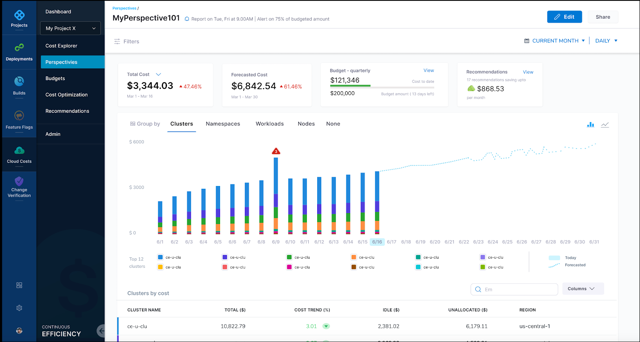
    Harness today announced that it has updated its cloud cost management (CCM) module for its namesake continuous integration/continuous delivery (CI/CD) platform to add support for Kubernetes at the node level in addition to providing business intelligence tools to analyze overall cloud costs.

    Harish Doddala, senior director of product management for Harness, said the update surfaces more granular insights into cloud costs that DevOps teams are incurring because cloud resources are being wasted. The latest version of CCM enables DevOps teams to create their own customized views of those resources.

    As the overall economy continues to recover from the COVID-19 pandemic, more organizations are looking to exercise greater control over IT costs. In the immediate aftermath of the pandemic, many DevOps teams consumed cloud resources without much regard to cost to enable organizations to advance various digital business transformation initiatives. Now, finance teams are requiring DevOps teams to account for those cloud costs.

    The goal is not only to reduce costs whenever possible—by, for example, quickly identifying a sudden spike in cloud resources consumption—but to accurately forecast budget costs on a monthly basis so that both IT and finance teams can collaboratively track spending. The typical finance team is just as concerned about accurately predicting costs as they are the total amount spent.

    Harness Cloud Cost

    Ultimately, Doddala says Harness’ CCM enables organizations to better assess which software development projects to prioritize based on the cloud resources allocated. It’s not uncommon for organizations to suddenly have to shift software development priorities as business conditions change and evolve. A project that may be a top priority today can easily be downgraded because, for example, a rival has been able to launch some new capability that an organization now needs to quickly match.

    DevOps teams, unfortunately, don’t always pay as much attention to infrastructure costs. Harness’ CCM helps reduce those costs by automatically stopping idle resources running on Amazon Web Services (AWS), Microsoft Azure, Google Cloud Platform (GCP) or any Kubernetes cluster, said Doddala.

    There are, of course, any number of existing tools that cloud service providers make available to enable IT teams to reduce costs. CCM, however, provides that capability within the context of a DevOps platform that can span multiple cloud computing environments, noted Doddala. DevOps teams, for example, can create and enforce cost policies for cloud infrastructure into a CI/CD pipeline and prevent an organization from being surprised by a bill from their cloud service provider at the end of the month.

    It’s not clear the degree to which cost control modules will influence the selection of one CI/CD platform over another. However, it’s apparent the days when organizations consumed cloud resources with little regard to cost are ending. In fact, there may soon be more cost controls imposed on software development projects than there were prior to the pandemic. The challenge, of course, is finding a way to automate the implementation of those controls and minimize the impact on software development velocity.

  • Open Your Ears and Get Ready to Listen: Cloud-Native Days with Kubernetes

    Open Your Ears and Get Ready to Listen: Cloud-Native Days with Kubernetes

    If you think all the way back to primary and secondary school, you may remember hearing something like, “open your ears while your teacher is talking to you.” It’s true that someone tuned in to listening learns more than someone who doesn’t, but opening your ears is a lot more important than that. Open ears have the ability to open minds. And with the tech industry constantly changing it’s more important than ever to keep your ears—and your mind—open to change.

    With Cloud-Native Days with Kubernetes approaching, attendees have the perfect chance to open their ears and listen to the best of the best in the tech industry. Cloud-Native Days with Kubernetes is a two day virtual summit boasting over 50 speakers and sessions led by industry thought leaders and doers in the cloud-native space. Attendees will walk away with a better understanding of cloud native, its impact on the IT landscape and a lot more after listening to the key practices and methodologies of these tech titans.

    While there are a myriad of talented speakers at Cloud-Native Days with Kubernetes, there are two very special keynote speakers you’ll want to pay extra attention and listen extra closely to. Hosting keynote sessions Aug. 4 and 5, Tara Hernandez and Caroline Wong are prepared to talk about technology shifting and the future of cloud-native security. With loads of experience and sage advice, Tara and Caroline are without a doubt the top two tech experts you won’t want to miss.

    If you’re unfamiliar with Tara Hernandez, she’s a senior engineering manager at Google Cloud Platform, Associate Board member of Women Who Code and the host of the 12 episode podcast series, ‘Women Who Code’. A specialist in software engineering infrastructure and early backer of the Continuous Integration revolution, Tara has done everything from developing developer tools such as Tinderbox and Bugzilla, working at Pixar Animation studios to reinvent development infrastructure to handle the challenges of writing software in a film production environment, and helping create cloud developer platforms at Google. Beyond being a wizard in her field, Tara is equally impressive in her drive to share useful things about engineering management. 

    No-one’s journey goes without its challenges. But for Tara, “One issue [she] has faced in her rise to success is a case of imposter syndrome. While she has always had the skills to overcome any challenges that came her way, it took a lot of work for her to develop mental self defenses, and tame the anxiety that came when she was presented with a project […] Getting involved with [Women Who Code] has made her aware of the need for advocacy at a grassroots level, and she’s become more confident brainstorming with peers and management teams about increasing diversity in her own work place. At the same time it’s helped her find the confidence to attend more conferences, and even start giving talks.” A supporter, advocate, mentor, and “shining example of someone who has overcome doubt to achieve success,” Tara is the ultimate speaker to inspire change and innovation, especially in creators. 

    Check out Tara’s podcast ‘Women Who Code’ and listen to her talk about the current state of DevOps here to learn more before her talk, ‘Those Little Tectonic Shifts,’ Wednesday Aug. 4 at 12:45 p.m. EDT. 

    Cloud-Native Days with Kubernetes is also incredibly proud to host Caroline Wong, Chief Strategy Officer of COBALT. Caroline is also an author, teaches cybersecurity courses on LinkedIn Learning, and similar to her fellow keynote speaker, hosts the ‘Humans of InfoSec’ podcast. With a background in communications and cybersecurity, Caroline holds deep-rooted expertise every attendee will want access to. 

    As Caroline says, “Cloud native is here; it is scaling, and it is not going anywhere. The more we can see the reality and necessity of what security must become, the better we will all be in the long run.” In her talk, ‘The Future of Cloud Native Security,’ Thursday Aug. 5 at 11 a.m. EDT, Caroline will share her observations on how companies must change the way they build security into their cloud-native projects, forecast what’s next for cloud-native security, and how organizations must double down on people and process innovation to overcome the misconceptions, education gaps and common mistakes we see when it comes to the cloud.

    Be sure to check out Caroline’s podcast ‘Humans of InfoSec’ here before joining her keynote session next week.

    It’s always important to listen. But when listening means driving ideas forward, opening your ears can be the most beneficial tool to be better than we were yesterday.

    So open your ears, get ready to listen and join us Aug. 4 and 5 at 9 a.m. ET for a much needed active listening experience! Register today.

  • Nolij Consulting Brings Expertise Beyond the Public Sector

    Nolij Consulting Brings Expertise Beyond the Public Sector

    Alan Shimel talks with Ashley Mehta, CEO and president of Nolij Consulting, about the company’s deep expertise in health care IT, digital health care transformation, testing and evaluation, and the use of emerging technologies to solve issues in the government IT space. Now, the company is going commercial, and Mehta explains how their expertise can benefit IT organizations beyond the public sector. The video is below, followed by a transcript of the conversation.

    Announcer: This is Digital Anarchist.

    Alan Shimel: Hey, everyone. Welcome to another session here on TechStrong TV. We’ve got a new company, a new guest, first-time guest to introduce you to today. I want to introduce you to Ashley Mehta. Ashley is a founder, CTO of a company called Nolij. It’s not spelled the way you would think though. I’m going to let her explain that. Hey, Ashley, welcome to TechStrong TV.

    Ashley Mehta: Thank you, Alan. Thanks for having me.

    Shimel: It’s a pleasure to have you on. So I know I already said it so I guess we’ve got to address that first. How do you spell the company’s name?

    Mehta: It’s N-O-L-I-J, it’s a play off of knowledge. You know, so I had some friends in the Silicon Valley and they said you have to kind of spell a little different, so that’s what we did when I started the business, yes.

    Shimel: Excellent. Well, I guess the question is let’s share with our audience, let’s assume they don’t know anything about Nolij. So why don’t we give them a quick background there and then we can talk a little bit about your background as well.

    Mehta: Yeah. No, that sounds great. So Nolij is a woman-owned small business. We started in about 2012. I had worked for some large consulting business to learn all the ins and outs of the business and management side, and slowly just kind of started building my woman-owned small business.

    Today we have around 150 employees and we are primarily a health IT company doing work within HHS and the Defense Health Agency. We also do work within Homeland Security within the GSA. So it’s been a lot of fun and we have an outstanding company.

    Shimel: Absolutely. Very cool. People think, oh, startups, overnight success. You’ve been at this now for about eight or nine years, and as have I here at MediaOps, working on eight years now. You know, you put everything you got into it, right? You said you worked for some big consulting companies, but give us a little bit more of your background if you don’t mind.

    Mehta: Yeah. So I’m originally from Ohio, went to Ohio State University, graduated in marketing.

    Shimel: OH.

    Mehta: Yeah, yeah. The Ohio State University. We have the Buckeye fans within our family. My dad has had his own business. My oldest brother’s in healthcare in mergers and acquisitions and doing very well. I’ve got a twin brother that’s also in technology and business. And then my dad was, like I said, had his own business, and cousins and uncles.

    So we have a big background in basically finance and entrepreneurs and business and I guess it’s just kind of a little bit in my blood.

    Shimel: Good for you.

    Mehta: Yeah. So it’s been a lot of fun.

    Shimel: Yep. So recently Nolij expanded into the commercial market.

    Mehta: Yeah. So actually before COVID hit we started kind of thinking about, hey, let’s start exploring into the commercial market, see what’s out there. We do a lot of work within, like I said, health IT. We thought, hey, let’s go and see the private hospitals. We do a little bit of work within the private hospitals in regards to the contract that we have with the Department of Defense, working with them to make sure the electronic healthcare records are integrated with our system, so if any of the military personnel have to go into the private hospitals that their electronic healthcare records are there.

    So we’re really just venturing out, getting our feet wet, figuring out if it’s going to be a viable market for us, and hired experts within the commercial markets. So we’re experimenting with the private hospitals and we’re also going to start to experiment with the payers as well, but we just have a very energetic workforce, great employees, a lot of technical talent, and just really trying to figure out how else we can grow. So of course started it before COVID hit and then COVID was interesting.

    Shimel: To say the least. [Laughs]

    Mehta: Yeah, yeah. But we focused a lot on marketing and kind of getting our name out there, so thanks a lot for this opportunity, Alan. It’s a pleasure and really, truly appreciate it. [Laughs]

    Shimel: Oh, no. It’s our pleasure. I mean, part of what we like to do is bring interesting companies, interesting service products to the audience so that they understand. So you’re doing this, let’s say, going on seven years, and you say, you know what, we’re going to – when did you decide to say, okay, we need to get into that commercial market?

    Mehta: Yeah. That’s a great question. So one of our largest projects is within the Department of Defense, the Defense Health Agency. So we actually have the pleasure of actually doing the IV&V for software testing for the electronic healthcare records on the Department of Defense Side. And Alan, I’m sure you’re probably familiar with that they’re trying to commercialize the product. It’s called MHS GENESIS, which is a Cerner commercial product, and Dentrix, which makes up MHS GENESIS, which is basically the Department of Defense’s electronic healthcare records that will flow digitally into the VA.

    So once you retire from the military and you become a veteran you don’t have to literally hand over your healthcare records to the VA and have them scan it in and upload and that kind of thing, that it’s just all electronically. So it’s just better care for the people that serve our country. And so we’ve been doing all this support, making sure that there’s no defects and that kind of thing within the software. I think it was just kind of a point where, hey, it’s a large project, we do an outstanding job, we know the ins and outs of interoperability and data and defects and how to mitigate a lot of the risk with them in technology and software, which is very complex because there are so many systems that are integrated to make up these electronic healthcare cords.

    So we were just thinking that, hey, let’s venture out into the commercial side, see if we can get some business there, provide opportunities for our employees to grow, for the company to grow, and I think it’s always great to get the expertise and get the guidance, and then you’ve got the resources to do the work, but just kind of see what else is out there. So that’s what we’ve been doing. Because you always have to build upon the capabilities that you have, and so the commercial market there’s a lot of opportunities to do that.

    Shimel: Absolutely. I want to bring up something, and I hope I don’t embarrass you, but obviously Nolij is a woman-owned or woman-founded run business. In the federal space we have, you want to call them, set-asides for minority, women-owned business, economically-disadvantaged community businesses, stuff like that. We don’t have that as much in the commercial space, frankly. So I wanted to ask you – and I realize you venturing forth into the commercial market is rather new for you, but how do you find it as a woman CEO? The differences between navigating what for you is the comfortable confines of the gov space versus kind of the wild west of commercial.

    Mehta: We’re not really focused on the fact that we are – I mean, we are woman-owned because I’m a woman, but we’re really focused on the customer and the technology that we have to offer. So we have to get out there, submit excellent proposals that have to do with emerging technology to help increase efficiencies and decrease risk for clients. Quite frankly, I think on the government side I think I’ve only submitted maybe one or two proposals that are set aside for woman-owned small business. A lot of them are small business and if a woman happens to own it then the government gets those brownie points and allocates those towards woman-owned small business.

    But I don’t see tons of opportunities set aside specifically for woman-owned small business. Maybe on subcontracting plans, if it’s a large set-aside, then they’ll say, okay, you have to give 5 percent to HUD zone and 5 percent to woman-owned and 8A and that kind of thing. But I don’t think that – at least I haven’t seen within the agencies that I have been doing a lot of work in, real strong set-asides for woman-owned small business where women are actually competing to win the work. I mean, a lot of times you see these companies that quite frankly are owned by men [laughs] that get their wives to be the woman –

    Shimel: Oh, I saw plenty of it. Yeah. One of the companies I founded was about 60 percent of our business was DOD back in –

    Mehta: I’m sorry, say that again, Alan. I didn’t hear that.

    Shimel: Sixty percent of our business was DOD. This is like in the mid 2005 to 2010 timeframe. And back then it was like native-owned business as a lot of set-asides. And I saw this firsthand and it got me really down on that whole line of doing things. It was like a good idea; try to give native-owned businesses business, right?

    But then what they were doing is you would have like this small native-owned business that had one person who as a Native American as the titular head/owner of the company, and then they were just kind of acting as a front for the usual suspects, right? [Laughs] The large integrators. And I realized it was a good idea but in practice it was abused and it’s not what the intent there was. It was wrong.

    Mehta: Yeah.

    Shimel: It is. So let me ask you a question. For people out here watching this now, when should they reach – what is the fact pattern, if you will, for when they say, hey, you know what, Nolij may be something that can help us here? Nolij is a company that might be able to help us.

    Mehta: What is the what? I didn’t hear that.

    Shimel: What is the fact pattern or what is – give us a typical engagement sort of scenario. Commercial companies out there saying, you know what, I’d like to reach out to these folks. They might be able to help us with this problem.

    Mehta: Yeah. So we have lots of technologists that are in the areas of quality assurance and software testing, artificial intelligence, RPA, which is robotic process automation. We’ve just recently partnered with probably about eight different emerging technologies, different various artificial intelligence platforms that either helps out with customer service or help out with operations, like a lot of bots. But I would say that the whole integration of systems, getting them to work, making sure there’s no defects, because at the end of the day it’s like the customer, they’re using these systems and they have to be happy, right? Especially when you’re dealing with people’s sensitive information in regards to their personal health information or their personal data, cybersecurity.

    We’re also kind of partnering with companies that have various cybersecurity technologies. So I think that we’re just kind of out there. And as a small business, you have to have strong partners to grow as well. Even large businesses have to have small businesses to grow because they have expertise in certain fields. So it’s really just about just building those strong partnerships, being able to go in, do the work with the clients, and just be successful in just making the customer successful. So I think there’s a lot of trust there that kind of goes into that when the customers give you an award.

    Shimel: Absolutely. Ashley, you know what I realized? We got into the whole how do you spell Nolij, but we never gave the website for people who may be wanting to get more information. What is the website and if you could spell it.

    Mehta: Sure. It’s obviously W-W-W dot N-O-L-I-J consulting dot com.

    Shimel: Very cool. Nolij Consulting with an N. I love it. Ashley, thanks for being our guest on TechStrong TV today. Great continued success. Best wishes. Come back and keep us posted.

    Mehta: Thanks, Alan. I definitely will do that. Thanks. I appreciate it.

    Shimel: Very cool.

    Mehta: Thanks.

    Shimel: Alright. Thank you. Ashley Mehta, CEO, cofounder of Nolij Consulting. That’s N-O-L-I-J, here on TechStrong TV. We’re going to take a break. We’ll be right back.

    [End of Audio]

  • EP 14: What Have We Learned?

    EP 14: What Have We Learned?

    The past year-plus has brought disruption and opportunity to businesses and software teams all over the world. Change is inevitable, but 2020 was a year of massive change: businesses pivoted, supply chains were disrupted, customer expectations shifted to contactless services, digital transformation projects accelerated, new digital experiences were created, the move to the cloud jumped into high gear and our ability to create and deliver software was elevated to an essential capability for business.

    It’s time to pause and ask ourselves, what did we learn from all of this disruption and change? What lessons can we carry forward? How do those experiences inform how we prepare for 2021 and beyond?

    Cornelia Davis from Weaveworks, Kurt Chase from Tricentis and Sanjeev Sharma from Truist join hosts Alan Shimel and Mitch Ashley in this episode of DevOps Unbound to discuss lessons learned, how to overcome the obstacles we’ve faced over the past year and how to improve business processes and make better decisions. The video is below, followed by a transcript of the conversation.

    DevOps Unbound is sponsored by Tricentis, the world wide leader in automated testing. DevOps Unbound airs biweekly on TechStrong TV, with all episodes available on Digital Anarchist. There is also a live monthly roundtable open to audience participation.

    Alan Shimel: Hey, everyone, this is Alan Shimel, and you’re watching DevOps Unbound. For those of you watching for the first time, DevOps Unbound is a biweekly video series where we tackle interesting topics related to DevOps. Once every four to six weeks, we do a live roundtable with a live audience questions and live audience participation, and we invite you to our next one. You can find that scheduling at DevOpsUnbound.com.

    Today, though, is a session just with our panel, and what a panel it is. Let me introduce you to them. First off, let me introduce our friend, Sanjeev Sharma of Truist. Sanjeev, maybe you wanna introduce yourself to the audience.

    Sanjeev Sharma: Sure. Thanks, Alan. First of all, thanks. Great to see you all. Hopefully, we will be able to meet in person soon, but thanks for having me on. I am the Head of Automation and Platform Engineering at Truist Bank. Truist, for those of you who might not know, is the new bank that was created last year by the merger of BB&T and SunTrust. I have various hats I wear at Truist, but my background is mostly in the DevOps and cloudware adoption space.

    Shimel: Excellent. Thank you, Sanjeev, and welcome. Sanjeev, I should mention, is also the author of The DevOps Adoption Playbook.

    Next, we’re really, really pleased and honored to have Cornelia Davis with us. Cornelia is, of course, a pretty well-known thought leader and leader at the DevOps space, but is also at Weaveworks. Cornelia, welcome. If you wanna give a little background?

    Cornelia Davis: Sure, yeah. Thank you so much, Alan. It’s so great to be on again. Yeah, I am the CTO at Weaveworks, and you might know Weaveworks as the company that coined the term GitOps, that has been kind of driving that movement. And GitOps is just an element of a broader category, which is really developer platforms, which is what we’re talking about many, many times when we talk about DevOps.

    And so, prior to Weaveworks, I’ve been here for about a year and a half, I was at Pivotal, where I worked on Cloud Foundry and Kubernetes based developer platforms, you know, platform teams for enterprises for quite some time. And I’m also the author of a book called Cloud Native Patterns, which is a book aimed at architects and software developers, helping them learn how to build software for this highly changing, highly distributed—constantly changing, highly distributed environment that is the cloud.

    Shimel: Absolutely, thank you. It’s a pleasure to have you here. Last but not least on our panel today is our friend Kurt Chase with Tricentis. I should mention Tricentis is a sponsor of DevOps Unbound, and thank you, Tricentis, for sponsoring. But Kurt, why don’t you give them your background?

    Chase: Yeah, thanks, Alan. Great to be here today with Cornelia and Sanjeev. Nice to meet both of you. I’m currently running Release Management and Engineering Services at Tricentis, which, Engineering Services is a group that provides cross cutting services primarily for internal engineering, but effectively for the whole corporation as well.

    Prior to Tricentis, I spent years at Splunk, again, supporting the engineering function, all the CI/CD builds and releases and things like that. And then prior to that, I spent almost two decades at Autodesk, producing the AutoCAD, multiple releases of the AutoCAD software product.

    So, again, it’s great to be here today with all of you. Excited to talk about some of the things we’ve learned over the last year, year and a half—and what a year it’s been, holy cow. [Laughter]

    Shimel: Yes, it has. Then let me finally introduce my co-host here at DevOps Unbound, my good friend and partner, Mitchel Ashley. Mitch, why don’t you give a little background?

    Mitch Ashley: Thanks, Alan, and of course, I’m excited to have our panel—thank you for joining us, all of you, today.

    I’m Mitch Ashley, CEO of Accelerated Strategies, an analyst firm that focuses on DevOps and cloud native, cyber security, digital transformation. I also work with Alan as part of MediaOps, the folks that put on this event, with the CTO of that organization. So, it’s a lot of DevOps practicing and observing what others are doing, so I’m excited to hear what Sanjeev and Cornelia and Kurt have to say, too.

    Shimel: Alright. Thank you, Mitchell. And as I mentioned, DevOps Unbound is sponsored by Tricentis, so—many thanks to them.

    Today’s episode, folks, as I mentioned off camera, I don’t wanna jinx anyone or anything, but at least here in the U.S., we seem to, at least we hope that we’re seeing this whole COVID life sort of starting to recede in our rearview mirror. We are returning to normal or a new normal, some may say recklessly too quickly, or some may say not quickly enough, but certainly, the return to normal is on, and accelerating.

    But, you know, there have been many, many lessons, many, many experiences, some painful—extremely painful—from a business and a humanity point of view over this last 14, 15 months or whatever it’s been. There’s also been a tremendous amount of success, a tremendous amount of acceleration, a tremendous amount of, “Jeez, this really—this worked. We didn’t know if it would work, but it worked,” probably the Internet being the first thing, right? Where would we be with this without an Internet?

    But can we—let’s take a moment, and let’s, as I say, hope and pray that this is in our rearview mirror or starting to move to the rearview mirror. What are the lessons? What can we learn, what will we take forward from this? And, you know, I don’t wanna boil the ocean, because I think there’s a lot, but if I asked each of you to give me three things that you really, you think—not just you personally or your organization, but the tech industry has learned, the business world has learned, perhaps society in general, humanity has learned, what would you say some of those things are?

    I don’t wanna put anyone on the spot, but Kurt, you always have something to say. I introduced you last, we’ll start with you.

    Chase: Sure. I’ll jump right in, and one thing that’s amazing to me, not so much from the technology or engineering or R&D side, let’s talk about business, here—the other aspects of the business that were able to adapt to remote work, that, to me, was pretty incredible.

    When COVID really took hold, I wasn’t too worried about software engineers and folks producing software working from home, doing their coding, testing, and all that. The other functions—finance, legal, things that are required to ship your products—seeing those go remote at the pace they did, that was pretty incredible. I think they definitely took advantage of some of the learnings from their individual engineering teams. But to me, that’s one thing that sticks out right away is the speed at which businesses adapted to working remotely and the success they achieved across the functions in the business. That was incredible to me.

    Shimel: Agreed. I mean, the speed of adoption was something. Cornelia, did you wanna say something?

    Davis: Yeah, sorry, I was muted there. I did wanna chime in, because I agree, and one of the ones that really knocked my socks off was how quickly call centers went remote.

    Chase: Yeah. [Laughter]

    Davis: Because that isn’t something I would’ve expected. I would’ve expected them to still be kind of really tied into their telephony services and, you know, the phones that are on their desks.

    But I spoke with many, many people, you know, various customer service people from the banks and from, you know, the Amazon.com—well, there’s not that much of a call in center there, but from all of these different organizations where, when you chatted with these folks, they were like, “Yep.” Within a week, they were able to move everything, move everybody remote in these traditionally really physical call center based systems. Which means that there had to be some preparation. I don’t know if it was intentional, but there had to be something that allowed them to flip that switch so quickly. Is it just forwarding phones? Is it just VPNs? I don’t know.

    Shimel: No, no, it was—so, I have some info on that, if I can. I interviewed a fellow down here in Florida, I think he was out of Tampa, and he operated multiple call centers, like in Costa Rica, which is actually a call center capital, believe it or not, that’s a big business down there. It turned out that the software they used, right, people in call centers, they don’t just—Kurt just doesn’t call someone randomly. Everyone gets assigned their calls or their inbound when a call comes in and gets assigned.

    The software they used within the call center itself worked just as well, the person didn’t have to be in the desk next to you, he could’ve been anywhere, it turns out, or she could’ve been anywhere. And so, it worked just as well in a remote thing. So, they still used the software they were using that tracked how many calls they did, who they spoke to, the notes, putting it into the central database. Yes, they had to be cloud-based, right, because there was no one in the call center to kinda run that infrastructure. But the software, it turned out, worked remotely as well as it worked on everyone’s desk in the call center. It was an amazing thing.

    And so, what they found—again, and this is gonna be, I think, something that’s gonna be a recurring theme—who needs the physical call center? They don’t need that infrastructure anymore. They could have people working at home just as well.

    And so, the more advanced ones—and you’ve probably seen this yourselves—you call someone, they may be very well at home, but they’re giving you the same mediocre service that you get when you call the call center itself, right? [Laughter] But yeah, no—

    Chase: And that’s the point. I think with a business, it’s applicable across functions there, it’s amazing. And business learned that they can still be extremely successful, even if everyone’s remote. And having that pool of remote talent—that changes everything. [Cross talk]

    Sharma: I think a couple of things to be noted there, right? First of all—sorry, Cornelia, I think I spoke over you. You know, one is, the pendulum also needs to swing back from that extreme.

    Chase: That’s the challenge, yeah. [Laughter]

    Sharma: Right? Because, while we have people who are able to work from home because the technology is there, from an equity perspective, one has to look at people who cannot work from home who are being forced to.

    Chase: Yeah.

    Sharma: And we experienced that when we opened up our offices. We are just beginning to open up our offices. June 1st was the first day folks would come back. And I was surprised to see some people had jumped at the opportunity and said, “I want to go back.”

    Chase: Yeah.

    Sharma: Then when you look under the hood and you talk to them, you realize, you know, they’ve been struggling. They’ve been operating out of a tiny closet, right, because they don’t have the space or because they have toddlers or they’ve been struggling with Internet issues, and it is worse overseas than it is here in the U.S.

    So, I think the pendulum needs to swing back to a more normal position, but hopefully, it won’t swing all the way back to where they say everybody has to be on site, on premises, right? So, I think that is definitely, some balance has to happen to recognize—some people do need a workplace, where they can work comfortably.

    Chase: You’re absolutely right.

    Davis: Yeah.

    Chase: I know a story of one individual who was in a one bedroom apartment in San Francisco and after three weeks, he couldn’t handle it. It’s like—I don’t have no space.

    Davis: Yeah.

    Shimel: It happens. Cornelia?

    Davis: And, you know, honestly, I have space, and I have a wonderful office and I’m super comfortable, and I’m also desperate to get back into the office.

    Chase: Yeah.

    Davis: Because—and I love, Sanjeev, that you called out the equity thing, because that’s something that is so painfully obvious in the whole pandemic is that this has only broadened the inequities that we have across society, and we need to absolutely focus on that.

    But then the other lesson, you know, with me, I’m extremely privileged, I live this super comfortable, I never really had to worry about catching COVID, I could just choose to stay home. But humans need humans and, you know, we’re all coming to you on your two-dimensional screen. I am super fortunate that last week, I had the opportunity to have my first face to face with a couple of colleagues in over a year, and it was rejuvenating. I’ve been saying, it’s a 3D work world again instead of a 2D work world.

    Shimel: Yeah.

    Davis: And so, I mean, humans need humans. But you’re right, Sanjeev, I think that the even bigger thing is that we really, really need to look at the inequities. And in the beginning, in the early parts of the pandemic, without getting too political here, we had all of this narrative around these people who we considered essential workers who were kind of the forgotten, like, taken for granted folks, and they were put on a pedestal, and that, unfortunately, didn’t last that long.

    Chase: Yep.

    Sharma: Yeah.

    Davis: And so, we need to bring that back.

    Shimel: And they weren’t paid like they were that essential, either, but that’s [Cross talk]—yeah, it was a pretty low pedestal. But let me, you know what, you bring two things—I’m sorry, Mitch, I just wanna make two quick points.

    Number one, when we talk about the inequality, let’s be really clear. This has affected women and mothers especially, more than men, right?

    Ashley: Mm-hmm.

    Davis: Absolutely.

    Shimel: Mothers have had—because not only have they had to work from home, but they’ve had to take care of the kids who are not in school. And it’s very hard being a teacher, a home care provider, and doing your work at work. And so, how many women have had to work out of the workforce because they had to take care of their kids and their kids are home and they didn’t have an option, there was no child care for them. So, I think—

    Ashley: And the challenges of re-entering the workforce.

    Shimel: Right, and now they’ve gotta re-enter after, you know, months off, and that’s never easy. People wanna know, “Well, why the gap in your résumé?” Well, there’s a gap in my résumé because I have this beautiful child that I’m raising, you know, and how dare you? That’s number one.

    Number two, it is a case of the rich get richer, right? Companies that, not only individuals as you say, Cornelia, but companies that were able to leverage this. Man, they accelerated, but they accelerated at the expense of their competitors who couldn’t, right? Think about all the open retail shops in the malls near you and the strips, right?

    Davis: And this is a place where I’d love to pull DevOps into the conversation, because we are, of course, as a part of DevOps Unbound. One of the things that I thought was impressive—and I’ve worked with some of these companies. In, you know, my previous life at Pivotal, I worked with The Home Depot, for example. When you had The Home Depot and you had these other organizations that, in a matter of weeks, updated their software so that you could do things like curbside pickup? That right there is DevOps in action.

    Shimel: Yep.

    Davis: It is the ability to release software, get feedback, release software, and there was no six-week testing cycle that we used to do, or eight-week testing cycle.

    Shimel: Mm-hmm.

    Davis: It was like, “You know what? We are gonna be testing in production, because we didn’t have time to test this for six weeks.” So, it brings in all of these tools that Kurt, I’m sure, you have day to day experience with, which is these things that allow us to put safety nets in place to be able to release all the time. I mean, that is something where the people who were along their DevOps journey already had a leg up on those that didn’t.

    Ashley: You know, Cornelia, I had that exact experience where I couldn’t get a computer, you couldn’t get one shipped to you, they just weren’t there, so I had to build a computer for some video work, and did it solely from parts from Best Buy, by curbside pickup, two Best Buys in town.

    Davis: Yeah.

    Ashley: So, it literally was, like, a week later, all of a sudden, I could do this, and I was pretty shocked by it.

    One of the things I wanna say, though, about what we’re discussing is, the people dimension of it is extremely important. I think there’s a whole other set of lessons for the business. I think we’ve pressed reset on a lot of assumptions about how businesses have to operate, that you have to be in an office. And essentially, we’ve kinda globalized the business by just taking the location out of it now. And yes, there are privileged and underserved and people who aren’t privileged. And those inequities probably are gonna get bigger, not smaller, because I don’t think we’re gonna all slap back into the office immediately.

    But what the businesses learned is that lesson you just talked about with Home Depot and you with Best Buy is—you know what? We can decide we’re gonna pick Team or Slack in two days instead of two years. We can get a software release out in a few days if we have to. Talk about constraint based management—you know, we now have this constraint and everything else comes off.

    So, I think what it’s done overall, though, is for DevOps and for all of us is, it’s moved software from maybe second or third to number one. Our ability to get software out the door that’s effective, meets what we need it to do, but that is a strategic advantage, maybe even a survival advantage of what we’ve seen happen in this past year.

    Chase: Yeah. I think some of it is, you know, businesses like that were forced to do it or die, basically, you know? And I 100 percent agree with Cornelia that I think they look to DevOps and some of the practices that they’re all used to. You know, the collaboration we need across functions to move forward and all those things are key, some of the foundations of automation, you know? That has been key in the DevOps space, and I think they learned, they need to take advantage of automation to do these things as well.

    So, yeah, it’s been fascinating to see that. And that was a point I brought up to see how businesses transformed and our world changed. And I think it’s opened up endless opportunities for us moving forward. And to Sanjeev’s point, I hope when that pendulum swings back, corporations take a look, that this is no longer a corporate decision where people work, it has to be more joint. It has to be more personal, because every situation’s different, and if you wanna maximize all your programs in HR, diversity and all those things, you have to take that into account. I don’t think you can do a one size fits all any longer.

    I still wonder if all those big office buildings, I worked in downtown San Francisco for many, many years—are we gonna fill those up again, ever? I really wonder now if that’ll ever happen. I could see it not happening, quite honestly.

    Ashley: I’m curious, Sanjeev, you’ve been in the middle of this bringing two companies together with this new bank in the middle of all of this. What in God’s name was that like? [Laughter] What are the additional challenges you’ve had for that, or maybe what opportunities has it created?

    Sharma: Yeah, so, I think it—you know, I joined in the middle of the merger, right, so we were in the middle of it when I joined. So, what I can tell you in the 10 months I’ve been there, we have shifted a lot of the priorities because of the pandemic, right? A lot of things which we would have done later on, we did first. We were able to do things.

    But the flexibility has definitely opened up. I can tell you, between the time I joined and between now, the ability to hire people who are not local to one of our offices has gone through the roof. It used to be an exception, now it’s the norm, right? The last three people I hired, two are in the West Coast and one is in Minneapolis, right, so Midwest. It doesn’t matter anymore, right? The same way there are—the operation has opened up a lot.

    And when I look at it broadly, outside of who I’m working with, when I’m talking to other companies where I have friends or colleagues, they are seeing more offshoring happen, right? Because they’re going, “Why do I need to hire somebody in L.A. if they’re never going to see the person ever anyway, does it matter whether he’s in Bangor or Bangalore, right? Let’s put the person, let’s hire the right person at the right place.” So, I think a lot of that has opened up. It has, of course, shifted some of the salaries, also.

    So, you know, a lot of things are going on, interesting dynamics are happening, and we’ll see how that all pans out. But from a perspective of, you know, doing the transformation, it is hard when you can’t have people in the same room on a white board and things which could have just drawn on a white board and knocked out in a 1 hour or 90 minute working session, now it’s like 15, you know, Zoom views, WebEx or Teams calls, which could have been, and it’s like, “Where is that white board we made up? Was it on Miro or was it on Mural or was it on this or was it on that? You know, and who can edit it, who can’t edit it?” All those—you know, dang it, if we just had a white board and all of us in the same room, we could have knocked this out in half a day.

    So, it is difficult to do certain things remotely. I think there has to be a balance, which needs to happen. And yeah, during a merger just made it more complex, because we are going through change every day, right? People’s networks are changing, people’s—how we are doing things are changing, we are updating stuff. It’s been a very interesting few months and we’re not done yet. You know, the merger isn’t over. We’ve still got a long way to go. So, it’ll be more fun going forward, I think.

    Shimel: I think it brings up the issue, though, of how much of this sticks, right? Because, I mean, look what Sanjeev just described. We’ve all had similar experiences, I’m sure, hiring people from all over the world—what difference does it make? They don’t have to come in the office.

    Does that stick? Because if it sticks, there are profound implications for society in general. Why live in San Francisco unless you love the view of the Bay. It’s a beautiful bay, right, the bridge is nice, but pay $4,000.00 for a closet-sized one bedroom apartment? Maybe not. I mean, on the other hand, I live in South Florida. Housing market is insane because of people moving here from New York and California and spending a fortune—Colorado, right?

    So, does this—that’s one example. Does the ability to work from anywhere, it makes no difference, is that something that sticks around, or do we, as Sanjeev said in the beginning, see a pendulum start to swing back? What do you think?

    Chase: Well, for me, like I said, I think elements of it have to exist and remain. I think there needs to be a balance, as Sanjeev said. I no longer think it’ll entirely be a corporate decision where employees are located. I think for some roles and groups in organizations, there needs to be a deeper conversation on where is the best talent, what’s the best way to use them? You know, having people sit—just the commute. The one thing I don’t miss is the commute. Oh, my God, you know, those three hours a day commuting, you know, that, to me, we have to somehow retain that benefit, you know, from working remotely somehow. I’m not sure how.

    But that’s a very good question, Alan, I don’t know. It’s like, will those office buildings ever be full again? I don’t know. I’m not sure.

    Sharma: On that point, I’ve been remote since 2013. In 2013, I was at IBM. I moved to a global role, and since then, I haven’t had an office. I’ve worked out of this room since then. But I used to travel 150 to 175,000 miles a year.

    Chase: Got it, yeah.

    Sharma: Right? So, for me, the office was a place to go collaborate, whether it was my office or my company, IBM—

    Shimel: And for all of us.

    Sharma: – right, or a client’s office, it was not a place to go and have a desk, right? My desk is here, right, my books are here—you know what I mean, right?

    Chase: Yeah.

    Sharma: I think we should, I would like to see us go to that model where offices become more of a collaboration space rather than a place you have to show up and work alone in a cubicle. What’s the point of that?

    Ashley: I agree.

    Sharma: Unless somebody needs it, right? That’s different if they don’t have space at home and the need a cubicle to work in—fine, put them in a WeWork next to where they live, right, close to where they live rather than have them commute to the other, you know, 45 minutes one way.

    I think that’s the model we should head towards.

    Chase: I agree.

    Sharma: And, you know, the tools to enable that are there, we’ve proved it. We’ve proved, during the lock down, during the pandemic that the tools are there, but I hope it goes that way. I hope it doesn’t go back to, “You have to show up in this cubicle” even if you are, you know, like the guy from Office Space protecting the stapler and never talking to anybody.

    Ashley: The butts in seats model, right? [Laughter]

    Chase: We’ve seen some large organizations [Cross talk] make those calls already and say you can be remote forever now, you know, things like that. So, I think that’ll become a bit more selective, but I still hope, when that pendulum does swing back, that the employee has a say, you know, and his voice is a little bit taken more seriously.

    Shimel: Or her voice.

    Davis: Or hers.

    Chase: Or hers—or hers, [Cross talk].

    Davis: Exactly, that’s where I’d like to chime—I’d like to chime in there, because Alan teed this up earlier and then, because you had two things, Alan, we followed thread number two.

    I wanna come back to thread number one, which is that this has affected women in the workforce, and it’s not just us technologists, but it’s a broad spectrum, and it’s probably even more so in other working arrangements. And so, I love what you’re saying there, Kurt, about it being a partnership between the corporation and the employee and determining what’s best for them. And then Sanjeev, you, I think, just teed up—is that the survival answer for WeWork is that part of that negotiation between the corporation and the employee, she or he, includes having the ability to move into a workplace that is close to your office but allows you that space that you need, for example, not to be on call for child care.

    Of course, the other thing I can’t help but say—and I’m very fortunate, I have one son, he’s 26, I’m not tying shoes or going to PTSA meetings anymore—

    Shimel: I hope not. [Laughter]

    Davis: – so, I wasn’t affected in that way. Yeah, [Laughter] I wasn’t affected in that way in the last year, but I was a working mother and I worked from home that whole time. And I just wanna remind everyone, men and women, that you’re right, women take on that burden, but it doesn’t have to be that way, fathers.

    Shimel: Amen.

    Chase: Mm-hmm.

    Cornelia Davis: So, please pitch in even more than you think, just because it’s been kind of the standard operating procedure. If nothing else, I hope the last year has maybe, in some cases, resulted in a, hey, a need-based way of rebalancing responsibilities. That is something that every single individual, male or female, can participate in kind of these societal expectations and challenging those.

    Ashley: I think something happens—

    Shimel: You know what? Oh, go ahead, Mitch, I’m sorry.

    Mitch Ashley: When things open up, when opportunity happens and things make that shift, it’s different when there’s opportunity there, but when things have shifted and made a shift, they don’t snap back to the old way automatically. It transforms sort of the landscape going forward, and there’s so many things about this—and you mentioned women in the workplace, we also have people of color—and we think about the emphasis of diversity that’s happened over the last year and a half, which is fantastic. And we see so much more bringing to the forefront of women in leadership positions, people of color being involved in security more, whatever it might be. You know, I don’t think that that changes.

    So, hopefully, those people who now are getting to participate in a bigger, broader way or have more opportunity to do that, (a) I don’t think this is gonna go away, (b) that’s gonna change things for us, right? You know, maybe, Cornelia—[Laughter] here, I’m speaking about what I don’t know about—but maybe more women in leadership positions make some of those, it’s assumed that the woman at home does the child care or whatever is part of our societal transformation, that it isn’t necessarily an assumption. Hopefully we can get past that and remove that barrier for people so there is more opportunity.

    Shimel: So, Mitch, on that front, though, here’s the deal. Number one, I think the move to diversity is not necessarily COVID related, I think it’s just an idea that its time had come, it has been a long time coming, number one.

    Ashley: I totally agree.

    Shimel: Number two, I think one of the positive things that happened is, it wasn’t just the woman stuck at home taking care of the kid. She was stuck at home taking care of the kid while the husband was trying to carve out a desk space in his bedroom somewhere to try to do a meeting or something, right?

    But what often happened, at least among my friends—look, my kids, also, Cornelia, they went away to college even though their college was online, just to get out of the house from their mother and father who wouldn’t let them breathe. But most—like, people I know whose kids were younger, the mother and father were home. They had to split up, delegate duties. You did the wash, I cook the meals, you clean the table, I took the kids here, you took the kids there or entertained them now because you had work to do, I had work to do.

    In a best case scenario, it became very much a shared responsibility. Of course, not every scenario or every instance has that best case outcome. There’s a lot of people [Cross talk], you know?

    Ashley: I think it’s been a journey to share. It may not be quite as, like, “Okay,” [Cross talk].

    Davis: Yeah, yeah.

    Shimel: Well, that goes, this is—

    Davis: I mean, you’ve painted a fairly ideal picture.

    Shimel: That is an ideal picture, you’re right.

    Davis: Yeah. You know, this conversation is making me wonder, and I don’t have these stats, but I wonder if anybody else has heard the stats—you’re right, absolutely, that this shift towards more underrepresented folks in leadership positions, women, people of color, and so on, that absolutely started before COVID.

    I wonder how COVID has affected that. Have the numbers accelerated, have they decelerated? I think—I suspect the latter, and I’m pretty much an optimist, but I’m also a bit of a realist, and I wonder whether the last year has slowed down progress when it comes to diversity at the leadership level. I don’t know. It’s just a gut feeling. I’d love to see some metrics on that.

    Sharma: I can tell you, Cornelia, in IT roles, it has always been very difficult to hire people from minorities, right, underrepresented minorities.

    Davis: Yeah, of course.

    Sharma: It always has been. I personally believe it has gotten worse, because if you look at especially leadership roles, senior roles—we’re not talking fresh college grads—most of those roles, no matter what anybody says, happen through referrals and connections, through your network.

    Davis: That’s right.

    Sharma: And that network stalled. That network stalled during the pandemic, right?

    Shimel: Yeah, networking, yeah.

    Sharma: Right? It is as big as it was then or grew slightly, right, that networking opportunities were gone.

    Davis: Yep.

    Sharma: No Meetups, no conferences, no lunches, no power breakfasts, no women in technology meet ups—nothing. The network stalled—you only knew the people you knew, right?

    Davis: Yep.

    Sharma: And I think that hurt, bad. I find when I’m trying to hire, when my peers are trying to hire, we are struggling more to have—see, you can’t hire when you don’t receive the résumés. When there are no résumés coming in, how do you hire, right? And I’m struggling, and if anybody has, if either one of you could—any one of you has any suggestions on how to fix that, I’m all in. Please, I’m all ears.

    Davis: I think—

    Chase: Yeah, I was gonna say, you pointed out an anti-pattern to what I was gonna say, Sanjeev. I was gonna say, at least with COVID and all the remote work, our talent pool has opened up worldwide, but you’re saying that hasn’t helped in that regard.

    It has for me with some of the roles I’m hiring. Now granted, they’re not Director, Senior Director, VP level roles yet. But for the other roles, having the world as my talent, you know, the talent pool versus the United States, that makes it [Cross talk].

    Sharma: Well, I look at it a bit differently. I look at it a bit differently, Kurt. You know, hiring—how do I, I wanna make sure I say this properly. Hiring an Indian in India is not hiring a minority.

    Chase: Yeah, true. Yeah, true.

    Sharma: Hiring an Egyptian in Egypt is not hiring a minority. Hiring a Turkish person in Turkey is not a minority, right?

    Shimel: Right.

    Sharma: They have to be a minority in where you’re hiring them, that’s the only way it works.

    Shimel: Agreed.

    Davis: Yeah, I think, [Cross talk] I wanted to comment on your remarks, Sanjeev. I think that you’re spot on. Because there were opportunities, and some of the techniques that we have used in corporations to source diversity candidates or underrepresented candidates, those things went away. So, being able to go to a historically black university or go have your recruiter show up at Women Who Code meet ups, those went away, and those aren’t the same.

    Sure, Women Who Code still had meet ups line, but it’s not the same as walking around during the social hour and saying—or, I’ve been at many meet ups where, before they start the program, they say, “Okay, who’s hiring?” And everybody stands up and then, “Who’s looking?” Everybody stands up. “Alright, you folks, talk.” That was a very organic thing that was not just so easy to say, “How do you do that in an online setting?”

    You’re right, it’s—I hadn’t even thought of that, but that whole network is the same now as it was a year ago is remarkable, especially when it comes to leadership.

    Sharma: Exactly. That’s why hiring from a historically black university, we can still do that today, because the recruiters still know the counselors there, they still know the placement office or whoever does—you know, those networks are still there. It’s just that the network hasn’t grown. The higher you go, right, the air gets, you know, rarer, right, and those jobs are fewer and you are not screening 100 résumés to do that. You’re relying on the network more than often, no matter what anybody else says, right?

    And that network stalled. I mean, who have we met at a conference who we didn’t know before? Now, when I go to a meet up and I see somebody I know—

    Davis: Yeah, but I think what you’re pointing out—

    Sanjeev Sharma: – I am IM-ing that person, not some stranger who I’ve never met, right? Unless there’s something really, some reason to do that. Then—no, no, it is the opposite, it has really hurt. I think we need to fix this.

    Davis: Yeah.

    Sharma: We need to put this [Cross talk] the moment we come back.

    Davis: Yeah, but I wanna suggest that—yeah, but I wanna challenge that assumption, which is that I hire leadership from within my network. Maybe that right there is the thing that we need to work on.

    Sharma: Well, I’m with you. We need to work on it. What I’m saying is—that’s what I was saying. I was saying that what we tend to go, tend to—we tend to grow our network to find leadership role people, right? People in leadership.

    Davis: Yeah.

    Sharma: When you can’t grow your network, you’re reliant on what’s already in your network, right? I mean, otherwise, you’re scouring LinkedIn or some other website or pinging people in your network asking for referrals.

    Davis: Yeah.

    Sharma: But that network stalled. That network didn’t grow. I can’t point to 50 people I met in the last year who were cool and interesting who I did not know before who were underrepresented minorities have I would have met, had I gone to Reinvent or IBM Think or, you know, DevOps World or KubeCon or whatever. All the people I would have met, I didn’t meet them.

    Shimel: So, that’s a whole other thing. Virtual events, right?

    Ashley: Mm-hmm.

    Shimel: We’ve all spent significant portions of our lives at conferences. Cornelia, that’s where I usually see you is at conferences—Sanjeev, as well. Virtual events are cool. We put on one a month here at MediaOps. Gene Kim does his DevOps Enterprise Summit virtually, people even paid money to attend it.

    And all of the virtual events, they try to do a social thing to it. It’s just not very good, frankly. It just—it’s just not the same as being in the hallway or grabbing a drink at the bar or a soda or whatever, you don’t have to be drinking. But, you know, just not—it’s not that, someone said it before, face to face, person to person. I think it was Cornelia, you recently had an in person. It’s not the same, it’s not the same.

    I mean, so, different than the three of you, Mitchell and I have had a chance to meet hundreds of new people this year. I do three to four to five of these interviews a day. My day starts with talking to people in Asia or Israel and goes to Europe and through the Americas, all the way to the West Coast. And what I’ve found is that I’ve become a resource for people like you, Sanjeev, who say, “Hey, I’m looking for someone to head up cloud or DevOps or testing” or what have you. And I go through, who have I interviewed recently?

    But that’s not the way it’s supposed to be. And the question is—and we’re getting near on time—I wanna bring it back to DevOps and software, right? And, you know, what—

    Chase: I think you touched upon it from the beginning, Alan, it’s the Internet. You know, the fact that our technology infrastructure was able to shoulder the burden, that was pretty incredible to me, too. You know, I expected Zoom to go out for weeks, if you will. But I think it demonstrated that the technology infrastructure we have is pretty solid. You know, it allowed us to scale up pretty quickly, pretty massively and, you know, there were outages here and there, but I would’ve expected a lot more.

    Shimel: Minimal—minimal. Even counting all the DDoS attacks and the ransomware and all of that nonsense, it was still minimal.

    So, we had that infrastructure, but we also had this incredible capability to accelerate, to automate that DevOps kind of has been teaching us for seven, eight, nine years or more now, right? And that really helped. Curbside pickup and the—it’s not just curbside pickup, it’s the back end, obviously, right, that allows you to pull into that parking space and hit the button and say, “I’m here, and this is the car I’m in,” right? That kinda stuff, how many companies and jobs were saved by that kind of capability.

    Chase: The other thing for me internally is, I think it also opened up the ability to question everything, just because—at all levels, you know? Whether you’re designing a new feature, adding something to a product, designing a new process—is that the right thing, just because we’ve done it like that? I mean, really question it, because I think it, I mentioned this before. I think the opportunities ________ are endless now, really.

    We haven’t even started to take advantage of the things we’ve learned. I believe we’re starting to now, as Sanjeev mentioned, the pendulum coming back. Part of that is some massive learnings that we’ve also had forced upon us, if you will. But I think we’re gonna come through it even stronger and better, for sure.

    Davis: Yeah.

    Sharma: I think the—

    Davis: You know, I wanna, I’d love to chime in on—

    Shimel: Go ahead, Cornelia.

    Davis: – yeah, I’d love to chime in on that scale. You used the word scale and these systems were able to scale and handle just a tremendous surge in traffic.

    Shimel: Oh, yeah.

    Davis: And when you said that, it took me immediately back to a DevOps Enterprise Summit where Nicole Forsgren and Jez Humble—and those of you who don’t know them, you should know them.

    Chase: Yeah, we know them.

    Davis: State of the DevOps Report, State of the DevOps Report, the book Accelerate. I remember this moment where they were on stage, and Jez Humble, in his very humble way, hand in his pockets, says, “Turns out, architecture matters.”

    Shimel: Yeah. Right.

    Davis: And so, it’s having these systems that are designed to scale, and we find so many enterprises that have said, “Oh, well, you know what? Google scale, Amazon scale, that’s not a problem that I need to face.” Well, surprise—

    Chase: Yeah, it is.

    Shimel: It is.

    Davis: – maybe it is. And so, architecture matters, and so I can’t help, as a software architect, coming back to that and saying, “Yep, there ya go.” [Laughter]

    Shimel: Yep, [Cross talk].

    Sharma: And I think we’ve seen companies who were—there’s two ways to look at it. One way is to look at it from a scale perspective. The other way is to look at it from a resilience and reliability perspective.

    Davis: Right, yeah.

    Sharma: Right? Which are two aspects of the same thing. It’s all architecture. And I think companies realize very early that reliability and resilience are critical—resilience to be able to make changes rapidly, right? Today, I have, I don’t have curbside pickup, tomorrow I have. Today, I had 10 people doing this, tomorrow I’m gonna have 200 people doing this.

    Ashley: Right.

    Sharma: Today, I had a teller sitting in front of her terminal, so the user interface didn’t need to be that cool. You know, the things could hang and the teller could, you know, make sense, make small talk while the system is catching up. Well, nobody’s accepting that on the mobile app when they’re directly dealing with the website or the mobile.

    So, I think that whole shift on resilience and reliability are real, are important, and all that goes back to your point, Cornelia, to architecture. That was front and center to people, and I think [Cross talk]—

    Chase: Yeah. And I think along with that, Sanjeev, is security. I think security, this really exposed—we have to do more in security. We have to do more, you know?

    Ashley: We have to rethink security.

    Chase: I think that’s one of the chief learnings.

    Shimel: No doubt about that. Guys, I hate to do this to you, but I need to pull the plug on this. We already have people in my waiting room for our next interview.

    What a great panel this is. We’re gonna have to rerun this again and go to a part two, because there’s things I wanna talk to about this as well. I spoke to a guy today who started a new, he calls it the mobile cloud for gaming, it’s called Now.gg. Because their research is that our kids, you know, these digital natives, if they don’t get a response in half a second, they’re gone, they’re onto the next thing. And so, what does that mean for your banking apps? What does it mean for we’re doing?

    But we need to end this. Sanjeev, Cornelia, Kurt—man, thank you, guys, so much. Thank you, all, so much for making this an amazing panel. Thank all of our viewers out here for watching this; we hope you enjoyed it. Mitchell, I’m gonna let you take it home.

    Ashley: Well, I think—what a fascinating group and wonderful things to say. I think the biggest learning for me—and I really appreciate Cornelia and Sanjeev talking about the lost opportunity we had through networking to help people come together and expand their networks. So, let’s invest in that going forward. We need to rebuild those and make that happen. So, I appreciate—I really wanna thank you for helping me understand that better.

    Shimel: Absolutely. Many thanks to Tricentis for sponsoring this episode of DevOps Unbound. We’ll be back in two weeks with a fresh episode, a new panel, a new topic, but hopefully it’s just as interesting a conversation.

    This is Alan Shimel for MediaOps. Until next time, be safe and be well.

    [End of Audio]

  • Accelerate Your SDLC With DevSecOps

    Accelerate Your SDLC With DevSecOps

    DevOps has been the answer to rising software development complexity, but the granularity and multiplicity of actors, technologies and environments brings added security requirements. Moving to DevSecOps will not only help with these requirements but also accelerate the software development life cycle (SDLC).

    As development projects mature, more developers get involved, the code base grows and architecture becomes more complex; consequently, the SDLC slows down. This is why Agile, microservices and DevOps have emerged—to solve this specific problem by separating big teams into smaller ones and monoliths into more nimble components.

    But this granularity and multiplicity of teams, work environment, technologies, services and repositories makes integrating security even more complex. In fact, developers now face multiple SDLCs and often, the gains achieved in velocity can be nullified by security issues. You want a process that works, and preferably, a process that works fast.

    This is what DevSecOps attempts to solve; adding security into DevOps actually accelerates the SDLC. Here’s why and how.

    DevSecOps During the Planning Phase

    The planning phase is key as it answers essential questions at the time when architectural decisions are made. Some of these decisions are relative to access control, network infrastructure and data security. For each, adding automation—and therefore, security—allows fast replication.

    For access control, you can leverage infrastructure-as-code (IaC) tools (Terraform, for example) to easily define different groups, roles and permissions with code. By adding various plugins, you can even use your IaC tool to manage users on other platforms, as in GitHub. When you have all the groups, roles and permissions defined as code, you are only one commit away from access control updates.

    If you need to onboard a new team member not only to, say, a specific AWS group but also to a GitHub group, instead of doing it manually in two places, you can do it “as-code” to both with minimal changes.

    The complexity of organizations and the need for better security implies the need for more role-based access controls, but automation tools exist, and they are also less error-prone.

    When it comes to network infrastructure, you can also use IaC, but you will also need to add a security layer on top of it to mitigate any errors in the code. As an example, you can use tfsec and terrascan on Terraform. This will scan your code statically and, based on predefined rules, generate alerts and give you advice on improving your security. If you prefer CloudFormation, use cfnlint, which even allows you to define your own security rules.

    When you have your infrastructure ready, the next big thing to think about is your data. You need to put data encryption in place to make sure data is securely stored at rest. You also need to add transport layer security (TLS) for the databases to secure the traffic in transit. Besides using static code analysis tools and ready-to-use services, you can even automate your own pipeline. This is very useful when you have multiple agile teams.

    Let’s take S3 buckets as an example. You could build a generic solution where the S3 event triggers a serverless function that checks the bucket’s permission. If a policy is violated, it can be fixed right away and the owner notified automatically.

    Moving to Development

    During the development phase, you need to address three major security areas: Code repository security, continuous integration (CI) security and container image security.

    Code repository security needs to address questions around the repository access control, considering the principle of least privilege but also checking that no repository is made public by accident or that they do not contain sensitive elements, such as secrets.
    With a multi-team, agile and microservices setup, you need automation to skip time-consuming and error-prone tasks but also to avoid slowing your SDLC to a crawl. We already mentioned git user management automation, but there are also a number of tools for static code analysis and secrets detection. You can even include this detection in your CI pipeline and integrate it with your alerting workflow to eliminate the risk from the origin.

    CI security is often overlooked, but this is a very important element; if your CI is not set up correctly it can generate data leaks. Access to your CI needs to be controlled to give the proper permissions and access rights. Doing this manually will definitely impact your SDLC velocity so, again, there’s a need to automate. You can integrate your CI with your Git or company single sign-on (SSO) solution for authentication. For authorization, you may rely on the groups’ information provided by those SSO services.

    Secrets are also critical for CI. Modern CI pipelines allow you to store secrets at a project level. Once configured, you can use it directly in the build without putting the sensitive data in clear text format. Even if you try to print the variable containing sensitive data, it will not show up. For instance, to use secrets directly from a Jenkins pipeline, you can store your secrets in a Kubernetes cluster and use Kubernetes Credentials Provider or HashiCorp Vault Plugin.

    Now, let’s talk about containers. While containers have simplified the deployment, scaling and failover capabilities within the SDLC, they also introduce some challenges. If the container image has some known vulnerabilities, your containers could be exploited, and the integrity of the whole machine—or even the entire system—can be compromised. Automation is, again, the go-to solution to ensure the images you build don’t contain vulnerabilities. Some CLI-based tools like Trivy can be easily integrated into your CI pipelines.

    Automation will significantly reduce your operational overhead. No more managing machines (physical or virtual), no more configuration management, no more patching. If everything is automated, that means less toil—and that means all means your SDLC is not only more secure but also faster.

    Integration and Deployment

    Kubernetes (container orchestration) is the current solution to streamline integration and deployment in our agile world. But Kubernetes is a complex system and comes with its own security challenges, of which the most important is secrets.

    The worst thing you could do is define secrets in YAML files and store them in Git repos. You could use Kubernetes’ secrets as the single source of truth, but what about secrets created by people who don’t need access to Kubernetes? This is where a secrets manager is a good choice: It acts as a single source of truth to store your sensitive data. You will get an automated process that eliminates the toil of manual labor but also guarantees security and speed.

    DevSecOps for Incident Response

    Incident response playbooks are a crucial component of DevSecOps. Playbooks are a set of generalized and summarized processes that provide a consistent way of handling issues for quicker response and resolution. Learning from every incident is also part of the playbook, whether it’s a security issue or a new vulnerability.

    The content can include everything from runbooks and checklists to templates, training exercises, security attack scenarios and simulation drills. The goal is simple: A set of policies, processes and practices for quickly responding to and resolving unplanned outages, thus helping teams fix online issues more quickly to reduce the size of the blast radius.

    We have only scratched the surface of security automation capabilities and their potential impact on the SDLC. But it’s clear that adding (automated) security into DevOps has a positive impact on the overall velocity of the SDLC and, of course, on its security posture.