Category: Blogs

  • Foundation Proposes Advancing eBPF Adoption Across Multiple OSes

    Foundation Proposes Advancing eBPF Adoption Across Multiple OSes

    The eBPF Foundation, which proposes to advance adoption of an approach that enables sandbox programs to run faster at the kernel level, is being launched today as an arm of the Linux Foundation.

    The technology known as eBPF was originally developed for Linux. The eBPF Foundation is now committed to expanding use of eBPF across all operating systems. Members of the eBPF Foundation include Facebook, Google, Isovalent, Microsoft and Netflix.

    Thomas Graf, CTO and co-founder of Isovalent, a provider of networking and security tools that leverage eBPF, said IT organizations should expect to see the technology become part of Windows, along with other operating systems, as the core technology is tested and validated across a much wider range of platforms.

    In effect, eBPF changes the way operating systems are designed. It bridges the boundary between kernel and user space by enabling developers to combine and apply logic across multiple subsystems that, historically, were completely independent of one another. That approach enables, for example, a security tool to scale to the point where it can identify threats at much higher levels of throughput to improve overall scale at a time when the volume of cybersecurity attacks being simultaneously launched continues to increase.
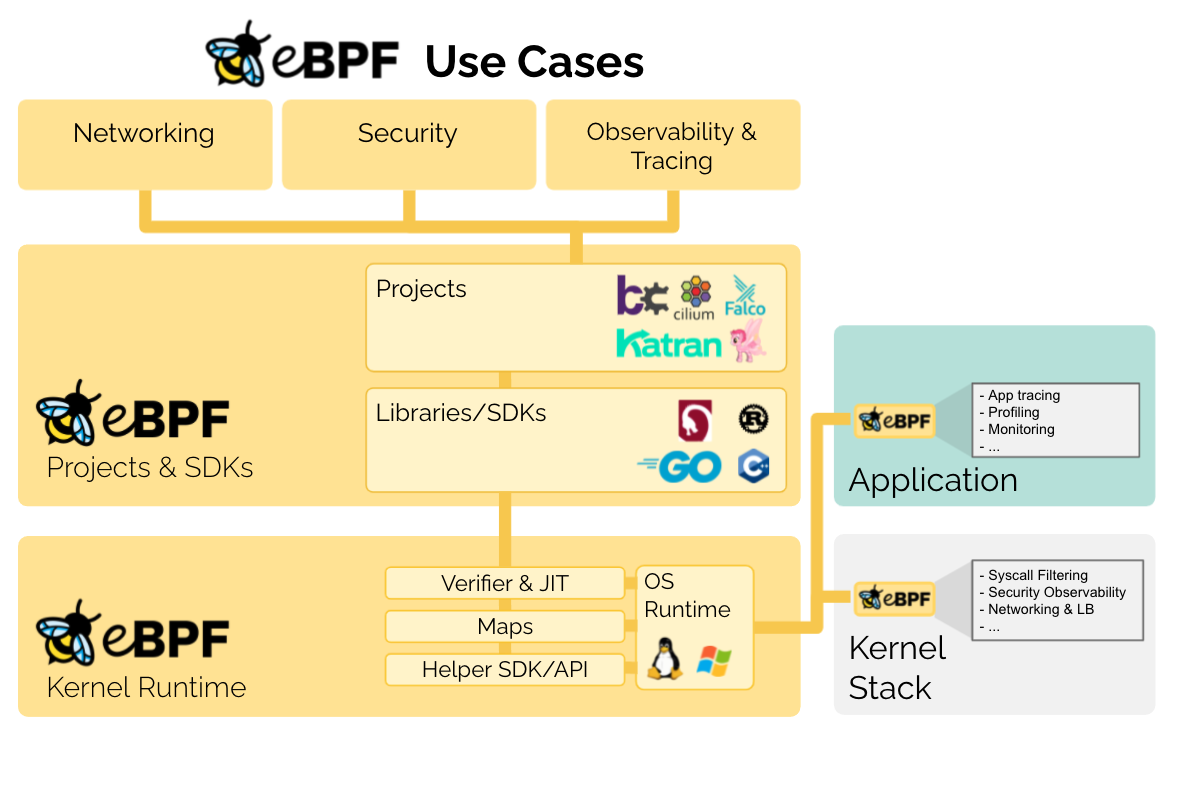
    Currently, eBPF is widely employed by web-scale companies such as cloud service providers. Facebook is using it as the primary software-defined load balancer in its data centers while Google is using open source Cilium networking software within its managed Kubernetes offerings.

    However, adoption within on-premises IT environments that have deployed Linux has been more limited simply because the number of vendors that have optimized networking, security and storage offerings to take advantage of eBPF is still fairly limited.

    Sysdig, for example, recently launched made available an instance of the open source Falco container security platform available that employs eBPF. Tigera has also made available an instance of its container networking platform that leverages eBPF at the kernel level of Linux.

    Ultimately, Graf notes the biggest benefit of eBPF is efficiency. The total cost of processing for security, networking and storage platforms should decline as more vendors take advantage of a capability that will one day be widely employed across multiple operating systems.

    In the meantime, IT organizations would be well-advised to ask their vendors when they plan to support eBPF. Cloud service providers generally require it to deliver their own managed services more efficiently, so any vendor that hopes to sell a platform to those providers will need to support eBPF to drive performance at scale. The issue then becomes determining which platforms that have embraced the technology are also available in on-premises IT environments looking for similar benefits.

    Regardless of approach, it’s clear there will soon be a reason to upgrade not just networking, storage and security platforms but also instances of operating systems that don’t yet support eBPF. DevOps teams would be well-advised to plan accordingly because the number of platforms that will ultimately benefit from eBPF spans the entire enterprise.

  • Real-Life BDD: Getting the Best Out of Dev Teams

    Real-Life BDD: Getting the Best Out of Dev Teams

    If we want our software to have value, we need to improve it every day, rather than wait three months for the next release. If someone finds a bug and we know how to fix it, we want to deliver the fix that day. The challenge is deploying to production many times a day.

    If the developer is coding right now, we want to see their work in production today. However, when you increase the speed of delivery, you need to be sure that the code you deploy works. To increase speed and quality at the same time, you need a safety net and a lot of automation.

    Sometimes we need to change the mindset of developers. This affects interactions between the developers and product management. It also changes the way developers code and how they approach their work.

    Break It Down

    Behavior-driven development (BDD) helps all of my teams. My mature teams use the three stages of BDD: discovery, formulation and automation. To increase speed and quality in a team that isn’t as mature (not much test automation, a lot of manual testing), one of our challenges is to develop small pieces of code they can deliver.

    When we groom an item in the backlog, the product owner (PO) explains what’s needed, but sometimes when the developers start working, they find other stories that may take two weeks each. With BDD discovery, the PO and developers can reach a shared understanding of what’s needed before coding starts. If the story is too large, example mapping helps them split it. They need to obtain stories that will take less than three days.

    More Ideas, More Examples, More Agile

    To simplify collaboration between the engineering and business units, the product team needs to understand the size of the ask for the developer. You can improve communication by showing all the different cases that exist for this feature and by using example mapping.

    Here’s an example of how this works in practice: the product team asks for a feature and explains it in about 10 minutes. The developers say this will take two to three weeks. However, after the developers completed user story mapping and example mapping and began to split the big features into smaller stories with examples, they realized it would take much longer. There were simply too many things the product team hadn’t known about.

    The product team had lots of ideas, but ideas take time to implement. Now that they had more examples, they could make better decisions about what was mandatory and what would be great but was not essential. Working in this way allows us to be more agile.

    The particular aspect of BDD that helps here is discovery with example mapping. I like to use user story mapping to see different versions of the same feature to understand the value brought by the feature’s different potential iterations.

    Whenever Possible, Push Live Code

    I’ve transformed the way my team works to help them to release more often. The key is to add a continuous integration server with the first automated test and a staging environment where the code is deployed many times per day. This allows us to automate the process from the code, so when a developer pushes the code, we have the beginning of a safety net. When the safety net says everything is okay, deployment is triggered to a staging production environment. The production can be a staging production, but it’s better when it’s live. When it’s not possible to deploy directly in production, then you should at least deploy in a staging environment.

    From the developer’s point of view, when they push the code, there’s an impact on production, even if it’s just within a staging production environment. For the next step, they need to create the first unit test each time they have to add code. In other words, every time you write code, you need to have an automated test at the same time. These tests should be run by the continuous integration server.

    Once you have that, the next question is about the size of the code you push. If you wait a few days to push or use another branch, you won’t have the value to see the increment of the code you’ll push.

    Developers Should Own Quality

    Quality has traditionally been the responsibility of the QA team, but it should be owned by the developers. As a developer, you can’t wait for someone else to read your code and tell you it’s okay and then talk to the QA team to make sure you didn’t introduce a bug. If more unit tests are needed, you should write them and you should be using test-driven development (TDD) and BDD. You also need a lot of feedback. You need to be the owner of quality, and help your team achieve it.

    To summarize, here are my top three tips:

    • Automate the process of deployment with continuous integration/continuous delivery
    • Create examples with all the stakeholders of the project together—product, development and testers
    • Create small stories that you can deliver in less than three days
  • Choosing an Incident Management Platform

    Choosing an Incident Management Platform

    When you’re feeling the stress and pain of manually managing incidents and incident response, making the decision to find an incident management tool is a no-brainer. But how do you choose the one that will work best for you, your team and your business?

    You might be asking yourself, “Where do I start? What do I need to know? What questions do I ask? What are the options? How can I be sure we’re choosing the right tool?”

    To help identify the most appropriate solution for your organization, here are the top four things to consider.

    1. Do you have the culture and processes you need to support an incident management solution?

    Different business models require different approaches to incident management. You should be looking for a platform to fit the unique needs of your organization. More importantly, even if you find a solution that seems like a fit, do you have the people, culture and processes necessary to support a new tool? And if not, do you have a plan to put them in place?

    Implementing solutions successfully takes planning, so you’ll want to make sure that you and your team can handle the workload.

    2. What are your pain points and goals?

    You’re looking for an incident management solution for a reason, but do you know exactly which pain points you hope to solve? Your top goal may be to “make it easier,” but every solution is likely to tout that they make things easier. Determine what you’re hoping to accomplish. Do you want to automate processes? Bring your team together more quickly? Track every action from declaration to retro? All of the above? If you prioritize the problems you want to solve, it’ll be easier to check off boxes when you investigate your top choices.

    3. Who should be involved in this search?

    You may be the one taking the lead on searching for a better way to manage incidents, but knowing who else should be part of the decision-making process will make the search more efficient. You’ll need to know if you have support from your team and from leadership; who’ll authorize the budget for your new tool and who has to sign off on your decision.

    And don’t forget other stakeholders outside of your team! Incidents impact all parts of an organization, so consider who needs to be a part of the selection process—from your client success team to your sales team.

    4. How will you make a decision?

    Finding and implementing an incident management solution requires time and resources. It’s especially important to account for the time it will take to onboard your team and configure your solution, including assigning individual roles, setting up integrations with your existing tools and test-driving your incident management process.

    The worst-case scenario is that you purchase a platform but don’t have time to implement and use it. You won’t be happy, nor will your team or executive stakeholders.

    So have a clear idea of what you need to make a final decision—whether it’s considering who’s involved, how much budget you need to secure, what your timeline is or how you’ll address any legal or security issues.

  • Google Unveils Tool to Better Secure GitHub Repos

    Google Unveils Tool to Better Secure GitHub Repos

    Google today launched a GitHub app that provides automated continuous enforcement of security best practices for GitHub projects.

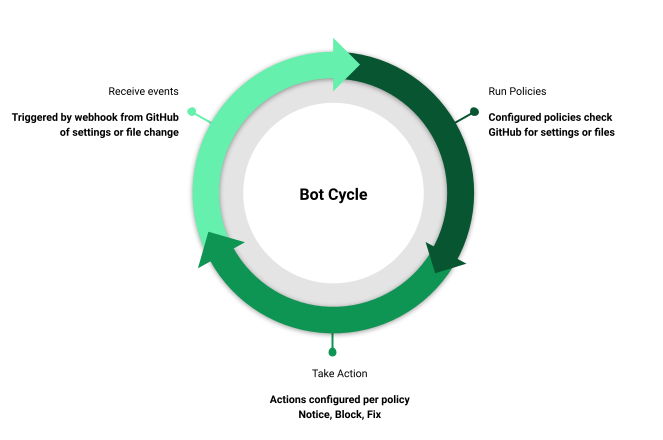
    Kim Lewandowski, a product manager for open source software security at Google, said the Allstar application enables IT teams to assess any project on GitHub to check for security policy adherence. In addition, Allstar sets desired enforcement actions and automatically applies those rules when triggered by a setting or file change in a repository.

    The goal is to provide the open source community with a tool that makes it possible for organizations to have more confidence in the open source software that is being employed within a software supply chain, said Lewandowski.

    Allstar is intended as a companion application for Security Scorecards, a tool that Google made available last year to assess whether, for example, an open source project employs branch protection to ensure that malware isn’t inadvertently committed to a project. Allstar continuously checks expected GitHub API states and repository file contents against security policies and the enforcement actions defined by an IT organization. After it detects a policy violation, the tool can be configured to simply send an alert or to automatically enforce a specific policy to remediate the issue, said Lewandoski. Specifically, she said the options available are to log the security policy violation without taking any additional action, open a GitHub issue or modify the GitHub setting to match the original Allstar configuration.

    At present, Allstar provides a limited number of security policy checks, but more will be made available over the coming months, said Lewandowski. Current security policy checks include branch protection, vulnerability disclosures, access controls and detection of binary artifacts that can’t be scanned. Additional checks that will be added include automatic dependency updates and frozen dependencies.

    Lewandowksi said Allstar and Security Scorecards are part of an ongoing Google effort to give back to the open source community that is being targeted by cybercriminals attempting to compromise software supply chains. Just about every application is now dependent on open source components, to some degree. The maintainers of those projects, however, don’t always have the tools or expertise required to check for malware that has been injected into a codebase, she noted.

    In general, Lewandoski noted that achieving DevSecOps best practices will require a lot more automation of application security. It’s not possible for each developer to become a world-class cybersecurity expert. The challenge is finding a way to introduce that automation into the application development process as early as possible, which, she noted, in many cases starts with open source components that are incorporated in applications.

    It may take a while for every maintainer of an open source project to revamp the processes through which code is added to their project. However, the easier it becomes to continuously review that software, the more confidence organizations that use it will have in its security. In fact, the maintainers of those projects should expect the downstream users of that software to be asking some pointed questions about how security is being managed in the wake of a series of recent high-profile breaches of software supply chains.

  • DataOps Vs. DevOps: What’s the Difference?

    DataOps Vs. DevOps: What’s the Difference?

    There is a mindboggling amount of data today; to even measure it requires using a byte measurement called a zettabyte, which is one sextillion bytes (that’s 21 zeros). Currently, because such a ridiculous amount of data exists, there is a growing urgency to end wasteful data processes. From this environment, DataOps was born. Similar to the way that enterprises adopted DevOps to formalize and streamline wasteful development practices in the past, today, many large organizations turn to DataOps to formalize modern data management practices.

    What, Exactly, is DataOps?

    Primarily, many companies are adopting these principles because they are either trying to avoid or rectify data debt, which is the amount of money required to fix data problems due to the mismanagement of data processes. Data debt is a strong motivator for revamping outdated processes and policies, particularly when decision-makers and stakeholders require metrics before implementing change. Unpaid data debt can be detrimental to a business; the longer it remains unpaid, the more it costs to maintain a data landscape.

    By implementing DataOps principles and data governance, an organization can effectively reduce its data debt and prevent it from growing any larger. Moreover, DataOps practices and software engineering can be used to detect inefficiencies, minimize knowledge loss and capitalize on missed opportunities related to data usage.

    Similarities Between DataOps and DevOps

    Much of the processes that enable DataOps were borrowed initially from the same foundations that built DevOps. Likewise, just as companies need DevOps to provide a high-quality, consistent framework for software and feature development, data enterprises also rely on these same features to realize rapid data engineering and analytics development. For organizations that already have a DevOps framework in place, leveraging DataOps is relativity straightforward. Several important DevOps concepts adopted by DataOps include:

    • Agile development
    • Focus on delivering business value
    • Continuous integration and continuous delivery (CI/CD)
    • Automated testing and code promotion
    • Reuse and automation

    The Differences

    Despite the similarities between the underpinnings of DevOps and DataOps, there are several major differences.

    The human factor: The people using DataOps and DevOps have divergent personalities and skillsets. DataOps participants may be tech-savvy, but often their knowledge is theoretical. DataOps professionals can include data engineers, data scientists and analysts who focus on creating models and visual aids. DevOps, however, was made for software developers and engineers–coding is in their DNA.

    The process: The life cycles of DataOps and DevOps do share similar interactive properties. But, the former deviates in that it consists of a data pipeline and an analytics development process, both active and intersecting. While conceptually, the pipelines of DataOps resemble the development processes of DevOps, typically, experts note that the DataOps process is more challenging.

    Orchestration: In the DevOps process, application code does not require complex orchestration. However, for DataOps, both the data pipeline and analytics development orchestration is an essential component. Although orchestration in the DataOps pipelines occurs frequently and drives data flows, there is usually no such coordination of pipelines in application development and DevOps processes.

    Testing: Again, the two pipelines of DataOps create a significant difference from DevOps; testing in DataOps occurs during both the data pipeline and the analytic development process. These tests attempt to catch anomalies, flag abnormal data values and–unlike DevOps–validate new analytics before deployment. Likewise, these tests get embedded into a data quality framework for continual monitoring.

    Test data management: In most DevOps environments, test data management hardly takes priority; with DataOps, it’s vital to accelerate analytics development so that innovation keeps pace with agile iterations.

    Tools: DevOps is the ‘father’ of DataOps, and as such, the tools needed to support the latter are still in their infancy. While testing in DevOps is primarily automated, DataOps doesn’t have the same luxury – most users modify testing automation tools or build their own from scratch.

    Exploratory environment management: Generally, data teams use more tools than software development teams. Moreover, exploratory environments in data analytics are more challenging from a tools and data perspective; data teams also naturally depart from data islands across the enterprise.

    While foundationally, the concepts of DevOps serve as a starting point for DataOps, the latter involves additional considerations to maximize efficiency when operating data and analytical products. Nevertheless, both serve their intended audiences, reducing data debt and evolving data products or shortening systems development life cycles or providing continuous delivery. For businesses looking to make internal data-related processes more efficient, they should start by examining best practices associated with DevOps.

  • Datadog Cloud Security Platform Advances DevSecOps

    Datadog Cloud Security Platform Advances DevSecOps

    Datadog has launched a Datadog Cloud Security Platform that promises to advance DevSecOps by identifying potential threats using the same agent software many DevOps teams already rely on to instrument applications.

    Renaud Boutet, senior vice president of product for Datadog, said organizations that rely on the Datadog software-as-a-service (SaaS) platform can now more easily invoke security services based on the same data model used to observe applications.

    The security services provided by Datadog include a cloud security posture management (CSPM) offering that identifies misconfigurations and applications that are not compliant with industry standards such as the Payment Card Industry Data Security Standard (PCI DSS).

    A cloud workload security (CWS) offering, meanwhile, detects threats to production workloads by monitoring file and process activity, while a monitoring tool identifies threats to cloud environments by analyzing operational and security logs. It also provides integrations and threat detection rules that are easy to extend and customize.

    Finally, there is an application security tool, currently in beta, that identifies and blocks attacks that target code-level vulnerabilities, such as SQL injections and cross-site scripting (XSS) exploits.

    Boutet noted that many DevOps teams are reluctant to roll out security platforms that require them to deploy, manage and update an additional set of agents across their application environment. Datadog is now effectively unifying application observability and security in a way that makes it simpler for those DevOps teams to embrace DevSecOps best practices, added Boutet.

    In some cases, the dashboards surfaced by Datadog will be employed by DevOps teams that have assumed responsibility for cybersecurity as part of an effort to shift more responsibility for application security further left, noted Boutet. In other instances, cybersecurity teams will be able to view the same alerts shared with their DevOps colleagues, he added.

    Pressure to address DevSecOps is mounting in the wake of a spate of high-profile software supply chain breaches. While the majority of organizations have not been breached, questions are now being asked at the boardroom level as concerns over application security increase. Many organizations are wondering if they should slow down the pace of application development to ensure better security and to what degree.

    Regardless of the path forward, awareness of application security has never been higher. An executive order issued by President Biden calling for improvements to security will likely have a cascading effect across not just government agencies but also on organizations that do business with those agencies. One way or another, DevOps teams and cybersecurity professionals will be required to work more closely together. The challenge is striking the right balance between security and productivity. Most developers are never going to become world-class security experts. Conversely, most security professionals know next to nothing about coding. That doesn’t mean, however, that efforts shouldn’t be made to educate both camps as much as possible. After all, even a small amount of education can have a profound impact when most of the attacks being made against applications are not especially sophisticated.

  • Continuous Delivery: The Secret to 5G’s Success

    Continuous Delivery: The Secret to 5G’s Success

    New technologies are evolving the way societies function, and as a result, how businesses are carried out. In the networking industry, these emerging technologies coupled with the long-lasting impact of the past year–such as remote working–are changing the way customers and communication service providers (CSPs) interact. To that end, these shifts in behavior subsequently bring in a new demand for how communication services are delivered.

    Networking technologies have made some remarkable leaps in recent years. For example, system-on-a-chip advancements have elevated IoT devices to the next level. Moreover, edge computing, high-performance computing and a revolution in software, analytics and AI gave real-time local data processing a dramatic boost in its value proposition. But perhaps it is 5G that has brought forth some of the most astounding enhancements. 5G connectivity enables secure and reliable commercial and industrial operations–all of which can occur with zero latency and in real-time–that are driving the acceleration of OT/IT convergence and more.

    With every new generation of wireless networking, CSPs are bound to ask the burning question: What’s the “killer app” that will help bring in more customers and revenue? In the past, each generation found its answer in the evolution of mobile device usage. However, 5G has changed the game as we know it. Through 5G, CSPs can now tap into various new opportunities in previously inaccessible enterprise markets. Because of this, there is no single killer app that fits all verticals. For example, a 5G killer app in the transportation industry will look very different to one in the health care sector.

    So then, what is the killer app for 5G? To start, we should take a step back and recognize that for 5G, the killer app will be the network itself. This is because the network enables the rapid creation and launch of tailor-made 5G services to meet unique customer needs and use cases across different vertical markets. In the 5G era, the ability to bring new services with faster time-to-market while optimizing costs is the key to generating real business value.

    Achieving the flexibility and agility needed for 5G services will first require an established foundation. A critical step to build that foundation is establishing a cloud-native network core and adopting automation-driven continuous integration and continuous deployment (CI/CD) functions. That way, CSPs can begin to add real value to their networks.

    Why a 5G Cloud-Native Core is Mission-Critical

    Cloud automation isn’t just a buzzword, and it’s becoming increasingly important. With 4G, a cloud-native core may have been a preferred option, but for 5G services–which enables a range of applications and will continually need updated capabilities–a cloud-native design is mission-critical. Through a 5G cloud-native core, the possibilities are endless, as it enables services-based architecture, improved session management, end-to-end network slicing and access-agnostic connection for seamless mobility and more.

    5G networks with cloud-native cores will also continue to offer new communication features and services, of which automation will be a key enabler. This is where DevOps comes in. DevOps can improve automation to a greater extent, and help CSPs automate delivery, installation and testing. Thus, CSPs ought to embrace continuous delivery as the basis of DevOps, as DevOps automation becomes more cloud-centric. Today, many public and private cloud computing providers support cloud DevOps systems on their platforms, such as continuous integration and continuous development tools. When you consider connectivity services’ high complexity–with multi-vendor and multi-domain software supply chains and multiple production environments–an added level of process focused on delivery operations is crucial.

    Embracing Continuous Delivery to Harness 5G’s Power

    Continuous delivery may be a familiar concept to the cloud world, but it’s fairly new to the telecom industry. For CSPs, embracing continuous delivery in telecom networks requires the capability to meet the needs of distinctive environments and their associated challenges. One way CSPs can do that is by implementing a delivery operation (DelOps) solution: A reimagined DevOps. What makes DelOps ideal for telecom environments is its ability to leverage a many-to-many delivery and operations process–complete with design, deploy, test and operate phases.

    In the telecom industry, each network and operational environment is unique; therefore, solutions aren’t “one size fits all.” For CSPs, implementing the best DelOps CI/CD solution requires them to form the right partnerships with operators. That way, they can establish a CI/CD architecture that is flexible, complements their operational environment and can be integrated with any cloud architecture.

    With DelOps CI/CD solutions, seamless automation in delivery and operations can become a reality. It is the “secret sauce” to 5G success as it:

    • Leverages agile processes to reduce rollout cycle times and product/services time-to-market
    • Ensures the CSP’s network is up-to-date and launches new services efficiently and swiftly
    • Requires less effort to conduct acceptance testing, tracking and management of release features
    • Resolves issues rapidly to ensure seamless customer experience and satisfaction

    As the 5G era continues to grow and evolve, the adoption of CI/CD services by CSPs should be done sooner rather than later to achieve a smooth operational journey. In doing so, CSPs can evolve their networks to the best possible level of performance—ultimately boosting their competitiveness to generate new revenues and achieve long-term success.

  • Should You Hire a Clojure Engineer?

    Should You Hire a Clojure Engineer?

    Quite often, when developing applications, it becomes necessary to execute long-running code at the same time as performing other tasks. More recently, to run a program on the Java virtual machine (JVM) it was necessary to write the program in Java. Those days are long gone due to the wide variety of programming languages ​​for the JVM. Clojure is a general-purpose dynamic language developed by Rich Hickey for the JVM. One of the main goals of an engineer who speaks this language is to simplify the process of writing a program with multiple threads that are accessing data simultaneously. What, exactly, is the role of a Clojure software engineer and how can they improve the functionality of its products?

    What Problems can a Clojure Software Engineer Fix?

    A good programming language should help us write transparent and straightforward programs. The software systems that humans create are inherently changeable. In development, it is impossible to foresee all situations in advance, especially when the system’s complexity only grows over time. Even the slightest code change can potentially lead to significant changes in overall system behavior. As a developer, it’s necessary to study carefully, analyze the code and predict each shift’s side effects. Over time, and with greater complexity, it becomes close to impossible to thoroughly analyze all the possible consequences of our changes.

    The Clojure language was created to overcome these challenges. Clojure has a more convenient and modern syntax that orients the user to the functional paradigm as much as possible. Despite the dynamic typing of the language, Clojure programs are compiled into JVM bytecode and integrate seamlessly with existing Java programs. Clojure has now been implemented for several platforms, the most notable of which are the JVM, .Net, and JavaScript. Because it runs on the JVM, Clojure code is portable, stable, reliable and secure. Each operation in Clojure is implemented in three forms: function, macro or special form.

    Typically, complexities in computer programs cause side effects. This language helps to localize those and makes writing functions cleaner. This makes testing easier for the developer, too, since they don’t have to try different queues and find the correct state of the inputs.

    What to Look for When Hiring

    Large companies in particular value senior full-stack Clojure software engineers who can work across a number of tasks from analytics to coding, testing and DevOps.

    Among the problems that a Clojure software engineer can solve for an enterprise are:

    • Development of front end and back end systems
    • Creation of algorithms for load distribution by competencies/user workload
    • Design of modules for forecasting the load users create on systems
    • Machine learning in Clojure.

    Here is the example of a Clojure engineer’s résumé:

    Clojure is also an expression of a developer’s ideas about how simple a programmer’s tool should be. Clojure typically uses only four data structures: list, vector, display and set. The main API is built around these four structures. The main abstraction in Clojure is a pure function that has no side effects and is therefore much more reusable.

    To date, many libraries have been written for Clojure, including those for developing simple and modular web applications. A Clojure program is an open architecture constructor, which means developers can choose for themselves which libraries to use regardless of which others they may have chosen previously.

    Clojure Engineer Salary

    Salaries for Clojure software engineers in the U.S. average $129,887, while a Clojure software engineer’s salary in the UK is $69,910. In Canada, the typical Clojure engineer’s salary is $61,780 and in Germany, $69,089. Clojure software engineers in Ukraine earn an average salary of $38,000.

    Value to the Enterprise

    Enterprise software performance requirements dictate the need to use parallel computing to interact with each other and work at the same time. Existing languages ​​are poorly suited for parallelizing tasks. They contain many object and state dependencies, which translate to systems with unpredictable behavior in parallel interactions. Solutions based on locks and traffic lights do not greatly simplify the implementation of these tasks; the fundamental problem of the system’s state’s dependency on the sequences of object interaction remains.

    By using Clojure in web development, a programmer can develop using other minor, task-focused languages. ClojureScript, for example, compiles quickly to JavaScript and runs in the browser. All of this provides an entirely new approach to building client applications.

    Since Clojure seamlessly integrates with any Java code and can be deployed on standard Java application servers, it is well-suited to web application development, too. The flexibility of the language and its incredible expressiveness allows developers to create fully functional web applications very quickly.

    All a developer needs to work with Clojure is the JDK and the Clojure library which are contained in a single JAR file. There are two standard ways to develop and run Clojure programs: The most common way is to use a simple interactive REPL, a read-compute-print loop.

    Since Clojure is a general-purpose language, it is not difficult for a programmer to find a use for it. Since it is based on the JVM, there is already a massive selection of libraries available, which significantly lowers the entry threshold for developers skilled in other languages and removes the need for developers to write code from scratch.

    Clojure can be used wherever modern, efficient, stable data structures are needed. Of course, there is no one-size-fits-all tool that can handle all types of development tasks. However, the fact that a Clojure developer can use the language for client-server communication is yet another advantage.

  • The SolarWinds Query Report 2021: Database Priorities and Pitfalls

    The SolarWinds Query Report 2021: Database Priorities and Pitfalls

    The rise of hybrid IT and the accelerated adoption of cloud-native apps have evolved traditional database design, management and monitoring. Workloads are rapidly shifting to the cloud and application performance is heavily dependent on the performance of the underlying database. Meanwhile, the global COVID-19 pandemic has forced companies to make significant changes in the last year. Although it was and is a necessity, the transition to remote work and many organizations’ rapid pivots in strategy posed significant challenges for the technology professionals tasked with supporting new employee demands and shifting business priorities.

    As a result, organizations are increasingly acknowledging the importance of database performance management and strategy to ensure their most valuable asset: Data. SolarWinds recently revealed the findings of The SolarWinds Query Report 2021: Database Priorities and Pitfalls, which examines the current state of database management, evaluates the primary challenges database professionals face today and outlines how database professionals can best overcome these challenges.

    The North American results are based on responses to an online survey fielded in February 2021, which included participation from 331 technology professionals responsible for database performance management in the U.S. and Canada from public and private sector small, mid-size and enterprise organizations.

    Among many other key findings, this year’s report revealed the following:

    Increasing Complexity

    Database design and management are evolving in tandem with increased complexity, and IT professionals are on the verge of a significant shift in strategy that embraces cloud database-as-a-service (DBaaS) platforms as critical database performance success factors.

    • Though nearly 80% of the respondents said Microsoft SQL Server is the most critical platform in use today, there’s a relatively even split between the second, third, and fourth most-used platforms: cloud DBaaS (54%), Oracle (47%) and MySQL (43%).
    • As tech pros keep pace with advances in database platforms and indicate an intended shift toward cloud DBaaS adoption (33% of the respondents ranked cloud DBaaS as the number-one priority database platform to adopt over the next three years), the new mix of traditional/cloud DBaaS platforms will also require new skills.
    • Complexity increased in response to COVID-19 and the transition to remote work over the past year, according to 31% of respondents, who cited increased data demands from users, increased volume of data and security/compliance issues (such as GDPR) as the top three drivers of added complexity.

    The industry’s acknowledgment of cloud DBaaS platforms as critical success factors for database performance is now underway. When it comes to cloud migration (especially amidst a pandemic dramatically accelerating planning and execution of cloud computing and digital transformation), database professionals should start with a basic data and code cleanse and ensure only what’s truly needed is being migrated to reduce complexity and overall cost (we know cloud computing costs can add up). A comprehensive, successful migration strategy should also include a detailed assessment of the data estate—what dependencies or complex coding features exist? Remember, everything interconnected with a database has to go with it to the cloud, so taking these preliminary steps will help organizations avoid surprises down the road.

    Database Security/Compliance Influence Priorities

    The cloud and security/compliance are key factors influencing priorities and resource allocation in 2021 and beyond.

    • Nearly 60% of tech pros surveyed stated that of the data/systems currently managed within their organization, less than 25% are in the cloud. But this is expected to change, as 36% of respondents reported integrating cloud DBaaS is one of their organization’s top priorities in 2021.
    • Two-fifths of the respondents anticipated bigger budget allocations in 2021 (compared to 2020) for cloud services and security/compliance (42% and 39%, respectively).

    Managing database platforms is a big undertaking—a balancing act between proactive and reactive responses. But tech pros must make sure they’re covering all their bases, especially when it comes to security and compliance (and, on occasion, cost and licensing). Time and time again, we see these four big-ticket items pushed to the bottom of the priority list, and falling at one of these hurdles can do a great deal of damage. The new generation of legal compliance has real teeth if you fail to comply with the law. A simple cost-benefit analysis can be the proof point you need to highlight the potential impact of not upskilling in one of these areas and can give you a reason to move it back to the top of the priority list.

    Maintenance Constraints

    Database professionals devote more than a third of their day to database maintenance. This constrains both time and opportunity for activities such as innovation and upskilling in response to increased complexity and data-driven initiatives.

    • Maintenance work accounts for a greater portion of database professionals’ time when compared to other tasks. One-third of the tech pros surveyed stated one of the top areas where they spend the most time as a database/data/tech pro is maintenance (33%) and database development (22%).

    Daily database maintenance consumes time tech pros could otherwise be spending on things like upskilling or innovating new ways of working. For example, nearly half of those polled stated performance/query tuning was one of the top three skills/tools they believed they could develop/improve to better manage increasing database complexities, followed by security management and data engineering (45% and 41%, respectively). One of the best ways to work smarter, not harder: Mitigate downtime spent on maintenance and enable efficiency is to implement appropriate automation and monitoring tools. When implemented properly, automation and monitoring solutions can improve overall performance and eventually lead to reduced costs. Additionally, they can free up tech pros’ time, allowing them to focus on more proactive database performance management.

    The report reveals just how quickly the database architecture and operations tech pros are managing in today’s organizations are changing—and the web of management complexity accompanying this change. With application availability and performance as critical business drivers, the database has long been the linchpin of today’s IT environments. However, against the headwinds of increasingly diversified platforms and reduced resources, tech pros must be equipped to do more than reactive maintenance in environments that keep adding more databases with each passing day.

    Tech pros must capitalize on the opportunity ahead to maximize the performance potential of cloud-hosted databases and ensure the successful optimization of their organizations’ data.