Category: IT Administration

  • Atlassian Launches ITSM Platform

    Atlassian Launches ITSM Platform

    Atlassian today extended its footprint in IT service management (ITSM) with the launch of Jira Service Management, a cloud-based platform designed to bridge the divide between DevOps and ticket-based approaches to managing IT.

    Edwin Wong, head of product for IT at Atlassian, said Jira Service Management builds on Opsgenie, an IT incident management platform. The goal is to provide an ITSM platform to better manage IT at a higher velocity by enabling developers to address IT support processes more easily, he said.
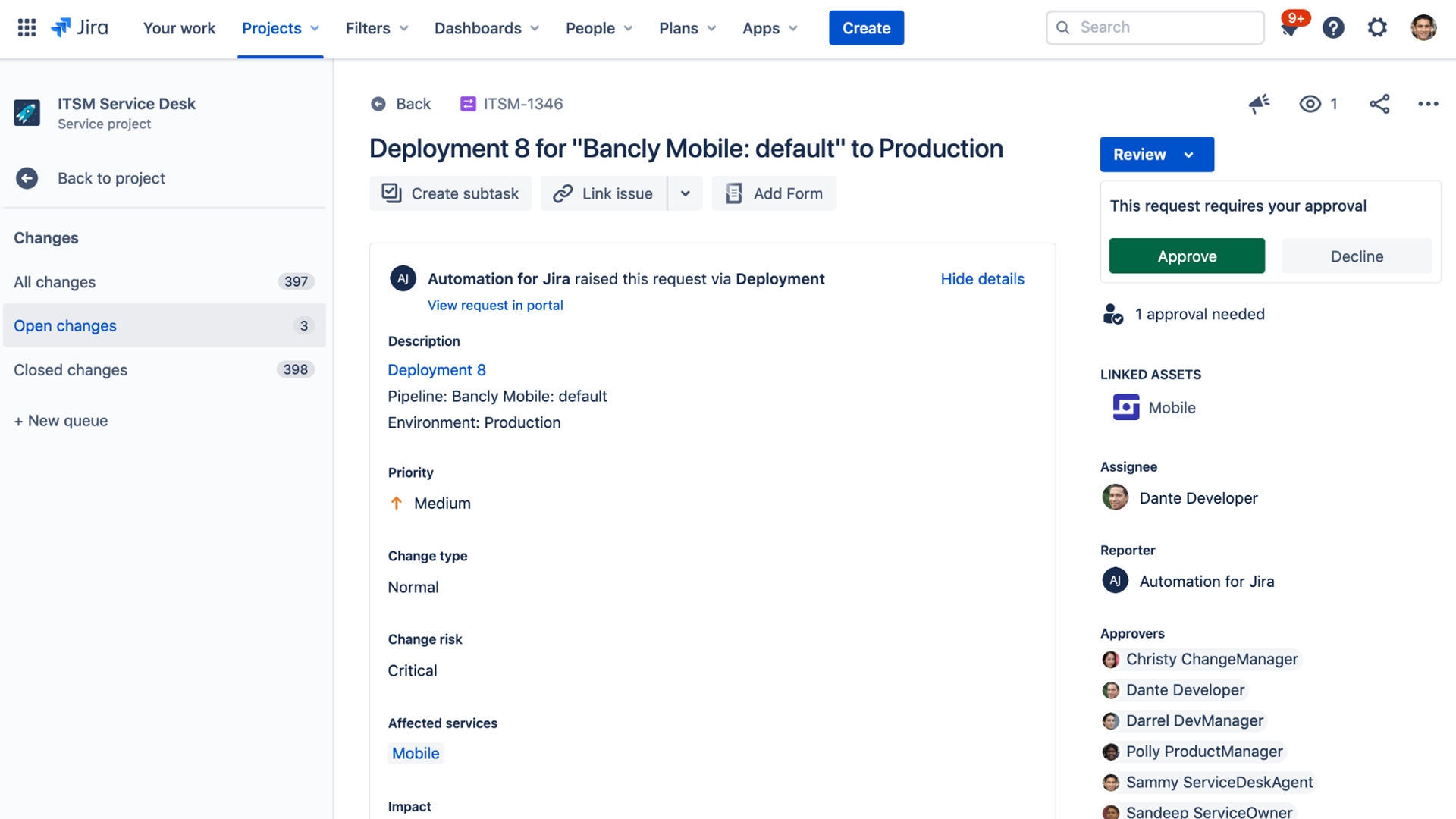
    Going forward, Jira Service Management will add asset and configuration management and conversational ticketing capabilities that Atlassian gained via the recent acquisitions of Mindville Insight and Halp, he added.

    Jira Service Management currently provides support for on-call scheduling, alerting, incident swarming from Opsgenie along with deeper integration with Jira Software for project management, the Bitbucket repository and Confluence collaboration software.

    IT team cans also leverage capabilities such as bulk ticket actions along with machine learning algorithms to intelligently categorize similar tickets, noted Wong.

    Jira Service Management replaces the Jira Service Desk platform that many development teams already use to manage incidents. The goal now is to provide a platform that makes it easier for developers and IT administrators to collaborate more easily to resolve issues, he said. There are currently more than 25,000 organizations that employ Jira Service Desk, which Wong said provides the base of customers from which Atlassian intends to drive convergence of DevOps and ITSM workflows.

    Most legacy ITSM platforms were designed for IT administrators. However, as IT continues to evolve developers are assuming responsibility for applications end-to-end. That transition requires a different approach to ITSM that provides deeper integration with DevOps tools that enable developers to resolve issues without requiring IT organizations to convene a “war room” meeting for each incident, said Wong.

    The launch of Jira Service Management comes at a time when more organizations are starting to transition ITSM to the cloud. With most IT staff working from home either full- or part-time to help combat the spread of the COVID-19 pandemic, organizations need ITSM platforms that are easily accessible from anywhere.

    Each IT organization will need to decide to what degree they need to converge DevOps and ITSM workflows. The goal should be to enable developers to resolve issues efficiently when required. There is still a need for ticket-based approaches to managing IT that are based on the ITIL framework. However, organizations are discovering that ITIL-based frameworks don’t enable the level of agility required to quickly resolve incidents involving custom application software.

    Regardless of the path forward, ITSM is entering a new phase as organizations start to appreciate how dependent they are on software. The days are coming to an end when end users log into an ITSM platform to create a job ticket that is addressed by an IT administrator who would contact a developer if necessary. What’s required is a more proactive approach that immediately alerts developers whenever there is an issue. The challenge is enabling that level of support in a way that creates the least amount of friction possible.

  • Catchpoint Adds Endpoint Device Monitoring Services

    Catchpoint Adds Endpoint Device Monitoring Services

    Catchpoint today extended the reach of its monitoring services to include an offering that monitors the devices of end users.

    Nik Koutsoukos, chief marketing officer for Catchpoint, said the Employee Experience Monitoring service makes it possible to deploy the same agent software the company employs to track application experience on points-of-presence (PoPs) around the globe to an endpoint device.

    With more employees now permanently working across a wider range of geographies in the wake of the COVID-19 pandemic, Koutsoukos said the need to monitor individual application experiences on specific devices has become more pressing.

    Accessed via a software-as-a-service (SaaS) platform, Employee Experience Monitoring also provides access to a desktop application that shows both device and network health along with recommendations for resolving issues. That capability provides the guidance many end users who are working from home (WFH) need to resolve issues before creating a job ticket for the IT service desk, noted Koutsoukos.

    Employee Experience Monitoring service also goes beyond merely collecting data from endpoints. It correlates the data collected from the endpoint against the network data that Catchpoint is already collecting from more than 850 PoPs around the world. In addition, it also combines real-time endpoint analytics, global user sentiment data and synthetic monitoring to provide deeper insights into the actual end user experience.

    Since the beginning of the pandemic, IT teams have been inundated by support calls. However, IT teams traditionally have had very limited visibility into the endpoints they are now being required to remotely support, said Koutsoukos. It’s often impossible to know with certainty whether an application issue is being caused by the device, the network or the local data center or cloud service where the application is deployed, noted Koutsoukos.

    Given the probability that employees will be returning to offices full-time is low, it’s clear another approach to manage remote endpoints is required, added Koutsoukos. In fact, as wireless 5G services, which provide more network bandwidth, become more widely accessible there may not ever be a need for employees to return to an office. Internal IT teams, however, will still be expected to troubleshoot application experiences over any type of network, he said.

    It’s unclear to what degree the COVID-19 pandemic has forever altered IT service management. The one thing that is certain is the days when IT teams could count on the bulk of users being tethered to either a wired or wireless local area network in an office are pretty much over. Even after a vaccine for COVID-19 is discovered, the bulk of employees will still want to work from home more often to limit the spread of the virus. IT teams, therefore, must come to terms with a new normal that requires tools to not only help them manage end users but also enable end users to help themselves whenever possible.

  • ServiceNow Partners With IBM on AIOps

    ServiceNow Partners With IBM on AIOps

    ServiceNow and IBM this week announced that the Watson artificial intelligence for IT operations (AIOps) platform from IBM will be integrated with the IT service management (ITSM) platform from ServiceNow.

    Pablo Stern, senior vice president for IT workflow products for ServiceNow, said once that capability becomes available later this year on the Now platform, IT teams will become on average 20% more productive. This is good timing, as most teams currently are struggling to adapt to the increased demand for IT support from employees working from home and in the office in the wake of COVID-19 pandemic.

    Mike Gilfix, vice president of cloud and integration and chief product officer for Cloud Paks at IBM, said IT teams will also be able to proactively identify anomalies in IT environments 60% faster.

    IT teams interact with IBM Watson AIOps via a chatbox interface such as Slack. The platform will surface recommendations based on ServiceNow data and enable IT teams to query IBM Watson AIOps to provide a faster mean time to resolution for IT incidents, said Gilfix. That capability is provided via a configuration management database from ServiceNow that tracks the operational state of all business services in real-time.

    IBM Watson AIOps, which can be deployed in the cloud or on-premises, also can surface additional context the next time similar issues arise, in addition to being able to record actions and insights for auditing purposes. IT teams can also feed data from other systems into IBM Watson AIOps to automate a wider range of processes.

    AIOps platforms won’t be replacing IT professionals anytime soon. However, IT teams that are not able to access AIOps platforms will find themselves working harder than their peers. As IT environments become more complex, the number of potential issues that can adversely impact end user experience are moving beyond the capabilities of an IT team’s ability to track manually.

    AIOps platforms, meanwhile, continue to advance in sophistication. Given the structured nature of IT environments, IBM Watson AIOps is now able to have a significant impact on productivity with 24 hours of being deployed, Gilfix said. As part of this launch, IBM is expanding its global ServiceNow services offering to include additional capabilities that provide advisory, implementation and managed services on the Now Platform. IBM also has formed an AIOps Elite Team that will help prepare organizations to transition to AIOps free of charge.

    IT may take a while still for IT teams to adjust culturally to AI, but there are many rote tasks that many IT professionals would like to see eliminated. Over time those tasks conspire to increase the level of drudgery IT professionals experience as they perform the same repetitive tasks. In theory, at least, AI should reduce overall IT staff fatigue in a way that could reduce turnover while at the same time freeing up resources to tackle more complex IT challenges.

    It may take some time for IT teams to trust the recommendations surfaced by an AIOps platform, but the more those platforms learn about the IT environment, the more accurate those suggestions become.

  • Red Hat Expands Scope, Reach of Ansible Automation Framework

    Red Hat Expands Scope, Reach of Ansible Automation Framework

    Red Hat, its online AnsibleFest 2020 conference today, announced an on-premises edition of Ansible Automation Platform dubbed Private Automation Hub and previewed technology to connect the Ansible Automation Platform managed as a cloud service by Red Hat and the on-premises edition.

    In addition, Red Hat is making available more pre-integrated workflows to its certified Ansible Content Collections service for Red Hat OpenShift, Kubernetes Core and the VMware vSphere REST application programming interface (API).

    Finally, the company previewed integration between Ansible Automation Platform and Red Hat Advanced Cluster Management, a tool originally developed by parent company IBM for managing Kubernetes clusters at scale. As part of that effort, Red Hat will integrate its implementation of Kubernetes Operators tools for deploying applications on the Red Hat OpenShift platform, which is built on top of Kubernetes, with a Resource Operator for Red Hat Advanced Cluster Management that will enable Ansible Automation Platform to execute tasks outside of the Kubernetes cluster when required.

    Joe Fitzgerald, vice president of management for Red Hat, said there are now more than 60 Ansible Content Collections available that can be deployed on-premises or in a cloud service managed by Red Hat. The connectors will make it easier for IT teams to access workflow content curated by Red Hat and its partners while continuing to create automated playbooks for their own unique IT environments that are stored locally, he said.

    As the number of IT domains to which a declarative IT automation framework can be applied continues to expand, Fitzgerald said the playbooks an IT team can create are becoming more comprehensive. Unlike other IT automation platforms, however, Ansible doesn’t require the IT operations team to learn how to code. In the wake of the COVID-19 pandemic and most employees working from home, the number of workflows that IT teams are trying to automate has increased substantially, he said.

    That framework can now also be applied to both legacy IT environments as well as Kubernetes clusters upon which the cloud-native technologies are being deployed. During AnsibleFest, Red Hat will be showing proofs of concept of support for Knative, open source middleware developed by Google that integrates serverless computing frameworks with Kubernetes clusters.

    While there are still DevOps teams that have adopted programmable frameworks to manage IT as code, many traditional IT administrators are embracing Ansible as a means to automate increasingly complex IT environments. Rather than acquiring and deploying automation tools for each platform in the IT environment, Ansible provides a common framework through which IT teams can automate the provisioning of servers, virtual machines, clusters, switches, routers and storage systems. With vendors such as Cisco Systems supporting Ansible, the number of workflows capable of spanning multiple IT domains continues to expand as internal IT teams share the playbooks either they created or had crafted for them by an IT services firm.

    Regardless of how an internal IT gains access to those playbooks, it’s probable that no matter what the automation requirement is, there is now somewhere a playbook written in Ansible to address it.

  • Morpheus Data Extends Hybrid Cloud Reach

    Morpheus Data Extends Hybrid Cloud Reach

    Morpheus Data has updated its hybrid cloud computing platform to add support for a bare metal-as-a-service option as well as tighter integrations with VMware vCloud Director (vCD) and NSX-T, Microsoft System Center Virtual Machine Manager (SCVMM), Microsoft Azure and Veeam data protection tools.

    In addition, version 5.0 of the Morpheus IT management platform adds support for additional financial operations tools and a user interface that can be tailored to different classes of end users with varying levels of expertise.

    Finally, Morpheus has added support for the latest release of the ServiceNow platform for managing IT via a software-as-a-service (SaaS) application.

    Interest in employing bare-metal servers is on the rise as IT organizations look to deploy everything from platforms to build and deploy artificial intelligence (AI) to edge computing applications based on cloud-native technologies such as Kubernetes.

    At the same time, many IT organizations are beginning to more aggressively reduce the total cost of IT by centralizing the management of multiple IT platforms.

    Brad Parks, chief marketing officer for Morpheus Data, said the financial operations tools added to the Morpheus platform surface more granular cost analysis for utilization of specific classes of cloud services as well as views into Amazon Web Services (AWS) Reservation Coverage and Savings Plans.

    The revamped user interface, meanwhile, makes the platform available to a wider range of end users by adding support for different types of personas within an IT team. That enhancement makes it easier for IT organizations that have adopted Morpheus to provide self-service capabilities.

    It’s not clear at what rate IT organizations will be transforming IT operations. It typically requires IT teams to spend money before they can begin to save money. However, rationalization of the many tools that IT teams rely on today may also help cost-justify the investment.

    Regardless of the motivation, the need to centralize the management of IT is becoming more acute as IT environments become more distributed. Most organizations cannot afford to hire and retain IT staff for each IT platform it uses. IT organizations also want to be able to move workloads between platforms as they best see fit, which is easier to accomplish via a central control plane. The economic downturn brought on by the COVID-19 pandemic is, in effect, acting like a forcing function driving IT organizations to accelerate the rate of transition to hybrid cloud computing, noted Parks.

    Over time, it will also become easier to apply AI to IT operations when the data on which AIOps platforms depend is more easily accessible.

    In the last several years IT has become much more complex. With the rise of everything from microservices based on cloud-native technologies such as containers to internet of things (IoT) applications, the IT environment has never been more diverse. The challenge now is finding the most efficient way to manage all those devices at a time when IT budgets have never been as constrained.

  • Puppet Deepens Windows Integration

    Puppet Deepens Windows Integration

    Puppet today announced it has extended support for Windows environments across its portfolio of IT automation tools by adding a Group Policy Migration capability that enables multiple Windows configurations to be tracked simultaneously and offering to assist organizations seeking to deploy the open source Chocolately package manager.

    In addition, Puppet has extended its support for Microsoft tools by adding a Puppet PowerShell Desired State Configuration (DSC) Builder module, through which the Powershell tools Microsoft relies on to configure operating systems are directly exposed.

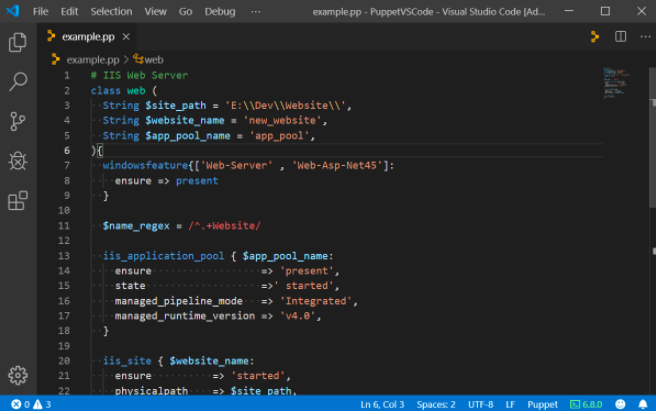
    Finally, Puppet has also added a Puppet VSCode Extension that gives Windows administrators the ability to invoke the Puppet Domain Specific Language (DSL) to access capabilities such as Intellisense and error-checking using their existing user interface and text editor for Windows.

    Puppet CTO Abby Kearns said interest in IT automation has significantly increased in the wake of the downturn brought on by the COVID-19 pandemic. While IT organizations that have been running instances of Linux have had access to a broad range of IT automation tools for years, Windows environments have not enjoyed the same level of parity even though half the workloads organizations are trying to manage today are based on Microsoft.net code, she said.

    With more pressure to automate than ever, Puppet sees an opportunity to fill that void, Kearns added.

    By relying on Puppet tools to automate both Linux and Windows platforms, an opportunity to reduce the total cost of IT also presents itself as organizations look to either limit or reduce IT headcount. Puppet claims there are already more than 40,000 organizations using its tools, including more than 80% of Global 5,000 organizations.

    It’s not clear to what degree Microsoft is invested in IT automation tools, especially compared to IT vendors that make managing infrastructure as code both inside and out of the cloud their sole focus. However, since it launched Azure Microsoft has been investing in tools to manage infrastructure as code. The depth of the Puppet portfolio enables IT organizations to also apply IT automation to operating systems and now to applications via Chocolately.

    Less clear is to what degree IT organizations may finally unify the management of Windows and Linux systems as part of an effort to reduce costs in the wake of the downturn. Most organizations continue to manage Windows and Linux systems in isolation. However, as IT organizations embrace IT automation more broadly, many are looking to standardize on a common set of best DevOps practices whenever possible.

    In the meantime, the opportunity to extend IT automation into the midmarket remains significant. Most enterprise IT organizations have already embraced IT automation to a significant degree. Midmarket IT teams have generally not had the skills and resources required to manage infrastructure as code. However, as IT automation tools become more accessible to the average IT administrator, there may come a day soon when broad swaths of IT systems deployed by midmarket IT organizations will finally be automated.

  • Survey Shows Most IT Teams Adapting in New COVID-19 Normal

    Survey Shows Most IT Teams Adapting in New COVID-19 Normal

    A survey of 122 IT professionals published today by SolarWinds in advance of IT Pro Day next week, finds that while IT teams are enjoying greater respect within their organizations in the wake of the COVID-19 pandemic, nearly a third (31%) admit there’s a need to rethink internal processes to better accommodate rapid change.

    Overall, nearly two-thirds (64%) of respondents said despite contending with challenges such as reduced budgets, greater decision-making responsibilities and longer hours, they were instilled with a new sense of confidence in the wake of the pandemic. Just under half (46%) also said they feel empowered to bring more ideas to the table, while 58% said they now feel more prepared to succeed in similar unexpected situations. Another 29% reported feeling prepared to manage change but require additional resources, training and support. In addition, 40% said they believe they will now be involved in more business-level meetings.

    Patrick Hubbard, head geek at SolarWinds, said in the wake of the pandemic it’s clear the historic divide between IT and the rest of the business has narrowed considerably. The challenge will be maintaining that closer alignment in the era of the new normal, added Hubbard.

    In general, IT teams have proven themselves to be more adaptable than might have been anticipated prior to the pandemic. Many respondents also reported working longer hours due to stretched teams (29%), more responsibility (28%) and decision-making requirements (28%). However, only 22% of respondents said they were experiencing job-related stress.

    However, it’s also clear organizations will need to revisit their IT strategies as workers continue to work from home well into 2021. It’s also clear that while many employees will eventually return to the office, many of them will also be working from home more frequently. As such, the need to create digital workflows spanning a highly distributed workforce will require new approaches to networking and security, among other things.

    Just over a quarter of IT professionals (26%) said it was necessary to learn new skills to support their organizations’ transitions to a remote workforce. However, it would appear additional training is required. Systems management (55%), network management (50%), security policy and compliance (43%) and hybrid IT monitoring/management tools and metrics (28%) were identified as the top skills in need of development. Nearly half of respondents said they received the training they needed to learn these new skills, but (25%) said they are still waiting for training resources to be made available.

    That skills shortage may prove to be especially crucial when it comes to security, which Hubbard noted is usually the last thing to get funded. In the rush to enable remote networking, for example, many organizations did not pay much attention to the need to secure endpoints that were frequently accessing cloud applications, which aren’t protected by a corporate firewall.

    It’s still not clear to what degree the pandemic may drive more organizations to adopt best DevOps practices to enable IT teams to become more flexible. However, it’s apparent to all that when it comes to IT in post-COVID-19 era, there has never been a greater need for speed.

  • How Continuous Transformation Can Deliver More Value

    How Continuous Transformation Can Deliver More Value

    Continuous transformation in IT operations is more than just an industry buzzphrase. In fact, continuous transformation is a critical survival tool for any cloud and IT solution landscapes today. To achieve continuous transformation, innovation must continue well beyond a migration to the cloud. This continuous innovation during day-to-day IT operations is the most critical aspect to achieving month-over-month best-in-class operational benefits.

    Simply “lifting and shifting” systems to the cloud without modernizing precludes most of the key benefits that your systems can potentially deliver over the long term. For example, some of the outcomes of this approach, including bug fixes and other common errors, cause downtime and delays that businesses cannot afford in these highly competitive environments. In addition, unplanned downtime and disruptions impact revenue and can damage brand reputations, both of which detract from a business’s ability to compete and win in their market.

    Proactive vs. Reactive 

    To stay ahead of the pack, companies must shift from a reactive to a very proactive posture. Error prevention is far more effective than fixing errors and resolving issues as they happen. To this end, companies should be leaning on service providers that proactively cover the entire application and infrastructure landscape, end to end, through customized, out-of-the-box solutions. For example, proactivity is rapidly enhanced by including predictive analytics and other fault-finding algorithms in software, such as:

    • Analytical anomaly detection.
    • Cloud-enhanced and optimized monitoring templates.
    • Self-healing automated reaction, from disk extensions, cluster and scaling groups to ensure an issue does not result in downtime, simply a post-event investigation.

    A company’s IT needs are also continually changing as business landscapes evolve. For example, being on the cloud and using service level agreement (SLA) measurement has now advanced to become mission-critical in two areas: bottom-up technical SLAs (as per usual) and now, more importantly, top-down business transactional SLAs.

    Here are some ways IT could streamline its operations and deliver the most value back to the business:

    • Operations Analytics – An operations analytics tool allows for capacity planning, monitoring usage trends and patterns over time. Should deviations from the anticipated usage occur, IT teams can react immediately, implementing remedies before the situation escalates to an incident. This early intervention could be done either manually or automated. Automated scripts, triggered by predictive alarms, can restart services and adjust virtual resource allocation or any other remedial action necessary.
    • Predictive Analytics – Future planning is essential to successful business operations. Predictive analytics improves on this by using precursor and antecedent information to predict system failure with an associated confidence level. IT teams know when resources operate outside their anticipated range and how likely they are to fail within the next period. System failure is usually associated with a surge in user activity. This is not easily predicted, driving the need for advanced predictive analytics. Armed with this information, IT teams can carry out preventative maintenance on data centers and associated systems, such as that done for manufacturing machines in industrial applications.
    • Automated Self-Healing Systems – By combining artificial intelligence and machine learning, digital innovation has made it possible for business systems to self-heal. Advanced, automated software packages monitor business systems, finding errors and fixing them without human intervention. These systems address performance variations and restore outages as well.

    Through self-learning algorithms, the software learns and understands the normal business operations and its reactions to irregularities and errors. Using this information, the software reacts appropriately when it detects errors, automatically restoring the business system to normal operations. These automated, exponential self-healing packs utilize innovative, continual logic learning as part of their standard software package. These systems also resolve issues in a fraction of the time it takes through traditional manual intervention. Typically, the end user doesn’t even realize that an error has occurred, improving the user experience dramatically.

    The implementation of self-healing systems is relatively quick and can be done in as little as four weeks. As a result, IT teams will have access to advanced troubleshooting and automated diagnostic, enabling fast, root-cause analysis of any errors that occur—implementing the solution through guided prompts, documents the resolution for future reference. And, if the same error occurs again, the solution will automatically be executed.

    Automated self-healing systems offer a range of benefits, including business and IT cost reduction, decreasing unplanned downtime and risk-free digital footprint expansion for continuous transformation. IT professionals can work strategically, delegating mundane and repetitive tasks to automated processes, freeing time and resources to carry out more advanced tasks aligned to business goals.

  • Envoy Proxy Server Project Comes of Age

    Envoy Proxy Server Project Comes of Age

    The momentum behind the open source Envoy proxy software project is increasing as the number of platforms it can be deployed on continues to expand.

    Developed under the auspices of the Cloud Native Computing Foundation (CNCF), Envoy has most recently been extended to include support for Arm64 CI processors and Postgres databases.

    Envoy provides a layer 7 edge and service proxy that can be employed to provide a layer of network abstraction for both cloud-native applications based on microservices and existing legacy applications based on virtual machines.

    Initially developed by Lyft, there are now more than 180 IT vendors and more than 155 companies making contributions to Envoy. Matt Klein, a software engineer for Lyft who is also a maintainer for the Envoy project, said at that level it’s clear Envoy has achieved a critical level of mass. In fact, that level of support is why so many providers of service meshes have elected to deploy their frameworks on top of Envoy.

    Klein conceded Envoy is a complex piece of software that requires a significant level of engineering expertise to master. However, as IT teams look to become more agile, the need for a layer of abstraction that reduces network complexity has become more apparent, especially as organizations move to embrace edge computing.

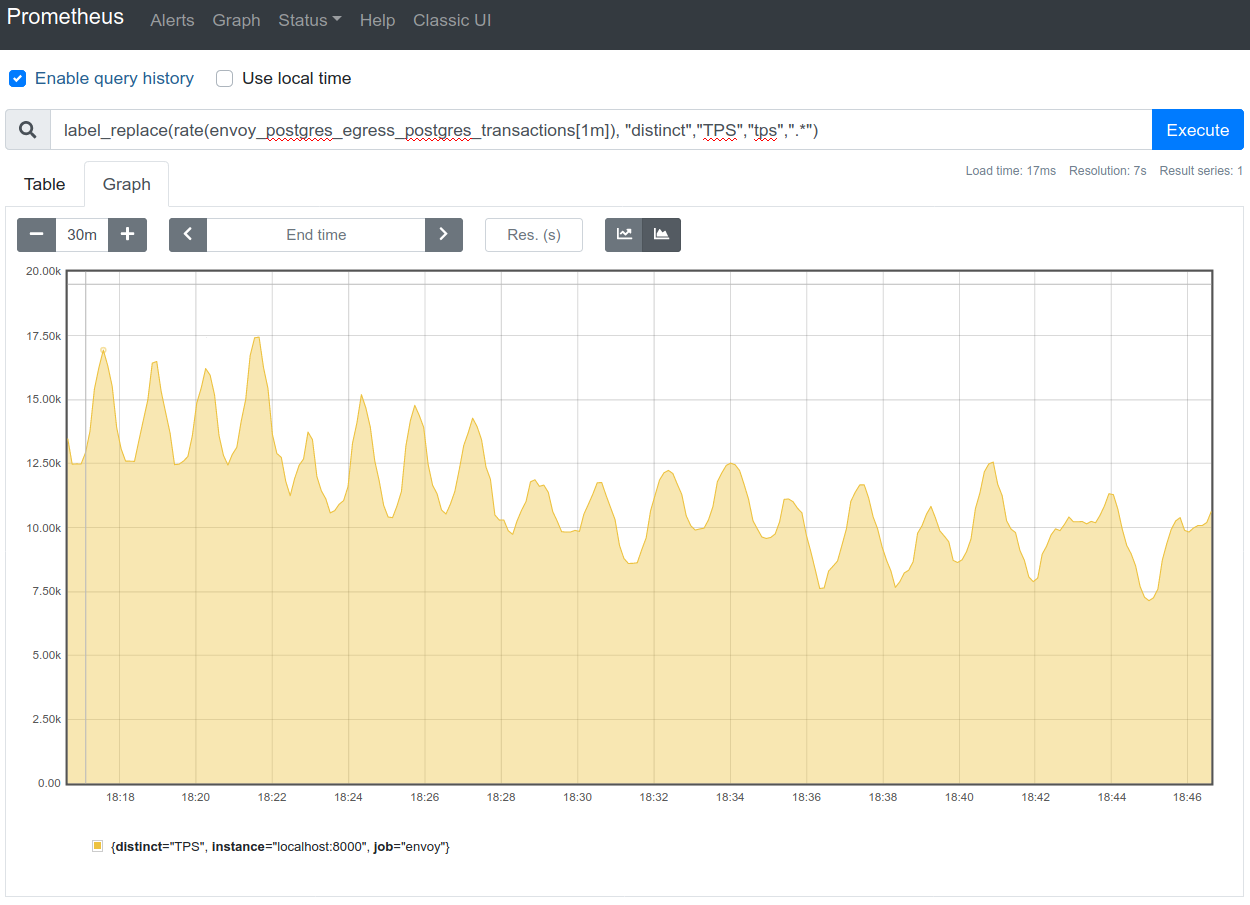
    That agility now also can be extended to software platforms via plugins. In the case of Postgres, for example, Envoy can now decode and interpret the wire protocol format for Postgres to extract data and metrics from Postgres traffic. That capability will not only route database traffic more efficiently but it also offloads the management of that task from the Postgres server without any changes to the database platform required.

    Envoy makes it possible to extend many of the infrastructure-as-code concepts first put forward to manage virtual machines in the cloud to networks. DevOps teams have been able to provision virtual machines in a matter of minutes for years. However, in on-premises IT environments it can take days, sometimes weeks, to provision networking resources. Envoy provides a layer of abstraction that makes it possible to manage network services at a higher level of abstraction.

    Klein said in addition to making Envoy less complex, the team overseeing its development is working to add deeper support for WebAssembly, a platform that makes it easier to build applications on top of Envoy. The Envoy team also plans to tighten integration with multiple observability tools to enable DevOps processes to be applied more easily to networking services, added Klein.

    As Envoy continues to evolve, the rate at which network operations and DevOps will converge is only going to accelerate. DevOps teams will be able to employ Envoy in concert with a service mesh to programmatically manage network services at will. It may take some time for roles within enterprise IT organizations to be redefined to reflect that new reality, but the days when networks were managed via command-line interfaces that had to separately accessed for each router, switch or appliance on the network are coming to a close. In its place, a new era of software-defined networking based on commodity processors is finally starting to rise.

  • VMware Expands Reach of IT Management Portfolio

    VMware Expands Reach of IT Management Portfolio

    VMware today announced a bevy of updates to its portfolio of IT management tools that is now at the heart of its overall approach to both DevOps and AIOps.

    VMware vRealize Operations 8.2 and VMware vRealize Operations Cloud, the on-premises and software-as-a-service (SaaS) editions of the same IT automation platform, provide deeper support for Kubernetes distributions, including the VMware Tanzu Kubernetes Grid, as well as tighter integration with application performance management (APM) platforms from AppDynamics, Datadog and Dynatrace.

    VMware is also providing tighter integration with its VMware vRealize Network Insight to bridge the divide between IT and network operations and tools to better monitor instances of VMware software running on the Amazon Web Services (AWS) public cloud.

    Enhancements to the capacity and cost management tools that VMware makes available as part of the platform include more visibility into daily virtual machine (VM) costs, enhanced metering capabilities and support for non-VMware vRealize Automation workloads.

    At the same time, VMware is making updates to VMware vRealize Automation and VMware vRealize Automation Cloud. The latest updates to the VMware automation platform add support for VMware Cloud Templates, a way to manage infrastructure as code that is compatible with configurations created using Terraform tools.

    Other enhancements include self-service provisioning of Kubernetes namespaces via the service catalog, including support for VMware vSphere with Kubernetes, as well as more granular role-based access controls and application programming interfaces through which policies for VMware NSX network virtualization software can be applied.

    Updates to VMware vRealize Log Insight and vRealize Log Insight Cloud add enhanced Kubernetes support, deeper integration with VMware Cloud on AWS and other usability enhancements.

    Finally, VMware is streamlining the onboarding process for VMware Skyline, a predictive analytics tool the company makes available as an extension of its operations management portfolio.

    Ken Lee, senior director of product marketing for VMware, said VMware vRealize Cloud Management portfolio is evolving in a way that makes it accessible to both traditional IT administrators and DevOps teams. Each function in the platform can be invoked via a graphical user interface or application programming interface (API), he said.

    At the same time, VMware is infusing machine learning algorithms across the portfolio to enable AIOps, eliminating the need for IT organizations to acquire a separate IT management platform to employ AIOps or embrace best DevOps practices, he said.

    While the number of IT organizations that employ virtual machine software from VMware numbers in the hundreds of thousands, the number of organizations employing its IT operations platform is still measured in the hundreds. The company clearly enjoys the inside track in terms of relationships with those customers. However, it’s clear that the number of IT organizations relying on tools other than those provided by VMware to manage their environments is significant.

    As IT organizations look to modernize those IT environments, however, there is clearly an opportunity for VMware to gain additional traction. The challenge is the race to embed AI and DevOps practices into IT operations platforms is already quite heated.