Category: IT Administration

  • Veeam Updates Backup and Recovery Platform

    Veeam Updates Backup and Recovery Platform

    Veeam today announced the general availability of version 10 of the Veeam Availability Suite, which, among more than 150 enhancements, adds support for network-attached storage (NAS) systems, additional ransomware protection via an ability to create immutable backups in the cloud, an ability to recover multiple virtual machines simultaneously and a set of application programming interfaces (APIs) for mining data.

    Danny Allan, chief technology officer and senior vice president of product strategy for Veeam, said IT organizations are looking for more efficient methods of protecting data, as there is no longer enough time in the day to back up petabytes of data.

    Veeam now provides the ability to back up massive amounts of unstructured data residing in NAS systems by only updating the primary backup file with the most recent changes made to data on the NAS platform, said Allan. That approach, he noted, also curtails costs because it substantially reduces the amount of data that needs to be replicated across a network.
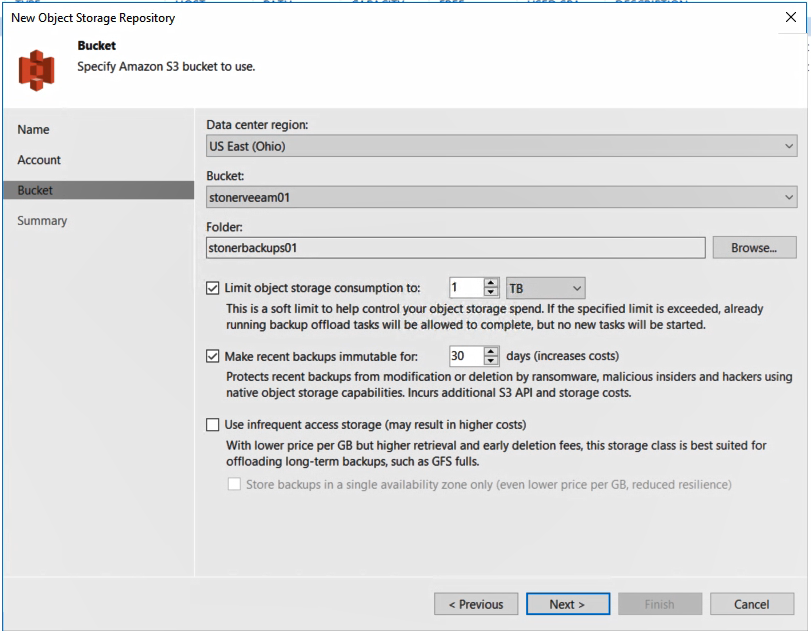
    backup and recoveryAt the same time, Allan said backup and recovery platforms are playing a more strategic role in the battle to combat ransomware. Veeam Availability Suite v10 users can create an immutable copy of data that can reside in any platform that supports the S3 API defined by Amazon Web Services (AWS). Dubbed S2 Object Lock, the offering was developed with the goal of creating a pristine image of a data set that can be recovered in the event of a ransomware attack that a cybercriminal or malicious insider has employed to encrypt an organization’s data.

    In addition, Veeam is moving to lower disaster recovery costs by making it possible to recover multiple virtual machines simultaneously in the event of a data center outage.

    Finally, an API now makes it possible for analytics applications to access data stored using Veeam Availability Suite.

    Fresh off being acquired by the venture capital firm Insight Partners for $5 billion, Veeam is moving to expand its core capabilities for backing up virtual machines to create a data management platform that will span multiple clouds. The goal is to create a platform for managing data across a hybrid cloud computing environment, Allan said.

    With organizations now routinely managing petabytes of data, competition among backup and recovery vendors has never been more fierce. Each provider of backup and recovery tools is, to one degree or another, evolving into becoming a data management platform, a process that largely began when IT teams stared using backup tools to migrate large amounts of data into the public cloud. Now the providers of those tools see an opportunity to enable IT teams to move data not just in and out of clouds but also between them.

    It’s too early to say how this battle will play out. Backup and recovery is one of those rare categories of software that refuses to be consolidated even as new startups launch regularly. It’s not uncommon for most IT organizations to employ multiple backup and recovery tools from different vendors. Less clear is how long the tendency to employ multiple tools will persist, but as new capabilities are added to each backup and recovery tool the pressure on the other tools to continue to prove their value continues to intensify.

    — Mike Vizard

  • SaltStack Updates Enterprise IT Automation Framework

    SaltStack Updates Enterprise IT Automation Framework

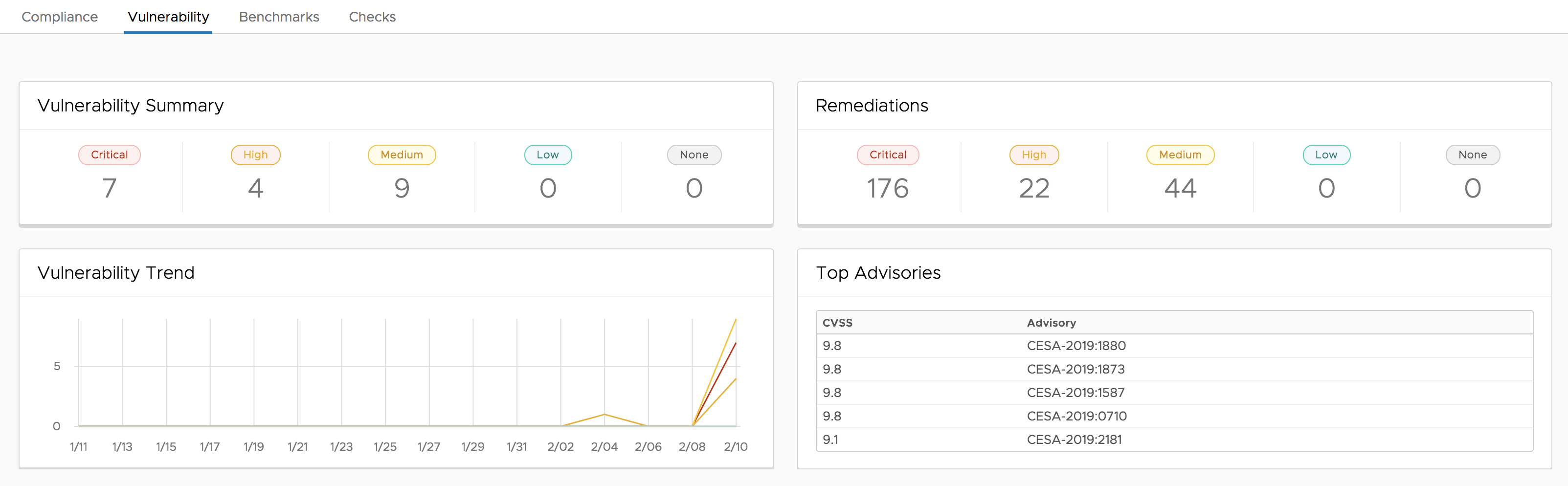
    SaltStack has partnered with Tenable.io to make it possible to pull vulnerability data into the enterprise edition of its namesake IT automation framework.

    In addition, version 6.2 of SaltStack Enterprise now integrates with the IT operations analytics platform from Splunk to make it possible to configure the Splunk Universal Forwarder to index and analyze events generated by the SaltStack framework.

    The SaltStack Comply compliance management module has also been updated to include content for Windows Server 2012 and Windows Server 2019 platforms that has been certified by the Center for Internet Security (CIS).

    Finally, SaltStack Enterprise 6.2 optimizes communications between the Salt Master and the SaltStack Enterprise Operations Framework by adding an intermediate SQLite database layer to queue events. SaltStack says IT organizations should see 20 times-plus improvement in event processing throughput. SaltStack has also added the ability to forward SaltStack events to any Salt Returner, such as a SQL database or local file, to improve performance and maintain high availability.

    Mehul Revankar, a senior product manager for SaltStack, said with this update to the enterprise edition of its open source framework the company is leveraging partnerships to enable IT systems to create closed-looped systems. For example, vulnerabilities identified by Tenable.io now can be automatically remediated using SaltStack Enterprise.

    Revankar said the goal is to make it easier for IT teams to create an IT process that can be automated at the push of a button. As IT environments become larger and more challenging to manage, IT organizations will need to automate more processes at scale, he said. To achieve that goal, SaltStack is simplifying the process to connect to a wider range of third-party platforms that house the type of data required to automate a closed-loop process.

    Naturally, organizations that have embraced DevOps principles are at the forefront of IT automation. Revankar said that as teams of IT professionals converge to drive DevOps and DevSecOps processes, the greater the willingness to employ IT automation frameworks becomes. The goal is to automate as many processes to inject a level of agility that serves to accelerate the rate at which applications are deployed and updated. The challenge organizations have always faced in IT automation is the time it takes to integrate an IT automation framework with relevant data sources.

    Revankar also noted resistance to IT automation among rank-and-file members of the IT operations team is declining as the number of applications that need to be managed increases. Most organizations can’t find or afford to retain enough IT personnel to manage IT operations at the level of scale now required. As such, the need to automate as many rote IT processes as possible has become apparent to all. That’s especially critical in the case of vulnerability management, where the amount of time it takes to patch an application directly correlates to a specific level of risk.

    There is, of course, no shortage of options these days when it comes to IT automation frameworks. In fact, the decision concerning which IT automation framework to employ now has as much to do with the number of sources that framework can pull relevant data from as much as it does the reliability of the automated processes that framework enables.

    — Mike Vizard

  • Teradici Brings Virtual Desktops to Azure Stack

    Teradici Brings Virtual Desktops to Azure Stack

    Teradici announced today it has made its Cloud Access Software (CAS) available on Microsoft Azure Stack, the version of the cloud operating system that Microsoft makes available for on-premises servers.

    Ziad Lammam, vice president of product management for Teradici, said the availability of CAS on Azure Stack makes it possible to employ the PC-over-IP (PCoIP) remote display protocol developed by Teradici to access virtual desktops running in the Microsoft Azure cloud from Azure Stack platforms.

    Virtual desktops have been around in one form or another for a couple of decades, but adoption has always been limited because of primarily the complexity associated with configuring virtual desktops on local servers. With the rise of public clouds, however, it has become easier to take advantage of virtual desktops that are made available as a cloud service.

    The PCoIP protocol created by Teradici transfers pixels between the cloud and the desktop, which makes it feasible to deliver even high-performance 3D graphics applications running on graphical processor units (GPUs) via the cloud. While there are other protocols that can be employed to access remote desktops, Lammam said PCoIP has gained traction because of its ability to support such high-definition applications.

    Microsoft, however, has thrown most of its weight behind its proprietary Remote Desktop Protocol (RDP).

    It remains to be seen just how many virtual desktops might move to the cloud. Many organizations have resisted virtual desktops for a variety of technical concerns and cultural issues. Virtual desktops are difficult to set up on local servers, while connectivity to the cloud can be intermittent. At the same time, many internal IT teams responsible for managing local desktops have been reluctant to given up control of their fiefdom. In fact, it’s only been since the rise of Azure that Microsoft has been aggressively encouraging those IT teams to embrace virtual desktops.

    However, now that connectivity to the cloud has become more reliable and more organizations are lifting and shifting workloads to the cloud, both technical concerns and cultural issues are becoming much less of a hurdle, said Lammam.

    Less clear is to what degree IT organizations will embrace Azure Stack as a platform from which to access virtual desktops running in the Azure cloud. In general, Azure Stack requires organizations to acquire and deploy a modern server to run it. Many organizations are going to prefer to access virtual desktops running in the cloud without having to acquire a new local server running a new type of operating system. Teradici already provides access to virtual desktops running on public clouds without requiring organizations to have Azure Stack installed. However, there is a subset of Microsoft customers who will employ Azure Stack to build and deploy hybrid IT environments and will need to access virtual desktops running on a public cloud.

    Whatever the path chosen, it’s clear more virtual desktops will be accessed via the cloud. Many organizations want to reduce the cost of labor associated with managing local instances of desktops that are usually deployed across multiple remote office locations. The challenge now is figuring out the best path to achieving that goal based on the characteristics of the workloads being accessed.

    — Mike Vizard

  • Tips for Modern IT Admins’ Career to the Cloud

    Tips for Modern IT Admins’ Career to the Cloud

    Fifteen years ago IT professionals experienced a drastically different day-to-day on the job. While the main mission has always remained constant—to take charge of all internal infrastructure—the infrastructure itself has moved off-premises over time.

    The complexity rested in networking for IT professionals. Routers, switches, firewalls and other gear needed to be managed so the network would function. Employee devices also required attention from IT admins, but these devices were typically all Microsoft Windows machines. This allowed IT to standardize its tools and platform.

    What Has Changed for IT Admins?

    Time has drastically altered the lives of IT admins and, after 15 years of evolution, organizations have moved away from large, ungainly on-premises networks and data centers. However, the list of endpoints for infrastructure has grown rather complex, specifically as a result of the implementation of different platforms and operating systems.

    The challenges faced daily and the knowledge needed to be successful has exponentially grown. Below we will take a deeper look at three of the larger changes that IT professionals must ponder as they elevate their careers in the burgeoning cloud environment.

    Rethinking Networking

    The time when it was important to know how to configure a router or switch is slipping away. In the modern IT world, this task has been adopted by cloud infrastructure providers such as AWS and GCP, as well as the telecom companies that deliver your internet.

    The job for IT admins has leveled up, as now it is vital to know how to manage and configure the higher levels of infrastructure. The ability to route traffic through security groups and automate the configuration of systems is a necessity. Writing code to automate these tools is now the norm for an IT admin.

    Regulating Employee Wants

    In the past, IT could dictate the tools that employees had to use, but that ship has sailed. Employees have begun to adopt their own tools to further maximize their efficiency, which forces IT to adapt and get ahead of the game.

    It is crucial to show employees both flexibility and confidence when leveraging new technologies. As a result, employees will work with you and not go out and create shadow IT projects.

    Seeking out and securing cross-platform tools that allow you to manage the various endpoints and services your team is leveraging is of the utmost importance. These tools do exist; however, they typically are not offered by traditional vendors such as Microsoft, HP and Oracle.

    Security is the No. 1 Concern

    Not long ago, security for IT admins was simply firewalls and anti-virus solutions. Fifteen years later the world of IT security is far more intricate.

    To be successful in the IT world, an admin needs to be an expert at infosec so they can understand and defend against the massive world of cybercriminals. Identity theft is rampant and hackers are always trying to locate vulnerable systems that have not been patched. It is because of this that IT admins need to be constantly on their toes and protecting their organization.

    IT is the Core of an Organization

    Without IT, business simply wouldn’t get done. Sales would not be able to email contracts, products would go undelivered, customers would go unbilled and other core activities would fail.

    The IT admin is a vital part of every organization, which is why they are in high demand today. Mastering new technologies and understanding the constantly evolving approaches to IT can be the difference between an organization falling flat on its face or leading an industry.

    — Rajat Bhargava

  • HashiCorp Tools Bridge DevOps, Legacy IT Environments

    HashiCorp Tools Bridge DevOps, Legacy IT Environments

    At its HashiConf EU 2019 conference this week, HashiCorp extended the reach of its Terraform Enterprise tools for automating the management of IT infrastructure beyond the realm of DevOps into legacy IT environments.

    Via integration with the Service Catalog from ServiceNow, IT administrators working with a traditional ITIL-based framework now can invoke Terraform Enterprise to provision IT services. HashiCorp CTO Armon Dadgar said rather than requiring organizations to hire an infrastructure engineer to automate the provisioning of IT infrastructure, IT administrators now can do the job.

    At the same time this week, HashiCorp announced that policy sets may now be configured using the source policies available in multiple version control systems (VCSs), including GitHub, GitLab and Bitbucket. The goal is to make it simpler to enforce policies that would limit, for example, the number of virtual machines a developer might be allowed to spin up within the context of a set of GitOps processes, said Dadgar.

    Finally, HashiCorp also announced that HashiCorp Consul service mesh networking software has been enhanced to include Layer 7 application traffic management capabilities alongside integration with the HashiCorp Nomad application and cluster scheduler software.

    In general, Dadgar said HashiCorp is moving toward enabling its portfolio of offerings to span multiple types and classes of IT environments. HashiCorp Consul, for example, can be run across both legacy IT environments as well as Kubernetes. Most organizations will need to support both legacy monolithic and microservices applications using a combination of DevOps and legacy ITIL processes, noted Dagar. Rather than having to master new tools for each environment, HashiCorp is making a case for a common set of tooling that can be applied across multiple IT classes of processes.

    While some organizations have fully transitioned to DevOps, many more organizations are still struggling to make the transition. Reasons for not making that transition faster range from simple inertia to a lack of skills. Rather than having to take an all-or-nothing approach to modernizing IT processes, Dadgar said HashiCorp is enabling each IT department to embrace IT automation wherever they happen to be on that journey, including being able to embrace new platforms as they become available.

    Dadgar noted that level of extensibility is critical because most tools are still being brought into organizations from the bottom up by individual members of the IT staff, rather than being championed from the top down. In the absence of an executive mandate, Dagar said the path of least resistance is to make IT automation tools as accessible as possible to members of the IT team regardless of skill level.

    There will, of course, come a day when IT leaders will try to rationalize processes around a common standard set of practices. The degree to which any IT organization has been able to achieve that goal, however, has been mixed at best. In the meantime, IT organizations will always need to keep their options as open and flexible as possible.

    — Mike Vizard