
Category: DevSecOps

  • Stop Leaking Secrets!

    Stop Leaking Secrets!

    Merriam-Webster defines a secret as something kept from others or shared only confidentially with a few. Modern software development teams use software secrets such as passwords, tokens and API keys to properly set up, protect and maintain development environments and delivery pipelines and to enable programmatic access to services such as AWS Buckets or Azure Blob Storage for cloud-native apps. Yet, while secrets are critical for modern software to function, they are difficult to manage across delivery stages. All too often, software teams trip over the complexities and inadvertently leave these secrets exposed in both public and private software repositories.

    Potential exposures can stem from many factors: Plain text passwords, weak cryptography, flawed CI/CD or packaging automation and compromised developer accounts or malicious insiders. Whatever the cause, bad actors are regularly scouring repositories and application binaries for hard-coded secrets they can exploit. Look no further than the CircleCI and CodeCov incidents, where exposed secrets left these organizations vulnerable to adversaries intent on attacking software supply chains.

    Rethink Secrets Prioritization

    According to GitGuardian analysis, 10 million new secrets occurrences were exposed on GitHub in 2022, a 67% increase compared to the company’s 2021 findings. As software becomes larger and more complex–with open source, third-party and commercial components–the number of detected secrets will only increase, creating a different challenge: Prioritization for remediation.

    Regrettably, teams lack a scalable means to understand which detected secrets developers can’t or shouldn’t remediate. Today, teams must manually sift through potentially thousands of detections and understand their context to triage these threats. Gaining context means discovering where secrets reside (in your code, in a software dependency, in the documentation included with your software) and understanding their purpose (to access resources, to enable user testing, to enable intrusion detection).

    As teams consider how to simplify and automate the prioritization of secrets, important questions to consider include:

    ● What secrets are your developers responsible for protecting? For example, secrets used to access internal CI/CD pipeline technologies. Depending on permissions, leaking these secrets enables malicious actors to change automated build processes with no one being the wiser. Similarly, API credentials to access data or services needed for their code to function. Leaking these secrets gives malicious actors programmatic access to those APIs, which can be a gold mine of customer data or further compromise the environment.
    ● What secrets are worth protecting? There are some you may be responsible for but which are not worth protecting. For example, to facilitate automated software testing, developers typically publish API keys and certificates in public repositories alongside their applications or in documentation bundled into release packages or software containers. Since these testing “secrets” are designed to be commonly shared, they should not be encrypted or protected.
    ● Which detected secrets are not actionable? For example, developers typically cannot manage secrets in third-party or commercial components and dependencies within software. Instead, these exposures represent a third-party risk management problem. Another example is canary secrets added to software by security operations; remediating these secrets hampers intrusion detection.

    Once teams have established their secrets definitions, building a process to identify and prioritize them comes next.

    Managing Secrets

    Any organization involved in software development should have clear rules for handling and incorporating secrets into code and for communicating that process and those rules to developers. Here are secrets best practices every organization should take into consideration:

    ● Promote developer best practices — and monitor compliance: Secrets leaks are more likely to occur in development organizations that lack clear guidelines for properly managing secrets in their code and easy-to-use tools to implement those guidelines. DevOps teams should formulate policies based on an understanding of how secrets are generated within their development environment, how those secrets are protected once deployed and how (hopefully) they are eventually cycled out of use.

    ● Revamp how applications use secrets: Design applications in a way that eliminates the reliance on access tokens that reside in code. Use technologies like OAuth OpenID Connect (OIDC) tokens that allow developers to authenticate users without directly exposing user credentials in code. Reduce the risk of abuse by using multi-factor authentication, leveraging identity and access management platforms and setting IP ranges that limit inbound connections for APIs to known addresses or address ranges.

    ● Establish end-to-end security: Misconfigurations in CI/CD tooling or release oversight can result in the inclusion of secrets during final builds that might otherwise escape notice during a code audit. Consider implementing binary analysis to extend visibility into leaked secrets beyond raw code and into software packages and containers ready for release. This capability can detect exposed secrets resulting from build or packaging automation.

    ● Streamline secrets prioritization: Noisy scanning results create a ton of triage work just to weed out false positives (e.g., widely distributed testing keys or network credential placeholders) before remediation can start. Automating some of this triage with relevant file intelligence saves countless hours of effort and ensures developers focus on addressing actual risks.

    No Silver Bullet

    Unfortunately, there is no “silver bullet” fix for software supply chain risks and attacks, nor for leaks and exposures. Instead, organizations need a holistic approach that includes scoping the problem, addressing short-term risks posed by leaked credentials and then extending changes in all processes with an eye toward taking the toil out of identifying, prioritizing and remediating secrets leaks—and therefore preventing potential supply chain attacks before they can happen.

  • Gremlin Adds Detected Risk Tool to Chaos Engineering Service

    Gremlin Adds Detected Risk Tool to Chaos Engineering Service

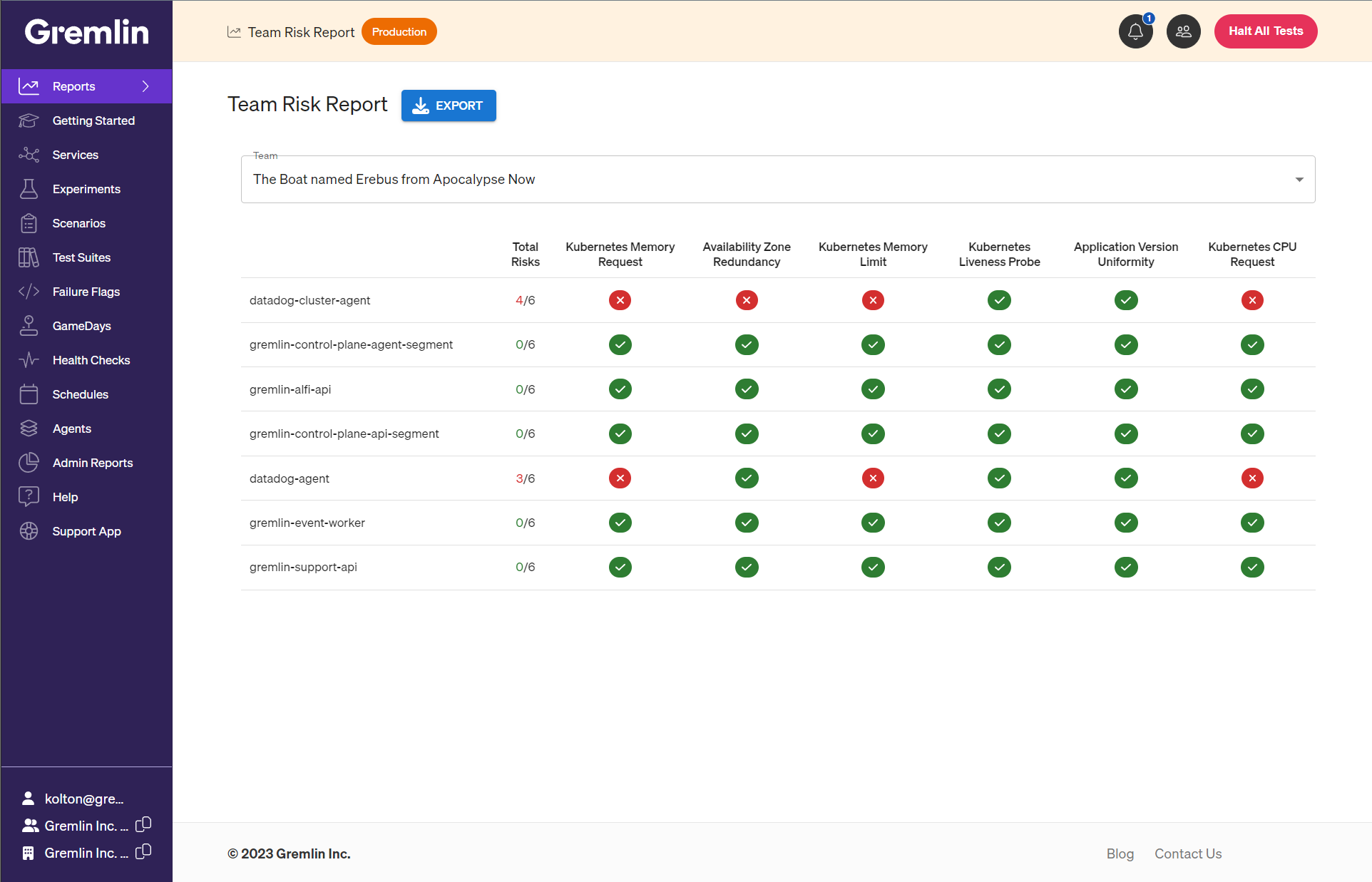
    Gremlin today added a risk detection capability to its chaos engineering service that automatically identifies issues that could cause outages along with recommendations to resolve them.

    Enabled by agent software deployed in an IT environment, the Detected Risk tool makes it possible to benefit from chaos engineering techniques without needing to construct experiments or run reliability tests.

    Gremlin CTO Kolton Andrus said that approach eliminates much of the friction that previously limited adoption of chaos engineering best practices to improve the resiliency of IT environments.

    Chaos engineering is rooted in a resiliency testing philosophy that posits applications should be able to keep functioning regardless of any service or infrastructure failure. Most IT organizations, however, don’t have the expertise required to build the tools required to test resiliency based on the “Chaos Monkey” principles—pioneered by a Netflix project by that name—that, for example, randomly turns services off to see if an application fails.

    Each DevOps team will need to evaluate Gremlin’s recommendations before implementing them, but the overall goal is to provide IT teams with a better understanding of the level of risk attached to, for example, a misconfiguration of a server. To do so, the tool uses a scoring mechanism provided by Gremlin, noted Andrus.

    The challenge is that as IT environments become more complex, the level of dependencies between applications and infrastructure continues to increase. It’s often impossible for DevOps teams to manually keep track of all the hidden dependencies that might exist when IT environments are continuously being updated.

    In theory, of course, adopting cloud-native applications based on microservices should make IT environments more resilient as calls to application programming interfaces (APIs) are rerouted in the event of an outage. Nevertheless, there are almost always dependencies that get overlooked as these applications evolve, which creates a potential single point of failure.

    Naturally, not every IT team is always comfortable with the concept of deliberately breaking things to better understand what issues might cause an outage. As organizations become more dependent on software to drive critical processes, however, a more proactive approach to ensure resiliency is required, added Andrus.

    In fact, business leaders are becoming less tolerant of outages that result in lost revenue, so DevOps teams are being held to a higher level of accountability. DevOps teams may appreciate the value of a blameless culture that encourages everyone to learn from their mistakes, but IT leaders still get fired when there are too many outages, noted Andrus.

    Less clear is the degree to which the rise of artificial intelligence might affect chaos engineering. At the very least, AI models should make it easier to assess levels of risk, but the cost of using those technologies to achieve that goal is substantial, especially when platforms that provide the same outcome already exist.

    Regardless of approach, however, when it comes to resiliency, everyone agrees that the value of application uptime is now beyond measure.

  • The Differences Between DevOps, DevSecOps and SRE

    The Differences Between DevOps, DevSecOps and SRE

    DevOps, DevSecOps and SRE are all quickly gaining traction within the tech world due to their effectiveness and promise of reliability for companies. Each framework provides various levels of safety and scalability—DevOps is agile, DevSecOps prioritizes security above all else and SRE focuses on performance optimization. Together, these are changing how software gets deployed from conception to production. We’ll break down each one in detail.

    What is DevOps?

    DevOps is a set of practices that combines software development and IT operations, which aims to shorten the software development life cycle (SDLC).

    DevOps bridges the gap between those two areas by bringing together different people–developers, operators, testers and system engineers–who are responsible for different parts of the software delivery process, from planning to deployment into production environments.

    A core tenet of DevOps is to automate manual processes within each stage of the SDLC, eliminating much of the redundant work that used to take weeks or even months. This automation significantly drives down costs, as well as reduces problems posed by human error when running manual tasks.

    The following are some of the core tenets of DevOps:

    1. Collaboration
    2. Quality and reliability
    3. Automation
    4. Scalability
    5. Security

    What is DevSecOps?

    DevSecOps (or DevOps security) is an emerging field within the DevOps practice that focuses on strengthening software security within the development and operations process.

    These three distinct groups often have different priorities when it comes to building software applications. Developers are focused on speed-to-market objectives from their employers or clients, operations focus on reliability and scalability, while security teams prioritize safety from malicious actors or data breaches. At the same time, with DevSecOps, these goals become united under one umbrella: Build fast and reliable applications with built-in protection against attacks.

    DevSecOps focuses on implementing security as code—or automating many routine tasks involved with identity management, like user authentication and authorization. To ensure that security is properly integrated into your DevOps pipelines, below are some key DevSecOps practices:

    1. Automate security processes whenever possible
    2. Encourage continuous testing
    3. Prioritize remediation over detection
    4. Create a culture around secure coding principles

    What is SRE?

    SRE stands for site reliability engineering. The basic idea behind SRE practices is that software engineers should be responsible for both the development as well as the reliability of their product as a whole. This means having an understanding of not only how users will interact with the application or service but also how it interacts with other services in its operating environment, such as databases, firewalls, cloud environments, etc.

    To maintain uptime while meeting these requirements, SRE applies various techniques like automation and continuous deployment processes to ensure high availability.

    A key goal of site reliability engineering is service-level objectives (SLOs), which measure how consistently a service meets its goals over a given period of time—such as how often it’s available, how quickly it responds to requests made by users or customers—and establishing goals around those SLOs. Achieving objectives like these helps organizations build customer trust in their products and services since it ensures that they have stable and reliable day-to-day operations.

    Here are some of the most important SRE principles:
    1. Automation
    2. Proactive monitoring
    3. Fault tolerance
    4. Measurement and analysis
    5. Service-level objectives (SLOs)

    DevOps Vs. DevSecOps Vs. SRE

    The differences between DevOps, DevSecOps and SRE can be summed up in three main areas: Scope, roles and objectives.

    DevOps focuses on improving the speed of releasing software by automating processes and optimizing collaboration between development and operations teams. This helps organizations create a continuous delivery pipeline to quickly deploy code into production with minimal risk. As such, it is typically focused on development or operations activities and has become synonymous with agile methodologies such as continuous integration/continuous delivery (CI/CD).

    DevSecOps expands upon these concepts to include security considerations from the very beginning of a project’s life cycle instead of tacking them on after the fact. By shifting security left in the process–meaning bringing security earlier into the design phase–teams are able to reduce risk early on while achieving faster results overall through continuous feedback loops.

    As part of this shift left process, DevSecOps practitioners focus heavily on automating security compliance activities as part of their job function rather than waiting until after deployment has occurred.

    Meanwhile, SRE focuses more broadly on keeping the user experience consistent across various products an organization offers by responding to customer needs quickly while creating automation processes that allow common tasks to be repeated without manual intervention from engineers or developers.

    Then there is also platform engineering, which is a closely related yet distinct discipline with its own unique responsibilities. While both DevOps and platform engineering involve automation and working with the infrastructure that supports software development, there are some key differences between them.

    Platform engineering can be defined as a practice that involves developing a standardized platform on which all applications will run. Platform engineers build the underlying infrastructure to support applications, including servers, databases, virtualization layers and networking components using standardized toolsets. An important task for this field is designing an application’s architecture in such a way that allows it to scale easily with increased demand or usage levels. Additionally, they create self-service tools that enable developers on their team to quickly spin up new environments without requiring outside assistance.

    Wrapping Up

    In conclusion, while all three approaches have similar goals–ensuring reliability, speeding up the software delivery process and securing user data–they do so using different strategies:

    ● DevOps favors automation.
    ● DevSecOps puts focus on proactive security measures.
    ● SRE prioritizes optimization, reliability and scalability.

    Each one can contribute significantly when appropriately implemented into any organization’s workflow, depending upon its own specific needs.

  • 80% of Bosses ‘Regret’ Stopping WFH ¦ PSA: Disable STS!

    80% of Bosses ‘Regret’ Stopping WFH ¦ PSA: Disable STS!

    Welcome to The Long View—where we peruse the news of the week and strip it to the essentials. Let’s work out what really matters.

    This week: Rethinking return-to-office mandates and a ridiculous, ancient Windows bug. (more…)

  • Digital.ai Embraces Multiple AI Classes to Advance DevSecOps

    Digital.ai Embraces Multiple AI Classes to Advance DevSecOps

    Digital.ai has committed to adding generative artificial intelligence (AI) and additional machine learning capabilities to its namesake platform for managing DevSecOps workflows.

    The company plans to make available in alpha a generative AI tool to create test cases and user stories via large language model (LLMs) access via a natural language interface. In addition, generative AI will also be used to identify high-risk changes to code and improve the overall governance of DevSecOps workflows.

    At the same time, Digital.ai has extended the machine learning algorithms it already provides to provide predictions and scoring. Additional capabilities include flow acceleration recommendations, change risk predictions and service management process optimizations.

    Digital.ai CEO Derek Holt said as AI continues to evolve, the company will use a mix of public and private LLM platforms to ingest AI into DevSecOps workflows. In effect, the future of AI will almost be multimodal as different classes of AI technologies are used to automate workflows, he added.

    The goal is to safely break down the silos of data that today make it difficult to cost-effectively build and deploy secure software without compromising the rate at which it is developed, noted Holt.

    It’s still early days as far as the infusion of AI in workflows is concerned, but it’s apparent that many of the manual tasks that prevent organizations from fully embracing best DevSecOps practices will be automated.

    At the same time, increased reliance on digital processes, coupled with more stringent pending regulations, are reducing the overall tolerance organizations have for insecure software. The only way to address that rising sense of application security urgency—at a time when more complex cloud-native applications are being built and deployed—is to rely more on automation. In fact, the race is now on to secure software supply chains before regulations that will have stiff penalties for security lapses go into effect.

    Most of the AI advances in software development that have been made thus far benefit developers. However, many of those same core AI advances will soon be applied to software engineering. Many of the DevSecOps bottlenecks that exist today will start to fade away as various classes of algorithms are able to both identify and make recommendations to eliminate them. As those capabilities evolve, it should also serve to help reduce the long-standing cultural divide between application development teams and cybersecurity professionals that is at the root of the software supply chain issues that organizations are still struggling to resolve.

    In fact, many organizations would be well-advised to review their current workflows with an eye toward determining which processes can be automated. The days when AI was sparingly used are now giving way to a new era of software development that promises to dramatically accelerate the rate at which applications can be built, deployed and updated. The challenge, as always, is finding a way to incorporate these advances into workflows that were not created with AI in mind.

  • Snyk Survey: AI Generating More Vulnerabilities in Code

    Snyk Survey: AI Generating More Vulnerabilities in Code

    A survey of 404 IT professionals conducted by Snyk found the use of artificial intelligence (AI) to write code is creating a security paradox. On one hand, just over three-quarters of respondents (77%) said AI tools improve code security. At the same time, however, 59% are concerned that AI tools trained using general-purpose large language models (LLMs) will introduce security vulnerabilities that first appeared in the code used to train them.

    The challenge with general-purpose LLMs is that they are trained using a combination of excellent, mediocre and flawed code. As a result, any recommendation surfaced has the potential to be a suboptimal security result.

    Randall Degges, head of developer relations for Snyk, said that as AI tools increase the velocity at which applications can be constructed, it’s probable that DevOps teams will discover more vulnerabilities in their code.

    In general, 61% of respondents also noted that automation has increased the number of false positives, with 62% of respondents reporting that at least one out of every four vulnerability alerts they received from automation tools were false positives. Well over a third (35%) said false positives represented over half of the vulnerability alerts.

    On the plus side, however, more organizations are paying closer attention to application security issues in the wake of several high-profile breaches of software supply chains and disclosures of vulnerabilities. A full 96% reported their organizations are addressing supply chain security problems on an ad hoc basis, yet only half have a formalized supply chain security strategy in place.

    The survey also finds 87% of respondents work for organizations impacted by a software supply chain security issue in the last year, with 61% having implemented new tools and processes as a result.

    A total of 62% of respondents work for organizations that have a software life cycle assurance process in place, but only 42% of organizations are using software bills of materials (SBOMs). In addition, only 40% have formal security ratings for the open source packages that developers employ, and 31% ignore risks that arise from indirect dependencies.

    However, only 40% of organizations have embedded security testing tools into their integrated development environments (IDEs), with 40% not using software composition analysis (SCA) or static application security testing (SAST) tools at all. In fact, even though 80% of respondents reported working for organizations that ship code daily, only 27% claim to continuously audit their code.

    As a result, many vulnerabilities remain unpatched, with Java (42%) and JavaScript (31%) topping the list in terms of code with the most ignored vulnerabilities.

    Finally, the survey also noted that vulnerabilities involving open source code are now being remediated faster than proprietary code. Maintainers of open source software are now paying more attention to cybersecurity issues thanks in part to the tools and best practices provided by the Open Source Security Foundation (OpenSSF), said Degges.

    There will, of course, come a day when AI is more widely used to analyze vulnerabilities in code. In effect, AI will be used to solve some of the security issues general-purpose LLMs create. In the meantime, however, DevSecOps teams would be well-advised to proceed with caution.

  • Extending the GitOps Pipeline: DevSecOps and Trusted Application Delivery

    Extending the GitOps Pipeline: DevSecOps and Trusted Application Delivery

    We live in a fast-paced world of rapid changes and uncertainty where every aspect of our daily lives changes often, including the way we work and communicate. Organizations must deliver value to their customers at a much faster pace than ever before to thrive in such an environment. However, the decentralized nature of cloud infrastructure expands the threat landscape and poses several security risks that enterprises should address in light of recent data breaches.

    Organizations must combat security threats and address challenges arising from cloud misconfigurations. Several recent tools, strategies, practices and technologies have emerged that can help you handle such security threats. This article discusses how the fusion of DevSecOps and trusted application delivery can extend the GitOps pipeline and add business value.

    What is GitOps?

    Coined by Weaveworks in 2017, GitOps thrives on a source code management system built on Git and adheres to the belief that Git is the single and definitive source of truth. Since all changes are stored in Git, anyone can see the audit trail if necessary. This enables you to use Git-based version control to manage your application’s code, environment and processes.

    Figure 1: CI/CD with Git-based Version Control

    GitOps leverages Git repositories as the one and only source of truth and embraces DevOps and infrastructure-as-code (IaC) best practices. Using GitOps, your developers can spend more time developing applications than configuring or maintaining Kubernetes clusters.

    GitOps strategies are gaining traction with enterprises for various reasons, including improved productivity, increased deployment frequency and improved security. While it’s true that GitOps continues to be a transformative trend, the increased speed and automation can also lead to misconfigurations that compromise application stability and security.

    Figure 2: CI/CD using GitOps

    Often, these security vulnerabilities delay development as developers spend significant time and effort investigating them. Since this poses a hindrance to progress, the question that arises is how enterprises can maintain the frequency and speed of deployment while remaining secure and reliable. This is where trusted delivery comes in.

    An Extension of DevOps

    DevOps is a software engineering practice and culture that blends development and operations to provide a shared and collaborative approach to developing and maintaining software. This can boost productivity, lower costs and increase customer value through increased collaboration.

    GitOps extends DevOps to bring the deployment workflow closer to developers. GitOps integrates code and configuration management for cloud-native application deployment and administration, while DevOps fosters shared ownership, transparency, and rapid feedback.

    GitOps uses DevOps-proven practices like version control, code review and CI/CD pipelines with any Git-based repository, including GitHub, GitLab or BitBucket. It builds on DevOps and applies DevOps best practices for infrastructure automation.

    What is Policy-as-Code?

    When deploying and managing cloud-native infrastructures, adhering to security best practices and regulatory standards is critical without hindering development. Policy-as-code is an approach to infrastructure security in which rules are codified and enforced, thereby reducing or eliminating human errors. You can use it to write applications using a high-level language to control, manage and automate policies. With policy-as-code in place, developers may create applications to manage security, compliance and other regulations seamlessly.

    Here are the types of policies that you can codify:

    • Security Policies: By adhering to these policies, you can protect your software from data breaches caused by misconfigurations.
    • Resilience Policies: The use of these policies in your Kubernetes clusters will help you create highly available, fault-tolerant systems as well as maintain business continuity.
    • Coding Standards Policies: These policies can enforce coding consistency, i.e., any code that violates these policies will be rejected automatically by the system.

    What is Trusted Application Delivery?

    Trusted delivery entails codifying security policies within your software delivery pipeline for security and compliance and introducing guardrails at every stage. By ensuring the security, integrity and reliability of your applications deployed in production environments, unauthorized access, tampering or malware introduction is minimized. It establishes and maintains trust in application source code, artifacts and deployment pipelines throughout the SDLC process.

    The key objectives of trusted application delivery are:

    • Security: It protects the application from security threats and vulnerabilities
    • Integrity: It verifies the authenticity and integrity of the source code of your application, together with the dependencies, and any artifacts
    • Reliability: It ensures that the applications deployed to the production are stable and are devoid of any security loopholes so that they can perform as desired

    Trusted application delivery helps development teams release applications early and secures them with automated protections or guardrails. It extends the GitOps pipeline by integrating security, governance and verification with policy-as-code. These security measures are implemented with policy-as-code. The policy-as-code approach encompasses the entire SDLC, including the design, development, testing and deployment stages.

    According to your organization’s security and compliance policies, compliance and security rules are codified and integrated into the system. Throughout the life cycle of your application, you can manage its security, compliance and other regulations using policy-as-code. These code-defined policies prohibit the provisioning of non-compliant resources. You should implement trusted application delivery practices to secure your organization’s application delivery process and reduce the likelihood of unauthorized access.

    Here are the key benefits of trusted delivery:

    • Faster and more frequent releases
    • Enhanced security
    • Protect against misconfigurations
    • Avoid compliance violations
    • Improved collaboration

    What is DevSecOps?

    DevSecOps is a software development methodology that blends development (Dev), security (Sec) and operations (Ops) at all phases of the SDLC by incorporating mandatory security checks. An organization of any size can benefit by creating a culture of shared responsibility and collaboration by bridging the gap between development, security and operations teams.

    A DevSecOps pipeline adds practices such as scanning, policy enforcement, static code analysis, threat intelligence and compliance validation to the SDLC process. Contrary to traditional software development processes that treat security as an afterthought leading to security vulnerabilities and breaches, DevSecOps is a paradigm shift that fosters a culture of proactive and continuous security approach to help address security concerns and vulnerabilities.

    DevSecOps and GitOps help organizations adapt quickly to changing emerging trends and requirements. DevSecOps is an offshoot of DevOps that focuses primarily on security throughout the development process. It helps detect and resolve security issues and vulnerabilities easily and quickly while fostering a culture of continuous improvement.

    Here are the benefits of DevSecOps at a glance:

    • At the outset, determine which points in the SDLC process are susceptible to security flaws and vulnerabilities in the SDLC process
    • Streamlined compliance
    • Secure supply chain
    • Reduced risk of the attack surface
    • Complete visibility of potential threats

    Why DevSecOps?

    DevSecOps is a proven way to secure your CI/CD pipelines, deliver secure, trusted, high-quality software and foster an environment where security is the responsibility of everyone in the organization. By shifting security left—i.e., introducing security into the CI/CD pipeline earlier—organizations can be much more productive and the teams can be more cooperative and collaborative.

    Given the threats to the security of the software supply chain, DevOps practices have given way to DevSecOps practices, where safety is paramount and a fundamental and ongoing component of software development. At the outset of the SDLC, you should ensure that software components and dependencies are secure to avoid potential software supply chain hazards.

    Additionally, it would help if you had built-in security gates in each step of the SDLC to ensure consistent, repeatable and automated processes from the software build phase to deployment. Remember, DevSecOps isn’t an option; instead, it is a necessity.

    Trusted Delivery With GitOps

    Automated software delivery pipelines are based on Git as the only source of truth. Policy-as-code is a great way to ensure that misconfigurations and errors are detected, alerted, and deployments halted automatically. Next, we’ll cover how a typical GitOps workflow determines where multiple checkpoints can be implemented for trusted delivery.

    In a typical workflow based on GitOps, a developer commits the source code to a Git repository. The CI tool then builds the container images. These container images are then tested and then uploaded to an image repository. At the end of this process, these container images will be deployed to a Kubernetes cluster. GitOps agents compare the current cluster state with the desired state on a continuous basis.

    Hence, you should implement security guardrails at the following points:

    • Git repository
    • CI stage
    • Configuration repository
    • Kubernetes cluster

    Creating a Trusted Software Supply Chain With DevSecOps

    You can build a trusted software supply chain by incorporating security practices throughout the SDLC to ensure the integrity and security of the software delivered by DevSecOps. Here is a step-by-step guide to building a trusted software supply chain by leveraging DevSecOps principles:

    • Security by Design: You should integrate security right from the outset of the SDLC and identify the key threats to the security of the pipeline.
    • Application Dependency Scanning: When building applications, we often use third-party dependencies to accelerate the development process. You should monitor security vulnerabilities and patches as they become available for these dependencies. You can leverage OWASP Dependency Check, Firewall from Sonatype, etc.
    • Secure Coding Practices: You should adhere to and enforce these practices among your development teams. You can integrate static code analysis tools into your DevSecOps pipeline, conduct regular code reviews and identify and fix security issues.
    • Container Security: You should scan container images regularly for security vulnerabilities, implement strategies to secure your containers and use container registries with access controls.
    • Continuous Compliance: You should ensure the software supply chain adheres to the relevant standards and guidelines for compliance requirements. In this regard, you should conduct audits regularly to check if compliance requirements have been satisfied.
    • Collaboration and Communication: You should be able to foster a culture in your organization that facilitates collaboration and communication across the development, operations and security teams.

    DevOps, DevSecOps and GitOps: The Future

    As organizations strive to optimize the efficiency of their software supply chain, DevOps, DevSecOps and GitOps are approaches that can improve collaboration, efficiency and security, to help software developers and IT operations succeed. These practices would become more critical and widely used in the future. GitOps provides teams with better tools for managing configurations so they can focus on more strategic activities.

    While GitOps is an approach that advocates Git-based version control systems as the single source of truth, DevOps is concerned about a cross-functional team that can work together. DevSecOps goes a step further by blending security into all stages of the SDLC process.

    The future of DevOps, DevSecOps and GitOps will see increased automation, tighter security integration and a sustained emphasis on efficiency and collaboration. Your organization should adopt these approaches to provide reliable software and services to its customers.

    Conclusion

    Trusted application delivery is essential for securing applications, protecting user data, meeting compliance requirements and preserving market credibility and trust. It helps enterprises and end consumers by ensuring that software is distributed securely and reliably. Organizations can ship high-quality applications with guaranteed security and performance by adopting trusted delivery practices.

  • New Relic Adds App Security Testing Tool to Observability Platform

    New Relic Adds App Security Testing Tool to Observability Platform

    New Relic today made available a public preview of an application security testing tool that will be integrated into its observability platform.

    Esteban Gutierrez, CISO and vice president of information security for New Relic, said the New Relic Interactive Application Security Testing (IAST) will provide DevSecOps teams with the context needed to identify the root cause of a cybersecurity issue down to specific lines of code.

    DevSecOps teams will be able to take advantage of IAST to identify vulnerabilities both in code as it is written and after it has been deployed in a production environment without any false positives, he noted.

    New Relic achieves that goal using deterministic testing techniques that surface an actual proof-of-exploit using observability data collected from both applications and the underlying infrastructure upon which they depend, said Gutierrez. DevSecOps teams are then provided with guided remediation suggestions, guardrails and tracking tools to both remediate the issue at hand and prevent it from reoccurring, he noted.

    New Relic IAST takes advantage of the agent software New Relic provides to collect observability data, which reduces the total cost of DevSecOps by providing IT teams that have adopted the New Relic platform with an integrated set of application security testing tools that doesn’t require them to acquire and manage a separate additional platform, added Gutierrez.

    That approach also ensures that application security testing is integrated with the continuous integration/continuous delivery (CI/CD) platforms that New Relic already observes, he added.

    The reason most vulnerabilities are not remediated in a timely fashion is the DevOps teams responsible for creating and deploying the required patches lack any context. They often don’t know, for example, how many instances of a vulnerability there might be or the actual level of severity. Without those insights, it becomes exceedingly difficult to prioritize remediation efforts, noted Guttierrez.

    As application security requirements become more stringent in the wake of forthcoming legislation, it’s now more of a question of when than if organizations will be required to better secure their software supply chains. The issue DevOps teams face now is finding a way to integrate application security testing tools into existing DevOps workflows without slowing down the pace at which applications are being developed.

    Of course, not every vulnerability discovered requires the same level of attention. Depending on its severity and likelihood of being exploited, DevOps teams need to prioritize which vulnerabilities need to be remediated first. There simply are not enough resources available today to fix every vulnerability an application might have. For the foreseeable future, there will remain technical debt involving vulnerabilities that will need to be addressed after an application is deployed in a production environment.

    The issue, of course, is that cybercriminals are getting more adept at exploiting those vulnerabilities. The amount of time any DevOps team has to resolve issues before they result in a breach continues to dwindle.

  • Shift Left With DAST: Dynamic Testing in the CI/CD Pipeline

    Shift Left With DAST: Dynamic Testing in the CI/CD Pipeline

    Dynamic application security testing, or DAST, is a process used to evaluate an application’s security while it’s running rather than while it’s in a static state. This method involves simulating attacks on an application, identifying vulnerabilities and analyzing the responses. DAST focuses on the exposed HTTP and HTML interfaces of web-enabled applications, making it an excellent tool for spotting security vulnerabilities that may occur during an application’s active runtime.

    DAST is a ‘black-box’ testing method, meaning it tests the application from the outside in—much like a potential attacker might. It doesn’t have access to the source code and instead focuses on the application as a whole rather than its individual components. This external perspective enables DAST to discover potential security threats that static testing methods might miss.

    While DAST is an effective security testing tool, it becomes even more potent when paired with a shift left approach.

    Understanding the Concept of ‘Shift Left’ in Software Testing

    Shift left is a practice in software development where testing is conducted earlier in the life cycle—that is, it’s ‘shifted left’ on the project timeline. Traditionally, testing was seen as the last phase before the release of a software product. However, with the shift left approach, testing becomes an integral part of every stage of the development process from planning to deployment.

    This approach has several advantages. It allows for the identification and resolution of issues earlier in the development process, reducing the cost and effort required to fix them later. It also encourages collaboration between developers and testers, fostering a more cohesive, efficient development environment.

    Shift left is not just a testing strategy but a philosophy that promotes preventive measures over reactive solutions. It’s about building quality and security into software from the get-go, rather than tacking it on at the end.

    DAST in the Context of Shift Left

    Importance of DAST in Early Stages of Development

    The integration of DAST in the early stages of development is crucial for several reasons. First, by conducting dynamic security testing from the onset, teams can identify vulnerabilities earlier, making them easier and less costly to fix. This proactive approach helps to prevent security issues from becoming ingrained in the code, which can lead to significant problems down the line.

    Second, early integration of DAST encourages a security-focused mindset from the beginning of the project, promoting a culture of security within the team. This cultural shift is crucial in today’s cybersecurity climate, where threats are increasingly sophisticated, and the stakes are higher than ever.

    How DAST Complements Other Testing Methods

    DAST doesn’t replace other testing methods; rather, it complements them. While DAST focuses on external vulnerabilities, other testing methods like static application security testing (SAST) can target internal issues. By combining these methods, teams can achieve a more comprehensive view of their application’s security.

    In a shift left approach, this combination of testing methods can be very powerful. By conducting these tests early and often, teams can ensure that both the external and internal aspects of their application are secure. This layered approach to security testing can help to catch any vulnerabilities that might otherwise slip through the cracks.

    Incorporating DAST Into the CI/CD Pipeline

    1. Understanding the Application Structure

    Before we can integrate DAST into the CI/CD pipeline, it’s crucial to understand the structure of the application we’re working with. This involves understanding the layers of the application, the technologies used and the data flows. By analyzing the application’s architecture, you can identify the critical components that need more attention during the security testing phase.

    Understanding the application structure is not just about knowing the technology stack. It’s also crucial to understand the business logic and the functionality of the application. This will allow you to create better test cases during the DAST process. Additionally, understanding the application structure will enable you to make better decisions when configuring the DAST tool, leading to more efficient and effective security testing.

    Finally, understanding the application structure will help you prioritize the vulnerabilities found during the DAST process. Not all vulnerabilities are created equal; some might be more critical due to the data they expose or the potential damage they could cause to the application. 

    2. Configure the DAST Tool

    The next step is to configure the DAST tool. This involves setting up the scanning parameters, defining the test cases, and tuning the tool to reduce false positives.

    When configuring the DAST tool, it’s important to strike a balance between thoroughness and speed. You want the tool to be able to identify all potential vulnerabilities, but you also want the scanning process to be fast enough not to slow down the development process. This balance can be achieved by carefully selecting the scanning parameters and continuously tuning the tool based on the results of the scans.

    Additionally, when configuring the DAST tool, you should consider the unique characteristics of your application. For example, if your application uses a specific technology or framework that is known to have certain vulnerabilities, you should ensure that the DAST tool is configured to test for these vulnerabilities. Similarly, if your application handles sensitive data, you should prioritize testing the components that process and store this data.

    3. Integrating DAST Into the CI Pipeline

    The next step is to integrate DAST into the CI pipeline. The CI pipeline is a sequence of steps that developers follow to merge their changes into the main codebase. By integrating DAST into this pipeline, we can ensure that every code change is automatically tested for security vulnerabilities.

    Integrating DAST into the CI pipeline can be achieved using various tools and plugins. Most DAST tools provide APIs that allow you to automate the testing process. By using these APIs, you can trigger a DAST scan every time a new code change is pushed to the repository. This allows you to catch vulnerabilities early in the development process, reducing the cost and time needed to fix them.

    However, integrating DAST into the CI pipeline is not a one-time task. It requires continuous monitoring and tuning to ensure that the testing process remains effective. You will need to update your DAST configurations as the application evolves, add new test cases as new features are developed, and fine-tune the testing process to reduce false positives. 

    4. Scan for Vulnerabilities

    After integrating the DAST tool, you can start scanning for vulnerabilities. The scanning process involves executing the test cases defined during the configuration phase and identifying potential security issues in the application. Depending on the size and complexity of your application, this process can take from a few minutes to several hours.

    During the scanning process, the DAST tool will interact with the application just like a real user would. It will send inputs to the application, observe the responses and analyze them for signs of security vulnerabilities. This dynamic approach allows the tool to identify vulnerabilities that static analysis tools might miss, such as runtime vulnerabilities and issues related to the application’s business logic.

    5. Analyze and Prioritize Findings

    Once the scanning process is complete, the next step is to analyze and prioritize the findings. The DAST tool will provide a report of the identified vulnerabilities, including their type, location and potential impact. This information should be used to prioritize the vulnerabilities based on their risk to the application and the business.

    Analyzing and prioritizing the findings is not an easy task. It requires a deep understanding of the application, the business, and the threat landscape. You need to consider various factors, such as the potential impact of the vulnerability, the likelihood of exploitation, the sensitivity of the affected data, and the complexity of the remediation process. By considering these factors, you can prioritize the vulnerabilities and focus your efforts on those that pose the highest risk.

    In addition, analyzing and prioritizing the findings should involve all relevant stakeholders. Developers, security teams, and business leaders should all participate in this process, as they each bring unique perspectives and insights that can help make better prioritization decisions.

    6. Remediate and Retest

    After analyzing and prioritizing the findings, the next step is to remediate the vulnerabilities and retest the application. Remediation involves modifying the application’s code or configuration to eliminate the identified vulnerabilities. Depending on the complexity of the vulnerabilities, this process can involve simple code changes or significant architectural modifications.

    After remediation, it’s crucial to retest the application to ensure that the vulnerabilities have been effectively addressed. This involves running the DAST tool again and verifying that the previously identified vulnerabilities are no longer present. Additionally, retesting allows you to check for new vulnerabilities that might have been introduced during the remediation process.

    Remediation and retesting is a continuous process. As new vulnerabilities are discovered and new features are developed, you will need to repeat this process to ensure the ongoing security of your application. This continuous effort is a critical component of the shift left with DAST strategy.

    7. Continuous Monitoring and Updates

    The final step in incorporating DAST into the CI/CD pipeline is continuous monitoring and updates. This involves regularly checking the effectiveness of the DAST tool, updating its configurations as the application evolves, and tuning it to reduce false positives.

    Continuous monitoring and updates are crucial to maintaining the effectiveness of your shift left with DAST strategy. As the application evolves and the threat landscape changes, the DAST tool needs to be updated to remain effective.

    Conclusion

    In conclusion, incorporating DAST into the CI/CD pipeline is a powerful strategy to enhance the security of your software. By understanding the application structure, integrating DAST into the CI pipeline, configuring the DAST tool, scanning for vulnerabilities, analyzing and prioritizing findings, remediating and re-testing, and continuously monitoring and updating, you can unleash the power of shift left with DAST. This comprehensive approach will allow you to identify and address security vulnerabilities early in the development process, leading to more secure and reliable software.

  • Communicating Common Web App Security Threats to Developers

    Communicating Common Web App Security Threats to Developers

    Automated security testing tools enable us to identify web application vulnerabilities early and often, but what happens after a vulnerability has been identified? Does your security team have the coding skills to mitigate it themselves, or are your developers suddenly security experts once a vulnerability is discovered? Most likely not. So, how do we go from finding vulnerabilities to fixing them? Enter a key component of shifting left: Collaboration between security and developer teams. And a portion of that involves providing developers with the context they need to prioritize and remediate threats appropriately.

    Useful context includes (but is not limited to):
    – The vulnerability type
    – How it works
    – What malicious actors can accomplish by exploiting the vulnerability
    – Ways to mitigate

    The list below provides context around five common web application security threats to help you collaborate on resolutions with your developers. A shared understanding of these threats and how to mitigate them early in the development life cycle will significantly improve overall security posture without impacting software delivery.

    SQL Injection

    A SQL injection attack is executed when an attacker injects malicious code into an application’s database through user-controlled data. While these types of attacks can accomplish many different things, there are several common outcomes. SQL injection attacks can enable attackers to gain unauthorized access to sensitive data stored in the database, and largely depending on what data is stored in a particular database, can result in access to authentication information, financial information and personal data. The second key outcome is the manipulation or removal of data. Malicious actors can then leverage this outcome to access the larger infrastructure and find even more sensitive information.

    To help protect against SQL injection attacks, organizations should never implicitly trust and always validate user input and utilize input encoding, prepared statements, parameterized queries or stored procedures instead of dynamic SQL statements whenever possible. By combining frontend and backend standards to prevent SQL injection from happening, your application can increase its security against this type of threat.

    Cross-Site Scripting (XSS)

    Another common web application attack is cross-site scripting (XSS) which involves inserting malicious code or script into a website. The website will then execute on the given script, enabling attackers to steal sensitive user data, such as session tokens and cookies.

    There are three main types of XSS attacks we regularly encounter: Reflective, stored and DOM. Reflective XSS attacks insert malicious code into a website that is immediately executed, whereas a stored XSS attack involves injecting malicious code into a website that is stored and executed later. DOM XSS is an attack pattern that is used more in single-page applications but acts similarly to reflective XSS. If successful, a cross-site scripting attack can lead to the theft of user session IDs and/or website defacement and lead to redirection to malicious sites, thus enabling phishing attacks.

    Similar to SQL injection attacks, to protect against cross-site scripting, organizations must never implicitly trust and always validate user input and use output encoding techniques while also using auto-sanitization libraries such as OWASP AntiSamy and implementing a content security policy.

    Cross-Site Request Forgery (CSRF)

    Cross-site request forgery (CSRF|XSRF) attacks trick users into performing an action on a website without their knowledge or consent. This is often achieved by inserting a malicious link or form into a website where a user is already authenticated. When the user clicks the link or submits the form, the action is performed on their behalf, leading to potential data loss or unauthorized access.

    Mitigating these types of attacks requires leveraging CSRF protections which are built into the framework you are using, if applicable. Using CSRF tokens, which are unique, randomized values associated with a user’s session and can verify the authenticity of a request will also help migrate an attack. In addition, SameSite cookie settings can help prevent attackers from being able to send requests on behalf of a victim.

    Insecure Direct Object References (IDOR)

    Insecure direct object references (IDOR) occur when an application exposes direct object references, like URLs or database keys, which allow attackers to gain access to restricted data by manipulating these references.

    Safeguarding against IDOR requires the implementation of proper access controls and session management, ensuring that only authorized users have access to certain resources or data. Also, avoid using predictable references and instead utilize globally unique identifiers (GUIDs) to prevent attackers from guessing the direct object references they need to access restricted data.

    It is important to remember that IDOR-based vulnerabilities don’t occur singularly and are coupled with other vulnerabilities to become an effective attack vector.

    Remote Code Execution (RCE)

    Remote code execution (RCE) gives an attacker the ability to execute arbitrary code on a server, which can lead to the compromise of entire systems and offer unauthorized access to highly sensitive data. RCE attacks can occur through an array of means, including exploiting vulnerabilities in code libraries or injecting malicious code through user input fields. As illustrated by the critical zero-day exploit discovered in the Java logging library Log4j in December 2021, RCE can be a determinantal vulnerability.

    A successful RCE attack can cause denial-of-service (DoS) attacks, expose sensitive data, lead to illicit cryptocurrency mining and the execution of malware. In more severe instances, a successful RCE attack can allow an attacker to gain full control over the compromised machine.

    The good news is organizations can implement the same tactics used for protection against SQL Injection and XSS—never implicitly trust user data and adhere to strong user input sanitization and validation.

    Understanding Common Threats

    Safeguarding applications and ensuring a sound security posture requires both security and developer teams to have a shared understanding of common threats and the associated risks.

    The details provided in these examples only scratch the surface in terms of useful context for developers. When you can pinpoint when a vulnerability was introduced, which repository branch and code commit it’s associated with and whether it is exploitable from the outside, you create a powerful feedback loop that accelerates fixes.