Category: DevOps Toolbox

  • Chef Extends Scope of Compliance Automation

    Chef Extends Scope of Compliance Automation

    Chef has extended the reach of its InSpec compliance automation framework by adding a plug-in architecture that makes it easier for developers to programmatically generate compliance controls that can be applied to automation frameworks. The Terraform configuration management framework developed by HashiCorp is the first framework supported via the plug-in architecture. InSpec previously was integrated with the open source Ansible automation framework.

    Julian Dunn, director of product marketing for Chef, said the plug-in architecture supports multiple communications protocols to extend it to multiple frameworks beyond the Chef IT automation framework.

    InSpec 3.0 also makes it easier to describe new resources that can be tested in addition to a stable application programming interface (API) that enables DevOps teams to modify how tests are conducted. Improvements to a packaging mechanism for profiles will also make it easier for developers to more easily iterate on InSpec profiles with dependencies.

    Finally, InSpec 3.0 adds a key value-based description interface to enable more fine-grained reporting as well as de-duplication of controls that satisfy one or more compliance regimes. This allows organizations to create their own custom metadata categories.


    In general, Dunn notes that application development and deployment, thanks to the rise of DevOps, is moving at a pace that exceeds the ability of those tasked with compliance to keep pace. As a result, responsibility for compliance needs to shift left along with other aspects of cybersecurity, said Dunn.

    Dunn conceded it is still early days in terms of making that shift. But as more organizations discover that the rate at which applications can be deployed is being held up by compliance audits, the more incentive there is to enable developers to programmatically insert the appropriate controls into their applications. Once those controls are in place, InSpec then generates human-readable code that serves to reduce the amount of time required to pass an audit before and after an application is deployed in a production environment, said Dunn.

    Of course, passing a compliance audit doesn’t mean the application is secure. But it does at the very least provide a baseline for what’s required to make an application nominally secure. In fact, the path of least resistance to any shift toward embracing DevSecOps might be automating the processes for putting compliance controls in place.

    While there are hundreds of regulations requiring various levels of compliance, it turns out most of them require the same types of controls to be in place. Once organizations begin to programmatically embed those controls within their applications, the speed at which those applications are certified to comply with multiple regulations should increase. There will be less reason for developers to skip a compliance control to meet an application development deadline when that control can be integrated automatically.

    None of this means that people with risk management backgrounds will be participating in DevOps processes anytime soon. But it does means that the output from DevOps teams won’t be stacked up waiting to pass a compliance review because all the applications in front of it are missing one key control or another.

    — Mike Vizard

  • Akamai Further Extends Reach into DevOps Realm

    Akamai Further Extends Reach into DevOps Realm

    Akamai is extending its campaign to make content delivery networks (CDNs) a natural extension of DevOps processes by adding more application programming interfaces (APIs) and other automated functions to simplify a variety of tasks.

    Specifically, Akamai has added an Akamai Sandbox that makes it simpler to conduct tests within the context of the Akamai continuous integration/continuous deployment (CI/CD) framework.

    In addition, the company now makes it possible to cache GraphQL responses using the Akamai application programming interface (API) gateway, which provides a more efficient mechanism for caching REST APIs using the Akamai Intelligent Edge service.

    Akamai is also making it possible to run a series of what-if analyses using the mPulse metrics it exposes now all the way down to specific resource levels. That real-time and historical data can be employed within the context of A/B testing on the CDN platform. Akamai has also made available Single Point of Failure (SPOF) protection within the Ion Script Management tool, which makes use of real user performance data to identify problematic first and third-party scripts on a user’s site. SPOF can automatically defers or blocks any scripts that don’t meet standards for performance.

    Finally, Akamai has added an API for securing entire web application footprints within a Bot Manager tools, in addition to support for OAuth protocols for securing API calls.

    Ari Weil, vice president of product marketing at Akamai, said the CI/CD framework that Akamai provides makes it possible to push updates to multiple CDNs. Akamai obviously would prefer all those CDNs to be provided by Akamai, but it recognizes that, in many instances, organizations will be taking advantage of CDNs provided by cloud service providers alongside Akamai, he said.

    Weil noted that Akamai is trying to position its CDN as the first tier on which a wide variety of applications will be deployed and secured. Rather than deploying those applications on a local web server, the Akamai CDN provides a layer of isolation between cybersecurity attacks aimed at web applications and the infrastructure the rest of the enterprise relies on, said Weil. As part of that effort, Akamai has been exposing its CI/CD platform with the CDN, which organizations can employ to apply DevOps processes to applications that are deployed and updated on the Akamai CDN.

    Many of the DevOps motions these days assume the application will be deployed either on a public cloud or in an on-premises IT environment. Akamai contends that a CDN not only provides a better platform for deploying and managing distributed applications, but those applications will be inherently more secure as Akamai absorbs the brunt of a distributed denial of service (DDoS) attack, for example, and less costly as the amount of data that needs to be moved in and out of a public cloud sharply declines.

    Naturally, not every developer may fully appreciate the role CDNs can play within the context of a larger set of DevOps processes. But as applications become more distributed, there may come a day when the CDN service chosen winds up being a lot more relevant than any of the platforms being connected to the web.

    — Mike Vizard

  • Adobe Looks to Drive DevOps Adoption via the Cloud

    Adobe Looks to Drive DevOps Adoption via the Cloud

    Adobe has been building out a managed service that includes continuous integration/continuous development capabilities on the Adobe cloud service. Now Adobe is extending the DevOps processes enabled by its CI/CD platform to make them more customizable in addition to expanding the scope of the application development tools it provides to include support for single page application (SPA) JavaScript frameworks.

    Haresh Kumar, director of strategy and product marketing for mobile and connected experiences at Adobe, said DevOps processes are now an integral part of how Adobe enables customers to build a custom application experience using low-code tools it provides in Adobe Cloud. In the case of Adobe, that DevOps framework is made available via Cloud Manager, a feature of Experience Manager Managed Services that enables the streamlining of code development across staging and production environments in addition to providing code inspection, security validation and performance testing capabilities. Developers can now customize their CI/CD pipeline within Cloud Manager against specific key performance indicators (KPIs) they define.

    Meanwhile, Kumar said the SPA Editor that Adobe provides is unique because front-end developers can preview a SPA to view JavaScript code and edit content including images, video and text. With this new capability, SPA content can be more easily edited and managed within the context of a business process, he said. The SPA Editor provided within Adobe Experience Manager currently supports the React and Angular frameworks, with plans to extend its reach to other frameworks underway.

    While most IT professionals tend to think of DevOps processes only applying to large-scale applications, Kumar said it turns out that as organizations rely more on cloud services, vendors such as Adobe are exposing customers who want to create applications to a variety of best practices related to DevOps embedded within the cloud service. Many of the developers creating those applications may not recognize they are participating in a DevOps process, but Kumar noted that as more custom applications get developed on the Adobe platform, the number of web developers and content authors being exposed to DevOps process is starting to increase exponentially. It’s even probable many of those developers will be first exposed to DevOps processes within the context of a cloud service long before they encounter them within the context of their internal IT environments.

    Kumar said a DevOps process managed by Adobe is enabling many organizations to smooth out what otherwise often can be a choppy digital business transformation. Building a new generation of customer experience applications requires access to modern tools that can transcend organizational silos spanning data that resides in sales, marketing and financial applications. Last month, Adobe announced it is acquiring Marketo, a marketing automation platform to facilitate that transition. Once that deal is closed, the DevOps framework Adobe has developed in the cloud will be extended to include the Marketo platform.

    It’s hard to say to what degree Adobe will be able to drive adoption of DevOps processes across the Adobe Cloud platform. What might be even more interesting to see is how many of the organizations that rely on Adobe Cloud to develop applications will even realize they made the transition to DevOps.

    — Mike Vizard

  • OutSystems Infuses DevOps Processes into Low-Code Platform

    OutSystems Infuses DevOps Processes into Low-Code Platform

    OutSystems has turned its low-code platform into a framework for generating microservices that can run on-premises or in a variety of public clouds.

    Mike Hughes, senior director of product marketing at OutSystems, said applications generated using OutSystems 11 now can be deployed on both platform-as-a-service (PaaS) environments and container-as-a-service (CaaS) environments, including Amazon Web Services public clouds and the Pivotal PaaS based on open source Cloud Foundry software and CaaS platforms such AWS ECS, Azure Container Service, or as a set of Docker containers running on-premises.

    In addition, OutSystems 11 includes a set of monitoring tools capable of identifying issues emanating from within the applications and external dependencies, as well as a set of impact analysis tools that identify issues before an application is deployed. Those tools are critical elements of a concerted effort to apply DevOps practices and principles to the development of applications created using low-code tools, said Hughes.

    OutSystems 11 also now includes an entitlement model for controlling who can create and manage services and who can consume them, using a full entitlement model that extends to all applications and services.

    Finally, OutSystems has added support for automated risk assessments, granular access controls and activity monitoring of supplemental manual processes along with a revamped user interface.

    IT organizations of all sizes are trying to cope with a growing application development backlog by embracing low-code tools that can be employed either by professional developers to accelerate development or so-called citizen developers to create applications on their own. Legacy approaches to application development have created a gridlock issue that organizations are not going to be able to break without embracing a more modern approach to application development that combines the best of low-code application development platforms and DevOps practices, said Hughes.

    Hughes noted that more organizations than ever are trying to accelerate application development at a time when digital process transformation has become a much high priority. The rate at which new applications can be built, tested and deployed has a direct impact on an organization’s ability to compete, he said. The challenge organizations face is that much of the subject matter expertise required to build these applications resides in business units that have limited application development expertise. The central IT organization, conversely, typically has a limited number of developers available to work on applications at any one time. Rather than simply providing citizen developers with low-code tools, OutSystems is making a case for an approach to rapid application development that provides guidelines for citizen developers in a way that doesn’t create the equivalent of a black box that professional developers can’t later drill down into to determine how an application is behaving.

    It may take a while for low-code application development and DevOps processes to meld within enterprise IT organizations. But the more DevOps tools that come included with the application development frameworks being provided, the greater the chances DevOps processes eventually will pervade the enterprise.

    — Mike Vizard

  • DevOps Dozen 2018: Nominations Deadline Approaching

    DevOps Dozen 2018: Nominations Deadline Approaching

    The last day to submit your nominations for the DevOps Dozen 2018 awards is Oct 10. Click here to vote.

    This year’s awards will include 12 categories, with a winner chosen from each. The top four to six nominees in each category will become finalists, who will be selected based upon the number of nominations they received. You can nominate up to two entrants in each category; however, you can make only one nomination per person. In addition, everyone nominating will be required to provide their name and email address; while that won’t thwart any ballot-stuffing, we hope people will be trustworthy during the nomination process. The winners will be selected by our panel of judges.

    Who are the judges? This was tough. We couldn’t have anyone who might be eligible for an award. That disqualifies vendors, practitioners and many others. However, I think we have four great judges:

    1. Alan Shimel, founder and editor in chief, devopsy.kinsta.cloud
    2. George Hulme, longtime tech journalist and editor at devopsy.kinsta.cloud and Security Boulevard
    3. Jayne Groll, CEO and co-founder of the DevOps Institute
    4. Helen Beal, DevOpsologist at Ranger4.

    So what are the dozen categories for the DevOps Dozen this year? That you can get on the site itself, but here they are as well:

    [su_custom_gallery source=”media: 125437,125438,125439,125440,125441,125442,125443,125444,125445,125446,125447,125448,” link=”custom” target=”blank” width=”400″ height=”200″]

    Thank you again for your enthusiastic response to last year’s awards. The full list of 2017 finalists and winners are available to view here.

    There are so many great companies and people involved in DevOps that it’s always difficult to pick the winners. We know some worthy choices will not be voted tops in their category; however, acknowledging them in our awards process helps show how important they are in the DevOps space.

    As stated earlier, the top four to six nominees in each category will be designated as finalists, who then can submit a presentation on why they deserve the award to judges@devops.com. Finalists will be announced the second week of November and the winners, who will be chosen by our panel of judges, will be announced in December.

    If you have questions, send them to DD@devops.com. Voting for finalist nominees is open for three weeks, so don’t waste any time—nominate your favorites today. Good luck to everyone vying to be one of the DevOps Dozen 2018!

    — Alan Shimel

  • SAP Extends Effort to Modernize App Development

    SAP Extends Effort to Modernize App Development

    SAP this week expanded the scope of the SAP Cloud Platform to include support for the ABAP programming language and made available a beta version of a Kubernetes-as-a-service offering, in effort to update its app development portfolio.

    Announced at the SAP TechEd 2018 conference, these two offerings serve as bookends for an evolving SAP strategy that seeks to include organizations that have heavily invested in ABAP over the last 20 years as well as organizations that are shifting toward employing containers to build applications based on a microservices architecture.

    Dan Lahl, vice president of product marketing for SAP, said ABAP has been widely employed by more than thousands of SAP customers to build applications using the same language that SAP employed to build its on-premises IT environment. Those applications now can be built or enhanced using an SAP Cloud platform based on a distribution of the open source Cloud Foundry platform-as-as-service (PaaS) environment.

    At the same time, Lahl said SAP is working toward hosting its distribution of Cloud Foundry on Kubernetes in addition to making available a Kubernetes-based platform alongside Cloud Foundry. SAP is also leveraging container-based technologies such as Knative and Kubeless to provide access to a serverless computing framework based on Kubernetes. That capability is also in beta.

    The SAP Cloud Platform Backend Service for generating application programming interfaces (APIs) is now available in beta, while the SAP Cloud Platform Enterprise Messaging Service—based on technology developed by Solace—is now generally available.

    Finally, SAP is making available Cloud Application Programming Model for SAP Cloud Platform, a set of framework, tools, languages and libraries based on best practices defined by SAP. Lahl noted that many of those best practices are based on DevOps methodologies that SAP is helping customers embrace as part of an effort to accelerate application development projects.

    Lahl said SAP is, for the moment, focused on modernizing the application development processes of its core developer community. ABAP support, for example, makes it possible to use a venerable programming language that most SAP customers know on a managed instance of the Cloud Foundry PaaS. But the goal is to make SAP Cloud a platform that organizations will use to build applications using multiple programming languages regardless of how many SAP applications they might have running. According to SAP, today there are more than 10,000 customers using SAP Cloud Platform.

    It’s not clear to what degree Kubernetes might supplant Cloud Foundry as a major platform for building applications in the enterprise. Lahl contended that by putting Cloud Foundry on top of Kubernetes, SAP now provides one of the richest application development tools on a platform that is rapidly becoming a de facto standard for orchestrating containers.

    It may take a while before SAP becomes a dominant provider of a platform for building custom applications. But the one thing that is clear is that SAP these days is focused on a lot more than delivering a set of packaged applications that eliminate the need to build a custom application in the first place.

    — Mike Vizard

  • Microsoft Puts Upgrade Plan in DevOps Motion

    Microsoft Puts Upgrade Plan in DevOps Motion

    Microsoft this week at its Ignite 2018 conference made it clear DevOps teams will have their hands full upgrading both databases and operating systems this Fall.

    Erin Chapple, corporate vice president for Windows Server, announced Windows Server 2019 will become generally available next month. As is the case with Windows Server 2016, there are three editions: Standard, Data Center and Essentials. The latter offering is for small businesses.

    However, the suite of management tools the company provides for its operating systems will not be available until early next year.

    Microsoft is putting the finishing touches on Windows Server Software Defined (WSSD) 2019, which provides another approach to combining compute, storage and networking on top of a hyperconverged infrastructure platform. That offering is expected to come bundled on a wide variety of hardware platforms early next year. Organizations looking to shift from a legacy rack-based approach of managing their data centers to a more modern HCI approach will have to wait for WSSD 2019 to become available.

    The company is simultaneously pushing forward with a public preview of Microsoft SQL Server 2019. In addition to adding support for faster queries and persistent storage in memory, Microsoft SQL Server 2019 packages the Hadoop Distributed File System and Apache Spark in-memory computing framework with a relational database. Microsoft is also making it possible to run SQL Server 2019 on Kubernetes clusters running on either Linux or Windows deployed on-premises or in the cloud. While the company has broadly embraced Kubernetes, its support for Kubernetes on Windows Server is not expected to be generally available until 2019.

    Microsoft also announced that a General Purpose service tier for the Azure SQL Database Managed Instance is slated to become available next week. That capability gives DevOps teams the option to deploy SQL Server databases either in a public cloud or on-premises.

    Microsoft touts the ability to run Windows Server on-premises and in the cloud as a core element of its hybrid cloud computing strategy. Right now, however, the most widely employed platform running on the Azure cloud is Linux. The company is also pushing another approach to hybrid cloud computing based on Microsoft Azure Stack, an on-premises edition of the cloud framework the company employs to drive its public cloud. An edition of Kubernetes is available in beta on Microsoft Azure Stack as well.

    Microsoft earlier this month revamped its AzureOps tools to make it easier to manage all those variations on its public cloud. But those tools have yet to be extended to on-premises environments.

    Of course, there’s no requirement that says any approach to a hybrid cloud using Microsoft technologies requires Azure. Windows Server and SQL Server both are already widely deployed across multiple public clouds. The challenge DevOps teams will face is managing all the different versions of Microsoft operating systems and databases that potentially will be strewn across an extended enterprise. It’s unlikely any organizations will be able to upgrade operating systems and databases in one wholesale effort.

    — Mike Vizard

  • Kong Inc. Defines Services-Centric Approach to Integration

    Kong Inc. Defines Services-Centric Approach to Integration

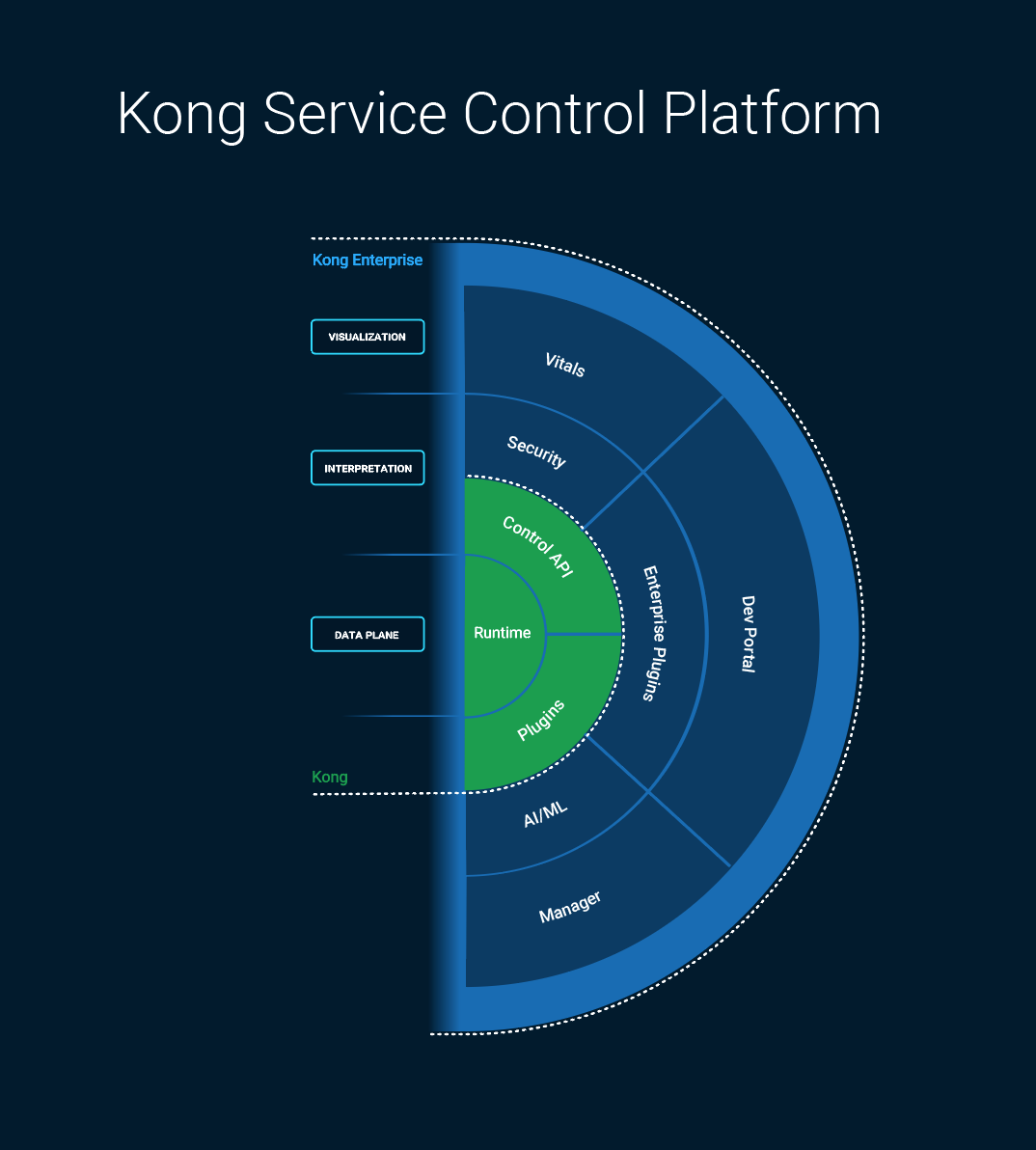
    Kong Inc. has released a feature-complete version of its namesake services broker for legacy and microservices-based applications that promises to eliminate the need for legacy application programming interface (API) management platforms.

    Company CTO Marco Palladino said traditional API management platforms, for all intents and purposes, are now dead. Formerly known as Mashape, the core technology developed by Kong Inc. has been widely employed to manage APIs. But the time has come to focus on managing services at a much higher level, he said.

    Despite Kong having been downloaded more than 45 million times, the latest version is being labeled a 1.0 release because the open source service broker has now been deemed to be feature-complete, which includes support for service mesh patterns, Kubernetes Ingress controller and backward application programming interface (API) compatibility to future releases, Palladino said.

    Kong is being positioned as a microservices API gateway capable of supporting sub-millisecond response times in a way that would not be possible to achieve using legacy API management platforms that reside in the cloud or in a local data center. Kong can be deployed on-premises or in public clouds based on virtual machines, Kubernetes or bare-metal servers. That approach makes it possible to employ Kong to manage services regardless of where they run. Kong has also developed a “Kong Brain” function that employs machine learning algorithms to optimize the flow of data traffic between services that has increased dramatically in the last few years, Palladino said.

    Palladino noted that while service meshes exist specifically for Kubernetes clusters, most enterprise IT organizations will require an approach to managing services across legacy monolithic applications and emerging microservices-based applications that are based on multiple types of runtime environments and serverless computing frameworks. Over time, Kong will integrate with various platform-specific service meshes as they emerge to further enable a more comprehensive approach to services lifecycle management, he said, adding that Kong automatically configures itself to serve traffic to new applications as they are deployed and new services are created.

    In addition, organizations can migrate from one service to another based on a different databases schema without incurring any downtime.

    When it comes to managing services, Palladino said there’s still too much focus on tribes that have emerged around specific platforms that wind up polarizing the IT industry. IT organizations clearly need a means to broker services regardless of where they run or might have originated, he said, noting API management could be viewed as a stepping stone toward achieving that goal.

    It’s not clear yet whether legacy approaches to API management are truly dead or simply in the process of transforming into a means for managing services at higher levels of abstraction. Regardless of the outcome, it’s clear that a less brittle approach to managing integration in the age of microservices will be required. Many forget, however, that in most cases a monolithic application is now just another type of service.

    — Mike Vizard

  • 5 Tips for Creating Blockchain IOS and Android Apps

    5 Tips for Creating Blockchain IOS and Android Apps

    Blockchain development and blockchain technology are playing a major role in the creation of various iOS and Android apps. Blockchain technology has seized the attention of many and when it is utilized properly, mobile app developers are able to achieve results that few thought possible.

    There are no shortage of benefits provided by blockchain development. Data security levels are increased and unnecessary intermediates are removed from the process. Financial organizations have been taking an increased level of interest in blockchain technology in recent years and this creates added opportunities for app developers.

    So, how can app developers properly capitalize on the opportunities that are created by blockchain technology and blockchain development? This guide is here to help. Here are some tips and pointers that are designed to help developers create iOS and Android apps that take advantage of blockchain technology and blockchain development.

    Focus on the Interface

    Blockchain development can be used to create all sorts of valuable iOS and Android apps, but for these apps to reach their full potential, developers must remain focused on the interface. Not considering the user’s experience during the development process could lessen the level of impact of the app.

    Is the front-end programming language operational? Is the blockchain application that is necessary for operating this language included? Has the developer considered the importance of an external database? Is the right application control being included during the development process?

    These are all questions that need to be answered so the app developer can create a quality design for the user interface. Identifying the proper analytics is also crucial. Otherwise, it becomes more difficult for developers to identify the right system. Building an admin console is a key step of the process as well.

    Take a Closer Look at the Importance of Architecture

    If a blockchain app is being created to be used on an iPhone or Android device, developers must take a closer look at the design architecture so that they can avoid common mistakes. Unfortunately, many aspects aren’t always considered, and they often involve additional processes that can add extra time to the process.

    For example, those who are planning on creating a hybrid app will need to obtain certain permissions first. The more developers know about the necessary parameters that have been established, the better their chances of creating an app that will be useful to those who rely on blockchain technology daily.

    The processors, size, memory and operational systems must be configured properly, and these configurations all fall under the architectural umbrella. Great design is crucial, and app developers who aren’t willing to consider the most vital components will come up short when it comes to their design architecture.

    Proper Platform Utilization

    An app that relies on blockchain development and technology needs the proper platform to be successful. This platform should be unique yet accessible. When issues come to the forefront (and they are going to, despite your best efforts), developers’ ability to solve these problems will be determined by the chosen platform.

    For issues to be solved, a consensus must be reached, which is easier when the correct platform has been selected. Now that more platforms are openly sourced, this makes life much easier—developers have the chance to select the platform that best aligns with all of their needs and desires.

    Whether a developer decides to choose Ethereum, Quorum or a different platform entirely, it behooves them to take the time to study the advantages and disadvantages of each, especially when blockchain technology is being utilized.

    Recognizing the Importance of Consensus Mechanisms

    Is the application being decentralized? This is one of the main questions that must be answered before this process can be completed. An iOS or Android app that is reliant on blockchain needs a consensus mechanism to work in the proper manner once it has launched.

    Without decentralization and a consensus mechanism, many of the typical problems and issues that arise are not as easy to solve. The system used to connect and provide a link needs a proper consensus. Without a consensus mechanism, the system’s ability to carry out all of the necessary tasks is severely compromised.

    Apps that are related to blockchain must be developed with the right approach. Are the necessary considerations being made? Is the best method being chosen for delivering proofs? Are the basic requirements being met when these proofs are delivered? A developer looking to take advantage of the current climate needs to be able to answer all of these questions.

    Identification of Objectives

    Last but certainly not least, developers must identify their objectives. What is the goal they are trying to accomplish by creating this app? What role is blockchain technology going to play? Are all of the necessary blockchain development principles being adhered to? Is the issue that is going to be solved being made perfectly clear?

    Answering these questions in a timely manner allows a developer to decide on the correct course of action. The same rules that apply during the creation of any other app still come into play when blockchain apps are being developed for iOS and Android users. The problem that is being solved by the creation of the app must be clearly defined.

    Are the issues being caused by data loss? What resources are being provided that were not previously available? To get the most out of the development process, the issues and the associated goals must be examined closely.

    — Harnil Oza

  • OpsRamp Extends AIOps Visibility

    OpsRamp Extends AIOps Visibility

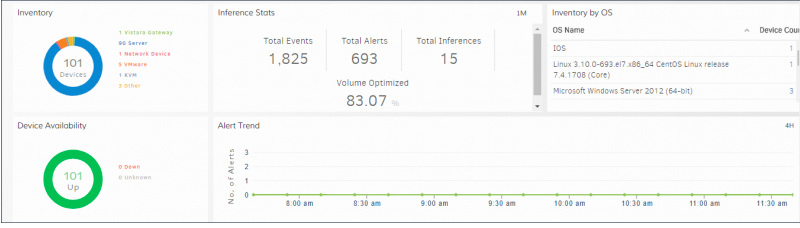
    OpsRamp has advanced its case for AIOps via a Fall update to its software-as-a-service (SaaS) applications that adds a Topology Explorer alongside an enhanced set of Service Maps.

    In addition, OpsRamp added a cloud database monitoring capabilities for relational databases deployed on public clouds including Amazon Web Services (AWS), Microsoft Azure and Google Cloud Platform (GCP).

    Mahesh Ramachandran, vice president of product management for OpsRamp, said the Topology Explorer makes it possible to automate network and application discovery to accelerate impact analysis and troubleshooting. An existing Service Map capability, meanwhile, has been enhanced to allow DevOps teams to invoke visualizations within an alert to better prioritize responses.

    OpsRamp has also added a pause capability for alerts, intended to be used during maintenance windows to prevent alert floods. Alert filters now include text-based search that, when combined with the AI Inference Engine, helps resolve issues faster. DevOps teams also can create policies to notify them of alert state changes.

    Finally, OpsRamp has added reporting tools that enable DevOps teams to determine not just the amount of resources being consumed on a public cloud, but also which public cloud or on-premises environment is generating the most trouble for the IT organization.

    In general, Ramachandran said most organizations have very little way in the way of tools that enable them to realistically compare how one platform performs over another when running specific classes of workloads. By leveraging the machine learning algorithms that OpsRamp includes in its SaaS applications, enough data becomes available to provide DevOps teams with actionable insights, he said.

    AI tools typically require access to massive amounts of data. By making available IT operations tools available as a cloud service, OpsRamp is trying to make it practical for DevOps teams to employ AI on both tactical and strategic levels without requiring an IT team to acquire special data science skills, Ramachandran said, adding such an approach also provides the added benefit of making it possible to holistically manage IT silos across multiple classes of infrastructure and applications.

    IT organizations are still in the early stages of coming to terms with AIOps and its potential impact on DevOps processes. Many of the manual processes that tend to inhibit widespread adoption of DevOps are clearly going to be automated. In fact, many of those tasks will be accomplished using voice commands that bots will be able to understand. In other cases, the bots will inform DevOps teams when an issue needs to be addressed long before they would otherwise be aware of it. Less clear is how job roles within DevOps teams will evolve as it becomes easier to manage applications and infrastructure comprehensively.

    Of course, the rate that transition will occur will vary widely by organization. But rather than debating the right approach to automation, it’s becoming increasingly apparent that many of those decisions will be made by machines. The unspoken assumption being made is that humans responsible for managing IT will be comfortable that the right decisions are being made on their behalf.

    — Mike Vizard