Category: DevOps Toolbox

  • DevOpsGroup Academy Launch: Interview with Head James Harvey

    DevOpsGroup Academy Launch: Interview with Head James Harvey

    DevOpsGroup Academy launched in July with a mission to eradicate the UK’s tech skill shortage and invest in the high-performing IT professionals of the future. I recently had a chance to speak with DevOpsGroup Academy Head James Harvey about the mission and vision for DevOpsGroup Academy and what he sees for the future of technology learning.

    Hartley: Can you tell us more about the launch of DevOpsGroup Academy in July 2018, your university connections and addressing the skills gap?

    Harvey: I think the biggest challenge that we’ve seen is that, even though you are getting hundreds of thousands of students graduating with computer science degrees over the years, the gap that we are experiencing between what people are learning at university versus what the commercial world is demanding is astronomical.

    We’ve seen, with our intern program, for example, if you compare an intern who has spent a year with us directly with someone who is freshly graduated—the difference in terms of ‘work readiness’ beyond comprehension. It’s insane!

    The skills gap is one of those things that is very difficult for universities to keep on top of, because things in the tech world change rapidly and dramatically. So ultimately what you are learning is often outdated by the time you finish anyway. It’s a different skill set that you learn at university: It’s very lecture-based, it’s very academic and it’s very blue-sky. And it’s very much “in an ideal world” setting.

    Whereas what we are trying to do with The DevOpsGroup Academy is to say, when things aren’t quite so perfect and when you do have to be a bit more pragmatic and apply some of the things you have learned on a bigger scale, then we can help bridge that gap.

    The first instance of the launch of The DevOpsGroup Academy is really going to be focused on the fact that these are commercial courses that we are selling to people who are looking for a career change, looking to enhance the skills of their team or whatever it might be. And the fact that we run these courses with students, interns, graduates, associates, apprentices and placements even will become a huge selling point for us. But the initial target for us is going to be those small businesses, SMEs, and individuals looking to skill up.

    Hartley: Can you talk about The DevOpsGroup Academy and what you’re offering that’s unique?

    Harvey: There are, of course, plenty of DevOps courses that you can find out there from many other suppliers. The big USP (unique selling proposition) for us when it comes to public training is that we are not this “one-stop shop” for agile DevOps or tech training. What we pride ourselves in is having a carefully selected portfolio of courses that align with our company values, and aligns with the way in which we go in and facilitate a transformation. And critically, these courses and our portfolio have been chosen so that they form this kind of learning journey, this development pathway, so that if you take one course there is something else that is related that makes sense to go and do elsewhere.

    I mean, it would be very easy for us to sit down and say, “Right, we are going to run these 50-odd training courses that we can offer.” But then, as I said, the difference there is that we would just become another training company, which we are not trying to do.

    The other USP that we have got is that we don’t typically use trainers to deliver the training. We use our practitioners and the people who are doing this day in and day out to deliver the training, because again we feel that it allows them to give you a more realistic demonstration of what it is we are trying to teach you. Rather than somebody who has been training for 10 years and has lost touch with what the pragmatic, real-world looks like.

    So it allows us to take all of the experience that we have got in DevOpsGroup and regurgitate that, as not just textbook training, but as this real-life experience that we’ve been through. So learn from our mistakes and learn from our successes. That’s the wisdom that we can impart.

    Hartley: So are there any specific new courses that you are launching with DevOpsGroup Academy?

    Harvey: The main focus at the moment will be around the Agile Foundation certification, and we are in the process of getting toward the end of launching a certified DevOps Foundation training course.

    There are a few other DevOps training courses out there, but it’s definitely not a crowded marketplace and it’s something that we’ve developed internally, because we didn’t feel that there was a suitable option out there for that kind of agnostic learning, to get a DevOps Foundation certificate for.

    Hartley: Going back to universities and government, can you talk more about those partnerships?

    James Harvey: You can look at our partners’ page on the new DevOpsGroup Academy website for a bit more information on our current university partnerships.

    We are very much focused on working with all of the local universities in Wales at the moment, so we do a lot of work with the National Software Academy that’s based at Cardiff University. They do things a little bit differently in that their computer science students are working in what is a much more commercial environment, where they do a lot more hands-on with workplace technologies and things like that.

    DevOpsGroup Academy has introduced a summer placement scheme with the National Software Academy, to help their students take the learnings that they’ve got from university to a different level. Part of what made that happen is that, because we’ve had that relationship with them up until now, the level that the students are at means that they can come in for a few months and actually do some work that adds some value, both for us and for them.

    Beyond that, we are doing things like giving guest lectures at universities across Wales and just trying to get involved as much as we can. The end game for us, really, is to help facilitate and extend the learning that the students get in the classroom. So how can we ultimately become a finishing school for students wanting a career in IT? And it’s about doing that while working as closely as possible with our university partners and without completely condescending the university system.

    Hartley: Going back to addressing the skills gap. What can you say about the limitations of university computer science courses?

    Harvey: It’s a different type of learning. Universities are crippled somewhat by the overarching governance around getting syllabuses together. And what we have found is that a lot of the time there is a resistance to change those.

    So, for example, if you were ever going to have a commercially relevant computer science degree, for example, you would be looking at revising that syllabus every year at the very least, considering how technologies moves on and what becomes relevant and not relevant.

    And I think it’s very difficult then, because there is this emphasis at the university level on broad learning and not specializing in a specific thing. So it’s difficult then for students to pick up things and to get in and get their hands dirty and add value to what it is they are doing. So there is a lot of general learning that goes on, and the general feedback that we get is that they just don’t have that space to get their hands dirty. To try things out. To fail, if need be.

    And that’s the difference between the university and us. The whole point of our intern program, for example, is that the whole point of their learning over the year is continued. And their learning is accelerated.

    So I do think that it’s probably fair to say that they learn more from the 12 months they spend with us, than they do from their first two years at university. But that’s because we are able to accelerate that academic learning by ultimately letting them get hands on with the tech. And that’s one of the most difficult things for universities to be able to do at scale: to allow students to get into the nitty-gritty, if you like, because it’s very difficult to govern that and test that and so forth.

    Hartley: In terms of teaching agile and DevOps processes at university, how does that work?

    Harvey: Really badly! Those that are doing it, generally, will take agile or DevOps and they will treat it as a module. And that is taught for a semester.

    Instead, what you should be seeing is that agile and DevOps should be this underpinning thing that runs throughout your entire three years at university. So everything that you do, you are constantly learning about how to implement that in an agile way.

    I’ve been doing guest lecturing at universities in Wales for the past five years and that has been my underlying theme—that there are some things that shouldn’t be taught as modules. They should be underpinning everything that you are doing. And that’s one of the big things we learn from our interns—on the first few weeks they are here we will give them an Agile Foundation training course and then that underpins everything that they do from that point onward whilst they are here.

    So time and time again, with regards to specific agile and DevOps practices and ways of working, we are seeing that it is being shoved in as a module and, ironically, more often that not towards the end of a degree course. Rather than at the beginning, when students could benefit from learning about it off the bat.

    But then again, a lot of university work is done in isolation and it’s working on small solo projects, which doesn’t lend itself well to a lot of agile and DevOps practices and processes. The types of projects that they are working on at university simply don’t mirror what you find in a commercial world. Universities work in isolation; they are not working with businesses and local people; the curriculum is all in isolated modules that are not interlinked in anyway. The barriers need to be brought down if we are going to work in a collaborative way.

    Hartley: Is breaking down those barriers the long-term mission of the DevOpsGroup Academy?

    Harvey: Yeah, definitely! I think the long-term goal for us is all about that accelerated learning. Learning as you are working and as you are going along. And allowing and giving people the space to do that, to learn from each other, to collaborate.

    We are ultimately disrupting and changing the norm of what goes on right now, because the one thing about university learning is that it doesn’t set you up for starting your career once you’ve graduated. You are learning about these small, isolated examples that don’t really set you up for work in the commercial world.

    So if you give these students the space and environment to do this accelerated learning, then within six months they are very close to what you would consider to be an associate-level engineer that comes into our organization. Which is extremely powerful for us. And it sends a really strong message about the educational methods that we use and the partners that we work with as far as training is concerned.

    Ultimately we are doing this, as we’ve always said, because we want to invest in the next generation of talent. We are expanding rapidly and we are doing this because we want to give these kids jobs, in the end.

    Hartley: What about the start-up scene in Wales and Welsh government funding for DevOps training for SMEs?

    Harvey: Yeah, one of the pilot schemes that we are working on at the moment are “boot camps”—the idea being that an SME would send one or two people along to spend a week with us, in which time they would do two training courses, agile and DevOps together, and then they would get a final day of workshops and bringing everything together. The learners would then go away with two commercial certifications and a DevOpsGroup Academy diploma. And the Welsh government will be funding 50 percent of the cost of that course for any Welsh SME that takes part.

    The other thing is that we are working with the local universities across Wales to run these boot camps with students as well. So the idea is that we are not watering these down, and creating a boot camp specifically aimed at students. We are giving them the full commercial experience.

    And it also a great opportunity for SMEs to come to the boot camps to meet some really exceptional students that they may think about recruiting at some point down the line. And it’s a great opportunity for the students to work with industry professionals.

    Hartley: So how does an SME get the funding? And how do the boot camps work in practice?

    Harvey: Getting the funding is easy. It’s a case of paying for the course and reclaiming 50 percent of that back. You simply fill out a two-page form, which we can help with, and it means that Welsh startups get a fantastic deal out of it.

    Practically, we have great training facilities in Cardiff. And we have access to similar facilities across Wales and the rest of the UK, for when we take the boot camps on the road. Ultimately we get people together to run through the two training courses and multiple different activities and games.

    And then there’s a day to bring everything together, to take all that learning that you’ve had in the classroom and apply it with some workshop activities or some discussion about how this might help solve some of the challenges you have within your organization. And again, the idea of hosting it here is that we have all these different practitioners who can jump in and out of sessions to offer their advice, as an engineer or as a consultant or from whatever role you can imagine.

    So it really is that next step on from just coming in for a training course. It has the emphasis on accelerated learning, so you tick three boxes with one trip, plus you get all of the networking and the collaboration that comes along with the boot camps as well.

    Initially we’ll pilot the boot camps with DevOps and agile, as a combination. Then ultimately the sky’s the limit, really. There’s a huge potential for technical-based training alongside the DevOps and agile courses. Both in terms of agile working practices and how we deliver this training, this is all too often the neglected part of IT, both at university and at a commercial level.

    — Adam Hartley

  • HPE Brings Storage Deeper into DevOps Realm

    HPE Brings Storage Deeper into DevOps Realm

    Hewlett-Packard Enterprise (HPE) today moved to bring storage further into the realm of DevOps by integrating its 3PAR storage systems with VMware vRealize Orchestration software, open source Kubernetes container orchestration software and the Red Hat OpenShift platform-as-a-service (PaaS) environment built on top of Kubernetes. HPE 3PAR storage systems already support Docker containers and the DC/OS private cloud platform from Mesosphere.

    In addition, HPE is making available pre-built blueprints for Chef, Puppet and Ansible automation frameworks, as well as software development kits written in Ruby and Python that can be used to create custom integrations.

    Finally, HPE announced that HPE InfoSight, a cloud-based service that employs machine learning algorithms to predict when a drive might be about to fail or when application performance might be adversely impacted by I/O contention. HPE gained the core technology for that service when it acquired Nimble Storage last year.

    Vish Mulchand, senior director of product management and marketing for HPE Storage, said machine learning algorithms and other forms of artificial intelligence (AI) will soon be playing a much larger DevOps role. Research indicates that more than half of all support issues involve storage systems, and AI technologies will be able to identify most of those issues long before they impact applications, he says.

    Mulchand notes HPE has been adding integrations with various DevOps and container technologies to make it easier to scale applications as needed. The goal, he says, is to make storage management a more natural extension of any set of DevOps processes.

    In general, providers of storage systems have been investing heavily in automation frameworks designed to make it easier for storage administrators to manage ever increasing amounts of data. The next challenge facing IT organizations is to be able to provision storage resources in a way that doesn’t hamper the rate at which those applications might be deployed.

    It’s not clear to what degree storage administrators will be subsumed into DevOps teams. In most cases, storage administrators are looking to make available a pre-determined set of storage resources available to developers on a self-service basis. The amount of those resources is determined by the characteristics of the application, which storage administrators can gain earlier access into by participating in the DevOps process.

    Going forward, Mulchand says HPE expects competition between storage vendors increasingly will be defined by the quality of experience they provide IT organizations rather than the performance of the storage systems. Every storage vendor has embraced Flash storage systems that can address the performance requirements of just about any type of application workload, he says, so making it easier to access those storage resources and make sure they are constantly available is the next major opportunity.

    As more automation gets introduced into IT environments, there’s no doubt the role of the average storage administrator will change. Rather than manually provisioning resources, storage administrators will be able to develop policies for classes of applications that are automatically implemented whenever storage systems need to be provisioned. As storage administrators learn the characteristics of those application in a production environment, those policies will be further fine-tuned. The good news is that storage itself no longer needs to be seen as a bottleneck from either a performance or DevOps perspective.

    — Mike Vizard

  • CloudBees Expands Visibility into DevOps Processes

    CloudBees Expands Visibility into DevOps Processes

    CloudBees has moved to bring some order to the potential DevOps chaos via an update to CloudBees DevOptics, a monitoring tool for tracking stages of the software delivery process in real time.

    The update to the software-as-a-service (SaaS) application adds capabilities that identify everything from potential bottlenecks to periods of inactivity that might be better allocated to maintenance activities.

    Michael Baldani, product marketing manager for CloudBees, said CloudBees DevOptics makes it possible to create benchmarks that track DevOps performance across the entire software delivery life cycle, including deployment frequencies, lead time to committing code into production environment, mean time to recover from failures and change failure rates. The “2017 State of DevOps Report” identifies these four most important metrics for a DevOps team to track.

    Armed with those insights, a DevOps team is capable of drilling down into a specific issue to make more informed decisions concerning how best to optimize processes, said Baldani, noting that longer term, CloudBees DevOptics also sets the stage for eventually applying machine learning algorithms to processes.

    The rate at which organizations have been making the transition to DevOps has been uneven at best. Much of that issue can be traced back to a lack of visibility into how specific processes are being employed, Baldani said. The analytics capabilities provided via CloudBees DevOptics should help organizations accelerate the transition to DevOps by enabling organizations to more easily identify areas where they need to optimize DevOps best practices, he said.

    Traditional enterprise IT organizations are still wedded to legacy approaches to software development largely because of inertia. CloudBees DevOptics provides an analytics application that, in addition to helping optimize DevOps processes, provides access to dashboards through which a DevOps process can be shown conclusively to be more efficient than, for example, an existing waterfall approach.

    Most organizations are embracing DevOps from the bottom up as individual teams launch various application development projects. As those teams start to deliver applications faster, it’s usually not too long before senior managers want to replicate that success across the rest of the organization. CloudBees DevOptics provides a mechanism through which the best practices implemented by various teams can be captured to facilitate sharing them with other teams. The biggest challenge facing most organizations today is not so much being convinced they can benefit from DevOps, but rather how precisely to go about it.

    It may take a while longer for DevOps processes to become the most widely used approach to developing software in the enterprise. But as more organizations continue to appreciate how dependent they are on software to manage increasingly digital processes, the need to accelerate the rate at which software is being developed becomes more apparent. CloudBees is betting that access to real-time analytics will be a major factor in any decision to standardize on a continuous integration/continuous deployment (CI/CD) platform by providing visibility into how software development ultimately impacts the business. After all, it’s now only a matter of time before some new or existing rival leverages software to create a competitive edge. In fact, it’s already been proven time and again that the rate at which organizations can create and deliver quality applications is critical to the overall customer experience.

    — Mike Vizard

  • The State of the Kotlin Programming Language in 2018

    The State of the Kotlin Programming Language in 2018

    Pusher, the communications and collaboration API provider, recently released the findings of its “State of Kotlin 2018” research report. Over the past 24 months, adoption and use of the Kotlin programming language among developers has seen tremendous growth. Pusher has seen this growth firsthand, with more developers using Kotlin while building applications with the company’s products.

    Earlier this year, Pusher surveyed more than 2,500 developers to get a better understanding of the ecosystem, specifically around usage, features and demographics.

    Key report findings:

    Kotlin is used both in work and personal projects, as confirmed by 60 percent of respondents. Kotlin is even more prominent in side projects, as they tend to be smaller, easier to convert and more experimental.

    Android is hugely popular across the board, used by professional developers and students alike. However, when it comes to backend applications, Kotlin’s users tend to be more experienced developers.

    Most Kotlin developers come from a Java background, or also work with Java. More than 87 percent of respondents have migrated existing Java code to Kotlin. However, more than a quarter of respondents who migrated Java to Kotlin needed to revert back due to both technical and organizational reasons. Tools that use reflection or generate code were mentioned most often as technical reasons to revert to Java.

    Null safety is the favorite feature for 80 percent of respondents, whereas co-routines and multi-platform support are the least important.

    The report concluded that Kotlin is overwhelmingly popular in the Android circles. This raises the question, Will Kotlin break into communities outside Android?

    “We expect to see new generations of developers taking their first steps into programming with Kotlin,” said Pusher Developer Evangelist Zan Markan in an email. “It’s a modern, versatile, cross-platform language that can cross between OO, functional, scripting, and declarative paradigms with ease. This could mean that Kotlin will affect the wider programming language landscape by becoming a benchmark for what a programming language should be able to do.”

    Read the full report here.

    — Malia Powers

  • CA Technologies Looks to Shift Automation Left

    CA Technologies Looks to Shift Automation Left

    CA Technologies, at its recent CA Automation Summit, advanced its case for leveraging automation to create a software development factory via an update to the CA Automic One automation platform that adds automation-as-code functionality.

    Gwyn Clay, vice president of product management for the Automation Business Unit at CA Technologies, said the latest release of CA Automic One make is simpler to “left shift” automation artifacts by making it possible for developers to embed those artifacts within application code versus having to wait for a DevOps teams to run them out of band.

    The latest version of CA Automic One also now includes version control and lifecycle management for automation artifacts that enables automation objects such as jobs, workflows and scripts to be promoted from development to production as part of an integrated DevOps process, said Clay.

    CA Technologies also revealed it is embedding intelligence into workflows enabled by CA Automic One, which enables dynamic runtime estimations that can predict potential issues within certain paths in the workflow execution.

    Other new capabilities added to the automation platform include support for PostgreSQL databases, as well as new integrations with CA Workload Automation, CA Continuous Delivery Director and CA Jarvis analytics software delivered as a cloud service.

    CA Technologies has been on a multi-year campaign to embed automation across the entire DevOps processes. With this latest release, that campaign effort is being extended to developers themselves. Clay said the rise of digital business transformation—much of which is being driven by cloud-native applications built with technologies such as Docker containers, Kubernetes orchestration software and serverless computing frameworks—is finally forcing the automation issue in the enterprise. Not only are applications being built faster than ever, but the complexity of those applications has increased exponentially. And yet, the size of the overall IT staff has remained stagnant. Without some form of automation being embedded within the applications itself modern software development practices becomes difficult to sustain, she said.

    Clay noted that most organizations are not yet at the point where they are deconstructing monolithic applications into a set of microservices. But it’s already clear most new applications will be built on a microservices architecture. CA Automic One represents an opportunity to apply automation across both legacy monolithic applications in addition to embedding artifacts directly within new applications, she noted.

    It’s not clear the impact the ability to embed automation artifacts will have on how enterprise IT is managed going forward. IT operations teams still will need to be able to set policies and constraints concerning the level of automation a developer might be able to invoke. Most developers don’t have much regard for the need to share limited infrastructure resources with other applications. But as the ability to infuse automaton into almost every application becomes pervasive, the locus of power within enterprise IT organizations will continue to shift to the left. The challenge now is determining the best way to strike a balance between all the competing factions looking to control who gets to automate what exactly when.

    — Mike Vizard

  • Compuware Extends DevOps Push for Mainframes

    Compuware Extends DevOps Push for Mainframes

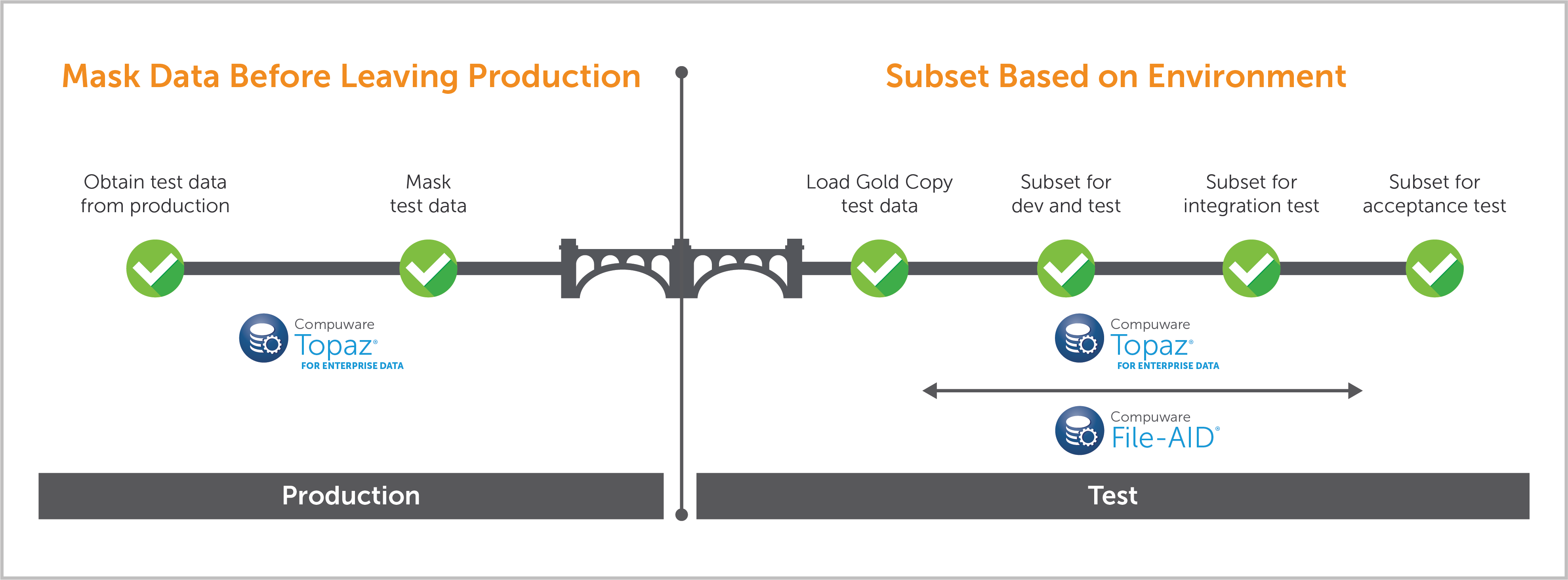
    Compuware has advanced its campaign to erase the DevOps divide between mainframes and distributed systems via an update to Topaz for Enterprise Data that makes it easier to generate data from mainframe applications for testing purposes without compromising the security of some of the most sensitive data in the enterprise.

    Company CEO Chris O’Malley said Topaz for Enterprise Data now includes a data masking capability that preserves essential data relationships and characteristics without letting developers see the data being copied.

    Designed to be compatible with Eclipse integrated development environments (IDEs), Topaz for Enterprise Data also automates the extract, transform and load (ETL) process by enabling developers to convert file types.

    O’Malley noted that, at a time when compliance regulations such as the European Union’s General Data Protection Rule (GDPR) are becoming more stringent, it has become more important for organizations to be able to demonstrate that personally identifiable information (PII) has not been exposed during any point in the application development cycle. That’s especially important when it comes to mainframe data, which typically is used to drive transaction processing applications.

    In general, O’Malley said the historic divide between mainframes and distributed systems is narrowing as organizations embrace DevOps processes. Instead of proponents of these platforms battling within organizations for control over specific classes of workloads, there’s more awareness of the need to leverage both platforms to drive a new generation of digital business applications, O’Malley said.

    The challenge is that most mainframe applications are built and updated using waterfall methodologies. Compuware has been developing a series of DevOps tools for mainframe environments that are intended to modernize those processes. As the IT organizations that have mainframes adopt those tools, it becomes easier to federate application development and deployment across mainframes and distributed systems, O’Malley said.

    Of course, this all assumes various teams within the IT organization can lay aside historic animosities. The shift to DevOps has always required as much process and cultural change as it does new technologies. But in the case of IT organizations that have mainframe teams, that shift may take years. The good news is a that a new generation of IT professionals doesn’t have much history with infighting within internal IT organizations. The simple fact is there are classes of workloads that run better on mainframes, O’Malley noted, but that doesn’t mean every workload running on mainframe is ideally suited for that platform—or conversely, that every workload running on a distributed system is ideally suited for that platform.

    Arguably, the rise of DevOps processes might create an opportunity to revisit many platform decisions that were made in the heat of a larger argument. In the meantime, it’s clear that applications integration spanning multiple platforms is the new order of the day. The question now is how best to go about achieving that goal in a way that erases the divide existing between all the platforms that now make up the extended enterprise.

    — Mike Vizard

  • Leveraging Automation for Your Business

    Leveraging Automation for Your Business

    Artificial intelligence (AI) has the capability to change the way we work, the way we manage, and the way we conduct research. As automation processes improve, businesses increasingly are looking for ways to leverage the new technology to help with their own goals.

    There are certain risks posed by the advancement of artificial intelligence, and the automated applications AI creates are in contrast to the many benefits using automation may bring about. The rewards of automation, when managed properly, are the relief of burdensome activities such as mundane tasks and other minutiae, improved productivity and increased participation.

    Consequences of adopting automation for your purposes must be thoroughly thought out to leverage it to the best of your ability.

    Automation, once used for only a few specialized tasks, now can be used for data mining, marketing, medical research and building financial models. These are just a few of the applications the technology can be used for, and it’s far from a comprehensive list. The details of automation are specific to the industry that employs it, the organization that manages it and the managers who oversee its implementation.

    Why should you consider using automation to help achieve your business goals? Quite simply because utilizing it properly could result in a more efficient, more effective workforce and could even create job opportunities. By freeing up mental resources and enhancing the capabilities of your workforce, your organization will be able to operate at its peak efficiency and efficacy.

    “Machines can attend to vastly more information and more complex processes than human beings, and try out more drugs or vaccines than we can in the lab,” Pedro Domingos, a professor of computer science at the University of Washington told National Geographic. “Machine learning is used to discover drugs by simulating the process on a computer, which takes a fraction of the time and cost.”

    After you begin analyzing where your organization needs help, you can start the process of using automation that makes sense for you. Your business may need help with routine marketing tasks, creating models for the data metrics you bring in. Or, perhaps you need help organizing large amounts of information related to research and development of a product you’re about to roll out. Whatever the application, there are automated applications made to benefit your business.

    “Faced with a constant onslaught of data, we needed a new type of system that learns and adapts, and we now have that with AI,” Arvind Krishna, head of research at IBM, said in a recent blog post. “What was deemed impossible a few years ago is not only becoming possible, it’s very quickly becoming necessary and expected.”

    With automation, you can achieve things you may not have thought possible before. As Krishna makes clear in the quote above, the capabilities of leveraging automation are untested and virtually limitless.

    To truly leverage automation, you’ll need to manage the results of its implementation and have your team perform synthesize and arrive at conclusions through critical thinking and social cooperation—skills yet unmastered by even the most powerful artificial intelligence. Pairing automation with skilled social thinking will result in a highly productive and effective organization. This can result in some ancillary benefits such as increased cooperativeness between team members.

    For companies interested in rapid growth, automation can help propel your processes. From manufacturing to marketing, automation can help boost your efforts in research, analysis and production. Automating repetitive tasks can help free up workers allowing them to work on more complex and pressing problems within the company. In addition, workers learn new skills through the adoption of automation and managers can more effectively understand how to manage complexity within your organization.

    However you decide to use automation, it’s important to do a thorough and objective analysis of your organization. Where can you improve? Where do you need help? How can we empower workers to better perform? How do we measure performance? These are key questions that can help guide your analysis of your organization and well as your adoption of domain-specific automation applications.

    — Anthony Coggine

  • GitLab Moves to Automate DevOps

    GitLab Moves to Automate DevOps

    GitLab is looking to eliminate the pain of setting up and maintaining DevOps processes by making available an option that automates DevOps processes end to end using a prescriptive approach defined by GitLab.

    The latest version of GitLab includes an Auto DevOps option that organizations can employ to automate the building, testing, code-quality scanning, security scanning, license scanning, packaging, performance testing, deploying and monitoring their applications.

    GitLab CEO Sid Sijbrandij said the company is now able to make this service available because GitLab 11.0 can now be deployed as a set of more integrated applications running on top of a cluster based on Kubernetes container orchestration software. That support for Kubernetes also makes it easier to deploy GitLab 11.0 in a public cloud or on-premises environment as needed. To facilitate that process, GitLab now includes templates that simplify the spinning up of Kubernetes clusters as needed, Sijbrandij said.

    To further its support for Kubernetes, GitLab also decided to start deploying the software it makes available as a cloud service on Google Cloud Platform. Previously, GitLab had been committed to Microsoft Azure. Microsoft recently announced plans to acquire GitHub.

    GitLab is all in favor of automating DevOps processes, but doesn’t think organizations should be forced to move everything into a public cloud to achieve that goal, explained Sijbrandij. Organizations can still elect to construct their own DevOps processes using GitLab as they best see fit.

    But as interest in DevOps continues to rise, more organizations now would prefer to rely on a set of best practices that are defined to make them much easier to consume, he said.

    GitLab 11.0 also adds security scanning capabilities for application built using .Net and Scala programming language in addition to existing support for C, C++, Java, Python, Ruby on Rails, Go and PHP.

    In general, Sijbrandij noted that organizations that embrace DevOps usually find themselves trying to manage various islands of automation with mixed success. Auto DevOps is intended to provide a more comprehensive approach that eliminates the friction that often exists between those various islands of automation. Sijbrandij acknowledged that a prescriptive approach may not appeal to every IT organization, but as traditional enterprise IT organizations start to embrace DevOps, many of them prefer a more platform-centric approach that’s easier to both set up and maintain, simply because they lack internal DevOps expertise.

    Sijbrandij also noted that as DevOps gains more traction in the enterprise, many of the decisions about what platforms to employ will be driven from the top down. Today, most acquisitions of DevOps tools and practices are driven from the bottom up, which accounts for why there are already so many silos of automation, he said.

    Over time many organizations will conclude that the opinionated approach enabled by Auto DevOps will free developers to spend more time on writing code instead of on managing the infrastructure employed to create it, Sijbrandij said. Most traditional enterprise IT organizations today are at least aware they should be employing DevOps practices, they just know exactly what such an effort fully entails.

    Thanks to advances in automation, many IT leaders may never know or care what specific DevOps processes are in place. After all, what most of them are primarily interested in how fast the next set of application code is going to be delivered.

    — Mike Vizard

  • Splunk Pushes Into the Realm of DevOps

    Splunk Pushes Into the Realm of DevOps

    On the heels of its recent acquisition of VictorOps, provider of incident management software, for $120 million, Splunk is gearing up to expand its foothold in DevOps significantly.

    Rick Fitz, senior vice president of IT Markets for Splunk, said the provider of widely used operational analytics software in the enterprise sees a significant opportunity to expand its presence across a range of DevOps processes.

    Incident management is a natural extension of operational analytics, said Fitz, noting Splunk chose to acquire VictorOps because the investments the company has made in applying machine learning algorithms to monitoring IT events. That approach significantly reduces the number of irrelevant alerts being generated and provides actionable intelligence into potential events that could adversely impact IT operations.

    Most IT operations teams suffer from alert fatigue, Fitz noted, and most alerts are ignored because of a lack of context. The combination of Splunk and VictorOps will result in alerts that more precisely identify the root cause of any IT issue, he said, and a better overall “systems of engagement” for IT operations teams in keeping with DevOps principles.

    Splunk has been steadily expanding its focus on DevOps. Earlier this year the company announced Splunk Insights for Infrastructure, which IT organizations can host on an Amazon Web Services (AWS) public cloud to monitor IT infrastructure deployed anywhere. The latest versions of Splunk Cloud and Splunk Enterprise also make use of machine learning algorithms on top of a revamped metrics engine that enables IT administrators to monitor everything from CPU speeds and available hard disk space to temperature readings in internet of things (IoT) devices and sensors. Splunk recently also added connectors for Docker and Kubernetes, as well as the Apache Kafka messaging platform for streaming data in real time.

    IT operations and cybersecurity teams already rely on Splunk operational analytics software extensively to identify anomalies. By investing in machine learning algorithms and acquiring incident management software, Splunk is moving to turn all the data it analyzes into actionable intelligence, which then could be shared in real time with developers to ensure application availability and optimize application performance.

    While adoption of DevOps processes in traditional enterprise IT organizations remains spotty, IT vendors that focus on IT operations such as Splunk have clearly seen the writing on the wall. Fitz noted that investments made in machine learning algorithms, for example, will enable IT operations teams to more respond to changing application requirements with greater agility at a time when the IT environment has become exceedingly complex. That agility is critical for any organization engaged in digital business transformation, Fitz said, because invariably those efforts lead to more applications being deployed.

    It’s not clear the degree to which incumbent providers of IT operations software will be able to remain relevant in the age of DevOps. But most of them certainly have the financial resources to at the very least acquire a portfolio of DevOps tools that will enable them to exert a lot more influence than many of them have to date.

    — Mike Vizard

  • Picking a Git for the Enterprise

    Picking a Git for the Enterprise

    Some of my Agile and DevOps transformation work, not surprisingly, involves helping clients with tooling adoption—to set up, scale and operate across the organization. This blog piece is about a recent experience of setting up Git across a client organization.

    Git, as most of you are aware, is a fundamental building block for many of the modern engineering practices associated with Agile and DevOps. Software configuration management tools such as Git, in simple words, allow you to track and manage your software code and configuration changes in the most-effective, efficient and distributed way. Git, as the choice of source control, has remained steadfast over the years, while other tools across various categories of DevOps tools have seen their fortunes go up and down with the ever-changing technology landscape of DevOps tools. In fact, one new buzzword is GitOps—some even calling it the next stage of evolution for DevOps.

    Origins of Git

    More than a decade ago , the Linux community faced a challenge  because none of the existing revision control tools met their need for a distributed version control tool. And from that need Git was born. In the words of the creator of Git, Linus Torvalds, “The main issues with SCMs is the politics around who can make changes.” Ever since its creation, Git has radically changed the notion of software configuration management (SCM), by enabling engineers to work remotely and autonomously. (If you are new to Git and interested in exploring more about Git and its features, Atlassian has a tutorial and GitHub has a list of resources.)

    Git and More

    While Git as the core product is fundamentally the same whichever flavor your prefer—GitHub, GitLab or Bitbucket—the wrapper around it determines the important non-functional characteristics such as operatability, security, usability and maintainability. Our quest for an enterprise-scale Git focused on the wrapper and not the core product itself, as much has been written, debated and documented on the core product of Git itself already. The value and relevance to enterprises is in the wrapper that these productsplatforms provide.

    We looked at the core product and related offerings; as you can imagine, the three tooling vendors have different positioning and taking different directions with the future road map for their respective tools. Bitbucket’s strength lies in the fact that Atlassian is bundling the product with the omnipresent Jira Software and Confluence. GitLab’s road map seems to be taking the product beyond Git and into the idea of a single product for your entire pipeline automation, from concept to cash. GitHub, which is being acquired by Microsoft, is increasingly relying on the strength of integrations with other tools and the workflow capability the company is bundling with it.

    (I avoid an overemphasis on the commercial aspect in this blog; however, I’m not ignoring it completely. Part of the reason is due to the fact that enterprise pricing is not entirely transparent and may vary wildly depending on organization’s negotiating capability, the scale of usage, future potential and marketable track records as perceived by the tooling vendors. This blog is also not meant to be a feature by feature comparison, as this is something you can Google and find out yourself very easily.)


    The Verdict

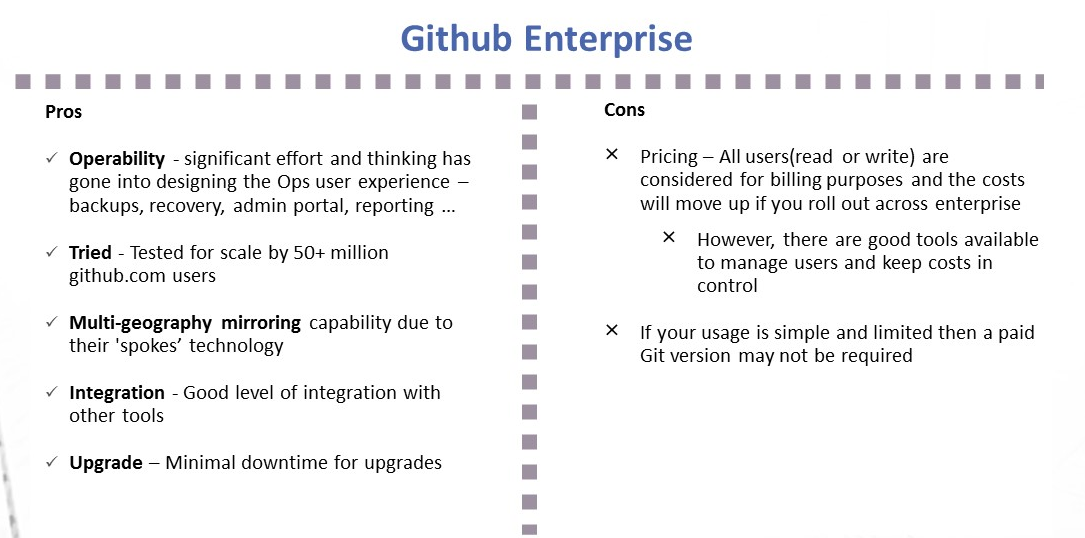
    Github Enterprise pros and cons
    Image1; Github Enterprise – Pros and Cons
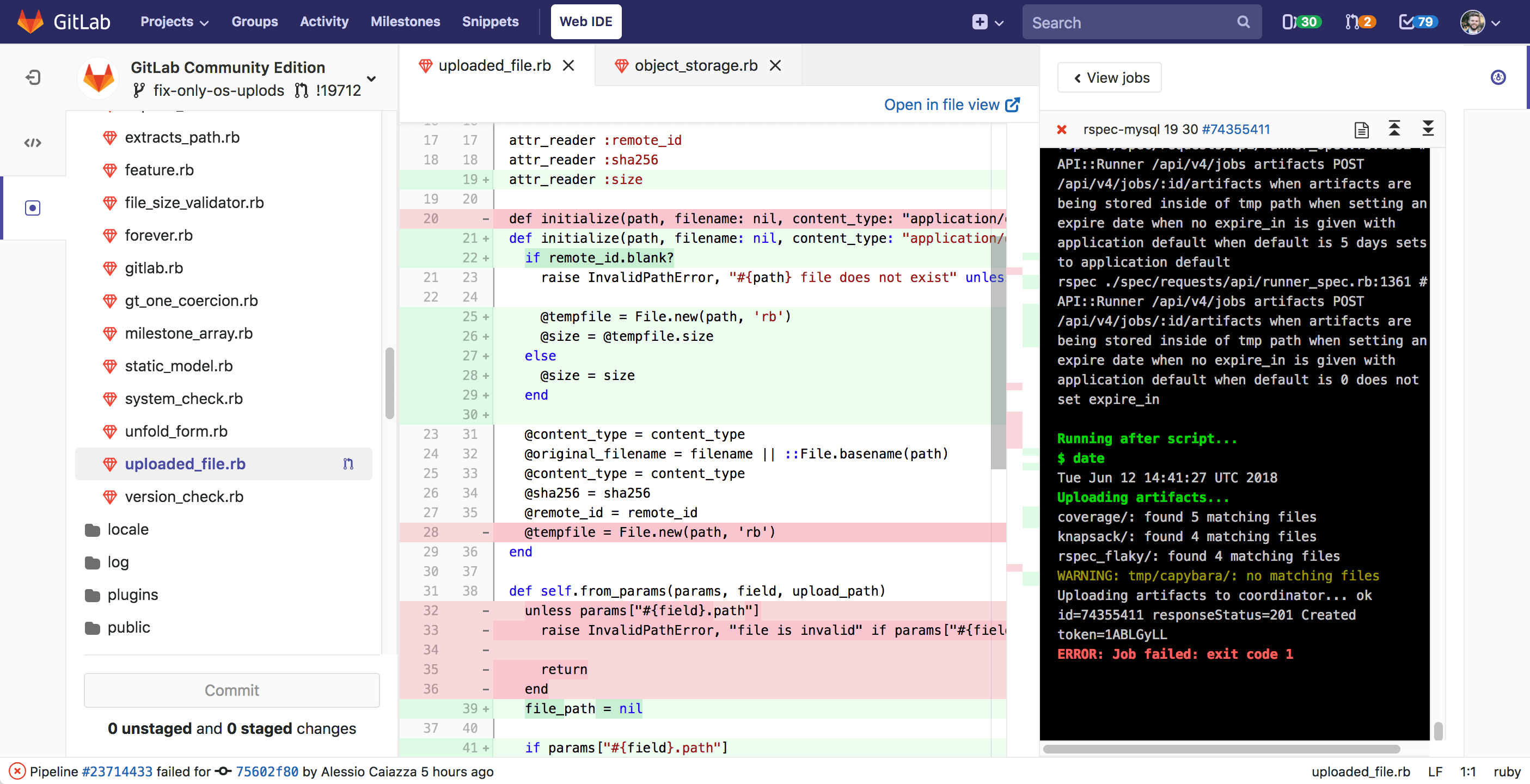
    Gitlab Ultimate and features
    Image 2:  Gitlab Ultimate – Pros and Cons

    My Recommendation: It Depends

    1. I liked the vision of GitLab as a single-stop tooling platform for continuous integration/continuous delivery (CI/CD), which goes beyond source control. I think the tool is simple and intuitive to use and great for small to midsized setups or even large enterprises that are focused on having smaller and autonomous teams.
    2. GitHub seems to be well-suited for large and complex enterprises with significant outsourced and offshore-based technology teams.

    I would love to hear your views on what has been your thinking with regards to choosing a Git-based product for your enterprise or teams. Meanwhile, here are some links you might find useful in your decision-making:

    1. Why and how GitLab abandoned Microsoft Azure for Google Cloud – https://venturebeat.com/2018/04/06/why-and-how-gitlab-abandoned-microsoft-azure-for-google-cloud/
    2. Tooling integrations of GitLab – https://docs.gitlab.com/ee/integration/README.html#doc-nav%20for%20list%20of%20integrations
    3. GitHub add-ons are listed at Addons are listed at https://github.com/marketplace
    4. Security and scalability info of GitHub is at https://github.com/jonico/github_security_and_scalability_overview
    5. Products that integrate with GitHub platform – https://github.com/works-with
    6. Pricing of GitLab – https://about.gitlab.com/pricing/

    — Aditya Vadaganadam