Category: DevOps Practice

  • Why DataOps is Critical for Digital Transformation

    Why DataOps is Critical for Digital Transformation

    Data lies at the heart of all digital transformation. In fact, today, as organizations look to further accelerate their ongoing digital transformation initiatives, companies are looking to extract even more value from their data, to better drive corporate decision-making, help grow the business, improve customer satisfaction and gain a competitive advantage. 

    Inspired by DevOps, DataOps, which Gartner defines as “a collaborative data management practice focused on improving the communication, integration and automation of data flows between data managers and data consumers across an organization”, has grown in popularity in the past decade as organizations seek to accelerate the delivery of business value from their data. But taken even one step further, enhanced data operations (i.e. more than DataOps) can help organizations maximize the business value of the data they own and also the infrastructure in which the data resides to increase data quality, reliability and availability in a hybrid cloud environment. This enables organizations to further improve business resilience and digitalization through collaborative, data-centric operations in an increasingly complex, interconnected world. Particularly as hybrid and multi-cloud environments proliferate and it becomes harder for teams to understand, analyze and streamline data usage.  

    DataOps Enables Digitalization

    By 2023, IDC predicts that 52% of worldwide GDP will come from products and services delivered by digitally-transformed enterprises—and according to Gartner, 91% of enterprises are already involved in some sort of digital initiative. This means that organizations already engaged in digitization are paving the way for a new future of business—commerce, production and innovation. But digitization is only half the battle—the other half (i.e., digitalization) comes from investing in understanding those digitally-driven insights and using those learnings to fuel business growth. 

    In the face of stifling market competition and evolving customer demands, the key differentiator in market leadership today is data and operationalizing that data. Hence, the difference between the market leaders and followers boils down to this: Data operations. Data operations not only plays a vital role in empowering ongoing digital transformation initiatives (think hybrid cloud operations, DevOps optimization and application modernization; data is at the core of all of these efforts) but also serves as a foundation for faster, better-informed innovation—fueling organizational growth and propelling businesses ahead of their competition.

    Who is Driving Digitalization?

    To gauge where your organization stands on your digitalization or digital transformation roadmap, you must first identify who within your organization is driving it and who’s involved. The latter is an easy enough guess—because, essentially, it’s everyone. 

    Although digital transformation is defined as the transformation of the digital operations of an organization, it reaches far beyond IT to all major functional departments and requires a cultural change to reach its fullest potential. That includes everyone from the chief information officer (CIO) and chief data officer (CDO)—collaborating with key stakeholders to map out and define digital transformation strategies and efforts and communicating goals and objectives—to the technical and professional teams—working closely with business units to design and operationalize new architectures and technologies to advance digital transformation initiatives. At the core of all of these modernization efforts is data; the metric for business success in the digital age. As such, integrating DataOps into your digital transformation efforts from the start is mission-critical. 

    As the market becomes increasingly competitive and business leaders look for new ways to grow and expand their business, data will remain a key catalyst in achieving those lofty digital transformation goals. By gaining intelligence from their data, companies can realize the ultimate goal of data empowerment—where all employees have simplified, secure levels of access to the high-quality data they need to do their jobs—enhancing operational efficiency, improving business outcomes and fueling business transformation at scale. 

  • The Power and Potential of Stored Procedures

    The Power and Potential of Stored Procedures

    One way of saving time when writing code is with stored procedures; prepared SQL code that you can save so the code can be reused over and over again. Stored procedures are a powerful vehicle for speeding up your code and giving you gains in performance. 

    Stored procedures have many benefits—they can be easily modified, are reusable and they possess the ability to automate a task that requires multiple SQL statements. Another advantage of stored procedures is the ability to access or modify data in a database.

    Before incorporating stored procedures, it’s important to know exactly what a stored procedure is, how it differentiates itself, how to create a stored procedure and how to use them in embedded analytics.

    Performing Tasks With Stored Procedures

    A stored procedure is defined as a set of SQL statements and other PL/SQL constructs that are stored in a relational database management system as a group that you can save and reuse. A stored procedure can be comprised of multiple SQL statements like SELECT, INSERT, UPDATE or DELETE. These statements run as a unit and are used to solve a specific problem or perform a set of related tasks.

    Stored procedures are among the most frequently used and most popular database subjects. Using stored procedures can help simplify and speed up the execution of SQL queries.

    Stored procedures can reduce network traffic between servers and clients, for example. This is a result of the commands being executed as a single batch of code rather than multiple. Rather than every single line of code being sent for execution individually, only the call to execute the stored procedure is sent to the server.

    The other benefits of using stored procedures include maintainability, performance and efficiency and complex business logic. And maintaining one stored procedure is easier on the server than maintaining copies on multiple machines. Procedure scripts are stored in one location and they can be freely used in other applications, too. In the event of a definition change, only the stored procedure will be affected—not the application that calls it.

    Advantages of Stored Procedures

    Once you compile a stored procedure, it can then be used many times. This can save a lot of time writing, especially if you are doing ad-hoc queries. This also gives you a slight performance edge on the first execution of a stored procedure over the first execution of an ad-hoc query.

    A stored procedure is ultimately a function call on a database. You may include IF statements, LOOPS, security checks and more to ensure the correct data is being sent back to the call of the stored procedure.

    Another advantage of stored procedures is that they are easily modified. Simply change one or more statements in a stored procedure with the ALTER PROCEDURE command and it quickly updates the results sent back to the calling app. Unlike a middle-tier component which includes business logic that would need a potentially costly re-deployment, a quick change to a stored procedure takes seconds.

    Another benefit of using stored procedures is the security it provides to its data source. The security of an application can be enhanced when using stored procedures by restricting unauthorized access. You may grant someone access to a procedure that updates the database table without allowing access to the table itself. You may also use stored procedures to “hide” the underlying table names from the end user of the stored procedure. Since the caller of the stored procedure has the name of the stored procedure and not the name of the tables used in the stored procedure, they cannot directly access the tables with your data.

    Best Practices For Creating a Stored Procedure

    Creating a new stored procedure is fairly straightforward. Here are the three basic steps:

    1. Within the SQL Server Object Explorer, right-click on the Stored Procedures node under Programmability.

    2. Within the New Stored Procedure Template, modify the CREATE PROCEDURE statement to include the tables, parameters and query options to return the desired data from the stored procedure.

    3. Within the Toolbar, click the Execute button to compile and save your stored procedure.

    There are multiple tools you can use to create stored procedures. Using the interactive SQL Server Management Studio is the easiest, as it gives you an easy way to start connecting to many different types of database servers, including Azure and SQL Server Analysis Services.

    Behind the Scenes in Embedded Analytics

    More organizations are using data to predict future outcomes and stay competitive, offering their customers what they want when and where they want.

    Embedded analytics business intelligence software holds the key to unlocking the power of data. Stored procedures can be incorporated into embedded predictive models and continuous computational language code for data streaming scenarios.

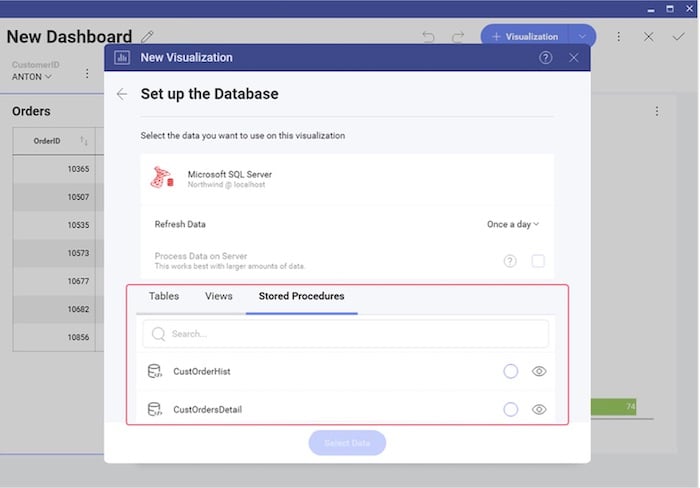
    To create a new visualization on a database that supports stored procedures, first review the list of stored procedures that are available. You will treat the stored procedure you select just like any other data source. The only difference is a parameterized stored procedure, which you can use in a Filter by passing variables to the stored procedure.

    Some embedded analytics platforms, for example, offer complete programmatic control over stored procedures and parameters via code. To pass a stored procedure name, as well as any required parameters, use the ChangeVisualizationDataSourceItemAsync function. This is an example of passing a stored procedure named CustOrderHist and passing the CustomerID parameter in the Reveal platform.

    The Power of Stored Procedures

    Stored procedures are a powerful tool to query a database and return results to a calling app. They are secure, offer performance advantages and are easy to maintain and modify. Stored procedures can be a good avenue for simplifying the way you present data and deal with parameters in your application code versus using error-prone and lengthy ad-hoc queries. As you develop applications, you may want to consider incorporating useful stored procedures in your next project or visualization database.

  • NextArch Foundation Launched to Focus on Microservices

    NextArch Foundation Launched to Focus on Microservices

    The Linux Foundation this week launched the NextArch Foundation to define frameworks and specifications that promote interoperability between microservices that span multiple cloud computing environments.

    More than 40 organizations, including Tencent, Arm, Kong and Ampere, have committed to contributing to 10 technology projects in 2022 in addition to frameworks for three vertical industries.

    Mark Shan, chairman of Tencent Open Source Alliance, said within the next five years the NextArch Foundation expects to have defined a set of standards and best practices that will have been widely adopted.

    The NextArch Foundation’s mission is to provide a home for a set of emerging technologies that would otherwise not get the attention they deserve within the confines of an existing consortium, said Shan.

    NextArch Foundation’s areas of focus will include how continuous integration/continuous delivery (CI/CD) platforms are employed to build microservices and reducing latency between microservices residing in highly distributed computing environments, added Shan.

    It’s not clear where the efforts of NextArch will begin and end as compared to the Cloud Native Computing Foundation (CNCF), another arm of the Linux Foundation that focuses on platforms such as Kubernetes that are widely used to build and deploy microservices-based applications based on containers.

    In general, however, it’s already apparent that microservices are at the core of most digital business transformation initiatives that span everything from artificial intelligence (AI) projects to edge computing environments. The global digital transformation market size was valued at $336.14 billion in 2020 and is expected to grow at a compound annual growth rate (CAGR) of 23.6% from 2021 to 2028, according to market research firm Grand View Research.

    As organizations embrace microservices to build and deploy software, the need to establish a set of DevOps best practices to manage them given the level of dependency that exists between multiple microservices within any application.

    Challenges associated with managing microservices are not likely to deter organizations from adopting them, but they do slow down the transition. Most new applications are intended to run on mobile devices that access cloud services, and typically run more efficiently when constructed as a set of microservices that scale up and down based on usage. The levels of agility and resilience that microservices have are crucial to any digital business transformation initiative, so the general expectation is that the percentage of microservices-based applications that will be running in production environments will increase sharply.

    The challenge, of course, is that, over time, microservices-based applications are more challenging for developers to build and maintain than a traditional monolithic application, though they are easier to update. It’s not likely microservices-based applications will replace existing monolithic applications overnight, but many existing monolithic applications are being converted into a set of microservices that makes it easier for developers to reuse the core functionality of that application.

    Of course, it’s still early days as far as microservices in the enterprise are concerned, but as developers shift toward a new way to build software, the need for a wider range of de facto standards should become more apparent.

  • 5 Tips for a Successful DevOps Implementation

    5 Tips for a Successful DevOps Implementation

    More businesses are turning to DevOps implementations to deliver software and updates with more efficiency. As much as business leaders know DevOps can help them to be faster and more agile, many of them are unsure how to get started. Many businesses even begin implementing DevOps only to run into unforeseen problems that hinder the process. 

    While DevOps can be beneficial, you do not want to make changes lightly. You need to know what you are getting into and prepare for ways the change can impact your company. Having a good team and providing them with the right infrastructure-as-code (IaC) tools will help, but there is so much more you need to consider before starting. 

    Here are five vital tips for successful DevOps implementations.

    Evaluate Your Processes

    You need to start by learning what DevOps is and what it means to your organization. Everyone on the team needs to understand what DevOps can do and the types of problems it can solve for your company. 

    Evaluate your entire development cycle from beginning to end. Look at the different processes that go into development to find different bottlenecks and inefficiencies. By finding the areas where your current processes come up short, you will be able to identify the areas to concentrate on when implementing DevOps.

    Collaboration and Communication

    Collaboration and communication are at the heart of successful DevOps implementation. You can get all of the best DevOps tools available, but if you do not have teams ready to work together and communicate, you will not achieve the full benefits of DevOps implementation.

    If you are going to succeed, you need to instill a strong sense of collaboration and cooperation among teams. Beyond that, you also need to provide your team members with tools that will help them communicate and collaborate. Communications platforms and collaboration software can be just as important as the tools that contribute directly to development.

    Set Goals

    DevOps implementation is not just about getting the right tools and changing processes. You need to assess the operations of your company and set goals for the implementation. If you are just buying new tools without setting a new direction, the implementation will not result in that much change. 

    Another good tip is to start with one smaller, more easily achievable goal and then scale up from there. Changing everything at once might be too much of a disruption. Instead, select a smaller goal and once that is achieved, move on to goals that are larger and more complex.

    Automation

    Automation is a big part of what makes DevOps beneficial to modern businesses. If you are going to achieve the full benefits of the change, you should automate as much as you can. Whether it is scanning code for misconfigurations or automated testing, you can do a lot to make your operations more efficient by using a variety of different automation tools. 

    You may also want to take automation one step at a time. If you try to dive headfirst into automation, it might be a bit too much for your team to keep up with. Instead, take a manual process that has been taking a lot of time and toil from your team and implement an automation tool. Let your team monitor for a few weeks to see how it goes and then take what you learned and apply that feedback to automating more processes.

    Know Your Key Metrics

    Set your key metrics from the very beginning of the implementation process. Without metrics, you won’t be able to keep track of the progress you make. A lack of tracking will also make it difficult to identify issues that might be holding back your progress. 

    Most organizations will need to focus on three points: Lead time, deployment time and mean time-to-recover. Beyond that, try to think about your users when defining key metrics. What do they like? What do they care about? What makes for a more pleasing experience?

    DevOps implementation is not simple. By taking the right steps to prepare, you can avoid the worst problems and put yourself in a position to respond well to the issues that do come up during implementation.

  • DevSecOps Tech Radar Highlights Diverse Tooling Adoption

    DevSecOps Tech Radar Highlights Diverse Tooling Adoption

    The DevSecOps Technology Radar showcases the opinions cloud-native groups have about DevSecOps tools. To review, The Technology Radar is a periodic report from the Cloud Native Computing Foundation (CNCF), a burgeoning host for new open source projects that are becoming pivotal underpinnings to cloud-native architecture at large.

    Just like previous radars, the DevSecOps Technology Radar was assembled using feedback from the CNCF end-user community, which is a group of over 155 organizations that use cloud-native technologies to build and distribute their services, spanning startups and enterprises. The Radar report organizes popular tools into adopt, trial and/or assess status, based on a technology’s active use and its maturity.

    ‘Adopt’ means these tools are stable and come highly recommended for use in production systems.

    ‘Trial’ means users have had some success with these tools, and it is recommended that others consider them.

    ‘Assess’ means these are promising tools that are good for solving specific needs.

    So, why was DevSecOps selected as this Radar’s theme? According to the Radar team, DevSecOps was chosen because it is highly relevant to current development focuses. “We realized that more than half of the tools we were using in CI/CD were actually security-oriented,” said Sergiu Petean, head of DevOps at Allianz Direct. This goes beyond DevOps—”this is definitely an uppercase ‘Sec’,” he said.

    “More than half of our time is spent discussing designs around security,” said Keith Nielsen, director, cloud architecture at Discover Financial Services. Financial services especially must find innovative methods to balance speed-to-market with security. Nielsen also cited the rapid rate of change in this space, which requires companies to continually reevaluate their security posture.

    DevSecOps Radar Results

    So, where did the CNCF end-user community place popular DevSecOps tools? The Radar ended up rating 16 tools across the three different levels:

    • Adopt: Istio, Sonarqube, Artifactory, Hashicorp Vault, Calico/Tigera, Terraform, ArgoCD and OPA.
    • Trial: XRay.
    • Assess: Cilium, Harness, SonaType Nexus, Hashicorp Sentinel, GitHub Actions, Linkerd and Trivy.

    The above results were based on 252 votes from end users across 35 tools, with most respondents coming from large companies across multiple sectors.

    Out of these tools, Terraform collected the highest number of ‘Adopt’ votes. This technology aids the move toward infrastructure-as-code (IaC) with declarative configuration files, which is important for DevSecOps automation. Tied for second place were Hashicorp Vault and Artifactory, indicating that secrets management, access control and continuous updates for security are pressing requirements.

    Other open source tools on the Radar are providing impressive ways to unify security controls. For example, OPA is a universal layer for applying policies that could help unite fragmented authorization across applications. Or, service mesh options like Linkerd and Istio place a sidecar proxy around applications to centrally manage access control, observability and networking across a large microservices ecosystem. Such projects are programmable to fit into the DevSecOps pipeline.

    Analysis

    In general, the radar team was somewhat surprised to see such a high number of security tools in use today. Some tools compete in the same arena, making hunting for the right tool challenging. “The sheer number of products is a bit staggering … what we’re seeing is a highly fractured strategy from different companies,” explained Nielsen, who said he expected more consolidation on capabilities.

    After evaluating the DevSecOps tooling landscape, The Radar team organized their core findings into three main takeaways:

    Usability is compromised at the expense of security. Security features are necessary, but they often come at the cost of usability. The DevSecOps Radar team found that the developer experience for most tools is poor. Many disparate tools must be stitched together to have a truly automated pipeline which is cumbersome to implement. “The tools are getting better, but still there’s not a cohesive, prescriptive way to develop for the cloud,” said Nielsen.

    The pace of change in the security space is rapid. Major cloud providers continue to rapidly release new services, which has led to an explosion in new tools. Simultaneously, the speed of innovation is accelerating within companies, opening up unique security needs. Combined, this means the security landscape is constantly shifting. “Security tools are trying to keep up with the services and how you host them and run them,” Nielsen said. “We definitely weren’t expecting to see so many newcomers in the security space,” Petean agreed. Though DevSecOps is spoiled for choice these days, “it’s always better to have options,” he added.

    Microsegmentation is important but presents a significant challenge. Many great tools enable companies to improve how they segment traffic, such as service mesh tools like Linkerd and Istio. However, implementing cloud-native microsegmentation is bumping against legacy implementations for established companies. Between API gateways, service mesh, edge firewalls and Kubernetes federated firewall functions, DevSecOps has much complexity to deal with, Nielsen said.

    The DevSecOps Technology Radar: In Review

    In recent years, cloud-native technology has placed increasing emphasis on solving the security puzzle. Companies continue to reevaluate their security approach in light of cloud-native strategies, novel vulnerabilities and new compliance requirements. DevSecOps is proving to be a useful, if not necessary, practice to maintain both security and rapid software delivery.

    With new security tools and unique approaches coming out so frequently, it’s easy to have “analysis paralysis.” However, DevSecOps must start somewhere. And, for those who trust the opinions of the CNCF Technology Radar, you now have some helpful insights on where to begin.

  • AWS BugBust Challenges Developers to Set World Record for Bug Busting at re:Invent 2021

    AWS BugBust Challenges Developers to Set World Record for Bug Busting at re:Invent 2021

    Software bugs are irksome, time-consuming and can be one of the most expensive software development costs for any company on an ongoing basis. Software Testing News cited a study that found the cost of poor software quality in the United States alone was estimated to be $2.8 trillion dollars. Let that sink in. $2.8 trillion dollars. And 18.22% of that cost was technical debt. Pair that with the fact that Watts Humphrey1 estimated in his book, A Discipline for Software Engineering, that, on average, software developers make 100 to 150 errors for every thousand lines of code.

    Suffice it to say that the costs of poor software quality are significant.

    Welcome to the First Annual AWS BugBust re:Invent Challenge

    AWS is making a commitment to help software teams around the world improve software quality with their global AWS BugBust Challenge. The first annual AWS BugBust re:Invent Challenge is right around the corner.

    The challenge, taking place from November 29, 2021 at 10 a.m. PST through December 2, 2021 at 2 p.m. PST, enlists Java and Python developers to collectively fix bugs and eliminate technical debt using Amazon CodeGuru. Within this time frame, registered participants across the globe—participating virtually—and those present onsite at the BugBust Hub at the AWS re:Invent Expo, can compete to fix as many bugs as possible to win prizes, glory and claim the title of the Ultimate AWS BugBuster. For each bug that you fix, you receive points based on the complexity of the bug. The more bugs you fix, the more points you will gain and the higher you will climb up the AWS BugBust Leaderboard. The live leaderboard will track each participant’s progress and showcase the number of bugs fixed and points received.

    Be a Part of Setting a Bug-Busting World Record

    At re:Invent, AWS also is looking to set a Guinness Book of World Records record for the largest code-fixing challenge ever. To date, there are no existing records for an event of this kind. Fix at least one bug to qualify to be part of setting the Guinness record. You can join onsite or online. Be part of the excitement of trying to set a world record while winning prizes and gaining recognition!

    Milestone Prizes

    While developers will go head-to-head to win the title of the Ultimate AWS BugBuster, they will also have the opportunity to win prizes for their milestone achievements. The Grand Prize will be $1,500 in cash. 

    There will be five key milestones that developers will be working towards:

    • First milestone—1 point—AWS BugBuster Fly Swatter
    • Second milestone—50 points—AWS BugBust branded sanitizer (BugSpray)
    • Third milestone—150 points—AWS BugBust glow-in-the-dark Bug Jar
    • Fourth milestone—300 points—AWS BugBust hoodie
    • Fifth milestone—500 points—AWS BugBust branded Echo Dot
    • Grand prize—$1,500 for the top BugBuster

    In addition to the milestone prizes, all developers who have contributed toward setting the record for the world’s largest code-fixing challenge will receive an exclusive AWS certificate. The bugs fixed at this live event will count toward the global total which the AWS BugBusting team will have front and center at the event.

    AWS BugBust Hub

    The BugBust Live Challenge will be hosted in the BugBust Hub. The Hub will provide a fun and relaxing environment for developers to fix bugs and ask questions of the AWS BugBust SWAT team as they get started on the BugBust Live Challenge. Not on-site at AWS re:Invent? No worries—developers can still participate and win prizes virtually, too!

    For more information and to pre-register for the AWS BugBust re:Invent Challenge, please visit the AWS BugBust website.


    1 Known as “the father of software quality,” Watts S. Humphrey is the author of numerous influential books on the software development process and software process improvement. Humphrey is a fellow of the Software Engineering Institute (SEI) at Carnegie Mellon University, where he founded the Software Process program and provided the vision and early leadership for the original capability maturity model (CMM). He also is the creator of the personal software process (PSP) and team software process (TSP). He was awarded the National Medal of Technology―the highest honor given by the president of the United States to America’s leading innovators.

  • How AI is Changing DevOps for the Better

    How AI is Changing DevOps for the Better

    Managing a DevOps environment involves a high degree of complexity. The rapid proliferation of data has made it difficult for DevOps teams to effectively onboard, ingest and unlock data and implement information to make good business decisions and deliver delightful experiences. Imagine a team poring over troves of information to identify critical factors that triggered an event—they would end up investing long hours to interpret and analyze the information.

    The future of DevOps will be AI-driven. It’s fair to say that it’s challenging for human intelligence to harness large volumes of highly complex data. Consequently, AI-powered solutions will become the number one choice for integrating and analyzing data and transforming how teams develop, deliver, deploy and manage applications.

    By 2023, 40% of DevOps teams will leverage application and infrastructure monitoring solutions with built-in AI capabilities, Gartner noted. Currently, in times of disruption, Gartner predicts the AIOps market will grow at breakneck speed, between $300 million and $500 million per year.

    Let us explore how AI and DevOps are intertwined before we explore how AI is transforming DevOps.

    DevOps and AI are Intertwined

    AI and DevOps are intertwined. Integrating AI in a DevOps environment boosts the overall performance and efficiency of an organization.

    AI and ML-powered solutions enable DevOps teams to onboard, map and integrate large volumes of customer or partner data with accuracy and speed. That is to say, business users find it easier to drive processes like data onboarding, data mapping and data integration, thus improving ease of doing business and delivering improved customer experience (CX).

    Organizations that rely on AI-powered solutions no longer need to devote long hours to custom coding and EDI mapping to analyze large volumes of data. The time saved can be used to focus on more important, innovation-driven tasks.

    AI also boosts automation, allows users to address and resolve issues in both data and applications and facilitates better cooperation among teams.

    4 Ways AI is Transforming DevOps

    The efficacy of DevOps correlates with an upward shift in AI. It can empower even non-technical business users to create connections and drive transactions at the speed of business. As a result, it brings non-technical business users to the forefront of business, thus freeing IT and developer teams to focus on more important tasks. Business users can leverage machine learning algorithms to collect data from different parts of DevOps systems and then map and integrate it in minutes through predictions.

    Here are four ways AI is transforming DevOps:

    1. Improved data access: The lack of free access to complex data streams is a challenge for DevOps teams. AI enables business users to access all the siloed data and harness its true potential for better insights delivery and decision-making. AI-powered tools can gather data from various sources for consistent and repeatable analysis.
    1. Faster data integration: AI and ML-enabled technologies enable non-technical business users to execute data mapping and data integration in minutes instead of months. As non-technical users drive operations, IT becomes free to take up governance and instead focus on more high-value tasks. Thus, not only can AI help business users integrate data faster to deliver experiences and value but also enables IT teams to drive innovation and growth.
    1. Higher implementation efficiency: With the support of AI, businesses can perform more tasks with less human intervention and minimal coding. This reduces the burden laid on IT or developer teams, enabling them to concentrate more on innovation and creativity.
    1. Better security: As security is essential to facilitate a successful software implementation, DevSecOps is a fundamental aspect of software development. Organizations must bolster their security systems to guard against an increase in threats. AI can play a vital role here. It can enhance DevSecOps and boost security by recording threats and executing ML-based anomaly detection through a central logging architecture. By combining AI and DevOps, business users can maximize performance and prevent breaches and thefts.

    Accelerating development cycles while making sure data is interpreted and analyzed properly is a challenge faced by DevOps teams today. Artificial intelligence-powered solutions are helping organizations transform every stage of DevOps building cycles without burdening IT teams or adding costs. Ergo, AI can enable users to transform the DevOps environment, deliver delightful experiences and grow revenue.

  • FinOps 101: Demystifying Cloud Financial Operations for DevOps

    FinOps 101: Demystifying Cloud Financial Operations for DevOps

    In an ideal world, all organizations would have a dedicated FinOps team—or at least a single specialist who could work to ensure that the cloud was operating in a financially savvy way. Of course, in reality, most organizations are strapped for skills and are operating lean teams where responsibilities are spread thickly across employees. In that case, DevOps professionals are likely to get left holding the FinOps bag and tasked with implementing FinOps best practices into their everyday cloud operations. If that sounds familiar—here’s your guide to getting started.

    The Cultural Shift of Considering FinOps

    In many ways, it’s not that great a leap for DevOps to start thinking about FinOps. After all, the underlying goals of both strategies are to optimize, improve and streamline operations. The difference is that DevOps is focused on software development and technical skills, while FinOps looks at the financial costs of operating on the cloud.

    The biggest challenge is that sometimes these goals may be at odds with each other. If DevOps teams are tasked with getting new software releases and fixes out of the gate as quickly as possible, that can often come at the expense of the most cost-effective solution. Think, for example, about AWS on-demand instances in the cloud. It’s arguably more FinOps-friendly to look for reserved instances, savings plans and committed use discounts and to put into place right-sizing opportunities where possible. However, with the pressure on DevOps teams to keep up an agile release cycle and offer quick fixes, anything that stands in the way of their flexibility and freedom can feel worth the price tag.

    As a result, it can be a true paradigm shift for engineers and DevOps teams to start thinking about FinOps first, especially if they already feel that their plate is full. Here are some best practices that can help to smooth over any bumps in the road.

    Make Engineers Accountable

    Don’t simply add new stakeholders who are responsible for cost management and FinOps, as they will quickly become adversaries of your engineers. Instead, ensure that your technical teams and developers realize that they are responsible for their cloud costs. They need to know what they are using and they need to codify and document how they are looking to use their budget more effectively.

    Of course, the business has a role in this too, showing engineers best practices for FinOps, such as shutting down idle resources, right-sizing instances or making smart architecture decisions. 

    Explain That FinOps Isn’t a Cost-Cutting Initiative

    If DevOps teams have been given the equivalent of a blank check thus far, it can be a tough sell to start tightening the purse strings. Explain to DevOps teams that you aren’t looking to cut their budget. In fact, you might even be increasing it!

    FinOps is all about smarter financial operations, so if engineers can show that they can save money in one direction, they can channel that to new features, technologies and tools that make them happy. Giving DevOps teams control over FinOps decisions offers more autonomy and control—and that’s a great thing.

    Ease the Mental Load With Low-Hanging Fruit

    Once DevOps teams get much-needed visibility over their cloud usage and realize that they are gaining responsibility and autonomy over their behavior, you want to guide them to recognize where they can make changes. Challenge all your DevOps stakeholders with the same KPIs, and see who can come up with innovative ways to incorporate cost savings into business-as-usual. Some KPIs that could be a great start include:

    • Coverage: Use of reserved instances, savings plans, spot instances or committed use discounts.
    • Right-sizing: The opportunity value of downsizing or terminating instances that are idle or underutilized.
    • Orphan/idle status: Tracking the percentage of orphaned EBS volumes or snapshots; you can drill down into a specific time period, such as over one month.
    • Forecast metrics: Consider using the variance between a forecasted bill and the actual costs and aim to reduce this as much as possible.
    • Incorrect assignation: This would highlight oversized or incorrect instance types, S3 or EBS storage on the wrong tier, unattached elastic IPs or poorly tagged/ untagged resources.
    • Peak hours: What percentage of development resources are running during peak hours or running when they could be shut down; for example, on weekends?

    Automation Incorporates FinOps Best Practices in a Hands-Off Way

    If this all sounds like a full-time job in and of itself—you’re not wrong. You’d be forgiven for wondering when DevOps teams are meant to actually develop and build! To keep engineers and technical teams productive, make sure that you’re offering the right tools and technology to lighten the load where possible, especially where automation and AI can do a better job than a room full of DevOps or FinOps experts.

    One example is automating the purchasing and selling of reserved instances in real-time, so that you’re never left buying on demand. Another is automating the removal or rightsizing of idle or underutilized resources, respectively. When your DevOps teams see that you’re offering the technology to make FinOps simple, they are much more likely to do their part elsewhere.

    DevOps and FinOps

    In recent years, security teams have championed the idea of DevOps ‘shifting left’ on security best practices to get security included in the process of agile software development during the build stages.

    Well, you heard it here first: It’s time for a similar shift for finance and cost optimization.

    Just as engineers can no longer get away with ignoring security in the way that they work, financial optimization needs to be front and center of DevOps teams’ day jobs. For this to work and for DevOps to incorporate FinOps goals seamlessly, businesses need to champion visibility for cloud usage, a culture of cost-optimization and a strong foundation of automation that bakes best practices into everyday work.

  • Sustainability No Longer Just a Buzzword for Cloud IT

    Sustainability No Longer Just a Buzzword for Cloud IT

    A recent CloudBolt survey on IT sustainability finds that sustainability is no longer just a buzzword — the market is demanding real change, and it appears that environmental concerns finally are influencing large IT investments. For example, 67% say that a cloud provider’s sustainability initiatives are important in deciding whether to do business with them. A significant portion of organizations are even willing to pay a premium to support green initiatives!

    Below, I’ll review the report to find its major takeaways. We’ll see how sustainability is directing real action in cloud IT and briefly compare how the market perceives current green initiatives among three top cloud providers: AWS, GCP and Azure.

    Sustainability Gains Real-World Traction

    In June and July 2021, CloudBolt polled 256 global CxOs and tech leaders on its Pulse platform, and found that 76% of respondents now consider climate change an existential threat. Not only are IT purchasers factoring compute and cost, but a sustainability conscience is now influencing executives to direct sweeping change. In fact, 79% of respondents indicate their IT departments are expected to help their companies achieve specific sustainability initiatives driven by the board of directors of the C-suite.

    Interestingly, other studies found that a sustainability commitment results in tangible business outcomes. For instance, 88% of the research conducted by Oxford University and Arabesque showed that solid environmental, social and governance (ESG) practices result in better operational performance of firms and higher profits. This study also noted that 80% of the time, a company’s stock price is positively influenced by sustainability practices.

    Climate Conscience Guides Cloud Choices

    Most organizations now consider a cloud vendor’s sustainability initiatives when choosing whether to do business with that provider. A full 78% of respondents agree that the public/private cloud choices they make can materially affect the environment for better or worse. New environmental cloud commitments not only attempt to minimize carbon emissions from their data centers but factor in ecological ramifications and aim to erase companies’ historical carbon footprints, as well.

    Cloud consumers also want to contribute to addressing these green initiatives. An impressive 79% of respondents indicate that they will pay a premium to work with vendors who incorporate sustainability into their business. And 41% of companies are willing to pay a premium of 11 % to 15% of their current bills. This shows that sustainability is now a vital factor within the marketplace, and companies are willing to pay the price to increase their own environmental standing.

    Though this commitment is undoubtedly growing, the report did find that operational requirements such as security, cost and agility, still rank significantly higher than sustainability when comparing cloud providers. Though IT professionals recognize climate change as an existential threat, they still have day jobs and must keep operations moving.

    AWS: King of Green Clouds

    Slightly more than half (51%) of respondents agree that the industry-wide green energy commitment is real and growing among all cloud providers. However, when comparing the top three—Amazon Web Services (AWS), Azure and Google, AWS appears to be emerging as an IT sustainability leader; 41% of respondents perceived AWS as doing the most to address green initiatives.

    AWS is on track to power its entire operations with 100% renewable energy by 2025. With their solar plant investment in April 2021, Amazon became the largest corporate buyer of renewable energy in Europe. Around the globe, AWS has invested in a combination of on-site solar, solar farms and wind farms to power their data centers and Whole Foods divisions.

    To their credit, both Microsoft and Google also committed to climate pledges that affect their cloud footprint. Azure supports a similar initiative to reach 100% renewable energy by 2025, in addition to further investments to improve water, waste disposal and surrounding local ecosystems. Google Cloud’s commitment is to operate on carbon-free energy 24 hours a day by 2030, and the company has already achieved 100% renewable every year since 2017.

    Not only does AWS appear to be doing the most to address its environmental impact, it also retains the most market traction as a cloud leader. The majority of respondents (62%) said that AWS is winning the cloud wars while only 31% said Azure and just 7% said GCP.

    Final Thoughts

    It is heartening to see that ESG standards are having a measurable impact on a company’s cloud allegiances. The market now demands real change and is willing to pay the price for more ethical and sustainable cloud hosting.

    But choosing a cloud provider is only one aspect of reducing IT’s impact. As I’ve covered before, there are many ways IT can curb its climate impact. Such actions include optimizing overall infrastructure, shuttering zombie VMs, avoiding over-provisioning resources, increasing performance visibility, refactoring code and other measures. What’s great is that most of these initiatives have the added benefit of reducing cost to the business.

    The CloudBolt Industry Insights Report, The Truth About IT Sustainability: Paying More Green to Get More Green, surveyed 256 IT leaders on their perception of cloud sustainability. For additional insights, you can pick up a copy here.

  • Salt Security Adds Support for GraphQL APIs

    Salt Security Adds Support for GraphQL APIs

    Salt Security has extended its platform for securing application programming interfaces (APIs) to include support for APIs built using GraphQL.

    GraphQL is an open source data query and manipulation language for APIs that was originally developed by Facebook. It provides a more efficient approach to querying data than the REST APIs that are widely used today.

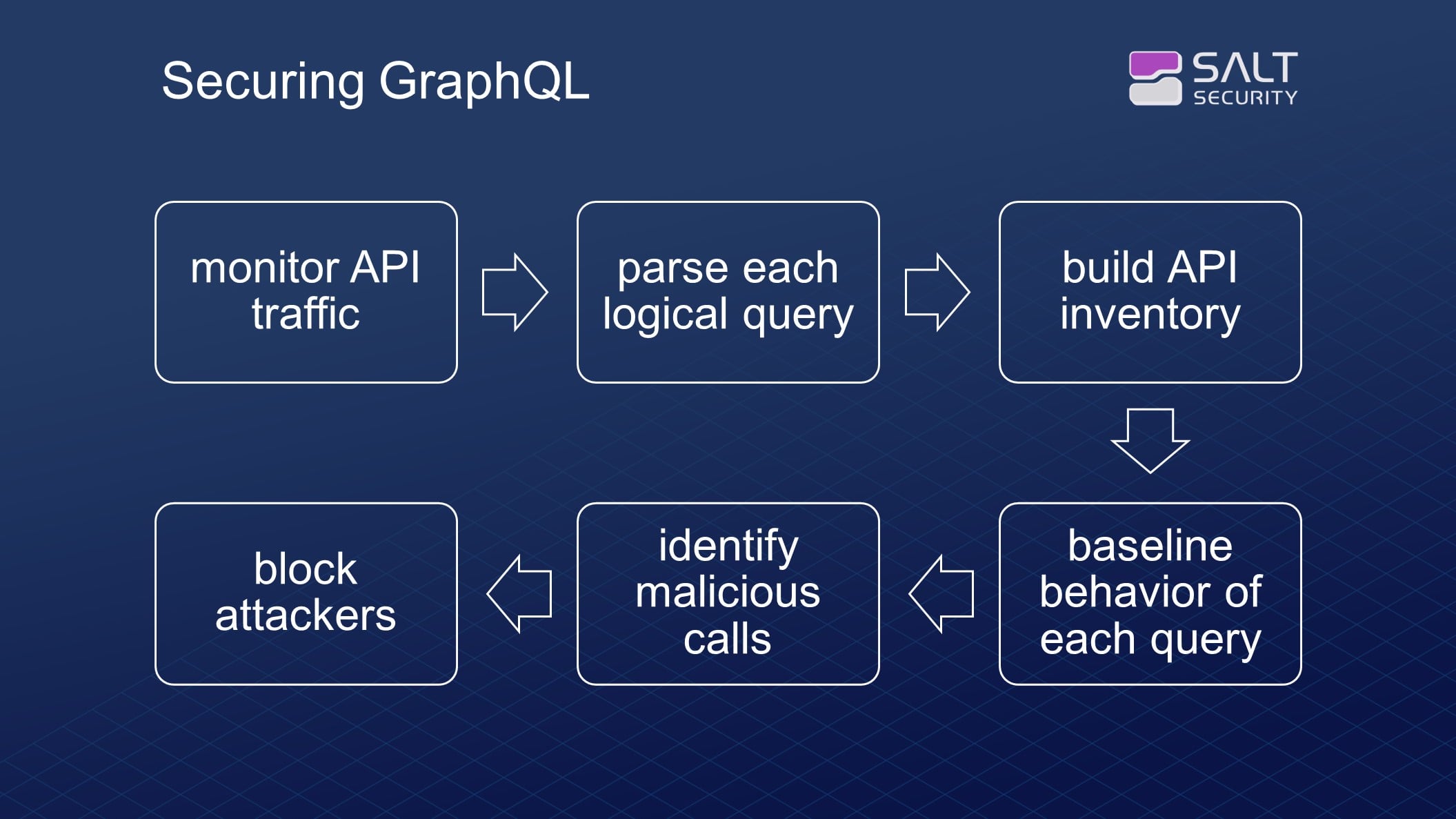
    Elad Koren, chief product officer for Salt Security, said adding support for GraphQL alongside existing support for REST APIs to the Salt Security API Protection platform will make it possible for security teams to discover those APIs, mitigate data exposure, stop attacks and eliminate vulnerabilities. The Salt platform parses the complex structure of each GraphQL query to identify unique object entities that are then used to create a complete inventory of the GraphQL APIs being employed.

    APIs built using GraphQL are more challenging to secure because of the unique call and response formats, noted Koren. Cybercriminals can also, for example, leverage GraphQL capabilities such as nested queries and query batching, to launch distributed denial of service (DDoS) attacks, he said.

    Many developers will tend to assume that, because GraphQL is relatively new, most cybercriminals are primarily focused on exploiting REST APIs. However, as more developers employ GraphQL, it’s only a matter of time before cybercriminals begin to find ways to exploit APIs that may not be as secure as the REST APIs that many organizations already know how to secure.

    The Salt Security platform itself is based on a big data engine that employs machine learning algorithms and other forms of artificial intelligence (AI) to identify attacks in real-time. It creates a baseline to identify legitimate system behavior while preventing cybercriminals from using penetration testing tools to perform reconnaissance.

    From a DevOps perspective, the Salt Security API Protection Platform integrates with tools such as Jira and Slack to ensure that remediation details are routed to the right development team in addition to helping track tickets to ensure remediation fixes are implemented. It also can be integrated with security information event management (SIEM) platforms from vendors such as Splunk and Sumo Logic to enable incident response for both DevSecOps and security operations teams.

    Most IT teams will not be replacing REST APIs with GraphQL-based APIs overnight. However, there will soon be enough APIs based on GraphQL to warrant additional security measures. Less clear is to what degree those security measures will be put in place by DevSecOps teams versus a security operations team.

    One way or another, however, the number of APIs that need to be secured is accelerating rapidly as organizations roll out a new generation of microservices-based applications that drive mission-critical digital business transformation initiatives. Each microservice has its own API that needs to be built and then secured. Unfortunately, most APIs are built by developers that don’t always have the greatest appreciation for security. As such, while more responsibility for API security is shifting left toward developers, many security teams would be well advised to make certain every API being deployed is fully secure.