Category: Continuous Delivery

Continuous delivery is a software engineering discipline that allows organizations to consistently develop and release quality software at a rapid pace. It is achieved by automating the software development lifecycle, enabling tasks such as development, testing and release to occur concurrently and continuously.

  • Linux Foundation Makes Available Software Manifest Tool

    Linux Foundation Makes Available Software Manifest Tool

    The Linux Foundation is making available a set of free tools for building software bills of material (SBOMs) based on the software data package exchange (SPDX) file format it curates.

    Backed by more than 20 organizations, SPDX is an effort to standardize the way metadata describing the contents of a software package is described.

    The SPDX specification was submitted last fall to the International Organization for Standardization (ISO) by the Joint Development Foundation, an arm of the Linux Foundation.

    The Linux Foundation, as part of its efforts, is also making available a free, online training course to provide IT teams with the foundational knowledge required to create and maintain SBOMs.

    Kate Stewart, vice president of dependable embedded systems for the Linux Foundation, said SBOMs play a critical, often overlooked role in maintaining the security of a software supply chain. One of the major challenges organizations have today is that an SBOM isn’t often created, which makes it harder to discover what software components have been included in a package. That makes it difficult for organizations to determine if they are employing a version of a software component that now has a critical vulnerability that was just recently reported, noted Stewart.

    Even when there is a SBOM, its construction can vary from one team or organization to the next. The tools provided by the Linux Foundation are intended to standardize how the fields used to describe a SBOM are defined, added Stewart.

    The SBOM tools being advanced by the Linux Foundation are, in part, a response to President Biden’s executive order pertaining to the security of software supply chains, added Stewart. The National Telecommunications and Information Administration (NTIA), as a result, is now asking for wide-ranging feedback to define the minimum requirements for a SBOM.

    It may take time before there is an agreed upon SBOM standard, but as microservices based on containers become more prevalent, it’s also apparent the issue will become more pressing. More, smaller packages of software being deployed in the enterprise without manifests will only further exacerbate an application security crisis that has deepened in the wake of recent high-profile software supply chain breaches.

    Ultimately, a SBOM should automatically be self-generated as part of any DevOps workflow. The challenge is there is still a massive amount of software being created outside of any formal DevOps workflow. On top of that, the massive amount of poorly documented legacy application software already deployed in an enterprise IT environment makes it clear how big an issue the lack of a simple SBOM really is.

    It’s not precisely clear who inside an organization should be responsible for standardizing SBOMs. The challenge is that within many organizations it’s not the kind of issue for which developers are rewarded, much less motivated, to solve. Nevertheless, everything from application security issues to the massive amount of technical debt that stems from duplication of software development projects can all be traced back to the lack of a simple manifest.

    Of course, now that many organizations are starting to appreciate just how dependent they are on software, more questions are being asked about how it’s constructed. The thing that many of the business executives asking those questions are about to discover (with some incredulity) is how much of the software the organizations depend on is still being built using methods that have more to do with a medieval craft than they do a manufacturing line.

  • Google Proposes SLSA Framework to Secure Software Supply Chains

    Google Proposes SLSA Framework to Secure Software Supply Chains

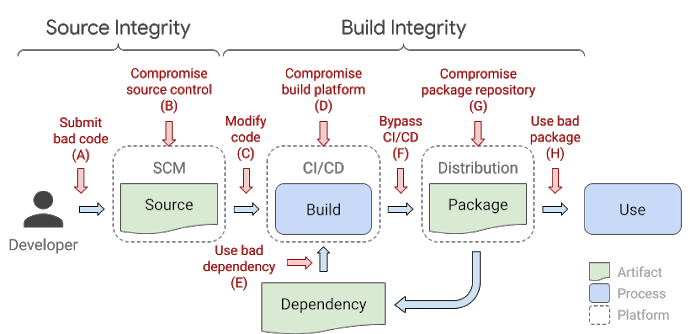
    Google is proposing organizations adopt a framework for securing the integrity of software artifacts across a software supply chain.

    Kim Lewandowski, a product manager for open source software security at Google, said the Supply Chain Levels for Software Artifacts (SLSA) is based on an internal framework, known as binary authorization for Borg, that the company has been employing now for more than eight years to secure its software. Borg is the name Google attached to the platform for building and deploying applications upon which Kubernetes is based.

    In its current form, SLSA is a set of guidelines that identifies how to attain four different levels of application security. The goal, however, is to create a framework that will automatically generate auditable metadata that can be fed into policy engines to create a SLSA certification.

    The lowest level of SLSA requires that the build process be fully scripted or automated and generates metadata that enables provenance to be created. At the highest level, SLSA requires a two-person review of all changes made during a hermetic, reproducible build process. At the highest SLSA security level, organizations should be able to assure others that their software supply chain has not been compromised, said Lewandowski.

    Google

    In the wake of a recent series of high-profile breaches of software supply chains, the level of scrutiny being applied to how software is constructed has increased significantly. In theory, at least, developers have assumed more responsibility for application security as part of an overall shift left that provided them with more programmatic control over IT environments. As a result, cybercriminals are now focused on compromising either the credentials of developers as part of an effort to insert malware into application as it is developed, or they are trying to exploit vulnerabilities that developers have inadvertently created by programmatically misconfiguring infrastructure.

    DevSecOps best practices are, of course, being adopted to teach developers how to better secure their application environments. The issue is that not enough developers are learning how to secure applications fast enough. The volume of attacks against the software supply chain continues to grow at a rate that is now much faster than organizations can thwart simply by educating developers. In some cases, organizations are once again empowering cybersecurity teams to make sure software supply chains are secure regardless of the potential impact on the rate at which applications are being developed.

    Google is trying to promote adoption of SLSA as a framework for securing both open source and proprietary application code, said Lewandowski. There’s no silver bullet for securing software, but a framework that ultimately automates as many of the security processes as possible within the context of a DevOps workflow would go a long way toward hardening the software supply chain, noted Lewandowski.

    SLSA is being put forward as a response to a cybersecurity executive order issued by President Biden that, among other things, tasks the National Institute for Standards and Technology (NIST), an arm of the U.S. Department of Commerce, to consult with federal agencies, the private sector, academia and other stakeholders in identifying standards, tools, best practices and other guidelines to enhance software supply chain security. Given the level of dependencies that exist across those software supply chains, that executive order, to varying degrees, now applies to almost any entity that builds software for an organization that, on some level, interacts with the Federal government.

  • Code Ownership Is Key to Accelerate Debugging

    Code Ownership Is Key to Accelerate Debugging

    App stability is a fundamental part of every app experience. Broadly speaking, app stability is a measurement of the number of total app sessions that are crash-free or the percentage of daily active users who do not experience an error. End users have little patience for apps that crash or fail. Every application, whether it’s B2B- or B2C-oriented, suffers some level of instability and fails occasionally. Ideally, organizations should aim for app stability scores close to 99.999%. To achieve that quality of performance, software engineers must be fast and efficient in fixing coding errors that are frequently the cause of app crashes.

    But that’s a major challenge using the traditional approach to debugging. Most major applications have a wide variety of engineers, including completely separate engineering teams, all working from a single code base. Each team typically uses their own unique issue tracker to monitor errors, such as Jira or Asana. In addition, teams typically use their own channel in a collaboration platform to communicate internally, like Slack or Microsoft Teams. This causes silos between the various engineering teams, limiting communication and visibility between each team.

    When an error occurs, all the engineering teams are alerted about the bug through their own issue trackers. From there, they figure out where the error occurred in the code and who is specifically responsible for fixing it. This requires each team to manually review code as they try to locate the bug, which wastes precious time as engineers duplicate one another’s efforts. Because teams are using different communication channels, there’s little to no collaboration or alignment between the various engineering teams during this process. Overall, this approach to debugging is a cumbersome and inefficient undertaking that slows the process of repairing apps, ultimately hurting the end user experience.

    Consider a real-world example. Suppose your team is one of a dozen engineering teams, all working together on an application that creates a mobile game. Perhaps your team works on maintaining the in-app purchases feature set, while another works on the account setup flow and yet another team works on character customization features. If a bug suddenly crashes the app for a significant portion of users (resulting in a clear drop in the app stability score), every team will receive an error alert through their issue tracker notifying them that a coding issue has caused the application to fail. No one will know if their team’s code was responsible. As a result, each team is forced to go through the laborious process outlined above. If it turns out that the bug was in the character customization code, then the teams responsible for in-app purchases and account setup have wasted valuable time and resources searching for the error.

    The only team that should be notified of a bug is the one responsible for the part of the code a bug originates from. The emerging concept of code ownership makes this possible, providing a faster and easier approach to debugging. With this method, organizations create code owner files to determine which engineers or teams are responsible for each section of code, feature flags or experiments. If section X within the code fails, then team X will be responsible for addressing it. In the example above, only the team responsible for the code associated with character customization would need to find and fix the bug.

    This makes it much easier to respond to application issues and allocate the correct resources to remedy those issues. For end users, code ownership means that malfunctioning apps will be fixed faster, improving the customer experience and boosting business metrics. From an internal POV, engineering teams become far more cost- and time-efficient, freeing developers to take on new projects they actually enjoy working on.

    A culture of code ownership also helps engineering teams adopt other best practices for debugging. One major example is error prioritization. Not all bugs cause significant app instability and need to be fixed right away. When a team can ignore errors unrelated to their code, they have more time to fully hone in on and evaluate the errors they are responsible for. With this focused approach, they can establish metrics determining if they need to fix a bug immediately or if it can wait.

    Simply put, code ownership eliminates the confusion and guesswork associated with the process of debugging, allowing engineering teams to easily identify, own, prioritize and remedy bugs. Embracing code ownership is critical for companies to improve app stability, which is the most fundamental measure of an app’s health. This ties directly into business outcomes, because app stability is closely associated with customer retention, customer growth, sales and revenue. By speeding up debugging efforts, code ownership has a pronounced, positive impact on stability, boosting each of those metrics.

  • Grafana Labs Acquires k6 to Add Open Source Load Testing Tool

    Grafana Labs Acquires k6 to Add Open Source Load Testing Tool

    During its online GrafanaCONline 2021 conference today, Grafana Labs revealed it has acquired k6, a provider of an open source load testing tool.

    Raj Dutt, Grafana Labs CEO, said load testing will complement the observability platform Grafana Labs currently provides based on open source Prometheus software. Most of the output of any load testing processes are typically evaluated using a platform that analyzes metrics, he noted.

    The k6 platform has been gaining traction among developers that require access to a tool that makes it simpler to dynamically scale load testing up and down as required versus having to guess how much infrastructure might be required to test an application workload, said Dutt. That capability not only makes it simpler to integrate testing within a DevOps workflow, Dutt added, but also serves to reduce testing costs.

    In general, Dutt noted testing is shifting further left as developers assume more responsibility for quality assurance. The challenge is finding a way to enable developers to automatically incorporate testing within a continuous integration (CI) process that allows them to easily observe how synthetic tests are executing, added Dutt.

    There’s no doubt developers are running more tests before promoting workloads into a production environment as part of an effort to reduce the number of issues that might be encountered when an application is deployed in a production environment. In many cases, the support calls that arise now go directly to developers who now have a vested interest in reducing the volume of those calls.

    The issue that developers are contending with is as they embrace microservices, the dependencies that exist across multiple applications makes it more challenging to successfully deploy those applications. Grafana Labs has been making a case for a cloud platform that makes it simpler to centrally view data collected from instances of Prometheus distributed across multiple application development environments. Prometheus, now being advanced under the auspices of the Cloud Native Computing Foundation (CNCF) that oversees the development of Kubernetes, is now being deployed more widely by IT teams to observe legacy monolithic applications alongside emerging microservices-based applications.

    It’s not clear the degree to which organizations are also employing dedicated application testers. In many cases, those testers will surface issues that developers overlooked (or simply chose to ignore) in the face of tight application delivery deadlines.

    In the longer term, however, it’s also apparent artificial intelligence (AI) will be playing a larger role in application testing. Someone will still need to review those tests, but many more rote tasks will increasingly be automated.

    One way or another, the total cost of testing is declining, thanks in part to increased reliance on open source testing tools that, in many cases, developers are simply downloading themselves. Those tools are reducing much of the licensing friction and cost restrictions that developers might otherwise encounter.

    In fact, the easier it becomes to test applications, the better overall application quality will become in the months and years ahead. At at time when organizations have never been more dependent on software, that potential improvement to the overall state of application quality can’t arrive soon enough.

  • PagerDuty Allies with JFrog to Modernize IT Incident Management

    PagerDuty Allies with JFrog to Modernize IT Incident Management

    PagerDuty has integrated its IT incident management platform with the continuous integration/continuous delivery (CI/CD) platform from JFrog as part of an effort to streamline troubleshooting of application environments.

    Steve Gross, senior director of strategic business development at PagerDuty, said the overall goal is to make it easier for IT operations teams and developers to collaboratively discover the root cause of issues by, for example, being able to identify builds within a JFrog pipeline that might be having a negative impact on a production environment.

    At the same time, IT teams employing PagerDuty can now also receive notification from JFrog Xray, a tool that discovers both vulnerabilities in open source software and license compliance issues.

    Organizations of all sizes are attempting to minimize the impact of an IT incident by providing deeper insights into how applications were constructed. The goal is to reduce the amount of time IT teams currently spend looking for the root cause of a problem.

    PagerDuty JFrog

    Ideally, IT teams would discover those issue before they impact end users. The challenge they face is it can take weeks to discover the root cause of an issue that takes a developer a few hours, at most, to fix. Armed with insights from the CI/CD platform, Gross said it becomes easier for IT operations teams to proactively pinpoint the source of an issue in a way that provides the developer with enough insight to act.

    That is critical because, more often than not, it’s the last build of application that was deployed in a production environment that is usually the source of an issue, especially when that IT environment was operating normally before that build was promoted into a production environment.

    The data collected by PagerDuty from various DevOps platforms is fed into the PagerDuty tools via a Change Events application programming interface (API). Over time PagerDuty will also be able to apply machine learning algorithms and other forms of artificial intelligence (AI) to identify issues long before they reach a meaningful level of disruption, noted Gross.

    In general, there’s a movement to modernize IT incident management in a way that aligns with DevOps best practices as part of an effort to identify issues before an application is actually deployed. The hope is that those efforts will reduce the number of “war room” meetings that need to be convened to determine the root cause of a performance or security issue after an application has been deployed.

    It may be a while before IT incident management processes are modernized to that level. However, as IT environments become more complex—in part because of the number of microservices-based applications with multiple dependencies that are now being deployed—it’s apparent existing approaches to IT incident management don’t allow IT teams to respond fast enough to an issue. In fact, that’s more challenging than ever now that many of the members of an IT team are working from home more often.

    The pressure to modernize IT incident management increases in almost direct proportion to IT teams’ stress levels. The challenge now is to modernize those processes before the members of an IT team are too burned out to appreciate the effort.

  • How Real-Time Debugging Improves Reliability

    How Real-Time Debugging Improves Reliability

    When designing and building software, service reliability is always at the top of the list of critical focus areas for development teams. Every team that builds software typically has, either directly or indirectly, service level agreements with their customers. These are, essentially, agreed-upon metrics or performance criteria that teams use to measure and ensure the reliability of a software system.

    Organizations may measure reliability in different ways, looking at metrics like service availability, mean time to failure or mean time to repair. Regardless of how an organization chooses to measure reliability, you can often assess the health of an organization based on how reliable their applications are. Since we know that reliability issues happen regardless of how well we prepare for them, having tools to solve those issues quickly and efficiently becomes critical to maintaining smooth operations.

    The Health of Your Organization

    Most software development organizations today have key performance indicators (KPIs) which they measure to understand how well they’re doing and to be able to quickly and easily measure the health of their application development processes. If teams are finding that they are not meeting KPI’s, it’s often a sign that something fundamental needs to change or that new and improved processes need to be put in place. Teams that are constantly measuring what they’re doing well and where they are falling short with a data-driven approach are typically the teams that come out ahead.

    In short, a team’s ability to measure and hit KPI’s and service level agreements with their customers directly influences the overall success and health of that team. If an organization isn’t producing applications that are reliable and available when their customers need them, it’s unlikely that company will have customers for very long. When reliability issues do occur, it’s critical that developers can immediately go to the source of the issue in their code to ensure that they can solve those customer issues as quickly and efficiently as possible. One such approach is to give developers the ability to do real-time debugging directly in the environment where those issues occur, without needing to create costly reproduction environments or having to figure out how to reproduce issues locally that are, many times, data dependent.

    Reliability is Shifting Left

    Historically, software reliability has fallen on the shoulders of operations or production support teams who manage the deployments and runtime of software after it’s been deployed to production (and after developers have thrown the code over the metaphorical wall). Things have changed in the recent years, in that many of today’s development teams are responsible for their applications from development all the way through to running and supporting those applications in production. Because of this, developers have more incentive than ever to ensure that their software has reliability built in, or at least the ability to quickly debug reliability issues when things go wrong.

    Real-time debuggers are one such category of tools that development teams are choosing to package with their applications in order to solve those hard-to-address customer issues faster. Real-time debuggers are solutions which allow development teams to gather code-level debugging information such as snapshots of local variables, stack traces, tracing information and profiling data. All of this data (which traditionally relies on developers having the right logs in their code and, if not, deploying new debug builds) becomes instantly available, on-demand whenever an issue arises. This faster approach to identification of issues can drastically improve the reliability of applications by allowing developers to solve issues in a fraction of the time it would normally take.

    Teams Focusing on Reliability Move Faster

    Many development teams have shifted to an agile approach to delivering software; the goal being to respond quickly to business needs and to get new, valuable features to their customers as quickly as possible. Even though this is a helpful step, unplanned events can and will happen, which need to be planned for as much as possible ahead of time. In a recent Forbes article by Rookout CEO Shahar Fogel, he discusses how businesses should consider these software bugs as mini outages. Any time teams are dealing with software bugs or other unplanned issues, it costs the business revenue and can potentially leave customers frustrated. Focusing on metrics like mean time to repair (and giving developers the tools they need to reduce the mean time to repair) can give teams the ability to better predict how long unplanned issues will take to remediate once they occur.

    In the book Accelerate by Nicole Forsgren, Jez Humble and Gene Kim, the authors discuss the notion that, by giving developers tools to fix problems when they occur, teams create an environment where developers accept responsibility for global outcomes such as quality, stability and reliability. Investments in technology are also an investment in people. So, it’s no wonder that by investing in technologies that can help improve reliability, teams will be able to move faster. This means happier customers, happier employees and a thriving business.

    By focusing on service reliability, development teams are not only able to move more quickly, but are also directly contributing to the overall health and success of their organization. We’re seeing the onus of reliability shifted from operations teams to development teams, which adds newfound importance on ensuring development teams are building reliability into their product. Real-time debugging tools are one potential solution to ensuring that developers have the ability to quickly address unplanned customer issues which can directly impact the perceived reliability of an application.

  • WSO2 Applies AI to API Management

    WSO2 Applies AI to API Management

    WSO2 today unfurled a Choreo cloud platform through which DevOps teams can create and manage application programming interfaces (APIs) more efficiently by leveraging machine learning algorithms and other forms of artificial intelligence (AI).

    Eric Newcomer, WSO2 CTO, said the integration platform-as-a-service (iPaaS) eliminates all the tasks associated with setting up a platform for and managing services based on APIs.

    Choreo, available in beta, employs AI to learn historical activities and performance behaviors in order to anticipate the needs of a developer. As developers build an API, the platform will provide performance feedback, identify anomalies, map data and even complete code, said Newcomer.

    The Choreo platform also comes with built-in observability tools for monitoring API usage and troubleshooting APIs, added Newcomer.

    In addition, Choreo provides access to the open source Ballerina programming language the company developed to enable developers to create APIs using both low-code and procedural code as they see fit, noted Newcomer. The low-code diagram that developers create generates source code that developers can then run wherever they want, said Newcomer. Developers can close the entire repository Choreo provides, Newcomer added.

    Developers can also trigger low-code integration logic to control hundreds of software-as-a-service (SaaS) APIs via pre-built connectors and templates provided by WSO2 or ones they create themselves.

    WSO2 is also making it possible to deploy APIs via a single click in Kubernetes environments, which eliminates the need to manage cumbersome YAML files. That capability is based on technology that WSO2 gained via the acquisition of Performer that the company revealed today.

    Finally, WSO2 is making available an API marketplace through which organizations can share APIs, event streams, data sources and templates.

    With the rise of microservices-based applications, API management has become a lot more challenging. Each additional microservice adds an API that needs to be managed and maintained. As more APIs are employed, it becomes increasingly difficult for DevOps team to keep track of the dependencies that exist between all those APIs without the aid of machine learning algorithms.

    It’s not likely machine learning algorithms will replace the need for DevOps professionals anytime soon. However, it’s becoming apparent that many of the manual tasks that DevOps teams routinely perform today are becoming automated by machine learning algorithms. In other cases. DevOps teams are gaining new capabilities that would have either been impossible for them to do on their own or would simply have taken too much time to complete.

    Of course, it takes time for any AI platform to learn the DevOps environment. IT teams need to invest a significant amount of time training an AI model to recognize relevant issues in much the same way they might train any new member of a DevOps team. The only difference is, once a machine learning algorithm learns something, they never forget it. Nor do they take a day off or announce one day they are leaving the company because they got a better offer somewhere else.

    It may take a while before DevOps teams are able to strike the right balance between man and machine, but one thing that is certain is that AI in DevOps environments is here to stay.

  • Enterprises Face Growing Technical Debt

    Enterprises Face Growing Technical Debt

    Technologists are always espousing new, trendy development solutions. More robust frameworks, increased delivery, better integration. But rarely do these proponents consider the long-term side effects of introducing new technologies. As a result, technical debt is an all-to-common occurrence in most companies.

    Nearly a third of IT budgets are dedicated to addressing technical debt. Devoting so much effort to maintaining legacy code leaves fewer resources to support the status quo, let alone develop new solutions. In fact, a recent study found that 69% of IT leaders identify technical debt as a significant threat to their companies’ ability to innovate.

    “The Growing Threat of Technical Debt,” a report from OutSystems, surveyed 500 IT leaders about this conundrum. Below, we’ll explore the top causes of technical debt and consider ways to prevent it from getting out of control.

    What is Technical Debt?

    Technical debt seems counterintuitive. Isn’t technology supposed to help organizations become more productive? Why would it be a burden? Well, technical debt often arises from hasty decisions taken in the short term that have long-term consequences. It’s also often the result of a company juggling many competing technologies, some of which have become outdated.

    Technical debt can carry a hefty price tag. But this debt isn’t so much measured in the cost of hosting legacy technology or running broken code, but in the hours lost maintaining and patching it. The report found that, on average, businesses devote 28% of their IT budgets to addressing technical debt. This number increases to 40% within large enterprises.

    Common Causes

    There is not one single factor causing technical debt. Many issues within an organization contribute to the problem, including reliance on stale technology, pressure to deliver in the short term, constant change, developer churn and incorrect architectural decisions.

    The top cause of technical debt is too many development languages and frameworks, cited by 52% of respondents as a big or critical problem. Legacy technology can weigh an IT department down. But, it’s not necessarily only old tech getting in the way—it could be that IT is supporting too many competing agendas.

    The second top cause is a high turnover rate within developer teams. In today’s competitive climate, quality engineers are in short supply, and hiring can be challenging. It is thus difficult to attract and nourish steady engineering talent. If developers frequently leave for greener pastures, especially before documenting their procedures, best practices can easily be lost and efficient use of technology is stunted.

    The study found that other common causes include accepting known defects to meet deadlines, using outdated programming languages and frameworks and dealing with challenges in serving new markets or segments. At times, teams release software with known defects simply to meet deadlines. The sheer size of a large organization can lead to increased technical debt, and not addressing it compounds the issue further.

    In terms of industries, the report found the health care and social assistance category hit hardest. In this sector, 35% of IT budgets go toward addressing technical debt, on average. The next most-burdened group is the financial category, which was at 29% according to the report.

    The Costs of Technical Debt

    What are the costs of technical debt? There’s a high price to maintain, reduced hours for innovation and a detrimental effect on overall software performance. Team dynamics could also incur adverse reactions from sustaining technical debt.

    Technical debt requires an disproportionately high amount of time to maintain. On average, engineers spend 33% of their time dealing with technical debt, found Stripe’s “The Developer Coefficient” study. This equates to about 13.5 hours of an average work week.

    The more debt you take on, the smaller the budget left for running status quo operations and building new capabilities. Supporting technical debt not only has financial implications but could stifle future prospects; in fact, 69% of respondents said technical debt limits their capacity to innovate. In today’s acceleration economy, not setting aside resources for digital innovation, could break a business.

    “The combination of old code along with the new generation of mobile apps, stack applications and SaaS sprawl are robbing organizations of resources, time and the ability to innovate,” said Paulo Rosado, CEO, and Founder of OutSystems.

    Technical debt could also stunt performance. According to the survey, 61% of respondents said it causes a significant drag on their company’s performance. Stale projects could interfere with streamlining customer experiences and digital transformation goals.

    Lastly, technical debt could also negatively affect morale. Few engineers take pride in repeating inefficient processes or working with obsolete tech.

    Alleviating Technical Debt: Be Intentional

    Similar to financial debt, technical debt comes with compounding interest. This interest could grow exponentially if left unchecked. So, what steps can organizations take to reduce their technical debt?

    To help alleviate the problem, the report recommends reversing the top two causes of technical debt by stemming turnover in development teams and limiting the number of new programming languages and frameworks you adopt.

    Other methods involve taking stock of your holdings to understand the presence and impact of legacy technologies. Next, rethink and redirect your strategy from simply maintaining legacy dependencies to addressing them and replacing them with modern styles.

    “A lot of bad tech debt comes from building too much and getting stuck spending more time on maintenance and bug fixes than expected,” said Jon Thornton on the Squarespace blog. ”The key is to be intentional about what you invest time in and aware of the costs you’re taking on.”

    Of course, enterprise IT must take on some form of technical debt to function—it’s futile to get rid of it entirely. Therefore, as Thornton advises, be intentional about it and stay aware of the costs you take on. When adopting new technologies, it’s best to consider maintenance implications and plan with longevity in mind.

    For more insights, download “The Growing Threat of Technical Debt” report in full here.

  • Broadcom Adds VSM Platform to DevOps Portfolio

    Broadcom Adds VSM Platform to DevOps Portfolio

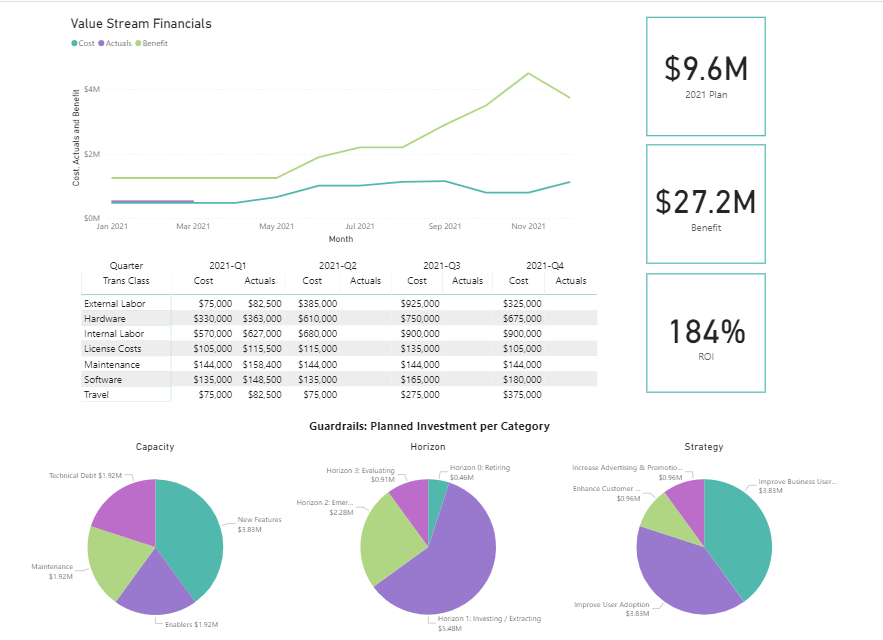
    Broadcom Inc. today added a dedicated value stream management (VSM) application to its portfolio of DevOps offerings as part of an effort to make it simpler to prioritize software development initiatives.

    Serge Lucio, vice president and general manager for the enterprise software division of Broadcom, said that while the company has previously provided VSM capabilities within its tools this addition to its ValueOps portfolio marks the first time Broadcom is making available a complete VSM application.

    The offering is unique because it combines the IT investment capabilities found in the Clarity project management software provided by Broadcom with the Rally platform for managing agile software development processes, added Lucio.

    In comparison, other VSM offerings don’t provide the same level of depth in terms of connecting software development projects to actual financial costs, noted Lucio. The Broadcom platform, for example, in addition to surfacing dependencies between software projects and potential developer capacity issues, also enables IT organizations to forecast the impact changes to funding will have on software development projects, said Lucio.

    In fact, Lucio noted that tracking code as it is developed is relatively easy. Surfacing the financial implications of software development projects requires an additional level of analytics not found in rival VSM offerings, he said.

    VSM, as a concept, traces its roots to lean manufacturing methods, which called for each step of a manufacturing process to be continuously measured. As software development has evolved from being a craft to a process that is automated as much as possible using DevOps best practices, an appreciation for the value of monitoring the impact of missed software development deadlines on the business is growing as organizations realize how dependent they now are on software to achieve business goals. A VSM platform aggregates technical metrics gathered from DevOps workflows and then maps them to key performance indicators (KPIs) defined by business leaders. Once those KPIs are defined it then become possible to apply advanced analytics to assess the financial impact changes to software development schedule will have on the business.

    In general, Lucio said organizations are evolving their approach to software development as they embrace digital business transformation. Rather than managing individual software development projects in isolation, organizations are now managing software development in much the same way they manage product development. As a result, a collection of related software development projects are now being managed in a way that better aligns to the strategic business initiatives, he said.

    It’s not clear at what rate organizations are adopting VSM platforms, but as the number of stakeholders in an organization that have a vested interest in software development increase there is a need for tools that enables those individuals to more easily track processes in a way that doesn’t depend on them mastering the project management application employed by the software development team.

    Regardless of approach, the appreciation of software development in organizations has never been greater. That same increased appreciation, naturally, is creating a level of anxiety among business leaders that need to make decisions that impact the entire organization based on processes that today they often have limited visibility into much less actual understanding.

  • Lightbend Launches Serverless Managed DevOps Service

    Lightbend Launches Serverless Managed DevOps Service

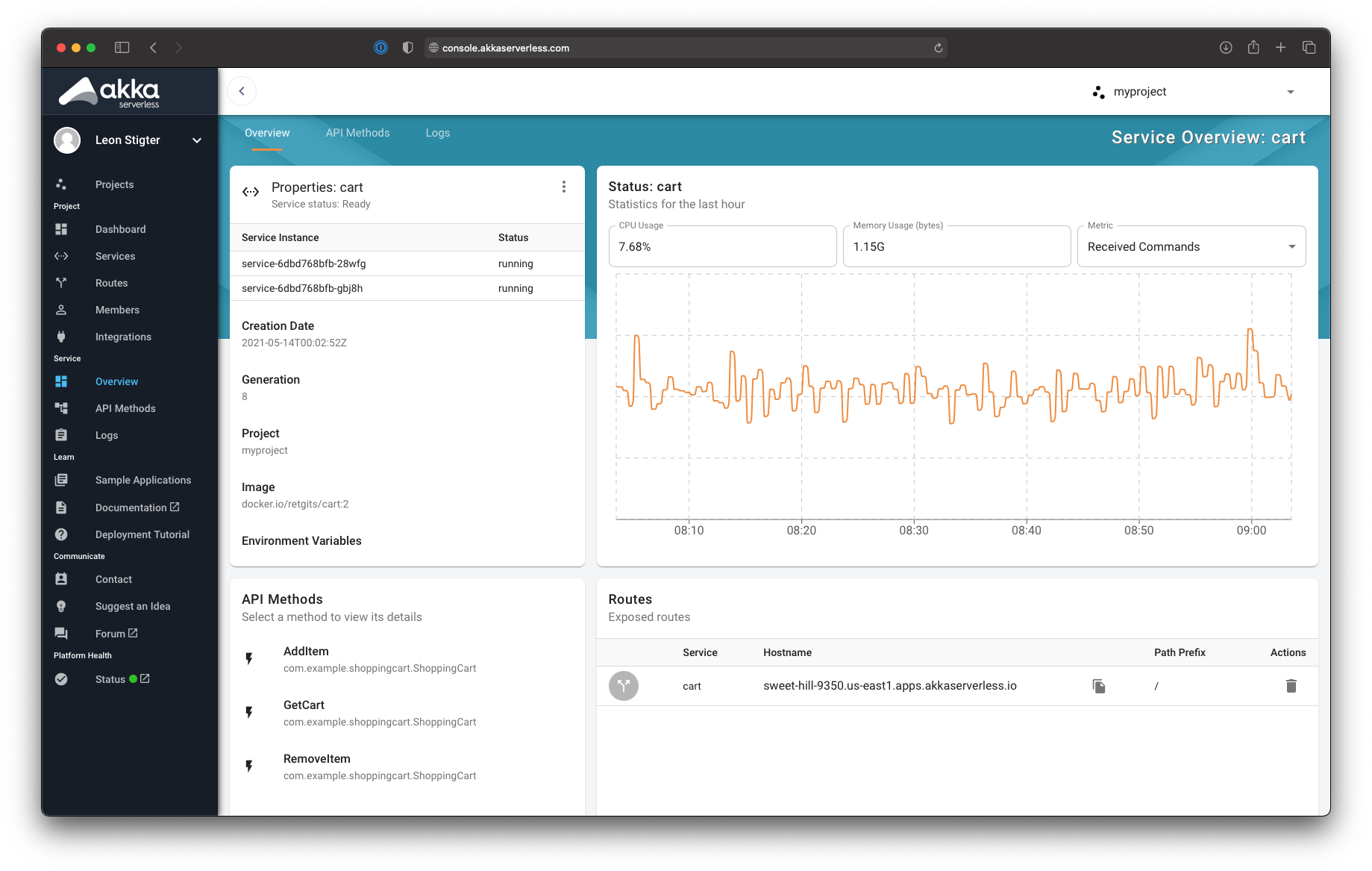
    Lightbend today unfurled a cloud service based on a serverless framework that provides developers with a managed DevOps platform to build applications that dynamically scale resources up and down as required.

    Brad Murdoch, executive vice president for strategy at Lightbend, said Akka Serverless provides access to its Java development platform environment that runs atop Kubernetes via a declarative application programming interface (API) based on the gRPC protocol. Support for additional open APIs, such as GraphQL, is planned, added Murdoch.

    At the same time, Lightbend revealed today that Jonas Bonér has assumed the role of CEO in place of Mark Brewer. Previously CTO and founder of the Akka Project, Bonér is a co-author of a reactive manifesto that defines the core principles required to build applications using a reactive programming model.

    Akka Serverless, available via an open beta program that provides access to limited amounts of storage, is scheduled to be generally available in the fourth quarter on the Google Cloud Platform (GCP), with support for additional cloud services planned.

    The service is made possible because Lightbend extended an existing open source Cloudstate serverless framework to create a platform-as-a-service (PaaS) environment to support large amounts of distributed stateful data that developers employ to build applications, noted Murdoch. That capability overcomes the performance limitations of existing function-as-a-service approaches, based on other serverless computing frameworks, that don’t support stateful application development, added Murdoch.

    In fact, one of the reasons that adoption of serverless frameworks has been limited thus far is the inability to be employed within the context of a stateful application that requires a lot of access to data, said Murdoch.

    Lightbend addressed that issue by enabling event sourced entities persist each change in state as an event that Akka Serverless writes to a journal. That journal can be used to replay events to reconstruct state at a particular time, debug or provide an audit. At runtime, a key distinguishes each entity instance from all others.

    Akka Serverless is the latest in a series of managed DevOps services that automatically scales as developers request new resources. There is no need for developers to configure and manage a database on which to build their application. Many organizations are migrating to these services because they would rather focus their time and effort on building applications versus managing a DevOps platform, said Murdoch.

    It’s not clear to what degree organizations will embrace managed DevOps services, which are starting to appear on various cloud platforms. However, the implication is that by choosing these types of services, organizations may not need to hire, for example, as many site reliability engineers (SREs). The challenge, however, going forward is that most of the managed DevOps platforms are currently tied to a specific cloud service at a time when most organizations are routinely using more than one cloud.

    Of course, developers will need to continue to manage continuous integration (CI) processes, but, in time, the continuous delivery side of the DevOps equation may be incorporated within a managed service. Regardless of the path forward, as DevOps processes continue to become more automated, the pace at which applications can be deployed is about to significantly accelerate.