Category: Continuous Delivery

Continuous delivery is a software engineering discipline that allows organizations to consistently develop and release quality software at a rapid pace. It is achieved by automating the software development lifecycle, enabling tasks such as development, testing and release to occur concurrently and continuously.

  • How ESM Enables Digital Transformation

    How ESM Enables Digital Transformation

    The pandemic has forced organizations of all sizes to overcome colossal challenges and embrace flux. We’ve all heard stories about businesses having to adopt a new communication tool and train staff overnight, but that’s just the tip of the iceberg.

    Many companies are in the middle of fundamental transformation, enabling enterprises to create more business value quickly. Still, digital shifts can also highlight stumbling blocks—such as inefficient management of people, tools and processes.

    As modern business needs grow increasingly complex and require teams to do more with less, C-suite executives have learned that real value lies in customizable systems built for scalability, automation and collaboration. In the same way, companies have embraced DevOps to break down silos between development and operations teams, modern businesses are adopting enterprise service management (ESM) principles to create shared responsibility and opportunity across departments.

    This approach has helped businesses view their digital transformation plans in a new light. Forward-thinking leaders are using ESM to enable a DevOps mindset, to centralize knowledge and ensure efficient digital service delivery within their organizations over the last twelve months.

    The Business Benefits of ESM

    ESM includes the tools and processes that enable an organization to manage the entire life cycle of IT (or other business units’) services. At an organizational level, it can be considered analogous to service-oriented architecture rather than an application architecture level.

    Within larger organizations, multiple teams are often doing similar things to support different parts of the business. Keeping track of requests, prioritizing them and ensuring the right resources are available can be challenging. With ESM, companies can consolidate their resources and provide a consistent way for the organization to consume them. Akin to microservices, employees can easily access shared company services through a uniform interface, streamlining resources management.

    The approach encourages enterprise leaders to see everything the company does as an integral service to the entire business. So, rather than an accounting team merely existing to process purchase orders and take care of payroll, it becomes a service provider. For example, they might create a portal that provides templated service requests for everyday tasks, such as raising a purchase order or understanding if a payment has been received, and a mechanism for capturing ad-hoc work that isn’t otherwise defined.

    The real benefit of this approach is work management. A ticket is raised, and the department dealing with it can have a rotation of people, with whoever is least busy picking up the service request, assessing and resolving it or assigning it to someone else. That’s one reason it’s hardly a surprise that 87% of companies surveyed in 2019 said that they had already incorporated ESM in some way.

    Practices, Not Processes, to Optimize Digitization

    However, with businesses forced to undergo historic digital transformations over the last year, ESM has become even more valuable for organizations. The pandemic has shifted work management to a 100% digital initiative as teams were distributed remotely. A well-executed ESM strategy has enabled enterprises to take their digital-first workflows to a higher level, driving more value from employees and enabling organizations to scale service delivery and create unrivaled customer experiences.

    ESM requires businesses to understand that there is no one-size-fits-all approach to service delivery and encourages them to replace their process-orientated mindset with an approach that focuses on value delivered through practices. These practices, which are built on user interaction and feedback, support agile organizations by helping them accelerate change and make services more available and reliable for customers.

    Furthermore, these practices put users’ pain points and needs front and center to ensure continuous improvement. Through frequent evaluation, enterprises can address the things that matter the most to staff and customers. While this might seem like a basic practice for any company’s digital transformation plans, the truth is in many cases, we’ve found the practice to be widely neglected. A recent report from Eagle Hill Consulting found that one-third of U.S. employees say their company’s technology either doesn’t help or makes it more challenging to serve internal and external customers.

    Digitization driven by these ESM principles can enable businesses to improve operational efficiency, reduce cost and risk, and plan strategically to support their evolving needs. All of these are, of course, what every organization had in mind as goals when the COVID-19 pandemic forced them to rethink how they do business.

    ESM Automation and Cross-Departmental Visibility

    At a high level, ESM sets out to bring all internal services into one place where every employee can easily find what they’re looking for in an instant. Accessing everything in one place also opens the door to leveraging automation. The option for automation means that some previously manual tasks – like providing access to systems – can be automated, speeding up wait times for staff or external customers and ensuring scarce resources, like your best people, are used more efficiently.

    Moreover, common, consistent and shared platforms for all with a single access method gives individual departments enhanced visibility and control throughout the entire organization. Historical silos hampered individual business units’ visibility and understanding of the functions their business provides or how they’re processed. A unified portal where all departments can access resources and receive requests, in the same way, solves that.

    Of course, this isn’t to take away from the inevitable learning curve that comes with digital transformations, especially at the size, scope and scale currently being undertaken. But the turnaround time from disconnected, slow, siloed teams to visible, open, speedy services far outweighs the effort required. In fact, recent research from Digital.ai uncovered just how badly visibility problems and poor internal alignment plagued businesses, with 56% admitting they’re worried that they’ll fail to achieve any return on investment from their stagnant digital transformation initiatives.

    On the other hand, industries like finance, which have upscaled self-service and automation significantly in recent years, have built entirely new business models with collaborative technologies, accelerated innovation cycles, and have learned to make better, faster decisions.

    These companies all embraced technology to empower their employees to help customers get the most from their service. In doing so, they are better able to deliver the best business value, which is core to a DevOps mindset and is achievable with successful ESM strategies.

  • Puppet Survey Suggests DevOps Adoption is Stagnant

    Puppet Survey Suggests DevOps Adoption is Stagnant

    Puppet today published an annual State of DevOps report that suggests overall adoption of DevOps practices has stagnated.

    The survey of 2,650 IT, development and information security professionals finds 83% are implementing DevOps practices, to a degree. However, only 18% of respondents are working for organizations that have highly evolved, automated DevOps processes in place. More than three-quarters of respondents (78%) are somewhere along the path toward achieving that goal.

    A full 90% of highly evolved DevOps teams have automated most repetitive tasks compared to only 67% of mid-level organizations, the survey found. In addition, 91% of highly evolved teams report a clear understanding of their responsibilities.

    Not surprisingly, the biggest hurdles identified are more cultural than technical. The most common culture blockers at mid-level organizations include a culture that discourages risk (21%), unclear responsibilities (20%), deprioritizing fast flow optimization (18%) and insufficient feedback loops (17%). In contrast, less than 2% of highly evolved organizations report resistance to DevOps from the executive level, the Puppet report found.

    Nigel Kersten, a field CTO at Puppet, said during an online panel that, after more than a decade of DevOps advocacy, people continue to be the biggest limiting factor when it comes to adoption. Specifically, from a compensation perspective, many IT operations personnel tend to feel undervalued compared to developers, noted Kersten.

    Another challenge enterprises encounter is trying to balance the need to create a standardized IT environment that can be managed and secured consistently and the desire of DevOps teams to embrace new tools as they see fit. Senior IT executives often tend to make platform decisions based on cost criteria that don’t always account for the need to enable agile development methodologies. Most of those platforms are designed to be managed by an IT administrator using a graphical tool rather than via a command line interface (CLI) and application programming interfaces (APIs) that appeal to DevOps teams.

    As a result, individual pockets of DevOps teams that select and maintain a platform of their choosing are emerging within enterprise IT organizations. Those teams often view their chosen platform as a better alternative for advancing developer productivity. Finding and retaining site reliability engineers (SREs), for example, to manage those DevOps platforms is a major challenge for most enterprise IT organizations. Most IT administrators lack the programming skills needed to become an SRE, and it’s not clear how many IT administers are inclined to acquire those skills.

    Conversely, it’s not clear how many programmers want to programmatically manage IT infrastructure at the expense of time they would otherwise devote to writing code. Organizations that can only hire a limited number of developers may not want to shift responsibility for managing IT operations to the proverbial left simply because they need more code to be written faster. Finding and retaining developers, in many cases, is just as much a challenge as hiring and retaining SREs.

    Advances in automation and artificial intelligence (AI) should make it easier for organizations to embrace DevOps best practices in the months and years ahead. However, it should be apparent to all that adoption of those best practices across an entire enterprise still requires a significant amount of time and effort, and will for many years to come.

  • Cycloid Brings Open DevOps Framework to the US and UK

    Cycloid Brings Open DevOps Framework to the US and UK

    Cycloid, a Paris, France-based provider of an open framework for implementing DevOps best practices, today announced it is expanding its operations into the U.S. and United Kingdom.

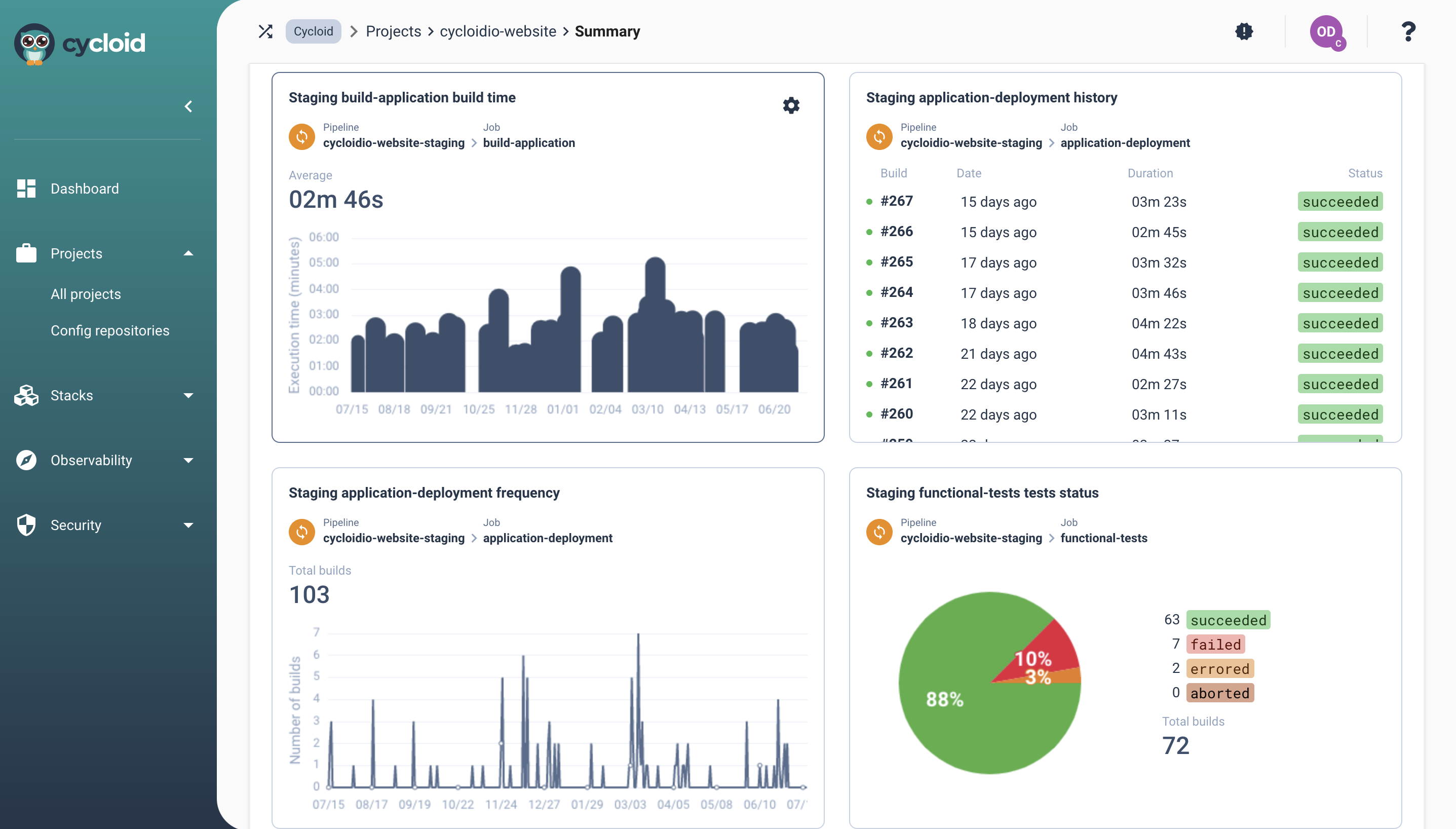
    Benjamin Brial, founder of Cycloid, said the Cycloid framework provides a lightweight approach to striking a balance between enabling developers to employ the tools they prefer and the need for centralized governance. The framework allows roles and policies to be pre-defined to ensure governance while service catalogs are used to deploy software using a set of drag-and-drop visual interfaces. There are also a set of management tools and features that provide additional visibility, automation, monitoring and financial controls to DevOps workflows.

    In effect, the portal that Cycloid provides to manage those workflows also serves to make DevOps more accessible to a wider range of IT professionals, added Brial.

    Cycloid

    Many organizations that embrace DevOps wind up building their own custom portal to achieve that same functionality. Rather than devoting resources to building and maintaining such a portal, Brial said Cycloid maintains and updates a portal platform that can be employed across any combination of tools that developers prefer. Other DevOps frameworks are often rejected because they require developers to adopt a specific set of tools, noted Brial. Without support from developers, it becomes nearly impossible to adopt DevOps best practices at scale, he added.

    After more than a decade of advocacy, adoption of DevOps within most organizations remains spotty. A significant factor in the lack of adoption is cultural issues involving skillsets. Many IT administrators lack the programming skills required to programmatically manage DevOps workflows. Cycloid is trying to establish a middle ground that enables IT operations teams to manage and govern DevOps workflows without having to acquire programming skills. The goal is to make it simpler for developers and IT operations teams to collaborate, said Brial.

    It’s not clear to what degree such an approach might increase adoption of DevOps best practices within enterprise IT organizations. However, it’s already apparent that the cost of hiring and retaining, for example, a small army of site reliability engineers (SREs) to manage IT environments at scale is often cost-prohibitive for many organizations.

    There’s no shortage of DevOps frameworks, but most organizations generally wind up crafting their own as part of an effort to tailor a DevOps workflow to meet their specific requirements. However, if there is a readily available framework that is highly customizable, Cycloid is betting more organizations would rather buy than build and maintain the entire framework themselves. Otherwise, DevOps teams would spend half their time performing the same repetitive manual tasks over and over, said Brial.

    One way or another, DevOps as a methodology for building and deploying applications needs to become more accessible. Proponents of DevOps have made a case for the methodology for the better part of a decade, with mixed success. The challenge continues to be finding a way to scale DevOps processes across the entire enterprise versus allowing each individual development team to define application development and deployment processes that, today, vary widely in terms of efficiency.

  • Why IT Should Focus on Quality Over Velocity

    Why IT Should Focus on Quality Over Velocity

    Quality assurance (QA) isn’t a new phrase for developers. Most know it as a staple part of the software process that is crucial for producing quality code. But throughout the pandemic, with extreme pressure for businesses to digitally transform quickly, it’s a discipline at risk of being dismissed by organizations and tech leaders as a last-minute, box-ticking exercise – but at what cost? Many have neglected QA in search of that quick app launch or new digital service, leading to an unwanted surprise or customer disappointment when the apps and features don’t work.

    We all know the old adage: ‘quality over quantity,’ but when considering software development, CIOs should have quality over velocity in mind. Although producing software at speed is clearly a necessity for business success–whether startups pivoting during a pandemic or enterprises keeping up with these nimbler competitors–QA must become more than a forgotten principle for internal IT teams. To achieve the necessary standards at the speed required, tech leadership must embed QA as a specified requirement of any software project, rather than an afterthought.

    Quality Assurance = Customer Satisfaction

    Quality assurance is about monitoring the software development process and method to ensure that the output adheres to the project requirements, as well as industry security and compliance standards. With QA at the core, businesses can gain a better understanding of the status of their product, which allows them to assess, improve and consistently enhance its output for better outcomes and know whether the output meets the business requirements.

    In order to draw out a strategy that ensures quality at each step, businesses need to understand their customers’ needs, user journey, expected target markets, and how they expect the software to perform. Without this, businesses will struggle to not only meet and ensure customer requirements but also business goals and expectations.

    Without QA, it is difficult for businesses to assess the functionality of the product or service and it becomes extremely difficult to track critical defects that become costly to address once found post-production. Poor QA can also lead to several other challenges, including delayed product releases, unhappy customers, reduced brand reputation and increased technical debt.

    Quality Shouldn’t be Assumed

    In its infancy, software development took on the best practices used in the hardware/manufacturing industry, which largely relies on assessing quality at the end of the product life cycle before release. As a result, much of the technology sector adopted outdated strategies which then became common practice. In fact, there are still hundreds of CIOs and CTOs I speak to that expect QA processes to be an add-on at the end of the software development process.

    Many technical leads believe it’s developers who drive quality in a software project throughout its life cycle. And this is true, to an extent – there are some fantastic, talented developers out there! But this perspective can teach bad habits and can mean QA is an expectation of individual developers rather than a specified requirement for the entire project.

    That’s because it’s easy to forget that developers aren’t quality engineers; those are, in fact, two entirely separate roles that should be working side-by-side throughout any digital project. A developer’s role involves writing and maintaining the source code, which usually includes implementing unit and integration testing to ensure that the code matches the requirements. However, they are not involved in performing functional and non-functional testing or reporting defects to the development team.

    It’s a People Problem

    Any business embarking on a digital project based on software needs both developers and QA testers—you can’t have one without the other. But tech leaders can struggle to hire both good developer talent and QA engineers—whether due to expense or lack of availability of skilled workers. Recruitment is a lengthy and costly process, especially when recruiting skills that are already in high demand.

    In light of this landscape and paired with the impacts of the COVID-19 pandemic, which has caused many businesses to slim down their in-house teams, IT departments are increasingly stretched. This means processes like QA, which many companies don’t view as a necessity or a priority, can be neglected. But putting quality assurance at the heart of the software life cycle can actually save time, helping to avoid clearing code with errors that will end up coming back to be updated.

    Ultimately, businesses don’t just need to build software, they need to improve it and make it work and evolve with its needs and goals. Quality assurance makes this possible.

  • NS1 Touts a Common Delivery Platform for Devs and Ops

    NS1 Touts a Common Delivery Platform for Devs and Ops

    NS1 has extended the capabilities of its DNS and network management platform with the release of NS1 Connect. The platform is designed to serve as a delivery platform that integrates developer and network operations teams’ tasks for the creation and management of applications across highly distributed cloud-native and on-premises environments.

    While DevOps teams typically rely on dozens of tools for the deployment of software and the management of the network connections on which the software runs, NS1 was created to—among other things—reduce the number of different tools DevOps teams require by improving visibility, automation and management for these processes.

    In this way, NS1 Connect provides a unified API framework to automate DNS, traffic optimization and network services management across heterogeneous networks, Sanjay Ramnath, vice president of products at NS1, told devopsy.kinsta.cloud. NS1 Connect’s reach covers internal and external applications deployed via on-premises, cloud or hybrid infrastructure. This enables NetOps and DevOps teams to integrate NS1 solutions into their infrastructure and CI/CD pipelines with lower complexity and enables NetOps teams to accelerate management and minimize the risk of misconfiguration, Ramnath said. “Prior to this, teams had to deal with complex manual processes or disparate API frameworks that slowed down their ability to develop, deploy and deliver applications.”

    In his talk, Your Business Depends on Eliminating Boundaries Between Applications, Users, Infrastructure, and Data during INS1GHTS 2021, NS1’s annual user conference, Ramnath described how a number of NS1 products and services are integrated into a single platform under the NS1 Connect umbrella. They include cloud-native network services for DNS, DHCP and IPAM (DDI), edge-to-cloud networking for NS1’s managed DNS, dedicated DNS, private DNS and DNS for China and application traffic automation for VPN traffic steering, pulsar active traffic steering and general traffic management. Other commonly used network services are provided as well, including IP address management that can be centralized across the network, said Ramnath.

    The idea was to remove many of the roadblocks DevOps teams face when seeking to deploy on highly distributed infrastructures. “The goal here is to remove some of those boundaries and barriers that are talked about on the infrastructure side,” says Ramnath. “[This helps to make sure] that our control plane is centrally provided and centrally consumable as a cloud solution and that our products can be deployed wherever they are needed in a zero-touch way, in a lightweight fashion, making sure that we are aligned with cloud-native operations.”

    The need to maintain low latency across distributed infrastructures is also key. As David Coffey explained during the conference in The Future of Application Traffic Intelligence and Automation session, low latency is essential for creating “that great experience for users.”

    “Low latency is not an attribute of this feature, it is a top, tier-one priority for people to accomplish, but it’s an incredibly complicated aspect, given all of the frameworks that are out there—the tools, the DevOps capabilities and the components required to support and deploy these modern-day applications,” said Coffey. “That’s what enables application companies to deliver that low latency and treat it as an attribute in the system; not having to go out of their way to create this. We want to enable all developers to embed this into their system—and we can provide them with a degree of success for delivering that great experience to their customers and to their networks.”

  • Aqua Security Acquires tfsec to Advance DevSecOps

    Aqua Security Acquires tfsec to Advance DevSecOps

    Aqua Security today announced it has acquired tfsec, an open source project that provides a static analysis scanner for infrastructure-as-code (IaC) that is designed to be integrated within a DevOps workflow.

    Amer Jerbi, Aqua Security CTO, said tfsec extends the security platform the company already provides in a way that advances adoption of DevSecOps best practices. In addition, to prevent developers from misconfiguring cloud infrastructure using tools such as Terraform, the scanner surfaces examples of code that provide developers with insights into how to properly configure infrastructure.

    Jerbi noted that tfsec is already integrated with Aqua Trivy, an open source tool that scans container images for vulnerabilities. Integrations with the rest of the Aqua Security portfolio will follow, added Jerbi.

    Tfsec co-founders Liam Galvin and Owen Rumney will join Aqua Security as cloud engineers. The challenge Aqua Security is trying to address is the need to enable organizations to proactively prevent cybersecurity issues from arising in production environments rather than only identifying vulnerabilities that need to be fixed, said Jerbi.

    Aqua Security tfsec

    The decision to acquire tfsec comes in the wake of a series of high-profile breaches when many organizations are scrambling to make sure software supply chains are secure. Cloud platforms are rife with misconfigurations mainly because developers often lack the expertise needed to ensure infrastructure is secure after they have provisioned it. Organizations are embracing DevSecOps best practices in the hopes of educating developers to assume more responsibility for application security. However, developers are not going to acquire that expertise overnight. The tfsec scanner provides a way to enforce security policies today while at the same time affording the time to teach developers how to avoid misconfigurations.

    It’s unclear how many cybersecurity events arise because of cloud misconfiguration issues. The cloud service providers have adopted a shared responsibility model that makes the organization employing the cloud responsible for both the applications deployed on those clouds and for how that infrastructure is provisioned. Many developers that provision cloud infrastructure themselves within the context of a DevOps workflow often assume the cloud service provider is doing more than it is to prevent misconfigurations. Cybercriminals, meanwhile, have become very adept at scanning for those misconfigurations.

    There are, of course, a lot of layers and nuances when it comes to DevSecOps. Arguably, Jerbi said, the most critical thing for most organizations is to simply get started. Tools that can be quickly and easily integrated within an existing DevOps workflow with minimal disruption are critical, Jerbi added.

    In the meantime, DevOps teams should expect cybersecurity teams to become more involved in their workflows, especially as government mandates aimed at securing software supply chains become stricter. Eventually, as organizations gain confidence in the ability of their DevOps teams to secure their application environments, those cybersecurity teams will refocus their efforts on hunting for threats. In the meantime, DevOps teams would be well-advised to make those cybersecurity professionals feel as welcome as possible, given the application security mandate most of them have been given.

  • 7 (More) Security Considerations for CI/CD

    7 (More) Security Considerations for CI/CD

    CI/CD orchestration has become increasingly popular in DevOps practices. It facilitates faster deployment of software and product delivery. Through the use of automation when building, testing and deploying applications, CI/CD bridges the gap between development, operation activities and teams. 

    However, there are many security considerations to keep in mind with frequent deployment. From quality automation to code history analysis, security must be baked into your CI/CD pipeline to ensure your product and processes remain safe from hackers.

    To gain insights on the top security considerations for CI/CD, I asked the speakers and sponsors for the upcoming SKILup Day as well as several DevOps Institute Ambassadors for their thoughts. In this two-part series, I will be sharing their insights. Did you miss part one? You can read it here. Here’s what they had to say in part two of this series:

    Speaker, Ravi Lachhman, Evangelist, Harness

    “CI/CD platforms are core to an organization’s engineering efficiency and typically have elevated privileges to sensitive environments such as production. Since CI/CD platforms typically will be deploying, this makes sense. Delving into the SolarWinds hack with binary artifact signing, etc., can separate security concerns into two parts. One concern would be the security around the actual CI/CD platform and one around the DevSecOps goals inside a CI/CD pipeline. With so many items shifting left, having proper role-based access control (RBAC) is crucial. With the separation of duties for regulated environments and the need for engineers to be efficient, controls that ensure only certain entities can deploy and certain entities can view pipelines is important. Around the DevSecOps movement, container/OSS scanning is still top of mind for many firms.”

    Sponsor, Basis Technologies, Eran Kriegshauser, Basis Technologies’ SAP DevOps Architect

    “The question you should be asking is ‘How do I maintain quality with the frequent deployment tempo demanded by business today?’ We need automation of quality and guaranteed rigor. For example, take promoting security configuration changes in systems, applications and products (SAP). Today, this is done by SAP transports where the change is created in an SAP development system, then imported into QA and, ultimately, into production. How do you ensure that a developer can’t give themselves extra security access through a role modification? Automated analysis and approval workflows must support segregation of duties requirements. Users can’t approve changes they create–the appropriate CI/CD process will not allow it.

    Another area is automatic peer review notification on changes to sensitive enterprise resource planning (ERP) objects. Once identified, the promotion of those object changes are halted until approved by a team lead or change and release manager.”

    Savinder Puri, DevOps Evangelist, Zensar Technologies

    “Infuse as many aspects of security as possible into your CI pipeline. CD is already too late for security—you’ve already deployed the application into an environment.

    Start from the basic static code analysis, security scanners, etc., and then keep maturing. Whatever tools you integrate into CI Server, ensure the corresponding integrated development environment (IDE) plugins are made available to developers. That way, devs can do the first-level validation within their IDE itself, and do it as they code, even before compiling. That’s the practical implementation of the often overused term ‘shift left.’”

    Vishnu Vasudevan, Head of Product Engineering and Development, Opsera

    “Now with cloud migration, emerging technologies and open source technology, companies will have to make sure they have the right tooling to measure and take action based on the security challenges born out of different development activities. 

    The focus will need to be on managing the risk that is tied to the business criticality. Each industry, domain, technology, etc., all have their own independent security goals, and you cannot have one security goal across the enterprise for different technologies and different domains. It is important to evaluate the technology being used and weigh the security requirements accordingly.”

    Stephen Walters, Sales Engineer, Everbridge

    “Inclusion! This is why the term DevSecOps came to be—because, erroneously, security was not included as part of a DevOps transformation, and the same is true for transformation of an SDLC to incorporate security.

    Security has still been treated as a non-functional requirement; an afterthought. If there is one thing we should learn, there is no such thing as a non-functional requirement. Security needs must be considered on an equal footing with all other requirements and built into the design, test, deployment and delivery of any feature.”

    Mark Peters, Technical Lead, Novetta

    “CI/CD pipelines should implement security at every step.  Tests can be automated in tooling to conduct tests of various functions at multiple levels for code accuracy, unit tests through fuzzing and integration or vulnerability testing. Most vulnerability testing in a pipeline is actually patch management, ensuring all commercial and proprietary holes are filled for release software. The first step should be using coding checks to make sure there are not any common problems with the code. While this may seem easy, if you are not managing that basic step, you cannot move ahead to the more complicated areas.”

    Pawel Piwosz, Lead Systems Engineer, EPAM Systems

    “At a high level, I would say that security is still outside the main scope of CI/CD. We should consider a few areas and different angles, here. Security should be not only implemented by CI/CD; CI/CD should be implemented in a secure way. Everything-as-code is a solution here: policy-as-code, security-as-code, drift-as-code, and if we talk about infrastructure, remediation-as-code.”

    If you’d like to learn more about the latest in CI/CD and similar topics, check out the upcoming SKILup Day schedule. Or, learn more about the benefits of becoming a DevOps Institute Member. 

  • Copado Acquires Qentinel to Gain AI Testing Tools

    Copado Acquires Qentinel to Gain AI Testing Tools

    Copado has acquired Qentinel as part of an effort to incorporate AI-infused application testing within a DevOps platform and build applications using low-code tools across multiple software-as-a-service (SaaS) platforms.

    The Copado continuous integration/continuous delivery (CI/CD) platform was originally created to accelerate the development of low-code applications on top of the Salesforce platform. Now, however, Copado is expanding the scope of its DevOps reach to include other SaaS platforms.

    Andrew Leigh, chief marketing officer for Copado, said as organizations increase the number of SaaS platforms they employ in the wake of the COVID-19 pandemic, it quickly became apparent there would soon be a need to build applications that enable organizations to unify business processes spanning multiple SaaS applications.

    As part of that effort, Copado’s acquisition of Qentinel aims to advance that goal by making it simpler for both developers and end users to participate in the application testing process, Leigh said.

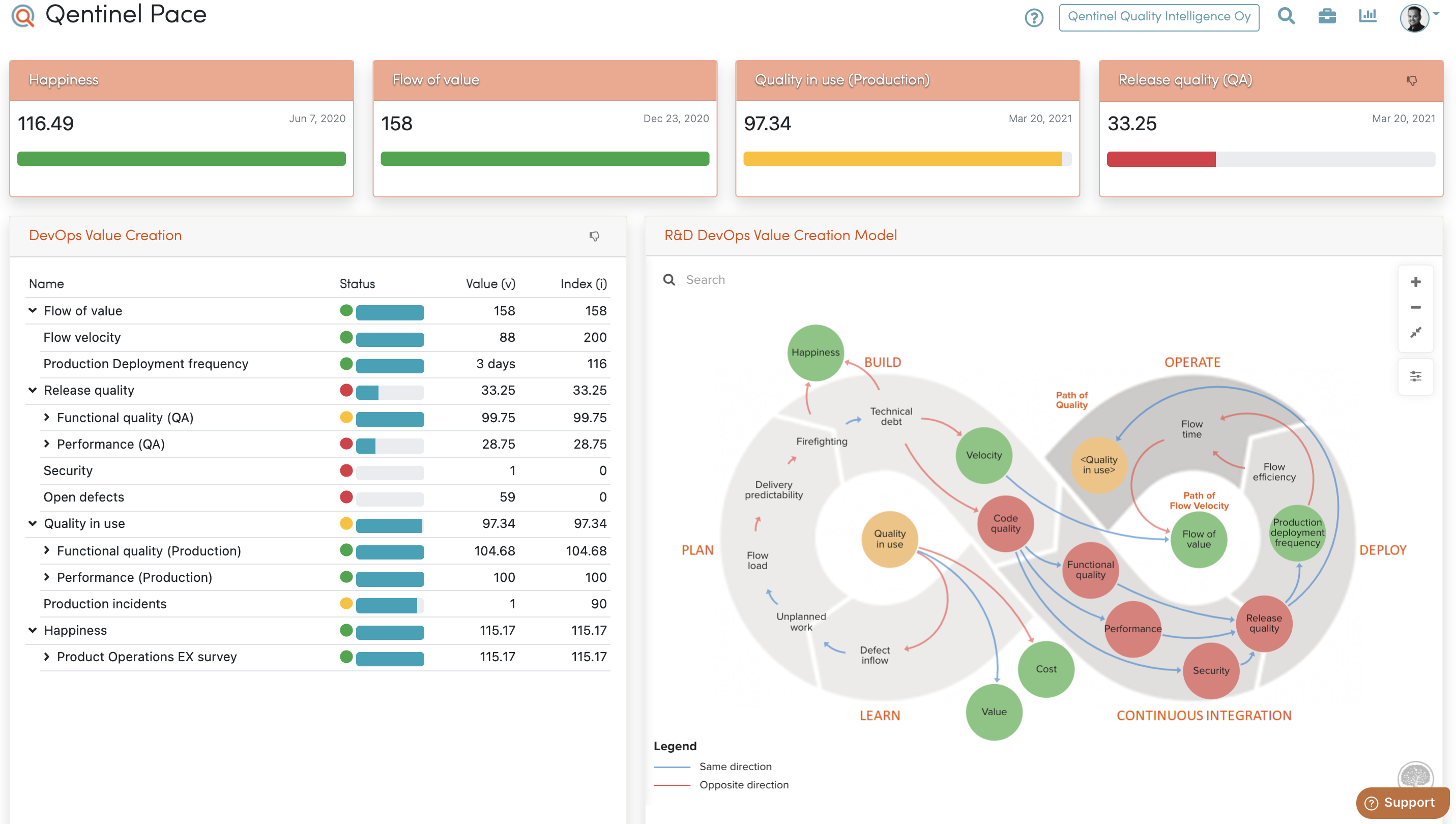
    Qentinel is accessed mainly via the cloud to automate the creation of application tests. Rechristened Copado Robotic Testing, the core of the Qentinel platform is based on the open source Robot Framework that understands scripts, executes them and generates logs and reports. A set of built-in libraries comes packaged with Robot Framework and addresses a wide range of testing scenarios. Qentinel customers include Brunswick, Elisa and Konecranes.

    Copado AI testing

    Gartner is forecasting that, by 2024, 75% of large enterprises will be using AI-enabled test automation tools to advance continuous testing across different stages of the DevOps life cycle. Much of the interest in AI-infused application testing tools is being driven by necessity as the pace of low-code application development exceeds the pace at which manual testing processes can work. As application testing becomes a bottleneck, organizations will naturally look toward automation platforms that employ machine learning algorithms capable of testing applications at scale.

    It’s not clear to what degree those platforms might eliminate the need for humans to test applications. The expectation is humans will be able to test application functionality at a deeper level versus, for example, merely checking to see if compliance mandates have been met. Many smaller organizations building low-code applications don’t have any meaningful application testing capabilities at all. Testing platforms infused with AI will prove to be especially crucial for citizen developers that require guidance to build a secure application that can actually scale, noted Leigh. The more SaaS application environments those applications span, the more critical testing becomes, added Leigh.

    One way or another AI is coming to application testing. After all, machine learning algorithms don’t ever need to take a day off or suddenly leave to take a better offer elsewhere. In fact, soon, most organizations soon won’t even consider a test automation platform that doesn’t have AI capabilities as they attempt to reduce the level of manual, monotonous and repetitive testing tasks. It may take a while for everyone to gain confidence in the algorithms, but it’s now more a question of the degree to which AI will be employed rather than if.

  • 8 Security Considerations for CI/CD

    8 Security Considerations for CI/CD

    In the software development enterprise, CI/CD refers to the combined practices of continuous integration and either continuous delivery or continuous deployment. CI/CD enables organizations to bridge the gap between development, operation activities and teams by the use of automation when building, testing and deploying applications. 

    How do you maintain quality and security with frequent deployments? While CI/CD can improve the efficiency of an organization, there are many security considerations to take into account.

    To gain insights on the top security considerations for CI/CD, I asked the speakers and sponsors for the upcoming SKILup Day as well as several DevOps Institute Ambassadors for their thoughts. Here’s what they had to say in part one of this two-part series:

    Speaker, Grant Fritchey, Product Advocate, Redgate Software

    “There are a lot of security considerations when it comes to CI/CD. As a person focused on data and data management, I’m going to say that the top security consideration is ensuring that you have compliant data for your non-production environments. Just the sheer number of people who will have access to the information means that you have a huge number of possible vectors for a breach if you’re exposing protected information.”

    Speaker, Anders Wallgren, VP of Technology Strategy, CloudBees

    “Secure your software delivery pipelines themselves, not just the software that you deliver with those pipelines. Everyone should have only the level of access they require in order to perform their role.

    Maintain a Software Bill of Materials (SBOM) so you know what you have in production. When a new vulnerability is disclosed, you will have a much easier time deciding whether and how to mitigate it if you don’t have to chase down what you have in production. Your orchestration software should do the lion’s share of the work here.”

    Tracy Ragan, CEO and co-founder, DeployHub

    “CI/CD tools are driven mainly by one-off scripts. There is absolutely nothing secure about one-off scripts. From build through deploy, we need to start thinking of implementing automation and policy-driven tools and dump the one-off scripts.”

    Tiffany Jachja, Technical Evangelist, Harness

    “Supply chain management is a major security consideration for CI/CD. If an entity gains access to a CI/CD resource or component that they shouldn’t, this can lead to vulnerabilities, downtime or even malicious code. For example, in the SolarWinds hack of 2020, attackers legitimized their software malware by injecting it into the SolarWinds build process. This build pipeline produced trusted software artifacts and obtained digital certifications before being released to over 18,000 customers worldwide. After the hack, SolarWinds took action, further restricting access to its build environment and reviewing its build process, but not before it was too late. It’s not only about automating developer and operations workflows but also how we treat and handle CI/CD pipelines.”

    Jamal Walsh, Technical Product Owner, The Very Group

    “You must make sure you implement security tooling within your pipeline; it’s not enough to just use CI/CD to build and deploy applications. Steps in your pipeline should include security testing tools like SAST, DAST, dependency checks, etc.”

    Martin Chan, System Analyst, Global Executive Consultants Ltd. 

    “The most important thing is to define the access control list and rules to control the access in the CI/CD pipeline so that the audit log can easily trace issues. Also, the system should require authentication and define password policies for all users.”

    Bryan Finster, Software Engineer, DoD Platform One

    “Security must be automated as part of the pipeline. Just like any other quality gate, the pipeline must be the single source of truth for security. Any manual process after code is committed increases the effort to deliver. Increased effort increases the size of each change. Larger changes are harder to check for quality and fail more spectacularly. Manual security is just security theater and is easily bypassed or forgotten. That effort is better spent improving the ability of the pipeline to use security as-a-service.”

    Dheeraj Nayal, Global Community Ambassador, DevOps Institute

    “Follow the three security best practices for CI/CD. We usually divide security practices into three parts that you can address with different kinds of solutions. These are:

    1. Secure pipeline configuration
    2. Code and Git history analysis
    3. Security policy enforcement

    All three aspects are equally important.”

    If you’d like to learn more about the latest in CI/CD and similar topics, check out the upcoming SKILup Day schedule. Or, learn more about the benefits of becoming a DevOps Institute Member. 


  • Big Gains Are Made In The ‘Last Mile’ of DevOps

    Big Gains Are Made In The ‘Last Mile’ of DevOps

    A new study by mabl found a correlation between complete, fully automated test coverage and a significant increase in customer happiness and DevOps maturity. In contrast, those with moderate DevOps maturity and nearly automated testing coverage tend to experience a sharp decline in end-user satisfaction.

    Mabl recently released its 2021 State of Testing in DevOps Report, a study that highlights the state of DevOps adoption and quality testing throughout the software industry. According to Dan Belcher, co-founder, mabl, the study results clearly show that true business returns are made in the last mile of DevOps adoption.

    I recently met with Belcher to hear his viewpoint on the major takeaways. Below, we’ll explore these and other insights from the 2021 State of Testing in DevOps Report.

    State of DevOps Maturity

    Nearly one in four teams have a mostly mature DevOps methodology and automated process. Still, a significant portion, 52%, are still aspiring or striving to fully embrace a mature DevOps model. A small percentage, 11%, have a fully automated DevOps software development pipeline in place. The bulk of teams are still using manual deployment processes and disparate frameworks, limiting the potential for full automation.

    Interestingly, non-technical barriers remain the most common inhibitor to realizing a completely automated development pipeline, found the report. Out of these obstacles, reluctance to change was the most common barrier, cited by 29% of respondents. Other challenges to DevOps adoption include budgetary constraints, DevOps not being a company priority and internal politics.

    When added up, non-technical roadblocks account for 82% of the problems that hinder complete DevOps adoption. On the one hand, this depicts the cultural challenges associated with introducing DevOps in an organization. On the other, it could signify the wealth of DevOps packages and open source tooling available to manage areas like automated deployment and version control. The report found GitHub, Jenkins, Gitlab, Azure Pipelines and BitBucket among the five most commonly used DevOps Tools.

    Although it’s growing rapidly, continuous delivery is still an emerging trend; almost half of developers still deploy code less than once a month. Only 15% of teams are deploying code daily or multiple times per day. This echoes findings from CDF’s State of Continuous Delivery Report, which pegged this figure at 11%.

    Fully Automated Testing

    Testing is a critical component of the software life cycle. With the need to ensure functional applications and high-grade security, automated testing is helping teams discover more errors earlier in the development process. According to the report, the most popular test types include UI or functional tests, unit tests, regression tests, integration tests and end-to-end tests. Non-performance tests and visual testing ranked lower. Naturally, the teams that have implemented fully automated pipelines are automating more types of these tests.

    In general, it appears test automation aligns with DevOps maturity. The report found that those with fully automated testing experienced significant net customer experience gains. For example, 72% of teams that were automating regression testing indicated their customer happiness is pretty good or amazing, whereas this figure sank to 6% at companies not automating regression testing. And 80% of teams with high test coverage report high customer happiness, whereas only 30% of teams with low test coverage report high customer happiness. Nonetheless, much has yet to be fully automated—similar to the state of continuous deployment, the bulk of teams rely on a combination of automatic and manual testing approaches.

    In terms of tooling preferences, Selenium ranked as the most popular option for functional testing, with 41% of developers using it. The report also found migration toward Cypress, Smartbear and other functional testing tools. Interestingly, the report also uncovered a noticeable lack of adoption when it came to automated API testing—only about one out of three are automating their API tests. Postman, SoapUI, internal tools and ReadyAPI are among the most popular tools for running manual API tests.

    As I’ve covered before, APIs are surging in use across digital transformation initiatives. Web APIs are an increasingly common mechanism for delivering data to partners and consuming third-party software-as-a-service (SaaS). Full API testing coverage will be essential to audit the entire end-to-end digital experience. Low-code API testing is one way to reduce barriers to auditing the highly technical area of integration.

    Key Takeaways

    DevOps success is a ‘last mile’ problem. There is much variance in DevOps maturity and testing coverage. It’s pretty flat until you reach that last point, when breakthrough results occur. “Success in DevOps is a ‘last mile’ problem,” said Belcher. “The difference between 90% and 100% of the way there is dramatic.”

    Quality really matters. Though much tech discussion focuses on increasing delivery speed, code quality is just as important. “This isn’t about speed at all costs, it’s about innovation with velocity and quality,” said Belcher. “Quality engineers are just about as key to success as developers writing code.”

    DevOps success is less about technology and more about people. As the report found, the majority of the roadblocks to DevOps maturity are non-technical. “The things holding us back, as an industry, are more about leadership and figuring out our processing than introducing more technology,” said Belcher.

    Breaking down role silos is still fundamental to DevOps. Some see DevOps as instrumental to opening collaboration between roles. Simultaneously, there is the idea that new tooling dashboards will arm individual developers with complete ownership to develop, test and deploy software (known as full cycle development).

    Belcher believes that the full cycle momentum has been misinterpreted to mean developers alone have full accountability. Instead, he frames developers as a pitcher on a baseball team; leading the game, but utterly incapable without the rest of the team. Similarly, disparate roles should be working together, said Belcher. Reaching that ‘last mile’ of DevOps is not only about CI/CD or full cycle development; it’s about working together as a group.

    I’ve only scratched the surface of many findings from The State of Testing in DevOps. The report queried 600 quality engineers and software development professionals and offers loads of additional insights on the state of DevOps, testing, CI/CD and more. You can view the full results here.