Tag: devops

  • DBmaestro Releases TeamWork Version 5.1 with Increased Automation Capabilities  


    New version widens database release automation to provide significantly higher interoperability 

    Houston, Texas – June 13, 2016 – DBmaestro (www.DBmaestro.com), the pioneer and leading provider of DevOps for Database solutions, announced the release of TeamWork Version 5.1, which improves its industry leading database release automation interoperability to support seamless integration with all sources of database changes, while predicting the success of database deployments and alerting for configuration drift. Additionally, Version 5.1 includes dozens of security upgrades and improvements to integrations with solutions such as Jira, Jenkins and CA Release Automation.

    DBmaestro’s DevOps for Database solution offers a comprehensive approach to the database development life cycle, providing enterprises the ability to deliver changes faster. DBmaestro has been at the forefront of Continuous Delivery for the Database, with a solution that provides complete database source control, governance, and compliance, and ultimately reduces application downtime caused by database-related human errors by 80%, while speeding up the time to market of database driven business applications tenfold.

    DBmaestro V5.1 enhanced interoperability empowers customers to turn any existing change process into a stable, predictable and reliable release automation process. Any update package or database update script can be managed by DBmaestro’s release automation solution, and leverage its risk evading smart validators and drift detectors before and after deployments. TeamWork provides support for smart deployments between different environments, labels and user stories, as well as support for rollbacks in case of need.

    “With the increased need to improve time to market, budget tightening and tolerances for database downtime approaching zero, companies of all shapes and sizes are ready to make a change when it comes to implementing continuous delivery for the database,” said Yaniv Yehuda, DBmaestro’s co-founder and CTO. “With our new upgrade, DBmaestro is allowing customers to substantially improve the performance, scalability, reliability and cost-efficiency of their DevOps for database solution.”

    Right now, you can join a free demo of DBmaestro TeamWork’s Version 5.1 with the first-of-its-kind pipeline builder. Click here to sign up for a demo. 

    About DBmaestro

    DBmaestro is a pioneer and leading DevOps for database solution provider. Its flagship product, DBmaestro TeamWork, enables agile development, Continuous Integration and Delivery for the Database.

    TeamWork supports streamlining of development process management and enforcing change policy practices. The solution empowers Agile team collaboration while fostering regulatory compliance and governance. With DBmaestro, organizations can facilitate DevOps for database by executing deployment automation, enhancing and reinforcing security as well as mitigating risk.

    DBmaestro’s solutions are deployed at many major international companies, including Barclays, Visa, Isracard (MasterCard), Frost Bank, Thomson Holidays, and Bank Leumi.

  • SecureWorks Counter Threat Platform Brings New Security Layer to Customer Workloads on AWS with Expanded Monitoring Capabilities

    Organizations can add security bolstered by threat intelligence as they pursue the potential of cloud computing and hybrid IT.

    Atlanta, June 13, 2016 – SecureWorks Corp. (NASDAQ: SCWX) is expanding the capabilities of its vendor-agnostic, data analytics engine — the Counter Threat Platform (CTP) TM — to now provide security monitoring of client applications and data being hosted on Amazon Web Services (AWS). The solutions are designed to enhance the security of an organization’s applications and data being hosted on AWS.

    For 17 years, SecureWorks has helped protect on-premises environments across the globe. Now, SecureWorks is leveraging its up-to-the-minute threat intelligence, the expertise of its Counter Threat Unit TM research team, and the native logging features of AWS to extend its portfolio of security solutions to the cloud.  The first of its offerings, which are purpose-built for AWS, include:

    • Monitored AWS EC2 server instances
    • Monitored Firewall and Web Application Firewall on AWS (support for multiple industry-leading firewall and web application firewall technologies)
    • iSensor Intrusion Prevention System TM on AWS

    SecureWorks’ iSensor Intrusion Prevention System on AWS can inspect both outbound and inbound traffic to an organization’s cloud environment and block new and emerging threats.

    SecureWorks also takes advantage of AWS-specific data sources and collects logs and telemetry from the technologies running in AWS, including when they spin up and down. SecureWorks supports multiple sources of log data, including logs from Amazon CloudWatch and CloudTrail.

    These new offerings, combined with the company’s award-winning on-premises security solutions  and Emergency Cyber Incident Response service on AWS, offer a comprehensive answer for security considerations for both on-premises environments and in the cloud, allowing  organizations to pursue hybrid environments. Organizations benefit from a comprehensive view into the security of their data and applications regardless of where they reside.

    “Organizations need to understand they have to play an active role in securing their cloud assets too,” said Frost & Sullivan Research Director Frank Dickson. “Moving to the cloud is not a binary decision; it is not all or nothing. Every enterprise will have some portion of its enterprise resources on-premises and some portion in the cloud, a hybrid reality that needs to be proactively addressed.  Security providers like SecureWorks who bring a mix of threat intelligence and security expertise to customers that is applied across on-premises, cloud and hybrid environments provide critical value to customers as they further embrace the opportunities enabled by the cloud.”

    As organizations continue to pursue hybrid environments with data and applications both on premises and in the cloud, the new solutions will allow the SecureWorks CTP to deliver security from the data center to the cloud.  The CTP aggregates over 180 billion events a day from SecureWorks’ clients and blocks those determined to be cyberattacks. With the CTP, SecureWorks can deliver countermeasures and generate valuable intelligence, as well as context about the intentions of the attackers, that can then be applied to secure cloud environments.

    “As the leader in New Zealand, Australia and the UK in cloud accounting software for small businesses, we take security seriously,” said Aaron McKeown, Lead Security Architect at Xero. “The protection of sensitive financial data of our 700,000 global subscribers is our most important priority. Working closely with SecureWorks technology provides us with the advanced threat intelligence and integrated visibility we need for seamless security and scale on Amazon Web Services.”

    “We hear every day that security is top of mind as organizations migrate to the cloud,” said Matt Eberhart, executive director of global product management at SecureWorks. “Our new solutions enable our clients to confidently embrace the cloud by extending security visibility and protections alongside cloud workloads and the traditional datacenter environments we have been protecting for 17 years. Our Counter Threat Platform will seamlessly extend your security program into the cloud with visibility across your traditional security controls, enabling your business to feel confident about your cloud security position as well as your cloud security posture.”

    The Monitored AWS EC2 server instances, Monitored Firewall and Monitored WAF solutions are available globally except in Japan. The Managed iSensor service is expected to be available in the fall of 2016. Language support is in English at this time.

    “SecureWorks is a partner we trust to keep our cloud infrastructure secure as we evolve and expand our banking customer base and ensure valuable financial data is protected,” Greg Judy, senior vice president and information technology officer at Colony Bank.

    About SecureWorks

    SecureWorks is a leading global provider of intelligence-driven information security solutions exclusively focused on protecting our clients from cyberattacks. Our solutions enable organizations to fortify their cyber defenses to prevent security breaches, detect malicious activity in real time, prioritize and respond rapidly to security breaches and predict emerging threats. As of April 29, 2016, SecureWorks served over 4,300 clients across 59 countries. For more information, individuals can also visit www.secureworks.com.

    ###

    Media contacts:

    Brian Prince

    SecureWorks

    bprince@secureworks.com; 201-406-2657

    www.secureworks.com

    or

    Elizabeth W. Clarke

    Director of Media Relations

    eclarke@secureworks.com; 404-486-4492

  • IT REVOLUTION TO OFFER PREVIEW COPIES OF SOON-TO-BE-RELEASED ‘DEVOPS HANDBOOK’ TO ATTENDEES AT DEVOPS ENTERPRISE SUMMIT LONDON 2016

    Gene Kim to Host DevOps ‘Luminaries Night’ Reception During Conference

    PORTLAND, Ore., June 9, 2016 – IT Revolution (http://itrevolution.com), the industry leader for advancing DevOps, today announced it will be offering the first look of its soon-to-be-released “DevOps Handbook” as a special bonus to all attendees at DevOps Enterprise Summit London 2016 (http://events.itrevolution.com/eu/). As the premier industry conference for leaders of large, complex organizations implementing DevOps in the UK and Continental Europe, DevOps Enterprise Summit (DOES16) London is expected to sell out and is scheduled for June 30-July 1 at the Hilton London Metropole. Tickets for the conference are going quickly, but are still available at: (http://bit.ly/doesldnreg).

    Following in the footsteps of the popular book, “The Phoenix Project,” this fall, Gene Kim, Jez Humble, Patrick Debois and John Willis will release “The DevOps Handbook: How to Create World-class Agility, Reliability, and Security in Technology Organizations.” The book is designed to be a prescriptive guide, describing the technical practices, cultural norms and architecture required to replicate the amazing transformation that Bill Palmer and team performed at Parts Unlimited in “The Phoenix Project.” Co-authors Gene Kim, Patrick Debois and John Willis will be in attendance at the conference, and IT Revolution will host a signing in its booth at the event.

    “We are excited to offer the first look of the upcoming “DevOps Handbook” for the attendees of DOES16 London,” said Kim. “Registrants of the conference will be the first to own a preview copy before its official release later this fall. It promises to reinforce all the great real-world examples of DevOps in action that registrants will see during our upcoming two-day Summit.”

    In addition, on Thursday, June 30, IT Revolution will host a “Luminaries Night” during the conference’s evening reception. “We’re assembling some of the people that the industry admires most who have helped shape the DevOps movement since the very beginning,” Kim said. In addition to the outstanding conference speakers, Dominica DeGrandis, Patrick Debois, Damon Edwards, Simon Morris, Dan North, James Smith, Steven Thair, John Willis and more will be available to meet and speak with attendees. The event will take place in the Monarch Suite of the Hilton London Metropole Hotel from 5 to 7 p.m. BST.

    IT Revolution also is hosting a chance to win a one-hour “Ask Me Anything” session with Gene Kim during DOES16 London. Attendees can spend the hour asking any questions they wish, such as, “Where did the stories from The Phoenix Project come from?” or “If there was one thing you could change about DevOps, what would it be and why?”

    IT Revolution and Premier Sponsor HPE Software are excited to present the inaugural DOES16 London event, a conference for the leaders of large, complex organizations implementing DevOps principles and practices. The goal is to give leaders the tools and practices they need to develop and deploy software faster and to win in the marketplace. The full program is available online and can be found here: (http://bit.ly/doesldnagenda).

    Join the #DOES16 Conversation

    Interested in joining DevOps Enterprise speakers for an online social media chat? DOES16 organizers will be hosting a CrowdChat on Thursday, June 9 at 11am EDT / 4pm BST. To join the conversation, please visit: (https://www.crowdchat.net/chat/c3BvdF9vYmpfMjE0Nw).

    For more information about DOES16 London, please visit: (http://events.itrevolution.com/eu/).

    Share This: Only 3 Weeks Away from #DOES16 London! Register now to get a preview copy of #DevOps Handbook: http://bit.ly/doesldnreg @DOESsummitEU #IT 

    About IT Revolution

    IT Revolution assembles technology leaders and practitioners through publishing, events, and research. Our goal is to elevate the state of technology work, quantify the economic and human costs associated with suboptimal IT performance, and to improve the lives of one million IT professionals by 2017.

    #

    Contact:

    Jeremy Douglas

    Catapult PR-IR

    303-581-7760, ext. 16

    jdouglas@catapultpr-ir.com

  • What Happens to Test in a DevOps World?

    What Happens to Test in a DevOps World?

    I am always surprised by the urban legends around DevOps. One of my favorites is, If you implement a DevOps methodology, you can stop doing test. People famously quote that Netflix only tests in production as evidence of this. This is perhaps more like of game of Telephone, where much of the story gets lost in translation. It is true that Netflix created a tool called “Chaos Monkey” which generates failures in production as a way to test the fault tolerance of its software in large-scale production use.  However, this is not Netflix’s only test; it is an additional type of testing at scale that allows the company to test in new and different ways. Netflix still tests in software development.

    Okay, now that we are past the notion that DevOps is about eliminating testing, let’s look at what really happens with test in the DevOps world. In fact, the goal is for testing to happen everywhere and all the time. Let’s look at the two directions test can shift: left or right.

    Shift Left

    DevOps methodology encourages automation of activities across the entire development process. This can be realized by automating the link between development and test. Often implemented with an automated build tool such as Jenkins, a set of automated tests are triggered whenever a developer completes a build of new code. Of course, this means that both development and testing processes must be automated. Once you reach this goal, then testing can happen all the time. Every time developers want to check in new code, they can trigger a small set of “smoke tests.” If those succeed, they can check in code and when the build happens, they can trigger a larger set of regression tests. The result is a left shift of testing into development.

    Benefits of left-shifting test include:

    • Move testers into scrum teams to work on stories together with developers.
    • Design tests in parallel with development.
    • Give developers and testers the flexibility to help each other to reduce bottlenecks.
    • Early detection of bugs, shortening the critical metric for time between creating a bug and fixing it.
    • Increased transparency of code dependency issues because they are raised during the nightly (or more often) regression testing.
    • Virtual elimination of the test bottleneck that occurs after development is completed.

    Shift Right

    The urban legend about Netflix may be wrong, but that doesn’t mean that there isn’t merit to right-shifting test into production. Automated testing in production is effective for tests that would be impossible to perform outside of production, including scale testing and resiliency testing. Production is also a great place to introduce A/B testing by offering different interfaces to some customers and measuring the differences in business results.

    Benefits of testing in production include:

    • Better understanding of the real production environment and workloads.
    • Early feedback from customers on new features and user experience.
    • Better resiliency.
    • Overall better user experience for customers.

    No Shift

    Wait, if we shift left and shift right, is there any testing left to be performed in test? There are still a range of tests that need to be performed by the test team. With full automation, these tests can be performed at a variety of times and don’t need to be a bottleneck to release.  These tests include:

    • Performance testing
    • End-to-end use-case testing
    • Security testing (don’t think about doing this in production!)
    • Manual testing – often for user interface or mobile testing that is most difficult to automate

    DevOps methodology is not promoting the end of testing, but in fact a widening of testing to encompass all of the steps in the DevOps cycle. You know what they say: Test early and often! And next time you are sitting around the campfire discussing urban legends, let’s leave Netflix out.

    About the Author/Joan Wrabetz

    Joan's image croppedJoan Wrabetz is the CTO for QualiSystems. Most recently, she was the VP and CTO for the Emerging Product Division of EMC. Joan received her MBA at the University of California, Berkley, and MSEE at Stanford, and a BSEE at Yale. She has held teaching positions at the University of St. Thomas, St. Mary’s University and the University of St. Thomas, St. Mary’s University. Joan holds patents in load balancing, distributed systems, and machine learning classification and analytics. Her experience inclues: founder and CEO of Aumni Data, CEO of Tricord Systems, Vice President and General Manager for SAN operations at StorageTek, Founder and CEO of Aggregate Computing, Management and senior technical positions at Control Data Corporation and SRI International, Partner with BlueStream Ventures.

  • Where’s the Heat? Talking DevOps, Use Cases and More

    Where’s the Heat? Talking DevOps, Use Cases and More

    Transitioning your organization from a traditional IT infrastructure into the world of DevOps is certainly a journey. Sometimes a long one, with many obstacles, but undoubtedly a voyage with a worthwhile prize at the end. Many organizations just embarking on their DevOps journey find themselves wondering, what use cases should they attack first? And who is driving these initiatives?

    Recently, Amy DeMartine, senior analyst at research leader Forrester, and Wesley Pullen, general manager and vice president of Deployment Solutions at Electric Cloud, participated in a discussion to answer these questions and discuss how to orchestrate the DevOps tool chain, how to approach application release automation, and how DevOps fits in the greater scheme of compliance and auditability. For folks just beginning their DevOps journey—and IT pros who have been walking the walk for years—there were some great takeaways from their discussion.

    DeMartine started off the discussion with something so basic that many folks often forget to consider it before starting their journey. But it is one of the most fundamental and important steps before beginning to explore DevOps; that is, answering the question, “What is DevOps?”

    Here’s a great definition used by Forrester:

    DevOps provides a set of practices and cultural changes—supported by complementary tools—that automates the software delivery pipeline, enabling organizations to win, serve, and retain consumers better and faster than ever before.

    Part of this is the idea of taking the huge monolithic releases of the past and breaking them up into smaller and smaller pieces—at least on the agile development side of things. Then infrastructure and operations folks get involved and complete the continuous delivery life cycle by automating builds and testing and making sure releases are consistent and fast. Finally, there is collaboration among development, operations and security to make the product even more successful than before—and in all of this, you are creating feedback loops and building quality as well as consistency.

    So now that you’ve got an established idea of the fundamentals of DevOps, let’s dive right into use cases. One of the most often-cited use cases is the idea of governance. People venturing into DevOps love the idea of moving faster and delivering more quickly than ever before, but find themselves asking, “How do you do that safely?”

    It’s helpful to look at this using the visual of an upside-down triangle, with governance at the top. It applies to all companies and gives them the ability to control their releases all the way from development to production. Part of the benefit of using DevOps is that all of these tools you are using are creating log files, which essentially are breadcrumbs that give you an easy way to follow an audit trail. If you’re using a standard technology stack across a single application and apply it to multiple applications throughout your organization, you have the ability to look at governance across all of these various applications through the same lens.

    On the next level of the triangle is compliance, which, depending on your industry, can mean a variety of things, but they are usually predefined and concrete. Finally, the bottom of the triangle is the audit aspect, which is where the best practices of DevOps become the most important.

    DevOps Drivers

    Ultimately, there are three different drivers of use cases that we see in DevOps, each with unique needs and perspectives. The first of these drivers are folks involved with infrastructure and operations. We often see projects and initiatives coming down from CEOs, CIOs and other senior executives in which the operations staff is driving the initiative and ultimately is responsible, so the initiative gets the budget. This is very hot in financial services.

    Another driver are members of IT ops, DevOps and enterprise architects. These members often are focused on cross-team, cross-project initiatives. These are the senior architects, developers and operations staff that all are working together on a single solution. They already have the tools in place, but want to drive and orchestrate an end-to-end solution. Whether they are doing a build or need to make a quick change to provision a server, their goal is to consolidate and have a seamless pipeline.

    Finally, the development-driven initiatives are coming from senior architects, development leads and QA who are pushing all kinds of different automation aspects, including continuous integration, continuous testing and continuous delivery.

    Diving deeper into these heat zones and specific drivers, it’s helpful to look at what these groups are really focusing on. The top automation initiatives within the subgroups of infrastructure and operations folks start with the need to do deployments faster. They need to drive deployment automation faster. They also are interested in release management, or coordination across a release stream for different teams. When an organization has a series of activities across multiple teams, there is a distinct need to release everything at once to make sure it works. This group also is focusing on compliance and audit—particularly in highly regulated industries such as health care, financial services and insurance—and is always driving initiatives in which it’s trying to build out auditing packages.

    In cross-team-driven initiatives, members include IT ops, DevOps and enterprise architects who are focused on cross-teams, and the cross-project initiatives primarily focus on end-to-end orchestration. They also are concerned with cloud resource management. When teams are paying for tools, they want to make sure they are maximizing their value and getting the most use possible out of those resources. That can mean scaling up or down in strategic ways to get the biggest “bang for their buck.”  Finally, this group also focuses on configuration management orchestration.

    Lastly, developer team-driven initiatives are focused not only on items such as continuous delivery, continuous integration and continuous testing, but also on container orchestration. As there is a greater awareness of potential security holes in Docker, it is necessary to place an increased emphasis on container orchestration, particularly with more and more individuals moving to containers. There also is an increased focus on QA lab provisioning. With the incredible growth in the realms of the Internet of Things (IoT) and embedded, these areas are correspondingly heating up for developer team-driven initiatives. One example put forth in the discussion between DeMartine and Pullen was a recent issue around one of the most well-known IoT devices on the planet—the Nest smart thermostat. In January, Nest went down, leaving many people without heat. This is a great example of why development teams want to focus on IoT use cases: DevOps enables rapid fixes for the massive demands of the IoT world.

    Ultimately, you can see from these use cases and initiative drivers that DevOps offers an incredibly dynamic opportunity, ideal for meeting the needs and perspectives of organizations from top to bottom—and the incredible growth of DevOps, as the organizational structure for IT organizations across multiple industries proves that out. In fact, DeMartine and Pullen polled the audience during their discussion and found that 61 percent of attendees planned to adopt DevOps practices in the next 12 months, while 83 percent of attendees planned to adopt deployment automation/ARA in the next 12 months.

    If you aren’t already considering DevOps for your organization, whether you are and CEO or a developer on the front line, it is worth investigating to see how it can answer your most pressing challenges and use cases.

    The full conversation between Amy and Wesley is available here.

    About the Author / Sam Fell

    sam-fellSam Fell is the Head of Marketing at Electric Cloud, responsible for driving awareness and demand for our DevOps Release Automation and Acceleration solutions. For 20 years, Sam has helped companies achieve success by marketing, selling, and implementing DevOps Release Automation, IT Change Management and Application Performance Management solutions. Prior to joining Electric Cloud, Sam held leadership roles at BMC, CA, Marimba and Nimsoft.

    Sam holds a Bachelor of Arts degree from Illinois Wesleyan University.

  • CrowdStrike Integrates Falcon Platform with Orchestration and Automation Partners


    Combined Endpoint Visibility and Automatic Breach Investigation Workflow Will Allow Customers to Orchestrate Response with Greater Speed and Accuracy

    Irvine, CA – June 7, 2016 – CrowdStrike Inc., a leader in cloud-delivered next-generation endpoint protection, threat intelligence and response services, today announced a new initiative to integrate  CrowdStrike Falcon™ Platform with orchestration and automation solutions which allow enterprise customers to manage and automate the entire incident response lifecycle. The combined offering from CrowdStrike and its partners will allow customers to operate their security efforts in a more efficient and effective manner responding to security threats faster and with greater accuracy.

    The CrowdStrike Orchestration and Automation initiative builds on CrowdStrike’s recently established Elevate Partner Program, along with the introduction of new and updated APIs via CrowdStrike Falcon Connect, making it easier for partners to seamlessly integrate their solutions with CrowdStrike’s Falcon Platform. This results in advanced capabilities that leverage all of the existing assets within a customer’s environment.

    The joint solution allows customers to: 

    • Automate breach investigation workflows with enhanced endpoint visibility –  Security administrators can quickly leverage the power of Falcon Host with historical and real-time queries into endpoint activity, as well as investigating any and all threats leveraging the rich data from Falcon Intelligence. This combination provides customers with smarter and deeper visibility when investigating potential breaches.
    • Orchestrate rapid threat response – Customers can respond to breaches in an automated fashion with improved accuracy and speed. Leveraging Falcon Connect, customers can contain endpoints to only the resources necessary to remediate and protect them from further damage. Falcon Intelligence gives greater visibility throughout the entire incident response lifecycle.
    • Continually reveals new threats utilizing CrowdStrike threat data – Enhances customer threat detection capabilities. CrowdStrike’s Falcon Host endpoint integration allows customers to unfold potential threats more quickly and accurately by leveraging information from the CrowdStrike Threat Graph™  database. Enriching that information with CrowdStrike’s Falcon Intelligence threat feed data enables a level of protection previously not achievable.

    “CrowdStrike’s partners share the same goal as we do, which is to stop breaches,” said Upesh Patel, vice president, Business and Corporate Development for CrowdStrike. “This new initiative helps our shared customers manage the entire security lifecycle more efficiently and effectively in the midst of a cyber attack.”

    CP Morey, vice president of Products, Phantom:

    “The speed and sophistication of today’s threats demand more automated security functions to help contain and remediate breaches,” said CP Morey, vice president of Products at Phantom.  “By integrating CrowdStrike’s unique cloud-delivered model with Phantom’s security automation and orchestration platform, customers can now achieve what used to take minutes or even hours, and instead, accomplish the same tasks in a matter of seconds.”

    Cody Cornell, Co-Founder of Swimlane

    “Security teams need better visibility into their overall security posture,” said Cody Cornell, co-founder of Swimlane. “Integrating with a leader in endpoint protection gives security teams a single response platform with complete visibility into their endpoints, allowing them to respond to incidents and threats more rapidly and targeted.”

    The CrowdStrike Orchestration and Automation ecosystem includes partnerships with Demisto, Hexadite, Phantom, SwimLane and Syncurity.

    About CrowdStrike

    CrowdStrike is the leader in next-generation endpoint protection, threat intelligence and response services. CrowdStrike’s core technology, the CrowdStrike Falcon™ platform, stops breaches by preventing and responding to all types of attacks – both malware and malware-free.  CrowdStrike has revolutionized endpoint protection by combining three crucial elements: next-generation antivirus, endpoint detection and response (EDR), and a 24/7 managed hunting service — all powered by intelligence and uniquely delivered via the cloud in a single integrated solution. CrowdStrike Falcon™ uses the patent-pending CrowdStrike Threat Graph™ to analyze and correlate billions of events in real time, providing complete protection and five-second visibility across all endpoints. Many of the world’s largest organizations already put their trust in CrowdStrike, including three of the 10 largest global companies by revenue, five of the 10 largest financial institutions, three of the top 10 health care providers, and three of the top 10 energy companies. CrowdStrike Falcon is currently deployed in more than 170 countries.

    We Stop Breaches.  Learn more: www.crowdstrike.com

    Follow us: Blog | Twitter

    Media Contact

    Cris Paden

    CrowdStrike Inc.

    408.656.5282

    cris.paden@crowdstrike.com


    ###


  • How DevOps is Killing QA

    How DevOps is Killing QA

    If you work in software quality assurance (QA), it’s time to find a new job.

    The overall software development process has always consisted of the following core activities:

    • Creating a requirements analysis;
    • Producing a specification of the software artifact;
    • Constructing the software;
    • Investigating the quality of the product or service;
    • Finding and fixing defects; then
    • Deploying to production.

    In most organizations, this process generally has occurred within one or more methodologies such as waterfall or agile. In waterfall, the testing process occurs relatively late. The software is produced, bugs are found by the QA team and then the software is fixed. These last two practices repeat in a cycle until management is comfortable that it can be released to the public.

    In agile, individuals and teams—including QA—work closely together to release and then update software on an ongoing basis rather than deploy an entire platform all together and all at once. DevOps, as we have written in our “What is DevOps?” guide, is the next generation of agile development. Agile is a way of thinking in software development; DevOps goes one step further and is a concrete cultural change that implements the philosophy within an organization.

    And that implementation eliminates the need for QA as a separate entity in the organization and disperses the responsibility for quality across different teams, even though many have argued that the discipline is still needed in one form or another.

    Past Interpretations of QA in DevOps

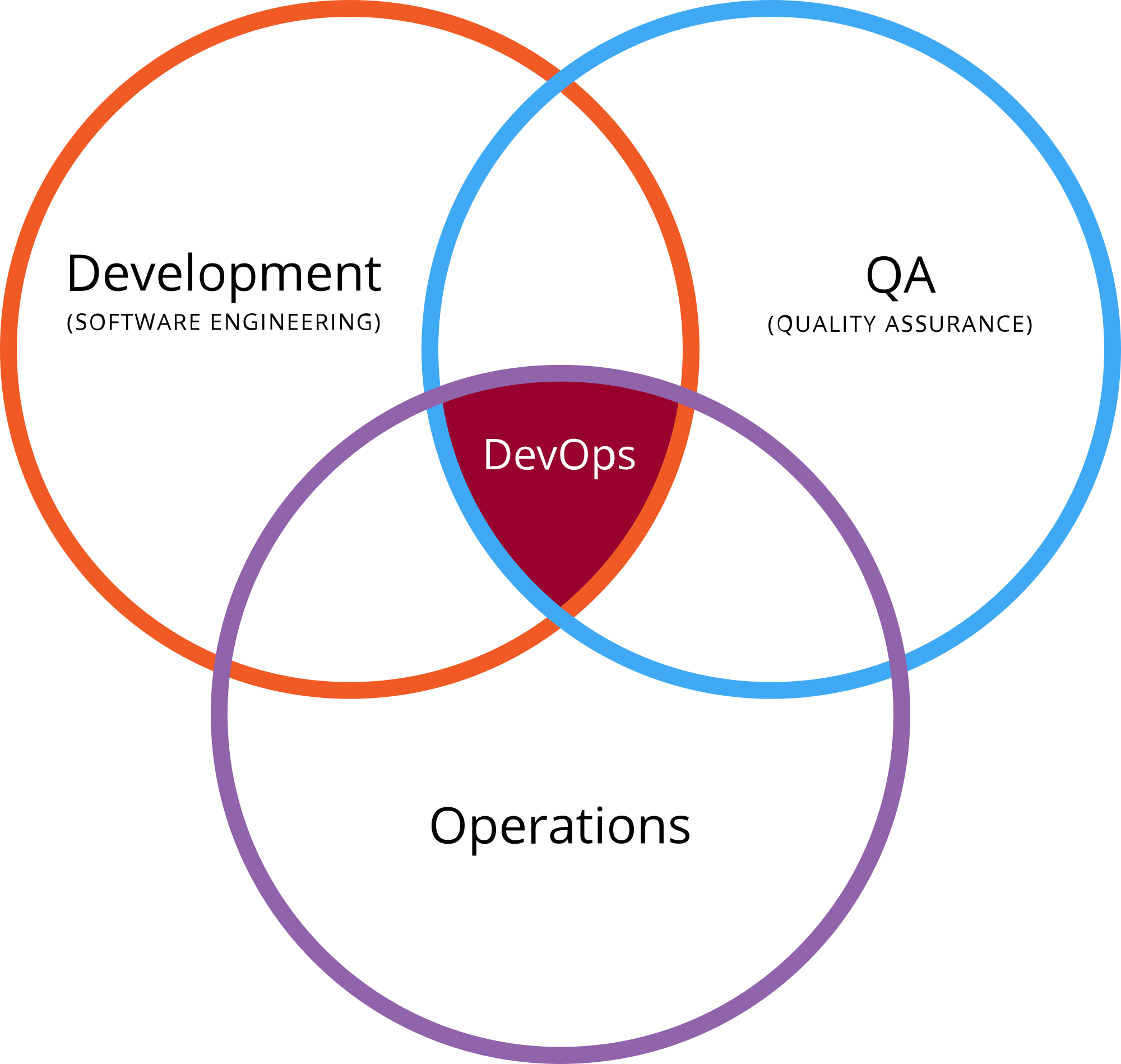
    devops qaOne common argument is that DevOps sits at the center of a Venn diagram of dev, ops, and QA:
    On one side, QA works together with development in trying to push more of their tests into the continuous integration system. Tests must have zero human intervention and generate their own test data.

    On the other side, QA works with operations to collaborate on monitoring tools; perhaps to continuously run smoke tests in production. Chances are that operations is developing scripts for backup and restore of production systems, rollback of deploy, or scripts for disaster recovery.

    Tim Hinds at NeoTYS looks at the issue differently and says that “DevOps QA” is meant to prevent defects rather than find them:

    QA takes a critical role in this organizational structure because they have the visibility and the directive to push code out when it is working, and roll it back when it is not. This is a very different mindset from QA organizations of 10 years ago, whose primary responsibilities involved finding bugs. Today QA groups are charged with preventing defects from reaching the public site.

    With all due respect, both are wrong.

    Why DevOps Does Not Need QA

    DevOps often uses continuous integration (CI) and continuous delivery (CD). In CI, developers use various continuous integration tools to integrate code into a shared repository multiple times each day, and DevOps relies on automation to determine the quality of the version. You cannot have any human interaction if you want to run CD, which ensures that any version of a batch of code in the repository can be released at any given time.

    Essentially, the traditional QA cannot work in a full CI/CD environment. In older structures, the responsibility for software quality was in the hands of QA. Today, it’s part of the DevOps culture and methodology—the developers now own the responsibility rather than a separate entity within the organization.

    Specifically, DevOps entails the use of vendors and tools such as BUGtrack, JIRA and GitHub to aggregate and report software bugs and defects. Test automation tools including Selenium, Cucumber, JUnit, TestNG and JMeter manage, execute and measure functional tests and cycles.

    In the end, if there is a layer of people in the middle between development and operations, then you cannot perform CI and CD seamlessly and, therefore, cannot do DevOps. To run a proper DevOps operation, you cannot have QA at all.

    The Future of QA

    So, what will happen to all of the people who work in QA? One of the happiest jobs in the United States might not be happy for long as more and more organizations move to DevOps and they become more and more redundant.

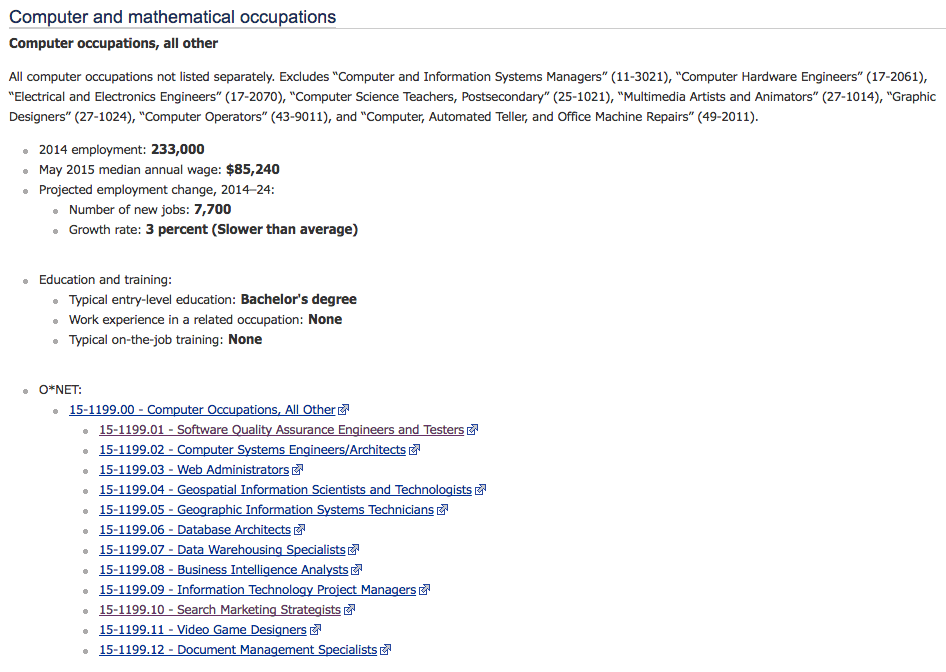
    According to the U.S. Bureau of Labor Statistics (BLS), software quality engineering is one of the high-tech professions whose growth rate is projected to be slower than average:

    qa job outlook

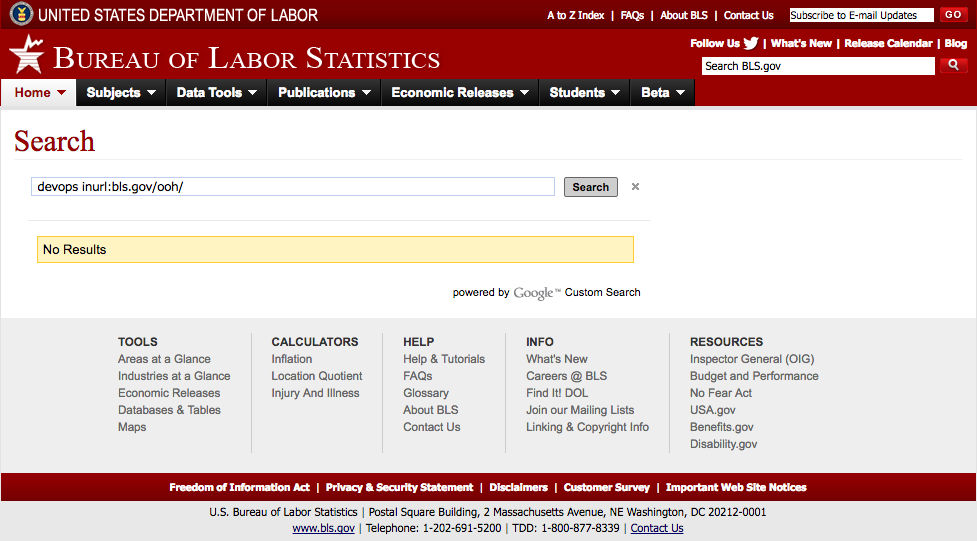
    However, the BLS numbers are likely too generous because the bureau does not yet recognize “DevOps” as a separate profession at all:

    image02

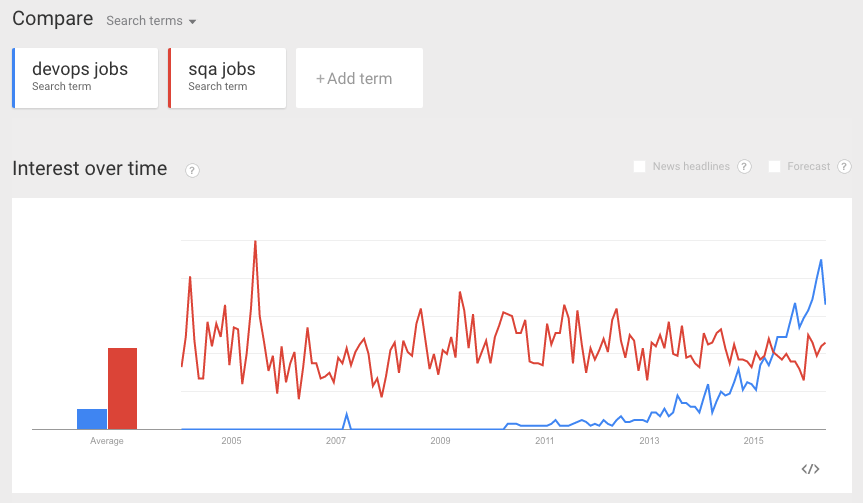
    As evidence, just look at how the relative number of Google searches in Google Trends for “sqa jobs” is slowly declining while the number for “devops jobs” is rapidly increasing:

    qa jobs vs devops jobs

    For QA, the trend definitely does not look good.

  • Q&A: CircleCI’s Kevin Bell on Continuous Delivery

    Q&A: CircleCI’s Kevin Bell on Continuous Delivery

    There’s been a lot of talk and momentum lately when it comes to continuous delivery. And it seems every enterprise has moved part, or all, of its development efforts to continuous delivery—or is at least talking about doing so. But there are many challenges such as security, dealing with legacy systems and internal politics associated with the move. With that in mind, we wanted to get a sense of where continuous delivery stands in the market today. And for that we turned to Kevin Bell of continuous integration and delivery platform maker CircleCI.

    Kevin Bell has been a both developer and product manager of cloud-based software products, and is currently developer evangelist at CircleCI, where he gets to play with almost every deployment-related technology out there, hack a little Clojure and absorb the wisdom of very smart colleagues and customers. We thought it’d be a good idea to get his perspective on continuous delivery in the marketplace.

    Kevin Bell Headshot

    devopsy.kinsta.cloud: I wanted to get a sense from you where your customers are in the range of continuous integration and continuous delivery? What are you observing in the market?

    Bell: I would say continuous integration is a hard prerequisite to continuous delivery. You need to have continuous integration first, and once you have that down, you can expand from that into continuous delivery. Maybe there are people that automate deployments with a minimum of testing in the middle, but you really want to have continuous integration set up.

    Generally, I would say of our customers, on the order of half of the active customers, are deep into continuous delivery. There are certainly people that just use us to test and then do something else to deploy, and then there are those who aggressively, many times a day, deploy to production directly from CircleCI in a totally automated fashion. So we definitely have both extremes and then people that are experimenting in the middle on trying to figure out how to make that jump.

    devopsy.kinsta.cloud: Have you seen many of these changes in the past year? And are many of the changes to continuous integration and deployment happening outside of Internet and SaaS (software-as-a-service) companies?

    Bell: Lots of companies want to do it. So one change I’ve seen in the past year is that, not necessarily a change in the market, but a change in CircleCI’s world is that we have rolled out an enterprise version, which basically means a version of CircleCI that you can deploy behind your firewall. We are seeing a lot of interest in this among bigger companies. And we’re talking to a lot of different types of companies that are not SaaS companies, but are just any kind of company from apparel to finance institutions—just all manner of companies that take their internal software development practice very seriously, and very much want to do continuous delivery and have a modern software delivery methodology.

    It’s kind of just becoming table stakes that you’re going to follow these kinds of practices today, even if you’re not a SaaS startup. It’s not just about software deployment, either. It’s also necessary to attract talent.

    devopsy.kinsta.cloud: I would imagine, because we’re starting to see pilots and success stories, enterprises are seeing that it’s not just speed when it comes to feature release, but once the continuous delivery pipeline is up and running, it’s a more effective way to create and maintain software.

    Bell: That’s definitely a big part of the promise of continuous delivery, and I think it delivers. Pardon the pun. It does let you get software features out faster. If you do end up releasing a bug, it lets you fix it faster. But I think some of the most emotional stories of success that I hear from people talking about the dark old days when they deployed at once every two weeks, or once every month, is just how risky that felt. And when they clicked the big deployment button in those days, how much was at stake and how many things could go wrong because it was such a big blob of software being deployed all at once. A big part of the idea of continuous delivery is that you don’t do those big bang software deployments. You’re always just putting out a little bit at a time, and keep everything in an equilibrium throughout the process.

    devopsy.kinsta.cloud: These enterprises that you were talking to, what are some of the challenges or hurdles they have moving from legacy development to continuous deployment? What are the barriers they need to overcome to get to where they want to be?

    Bell: There’s certainly various barriers, and it depends on the organization. Some organizations have a momentum built around a certain process. Maybe there’s political issues in an organization, maybe they have a new CIO that wants to change how they do things, but they have a lot of legacy software and processes that still operate in the old-mold paradigm that they need to update. So there are a lot of systematic challenges organizations run into. But there are definitely technical challenges, too. And I think just broadly to compare, for example, continuous integration and continuous delivery, I would say that continuous integration has been around longer now and has kind of matured a bit.

    And a lot of the challenges have been uncovered within continuous integration when it relates to complicated and offbeat projects, whether that’s using things like mobile emulators like you can use on CircleCI to do iOS testing, or mobile device clouds, or browser testing, or all these things to kind of fill in the gaps, and test suites for big complicated software has sort of been explored and addressed to a large extent. But in continuous delivery there remain complicated, nontrivial systems that they’re deploying, not just little apps that go to Heroku or something. There’s this whole world of different policies and structures of software and systems that need to be continuously delivered. I think the industry and toolset makers are still exploring how to provide that.

    devopsy.kinsta.cloud: Earlier you mentioned that if an organization wants to attract talent, they need to have these modern development processes in place. So I would imagine developers don’t want to get bogged down, in their view, in old methodologies and want to get aligned with companies that have these more modern practices as part of their career development?

    Bell: That’s come up often at big companies. I would say that category of Fortune 500 companies, and not just software companies, they need to assure potential hires that they have modern software practices, and that even though they’re not a software company per se, that they value developers, and that they’re going to be a good place to work.

  • SmartBear Presents on DevOps Testing at Better Software West

    SOMERVILLE, Mass.–(Business Wire)–Nikhil Kaul, Product Marketing Manager, Testing Products at SmartBear Software, the leader in software quality tools for the connected world, is presenting, “Where’s Test in DevOps?” at Better Software West, taking place on Sunday, June 5 – Friday, June 10, 2016 in Las Vegas. SmartBear is also exhibiting its industry leading test automation solutions and dev collaboration tools including, TestComplete, TestLeft, LoadComplete and Collaborator in booth #13.

    WHAT

    &WHEN:

    SmartBear at Better Software West:

    • “Where’s Test in DevOps?” Presented by Nikhil Kaul on Thursday, June 9, 2016, 3:00 p.m. PDT

    • SmartBear’s Automated Test Solutions and Dev Collaboration Tools Exhibited in Booth #13 on Wednesday, June 8 – Thursday, June 9, 2016

    WHERE:

    Caesars Palace, 3570 Las Vegas Blvd., Las Vegas, Nevada

    As organizations try to meet faster delivery schedules and improve collaboration between development and operations, DevOps has become a hot topic. And with Apple, Google and Microsoft making it easier for Dev and Ops to build and deploy cross-platform apps, there is more to test in less time. The question then arises, where does testing fit in such a DevOps strategy? Nikhil Kaul gives an overview of recent trends in DevOps, specifically changes that have taken place in the testing industry over the past year. He explores why testing is becoming more important than ever and how testing can facilitate the transformation to DevOps. Finally, Nikhil touches upon ways to build a scalable testing framework and important reusability practices that can be applied—from development and test to operations—to reduce post-deployment debugging time.

    Prior to SmartBear, Nikhil served Digité, a leading provider of Application Lifecycle Management solutions, in various roles including Senior Software Executive. There, he gained insights into software development and testing market. Nikhil received a master’s degree in business administration from Georgetown University. He is very involved in discussions taking place in development and testing communities. His most recent thoughts can be found in Forbes and CIO.com. Follow him on Twitter @kaulnikhil or read his blog.

    SmartBear has a suite of testing automation tools, including automated testing platform,TestComplete, LoadComplete, the industry leading performance and load testing tool for Web and mobile assets, its newest developer focused test automation tool, TestLeft and test management tool, QAComplete. For more information, visit:https://smartbear.com/products/testing/.

    Collaborator is the only tool available that allows teams to peer review code, user stories and test plans in a transparent, collaborative framework – instantly keeping the entire team up to speed on changes made to the code. For more information, including a free trial of Collaborator, visit: http://smartbear.com/product/collaborator/overview/. On Twitter, follow @CollaboratorSB.

    The Better Software West Conference keeps industry professionals current on the entire development lifecycle. SmartBear is a Silver Sponsor of the event. For more information, visit: https://bscwest.techwell.com/.

    About SmartBear Software

    As the leader in software quality tools for the connected world, SmartBear supports more than four million software professionals and over 25,000 organizations in 194 countries that use its products to build and deliver the world’s greatest applications. With today’s applications deploying on mobile, Web, desktop, Internet of Things (IoT) or even embedded computing platforms, the connected nature of these applications through public and private APIs presents a unique set of challenges for developers, testers and operations teams. SmartBear’s software quality tools assist with code review, functional and load testing, API readiness as well as performance monitoring of these modern applications. For more information, visit: http://smartbear.com, or for the SmartBear community, go to: Facebook, Twitter, LinkedIn or Google+.

    All trademarks recognized.

    BroadPR
    Tracy Wemett, +1-617-868-5031
    tracy@broadpr.com

  • Sonatype Strengthens Continuous Delivery with New Atlassian Integrations

    FULTON, Md.–(Business Wire)–Sonatype, the leader in software supply chain automation, today announced new integrations with Atlassian’s product portfolio to better support Continuous Delivery and DevOps practices. Following up on its previous integrations with Atlassian’s Bamboo and HipChat products, Sonatype is announcing four Nexus integrations with Atlassian products:

    Sonatype Nexus Lifecycle, Firewall, and Auditor Integration with JIRA Software

    High velocity DevOps and Continuous Delivery practices depend on automated policies to identify the best open source and proprietary components to use in software builds. Sonatype Nexus solutions enable teams to monitor applications at every stage of the software development lifecycle so they can reduce application defects and security vulnerabilities. By integrating Nexus Lifecycle, Nexus Firewall, and Nexus Auditor with Atlassian’s JIRA Software, enterprise development organizations can now automatically initiate JIRA tickets from the Nexus products to initiate defect alerts, track remediation efforts, and reduce mean time to repair.

    Sonatype Nexus Repository Integration with Bitbucket Pipelines

    The release of Atlassian Bitbucket Pipelines, and its integration with Sonatype’s OSSRH— a cloud-based service powered by Nexus Repository Pro — enables development teams to fully automate continuous builds. The integrated solutions offer end-to-end visibility from coding new components to publishing them for global consumption. This new integration leverages Sonatype’s Nexus Repository Pro to provide a repository hosting service for open source project binaries. Development teams can use Nexus Repository Pro running OSSRH to deploy development version binaries (snapshots), stage and promote release binaries, and sync them to the Central Repository.

    “Sonatype and Atlassian have been working together and using each other’s tools for years. All four Nexus integrations were built for developers by our developers who use Atlassian’s Bamboo, HipChat, JIRA Software, and Bitbucket every day,” said Wayne Jackson, CEO, Sonatype. “We engineered our integrations with Atlassian to accelerate build and release capabilities, reduce the variability of outcomes, and dramatically decrease mean times to repair…all key metrics of successful DevOps practices.”

    “In an era where everything is continuous, the best organizations understand that speed and quality are not opposing forces,” said Bryant Lee, Head of Ecosystem for Software Teams, Atlassian. “We are working very closely with Sonatype to deliver new integrations into products like Bamboo, JIRA Software, and Bitbucket that help our customers unlock their next level of efficiency.”

    Sonatype Nexus integration with Atlassian JIRA Software will be available on June 15, 2016.

    Resources

    • Video: Introduction of Nexus Lifecycle, Firewall, and Auditor integration with JIRA Software
    • Video: How Sonatype uses Atlassian Bamboo and Nexus Lifecycle for continuous integration
    • Video and blog: Introducing OSSRH integration with Bitbucket Pipelines
    • Video: Publishing components from Atlassian Bamboo to Nexus Repository
    • Video: How Atlassian uses Nexus Repository Pro at scale
    • Video: How Atlassian integrates Bamboo with Nexus Repository for continuous delivery
    • Case Study: How Atlassian HipChat helps Sonatype’s distributed development team stay agile
    • Blog: Details of Nexus Lifecycle integration with Atlassian Bamboo

    About Sonatype

    Last year developers requested 31 billion components from the Central Repository to manufacture the software applications that run the world. Additionally, with more than 100,000 installations, companies around the globe use Sonatype’s Nexus solutions to manage reusable components and improve the quality, speed and security of their software supply chains. Sonatype is privately held with investments from New Enterprise Associates (NEA), Accel Partners, Hummer Winblad Venture Partners, Morgenthaler Ventures, Bay Partners and Goldman Sachs. For more information, visit:www.sonatype.com

    Sonatype
    Jennifer Edgerly, 703-287-7809
    jedgerly@speakerboxpr.com