Tag: automation

  • Unlocking Your DevOps Automation Mindset

    Unlocking Your DevOps Automation Mindset

    In the new digital normal, where remote working has upended conventional software development cycles, the role of DevOps is central. Many enterprises have an accelerated digital agenda, but are often underinvested in rebooting DevOps for several reasons, including a lack of experience and insight into how it can help businesses recover from the new challenges created by the pandemic. This can be a strategic mistake, as real acceleration is driven at the developer level. Here are three ways DevOps automation can help enterprises overcome challenges in product life cycles and excel during this time of flux.

    DevOps Can Accelerate Product Life Cycles to Meet Demand

    In 2015, Adidas released a new line of Yeezy sneakers, which became an instant hit. The company quickly sold more than 2,600 shoes every five seconds. But Adidas’ IT infrastructure could not keep up with demand and crashed, and software developers were unable to find a quick fix.

    Impacted by customer and employee dissatisfaction, Adidas needed a solution to recover from the chaos and prevent future challenges. That’s when the company embraced cloud-native architecture, Kubernetes and DevOps. Today, Adidas’s IT infrastructure has accelerated its software product delivery cycle from once every six weeks to five times a day, while building a more resilient system.

    It is not that Adidas wasn’t aware of DevOps in 2015. The company hadn’t yet invested in educating its teams about the DevOps automation mindset, nor had it made DevOps automation a priority. Adidas needed a shift in culture, one that it brought about by rebooting its DevOps practice. This DevOps success story underscores how an accelerating go-to-market demand needs to be supported by underlying structural and systemic change.

    Today, as the pandemic continues to disrupt software development workflows, I urge enterprises to use this opportunity to reboot DevOps and gain speed, agility and resilience. DevOps can change the mechanics of dependencies between development and operations to reduce friction. By leveraging extreme programming and design thinking in conjunction with DevOps, enterprises can accelerate every segment of the software development life cycle independently, while maintaining resilience and adequate levels of governance. It provides the opportunity to invest in security-as-code (aka DevSecOps) so it is sustainable and scales easily. This also enables enterprises to reimagine software architecture and governance by implementing advanced digital architectures.

    For enterprises on the path to such transformation, there are four key DevOps Research and Assessments (DORA) metrics indicative of their DevOps practice’s success. These are: lead time for changes, deployment frequency, time to restore service and change failure rate. The first two of these could be seen as an “offensive strategy” and the latter two as a “defensive strategy” to measure speed. This means to accelerate delivery, organizations must introduce a faster lead time for changes to production, increase the frequency of new software deployment, shorten the time it takes to restore services to production and reduce the change failure rate to production. As you can see, Adidas needed improvements in all four of these areas to successfully reinvent its performance.

    DevOps Automation Can Reduce Complexities in the Software Development Process

    It took more than four years for BMW, the premium automobile manufacturer, to move from a waterfall software development methodology to a 100% agile, DevOps methodology. Today, 20,000 employees in the company use an agile software development toolchain, allowing them to streamline and synchronize their end-to-end software development. BMW has reduced its time-to-market by 25%, minimize incidents by 30% and gain a 360-degree view of IT.

    Today, enterprises are shifting from waterfall to agile weekly and daily releases. My belief is that every enterprise needs to adopt a 100% agile methodology, just like BMW did. Testing and continuous improvement/continuous development (CI/CD) is key for deploying code in small chunks and reducing merge issues and refactor efforts. Ultimately, this increases developer velocity and decreases lead time.

    The shift from a partial to a 100% agile model requires more than simply senior leadership’s resolve. It needs a dedicated pool of certified DevOps automation consultants, coaches and subject matter experts with experience in SAFE, LESS, Scrum and Kanban frameworks. Best-in-class enterprises and OSS toolchains that cater to DevSecOps, service meshes and omnichannel apps are essential. Simultaneously, agile-based delivery coaching, audits and continuous support to existing and new delivery teams are a must.

    While DORA metrics can serve as a good measure of an enterprise’s DevOps performance, businesses will need tools to assess DevOps maturity, improve developer productivity and provide specific recommendations for improvement. Data will play an important role in decision making and aid every developer’s performance, more than at any time in the past.

    Automation Makes Room for New Product Development

    Many software development teams struggle to keep up with the onslaught of new technologies entering the market. Take, for instance, artificial intelligence (AI); the number of applications built using AI is rapidly increasing. However, it continues to be new to many development teams. A similar story unfolds with Internet of Things (IoT), which creates complex systems with information pouring in from thousands of sensors and appliances every second with multiple software and hardware configurations. Testing these devices, configurations and performance cannot be done manually. This is where a DevOps automation mindset can help. It can ensure quality assurance processes have considerable test coverage across these different technologies and configurations by introducing automation.

    Newer technologies, such as Kubernetes, serverless apps, 5G, edge and cloud computing are increasingly used in product development, making DevOps even more important today. DevOps also plays a key role in transforming the developer experience. Today, developers need the foundation of agility, decision-making power and speed to deliver solutions on-demand. To facilitate this, enterprises must automate the management of development, testing, quality assurance and IT operations to successfully build continuous delivery processes. Further, given COVID-19 and the shift to working remotely, DevOps can help product teams collaborate remotely, leveraging well-established platforms available with any of the major cloud providers.

    As enterprises accelerate and adapt to work in this new normal, leveraging both the cloud and a remote workforce, a DevOps Automation mindset can speed up this transition. Enterprises must assess performance and enhance capability at the developer level to truly accelerate the journey to digital transformation.

  • Cloud Growth and Other 2020 Trends

    Cloud Growth and Other 2020 Trends

    Growth continued this year as even the COVID pandemic could not slow down the cloud

    The rise of COVID-19 defined 2020 for nearly every industry. Cloud computing is no exception, though growth in the sector continued this year. Gartner estimates that $257.9 billion will be spent on public cloud services in 2020, up 6.3% from 2019. IDC reports that almost half of IT spending is cloud-based, “reaching 60% of all IT infrastructure and 60% to 70% of all software, services and technology spending in 2020.” These projections came in mid-2020, which proves that cloud adoption and spending were not greatly impacted by the pandemic.

    You can make the argument that cloud computing itself is the trend of 2020. Blockchain, quantum computing, machine learning and AI all deservedly earn a lot of headlines in the tech press. But at a more basic level, cloud computing is changing the way we do business. Whether it is the way they store their data, improvements to agility and go-to-market for faster release of new products and services, or how they develop and operate services remotely in today’s “locked-down world,” cloud computing is benefitting all businesses in every sector.

    In short, cloud computing had a strong year in 2020 despite COVID-19 and appears to have a very bright future. Several key trends, perhaps overshadowed by the pandemic, helped define a dynamic year for the sector. These include the following:

    • Continued Dominance of ‘The Big Four’ – All of the big four cloud providers—AWS, Azure, Google Cloud and Alibaba Cloud—reported strong growth and collectively grew 40% in Q320. Together they still account for 63% of the entire cloud sector.
    • Rise of Managed Services – The global cloud managed services market, in particular, is growing rapidly and is expected to reach $116 billion by 2025, growing from $62.4 billion in 2020, according to a study conducted by Markets and Markets.
    • Serverless and Containers – There used to be some talk about serverless and containers replacing the use of traditional virtual machines (VM). But I mostly see customers realizing that VM infrastructure is not going to disappear anytime soon, though container use certainly rose over the last 12 months.
    • Automation – The push toward greater automation continued in 2020. I noticed users accepting greater automation in their infrastructure environments, and there was simply more demand for it across the board. This is great news as one of the major advantages of a DevOps approach is automating away the manual tasks that bog down critical projects.
    • Growth in home use – This may seem an obvious one, but with the COVID-19 pandemic leading companies across the globe to new “work from home” policies, virtual desk infrastructure (VDI) usage exploded.
    • Security – Especially with a remote workforce, cloud security faced new challenges this year. One example of this playing out is in Snowflake’s massive IPO.

    Other trends of note this year included the continued growth of hybrid and multi-cloud and desktop as a service (DaaS). So, while COVID-19 truly defined 2020 for most people, the cloud sector was busy with the trends discussed above. It will certainly be interesting to see how these trends play out in the year ahead. Whatever new trends arise, it seems likely that cloud computing will continue to transform the way we all do business.

  • LinearB Looks to Automate DevOps Project Management

    LinearB Looks to Automate DevOps Project Management

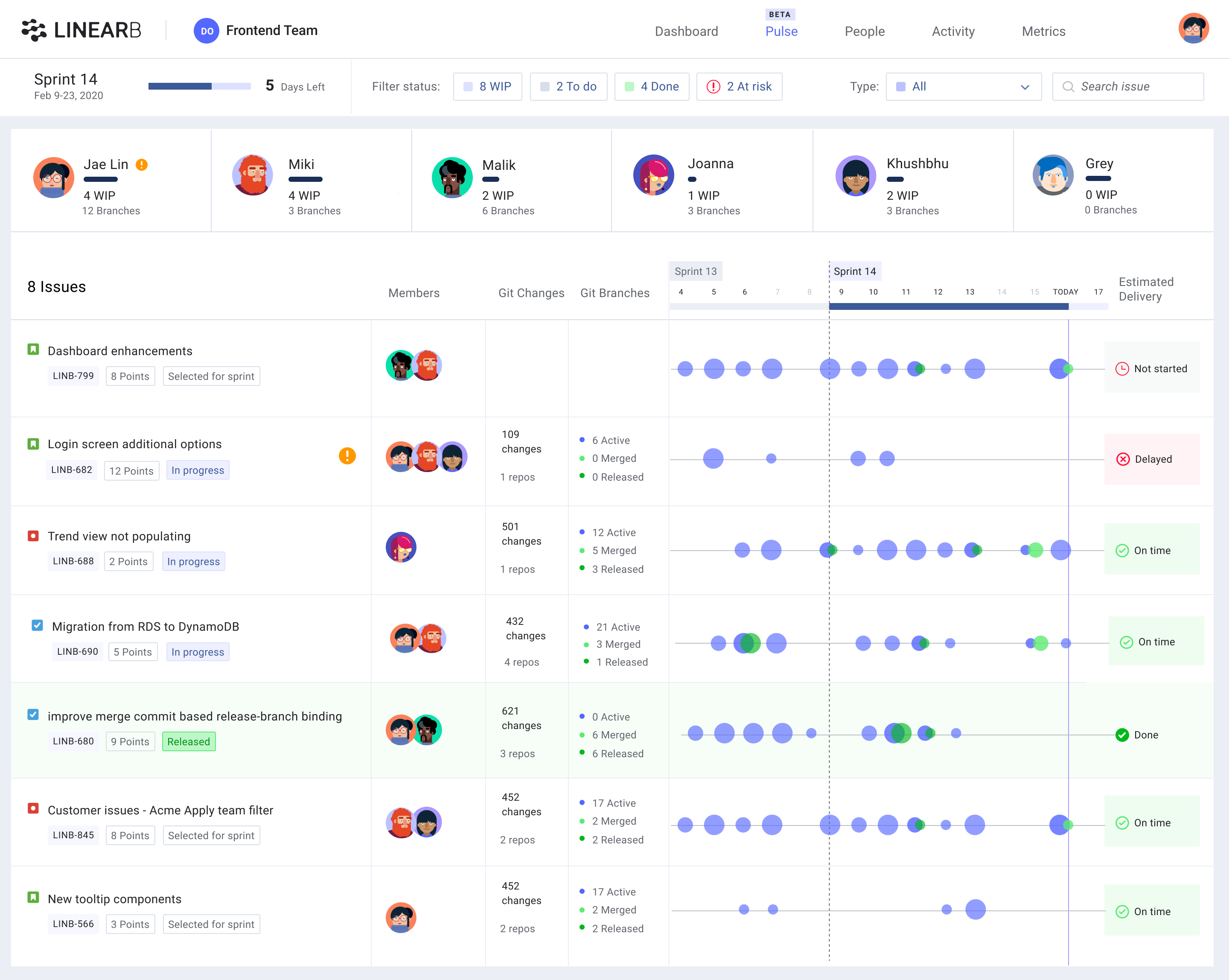
    LinearB today unveiled a namesake tool that automatically constructs and visualizes detailed progress timelines without requiring DevOps teams to rekey data into a separate project management application.

    Company CEO Ori Keren said the issue DevOps teams find most frustrating when it comes to managing software development projects is collecting the data that’s required to track the progress of any given project when much of that data already resides in the DevOps tools being employed. LinearB automates the collection and display of that data that DevOps teams previously spent hours collecting, he said.

    That approach makes it easier to then identify which teams and projects need additional help in near real-time using metrics surfaced in dashboards provided by LinearB, Keren noted, adding metrics such as the tracking of cycle times also make it easier for DevOps leaders to justify those investments to business executives.

    Keren said DevOps leaders also gain better insights in how DevOps teams are actually functioning in a way that makes it easier to predict and eliminate project delays, remediate high-risk code before it is included in a production environment, eliminate bottlenecks and make certain the focus of the DevOps team remains on tasks of the highest priority.

    LinearB is making use of the application programming interfaces (APIs) that DevOps tools expose to gather the metadata that exists about the status of any given project. LinearB then employs machine learning algorithms to construct and correlate that data to give DevOps leaders more accurate insights into the status a project when compared to a project management application that requires data to be entered manually. Given the rate at which application development projects are now updated, much of the data in a project management application is outdated shortly after its entered.

    Project managers also often spend a significant amount of time trying to encourage various members of a DevOps teams to update the data that resides in those project management applications.

    At a time when many members of those DevOps teams are now working from home to combat the spread of the COVID-19 pandemic, Keren noted that manually collecting that data has never been more problematic.

    While many DevOps teams are embracing value stream management tools to optimize DevOps workflow, Keren added most of those tools do not collect data at a granular enough level to provide DevOps leaders with enough software deliver intelligence to meaningfully impact DevOps workflows in near real-time.

    In general, Keren said most DevOps teams are too focused on metrics such as the number of lines of code or the number of commits being made. Metrics such as cycle times are more indicative of the productivity of a DevOps team.

    It’s not clear how the ability to automatically pull metrics from DevOps tools might impact the role of project managers. In theory at least, they should be able to spend more time helping DevOps leaders identify issues proactively versus badgering DevOps teams to fill out reports.

    Regardless of how the role of the project manager evolves, the one thing that is for certain is most members of a DevOps team would happily prefer to see as much of that process become automated as possible.

  • Dynatrace Adds Security Module to Observability Platform

    Dynatrace Adds Security Module to Observability Platform

    Dynatrace announced today it is adding a module to provide continuous runtime application self-protection (RASP) capabilities to its observability platform.

    The Dynatrace Application Security Module leverages existing Dynatrace tracing and artificial intelligence (AI) technologies to detect threats in real-time and then apply appropriate policies to automatically secure applications.

    Andreas Lehofer, chief product officer for Dynatrace, said that with the rise of highly dynamic microservices-based applications, the time has arrived to extend the company’s platform into the realm of application security. In contrast, there aren’t typically as many changes to monolithic applications to justify adding a security module to an application performance management (APM) platform, he said.

    Lehofer said the Dynatrace Application Security Module has also been designed to reduce false positives by only surfacing alerts concerning code that is actually running. Rival RASP platforms will detect modules and start generating alerts about libraries that may be present in an application environment but are not actually employed, said Lehofer.

    The Dynatrace Application Security Module working with the Smartscape topology mapping and PurePath tools for analyzing code also make it possible for DevSecOps teams to better understand dependencies between microservices, he added.

    At the core of the Dynatrace approach to DevSecOps is its OneAgent software for application instrumentation, which collects data and feeds it back to an observability platform that includes an artificial intelligence (AI) engine dubbed Davis. As the Dynatrace Application Security Module continues to evolve, IT organizations should expect Dynatrace to apply AI capabilities to application security more broadly, Lehofer said.

    The ability of DevSecOps teams to automatically remediate applications that are discovered to have significant security issues depends on their ability to roll back applications after they have been deployed. Most IT organizations at the moment still have to manually roll back an application after it’s been deployed, he noted.

    Longer-term it’s not clear to what degree AI might advance DevSecOps; however, the more automated the process of identifying vulnerabilities becomes, the easier it should be to automate remediation.

    In the meantime, as the observability capabilities of platforms such as Dynatrace extend into application security, the easier it should become for organizations to embrace best DevSecOps practices by employing a module that is added on to an existing APM platform.

    Dynatrace, of course, is betting microservices-based applications will increase the adoption of its observability platform. Historically, IT teams tended to employ an APM only to instrument their most mission-critical applications because of the costs involved. However, as IT environments become more complex in the age of microservices, platforms that can observe all the dependencies that exist in a distributed computing environment are now critical. Extending that platform to include application security further extends the economic case for investing in an observability platform.

    It may be a while before most organizations reach a level of DevSecOps maturity that requires continuous observability, but as responsibility for application security continues to shift further left, it’s now only a matter of time before more automation is applied.

  • Governance, Quality Critical in the New Digital Norm

    Governance, Quality Critical in the New Digital Norm

    The shift to digital is certainly not new. But the speed of digital adoption has been accelerated as organizations react to the COVID-19 pandemic and implement remote working and contactless or self-service channels for customers. What’s more, the evidence shows that trend is here to stay.

    Analyst Gartner’s CIO Agenda 2021 report shows that 76% of CIOs reported increased demand for new digital products and services as a result of the pandemic. But far from being a temporary spike, 83% of CIOs said they expect that to increase further in 2021. There was also a 65% increase in the use of self-service by customers during the crisis, and 79% of CIOs expect that figure to grow next year, too.

    These trends all put increasing pressure on DevOps teams to drive continuous improvement and development of products. Some 83% of developers say they are releasing code faster and more often than ever before, according to the “2019 State of DevOps Report.”

    But with the pressure to develop faster, there is a battle to find the right balance between speed and quality. Move the needle too far toward either end of that spectrum and the results can be equally disastrous for the business.

    In Digital, Quality Matters

    Rushing releases and updates out too quickly can lead to poor quality or defective code. If this impacts the user experience, it can have a significant impact on adoption and ratings. A report on commercial and retail app testing by Testlio, for example, shows that 50% of users won’t download an application with a three-star rating from an app store. And that rises to 85% for an application with just a two-star rating.

    In the second annual OverOps DevOps survey, over half of respondents said they encounter critical or customer-impacting issues in production at least one or more times a week. And more than 40% of critical production issues are first reported by end users or customers rather than by internal monitoring and alerting tools.

    But 45% of developers in the same study said they are under pressure to move fast, which doesn’t give them enough time to ensure the quality of the code they are producing.

    Manual Bottlenecks

    While DevOps has tools to develop, test, ship and containerize software, there is often a lack of governance and orchestration. This makes it difficult to get that balance between speed and quality.

    The major challenge for DevOps is the time-consuming and manual nature of testing and QA, which causes new releases and updates to be either delayed or of poor quality. The testing life cycle remains highly manual and updates must be tested across all devices, platforms and networks.

    More than half (55%) of respondents to Kobiton’s “State of Test Automation” survey for 2020-2021 said automating testing would improve software quality. Yet just over three-quarters (76%) said they still conduct most of their testing manually.

    And it is this lack of automation and orchestration that is really holding back DevOps efforts in many organizations today. In a survey by research analyst Forrester, “Face the Workflow Automation Gap Head On,” two-thirds (67%) of IT leaders said the lack of application workflow orchestration leads to services not being completed in time and 55% admit that it takes valuable time away from strategic initiatives.

    Managing the DevOps Workflow

    The key to ensuring better governance and quality in DevOps and overcoming the manual effort and time pressure is to integrate automated workflow orchestration into the software development lifecycle process.

    This orchestration enables DevOps teams to test early and often, and ensure new releases and updates are ready to go to a live production environment.

    For example, modern workload automation tools allow IT ops teams to easily standardize processes in development, test and deployment with the help of built-in wizards and templates. And rollback capabilities and automated process documentation take much of the pain out of managing DevOps processes. Workload automation also provides greater coordination with highly configurable automation that only runs processes when a certain set of conditions is met.

    Ultimately, this helps DevOps teams automate and streamline the QA and testing processes so changes are carried over into the production environment without developers having to manually transfer new code from the testing environment.

    And that means DevOps teams can automatically enforce governance and standards and maintain that essential balance between speed and quality in today’s digital norm.

  • Broadcom Extends AIOps Platform Reach

    Broadcom Extends AIOps Platform Reach

    Broadcom today extended the reach of its artificial intelligence for IT operations (AIOps) platform to provide full-stack observability via integrations with 15 third-party data sources including Dynatrace, Datadog, AppDynamics, PagerDuty, Splunk, ServiceNow, SolarWinds and Microsoft Systems Center Operations Manager.

    In addition, Version 2.0 of AIOps from Broadcom now captures data at the chip level to enable IT teams to triage network congestion and packet loss in real-time.

    The latest release also adds visualizations and dashboards for different IT personas along with a recommendation engine that enables IT teams to automate tasks once the root cause of an issue is surfaced by the platform.

    Sreenivasan Rajagopal, director of products and strategy for Broadcom Enterprise Software, said the new approach allows IT teams to decide what level of automation to apply based on the complexity of the problem and potential risk to the business.

    Collectively, these capabilities are intended to make it easier to align people and processes with business outcomes by creating a continuous feedback loop, he said, noting it takes about 90 days for the machine learning algorithm embedded within AIOps from Broadcom to start delivering on that promise.

    Other capabilities included as part of the latest release are additional machine learning topology and correlation capabilities, causal graphs and intelligent situational analysis for automatic root cause analysis, noise mitigation, alarm clustering and anomaly detection. Broadcom has also added a library of machine learning algorithms, natural language processing and an ontological graphical topology to enable situational correlation.

    Finally, Broadcom has added capacity analytics tools that can be applied to specific groups of services that IT teams are collectively managing and maintaining.

    Rajagopal said it’s now only a matter of time before AI is applied more broadly to enable IT teams to become more agile. AIOps won’t replace IT staff as much as it will simply augment the capabilities of the IT staff, he noted.

    AIOps also will prove vital as older members of the IT team retire, Rajagopal added. Newer members of the IT staff will be able to become productive much faster if they can rely on insights and recommendations surfaced by an AIOps platform.

    It’s not clear to what degree AIOps platforms will exist as a separate entity apart from traditional IT services management (ITSM) platforms that are also being infused with machine learning platforms. Broadcom is making a case for a distinct new IT operations platform that relies on data to align people, processes and platforms. The single biggest obstacle in terms of achieving IT agility is not the tools as much as it is people in different roles who can’t empathize with one another because there is no common source of data that every stakeholder can access, said Rajagopal.

    Regardless of the AIOps path chosen, it’s clear that many of the existing tools IT teams rely on to manage IT environments are slowly becoming obsolete. In fact, there may come a time soon when IT teams won’t even consider an IT management platform that doesn’t have some level of AI capability.

  • OpsRamp Makes AIOps Platform Simpler to Configure

    OpsRamp Makes AIOps Platform Simpler to Configure

    OpsRamp today took the wraps off an update to its namesake artificial intelligence platform for IT operations (AIOps) that makes it easier for IT organizations to declaratively configure the software-as-a-service (SaaS) platform.

    Ciaran Byrne, vice president of product management for OpsRamp, said the goal is to enable IT teams to embrace AIOps without having to hire a small army of consultants.

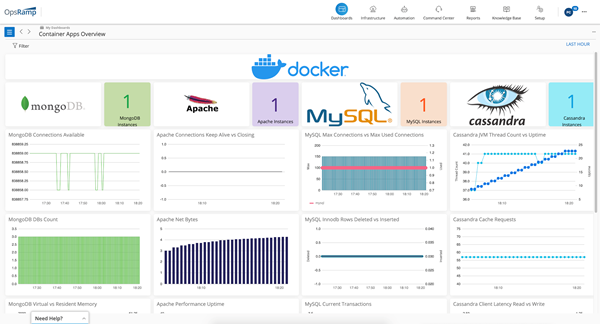
    The OpsRamp Fall 2020 Release adds a revamped user interface that provides access to a set of wizards that discover the assets that make up a specific IT environment and subsequently automate the configuration process.

    OpsRamp has also added curated dashboards that enable IT teams to launch queries using the Prometheus Query Language (PromQL), developed for the open source monitoring tool being advanced under the auspices of the Cloud Native Computing Foundation (CNCF).

    The latest edition of the AIOps platform also adds monitoring capabilities for containerized workloads and Kubernetes clusters. In addition, IT teams can monitor other cloud services including AWS ECS, Azure Functions, Azure Hyperscale (PostgreSQL) and Azure SQL Managed Instance.

    OpsRamp has also added IT process automation capabilities that can be triggered by alerts, updates to resources or on a recurring schedule. An OpsQ bot now also recommends automation workflows. Alternatively, IT teams can require manager approval before a process is launched.

    In general, Byrne said the goal is to improve the mean time to value for an AIOps platform managed by a team of data scientists who have extensive experience applying machine learning algorithms to IT processes.

    Efforts to automate IT have increased sharply now that most IT staff are working from home to help combat the COVID-19 pandemic. However, few organizations are able to set up and configure an AIOps platform in an on-premises IT environment on their own, especially now that outside consultants are no longer being invited to spend weeks working on projects, Byrne said, noting a SaaS-based approach makes it possible for IT organizations to take advantage of an AIOps platform while continuing to work from home.

    In general, the downturn in the economy has increased interest in AIOps because IT staff ranks are either remaining the same or shrinking even as IT environments continue to become more complex. Longer-term, Byrne said it’s not clear that hiring Level 1 and 2 IT administrators will be sustainable as AIOps platforms continue to automate processes.

    DevOps teams, of course, are especially keen to automate as many IT processes as possible, which is why there is a high correlation between organizations that have embraced DevOps and early adopters of AIOps.

    It may still be a while before AIOps is widely employed, but it’s now only a matter of time before machine learning algorithms are pervasive across IT. The challenge now is figuring out where the handoff between man and machine for managing IT ultimately will lie.

  • Want To Deliver Better Software Faster? Use Automation

    Want To Deliver Better Software Faster? Use Automation

    Despite the evident evolution of the software industry, many enterprises continue deploying testing practices that require intensive time and effort, while also facing increased pressure to do more and work faster. I like to call this phenomenon “scattered islands,” as it describes the disconnect in maturity and capability across the testing landscape. The key differentiator here is automation, the impact of which can be found throughout all the phases of software testing, from test planning to defect analysis repair and feedback loop. Even so, the industry has just begun unlocking the true potential of automation in testing.

    AI-driven automation holds the potential to completely transform software testing from an end-to-end testing lifecycle perspective.

    Gap Between Knowledge and Action

    The shortage of test automation is one of the biggest barriers when it comes to releasing new software to the market. In fact, most software testing is still done manually. Enterprises are embracing Agile and DevOps approaches for faster software release cycles to meet customer expectations. However, the bulk of the testing life cycle—especially the planning and design stages—continue to be manual and inefficient. Undetected software quality issues translate into production. The reduced speed-to-market is costing businesses trillions of dollars.

    Strangely, the software industry has yet to embrace automation applications. According to a  study by Kobiton, more than half (55%) of respondents believe automating testing would be an asset to software quality. And yet, most aren’t doing it. In that same study, 76% of respondents say they manually conduct most of their testing; 73% are running at least 100 tests prior to each software release manually—not automatically.

    How Software Testing Is Adopting Automation

    Organizations are starting to deeply consider how to adopt assisted and automated practices across the testing life cycle. That spans from test creation to data management and beyond. Automation is quickly becoming critical for effectively meeting customer requirements, because it offers important benefits: faster time-to-market, increased efficiency and improved quality.

    Now, most organizations are applying automation little by little to improve productivity and stay at par with the demands of development and release cycles. For instance, they may apply automation to test execution or defect management. However, this stilted approach is inadequate for today’s scale.

    Some have speculated that organizations may be leery of full-scale automation due to the looming fear that it would cost the testers their jobs. This is a misconception. Automation isn’t taking jobs, but it is changing them. Testing will become more about predictive rather than preventive methods. With the agile development environment, these methods are being implemented starting with the planning phase.

    By conducting testing through automation tools, organizations can address issues faster. And that means testers will be able to upgrade their skills. With their deep domain expertise, they’ll be eligible for other business roles and not just IT roles.

    Start Small and Expand

    Ultimately, the goal with automation is to become autonomous. Therefore, it’s important to understand that not all tools are created equal. Many startups have entered the market with test automation tools, some of which make lofty promises about improved speed. But there is no tool that automates test scenario creation or provides intelligent test selection. What organizations can do is identify areas where it makes the most sense to start introducing automation and begin to implement it gradually.

    It’s key to remember that organizational support is imperative to successful deployment. Without it, projects aren’t likely to succeed. It’s easy to get stuck in the status quo because “that’s always how we’ve done it.” To move to automation there must be a desire for change. Being the change agent in the organization and finding support before embarking on this journey is crucial.

    Jumping Into the Automation Pool

    AI is rapidly becoming core to every industry and function, including the software industry. AI-based automation enables enterprises to take their software to market faster and reap unparalleled business benefits that come with agility, speed and reliability in their software release cycles. Software testing is only one application of this type of automation. Test automation not only relieves testers of the burden of repetitive tasks but can also perform additional testing that might not otherwise get done because it is difficult to do manually.

    Although the numbers clearly indicate that bugs and rework incur higher costs for organizations to maintain the status quo, many still hesitate to embrace the innovation. Most organizations agree that automated testing would be of tremendous benefit, and the hesitation indicates that early adopters will have a competitive advantage. With well-informed strategy and integration, test automation can enable you to deliver better software, faster and transform your business exponentially.

  • GitLab Makes Building Secure Mobile Apps Easier

    GitLab Makes Building Secure Mobile Apps Easier

    GitLab has made 60 enhancements to its namesake continuous integration/continuous delivery (CI/CD) platform to address a range of things from DevSecOps processes to collaboration, at a time when most DevOps teams continue to work remotely.

    With help from external contributor support for the Mobile Security Framework (MobSF), version 13.5 of GitLab adds an all-in-one tool for penetration-testing, malware analysis and security assessment that runs both static and dynamic analysis of code running on Android, Apple iOS or Windows platforms. GitLab is also making available a user interface to configure its existing static analysis security tools.

    On the collaboration front, GitLab has added support for Group Wikis to provide a central place to collaborate as well as an enhanced Snippets tool to facilitate code-sharing among group members. Snippets with multiple files are now supported inside a single Snippet.

    GitLab is also making available additional templates for deploying to Amazon Web Services (AWS), as well as a GitLab CI/CD template for Terraform and integration with Gitpod, a tool that makes it easier to spin up development environments.

    Finally, GitLab has made feature flags a core part of its platform and added support for a Timeline view to make it easier to navigate incident discussions. It also included the ability to store other binary types in GitLab that are not yet supported via raw package feeds and attach binary assets to releases.

    Brendan O’Leary, senior developer evangelist for GitLab, the COVID-19 pandemic has accelerated digital business transformation initiatives that often depend heavily on secure mobile computing applications that rely on rapid development. As the DevOps teams tasked with building these applications are working from home to help limit any spread of the pandemic, the need for tools to facilitate collaboration across distributed development teams has become critical, he said.

    It’s not clear to what degree the need to work from home is influencing the selection of CI/CD platforms just yet. The trend toward working remotely was well underway prior to the pandemic. At this juncture, however, it’s clear most development teams will be working remotely well through 2021. Most IT organizations will need to revisit some early assumptions about how to optimize DevOps practices across a distributed workforce now that many of them have had firsthand experience, noted O’Leary.

    The challenge is some developers may thrive while working from home while others struggle. In the absence of collaboration tools, it becomes more challenging for managers to ascertain what specific issues need to be addressed. Of course, even if a vaccine is discovered. there will be no going back—the way applications are built and deployed in a modern enterprise has been forever altered. The issue now is determining how best to move forward as the COVID-19 pandemic continues waxes and wanes.

  • Nobl9 Ties Business Goals to Observability Data

    Nobl9 Ties Business Goals to Observability Data

    Nobl9 today announced it has made available via an open public beta program a software-as-a-service (SaaS) platform for correlating business goals against data collected by observability tools.

    Unlike observability platforms that only aggregate metrics, the Nobl9 Service Level Objective (SLO) Platform applies that data to specific reliability targets defined by the business, company CEO Marcin Kurc said.

    Compatible with monitoring platforms such as Datadog, New Relic and Prometheus, Nobl9 SLO Platform calculates uses monitoring data to calculate acceptable rates of error per service threshold and can be configured to trigger alerts and even workflows in anticipation of outages, Kurc said. The critical difference is knowing which metrics are truly impacting customer experiences.

    The platform also enables DevOps teams to create business rules and define “facets” of users based on application experiences required. DevOps teams can identify users who are being serviced poorly in addition to tracking groups of users. They also codify contractual service level agreements (SLAs) down to critical business periods, said Kurc. The Nobl9 SLO Platform is accessible via a CLI/GUI/API for everything, Kubernetes-like YAML SLO-as-code or a sloctl command line.

    This approach also has a significant impact on the cost of monitoring because the Nobl9 SLO Platform makes it easier to identify what data needs to be stored versus deleted, noted Kurc.

    Armed with those insights, Kurc said it then becomes easier for DevOps teams to either determine how to make systems more reliable or lower reliability goals to reduce costs when possible. IT organizations will also spend much less time finger-pointing because the root cause of any issue will be much more readily apparent, he noted, adding the Nobl9 SLO Platform provides access to both real-time and historical reports to enable DevOps teams to achieve both those goals.

    In the wake of the COVID-19 pandemic, there’s a lot more focus on observability than ever. Organizations are relying more on digital business process to survive. The difference between surviving and thriving in this new era will come down to observability of not just the IT environment but also the entire digital business process.

    It may be a while before most organizations fully equate profit and revenue to the performance of their IT environments. However, it’s becoming increasingly clear that it’s not enough to simply make sure IT environments are available. Customers are judging organizations by their ability to drive a quality experience within the context of a digital business process spanning multiple applications. Organizations that are unable to meet those expectations will soon find themselves being cast aside in favor of those that can.

    Naturally, those requirements will put a lot of pressure on IT teams that often don’t have a lot of visibility into a business process. There is no end of alerts being generated by the system that are closely monitored, but the bulk of those alerts lack business context. Undoubtedly, there soon will be plenty of ways to gain that context. The challenge now is explaining to business leaders now why it’s needed before it’s too late.