Tag: Atlassian

  • Atlassian to Acquire AgileCraft to Help Executives Align Strategy to Execution

    SAN FRANCISCO–(BUSINESS WIRE)–Atlassian Corporation Plc (NASDAQ: TEAM), a leading provider of team collaboration and productivity software, today announced it has entered into a definitive agreement to acquire AgileCraft, a leading provider of enterprise agile planning software. AgileCraft helps enterprise organizations build and manage a ‘master plan’ of their most strategic projects and workstreams. Business leaders use AgileCraft to map strategic projects to the distributed work required to deliver them, providing better visibility into bottlenecks, risks and dependencies, and more accuracy around capacity planning and measuring return on investment.

    AgileCraft helps business leaders answer the most important questions around their most critical projects:

    • what’s the true cost and expected value of the important work being driven by teams inside my company?
    • what does the overall roadmap look like for company-wide strategic imperatives?
    • what are the major dependencies and risks associated with what we’re trying to deliver?
    • how can we move faster, or do more with less?
    • how does work at the team level align with the company’s top objectives?

    In every industry, there is increased pressure to respond to customers faster, increase the speed of innovation, and find new approaches to working. This pressure is amplified in large enterprises as they race to leverage technology to enhance customer experiences and adapt faster to new competitors and market conditions.

    Atlassian tools are already at the forefront of enabling agile transformation for more than two-thirds of the Fortune 500. In particular, Jira serves as the collaborative backbone for how modern engineering and IT teams plan and execute work. AgileCraft helps connect the work of these teams to the business objectives and strategic outcomes of the entire enterprise. This alignment is a critical linchpin in helping large organizations move faster and scale the benefits of agile teamwork more widely across their companies. Many companies, including Anthem, AT&T, Dimension Data, Fidelity, and Nielsen, already trust Atlassian and AgileCraft to scale strategic direction and align top to bottom.

    “Many leaders are still making mission-critical decisions using their instincts and best guesses instead of data,” said Scott Farquhar, Atlassian’s co-founder and co-CEO. “As Atlassian tools spread through organizations, technology leaders need better visibility into work performed by their teams. With AgileCraft joining Atlassian, we believe we’re the best company to help executives align the work across their organization – providing an all-encompassing view that connects strategy, work, and outcomes.”

    “Organizations lack the ability to easily gather and distill information across siloed teams – making it extremely difficult to assess progress and measure success,” said Steve Elliott, AgileCraft founder and CEO. “We’re excited to be joining the Atlassian family to enable the new digital enterprise, which is able to connect teams and align strategy to outcomes.”

    AgileCraft was founded in 2013 and is based in Georgetown, Texas.

    Details Regarding the Transaction

    The acquisition is valued at approximately $166 million, comprising approximately $154 million in cash, and the remainder in Atlassian restricted shares, subject to continued vesting provisions. The purchase price under the definitive agreement is subject to customary adjustments.

    The transaction is expected to close in April, subject to certain closing conditions.

    For fiscal 2019, the acquisition is expected to add approximately $1-2 million to Atlassian’s revenue. Additionally, for fiscal 2019, the acquisition is expected to reduce Atlassian’s IFRS operating margin by approximately one point and reduce non-IFRS operating margin by approximately half a point. The acquisition is also expected to be dilutive to the company’s IFRS and non-IFRS operating margin in fiscal 2020. These estimates reflect a reduction relating to fair value adjustments to acquired deferred revenue.

    Forward-Looking Statements Disclosure

    This press release includes forward-looking statements, within the meaning of the Private Securities Litigation Reform Act of 1995, which are subject to risks, uncertainties and other factors, including risks and uncertainties related to Atlassian’s ability to integrate the business, technology, products, personnel and operations of AgileCraft, and the financial statement impact of the transaction on Atlassian. All statements other than statements of historical fact are statements that could be deemed forward-looking statements, including statements regarding: the ability of Atlassian to extend its leadership into enterprise agile planning software and other anticipated benefits of the transaction to Atlassian and to the combined companies; potential benefits of the transaction to Atlassian and AgileCraft customers; the ability of Atlassian and AgileCraft to close the announced transaction and the timing of the closing of the transaction; AgileCraft’s technology; any statements of expectation or belief; and any statements of assumptions underlying any of the foregoing. These risks, uncertainties and other factors, and the general risks associated with Atlassian’s and AgileCraft’s business, could cause actual results to differ materially from those stated or implied in these forward-looking statements. For a discussion of these and other risks and uncertainties, you should refer to Atlassian’s most recent Form 6-K (reporting our quarterly results) filed with the Securities and Exchange Commission as well as other documents that may be filed by Atlassian from time to time with the Securities and Exchange Commission. Atlassian undertakes no obligation to update any forward-looking statements made in this press release to reflect events or circumstances after the date of this press release or to reflect new information or the occurrence of unanticipated events, except as required by law. The achievement or success of the matters covered by such forward-looking statements involves known and unknown risks, uncertainties and assumptions. If any such risks or uncertainties materialize or if any of the assumptions prove incorrect, Atlassian’s results could differ materially from the results expressed or implied by the forward-looking statements we make. You should not rely upon forward-looking statements as predictions of future events. Forward-looking statements represent our management’s beliefs and assumptions only as of the date such statements are made.

    About Atlassian

    Atlassian unleashes the potential of every team. Our team collaboration and productivity software helps teams organize, discuss and complete shared work. Teams at more than 138,000 customers, across large and small organizations – including General Motors, Walmart Labs, Bank of America Merrill Lynch, Lyft, Verizon, Spotify and NASA – use Atlassian’s project tracking, content creation and sharing, and service management products to work better together and deliver quality results on time. Learn more about our products, including Jira Software, Confluence, Trello, Bitbucket, Opsgenie and Jira Service Desk, at https://atlassian.com/

  • Atlassian Adds Business Planning App by Acquiring AgileCraft

    Atlassian Adds Business Planning App by Acquiring AgileCraft

    Atlassian announced it is acquiring AgileCraft to give business leaders visibility into strategic projects in a way that is closely mapped to IT projects being driven by DevOps processes.

    The value of the deal, expected to close next month, is estimated to be $166 million.

    Many DevOps teams already make extensive use of the Jira project management software developed by Atlassian. AgileCraft emerged in 2013 as a provider of a collaboration application aimed at business users to keep track of the various strategic IT initiatives that are largely dependent on DevOps processes.

    Atlassian and AgileCraft previously established a technology alliance to facilitate that goal. Atlassian president Jay Simons said the acquisition represents an opportunity for Atlassian to extend its reach into the realm of business users who increasingly are trying to keep track of complex digital business transformation initiatives that are dependent on multiple IT projects. Many of those digital business initiatives tend to quickly fall behind schedule because the dependencies between various IT initiatives are not clear to all the key business stakeholders, he said.

    In addition, Simons said many businesses now are trying to apply the agile methodologies pioneered by DevOps teams more broadly within the IT organization. To achieve that goal, business users need a project management application that has been optimized to enable them to keep track of multiple inter-related DevOps projects, he noted.

    Most organizations are not yet anywhere near the point where the IT organization is completing IT projects faster than the business can absorb. But as agile methodologies and best DevOps practices become more widely employed, there may come a day when IT organizations will complete IT initiatives faster than most business will be able to adapt. In fact, it’s not uncommon for organizations that have embraced DevOps to deliver multiple updates to applications a week. AgileCraft planning software will make it easier for business users to appreciate all the business implications associated with each of those updates. The irony is, the constant debate over the inability to align IT with the business usually comes down to the inability of IT organizations to keep pace with the demands of the business. It soon may turn out the business is no longer capable of absorbing the rate at which new applications are being rolled out.

    In the meantime, applications such as AgileCraft should make it easier for IT leaders to have better-informed conversations with business leaders concerning where limited resources need to be applied and when. Business leaders will be able to see for themselves now what impact any given set of missed deadlines is likely to have on any strategic initiative. In fact, there may come a day when business leaders proactively make more resources available to achieve a specific goal without requiring IT leaders to attend a meeting to explain in excruciating detail how every delay adversely impacts the grand scheme of the business. Instead, business leaders will be able to see for themselves exactly where additional resources are needed to achieve a specific business goal.

    — Mike Vizard

  • Optimizely and Atlassian Unveil New Integration That Enables Developers to Track the Status of Every Product Experiment In Real Time

    Optimizely with Jira Software helps teams build their best-in-class technology stacks and go from shipping volume to launching products with value

    SAN FRANCISCO, Dec. 4, 2018 — Optimizely, the world’s leader in digital experience optimization, and Atlassian, a leading provider of team collaboration and productivity software, are today unveiling a new integration between Optimizely Full Stack and Jira Software that allows developers to move faster, mitigate launch risk and measure the impact of every product release. Together, the brands continue to provide software development teams with the best tools to build and launch new products, faster.

    Leading software development teams today are using data to experiment and build the digital experiences and products that matter most to their customers. Jira Software continues to help teams plan, track and release products on time, while Optimizely’s Full Stack provides A/B testing and feature management for product development teams, including feature flags to minimizing launch risk. With the Optimizely Full Stack and Jira Software integrated workflow, users of both services will have better visibility into the entire product development cycle. Together, teams can now link feature flags from Optimizely Full Stack into Jira Software, so that engineers can see the status of the experiments they are running, live and in real time. This means more quickly and efficiently seeing the status of their flags and rollouts, resulting in smaller and more frequent feature and product shipments.

    “Our goal is to build the best products for our customers, which means integrating with the best-of-breed solutions that will power winning user experiences in today’s evolving digital landscape,” said Claire Vo, SVP of Product at Optimizely. “We are thrilled to combine our services with Atlassian’s premium technology solution as a way to help our customers make quicker decisions, iterate faster and drive loyalty.”

    This partnership will also be integrated across other Optimizely products including Web and Program Management over the coming months. Optimizely Full Stack customers can integrate with Jira today by visiting our help page here.

    About Optimizely
    Optimizely is the world’s leader in digital experience optimization, allowing businesses to dramatically drive up the value of their digital products, commerce and campaigns through its best in class experimentation software platform. By replacing digital guesswork with evidence-based results, Optimizely enables product and marketing professionals to accelerate innovation, lower the risk of new features, and drive up the return on investment from digital by up to 10X. Over 26 of the Fortune 100 companies choose Optimizely to power their global digital experiences. Optimizely’s impressive customer list includes eBay, FOX, IBM, The New York Times and many more global enterprises. To learn more, visit optimizely.com.

  • Device42 Launches Integration with Atlassian to Power Smart and Responsive IT Asset Management

    NEW HAVEN, Conn., Oct. 30, 2018 /PRNewswire/ Device42, Inc., a provider of IT infrastructure management software, today announced an integration with Atlassian, the leading collaboration and software development management company. Customers of Atlassian’s Jira Service Desk, the IT helpdesk ticketing system, can now benefit from Device42’s comprehensive solutions to gain better visibility and control over their technology assets.

    Jira Service Desk is a popular platform for IT teams to receive, track, manage and resolve customer requests. With Device42’s integration, every ticket sent to a company’s service desk is accompanied by the associated hardware and software specifications, as well as a history of incidents related to that issue. Having access to such information helps both onsite and offsite support agents quickly identify which technology assets to troubleshoot so they can immediately provide a solution, whether it’s replacing a hard disk or switching the power supply.

    “Using the new cloud asset management integration with Device42, our customers will now gain a holistic view and more context across all their assets right within Jira Service Desk,” said Bryant Lee, head of partnerships and integration at Atlassian.

    Device42 has more than 500 enterprise clients in 55 countries that rely on its software to manage their complex IT infrastructure quickly, easily, and effectively. The company was recently ranked as the fastest growing technology company in Connecticut, with a whopping 1,300 percent revenue growth from 2015 to 2017.

    “Enterprises are faced with a mounting challenge as they attempt to maintain up-to-date inventories of their physical, virtual, and cloud servers,” said Raj Jalan, founder and CEO of Device42. “The integration will provide Atlassian customers with a robust tool that will not only help them solve mission-critical issues at breakneck speed, but also glean powerful insights about their technology infrastructures that will take their IT departments to a whole new level.”

    About Device42

    Device 42, Inc., a leader in Data Center Infrastructure Management (DCIM), delivers comprehensive, low-cost, high-value solutions that enable organizations around the globe to manage their complex IT infrastructure quickly, easily, and effectively. Device42 software centralizes data center management, making IT assets visible, understandable, and controllable. Additional information about Device42 can be found at device42.com.


  • Atlassian Builds a DevOps Stack for the Enterprise

    Atlassian Builds a DevOps Stack for the Enterprise

    One of the major challenges associated with DevOps is that it’s not something an enterprise IT organization can buy. Because of that issue, it’s often challenging for IT organizations to forecast what types of DevOps tools they are going to need. To make it a lot easier to cope with that issue, Atlassian has announced Atlassian Stack, a suite of software that makes Atlassian DevOps tools available in a single package.

    Sean Regan, head of product marketing for Atlassian, says this approach will make it easier for enterprise IT organizations to embark on a DevOps journey without having to worry about what type of tool they may need now versus in the future. For example, an IT organization may opt to get started using the Atlassian Jira software to track software development projects and then work its way up to deploying Atlassian Bamboo continuous integration/continuous deployment (CI/CD) software. From there, Regan says, a DevOps team may opt to embrace collaboration software to streamline communications across their various teams.

    The move to launch Atlassian Stack comes after the company updated a slew of its DevOps offerings, including the release of Bitbucket Server and Data Center 5.0 and Bamboo 6.0. In addition to tightening the integration between both DevOps tools, the company added capabilities for verifying commits, smart mirroring and the ability to define a Bamboo configuration as code.

    Rather than making DevOps teams acquire each tool individually, he says, many senior IT leaders now request a means through which the entire Atlassian portfolio can be made more readily available. That shift in purchasing behavior suggests that the level of DevOps maturity inside many organizations is advancing considerably, he notes.

    Of course, there are many who would contend that level of DevOps maturity has been a long time in coming. Web-scale companies have been employing DevOps tools for years to accelerate the rate at which new applications are released and updated. In contrast, traditional enterprise IT organizations have been slow to implement DevOps processes. In fact, it’s taken the pressure arising from digital business transformation initiatives that have accelerated application deployment timetables to get enterprise IT organizations to fundamentally rethink IT operations. Business leaders are making it painfully obvious that their patience with extended rollouts for new applications is at an end.

    Naturally, the rate at which those transformations are occurring within organizations will still vary considerably. However, the silos that exist within enterprise IT organizations need to be consolidated. The next issue is determining to what degree altering those processes needs to come in the form of a DevOps edict from above versus letting teams come together of their own accord to meet a specific application deadline. Whatever the approach, the way enterprise IT has been managed historically is no longer up to the digital business transformation tasks at hand.

    — Mike Vizard

  • xMatters and Atlassian Find Culture is the Foundation of DevOps in Maturity Survey Results

    SAN RAMON, CALIF. — April 13, 2017 — xMatters (www.xmatters.com), a provider of integration-driven collaboration to proactively resolve issues, and Atlassian Corporation Plc (www.atlassian.com), a leading provider of team collaboration and productivity software, today announced the results of their DevOps Maturity Survey.

    To analyze the maturity level of DevOps teams, the survey measured more than 1,000 respondents in five categories, including culture and alignment, design and architecture, continuous delivery, operations and support, and testing and verification. The survey results show that while companies have embraced the culture and processes to enable DevOps, they are still struggling to achieve the full benefits.

    Takeaways include:

    • Culture: Culture is the code that runs great teams. In the survey, 81% of Dev and Ops teams share information and tools, but often with limited access. However, only 17% provide open access to information without time restrictions, underscoring that companies must transition from tools-first to team-first organizations.
    • Monitoring: Organizations monitor everything, but they aren’t prioritizing and using data to improve business processes. Only 64% of teams surveyed said their monitoring systems predict issues before users are affected.
    • Continuous Delivery: Testing is insufficient to stop issues from reaching production. Forty-two percent of businesses report minor issues still have to be addressed after code is released. Most enterprises don’t test with production environment’s hostility or data, often leading minor issues once it’s in front of customers
    • Major Incident Management: Most teams lack consistent processes and rely on manual processes for keeping stakeholders informed during major incidents. Fifty percent of respondents say their tools, processes and steps vary from incident to incident. Companies are becoming more diligent at preventing major incidents, but less catastrophic issues still persist.

    About 65% of companies say they are achieving the benefits they expect from DevOps, but a maturity gap remains.

    “Companies are still not achieving the maturity they expected in their DevOps strategy,” stated Abbas Haider Ali, CTO at xMatters. “To open collaboration and prevent incidents from reaching live environments, companies need to chain their systems together to share data along with messages. Technology is starting to meet the culture of collaboration; however, when organizations match these two aspects of their business, DevOps will meet its promise.”

    “DevOps closes on its first decade of existence with significant momentum, as the majority of organizations are sharing tools across teams and effectively breaking down silos. But it has reached a point where teams are experiencing DevOps growing pains,” stated Sean Regan, Head of Product Marketing for Software Teams at Atlassian. “The promises of DevOps are great: faster time to market, enhanced customer experiences, fewer incidents, quicker resolution times and greater innovation. But to truly reap these benefits, teams need to move beyond the tools and begin to embrace knowledge sharing.”

    To read the full report, please visit: LINK

    xMatters and Atlassian will launch an additional self-assessment survey in May.

    About xMatters

    xMatters proactively resolves issues to prevent incidents and increase uptime through integration-driven collaboration. The solution automatically ensures that the appropriate individuals and groups for any situation are identified, notified, and taking action. To close the loop, xMatters manages and drives forward the underlying workflow from originating systems. xMatters automates and brings structure to collaboration so that enterprises can resolve issues early in the DevOps delivery pipeline. xMatters is used by individual teams for day-to-day tasks, as well as by thousands of teams at enterprise-scale, Global 2000 companies. Founded in 2000, xMatters is headquartered in San Ramon, CA, with additional offices worldwide.

    About Atlassian

    Atlassian unleashes the potential in every team. Our collaboration software helps teams organize, discuss and complete shared work. Teams at more than 68,000 large and small organizations – including Citigroup, eBay, Coca-Cola, VISA, BMW and NASA – use Atlassian’s project tracking, content creation and sharing, real-time communication and service management products to work better together and deliver quality results on time. Learn about products including JIRA Software, Confluence, HipChat, Bitbucket, JIRA Service Desk, and Trello at https://atlassian.com.


    — Jules Louis

  • New Add-on by SmartBear Unifies Industry-Leading Test Management and Issue Management Tools

    SOMERVILLE, Mass. – Mar. 28, 2017 – SmartBear Software, the leader in software quality tools for teams, announced a new add-on to unify SmartBear’s QAComplete test management application with Atlassian’s JIRA issue management tool. The QAComplete add-on for JIRA Software allows teams to easily design, plan, execute and track testing progress.

    Atlassian JIRA Software is the most popular tool used by development and QA teams to capture, track and resolve bugs and issues throughout the entire development cycle. As an Agile project management tool, JIRA Software is not primarily aimed at test case management. For QA and development teams using JIRA Software, having a comprehensive test case management strategy is critical to reduce costs incurred from unnecessary tests, while accounting for risk and planning for coverage. A dedicated test case management tool working with JIRA Software helps teams plan, track and proactively manage manual as well as automated tests, thereby enabling them to develop and deliver software more rapidly.

    The QAComplete add-on for JIRA Software on the Atlassian Marketplace empowers application development and delivery (AD&D) teams to combine JIRA Software’s issue and bug tracking expertise with the flexible test case management capabilities of QAComplete, providing the best of both worlds. With the new add-on, team members using JIRA Software can be kept up-to-speed on any testing activities taking place in QAComplete. Any changes made are automatically reflected across user stories, tasks, bugs or even custom issue types in JIRA Software. The add-on also provides real-time access to test steps, helping teams reproduce scenarios without switching context and jumping between separate tools.

    “SmartBear’s new real-time, two-way integration of QAComplete into JIRA Software allows users to easily map JIRA Software Stories to QAComplete and vice-versa,” said Reggie Moore, Quality Assurance Specialist at LifeWatch. “This is particularly helpful in keeping both tools up-to-date in real-time, no matter where we make changes. The real-time two-way sync works even for screenshots and attachments, allowing us to speed up the testing and in turn linking defects and tests back to user stories. Finally, the ability to bring test steps back to JIRA Software is helpful in easily reproducing test scenarios.”

    With QAComplete add-on for JIRA Software, teams can easily track and manage their tests along with other aspects of the software development cycle such as bugs, tasks and more. In addition to the QAComplete Test Management integration, SmartBear’s CrossBrowserTesting solution is also available on the Atlassian Marketplace. CrossBrowserTesting enables teams to get instant access to more than 1,500 real desktop and mobile browsers for functional and visual cross browser testing in the cloud.

    For more information, visit: https://smartbear.com/product/qacomplete/overview/.

    SmartBear is hosting the free webinar, “JIRA for Test Management: Bridging the Gap between Test Design and Issues,” on Thursday, March 30, 2017. Attendees learn how to take advantage of JIRA’s project management capabilities within their overall test management strategy. To register, visit:
    http://www2.smartbear.com/outbound-qacomplete-jira-test-case-webinar.html.

    About SmartBear Software
    Supporting more than five million software professionals and over 20,000 companies in 194 countries, SmartBear is the leader in software quality tools for teams. The company’s products help deliver the highest quality and best performing software possible while helping teams ship code at nearly impossible velocities. With products for API testing, UI testing, code review and performance monitoring across mobile, web and desktop applications, SmartBear equips every development, testing and operations team member with the tools to ensure quality at every stage of the software cycle. For more information, visit: http://smartbear.com, or for the SmartBear community, go to: Facebook, Twitter, LinkedIn or Google+.

    — Jules Louis

  • Atlassian Tightens Security for Bitbucket

    Atlassian Tightens Security for Bitbucket

    Collaboration is part of the foundation of developing code in a DevOps environment. The ability to share code or leverage snippets from open-source projects enables developers to be more productive and efficient—creating better software, faster. Sharing code with others doesn’t necessarily mean you want it exposed to the public, though, which is why Atlassian recently introduced some new security controls for Bitbucket.

    A platform like Bitbucket has a number of advantages in terms of collaboration and efficiency, but many organizations are reluctant (if not adamantly opposed) to putting potentially sensitive code out in the cloud. Atlassian added IP whitelisting and two-step verification to help organizations limit access to code. The IP whitelisting allows customers to restrict access to code to only designated IPs, while the two-step verification ensures it will take more than a simple password compromise for an unauthorized user to gain access to code.

    Security policies obviously vary from company to company and industry to industry, but some organizations have a strict policy against working from home or require specific security controls or a secure VPN connection to allow users to connect. The IP whitelisting feature of the Bitbucket Premium plan gives companies the ability to designate which IPs can connect and limit access.

    “For Limpid Logic customers, remote access and IP whitelisting are sometimes a legal requirement, especially for clients in highly regulated industries such as finance and health care. Our work often deals with sensitive intellectual property that requires limited geographic access to repos from a few specific IPs,” said Bachir El Khoury, managing director at Limpid Logic. “IP whitelisting is exactly what we need within our business and we’re thrilled to see this security feature in Bitbucket.”

    The second new security feature is two-step verification. The problem with the traditional access control of a username and password is that it is easily compromised. Usernames often follow a simple and predictable pattern, and passwords have been shown in data breach after data breach to be a poor security control. They’re often far too easy to guess or crack, and even “strong” passwords are not invulnerable. That’s where a second layer of authentication can help.

    Atlassian introduced the option for administrators to require two-step verification in Bitbucket. A Bitbucket blog post explains, “When you enable this option for your team, users will need to have two-step verification enabled in order to interact (view, push, clone, etc.) with your account’s private content: repositories, team settings, issue trackers, wikis, and snippets. If a user doesn’t have two-step verification enabled at the time of access, they’ll see instructions on how to enable two-step verification in the UI and continue.”

    Both of the new security features are part of the Bitbucket Premium plan. The features are available as a free trial pending upcoming price changes. Once the changes are implemented, the cost for Bitbucket Premium will be $5 per user per month. You can sign up for Bitbucket here, and learn more about how to configure and use IP whitelisting and two-step verification here.

    — Tony Bradley

  • 4 Top Tips for Developing a New Feature

    4 Top Tips for Developing a New Feature

    As a backend developer at CA BlazeMeter, I recently had the chance to work on a big feature for our web app. The feature required a massive change on our backend code, a big change on our frontend and multiple migrations. You know what I’m talking about—it was one of those projects that developers fear.

    But, I gained a lot of valuable experience from the project. Not only did we deliver a kick-ass feature, I also learned the importance of teamwork and patience when developing something new. Armed with those two values, and the right tools and technologies, you can deliver a new feature quickly and efficiently.

    Here are a few more things that I learned that should prove helpful whether you’re developing a major feature or one that only requires a minor code change.

    Tip 1: Plan to understand the development requirements

    The process of development starts way before you start coding, with planning. After the product manager decides what needs to be developed, R&D needs to understand the cost: how many days (or weeks) of development the feature will take, how many people will be needed and which APIs are required.

    To do that, the product manager needs to conduct at least three “grooming” sessions with backend, frontend and QA leaders. The grooming sessions start with the product manager presenting the product flow and requirements.

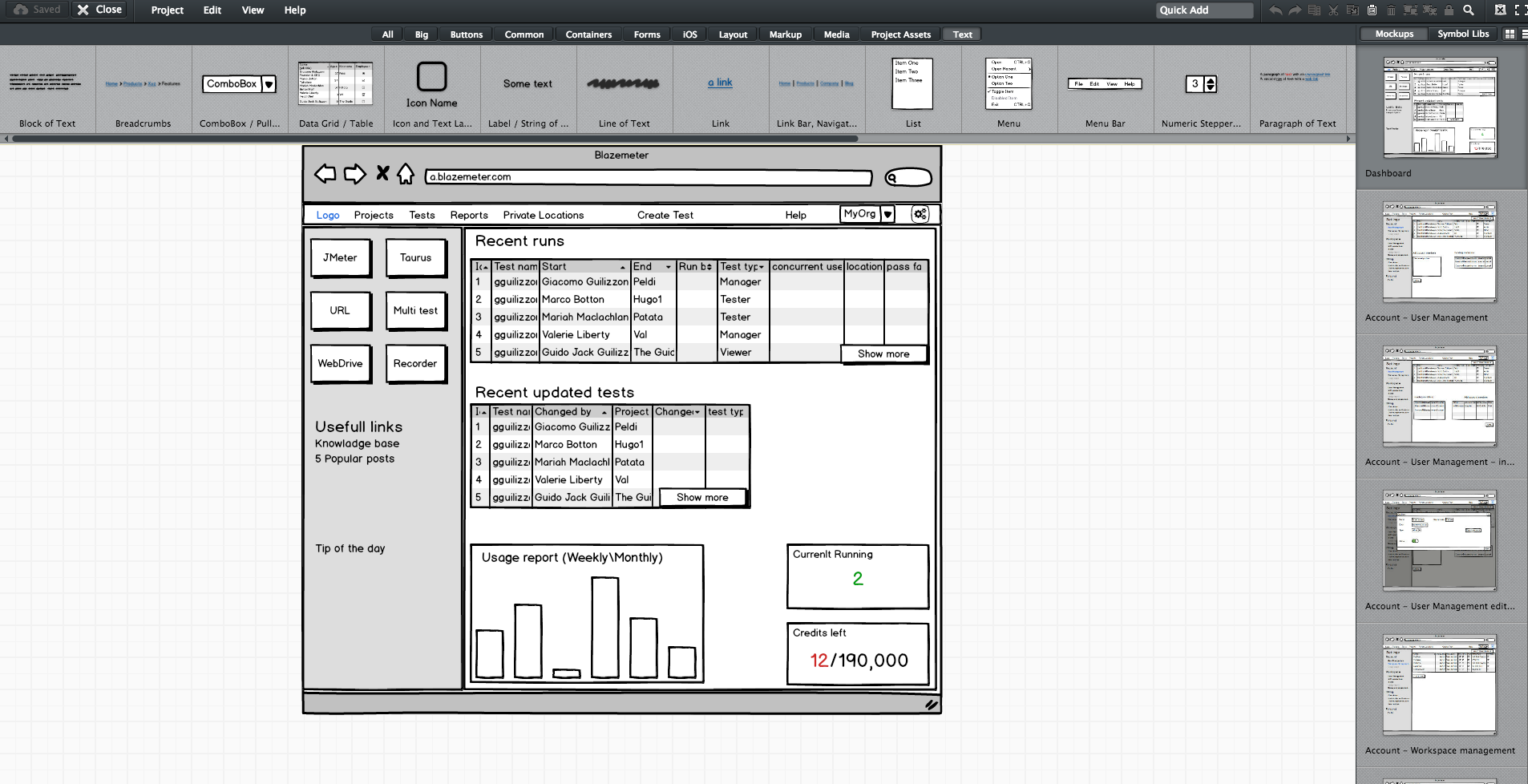
    Since no one wants to read a lot of text (except perhaps the awesome readers of this article), the product manager should prepare mockups. They don’t have to be designed or colorful, but they do need to show the team what the feature looks like in his or her vision. During our grooming sessions, we used Balsamiq, which lets you create screen sketches for how the product is supposed to look, feel and work.

    Editing screen sketches using Balsamiq

    After the initial presentation, the sessions should include a lot of open discussion—asking questions, checking for answers and examining compliance, etc. —until everyone is satisfied and understands what the feature requires from them and from others.

    This is the time and place for frontend, backend and QA to give their opinion about the schedule and to alert and flag any potential problems in development or extreme use cases. It’s the role of the product team to answer questions and change the flow and requirements until there are no R&D rejections.

    Afterward, the frontend and backend leaders need to create a feature development plan, sitting down to determine what data they need to transform the product vision into a real thing. Or in other words, which APIs are required for each flow or button, how long each step is supposed to take, including buffers, and the order of development. APIs are the agreed “contract” between the development teams. After determining the contract terms, each team can proceed individually.

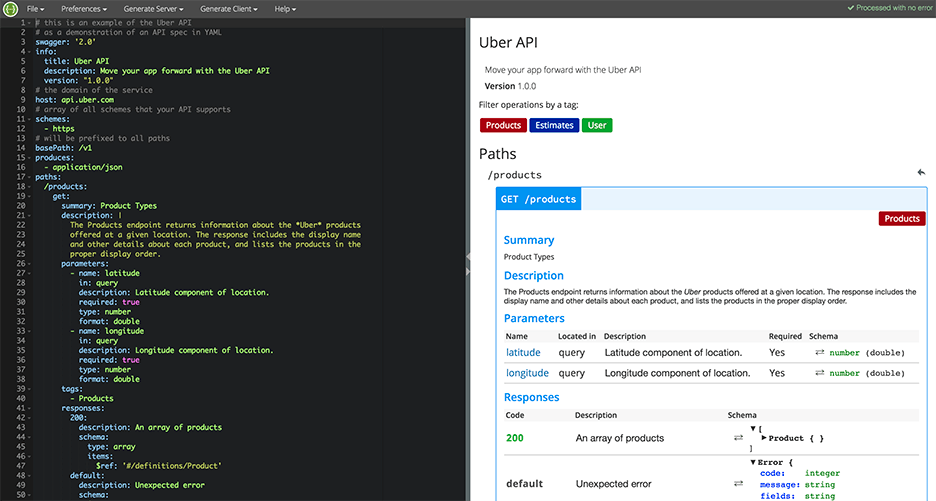
    I recommend you write your APIs in Swagger, which turns YAML files into detailed HTML pages with all the APIs.

    Swagger Editor

    This plan needs to be transparent to everyone working on the project. In fact, it’s even better if each project participant can add and describe scenarios. Tools such as TestLink and Atlassian do just that. Then, when the code is ready, developers can go over the list and see everything is covered.

    We will need to stick to this schedule later on, especially when new demands unrelated to the feature come in, such as fixing bugs. Sticking to this plan is the best way to distinguish the wheat from the chaff of the development process.

    Start writing automation ASAP

    After planning, we want everyone to start working, and not only the backend. To do that, the backend can prepare mocks, either through outsourcing services such as JSON servers, which show inputs and outputs, or by writing dummy code.

    I mentioned earlier that we used Swagger to write APIs. We also used it to generate a server in NodeJS/Python, like this:

    Generating a JSON Server through Swagger

    From this moment on, frontend can begin writing and building screens and QA can start writing API automated testing, by using tools suh as JMeter. At this point, frontend and QA have the response codes and response bodies; they know which features to put where; and which APIs they need and how to use them.

    QA also know which data they’re missing, such as field names and field data. Sure, the backend code isn’t ready yet and all of the automated exams will return “red” instead of “green,” but the main issue is making sure everyone is as prepared as possible.

    This includes load and performance testing. You can use open-source tools such as JMeter, which is enhanced by CA BlazeMeter. By uploading our test script into, configuring the number of virtual users and ramp-up time, determining geo-locations to test from and analyzing KPIs to determine trends and the health of our system, we can ensure our product is delivered to our customers without crashing.

    This is also true about sending code to QA: Developers should test their code themselves and ensure that when they commit their code, it works 99.9 percent of the time.

    By starting automation as soon as possible, you can minimize future bottlenecks in the development process.

    Ensure the team communicates and works together

    Like I said before, teamwork is the most basic requirement when creating a new feature. This is because new questions arise during development and because requirements change. Therefore, everyone in the team needs to be in sync all the time, from the product manager and the designer to the developers and QA.

    Open communication lines are crucial because everyone is working on the same product at the same time, but each developer or QA should be working on a different part of the product and on different functionalities. Communication ensures each person’s work is compatible with the rest of the team’s work. This saves time, prevents frustration and redundancy and ensures maximum professionalism.

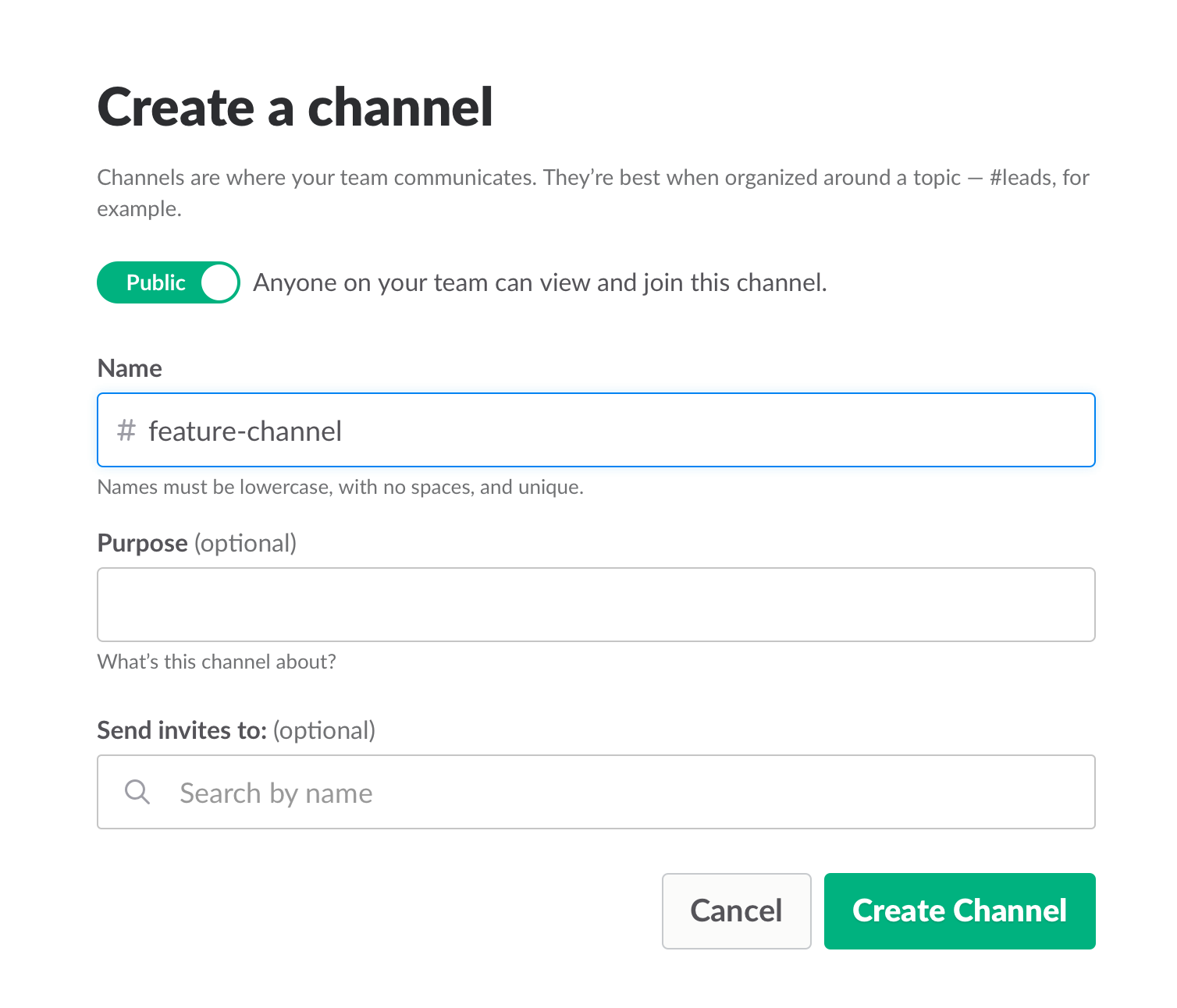
    To make sure everyone knew what was happening, we used Slack and opened a dedicated channel for the creation of this feature. We also had daily (short!) standups where we discussed what we have and what is missing.

    Opening a Slack channel

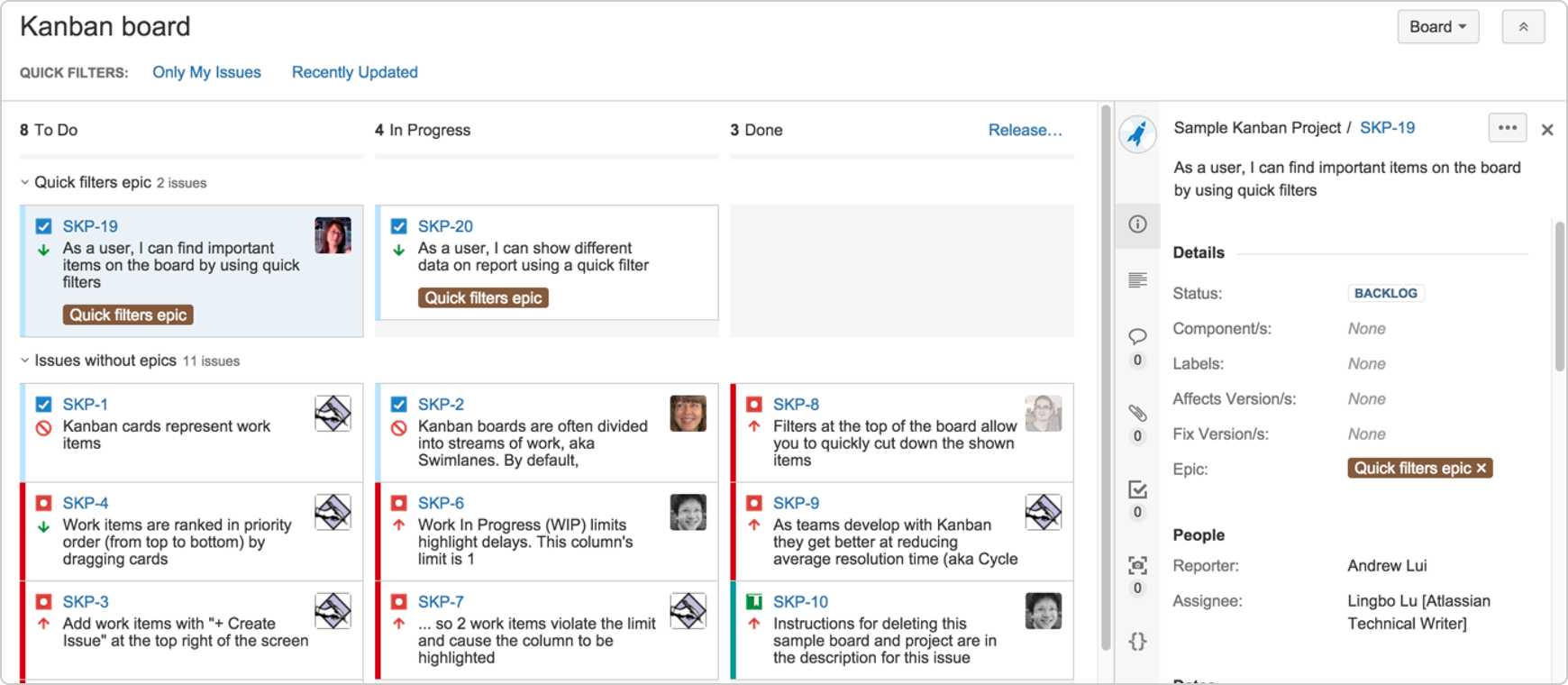
    Communication also includes team and assignment management. JIRA, our primary issue tracking tool, offers Kanban-style, Scrum and fully customizable boards, which show the progress of each development task, including the developer assigned to it, and his or her exact status or phase.

    This helps you understand what other people are working on, and just as importantly, where people are stuck. If you can, get everyone to work in an open space and put a large screen in the middle of it. This lets you stay in sync at all times.

    We used JIRA to open and manage bugs as well. This was helpful when multiple QAs found the same bug. It’s important to carefully choose which tickets are opened and put them under one epic, so everyone stays focused.


    JIRA Dashboard

    Another important aspect of communication is ensuring everyone uses the same terminology, as sometimes people might use the same term to describe different things or different terms to describe the same things. To prevent mixups that could waste your time, make sure everyone is on the same page. For example, do you say “system admin” or “<name (ex. BlazeMeter)> admin”?

    Work on the same development environments

    It’s important that everyone works on identical development environments and even on the same version of the tools and libraries. Otherwise, it could cause an (in)compatibility mess, including a lot of unnecessary back and forth and even might cause bugs to pop up. This environment needs to be as similar as possible to production, but only on a smaller scale.

    Conclusion

    Now look at the feature that came out of all that work here. I’m so grateful that I had the opportunity to work on it with an awesome team.

    I hope these best practices help you the next time you develop a new feature. Don’t forget to keep going agile after development and delivery by running tests in a continuous environment such as Jenkins for every commit.

    CA BlazeMeter works with Jenkins, ensuring you can load test in the cloud and analyze your data while shifting left. You can also use different APM tools, such as New Relic, AppDynamics and CA APM to alert you about errors before QA, which saves time.

    — Dor Atias

  • BigPanda Launches DevOps Tools to Troubleshoot and Maintain Healthy Infrastructure at Scale

    New Product Releases Include Unified Search, Incident Dashboards and Enhanced Integrations with Atlassian JIRA Software, Splunk and Datadog

    PALO ALTO, Calif.–(BUSINESS WIRE)–BigPanda, the Alert Correlation Platform that turns huge volumes of IT data and alerts into consolidated insights for businesses, today announced that it has launched new product updates and technology integrations which give Ops teams the ability to troubleshoot and maintain healthy infrastructure at scale. BigPanda’s platform now includes Unified Search and Incident Dashboards as well as new integrations with Atlassian JIRA Software, Splunk and Datadog.

    “Companies looking to mature their operational processes to better support end customers can now unify and visualize monitoring data across their organizations, drastically reduce mean time to resolution and increase uptime with these new features,“ said Assaf Resnick, CEO of BigPanda.

    Unified Search Provides Smarter Results, Less Noise

    Just released, BigPanda Unified Search is a new way for Ops teams to access alert data from all of their monitoring sources, eliminating the need to conduct parallel investigations within each monitoring tool.

    When a problem materializes in a datacenter, it’s not always clear when or where the failure occurred, and Ops teams may frantically search through tens of thousands of alerts from multiple tools to identify the root cause. BigPanda Unified Search drastically reduces time to investigate by giving users an interactive way to find the most relevant alerts and incidents. It surfaces insights from all sources of monitoring alerts by continuously organizing issues from all common modern and legacy tools, including Nagios, New Relic, AppDynamics, Pingdom, SolarWinds, Site24x7 and CloudWatch.

    Using BigPanda Unified Search, Ops teams can search through historical alerts even if the original monitoring tool does not retain that data and automatically find related incidents that were previously resolved or may still be open.

    Operational Health Dashboards

    Ops teams that need an at-a-glance representation of operational health now have access to the new Incident Dashboard in BigPanda. The new feature allows organizations to visualize the health of applications, services and infrastructure areas with personalized dashboards that enable them to be aware of and respond more quickly to issues that can impact the business.

    The new dashboard feature helps Ops teams answer questions about the overall health of their operations and environments and compare it to historical trends. Each dashboard can be customized with specific indicators, including incident counts by status, the percentage increase or decrease of active incidents, and how the volume of active incidents changed over time.

    BigPanda Enhances Integration with Atlassian JIRA Software and HipChat

    BigPanda’s technology integration with team collaboration software company Atlassian helps Ops teams using Atlassian’s JIRA Software and HipChat products collaborate to solve more problems faster.

    BigPanda enables JIRA Software users to automatically create tickets based on intelligent correlated incidents, which helps them save time, reduce ticket clutter, and get a real-time view of what’s happening so they can deliver better customer service and more reliable apps. With today’s announcement, BigPanda now supports a two-way integration with JIRA Software. This means customers who track development tasks now have the ability to automatically resolve BigPanda incidents when JIRA tickets are closed.

    “Many of JIRA Software’s more than 37,000 customers are manually tracking incident response tasks,” said Dave Meyer, senior product manager, Atlassian. “BigPanda’s JIRA Software integration will connect real-time insights from BigPanda with JIRA Software’s powerful search and workflow to help people resolve incidents faster.”

    Splunk and Datadog Integrations Reduce Alert Noise

    BigPanda also announced it is teaming up with two DevOps pioneers – Splunk and Datadog – to reduce alert noise and provide an alternative to filtering through thousands of redundant alerts, pages and emails.

    BigPanda’s powerful aggregation engine normalizes alerts from Splunk, Datadog and other monitoring systems into a single consolidated incident management center. Then, BigPanda analyzes all alert streams in real time, and it intelligently groups them into a simplified list of high-level incidents so Ops teams can detect critical issues faster.

    Now available in the Splunkbase App Store, the BigPanda App for Splunk allows Ops teams to trigger BigPanda incidents from Saved-Search Alerts by using the Custom Alert Actions capability in the Splunk 6.3 release. This app adds an option to the +Add Actions list in the Splunk user interface, making it easier than ever to correlate all alerts in BigPanda.

    BigPanda’s new integration with Datadog makes it easier to integrate the two systems in minutes and synchronize Datadog alerts with BigPanda incidents. BigPanda features like Environments, AutoShare rules, and Operational Analytics can now be used to help Datadog customers monitor infrastructure and reduce the time required to investigate and resolve issues.

    About BigPanda

    BigPanda’s mission is to keep businesses running by improving how IT teams manage the explosion of IT data they receive every day. BigPanda uses data science to analyze massive volumes of IT alerts from fragmented clouds, applications and systems and turn them into actionable insights. Founded in 2012, the company is backed by Sequoia Capital, Mayfield and Battery Ventures. BigPanda is headquartered in Palo Alto, California. For more information visit www.bigpanda.io or follow BigPanda on Twitter @bigpanda.

    Contacts

    BigPanda:
    Joe Schwartz, 415-902-3300
    joe@bigpanda.io