Tag: appdynamics

  • Cisco Looks to Bridge Gap Between Networking and DevOps

    Cisco Looks to Bridge Gap Between Networking and DevOps

    Networking in the enterprise has always stood apart. It might take two minutes or less to spin up a virtual machine, but it can take two weeks to set up the network connections. To help bridge some of the gaps between networking and the rest of the DevOps team, Cisco Systems this week unveiled a series of intelligent switches that promise to do just that.

    Via a Cisco intent-driven networking initiative, it soon will be possible to describe a business outcome that will be automatically enabled at the networking level, says Kiran Ghodgaonkar, senior marketing manager for Cisco. To achieve that goal, Cisco is moving to unify networking on an end-to-end basis, which Ghodgaonkar says primarily will require building a common controller that can be implemented at both the edge of the network and in the data center.

    The first concrete step in achieving that goal is a set of Catalyst 9000 switches running an IOS XE operating system, which Cisco has imbued with machine learning algorithms. Over time, those algorithms will be deployed across both legacy networking infrastructures when appropriate, as well as any new networking and security equipment Cisco brings to market in the future. Once in place, IOS XE will make it easier to implement policies in software that spans everything from prioritizing traffic to implementing security polices.

    This latest Cisco initiative follows the rollout a Tetration analytics platform based on an instance of Apache Spark and Cisco’s acquisition of AppDynamics, provider of an application performance management service delivered via the cloud. Ghodgaonkar says Cisco is aiming to combine analytics and machine learning algorithms to simplify network management in a way that furthers DevOps integration. Right now, however, the biggest impedance to achieving that goal, says Ghodgaonkar, is the fact that 80 percent to 90 percent of networking tasks still require manual intervention. Because of that issue alone, many organizations have experienced limited success in terms of integrating server, storage and networking management, despite the rise of software-defined networking (SDN) in the data center. In fact, to get past that issue, many organizations make investments in pre-integrated systems such as the Cisco Unified Computing System (UCS) platform. But the number of organizations willing to make that kind in forklift investment in IT infrastructure is not all that high when compared to the size of the overall IT market.

    The biggest DevOps issue IT organizations now face, says Ghodgaonkar, is that as various elements of the IT organization invest in automation, silos of automation are created. Cisco says it has developed open application programming interfaces (API) will provide interoperability between its technologies and the rest of the IT environment to help break down those silos.

    It’s still a little unclear these days just how much networking and IT operations can get automated. The good news is that, given the state of network management inside most organizations, things can only improve. The real issue (as any existing DevOps team already knows) may not be so much the technology as it is the culture differences spanning the compute, storage and networking teams.

    — Mike Vizard

  • AppDynamics Extends Performance Monitoring Reach to Developers

    AppDynamics Extends Performance Monitoring Reach to Developers

    AppDynamics, fresh off its acquisition by Cisco Systems, this week moved to extend the reach of its monitoring services all the way out to individual developers.

    The spring 2017 edition of the AppDynamics service now includes a developer toolkit intended to make it simpler for developers to track the performance of their code without having to get that data from an IT operations team.

    Matt Chotin, senior director of Developer Initiatives for AppDynamics, said the goal is to respond to the needs of developers who, in the age of DevOps, increasingly are being held accountable for the performance of their applications end to end. The toolkit enables those developers to directly invoke application programming interfaces (APIs) exposed by AppDynamics.

    The toolkit also provides additional AppDynamics support for the Go programming language, the Xamarin framework used to develop mobile applications and a plugin for Android applications. Now also available are dashboards for tracking individual session and crash alerts and reports that make it possible for developers to discover the root cause of a potential issue much closer to the time it occurs.

    But Chotin said the most unique attribute of the AppDynamics release is that developers can apply diagnostics to business transactions in two modes. One mode enables developers to examine code in pre-production and production environment, while another—a Live Mode—can be used against live application data.

    In addition to extending its reach out to developers, AppDynamics is making it easier for IT organizations to deploy its agent software. A new Universal Agent makes it simpler for the AppDyamics controllers to distribute those agents. Chotin said AppDynamics is also working on developing lighter-weight agents that would be used to provide better support for containerized applications.

    Finally, AppDyanmics is also simplifying its software licensing model in a way that enables sharing subscriptions.

    While AppDynamics has developed an extensive following among IT operations teams, reaching out to developers represents a new frontier. As responsibility for application performance shifts in the age of DevOps, Chotin said AppDynamics is discovering the developers want to be able to access directly the metrics that apply specifically to their code. Instead of being presented with information about every application running in the environment, developers want to be able to zone in on any and all issues affecting their specific code, he said.

    Obviously, not every IT organization is implementing DevOps processes to the same level of zeal. In many cases, IT operations teams are still mainly held responsible for application performance. But as the line between those IT operations teams and developers continue to blur, any move to embed instrumentation functions deeper into the application code base stands to benefit everyone. Of course, not every developer might be excited about being required to do that initially. But once they discover that the time between when there’s an issue and they can go back to writing code starts to drop, AppDynamics is betting that many of them are likely to insist on that level of instrumentation being available.

    — Mike Vizard

  • AppDynamics Spring ‘17 Release Empowers Application Teams to Ship Faster and More Reliably Throughout the Modern Software Development Lifecycle

    AppDynamics Spring ‘17 Release Empowers Application Teams to Ship Faster and More Reliably Throughout the Modern Software Development Lifecycle

    SAN FRANCISCO – April 5, 2017 – AppDynamics, a Cisco company and the leader in application intelligence, today announced its Spring ‘17 release, including the AppDynamics Developer Toolkit and major updates to Enterprise iQ. The latest release empowers application teams to deliver impactful customer experiences faster while laying the foundation for unprecedented scale. Now, the entire business can quickly align around a single goal: continuously delivering high quality mobile and web applications at the hyper-agile pace of digital leaders, regardless of the environment.

    In our digital-first world, where quality and performance are prerequisites for brand loyalty, delivering flawless application experiences is the key to business success. However, many businesses — slowed by organizational misalignment and specialist tools that isolate individuals and groups — struggle to meet increasingly high customer expectations. This puts an enormous strain on application teams to deliver new applications, features, and fixes faster and more reliably.

    Introducing the AppDynamics Developer Toolkit

    With the new developer toolkit, the AppDynamics Spring ‘17 release provides application teams unmatched application development lifecycle transparency, from the code to end-user experiences and the business outcomes. With this newfound visibility, every team member can see the impact their work has on the business in real time, and ultimately deliver better applications that create value for the organization. The new developer toolkit spans tools for build, test, analysis and continuous improvement:

    Build. Support for new languages and development tools enable application developers to transform ideas into better apps faster.

    • Go Support — Go’s (or Golang’s) popularity continues to rise because it’s powerful yet easy to understand and maintain. With AppDynamics for Go, application teams now have the patented Business Transaction (BT) detection and tracing for Go applications. They can now gain insight with reports on errors generated by bad requests, providing better end-to-end coverage across distributed application environments.
    • Xamarin Support — Comprehensive support for Xamarin allows mobile application developers to embed AppDynamics in native iOS and Android mobile applications and monitor and drive application performance from a single code base.
    • Android Studio Plugin — Developers can now automate the instrumentation process for Android applications, thereby reducing errors and making it easier for developers to deliver performant Android mobile apps.

    Integration and Test. New extensions to BTs empower app teams to focus on the user journeys and code that move the needle the most, improving customer outcomes and speeding release velocity.

    • Developer Mode Business Transactions — With new Developer Mode BTs, application teams now have deep-code diagnostics for specific Business Transactions in both pre-production and production environments enabling them to quickly address bottlenecks and remediate any issues found in testing.
    • Live Mode Business Transactions — Live Mode BT delivers faster and more accurate configuration by detecting and defining rules according to live application data to identify critical Business Transactions.

    Analysis. With new crash analysis tools, applications teams will spend less time on unplanned work and troubleshooting, and more time building new features that can impact the business.

    • Smart Crash Alerts — When instrumenting new mobile applications, Smart Crash Alerts are set up by default to save time and effort post-instrumentation. Spend less time configuring alerts.
    • Unique Crashes in Business iQ — New crash reports in Business iQ correlate app crashes to conversion rates. Now app teams have new visibility into crashes so they can prioritize fixing the issues that matter the most to the business.

    Continuous Improvement. The best apps are continuously refined and tuned to improve the user experience. The AppDynamics Developer Toolkit provides unmatched intelligence into customer journeys so app teams know which updates will matter the most to customers and the business.

    • Real User Insights — New session summary dashboards track individual customer sessions while capturing scrolls, taps and other gestures so developers and business leaders gain unparalleled insight into how customers experience applications.
    • Mobile Scorecard — Major updates to the mobile scorecard view the metrics that matter, at a glance. The new mobile scorecard makes it easy to see crash rate, number of crashes, network request performance, and error rates for every mobile application at a glance.

    The Spring ‘17 release also features updates to Enterprise iQ that provide powerful new capabilities and scale for modern enterprises including:

    • License Management — Provides the flexibility required for DevOps environments by assigning licenses based on business unit. With powerful configuration rules and a simple to read dashboard, license keys can be easily assigned or reassigned so that teams never run out of licenses when they need it.
    • Universal Agent — Deploying, upgrading, and maintaining agents is now significantly easier. A single package can now be deployed to any machine that requires monitoring, and the universal agent will coordinate with the AppDynamics controller to automatically deploy and configure it so teams spend less time configuring and more time innovating. Universal agent supports the Java and Machine agent types, with other agents expected to be supported in future releases.

    Comments on the news

    • “A frequent cause of underperforming application teams is a lack of collaboration or common goals,” said Donnie Berkholz, Research Director at 451 Research. “With its new developer toolkit, AppDynamics aims to help build stronger teams with more impactful results by providing a framework for measurement and shared ownership that teams can rally around.”

    Pricing and Availability

    • The AppDynamics Spring ‘17 Release is expected to be made generally available beginning April 5.

    Additional Information

    • Learn more about the Developer Toolkit
    • Learn more about the App iQ Platform

    Connect with AppDynamics

    About Cisco

    Cisco (NASDAQ: CSCO) is the worldwide technology leader that has been making the Internet work since 1984. Our people, products, and partners help society securely connect and seize tomorrow’s digital opportunity today. Discover more at newsroom.cisco.com and follow us on Twitter at@Cisco.

    — Jules Louis

  • DevOps Chat: The Evolution of APM with Jonah Kowall, AppDynamics

    DevOps Chat: The Evolution of APM with Jonah Kowall, AppDynamics

    In this DevOps Chat we speak with Jonah Kowall, VP of Market Developments and Insights at AppDynamics. Of course prior to that Jonah was a VP of Research IT Operations at Gartner. Jonah actually gave us a great overview of the evolution of APM  and how the market has evolved. He also tells where we might be heading now.

    It is not often you can get the lay of the land from an expert like Kowall, so I highly recommend you give this a listen.

    As usual, immediately below is the streaming audio of our discussion and below that is the transcript of our conversation.

    Streaming Audio

    Transcript of the Conversation

    Alan Shimel:                Hi, everyone. Alan Shimel, devopsy.kinsta.cloud here for another DevOps Chat. Our guest on this episode of DevOps Chat is Jonah Kowall of App Dynamics. Jonah, welcome to DevOps Chat.

    Jonah Kowall:             Thanks, Alan. Happy to be here—great to speak with you and everyone else listening.

    Alan Shimel:                Thank you. So Jonah, before we jump into App Dynamics, you have a—you’ve had a bit of a career already. Why don’t you share with our audience a little bit about kinda your journey to how you got here today?

    Jonah Kowall:             Yeah, definitely. Well, I always knew I wanted to be a technologist and, for many years, I worked at about six or seven different startups. I co-founded one of the first content filtering companies back in the early 2000s and, you know, got acquired a couple of times.

    And I kinda shifted careers a few years ago, about seven years ago, and moved into the analyst world and kinda moved away from running ops and security and infrastructure and application performance and decided to take the analyst path, and did that for about four years, which was very interesting and different, learned a lot of new skills, a lot of new muscles were built.

    And I joined App Dynamics a little bit over two years ago, and I work with our       co-founder and CTO running product strategy. I do a little bit of marketing, but quite a bit of product management and kind of looking into where we’re going as a company to solve the next generation of problems that we’re starting to see in our customer base.

    So that’s a little summary of where I came from and however you’d like to take it is great.

    Alan Shimel:                Sure. I guess the real question is, do you know where you’re going, but we’ll come back to that in a second.

    Jonah, as I spoke to you offline about, I wanted to talk to you a little bit about what I have seen, you know, as an observer of the market at devopsy.kinsta.cloud. In terms of the evolution of what used to be just a few years ago, a very kinda stable space called APM, right? We had, the APM space had a handful of players—App Dynamics was certainly one of them—who were, by the way, all doing pretty well, it seemed.

    And what we’ve seen in the last few years is, you know, in the—first of all, more people joining the fray, but more than that, in the race to distinguish one from the other, many players within this space are kinda rephrasing their mission, their—not running away from APM, but their APM plus, maybe. And so we’ve seen, you know, alphabet soups of ARAs and a whole bunch of different combinations.

    What’s your take on that, Jonah?

    Jonah Kowall:             So, when you look back—and, you know, when I started at Gartner, there was a lot of confusion around application performance and application monitoring. And there was like a general belief that anything that monitored some kind of application or even monitored the network and tried to extract application information was, in fact, APM.

    And what I kind of tried to do in my time at Gartner, and I think it sort of changed some things, was really focus APM on instrumentation of applications. So, how do we see the code, how do we get inside the application, how do we trace from end to end and really provide that visibility and the diagnostic capabilities that are really gonna be needed in today’s applications, which are incredibly complex and diverse, and consist of a lot of new technologies?

    So, building that kind of visibility is really hard to do. I mean, if an APM company—and there are plenty of them that have started over the last couple years—they have many, many years before their instrumentation becomes decent, if they’re even going down that path. And the ability to extract information from a running application, without breaking it, is very, very difficult to solve. It takes a lot of time, a lot of experimentation, a lot of work with customers.

    And so this market is very hard to enter into and compete with the three leaders in the space. It’s just a big challenge, and you’re looking at five to six years before these things mature, if they continue to pursue them. So what you’re kind of seeing, and what you alluded to, is that companies are trying to take a different angle and avoiding the deep instrumentation and just trying to provide SVKs and tools for developers to build those, you know, that visibility. But it’s a big challenge, because in enterprise and packaged applications, those products don’t work, and that’s really the challenge that I continually see out there when I observe the industry.

    Alan Shimel:                Got it. So, you know, certain—I’m sorry, Jonah, I have a little tickle. App Dynamics, you know, in, let’s call it an immature industry, rapidly become an 800 pound gorilla, and I think we’ve all seen the proof of that in recent news around acquisitions and so forth. But I’m not gonna go there, Jonah—suffice to say, App Dynamics is a market leader in its space.

    How does this evolution, if you will, changing dynamics, you know, you said you’re working on future problems—how do you think this plays into the future of App Dynamics?

    Jonah Kowall:             Yeah. Well, I think that applications and technologies will continue to evolve, and you know, we’re already starting to see a lot of new application paradigms that we’re gonna have to shift a lot of our core technology to support and to essentially leapfrog what the rest of the market is able to do, and we’re hard at work doing that.

    But aside from the deep, you know, introspection of software, there is also a big push for us to really understand the business, because today’s enterprises, regardless of what they do, whether it’s extracting natural resources from the earth or building cars or providing mortgages—these companies are all software companies, and their businesses depend and are driven by their software. And our goal is really to understand the business execution and the user experience of those transactions that are critical. And, in kind of taking that to the next level is really, how do we look at the outcome of software and of these business transactions as they come together.

    So, our vision is not only to increase our capabilities of the core of what we do in APM, but also to really provide a lens into the business that really provides that IT business alignment that everyone talks about and everyone struggles with today. So we really see that as the differentiator in these large enterprises that are really challenged with a lot of legacy and a huge amount of demand to change their businesses.

    Alan Shimel:                Got it. Got it, got it. So, Jonah, let me pivot a little bit to, there was another area I wanted to touch on with you, and that is this whole area of containers, micro-services—but containerization. Virtually every call, every briefing that I’m on, somehow or another containers make their way into the conversation. How big a focus is it over in the, in terms of product and in terms of the strategy at App Dynamics?

    Jonah Kowall:             Yeah, I mean, micro-services and containers are definitely the peak hype, let’s say, of the day—there’s no question about that. And they provide a lot of benefit, but a lot of people really feel that containers and micro-services are the answer to every problem. And this is something that we’ve seen over and over in our industry where, you know, there’s a new kind of angle to an existing set of technologies that we feel is really gonna make the biggest difference. And although containers and micro-services are both important paradigms, they’re not the answer to everything.

    Our customers are clearly retooling some of their applications around a micro-services architecture, and they’re definitely running workloads on containers, and these things are important for us to support, but are they more important than, you know, building core functionality to support new languages and new frameworks and really helping our customers with their more core business problems. It’s hard to say. I mean, both are clearly critical, but a lot of it is hype, and you know, the hype obviously fades as people become disillusioned with the fact that containers and micro-services don’t solve all your problems. They create a lot of new problems, and that’s just the reality of technology.

    So, as an industry, we’re very over rotated to containers, micro-services, and public cloud, and you know, we’ll soon realize those aren’t the answer to all of our problems—and oftentimes, they create new problems, as well. So, you know, I think it continues to be a cycle and, you know, I really think the evolution of cloud into a decentralized model will be a pretty interesting trend over the next, you know, 5 to 10 years as well.

    Alan Shimel:                Got it. I think we’ve barely scratched the surface. You know, Jonah, I was on a call previous to this and it was around software defined storage and networking and stuff, and it just—listening to it, I had such a déjà vu of sitting back in on the VMware stuff, you know, back in, I guess mid-2005, around then.

    Jonah Kowall:             Yep.

    Alan Shimel:                It just seems to promise so much change for us here; it’s crazy.

    Jonah Kowall:             [Laughter] It always does, and you know, it comes with challenges, always, and people become kind of disillusioned, but there are benefits to those that embrace it, do it well, and you know, have the types of problems that those technologies can solve.

    Alan Shimel:                Yep. Excellent. Well, Jonah, we’re just about up on our time. I’m gonna give you a surprise question here, if you don’t mind—if you can’t answer, that’s okay.

    Jonah Kowall:             Sure.

    Alan Shimel:                But I usually ask, the last question I always ask my guest is—recommend one book to our audience that you really think they should read to help them with their careers.

    Jonah Kowall:             That is an interesting one. I actually tend to, I do a lot of traveling. I actually flew over 200,000 miles in 2016.

    Alan Shimel:                Wow.

    Jonah Kowall:             So, when I actually get to read, I tend to read lighter materials, or I read very deep, technical materials that kind of help with some of the product work that I’m doing. So a lot of the books I read tend to not be too inspirational, but I do really enjoy participating in some of the open Slack communities. I enjoy reading a lot of blogs and other content that tends to be fresher.

    Alan Shimel:                Mm-hmm.

    Jonah Kowall:             You know, I read probably about 500 blogs in my RSS feed regularly, so that tends to really be how I get information, and I do really enjoy reading some of the Google Scholar, if you set some interesting alerts up, you can get some great research papers coming out from universities that are very interesting and forthcoming, just kind of highlighting some of the next generation thinking from the educational institutions all over the world.

    So that really tends to be more what I tend to read versus, you know, something that’s more career focused, I would say, or inspirational in that manner. So sorry I don’t have the best answer, but that’s what I tend to do.

    Alan Shimel:                No, no—that’s fine, and that works for us. Well, Jonah, I think we—well, we are out of time, but I want to thank you for joining us today on DevOps Chat, and I look forward to perhaps having you on again in the future.

    Jonah Kowall:             Sounds great. Thanks for your time, Alan, and thanks, everyone, for tuning in

    Alan Shimel:                Thank you. Jonah Kowall, App Dynamics, our guest today on DevOps Chat. 

                                        This is Alan Shimel for devopsy.kinsta.cloud, and we hope to see you soon on another DevOps Chat.

    — Alan Shimel

  • DevOps Chat: Justin Vaughan-Brown, AppDynamics

    DevOps Chat: Justin Vaughan-Brown, AppDynamics

    This episode of DevOps Chats is with Justin Vaughan-Brown of AppDynamics. This was recorded just prior to the announcement of Cisco’s intent to acquire AppDynamics for about $3.7B. So sorry, folks no insight into that deal here.  Nevertheless, Justin is a DevOps veteran. While at AppDynamics for just a few months, Justin has worked and helped lead several DevOps tool and consulting businesses. He has some great insights that he shares here with us.

    As usual, the streaming audio of our conversation is immediately below, followed by a transcript of our conversation. Enjoy!

    Alan Shimel:                Hey everyone, Alan Shimel, devopsy.kinsta.cloud here for another DevOps Chat. And our guest for this edition of DevOps Chat is Justin Vaughn Brown of AppDynamics. Justin, welcome to DevOps Chats.

    Justin Vaughan-Brown:          Thanks Alan, glad to be with you.

    Alan Shimel:                Glad to have you here. Justin, you are a DevOps industry veteran, if there is such thing, in a relatively short time. But you’re hanging your hat at AppDynamics now. How long have you actually been with AppDynamics?

    Justin Vaughan-Brown:          I’ve been with AppDynamics since – it was the very last day of October, so kind of two to three months in now.

    Alan Shimel:                Perfect, just enough to get I guess the lay of the land there. And as we spoke beforehand Justin, and as I think most of our audience, it’s been a busy two to three months, you know, between the end of the year and everything going on in the market you’ve had a good chance I would imagine to get a flavor for not only what AppDynamics is doing but really kind of where the market is heading a little bit in terms of DevOps APM and stuff like this. Correct?

    Justin Vaughan-Brown:          Absolutely Alan. I think what was very interesting was – actually a few weeks after joining – was spending time with customers and partners and colleagues at App Sphere in Las Vegas in November: that was absolutely fascinating, so that was a real eye opener in terms of how APM customers – you know, those of AppDynamics are actually using DevOps and adopting it and how they’re leveraging our technology to help them in their DevOps adoption.

    Alan Shimel:                Yes, I was actually at App Sphere as you know – I was at App Sphere myself and it was a great conference and it was a great customer-focused conference in that there were a lot of users there – real live users, right? – the rare, endangered live user at these conference – not a Biz Dev first and not a sales person but real users and I had some fantastic conversations myself.

    Justin, I wanted to spend a moment a little bit talking about APM because sometimes when we look at software development life cycles and kind of where the action is around DevOps you know a lot of people get all hot and bothered and hyped up around configuration management, right, the puppet and the chef and the ansible and salts and these kinds of things. And then, you know, they move from configuration management to CICD and of course that’s a world unto itself.

    But then when we look at let’s say post deployment, you know, okay, so now we delivered and we’re delivering continuously, but what impact is that having? How are things going? Are our customers happy? Are we delivering better products, right, and are they performing as intended?

    And you know all of these things you would think would make APM sort of king of the castle, top of the heap. But a lot of times it doesn’t: it kind of gets subsumed within the whole DevOps conversation or is maybe a little bit outside.

    I’m interested in what’s your opinion on that?

    Justin Vaughan-Brown:          That’s an interesting perspective and I can see where you’re coming from. I think it’s possibly because, you know, from historically a lot of the vendors are more and more what you call classically the dev side and have generated a lot of interest and adoption. But ultimately we’ve seen the company grow from strength to strength, and I think what was really eye opening was – at App Sphere – was seeing how critical app dynamics was in enterprise DevOps adoption.

    And I think what most particularly – you’ve hit the nail on the head there – if you look at for example the impact of those applications in production how are they actually performing, where our issues lie, where the – the apps themselves can be fine tuned and ensure that you have the best customer experience possible.

    I think in the main – and this is a generalization of course now, there are exceptions – I think we’ve gone beyond the state where applications – with the exception of certain tougher cases like say, you know Black Friday and so forth where sometimes some organizations can have challenges – but in the main I think what we are seeing is most applications perform at what I would call a base level – what we’re really now into is tuning them: is identifying absolutely the tiniest little bit of latency or glaze or issues wherever they may lie so that the performance of those applications, irrespective of where they’re delivered – you know, on a tablet or mobile device, on a PC or whatever – are highly high performance, and again, irrespective of platform, operating system or so forth – all of those – I think that’s become one of the overriding demands.

    And I think it’s evolved even more so now – you know, we recently launched Business IQ which actually drills it even further and actually looks at the business benefit of the application you’ve released where a consumer’s using the application, where are they located, where are they on the user journey, where are they on the purchase cycle. And you’re finding lots of consumers are going through to about to purchase and then there’s a delay in the actual purchase process as the transaction is going through or not going through.

    So I think it’s definitely evolved and I think we’re seeing certainly an absolute relevance for APM now.

    Alan Shimel:                Got it. Absolutely. Justin, let me – as I said earlier you’re a DevOps industry veteran though and AppDynamics isn’t your first stop on the DevOps train.

    Why don’t you, if you can share with our audience a little bit – we’d like to hear your views though on – so that’s APM and what sets it apart – what other kind of – let’s look at trends in the DevOps space and maybe how it relates to APMs.

    What other kind of trends are you seeing?

    Justin Vaughan-Brown:          I think one of the interesting ones that we’re seeing is – you know, you’ve seen the evolution of Docker over the last kind of 18 months to 24 months, and I think that and the overall rise of containerizations in general is having a huge impact.

    I recently saw an article by a bank – folks who were going to report that they’d recently issued on the – I would say the stellar rise of containerization and adoption, and it’s almost a case of, you know, there’s no going back.

    So I think it’s really down now to where you’re adopting containers and to what degree, one or another, if, for example. And that’s where we’ve seen our ability to help that; for example in terms of their integrating and monitoring docker container performance easily to ensure that you’re optimizing and maximizing the potential there and that doesn’t become a black box area where you’re not getting the granularity of insights that you’re looking for. So that’s one area definitely.

    I think also, you know, with cloud adoption as well, to be able to monitor across multi cloud environments – and that’s just not one vendor only, you know – as I said multi cloud – whether it’s Amazon AWS, Microsoft Azure,  and so forth.

    So I think there’s a need to be, you know, platform and cloud agnostic going forward. And that’s something recently I’ve seen at analyst conferences where they talked about so many enterprises now from an operations point of view being cloud brokers and then looking at not just one vendor – not being locked in – but being able to switch and change dependent on which particular application they’re working on or initiative and so forth. So I think those are two clear areas.

                                        I think the last one probably I’d highlight is micro services where, for example, the ability with APM to automatically monitor in micro services, you know, deployed in an elastic infrastructure so you can look at issues around say threat contention and then zoom in and identify and address their root causes.

    So seeing all these kind of technologies orbiting around that APM can absolutely assist in the adoption. And if you adopt this properly obviously they’re hugely advantageous. If you struggle with them then they can actually set you back and you’re worse than if you hadn’t embarked on that journey. So those are three that immediately come to mind Alan.

    Alan Shimel:                And I don’t disagree with any of them Justin, I think they’re all dead on.

    Let me throw another – and this might be a bit of a curveball at you – but as a fellow observer of the DevOps space Justin what I find interesting is that when we first started talking about DevOps everyone sort of said, “Oh yeah, DevOps is great for startups because it’s in their DNA and they do it by – you know, not by choice: they have to. And this is – DevOps was made for these folks.”

    Where you know this whole issue of “enterprise DevOps” was almost like a different animal or a different set of stripes. And you know I was always one of the ones that argued DevOps is DevOps, you’ve got to recognize who your customer is and who your organization is, but the principals of DevOps apply across small and large organizations.

    But low and behold here we are now, you know, a new year and we’re a couple more years into this DevOps thing and it almost feels like DevOps is a big organization way of doing business, maybe even more so than the startups. What’s your feeling on that?

    Justin Vaughan-Brown:          I think you’re absolutely spot on Alan. I mean I think we’ve both been on that journey where we’ve observed certain trends and how the markets evolved.

    And if you look at, for example, at the DevOps Enterprise Summit that took place last year in San Francisco and London – both extremely well-attended – and then if you look at those agendas on both of those the vast majority from my perspective of those presenters presenting from the end user side were representing enterprise organizations – household names – in fact if anything those smaller organizations were the minority, and equally even the – you know, there’s also I think with the larger organizations it was those that were not just the, you know, the purely kind of online shop equivalents where they’ve got no legacy infrastructure that they have to deal with: a lot of these are, you know, 50-, 100-year-old companies that have been around a long time yet are making that brave journey.

    And I’d like to just kind of re-quote an observation made by Gene Kim last year when he said what really impresses him is – it makes him really think of people who are being heroes within these large enterprises, within these organizations, who are, you know, probably I’d say mid-level advanced in their career and in age and during their career who are making these brave decisions, who are doing things differently: they could carry on as normal.

    And in doing so they are trying different things, they are embarking on new journeys and they’re bringing their teams with them, they’re collaborating more closely.

    And I think that’s – it’s those kind of – I think Gene Kim is absolutely spot on in it’s those kinds of heroes, those catalysts to change – and I think frankly DevOps is absolutely for the enterprise and will continue to be so.

    Alan Shimel:                Makes sense. Justin we’re running a little low on time. Let me turn this back to App Dynamics if you don’t mind. What are you – so we’ve talked about these trends, we see the market kind of taking shape – what does it mean for AppDynamics?

    Justin Vaughan-Brown:          I think it means a lot of opportunities to continue to help the enterprise customers. Most of all I think – you know, from a personal level I’m very excited by the recent release of Business IQ because I think that enables DevOps teams now to take information relating to how that application is being consumed, where and in which way of these visual user journeys – to actually then take that information and present it to the business – and that moves it from purely a DevOps conversation to a business one just to say, “Look this is – you know, we’ve all be slaving away the last couple of months on this application. Here’s the actual impact to your business; this is what’s happening, this is the value.”

    And then maybe the business turns around to say, “You know what? Interestingly sales in this region are going really well but not in this region or this group of customers, you know, our gold card member carriers are absolutely loving this promotion but our silver card holders aren’t. Maybe we need to incentivize them in some way,” you know, and so forth.

    So that’s moving, as I said, the DevOps teams into a more business conversation. We know about this topic such as Citizen Developers and obviously Shadow iTeam – more and more and more the businesses are being involved in these decisions, and that’s the way for DevOps to help drive that dialogue rather than being on the receiving end and taking requests from the business, that they’re actually driving that discussion which puts them in a really good position.

    Alan Shimel:                Excellent. Justin, we’re just about out of time here but I want to ask you one last question and that’s the kind of question I ask a lot of our guests here on DevOps Chat.

    For our audience listening out there if you had to recommend one book – and not the usual, you know, Gene Kim Phoenix Project that you would expect from a DevOps podcast – what book would that be?

    Justin Vaughan-Brown:          I think I would go back to a book and a course that I took almost 20 years ago which is The Seven Habits of Highly Successful People by Steven Covey which pretty much broke down most of everything that I knew and rebuilt it another way and gave me a fresh perspective, so I strongly recommend that.

    And if you’re pushed for time I think there’s some YouTube videos where you can go in and get the canned insight in 15 minutes, so that’s well worth taking a coffee break.

    Alan Shimel:                Absolutely. But that’s a classic. And for any of our listeners who have not read that one it really should shoot to the top of your list.

    Hey, Justin Vaughn Brown, AppDynamics, thanks for being this episode’s guest on DevOps Chat. Look forward to having you on again soon and sharing some more market insights.

    Justin Vaughan-Brown:          My pleasure. Thanks very much indeed Alan.

    Alan Shimel:                Okay. This is Alan Shimel for devopsy.kinsta.cloud and DevOps Chat. We’ll see you soon on the next DevOps Chat.

    — Alan Shimel

  • 4 Top Tips for Developing a New Feature

    4 Top Tips for Developing a New Feature

    As a backend developer at CA BlazeMeter, I recently had the chance to work on a big feature for our web app. The feature required a massive change on our backend code, a big change on our frontend and multiple migrations. You know what I’m talking about—it was one of those projects that developers fear.

    But, I gained a lot of valuable experience from the project. Not only did we deliver a kick-ass feature, I also learned the importance of teamwork and patience when developing something new. Armed with those two values, and the right tools and technologies, you can deliver a new feature quickly and efficiently.

    Here are a few more things that I learned that should prove helpful whether you’re developing a major feature or one that only requires a minor code change.

    Tip 1: Plan to understand the development requirements

    The process of development starts way before you start coding, with planning. After the product manager decides what needs to be developed, R&D needs to understand the cost: how many days (or weeks) of development the feature will take, how many people will be needed and which APIs are required.

    To do that, the product manager needs to conduct at least three “grooming” sessions with backend, frontend and QA leaders. The grooming sessions start with the product manager presenting the product flow and requirements.

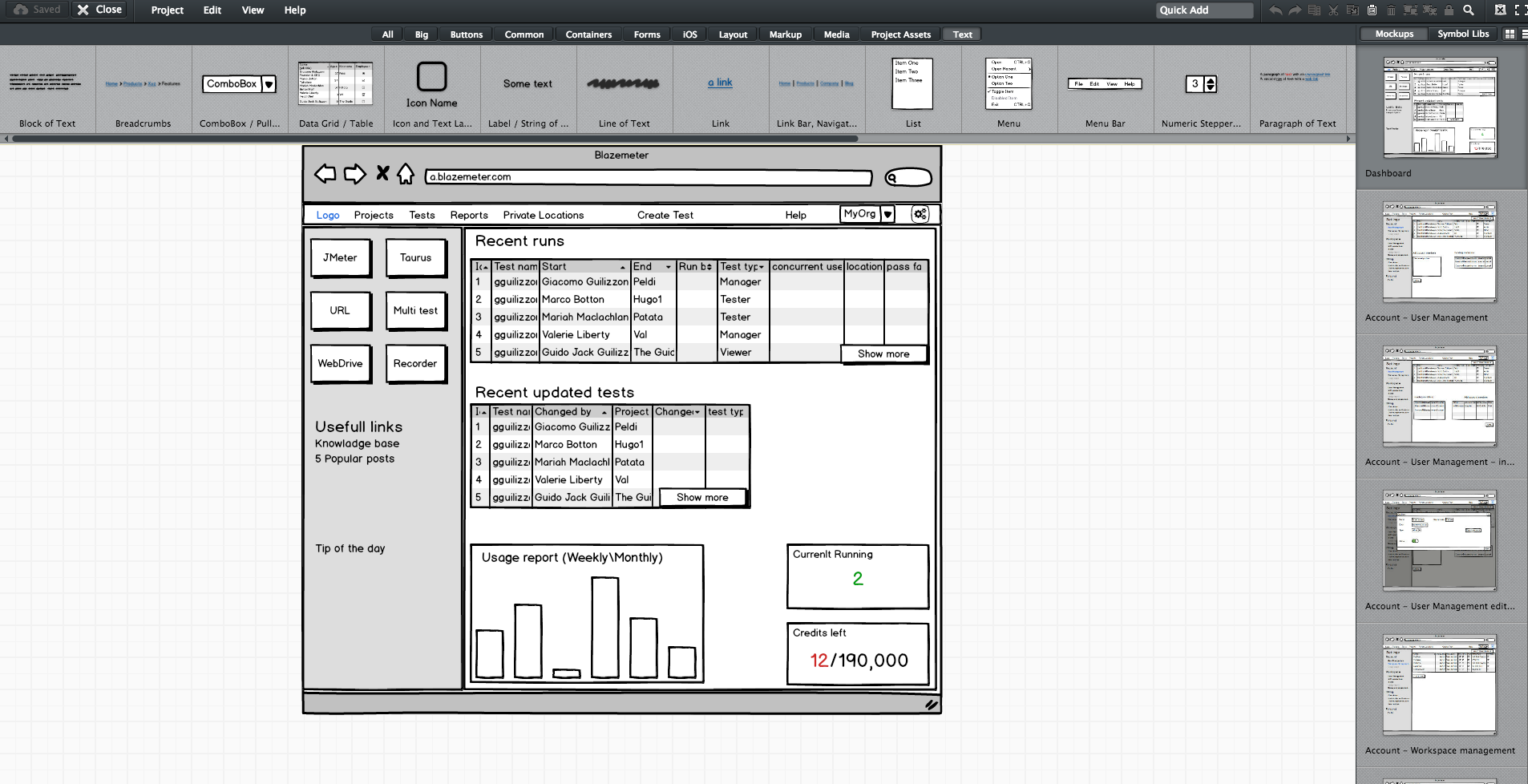
    Since no one wants to read a lot of text (except perhaps the awesome readers of this article), the product manager should prepare mockups. They don’t have to be designed or colorful, but they do need to show the team what the feature looks like in his or her vision. During our grooming sessions, we used Balsamiq, which lets you create screen sketches for how the product is supposed to look, feel and work.

    Editing screen sketches using Balsamiq

    After the initial presentation, the sessions should include a lot of open discussion—asking questions, checking for answers and examining compliance, etc. —until everyone is satisfied and understands what the feature requires from them and from others.

    This is the time and place for frontend, backend and QA to give their opinion about the schedule and to alert and flag any potential problems in development or extreme use cases. It’s the role of the product team to answer questions and change the flow and requirements until there are no R&D rejections.

    Afterward, the frontend and backend leaders need to create a feature development plan, sitting down to determine what data they need to transform the product vision into a real thing. Or in other words, which APIs are required for each flow or button, how long each step is supposed to take, including buffers, and the order of development. APIs are the agreed “contract” between the development teams. After determining the contract terms, each team can proceed individually.

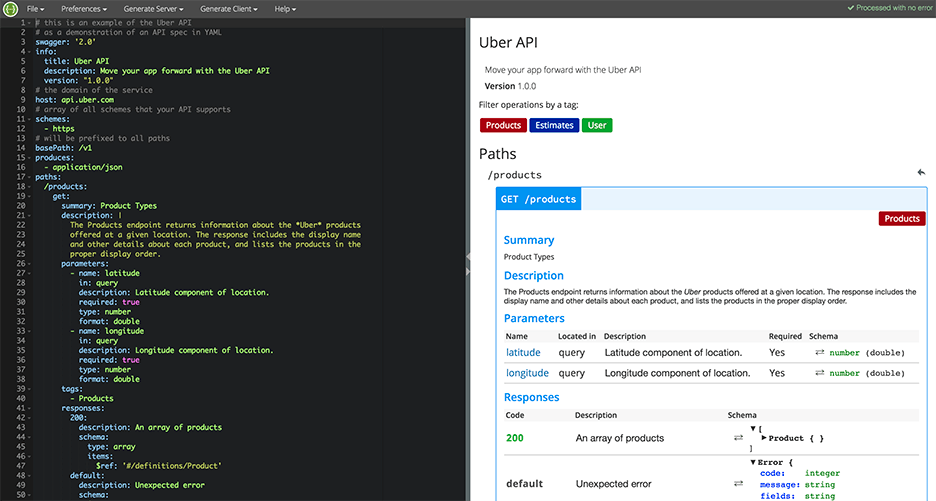
    I recommend you write your APIs in Swagger, which turns YAML files into detailed HTML pages with all the APIs.

    Swagger Editor

    This plan needs to be transparent to everyone working on the project. In fact, it’s even better if each project participant can add and describe scenarios. Tools such as TestLink and Atlassian do just that. Then, when the code is ready, developers can go over the list and see everything is covered.

    We will need to stick to this schedule later on, especially when new demands unrelated to the feature come in, such as fixing bugs. Sticking to this plan is the best way to distinguish the wheat from the chaff of the development process.

    Start writing automation ASAP

    After planning, we want everyone to start working, and not only the backend. To do that, the backend can prepare mocks, either through outsourcing services such as JSON servers, which show inputs and outputs, or by writing dummy code.

    I mentioned earlier that we used Swagger to write APIs. We also used it to generate a server in NodeJS/Python, like this:

    Generating a JSON Server through Swagger

    From this moment on, frontend can begin writing and building screens and QA can start writing API automated testing, by using tools suh as JMeter. At this point, frontend and QA have the response codes and response bodies; they know which features to put where; and which APIs they need and how to use them.

    QA also know which data they’re missing, such as field names and field data. Sure, the backend code isn’t ready yet and all of the automated exams will return “red” instead of “green,” but the main issue is making sure everyone is as prepared as possible.

    This includes load and performance testing. You can use open-source tools such as JMeter, which is enhanced by CA BlazeMeter. By uploading our test script into, configuring the number of virtual users and ramp-up time, determining geo-locations to test from and analyzing KPIs to determine trends and the health of our system, we can ensure our product is delivered to our customers without crashing.

    This is also true about sending code to QA: Developers should test their code themselves and ensure that when they commit their code, it works 99.9 percent of the time.

    By starting automation as soon as possible, you can minimize future bottlenecks in the development process.

    Ensure the team communicates and works together

    Like I said before, teamwork is the most basic requirement when creating a new feature. This is because new questions arise during development and because requirements change. Therefore, everyone in the team needs to be in sync all the time, from the product manager and the designer to the developers and QA.

    Open communication lines are crucial because everyone is working on the same product at the same time, but each developer or QA should be working on a different part of the product and on different functionalities. Communication ensures each person’s work is compatible with the rest of the team’s work. This saves time, prevents frustration and redundancy and ensures maximum professionalism.

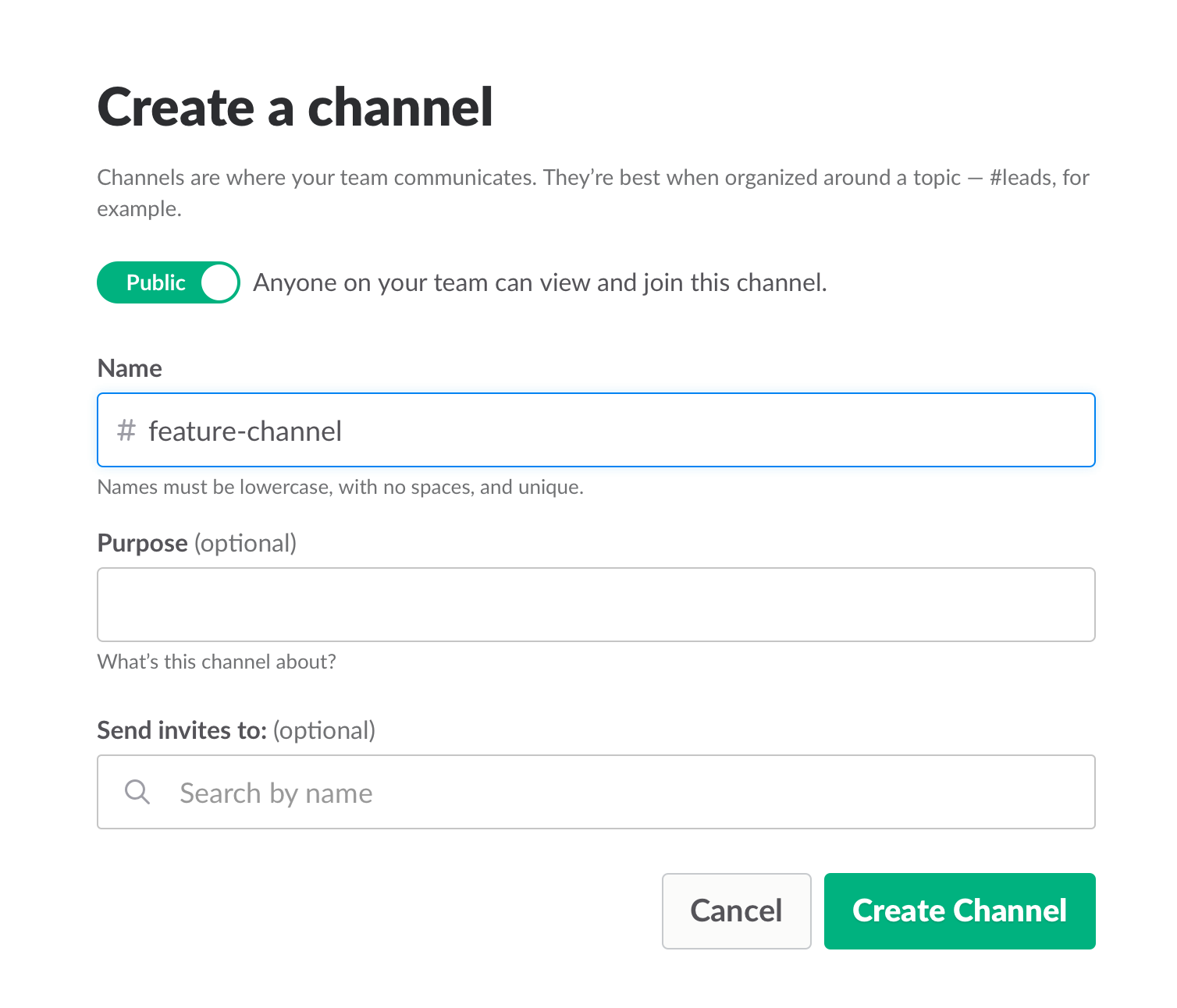
    To make sure everyone knew what was happening, we used Slack and opened a dedicated channel for the creation of this feature. We also had daily (short!) standups where we discussed what we have and what is missing.

    Opening a Slack channel

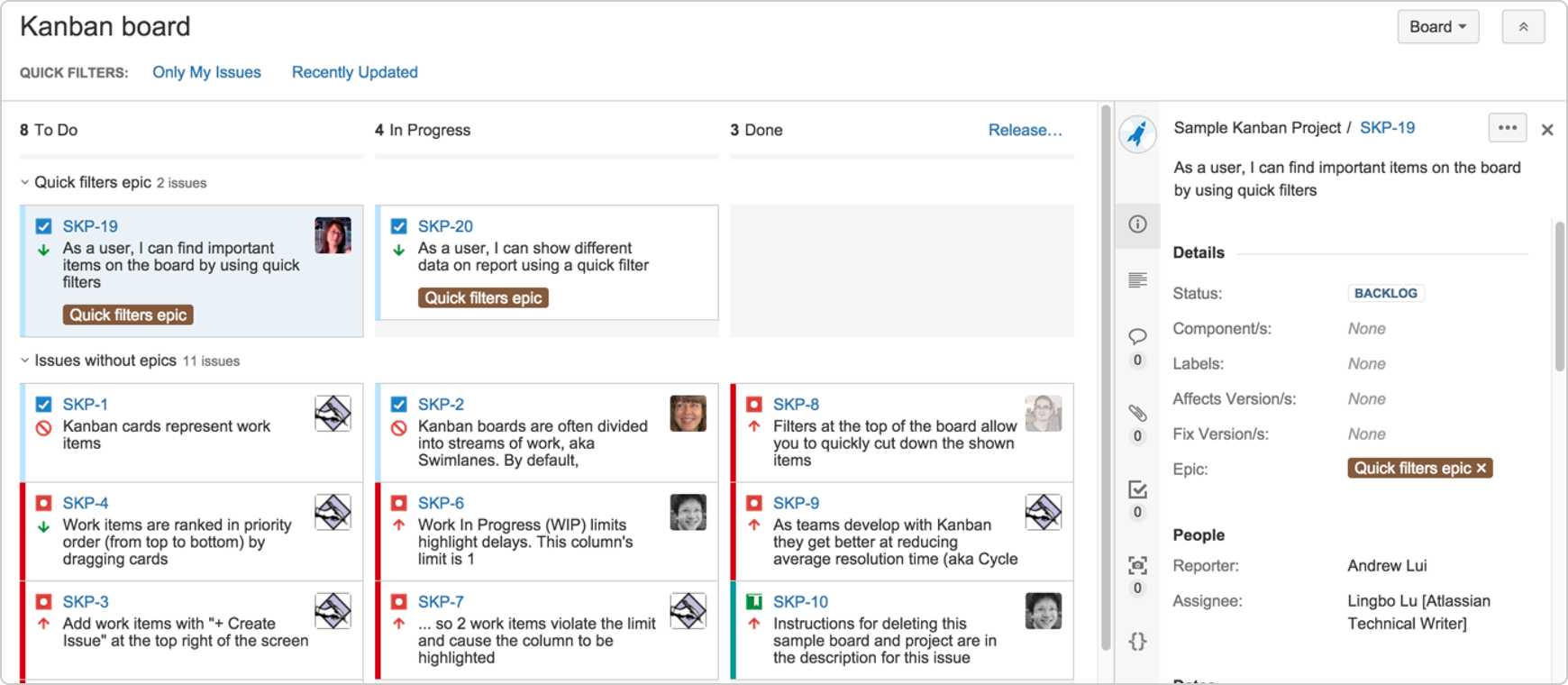
    Communication also includes team and assignment management. JIRA, our primary issue tracking tool, offers Kanban-style, Scrum and fully customizable boards, which show the progress of each development task, including the developer assigned to it, and his or her exact status or phase.

    This helps you understand what other people are working on, and just as importantly, where people are stuck. If you can, get everyone to work in an open space and put a large screen in the middle of it. This lets you stay in sync at all times.

    We used JIRA to open and manage bugs as well. This was helpful when multiple QAs found the same bug. It’s important to carefully choose which tickets are opened and put them under one epic, so everyone stays focused.


    JIRA Dashboard

    Another important aspect of communication is ensuring everyone uses the same terminology, as sometimes people might use the same term to describe different things or different terms to describe the same things. To prevent mixups that could waste your time, make sure everyone is on the same page. For example, do you say “system admin” or “<name (ex. BlazeMeter)> admin”?

    Work on the same development environments

    It’s important that everyone works on identical development environments and even on the same version of the tools and libraries. Otherwise, it could cause an (in)compatibility mess, including a lot of unnecessary back and forth and even might cause bugs to pop up. This environment needs to be as similar as possible to production, but only on a smaller scale.

    Conclusion

    Now look at the feature that came out of all that work here. I’m so grateful that I had the opportunity to work on it with an awesome team.

    I hope these best practices help you the next time you develop a new feature. Don’t forget to keep going agile after development and delivery by running tests in a continuous environment such as Jenkins for every commit.

    CA BlazeMeter works with Jenkins, ensuring you can load test in the cloud and analyze your data while shifting left. You can also use different APM tools, such as New Relic, AppDynamics and CA APM to alert you about errors before QA, which saves time.

    — Dor Atias

  • AppDynamics Buy Expands Cisco’s DevOps Agenda

    AppDynamics Buy Expands Cisco’s DevOps Agenda

    AppDynamics’ $3.7 billion acquisition by Cisco Systems has two major implications for the DevOps space. On a tactical level, Cisco has committed to distributing AppDynamics’ agent software everywhere from the public cloud to individual devices connected to the Internet of Things (IoT) and in between. On a more strategic level, the company is positioning itself to be able to uniquely correlate IT operations data generated by applications and IT infrastructure to give organizations comprehensive visibility into their entire DevOps environments.

    During a briefing with analysts and the media this week, Rowan Trollope, senior vice president and general manager of Cisco’s IoT and Applications Business Group, described how his company sees AppDynamics as a linchpin acquisition that propels the company well beyond its well-established networking and server infrastructure base. After the merger is completed, expected sometime in the third quarter, AppDynamics will continue to operate as an independent business unit within the IoT and Applications group, and current AppDynamics CEO David Wadhani will report to Trollope.

    Trollope described AppDynamics as a complement to Cisco’s ongoing efforts to drive more recurring revenue. The company, which offers an application monitoring service delivered via the cloud, was poised to shortly go public prior to being scooped up by Cisco. AppDynamics is employed mainly by IT organizations to monitor applications running on public clouds. But Wadhani noted one of the fastest-growing segments of AppDynamics’ business is monitoring applications running in private clouds.

    The data AppDynamics gathers in those environments can be correlated against, for example, the data Cisco collects via its Tetration analytics application, which the company launched last year. That capability, Trollope said, will significantly increase the total Cisco value proposition.

    In fact, as hybrid cloud computing scenarios based on microservices and containers become more common, Wadhani noted that monitoring of complex applications running in production across multiple clouds will become a more crucial requirement. AppDynamics recently extended its monitoring service to include support for containers deployed in these environments.

    Under the leadership of CEO Chuck Robbins, extending Cisco’s reach across the enterprise has become a high priority. Cisco recently abandoned a cloud interoperability service strategy. But its acquisition of AppDynamics suggests the company is shifting its focus to higher-margin software that generates recurring revenues across multi-year contracts.

    Following the acquisition, Trollope said Cisco also plans to take advantage of its existing relationships with senior business and IT leaders to advance a vision of DevOps that provides organizations with visibility all the way down to how each customer engages with their IT resources. The issue Cisco needs to navigate is the degree to which those senior executives actually exercise control over DevOps. To date, DevOps has been more of initiative led by developers and IT operations staff than mandates from senior executives.

    Wadhani said Cisco’s direct and indirect sales staff should significantly expand the number of organizations that are exposed to AppDynamics services. That means one way or another, DevOps is about to become a much broader discussion across the enterprise.

    — Mike Vizard

  • AppDynamics and ServiceNow Proactively Keep Your Critical Apps Running

    APPSPHERE — LAS VEGAS — Nov. 15, 2016 —AppDynamics, a leading application intelligence company, and ServiceNow, the enterprise cloud company, today announced AppDynamics for ServiceNow, a new integration solution that will enable Global 2000 companies to proactively manage enterprise applications to deliver exceptional business uptime.

    As more business services are provided through applications, enterprises in every industry are under pressure to deliver the fast and seamless digital experiences that were made mainstream by Amazon, Google, and Facebook. IT departments everywhere are left to sort out how to digitally transform their businesses to meet these modern consumer demands but are falling further and further behind because they don’t have the visibility into metrics to explain how application experiences impact the business.

    AppDynamics for ServiceNow is a modern way to deliver application insight and service health awareness at the velocity demanded for today’s digital business. The solution connects market-leading platforms to help modern IT organizations transform from reactively to proactively managing application and business service performance by leveraging AppDynamics Application Performance Management and ServiceNow ServiceWatch Insight. With AppDynamics for ServiceNow, enterprises can now:

    • Gain Better Visibility – With this integration, the AppDynamics business transaction map is imported into the ServiceNow CMDB, providing advanced visibility into performance.
    • Understand Comprehensive Service Health – By combining, filtering, and correlating AppDynamics application insights with events from additional infrastructure monitoring sources in ServiceNow, IT can render a holistic picture of service health. This allows IT teams to dramatically reduce the volume of events they manage and almost immediately identify issues that may be impacting end-user experiences.
    • Reduce Downtime – Leveraging this combined information, ServiceNow can intelligently trigger automated remediation actions to prevent outages or trigger incident management processes to reduce time to recovery.

    Quotes on the News

    • “With the ServiceNow platform enterprises can automate the way work gets done, delivering new levels of speed and cost efficiency,” said Dan McGee, chief operating officer, ServiceNow. “The AppDynamics integration to ServiceNow provides an even richer level of insight into application performance so IT can quickly get down to root cause fixes and maximize uptime.”
    • “Enterprises are reconciling the need for velocity with the need for innovation at scale,” said Bhaskar Sunkara, cofounder and CTO, AppDynamics. “At this intersection lies a growing network of connected and distributed applications essential to successfully delivering customer experiences. With AppDynamics for ServiceNow, companies can transform reactive to proactive responses by monitoring their application and business health services proactively to achieve exceptional uptime.”
    • “Nearly every company is wrestling with digital transformation and a growing reliance on software,” said Nancy Gohring, senior analyst, Application and Infrastructure Performance, 451 Research. “Partnerships that offer enhanced visibility by correlating information from a variety of sources can help companies improve the availability and performance of critical business apps.”

    Additional Information

    Connect with AppDynamics

    AppDynamics is the Application Intelligence company. With AppDynamics, enterprises have real-time insights into application performance, user performance and business performance so they can move faster in an increasingly sophisticated, software-driven world. Our integrated suite of products is built on our innovative, enterprise-grade App iQ Platform that enables our customers to make faster decisions that enhance customer engagement and improve operational and business performance. AppDynamics is uniquely positioned to enable enterprises to accelerate their digital transformations by actively monitoring, analyzing, and optimizing complex application environments at scale which has led to proven success and trust with the Global 2000. For more information, visit appdynamics.com.

    AppDynamics reserves the right to change any planned features at any time before making them generally available as well as never making them generally available. Any buying decisions should be made based on features that are currently generally available.

    AppDynamics is a registered trademark of AppDynamics, Inc. © 2008-2016 AppDynamics, Inc. All rights reserved. All other product and company names herein may be trademarks of their registered owners.

    — Jules Louis

  • Apica Announces Enhanced Integration with AppDynamics and New Relic Delivering Greater Actionable Insights

    Apica LoadTest Portal delivers integrated data to a single point to quickly and easily resolve website and application performance problems

    Stockholm, Sweden – June 22, 2016 – Apica, a leading provider of comprehensive performance testing and monitoring tools, today announced enhanced integration with AppDynamics and New Relic allowing in-depth data from each to be delivered to Apica’s LoadTest Portal. This allows joint users to quickly and easily see transactions and snapshots for any load test, create customized charts and enhance overall metric correlation.

    “Apica’s enterprise class performance testing combined with AppDynamics and New Relic’s data, can streamline visibility and add available metrics from either APM vendor to quickly find bottlenecks and identify problematic areas,” said Sven Hammar, CEO of Apica. “The joint data and metrics deliver the information needed to create customized charts and metrics ensuring development teams have the actionable insights necessary to be successful.”

    Ensuring updates and enhancements to your website requires greater visibility and data to ensure high capacity traffic and transactions happen as expected. Unfortunately, despite the best deployments web properties don’t always behave as expected whether under normal and peak load conditions. Apica makes it easier to combine all of its market leading LoadTest portal metrics with APM solutions data saving hours and even days to resolving these performance challenges.

    About Apica LoadTest:

    Apica LoadTest offers advanced scripting capabilities, a flexible SaaS platform for easy test executions, scheduling, automation and results analysis, GUI-supported scripting with no programming required, full API, and integration with APM tools including AppDynamics and New Relic.

    Apica will also be participating at this year’s Velocity 2016 event being held in Santa Clara June 20-23. If you want to learn more about what Apica is doing to improve testing and performance of websites, apps, video streaming and services stop by our booth #321. You can get hands on demos and participate in fun activities including pinball, free beer, T-shirts and a drone giveaway.

    DEMONSTRATIONS (Booth #321)

    • Apica LoadTest: Apica LoadTest offers advanced scripting capabilities, a flexible SaaS platform for easy test executions, scheduling, automation and results analysis, GUI-supported scripting with no programming required, full API, and integration with APM tools including AppDynamics and New Relic.
    • Apica Web Performance Monitoring (WPM): Apica’s website monitoring provides up-to-the-second, real browser monitoring so you can see what your visitors experience, in real time – from almost any location around the world.

    Connect with Us:

    Website: Apica

    Blog: https://www.apicasystem.com/blog/

    Twitter: https://twitter.com/apicasystems

    LinkedIn: https://www.linkedin.com/company/apica-ab


    About Apica

    Apica provides the most comprehensive cloud and mobile application performance testing and monitoring tools, the largest testing and monitoring network, and access to battle-tested performance professionals. Since 2005, Apica has been shipping solutions that bring the capabilities of much more expensive solutions to modern APM solutions.  That’s why global leaders such as HBO, Virgin America, JPMC and Activision have chosen Apica as their performance testing and monitoring solution that completes their DevOps initiatives. Apica is based in Stockholm, Sweden and Santa Monica, CA, with offices in London and New York. To learn more about Apica, visit https://www.apicasystems.com

  • AppDynamics AppSphere 2015: One Month Away from the Application Intelligence Show of the Year!

    AppDynamics AppSphere 2015: One Month Away from the Application Intelligence Show of the Year!

    We’re less than month away from AppDynamics AppSphere 2015! We’re so excited to bring you a second year of the best Application Intelligence thought leadership, influencers, and training to the main stage at the Cosmopolitan Hotel in Las Vegas on Nov 30 to Dec 4.

    The theme for this year’s AppSphere is “Advantage”–which focuses on enabling your business with the ideal competitive advantage to drive success in the industry. Take part gaining an advantage and explore the future landscape of APM software through interactive sessions and demos, live on-site workshops, and complimentary training. Gain insights from topics around SaaS at scale, mobile performance, business data analytics, working towards a DevOps structure and much more.

    In addition to free comprehensive AppDynamics trainings on a variety of topics, the conference will showcase an all-star cast of speakers and panelists from some of the world’s leading companies, such as Docker, Tesla, and Gannett. Panelists will discuss cutting-edge technology like the Internet of Things, and how companies can integrate application performance solutions to deliver an exceptional end-user experience.  

    Adding to our existing list of all-star keynote speakers from the world’s leading technology influencers, we are very excited to introduce Amazon Web Services’ Global Head of Enterprise Strategy Stephen Orban, as well as Chief Technology Officer Hugh Fahy of THE NET-A-PORTER GROUP, part of YOOX NET-A-PORTER GROUP,  to the roster, which also includes keynote speakers David Kirkpatrick, author, journalist, and CEO of Techonomy Media; and Scott Hanselman, principal program manager lead at Microsoft.

    In addition to an expanded keynote agenda, AppDynamics is introducing our Birds of a Feather session. It’s an inaugural peer-to-peer best practice-sharing networking lunch to spark dialogue, networking, ideas and more with like-minded industry colleagues. We’re focusing on bringing together some of the cutting-edge verticals and topics in the industry today, including FinTech, Digital Entertainment, and SaaS at Scale.

    It’s going to be five exciting days of integrating technology and innovation to connect, build, and disrupt the growing software-defined world. Make sure you register for the Application Intelligence and Performance Management show of the year–we’re looking forward to meeting you there! Register and reserve your spot before it’s too late.