Tag: ai

  • Micro Focus Lays DevOps Foundation for RPA

    Micro Focus Lays DevOps Foundation for RPA

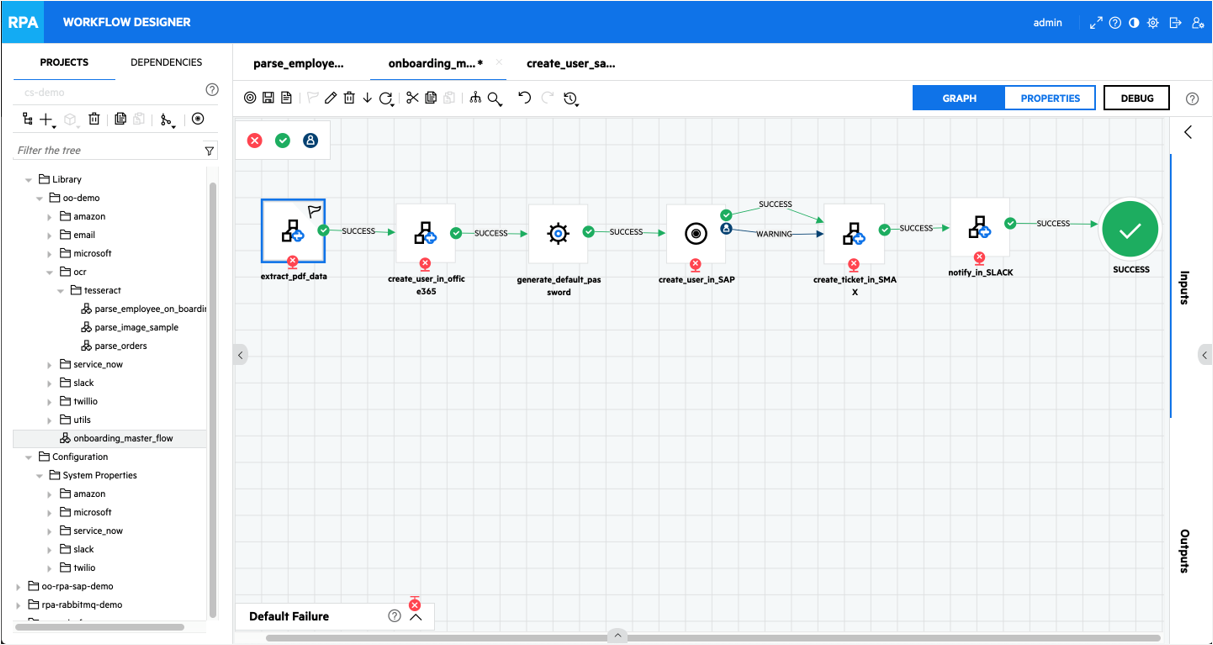
    Micro Focus has announced the general availability of Micro Focus Robotic Process Automation (RPA), which sets the stage for employing DevOps processes to construct highly automated business processes.

    Thanks to the rise of artificial intelligence (AI) and digital business transformation initiatives, interest in RPA has increased significantly. However, rather than merely using RPA to build bots to automate a narrow set of static processes, RPA is now leveraging machine and deep learning algorithms to optimize a wider range of dynamic business processes and adjust more easily to changes within an application.

    Travis Greene, senior director for IT operations management ay Micro Focus, said new capabilities such as object recognition technology included within Micro Focus RPA enables the platform to detect and automatically adapt to changes to the user interface.

    Other new capabilities now include the ability to visually or programmatically create workflows using a tool that records screen actions, the ability to more easily combine graphical and programmatic workflows spanning multiple platforms and the ability to deploy hundreds of thousands of bots as needed. A centralized dashboard manages the bots, all of which have unique IDs and encrypted, role-based credentials.

    As RPA and other forms of AI continue to be integrated and embedded with applications, Greene said it’s a matter of time before DevOps practices are extended to RPA platforms. Organizations will seek to train bots continuously as more data is made available, which in turn will drive updates to applications that are dependent on those bots. In most cases, depending on the complexity of the task, the bots will be built using a mixture of application programming interfaces (APIs), command-line interfaces (CLIs) and graphical tools. Organizations will need to define the processes to determine how and when each organization will opt to invoke one interface instead of another, either in isolation or combination, added Greene.

    Historically, organizations have been able to apply RPA to static processes with mixed success. With the rise of AI, the scope of those efforts has become more ambitious. Business leaders are too inclined to believe that just about every business process can be automated using a combination of AI and RPA. However, AI and RPA still are confined to relatively narrow use cases involving highly predictable outcomes.

    That’s changing, however, and RPA and AI are becoming more pervasive across the enterprise. DevOps teams will need to find ways to update both their applications and RPA/AI models without breaking one or the other. Most of the current RPA/AI models are highly sensitive to any change made to the application environment they are monitoring. And, unfortunately, the data scientists who are largely responsible for constructing those RPA/AI models don’t yet tend to have much of an appreciation for best DevOps processes. There will, however, come a day soon when these two worlds will collide.

    — Mike Vizard

  • 3 Examples of AI at Work in DataOps

    3 Examples of AI at Work in DataOps

    Artificial intelligence (AI) is making all the difference between innovators and laggards in the global marketplace. Yet, implementing a state-of-the-art DataOps operation involves a long-term commitment to putting in place the right people, processes and tools that will deliver results.

    In this post, we look at three organizations that are doing cutting-edge work in the field of DataOps. We look at the specific strategies they use and the results they’ve seen as they navigate the uncharted waters of DataOps.

    Uber: End-to-End DataOps

    Uber is very vocal about the way it leverages AI across its apps and services globally. The company runs all its machine learning (ML) models on a platform called Michelangelo and use many other proprietary tools such as Manifold, Horovod and Piper to optimize and scale these operations.

    Michelangelo helps manage DataOps in a way similar to DevOps by encouraging iterative development of models and democratizing the access to data and tools across teams. On top of this platform, Uber uses other tools to help data teams.

    Uber ran its models in Tensorflow and realized model training was taking too long because of the large data sets it was dealing with. Taking a page from Facebook’s data team, the company realized the power of distributed training. This would enable Uber to run data operations in parallel on hundreds of distributed GPUs, rather than on a few GPUs. Yet, managing all this would be a challenge, which is why Uber built a tool called Horovod. Now under the auspices of The Linux Foundation’s Deep Learning community, Horovod supports additional frameworks such as PySpark, Petastorm and Apache MXNet. Additionally, using mixed precision training, Horovod is able to optimize the use of memory when running models, and in doing so, it enables running larger data models or running numerous mini-batches of data in parallel.

    Manifold is a visualization tool that helps to gauge the performance of various models against each other. Rather than use a simplistic, two-dimensional axis to plot performance data, Manifold groups large quantities of model performance data into subsets that avoid duplicating the important indicators of performance. This reduces noise and helps speed analysis of the data. The lesson: Look beyond the trees to view the entire forest when it comes to metrics.

    By adopting an end-to-end approach to DataOps and leveraging specialized tools at every step of the pipeline, Uber is pioneering the use of AI in its large-scale consumer applications.

    Netflix: Offline First, Then Online

    Content recommendation is key to the user experience in the Netflix app. Highly relevant content makes the experience personal and drives higher engagement. However, making this happen behind the scenes involves working with large quantities of data and overcoming obstacles every step of the way.

    Netflix uses Spark to power content personalization. While the company has existing models in production, it always is testing new models and hypotheses to improve on existing ones. However, every new model needs to be tested against an older model and should be proven to be better before being implemented. Netflix does this model testing offline rather than online in the live app. The company makes a copy of historical data and performs offline feature generation on this data. The features are stored in a Hive store in AWS S3, and subsequent feature generation and model training is done in Spark. Once a new model is ready, it is run in parallel with a live model and, if it performs better, it is deployed.

    Key to the success of this operation is the logging of historical facts from online to offline. This includes Netflix-specific facts such as video, user and computation facts. Once this historical data is stored, a data worker is able to run simulation tests against it using the newly developed models. These simulation tests are a great way to test models without breaking things and save time by failing fast. Once tested and compared with live models, Netflix goes on to establish different SLAs for different microservice apps that these models serve. All this effort results in a highly relevant recommendation engine and a very personalized experience for Netflix users.

    Airbnb: Tapping Into Related Data Stores

    Airbnb uses AI to improve the search rankings and relevance of its “AirBnB experiences” offering. The company started simply, only recording users’ daily searches, clicks and bookings. Soon, it created features on top of this raw data, including features such as experience duration, price of experience and user reviews, which would help build models. Airbnb used a ranking model to give weight to experiences that had a better conversion rate, better user reviews and a lower price than those with just a higher booking volume. This improved experience bookings by 13%.

    Going further, Airbnb tapped into the other user data it had—homes booked by Airbnb users—to further personalize the ranking of experiences. This is where things get interesting, as AirBnB is able to show experiences that are more likely to match a user’s interests. This is only possible by looking beyond a single data store and looking for relevant data that may exist elsewhere in the organization. This personalization further improved experience booking by 7.9%.

    Similar to Uber, Airbnb uses a combination of offline and online scoring for models. While the historical data is great to get started with and run basic simulation tests, online scoring unlocks additional features such as user location, search filters and login status that wouldn’t otherwise be available offline.

    Conclusion

    AI is changing everything, and DataOps is no exception. By helping companies to make sense of their data more quickly and with less reliance on human effort, AI drives faster, more consistent results.

    The good news for most of us is you don’t need to be a major tech company such as Uber, Netflix or Airbnb to take advantage of AI-driven DataOps. Tools such as Unravel are making AI-powered data insights practical for organizations everywhere, without requiring them to build bespoke DataOps solutions.

    This sponsored article was written on behalf of Unravel.

    — Twain Taylor

  • Ensure Your AI is Working for Your Data Team

    Ensure Your AI is Working for Your Data Team

    AI tools hold great promise for DataOps. They can help teams identify the best apps to migrate, identify optimum cloud infrastructure and even validate decisions. But how can an IT team ensure the AI tools it uses are actually advancing its DataOps goals?

    A hard pill to swallow is that even the best-designed algorithmic decision-making and AI tools are prone to errors. Fortunately, this is unlike errors in software development, which are largely caused by development. AI errors emerge from poorly defined project goals and the organization’s tendency to treat the technology as if it’s magic. Without solid requirements, model monitoring and regular check-ins with reality, it is almost impossible for AI to deliver.

    This is why audits must be a mandate when introducing any AI tool that greatly influences business decisions. However, before the audit is conducted, ensure that the following points are met:

    Ensure the AI Tool is ‘Auditable’

    This step ensures that organizations bring in the right AI tools to their arsenal.

    An AI tool is auditable when it is:

    • Transparent: When AI tools are used to enhance the decisions a business makes, stakeholders must be able to peer into the system to ensure the legitimacy of the algorithm decision. Ensure the AI tool you choose has a logging system that makes it transparent as to how the system is making a decision, what factors most influence it and how confident it is in that decision. This allows decision-makers to trust in the system, as well as creates a feedback loop for the developers to take in real-world data and enhance and fine-tune the system to your needs.
    • Built with best practices: Just as security engineers follow best practices when securing a network, AI models and tools built with best practices in mind fare better when in use. As a general rule of thumb, all AI models must keep detailed access and process logs, incorporate failback mechanisms and generate regular health reports.

    Set Up Markers for Success

    Don’t approach an AI audit as though it’s a sandbox question. If teams are clear as to what an AI tool must achieve and how to measure its success, only then will an audit be able to judge the performance of the tool.

    It is helpful to set up markers that describe success. This could be the number of cases the AI model has rightly predicted, the time it takes, the number of edge cases it is able to handle and the number of times the AI decision collided with a human decision.

    The Audit

    Once the AI tool has been integrated into the organization and is in active use for a defined period, audits must occur. They help you answer the following questions:

    • Is the algorithm suitably transparent to end-users?
    • Is it likely to be used in a socially acceptable way?
    • Might it produce undesirable psychological effects or inadvertently exploit natural human frailties?
    • Is the algorithm being used for a deceptive purpose?
    • Is there evidence of internal bias or incompetence in its design?
    • Is it adequately reporting how it arrives at its recommendations and indicating its level of confidence?

    (HBR: “Why we need to audit algorithms”)

    Assess the Algorithm’s Fitness for its Purpose

    From a use-case perspective, AI algorithms in modern software applications tend to fall into two main categories. One is offering insights that help humans make decisions—this is what AI-driven analytics is all about. The other is allowing software applications to undertake automated actions entirely on their own, as AIOps tools increasingly do.

    A basic step in auditing your algorithm is to determine which type of use case it is supposed to support, then evaluate how well it achieves it. This is important to do regularly, because AI use cases can drift as applications evolve and the original purpose of an algorithm might change over time. (It’s common for algorithms to be implemented originally as a way to offer insights, but for applications to be updated with the expectation that the algorithms can support automated decision-making.)

    Compare and Contrast Algorithmic Decisions Against Human Decisions

    Though some of the inner workings of an AI model are a black box to even data scientists, the result of those inner workings is not. An AI audit must set up a process and team that regularly and actively monitors the decisions AI makes and compares them against decisions that a human would make.

    This is useful in identifying early on whether the AI tool has internalized biases. With an AI system, input greatly affects learning. For example, if a tool used to forecast purchase orders is incorporated by the organization during peak sales season, the tool will assume that this is the organization’s baseline performance. This causes erratic predictions in the long run.

    Active Experimentation

    Though an audit should uncover any bugs, biases or security concerns of an AI tool, it also could be used to test system variables. An AI tool is generally built on assumptions of the problem borders and trends. However, assumptions are very fragile in reality. The baselines of reality could change, causing the AI to produce questionable results.

    An audit also must be able to revisit AI tools with new assumptions, annually or biannually, to uncover any new parameters that could help improve the accuracy of the tool.

    Interviewing Users of the System

    Ultimately, an AI tool is put into place to either reduce the workload of humans or enhance it. Daily users have vast knowledge and perspective into not just how the tool works but also its limitations and quirks.

    Conclusion

    More often that not, the mystique of an AI model is used as an excuse for erratic results and poor performance. By building a robust and transparent audit system, your organizations can ensure your AI tools are actually working for your teams—and if not, it can at least uncover rare scenarios and edge cases and help mitigate them.

    This sponsored article was written on behalf of Unravel.

    — Swaathi Kakarla

  • How AI is Transforming Testing Today

    How AI is Transforming Testing Today

    Currently, there is much debate about how artificial intelligence (AI) will transform our lives. One of the technology’s key benefits lies in its power to transform traditional approaches to app development and software testing. Gartner identified AI-driven development as one of its top three strategic technology trends for 2019.

    Digital transformation is dependent on better-quality software, and software testing matters more than ever. However, the growing complexity of our software-driven world means that new, smarter and quicker forms of testing are critical in the race to build better software faster. But in a hyper-connected and complex environment, this is no simple task, and this is where AI-driven testing can help.


    AI Transforming Testing

    Like any new technology, there are exaggerated claims. However, when it comes to testing, AI is already delivering real improvements and making intelligent automation a reality. AI has moved far beyond an academic concept and is driving business benefits as opposed to hints to those organizations that have adopted it. Below are four of the key ways that it’s already transforming testing.

    Auto-Generation of Test Scripts

    There are undoubtedly complex test cases for which AI can’t auto-generate all the code. However, AI can easily auto-generate the code that clicks the buttons on the screen, fills out a form, logs into the app and other similar functions. Organizations that have deployed AI-driven testing are able to auto-generate 80% of code reliably, delivering substantial efficiency improvements. Along with auto-generation, AI achieves auto-maintenance: Tests are rebuilt when something in the digital product changes, ensuring continuous quality is maintained and further reducing the resource burden on human testers.

    Test Optimization

    If you’ve ever used Amazon, then you know that recommendation engine technologies are not that futuristic. AI can be applied to testing in the same way to help companies determine which test is most likely to find a defect based on the risk information gathered. Rather than taking a haphazard approach to testing, AI enables you to home in on the areas at risk—not only delivering efficiency gains but also ensuring a quality experience that delights.

    Release Impact

    Neural networks, combined with test history and data from current test runs, can predict how an upcoming release will impact users. For example, will customer satisfaction go up or down? Armed with this information, companies can make any adjustments necessary to ensure their users continue to be delighted by their digital experience.

    Customer Impact

    This is a key benefit of deploying AI-driven testing as you can determine the impact on the business from release updates. Neural networks, machine learning and other AI techniques can be used to understand how technical factors impact business performance. For example, are load times negatively impacting conversion rates? By understanding how releases will affect the business, you can make changes that will quickly have a positive impact.

    What Does the Future Hold for AI-Powered Testing?

    In addition to the core benefits that AI-driven testing is already delivering, organizations can expect to see additional benefits within the next 12 months that will further accelerate their ability to fully automate the entire testing life cycle.

    Failure Determination

    Current testing compares the result of a test with a pre-defined known good result. That methodology simply will not work with dynamic systems, such as an internet of things (IoT) device that interacts with multiple other devices which are constantly changing. AI is a key part of the solution: A well-trained AI system can determine whether a real user would consider the actual result correct or not.

    Persona Testing

    One size doesn’t fit all, and the ability to understand how your app reacts under different personas will allow organizations to understand what parts of the app are particularly good or bad for different personas. Armed with this information, you can optimize your app for your target audiences, ensuring an experience that delights.

    As every organization races toward digital transformation, delivering a high-quality digital experience is essential for survival. To create compelling digital experiences, companies need tools that can navigate applications intelligently, learn where quality issues are most likely to occur and identify the critical data correlations that will help developers resolve issues quickly. This is where AI is already delivering significant advantages to organizations that have adopted it.

    It’s clear that AI-driven testing is not a passing fad. Rather than taking a wait-and-see approach, it’s time to jump in and experience how AI can help transform app development and software. With AI-driven testing making a real and measurable impact on the business, you can’t afford to be late to this revolution.

    — Antony Edwards

  • Are Self-Service Machine Learning Models the Future of AI Integration?

    Are Self-Service Machine Learning Models the Future of AI Integration?

    DevOps teams seeking to step up their mojo in developing cutting-edge artificial intelligence (AI) features are facing a big skills bottleneck when it comes to data analytics and machine learning modeling. As a result, the market is seeing an influx of self-service machine learning models and machine learning-as-a-service offerings designed to help development teams more easily integrate AI capabilities into their software.

    This is coming in direct response to an explosion in demand for AI capabilities in the enterprise. According to Gartner analysts, AI adoption in the enterprise tripled in the past year. A report last fall from MIT Sloan Management Review and Boston Consulting Group found that 91% of enterprises believe that AI will deliver new business growth to them by 2023.

    The trouble is that folding AI functions and predictive analytics into software requires a whole new level of expertise in data science and machine learning from cross-functional DevOps teams. They need added skills to choose the right algorithmic approaches, acquire and manage data, train the models and integrate them into the code base and underlying infrastructure so that everything works properly under the hood.

    “We have heard from customers everywhere that they want to adopt machine learning but struggle to actually get models into production,” said Eric Boyd, vice president of cognitive and AI for Microsoft.

    Ali Farhadi Xnor
    Ali Farhadi, Xnor.ai CEO

    DevOps leaders today already face an uphill battle to keep their developer ranks staffed with well-trained software engineers. Piling on additional requirements for very specialized machine learning and data science expertise further strains those recruitment efforts. According to the most recent Harvey Nash/KPMG CIO Survey, the top one and two technical realms that suffer the biggest skills shortages today are in data science and AI, with 46% and 38% of CIOs respectively reporting recruiting pain in those areas.

    “There’s a huge imbalance between the demand in the market and the supply of the very best AI experience to actually train these models,” said Ali Farhadi, CEO of Xnor.ai, a Seattle firm that just last week released a self-service platform for developers. Called AI2Go, the platform provides pre-trained deep learning models to quickly integrate AI features such as facial recognition and object classification directly into their software.

    “We want to enable anyone who can code to benefit from AI,” Farhadi said.

    The Xnor release comes just a few weeks on the heels of a big launch from Microsoft of several self-service machine learning model tools aimed firmly at MLOps teams—those DevOps teams implementing machine learning capabilities. The new services from Microsoft roll out capabilities to manage the code, data and environments used by MLOps teams throughout the machine learning deployment life cycle.

    “Azure Machine Learning service’s MLOps capabilities provide customers with asset management and orchestration services, enabling effective ML lifecycle management,” explained Jordan Edwards, senior program manager for Azure MLOps, in a blog post on the topic. “With this announcement, Azure is reaffirming its commitment to help customers safely bring their machine learning models to production and solve their business’s key problems faster and more accurately than ever before.”

    Tools such as these are not always going to obviate the need for data scientists and machine learning/AI specialists on DevOps teams. As Farhadi noted, even a simple service like AI2Go requires development teams to choose the right models for the right situations. Nevertheless, this burgeoning market could take the pressure off teams by minimizing the scale of specialized recruiting, while reducing bottlenecks and dreaded re-work.

    “Machine learning projects usually involve several people—data engineers, data scientists, DevOps and others. Conventionally, at each stage of the machine learning life cycle, most, if not all, of these people end up doing an excess of custom coding, redundant work and manual trial and error,” said Craig Stewart, senior vice president of product management and product marketing for SnapLogic, which last fall introduced a self-service machine learning add-on for its integration platform. He noted that one of the primary goals is speed, to help cross-functional teams “build, train, validate and deploy high-performing models faster.”

    — Ericka Chickowski

  • Nutanix Eases Development of IoT Apps

    Nutanix Eases Development of IoT Apps

    Nutanix, a vendor of hyperconverged infrastructure solutions, has released a new developer environment that allows developers to try and test IoT and AI apps in the cloud. Starting May 7, developers can sign up for a free 10-day trial of this experience.

    The developer environment is built under Nutanix’s Xi IoT Platform and gives developers access to a rapid development environment for creating internet of things and artificial intelligence apps in the cloud. The Rapid Development Environment for IoT includes features such as Xi IoT Cloud Instance, Xi IoT Sensor App and Xi IoT App Library and supports the ability to easily deploy IoT software in the cloud or at the edge, according to the company. The environment has been tuned specifically for IoT and AI, eliminating many of the configuration chores developers had to perform using other cloud-based development environments, and enables single-click deployment via a management console.

    For developers targeting production-edge environments, the new environment brings forth the ability to develop for the edge or for the cloud, bringing application portability into the development and testing process. By being able to use a common set of APIs, cloud and edge development becomes relatively seamless and deployment friction is vastly reduced, according to the company.

    Beyond ensuring compatibility across platform services and APIs, the environment enables development and production environments to use the same components, so recoding is not needed as part of the transition from dev to ops. That helps to simplify lifecycle management as well as fit agile practices better into the dev process.

    Nutanix also offers an extensive library of applications that can be used to ease development chores. The Xi IoT App Library offers  individual components (message bus services, time series databases, etc.) and full solutions that developers can use to address various business problems.

    Nutanix is framing the new delivery mechanism as a new experience to get more developers—from novice to advanced—creating AI and IoT scenarios.

    — Frank Ohlhorst

  • 7 Big Digital Transformation Trends

    7 Big Digital Transformation Trends

    As enterprises continue their rush to digitally transform their organizations, they’re investing big in retooling their software development pipelines, new artificial intelligence (AI) and robotic process automation (RPA) technologies and low-code development platforms, as well as putting considerable money into customer engagement software. Yet, the extent of success following these investments remains unclear and varies significantly from industry to industry.

    To shine a light on the digital transformation efforts currently underway, as well as the degree of their success, we’ve collected a number of fascinating trends in the most essential areas of digital transformation.

    Investment in AI, Machine Learning and RPA Technologies Hitting an Inflection Point

    According to the consultancy KMPG, enterprise investments in AI, machine learning, and RPA will rise to $232 billion by 2025 from $12.4 billion in 2018. “Nearly two-thirds of respondents indicate plans to fully implement RPA within three years. Another 18% plan selective use. As for cognitive automation, nearly half noted intentions to use these approaches at scale within 3 years, while 29% indicated selective reliance on cognitive automation capabilities. Some 10% said they would launch pilots and proof of concept projects,” according to the report.

    DevOps is Just Getting Started

    While we’ve been writing about the enterprise move to DevOps for years now, the investment in DevOps is just setting itself up to truly soar. According to the market research firm Market and Markets, the DevOps market will grow 24.7% annually, to $10.3 billion by 2023 from $2.9 billion in 2017. “The demand for DevOps solutions and services among enterprises is expected to gain huge traction, due to the increasing need for fast application delivery with high quality,” the firm said.

    Digital Transformation Spending to Top $1 Trillion This Year

    In research firm IDC’s “Worldwide Semiannual Digital Transformation Spending Guide,” global digital transformation spending will reach $1.18 trillion this year, rising nearing 18% from 2018. “Worldwide DX technology investments are expected to total more than $6 trillion over the next four years,” said Eileen Smith, program vice president with IDC’s Customer Insights and Analysis group.

    For 2019, the two industries expected to invest the most into digital transformation are discrete manufacturing and process manufacturing, which will invest roughly $222 billion and $124 billion, respectively. According to IDC, the top digital transformation spending will be in smart manufacturing, which will be supported by autonomic operations, manufacturing operations and quality. The retail, transportation and professional services industries will follow closely behind.

    IT and Business Leadership Chasm Widen

    According to research firm consultancy Capgemini, there appears to be a growing disconnect between the CIO and senior business executives. Capgemini’s research found that while in 2012, 65% of organizations believed that the CIO and senior business executives possessed a shared understanding of the role of IT in their organization. In their most recent survey, that figure dropped to 37%. Additionally, Capgemini found, 59% of enterprise respondents in 2012 believed that the CIO and senior business executives had a shared understanding of how IT could be used to increase organizational productivity. That figure also declined precipitously, hitting 35% in 2018.

    Low-Code Development Continues to Gain Higher Ground

    The demand for enterprise software seems to have no bottom. And no matter how hard they try, developers can’t code software quickly enough. This is why more enterprise software needs are being met by low-code development platforms.

    According to research from ResearchandMarkets.com, the global low-code development platform market will grow to about $27 billion by 2022, up from $4 billion in 2017 and at an annual compound growth rate of 44%.

    Digital Transformation, Customer Engagement Software Grow

    Digital transformations don’t mean much if they don’t reap increased revenue, land new customers and improve relationships with existing customers. And how enterprises engage with their customers is one of the most rapidly evolving aspects of enterprise technology today, from AI and machine learning to IoT devices and ubiquitous adoption of mobile devices. Customer engagement software ranges from staid CRM systems to customer self-service software. This class of software was a nearly $13 billion market in 2017, but will likely reach $22 billion by 2023, an annual growth rate just shy of 10%, according to market research firm Mordor Intelligence.

    Digital Transformation Success Grows Harder to Come By

    The success rate for digital transformation efforts is persistently, and dismally, low. According to research from McKinsey and Company, over time fewer than 30% of digital transformations succeed.

    And that failure rate appears to be growing worse, not better. McKinsey’s 2018 survey results show only 16% of enterprises believe their digital transformations will improve organizational performance over the long term. “Even digitally savvy industries, such as high tech, media and telecom, are struggling. Among these industries, the success rate does not exceed 26%. But in more traditional industries, such as oil and gas, automotive, infrastructure and pharmaceuticals, digital transformations are even more challenging: success rates fall between 4% and 11%,” McKinsey found.

    While enterprises are clearly investing into their digital transformation efforts and the desire to succeed is high, the high digital transformation failure rate says enterprises either aren’t taking the right approach to these efforts or they are not executing properly.

    Whatever the reasons for the high rate of failure, with the vast amount of business capital on the line and the increasing risks upstart businesses pose to those established in their markets, more enterprises better figure out soon how to get their transformation efforts right.

    — George V. Hulme

  • In Service Management, AI Is Still Aspirational

    In Service Management, AI Is Still Aspirational

    Artificial intelligence (AI) has become a matured concept, the excitement of which is bearing results for a number of sectors and it holds a good deal of promise for a bright future. AI is the act of making possible for machines to learn from “experience” while adjusting to new input and stimuli so they can perform human-like tasks, ultimately leading for more complete automation in many traditionally man-powered processes. Computers can be “trained” to accomplish specific tasks, process data and recognize patterns in the data.

    While the use of service management solutions escalates, so do the potential uses for AI approaches in the sector. Because of this, there are advantages to discuss as well as examples of how AI can help to improve the service management operations of your organizations. But AI is a broad and far-reaching concept that’s often misunderstood and difficult for those that don’t work with the technology to understand its full capabilities.

    Is AI All Hype or Is It Actually Helpful?

    Based on the 2018 Interop ITX AI: Hype or Substance report, in a survey of 182 technology professionals, almost two-thirds of these respondents’ organizations are currently working on AI products or evaluating the technology. However, only 12 percent are using AI in production today. For those who responded during 2018, 6 percent of those using the technology said their budgets for it were set to decrease. The outcome, per the report, is that AI interest is high, but the ability to execute is low.

    Are AI Expectations Too High?

    The return on investment of AI is not clear and nearly one-third of organizations say they lack the budget they need to move forward, Information Week reports. Additionally, despite the desire for AI initiatives to reduce manual processes, these tasks must still be carried out by talent in the organization. A lack of expertise is often cited as a barrier to AI initiatives because there is not enough expertise to push the efforts forward. Alternatively, of those surveyed, more than a quarter said they haven’t defined a business case yet and close to half said they “have no idea” what effect AI may have on their businesses.

    Part of the problem with AI is the broad nature of its concept. Much of what we thought we knew AI was is now standard practice. For example, early AI efforts like IBM’s chess computer, Deep Blue, is part of our computing world now. Currently, demand or desire for AI capabilities is still aspirational, but usually is conflated with “machine learning”—where a computer or programming provides examples for how a machine can “learn” how to complete said task. Machine learning has huge potential to help societies automate previously manual systems. Through this, new economies will be developed and work (and workers) will evolve. Certain jobs, eventually, will become minimized and even discontinued in favor of new process and “ways of doing things.”

    We have seen these cycles before. In the United States, from a macro level, there’s been a major shift from a farming/agricultural society to one of more urban-based manufacturing/industry; into the post-industrial; then global-focused; and web-connected economies. These can be drilled down further but the point is made—major variations in our economies and jobs have taken place in a relatively short period of time. Based on these changes, we’ve had to change; jobs and workers have had to change. Machine learning is another disruptor for the new global economy that will force change.

    Hyped Up

    The hype of machine learning—a technology with huge potential—may not actually be overhyped. That said, how will this technology actually impact our everyday lives, and will machine learning change the work we do in service management? Perhaps we’re now starting to get a better idea of what those realities may look like.

    As far back as 2017, Gartner said that machine learning hype peaked, but expectations remain high. For service managers, there’s going to be more than intelligent chatbots to worry about but for now, much of the anticipation likely will continue. Machine learning can be a beneficial tool for identifying trends and changes in trends. In service management, machine learning means quick responses can help recognize when there is an above average number of calls logged, for example, or an unusual number of calls within one category, which can be acted upon.

    For most pressing trends—a specific cloud service that may no longer be available, for example—meaning machine learning-driven technology can recognize this breakdown by sending a signal to a specialized member of the service team, who can then react to this issue. Long-term problems also can be addressed through machine learning technology, spotting urgent disruptions. This may be particularly important during problem management. A labor-intensive process, machine learning has the capability of being able to recognize patterns in these calls, making the discovery of structural problems much easier.

    Misconceptions About Machine Learning

    Misconception surrounding AI and machine learning is rampant from replacing most of our jobs and replacing massive amounts of humans in the workforce to their surpassing our pre-programmed uses for the technology, in which the machines rise up and enslave us all. The more realistic version of things is a bit more benign. The most common current misconception is that chatbots and virtual assistants will make service desk employees redundant in short order. But this won’t likely be the case for the better part of a half decade or more because the technology isn’t sophisticated enough. Most chatbots are pretty expensive and don’t always work well.

    For now, machine learning will likely only help “answer” direct questions more quickly. More complex issues must still be handled by people. The realized benefit here is that because machine learning technology can help solve the easiest questions service desks face, there’s more time for service desk team members to solve the more complex calls.

    Someday Soon …

    Soon, machine learning technology will become better at finding the right information and offering solutions that actually benefit humans. Then, service desk employees will be able to focus more on the overall customer experience in ways that machine learning likely never could.

    While AI is maturing, excitement surrounding this experiment may need to be tempered for a bit. The technology is in the act of making possible for machines to learn from “experience” while adjusting to new input and stimuli so they can perform human-like tasks, but more complete automation in many traditionally man-powered processes is still needed.

    — Nancy Van Elsacker Louisnord

  • DevOps and Security: The Path to DevSecOps

    DevOps and Security: The Path to DevSecOps

    A secure DevOps is highly beneficial for organizations. However, a secure DevOps environment shouldn’t be the end goal. When it comes to DevOps security, it’s important to integrate security right from scratch, secure the entire architecture, automate the security and use this technology to test the environment and the codes and respond to concerns immediately. This can help organizations safeguard their creations, protect the confidentiality of their customers and strengthen their applications, all before data breaches can occur.

    DevSecOps is a philosophy that focuses on introducing a culture of security in the DevOps environment. It is a collaboration of the DevOps teams with cybersecurity and system security personnel, where the focus is on finding faster and more efficient ways to safely deliver codes in an agile architecture. DevSecOps strives to bridge the gaps between IT and security while responding to bottlenecks in the existing environment.

    Some of the biggest benefits that organizations will get when they move from traditional DevOps philosophy to the DevSecOps philosophy is:

    • Improved operational effectiveness and efficiency.
    • Stronger and healthier collaboration between teams across the company.
    • Greater agility for security teams.
    • More conducive environment for automated builds and quality assurance testing.
    • Easier to identify system and application vulnerabilities.
    • Greater freedom for personnel to focus on high-value projects.
    • A greater degree of transparency into the environment.
    • Improved scalability in the cloud.
    • Increased ROI.

    Key Elements of the DevSecOps Environment

    Microservice-Based Infrastructure

    Single-function modules that contain well-defined interfaces and operations is essential for the success of focused DevSecOps. Constantly monitoring, upgrading and tweaking the microservice-based infrastructure will help organizations to be equipped for new developments.

    Hybrid cloud environments, software-defined networking and network micro-segmentation must be integrated into the infrastructure, and these must be used to better define parameters, assess and identify connections, verify access and monitor the organization’s online assets.

    Continuous Feedback Loop

    The next most important element of the DevSecOps environment is feedback. Setting up a continuous feedback loop will help developers and machines get a comprehensive insight into system/platform vulnerability to security threats. This type of real-time, continuous feedback can help organizations set in place the right policies and rule sets, which can keep the application security testing tools updated and relevant regarding the security status of the organization’s software/network/platform, in addition to keeping all parties updated about the potential threats to the DevOps environment.

    This type of continuous feedback loop acts as an enabler, as opposed to an inhibitor of business, by allowing organizations to stay well-equipped and constantly on guard.

    Focused Automation

    Finally, continuous and focused automation is essential to the success of the DevSecOps environment. Automation, when woven into the software development life cycle right from the start, can reduce the friction that may occur between development and security teams over software/platform security by quickly addressing existing and potential concerns at the lowest cost.

    There are certain open source tools on the market that can help organizations automate their security:

    • Continuum Security: This tool works on a BDD-Security framework, which is compatible with unit testing frameworks, issue trackers, SAST and DAST. It offers an open IriusRisk API for anything the tool doesn’t natively support.
    • WhiteSource: This particular tool specializes in addressing open source vulnerabilities, alerting users about the existence of threats throughout the pipeline. It is compatible with 200 programming languages and it actively analyzes the license, quality and security of all open source codes.
    • ThreatModeler: This platform uses the functional information that developers input to analyze the software and provides information about potential threats. It also offers actionable inputs and security test cases to enable easy implementation of security.
    • Evident.io: This solution is designed for the deployment stage and helps assess and manage cloud security risk, particularly on Azure and AWS. Evident Security Platform (ESP) offers continuous monitoring, early threat identification and threat mitigation.
    • Aqua Security: This tool is ideal to manage end-to-end DevSecOps pipeline security. It has very tight runtime security processes and controls in place. It offers full control over the containerized environment and prevents any intrusion or vulnerability across the pipeline.

    There are many other tools that organizations can use to automate their DevSecOps environment. These include: Dome9 (SaaS) Security, Contrast Security RASP & IAST tool, IMMUNIO RASP tool and Checkmarx SAST tool.

    Shifting to the Left

    In today’s agile world of development, following outdated waterfall philosophies is a death sentence for companies.

    For successful implementation of DevSecOps, organizations should shift left. In other words, they should integrate deployments and testing right from the start, and these must continue till the very end when the software/platform in question is vulnerability-free. Etsy and Amazon, for example, conduct more than 1,000 deployments per day, each aimed at recognizing potential threats to their systems. Such a highly dynamic DevSecOps environment ensures that the velocity of new development isn’t slowed, and the quality of new developments is maintained at a high level.

    This type of “shit left” philosophy not only accelerates new developments but also helps limit the security threats and addresses existing threats at the least cost with minimal damage to the software/platform.

    Incorporating AI and Machine Learning into DevSecOps

    Research shows that more than 50 percent of all companies will implement machine learning in their DevSecOps operations in 2019, due in part to the various benefits AI and ML offer to organizations that are actively maintaining a DevSecOps environment. These benefits include:

    • AI and ML will bring down DevSecOps security review time. They will do this by increasing the speed and quality of false positive identification, which will reduce the time spent on threat vector identification. This will help developers improve the speed at which they recognize the threats to their systems.
    • AI and ML will make up for the cybersecurity talent shortage, thereby ensuring that an organization’s DevSecOps environment isn’t left unmanned at any time. AI and ML will dip into human intelligence and use this to fuel their involvement in the DevSecOps environment. Additionally, AI and ML give organizations the ability to understand how other machines function, thereby helping cybersecurity personnel understand the psyche of cyberattackers.
    • AI and ML will actively find defects in the DevSecOps, help developers identify what they’re doing wrong and what they need to do to rectify these concerns. Constant monitoring is a core feature of DevSecOps, and AI and ML will serve to add more advanced technological backup to power this feature. AI and ML will also offer developers customized secure code patterns based on the organization’s unique DevSecOps landscape, which will assist in vulnerability detection.
    • AI and ML can help organizations move their DevSecOps from a small scale endeavor to large-scale. This will be a possibility because of the sheer technical prowess and the real-time information that AI and ML will furnish to developers and cybersecurity personnel.

    7 Rules to Successfully Implementing a DevSecOps Environment

    • Integrate security from the start and across the pipeline.
    • Automate your security.
    • Track and monitor each software stack meticulously to identify which needs patching.
    • Implement code dependency checks such as the OWASP Dependency Check, vulnerability assessment and discovery tests regularly.
    • Put in place robust policies to manage the DevSecOps environment.
    • Break your tasks into manageable chunks—this will improve the consistency of deployments.
    • Set in place one-click compliance reporting to increase traceability and transparency of the pipeline, right from code planning to code changes to release.

    Conclusion

    DevSecOps will bring massive economic and technical advantages to organizations, apart from equipping them with the capabilities to create, run and offer state-of-the-art software/applications. Organizations wanting to remain relevant and competitive in the industry must consider DevOps security as their primary goal in 2019.

    — Subramonian

  • What AI Could Mean for Developers

    What AI Could Mean for Developers

    Artificial intelligence has been dominating the tech news headlines for a few years now, as the innovations in the sector keep rolling out at increased rates. The technology is, for lack of a better term, awesome, and when used correctly, it can have tremendous effects. We have already begun to see artificial intelligence in the consumer sphere take off at lightning speed.

    Artificial Intelligence is in More Things Than You Think

    Smart assistants, such as Google Home, Amazon Alexa and Apple’s Siri, have all dominated their share of the market with intuitive daily assistants that can keep track of your schedule and tell you the weather. They can even tell jokes—which may or may not leave you in a state of disrepair.

    Looking to the future, we also have autonomous vehicles, which will change our lives undoubtedly by potentially limiting traffic collisions and deaths. That is the true endeavor of technology: to change our lives in such a way that they are never quite the same.

    Artificial Intelligence Development is Open to All

    Development of AI programs is being accelerated due to the availability of AI libraries. With these powerful libraries, development teams are able to build custom code on a complex pre-built infrastructure. Google, IBM and Microsoft all have their own AI APIs that programmers can use to create better products.

    Using paid APIs, developers can use advanced programs developed by tech giants in their own applications. Google Cloud AI provides a suite of machine learning services. You can venture into other APIs also powered by AI. For example, you can use Google’s Cloud Speech API, which uses AI to dynamically convert audio to text in an existing application.

    TensorFlow is freely available to help programmers, developers and engineers use machine learning algorithms to better manage and classify data. All of these APIs empower development teams to dig deeper into deep learning.

    What Advancements Mean for Developers

    The goal of the openness of AI development is to create a new normal brought to life by the endless innovations of the tech industry.

    Without hesitation, we can call AI the next great invention. It has an ability to completely reshape the face of our world in such a way, that this current life will become one of distant fondness and inelegant trite labor. Indeed, the developers of AI will be contributing to the total revolution of life as we know it and the consequences thereafter.

    This is why it is so important to get it right. Using a guideline to build the future will ensure that it can handle the weight of use, without failing itself into obscurity.

    Innovation Means Opportunity

    Ultimately, AI is at its best when it fixes a common problem and is developed with best practices. Because the technology is so new, developers must work around the clock to create applications and get them to market so that their impacts, if any, can be registered and used for analytics. Developing AI is much bigger than a simple web application or smartphone app.

    The pure potential of the tech alone is enough to incite the most lethargic to action, but development will be in vain if not for best practices. Once developers around the world start to follow a development guide, it will increase the fluidity of innovation and knock down any barriers in its way.

    This ensures that developers can share ideas and technology easily, without being in the dark when it comes to the shared development process. Artificial intelligence is an ongoing innovation that may never cease to improve on itself.

    Conclusion

    In this article, we examined the best development practices in AI so that you and your team can create AI applications with the future in mind.

    In fact, the pursuit of humanoid AI, upon its completion, will most likely give us its own revolution in the tech industry as it slowly becomes pervasive in all industries. There is a beauty in contributing to grand goals. You and your team should not be limited or sidelined by a lack of knowledge about best practices when developing AI applications.

    There’s a wealth of resources for developing AI programs through the use of existing AI libraries. There’s plenty of help from the AI community, who are all pursuing a greater utopia with AI—and your team should not be left in the dust.

    — Anthony Coggine