Author: Subramonian Krishna Sarma

  • Balancing UX and Privacy With IoT

    Balancing UX and Privacy With IoT

    As more IoT devices track data to improve customer UX, privacy concerns are becoming more prevalent. How can developers strike a balance?

    The internet of things, or IoT, is a system that has changed the way we perceive technology. While it has made the usage of technology easier than ever, it does come with its own set of problems. Being such an interconnected network, IoT’s main threat is its ability to pose myriad security and privacy problems.

    In this article, we seek to discuss how and why privacy is becoming a rising challenge in the world of IoT. By understanding how our privacy and security will be affected, we can take the right measures to reduce our vulnerability to these threats and secure our lives.

    How Interconnected Are Devices?

    IoT devices come with several technical capabilities, most of which have been researched and optimized only to the extent of their functionality. Today, IoT connectivity is available in a growing number of devices and equipment. Smartphones can connect to the internet and several household appliances, which also allows people to control these items remotely. Transportation departments have begun to hash out more advanced vehicle-to-vehicle communication, focusing on improving driver and passenger safety on the road. SmartGrid interconnected technologies allow electricity providers, managers and users to monitor and control electricity use in homes, offices and places of business. Today, several people are also making rampant use of SmartHome technologies to control appliances and home security systems and use fitness trackers to control their movement as monitor their eating and sleeping habits. These trackers are connected to their smartphones for better data aggregation.

    All of these connected devices pose a question: With so much data collection and data tracking being carried out by these devices, aren’t we compromising on our privacy and security?

    How IoT Affects Privacy

    When we consider the compromised privacy of individuals, we are talking about each individual’s loss of control over personal information. When people invest in these interconnected devices, they are not entirely aware of how much of their personal information is tracked and saved by the manufacturer in a bid to improve user experience.

    An individual can lose control if someone hacks into their smartphone or computer and remotely operates other devices. There’s no doubt that our smartphones carry a majority of our information. They are linked to our bank accounts, email accounts and even systems that need authorization. In fact, experts predict that there would be about 31 billion connected IoT devices by the year 2021. Usually, hackers employ methods that are undetected, so more connections would mean an increase in hacking activities as well.

    The data collected from an individual’s smartphone or laptop can give hackers a detailed look into their activities, including internet searches and purchasing power. The information is typically used to work on user experience, but also can be used to target particular products to the individual. Sometimes, this data is even sold to other organizations that are looking for a target audience to sell their products.

    Rising Challenge of Protecting Data

    Data is constantly being stored, transmitted and processed by different companies with the help of IoT devices. With more entry points to access data in the form of smart TVs, speakers, lighting systems, printers and more, your data is more vulnerable than ever.

    IoT vendors, therefore, should have dedicated compliance and privacy rules that alter and anonymize personal data before it is stored. The aim is to prevent the data from being able to identify an individual. Cached data and data that is no longer needed should be disposed of in a secure and organized manner.

    Stored data also must meet compliance with legal and regulatory mandates. This must extend to mobile devices, web presence, cloud applications and any other means by which the data from IoT devices are accessed and managed.

    Affordability of Protecting Data

    Yet another concern among IoT developers is the ability to provide enough security for their services. Limited budgets and manpower constraints can prove difficult for establishments to heed to privacy and security concerns. The reason so many loopholes exist is due to the fact that so many manufacturers focus solely on getting the app out into the market to attract funding without considering the damage that could follow.

    With more and more people concerned with their data privacy, organizations must implement more security checks to avoid ruining their brand authority and trustworthiness due to a data breach.

    Conclusion

    Users today are more connected than ever, which means privacy and security concerns must be top of mind for developers. Manufacturers may argue that data collection is essential to the development of their products and the IoT market in the long run, but there must be more focus on the security of the data and personal privacy concerns. Data collection should be done in a monitored manner, with compliance to regulations from the onset. A recent survey noted that 92% of global consumers want more control over how their information is collected. The same number of people also want to enforce punishments for corporates that violate their privacy. IoT developers, therefore, must strive to find a happy medium that balances security and privacy with user experience.

  • Trends and Benefits of Serverless Computing

    Trends and Benefits of Serverless Computing

    Gartner estimated that by 2020, 20% of the world’s organizations will have gone serverless. Serverless computing initiates a mind shift in the way businesses are run and improves the accuracy and impact of technology services. Leading to higher functionality, reduced AWS bills, increased delivery speed and multi-cloud support, serverless computing paves the way into the future. 

    The scope of serverless is yet unexplored. With new and high-potential developments (such as FaaS and GitOps) still in their nascent stages, organizations can expect massive benefits leveraging the power of serverless computing going forward. 

    Servers have been a very important part of the computing architecture for decades. But, with the introduction of cloud, we’ve moved to predominantly web-based server infrastructure, and the migration to serverless architecture has begun.

    Serverless computing–abstract and virtual server support–has made the computing landscape more dynamic, robust, intuitive and powerful. But advancement in serverless technology is still in its nascent stage. The next few years are expected to bring in numerous developments and transformations.

    First, let’s take a look at some serverless trends you should keep an eye out for.

    Kubernetes Will Become the Go-to Serverless System

    Kubernetes has become synonymous with open-source containerization. But in the next few years, we will see Kubernetes become the base for serverless infrastructure. Features such as networking, service discovery, agile scaling and multi-cloud environment support make Kubernetes the perfect choice for serverless. 

    Additionally, with Knative already released, the process of standardization and interoperability of serverless platforms may soon become a reality. 

    Stateful Applications Will Also See the Usage of Serverless

    Restriction of serverless for stateless apps is a thing of the past. The next few years will see stateful apps benefiting from the immense power of serverless. Developers will be able to use database connections, BaaS and event payloads to run their applications.

    FaaS Industry Size Will Grow 

    The FaaS market is expected to grow to $7.72 billion by 2021. Large-scale adoption of serverless will be seen across the world, and there will be a 32.7% CGAR. 

    GitOps Will Be the Next Big Thing 

    The version-controlled system of DevOps, GitOps, will see more takers in the future, especially in FaaS. GitOps is expected to improve operational workflows, especially in fast-moving projects, and enable implementation of technologies such as Kubernetes and other cloud solutions. 

    Additionally, this will enable cloud vendors to provide greater ecosystem support and tooling capabilities to users.

    Containers Versus Serverless

    Containers by nature are segmented, isolated and contained spaces of application-specific servers. While they offer high degrees of specialized (and often customized) tools, resources and support, they suffer from numerous challenges:

    • They are very resource-inefficient compared to serverless. 
    • Their ecosystem is fractured as opposed to the wholesome environment offered by serverless. 
    • Data storage and retention are complicated, necessitating frequent data migration across containers. 
    • Graphics support is limited, resulting in poor-quality deployments. 

    The challenges that come with containers prompt organizations to choose serverless. Already, many companies have implemented serverless.

    Here is how the move to serverless will benefit you, too.

    Serverless Computing Eliminates the Need for the Set-Up of Complex Application Stacks

    Developing even the most basic server-bound application is a challenging task. It requires the set-up of high-powered and complex application stacks that can be both difficult to build and difficult to manage. By going serverless, organizations can eliminate all these heartaches. 

    Serverless stacks, such as Lambda and Azure, create a robust and intuitive environment for the development of agile applications, by providing organizations with a large set of capabilities and allowing them to run at scale, at the lowest costs.

    It Reduces the Organization’s Capital Expenditure

    Unfortunately, IT infrastructure is considered a capital expenditure by many organizations. So, building your own servers can lead to a high CapEx.

    Consider this. Physical servers are vulnerable to breakdown and depreciation, which add to CapEx. If you report this value as expenses in your income statement, it may ultimately negatively affect your P&L and your company valuation. Going serverless allows organizations to avoid such a challenge and maintain their profitability and high valuation.

    Plus, serverless infrastructure reduces the need for human resource deployment as focus on batch processing decreases. Additionally, serverless allows organizations to convert workflows into step functions, which reduces the number of EC2 and SWF issues. Together, these reduce company expenses tremendously. 

    It Shortens the Standard Release Cycle Significantly Due to Microservices and Nano-Services

    Serverless computing allows organizations to benefit from the magnificent power and scope of microservices. From making minute application-specific developments to isolating and rectifying issues, to managing and deploying individual applications, organizations can do a lot of things using serverless computing. 

    In fact, a survey shows that utilizing serverless microservices can bring down the standard release cycle from 65 days to a mere 16 days.

    It Allows Easy Completion of ELT Tasks and Cron-Type Jobs 

    Again, serverless computing microservices gives organizations the flexibility, technical support and clarity needed to process data. ELT tasks become more consistent and allow the creation of structured data warehouses.

    Similarly, since isolated components and applications can be created, deployed and fixed in serverless, it’s easier to implement cron-type jobs as well. 

    It Allows Organizations to Escape Traditional Workflows Through Event-Based Computing 

    Adoption of serverless computing allows organizations to shift from the restrictive, time-consuming and draining traditional workflows and engage in event-based computing. Now, coders can just write the algorithms and allow the serverless provider to take care of the data storage and computing needs. Not only will this reduce the time of transaction processing and the cost of DevOps, but it will also free up the time and space for coders to take on other business logic tasks. 

    It Enables Green Computing 

    With climate change becoming such an imminent threat to the world, it’s important for organizations to become mindful about the way they operate. One way to become sustainable is to go serverless.

    For one, serverless computing ensures organizations don’t over-utilize electricity. Additionally, with no physical servers and data centers that emit toxic radiation as they cool down, there will be lesser concerns about health and climate change. 

    Another aspect is scalability. Serverless is highly-scalable, meaning you don’t need to set-up more servers at your office. Given that 30% of the world’s servers are unused at any point in time and most servers only utilize 5%-15% of their total capacity, serverless may be the best way to go green.

    It Promotes Deployer Autonomy and Encourages the Adoption of New Mindsets

    Serverless computing gives organizations the freedom to focus on their core business offerings and deal with only low-level OS issues. This time, money and opportunity can be used by deployers, coders and top management to develop competitive offerings, which can help the organization overtake competitors. 

    With physical servers, it’s more likely than not for organizations to focus on technical server issues than the business process.

    Conclusion

    Serverless computing could be one of the most exciting developments of the 21st century. It is breaking down old barriers and allowing organizations to expand and explore new frontiers. Its high deliverability, coupled with the immense opportunities it promises, makes it a must-adopt in any organization.

    — Subramonian

  • The Purpose of Microservice Architecture

    The Purpose of Microservice Architecture

    Microservice is an architectural style that can be implemented during complex application development within an organization. The implementation of this architecture allows the application being developed to be highly maintainable and testable, loose, independent during deployment and also strongly organized around business capabilities. In another way, the microservice architecture can be explained quite easily. It is a software development technique that allows for the structuring of an application. The structure of the application being considered will be that of a set of coupled services.

    Any application developed using the microservice architecture is easy to understand, develop and test. More so, the application will have a sort of rigid attitude to degradation in the long run. This is due to the concept adopted during design.

    The design of the microservice architecture ensures that applications are separated into smaller services, states, etc., until they become fine-grained and light in weight. Therefore, the modularity achieved encourages the adoption of methodologies that will allow for the division of labor. These methodologies will aid in the concurrent design, development and testing of the sub-services independently.

    While this architecture is suited to certain scenarios, it (like every other architectural style) has its demerits. Microservice experts advise on the study of the architectural platform before adoption. The implementation of the microservice architecture can be affected by a number of programming languages.

    Within the context of this article, I discuss the purpose of the microservice architecture, and also examine the upside and the reasons why they should be learnt and implemented. I also take a look at particular niches that allow the use of microservice architectures and why they use it.

    Architecture, Examples and Types of Microservices

    The microservice architecture is a major decomposition of the monolithic architectural method. The monolithic architecture had applications developed from the top to bottom and also had the entire development process run as a single unit. The microservice architecture works in contrast to this by enabling modularization. The core of the microservice architecture has requirements that are intensified and made possible by the separation of the primary task into smaller services, in which one service represents just a requirement, function or need.

    Examples of microservice architectures can be found in airline service scenario. If we pick out the flight booking component, we could find out that this primary task could be separated into inventory adjustment, seat allocation, fare calculation, timetable lookup, reward management and customer update.

    Applying Microservices

    Research has it that the majority of the companies that make use of microservices are quite on the high side. This majority includes organizations such as Netflix, eBay, Amazon, PayPal, Twitter, The Guardian, etc. This list also includes the United States Government Digital Service.

    The application of microservices can work with a number of technologies but a number of researches attribute effective usage of this architecture with the cloud environment and the DevOps environment as well. These tools and environments help to manage the operational complexities that affect the swift functionality of the architecture.

    Why Do They Use It?

    Most of the organizations that make use of the microservice architecture did transcend from the monolithic method. This is mostly because the method offers organizations the ability to decompose primary applications into smaller composed pieces. These pieces can then be built independently (which is easier) and also maintained independently as well. Developed pieces have the ability to communicate with each other and work together as well.

    The adoption of microservice architecture provides the management of an organization and everyone involved in the development of the application with a decentralized approach towards building the software. This approach breaks the development process into a series of deploy, rebuild and redeploy.

    The choice of a microservice architecture also grants organizations the ability to implement variant strategies, tools, techniques, etc., for services that are involved. Studies show that organizations that implement this architecture have a high proficiency rating. This is due to the usability of the architecture in independency, deployment, replacement, etc.

    The architecture encourages easy debugging of errors and detection of faults in general. When an error is spotted, the segment from which it originated can be easily traced and the fault can be found shortly after. This, as explained earlier, is because primary tasks are separated into smaller services. Each service can then be fine-grained to simple state. Before the simple state is attained, it is also possible that the service can be separated into a smaller group of services. This option helps the development team actualize a major concept within this architecture, which makes sure that a service handles just one task. Also, the architecture allows for the adoption of management techniques that assist the organization. These management techniques include options such as change management process, continuous software development processes, problem and incident management techniques, etc.

    Benefits to Using Microservices

    The benefits to using the microservice architecture include:

    1. The actualization of scalability when considering customer-focused services.
    2. Independent deployment of services.
    3. The ability to work with more than one development tool (such as  programming languages).
    4. Easing the modularization of tasks within the project as a whole due to the modularization of the application being developed.
    5. Support for a wide range of platforms and devices such as web, mobile, internet of things, etc.

    — Subramonian

  • DevOps and Security: The Path to DevSecOps

    DevOps and Security: The Path to DevSecOps

    A secure DevOps is highly beneficial for organizations. However, a secure DevOps environment shouldn’t be the end goal. When it comes to DevOps security, it’s important to integrate security right from scratch, secure the entire architecture, automate the security and use this technology to test the environment and the codes and respond to concerns immediately. This can help organizations safeguard their creations, protect the confidentiality of their customers and strengthen their applications, all before data breaches can occur.

    DevSecOps is a philosophy that focuses on introducing a culture of security in the DevOps environment. It is a collaboration of the DevOps teams with cybersecurity and system security personnel, where the focus is on finding faster and more efficient ways to safely deliver codes in an agile architecture. DevSecOps strives to bridge the gaps between IT and security while responding to bottlenecks in the existing environment.

    Some of the biggest benefits that organizations will get when they move from traditional DevOps philosophy to the DevSecOps philosophy is:

    • Improved operational effectiveness and efficiency.
    • Stronger and healthier collaboration between teams across the company.
    • Greater agility for security teams.
    • More conducive environment for automated builds and quality assurance testing.
    • Easier to identify system and application vulnerabilities.
    • Greater freedom for personnel to focus on high-value projects.
    • A greater degree of transparency into the environment.
    • Improved scalability in the cloud.
    • Increased ROI.

    Key Elements of the DevSecOps Environment

    Microservice-Based Infrastructure

    Single-function modules that contain well-defined interfaces and operations is essential for the success of focused DevSecOps. Constantly monitoring, upgrading and tweaking the microservice-based infrastructure will help organizations to be equipped for new developments.

    Hybrid cloud environments, software-defined networking and network micro-segmentation must be integrated into the infrastructure, and these must be used to better define parameters, assess and identify connections, verify access and monitor the organization’s online assets.

    Continuous Feedback Loop

    The next most important element of the DevSecOps environment is feedback. Setting up a continuous feedback loop will help developers and machines get a comprehensive insight into system/platform vulnerability to security threats. This type of real-time, continuous feedback can help organizations set in place the right policies and rule sets, which can keep the application security testing tools updated and relevant regarding the security status of the organization’s software/network/platform, in addition to keeping all parties updated about the potential threats to the DevOps environment.

    This type of continuous feedback loop acts as an enabler, as opposed to an inhibitor of business, by allowing organizations to stay well-equipped and constantly on guard.

    Focused Automation

    Finally, continuous and focused automation is essential to the success of the DevSecOps environment. Automation, when woven into the software development life cycle right from the start, can reduce the friction that may occur between development and security teams over software/platform security by quickly addressing existing and potential concerns at the lowest cost.

    There are certain open source tools on the market that can help organizations automate their security:

    • Continuum Security: This tool works on a BDD-Security framework, which is compatible with unit testing frameworks, issue trackers, SAST and DAST. It offers an open IriusRisk API for anything the tool doesn’t natively support.
    • WhiteSource: This particular tool specializes in addressing open source vulnerabilities, alerting users about the existence of threats throughout the pipeline. It is compatible with 200 programming languages and it actively analyzes the license, quality and security of all open source codes.
    • ThreatModeler: This platform uses the functional information that developers input to analyze the software and provides information about potential threats. It also offers actionable inputs and security test cases to enable easy implementation of security.
    • Evident.io: This solution is designed for the deployment stage and helps assess and manage cloud security risk, particularly on Azure and AWS. Evident Security Platform (ESP) offers continuous monitoring, early threat identification and threat mitigation.
    • Aqua Security: This tool is ideal to manage end-to-end DevSecOps pipeline security. It has very tight runtime security processes and controls in place. It offers full control over the containerized environment and prevents any intrusion or vulnerability across the pipeline.

    There are many other tools that organizations can use to automate their DevSecOps environment. These include: Dome9 (SaaS) Security, Contrast Security RASP & IAST tool, IMMUNIO RASP tool and Checkmarx SAST tool.

    Shifting to the Left

    In today’s agile world of development, following outdated waterfall philosophies is a death sentence for companies.

    For successful implementation of DevSecOps, organizations should shift left. In other words, they should integrate deployments and testing right from the start, and these must continue till the very end when the software/platform in question is vulnerability-free. Etsy and Amazon, for example, conduct more than 1,000 deployments per day, each aimed at recognizing potential threats to their systems. Such a highly dynamic DevSecOps environment ensures that the velocity of new development isn’t slowed, and the quality of new developments is maintained at a high level.

    This type of “shit left” philosophy not only accelerates new developments but also helps limit the security threats and addresses existing threats at the least cost with minimal damage to the software/platform.

    Incorporating AI and Machine Learning into DevSecOps

    Research shows that more than 50 percent of all companies will implement machine learning in their DevSecOps operations in 2019, due in part to the various benefits AI and ML offer to organizations that are actively maintaining a DevSecOps environment. These benefits include:

    • AI and ML will bring down DevSecOps security review time. They will do this by increasing the speed and quality of false positive identification, which will reduce the time spent on threat vector identification. This will help developers improve the speed at which they recognize the threats to their systems.
    • AI and ML will make up for the cybersecurity talent shortage, thereby ensuring that an organization’s DevSecOps environment isn’t left unmanned at any time. AI and ML will dip into human intelligence and use this to fuel their involvement in the DevSecOps environment. Additionally, AI and ML give organizations the ability to understand how other machines function, thereby helping cybersecurity personnel understand the psyche of cyberattackers.
    • AI and ML will actively find defects in the DevSecOps, help developers identify what they’re doing wrong and what they need to do to rectify these concerns. Constant monitoring is a core feature of DevSecOps, and AI and ML will serve to add more advanced technological backup to power this feature. AI and ML will also offer developers customized secure code patterns based on the organization’s unique DevSecOps landscape, which will assist in vulnerability detection.
    • AI and ML can help organizations move their DevSecOps from a small scale endeavor to large-scale. This will be a possibility because of the sheer technical prowess and the real-time information that AI and ML will furnish to developers and cybersecurity personnel.

    7 Rules to Successfully Implementing a DevSecOps Environment

    • Integrate security from the start and across the pipeline.
    • Automate your security.
    • Track and monitor each software stack meticulously to identify which needs patching.
    • Implement code dependency checks such as the OWASP Dependency Check, vulnerability assessment and discovery tests regularly.
    • Put in place robust policies to manage the DevSecOps environment.
    • Break your tasks into manageable chunks—this will improve the consistency of deployments.
    • Set in place one-click compliance reporting to increase traceability and transparency of the pipeline, right from code planning to code changes to release.

    Conclusion

    DevSecOps will bring massive economic and technical advantages to organizations, apart from equipping them with the capabilities to create, run and offer state-of-the-art software/applications. Organizations wanting to remain relevant and competitive in the industry must consider DevOps security as their primary goal in 2019.

    — Subramonian

  • How Artificial Intelligence, Machine Learning Can Help DevOps

    How Artificial Intelligence, Machine Learning Can Help DevOps

    Artificial intelligence (AI) and machine learning (ML) can help the humans in DevOps break free from focusing on simple activities. One aspect of DevOps is automating routine and repeatable actions, and AI and ML can perform these activities with enhanced efficiency to improve the performance of teams and business. There are algorithms that can perform many operations and procedures, allowing those in DevOps to execute their part effectively. This article discusses how DevOps engineers can use AI and ML to their benefit.

    Artificial Intelligence, Machine Learning Driving DevOps Evolution

    Businesses are under a lot of pressure to meet customers’ ever-changing demands, and many embrace DevOps to improve their performance to some extent. However, it can be difficult for many companies to use AI and ML because of the complexity involved. To recognize any benefit with AI and DevOps, a creative mindset may be required.

    The adoption curve of AI/ML may be relatively slow. Only 27 percent of CIOs surveyed by ServiceNow for its report, “The Global Point of View,” have hired employed who have skills in machine learning. But the fact is, DevOps experts may have a lot to gain by adopting even the most basic features of AI and ML. The same survey found that around 85 percent of C-level executives believe AI/ML can offer substantial value in terms of accuracy and rapidity of decision-making, which will lead to improved profitability for the company.

    Tracking and organization in a DevOps environment requires effort because of the complexity involved in the distributed application, which traditionally made things difficult for the team to manage and resolve customer issues. Before the evolution of AI and ML, DevOps team members could spend hundreds of hours and a large amount of resources to identify one point within an exabyte of information. To solve such problems, the future of DevOps is AI-driven, helping to manage the immense capacity of data and computation in day-to-day operations. AI has the potential to become the primary tool for assessing, computing and decision-making procedures in DevOps.

    AI’s Influence on DevOps

    AI can change how DevOps teams develop, deliver, deploy and organize applications to improve the performance and perform the business operations of DevOps. There are three common ways through which AI may influence DevOps:

    Enhanced Data Accessibility

    The lack of unregulated accessibility to data is a critical concern for DevOps teams, which AI can address by releasing data from its formal storage—necessary for big data implementations. AI can collect data from multiple sources and prepare it for reliable and robust evaluation.

    Greater Implementation Efficacy

    AI contributes to self-governed systems, which allows teams to transition from a rules-based human management system. This helps address the complexity of assessing human agents to improve efficacy.

    Effective Resources Use

    AI gives much required competence to automate routine and repeatable tasks, which minimizes the complexity of managing resources to some extent.

    How Can Companies Apply AI and ML to Optimize DevOps?

    Organizations can apply AI and ML to greatly optimize their DevOps environment. For one, AI can help in managing complex data pipelines and create models that can feed data into app the app development process. By 2020, it’s expected AI and ML will take the lead in digital transformation, overtaking IoT.

    However, implementing AI and ML for DevOps also presents a number of challenges for organizations of all sizes. To benefit from AI and ML technologies, a customized DevOps stack is required.

    Open source projects such as the Fabric for Deep Learning (FfDL) and Model Asset eXchange (MAX) can lower the barrier of entry for companies, helping to implement machine learning and making the DevOps process more efficient.

    Application of AI and ML can result in true ROI for a company by optimizing DevOps operations, making IT operations more responsive. They can improve efficiency as well as productivity of the team and play an important role in filling the gap between humans and big data.

    Conclusion

    A company that wants to automate the DevOps have to decide whether to buy or build a custom AI/ML layer. However, the first step is to establish a strong DevOps infrastructure. Once the foundation is created, AI/ML can be applied for increased efficiency. AI/ML can help DevOps teams focus on creativity and innovation by eliminating inefficiencies across the operational life cycle, enabling teams to manage the amount, speed and variability of data. This, in turn, can result in automated enhancement and an increase in DevOps team’s efficiency.

    — Subramonian

  • DevOps’ Role in Developing a Robust and Secure IoT Framework

    DevOps’ Role in Developing a Robust and Secure IoT Framework

    Creating a secure IoT infrastructure is a challenge for developers, requiring a holistic approach. It requires a dynamic framework that is capable of collecting data from a cloud back end as well as directly from the embedded hardware.

    Supporting this secure environment is another challenge, requiring the development of complex systems capable of deployment in a timely and cost-effective manner. This is where the relationship between DevOps and IoT proves invaluable.

    In this article, we will take a close look at how DevOps adds value to the development of a robust IoT framework. We also will examine ways in which DevOps can help in creating a secure and efficient framework for IoT app development.

    DevOps and IoT Framework

    DevOps, with its focus on reducing delivery cycle times, can increase the speed at which IoT systems can be integrated and function in a seamless and secure manner. Seamless integration can be achieved through a combination of secure app development and operational quality assurance checks.

    The DevOps methodology is rooted in the agile philosophy, which attempts to bridge the gap between different technical roles that traditionally worked in silos within the same department in IoT app development.

    Using the right tools and practices, DevOps can help in creating a framework for IoT that can overcome challenges relating to the large-scale app deployment. It can help in infrastructure positioning and monitoring. Companies that have adopted DevOps methodology have reported a 38 percent increase in growth due to additional revenue sources.

    Let’s take a look at some of the ways the DevOps framework can create a secure and robust environment for IoT app development resulting in increased productivity and revenues.

    Application Reliability and Efficiency

    One of the main functions for DevOps is to improve application reliability and efficiency—there is less need for coding and increased focus on rule-based automated configuration of key connected components. With DevOps, the app development team can identify red flags and improve operational excellence. With monitoring tools such as Log-entries, Nagios and Icinga, the team can use DevOps processes to remove latency and develop an efficient and robust IoT infrastructure.

    DevOps comes with source code control of the software applications that execute in the data center. This means developers have access to the source code, which makes their job easier. The source code reduces the complexity caused by cloud connectivity, automation and virtualization.

    Applications deployed through DevOps recover 96 times faster from failures and reported to have 440 times faster lead time for changes. Deeper collaboration between operations, quality assurance and development teams result in an ongoing feedback that helps increase IoT application reliability.

    Security by Design

    An important component of DevOps is security by design, which helps improve the security of connected systems in a DevOps environment. In security by design, the system allows continuous security testing in real time, which helps improve the security of devices connected in a network.

    The security-by design approach also formalizes security controls and implements them at each stage of the IT operations. As a result, software developers can spend time efficiently developing security controls in a consistent way instead of manually building and patching individual scripts.

    The DevOps approach to IoT application development can also help in gaining insights into the usage and performance, which can help in further refinement of the design delivery pipelines. This will lead to improved security and quality architecture of IoT environment.

    Faster Release Cycles

    Around 21 percent of respondents in a survey of 300 senior managers had stated that DevOps integration increasingly lead to meeting application delivery deadlines. The DevOps metrics lead time is used to measure how quickly the app is deployed after starting work.

    DevOps integration with IoT will result in the following benefits:

    • Developers can work on different components of an application simultaneously, which allows faster completion of activities.
    • Quick release cycles allow IoT apps to be pushed live without much delay.
    • Fast release cycles enable the app development team to build IoT applications using separately deployable services that lead to quality app deployment.

    Continuous Integration and Continuous Delivery (CI/CD)

    DevOps framework helps overcome interoperability problem related to IoT app deployment and operations. Most systems required for IoT app integration are already running in the framework that helps in quick deployment. Businesses can choose the process to automate from staging to production using tools such as Jenkins, GitLab and TeamCity. CI/CD allows developers to respond more quickly to market demands by proactively monitoring the processes.

    The approach results in faster resolution time and release of quality IoT application. Research by CA Technologies found that organizations that adopt DevOps find 21 percent increase in software delivery and 18 percent reduction in time to market due to an efficient CI/CD pipeline.

    Infrastructure Automation

    Infrastructure automation save systems administrators and IT resources time on manual tasks and remove the possibilities for human error during IT configuration, patch management and performance tracking. By scripting almost every command, developers can significantly reduce input requirement of administrators. Increased automation also provides stability as the system is no longer prone to human error on input. Repetitive tasks are a prime candidate for automation, as these are the most likely areas where people make mistakes.

    DevOps methodology makes it possible to automate the infrastructure in multiple cloud platforms. For this purpose, developers can use tools such as Spinnaker and Terraform. Terraform is useful for defining and managing the DevOps infrastructure, while Spinnaker is more useful for managing the infrastructure after code release and deployment workflows.

    DevOps framework also helps automates allocation, de-allocation and monitoring of both cellular and cloud resources, which ensures quality of service (QoS) for applications that control connected devices.

    Effective Validation

    Using endpoint validation can help in evaluating how data flows between different components. Testing of the components in the DevOps environment is done using scripts written in Python, Go or Groovy. The infrastructure testing involves stimulating the environment to test security and other components of the IoT app.

    The app development team also can make use of infrastructure as code to test configuration and environment automation. The configuration is tested using tools such as Chef, Ansible and Puppet. In addition, virtualization tools such as Vagrant or container technology can be used to test the environment automation.

    A Comparison of IoT with and without DevOps

    IoT with DevOps

    IoT without DevOps

    1. Implementing DevOps framework to IoT app development results in 21 % reduced security risk.

    2. DevOps can lead to faster deployment of IoT apps. The updates to IoT apps can be deployed every few days, and even many times in a day.

    3. IoT apps with DevOps practices can result in shorter lead time due to the reduced complexity of the development systems.

    4. With DevOps, the IoT application development team has reported a 51% increase in productivity.

    1. 71 % of respondents have said that security breach is a large challenge for IoT development outside of DevOps framework.

    2. Lack of DevOps can prevent fast feedback mechanism.

    3. Without DevOps, lead times can be longer. This will result in time and cost inefficiencies.

    4. IoT app development without DevOps presents productivity issues. There are few standards for app development and deployment that results in decreased productivity of the team.

    Conclusion

    DevOps tools and practices help businesses achieve efficiency when it comes to IoT app development. DevOps improve the validation of automated processes across multiple cloud vendors in a secure environment.

    Looking forward, DevOps integration with IoT will become increasingly popular as it can reduce costs and improve revenues significantly for app developers.

    — Subramonian

  • DevOps’ Contribution to UK’s Digital Sector

    DevOps’ Contribution to UK’s Digital Sector

    The UK’s G-Cloud is a national initiative that helps the public sector find and use cloud-based services. This is basically a DevOps initiative that combines cultural tools, practices and philosophies to help increase the ability of an organization to provide services and applications at high speeds, which helps them provide better services to their customers. Its high-security protocols, improved collaboration, reliability, rapid delivery and high speeds makes it better than traditional management processes.

    This technology seeks to breach the gap between private companies and the public sector—in particular, the government—by offering a wide range of digital services. So far, the adoption of DevOps in the UK’s public sector has benefited the UK’s digital sector in numerous ways—for instance, DevOps has enabled the government of the UK to ensure the digital-first experience for the public.

    DevOps enables marketers to establish clear marketing-related analytics. Using its cloud-based technology, marketers get a chance to influence how they can use available data in decision-making and be competitive. Besides, its interdepartmental communication platform offers a solution to companies to change how they operate to meet customer needs. This can easily be done by integrating customer feedback in quality improvement. The use of DevOps in making IT infrastructure, application operations and application development work as one reduced failure rates by more than 50 percent, reduced time to market by 50 percent to 75 percent and increased capacity creation by 25 percent to 30 percent.

    In the engineering digital sector, DevOps has played a crucial role in changing the focus of from software development life cycles (SDLCs) and software to engineering and services. The adoption of DevOps in different sectors—particularly engineering and governments—has shaped its demand and supply over the last decade.

    Before the invention of DevOps as a cloud service, the government was not digitally structured to handle the demands of the population of today. DevOps bridges the gap and offer digital-first services to the public. Since its implementation, DevOps has made operations that were once a dream become a reality for the public. The most benefiting organizations are public organizations; they procure digital cloud services, then move on to use the services to enhance the provision of services to the public through a faster delivery framework that enhances the competitive advantage of the involved organizations.

    The growing use of digital technology in the UK has led to an astronomic type of transformation that is bound to positively affect the infrastructure of the nation moving forward. It is undeniable that more companies using DevOps is spurring a revolution of digital transformation that is bound to change the way services are provided to the public. The public sector in the UK has now a more valuable competitive advantage in that it is able to provide its services in a digital-first kind of experience. DevOps has therefore not only made services available to the digital population of the UK but has enabled access to every single individual in the nation. 

    Conclusion

    The transformation brought about by DevOps will also increase the quality of services by ensuring the continuation of cloud services that provide faster service delivered. However, one unique aspect of the digital transformation related to the adoption of DevOps is that the rate at which IT skills will grow in the public sector will be faster than previously experienced in the public sector. This is bound to be the inevitable future of the use of DevOps in the digital sector. The growth of IT skills to match the use of the advanced technology will enable better use of the cloud services, creating the potential for continued growth in the future.

    — Subramonian

  • CI/CD and its Effects on Release Managers

    CI/CD and its Effects on Release Managers

    The role of release management in the development of any software package has drastically changed with the introduction of continuous integration and continuous delivery (CI/CD).

    CI/CD has made the development process more agile, and it has made the role of release management significantly more challenging. To understand and grasp the changes brought into the role of release management, it is imperative to understand release cycles before and after the incorporation of CI/CD.

    Release Cycles before CI/CD

    In the past, most of the software houses had unidirectional release cycle that comprised of five components:

    1. Research
    2. Plan
    3. Development
    4. Test
    5. Release

    These are the usual steps of any release cycle. In general the development and testing phases of the cycle are lengthy as compared to the other phases. However, there is no proper feedback mechanism in the old release cycles.

    Then Comes CI/CD

    The overall framework of release cycle has changed with the introduction of CI/CD practices. Both of these protocols are related to the development phase of the cycle and are practiced to make the process more rapid, responsive and adaptive.

    Continuous Integration

    Continuous integration is the practice by which developers are required to integrate the developed codes into a common software repository. That repository receives multiple entries every day, each of which is verified and checked through an automated build. This routine helps teams with quick and early detection and location of any issue with the coding.

    Several benefits of continuous integration are:

    • Teams spend less time in debugging the coding problems.
    • System integration becomes convenient.
    • Developers don’t have to wait to check the viability of their coding.

    Continuous Delivery

    The practices of continuous integration are extended to continuous delivery, the process through which release managers ensure that every bit of alteration in the system or package are releasable at any point in the cycle. Continuous delivery helps large software organizations streamline their releases with more adaptability per feedback, changed strategy and market trends. In making release cycles more agile and smooth, modern release management plays a decisive role.

    Continuous Deployment

    Continuous deployment follows the continuous delivery methodology, in that every change and patch that goes through agile testing automatically gets deployed to the production. Continuous deployment reduces the lead time which results in quicker ROIs and feedbacks. Organizations not burdened by unnecessary regulations can make the most of continuous deployment.

    Release Managers’ Role in the Era of CI/CD

    As with the incorporation of CI/CD in the development and release of any software package, release cycles have become continual. This has brought about a significant shift in release managers’ responsibilities, including those discussed here.

    Shift from Linear Phase to Operations

    In the past, release managers usually would supervise the linear phases (planning, development and testing) that culminate into a final release. Now, with the advent of CI/CD, release managers are responsible for taking care of the operational side of things. For instance, a modern release manager has to ensure a smooth flow of continuous integration of codes to the production team.

    More Fronts to Deal With

    Modern release managers are no longer limited to development and quality assurance. They have to deal on several fronts. Because of continuous delivery, speed is now associated with releases. Hence, release managers are required to deal with sales and support, management/marketing, and customer feedback to ensure the required changes in the next release.

    Modern Release Manager as a QA Manager

    Before the new paradigm of CI/CD, release managers solely relied upon the reports from the quality assurance (QA) manager to determine and access the release quality. With more automation involved in software development, the tasks of QA managers have shifted to release managers. With the help of layered test automation suites, a release manager now has to assure the quality of release from development to production.

    Release Management Ensures Swift Decision-Making

    In the past, a whole board of decision makers would decide whether to release the software product, or not. But with fast and never-ending cycle of releases, this collective decision-making was lagging in the process of a release. Therefore, release managers are now required to come up with decisive final report, which enables even a single stakeholder to call the shots.

    Complete Understanding of CI/CD Pipelines and Other Related Technical Aspects

    Release managers today must have comprehensive knowledge of CI/CD protocols and DevOps auto deployment tools. They must understand how the CI/CD pipeline, which is central to the quick release cycle, works, and be able to identify defects early. In addition, release managers must understand:

    • Feature Toggles: A unique prevailing tool that enables developers to amend system behavior without altering the code, to help expedite the release cycle.
    • Branch Handling: Used for parallel development of different patches of software.

    CI/CD is still in its nascent phase and therefore faces the issues of lack of management and infrastructure. Due to these shortcomings, Some naysayers also question its viability. It becomes, then, a shared responsibility between all departments—including release management—to address the concerns and meet the challenges in a better way.

    In this backdrop, below are some important points integral to the release management role.

    • Quality of release must not suffer for the sake of agility.
    • An appropriate change notification system must be implemented so every stakeholder can know which patch is about to release and when.
    • With release becoming more of a continuous progress rather than an event, it is important for release management to make sure that the power of decision-making resides with small, independent release teams to have smooth deployment process.

    Apart from the explicit responsibilities of release management discussed above, they must have the requisite interpersonal skill set to implement and steer the changes in the work culture, as well as structure the hierarchy of the team. Furthermore, they should have a thorough grasp of the tools and processes that are necessary in the CI/CD integrated working environment.

    There is no doubt that the job of release manager has become more demanding with the introduction of CI/CD. But on the bright side, release management has become the linchpin of any software release that is developed in the environment of CI/CD.

    — Subramonian

  • How DevOps is Vital for SaaS Entrepreneurs

    How DevOps is Vital for SaaS Entrepreneurs

    Software as a service (Saas) is widely regarded as the most lucrative and compelling of the three cloud business and operation models. This is because it transfers the most technical support expenses and can be sold directly to the customer. However, despite the inherent value of the business model, many entrepreneurs will be hard-pressed to take full advantage of it without some additional technical and cultural assistance.

    Integrating DevOps into the SaaS Product

    Successful integration of SaaS applications involves immersion at the highest level—either that or the product has to be manufactured using one strategy from the very start. The construction and sustenance of SaaS applications therefore, needs to be done with DevOps as the operating system, per se.

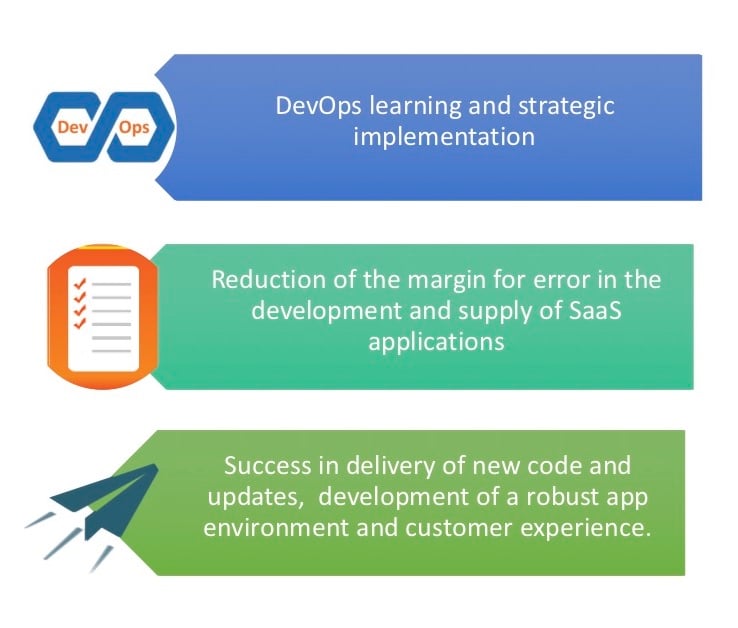
    In a broader sense, for a SaaS entrepreneur, success means the following:

    • Ability to deliver code much more reliably, and quickly.
    • A marvelous experience for customers.
    • A resilient, scalable application environment.

    All of the above is achievable by integrating DevOps throughout the developmental process, without which the construction of SaaS applications could become an operational nightmare. This is true for both grassroots SaaS entrepreneurs and cloud providers.

    Advantages of DevOps Automation

    For the modern SaaS entrepreneur whose entire business and operational foundation is the cloud, following are some of the advantages held by DevOps from a technical standpoint.

    • DevOps automation has the capacity to make continuous and uninterrupted delivery a possibility.
    • Automation itself has benefits in terms of numbers and innovations. A good example of this would be the LaserJet firmware team at Hewlett Packard. Simply via automation, the team was able to free more time for innovation and the development of new features by a margin of 700 percent.
    • Scalability of the SaaS applications, as well as any major software, can be ramped up to unprecedented levels of expansion via DevOps automation and back-end development.
    • Resiliency, which has always been an issue with cloud-based applications, can be ingrained into the developmental process itself, thus producing a final product that is resilient and dependable for the customer.
    • When integrated with the functionality and practicality of class-leading cloud computing services such as Amazon Web Services (AWS), the aforementioned scalability, resilience and uninterrupted delivery can be achieved with considerably more ease.

    Rapid Delivery of New Code

    The first advantage of DevOps automation toward SaaS entrepreneurs can actually be proven in a practical sense. Since continuous delivery spells the difference between application success and failure, it pays dividends to be free of interruptions and bugs, which can take away from the end user experience. This also will help you get a leg up against both the startup and established, enterprise-stage SaaS operator.

    With the automation of each environment build, from the development stage and QA to production, DevOps allows you to release new code as often as need be rather than adhering to scheduled and timed releases of code. In turn, this allows you to make vital decisions and resolve issues in real time, negating the need for a repair meet.

    According to the “State of DevOps Report” for 2015 by Puppet Labs, companies which utilize DevOps possess the capacity to launch code up to 30 times as often, and have lead times that are 200 times shorter. Not just that, but they have a failure recovery rate that is 168 times that of the average company that has yet to implement DevOps automation.

    Using DevOps to Provide a Better SaaS Experience

    SaaS entrepreneurs should begin their DevOps strategy by setting DevOps configuration needs for the particular application as it is being constructed. This would usually contain the provisioning regulations, including database instances, network addressing and the arrangement of software instances.

    The specific capabilities of a number of DevOps tools can and do vary here, which is why it is necessary to review the needs of the application against the work plan and the features of the project. This is to ensure that all the plans are headed in the correct direction.

    As most applications that have been deployed into the cloud are highly unlikely to have a DevOps model-based design element, it can be to the advantages of the SaaS entrepreneur to verify whether any DevOps tools under evaluation offer the capability to design a template. This is to describe deployment independently of the development process, which can be aligned with legacy applications.

    Aside from the value of DevOps in the development of SaaS applications that run on the very infrastructure the cloud provider offers, DevOps also can be utilized to assist with the migration of applications to other cloud computing models such as platform as a service (PaaS) and infrastructure as a service (IaaS). It also be used for the integration of several providers across a single cloud federation.

    Since SaaS is currently being used by the majority of enterprises (67 percent, according to a UBM survey), it makes sense to focus on DevOps practices for organizational success.

    Since SaaS has the lowest tolerance and margin for error, especially in the uber-competitive landscape that the modern SaaS entrepreneur has to operate in, using DevOps can potentially provide a significant advantage in terms of the following:

    • Major increments of cloud profitability and customer satisfaction.
    • The ability to deliver updates and new products at a much more rapid pace.
    • Fewer interruptions across the delivery channels due to the improved developmental process.

    With the cloud market as competitive as it is, it is necessary to have the best development and operations approach. Also important is the culture in which the applications potentially will take shape and the values that will be integrated and ingrained within them.

    In Conclusion

    It is said within the cloud-based entrepreneur community that although the SaaS environment has improved significantly over the past few years, it has by no means edged out the DevOps approach. The future of both the cloud and DevOps is entwined, and entrepreneurs should accept the fact that a year or two down the line, they will be synonymous with each other.

    This makes is absolutely vital to get the correct approach early on, and already have an infrastructure based on DevOps, so that competition in the future can be facilitated and made considerably easier, and customer experience can be harnessed for enterprise success.

    — Subramonian