Tag: ai

  • Why Enterprise Survival Depends on a Context Driven Approach to Data

    Why Enterprise Survival Depends on a Context Driven Approach to Data

    Enterprises are sitting on an enormous amount of data that could be fueling their automation journey. Much of the information needed to run a business is existing data. However, much of an organization’s data is inaccessible and unsearchable. This so-called “dark data” is hidden away in paper forms, spreadsheets, emails and literally billions of PDF documents. This dark data is locked away and mostly unusable by the systems and AI required to power the autonomous business of the future. Enterprises are trying to achieve 21st-century outcomes while being shackled to 20th-century data practices. 

    I recently read a report from NewVantage Partners on a survey they did concerning how big data and AI were driving digital transformation. While 92% of the survey respondents said they were increasing investment in big data and AI, there were some interesting findings that suggest organizations are not realizing the ROI they had hoped. For instance:

    • Only 31% have a data-driven organization.
    • Only 28% stated they have a data culture.
    • 53% are not treating data as a business asset.
    • 38% have not realized any measurable outcome from their investment.

    Now, there’s a whole list of reasons and hurdles that are preventing organizations from realizing better value and outcomes from their efforts to become data-driven. But, could the underlying approach to becoming data-driven be flawed? Could organizations be struggling because they continue to apply a legacy mindset and approach to data acquisition and storage? Could these challenges be a contributing factor in 70% of digital transformation projects failing?

    Just take a look at the growing number of stories, market reports and surveys on digital transformation and you’ll see a graveyard of failed projects, lack of success and high turnover rates. The current approach to digital transformation is not working. 

    In our push to become data-driven, we capture data and attempt to transform it into computable bits and then stuff the data into rigid structures. This legacy approach to capturing and representing information outside the human brain results in a proliferation of single-use data that doesn’t scale with the business. We always lose some of the meaning, relationships and context. Despite all the advancements in technology, we’re still trying to model the information based on how we’ve historically stored data. We’re still producing flat data.  

    In the autonomous enterprise of the future, and the digital workers that will run them will need rich, contextual data. The true power and value of digital transformation will only be unlocked by the adoption of a semantic data-driven approach. The future of work will be built on digital workers powered by machine learning, artificial intelligence and knowledge graphs. It’s not enough for an organization to be data-driven anymore–they need to become contextually-driven. We need to start capturing the meaning to achieve a better understanding of the data.

    “I liked the idea that a piece of information is really defined only by what it’s related to, and how it’s related. There really is little else to meaning,” said Sir Tim Berners-Lee, the inventor of the World Wide Web.

    Context is all about the meaning. Context is more than just a piece of data. Context is the background in which an event, task or process takes place. It is the deep, multi-dimensional understanding of data and the relationships between the entities. Understanding the context can lead to accelerated insight through AI and machine learning. To be competitive, enterprises need more than data; they need context to enhance productivity and efficiency. But our current approaches to capturing and storing data have historically failed to capture this valuable context. As the amount of data grows exponentially, organizations will realize semantic data is key to survival.

    — Kevin Harbauer

  • Three Keys to Successful AI Adoption

    Three Keys to Successful AI Adoption

    Over the past several years, we have begun to see the emergence of artificial intelligence (AI) in businesses. According to a study for the AI Index 2019 Annual Report, more than half of respondents report their companies are using AI in at least one function or business unit. Thirty percent report they have AI embedded across multiple areas of their business. As businesses continue to develop their understanding of what is possible with AI, we can expect to see a continued increase in AI adoption.

    People used to say “software is eating the world.” Moving forward, people will be saying “AI is eating the software world.” You can expect to see standard enterprise and cloud software programs become indistinguishable from AI. Currently, the success rates of AI projects fall well short of what we see in enterprise software success rates. A 2019 study by Pactera found that 85% of AI projects fail to deliver on their intended promises. As software and AI bind together, expect to see a dramatic increase in the success rate of these AI projects. AI adoption will begin to align more with traditional success rates associated with enterprise software as a category.

    As software and AI begin to merge together and enterprises look to invest in AI, there are a few keys to success. 

    Increase Your Organizational IQ with AI 

    Human factors are public enemy number one as it relates to AI adoption. For companies wanting to invest in AI, it starts with education. Companies need to become better educated on the options available to them through AI. We need to move away from viewing AI as a black box where magic happens. Through better education, the average business consumer will be able to understand the various disciplines of AI, such as natural language processing, vision, unsupervised learning and machine learning. As companies increase their IQ relative to AI, businesses will begin to understand the difficulty of AI projects. While this will create short term challenges, it ultimately will help the success of AI adoption in the future. 

    Commit to a Journey with Frequent Recalibration

    Enterprises must move beyond merely being educated about AI in order to remain competitive. Business leaders will have to step past the exploratory and proof of concept phases and begin delivering real value to the business. This will mean the continuous delivery of intelligent solutions across several areas of the business. AI is not like traditional software projects where you measure twice and cut once, deploy and then observe for several months. It is a continuous journey of discovery that will require consistent adjustments. AI is different and requires you to make changes to existing predictive models based on your real-time findings. 

    If the Insight Is Not Actionable, It Doesn’t Matter 

    We have already seen AI become more and more embedded into analytics solutions and this is only going to continue. The convergence of AI and analytics is crucial to the success of AI projects. Over the past 20 years, analytical reporting has been provided to all users. With the addition of AI, machine learning models become analysis engines providing prescriptive actions to business users rather than the business uses having to interpret the analytics themselves. Again, this is a huge component in the success of AI adoption. It will not be enough for businesses to gain insights from their AI investment, success will be measured on what they do with those insights. Leveraging the insights from AI starts by providing actions directly to the users that can act on them within their existing workflow.

    The power of AI is still largely untapped. It is already creating a massive shift in how we work and that is only the beginning. For those who have worked in IT and software, you need to adopt a whole new approach to AI projects. In the AI world, data is the driving force rather than a necessary evil. The emerging technology will require professionals to expand their skill sets beyond the traditional technical skills and into the disciplines of math and statistics. By doing so, we can expect to see a massive increase in successful AI adoption.

    — Chris Heineken

  • How Integration Can Keep Up with Digital Demands

    How Integration Can Keep Up with Digital Demands

    Integration holds the key to accelerating innovation, but in many organizations, business systems and application integrations haven’t kept up with the demands of digital. Data still exists in a siloed blend of on-premises systems and unconnected cloud applications, and IoT has added another layer of complexity into the mix.

    Understanding the three trends below, and how to leverage them, will help organizations continue to drive innovation for years to come.

    The Rise of the Integration of Things

    It’s no secret that the adoption of IoT is increasing, generating massive amounts of data from devices and sensors. As the number of devices increases in response to the explosive growth of IoT, the amount of data increases exponentially. This explosion of devices–and its associated data–is driving the need to leverage that data for the benefit of the business, such as improved customer experience, cost and downtime reductions or efficiency and productivity gains.

    Integration is the key piece that will enable businesses to get control of this data and put it to work. Without the right integration tools, it’s only possible to leverage IoT at specific levels. Essentially, integration provides the ability to connect the data from IoT devices and enterprise applications, orchestrate workflow and enrich IoT data with contextual information from other systems for better decision-making.

    Organizations can even use integration to link IoT platforms together for a comprehensive view of data, analytics and actions–making it easier and quicker to analyze, draw conclusions from and determine how to use the data. On top of this, they can also create complex and sophisticated responses when something goes wrong by leveraging automated integration workflows.

    As we continue to connect our devices, the Integration of Things will be as important as the Internet of Things.

    Blurred Lines Between Application Development and Integration

    For cloud applications to survive and thrive, they require built-in integration with other apps and data sources. Otherwise, users are constantly switching contexts from one tool to another when trying to complete a task, and content is scattered across the organization in multiple applications and departments. Because of this, the lines between application development and integration will blur as apps are compelled to have integration embedded under the covers.

    There will be many benefits to this. First, organizations will easily create and deploy integrations directly within their products, fully baked into the user experience. These in-app integrations to third-party sources will unlock additional capabilities for users, empowering them to do more.

    Second, building integrations without the right tools and specialized integration know-how requires a lot of work. Embedded integration eases the pain of monitoring API changes and documentations so that maintenance is smoother and cheaper.

    Finally, business services can involve complex interactions with cloud apps and data that require ordering, have dependencies or may even need to be reversible on demand. Organizations can handle these sophisticated jobs by leveraging advanced integration orchestration to manage app interaction–meaning that instead of using manual code for complex data mapping, they can create a visual drag-and-drop data flow. 

    AI Powers Smarter APIs

    Businesses have already been leveraging intelligent automation to improve operations, drive innovation and personalize the customer experience. As we head into the new decade, API management will harness the power of AI with innovative ways of protecting and controlling APIs and the applications they serve.

    Service mesh, an increasingly popular way of discovering and observing services in distributed networks, will evolve into app mesh, an application-aware model of monitoring, managing and securing your APIs. API policies will be able to reconfigure dynamically based on traffic, security threats and identified patterns. Additional layers of defense will come from bots deployed in an organization’s network to constantly monitor behavior and these bots will use machine learning to improve automated threat responses for APIs.

    The integration landscape is changing, but understanding how to harness these trends will ensure organizations are well-equipped to take advantage of evolving technologies for innovation.

    — Ann Marie Bond

  • Dynatrace Extends AI Reach of APM Platform

    Dynatrace Extends AI Reach of APM Platform

    Dynatrace, at its Perform 2020 conference today, extended the reach of the Davis artificial intelligence (AI) engine it makes available via its application performance management (APM) platform to include deeper ties with mobile applications along with an ability to track key performance indicators (KPIs) such as revenue trends and customer churn.

    In addition, Dynatrace has enabled one-click integration with web analytics tools such as Adobe Analytics.

    Those capabilities are in addition to deeper integration between the Davis AI engine and Kubernetes that was announced earlier this week at the conference.

    Mike Maciag, chief marketing officer for Dynatrace, said usage of APM platforms is expanding beyond IT teams to include business users at a time when organizations are building and deploying more digital business applications. Most of those emerging applications revolve around mobile computing devices so Dynatrace is also extending the reach of the Davis AI engine to provide digital experience management capabilities, including advanced analytics and segmentation of mobile app user sessions, auto-instrumentation for additional mobile platforms such as React Native and tvOS and insights into third-party mobile applications components, he said.

    Specifically, Dynatrace multi-dimensional analytics now include crash reporting workflow and granular segmentation capabilities spanning health, performance and usage metrics across all app components and user actions. That capability will eliminate an APM blind spot most organizations have today, said Maciag.

    With more than 200 billion mobile applications having been deployed at a cost of $120 billion in 2019, Maciag said it’s apparent the scope of the challenge requires additional help from an AI engine.

    Coupled with an ability to now track how application performance is impacting KPIs, Maciag said there is now an opportunity to unlock a gold mine of business data that is locked up in observability platforms using modules such as the Dynatrace Digital Business Analytics.

    To further enable that capability, the Davis AI engine within that module provides automatic, real-time alerts on anomalies that might impact the business now using a wider array of data sources.

    It’s not clear to what degree business users might rely on APM platforms to surface events that could impact business outcomes. Most business users rely on either business intelligence (BI) applications or traditional spreadsheets to manage the business. However, as more processes become digitized using software APM platforms can surface events long before they are ever reflected in a BI application or spreadsheet. In fact, chances are good that business leaders are more likely to be able to affect the ultimate outcome sooner should they choose to analyze events in real-time via an APM platform.

    In the meantime, as application environments become more complex, reliance on APM platforms continues to grow. Once used mainly to keep track of only the most mission-critical monolithic applications in the enterprise, organizations are now tasking DevOps teams to manage entire business processes end to end basis. The challenge, of course, is most of those business processes consist of a wide variety of front and back-office applications that more often than not were built using entirely different frameworks.

    — Mike Vizard

  • Opsani Applies AI to Rein in Cloud Costs

    Opsani Applies AI to Rein in Cloud Costs

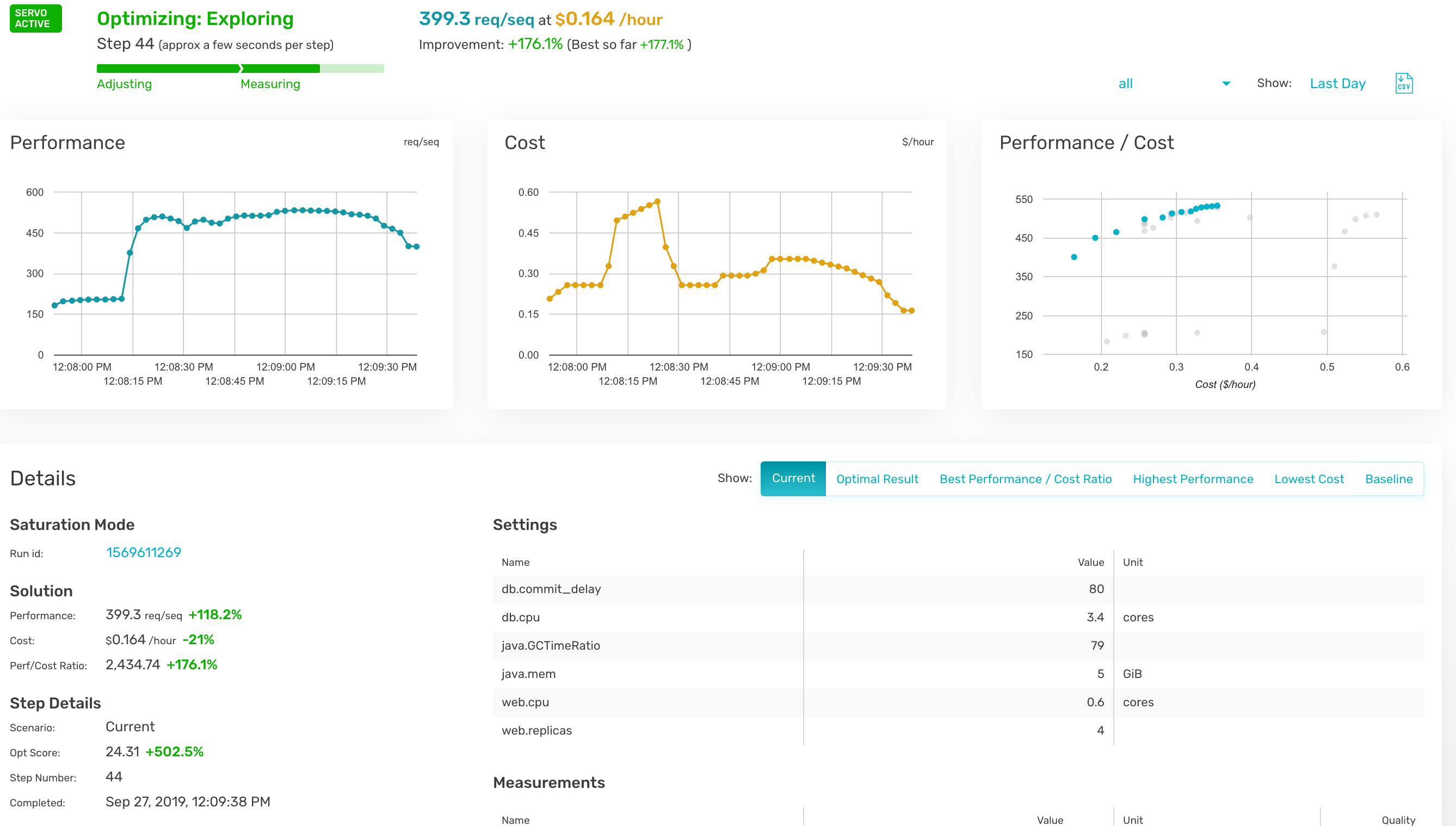
    Opsani has added support for cloud computing environments to its namesake software-as-a-service (SaaS) platform that leverages machine learning algorithms and other forms of artificial intelligence (AI) to optimize the IT environment.

    Company CEO Ross Schibler said Opsani AI not only proactively tunes resources such as CPU and memory, but it also can optimize middleware configuration variables such as Java virtual machine (JVM) type and pool sizes; kernel parameters such as page sizes and jumbo packet sizes; and application parameters such as thread pools, cache timeouts and write delays.

    Given the size and dynamic nature of most cloud computing environments, Schibler said it’s not possible for IT administrators to manually optimize cloud computing environments to match the specific needs of each class of application workload being deployed. The Opsani platform makes it possible to leverage AI to optimize settings for the lowest cost or best performance every second, he said.

    Opsani claims existing customers are seeing more than 200% increases in performance per dollar while saving up to 80% on their cloud spend.

    In addition, Opsani has made available plugins for a variety of DevOps tools including GitHub, Terraform, Jenkins, Spinnaker, Wavefront, DataDog, SignalFX, Prometheus, Splunk and New Relic, on all the major cloud computing platforms.

    Schibler said Opsani can be applied to existing monolithic applications as well as emerging microservices-based applications based on containers running on Kubernetes clusters. The goal is to make it possible for IT teams to rein in cloud costs at a time when most cloud resources are being employed inefficiently, he said.

    Individual developers are deploying applications on virtual machines in the cloud with little to no appreciation for total cost, noted Schibler. Before most IT organizations realize it, the cost of running applications on a public cloud has far exceeded budget allocations. IT organizations not only need tools to rein in those costs, but Schibler noted Opsani also makes it possible to model those costs before an application is deployed or upgraded.

    The adoption of public clouds and DevOps often go hand in hand. The challenge organizations are encountering more often is that as the number of applications running in a public cloud computing environment increases, they often wind up overprovisioning resources. Over time, the need to optimize the consumption of cloud resources becomes a more pressing financial concern. However, most IT organizations don’t have the resources or expertise needed to manually tune each instance of cloud workload. At the same time, the typical IT organization doesn’t have the ability to build its own AI engine. Opsani is making the case for a SaaS platform that provides that capability without requiring an IT organization to build its own AI models from scratch.

    Naturally, many IT professionals are dubious of AI because there may not be enough transparency into the AI models being employed. However, because Opsani is a SaaS platform, the risk of experimenting with AI to optimize cloud workloads is relatively slight. Of course, there’s no absolute requirement to employ AI at all. However, as financial pressure on IT organizations continues to mount, there doesn’t seem to be much of an alternative either.

    — Mike Vizard

  • Predictions 2020: Five Real-Time Data Predictions

    Predictions 2020: Five Real-Time Data Predictions

    According to Gartner, 85% of big data initiatives end in failure. In 2020, organizations are out of budget and operational runway, and need to start executing and getting the big data recipe right.

    It is not just about big data; it is about using data differently. Rather than rearward-facing business intelligence, leading companies are driving differentiation and profit by using data to make fact-based decisions in real time. This requires the broader application of real-time information to make a difference in user experience, in prioritization of production and manufacturing schedules, and in spotting problems before they happen.

    Rather than reports for a few people, the new data-driven business processes are engaged continuously, and across all customer engagements, transactions and decision points within business processes. Scale means throughput across millions of transactions and with potentially millions of customers. Database systems have to be engineered differently, with different technology built to deal with real-time demands and high throughput across huge numbers of endpoints.

    As we enter the next decade, here are five predictions, centered on real-time data, that we expect to emerge.

    Machine Learning and AI Models Finally Get the Data They Deserve

    Most AI and machine learning initiatives are niche, nascent and not operating anywhere near scale. According to industry research (O’Reilly), hardware and data are the primary bottlenecks in getting enough data processed fast enough to harness the full promise of AI. That’s changing, with the arrival of new wire-speed hardware (from companies such as Intel) and clever data platforms designed to leverage hardware innovations for real-time efforts on a massive scale. It’s all about the amount of data you can process in real time to make AI and machine learning actually work. This is what is needed, and it’s becoming practical.

    Privacy Prompts a New Era of Data Innovation

    Businesses hoard data. And often, so much of it isn’t used due to infrastructure costs and technology bottlenecks. Now, as new privacy laws (GDPR, CCPA, etc.) show their teeth, companies really need to make all that data worth the risk. It will drive new real-time business processes that are not only safer but squeeze value out of data in new and exciting ways.

    Companies face a delicate balancing act. They must comply with the realities of new regulations, while also being able to use personal data in real time to serve customers what they want and expect. Companies that can satisfy the regulators and appeal to customers will win.

    If an Economic Downturn Occurs, Data Will Drive the Next Round of Economic Gains 

    An economic downturn is inevitable. When it happens, companies will be asked to do more with less. As a result, they will need to completely rethink their solution and delivery strategies.

    In that environment, with fewer markets opening or providing a sufficient return on investment, the next wave of gains is to optimize your existing segments and operations to the fullest extent. These data-driven initiatives require that companies understand customers better, and be able to instantly target them in critical moments—harnessing massive amounts of data to suggest and expand purchases. 

    5G Will Accelerate Customer Expectations

    As bandwidth increases and high bandwidth communication becomes available across devices (on cars, planes, homes, ships, buildings, etc.) and in more situations, we will see data being used differently. What may have been processed intermittently in batches with high degrees of latency will now be processed in real time, driving higher efficiency and removing risk from supply chains, customer interactions and equipment maintenance and performance. It will no longer be OK to know how you’ve done and correct it next quarter; rather, things must be corrected in near real time. New standards will be set by the highest-performing companies, and entirely new businesses will emerge that are leveraging a new level of availability to real-time data.

    Decline of Globalization Will Force Companies to Know Their Customers Better

    As global markets shrink, it becomes imperative for companies to up their game and drive for more market share within the available market. Companies that have been treading water and growing at the rate of the global market expansion are going to start to shrink. Differentiation through better customer experience and better management of supply chains will make the difference between continuing to grow versus stagnation or shrinkage.

    Companies that have invested in instrumenting their supply chains, who have a deep understanding of what comes from where and what the alternatives are, have already begun to optimize around the new web of tariffs. Those that are less agile are seeing reduced profits or reduced sales based upon the elasticity of their pricing options.

    The more real-time data one has, the clearer the picture of what options are available as the global situation changes. The faster a company can process that data means either missing financial targets or outperforming peers.

    Want to learn more about what to expect in 2020? Join us Jan. 23 for our Predict 2020 Virtual Summit  featuring discussions from some of the industry’s best and brightest offering up their visions for the future. Sign up today for this free daylong virtual event.

    — Lenley Hensarling

  • Cloudera Calls for MLOps Standards Initiative

    Cloudera Calls for MLOps Standards Initiative

    Cloudera put out a call this week for the IT industry to define a set of open standards for machine learning operations (MLOps) and machine learning model governance that could be universally applied.

    Santiago Giraldo, senior product marketing manager for data engineering for Cloudera, said the idea is to create the equivalent of a set of best DevOps practices to create the equivalent of a set of best DevOps practices for employing machine learning models employed by artificial intelligence (AI) applications that will serve to foster portability, interoperability and explainability.

    In the absence of such standards, most AI models are essentially black boxes optimized for specific platforms that many organizations are reluctant to adopt because no one is quite sure how they operate. Furthermore, it’s not all that feasible right now to integrate multiple AI models built using different classes of tools.

    At the same time, Giraldo said the further down the AI path organizations go, the more they realize the AI models they are building need to be either updated frequently or outright replaced as new data sources become available. Most AI models are trained to respond to specific events based on access to a finite set of data. As new data sources are introduced, organizations are discovering the accuracy of recommendations being made by an AI model start to degrade. In fact, only a limited number of AI models are making it into production environments today largely because they didn’t scale as expected.

    Cloudera is already moving down the MLOps path with Apache Atlas, an open source framework designed to integrate data management across explainable, interoperable and reproducible MLOps workflows. Now Cloudera is inviting the industry, including competitors, to collaborate on a broader set of metadata specifications that Anduago said is more a call to action than a specific proposal.

    It’s unclear precisely how such an initiative might be managed. There is no widely recognized consortium initiative focused specifically on MLOps. Thus far, the closest thing might be The Deep Learning Foundation, an arm of The Linux Foundation that connects organizations working on innovative technical projects focused on AI and machine learning.

    Despite all the hype, it’s apparent that AI is still in its infancy in terms of practical use cases. Most organizations can’t afford to hire the data scientists required to build AI models, let alone find them. Even when they do, the competition for AI talent is so fierce that organizations are also finding it difficult to retain that talent. Giraldo said the goal should be to make it easier not only to build AI models but also slipstream them into both new and existing applications.

    Obviously, many of the best DevOps practices that have already been defined can be applied to AI models. The next big challenge might very well be educating data scientists on how to work more closely with developers to build, test and deploy AI models with applications at scale. In the meantime, the existing DevOps community might want to do as much as possible to help prevent a nascent MLOps community from reinventing some wheels that might already exist.

    — Mike Vizard

  • DevOps Chats: Autonomous Test Innovation Using AI/ML with Functionize

    DevOps Chats: Autonomous Test Innovation Using AI/ML with Functionize

    At the speed of DevOps, automated testing is essential for QA to maintain pace with that of software creation. Automated testing is ripe for innovation, too. How do we know we are performing the most relevant tests, that new functions in the software aren’t being missed or overlooked, or that highly dynamic applications aren’t outpacing static test cases and logic?

    Functionize aims to bring innovation to achieve autonomous testing, making testing, the creation and maintenance of tests more efficient. Founder and CEO Tamas Cser joins us on this episode of DevOps Chat to share several innovations his company brings to DevOps teams.

    Join us as we discuss how writing test cases in English help capture intent and result in less brittle tests over time, and about the ability to reach into Functionize during run time and programmatically change object models and internals. Learn how AI improves visual detection of web pages and changes in web page behavior, and how AI can root out test cases that may no longer be valid as software functionality changes.

    As usual, the streaming audio is immediately below, followed by the transcript of our conversation.

    Transcript

    Mitch Ashley: Hi, everyone. This is Mitch Ashley with devopsy.kinsta.cloud, and you’re listening to another DevOps Chat podcast. Today, I’m joined by Tamas Cser, who is Founder and CEO of Functionize. Our topic today is a very interesting one—AI machine learning for automated DevOps testing. Tamas, welcome to the DevOps Chat podcast.

    Tamas Cser: Hey, Mitchell, it’s great to be here. Thanks for having me.

    Ashley: Well, absolutely. It’s my pleasure. Thank you for joining us. Would you start out by introducing yourself, tell us a little bit about you and also about Functionize?

    Cser: Absolutely. So, my name is Tamas Cser, and I’m the founding CEO of Functionize. I’ve been in technology for about 15 years, started as a consultant running my own company here in the Bay Area focused around development and we did, also, a lot of DevOps and building infrastructures kind of initially just saw posted and then cloud hybrid.

    And during those years, I bumped into testing a lot of times and really being at the front of the house and running the company and dealing with customers. It really become very apparent that testing is lacking in a lot of areas, and as DevOps got more and more initially mature and got traction, then we got into it more and, again, testing is a huge problem.

    So, really, that’s when I got into testing, tried to look at the problem, understand what opportunities we have now with cloud and big data that have not been explored and how that could be applied to solve some of these problems and this is really how Functionize was born about four years ago.

    Ashley: Mm-hmm.

    Cser: And ever since, it’s been an amazing ride. And now, you know, four years in, we have really acquired a great team and we have a very exciting product and customers and just, it’s been an incredible journey.

    Ashley: Great. Well, I definitely wanna hear more about the product and et cetera. Let’s start maybe with, in a software deployment world, especially in a DevOps world where we’re automating and we’re shifting things left, testing is only as good as the actual testing that happens. Bad testing automated is still bad testing.

    What are some of the hindrances that you see as we’ve changed to more of a DevOps style container, cloud? What kinds of things has that introduced into the testing criteria and how do you approach solving that differently than maybe a traditional, like with a Selenium style tool or something like that?

    Cser: I think that the largest change that comes with all of the incredible progress that we have made in software development, if you think about the entire DevOps toolchain and cloud and a lot of the automation that happens including containers is speed.

    And so, as with speed, software gets deployed much more frequently, and companies are able to iterate very, very fast around their product. And that provides a huge challenge for regression testing as well as getting testing on any of the new features that you’re releasing, and the maintenance especially around it is a huge challenge.

    So, I would say that, really, that speed that we have seen recently with some of these newer methodologies and then agile, multiple releases per day is really putting a huge pressure on the quality departments. And so, there’s huge opportunity to improve around that and really bring that up to speed, if you will, versus QA that has been kind of sitting stagnant for a long time, not seeing a lot of innovation if you look back the past 15 to 20 years.

    Ashley: Well, you know, it stands to reason, if you’re producing a lot more software much quicker, you need to test, obviously, much more quickly. So, automation, of course, is very important.

    What do you also think about the problem of how do you know to test the right things when you’ve got the right kind of coverage, and keeping in mind, you know, you may have developers, DevOps, engineers as well as QA people that are defining what those test criteria are?

    Cser: So, I think coverage is a very interesting topic and it’s an important topic that a lot of our customers have, how much coverage should I have, do I have the right coverage? And this is also an area where we can collect data and understand and analyze data from the application itself and even from the live user usage, in order to see where the patterns are, what’s being used, what potential impact it might have on the software if a particular feature or a functionality would break.

    And so, again, I think there’s a huge opportunity in bringing that—this is certainly one area that we’re focused on with our autonomous next generation capability where we’re trying to close the gap on that and have an impact on companies’ abilities to analyze and understand what, really, they need to test.

    Ashley: I believe, if I recall right, with your technology, your product, you actually write the tests in kind of an English format, right, rather than code? Is that correct?

    Cser: So, yes, we do have an English version of the desk creation capability. That’s not the only one, but it’s one of the key areas we’re innovating around is to understand user intent and what the test case needs to do and be able to take modeling around that, and that becomes really interesting and really important in how your test cases are maintained over time.

    So, these test cases become a lot less brittle for the very specific implementation and particular button or HTML element interaction. And so, that’s a really exciting area that we’re innovating in.

    Ashley: Excellent. So, I would imagine also, being part of a CI/CD process, you have to integrate with a lot of different tools or at least fit into a framework where, you know, you obviously don’t own the process end to end. Tell us a little bit about how you’ve approached that.

    Cser: So, the way we approach that—and again, this is a super important part of DevOps and building a piece of technology, these days especially, because the toolchain is incredibly important. And so, the way we approach it is two ways: One, we have generic APIs and give out of the box solutions to integrate with kind of your usual suspects—GitHub and Jira—

    Ashley: And Jenkins.

    Cser: And various different CI tools like Jenkins.

    Ashley: Mm-hmm, and Agira, yeah.

    Cser: The other piece that we’re doing that’s really interesting is, we’re—we have an ecosystem within Functionize that allows our users, basically, to program our run time environment that actually executes the tests.

    Ashley: Mm-hmm.

    Cser: And this opens up all of the object models and kind of hidden internals of the actual test case running. This is really, really interesting, because it gives you the capability to do a really, really deep level integration even in the middle of an execution with third-party applications or any other external functionality that you might have to perform that’s kind of a complex and advanced use case.

    Ashley: Now, am I correct in reading into what you’re saying in that while the tests are running, you can programmatically control Functionize and alter or adjust its behavior of what it’s testing or how it’s testing or something related to that?

    Cser: Precisely, precisely. So, this is kind of a first in the market capability and beyond just controlling sort of the outcome of the test case or the behavior, you also get access to the rich data sets that we’re collecting, including all of the visual screenshots or videos that we’re collecting doing execution.

    Ashley: Mm-hmm. And I understand, too, you use some AI machine learning in some pretty unique ways with screen captures, maybe other ways in the product. Talk a little bit about that.

    Cser: Absolutely, I’ll be happy to. So, as applications run again and again, obviously, how the application behaves and looks is really important. So, there’s one area that customers care about just around visual testing, which is, “Is my application displaying the way that I’m expecting it to and customers would expect it to?” So, it’s one key area that we’re working on and, with template recognition capabilities that can detect breakages on the page and this is based not on traditional kind of, you know, pixel by pixel computation, looking at the difference, but actual, deep learning that can understand how your page normally looks and where we normally see changes versus maybe change sets that looks like anomaly.

    Ashley: Mm-hmm.

    Cser: And then there’s another area—also, this is really interesting. Part of this that can be used in the root cause analysis, for example, of a page to understand what changed, what new elements were introduced and potentially have a test case that now is no longer valid could be automatically updated.

    Ashley: Oh, so, certain scenarios, maybe a page has changed sufficiently that the test no longer makes sense any more to run, that kind of a situation?

    Cser: Exactly. You mentioned that somebody added a couple of new form fields to a form and now those are required and you can’t complete the test. So, that’s something that we can do with analysis, visual analysis, as well as some DOM analysis can recognize an automatic usage and some solutions around it.

    Ashley: Wow, we’ve come a long way from the screen scraping vector graphics days of testing UIs, haven’t we? [Laughter]

    Cser: Oh, definitely. [Laughter] There’s a lot of exciting work that’s gone into it. And again, we are obviously drawing down on incredible open source capabilities as well and the advances that we’ve seen over the last year in an LP as well, so it’s really exciting progress that’s being made in the industry in general.

    Ashley: Excellent. So, talk a little bit about the cloud environment and, you know, we’re living in a world of, you may be a cloud-native application, but you may also be in a hybrid private cloud, maybe even not even a cloud data center, you know, private data centers and also multi-cloud. What are some of the challenges those environments bring and how might you tackle that?

    Cser: So, that’s a great question. Cloud environments in general are wonderful to work with for us and customers that are in the cloud and utilizing the cloud are good to work with for us. It does not represent any kind of a major challenge. It actually makes it much easier for us to work together.

    I would say that the cloud hybrid environments or on-prem environments certainly pose a challenge and there’s various different ways that we work with customers like that to still be able to bring the value of the cloud and the scale and kind of a lot of the modeling that we do and be able to still test applications that are hidden behind a firewall.

    Ashley: Mm-hmm. Is that also because of just the environments, maybe the testing tools, et cetera, that are in a traditional data center, private data center environment just are unique to that environment versus a cloud environment is more standardized if you’re in Azure or Google or AWS—is that why?

    Cser: I would say it’s more, it has to do with the access. It’s the way that we can access the application. It’s the client’s ability to provision environments that might be dedicated for testing, the way those environments can get the right resources, compute resources so it can handle the load that we will put on it as you go into agile testing. Versus in a traditional environment where the hardware is limited and potentially, you know, you have to deal with some secure tunneling into the system which is gonna slow it down. And so, overall, your speed decreases and the flexibility around those environments decrease. And the customer’s ability to provision new hardware, let’s say, because they would like to move faster for testing is greatly diminished.

    Ashley: And one of the things awesome about entrepreneurs is, oftentimes, they take a problem that they’ve had in their career, maybe their last job and say, “There’s a better way to do this. Let me go create a product, create a company, go do that,” since that’s part of your story, too.

    What was it that, in your experience with software and testing being a hindrance in and of itself? Were there specific problems or just, there’s gotta be a better mousetrap, or how did you—what did you bring with you from that experience to spin off and crate Functionize?

    Cser: That’s a great question. It really has to do with the pain, right? Getting the call from an angry customer when a particular bug regressed for the third time that week because your processes are not there—it’s really, really painful. And so, that’s really the initial starting point.

    The second piece that I would say that makes it a little bit unique is that—and we talk about this is, as well as shift left is really important so you can start testing early on. You’re taught it’s really important to shift right. It’s really important to test production environments because there’s a lot of things that happen these days when the application is literally compiled in real time in the browser with lots of real time dependencies, third parties and APIs and whatnot. So many things can go wrong in production that may not be actually code defects, they might have to do something with some other defect or some other dependency problem.

    So, that’s certainly one area that I am bringing Functionize in a heavy way that, and kind of the way that I see the future going, going both ways. We’re shifting left at the same time we’re also thinking about how do we test production.

    Ashley: Interesting. You know, you certainly hear a lot of shift left in test environments, not so much things happening in production environments. Are there certain, you mentioned applications kind of assembling, if you will, being brought together inside the browser at run time in a production environment.

    Are there other use cases like this for testing and production? I’m really curious about this.

    Cser: Oh, absolutely. There is many, and a few that I can think of that would be really interesting is a lot of the personalization that also is happening these days. So, we see customers struggle also with kind of these new style marketing capabilities that are operationalizing and these experiences that you would display to the user. It’s very difficult and challenging to test, difficult to see from the production environment. You have kind of the right data and the right experience, if you will, showing up.

    And so, that also provides opportunities for us to create specific products and features within Functionize to attack that problem.

    Ashley: Mm-hmm. It seems also like—this is, you know, sort of an edge case maybe today, we’ll see more and more of it, but serverless applications that are more event driven, you know, not traditional transaction driven might also be a good production test case for you.

    Cser: Oh, I agree. So, certainly, that would be an early, let’s call it corner case, rush case, but I think that we’re gonna see more and more of these coming as companies mature and these technologies become more mainstream.

    Ashley: Mm-hmm. Well, kinda going in a little bit of a different direction here, a little birdie told me that you all are up for some type of AI machine learning award—what’s happening with that?

    Cser: Well, we were just recently nominated for the AIconics Award here in San Francisco. So, we’re excited to be part of that. We’ll be attending and seeing how it goes, obviously. We’re honored to be there and being nominated. So, that’s very exciting to see a company being recognized for the work that we’re doing.

    Ashley: That’s awesome. Well, I wish you best with that and good luck. Also, I know there’s some things happening on the partnership for Functionize—what’s happening there?

    Cser: Yes, absolutely. We have a lot of great traction, and so, we are about to announce shortly, probably at the end of the quarter or early Q4 a very strategic partner, one of the largest global service innovators who are partnering with Functionize and we’re going to market together which is, again, I’m really proud of the team, and it shows the work that we’re doing and the work that marketing is doing to raise the awareness of the power of AI and machine learning and how that’s gonna change testing.

    Ashley: Mm-hmm. So, we’ll look forward to maybe some announcements coming up in the fourth quarter, then. Gotta keep an eye out for that. Great.

    Cser: Absolutely.

    Ashley: Yeah. So, I’ll kinda put you on the spot here, a little bit. If you had to say what some of the best practices that you’ve learned, not only at Functionize but also before when it comes to automated testing, you know, DevOps, cloud world—if you could boil that down to two or three best practices, where would you start? What would you tell people?

    Cser: I would say that finding the right tool and building the right toolchain is definitely incredibly important. The second I would say, like everywhere else, I would say you do need the right people and so, training and understanding of how do we apply these tools is absolutely critical.

    And then lastly, I would say that your strategy in that application, obviously, going back to the earlier conversation of what to test and how to test is gonna be critical for your success. And so, the tool, obviously, is primarily the area and certainly education is the second area that we’re very focused on, too.

    Ashley: I’m curious [Cross talk]—I’m curious about that, too. What are the kind of things that you look at or look for in people from testing skill or kinda the skills that you invest in current staff for training and skill development? What are some of those things that you look for?

    Cser: Can you clarify the question? In terms of look for in skill sets we’re hiring or skill sets—[Cross talk]?

    Ashley: So, your second item that you mentioned was the kind of capabilities and skills of your staff in testing and hiring those kinds of folks, also training for testing folks. What are some of those things that you’ve learned to look for that would be good advice for potential customers or current customers of Functionize?

    Cser: Yes, that’s a great question. So, I would say that, you know, obviously, like in any hiring, you want to hire bright people who are very motivated, so I’m assuming that’s the baseline.

    As far as the skill set goes, I think we definitely are looking at, obviously, professionals that have a lot of experience, but also, we can really enable and help people that are primarily manual or, let’s say, much less technical today and bring them into the world of automation and really drive a lot of value for our customer base. Because we see a lot of customers struggling with scaling and finding the right technical talent. So, I would say that that’s absolutely a critical point on being able to spread this to a wider audience, but at the same time I think that having technical users in part of the project, I think, is still very important.

    Ashley: Okay. Very good. Well, as always happens on these podcasts, we’ve run out of time. Tamas, thank you so much for being on the podcast today.

    Cser: Thanks for having me. It’s been a pleasure to be here.

    Ashley: My pleasure as well. Thank you to Tamas Cser, Founder and CEO of Functionize for joining us today and also, of course, to you, our listeners for joining us. You’ve listened to another DevOps Chat. This is Mitch Ashley with devopsy.kinsta.cloud. Have a great day. Be careful out there.

    — Mitchell Ashley

  • Building Your Data Science Team from Within

    Building Your Data Science Team from Within

    The global machine learning (ML) industry is increasing at a compound annual growth rate of 42% and will be worth $9 billion toward the end of 2022. Despite this figure, there are many cases of data science teams’ failure to deploy a reliable artificial intelligence (AI) product or service.

    Part of the failings and shortcomings of AI concern the ramp or process for getting there. For an AI project to succeed, it is critical to have your data fully deployed, available, structured and cleaned. You also must have some algorithms (ML/deep learning/natural language processing) ready to pull the insights and focused data, effectively putting the intelligence into AI.

    This requires a very specific skill set and talent pool.

    Empower Your Data Analysts

    With so many different technology fields colliding, machine learning is a difficult area to master. Deep reinforcement learning (DRL), natural language processing (NLP), AutoML tools, ML Ops, neural networks and model-based reinforcement learning are just some of the subjects required to master ML.

    With a shortage of talent and shortfall of data scientists, this is easier said than done. Part of this is because the demand far outweighs the supply, with Bloomberg estimating job postings for data scientists rose 75% from 2015 to 2018. Almost every organization shares this same urgent need.

    When faced with a skills gap in their teams and stiff competition in recruiting, how can organizations effectively build a data science team?

    One way is to start by looking at your data analysts. They are often swimming in disparate, federated data sources, operating on legacy databases, working with mixed data sources and using Excel to do things it was never intended to do. There is an enormous opportunity to empower data analysts to become data scientists.

    From Data Analyst to Data Scientist

    Companies looking to hire data scientists from within need to think about how to upskill, reskill or preskill their data analysts to perform the roles needed to implement AI and ML fully. I’m a believer that if you provide prescriptive and progressive curricula around the essential topics a budding data scientist needs, you can equip them with the skills and knowledge to make a difference and move them forward in the organization.

    However, it’s not enough to simply equip these employees with a curriculum; the program should have numerous twists and turns. Why? When thinking about how you can train the prototypical ML expert of the future, you must consider all the deep tech skills needed. You also want the business and social skills that are required to attain the expert moniker. A well-rounded ML architect will see the business imperatives, understand how to communicate with engineering and business, and have the tech skills to deploy ML models that benefit your business and customers.

    When organizations take roles commonly found in the workplace, such as data analysts, provide them with a sequenced path of instruction that moves them toward an aspirational role, they’ll be well-positioned to realize the full potential of AI and ML.

    — Mike Hendrickson

  • IBM Zones in on DevOps for AI

    IBM Zones in on DevOps for AI

    IBM this week revealed it has added a drift detection capability to the Watson OpenScale platform to govern artificial intelligence (AI) models that will become a foundational piece of IBM’s approach to defining best DevOps practices for building AI-infused applications.

    Rohan Vaidyanathan, program director for IBM Watson OpenScale, said one of the biggest AI issues organizations face today is determining when to update or replace an AI model. Announced at the IBM Data and AI Forum event, the drift detection software added to Watson OpenScale provides a continuous monitoring capability that detects how far an AI model has moved from its original parameters, Vaidyanathan said.

    Drift in AI models usually occurs over time, especially as use cases change in ways that are unexpected. Once that drift is detected, organizations eventually want to either retrain that AI model or replace it with a new one. The process challenge organizations face when building AI applications is first assembling the right data to train the model and then integrating that model within an application as part of a continuous integration pipeline.

    With each interaction with an AI model, the result returned to the application might be different as the machine learning algorithms embedded in the AI model continually learn about the process the application abstracts.

    As it turns out, Vaidyanathan said, only one in 20 of the AI models being built make it into production applications, largely because organizations have not bridged the divide between DevOps teams and data scientists effectively. The drift detection capability IBM has developed is a “missing link” that will enable those two teams to begin collaborating more closely, he said.

    IBM has already defined a set of best practices for building AI models as part of its Watson Anywhere initiative, which seeks to drive adoption of the various elements of the Watson platform on multiple clouds. Rather than forcing organizations to load data into an IBM Cloud to use Watson, IBM is working to bring the various engines and application programming interfaces (APIs) to wherever data resides.

    Naturally, IBM would prefer organizations employ the opinionated DevOps and DataOps processes it defines as best practices for building AI models using its tools. However, Vaidyanathan acknowledged there is likely to be plenty of instances in which organizations will prefer to define their own DevOps processes. The hope is those organizations will still access Watson services and metrics using the APIs that IBM has exposed.

    The challenge IBM is encountering in terms of driving AI adoption are manifold. In addition to trying to get data scientists to appreciate DevOps, IBM recognizes AI models are only as good as the data employed to train them. Unfortunately, many organizations have been lax when it comes to data management. As a result, many of them are now revisiting broken DataOps processes. IBM Watson OpenScale and IBM Cloud Paks for Data, a set of portable data virtualization and management tools deployed as microservices, are part of an effort to bring both explainability and order to the building of AI models.

    Obviously, it will take some time for organizations to extend best DevOps practices to incorporate AI models. But at this juncture, it’s more a matter of when rather than if that goal will be achieved.

    — Mike Vizard