Tag: ai

  • Snyk Acquires DeepCode to Apply AI to DevSecOps

    Snyk Acquires DeepCode to Apply AI to DevSecOps

    Snyk today announced it has agreed to acquire DeepCode as part of an effort to apply artificial intelligence (AI) to DevSecOps.

    DeepCode has developed an interpretable machine learning semantic code analysis tool that scans code anywhere from 10 to 50 times faster than existing approaches. DeepCode currently supports Java, JavaScript, Python, TypeScript and C/C++ programming languages. Developers get started by connecting the DeepCode bot to their GitHub, BitBucket or GitLab accounts or directly within their integrated development environment (IDE). DeepCode then immediately starts reviewing each commit with no additional coding required. The bot is currently free for teams of up to 30 developers.

    Snyk CEO Peter McKay said those machine learning algorithms dramatically reduce both false negatives and false positives as they learn the application environment. That code scanning occurs in real-time, thanks to a Datalog solver developed by DeepCode, which McKay said means code scanning can now keep pace with the rate at which applications are being developed.

    While there’s widespread agreement that more responsibility for application security needs to shift left toward developers as part of any effort to embrace best DevSecOps processes, getting the right security tools into the hands of developers has been a challenge. Developers tend to resent having to wait for security scans to be completed, especially at a time when the rate at which applications are being developed and deployed has been accelerated as organizations embrace digital business transformation more aggressively.

    In effect, code scanning as implemented today is often viewed as a bottleneck. That issue goes away, however, if scanning can occurs in real-time. Armed with that data, it then becomes possible to also prioritize which vulnerabilities to address in code first in addition to in, some cases, automating bug fixes.

    In an ideal world, security will become a natural extension of any quality assurance process implemented by a DevOps team. The challenge right now is bridging a cultural divide between DevOps and cybersecurity teams that have workflows that operate at dramatically different cadences. The more automated the code scanning process becomes at the front end, the fewer security issues will need to be addressed by theses teams as applications are either being deployed or, worse yet, after they are already running in a production environment.

    Fresh off raising an additional $200 million in funding that was used in part to acquire DeepCode, Snyk claims there are already 1.5 million developers using its tools worldwide and that its revenue grew 275% in the last year. Privately held, Snyk claims to have a valuation of $2.6 billion. The next challenge is to expand adoption of Snyk tools across the roughly 24 million developers that are writing code today, said McKay. As part of that effort, Snyk recently formed technology alliances with both Red Hat and Docker Inc.

    Naturally, it may take some time for that goal to be realized. However, with more developers now being held accountable for security, the chances are good that many of them will soon be looking to ruthless automate security in much the same way they are moving to automate every other aspect of IT.

  • Algorithmia Looks to Meld MLOps and DevOps

    Algorithmia Looks to Meld MLOps and DevOps

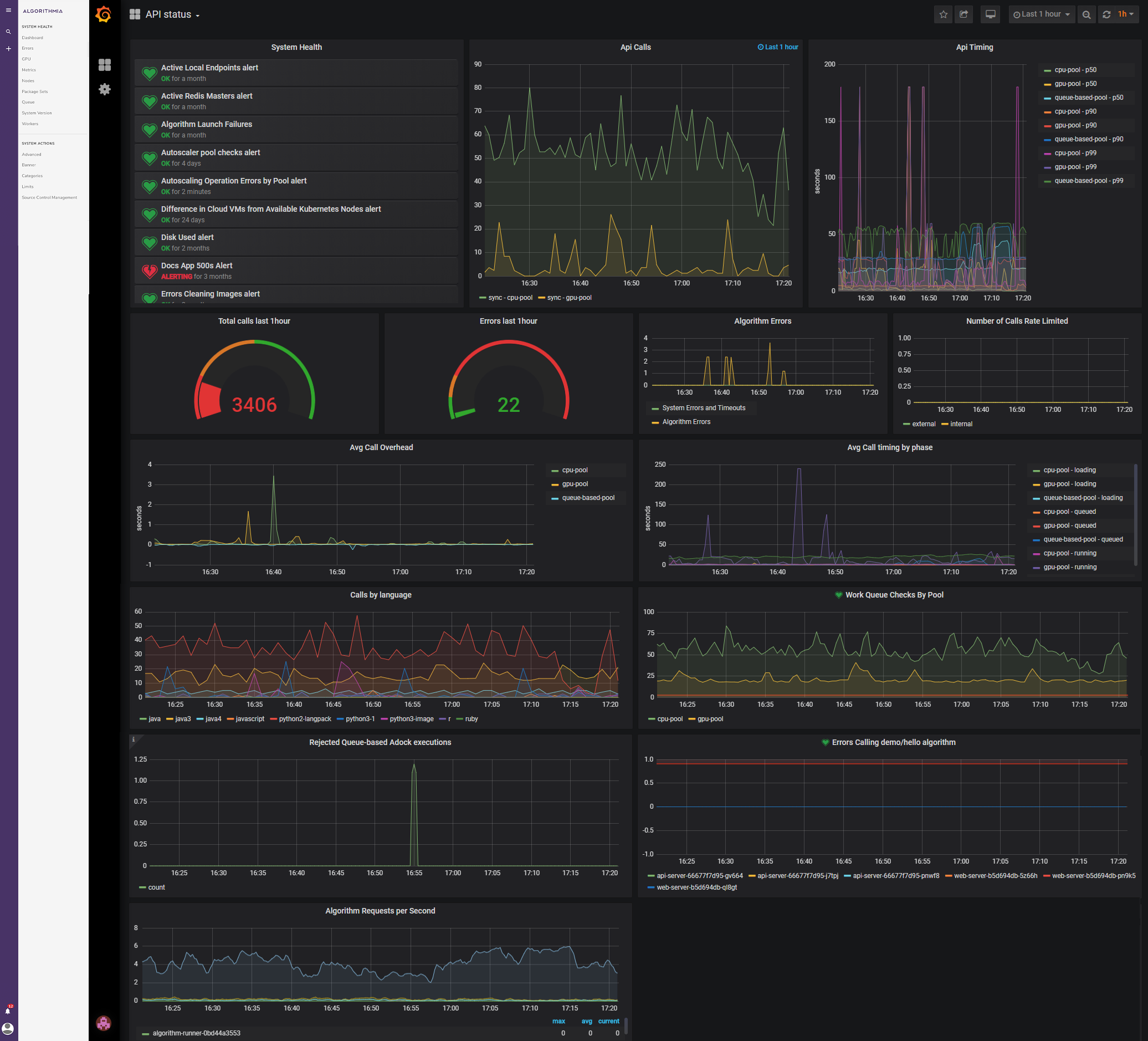
    Algorithmia, in the latest update to the enterprise edition of its namesake machine learning operations (MLOps) platform, is enabling software development lifecycle practices to be applied to the building of algorithms by making it possible to debug them using desktop tools that are widely employed.

    The enterprise edition of Algorithmia will enable users to write and run local tests for algorithms as shared local data files. Desktop developer tools that can now integrate with that process include PyCharm, Jupyter Notebooks, R Shiny, Android, iOS, Cloudinary, Datarobot and H2O.AI.

    In addition, Algorithmia MLOps has extended its support for the latest graphical processor units (GPUs) available on Amazon Web Services (AWS) and Microsoft Azure.

    Finally, the company has added support for AWS C2S, a private cloud for intelligence services, and AWS GovCloud.

    Algorithmia CEO Diego Oppenheimer said IT teams building artificial intelligence (AI) applications are applying many of the same best DevOps practices employed elsewhere in the organization. Making it possible to debug those applications on a local desktop makes it easier for organizations to construct those DevOps workflows, he said.

    The Algorithmia platform enables IT teams to control the provenance of all components of ML operations, including certificate authorities, operating systems, container images, code, dependencies and ML models employed.

    Many organizations today are struggling with how to meld MLOps and DevOps processes. The rate at which AI models are created and updated is typically much slower than the rate at which the applications those models are infused is typically much slower. Data scientists are now coming to terms with how to deploy and update AI models within the context of a larger set of DevOps processes.

    In the wake of the COVID-19 pandemic, interest is AI is rising. Organizations are looking for ways to leverage machine learning algorithms to both drive down costs and increase revenue by automating a wide range of tasks. A recent global survey of 2,737 information technology and line-of-business executives conducted by Deloitte finds nearly two-thirds of the survey respondents (61%) said AI will substantially transform their industry in the next three years. More than half (53%) also noted they have spent more than $20 million during the past year on AI technologies and the talent required to master them.

    However, the same survey noted over half the respondents (56%) said their organization is slowing adoption of AI technologies because of the emerging risks. Obviously, improving the debugging process for applications that incorporate machine learning algorithms could go a long way toward reducing those risks.

    It’s not clear to what degree AI might one day transform the application experience. It is safe to say that eventually, almost every application will incorporate machine and deep learning algorithms to automate one or more processes. Those algorithms won’t eliminate the need for humans as much as they will automate rote processes that today consume more time than anyone prefers. The challenge, of course, will be making sure algorithms perform those tasks consistently as more data becomes available.

  • Micro Focus Extends AI Testing Tools Reach

    Micro Focus Extends AI Testing Tools Reach

    Micro Focus has extended the capabilities of a family of Unified Functional Testing (UFT) testing tools infused with artificial intelligence (AI) to include support for both web-based and mobile applications.

    In addition, UFT testing tools will now allow a single script to automatically run on multiple platforms and browsers, eliminating the need to create multiple scripts for each platform.

    A crowdsourced feedback mechanism to improve recognition of objects such as a new widget has also been added to improve the AI model embedded in Micro Focus testing tools ability to recognize unique user interface paradigms.

    Finally, Micro Focus is making available an AI software development kit (SDK) and natural language processing (NLP) engine that makes it possible for both technical and non-technical users to create tests.

    Archie Roboostoff, product director for Micro Focus, said the natural language capability will make it possible to include end users of an application more easily in the functional testing process.

    As the responsibility for testing continues to shift left, he said, it’s become more important to automate as much of the functional testing process as possible. Developers and end users typically don’t have the time or often the expertise needed to build these tests.

    The challenge organizations face is the more application code they build and deploy, the more time they often spend on debugging applications. Many organizations wind up diverting resources from application development projects just to keep pace with the rate at which applications are now being built and deployed, noted Roboostoff.

    The paradox is that diversion of resources conspires to constrain the rate at which any additional applications are built. AI can play a critical role in breaking that logjam by reducing the time need to surface issues faster, said Roboostoff.

    At the same time, Micro Focus UFT tools further streamline the testing process by applying the AI capabilities it developed for mobile applications to web-based applications, he added.

    It’s not likely AI will eliminate the need for humans to test applications anytime soon. However, there are many routine issues that regularly manifest across different application development projects. As developers test more of their own code before it is officially promoted within the context of a DevOps process, it should be possible for development teams to rely on AI tools to surface issues they can address long before anyone knows they even existed.

    As is the case with every AI tool, an IT organization will need to gain confidence in the AI model embedded within any testing tool. The more AI tools are exposed to code, the more accurate they become.

    Regardless of the level of comfort with AI, it’s apparent application testing needs to become more automated. In the wake of the economic downturn brought on by the COVID-19 pandemic, most organizations will not be in a position to throw more bodies at application testing. The issue, of course, is most organizations have never been more dependent on applications to drive revenue at a time when most individuals are working and shopping from home more than ever to help contain the spread of COVID-19.

    The difference between success and failure during this so-called “new normal” will often come down to the level of testing applied to the applications on which many businesses are now almost solely dependent.

  • AIOps Greasing the Wheel of Digital Security amid COVID-19

    AIOps Greasing the Wheel of Digital Security amid COVID-19

    Amid the most challenging era for business infrastructures and transformations, AIOps (AI for IT Operations) can help industries operating in the digital environment to be vigilant when it comes to network operations or the digital security measures.

    AIOps has the potential to significantly align well with the cybersecurity needs of a company. A cybersecurity department in every organization needs to be active with respect to the latest and innovative security-related solutions. Threat detection and data security are crucial for every business entity.

    The corporate networking infrastructure for communication purposes is always under the threat of unauthorized third-parties that try to access confidential communications. Whether they are wireless, wired or connected to internet of things (IoT) devices. AIOps, through its intelligent algorithms, detects the communication requests and their source to accept them and restrict the fraudulent entities from becoming part of the legitimate network. Visibility and speed are two important aspects of platform security. If the source of the incoming request is known, it would be easy to verify it.

    The following are some of AIOps applications:

    Regulatory Framework

    General Data Protection Regulation (GDPR) corresponds to the protection of online customer data online. Businesses are required to ensure enough security measures to protect the personal and financial information of customers stored in an online account from identity theft and data breaches. AIOps can be used to secure the data from unauthorized third-party access in order to comply with the regulatory requirements.

    Real-time Data Processing

    In this era, communications, connection, data transmission and storage activities are performed online. Real-time data collection and processing in AIOps help streamline the operations and ensure the security of platforms in a centralized database. Technologies are shaping future investments. Enterprise management with respect to the performance attributes such as data analysis and monitoring for controlled access are in high demand. Advanced automation techniques have become possible with the innovative AIOps that help undergo operations in efficiently, eliminating the time-consuming and frustrating manual tasks. Machine learning and artificial intelligence algorithms collectively help reduce the overall response time, provide optimal user experience and protect network systems.

    Applications of AIOps amid the COVID-19 outbreak pave the roads for leading challenges. The rapid digital transformations during the pandemic are giving birth to various challenges with respect to security, user experience and the downfall of industries. Businesses are revamping operational infrastructure and fraudsters are actively exploiting vulnerabilities in the digital environment. The density with which the fraud is increasing each passing day is high. AIOps, under these circumstances, help businesses take into consideration vigilant security measures. The innovative solutions employ AI algorithms for the security of online platforms.

    Information Security and AIOps

    Information security highlights three major factors: confidentiality, integrity and availability. Confidentiality takes into account the need for protecting confidential customer information. Integrity keeps the form of data intact and availability ensures that the data is present at the moment when it is required. AIOps help ensure this CIA triad of information security through its high potential applications online security.

    High-scale data breaches, identity theft, account takeover frauds, malicious executables injection and similar cyberattacks are due to the uncontrolled access over user accounts and data. The list of fraud calls for stringent actions that AIOps provides in the form of digital security. The AI-powered identity verification systems help verifies the identity of customers online before onboarding them. Biometric sign-in every time while accessing the accounts help mitigate the risk fo fraud and bad actors that become the reason for malevolent activities. The spoofing detection and prevention techniques use AIOps that identify the spoofing elements in user-uploaded identity proofs and discard their communication request, which in return curb the likelihood of cyberattacks.

  • DataStax Brings AIOps to Cassandra Database Management

    DataStax Brings AIOps to Cassandra Database Management

    DataStax today unveiled a private beta release of artificial intelligence tool dubbed Vector that provides advice on how to optimize clusters running the open source Cassandra wide column store database.

    Vector analyzes individual nodes and then compares behavior to other nodes in the cluster to identify opportunities to improve deployments.

    Ed Anuff, chief product officer for DataStax, said the goal is to enable IT teams to take advantage of AIOps for things such as improving performance and query techniques.

    Available for both instances of Cassandra downloaded by IT teams as well as the curated instance of Cassandra that DataStax makes available as DataStax Enterprise, Vector is intended to augment rather than replace IT teams managing Cassandra databases, said Anuff.

    Anuff said by employing algorithms and heuristics, Vector provides IT teams with predictive guidance, which they can determine whether to implement or not.

    As IT becomes more complex the need to rely on AIOps tools such as Vector is becoming more pronounced. The number of variables that could adversely impact the performance of applications deployed on Cassandra or any other database exceeds the ability of most IT teams to monitor manually. AIOps tools such as Vector essentially provide IT teams with a digital assistant to help optimize database deployments.

    Anuff said there will always be a need for a human to be in the loop, but each IT organization will determine the degree it trusts the recommendations being surfaced by AIOps tools such as Vector. In some cases, IT teams will use those recommendations to inform frameworks to automate the management of databases.

    Given the commitment to ruthless automation by IT organizations that have embraced DevOps, Anuff said DataStax expects DevOps teams to be at the forefront of embracing AIOps. In many cases, those DevOps teams have already assumed management responsibilities for both applications and the underlying databases on which they depend.

    Of course, AIOps is still in its infancy. However, in the wake of the economic downturn brought on by the COVID-19 pandemic interest in AIOps as a means to reduce the total cost of IT is rising. Many IT teams are becoming smaller as organizations downsize, while others are limiting headcount. AIOps provides a way to manage IT at scale without necessarily having to expand the size of the current IT staff.

    Regardless of the motivation, AIOps is here to stay. Many of the rote tasks that conspire to turn IT into drudgery should soon be eliminated. That may reduce the number of entry-level jobs that historically have been available. However, as schools adjust to this new reality, it may also mean that new entrants into the field may be able to take on more complex challenges sooner than later.

    In the meantime, IT professionals might want to consider what part of their job might be better handled by a machine and plan the next step in their careers accordingly.

  • Appian Infuses Low-Code Platform With AI

    Appian Infuses Low-Code Platform With AI

    Appian this week released an update to its low-code application development and deployment platform that employs artificial intelligence (AI) to recommend best next steps, including how to address cybersecurity issues.

    In addition, the latest version of Appian also makes it easier to incorporate robotic process automation (RPA) modules to automate rote tasks in addition to adding support for Google Cloud Document AI, which makes extracting documents for use within an application that employs RPA easier.

    Malcom Ross, vice president of product strategy for Appian, said the machine learning algorithms embedded with the Appian cloud platform make it possible to embrace best DevSecOps practices to accelerate the development of secure applications. With the rise of automated machine learning (autoML) it’s also becoming easier to automate the process of applying machine learning algorithms to application development and deployment, he said.

    While low-code platforms go a long way toward simplifying application-building, Ross said not enough attention is being paid to the deployment process. The goal is not necessarily to roll out more applications faster but to ensure whatever applications are deployed achieve a level of quality that eliminates the need to address cybersecurity issues post-deployment.

    Appian achieves that goal by running automated tests for an application, which now also include Appian Plug-ins to detect potential mismatches in plug-in versions or plug-ins that are missing.

    Ross said that when it comes to AI there always will be some trepidation. However, there are many manual tasks that many developers would just as soon see automated using AI. As AI becomes more widely relied on to drive consumer application experiences, the more acceptance there will be among IT teams to automate internal processes, he noted, adding cybersecurity is one area in which most developers will appreciate whatever help AI can provide.

    AI is not likely to replace the need for a DevOps team or cybersecurity professionals anytime soon. However, at a time when many organizations are massive amounts of economic pressure, it’s clear AI has a significant role to play in reducing the total cost of IT. Despite advances in IT automation, the cost of labor remains one of the most expensive elements of any IT budget. As such, IT organizations have a keen interest in making sure DevOps teams and cybersecurity teams are not wasting time on tasks that might be better handled by a machine.

    Obviously, the way AI systems and IT teams will interact with one another is still being defined. However, the one thing that is certain is platforms such as Appian will be making more recommendations about what needs to be done when. It may take some time for IT professionals to have confidence in those AI recommendations; however, in terms of mistakes that are routinely made it’s also apparent IT teams will soon be running out of excuses.

  • Aruba Injects AIOps Into Network Management

    Aruba Injects AIOps Into Network Management

    Aruba, a Hewlett Packard Enterprise (HPE) company, this week launched a platform that leverages artificial intelligence (AI) to identify and remediate networking issues before they have an impact on end users.

    Patrick LaPorte, senior director of cloud and software solutions marketing, said the Aruba Edge Services Platform (ESP) applies algorithms to data collected for customer networks and aggregated by Aruba in the cloud. That approach enables the company to apply AIOps to automate the management of both software-defined wide area networks (SD-WANs) and Wi-Fi access points.

    Aruba has been making a case for converging the management of SD-WANs and Wi-Fi access points in remote offices for a couple of years now. With the downturn in the economy brought on by the COVID-19 pandemic, the need to reduce the total cost of networking is even more pressing, LaPorte said.

    The Aruba ESP platform further reduces the total cost of networking by augmenting network administrators with AIOps capabilities that will enable a smaller team to centrally manage via the cloud a much larger number of network services being delivered to remote offices, he said.

    At the same time, Aruba enables IT organizations to implement zero-trust network security by providing built-in support for role-based access, dynamic segmentation of network services and identity-based intrusion detection to authenticate, authorize and control every user and device connected to the network, said LaPorte.

    The Aruba approach to AIOps revolves around Aruba Central, a cloud service based on Kubernetes the company relies on to manage networking equipment that runs ArubaOS services. Aruba claims to have more than 65,000 customers using Aruba Central to manage network services.

    Aruba Central has been enhanced to include AI Search, a data discovery service based on a natural language processing (NLP) engine that enables IT teams to employ English-language queries to extract user and device information from the data lake created by Aruba ESP. The company has also added user-centric analytics to better identify client, application and network performance issues.

    Aruba has also added a faster Aruba CX 6200 Switch Series that includes built-in analytics and automation capabilities.

    Finally, Aruba has launched Developer Hub, which provides access to its application programming interfaces (APIs) and documentation to applications that leverage the Aruba ESP platform.

    The way network services are being managed and delivered to remote offices is dramatically changing as applications become more distributed. At the same time, the entire definition of what constitutes a remote office in the age of COVID-19 is being transformed as more employees work from home. Aruba is addressing that challenge by making it easier to set up network tunnels between home offices and remote offices managed by Aruba Central, said LaPorte.

    As networking continues to evolve there is no doubt IT organizations will be relying more on automation and AI to deliver network services as scale. Less clear is the degree to which IT organizations will be willing to standardize on networking equipment from a single vendor to achieve that goal. In theory, IT organizations can reduce their total cost by standardizing on a single vendor. In practice, however, many IT environments are comprised of a dizzying array of networking equipment from multiple vendors.

    Regardless of what path forward is chosen, it’s already apparent the current networking status quo will not hold for much longer.

  • It’s Time to Take a Customer-First Approach to AIOps

    It’s Time to Take a Customer-First Approach to AIOps

    Artificial intelligence for IT operations (AIOps) has several use cases that IT operations managers can’t deny: reduce alert noise with statistically significant outcomes (up to 80%), correlate alerts and events to uncover the critical business issues immediately, analyze data across environments to find root causes and resolve routine issues (like patching) automatically. Gartner predicts that large enterprise use of AIOps tools to monitor applications and infrastructure will rise from 5% in 2018 to 30% in 2023.

    I’ve been working in the AIOps field for a few years now, and I’ve learned that many organizations, even with relatively modern IT operations management (ITOM) software, are behind the curve. Vendors keep releasing new algorithms, yet the original ones are barely being used or worse, still sitting on the shelf in the customer’s environment. This is because it can be difficult to understand when and how to use artificial intelligence (AI) tools in the daily workflow, and because IT professionals may not inherently trust (or even want) machine-driven recommendations and actions. 

    AI and machine learning technologies are upending traditional assumptions and conventions in many industries – and IT is no exception. In the land grab to bring to market the latest sensational AIOps capabilities, vendors have unwittingly deprioritized customer adoption. This has resulted in a chasm: The technology is getting ahead of the customer’s willingness and ability to implement these solutions in their production environment. 

    The feature-first perspective in the software industry is nothing new, yet for AIOps to reach its full potential, it’s time to take a customer-first perspective.

    Let’s walk through a few ideas to minimize barriers to adoption and speed up time to value for AIOps:

    Start on Adoption During Build

    Machine learning developers and product managers need to understand potential customer barriers during the design and test phase and put themselves in the user’s shoes. How will an individual interact with the system and what level of transparency is appropriate to ensure a frictionless experience? This is a best practice for any software development team, but given the mystique of AI software, it’s even more important. Document expectations for the user experience by giving users early access to the software, such as a beta program, where they can freely deliver feedback on UI, workflows and outcomes of AIOps features.

    Connect the Dots with Visualizations

    A significant barrier for any machine learning application is that users may not fully understand the use cases nor trust what the algorithms are doing. Ensure that software-driven actions and recommendations are transparent at the moment and location they occur in the application. It should be easy for users to see the cause and effect of machine-driven actions as well as how the AI reached a conclusion.

    The concept of “explainable AI” has become popular in the last year and vendors can help by introducing visualizations into their tools.  For instance, you could have graphs showing the progression of a model being trained or the learned sequences in alert correlations. In-app simulation tools can help a customer see the impact of an AI-delivered recommendation without actually making the change.

    Amp Up Training

    Create internal-facing white papers or videos to demonstrate the workings behind algorithms to your technical staff and tools especially designed for users. The best way to learn is by doing, so designing visual cues and tutorials within the application will be most effective. Ensure that you have dedicated AIOps subject matter experts who can guide customers through implementations and be on call for advice as needed. Common questions include, when should the AI be allowed to automate an action or decision and how can you override an automated decision? It’s not a bad idea to involve machine learning developers in creating training sessions and guides. Finally, the age-old concept of nurturing power users within the customer organization can go a long way.

    Diffuse Concerns Over Jobs

    Nobody wants to use a new technology which might eventually replace them. For the most part, AIOps is not going to jettison IT operations staff. Instead, AIOps will empower operations and support teams to handle increasing alert volume and complexity with existing staff, while ensuring that expensive engineers such as SREs can focus on higher-level data performance analysis and optimization initiatives.

    Design Algorithms for Flexibility

    Machine learning algorithms break if they cannot respond to the dynamic nature of modern workloads. For instance, if you design the algorithm based on rules dictating actions between specific applications and infrastructure components, what happens when those technologies disappear or are replaced, as they often do in the cloud? Now you’ve got gaps that could result in a catastrophic system failure and an AIOps tool that requires heavy maintenance. Algorithms should be responsive to environmental changes – such as incorporating neural net technology that can adapt to the shifting sands of the IT landscape.

    A survey conducted in April by OpsRamp found that nearly 70% of IT operations leaders plan to invest in AIOps to improve incident diagnosis, troubleshooting and resolution. By all accounts, the year 2020 has raised the bar for IT expectations around resiliency and user experience. AIOps promises to be a pivotal strategy for IT operations success, but it all depends upon user satisfaction and adoption of the technology. Vendors that incorporate customer adoption and value tactics into their development processes will be instrumental in pushing this market forward in a positive way.

  • How DevOps Powered by AI and Machine Learning Is Delivering Business Transformation

    How DevOps Powered by AI and Machine Learning Is Delivering Business Transformation

    The use of artificial intelligence (AI) and machine learning (ML) is fundamentally changing the way we think about DevOps. Most notably, it is delivering a new form of DevOps that recognizes the need to have systems that are intelligent by design and underpinned by comprehensive security (DevSecOps). For many, this will be the crucial next step if DevOps is to shorten the software development lifecycle for all connected intelligent systems, ensuring the continuous delivery of secure high-quality software.

    By now, most organizations understand DevOps is a substantial discipline that they must adopt – according to Deloitte, organizations adopting DevOps see an 18%-21% reduction in time to market. By breaking down the silos between business and IT operations, DevOps can ensure consistent levels of productivity, efficiency and service delivery, all of which hold weight in these times of heightened uncertainty.

    To put it simply, DevOps can help businesses compete in already congested marketplaces. Through a foundation of continuous integration (CI) and continuous delivery (CD), organizations can ensure the customer receives the product they demand in the fastest time possible, while mitigating any elongated frustrations experienced from a lack of harmony between systems engineers and operations teams. Incorporating AI and ML into that DevOps strategy will take things to the next level.

    AI and ML Are the Next Evolutionary Step for DevOps

    Today’s companies are data-driven and being built as digital platforms. However, just 28% of organizations are currently succeeding in their digital transformation journeys. Increasingly, corporations are looking at what AI and ML can do to help them realize their transformative ambitions.

    Both the AI and ML markets are expected to experience huge growth over the next three to four years. Analyst firm IDC, predicts worldwide spending on AI systems will reach a href=”https://www.marketresearchfuture.com/reports/machine-learning-market-2494″>42.8% by 2024.

    What AI and ML reveals for these companies, and the increasing value of what Al, ML and devices can do together, are changing the way organizations view the world as they digitally transform. Coupling AI and ML with DevOps will lead to a significant shift in what DevOps gets involved with. 

    Primarily, it sets DevOps front and center of an organization’s wider digital transformation ambitions. If digital companies run on living data, then the development of these intelligent systems is an enticing environment for DevOps to prove its wider value to the organization like never before.

    Security Takes the Center Stage

    According to a TechTarget survey of key IT decision makers, cybersecurity and risk management were found to be the number one area for spending this year, with more than 53% of respondents saying they saw budgets increase in this area. And security is a crucial element that any organization employing a DevOps strategy should be considering. 

    DevSecOps is the simple premise that everyone involved in the software development cycle is responsible for security. In fact, the saying “security is everyone’s responsibility,” is a mantra that has been repeated often, and just as often ignored. Embedding security within every part of the development process, ensures security and compliance monitoring tools keep pace with the speed and agility that DevOps offers. It is a common understanding that security is the biggest block to the rapid and seamless development and deployment of systems, as security solutions have not traditionally been built to test and code at the speed DevOps requires. 

    Ultimately though, more automation from the start, reducing the need for manual configuration from security architect is where DevSecOps shines. This reduces the chance of misadministration and occurring faults, which can lead to downtime, and potential breaches or attacks. Quite often, the best ways to secure your organization is through simple hygiene factors, such as regular patching and software updates. 

    The reality is that every organization employing DevOps should really be approaching it as DevSecOps. Security is of ever growing importance to each and every organization and, through empowering it with AI and ML processes, it can be enhanced too, simplifying the processing of data to easily identify threats or potential vulnerabilities in the security makeup. 

    Reaching Beyond Human Capability

    The future will be made up of connected intelligent systems that span the intelligent edge, all the way to the cloud. The expectations of these systems are based on the lifecycle of a typical mobile application with constant feature enhancements. But, how do you know what to deliver next, especially when things are moving so quickly, and as developers are inundated with information and data from a number of different sources? This data deluge can be powerful, but it can also be overwhelming.

    Crucially, this is where the power of AI and ML comes into play. AI and ML will aid developers in making sense of the information housed across various data warehouses. In DevSecOps, there has always been an approach to automate everything, and AI and ML will be instrumental in automating the analysis and processing of data – a task that is now far beyond the capabilities of humans.

    Incorporating AI and ML will enable developers to better understand and use the data at hand. This will see developers understand not only the error, or the occurrence of a fault, but the detail of what happened in the run up to the fault – vastly reducing the chances of incurring that fault again. AI and ML will also be responsible for enabling the transformation from diagnostics to prognostics across any and all tools and systems, making it easier for developers to anticipate, identify and resolve faults or errors. 

    Increasingly, we’ll see organizations benefit and drive value from real-time insights. They’ll do this through AI and ML frameworks deployed on active systems to deliver optimizations based on real-time development, validation and operational data. This level of real-time actionable insight bolsters DevSecOps’ ability to achieve CI and CD, through improved, reduced mean time to resolution, easing the impact on operations and, ultimately, enhancing the end-user experience. It remains to be seen if incorporating AI and ML into the DevSecOps cycle will achieve the delivery of self-healing systems that can detect and resolve issues without the need for human intervention. With true AI, however, this might well be possible.

    The benefits and potential use cases of AI and ML are widely acclaimed, and while we are still some way from seeing their full potential, the capabilities they currently possess are revolutionizing many sectors. The fact is, if DevSecOps is to continue to keep pace with the vastly growing digital data economy, then it will become reliant on advanced technologies such as AI and ML. Data is powerful if used correctly, but with so much of it to process and analyze, that can be a challenge.

    A move toward secure automated processes is the progressive step that many organizations need to consider if they are to realize their digital transformation ambitions. Organizations cannot continue to do things the traditional way and expect to get the results that the new world is looking for.

  • A Buyer’s Guide to AI and Machine Learning

    A Buyer’s Guide to AI and Machine Learning

    B2B software sales and marketing teams love hearing the term “artificial intelligence” (AI). AI has a smoke and mirrors effect. It sounds impressive. But, when we say “AI is doing this,” our buyers often know so little about AI that they don’t ask the hard questions.

    In industries like the DevTools space, it is crucial that buyers understand both what products do and what their limitations are to ensure that these products meet their needs. If the purpose of AI is to make good decisions for humans, to accept that “AI is doing this” is to accept that we don’t really know how the product works or if it is making good decisions for us.

    When we’re in the buyer role, we often don’t hold ourselves responsible for understanding AI and machine learning (ML) products because these technologies are intimidating. They’re incredibly complex.

    This article addresses the limitations of AI and ML, so software buyers can ask the right questions to understand what they are buying. 

    The Test Oracle Problem

    One limitation of some AI or ML products is that for certain applications of the technology, there is no source of absolute truth to compare against the accuracy of the output. For example, neither humans nor machines know how to produce the perfect set of end-to-end tests for any given application. This is the test oracle problem: there is no objective standard of truth. No one wants to introduce this kind of uncertainty into their sales process. Yet, our buyers deserve well-informed answers about our products.

    As a buyer, you need to understand the intended advantage of your seller’s AI product before making a purchase decision. Is it meant to make a decision that is more accurate—against an objective standard—than a human? Is it meant to make a faster decision with less cost? Or introduce an alternative methodology that uses new data in a new way? Answers to these questions influence how you will use the product and what value it provides.

    AI Versus ML

    Though AI is commonly accepted as “any machine that uses math to make decisions,” true AI is self-taught. AI has a neural net that mimics neurons in a human brain which allows it to teach, update and evolve itself. Because of this, true AI is difficult to build and is often experimental rather than commercial.

    More often, what’s being described when we say AI is actually ML. ML is human-taught: Machines learn through human feedback using a probabilistic decision-making process that improves via ongoing correction. Machines take in data, run algorithms against it and output a decision — or series of assertions — based on probabilities. Humans correct the machine by telling it whether it was accurate in its assessment, and the machine updates. As it receives accuracy feedback, machines learn to make better decisions. And because ML is based on probabilities, it will sometimes make the wrong decisions.

    Based on how you plan to use a product, you need to determine how rigorous its accuracy needs to be. How often a machine can make the wrong decisions and still serve its purpose is application-specific. Self-driving vehicles must be nearly perfectly accurate to be adopted. Paralegal ML toolsets likely need to be less accurate. How accurate does your product need to be?

    Asking the Right Questions

    Regardless of how you plan to use a product, it’s important to ask the right questions to understand the product and build resiliency around its accuracy levels. The next time a seller tells you “AI is doing this,” you can ask the following: 

    1. Is this product an ML product? Does it need to be ML to get a meaningful result? To be ML, a product needs to learn through human feedback, not just make decisions using probabilities. Do you just need a product that uses logic to make decisions, or a product that improves in accuracy over time?
    2. How is the accuracy of this product calculated? You won’t know if the machine is more accurate than humans if you don’t know the conditions used to calculate accuracy. If a machine is 30% more accurate than humans, who assessed this accuracy and how did they determine this?
    3. How do you know when the product makes the wrong decisions? Any ML product will sometimes produce the wrong output. Typically, a seller’s most successful customers have already adopted business processes to build resiliency to this wrong output. If so, the seller can help you adopt them as well.
    4. In its current state, how often does the product make the wrong decisions? Knowing the frequency of mistakes and the stakes of those mistakes will be crucial to deciding how you use the product, and whether it’s safe to do so at this stage in its development.
    5. How many teaching hours have been put into this product? This number will provide a simple approximation of how much effort has gone into making the product more accurate. A low number can be fine, depending on the application.
    6. How does my usage improve the accuracy of this product? As a buyer, you are an integral part of the machine testing and teaching process. You should be willing to use your data to improve their accuracy, because you want these products to improve in the future.

    Why Knowing AI and ML Matters

    Not only is there a lot of “AI” that isn’t AI, but there is also algorithmic technology that isn’t ML. It is thus essential for buyers to know enough to ask the right questions and understand how these products make decisions.

    There are limitations to all ML products, though the limitations differ by product and the way the product is applied. When a product’s accuracy levels are unknown, all you can do is ask if its methodology is valid for decision-making: Does it have access to better data than humans? Can it make smarter and faster decisions than humans with this data? If the answer is yes, you should consider buying the product rather than having your people do the work.