Tag: ai

  • Three Ways Machine Learning Can Change Incident Management

    Three Ways Machine Learning Can Change Incident Management

    Incident management for important applications has many connotations, many of them negative. Most are well-deserved. Stress, panic, hurry, urgent, drop-everything, all-hands-on-deck, emergency, to name a few. Typically, there is a critical problem, ranging from complete failure to loss of certain functionality or performance. The problem or outage potentially means loss of revenue, loss of customers, negative social media commentary or bad reviews and more. Time is of the essence, dictating that the primary objective is fixing the incident as quickly as possible. Often, this means that symptoms or partial causes are mainly addressed rather than the underlying root cause.

    Without fully addressing the underlying issue, companies virtually guarantee that the same problem – or a similar one – will reoccur. Not identifying root cause often prevents a durable fix. In addition, companies lose the opportunity to proactively improve application code or infrastructure based on real-world experiences and issues. Postmortems may only result in reviews of monitoring and observability solutions and the inevitable updates to alert rules. Most DevOps professionals not only understand but have lived through these frustrations on an ongoing basis. Management, then, often wonders why their systems are so unstable.

    Changing the model for incident management has been limited by a combination of the overriding urgency combined with short-staffed, overworked teams. Although AI and machine learning has been positioned as the panacea for nearly every kind of technical ill, this is a clear case where “machines” could fundamentally enhance human efforts to improve a situation. The best troubleshooters exhibit a combination of instinct, experience and patience to carefully sift through reams of data, spotting unusual events and their correlation with bad outcomes. This turns out to be a perfect application for machine learning.

    By ingesting all logs and metrics to find meaningful problems or anomalies, systematized machine learning can quickly and comprehensively sift through all data to gain a thorough understanding of the real problem. Using this approach significantly speeds up the root cause analysis. Such an applied solution introduces three game-changers for incident management.

    Three Game-Changers for Incident Management

    First, incident remediation times can be reduced dramatically and with less of an all-hands-on deck, drop-everything frenzy. Rather than SREs and engineers spending hours digging through dashboards, traces and millions of log lines, an automated approach can accomplish it more quickly, more thoroughly and with less impact on human professionals, allowing them to focus on other responsibilities. This instantly relieves stress and panic and alleviates pressure because incidents can be remedied better and faster, restoring the application to its expected service level. The value is, of course, two-fold: faster time to resolution and greater efficiency or productivity of the teams who would otherwise be involved. Ending or mitigating the frustration professionals have to deal with is an additional bonus.

    Second, besides faster MTTR, an automated, machine-learning-driven approach is more comprehensive and gets to the root problem. This means that future incidents may be avoided altogether. This also means a potential end to the alert rule “hamster wheel.” The knee-jerk tendency to continually adjust alert rules and settings to enable better “early warning systems” is far less necessary. Instead of trying to gain an early indication of a similar failure in the future, the cause of such failures can be found and addressed proactively. Eliminating such problems in the first place is far better than trying to evolve alerts to catch unresolved causes. Alerts are still important, but machine learning can shift the basis for them to more root-level issues, and they can be constructed automatically by the system.

    Third, automated, machine-learning-based incident management can help proactively catch silent bugs that may not yet directly be part of an incident. It can also inform developers earlier in the cycle. Not terribly long ago, new releases were tested extensively before deploying to production, allowing for the creation of specific test plans, conducting stress tests and potentially catching bugs that might have potentially terrible consequences in the future. Now with faster, non-stop development cycles, testing mainly occurs during production. Machine learning can surface new or unusual errors, event patterns and patterns in metrics. The approach can proactively surface subtle bugs early, before they impact users or cause widespread failure.

    Changing the DevOps Life Cycle

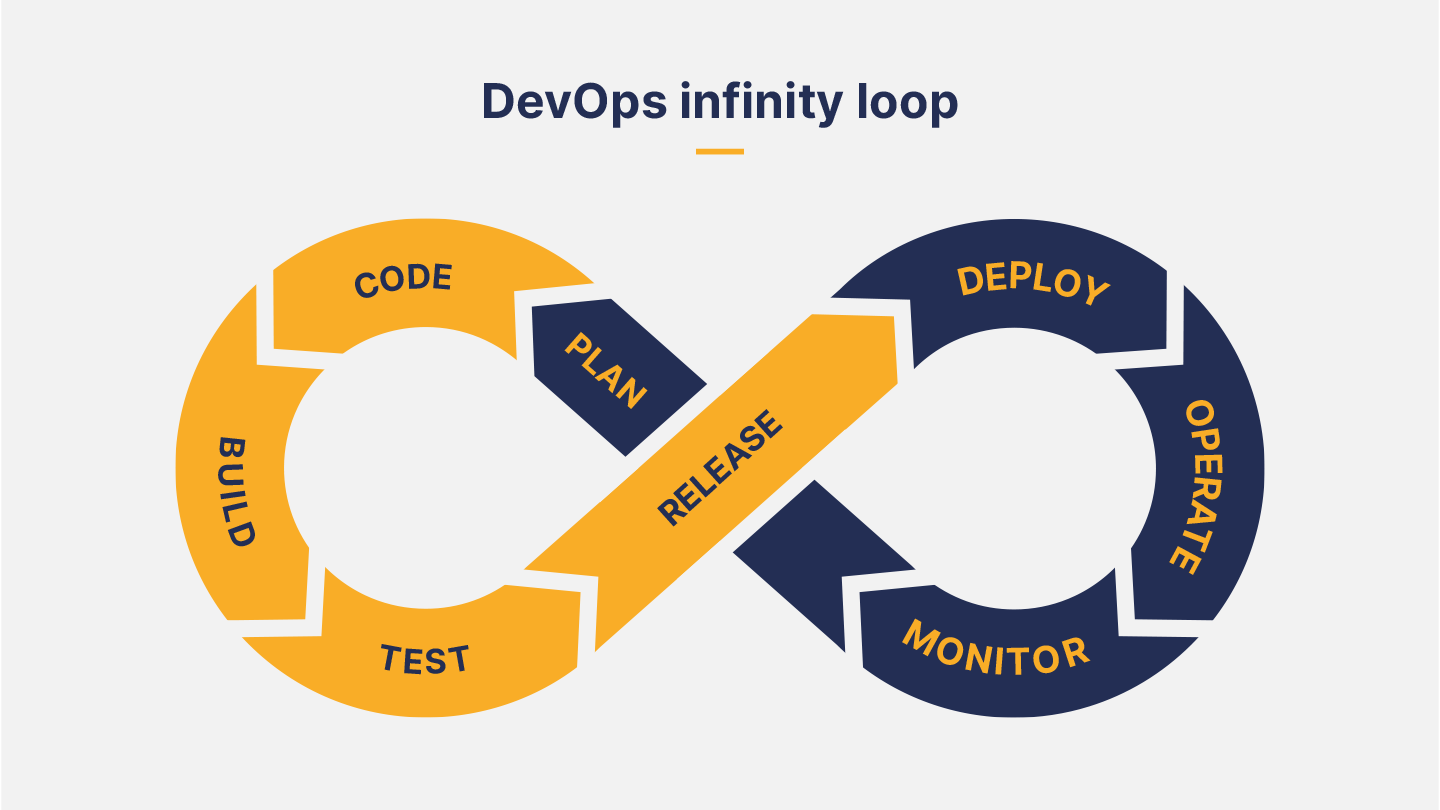
    Each of these three results significantly changes not only the incident management life cycle, but also DevOps as a whole. Poring over logs and metrics is a perfect application for machine learning and offers the opportunity to fundamentally change incident management, transforming it from a scourge and necessary burden to a competency. An automated system of machine learning applied to incident management advances DevOps rather than encumbers it.

  • CircleCI Acquires Vamp to Apply AI to CD

    CircleCI Acquires Vamp to Apply AI to CD

    CircleCI today announced it has acquired Vamp, a provider of an orchestration platform for automating application releases. CircleCI at the same time revealed it has garnered an additional $100 million in financing to attain a $1.7 billion valuation.

    Jim Rose, CircleCI CEO, said Vamp will play a significant role in advancing the capabilities of the CircleCI continuous integration/continuous delivery (CI/CD) platform at a time when the rate at which applications are being deployed continues to steadily increase. In fact, CircleCI claims its platform is now being employed to process 2.5 million jobs processed per day.

    The Vamp platform makes it easier to construct and orchestrate a multi-stage release cycle involving, for example, canary releases of an application. It then employs machine learning algorithms to validate the impact, performance and quality of releases based on the service level objectives defined by an IT team. If anything is determined to be amiss, the platform will then automatically roll back a release.

    CircleCI

    While many organizations have successfully implemented CI best practices, the ability to continuously deploy application releases has proven to be a more elusive goal. Each platform on which an application is deployed has unique attributes. The addition of machine learning algorithms that can provide continuous validation of deployments should help drive a sea change in the way applications are being developed and deployed to improve the overall state of CD, noted Rose.

    Those machine learning algorithms, along with other forms of artificial intelligence (AI) won’t replace the need for DevOps teams as much augment them at a time when IT environments, thanks in part to the rise of microservices, are becoming more complex. In fact, with the arrival of containers, Kubernetes and serverless computing frameworks, it’s becoming next to impossible to manage an IT environment without the use of AI.

    Rose added that, as the line between pre-production and production environments continues to blur, it’s critical for IT teams to more closely align CI and CD workflows. Rather than isolating CD from CI within the context of a GitOps workflow, the goal should be to integrate those processes more closely. It is becoming more apparent that the elements of what constitutes an application are more empirical thanks to, for example, configuration files that are now stored in a Git repository along with application code. That tighter integration ultimately makes it easier to test and validate applications before they are deployed. Metadata that can be analyzed to optimize application development and deployment can also be more easily captured as part of a continuous feedback loop.

    That approach is more critical than ever, because the days of the “Big Bang” deployment of an application update are over. In its place are now a steady stream of updates that deliver new capabilities, which need to be continuously vetted, noted Rose.

    Each successive era of DevOps is, naturally, going to be more automated than the previous one. The challenge is recognizing when those new eras arrive before rivals gain an advantage in speed and agility that becomes too big to overcome.

  • Why You Must Lead With AI

    Why You Must Lead With AI

    AI will soon be a necessary part of doing business. Every company will have an AI strategy in the same way that they have a social media strategy, branding strategy, talent strategy, etc.

    So if you want to stand out from the competition and gain an edge, you can’t just use AI; you must lead with AI.

    What does that look like?

    To lead with AI, you can’t simply set up a small innovation team to solve point problems. You must embed AI throughout the organization, such that every team is taking advantage of the technology and incorporating it into their operations.

    The specifics will vary from company to company, but there are some general strategies that will help you begin leading with AI.

    Be Persistent

    Leading with AI doesn’t just happen in the blink of an eye. It’s going to take time and hard work, and it’s critical you stay persistent.

    Amazon, a leader in machine learning technology applications, didn’t start out using advanced AI techniques on day one. Just like everyone else, they had to go on a journey filled with discovery, successes—and the occasional course correction. For example, in 2017, Amazon launched a TV ad that accidentally triggered Alexa devices in its customers’ homes to purchase an expensive dollhouse. Not ideal, and not the best advertisement for the convenience of their machine learning devices.

    They stuck with progress, though, and learned from their mistakes. They were persistent, even though they started out behind the pack. Their focus on incremental progress meant that it only took five short years for Alexa to beat out Siri and Google Assistant in the smart home speaker market. Alexa may have had a slow start, but now she’s a very strong player in the market.

    Persistence and determination are the ingredients that build leaders in AI—not perfection from the start.

    Train Your Leaders to Look for AI Solutions

    Before a business can lead with AI, it has to identify problems AI can solve. You can’t accomplish this by building an AI tiger team and turning them loose to hunt through each department for inefficiencies. That AI team wouldn’t have the necessary context, and all its time would be spent coming up to speed on the operations of the various departments.

    Each division or department is familiar with its own operations and has the context to identify the most important problems. What they might lack is an understanding of AI and the types of problems it can solve. Giving them that training is the first step.

    Organizations that do this successfully start with the belief that every department can use AI to solve some of its problems and work toward enabling their leaders to identify and solve those use cases. For example, a CFO, who is presumably good at what they do, probably doesn’t have any experience in AI—their expertise lies in finance. That CFO will need training to develop an AI-aware mindset, the ability to identify the places within the finance department where AI can solve problems.

    Obviously, your leaders don’t need to understand everything about AI; they just need to know enough to be able to identify when AI is a good solution.

    Create Cross-Functional Teams

    When you think of AI, your mind might jump to data scientists, but there’s a lot at play in an AI model. It’s a marriage of technology and business, which means you need cross-functional teams to develop the best solutions. Because of this, the organization as a whole must become highly effective at multidisciplinary communication and collaboration.

    At its simplest, this might involve rolling out something like Slack to improve communication across departments. Some companies might adopt Agile processes and workflows to encourage collaborative planning of requirements, or they might institute regular all-hands meetings to sync up business priorities all at once and provide transparency.

    The details will be different for every organization, but every company will have a need for departments to collaborate more than before to identify common problems, prepare and share data, and develop related models. In some cases, this may be best served by restructuring the organization and reporting lines; in others, a department that expects an extensive adoption of AI—marketing, for example—may need to establish its own data science team.

    This degree of change may seem overwhelming. It’s important, however, for organizations to avoid the short-term solution of creating an AI team that’s shared across the company, or that team will end up being the primary bottleneck blocking AI adoption.

    Budget and Allocate Resources

    Nothing happens in a company without a budget and allocated resources. Finding the budget to implement AI solutions—to buy off-the-shelf products, hire people with the needed skills, spend time and resources annotating data—is critical, but challenging, especially because a good portion of the investment in AI has to be made company-wide up front.

    Leading with AI can necessitate reallocation of significant money and people, both of which are, in most cases, already budgeted out to normal operations. Deciding how much to reallocate and from where will impact the entire organization.

    Cutting costs is always unpopular, but you must look at it as an investment. Take, for example, a company eager to invest in AI that runs a call center to capture support calls, return requests and complaints. There’s no magical pool of money sitting around to invest in AI to improve this call center.

    Instead, the company will have to take money out of the yearly budget to spend on the AI initiative and just accept that the time to handle a call will go up for a period because fewer agents are deployed to receive those calls. The promise, of course, is that the investment in AI will lead to a chatbot that can divert 15% of those incoming calls, requiring fewer agents to handle calls and improving the call-handling time overall.

    Clearly articulating the long-term gains of AI will make it easier to secure buy-in across the company, so that the needed resources will be allocated.

    Leading With AI

    Leading with AI is hard. It will take time and massive investment. It’s never easy to switch up the operation of huge chunks of a business, reorganize reporting structures and refocus priorities; it will almost certainly require killing some sacred cows.
    Amazon, for example, spent years and a lot of investment to make the transition to leading with AI. Now, on the other side, they’ve maintained their status as a leader in their industry, with the infrastructure and culture that enables them to implement new AI solutions throughout their businesses as opportunities and problems arise.

    With persistence, AI-aware leaders, cross-functional teams and the right budget and resources, you, too, can begin leading with AI, ensuring a future competitive advantage.


    Co-author Wilson Pang is CTO at Appen.

  • AI Reimagines Computation and Improves Software Development

    AI Reimagines Computation and Improves Software Development

    While modern business software solutions unlock organizational efficiencies, agility and the ability to deliver new value to customers, such tools were not available when applications deployed on mainframe systems were being developed.

    Today, many of the Fortune 500 companies, the world’s largest banks and insurance companies and several of the largest retailers in the U.S. continue to rely on legacy programming languages, such as COBOL or Java, to power their applications. However, with new languages coming on the scene and experienced programmers in legacy languages exiting the workforce, organizations find themselves in an increasingly difficult spot.

    Is it a Coding Skills Shortage or a Knowledge Gap?

    As proficient programmers retire or move on, organizations across industries are recognizing they no longer have the specialized domain knowledge of the industry and institution to effectively maintain and support their complex critical systems. To combat what is perceived as a skills shortage, organizations are sinking a significant amount of effort into hiring new developers, teaching them to write in the legacy languages and tasking them with changing enterprise systems.

    Modernizing applications, databases and systems that run well in their current state can be risky and expensive, so building on top of and around existing code can be the better choice. But such workarounds are not always completed in the most appropriate manner. For example, when a developer is cutting and pasting large chunks of code just to change one behavior, the end result is often awkward and unmanageable applications that even the most accomplished developers struggle to deconstruct and understand.

    Understanding the code is not enough. Developers have to know what an application actually does, but if they don’t recognize how altering code in one part of a system impacts another part, the consequences can be devastating. As such, the challenge is not a skills problem — most programming languages are straightforward enough to learn — it’s a knowledge problem that exists across programming languages.

    Goodbye, Years of Language-Specific Experience. Hello, AI.

    The programmers who wrote all those billions of lines of code are still running mission-critical applications, but they are increasingly aging out of the workforce or opting for a new or different career path. This results in legacy systems being less well-understood by the companies that rely on them every day. While many programming languages are meant to be easy to read and understand, unknotting the program logic frequently devolves into a tedious reverse-engineering project in which developers are attempting to unearth the intent of previous developers encoded in the software.

    Rather than relying on aging subject-matter experts to pass along that specialized knowledge to programmers fresh out of college (who are in short supply anyway), organizations might consider leveraging advanced artificial intelligence (AI) tools to automate the process of identifying the specific code that requires attention — no matter how entangled that code is throughout the system.

    While AI can be used to help with the syntactical issues of writing code (much like the Smart Compose feature leverages machine learning to “look ahead” and offer suggestions as you type), the impact of such tools is minimal. AI’s greatest time-saving opportunity lies in automating developers’ steps when conceptualizing and writing code. Whatever the reason — be it poor documentation or spaghetti code — developers spend about 75% of their time in search of the source code that needs to be changed. That source code is likely to be interspersed throughout the code repository, requiring a developer to “think through” what the code does, at nearly every step, to trace out the code detailing the behavior that they seek to modify.

    How AI Overcomes the Inadequacies of Automated Testing

    The goal of many organizations is making changes to systems running older programming languages as safely and efficiently as possible. Some organizations are turning to DevOps to improve agility and accuracy without sacrificing their existing mainframe system’s stability and performance. When it comes to COBOL code, where the problem is more acute than in other languages, automated testing in the CI/CD pipeline is inherently inadequate.

    Once a developer has identified the code representing a behavior that needs to be changed, they’re in a position, in that automated pipeline, to ensure that the corrected behavior never changes. However, because the code describing the behavior in question can be spread throughout the system, a developer will make a change believing they haven’t altered any other behavior, but they may have actually ‘broken the world.’ System-breaking changes can be made to the code -and stay hidden – because testing may not cover scenarios that the developer didn’t consider. Well-constructed automated test suites are data-dependent, but assembling all of the data necessary to get 100% code coverage is, unfortunately, next to impossible.

    If, for example, the application required a security or regulatory change, a developer might think that their correction will be covered by the automated test suite when it’s not. Without copious data in the suite, developers cannot guarantee that a behavior will never be altered. With AI “reimagining” computation as conceptual, developers are able to validate that they haven’t broken the system before they compile or check-in the code — or even run it in debug mode to check it — before running the automated test suite. Once developers are confident their change is isolated, the “conceptual check” of the behavior may be leveraged in the CI/CD pipeline, thereby ensuring the behavior remains intact from that point forward.

    In short, advanced AI makes developers’ lives easier because AI can automatically analyze source code and understand the human intent behind it. Now, developers can collaborate with AI to locate source code in an effortless manner, quickly perform comprehensive impact analysis and make the necessary change(s) without ‘breaking the world.’ The improved productivity and efficiency AI unlocks is critical in maintaining and improving the important legacy and mainframe systems that handle tens of billions of business transactions every single day.

  • The Promise of AI for DevOps in 2021

    The Promise of AI for DevOps in 2021

    DevOps is a natural target for AI-driven efficiencies, as it involves frequently repeated processes that generate mountains of data. It seems reasonable to expect that, like other domains that require decisions to be made based on large volumes of data, AI will play an important role in DevOps, too.

    Definitions of AI vary considerably, so you can’t be blamed if you’ve sat through a discussion of AI and DevOps and still don’t understand exactly how the two intersect. But the bottom line is that AI will prove most useful in situations where there’s lots of data generated by, or passing through, a repeatable process. Humans are pretty good at identifying heuristics to help them make reasonable decisions based on patterns in data. But machine learning (ML) techniques bring with them the promise of teasing out inherent characteristics that underpin the data, and that are often impossible for humans to observe.

    There are two main points in the DevOps process where large amounts of data are generated, and where machine learning would be most useful when applied: testing and release and monitoring.

    1. Testing and Releasing

      Deployment packages: AI can analyze trends in what is actually being deployed. My company, Gearset, is a DevOps solution for development on the Salesforce platform. In that context, AI could track the items of Salesforce metadata a team usually deploys, and optimize requests for retrieving that metadata from its org based on those items, speeding up comparisons and deployments, and, ultimately, release cadence.
      Deployment errors: At Gearset, increasing deployment success rates is a constant focus. To that end, we aggregate and analyze data from deployment errors to identify the most common deployment-blocking errors. We then build problem analyzers that suggest automatic fixes to users. With machine learning running on telemetry data, we could more rapidly identify other patterns of use that trigger common deployment errors, and suggest new problem analyzers we should build, boosting deployment success rates still higher.
      Static code analysis: Static code analysis generates data about the quality and security of new code, judged against a ruleset. Within Gearset, Salesforce developers can choose and customize the PMD rules they want in their ruleset, so they’re warned about the code quality issues they care about. But richer insights would be possible with AI, such as high-priority areas for improvement and refactoring based on trends in code quality and security.

    2. Monitoring

      Infrastructure monitoring. Huge amounts of data can be generated from DevOps monitoring. It’s easier to know what to focus on with AI-driven insights into performance log monitoring. Pattern recognition can also predict usage growth and help with capacity planning.
      Security. This has been a key area for innovation in recent years, with the development of products that use machine learning to enhance threat detection, intrusion detection and vulnerability database compilation.
      Unit testing. Gearset provides tools for monitoring code in Salesforce, such as automated unit testing, which reveals when code is no longer executing as intended. AI could identify patterns in the logs and suggest areas of the codebase that appear to require attention.
      Change monitoring. Changes in the codebase, whether expected or unexpected, are tracked by change monitoring and backup jobs. Gearset currently has smart alerts on backup jobs that users can manually set up to be warned of changes or deletions that are unusual, both in terms of the kinds of records being deleted and how many. But AI could automatically spot anomalous and unusual patterns of churn that should be investigated.

    In summary, AI promises to accelerate innovation in the areas where we currently use data-driven insights to improve the performance of DevOps tools and processes. The result will be even higher deployment success rates leading to increased agility, better code quality and performance, and enhanced security.

  • Accelerating AIOps with the Mainframe

    Accelerating AIOps with the Mainframe

    AIOps uses artificial intelligence by combining big data, analytics and machine learning to enhance IT operations. To successfully adopt and scale AIOps, it is critical for enterprises to add the mainframe to the equation. Adopting AIOps requires a holistic approach focused on business processes and workflows. The resiliency of a workflow depends on the health of every link in the chain. In order to be successful, you need visibility and insight throughout the entirety of the workflow.

    In this interview, Maneesh Goyal, AIOps Offering Management program director at IBM, explains how AIOps is changing IT operations and why the mainframe is so critical to the success of AIOps adoption.

    Maneesh is a DevOps expert with over 24 years of experience leading operations and management across hybrid and public cloud environments, including IBM Z. He is also one of the distinguished speakers presenting at Open Mainframe Virtual Summit, along with Mürsel Taşgın, mainframe systems manager at Credit Bureau of Turkey. During their session, Maneesh and Mürsel will discuss how organizations such as Credit Bureau of Turkey are accelerating AIOps by leveraging the wealth of operational data on IBM Z to make quick and accurate decisions in order to improve resiliency.

    Learn more about IBM’s AIOps framework and assessment to determine the next step for your business by attending Maneesh and Mürsel’s session at Open Mainframe Virtual Summit on Feb. 11. To check out the full agenda or to register for free, visit the Open Mainframe website.

  • DARPA Enlists GrammaTech to Apply AI to Reverse Engineer Code

    DARPA Enlists GrammaTech to Apply AI to Reverse Engineer Code

    The Defense Advanced Research Projects Agency (DARPA) has awarded a research contract to GrammaTech for low code technology that will make it possible for end users to leverage artificial intelligence (AI) without requiring intervention from the original software developer.

    GrammaTech’s AI tool, dubbed ReMath, aims to ease application updates by automatically inferring high-level mathematical representations from existing binaries in systems and embedded software. The tool is currently in development.

    Dr. Alexey Loginov, vice president of research for GrammaTech, said development teams spend a lot of time using low-level tools such as disassemblers, debuggers and decompilers to manually analyze binaries. ReMath will accelerate that reverse engineering process by recovering and converting machine language into representations that end users can directly manipulate, said Loginov.

    The goal is to free developers up to build new software, rather than continuously updating software that has already been deployed, noted Loginov. This approach should ultimately reduce the backlog of application and software development projects organizations have, added Loginov.

    GrammaTech

    The ReMath project is the latest in a series of DARPA contracts awarded to GrammaTech. In general, the company is working towards applying AI to advance DecSecOps via a static application security testing (SAST) tool that identifies vulnerabilities in code. The ReMath project focuses on applying AI to use cases involving, for example, industrial control systems. These systems could benefit from allowing domain experts, with no coding expertise, to maintain and update them on their own, said Loginov.

    Other DARPA projects GrammaTech is actively researching include a type-ahead capability that automatically recognizes existing artifacts in a software repository, said Loginov. This capability will make it simpler for developers to reuse code within the context of a GitOps process without inadvertently introducing additional errors, Loginov said.

    In the future, the potential impact of AI on software development could be profound, as more reliable code moves into production environments. The percentage of code graduating into those environments on the first attempt should increase considerably in the years ahead. That should enable more reliable delivery of application code via continuous integration/continuous delivery (CI/CD) platforms.

    As software development becomes more efficient, the current developer shortage should also ease, and open up resources to launch a greater number of application development projects. Rather than spending time on manual tasks that provide no differentiated value, Loginov said software engineers will be able focus more of their time and energy on process innovation.

    In the meantime, developers should expect to see a rash of development tools with AI capabilities in the months ahead. None of those tools are likely to eliminate the need for developers any time soon; however, much of the drudgery involved in writing code today is likely to be sharply reduced as machine learning algorithms and other forms of AI are applied to software development.

  • BMC Expands Scope of Mainframe Management Portfolio

    BMC Expands Scope of Mainframe Management Portfolio

    BMC this week updated its portfolio of mainframe tools as part of an effort to make mainframe platforms more accessible to IT operations teams and developers.

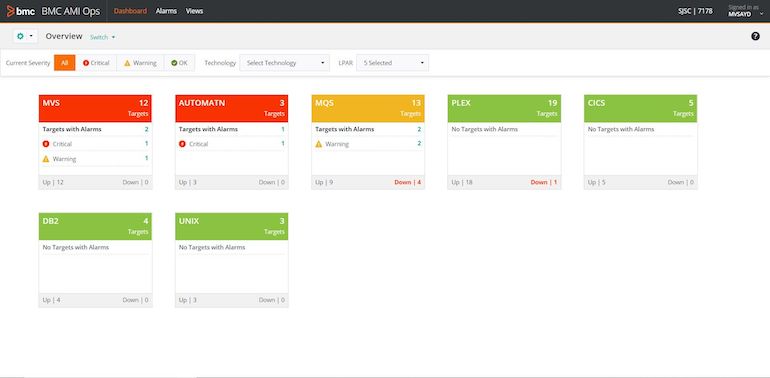
    At the core of these offerings is BMC Automated Mainframe Intelligence (AMI), which embeds machine learning algorithms in mainframe platforms to automate a wide range of processes. BMC AMI supplants the company’s existing MainView tools with a framework that promises to make artificial intelligence (AI) more accessible via a revamped user interface.

    BMC AI Ops

    John McKenny, senior vice president and general manager for ZSolutions at BMC, said an AI model based on the data collected by BMC AI can now be spun up in a matter of minutes, and can identify a potential issue days before it might otherwise occur.

    BMC AMI also exposes a REST application programming interface (API) through which more mainframe tasks will be automated.

    McKenny said as organizations accelerated digital business transformation initiatives in the last year, the need to modernize mainframe platforms became more acute. Mainframes are now the backend for multitier application environments that need to be managed in concert with other platforms, McKenny said.

    BMC is also adding Compuware zAdviser dashboards to the DevOps platform it gained with the acquisition of Compuware last year. BMC also updated Compuware Topaz for Total Test to streamline test creation for mainframe applications. There’s a growing need for better tools to test digital business processes created for the mainframe, noted McKenny.

    Other updates include Control-M job scheduler and Compuware ThruPut Manager integration, to ensure jobs run at or before their expected times on a mainframe, and an update to BMC AMI Data for IMS that simplifies database management in mainframe environments.

    Finally, BMC updated the BMC AMI Security offering with the Compuware Application Audit tool; this update allows for better capture of relevant user access and behavior data.

    McKenny said while mainframes remain one of the most secure platforms available, administrators must ensure security policies are properly implemented. IT organizations should avoid complacency and ensure zero-trust security in mainframe environments, McKenny said.

    McKenny added that, despite their long tenure and the rise of cloud computing, mainframes remain relevant. Many organizations determined that the fastest way to achieve their digital business transformation goals is by extending their mainframe platforms – platforms many of them already rely on to process and analyze transactions.

    What’s changing is the IT professionals that manage mainframes alongside other platforms, such as the cloud. Many of those IT professionals naturally expect integrated AI capabilities that enable the average IT administrator to manage a platform that was once the sole realm of dedicated IT specialists.

  • AIOps: Enabling the Customer Experience Evolution

    AIOps: Enabling the Customer Experience Evolution

    How can IT organizations make sure they’re equipped to resolve operational issues quickly and drive better business outcomes? That’s where artificial intelligence for IT operations, or AIOps, comes in. With the increasingly vast amounts of data generated by infrastructure and business applications, and teams often working in disconnected silos, managing and improving operations through automation — including monitoring and service desk processes — is essential.

    AIOps, a term coined by Gartner Research in 2016, refers to the use of analytics and machine learning to aggregate and leverage historical data from a variety of IT operations tools. AIOps platforms can react to issues in real-time, providing intelligent insights that help teams continuously improve core IT functions and prevent future errors.

    Most IT operations, particularly since the coronavirus pandemic, have migrated to online processes (for example, performance monitoring) that gather ever-increasing amounts of data. At the same time, organizations are under mounting pressure to immediately address any infrastructure problems that arise. In a nutshell, the demands and requirements of today’s IT environments far exceed humans’ abilities to identify, act on information and react to issues at scale and speed. To ensure success, these processes require automation.

    AIOps platforms offer IT organizations this essential operational agility. By moving data out of silos, increasing scalability and speed, IT operations can become more agile – this is particularly beneficial to complex global service and logistics operations with massive data sets.

    In addition, AIOps platforms lower costs by reducing dependence on multiple on-premise solutions, as well as eliminating outsourcing costs. The technology allows organizations to scale infrastructure seamlessly, helping the entire service delivery ecosystem run more effectively and efficiently, and thus improving the customer experience. After all, disruptions in manufacturing production or distribution centers could be devastating, both for customer service and the bottom line. By intelligently automating operations, organizations can boost accuracy, predictability and ultimately, customer retention.

    How to Take Advantage of AIOps

    At the heart of an AIOps platform is big data. That means there is a significant amount of preparation necessary to put the pieces of the AIOps puzzle together so your organization can best take advantage of the platform. Here are the most important steps:

    Collect extensive and diverse data. Data serves as the foundation of implementing a successful AIOps effort, so it is essential to understand how data can be brought together and used effectively. IT organizations should collect data from various sources, including on-premise systems, cloud platforms and applications. Ultimately, the data should be stored in a centralized data lake. An AIOps platform does just that, enabling better decision-making and more meaningful analysis that is quick and thorough, thanks to the use of AI.

    Segregate data into meaningful categories. As data is ingested, it needs to be restructured based on the organization’s operational needs. This is important both for historical data as well as real-time ingested data. Depending on the AIOps use case, you should define categories that align with business rules. For example, for a pharmaceutical device manufacturing company, meaningful categories could include equipment health data, device efficiency data and environmental factors.

    Apply AIOps machine learning to initial big data test cases. Any transformation initiative benefits from starting small. The same is true for AIOps efforts: begin by capturing knowledge, applying machine learning capabilities to limited test cases and iterating at greater scale from there.

    Improve prediction accuracy with measurement and feedback. Once the AIOps platform knows the data pattern(s), it can intelligently predict what comes next, including extrapolation from real-time data. The organization can test and measure; supplying feedback to the model to improve predictions. The AIOps platform can then apply logic to the segregated data and design to define the next, best action. AIOps platforms use historical data, as well as learning from new data, to continuously improve and achieve more accurate decision-making. Ultimately, AIOps is about building a continuous feedback and improvement cycle.

    The Journey to AIOps platforms

    Gartner predicts that large enterprises’ use of AIOps, and other digital experience monitoring tools, to monitor applications and infrastructure will rise from 5% in 2018 to 30% in 2023. That trend is only escalating post-pandemic, as the IT landscape migrates even more to online services and operations. Analyzing data, and intelligently automating operations based on that data, will help organizations achieve greater success.

    Finally, it’s important to understand that it doesn’t take a lot of work to successfully enable AIOps. IT organizations already have the data and the means to extract it. A successful AIOps initiative simply requires the right AIOps platform, an experienced development partner and a defined use case based on a desired business benefit.