Category: Features

  • Akamai Adds Service to Optimize API Traffic

    Akamai Adds Service to Optimize API Traffic

    Akamai today launched an API Acceleration service specifically designed to accelerate application programming interface (API) calls using special purpose hardware, reserved capacity and prioritized routing.

    At the same time, the company is also making available a globally distributed key-value store dubbed EdgeKV that enables stateful applications to be deployed on its EdgeWorker nodes.

    Finally, Akamai is also making available free tiers of services that provide access to a combined 60 million serverless EdgeWorker events per month with a limit of up to 30 million EdgeWorker events per tier. The two tiers are made up of a basic compute service for applications requiring lower CPU and memory consumption and a dynamic compute service for those applications demanding additional resources.

    Josh Johnson, an enterprise architect for Akamai, said Akamai is expanding its offering at a time when many organizations are starting to deploy microservices-based applications across an extended enterprise using serverless EdgeWorker nodes deployed at the network edge. EdgeKV provides access to a low latency data store that also enables those edge computing applications to process data closer to the point where it is being created and consumed.

    In general, Akamai reported that, in 2020, its platforms processed more than 300 trillion API requests, a 53% year-over-year increase. Much of the increased activity is being driven by distributed applications that are deployed directly on the Akamai CDN, rather than being deployed in a local data center to take advantage of a global network of data centers that allow IT organizations to take advantage of caching. In effect, the CDN becomes the target platform when an application developed using DevOps best practices is being deployed. The rise of edge computing has increased the number of use cases where DevOps teams are relying on CDNs to deploy applications.

    Naturally, competition among providers of CDNs has increased considerably as the number of applications deployed at the edge continues to increase. There may even come a day when there are more applications deployed at the network edge than there are in the cloud as more organization deploy applications that need to process and analyze data in near-real time as part of a larger digital business transformation initiative.

    Akamai, of course, as the provider of the largest global CDN, is betting it will be able to leverage the size of its CDN to convince developers to deploy applications on its platforms rather than smaller rivals.

    Regardless of the approach to edge computing, the applications being deployed will be more latency sensitive than ever. Each IT organization will need to decide to what degree they want to count on infrastructure to optimize API calls those applications make before they time out or need to be redirected to another microservice. One way or another, the laws of physics still apply. No edge computing application is an island. It depends on a complex web of infrastructure ranging from routers and switches to servers running back end services in the cloud. The challenge is finding a way to optimize all those interactions in a way that developers never have to be concerned about.

  • Enterprises Face Growing Technical Debt

    Enterprises Face Growing Technical Debt

    Technologists are always espousing new, trendy development solutions. More robust frameworks, increased delivery, better integration. But rarely do these proponents consider the long-term side effects of introducing new technologies. As a result, technical debt is an all-to-common occurrence in most companies.

    Nearly a third of IT budgets are dedicated to addressing technical debt. Devoting so much effort to maintaining legacy code leaves fewer resources to support the status quo, let alone develop new solutions. In fact, a recent study found that 69% of IT leaders identify technical debt as a significant threat to their companies’ ability to innovate.

    “The Growing Threat of Technical Debt,” a report from OutSystems, surveyed 500 IT leaders about this conundrum. Below, we’ll explore the top causes of technical debt and consider ways to prevent it from getting out of control.

    What is Technical Debt?

    Technical debt seems counterintuitive. Isn’t technology supposed to help organizations become more productive? Why would it be a burden? Well, technical debt often arises from hasty decisions taken in the short term that have long-term consequences. It’s also often the result of a company juggling many competing technologies, some of which have become outdated.

    Technical debt can carry a hefty price tag. But this debt isn’t so much measured in the cost of hosting legacy technology or running broken code, but in the hours lost maintaining and patching it. The report found that, on average, businesses devote 28% of their IT budgets to addressing technical debt. This number increases to 40% within large enterprises.

    Common Causes

    There is not one single factor causing technical debt. Many issues within an organization contribute to the problem, including reliance on stale technology, pressure to deliver in the short term, constant change, developer churn and incorrect architectural decisions.

    The top cause of technical debt is too many development languages and frameworks, cited by 52% of respondents as a big or critical problem. Legacy technology can weigh an IT department down. But, it’s not necessarily only old tech getting in the way—it could be that IT is supporting too many competing agendas.

    The second top cause is a high turnover rate within developer teams. In today’s competitive climate, quality engineers are in short supply, and hiring can be challenging. It is thus difficult to attract and nourish steady engineering talent. If developers frequently leave for greener pastures, especially before documenting their procedures, best practices can easily be lost and efficient use of technology is stunted.

    The study found that other common causes include accepting known defects to meet deadlines, using outdated programming languages and frameworks and dealing with challenges in serving new markets or segments. At times, teams release software with known defects simply to meet deadlines. The sheer size of a large organization can lead to increased technical debt, and not addressing it compounds the issue further.

    In terms of industries, the report found the health care and social assistance category hit hardest. In this sector, 35% of IT budgets go toward addressing technical debt, on average. The next most-burdened group is the financial category, which was at 29% according to the report.

    The Costs of Technical Debt

    What are the costs of technical debt? There’s a high price to maintain, reduced hours for innovation and a detrimental effect on overall software performance. Team dynamics could also incur adverse reactions from sustaining technical debt.

    Technical debt requires an disproportionately high amount of time to maintain. On average, engineers spend 33% of their time dealing with technical debt, found Stripe’s “The Developer Coefficient” study. This equates to about 13.5 hours of an average work week.

    The more debt you take on, the smaller the budget left for running status quo operations and building new capabilities. Supporting technical debt not only has financial implications but could stifle future prospects; in fact, 69% of respondents said technical debt limits their capacity to innovate. In today’s acceleration economy, not setting aside resources for digital innovation, could break a business.

    “The combination of old code along with the new generation of mobile apps, stack applications and SaaS sprawl are robbing organizations of resources, time and the ability to innovate,” said Paulo Rosado, CEO, and Founder of OutSystems.

    Technical debt could also stunt performance. According to the survey, 61% of respondents said it causes a significant drag on their company’s performance. Stale projects could interfere with streamlining customer experiences and digital transformation goals.

    Lastly, technical debt could also negatively affect morale. Few engineers take pride in repeating inefficient processes or working with obsolete tech.

    Alleviating Technical Debt: Be Intentional

    Similar to financial debt, technical debt comes with compounding interest. This interest could grow exponentially if left unchecked. So, what steps can organizations take to reduce their technical debt?

    To help alleviate the problem, the report recommends reversing the top two causes of technical debt by stemming turnover in development teams and limiting the number of new programming languages and frameworks you adopt.

    Other methods involve taking stock of your holdings to understand the presence and impact of legacy technologies. Next, rethink and redirect your strategy from simply maintaining legacy dependencies to addressing them and replacing them with modern styles.

    “A lot of bad tech debt comes from building too much and getting stuck spending more time on maintenance and bug fixes than expected,” said Jon Thornton on the Squarespace blog. ”The key is to be intentional about what you invest time in and aware of the costs you’re taking on.”

    Of course, enterprise IT must take on some form of technical debt to function—it’s futile to get rid of it entirely. Therefore, as Thornton advises, be intentional about it and stay aware of the costs you take on. When adopting new technologies, it’s best to consider maintenance implications and plan with longevity in mind.

    For more insights, download “The Growing Threat of Technical Debt” report in full here.

  • Broadcom Adds VSM Platform to DevOps Portfolio

    Broadcom Adds VSM Platform to DevOps Portfolio

    Broadcom Inc. today added a dedicated value stream management (VSM) application to its portfolio of DevOps offerings as part of an effort to make it simpler to prioritize software development initiatives.

    Serge Lucio, vice president and general manager for the enterprise software division of Broadcom, said that while the company has previously provided VSM capabilities within its tools this addition to its ValueOps portfolio marks the first time Broadcom is making available a complete VSM application.

    The offering is unique because it combines the IT investment capabilities found in the Clarity project management software provided by Broadcom with the Rally platform for managing agile software development processes, added Lucio.

    In comparison, other VSM offerings don’t provide the same level of depth in terms of connecting software development projects to actual financial costs, noted Lucio. The Broadcom platform, for example, in addition to surfacing dependencies between software projects and potential developer capacity issues, also enables IT organizations to forecast the impact changes to funding will have on software development projects, said Lucio.

    In fact, Lucio noted that tracking code as it is developed is relatively easy. Surfacing the financial implications of software development projects requires an additional level of analytics not found in rival VSM offerings, he said.

    VSM, as a concept, traces its roots to lean manufacturing methods, which called for each step of a manufacturing process to be continuously measured. As software development has evolved from being a craft to a process that is automated as much as possible using DevOps best practices, an appreciation for the value of monitoring the impact of missed software development deadlines on the business is growing as organizations realize how dependent they now are on software to achieve business goals. A VSM platform aggregates technical metrics gathered from DevOps workflows and then maps them to key performance indicators (KPIs) defined by business leaders. Once those KPIs are defined it then become possible to apply advanced analytics to assess the financial impact changes to software development schedule will have on the business.

    In general, Lucio said organizations are evolving their approach to software development as they embrace digital business transformation. Rather than managing individual software development projects in isolation, organizations are now managing software development in much the same way they manage product development. As a result, a collection of related software development projects are now being managed in a way that better aligns to the strategic business initiatives, he said.

    It’s not clear at what rate organizations are adopting VSM platforms, but as the number of stakeholders in an organization that have a vested interest in software development increase there is a need for tools that enables those individuals to more easily track processes in a way that doesn’t depend on them mastering the project management application employed by the software development team.

    Regardless of approach, the appreciation of software development in organizations has never been greater. That same increased appreciation, naturally, is creating a level of anxiety among business leaders that need to make decisions that impact the entire organization based on processes that today they often have limited visibility into much less actual understanding.

  • Majority of Orgs Lack Visibility Into Container Vulnerabilities

    Majority of Orgs Lack Visibility Into Container Vulnerabilities

    Today’s blend of third-party application dependencies and polyglot software development often makes assessing risk difficult. With many new cloud-native deployment models, it can be tricky to discover potential vulnerabilities. These threats take the form of insecure default settings in Kubernetes, over-permissive states, CVEs that threaten container integrity, and other vulnerable conditions.

    Plugging gaps throughout the cloud-native strata is now crucial to avoid exposing data and breaking privacy regulations. Yet, gaining visibility into these holdings is challenging, and traditional application security practices may not cut it within a cloud-native context.

    A new 2021 CISO Report released by Dynatrace, “Precise, automatic risk and impact assessment is key for DevSecOps,” demonstrates increased false positives and a general lack of real-time container runtime vulnerability scanning among enterprise IT departments worldwide. Of the 700 CISOs surveyed, most report that microservices, containers and Kubernetes have caused security blind spots across their organizations.

    Below, we’ll cover the major takeaways from the study to see why new cloud-native development models are leaving security gaps. We’ll consider how CISOs can increase security throughout the cloud-native IT stack while still reaping the rewards of container-based delivery models.

    Cloud-Native Security Blindspots

    Adopting new container-based technologies may introduce multiple nuanced security implications. Of the tech leaders surveyed, 89% report that microservices, containers and Kubernetes have created new vulnerabilities within their organizations.

    Engineers are shipping code to maintain release velocity and to meet the demand for digital innovation. In the process, 28% of CISOs say application teams sometimes bypass vulnerability scans to speed up software delivery. Due to these realities, it’s no surprise that 71% of CISOs admit they are not fully confident code is free of vulnerabilities before going live in production.

    As some teams bypass security pre-production, it follows that more aren’t applying holistic security scanning during production. As a result, nearly all organizations (97%) lack real-time visibility into runtime vulnerabilities, found the report.

    Adding to the number of cloud-native blindspots is information overload. The report calculated that, on average, an organization receives a staggering 2,169 new alerts of potential application security vulnerabilities each month. Out of this high volume of alerts, 77% of CISOs say they are mostly false positives and not actual exposures.

    Due to minimal testing and a high number of false positives, organizations are likely to leave many vulnerabilities unpatched. To make matters worse, developers, pressed for time, may lack the bandwidth to resolve known issues.

    Faster Delivery, Harder Detection

    Much of the setbacks in vulnerability detection may lie in a general shift toward new ways of working and faster delivery cycles. For example, 63% of CISOs reported that DevOps and agile methodologies are making it harder to detect and manage vulnerabilities.

    In addition, 74% of CISOs say traditional security controls such as vulnerability scanners no longer fit today’s cloud-native world, and 77% of CISOs agree that automation could help. This could involve replacing manual deployment, configuration and management with more automated approaches. Others agree that security-as-code is required to ensure high container security best practices.

    Another result of more frequent delivery is increased over-reporting. Of the total security vulnerability alerts received per month, CISOs report that only 42% of these alerts require action. More rapid release cycles could thus exacerbate already crowded vulnerability detection systems.

    Who Owns Vulnerability Management?

    Only 3% of organizations have real-time visibility into runtime vulnerabilities in containerized production environments, the study found. In reality, vulnerability scanning in production is only happening once a month or less within 68% of organizations.

    To compensate for this gap, most CISOs believe the onus is not on the security team but the application and DevOps teams to manage and respond to vulnerabilities—85% of CISOs believe these groups should hold responsibility for vulnerability management. These findings come to light as other stakeholders advocate for increased full-cycle developer control and encourage the DevOps mindset across roles.

    Handing more control to developers sounds good, yet, 64% of respondents say developers don’t always have time to resolve vulnerabilities before code goes into production. As a result, over one-quarter of application teams bypass vulnerability scanning entirely. Often, engineering teams may not frequently sync with security groups, and DevSecOps principles are not yet pervasive throughout all organizations.

    The report also highlighted the fact that existing security tools are often ineffective; 69% of CISOs say security tools slow down DevOps because they only focus on one state of the software delivery cycle.

    Cloud Use Requires Security Repositioning

    As cloud architectures rise in prominence, organizations are adopting cloud-native tools like microservices, containers and Kubernetes. There is also the chance of multi-tool conditions further complicating the vulnerability scanning process. With more systems to protect than ever before, teams may have to reposition their approach to vulnerability detection.

    “The increased use of cloud-native architectures has fundamentally broken traditional approaches to application security,” said Bernd Greifeneder, founder and chief technology officer at Dynatrace. “This research confirms what we’ve long anticipated: manual vulnerability scans and impact assessments are no longer able to keep up with the pace of change in today’s dynamic cloud environments and rapid innovation cycles.”

    The Global CISO report, “Precise, automatic risk and impact assessment is key for DevSecOps,” from Dynatrace, queried 700 chief information security officers (CISOs) on their monitoring practices concerning vulnerabilities. To review the report’s full findings, you can download it here.

  • Cortex Taps GitLab to Help DevOps Teams Manage Microservices

    Cortex Taps GitLab to Help DevOps Teams Manage Microservices

    Cortex, a provider of a platform for tracking ownership of microservices, this week announced its platform can now import services from the GitLab continuous integration/continuous delivery (CI/CD) platform.

    Anish Dhar, Cortex CEO, said the company’s platform is now integrated with more than 30 tools that are regularly employed by DevOps teams, including offerings from GitLab, Datadog, Sonarqube, Snyk and PagerDuty, as well as open source platforms such as the Kubernetes container orchestration engine and the Istio service mesh.

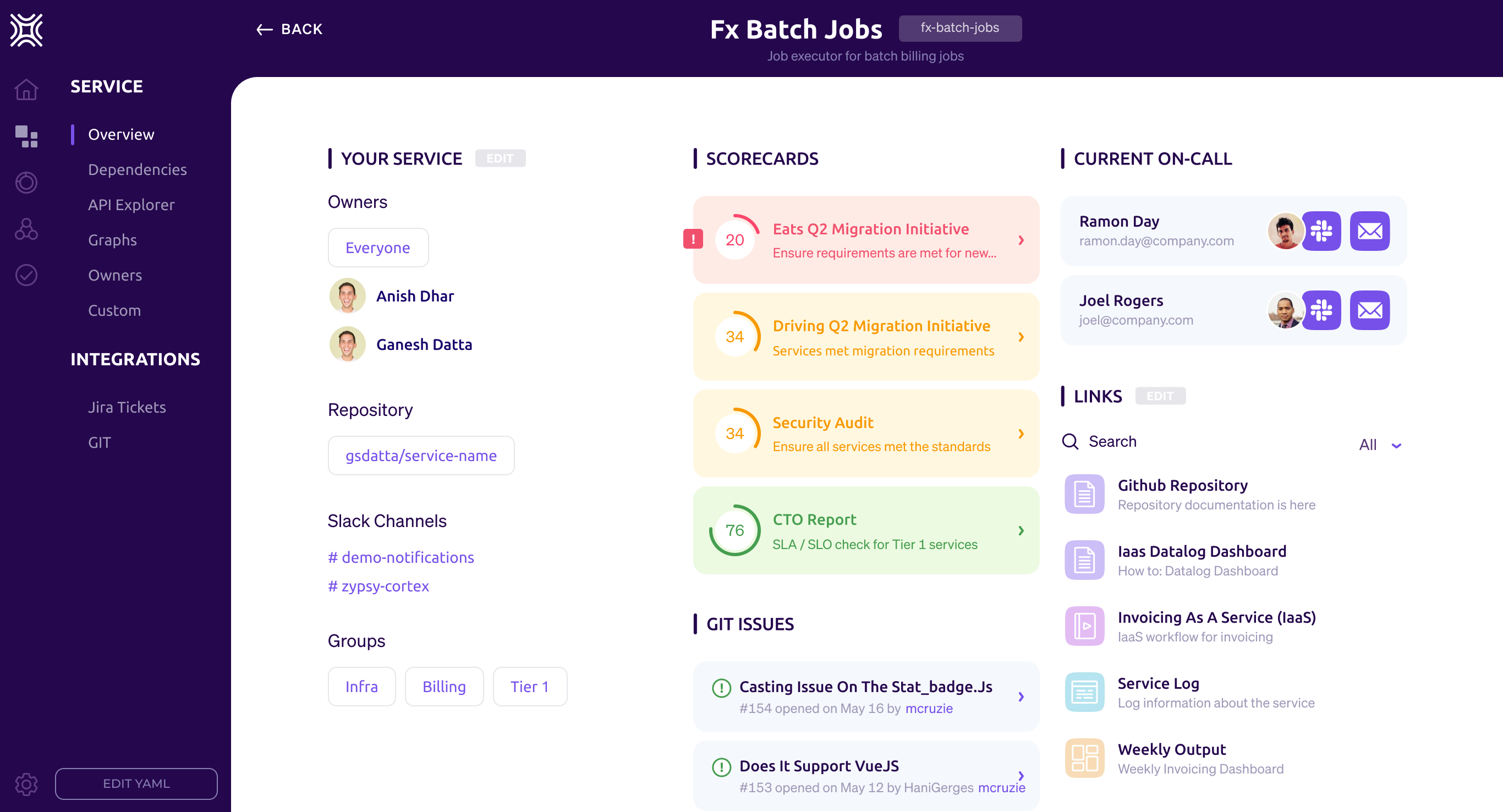
    Designed for site reliability engineers (SREs) and other DevOps professionals, the Cortex platform eliminates the need to rely on spreadsheets to manually track ownership of microservices. Instead, Cortex imports data residing within the tool employed by developers to surface who within an organization is responsible for maintaining which microservices.

    In addition, a Cortex dashboard enables DevOps teams to see which developers are on-call in the event of an unexpected incident, the latency rate microservices are experiencing and which vulnerabilities have yet to be remediated.

    Grades can also be assigned to specific microservices based on metrics that are associated with a specific microservice. That approach allows DevOps teams to apply gamification techniques using a scorecard to encourage developers to continuously improve their microservices, noted Dhar. That approach will also make it apparent to other developers which microservices running in a production environment can be most reliably employed, added Dhar.

    Cortex

    At the core of the platform is Cortex Query Language (CQL), a domain-specific language that allows DevOps teams to define granular rules that can be applied to, for example, on-call rotations, security vulnerabilities, package versions, service level objectives (SLOs) and the overall health of the microservice. Engineers can employ code in the form of YAML files to set reliability standards across teams and types of services through direct integrations with a variety of tools. In effect, Cortex provides a reliability-as-code platform, said Dhar.

    As responsibility for applications shifts further left, each development team is being held accountable for the life cycle of any microservice or application they create. The challenge enterprise DevOps teams are encountering is that when there are hundreds, even thousands, of microservices, it’s difficult to determine who on the development team is responsible for a specific microservice. Rather than trying to keep track of the relationship between development teams and microservices using a spreadsheet, Cortex is making a case for a tool that automates that discovery and tracking process.

    Most organizations today are embracing microservices to build and deploy more flexible applications at varying rates. However, it’s only a matter of time before they find themselves trying to navigate a web of interdependencies between microservices that can’t be managed using spreadsheets. DevOps teams, of course, might be inclined to use their skills to create their own tool for tracking microservices. However, given all the tasks at hand, maintaining a custom platform for discovering and tracking ownership of microservices is likely something better done by a vendor willing to maintain and support a purpose-built tool.

  • CloudBolt Adds Cloud Cost Tool to Hybrid Management Platform

    CloudBolt Adds Cloud Cost Tool to Hybrid Management Platform

    CloudBolt Software this week added cost management capabilities for Amazon Web Services (AWS) and Microsoft Azure public clouds along with codeless integrations with additional platforms to its hybrid cloud management platform.

    Grant Ho, chief marketing officer for CloudBolt, said the Spring Release of the company’s platform, now generally available, enables IT operations teams to rely much less on custom code to integrate the various elements of a hybrid cloud computing environment. The Spring edition adds support for the VMware vRealize Automation 8 automation platform, the configuration management database provided by ServiceNow as a cloud service and the IP address management platform from SolarWinds.

    CloudBolt

    In the wake of the COVID-19 pandemic, CloudBolt is betting more organizations will look to centralize IT management as part of an effort to reduce the total cost of IT. The cost management capabilities added to the platform enable IT teams to position themselves as more of an independent arbiter of where certain classes of workloads should run, based on cost, at a time when organizations have never had as many options as they do today, noted Ho.

    A recent survey published by CloudBolt found 80% of respondents are prioritizing real-time insight into cost optimization and security remediation. A total of 71% want self-service to be easy for end users, while 62% want an approach to integration that doesn’t require deep domain knowledge or special expertise.

    A full 94% of respondents also noted hybrid cloud computing will be critical to digital transformation. A total of 92% also noted that empowering end users through self-service IT is a digital transformation accelerator, while 99% said successful automation depends on streamlining integrations.

    More than three quarters (78%) noted they lack the visibility necessary to optimize cloud deployments. More than half (56%) also admitted their self-service offerings fail to meet user needs and more than three-quarters (76%) still rely on some form of custom coding when it comes to integration.

    Most enterprise IT organizations are trying to strike a balance between cost and flexibility as IT environments become more distributed. Each time a new platform is added to an IT environment, the total cost of IT rises because additional consoles for managing those platforms need to be staffed. The challenge is finding a way to centralize the management of IT in a way that reduces the number of consoles that have to be mastered without requiring every business unit to standardize on a platform that locks an organization into a single provider.

    It’s unclear to what degree IT organizations will rely on traditional IT service management (ITSM) platforms manned by administrators versus DevOps platforms deployed by site reliability engineers (SREs) to achieve that goal. However, one way or another, the cost of distributed computing environments needs to be reduced, even as they are becoming more complex. The primary issue now is deciding how best to achieve that goal in an IT environment where every application owner tends to view themselves as master of their own IT domain.

  • Lightbend Launches Serverless Managed DevOps Service

    Lightbend Launches Serverless Managed DevOps Service

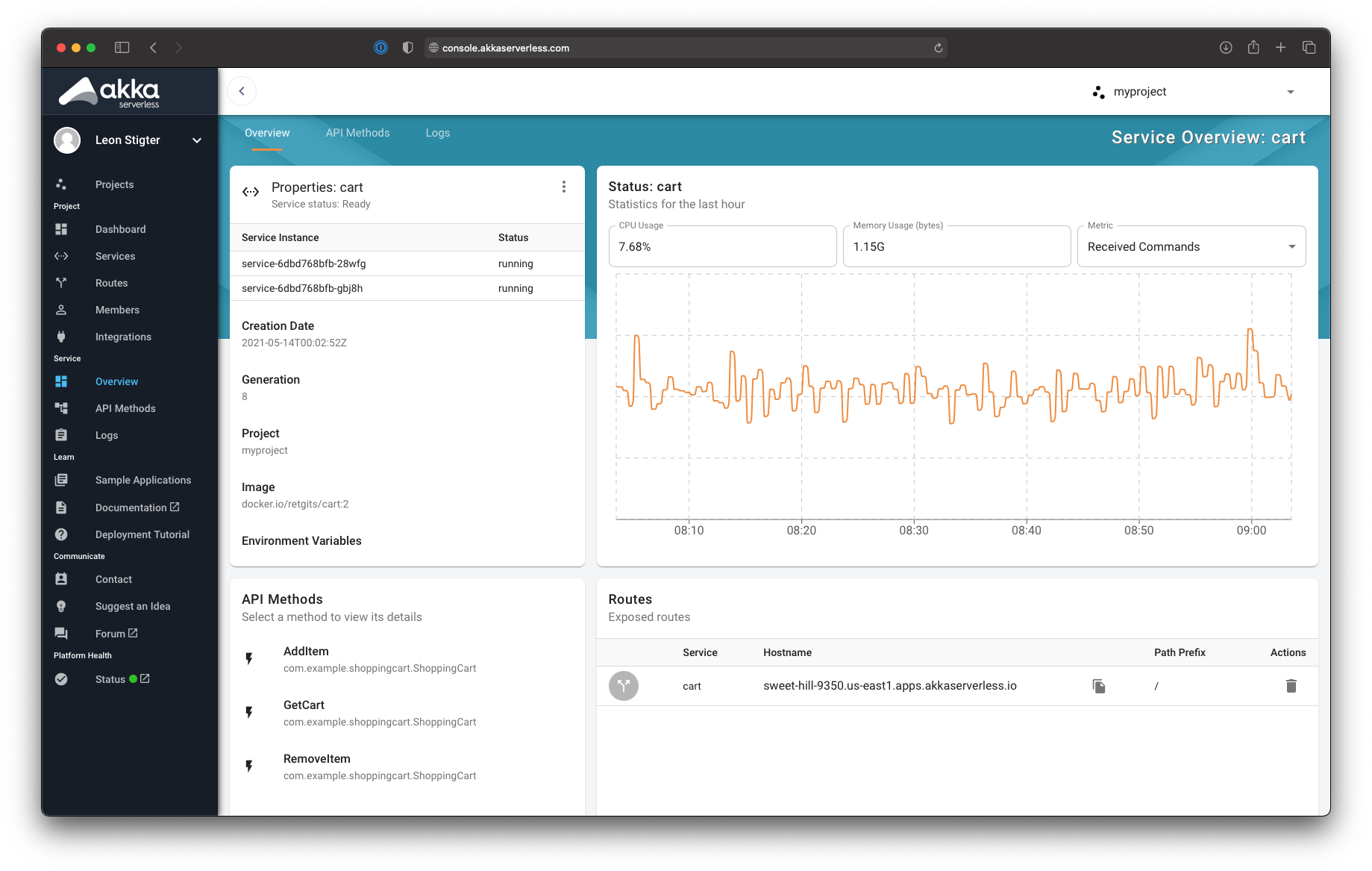
    Lightbend today unfurled a cloud service based on a serverless framework that provides developers with a managed DevOps platform to build applications that dynamically scale resources up and down as required.

    Brad Murdoch, executive vice president for strategy at Lightbend, said Akka Serverless provides access to its Java development platform environment that runs atop Kubernetes via a declarative application programming interface (API) based on the gRPC protocol. Support for additional open APIs, such as GraphQL, is planned, added Murdoch.

    At the same time, Lightbend revealed today that Jonas Bonér has assumed the role of CEO in place of Mark Brewer. Previously CTO and founder of the Akka Project, Bonér is a co-author of a reactive manifesto that defines the core principles required to build applications using a reactive programming model.

    Akka Serverless, available via an open beta program that provides access to limited amounts of storage, is scheduled to be generally available in the fourth quarter on the Google Cloud Platform (GCP), with support for additional cloud services planned.

    The service is made possible because Lightbend extended an existing open source Cloudstate serverless framework to create a platform-as-a-service (PaaS) environment to support large amounts of distributed stateful data that developers employ to build applications, noted Murdoch. That capability overcomes the performance limitations of existing function-as-a-service approaches, based on other serverless computing frameworks, that don’t support stateful application development, added Murdoch.

    In fact, one of the reasons that adoption of serverless frameworks has been limited thus far is the inability to be employed within the context of a stateful application that requires a lot of access to data, said Murdoch.

    Lightbend addressed that issue by enabling event sourced entities persist each change in state as an event that Akka Serverless writes to a journal. That journal can be used to replay events to reconstruct state at a particular time, debug or provide an audit. At runtime, a key distinguishes each entity instance from all others.

    Akka Serverless is the latest in a series of managed DevOps services that automatically scales as developers request new resources. There is no need for developers to configure and manage a database on which to build their application. Many organizations are migrating to these services because they would rather focus their time and effort on building applications versus managing a DevOps platform, said Murdoch.

    It’s not clear to what degree organizations will embrace managed DevOps services, which are starting to appear on various cloud platforms. However, the implication is that by choosing these types of services, organizations may not need to hire, for example, as many site reliability engineers (SREs). The challenge, however, going forward is that most of the managed DevOps platforms are currently tied to a specific cloud service at a time when most organizations are routinely using more than one cloud.

    Of course, developers will need to continue to manage continuous integration (CI) processes, but, in time, the continuous delivery side of the DevOps equation may be incorporated within a managed service. Regardless of the path forward, as DevOps processes continue to become more automated, the pace at which applications can be deployed is about to significantly accelerate.

  • Observe Seeks to Put More IT Metrics in Context

    Observe Seeks to Put More IT Metrics in Context

    Observe, Inc. announced today it has updated it observability platform to add support for metrics based on time series data. In addition, the company is revamping how the platform generates alerts as part of an effort to surface more actionable intelligence.

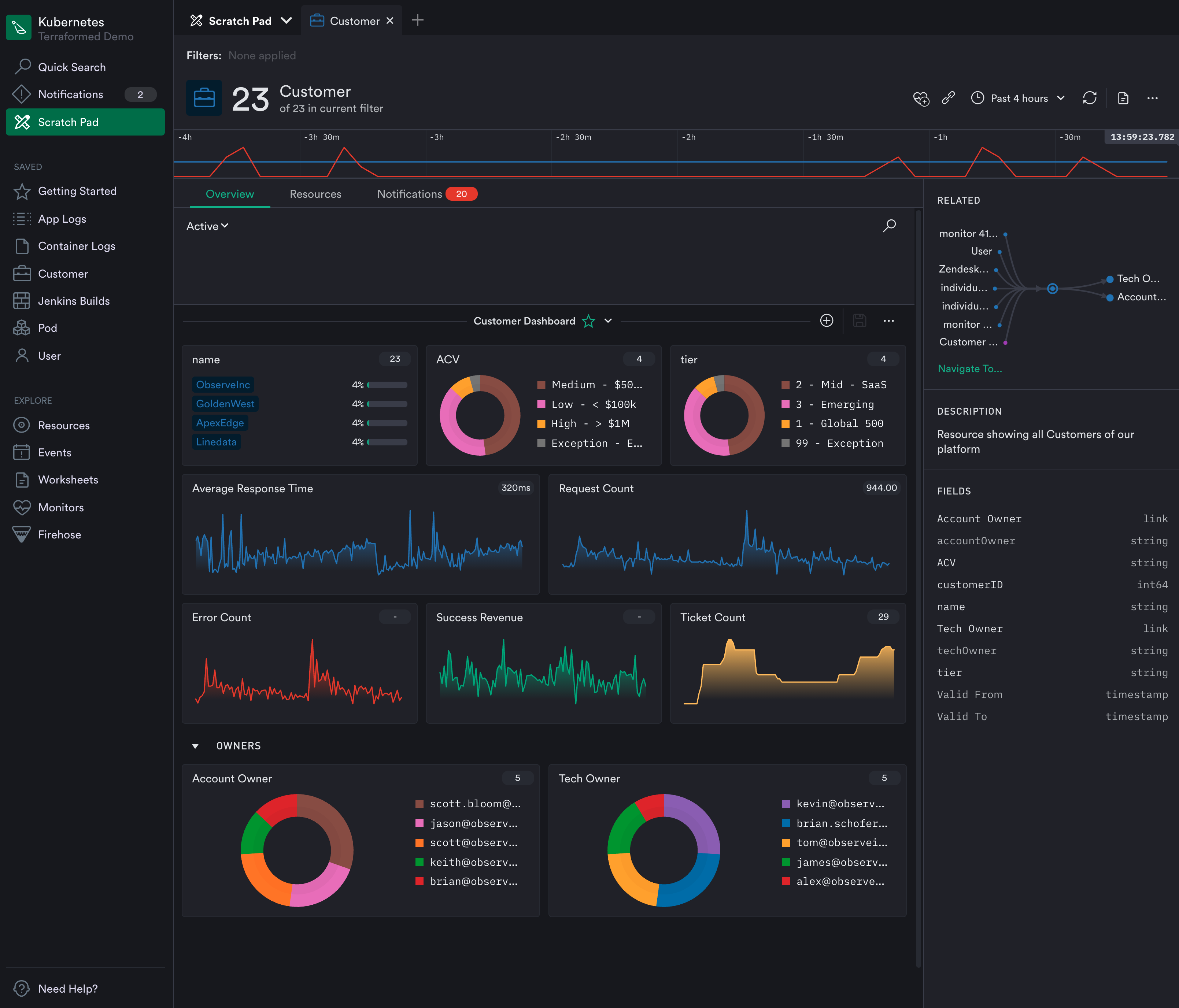
    Jeremy Burton, Observe CEO, said rival observability platforms require IT teams to sift through hundreds of metrics that are generated using elaborate tagging schemes that ultimately drive up the cost of storage. The Observe platform curates metrics by associating them with, for example, a customer, to provide more relevant context, Burton noted.

    That approach eliminates the need to present IT teams with overwhelming lists of metrics in addition to reducing storage costs by removing the need for a complex tagging scheme, added Burton.

    The latest update leverages that approach to metrics to only generate alerts based on curated metrics attached to customers, pods, shopping carts or containers. Rather than simply being alerted to a drop in response times, for example, the IT team can also easily see which customers or pods might be affected. That shift will reduce the volume of alerts that are already overflowing in email inboxes and across other communications platforms.

    Fresh from raising an additional $7 million, Observe today also revealed it has added 20 paying customers since launching the platform on top of the Snowflake cloud service residing on the Amazon Web Services (AWS) public cloud. Rather than reinventing the same core infrastructure, Observe is leveraging a data analytics engine that is already widely employed in IT environments.

    For now, Observe will continue to primarily focus on metrics as part of an effort to deliver insights in a form IT operations teams are prepared to consume today, said Burton. Over time, however, Observe will add support for distributed traces via tools such as OpenTelemetry and Jaeger as it adds additional application performance management (APM) capabilities, added Burton. Rather than telling IT operations teams they are managing IT in the wrong way, the goal is to meet IT operations teams where they are today, noted Burton.

    That strategy also enables the Observe platform to be employed to manage both monolithic and microservices-based applications running on Kubernetes clusters, noted Burton. The immediate goal is to provide IT teams with an alternative to legacy monitoring tools that provide more context at total lower cost by allowing IT organizations to rationalize tools that don’t tend to be especially well integrated, added Burton.

    In the longer term, Observe will also employ machine learning algorithms to collect data more efficiently. However, Burton said the company remains skeptical of visions of an IT future that depend on machine learning algorithms to continuously learn IT environments that are not only unique, but subject to frequent changes.

    Competition among observability platform providers is already fierce. Each IT team will need to decide what type of platform makes the most sense for them based on costs and their preference for specific capabilities one vendor might have that another doesn’t provide. One way or another, however, the way IT environments are managed will soon be changing for the better.

  • Grafana Labs Advances Open Source Visualization and Observability

    Grafana Labs Advances Open Source Visualization and Observability

    During the online GrafanaCONline conference today, Grafana Labs announced that version 8.0 of its open source visualization software widely employed by DevOps teams is now generally available. In addition, version 1.0 of Grafana Tempo, an open source back end platform for collecting distributed traces that are needed to drive observability across an application environment, is also generally available.

    At the same time, Grafana Labs revealed that Grafana Tempo is now available as a service on Grafana Cloud.

    Version 8.0 of Grafana adds support for additional types of visualizations such as streaming panels, state timeline, status history, bar chart and histograms in addition to a revamped unified alerting system that enables DevOps teams to view and edit alerts generated by Grafana and open source Prometheus monitoring platform via a common user interface. The notification system adopted to achieve that goal is based on a Prometheus alert manager that provides capabilities such as grouping, deduping and silencing of notifications alongside advanced message templates.

    The latest release of Grafana also improves startup and graph rendering performance, thanks to a major reduction in initial download size and graph rendering time.

    The enterprise edition of Grafana has also been updated to provide support for fine-grained access controls, improves caching of back end data sources and improved reporting capabilities such as live dashboard links that can be embedded in email.

    Overall, Grafana Labs claims there are now more than 750,000 active installations of Grafana that organizations are employing to create visualizations that correlate data collected from multiple back end sources.

    In addition to contributing to Grafana and Grafana Tempo, the company is running a cloud service that makes multiple instances of Prometheus running on different clusters accessible from a central console.

    Torkel Ödegaard, creator of the Grafana project and chief Grafana officer for Grafana Labs, said Grafana Tempo promises to further advance observability thanks mainly to its ability to employ object storage to capture complete distributed traces. Rather than only sampling traces, it’s now feasible to trace every request. Grafana Tempo is also compatible with any open source tracing protocol, such as Jaeger, Zipkin and OpenTelemetry, and can be integrated with metrics, logs and dashboards via a managed Grafana Cloud service.

    It’s not quite clear how quickly organizations are embracing distributed traces to improve application observability or, for that matter, to what degree traces might eliminate the need for certain types of metrics or log analytics. The one thing that is certain is DevOps teams require more context than ever to proactively manage complex IT environments. Distributed traces make it simpler to track interactions between application services. The challenge is they can require IT teams to store a lot more data.

    In time, of course, distributed tracing will become more commonly employed as developers more routinely instrument applications based on microservices that tend to have lots of dependencies that are difficult to discover in the absence of some type of distributed tracing capability. Of course, distributed tracing has been around, in some form or another, in application performance management (APM) platforms for some time. The difference now is that, as open source software, it’s becoming more affordable to implement.

  • HashiCorp Increases Terraform’s Enterprise Appeal

    HashiCorp Increases Terraform’s Enterprise Appeal

    During the online HashiConf Europe conference today, HashiCorp debuted the general availability of a 1.0 release of HashiCorp Terraform along with updates to HashiCorp Terraform Cloud service.

    Meghan Liese, senior director of product marketing for HashiCorp, said in both cases HashiCorp is moving to enable organizations to better secure and govern IT infrastructure-as-code provisioned using open source Terraform tools.

    Version 1.0 of HashiCorp Terraform provides access to a stable application programming interface (API) that will foster interoperability and simplify future upgrades.

    The Terraform Cloud service, which eliminates the need for IT teams to set up and manage a Terraform platform, adds workflows enhancements to the Terraform Cloud that include the ability to publish curated modules to a private registry, enhancements that make it easier to visualize elements of a workspace and a preview of an ability to check with third-party tools related to a Terraform run.

    Overall, the goal is to make it simpler for organizations to compose, collaborate and reuse infrastructure-as-code using modules and the public and private registry options, said Liese. The public registry already has more than 5,000 modules. Terraform Cloud now offers a native workflow to publish modules from the public registry directly into an organization’s private registry.

    Terraform, of course, has been widely employed since it first debuted in 2014. There have been 15 major updates prior to the release of Terraform 1.0, which is intended to provide a foundation that ensures backward compatibility between releases going forward.

    In some instances, Terraform can be too much of good thing. It has considerably accelerated the rate at which IT infrastructure can be provisioned within the context of a DevOps workflow. The challenge, though, is developers often lack the security expertise required to prevent infrastructure from being misconfigured at a time when cybercriminals have become more adept at scanning for those vulnerabilities. To enable IT teams to prevent those misconfigurations, HashiCorp makes available both an enterprise edition of Terraform as well as its Terraform Cloud service. Terraform Enterprise is used by more than 1,200 enterprises, while Terraform Cloud has more than 120,000 users that execute more than 30,000 runs per day.

    It’s not clear if security concerns might one day lead to a backlash against the concept of shifting more responsibility left toward developers to improve productivity. In some cases, developers are simply deploying more insecure applications faster. HashiCorp is making a case for Terraform platforms that allow centralized IT teams to exercise more control over how infrastructure is provisioned as code. The need for that approach is becoming more pronounced, as organizations not only employ Terraform to provision cloud infrastructure but also on-premises IT environments.

    Regardless of how infrastructure is provisioned by developers, security of infrastructure, both inside and outside of the cloud, remains a priority as more workloads than ever are deployed. In effect, the attack surface that needs to be defended has dramatically expanded. Of course, the best security issue of all is the one that never happened because infrastructure is being provisioned right the first time and every time thereafter.