A recent report from Dimensional Research reveals that the demand for on-premises software is equal to that of public cloud. The report, which was commissioned by Replicated, a company specializing in on-premises software modernization, queried 405 participants in software development, executive, product management, sales and services roles to determine the needs, usage and challenges of on-premises software.
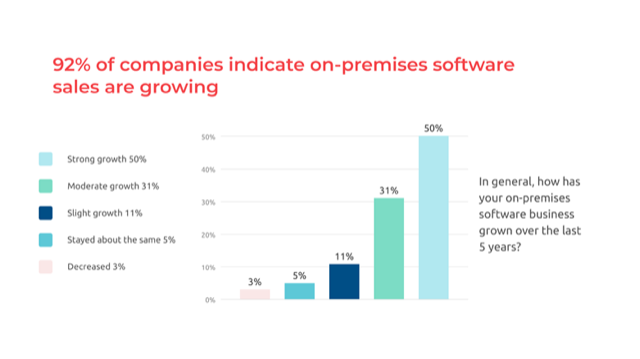
The report revealed that some 90% of companies surveyed said their on-premises sales of software solutions continue to rise, while 70% that do not currently offer on-premises solutions intend to in the near future.
“In the past few years we’ve experienced a steady increase in interest from leading global companies who see that modern on-prem software delivery through containers and Kubernetes can make data protection and security much easier,” said Grant Miller, co-founder and CEO of Replicated. “Coupled with growing customer demand, it’s a win-win scenario for any industry.”
While Miller’s view may be optimistic, the survey also revealed that the majority (65%) of companies cited privacy compliance as the top reason for using on-premises software delivery; an indication that the market is being influenced by cybersecurity issues more than any other factor. However, 54% also stated uptime and reliability were a primary driver for on-premises solutions, while 45% noted the importance of integration.
The report indicates that enterprises, which have cited digital transformation and a movement towards the cloud as critical factors over the last two years, may also be thinking more about on-premises solutions in light of cybersecurity and compliance concerns. This, in turn, means that DevOps has the potential to gain even more traction in the enterprise.
While the report mentions the merits of an on-premises software strategy, it does raise the question of why more enterprises have not moved in that direction already. That hesitation to re-embrace on-premises software can mostly be attributed to perceived complexity, time commitments and the cost of engineering resources to make it happen.
Complexity is further highlighted by 74% of survey respondents reporting that it would take more than a week to install and configure on-premises software, and 29% stated an install could take over two months. For the 16% that claim they can rapidly install and configure on-premises software in less than a week, the potential for growth in the market is notable.
While the future remains somewhat uncertain, the report from Dimensional Research runs counter to other reports, such as a Synergy Research Group report that revealed in 2019, spending on cloud platforms edged past the resources spent on acquiring servers and software for on-premises data centers. “60% of the servers now being sold are going into cloud providers’ data centers and not those of enterprises,” said John Dinsdale, a chief analyst at Synergy Research Group, confirming the trend. “Clearly, companies have been voting with their wallets on what makes the most sense for them.” Dinsdale said the growth of cloud infrastructure will continue to accelerate aggressively over the next five years.
Although conflicting observations tend to add to the market confusion, one thing is certain – DevOps shops have market opportunities to service customers deploying both to the cloud and on-premises software.
With a shortage of available developers, companies are considering low-code methods to meet massive application development needs. As a result, by 2024, citizen developers will be responsible for 65% of applications, Gartner predicted. So, if technical ability rises across the board, will application development become an expected skill set for tomorrow’s digital workers? And if so, when?
“Application development will become a normal competency,” said John Bratincevic, senior analyst, Forrester. Bratincevic recently gave a talk at the Rethinking “How” into “Who” with Low-Code event, presented by TrackVia.
I asked Bratincevic to dive deeper into how application development is becoming democratized. In short, the low-code movement has permanently altered expectations around who can be involved in application development. To him and others within the industry, leveling up with citizen development knowledge could be vital to retaining a competitive advantage in the future digital-native workplace.
The Undigital Condition
As more and more companies digitally transform, they are evolving into software companies. In this new paradigm, “software is an expression of the business,” says Bratincevic. Yet, most organizations have not entirely digitally transformed. According to Forrester’s Q1 2020 Global Digital Process Automation Survey, 76% of companies still rely on paper-based processes, and 94% use Excel or email-based processes.
Unfortunately, developer talent is too few and far between to rectify this “undigital condition,” and existing IT teams are struggling to keep pace with demands for more software-based processes. Too often, teams are told to get in line and wait for experts to develop software when they can, said Bratincevic. This gap results in a less adaptive structure that limits new ideas.
“All organizations are probably, to some degree, adaptive, but their improvement and adaptation are typically only periodic and conducted by specialists,” wrote Mike Rother, Toyota Kata. “In other words, such organizations are not, by their nature, adaptive.”
A New Generation of Citizen Developers
The old model is not realistic anymore, said Bratincevic. Instead, a new generation of citizen developers could use no-code and low-code platforms to program operational tasks themselves. These tools use visual, declarative techniques instead of programming and are “empowering employees outside of IT to deliver apps,” Bratincevic said.
So what is the demographic behind citizen development? Reports show that younger, digital-native employees are more likely to use low-code platforms. According to the TrackVia report The Next Generation Worker: The Citizen Developer, 50% of citizen developers are 18 to 29 years old. The study also found that citizen developers are 13% more likely to expect promotions, correlating citizen development experience to career advancement.
In this projected economy, “digital elites” seem well-positioned to progress, whereas others are in dire straits. “Knowledge workers with simpler, more focused roles (e.g., a “coordinator”) and without digital skills are at risk,” said Bratincevic. Thankfully, low-code could offer a practical way to enter the tech field and increase job security.
Leveling Up From Productivity Tools
Today’s average worker is quite familiar with personal productivity apps such as email, social communications, calculations and other consumer technologies. Just as productivity tools have become commonplace, Bratincevic predicts that application development will become a standard skill set in the future.
Other IT leaders agree that coding literacy will soon become ubiquitous. Apple CEO Tim Cook, for example, recently emphasized to the U.S. president that “we believe strongly that it should be a requirement in the United States for every kid to have coding [education] before they graduate from K–12 and become somewhat proficient at it.”
Application development may become a typical proficiency; however, the exact nature of software development is up for debate — especially as development environments add more abstraction layers to the lower stack that only involve programming languages indirectly. For example, Bratincevic describes how those learning to code often use a service like code.org, which involves low-code tooling and games to help educate students. “I see the same pattern for the adult professionals in the workforce,” he said.
Future application development may not even resemble programming in the traditional sense. “Once ‘development’ on these kinds of tools becomes ubiquitous, we may not even call it application development anymore,” Bratincevic said. “It will just be — work.”
Goals for Citizen Developer Programs
According to an Outsystems report, 20% of companies adopted low-code to enable citizen developers to construct applications. “One of the main reasons firms are buying low-code is to enable non-IT folks to develop,” noted Bratincevic. “I routinely get inquiries from enterprises who are looking to accomplish this very thing, at scale in their organizations.” In particular, he notes apps of substance being created within health care, vehicle manufacturing, oil and gas and insurance industries.
It appears more and more organizations are sanctioning a new wave of citizen developers. So what goals should these new citizen development programs aim to achieve? Bratincevic shared the following benchmarks:
Digitize. Everything. Always: Foster a digital problem-solving culture and develop a digital workforce.
Balance autonomy and control: Citizen developers shouldn’t have to ask permission to make a spreadsheet. Yet, guardrails are necessary for more far-reaching programs.
Take charge as privateers: He recommends organizations start by adopting an autonomous, business-led team, which he calls a Privateer model.
Low-code could also help bring shadowy, rogue IT to light and rehabilitate it in a sanctioned way.
The Era of Low-Code
In 2021, the low-code market is estimated at $13.8 billion, said Gartner. SD Times even coined 2021 the “year of low-code.” But, since the citizen developer movement has permanently raised the bar, I would edit this statement to say we have entered the era of low-code.
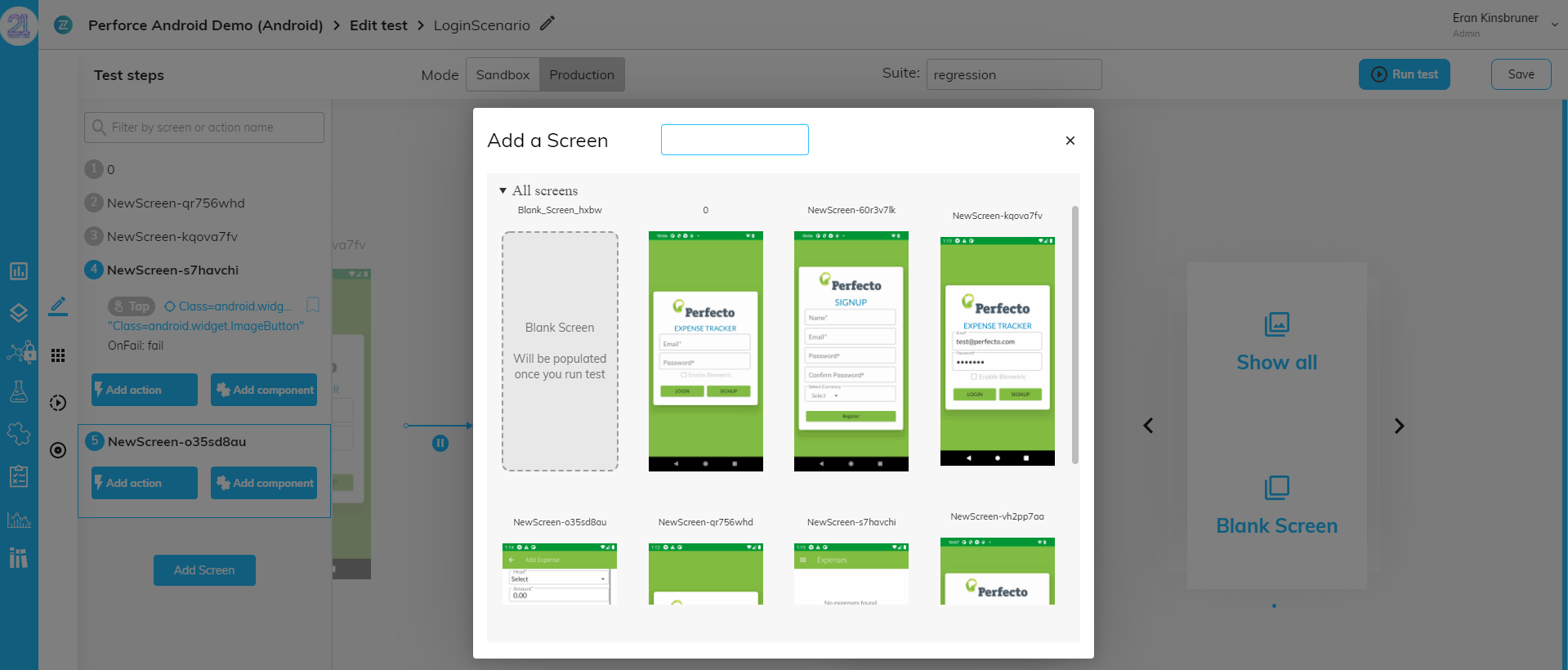
Perforce Software announced today is has acquired 21 Labs, a provider of a suite of tools that leverages artificial intelligence (AI) to provide a no-code approach to testing mobile applications. Terms of the deal were not disclosed.
Tim Russell, chief product officer for Perforce Software, said the 21 Labs tools complement a set of similar AI-based tools for testing web applications that the company makes available via its Perfecto portfolio. The company also makes available Virtual Devices, a service that makes it feasible to test mobile computing devices at scale using Apple iOS and Google Android emulation software. Perforce acquired Perfecto in 2018.
21 Labs developed a test automation platform that uses algorithms to observe interactions within a mobile application that are then used to generate tests. That approach sharply reduces the need for a developer or professional application developer to employ scripts to generate those tests, said Russell.
The next step will be to integrate 21 Labs with the test recommendation engine that Perforce already makes available via its Perfecto testing platform, added Russell.
As the rate at which applications are developed accelerates, Russell noted, application testing has become a major bottleneck. The shift toward scriptless approaches to application testing will make it possible for organizations to quickly vet applications to ensure quality without having to slow down the rate at which they are being deployed. That’s especially critical at a time when mobile applications are often at the core of any digital business transformation initiative.
It’s not clear to what degree application testing will be automated, but it’s apparent that as AI becomes more advanced, the need for many of the routine tests conducted by professional developers today will be eliminated. In theory, that should afford professional developers more time to conduct complex tests, while more routine tests are automatically run as an extension of a DevOps workflow.
Application testing, of course, has always been the first thing to suffer whenever developers are pressed for time to make a delivery deadline. However, the sooner any issue is discovered, the less expensive it generally is to fix. At the same time, end users are not generally patient when it comes to mobile applications that don’t work as advertised. External-facing mobile applications, especially, need to provide a compelling experience the first time they are fired up. At the same time, internal digital business processes that are accessed by end users and business partners now need to be accessible from anywhere.
Arguably, it’s harder to provide a great application experience on mobile computing devices than it is on a desktop platform, which means there should be even more testing of mobile applications before they are deployed in a production environment. The days when developers experimented on end users by rolling out minimally viable applications are coming to an end, as end user expectations continue to rise. DevOps teams that don’t adjust to that new reality may soon discover just how critical testing has become to their own job security.
WhiteHat Security, a subsidiary of NTT, has announced an integration with Bit Discovery to make it easier for developers and cybersecurity teams to discover the extent to which the attack surface they need to defend might be impacted by a vulnerability.
Bit Discovery maintains a database made up of more than 5 billion internet-connected assets and hundreds of third-party resources to automatically generate an inventory of the assets that make up an organization’s attack surface. Bit Discovery continuously scans internet-connected assets to monitor new domains, phishing sites and connected devices to provide cybersecurity teams with a deeper understanding of the threats their organization faces.
WhiteHat Security integrated its application security platform for scanning for application vulnerabilities with the Bit Discovery database via application programming interfaces (APIs) to make it possible to search that database via a dashboard. All vulnerabilities surfaced via that dashboard are verified by WhiteHat’s Threat Research Center, a team of application security experts, to reduce any potential alerts that might actually be false positives.
Craig Hinkley, WhiteHat Security CEO, said the goal is to make it simpler for organizations to shift more responsibility for applications security left toward developers in a way that doesn’t result in them chasing their tail every time a new vulnerability is discovered. Instead, a virtuous cycle of workflows can be created that enables developers and cybersecurity teams to collaborate more effectively, Hinkley added.
Ultimately, the goal is to make scanning for application vulnerabilities a more natural extension of any quality assurance process. The simple fact that there is so much focus today on DevSecOps best practices only highlights how much work there is to be done before security becomes just another routine gate within an automated DevOps workflow, noted Hinkley.
In the meantime, unfortunately, cybersecurity teams are finding it increasingly difficult to keep pace with the rate at which applications are being developed and updated. The Bit Discovery database integration provides a way for cybersecurity teams to have more relevant conversations with developers about which vulnerabilities need to be prioritized based on the actual threat they represent to the organization. In the absence of that integration, security becomes a losing battle, simply because developers and cybersecurity teams both are overwhelmed by the volume of vulnerabilities that would otherwise need to be investigated on their own without any assistance.
The integration between WhiteHat Security and Bit Discovery comes at a time when the focus on software supply chains has increased significantly in the wake of a series of recent high-profile breaches. More attention is now being paid to preventing malware from finding its way into the application development process. The challenge is finding a way to provide developers with actionable insights into risks that need to be mitigated before and after an application is deployed in a production environment. After all, vulnerabilities are just as often discovered after an application is deployed as they are before.
It may be a while before most organizations are able to implement a robust set of DevSecOps best practices, but the more reliable the vulnerability intelligence being provided to developers, the more likely it becomes they will act on it before a cybercriminal exploits it.
Digital transformation is increasingly propelled by rapidly changing user expectations. Release frequency is increasing, as is the need to connect a growing number of applications and digital experiences. As a result, 83% of IT specialists consider API integration critical to their business, found the State of API Integration Report.
Application programming interfaces (APIs) hold powerful sway in tech discussions of late. Building API-first could increase internal reusability. APIs have become a standardized machine-readable mechanism for connecting partners. There is also a hot market for API startups, meaning APIs are becoming products in their own right.
APIs are also enabling change for large enterprises. I recently connected with Bernd Gross, CTO at Software AG, to get his perspective on the role APIs and integrations are playing within the new wave of enterprise digital transformation. Below, we’ll see how connected customer experiences, digital business excellence and a new ecosystem-driven economy are driving the emergence of more API-based strategies.
Three Drivers of the Connected Enterprise
Businesses continue to transform into more connected enterprises. Once relegated solely to improving back-office efficiency, digitalization efforts are being applied across the board — to employee management, assets, machines, partners and the supply chain at large, said Gross.
Amid rising digitalization, connectivity is the glue that unites disparate elements and tools. A fully connected world is “the new flavor of digitalization,” said Gross. To his point, ‘connected experiences’ is a crucial driver for 68% of platform providers, The State of API Integration Report found.
So, how are APIs fueling the new connected enterprise? Gross identified three key reasons why integration is now fundamental to enterprise digitalization initiatives.
Software AG Marketecture, used with permission.
1. Connected Customer Experience
Many organizations “want to transform into a technology and software company,” said Gross. To participate in the connected digital economy, organizations are striving to create advanced 360-degree customer experiences. Today’s technology needs to “look beyond a PC application,” Gross said. These experiences must cater not only to desktops and smartphones but also to IoT devices and physical assets.
For example, he explains how one large elevator company architected an embedded connected experience, incorporating digital touchpoints within elevators to showcase signage, entertainment and ads, opening new monetization possibilities. This change was so radical that the mechanical engineering company pivoted its mission statement, reimagining itself as a “vertical transportation company.” Soon, their AI-enabled elevators will predict behaviors and optimize travel times, so they are always on the right floor, waiting for human riders.
Intelligent building technology is similarly being applied by digital-savvy hotels, Gross explained, which is especially important for contactless visits during the pandemic. A fully digitalized customer experience could involve automated check-in, a room access code sent to a smartphone, an online billing system, physical sensors and more. Enabling a seamless digital hotel experience sounds easy, but it’s technically quite challenging — there are endless integration requirements to connect. In some cases, it would take 24 integration points, noted Gross.
2. Digital Business Excellence
Gross recognized the high expectations for modern digital experiences. He described a “new trend of business excellence in delivering more of an end-to-end digital experience.” This means data can no longer be locked up; even traditional companies must transition to platforms to offer software and data to their end users. In the process, interesting things may occur — your customers could become partners, Gross adds.
He described how one medical company, a leading centrifuge producer, sought to build more digital experiences to complement their hardware. Though the machine functioned seamlessly, there was no easy way to port data results to other applications. This inhibited initiating the fully digitalized workflow required for a smart lab experience.
In this case, APIs were imperative to opening up back end cloud services to enable smooth user interfaces and end-to-end workflow automation. “Intuitive user interfaces must integrate all services, including cloud and on-premises services, to create and automate workflows,” Gross explained. “To do this, you need integration.”
3. Ecosystem-Driven Economy
The network effect of platforms is that they enable an ecosystem to form. And, according to Gross, involving partners in this new digital experience matrix is imperative for success. For example, the API gateway is one area where partnerships help an integration strategy; “You need an API gateway for security and governance reasons,” he stated.
Throughout his experience overseeing APIs on many projects, Gross often noticed a naïveté associated with defining the ecosystem. “When [clients] engage in the first phase of these projects, they think they know how to do it, but they typically don’t,” he said. Potential API providers often don’t fully realize their monetization strategy, the security implications or the complementary software providers necessary to support a working model. “Partnerships often facilitate a value-add to customers — they enrich the total offering through APIs and ecosystems,” said Gross.
Similar to how a machinery company may embed a bill of materials into the product they sell, digital partnership ecosystems can open up data so partners can access and innovate with it, Gross said. Frequently, ecosystem partnerships make a lot of sense, as they can better meet consumer expectations. For example, Gross suggested that integrating a ticketing system into a conditional monitoring system would bring compelling value.
The Next Stage: Self-Service Integration With APIs
According to the report, 40% of companies said that digital transformation is driving their need for app integration. Truly connected enterprises must embrace digitalization and integration across all aspects of the business. As a result, this is forcing a business shift toward more open ecosystems.
But building these systems will require newfound knowledge dissemination around developer experience and self-service capabilities. “Self-service has become fundamentally important,” said Gross. It’s not enough to simply open interfaces — you have to also add self-service capabilities to integration tools, he added. This could mean offering low-code options alongside APIs — such drag-and-drop UIs would help facilitate integrations for more citizen developers. A self-service approach to digital platformification is an emerging trend, yet one that’s “not fully at mass market,” described Gross; it’s still in its early stages.
Open ecosystems are guided by consumers, who often desire connections between your tool and external partners. But, opening up data isn’t just helpful for partner integration; it could also benefit internal use. As Gross described, time-series industrial analytics could empower operators on the shop floor or production facility to make sense of local data. “You need self-service analytics tools to give them that ability,” Gross said.
Building new customer experiences to cater to various devices and platforms is a big driver for API adoption. As a result, headless styles are emerging to address multi-platform requirements. For these reasons and many more, APIs are fueling new digital transformations across enterprises, powering innovative customer experiences and hiding complexity in the back end. With APIs, smart processes, smart machines and smart partners can all come together.
Australia and New Zealand have seen a big move to the public cloud, and “… when I talk to customers, I see huge interest in rearchitecting applications rather than doing a lift-and-shift right into public cloud,” said Scott van Kalken, F5 ANZ solution architect for DevOps and modern applications.
That migration to the public cloud has led to massive interest in telemetry. When you go from a monolithic application to a distributed app, there may be 100 or even 1,000 APIs involved. Without telemetry, you don’t know what’s going on with those APIs. But the telemetry needs to be consistent.
F5’s 2021 State of Application Strategy report found 75% of respondents considered telemetry, especially about application security and delivery, important for meeting business outcomes, and 95% of respondents said they are missing insights from their existing monitoring and analytics solutions.
Van Kalken recounted a conversation with a practitioner as an example. This practitioner gets yelled at when problems arise with partner APIs used by the application he manages. So, even though these APIs are not technically his responsibility, he needs visibility into their status. Only by combining internal telemetry with telemetry from these partner APIs can he make sense of what’s happening within the application ecosystem.
And it’s not just a question of whether an API is available or not. Problems can arise when it is responding slowly. “‘Is that normal? Is that normal for this time of day?’ I’ve got to have some sort of telemetry data available to me to make decisions,” van Kalken said.
Enabling Security Automation with Telemetry
An aspect that’s particularly interesting to him is the ability to automate or otherwise take action based on security telemetry data.
A simple example is a security event that reveals some kind of systems abuse. Automation can add a firewall rule to block the associated traffic.
As organizations increasingly adopt event-driven architectures, events and responses occur at the application, network, infrastructure and other levels. “The minute that you automate those event-driven architectures with security, it opens up a world of possibilities.”
It’s not just about automating security. Imagine an API gateway that serves a variety of APIs to customers. Telemetry might reveal that two of the APIs are starting to slow down; in which case, “I might kick off a workflow that just deploys more of them so that we can handle the load. But if you don’t have that telemetry, you can’t do that,” he said.
In practice, this involves telemetry, analytics and automation.
“When we show [customers] how you can make use of the analytics in a really easy way, their eyes light up,” van Kalken said.
Multi-Cloud Migration
A further consideration is that rearchitecting applications isn’t just about splitting monoliths into smaller pieces and redeploying them as microservices. There’s also a desire to run them across multiple public clouds to reduce risk, and also to deploy applications at the edge where they are closer to their users.
The 2021 State of Application Strategy reported that just over three-quarters of respondents are already using or have plans to use the edge to capture benefits related to application deployment, performance and data availability.
“This is really important, because as an application developer, I want to deploy my application once and I want to say, ‘I want this distributed to all of these places around the globe’,” van Kalken said.
But if the application is deployed in, say, five locations, then from a telemetry perspective, it is five applications, not one.
“I’ve got five sets of telemetry, because I’ve effectively got five different applications deployed out there. It’s the same app, but it’s in five locations, and the consumers are different in every location; the way that they interact is different and the telemetry that I’m getting is going to be different,” he said. “So, I need to actually suck up all of that telemetry, and make it meaningful in some way,” he explained.
Telemetry Enables Clearer Vision
“A distributed cloud architecture is right for these modern applications. We recently bought a company called Volterra, and this is one of the areas that they play in — distributed applications, and specifically, abstracting multi-cloud and multi-cluster Kubernetes application deployments,” he said. This area of focus will be critical in the future, van Kalken said.
He predicts that as organizations move to 5G, applications will become increasingly distributed. If that does happen, it will be extremely important to receive telemetry from all components of the application so it can be analyzed and used to support intelligent decisions, as part of the distributed application deployment.
Anybody paying attention to world news will notice that the threats and risks perpetrated by cybercriminal actors, in many forms, is a serious problem on the rise, affecting individuals, organizations and nations daily. The cybersecurity threat space is indeed alarming and growing rapidly. The cybersecurity solution space is struggling to keep up. After all, there is no such thing as 100% security.
What is the Solution to Cybersecurity’s Problem?
In my opinion, the industry has long underestimated the problem of cybersecurity, which has resulted in solutions that do not sufficiently stand up to the cybersecurity threat space. What is clear is that solutions must come from rapid software changes that detect and plug security holes as fast as they are found, and continuously deploy innovative defensive solutions that keep bad actors off their guard. To do that requires Agile and DevOps continuous delivery practices coupled with a security-aware mindset.
What is a Security Aware Mindset?
To put things in perspective, it is useful to consider the mindsets of design, QA, operations and security.
Design mindset – create a product or service that customers want, now. The Agile framework addresses this requirement.
QA mindset – verify a product or service works the way customers expect it to, when it is released, for all production configurations available at the time of the release. The DevOps framework addresses this requirement.
Ops mindset – ensure a product or service continues to work the way customers expect, for all production configurations, for the life of the product or service. The site reliability engineering (SRE) and ITIL frameworks address this requirement.
Security mindset – defend valuables for organizations that create or use a product or service against unintended and malicious actions, by people and organizations, both inside and outside of the organizations, for all production and non-production configurations, for as long as there is something of value to protect. The DevSecOps framework was created to address this requirement; as we have seen, this does not yet offer sufficient safeguards for the growing cybersecurity threat problems.
The security mindset has multiple additional vectors of thought required compared to the design, QA and ops mindset. This helps us to understand why the cybersecurity problem space is bigger and requires more comprehensive solutions.
Not long ago I considered security assurance to be a subset of testing practices. In 2016, in my blog, “Seven Pillars of DevOps – Essential Foundations for Enterprise Success“, I did not break out security as a separate pillar. At that time, this type of thinking was typical of developers. Security was someone else’s job. Perimeter defenses were deemed sufficient.
Soon after, I realized that way of thinking was naïve on my part. By the time that I co-authored a subsequent blog, “Nine Pillars of Continuous Security Best Practices,” I added a separate pillar for security specific practices, and also added security practices within each of the other pillars.
In parallel, DevSecOps became a thing in the DevOps world. The idea of integrating security practices into DevOps makes a lot of sense, because DevOps is the answer to continuous delivery of software, and security needs continuous delivery of defensive solutions. However, simply adding security to DevOps is not a sufficient solution, because DevOps was conceived to address specific problems associated with design, QA and Ops – not security. Simply adding security as another metric for releases is not enough. What is needed is a re-think of how DevOps can be used to deliver continuous security, as indicated in my book, “Engineering DevOps.” This is the same idea behind what is referred to as SecDevOps.
In my opinion, it is now time for SecDevOps to gain favor over DevSecOps when it comes to integrating security practices with DevOps practices. This represents a much more significant shift than simply putting security first in the name. With SecDevOps, security concerns within the entire development organization and at every stage in the DevOps value stream, are explicitly prioritized over other types of concerns. This makes sense, given the much wider blast radius of security events versus other quality concerns that DevOps was originally designed to address.
With SecDevOps, security tools and resources are weighted at the highest priority level. SecDevOps and secure coding practices are required training for application developers. Threat modeling is part of the value stream. Security tasks that are required to mitigate security risks are given the highest priority in backlog planning. At each stage in the DevOps pipeline, security concerns rise to the top of the priority list. Release and deployment readiness are weighted at the highest level. In short, SecDevOps explicitly plugs some important security holes that are not covered by DevSecOps. With SecDevOps, security becomes continuous, not just an add-on to DevOps.
What This Means
By explicitly plugging some important security holes that are not covered by DevOps or DevSecOps practices alone, it makes sense for SecDevOps to now emerge as the preferred framework to close the gaps between the growing security problem space with the evolving security solution space. SecDevOps offers the required security-first mindset and solves the need for rapid software changes that detect and plug security holes as fast as they are found, and continuously deploys innovative defensive solutions to keep bad actors off their guard.
At an online Appian World conference, Appian today unveiled an update to its low-code platform that adds a set of visual tools that enables developers to aggregate data within an application with the help of a database administrator (DBA) or data engineering team.
Malcolm Ross, vice president of product at Appian, said one of the things that holds up application development the most is the need to wait for data to be massaged in a way that makes sense within the context of an application. The latest edition of the Appian Low-code Automation Platform aggregates multiple data sources into a single data vector columnar data store that resides within the platform.
In effect, Appian is applying a low-code approach to data engineering processes that, today, require dedicated expertise to set up and manage.
The latest version of Appian also adds an Intelligent Document Processing (IDP) tool enabled by optical character recognitions and AI models, application design guidance, developer collaboration tools and enhanced DevSecOps capabilities that enable software packages to move between development, test and production environments with a single click in a way that is governed by the Appian platform.
Appian is also extending robotic processing automation (RPA) tools to centrally manage bots within an application to Windows platforms.
Finally, Appian is making a formal, less-robust community edition of its platform available to a limited number of developers as part of an effort to expand the overall size of its developer community.
Ross said as both professional and so-called citizen developers embrace low-code applications it’s critical to have guardrails in place that ensure applications are deployed in a way that adheres to DevSecOps best practices. The Appian Low-code Automation Platform includes the software development life cycle (SDLC) tools needed to set those guardrails regardless of the level of experience any developer has, noted Ross. In fact, Appian guarantees, for a flat services fee, that an organization’s first project will go live in just eight weeks.
In general, Ross said the number of individuals capable of building applications continues to expand as more “business technologists” learn how to build applications. Previously, these individuals might have used 4GL tools or macros to build applications based on Microsoft Excel spreadsheets. The Appian low-code platform makes it possible for this class of power end users to build more robust enterprise applications using a set of tools that compare their efforts to known best practices and offer suggestions to make improvements.
At the same time, professional developers are opting to build applications using low-code tools to reduce the size of application development backlogs. Not every application that needs to be developed requires developers to employ procedural code.
The net effect is more applications than ever are being simultaneously built and delivered at a time when organizations are launching multiple digital business transformation initiatives.
It may be a while before the effects of low-code platforms are fully realized within IT environments. However, the one thing that is certain is IT teams of all sizes should expect to be managing an exponentially higher number of applications.
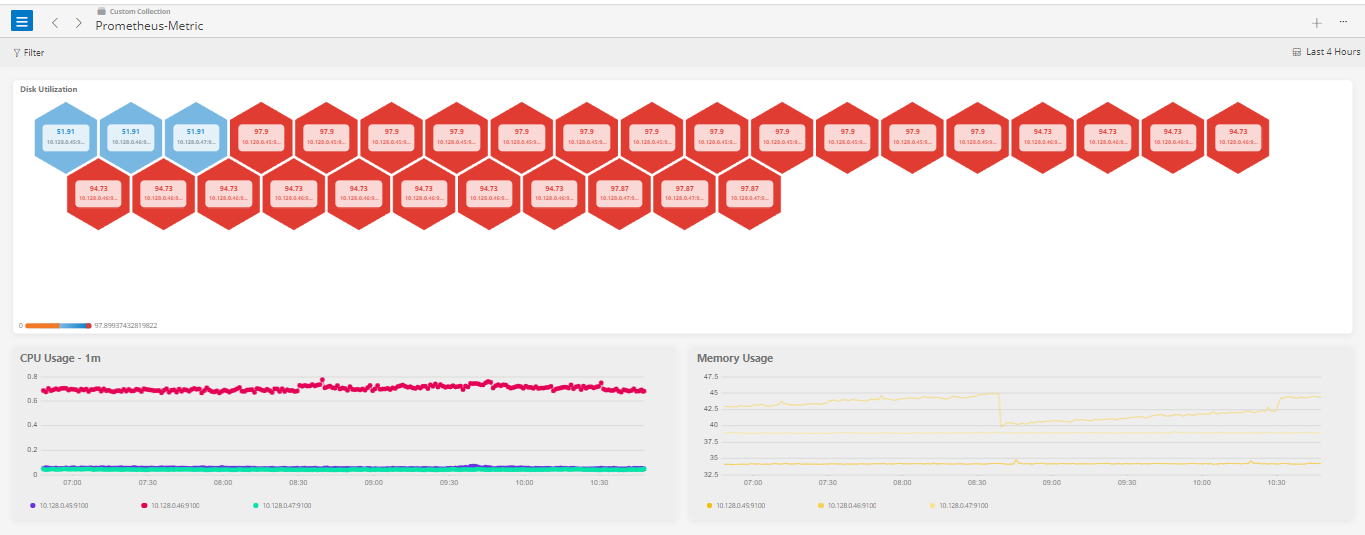
OpsRamp today announced it has added the ability to ingest data captured via the open source Prometheus monitoring software into its namesake IT operations platform infused with machine learning algorithms.
In addition, the company is adding support for customizable dashboards using the Prometheus Query Language to create visualizations of hybrid infrastructure performance. Also, a set of available tools makes it easier for IT teams to discover when workloads have been added to a cloud. These capabilities became available with the Spring 2021 Release of OpsRamp’s IT operations platform infused with artificial intelligence (AIOps).
Finally, OpsRamp has also created an alert definition model that streamlines the alerts generated by the AIOps platform and its integrations for the Microsoft Azure cloud and the Cisco HyperFlex platform deployed in on-premises IT environments.
Deepak Jannu, senior director of product marketing for OpsRamp, said that as IT becomes more complex to manage, many IT teams are starting to realize that managing these environments without help from an AIOps platform won’t be possible. As such, much of the fear and loathing that was initially associated with AIOps is giving way to acceptance as IT teams start to realize these platforms augment their capabilities versus replace them, added Jannu.
Much of the complexity is being driven by the rise of cloud-native, microservices-based applications that tend to have lots of dependencies. OpsRamp has primarily been encountering Prometheus in these environments. However, Prometheus can also collect data from legacy applications, as well, so over time, the expectation is the open source monitoring tool will be employed more widely.
As AIOps platforms become more widely employed, there is no doubt job roles within IT organizations will change. As lower-level tasks become automated, IT teams should have more time to spend resolving complex issues once the AIOps platform has identified a baseline for how applications should optimally behave. In many cases, the need for personnel to perform rote tasks that no one in IT wants to actually do will be eliminated altogether.
DevOps teams that are committed to automating IT tasks will naturally be among the first to employ an AIOps platform to augment the capabilities of site reliability engineers (SREs) that are often challenging to hire and retain.
In general, Jannu noted that the observability that many IT organizations now demand can’t be achieved by simply collecting more metrics. IT organizations will need to invest in an AIOps platform capable of making sense of all the instrumentation data being collected. The challenge now will be defining the right division of labor between man and machine in an IT environment, Jannu added.
At this juncture, AIOps, to one degree or another, is inevitable. In many cases, machine learning algorithms are already being employed to optimize applications or a specific class of hardware. The decision IT teams will ultimately need to make is determining whether to replace their existing IT operations platform or wait for the provider of their existing platform to get around to adding AI capabilities.
CircleCI today announced it has acquired Vamp, a provider of an orchestration platform for automating application releases. CircleCI at the same time revealed it has garnered an additional $100 million in financing to attain a $1.7 billion valuation.
Jim Rose, CircleCI CEO, said Vamp will play a significant role in advancing the capabilities of the CircleCI continuous integration/continuous delivery (CI/CD) platform at a time when the rate at which applications are being deployed continues to steadily increase. In fact, CircleCI claims its platform is now being employed to process 2.5 million jobs processed per day.
The Vamp platform makes it easier to construct and orchestrate a multi-stage release cycle involving, for example, canary releases of an application. It then employs machine learning algorithms to validate the impact, performance and quality of releases based on the service level objectives defined by an IT team. If anything is determined to be amiss, the platform will then automatically roll back a release.
While many organizations have successfully implemented CI best practices, the ability to continuously deploy application releases has proven to be a more elusive goal. Each platform on which an application is deployed has unique attributes. The addition of machine learning algorithms that can provide continuous validation of deployments should help drive a sea change in the way applications are being developed and deployed to improve the overall state of CD, noted Rose.
Those machine learning algorithms, along with other forms of artificial intelligence (AI) won’t replace the need for DevOps teams as much augment them at a time when IT environments, thanks in part to the rise of microservices, are becoming more complex. In fact, with the arrival of containers, Kubernetes and serverless computing frameworks, it’s becoming next to impossible to manage an IT environment without the use of AI.
Rose added that, as the line between pre-production and production environments continues to blur, it’s critical for IT teams to more closely align CI and CD workflows. Rather than isolating CD from CI within the context of a GitOps workflow, the goal should be to integrate those processes more closely. It is becoming more apparent that the elements of what constitutes an application are more empirical thanks to, for example, configuration files that are now stored in a Git repository along with application code. That tighter integration ultimately makes it easier to test and validate applications before they are deployed. Metadata that can be analyzed to optimize application development and deployment can also be more easily captured as part of a continuous feedback loop.
That approach is more critical than ever, because the days of the “Big Bang” deployment of an application update are over. In its place are now a steady stream of updates that deliver new capabilities, which need to be continuously vetted, noted Rose.
Each successive era of DevOps is, naturally, going to be more automated than the previous one. The challenge is recognizing when those new eras arrive before rivals gain an advantage in speed and agility that becomes too big to overcome.