Category: Features

  • Linux Foundation Embraces Lightweight API Gateway

    Linux Foundation Embraces Lightweight API Gateway

    The Linux Foundation announced today that an open source application programming interface (API) gateway known as KrakenD has become the latest project it will oversee.

    Rechristened the Lura Project, the lightweight stateless API gateway was originally developed by KrakenD, which plans to continue to offer an enterprise edition of the platform.

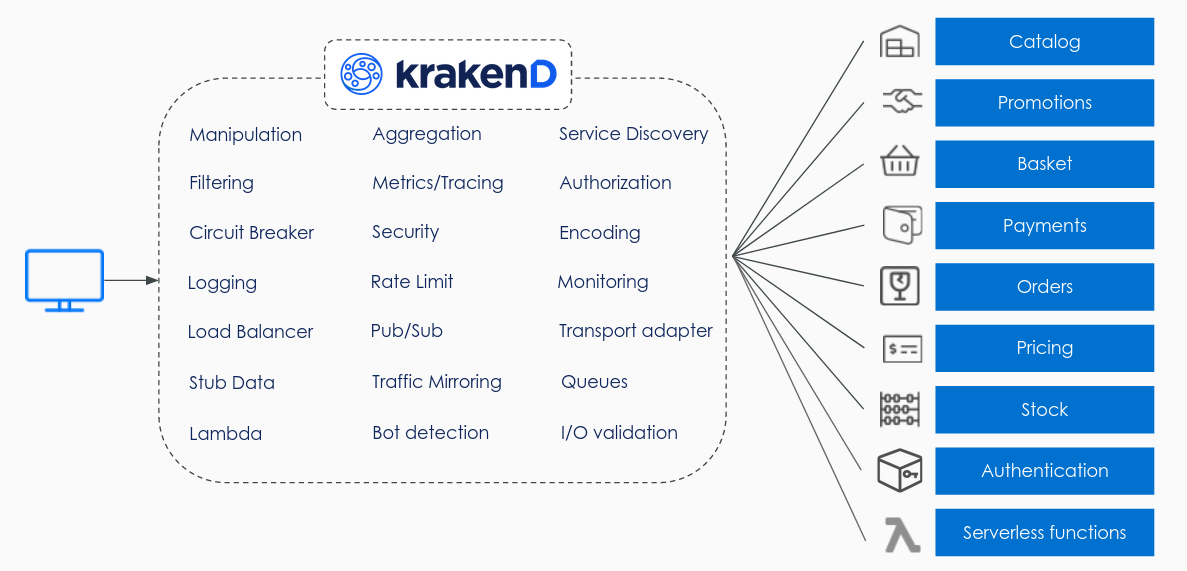
    KrakenD CEO Albert Lombarte said the API gateway it developed provides a more streamlined approach to managing APIs that doesn’t require an organization to install a separate proxy or database. All the reverse proxy capabilities most organizations require is already embedded within the API gateway. That approach also makes it easier for IT teams to decouple back-end server applications from client applications because now an API can be more easily updated without impacting client applications, Lombarte added.
    KrakenD Linux Foundation

    Organizations that already contribute to the ongoing development of the API gateway include 99P, Hepsiburada, Openroom, Postman and Stayforlong. The API gateway also is embedded in a variety of other platforms, said Lombarte; he noted that the number of servers running the gateway now exceeds more than one million per month.

    API gateways have been available in various forms for years, but with the rise of microservices the number of APIs organizations need to deploy and manage continues to rise steadily. Each microservice added to an environment adds yet another API. At a time when microservices-based applications are at the core of many digital business transformation initiatives, IT teams must employ a more flexible approach to managing the interactions between APIs.

    Thanks in part to the role they play in enabling digital business transformations, APIs are also being targeted more frequently by cybercriminals that have come to view them as an efficient way to exfiltrate data or inject malware into an application environment.

    It’s not clear what impact the Linux Foundation’s support might have on organizations’ selection of one API gateway versus another. In fact, many organizations are still trying to navigate when to employ an API gateway versus relying on proxy software to manage a handful of APIs versus a service mesh to manage thousands. The issue comes down to not just how many APIs there are, but also the overall weight of the platform being employed, said Lombarte. A service mesh typically requires more time and effort to deploy and manage, he noted.

    As the number of APIs in an IT environment continues to increase, there may come a day when organizations will have to revisit how APIs are created and maintained. All too often, APIs are still created as an afterthought once an application is created. They tend to be brittle and, as a consequence, still break often. A more holistic approach to managing APIs based on a set of DevOps best practices is required. The challenge is getting DevOps teams to prioritize APIs when there are so many other issues that require their attention. Nevertheless, it’s become apparent APIs are, in many cases, becoming too strategic to the business for their management to be left in the hands of a single development team.

  • ServiceNow Acquires Lightstep to Gain Observability Platform

    ServiceNow Acquires Lightstep to Gain Observability Platform

    ServiceNow today announced it has acquired Lightstep as part of an effort to add an observability platform to its IT operations portfolio. Terms of the deal, expected to close this quarter, were not disclosed.

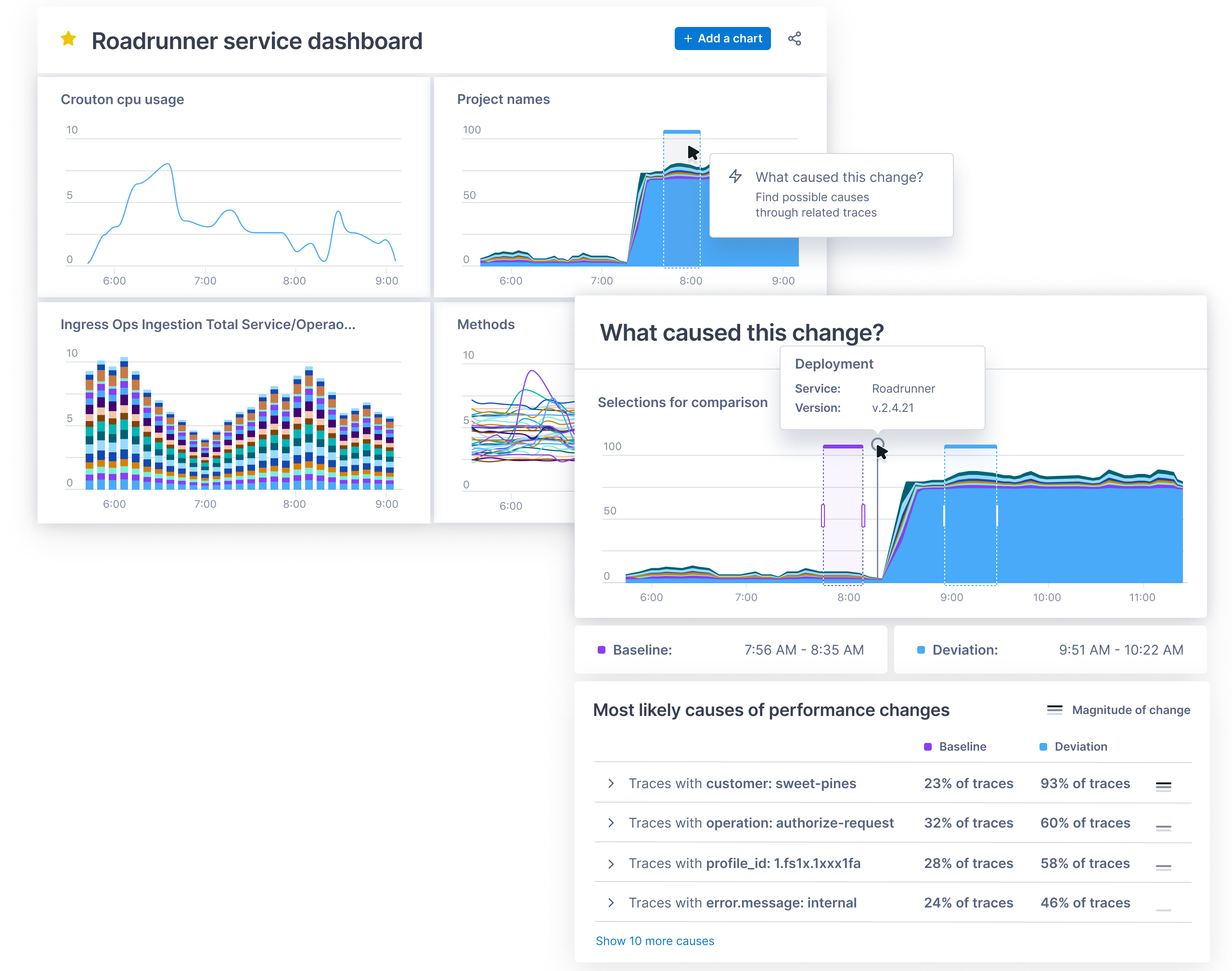
    The Change Intelligence observability platform from Lightstep is based on a time-series database that is capable of processing a trillion events each day. It was built by the same team that created Monarch, the globally distributed in-memory time series database system that Google employs to monitor its applications and systems. Lightstep team members also co-created both the OpenTracing and OpenTelemetry open source projects for collecting traces, metrics and logs.

    Pablo Stern, senior vice president and general manager for IT workflow products at ServiceNow, said ServiceNow will employ Lightstep to enable IT organizations to observe both monolithic and microservices-based applications as IT operations and DevOps teams continue to collaborate more closely with one another. The goal is to provide a single pane of glass through which IT teams can observe their entire IT environment via the Now platform that ServiceNow makes available via a software-as-service (SaaS) delivery model.

    That approach will enable DevOps teams to programmatically manage IT environments alongside IT administrators employing graphical tools, noted Stern.

    Lightstep CEO Ben Sigelman added that, in time, the number of users of that observability will only increase as more application stakeholders start to track software development projects that are at the heart of various digital business transformation initiatives.

    ServiceNow

    Thanks mainly to the rise of microservices that are now being deployed across highly distributed computing environments, it’s become more difficult to discover the root cause of an IT issue. Microservices-based applications have lots of dependencies that, while serving to make the overall application more resilient, conspire to make it difficult to determine which specific microservices might be adversely impacting the performance of an application.

    The time-series database that lies underneath the Change Intelligence observability platform makes it feasible to go beyond logs and metrics to process distributed traces that provide more insight into application behavior. Ultimately, the goal is to enable organizations to innovate faster with a higher degree of confidence in the IT environment, said Sigelman.

    As far as the march to observability in the enterprise is concerned, it’s still early days. While observability may be a core tenet of any DevOps practice, most IT organizations rely on myriad tools that surface data the teams then attempt to correlate. Whenever there is a major issue, those IT teams typically convene in a “war room” to compare reports generated by the various IT monitoring tools employed. Observability platforms that collect and process distributed traces used to instrument an application using a consistent set of specifications, frameworks and libraries. The OpenTracing and OpenTelemetry tools are significant because they provide an open source approach to instrumenting applications that reduces the total cost of observability. In comparison, many legacy application performance management (APM) platforms employ proprietary agents to instrument applications.

    Naturally, each IT organizations will be moving down the path toward an observability platform that provides greater application context. At this point, however, it’s not clear to what degree observability platforms will need to be installed before making the transition to microservices versus being a capability that only gets appreciated once the trouble with microservices finally becomes apparent.

  • Trend Micro Allies With Snyk to Advance DevSecOps

    Trend Micro Allies With Snyk to Advance DevSecOps

    Trend Micro and Snyk unveiled today a software-as-a-service (SaaS) platform the two companies have jointly developed to identify vulnerabilities in open source code.

    The Trend Micro Cloud One – Open Source Security by Snyk platform enables DevOps teams to both identify vulnerabilities and licensing issues to better monitor, prioritize and share information about risk and exposure rates within application development projects.

    Trend Micro COO Kevin Simzer said the SaaS platform provides a unified approach that combines six services within a single subscription to enable organizations to better protect a software supply chain.

    Snyk CTO Geva Solomonovich said that while the relationship between the two companies is not exclusive an alliance with Trend Micro will enable organizations to employ Snyk tools and the open source vulnerability database to implement a set of best DevSecOps practices within their organization.

    Simzer said Trend Micro is also including automation tools that make it easier for cybersecurity teams, along with the rest of the IT organization, to discover what application development projects are underway with their organization. The goal is to provide cybersecurity teams and DevOps teams with a set of tools that provides them with a common language through which they can collaboratively address vulnerabilities.

    Trend Micro claims approximately eight hours can be saved per vulnerability through automation and early discovery of the versions of open source code being employed. Roughly 80% of all application code in use today is derived from open source software, noted Trend Micro. That translates to saving more than 650 hours of development time per application, according to the company.

    Snyk, meanwhile, claimed to have observed a 2.5x increase in the number of open source vulnerabilities it has discovered over the past three years. In the wake of some recent high-profile breaches the security of software supply chains has become a greater area of focus, with many organizations now implementing a more rigorous review of all the code they employ and any associated dependencies.

    It’s still early days as far as adoption of DevSecOps best practices are concerned within most organizations. Responsibility for application security is clearly shifting further left toward developers. As part of that effort, cybersecurity teams are trying to adjust their processes in a way that enables them to vet the efforts of developers without slowing down the rate at which applications are developed. That’s becoming more challenging as the rate at which applications are being developed continues to increase.

    The conundrum organizations are trying to navigate is that every minute a developer spends on security is, theoretically, one less minute they have to write applications or business logic. At the same time, however, if vulnerabilities are not addressed early in the development cycle, they may take longer and cost more to fix, especially if they are discovered after an application is deployed in a production environment.

    Of course, there may come a day a when application security is just another set of steps to be performed within a quality assurance process. In the meantime, however, a lot more attention is being paid to application security today, in part, to make up for the many sins of the past.

  • How IT Ops Can Exceed Service Level Objectives in Digital Transformations

    How IT Ops Can Exceed Service Level Objectives in Digital Transformations

    The pace of change can be managed successfully by defining service level objectives and more in dev environments

    Mobile applications, data lakes, microservices, data visualizations, SaaS integrations, automations, IoT data streams, machine learning models—in proof of concepts, pilots and scaling production environments, for customer-facing capabilities and employee workflows—all of these technical capabilities are developed, deployed and enhanced faster today more than ever before.

    I spoke to Jason Walker, field CTO at AIOps platform BigPanda, about how the speed of deployment, the breadth of technology services transforming businesses are developing, the greater security threats, and the increase in reliability and performance requirements impact IT Ops.

    Walker believes that of all the things we’re trying to do in IT—more, faster, smarter, safer, innovative, secure, reliable—it’s the speed that’s the driving force. “The most significant impact is velocity; the dev-test-deploy cycle time is drastically reduced,” he said. “Without the right guardrails, that breeds unnecessary complexity and a gradual loss of operational awareness.”

    He explained that much of the barriers that once slowed down development teams are addressable today when developing service-based architectures on the cloud. “Developers realize that the traditional constraints, either technical dependencies or organizational capability, are much reduced,” Walker noted. “Developing in the cloud for a cloud-based service, leveraging an ecosystem of microservices for inputs, an agile team can move very quickly.”

    Why IT Ops Can’t Slow Down Transformations

    IT Ops can’t easily say “no” or “slow down” to business stakeholders investing in digital transformation to improve customer experiences and gain competitive advantages with data, analytics and machine learning. Some IT leaders attempted that command-and-control approach during the early days of public clouds, but today, DevOps practices, SRE responsibilities and AIOps capabilities are integral to mainstream IT Ops teams in keeping up with transformational velocities.

    So instead of saying “no,” progressive IT Ops teams say “yes, but” by defining service level objectives, (SLOs), capturing service level indicators (SLIs) and managing to error budgets.

    Walker agreed. “SLIs, SLOs and error budgets are a very useful way to manage the critical inputs and outputs at the interfaces between microservices and at a high level across the business service, allowing developers to keep changing the ‘interior’ pieces.“

    These tools change the operating model and mindset across the entire IT organization by exposing trade-offs to business stakeholders. For example, if a web application has a 99.9% SLO, the whole IT team has a 0.1% error budget. If the SLO is missed, a service level policy identifies areas of investment to improve performance, reliability, security and automation or to address technical debt.

    What IT Teams Should Do to Implement Service Level Objectives

    Defining service level objectives helps bring business stakeholders, development teams, SREs and IT Ops together and align on reliability objectives and trade-offs. It’s an important step, but not sufficient for teams that want to exceed service levels during digital transformation.

    Walker offered several technical recommendations for IT Ops groups transitioning to service level objectives:

    1. Where there are dependencies between microservices and interfaces, frequent check-ins between adjacent teams are required.
    2. APIs, inputs and outputs, need to remain consistent over time and changes communicated and receipt confirmed.
    3. Knowledge management processes delivering accurate, up-to-date documentation have to be baked into the SDLC to prevent the generally small, modular teams from sprawling away from each other and developing incompatibilities.
    4. Consolidated change awareness for operations is also a must-have. Whether changes are human or automated, they have to be tracked and relatable to service events and alerts.
    5. The later phases of the SDLC, when cloud-native, containerized microservices are running and supporting customers, have to be monitored. A monitoring strategy is necessary to ensure effectiveness and minimize the work and noise involved.
    6. Synthetics and client telemetry can be very useful macro-indicators of overall service performance. As with all monitoring efforts, actionability is key. Signal-to-noise in monitoring has to be measured.

    These are balanced recommendations, with the first two focused on how development teams engineer microservices and the last two on how IT Ops teams use monitoring and AIOps to implement actionable SLIs. The middle two recommendations on knowledge and change management processes help the entire organization stay in sync through a fast-paced operating environment.

    “The velocity, flexibility and variability of this type of development means leaders at all levels need to understand and align the strategic and tactical goals, and to prevent their teams from drifting away from business goals,” Walker said.

    Why AIOps is a Force Multiplier for IT Transformation

    So, the business leaders align on service level objectives, development teams engineer observable containerized microservices, IT Ops executes a monitoring strategy and the CIO ensures communication, collaboration and knowledge sharing. Is that all that’s required?

    The issue is that most IT Ops teams are understaffed and get overwhelmed supporting the new cloud-native microservices, legacy systems and everything in between. To address the gap, IT leaders are investing in AIOps, and even hundred-year-old enterprises are successful at adopting machine learning and automation to accelerate IT Ops.

    Automation and machine learning event correlation applied to monitors, alerts and observable artifacts are the force multipliers. Open-box machine learning enables IT Ops to triage incidents and improve their mean time to resolution, while automation reduces manual efforts and keeps teams in sync. Organizations that are modernizing applications and supporting hybrid clouds require these capabilities to manage the complexities, run at business speed and manage databases, microservices and applications to higher service level objectives.

    As Walker noted, increasing velocity is important for responding to customer opportunities and changing conditions. Driving faster digital transformations is more achievable today when IT Ops leverages automation and AIOps to stabilize speed with reliability and performance.

  • DevOps Connect at RSAC 2021: Insightful Talks, Live Q&A, Workshops, Pilates and More

    DevOps Connect at RSAC 2021: Insightful Talks, Live Q&A, Workshops, Pilates and More

    We are excited to announce the return of DevOps Connect: DevSecOps Virtual Summit on May 19, as part of the RSA Conference 2021. This year, internationally recognized speakers will take a deep dive into “Securing the Cloud Native World.”

    DevOps Connect is a full-day event, featuring four different content tracks, with more than 50 speakers, including keynote presentations, demos, insight talks and featured sessions.

    The agenda features a mix of topics, including cloud security, CI/CD, Kubernetes, GitOps, AppSec, security risks, shift left, open source, case studies covering DevSecOps and more. Attendees will learn how the finance, manufacturing, healthcare and hospitality industries are securing their cloud environments, and how to better secure and monitor their systems.

    DevOps Connect 2021 Lineup

    DevOps Connect 2021 features an exceptional lineup of the most prominent and respected security and DevOps leaders, including:

    • Featured keynote speaker: Christopher Krebs, former director of the Department of Homeland Security’s Cybersecurity and Infrastructure Security Agency (CISA), and co-founder of Krebs Stamos Group LLC
    • Chenxi Wang, founder and general partner at Rain Capital
    • Allan Friedman, director of cybersecurity initiatives at National Telecommunications and Information Administration in the U.S. Department of Commerce
    • John Willis, senior director of Global Transformation Office at Red Hat
    • Cyndi Gula, managing partner at Gula Tech Adventures
    • Alessandro Vozza, principal software engineer at Microsoft
    • Caroline Wong, CSO at Cobalt
    • Thomas Krane, principal at Insight Partners
    • Charles J. Kolodgy, principal at Security Mindsets LLC and analyst at Accelerated Strategies Group
    • Nisha Kumar, open source engineer at VMware
    • Mike Rothman, president at DisruptOps
    • Dave Howell, VP at ZeroNorth
    • Maciej Mensfeld, senior product manager at WhiteSource
    • Matt Wilson, senior product manager at GitLab
    • Erkang Zheng, founder and CEO at JupiterOne
    • Philippe Humeau, CEO at CrowdSec
    • Jennifer Czaplewski, director of product security at Target
    • Al Sargent, senior director of product at InfluxData

    Former CISA director Christopher Krebs, our featured keynote speaker, will be answering questions from the audience during a live Q&A.

    Workshop Friday

    We are also hosting Workshop Friday, as we wrap up the RSAC 2021, offering live workshops designed to be as interactive and hands-on as possible with experts from Google, JupiterOne, Sysdig and Sonatype. These workshops provide professional guidance and training on a variety of topics, including Site Reliability Engineering (SRE), AWS cloud security and protecting against supply chain attacks. On May 21, attendees will have the opportunity to interact with the experts, share their process, get immediate feedback and personal assistance. Each workshop will be live-streamed through our online platform at no cost to attendees. We have limited spots available. Seats are reserved on a first-come, first-served basis. To save your spot, visit the Workshop Friday website.

    A Unique Virtual Environment and a Few Surprises

    The virtual environment features an auditorium with different tracks where attendees can watch the sessions by industry experts. There will be an expo hall lined with booths featuring interactive chats and downloadable resources. The expo hall will be open throughout the event, giving attendees the opportunity to chat with sponsors, including GitLab, Prisma Cloud by Palo Alto Networks, Sonatype, WhiteSource, Sysdig, JupiterOne, Snyk and more.

    We have a few surprises planned to make this year’s DevOps Connect extra special. Take a break between presentations, grab your yoga mat and enjoy a Pilates class by a certified instructor, dance to the music of our featured DJ and check out how to make a delicious cloud drink by a professional mixologist. You can also participate in a raffle to win a copy of “You Can Stop Stupid” by Ira Winkler, author and president at Secure Mentem, and a copy of “Security Yearbook 2020” by Richard Stiennon, industry analyst at IT-Harvest.

    DevOps Connect 2021 offers the best of a physical environment in a virtual context combined with the advantages and convenience that a virtual environment offers.

    Registered attendees will receive a link to access the virtual environment on-demand. To check out the full agenda and to register, visit the DevOps Connect website.

  • Survey Illuminates Long Dark Road to Hybrid Cloud

    Survey Illuminates Long Dark Road to Hybrid Cloud

    While hybrid cloud computing will play a critical role in enabling digital business transformation it turns out most IT organizations lack the skills and technologies required to achieve it.

    A survey of 108 IT executives conducted by the research firm Pulse on behalf of CloudBolt Software, a provider of a cloud management platform, finds 94% believe hybrid cloud computing will be critical to digital transformation. A total of 92% also noted that empowering end users through self-service IT is a digital transformation accelerator, while 99% said successful automation depends on streamlining integrations.

    However, 78% of respondents said they lack the visibility necessary to optimize cloud deployments. More than half (56%) believe that their self-service offerings fail to meet user needs and more than three-quarters (76%) still rely on some form of custom coding when it comes to integration.

    In terms of the capabilities respondents are looking to acquire, 80% noted they want real-time insight into cost optimization and security remediation. A total of 71% want self-service to be easy for end users, while 62% want an approach to integration that doesn’t require deep domain knowledge or special expertise.

    CloudBolt CEO Jeff Kukowski said the biggest immediate obstacle when it comes to hybrid cloud computing is the lack of visibility IT organizations have into their existing IT environments. IT teams are not going to be able to unify the management of distributed IT environments without it, much less achieve anything approach observability, noted Kukowski.

    Pressure on IT organizations to accelerate application development while simultaneously reducing costs rose as the economic downturn brought on by the COVID-19 pandemic began. The challenge is that each new platform adopted by an organization tends to increase the total cost of IT as organization acquire tools and hire specialists to manage those platforms. It’s not likely all those platforms will be managed via a single console, but Kukowski said it’s clear IT organizations are moving toward a more federated approach that will enable them to centralize the management of IT.

    In the meantime, Kukowski noted organization are collectively wasting billions of dollars on IT platforms that are employed inefficiently. Most of that waste stems from either overprovisioning of IT infrastructure, or simply because someone didn’t think to turn off a virtual machine left running on a cloud service.

    It may be a while before IT organizations are able to strike that perfect balance between flexibility and control that currently remains elusive. However, organizations that focus on improving a few small things today will find themselves in a much better position to manage what is rapidly becoming an over extended enterprise tomorrow. Right now, Kukowski estimated only about a quarter of IT organizations have the sophistication required to manage a hybrid cloud computing environment.

    There’s no doubt the management of IT will become more automated in the months and years ahead. The challenge organizations face today is determining what tasks either can or soon will be automated. Once that’s determined, it becomes a lot easier to identify what DevOps skills those IT teams will require tomorrow.

  • Splunk Unveils Unified Observability Platform

    Splunk Unveils Unified Observability Platform

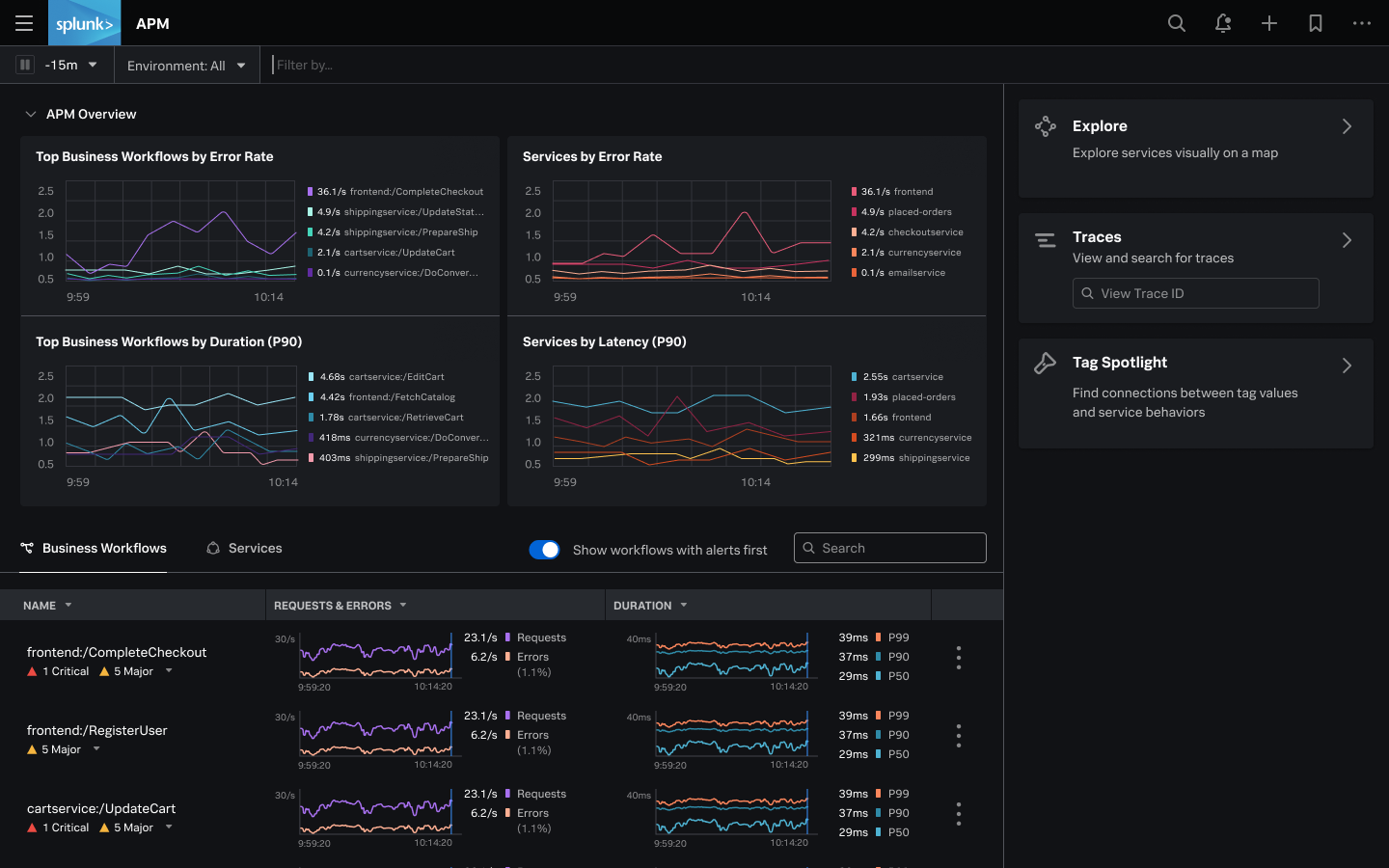
    Splunk today unveiled an observability platform delivered as a cloud service that captures all metrics, traces and logs in real-time without relying on sampling.

    Spiros Xanthos, vice president of product management for observability and IT Ops at Splunk, said Splunk Observability Cloud collects all that data via a single agent based on open source OpenTelemetry software to instrument an application.

    Historically, application performance management platforms (APMs) have only analyzed samples of data to identify a potential anomaly. Splunk Observability Cloud analyzes all the streaming data captured by its agent software to enable IT teams to pinpoint the root cause of an issue faster, said Xanthos.

    As a result, Xanthos said the signal-to-noise ratio dramatically improves compared to legacy monitoring platforms. It will then be up to each IT team to decide how much of that data they want to store after it’s been analyzed, added Xanthos. Pricing for Splunk Observability Cloud is based on the number of hosts employed rather than the amount of data collected.

    The Splunk Observability Cloud unifies a Splunk analytics portfolio by including capabilities provided via Splunk Log Observer, Splunk Real User Monitoring (RUM), Splunk Synthetic Monitoring, Splunk Infrastructure Monitoring, Splunk APM and Splunk On-Call. Splunk Synthetics Monitoring is based on technology Splunk gained with the acquisition of Rigor last year.

    Splunk

    The Splunk Observability Cloud is one of the first such platforms to rely solely on OpenTelemetry agent software being developed under the auspices of the Cloud Native Computing Foundation (CNCF) to collect data. That project not only reduces the cost of instrumenting applications, it also reduces the number of agents an IT team might have to deploy to collect metrics, traces and log data.

    Many rival observability platforms can collect data from OpenTelemetry agent software, but also tend to encourage DevOps teams to deploy proprietary agent software that they claim is easier to install and collects data at a more granular level. Splunk has decided OpenTelemetry has matured to the point where those proprietary agents are no longer required, said Xanthos.

    The rise of observability platforms presents an opportunity for IT teams to rationalize a raft of monitoring tools that often surface conflicting analyses. IT teams today spend an inordinate amount of time convening so-called “war room” meetings to determine the actual source of an issue. Those meetings can go on for hours, only to eventually discover an issue that only takes a few minutes to fix.

    While observability has always been a core DevOps principle, the level of visibility most IT teams have into their application environments is limited. There is no shortage of monitoring tools, but because there is no unified approach to observing an IT environment, there simply isn’t enough context being provided. As IT environments become more complex – thanks primarily to the rise of microservices-based applications that have lots of dependencies – that lack of context is rapidly becoming a major issue. A microservices-based application is designed to degrade gracefully if one microservice suddenly become unavailable. The issue is that it can take a very long time to discover the root cause of performance degradation.

    It may be a while before most IT teams achieve true observability, but once they do, many will wonder how they previously managed IT without it.

  • More and More Enterprises Go Headless

    More and More Enterprises Go Headless

    IT faces high expectations for building and supporting omnichannel digital experiences. Simultaneously, web developers hold an evolving toolkit of architectural approaches to deliver content. One such framework gaining mindshare is headless, a style that decouples front end user experiences from back end application logic.

    Legacy options for content delivery can be somewhat cumbersome in that they don’t apply well to scenarios beyond websites. On the other hand, a headless framework uses web APIs to communicate with clients, making it a more adaptive model to support new devices and use cases.

    WPEngine recently released global research on the state of headless. Below, we’ll review the top findings from The State of Headless: A Global Research Report. I also met with Matt Landers, developer relations manager, and Jason Bahl, principal software engineer at WPEngine to discuss the evolution of headless and its future implications for developers.

    What is Headless?

    First off, what is headless? Headless decouples the front end from the back end, thus separating the user interface (UI) from the data and code that powers it. The headless movement represents a shift from traditional content management systems (CMSs) such as WordPress, Squarespace and Wix.com. These platforms are less extensible, as they intrinsically unite the back end with user-facing representations. Traditional CMS is “typically not that easy to scale,” noted Landers.

    Headless challenges the status quo by offering more flexibility. As headless adopts API-based content negotiation, it could essentially deliver highly personalized experiences to any connected device. This could help support emerging platforms, like mobile, voice assistants or augmented reality (AR).

    Simply put, headless is “a CMS that is not responsible for rendering the site,” Landers explained. “What attracts people to headless is component-based architecture and the ability to build isolated components,” he added. For example, a headless framework could include an author bio component that is reused in any custom style across devices. By deploying to a CDN, headless could enable high-speed performance, as well.

    Headless Adoption Surges

    Interest in headless is increasing across the board. Currently, 64% of enterprises surveyed adopt a headless approach, representing about a 25% increase from 2019. Furthermore, headless use is expected to grow: over 90% of organizations not currently using a headless setup plan to evaluate a headless option in the coming year.

    The strong interest in headless likely represents a growing necessity for large enterprises to support various digital channels in a consistent manner. In fact, 92% of organizations credit headless with delivering a more consistent content experience, the report found.

    Benefits of Headless

    A key benefit to introducing headless is the decoupled nature of the approach. This makes it possible to support multiple platforms, such as websites, mobile apps, IoT devices, connected kiosks, smartwatches, voice assistants, AR and virtual reality (VR) from the same source.

    Respondents also cited additional benefits to adopting headless such as increased performance, quicker time to market and rapid innovation. These positive attributes make sense because, with headless, applications only request the data they need. Therefore, headless could certainly facilitate more dynamic applications and custom-tailored user experiences. If used effectively, headless setups reduce bloat to create fast-loading digital experiences that further the SRE agenda.

    Tech Choices and Use Cases

    An average organization is spending $2.6 million on their headless implementation, found the report. So, what are they spending it on? Well, some common headless frameworks and SaaS platforms include Contentful, GraphCMS, Atlas, DatoCMS, Cosmic, Netlify, Sanity.io and Prismic, among others.

    While the report didn’t query respondents on their exact headless stack, it revealed a general satisfaction with headless solutions, with relatively high net promoter scores (NPS). When selecting a headless provider, respondents tend to consider performance (41%), e-commerce (35%), scalability (33%) and APIs and extensibility (30%).

    Though headless spans many use cases, e-commerce is clearly a primary use case for the headless stack, with 51% of respondents adopting headless to support e-commerce. Other top use cases for a headless approach include a website (52%), IoT (47%) and progressive web apps (40%).

    Drawbacks of Headless

    Though headless provides impressive malleability, it does require a shift in thinking, and implementors must inevitably overcome certain drawbacks. API security, for example, is at stake as API attacks and threats increase.

    Headless could also require additional administrative burden in terms of data integration and upkeep. With headless, instead of using plugins, IT must enlist front-end developers to integrate data and build front-end behaviors. Debugging a decoupled front end and back end can also be an added development burden. “There is an opportunity in the headless ecosystem in general to mature the experience for the content publisher,” describes Bahl.

    Future of Headless

    Within today’s remote economy, most acknowledge that digital experiences are now crucial to supporting business at large. In fact, 92% of organizations believe digital experiences are vital to their organization’s success, found the report.

    Headless architecture promises to retain a stable back end to support these escalating digital demands — especially useful considering the ever-changing nature of front end clients. On that note, the report found that 32% and 31% of respondents adopt headless for VR and AR experiences, respectively. Therefore, the headless approach appears to be a valuable technique to future-proof current investment against emerging digital trends.

    The State of Headless: A Global Research Report, conducted by Vanson Bourne between January and February 2021, surveyed 400 IT/technical employees with knowledge of headless. For more insights, you can read it in full here.

  • China’s Open Source Activity Surged in 2020

    China’s Open Source Activity Surged in 2020

    Activity among China-based open source project contributors and creators surged in 2020, as Alibaba, Huawei, Tencent and other leading Chinese tech companies are playing an increasingly important role in the open source development community worldwide. 

    According to the recently released Open Source Contributor Index (OSCI) ranking, as of March 2021, Alibaba, Huawei, and Tencent collectively ranked in the top 20 worldwide for the first time. Rankings are based on the total number of contributors and contributions on GitHub. Microsoft, Google and Red Hat ranked first, second and third, respectively.

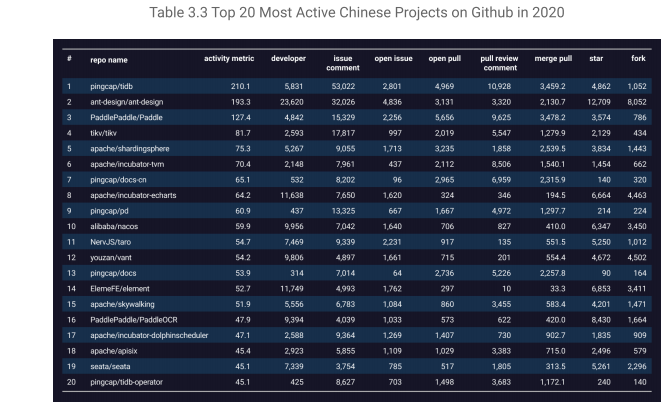
    Alibaba, as well as China-based Pingcap, came within striking distance of reaching the top 20 worldwide open source ranking for 2020 measured in activity; the total number of forks, commits, stars, pull requests, issue comments and other metrics, according to the GitHub 2020 Digital Insight Report released in April. 

    Authored by X-lab in conjunction with East China Normal University, Kaiyuanshe, Shanghai Open Source Information Technology Association and other unnamed “scientific research institutions and open source community institutes,” the X-lab report revealed Pingcap’s eponymous Pingcap (a distributed relational database) and Alibaba’s AntDesign (a Microsoft React framework) activity metrics of 210 and 193, respectively, in 2020. Meanwhile, jwasham (an open source study plan detailing how to become a software engineer) ranked 20th worldwide with an activity metric of 234. 

    Open Elastic’s Kibana, recently forked by Amazon Web Services (AWS) and Kubernetes ranked first and second worldwide with activity metrics of 698 and 602, respectively.


    open source China

    Torsten Volk, an analyst for Enterprise Management Associates (EMA), says the increased popularity of and activity in China-based open source projects are proof that the concept behind open source software actually works. 

    “This is the classic ‘one plus one adds up to more than only two’ theory, and that applies to most companies anywhere in the world. And if it was possibly to gain advantages by only using open source code but not contributing, companies anywhere else in the world would have done so right from the start,” says Volk. “Remember that the core idea behind open source software is not to give out your secret sauce for other companies to enjoy for free, but to spend the least possible amount of funding on building commodity code.”

    What, if anything, China-backed open source projects means for the community worldwide — as well as China’s influence in the industry in general – remain to be seen. Tencent, which entered the top 20 in March ranked by contributors in the OSCI study, for example, has become a leading supplier of components for machine learning (ML) databases in, for example, Kubernetes and cloud-native environments.  

    “This is great for everyone, and there is no benefit for anyone to purposefully not contribute to a project they benefit from. The benefit comes from your own contributions, in terms of reputation and credibility gain, across your industry. This motivates others to also contribute, as there is little to no benefit in keeping your own code secret while self-serving from the GitHub buffet,” says Volk. “As in the case of Kubernetes, your own company’s differentiation needs to come from the manner your proprietary apps [integrate] on top of this platform, or from the way you are able to integrate Kubernetes clusters with machine learning databases and other elements higher up the stack. And that’s why open source works.”

  • How to Spot SRE Adoption Barriers

    How to Spot SRE Adoption Barriers

    It’s no secret that site reliability engineering (SRE) adoption is growing. The operating model, it seems, is pivotal for digital transformations across the enterprise. According to the Upskilling 2021: Enterprise DevOps Skills Report, 22% of respondents (up 7% from last year) cited SRE as the approach they need to continue automation in 2021.

    Common Adoption Barriers

    However, for some companies, adopting SRE principles and practices isn’t always easy. Ahead of the upcoming SKILup Day conference focused on SRE (Register for SKILup Day: SRE here), I asked several DevOps Institute Ambassadors and SRE subject matter experts to provide insights into the barriers of SRE adoption. Here’s what they shared:

    Marc Hornbeek, CEO and Principal Consultant at Engineering DevOps Consulting and author of the book, “Engineering DevOps”

    “The primary barrier for SRE adoption is executive vision and team alignment around a goal to transform to SRE practices. SRE affects the entire organization’s practices, roles and investment priorities. Without an executive sponsor, SRE transformations are not going to go far.”

    Stephen Walters, Solution Architect at xMatters, Inc.

    “Culture, and in particular, cultural change, is the greatest barrier to SRE adoption. As much as everything about the human race, the things that got us to being the creatures we are today, is about evolution, which is change, and we are not particularly good at it. Or, more specifically, the bigger the change, the more resistant we are to it. It has always been a great oxymoron in IT philosophy that in order to “transform,” you must change, but that transformation is occurring because we are not good at change. So it was with agile in the early days. Organizations wishing to transform to agile (small, iterative change) would do so under a transformation project, which would typically be waterfall (big bang). Big change, big cultural resistance. The key is to implement transformation in smaller, agile chunks. They are more easily accepted and testable, and also easier to roll back or adapt if they do not work or are not acceptable. All of the benefits of agile development apply to agile transformation.

    The second greatest barrier is, then, “buy-in,” where the simple answer is, unfortunately, show the end user “what is in it for them.” This will typically override the enterprise-scale view of “what is in it for us?” but, over time, with any cultural transformation, this is one of the things that should change, iteratively, and also be a focus for developing a more holistic and empathetic culture.”

    Shivagami Gugan, Chief Technology Officer at CX Tech Unicorn

    “Any organization, irrespective of whichever level of maturity they currently exist on today, can adopt SRE and improve their business outcomes. However, the key underlying principles of SRE and its applicability should be understood properly. There is a lot of hype around transformation and the first barrier is about understanding what SRE means within your organizational context. I find most of the time, people try to imitate what highly mature companies like Google or Spotify or some other cloud-born company does, and this usually results in failures. SRE is the purest form of the implementation of DevOps. SRE is about removing the silos in a product life cycle to achieve business outcomes in a safer, faster, cheaper and better manner. If this is understood clearly, the first barrier gets removed.

    The second barrier is this complicated vision of boiling the ocean – doing 100% Agile, 100% DevOps or 100% SRE. This doesn’t work, especially when you have heritage systems of records, on-premises services and heritage infrastructure and a whole lot of baggage built over several years (sometimes decades) which is the usual case for most companies. So be very clear in choosing target areas.

    The third barrier is when you think SREs specialize in building operational reliability, but do not have anything to do with the development or the deployment phases of the life cycle. Reliability is everyone’s problem – the technical product manager, the developer, the tester, the support engineer; not just the SREs. The reality of the SRE role is to ensure services availability and reliability by supporting the other teams that own these services. SREs are enablers, they are collaborators, and their goal is to ensure that the services are overall resilient, reliable and that incremental value is delivered in a continual manner. When an organization understands that implementing SRE is an underpinning cultural change that affects all parts of the organization, then it becomes easier to remove the main barriers.”

    Lisa Chan, Head of Software Engineering & DevOps at PETRONAS

    “Not all organizations have the luxury of having an Ops team composed of skilled developers, which is a key success factor for the adoption of the SRE working model. In my case, I’m in an IT organization of 1,800 folks that has supported an oil and gas company since its inception 40 years ago. We serve a captive market of an integrated energy business with more than 100 companies under its portfolio. As a result, there is a legacy landscape of more than 2000+ applications. The IT organization still maintains the common “Dev is Dev, and Ops is Ops” anti-pattern. Even though we are in transition towards a working model that is more collaborative, it is unrealistic to expect our 300 Ops personnel to reskill themselves to be developers, because many of them have traditional skill sets along the typical Ops silos; e.g., networking, database admins, server admins, data center management, call center agents, etc.”

    BMK Lakshminarayanan, Value Stream Architect at Bank of New Zealand

    “Building the SRE practices and skills within enterprises are always challenging, as some are still embroiled with old ways of thinking. The thinking, associated techniques, available tools and limited skills are constraining SRE adoption in most enterprises.

    Renaming the system admins to SREs neither helps nor makes SRE experts. Investing in expensive tools doesn’t help, either. Any adoption and transformation is a gradual process. A typical medium to large enterprise has a few hundred systems, applications and services with various operating systems to support, database platforms to manage and hundreds of application databases to monitor or administrate. To this complexity, add all the dependencies of other services and components, as well. Hence, redefining the SLOs, SLAs and SLIs for these services, automating everyday maintenance tasks, understanding the toil, building resilience and fault-tolerant characteristics within these systems and applications are uphill tasks for most enterprises.”

    Identifying Other Common Adoption Barriers

    Many other common barriers for enterprises are:

    • Availability of up-to-date system and application information in a centralized platform
    • Observable nature of legacy systems
    • Understanding the dependencies and service levels (Promise Theory)
    • Availability of the right tools for the right job
    • Skills – old ways do not open new doors.
    • Time – time and space for people to upskill, train and experiment.

    Want to learn more about SRE and how to overcome these adoption barriers? Join us for SKILup Day: Site Reliability Engineering on May 20. Register here: https://devopsinstitute.com/sre-2021/.