Category: Features

  • Salesforce Pilots Series of DevOps Initiatives

    Salesforce Pilots Series of DevOps Initiatives

    At its online TrailheaDX 2021 conference, Salesforce today unveiled a DevOps Center pilot that provides a portal through which organizations can track and manage changes to Salesforce applications along with a unified command line interface (CLI) for all its applications.

    In addition, Salesforce plans to add Salesforce Functions to enable developers to deploy code in a serverless environment.

    The company has also promised to extend its low-code App Builder tool to include support for Dynamic Interactions, a capability that enables both professional and citizen developers to add reusable components to any application. The company has also added a Customer Identity Plus tool that enables developers to consolidate and manage customer identities.

    Finally, Salesforce is adding an Einstein Automate tool that employs machine learning algorithms to both integrate data and automate workflows that can invoke, for example, an existing MuleSoft Composer tool for integrating applications using a Flow Orchestrator that will be made available as a pilot project this summer. MuleSoft is a subsidiary of Salesforce. There is also now an Einstein Data Detect tool that ensures organizations adhere to data privacy laws by employing machine learning algorithms to discover when developers might have inadvertently exposed sensitive data.

    Dynamic Interactions, Salesforce Functions and CLI unification are expected to be generally available in the winter of next year, while the Einstein capabilities are expected to arrive this summer.

    Ryan Ellis, senior vice president of product management for platform at Salesforce, said the company is making a concerted effort to make it easier for both professional and citizen developers to build applications within the same environment by fostering collaboration via a DevOps Center portal that is expected to be generally available in the spring of 2022. Today the skills that any citizen developer can bring to bear are generally limited, largely because they don’t typically know how to build a well-designed, secure application that will truly scale in an enterprise IT environment.

    Salesforce

    However, as more artificial intelligence (AI) capabilities are added to low-code tools the amount of developer guidance being provided will increase over time. That additional guidance will enable citizen developers to build robust applications more reliably, noted Ellis.

    In the meantime, the primary beneficiaries of low-code tools continue to be professional developers that employ them to build applications faster than they could otherwise using procedural code.

    In general, Ellis said the relative DevOps maturity of organizations building and deploying custom applications on top of the software-as-a-service (SaaS) platform managed by Salesforce continues to increase steadily. In the wake of the COVID-19 pandemic, many organizations opted to extend existing SaaS applications provided by Salesforce to accelerate digital business transformation initiative using low-code tools rather than developing every application from scratch using procedural code.

    Of course, as the rate at which those applications are being built continues to accelerate, the next big challenge is managing the application life cycles after they are deployed.

    It’s not clear what the ultimate mix of applications built using low-code tools versus procedural code will be. Millions of lines of code are now being regularly deployed on Salesforce platforms, noted Ellis. It may be a little while before Salesforce is able to bring DevOps best practices to all that code, but, starting today, the journey has begun.

  • Plutora Dives Deeper into Value Stream Analytics Data

    Plutora Dives Deeper into Value Stream Analytics Data

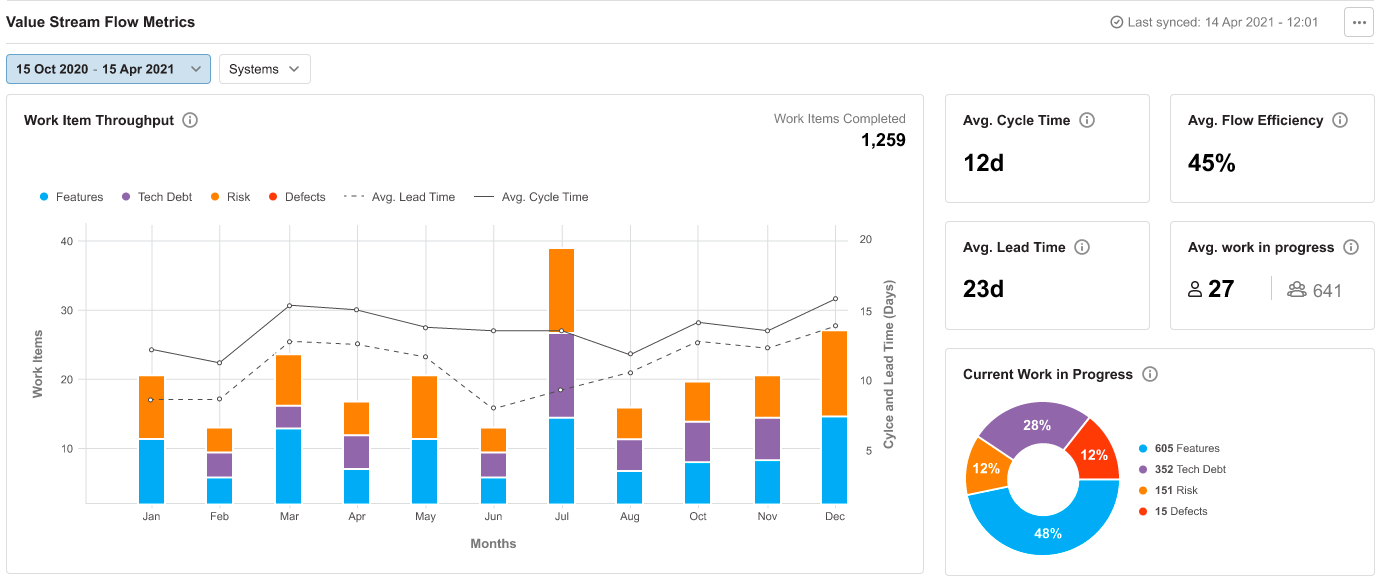
    Plutora announced today it has extended the capabilities of its value stream management (VSM) platform to include a common object data model that more efficiently normalizes data collected from multiple DevOps tools and platforms.

    Jeff Keyes, vice president of product marketing and strategy for Plutora, said the goal is to expand the level of scale and depth at which the Plutora analytics engine embedded within the Plutora Platform can analyze flow metrics.

    VSM has emerged as a distinct DevOps discipline that provides a framework for enabling organizations to optimize workflow across DevOps environments in a way that allows them to accelerate application development. The core concept traces its lineage to lean manufacturing methods that continuously measure each step of a process to improve production.

    As organizations develop a deeper appreciation for their dependency on software, the level of interest in understanding how software is constructed has increased. Organizations, for example, want to better understand the impact of missed software development deadlines on revenue, which a business might not be able to generate as quickly as anticipated.

    Plutora is making a case for a dedicated analytics platform that pulls data from multiple platforms. Alternatively, more value stream analytics capabilities are now being embedded in everything from project management software to continuous integration. Plutora contends, however, that navigating multiple value stream dashboards surfaced by different tools that make up a DevOps workflow is not as simple or effective as relying on a single platform that collects data from every tool employed.

    Metrics that track lead and cycle times for projects as well as overall throughput become much easier to surface and comprehend, noted Keyes.

    One way or another, more transparency is coming to DevOps workflows. Historically, collecting this data has been challenging because it required DevOps teams to manually collect data from each tool being used. In effect, DevOps teams were wasting time copying and pasting data from one tool into an analytics application.

    As it becomes simpler to aggregate all that data, the data model provided by Plutora makes it simpler for multiple analytics tools to analyze the same data. A business user, for example, may prefer to analyze data using the Tableau analytics platform that is now owned by Salesforce.

    In general, analytics is being applied more widely across software development processes because organizations need to increase productivity while simultaneously reducing costs. It will be up to each organization to decide to what degree they may want to use that data to better train DevOps teams versus simply using it to remind those teams to stay focused on a specific set of key performance indicators (KPIs).

    In the meantime, the number of requests for reports being made to DevOps teams should decline as the process of collecting metrics becomes more automated. The challenge now will be making sure everyone reading those reports has the same firm understanding of what’s actually possible to achieve using not only the resources at hand, but also how any additional DevOps expertise might positively impact that equation.

  • GitLab Updates Approach to Integrating DevOps Workflows

    GitLab Updates Approach to Integrating DevOps Workflows

    GitLab today took the wraps off a major update to its continuous integration/continuous delivery (CI/CD) platform that embeds analytics tools in workflows to identify the root cause of inefficiencies, among other additional capabilities.

    David DeSanto, senior director for product management at GitLab, said that capability is part of an ongoing effort to include value stream analytics within the core GitLab 14 platform as an alternative to acquiring and deploying a separate platform. There are also additional charts and dashboards that enable DevOps teams to uncover bottlenecks over time.

    In addition, GitLab announced it is extending the security capabilities of the platform by adding integrations with open source Semgrep and Trivy vulnerability scanning tools as part of an effort to enable organizations to embrace DevSecOps best practices within workflows. GitLab has also added support for the fuzz testing tool it gained via the acquisitions of Fuzzit and Peach Tech to enable DevOps teams to test application security more thoroughly along with making available additional dashboards to track security metrics.

    As part of an effort to enable organizations to better secure their software supply chains, GitLab has also added support for immutable pipeline definitions that can’t be altered without specific levels of permissions being granted. That capability also enables DevOps teams to more easily achieve compliance with any number of regulatory frameworks, noted DeSanto.

    The company is also adding a pipeline editor that provides access to a visual tool for creating, managing and visualizing pipelines. That tool is designed to both make DevOps more accessible to novices and provide experienced DevOps teams with an alternative tool for managing pipelines in a way that doesn’t require them to write additional code.

    Finally, as part of its comprehensive approach to DevOps, GitLab is also making available agent software for Kubernetes clusters to eliminate the need for organizations to acquire a separate DevOps platform to build and deploy cloud-native applications based on microservices constructed using containers. The company now provides IT organizations with the option of crafting a GitOps workflow for Kubernetes using either an agentless or agent-based approach.

    Gitlab is betting that, as DevOps continues to evolve and mature, more organizations will prefer to replace the various tools they need to integrate themselves with a platform that lowers the total cost of DevOps. Gartner is forecasting that, by 2023, 40% of organizations will have switched from multiple point solutions to a DevOps value stream delivery platform to streamline application delivery, versus less than 10% using such a platform in 2020. Today, only 10% of organizations are employing such a platform, according to Gartner.

    There should also be many more organizations employing DevOps workflows to build applications. Organizations of all sizes now realize how dependent they are on software to drive a wide range of digital business transformation initiatives. The rate at which that software can now be securely developed and updated, in many cases, goes to the heart of their ability to compete. The issue is finding a way to achieve that goal without constructing a platform that ultimately takes time and resources away from building secure software.

  • Report: The State of Cloud-Native Application Security

    Report: The State of Cloud-Native Application Security

    The cloud brings tremendous capabilities in terms of increased deployment fluidity and automation. Along with cloud adoption has come the use of cloud-native tools built specifically for developing applications for this domain. However, cloud-native tools carry some nuanced security concerns, such as misconfigurations, known vulnerabilities and leaked secrets. As such, 83% of organizations recognize security as very important to their cloud-native strategy, according to a recent report from Snyk.

    Snyk’s State of Cloud Native Application Security report surveyed hundreds of IT professionals on their cloud-native security concerns. Below, we’ll pick out the top takeaways from the report, identify the most common trouble areas for cloud-native application security and see if there’s a correlation between deployment automation and higher degrees of application security.

    The Move to Cloud-Native

    Teams are moving to cloud-native tech, empowering DevOps with software-driven architecture and infrastructure-as-code (IaC). In this new cloud-native paradigm, 58% of production workloads are deployed as containers, 21% now are serverless and 50% use some form of IaC within the deployment process.

    Organizations are moving to cloud-native technology for a variety of reasons. For one, containerized software affords increased speed — 68% of organizations moved to containers for increased deployment velocity, the study found. This is followed by ease of management (at 67%) and reduced cost (43%). There is also the security imperative for adopting cloud-native tools; 36% of respondents cited security as a primary reason for moving production applications to containers.

    Top Cloud-Native Security Concerns

    While cloud-native technologies such as containers, Kubernetes, serverless and IaC enable more rapid development, they also bring unique security issues. The report found that misconfigurations and known unpatched vulnerabilities are by far the most common type of incidents among cloud-native environments. In fact, 45% of organizations have experienced an incident arising from a misconfiguration, followed by 38% due to known unpatched vulnerabilities.

    Other common cloud-native security incidents include secrets leaks, failed audits and malware. Interestingly, the study also found that data leaks by insiders are more common within organizations with higher degrees of cloud-native adoption. According to the report, 38% of organizations with high cloud adoption have suffered data leaks by an insider, whereas the figure is cut in half, at 17%, within organizations with low cloud adoption. Secrets like API keys must be managed carefully, especially as cloud-native tools force more dependencies. “The need for effective management of these kinds of artifacts is a key differentiator from the more centralized pre-cloud era,” the report noted.

    Automating Security Testing

    End-to-end deployment automation shows promise, yet is still at an early stage of maturity for most development teams. Though 95% of organizations use some kind of deployment automation, only about one in three organizations have an entirely automated deployment pipeline.

    Organizations with increased deployment automation tend to embrace a higher degree of security testing, as well. Highly automated pipelines are twice as likely to use security testing throughout their development lifecycle, found the report. Since incidents most commonly arise from misconfigurations and known vulnerabilities, automated scanning could help identify many cloud-native issues, comparing production code against databases of known exploits.

    So, when does this security testing occur? More often than not, it happens within the CI/CD pipeline. Over 60% of organizations perform security testing within the CI system. This is opposed to testing source code repositories or local IDEs and CLI tools early on in the development process. In terms of testing frequency, there is a wide range of executions. For those groups with high deployment automation, 70% test security daily or more frequently. Automated security testing seems to be functioning well, as 72% of fully automated teams find and fix critical vulnerabilities in under one week.

    The report also exposed an interesting disconnect with regard to security testing ownership. Only a small percentage of security engineers (less than 10%) feel developers are responsible for the security of the cloud-native environment and applications, whereas 36% of developers stated they are responsible for security. These figures may demonstrate the security onus shifting left toward the development side. Or it could underline changing attitudes as full-cycle development becomes more realistic. Regardless, teams will have to find clarity on roles to avoid some difficult conversations!

    Cloud-Native Security

    With the shift toward cloud-native strategies, security standards are rising to respond to new issues like misconfigurations. To address mounting application threats, increased automation could help shift security left—this and other reports clearly demonstrate a correlation between fully automated deployment pipelines and an increased security testing regimen.

    As a result of cloud-native adoption, 58% of organizations have increased their security concerns since adopting cloud-native tools. Part of this involves moving to a zero-trust approach across all infrastructure, whether internal or external facing. The report revealed that 58% of organizations are increasingly concerned with misconfiguration, 52% are increasingly concerned with insecure APIs and 43% are increasingly concerned about known unpatched vulnerabilities, while 41% are concerned about secrets leaks. Hopefully, these benchmarks will help you see how your organization stacks up in comparison to others.

    Snyk’s State of Cloud Native Application Security report questioned 600 experts in development, security and operations on cloud-native adoption and security practices. For more insights, view the study in its entirety here.

  • Linux Foundation Makes Available Software Manifest Tool

    Linux Foundation Makes Available Software Manifest Tool

    The Linux Foundation is making available a set of free tools for building software bills of material (SBOMs) based on the software data package exchange (SPDX) file format it curates.

    Backed by more than 20 organizations, SPDX is an effort to standardize the way metadata describing the contents of a software package is described.

    The SPDX specification was submitted last fall to the International Organization for Standardization (ISO) by the Joint Development Foundation, an arm of the Linux Foundation.

    The Linux Foundation, as part of its efforts, is also making available a free, online training course to provide IT teams with the foundational knowledge required to create and maintain SBOMs.

    Kate Stewart, vice president of dependable embedded systems for the Linux Foundation, said SBOMs play a critical, often overlooked role in maintaining the security of a software supply chain. One of the major challenges organizations have today is that an SBOM isn’t often created, which makes it harder to discover what software components have been included in a package. That makes it difficult for organizations to determine if they are employing a version of a software component that now has a critical vulnerability that was just recently reported, noted Stewart.

    Even when there is a SBOM, its construction can vary from one team or organization to the next. The tools provided by the Linux Foundation are intended to standardize how the fields used to describe a SBOM are defined, added Stewart.

    The SBOM tools being advanced by the Linux Foundation are, in part, a response to President Biden’s executive order pertaining to the security of software supply chains, added Stewart. The National Telecommunications and Information Administration (NTIA), as a result, is now asking for wide-ranging feedback to define the minimum requirements for a SBOM.

    It may take time before there is an agreed upon SBOM standard, but as microservices based on containers become more prevalent, it’s also apparent the issue will become more pressing. More, smaller packages of software being deployed in the enterprise without manifests will only further exacerbate an application security crisis that has deepened in the wake of recent high-profile software supply chain breaches.

    Ultimately, a SBOM should automatically be self-generated as part of any DevOps workflow. The challenge is there is still a massive amount of software being created outside of any formal DevOps workflow. On top of that, the massive amount of poorly documented legacy application software already deployed in an enterprise IT environment makes it clear how big an issue the lack of a simple SBOM really is.

    It’s not precisely clear who inside an organization should be responsible for standardizing SBOMs. The challenge is that within many organizations it’s not the kind of issue for which developers are rewarded, much less motivated, to solve. Nevertheless, everything from application security issues to the massive amount of technical debt that stems from duplication of software development projects can all be traced back to the lack of a simple manifest.

    Of course, now that many organizations are starting to appreciate just how dependent they are on software, more questions are being asked about how it’s constructed. The thing that many of the business executives asking those questions are about to discover (with some incredulity) is how much of the software the organizations depend on is still being built using methods that have more to do with a medieval craft than they do a manufacturing line.

  • Google Proposes SLSA Framework to Secure Software Supply Chains

    Google Proposes SLSA Framework to Secure Software Supply Chains

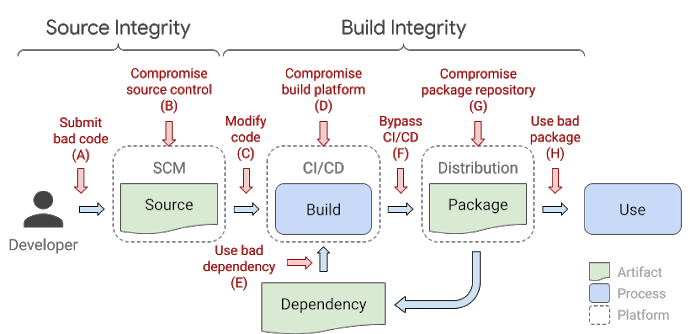
    Google is proposing organizations adopt a framework for securing the integrity of software artifacts across a software supply chain.

    Kim Lewandowski, a product manager for open source software security at Google, said the Supply Chain Levels for Software Artifacts (SLSA) is based on an internal framework, known as binary authorization for Borg, that the company has been employing now for more than eight years to secure its software. Borg is the name Google attached to the platform for building and deploying applications upon which Kubernetes is based.

    In its current form, SLSA is a set of guidelines that identifies how to attain four different levels of application security. The goal, however, is to create a framework that will automatically generate auditable metadata that can be fed into policy engines to create a SLSA certification.

    The lowest level of SLSA requires that the build process be fully scripted or automated and generates metadata that enables provenance to be created. At the highest level, SLSA requires a two-person review of all changes made during a hermetic, reproducible build process. At the highest SLSA security level, organizations should be able to assure others that their software supply chain has not been compromised, said Lewandowski.

    Google

    In the wake of a recent series of high-profile breaches of software supply chains, the level of scrutiny being applied to how software is constructed has increased significantly. In theory, at least, developers have assumed more responsibility for application security as part of an overall shift left that provided them with more programmatic control over IT environments. As a result, cybercriminals are now focused on compromising either the credentials of developers as part of an effort to insert malware into application as it is developed, or they are trying to exploit vulnerabilities that developers have inadvertently created by programmatically misconfiguring infrastructure.

    DevSecOps best practices are, of course, being adopted to teach developers how to better secure their application environments. The issue is that not enough developers are learning how to secure applications fast enough. The volume of attacks against the software supply chain continues to grow at a rate that is now much faster than organizations can thwart simply by educating developers. In some cases, organizations are once again empowering cybersecurity teams to make sure software supply chains are secure regardless of the potential impact on the rate at which applications are being developed.

    Google is trying to promote adoption of SLSA as a framework for securing both open source and proprietary application code, said Lewandowski. There’s no silver bullet for securing software, but a framework that ultimately automates as many of the security processes as possible within the context of a DevOps workflow would go a long way toward hardening the software supply chain, noted Lewandowski.

    SLSA is being put forward as a response to a cybersecurity executive order issued by President Biden that, among other things, tasks the National Institute for Standards and Technology (NIST), an arm of the U.S. Department of Commerce, to consult with federal agencies, the private sector, academia and other stakeholders in identifying standards, tools, best practices and other guidelines to enhance software supply chain security. Given the level of dependencies that exist across those software supply chains, that executive order, to varying degrees, now applies to almost any entity that builds software for an organization that, on some level, interacts with the Federal government.

  • Survey Reveals Slight Decline in Level of SRE Toil

    Survey Reveals Slight Decline in Level of SRE Toil

    The amount of routine toil that site reliability engineers (SREs) perform declined slightly in the last year even though IT environments in general are becoming more complex to manage.

    An annual survey of 300 SREs conducted by Catchpoint, a provider of an IT monitoring platform, in collaboration with VMware and the DevOps Institute suggests that the amount of toil—defined as low-level manual tasks—declined 15% in the last year.

    Only 22% of respondents claim to be scientifically measuring toil, so, to a degree, the survey results are apocryphal. Overall, the survey, published this week, finds SREs are, not surprisingly, spending the bulk of their time on responding to incidents and outages, followed by participating in postmortem analysis and on-call rotations. The primary sources of toil cited in the survey are too much technical debt, lack of alignment of priorities and goals, lack of appreciation of business value, lack of training and support and lack of collaboration.

    In terms of automation adoption, the most common use cases cited are release management, infrastructure management and application management. The tools most commonly employed by SREs are used to monitor infrastructure, networks and application performance. Adoption of artificial intelligence (AI) tools to manage IT operations (AIOps) remains low. The survey also finds respondents are roughly split evenly between centralized (42%) and decentralized (38%) approaches to managing IT. Another 20% said they have adopted a hybrid approach. Lack of visibility across the stack (53%) was the most cited cloud application monitoring challenge.

    The survey also finds only half of respondents continually refine their service level objectives (SLOs).

    Leo Vasiliou, director of product marketing for Catchpoint, said it’s clear that SREs are becoming more proactive in terms of preventing and containing the impact of IT incidents. The challenge they face is lack of visibility and context as those IT environments become more complex. Complexity is increasing, in part, because of the rise of cloud-native computing platforms running microservices-based applications that have lots of dependencies.

    Less clear right now is the percentage of IT environments managed by SREs today. In theory, a single SRE can do the same amount of work as multiple IT administrators by automating processes using various DevOps tools rather than relying on traditional graphical tools. However, SREs are hard to find and retain. It’s also not always apparent to what level of automation needs to be attained to qualify to be an SRE or, for that matter, what certifications may be required. Interest in becoming an SRE is rising, in part, because they typically command higher salaries.

    In the meantime, it’s clear organizations will need to find ways to automate the management of IT to a much greater extent. Most organizations cannot afford to hire a small army of IT professionals to manage IT environments that become more complex with each passing day. Everything from DevOps best practices and next-generation observability tools that promise to provide more context to AI platforms will all be part of the mix. The challenge is finding a way to implement those tools before IT management spins further out of control.

  • Grafana Labs Acquires k6 to Add Open Source Load Testing Tool

    Grafana Labs Acquires k6 to Add Open Source Load Testing Tool

    During its online GrafanaCONline 2021 conference today, Grafana Labs revealed it has acquired k6, a provider of an open source load testing tool.

    Raj Dutt, Grafana Labs CEO, said load testing will complement the observability platform Grafana Labs currently provides based on open source Prometheus software. Most of the output of any load testing processes are typically evaluated using a platform that analyzes metrics, he noted.

    The k6 platform has been gaining traction among developers that require access to a tool that makes it simpler to dynamically scale load testing up and down as required versus having to guess how much infrastructure might be required to test an application workload, said Dutt. That capability not only makes it simpler to integrate testing within a DevOps workflow, Dutt added, but also serves to reduce testing costs.

    In general, Dutt noted testing is shifting further left as developers assume more responsibility for quality assurance. The challenge is finding a way to enable developers to automatically incorporate testing within a continuous integration (CI) process that allows them to easily observe how synthetic tests are executing, added Dutt.

    There’s no doubt developers are running more tests before promoting workloads into a production environment as part of an effort to reduce the number of issues that might be encountered when an application is deployed in a production environment. In many cases, the support calls that arise now go directly to developers who now have a vested interest in reducing the volume of those calls.

    The issue that developers are contending with is as they embrace microservices, the dependencies that exist across multiple applications makes it more challenging to successfully deploy those applications. Grafana Labs has been making a case for a cloud platform that makes it simpler to centrally view data collected from instances of Prometheus distributed across multiple application development environments. Prometheus, now being advanced under the auspices of the Cloud Native Computing Foundation (CNCF) that oversees the development of Kubernetes, is now being deployed more widely by IT teams to observe legacy monolithic applications alongside emerging microservices-based applications.

    It’s not clear the degree to which organizations are also employing dedicated application testers. In many cases, those testers will surface issues that developers overlooked (or simply chose to ignore) in the face of tight application delivery deadlines.

    In the longer term, however, it’s also apparent artificial intelligence (AI) will be playing a larger role in application testing. Someone will still need to review those tests, but many more rote tasks will increasingly be automated.

    One way or another, the total cost of testing is declining, thanks in part to increased reliance on open source testing tools that, in many cases, developers are simply downloading themselves. Those tools are reducing much of the licensing friction and cost restrictions that developers might otherwise encounter.

    In fact, the easier it becomes to test applications, the better overall application quality will become in the months and years ahead. At at time when organizations have never been more dependent on software, that potential improvement to the overall state of application quality can’t arrive soon enough.

  • PagerDuty Allies with JFrog to Modernize IT Incident Management

    PagerDuty Allies with JFrog to Modernize IT Incident Management

    PagerDuty has integrated its IT incident management platform with the continuous integration/continuous delivery (CI/CD) platform from JFrog as part of an effort to streamline troubleshooting of application environments.

    Steve Gross, senior director of strategic business development at PagerDuty, said the overall goal is to make it easier for IT operations teams and developers to collaboratively discover the root cause of issues by, for example, being able to identify builds within a JFrog pipeline that might be having a negative impact on a production environment.

    At the same time, IT teams employing PagerDuty can now also receive notification from JFrog Xray, a tool that discovers both vulnerabilities in open source software and license compliance issues.

    Organizations of all sizes are attempting to minimize the impact of an IT incident by providing deeper insights into how applications were constructed. The goal is to reduce the amount of time IT teams currently spend looking for the root cause of a problem.

    PagerDuty JFrog

    Ideally, IT teams would discover those issue before they impact end users. The challenge they face is it can take weeks to discover the root cause of an issue that takes a developer a few hours, at most, to fix. Armed with insights from the CI/CD platform, Gross said it becomes easier for IT operations teams to proactively pinpoint the source of an issue in a way that provides the developer with enough insight to act.

    That is critical because, more often than not, it’s the last build of application that was deployed in a production environment that is usually the source of an issue, especially when that IT environment was operating normally before that build was promoted into a production environment.

    The data collected by PagerDuty from various DevOps platforms is fed into the PagerDuty tools via a Change Events application programming interface (API). Over time PagerDuty will also be able to apply machine learning algorithms and other forms of artificial intelligence (AI) to identify issues long before they reach a meaningful level of disruption, noted Gross.

    In general, there’s a movement to modernize IT incident management in a way that aligns with DevOps best practices as part of an effort to identify issues before an application is actually deployed. The hope is that those efforts will reduce the number of “war room” meetings that need to be convened to determine the root cause of a performance or security issue after an application has been deployed.

    It may be a while before IT incident management processes are modernized to that level. However, as IT environments become more complex—in part because of the number of microservices-based applications with multiple dependencies that are now being deployed—it’s apparent existing approaches to IT incident management don’t allow IT teams to respond fast enough to an issue. In fact, that’s more challenging than ever now that many of the members of an IT team are working from home more often.

    The pressure to modernize IT incident management increases in almost direct proportion to IT teams’ stress levels. The challenge now is to modernize those processes before the members of an IT team are too burned out to appreciate the effort.

  • WSO2 Applies AI to API Management

    WSO2 Applies AI to API Management

    WSO2 today unfurled a Choreo cloud platform through which DevOps teams can create and manage application programming interfaces (APIs) more efficiently by leveraging machine learning algorithms and other forms of artificial intelligence (AI).

    Eric Newcomer, WSO2 CTO, said the integration platform-as-a-service (iPaaS) eliminates all the tasks associated with setting up a platform for and managing services based on APIs.

    Choreo, available in beta, employs AI to learn historical activities and performance behaviors in order to anticipate the needs of a developer. As developers build an API, the platform will provide performance feedback, identify anomalies, map data and even complete code, said Newcomer.

    The Choreo platform also comes with built-in observability tools for monitoring API usage and troubleshooting APIs, added Newcomer.

    In addition, Choreo provides access to the open source Ballerina programming language the company developed to enable developers to create APIs using both low-code and procedural code as they see fit, noted Newcomer. The low-code diagram that developers create generates source code that developers can then run wherever they want, said Newcomer. Developers can close the entire repository Choreo provides, Newcomer added.

    Developers can also trigger low-code integration logic to control hundreds of software-as-a-service (SaaS) APIs via pre-built connectors and templates provided by WSO2 or ones they create themselves.

    WSO2 is also making it possible to deploy APIs via a single click in Kubernetes environments, which eliminates the need to manage cumbersome YAML files. That capability is based on technology that WSO2 gained via the acquisition of Performer that the company revealed today.

    Finally, WSO2 is making available an API marketplace through which organizations can share APIs, event streams, data sources and templates.

    With the rise of microservices-based applications, API management has become a lot more challenging. Each additional microservice adds an API that needs to be managed and maintained. As more APIs are employed, it becomes increasingly difficult for DevOps team to keep track of the dependencies that exist between all those APIs without the aid of machine learning algorithms.

    It’s not likely machine learning algorithms will replace the need for DevOps professionals anytime soon. However, it’s becoming apparent that many of the manual tasks that DevOps teams routinely perform today are becoming automated by machine learning algorithms. In other cases. DevOps teams are gaining new capabilities that would have either been impossible for them to do on their own or would simply have taken too much time to complete.

    Of course, it takes time for any AI platform to learn the DevOps environment. IT teams need to invest a significant amount of time training an AI model to recognize relevant issues in much the same way they might train any new member of a DevOps team. The only difference is, once a machine learning algorithm learns something, they never forget it. Nor do they take a day off or announce one day they are leaving the company because they got a better offer somewhere else.

    It may take a while before DevOps teams are able to strike the right balance between man and machine, but one thing that is certain is that AI in DevOps environments is here to stay.