Category: Features

  • Applitools Extends Visual AI Testing to Native Mobile Apps

    Applitools Extends Visual AI Testing to Native Mobile Apps

    At its online Future of Testing: Mobile event, Applitools today previewed the ability to apply visual artificial intelligence (AI) to applications that run natively on a mobile computing platform.

    Accessed via a cloud service that is currently available for free on a limited basis, the Ultrafast Test Cloud for Native Mobile offering will extend the company’s visual AI tool for browser-based mobile applications to applications that run natively on Apple iOS or Google Android devices.

    Applitools CEO Gil Sever said that while most mobile enterprise applications today rely on browsers to make it simpler to build and deploy applications, in time, many more of these applications will be running natively on iOS or Google Android platforms, mainly because they provide a better user experience.

    That approach also eliminates the need to rely on cumbersome platform emulators to test applications because the Applitools AI tool can learn the nuances of each platform in a way that streamlines the application testing process.

    In fact, visual AI tools will not only make developers and testing teams more efficient, but they also will make it easier for end users to participate in the application testing process, Sever noted.

    The Applitools approach to AI testing also provides developers with more control based on the application’s use cases. Different settings can be applied to test, for example, a medical application that requires perfect alignment of pixels versus an e-commerce application that may not require as much fidelity. Developers can then resolve regression issues by employing root cause analytics.

    It’s not clear how broadly visual AI tools that use computer vision algorithms to automate testing will be employed. There is no doubt the current pace of application development is faster than most dedicated teams of testers can handle. As a result, more responsibility for application testing is being shifted left toward developers that, in the interest of time, might be more inclined to rely on AI and other forms of automation that can be accessed via a cloud service.

    The rise of AI testing tools might also go a long way toward ensuring more applications are thoroughly tested before being deployed in a production environment. One of the first steps in any application development schedule that gets compressed when a project falls behind schedule is testing. As more rote tests are automated, there should be more opportunities for dedicated testing teams to focus on improving the end user experience.

    It may be some time before most organizations are routinely employing AI to test applications. However, none of those organizations should expect AI to replace the need for humans to test applications alongside AI testing platforms that can see the actual application. After all, there’s a world of difference between seeing the changes that were made to an application and understanding why they actually needed to be made.

  • Fugue Aims to Simplify Securing Infrastructure-as-Code

    Fugue Aims to Simplify Securing Infrastructure-as-Code

    Fugue today unveiled a 1.0 release for Regula, an open source policy engine for infrastructure-as-code (IaC) security that comes with prebuilt libraries for implementing hundreds of policies that validate configurations on Amazon Web Services (AWS), Microsoft Azure and Google Cloud services.

    Regula is based on the Open Policy Agent (OPA) software being advanced under the auspices of the Cloud Native Computing Foundation (CNCF) and is compatible with both Terraform and AWS CloudFormation tools for configuring cloud infrastructure.

    Developers can also build custom rules on top of OPA using libraries that Fugue created for the Rego programing language that is part of the OPA specification. Regula supports output formats such as JUnit, Test Anything Protocol (TAP) and JSON to make it easier to integrate Regula with other tools and frameworks that make up a DevOps workflow. Input formats supported include Terraform HCL, Terraform plan JSON, AWS CloudFormation and Serverless Application Model templates.

    Regula also provides out-of-the-box support for the CIS Foundations Benchmarks in addition to other policies defined by Fugue, such as dangerously permissive identity access management (IAM) policies, Lambda function policies allowing global access, volumes with encryption disabled and untagged cloud resources.

    It is deployed as a pre-packaged binary that includes a command line interface (CLI) through which Regula can be incorporated within a DevOps workflow and can be installed using tools such as Homebrew or deployed as a Docker image.

    Fugue CEO Josh Stella said Regula provides DevOps teams with an extensive library of rules that check for common security and compliance violations as well as advanced multi-resource misconfigurations. That latter issue is especially challenging because developers typically don’t have much visibility into dependencies that can inadvertently provide cybercriminals with access to, for example, an S3 cloud storage bucket that otherwise appears to be configured properly. Regula will also identify any required resources that might be missing, as well, added Stella.

    Stella said Regula 1.0 provides a simpler approach to securing cloud infrastructure. Cloud infrastructure is frequently misconfigured simply because a developer made a mistake. Unfortunately, cybercriminals have become especially adept at scanning cloud platforms for these misconfigurations, noted Stella.

    It’s not clear to what degree a backlash might be building against IaC in the wake of recent high-profile breaches of software supply chains. Organizations have embraced IaC tools to make developers more productive. However, each security incident involving a misconfiguration of cloud infrastructure resources makes it all too apparent that developers lack the expertise required to securely provision IT environments. Rather than creating a series of cybersecurity reviews that would reduce developer productivity, Stella said Fugue is making a case for a compliance-as-code approach that developers can readily understand and implement.

    One way or another, cloud infrastructure has to become more secure. Business leaders are growing weary of security incidents that, from their perspective, are caused by careless mistakes. Their first instinct is to empower cybersecurity teams to resolve those issues once and for all. The only issue that needs to be resolved now is just how cumbersome those security reviews need to be if developers are provided with the tooling required to secure cloud platforms themselves.

  • JFrog Acquires Vdoo to Advance DevSecOps

    JFrog Acquires Vdoo to Advance DevSecOps

    JFrog today announced it has agreed to acquire Vdoo for $300 million in cash to gain a set of analytics tools that discover vulnerabilities in application binaries.

    Vdoo’s scanning tools, infused with machine learning algorithms, will be fully integrated with the JFrog Xray vulnerability detection tools along with the rest of the JFrog continuous integration/continuous delivery (CI/CD) platform in 2022. In the meantime, the Vdoo scanning tool will continue to be made available via a software-as-a-service (SaaS) platform that Vdoo built.

    The Vdoo platform is already integrated with the JFrog Artifactory repository and JFrog Pipelines. Vdoo’s platform also is integrated with DockerHub, Jenkins, GitHub, GitLab and Azure Pipelines via REST application programming interfaces (APIs) that make the Vdoo scanning tools accessible via a command line interface (CLI).

    JFrog CTO Yoav Landman said acquiring Vdoo is critical because when it comes to implementing DevSecOps best practices, the only meaningful place to discover and remediate vulnerabilities is in the binaries deployed in production environments. As such, the Vdoo platform provides a superior alternative to both static application security testing (SAST) and dynamic application security testing (DAST) tools that scan for vulnerabilities in source code, added Landman.

    Developers require accurate intelligence that can be quickly acted upon to secure applications running in production. They can quickly take action once they know how a specific vulnerability impacts a binary, versus being told to update source code that could take days or weeks to complete, noted Landman. The Vdoo platform also makes it possible to leverage machine learning algorithms to detect zero-day vulnerabilities, malware, exploits, backdoors, supply chain risks and other threats before they become commonly known. Those vulnerabilities can be detected in everything from application binaries to firmware running on embedded devices. Vdoo is also recognized by the Mitre Corp. that oversees the Common Vulnerabilities and Exposures (CVE) database as a CVE Numbering Authority (CNA) for discovering vulnerabilities.

    JFrog Vdoo

    As responsibility for application security continues to shift left toward developers, many organizations are finding the tools that cybersecurity teams employed to discover threats don’t lend themselves to the workflows that developers have created to build applications. As a result, many of these tools are being replaced by developer-friendly alternatives that developers can invoke via a CLI as part of DevOps workflow. The goal, now, needs to be reducing the level of noise created by security tools to enable developers to focus on the vulnerabilities that specifically impact their code, noted Landman. Otherwise, developers are simply overwhelmed by a massive number of alerts generated by security tools that often don’t appear to be especially relevant, Landman added.

    It’s not clear how quickly responsibility for application security is shifting left. However, in the wake of a series of high-profile software supply chain breaches, the urgency surrounding adoption of DevSecOps best practices has increased considerably. The challenge, as always, is getting the right tools into the hands of developers at the right time.

  • Continuous Testing Practices – Part 3

    Continuous Testing Practices – Part 3

    In my prior blog, Continuous Testing – The Quest for Quality at Speed, I described five tenets and some of the practices for continuous testing to help with understanding what continuous testing is. In my consulting work, I find it necessary to use 15 categories of practices to assess an organizations’ continuous testing capabilities. Given the large number of practices, I am publishing the complete list in three parts.

    This article is part three, which covers the following categories of continuous testing practices.

    • Security tests
    • Pre-flight testing
    • Integration testing
    • Pre-production testing
    • Test in production

    You can read part one here and part two here.

    Security Tests

    • Credentials and secrets needed to operate any test are vaulted.
    • Customer sensitive data in application databases used for testing is obfuscated from misuse by people involved in testing.
    • New security tests that are necessary to test a software change are created together with the code and integrated into the trunk branch at the same time the code is. The new tests are then used to test the code after integration.
    • Security tests for each DevOps pipeline stage are automated and may be selected automatically according to predefined criteria.
    • Test results that indicate possible security concerns are tagged for security analysis.
    • Dynamic or interactive application security tests exercise the application to check for security vulnerabilities. Results of these tests are delivered to developers through tools and feedback loops native to their organization.
    • Attack patterns, abuse cases and tests are built according to application module profiles.
    • Unit, functional and integration tests around—and especially outside—boundary conditions are tested. Tests include error handling, exception handling logic and negative tests.

    Pre-Flight Testing

    • Products are architected to support modular independent packaging, testing and releases. In other words, the product itself is partitioned into modules with minimal dependencies between modules. In this way the modules can be built, tested and released without requiring the entire product to be built, tested and released all at once.
    • Prior to committing software changes into the integration or trunk branch, pre-flight tests are conducted on the software change integrated with the tip of the integration branch within a private instance, to ensure the changes will not break the integration branch.
    • Requirements for testing are included in agile backlog planning procedures.
    • Pre-flight tests include unit testing, static code analysis scanning, functional, regression and performance tests. During this stage, feature flags or toggles may be installed in the software and each flag setting is verified to make sure the flags work. New automated tests that validate the changed software are created and tested, for use in later stages of the pipeline and subsequent regression tests.
    • Pre-flight tests, conducted prior to integration, include unit testing, static code analysis scanning, functional, regression, performance and security tests. During this stage, feature flags or toggles may be installed in the software and each flag setting is verified to make sure the flags work. New automated tests that validate the changed software are created and tested for use in later stages of the pipeline and subsequent regression tests.
    • Prior to committing software changes into the integration or trunk branch, pre-flight tests are conducted on the software change integrated with the tip of the integration branch within a private instance to ensure the changes will not break the integration branch.
    • Test-driven development (TDD) is used to ensure tests are created ahead of the code to be tested. TDD is most often applied for unit level tests but may also be applied for functional testing. A key advantage of TDD is that it ensures working tests are available for use in all pipeline stages. Without using TDD, there is a tendency for test creation to fall behind the code. Another advantage of TDD is that tests are created without the bias of knowing how the code was written, because it hasn’t been written yet.
    • From a testing point of view, microservices introduce the requirement to validate the contract of each service with any other services that use it. The independence of the microservice or any interservice dependencies need to be well tested. Performance and reliability considerations of operating services over a network need to be verified. If the application changes, affected microservices, or any dependent group(s) of microservices also need to be regression tested.
    • Containers offer the opportunity to package test resources in special test containers so they can be conveniently and immutably invoked on-demand for testing changes with elastic scaling benefits.
    • A strategy ensures that changes to a database, or changes to an application that uses a database, perform as expected, during each stage in the continuous delivery pipeline.

    Integration Testing

    • Software changes are tested incrementally by a cross-functional team over all stages of the continuous delivery pipeline.
    • During the code commit stage, assessments are conducted on the committed code to validate that the pre-flight test results satisfy acceptance criteria for integration into the integration branch.
    • During the build stage, a select group of tests are run on each build to ensure the integrated build satisfies build integration acceptance testing criterion.
    • Containers offer the opportunity to package test resources in special test containers so they can be conveniently and immutably invoked on-demand for testing changes with elastic scaling benefits.
    • API contract testing is used to test microservices interfaces.
    • Test code and data for each application are stored and maintained in test containers so they can be managed using the same container creation, orchestration and monitoring capabilities as the application.

    Pre-Production Testing

    • After the integration and build stage, functional, performance, regression, customer acceptance and security tests are conducted to ensure the images resulting from the build or set of builds satisfy functional, performance, security and delivery assessment criteria.
    • Testing during deployment include dark launch strategies such as A/B testing. feature flag rollouts, green/blue deployments and canary testing.
    • Release assessment criteria are defined and use test results to decide whether a release meets release acceptance criterion.

    Test In Production

    • Testing during deployment uses strategies that minimize the impact of failures such as A/B testing. feature flag rollouts, green/blue deployments and canary testing.
    • Automated tests verify each deployment.
    • Chaos engineering is used for testing the resiliency of applications, deployment infrastructure and pipelines.
    • Tests for disaster recovery and restoration of services, infrastructure and pipelines are conducted periodically.
    • Fire drills on applications, pipelines and infrastructures are used to test procedures for detection and recovery of applications, pipelines and infrastructures.

    What This Means

    Continuous testing (CT) practices are critical to success with DevOps. Many organizations underestimate both the importance and the practices needed to engineer Continuous Testing. This article is part of a three-part series that provides a comprehensive list of practices that can be used to understand and assess an organization’s Continuous Testing capabilities. To learn more about my blueprint for continuous testing, refer to my book Engineering DevOps.

  • CircleCI CEO Sees Growing Need for Developer Experience Engineers

    CircleCI CEO Sees Growing Need for Developer Experience Engineers

    There is no shortage of titles to go with all the tasks that make up a DevOps workflow, but given the critical role developers now play within any organization, it might be time for organizations to start creating a developer experience engineer (DXE) function within DevOps teams that is specifically tasked with increasing developer productivity.

    CircleCI CEO Jim Rose said it’s become apparent there is more friction than ever in the application development and deployment process, as more complex applications are constructed, thanks, in part, to the rise of microservices.

    A DXE, as outlined in a report published by CircleCI, would be responsible for implementing a common set of DevOps principles, maintaining the right tools and putting in place a cohesive set of standard processes that ensure developer success. Today, there are simply too many languages, frameworks, engineering styles and processes being employed within the same organization, and that conspires to reduce overall developer productivity, said Rose.

    While software engineers are, today, addressing subsets of these issues, Rose said the time has come to assign these tasks to an engineering team that views itself as an advocate for developers by making available more responsive infrastructure.

    As organizations of all sizes increasingly realize how dependent they are on software to drive digital business transformation initiatives, Rose noted that developer productivity is becoming a major corporate issue. Revenue forecasts and profit margins are now being directly impacted by the rate at which software is being delivered and updated.

    Software engineers today routinely build DevOps pipelines for developers, but not much time and effort is put into optimizing the developer experience, noted Rose. That’s become not only a major productivity issue, Rose said, it has a material impact on the ability of organizations to attract and retain developer talent. One of the reasons so many developers prefer to work for smaller startups than large enterprises is because their daily work experience is simply better. Large organizations need to reduce the amount of friction developers experience if they want to be able to compete for that same talent, said Rose.

    A DXE would also be more inclined to solicit input from developers on tool selection to best optimize productivity, noted Rose. Many software engineers today construct pipelines with little to no regard for how simple or hard it might be for a developer to employ tooling.

    Organization today are, of course, starting to become more obsessed with measuring application development velocity. However, in many cases, simply making someone responsible for achieving a goal is going to result in more gains at a lower cost. Analytics tools have a role to play, but obsessing over key performance indicators (KPIs) may not generate the same result as quickly as simply giving an engineer a specific mandate.

    As responsibility for application management continues to shift left toward developers, it should not come as a surprise that there is a lot more interest in automating the underlying infrastructure. The issue, at this point, is determining to what degree software engineers are going to achieve that goal versus forcing developers to seek out yet another platform that promises to do it on their behalf.

  • Continuous Testing Practices – Part 2

    Continuous Testing Practices – Part 2

    In my prior blog, Continuous Testing – The Quest for Quality at Speed, I described five tenets and some of the practices for continuous testing to help explain what continuous testing is. In my consulting work, I find it necessary to use 15 categories of practices to assess an organizations’ continuous testing capabilities. Given the large number of practices, I am publishing the complete list in three parts.

    This article is part two, which covers the following categories of continuous testing practices:

    • Test automation
    • Test tools
    • Test infrastructure management
    • Test scripts
    • Test results

    You can read part one here.

    Test Automation

    • Test automation requirements are defined.
    • New automated tests are created for each new feature in compliance with the test strategies for the product or service.
    • Automated test cases are reviewed and tested to ensure they satisfy the purpose of the test.
    • Automated test cases are compliant with test case standards for the product or service.
    • Automated test cases are designed to run independent of each other.

    Test Tools

    • All testing tools in a pipeline are integrated into a common framework which enables orchestration of test resources and automation of test tasks.
    • A test framework supports automation of everything needed for testing including test cases, test tools, applications, test infrastructures, and test data.
    • A test framework can be invoked, controlled and released through an application programming interface (API) so that it can be integrated into a DevOps continuous delivery toolchain.
    • Features provided by test frameworks include capabilities to orchestrate the test infrastructure, select tests, control the execution of tests, monitor tests in progress and report test results, logs and verdict data.
    • A selection criterion is defined for test tools. The criterion includes requirements for coverage, automation features, support, compatibility with the automation framework, compatibility with test progress reporting systems.
    • Test tool software versions are maintained in a source version management system.
    • A common test automation framework is defined for the entire organization to ensure all test tools can integrate and be orchestrated with common test automation practices.
    • Test automation tools are available for testing all features of an application that can be automated.
    • Manual testing tools are available for testing features that must be tested manually. These tools can report results to a common test management reporting system.
    • Test authoring tools support input error checking and features which help encourage scripts development according to best practices. Examples of such features include the ability to create and use a repository of known good test utilities for control and analysis of the system under test.
    • DevOps-ready test tools are employed that easily integrate into a test framework and toolchain and elastically scale on demand vertically or horizontally, to match the varying capacity and workload demands of tests of software changes going through the continuous delivery pipeline.
    • DevOps-ready tools can be orchestrated, scaled, invoked, controlled and monitored from an API.

    Test Infrastructure Management

    • Standards for describing resources and topologies for test configurations are documented.
    • Techniques used to accelerate the time for executing tests are used such as vertical and horizontal scaling of test campaigns.
    • Test resources and topology files are maintained in a software version management system.
    • Orchestration and automation tests are conducted to verify the software that supports orchestration and automation layers satisfy their assessment criterion
    • The test infrastructure used for each stage in the pipeline is a replica of production configuration variations, as much as is practical.
    • Infrastructures for testing are elastic, with the ability to stand up and release (i.e. orchestrate) infrastructure configurations as needed for use with specific tests. Typical techniques that are employed to orchestrate test environments include dynamic infrastructure configuration tools, infrastructure-as-code (IaC) strategies, cloud services, testing-as-a-service (TaaS) providers and use of tools to stand up and release applications and test resources packaged in immutable containers.
    • Database migration, replication and restore tools also need to be tested to ensure they can function quickly enough to keep up with the speed of the DevOps continuous deployment pipeline cadence.
    • Health checks on the test environment are used to reduce the chance of false negative test verdicts that could be caused by test environment failures.

    Test Scripts

    • Test scripts are maintained in a software version management system.
    • Guidelines for test scripts and test suites practices are documented.
    • Test utilities, tests and test suites follow guidelines for documentation, test results reporting, reuse and maintenance practices.
    • Test script peer reviews are conducted to encourage collaboration and to ensure test script best practices are used.
    • Each test script has a unique identification.
    • The test type of the script is identified (for example, sanity test, build test, smoke test, security, acceptance test, conformance test, functional test, unit test, patch test, bug fix test, integration test, regression test, performance test, system test, other).
    • Evidence, including an execution log, demonstrates that each verdict of tests work.
    • Tests determine at least one verdict, which may be ‘Pass,’ ‘Fail’ or ‘Inconclusive.’
    • Verdict and assertions priorities are recorded or reported.
    • Tests are data-driven. Data inputs control execution of the test.
    • Each test script is is tagged with a codified risk level.
    • Failure verdicts reported by the script include a tag for risk priority.

    Test Results

    • Techniques are used to ensure test results analysis keeps up with accelerated tests. For example, test design techniques, analysis tools built into test frameworks, test results dashboards and/or test results analyzers that run in parallel with the tests.
    • Quality assurance goals include specific thresholds for test coverage prior to release such as run-to-plan (RTP) and pass-to-plan (PTP) minimum thresholds. RTP is a measure of how many tests of the total planned tests have completed. PTP is a measure of how many of the completed tests pass. For example, 95% RTP and 90% PTP.
    • Quality goals include a measurement and threshold for reliability. For example, S-curves for pass rates can indicate reliability when the pass rate stabilizes for a period. Example: 95% pass rate for three consecutive test cycles.
    • Time to recover a failed service is routinely tested and used to calculate mean-time-to-recover (MTTR).
    • Monitoring and management tests are conducted to verify monitoring and management capabilities of the pipeline satisfy their assessment criterion.
    • Technical and business metrics are designed to monitor the success of DevOps testing for technical continuous improvement and to justify business cases needed to implement those improvements.
    • Input and output metrics and acceptance criterion exist for each stage in the value stream.

    What This Means

    Continuous testing (CT) practices are critical to success with DevOps. Many organizations underestimate both the importance and the practices needed to engineer continuous testing. This article is the second in a three-part series that provides a comprehensive list of practices that can be used to understand and assess an organization’s continuous testing capabilities. To learn more about my blueprint for continuous testing, refer to my book Engineering DevOps.

  • Dynatrace Applies AI to Surface App Vulnerabilities

    Dynatrace Applies AI to Surface App Vulnerabilities

    Dynatrace has enhanced the security module to its observability platform that leverages its Davis artificial intelligence (AI) engine to automatically identify the software libraries and open source packages that represent the greatest security risk.

    Ajay Gandhi, vice president of product marketing for Dynatrace, said the Davis Security Advisor, being added to the Dynatrace Application Security Module, makes it easier for IT teams to understand which vulnerabilities need to be remediated first.

    Davis Security Advisor aggregates vulnerability data in real-time and prioritizes remediation based on the number of vulnerabilities, severity, impact to sensitive data, public exposure, how widely known the vulnerability is, and whether the code impacted is facing the internet. That approach enables Davis Security Advisor to monitor all software libraries used in preproduction and production environments in a way that sharply reduces the number of false positives that would otherwise be generated, noted Gandhi.

    Dynatrace

    As application environments become more complex—in part due to increased adoption of microservices that have lots of dependencies—it’s become impossible for IT teams to implement DevSecOps best practices in workflows without some form of AI augmentation, added Gandhi.

    In fact, a recent Dynatrace survey found 89% of chief information security officers (CISOs) noted cloud-native architectures and container runtime environments, used primarily to construct microservices, have made it more difficult to detect and manage software vulnerabilities.

    In theory, application developers are taking more responsibility for remediating security vulnerabilities within their applications. The challenge is they often inadvertently use an older version of a library that has known vulnerabilities. Hopefully, that issue gets addressed before an application gets deployed. There are, however, plenty of cases where, for one reason or another, a library with known vulnerabilities gets deployed anyway.

    Making matters more challenging, many vulnerabilities are discovered after an application has been deployed. Developers don’t always have access to a software bill of materials that would make it easier to determine what libraries have been employed in what application or, for that matter, which libraries are dependent upon one another.

    Gandhi said the Davis Security Advisor resolves that issue via continuous topology mapping of dependencies to identify those potential security issues. Once identified, the updates that need to be made can then be slipstreamed into a DevOps workflow.

    Analyzing code for vulnerabilities is, of course, not a new idea. Training an AI model to perform that task on behalf of DevOps teams does promise to greatly accelerate the process at a time when organizations are under more pressure than ever to secure their software supply chains in the wake of a series of high-profile breaches.

    It’s just not clear yet who inside organizations might drive adoption for AI platforms capable of identifying vulnerabilities in a way that helps prioritize remediation efforts. In some cases, cybersecurity teams have a vested interest in reducing the number of potential security incidents.

    The one thing that is apparent is shipping insecure code faster only leads to more negative outcomes. There may not be such a thing as a ‘great’ application that happens to be insecure. Instead, the assumption will be that any applications with known vulnerabilities, no matter how great, are too flawed to be deployed given all the security risks most businesses currently face.

  • What Chaos Engineering Is (and Isn’t)

    What Chaos Engineering Is (and Isn’t)

    The birth of chaos engineering happened somewhat accidentally in 2008 when Netflix moved from the data center to the cloud. The move didn’t go as planned.

    The thinking at the time was that the data center locked Netflix into an architecture of single points of failure, like large databases and vertically scaled components. Moving to the cloud would necessitate horizontally scaled components, which would decrease the single points of failure. But the move to horizontally scaled cloud deployment practices did not produce the boost to uptime of the streaming service that they expected.

    The specific methods for making a system robust enough to handle instances disappearing was not important. It might even be different depending on the context of the system. The important thing was that it had to be done, because the streaming service was facing availability deficits due to the high frequency of instance instability events. In a way, Netflix had simply multiplied the single-point-of-failure effect.

    Enter Chaos Monkey. Chaos Monkey gave the company a way to proactively test everyone’s resilience to a failure, and do it during business hours so that people could respond to any potential fallout when they had the resources to do so, rather than at 3 a.m. when pagers typically go off.

    Then, Dec. 24, 2012, happened. Amazon Web Services (AWS) suffered a rolling outage of elastic load balancers (ELBs). These components connect requests and route traffic to the compute instances where services are deployed. As the ELBs went down, additional requests couldn’t be served. Since Netflix’s control plane ran on AWS, customers were not able to choose videos and start streaming them.

    To ensure that all of these teams had their services up to the task, an activity was created to take a region offline. Well, AWS wouldn’t allow Netflix to take a region offline (something about having other customers in the region) so, instead, Netflix simulated the activity; labeled “Chaos Kong.”

    Fast-forward to about 2015. Netflix had Chaos Kong working on large-scale vanishing regions and had introduced Chaos Monkey, which worked on small-scale vanishing instances.

    In these early days of chaos engineering at Netflix, it was not obvious what the discipline actually was. There were some catch phrases tossed around about “pulling out wires,” or “breaking things,” or “testing in production,” paired with many misconceptions about how to make services reliable, and very few examples of actual tools to help support that work.

    To formalize the discipline, I was given the task of developing a charter and roadmap for a chaos engineering team at Netflix in early 2015. I built and managed that team for three years. My co-author of “Chaos Engineering: System Resiliency in Practice,” Nora Jones, joined the chaos engineering team early on as an engineer and technical leader. She was responsible for significant architectural decisions about the tools we built as well as overseeing implementation.

    To start, I sat down with my teams to formally define chaos engineering. We specifically wanted clarity on:

    • What is the definition of Chaos Engineering?
    • What is the point of it?
    • How do I know when I’m doing it?
    • How can I improve my practice of it?

    We researched resilience engineering and other disciplines in order to come up with a definition and a blueprint for how others could also participate in chaos engineering. After about a month of working on a manifesto of sorts, we produced the Principles of Chaos Engineering. The discipline was officially formalized:

    “Chaos Engineering is the discipline of experimenting on a distributed system in order to build confidence in the system’s capability to withstand turbulent conditions in production.”

    This definition established that it is a form of experimentation, which sits apart from testing. It also mentions “turbulent conditions in production” to highlight that this isn’t about creating chaos. Chaos engineering is about making the chaos inherent in the system visible. The point of doing chaos engineering is to build confidence.

    The principles go on to describe a basic template for experimentation, which borrows heavily from Karl Popper’s principle of falsifiability. In this regard, chaos engineering is modeled very much as a science rather than a technique.

    What Chaos Engineering Is

    The principles define the discipline so that we know when we are doing chaos engineering, how to do it and how to do it well. The more common definition for chaos engineering today is, “The facilitation of experiments to uncover systemic weaknesses.”

    The steps of Chaos Engineering experimentation are as follows:

    1. Start by defining “steady state” as some measurable output of a system that indicates normal behavior.
    2. Hypothesize that this steady state will continue in both the control group and the experimental group.
    3. Introduce variables that reflect real-world events like servers that crash, hard drives that malfunction, network connections that are severed, etc.
    4. Try to disprove the hypothesis by looking for a difference in steady state between the control group and the experimental group.

    By design, there is great latitude in how to implement these experiments.

    Experimentation Versus Testing

    Testing, strictly speaking, does not create new knowledge. Testing requires that the engineer writing the test knows specific properties about the system that they are looking for in advance. Complex systems are opaque to that type of analysis—humans are simply not capable of understanding all of the potential side effects from all of the potential interactions of parts in a complex system. This leads us to one of the key properties of a test.

    Tests make an assertion, based on existing knowledge, and then running the test collapses the valence of that assertion, usually into either true or false. Tests are statements about known properties of the system.

    Experimentation, on the other hand, creates new knowledge. Experiments propose a hypothesis, and as long as the hypothesis is not disproven, confidence grows in that hypothesis. If it is disproven, then we learn something new. This kicks off an inquiry to figure out why our hypothesis is wrong. In a complex system, the reason why something happens is often not obvious. Experimentation either builds confidence, or it teaches us new properties about our own system. It is an exploration of the unknown.

    No amount of testing in practice can equal the insight gained from experimentation, because testing requires a human to come up with the assertions ahead of time. Experimentation formally introduces a way to discover new properties. It is entirely possible to translate newly discovered properties of a system into tests after they are discovered. It also helps to encode new assumptions about a system into new hypotheses, which creates something like a “regression experiment” that explores system changes over time. Because chaos engineering was born from complex system problems, it is essential that the discipline favors experimentation over testing.

    Verification Versus Validation

    Using definitions of verification and validation inspired by operations management and logistical planning, we can say that chaos engineering is strongly biased toward the former.

    Verification

    Verification of a complex system is a process of analyzing output at a system boundary. A homeowner can verify the quality of the water (output) coming from a sink’s faucet (system boundary) by testing it for contaminants without knowing anything about how plumbing or municipal water service (system parts) functions.

    Validation

    Validation of a complex system is a process of analyzing the parts of the system and building mental models that reflect the interaction of those parts. A homeowner can validate the quality of water by inspecting all of the pipes and infrastructure (system parts) involved in capturing, cleaning, and delivering water (mental model of functional parts) to a residential area and, eventually, to the house in question.

    Both of these practices are potentially useful, and both build confidence in the output of the system. As software engineers, we often feel a compulsion to dive into code and validate that it reflects our mental model of how it should be working. Contrary to this predilection, chaos engineering strongly prefers verification over validation. chaos engineering cares whether something works, not how.

    Note that in the plumbing metaphor we could validate all of the components that go into supplying clean drinking water, and yet still end up with contaminated water for some reason we did not expect. In a complex system, there are always unpredictable interactions. But if we verify that the water is clean at the tap, then we do not necessarily have to care about how it got that way. In most business cases, the output of the system is much more important than whether or not the implementation matches our mental model. Chaos engineering cares more about the business case and output than about the implementation or mental model of interacting parts.

    What Chaos Engineering Is Not

    There are two concepts that are often confused with chaos engineering, namely breaking stuff in production and anti-fragility.

    Breaking Stuff

    Occasionally, in blog posts or conference presentations, we hear chaos engineering described as “breaking stuff in production.” While this might sound cool, it doesn’t appeal to enterprises running at scale and other complex system operators who can most benefit from the practice.

    A better characterization would be “fixing stuff in production.” Breaking stuff is easy; the difficulty lies in mitigating blast radius, thinking critically about safety, determining if something is worth fixing, deciding whether you should invest in experimenting on it—the list goes on.

    Breaking stuff could be done in countless ways, with little time invested. The larger question here is, how do we reason about things that are already broken when we don’t even know they are broken?

    “Fixing stuff in production” does a much better job of capturing the value of chaos engineering, since the point of the whole practice is to proactively improve availability and security of a complex system. Chaos engineering is the only major discipline in software that focuses solely on proactively improving safety in complex systems.

    Anti-Fragility

    People familiar with the concept of anti-fragility, introduced by Nassim Taleb, often assume that chaos engineering is essentially the software version of the same thing. Taleb argues that words like “hormesis” are insufficient to capture the ability of complex systems to adapt, and so he invented the word “anti-fragile” as a way to refer to systems that get stronger when exposed to random stress.

    An important, critical distinction between chaos engineering and anti-fragility is that chaos engineering educates human operators about the chaos already inherent in the system so that they can be a more resilient team. Anti-fragility, by contrast, adds chaos to a system in hopes that it will grow stronger in response rather than succumbing to it.

    As a framework, anti-fragility puts forth guidance at odds with the scholarship of resilience engineering, human factors and safety systems research. For example, anti-fragility proposes that the first step in improving a system’s robustness is to hunt for weaknesses and remove them. This proposal seems intuitive, but resilience engineering tells us that hunting for what goes right in safety is much more informative than investigating what goes wrong.

    The next step in anti-fragility is to add redundancy. This also seems intuitive, but adding redundancy can cause failure just as easily as it can mitigate against it, and the literature in resilience engineering is rife with examples where redundancy actually contributes to safety failures. Perhaps the most famous example is the 1986 Challenger disaster. The redundancy of O-rings was one of three reasons that NASA approved the continuation of launches, even though damage to the primary O-ring was well known internally for over fifty of the prior launch missions over the span of five years.

    There are numerous other examples of divergence between these two schools of thought. Resilience engineering is an ongoing area of research with decades of support, whereas anti-fragility is a theory that exists largely outside of academia and peer review. It is easy to imagine how the two concepts become conflated, since both deal with chaos and complex systems, but the spirit of anti-fragility does not share the empiricism and fundamental grounding of chaos engineering. For these reasons, we should consider them to be different pursuits.

    A combination of real-world experience applying the original four principled steps to experimenting on systems at scale, paired with additional thoughtful introspection, led the chaos engineering team at Netflix to push the practice further than experimentation. These insights became the “Advanced Principles,” which guide teams through the maturity of their chaos engineering programs and help set a gold standard toward which we can aspire—we’ll cover these in a follow-up post.

  • Continuous Testing Practices (Part 1)

    Continuous Testing Practices (Part 1)

    In my prior blog, Continuous Testing – The Quest for Quality at Speed, I described five tenets and some of the practices for continuous testing (CT) to help those understand what continuous testing is. In my consulting work, I find it necessary to use 15 categories of practices to assess an organizations’ continuous testing capabilities. Given the large number of practices, I am publishing the complete list in three parts.

    This article is part one, which covers the following categories of continuous testing practices:

    • Continuous testing tenets
    • Leadership
    • Culture
    • Test strategy and plans
    • Test management

    Continuous Testing Tenets

    • The continuous testing principle “shift left” is practiced, in which tests are conducted as early in the pipeline as possible.
    • The continuous testing principle “fail early” is practiced, in which tests are arranged so that the most likely problems are found in the early stages of the pipeline.
    • The continuous testing principle “fail often” is practiced, in which tests are run frequently and with many different conditions such as different variations of operating systems, production topologies, browsers and production versions of services.
    • The continuous testing principle “test fast” is practiced, in which tests are run in quick cycles to get to a verdict as quickly as possible.
    • The continuous testing principle “be relevant” is practiced in which tests are focused on the most important tests and results for each purpose and stakeholder.

    Leadership

    • Leaders establish a definition and vision for software quality.
    • Leaders establish a definition for test coverage.
    • Leaders clarify how everyone’s roles fit with the CT strategy.
    • Leaders establish incentives for CT performance.
    • Leaders proactively sponsor quality assurance testing as a strategic element of their budgets and operations rather than viewing testing as a cost to avoid. This includes budgeting time and money for DevOps test training, test resources, test frameworks, test tools, test management and establishing policies for assessments.
    • Operational and capital expense budgets are planned together with all stakeholders to ensure all stakeholders agree there is enough opex and capex budget for the organization to accomplish quality goals for the budget period being planned.
    • Cost accounting practices ensure the capex and opex expenditures are tracked and made visible to stakeholders.
    • Schedules for CT improvement projects are identified and tracked.
    • Skills development programs provide individuals and teams opportunities to learn CT practices.
    • The performance of continuous quality assurance programs are monitored and made visible to stakeholders.
    • Leaders participate in creating and maintaining guidelines for codifying and tagging business risk priorities.

    Culture

    • Quality is everyone’s concern. Responsibility for attaining high quality software products is shared by everyone on a cross-functional team.
    • Cross-functional team members collaborate for testing. This reduces confrontation and friction between people who find failures and those who fix the code.
    • Dev teams embrace the creation of good tests and analysis of test results.
    • Ops team members contribute to test planning, test creation, test execution and test results analysis.
    • Policies for test creation and test coverage are agreed upon by the cross-functional team including Dev, QA, security and Ops team members.
    • A test architect is a role within the organization. The role has expertise in CT practices and helps cross-functional teams understand and apply them.

    Test Strategy and Plans

    • Test strategies and plans are created for each product or service and reviewed by cross-functional teams including development, QA, Ops and security teams.
    • Test strategies and plans identify the type of tests, and the extent of testing activities, for each stage in the value stream.
    • Test requirements and tasks are included in agile planning procedures for each theme, epic and user story.
    • Test strategies and plans define a test coverage standard, test case standards, and input/output criterion for each pipeline gate.
    • Test plans identify the test cases and all the supporting requirements to implement and execute the test cases as required satisfying the test strategy and test management goals.
    • Test strategies and plans identify the approach for system and acceptance testing.
    • Test strategies and plans identify any tests that are to be conducted in production.
    • Test strategies and plans identify any tests that are to be conducted for security testing.
    • Test strategies and plans identify a target for test automation and manual testing for each type of testing. For example, 100% of all tests in the integration stage and 85% of test in the pre-production stage is a typical goal.
    • The test strategy requires that changes to a database or changes to an application that uses a database have tests defined for the database and the application use of the database.

    Test Management

    • All aspects of test management, such as test planning, test guidelines, test code version management and version management of test results are handled by tools that are well-integrated into the continuous delivery pipeline and any test framework being used for test automation.
    • Schedules for all test tasks are identified and tracked.
    • New features have a scheduled task to ensure test goals are met for each new feature.
    • Each test case has associated attributes that can be used to find tests according to the attributes. For example, an attribute could be type of test and the feature purpose of the test.
    • Test environments and resources needed to satisfy requirements to run each test are identified and available programmatically for scheduling purposes.

    What This Means

    Continuous testing practices are critical to success with DevOps. Many organizations underestimate both the importance and the practices needed to engineer continuous testing. This article is the first in a three-part series that provides a comprehensive list of practices that can be used to understand and assess an organization’s continuous testing capabilities. To learn more about my blueprint for continuous testing, refer to my book Engineering DevOps.

  • Hasura Extends Scope of GraphQL API Platform

    Hasura Extends Scope of GraphQL API Platform

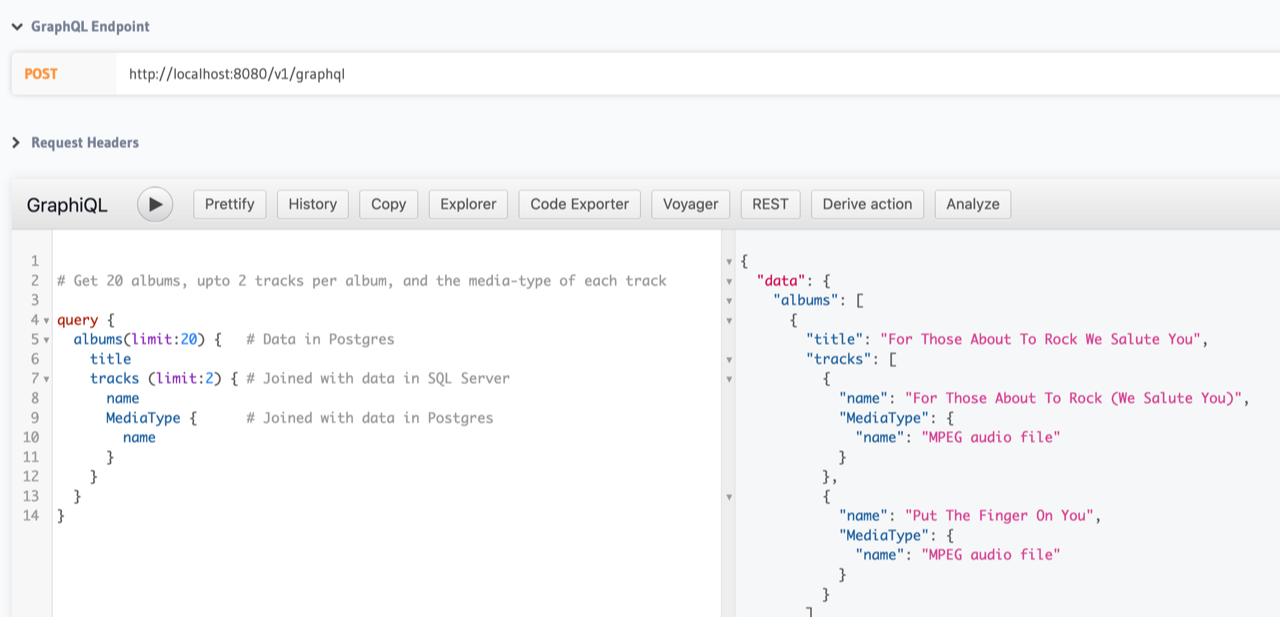
    During its online an HasuraCon ’21 conference, Hasura today announced that it has made it possible for developers to employ GraphQL application programming interface (APIs) to launch queries against data residing in multiple databases.

    At the same time, Hasura announced a preview of schema sharing capabilities along with support for workflows based on GitOps processes that it will make generally available later this year. The Hasura Cloud platform can now deploy local migrations from staging to production with a simple git push in addition to accessing previews of applications on every pull request to the git repository.

    The schema sharing capability added to the Hasura GraphQL Engine is intended to bridge the gap between beginner and power users by allowing them to share and install samples of permissions, relationships and metadata. In addition to improving collaboration, the goal is to make it easier to onboard software engineers as projects evolve and become more complex.

    Originally developed by Facebook, GraphQL has emerged as a popular alternative to REST APIs because it enables developers to retrieve data at a more granular level, which results in improved performance.

    Hasura is a provider of an instance of a GraphQL engine the company has developed around a project that is now hosted by the GraphQL Foundation, an arm of the Linux Foundation. The GraphQL Foundation counts among its members Airbnb, Amazon Web Services (AWS), Apollo, Coursera, Elementl, Facebook, GitHub, IBM, Intuit Hasura, Paypal, Prisma, Shopify and Twitter.

    GraphQL provides a complete description of the data made available via an API and is organized in terms of types and fields rather than traditional endpoints. In addition to clarifying what data is available via that API, developers can employ types to avoid writing manual parsing code.

    Since last summer, Hasura has been making available a pilot of a GraphQL implementation that is capable of supporting remote joins across disparate databases. That capability is critical because data sets that are related to a specific business process may wind up being stored in multiple databases.

    Hasura

    Tanmai Gopal, Hasura CEO, said the open source Hasura GraphQL Engine has already been downloaded more than 250 million times this year. Downloads in 2020 reached 100 million. The challenge is that while GraphQL offers a superior alternative to REST APIs, most of the API tooling that exists within organizations is still designed around REST APIs, noted Gopal.

    To accommodate that reality, Hasura has made a tool available that will convert a query designed using GraphQL into a set of calls that are compatible with REST APIs. Developers still gain the benefits of being able to launch more granular queries, noted Gopal.

    REST APIs, in general, are becoming more problematic as organizations embrace microservices-based applications. It often takes minutes to refresh a simple dashboard because of the amount of data that REST APIs are trying to pull from various data sources. As organizations embrace digital business transformation, they are also encountering application latency issues that can be traced back to the amount of data being called from multiple microservices.

    Hasura says in addition to providing a more efficient method to access data, Hasura is also working on adding caching capabilities to its core engine to further improve performance.

    It’s not clear at what rate GraphQL might replace REST APIs, but DevOps teams should assume organizations will wind up employing a mix of both for years to come. The challenge is going to be determining when to make the transition as organizations become more dependent on APIs.