Category: Features

  • The Age of Software Supply Chain Disruption

    The Age of Software Supply Chain Disruption

    The software supply chain is swiftly becoming a widespread attack vector, and securing it is now in the spotlight. Software supply chain attacks have become a given in 2022, reports Darktrace.

    SolarWinds, Kaseya and GitLab are just a few examples of organizations that have been vulnerable to attack in recent years. We’ve also witnessed an increasing number of exploits, like Log4j and Log4Shell that have the potential to affect billions of devices. What these instances have in common is they leverage vulnerabilities in open source software and third-party dependencies commonly used in the software delivery process — meaning one corrupt package could have broad encompassing impacts on the tech industry at large.

    I recently chatted with Doug Dooley, COO, Data Theorem, about the consequences of today’s intricate software supply chains. “The software supply chain problem is bad, but it’s only going to get worse in the next five years,” he said. According to Dooley, application security requires a continuous context of how the app functions at runtime in a software ecosystem—otherwise, it will continue to miss gaping holes in the big picture.

    Understanding Software Supply Chain Disruption

    Most people understand what a traditional product supply chain is—it encompasses all the components involved to bring a product to the end consumer, from raw materials to manufacturing, distribution and retail locations. But, amid the pandemic and recent international conflict, we’ve witnessed how brittle this chain is. If you shut down one of these components, all consumers feel the effect, resulting in everything from gas hikes to baby food shortages. A full 61% of organizations were hit by supply chain attacks in 2021.

    In software, the supply chain can be thought of similarly—there are many components involved between a software product and the end consumer. The developer writes code, integrates third-party libraries and frameworks, puts it in source code systems, pushes it to test environments and eventually deploys it to production. And often, DevOps has the view of this whole picture.

    “DevOps has become some of the most powerful people in the business,” said Dooley. “They can take a business person’s idea and turn it into reality in the form of an application.”

    Third-party exposures can create huge disruptions in this above workflow. This could take the form of insecure libraries, underlying cloud vulnerabilities or API vulnerabilities, says Dooley. “Customers will embed APIs in the software stack—to them, it’s a black box.” There’s also the potential for misconfigured S3 buckets, which continually leak millions of records. More serious application security threats include remote code execution, which can invoke a detrimental loss of control.

    Why Now?

    So, why the sudden peak in software supply chain-related security incidents? After all, open source software, APIs and third-party vendors have been around for decades. Well, according to Dooley, there are several factors at play here.

    For years, the Silicon Valley mantra has been to ‘move fast and break things.’ Take Netflix engineering, for example, which is constantly evolving services and releasing dozens of changes per day. According to Dooley, such rapid application development often means that security is following development rather than preceding it or becoming integrated into the process, à la DevSecOps. This could lead to what he calls an “ambulance chaser moment.”

    The attack surface is heightened as the number of third-party suppliers and dependencies increases. The average company has 254 SaaS apps, Productiv data found. Also, on the attacker side, we’re seeing increasing levels of automation and sophistication. “You only have to be right one time when attacking,” said Dooley. “The deck is stacked in an attacker’s favor.”

    Strengthening The Chain

    The software supply chain issue is a complex problem that won’t be solved by any single action. However, Dooley offered several tips for companies to consider as they confront this broad problem:

    • Source code analysis and vendor management. It’s important to vet partners and have a process to audit new software by scanning for common vulnerabilities and exposures (CVEs). Yet, source code analysis falls short in many areas, admitted Dooley, as it is unlikely you will be able to view the source code behind cloud API calls and production behavior doesn’t always match documentation.
    • Continuous runtime security monitoring. New exploits are being found constantly. Thus, organizations require a continuous defensive posture at runtime, even if they were found to be secure in development. Continuous full-stack discovery must consider many third-party components, like SDKs, open source code, mobile apps, web services, cloud services, APIs and identity and access management, explains Dooley.
    • Increased transparency with SBOMs. More widespread use of software bills of materials (SBOMs) will be critical to increasing transparency across the industry. Just as nutrition facts describe the food we eat, SBOMs spell out the internal makeup of software components. “We’re trying to get to a place where we get more transparency into the software we depend on,” Dooley said.
    • Rapid vulnerability detection. Have a good handle on the attack surface. Businesses will want to collect an accurate inventory of what can be attacked.
    • Build protection around the “crown jewels.” Sometimes, you must prioritize which steps to take first. Dooley reiterated that securing applications that interface with customer data is critical, as these are the “crown jewels”—leaks here could have serious consequences around regulatory penalties and brand reputation.

    Caution: Heavy Lifting Required

    “The moment you ship a piece of software, you’ve taken on a risk,” said Dooley. But at the same time, if you’re not creating digital interfaces, you’re missing out on massive opportunities.

    Reusing code and open source packages have become necessary to maintain agility to help continuously release digital products. “Even if you build everything from scratch, you’re still reusing a lot,” said Dooley. “Without it, you’d never get to market.” While these tools enable unprecedented speed, we can’t overlook the potential vulnerabilities that may lie within the software supply chain.

    With its unique window into the software deployment and automation process, the DevOps sphere will undoubtedly have a role to play in protecting this paradigm. “Let’s push for more transparency and disclosure,” said Dooley. “But don’t hang your hat on that to make your program great—if you really care about this problem, you’ll have to do some heavy lifting in the real world.”

  • Survey Uncovers Depth of Open Source Software Insecurity

    Survey Uncovers Depth of Open Source Software Insecurity

    A survey from Snyk and the Linux Foundation published today found that less than half of respondents (49%) work for organizations that have security policies in place for the use or development of open source software.

    The survey, which polled 550 software development professionals, was conducted by Snyk, a provider of tools for securing software, and the Linux Foundation. Just under a third (30%) of respondents without any policies in place also admitted that no one on their team is currently directly addressing open source security. A total of 41% said they didn’t have high confidence in their open source software security. Nevertheless, 59% of respondents said the open source software they deployed is somewhat or highly secure.

    Matt Jarvis, director of developer relations for Snyk, said many organizations are not aware of the degree to which open source software is now being targeted by cybercriminals looking to surreptitiously insert malware into widely used software projects. Those same organizations also lacked clarity about how open source software is constructed, he added.

    In many ways, the open source software community has now become a victim of its own success, noted Jarvis.

    Overall, the survey found the average application development project has 49 vulnerabilities and 80 direct dependencies on open source software. Only 18% of respondents said they are confident of the controls they have in place for their transitive dependencies. A full 40% of all vulnerabilities discovered were found in transitive dependencies.

    Only a third of respondents (33%) are using static application security testing (SAST) tools within a continuous integration process or software composition analysis (SCA) tools to discover those vulnerabilities, according to the survey. Overall, 44% reported they use some type of tool to analyze source code.

    In terms of additional capabilities, 59% said they would like to see more intelligence added to these tools, while 52% cited a need for more clearly defined cybersecurity best practices. Nearly half (49%) also wanted increased automation and tools for conducting security audits.

    The survey also found that fixing vulnerabilities in open source projects takes 19% longer than in proprietary projects.
    Among organizations that do have security policies in place, 80% vested responsibility with the security team. Only 40% of organizations without such policies did the same, according to the survey.

    The Open Source Security Foundation (OpenSSF), an arm of the Linux Foundation, is focusing on 10 streams of investment that, in total, would require more than $150 million in funding to drive greater adoption of DevSecOps best practices among maintainers of open source software projects. Developers today routinely reuse open source software. The issue is that many of those projects are maintained by a small number of programmers that voluntarily contribute their time and effort to build components that others are free to use. Like any other developer, the amount of security expertise those individuals have is limited. The onus for making sure the projects and software are secure is on the organizations that decide to deploy that software.

    Unfortunately, many IT vendors and large enterprise IT organizations reuse that code without contributing anything meaningful back to the project—whether that be in terms of financing or helping open source maintainers find and remediate vulnerabilities. Hopefully, following an executive order issued by the Biden administration, the level of open source security will steadily improve in the months ahead.

  • TechStrong Con: Downturn Brings Additional Sense of DevOps Urgency

    TechStrong Con: Downturn Brings Additional Sense of DevOps Urgency

    Regardless of whether the overall economy is experiencing a correction or is on the cusp of a recession, organizations are going to prioritize some projects over others as resources become more constrained.

    During the “DevOps: Has the Bubble Burst?” panel made up of DevOps executives and investors from venture capital firms that kicked off the virtual TechStrong Con event today, panelists said organizations will need to continue to invest in DevOps automation and cybersecurity to ensure their long-term survival.

    However, the number of IT projects that organizations will be able to simultaneously invest in is likely to decline, said Chenxi Wang, general partner for Rain Capital. “We are starting to see a slowdown of projects, for sure,” she said.

    Fundamentally, organizations will need to decide not so much whether they will modernize legacy monolithic applications but rather at what rate. More than 70% of organizations’ codebases are still based on legacy monolithic architectures, noted Wang.

    No one knows for sure how long the current economic contraction might last, but, as in any downturn, organizations will seek to conserve cash, said JFrog CEO Shlomi Ben Haim. DevOps initiatives will continue to be prioritized because otherwise, organizations risk falling far enough behind that they may not be able to ever recover, he added. “DevOps is in a good place,” said Ben Haim.

    In fact, thus far many DevOps companies have yet to see a decline in demand because organizations are investing in automation to reduce their technical debt costs, noted Thomas Krane, managing director for Insight Partners. “It’s a matter of life or death,” he said.

    At the same time, Krane said organizations might want to take a hard look at the profitability of the vendors they are counting on to drive that innovation. Vendors that have been counting on venture capital funding to maintain operations may soon find that money much harder to come by as capital becomes scarce, he noted.

    The core issue will become how quickly returns on investment (ROI) are generated, added Incredibuild CEO Tami Mazel Shachar. “There is going to be a lot more focus on ROI,” she said.

    In the meantime, the debate over what constitutes DevOps continues. Some narrowly define DevOps as a set of development activities that revolve around continuous integration/continuous delivery (CI/CD) platforms. Others definitions of DevOps include everything from application testing to observability and application security. No matter how big the proverbial DevOps tent is defined to be, however, the number of organizations that are embracing DevOps—and now DevSecOps—workflows more deeply only continues to increase.

    The challenge is focusing those efforts on the projects that deliver the most value for the business in the face of executive uncertainty about the future. Of course, nothing quite focuses the mind like an impending crisis; for better or worse, it will require more organizations to honestly assess their current capabilities.

  • Supergraph: One GraphQL Schema to Rule Them All

    Supergraph: One GraphQL Schema to Rule Them All

    GraphQL has been garnering much interest as a way to seamlessly interact with backend services. The query language is a boon for frontend developers, too, as it conveniently allows you to fetch the specific fields you require, thus eliminating the potential overfetching or underfetching concerns of REST APIs. And as GraphQL adoption matures within organizations, there is increasing interest (and investment) in how enterprises can use GraphQL to securely unify their growing catalog of disparate microservices and APIs.

    Using GraphQL as a meta layer could help unite many disparate systems under a single unified schema. This would enable the age-old promise of composability, in which software building blocks are seamlessly pulled together to assemble applications and unique experiences for different client types. However, managing GraphQL at scale can become tricky. And when a schema gets really large, it then may require a schema of its own! This is where the concept of the supergraph comes in.

    I recently met with Geoff Schmidt, Apollo GraphQL CEO, to discover what a supergraph is and how it may help platforms aggregate their backend microservices. According to Schmidt, “Developers want this composition layer for one abstract view of all their services.” Below, we’ll explore the concept of the supergraph and look at some new open source components that may help you enable GraphQL-based composability in your organization.

    Microservices Enable Composability

    First off, what do we mean by composability? Well, composable architecture is intrinsically linked with microservices. You can think of each microservice as a single lego piece that makes up one aspect of an application. For example, Uber uses 4,000 microservices to power its backend. These services span from maps, currency conversions, driver reviews, payments and other components. When combined, they ultimately create the convenience and the sleek user experience that is Uber.

    Historically, software developers were overseeing larger monolithic applications in which a single client was interconnected to a web server, Schmidt explained. On the other hand, microservices tend to be more domain-specific and used in tandem with other microservices. They’re also typically easier to iterate on and faster to ship when compared to monolithic codebases.

    The Need for Aggregation

    As a result of the microservices age, applications typically pull in far more data from various sources. For example, a banking application might loop in a mortgage service, investment service and other data sources to display a combined net worth on a screen. This explosion in microservices has created a “polygon environment” spanning databases and APIs, increasing service complexity, said Schmidt.

    Nowadays, many third-party components must be combined to render an experience. However, supporting this composability can be challenging for developers and backend API teams—not to mention that handwriting a backend-for-frontend could be burdensome. “App developers are slowed down by the need to integrate or compose these backend services,” said Schmidt. “Developers need a way to put all those pieces back together.”

    What is Supergraph?

    Supergraph can be thought of as a graph of graphs. The vision is to have one GraphQL schema and one ingress port to oversee many services. Creating a supergraph is becoming more accessible, too, as more open source projects emerge to enable this paradigm. For example, Apollo recently open sourced some components that can help to build and operate a supergraph. These include Federation, which helps to create a data graph across multiple services, and the Apollo Router, a tool written in Rust that decides how to route queries. Apollo has also open sourced a supergraph demo along with other resources.

    A supergraph architecture is already powering Expedia, Walmart, Netflix, Paypal, the New York Times and other large environments, said Schmidt. For example, Expedia has used a supergraph to combine flights, rental cars and other microservices to create integrated experiences. Hivee, an upstart modern supermarket chain, also uses a supergraph to unite its investment into APIs.

    According to Schmidt, the fundamental benefit is that less time is spent writing integration code which means faster development speed and the ability to quickly pivot your business. “It allows you to change business quickly to meet the needs of your customers.” A supergraph could also enable greater visibility into your API estate, making auditing easier.

    A key benefit of the above components is that they already have a proven track record running at a commercial scale. But outside of the Apollo projects, other groups are attempting to codify a similar GraphQL schema aggregation concept, as well. For example, WunderGraph utilizes GraphQL within a “virtual graph” that acts as a common language to call various underlying APIs.

    Repercussions of ‘One Graph to Rule Them All’

    Schmidt said the hope is that, at the end of the day, this abstraction can contribute to “making the world a little more human-centric.” This is because GraphQL can enable less rigid apps that conform to unique user tastes. But a robust composition layer will be necessary to allow such reconfigurations.

    Of course, as I’ve covered previously, there are significant security hurdles to address when supplying so much power to a single entryway. Increased GraphQL reliance will require forethought into new potential security risks, such as schema introspection and object-level authorization control.

    According to Schmidt, a GraphQL composition layer presents an opportunity to enforce security controls. He defines these as contracts that create access rules for a particular set of users. By declaratively managing GraphQL security, a development team, in essence, could expose a subgraph of the supergraph for a partner to consume. The graph could even be segmented for internal teams.

    A central point of ingress will require authorization rules to protect user privacy and avoid breaking the rule of least privilege. Schmidt also advocates for backend schemas to be built for app developers who understand their needs, instead of precisely mapping logic to business models.

    Supergraph: A Graph of Graphs

    Software is becoming more modular, which has resulted in an explosion of unique microservices and APIs. And we’re now at another tipping point in how software architecture is divided and combined, said Schmidt. He now sees GraphQL as a prime opportunity to create software architectures that call multiple backend services with a single GraphQL query.

    “GraphQL is the composition layer you need to build modern applications,” said Schmidt. “We’re super excited about this. Users have shown that GraphQL is the future. Supergraph is such a powerful technology, and we’re excited to bring this to everybody.”

  • Open Source Coder Tool Helps Devs Build Cloud Spaces

    Open Source Coder Tool Helps Devs Build Cloud Spaces

    Coder today launched an open source project that gives developers and data scientists a way to create cloud workspaces in a matter of minutes to make it easier to build applications and models faster.

    Currently, Coder provides a cloud application development platform that enables developers to build applications using any editor or integrated development environment (IDE) as an alternative to their local desktop. That capability is made possible by using the open source Terraform infrastructure provisioning tool to spin up a developer workspace. That approach provides developers with access to cloud resources that scale up and down as required versus, for example, being limited to the memory and storage resources that they can access on a laptop or desktop system.

    Ketan Gangatirkar, vice president of engineering for Coder, said that while individual cloud service providers offer ways of achieving that goal, those offerings lock organizations into a specific cloud service. The Coder approach allows developers to use their preferred tool across multiple cloud services, he added.

    Most developers are already building applications that run on multiple cloud platforms. As such, they require access to a set of tools that eliminate the overhead created when developers need to deploy and master a diverse range of tools to build those applications, said Gangatirkar.

    In contrast, with the Coder tool, developers can open a web browser, choose a workspace template and then start coding, he noted. That capability eliminates all the manual, error-prone processes typically required to get a developer workspace set up, said Gangatirkar.

    That approach also provides organizations with a more secure means of building applications compared to the time and effort that would otherwise be required to secure every local system used by a development team, he added.

    In general, there’s a lot more focus on developer productivity as organizations increase the number of applications they are simultaneously building and deploying. Hiring and retaining developers remains a major challenge as competition for talent intensifies in the race to accelerate digital transformation efforts. All things considered, many developers will prefer to work for organizations that allow them to use the tools they already know and prefer. That approach also makes it easier to onboard developers to a development project, noted Gangatirkar.

    It’s not clear how many application development initiatives are never begun simply because it takes too much time and effort to spin up a development environment whenever inspiration strikes. However, it’s clear that developers are wasting a lot of time maintaining multiple local development environments. Much of that time could be better spent writing actual application code.

    One way or another, open source tools—such as the one provided by Coder—should remove a lot of the friction that exists in application development today. The only issue that remains is whether those tools will be adopted by developers themselves versus the DevOps teams dedicated to serving them.

  • Codenotary Adds SLSA Framework Support to Advance App Security

    Codenotary Adds SLSA Framework Support to Advance App Security

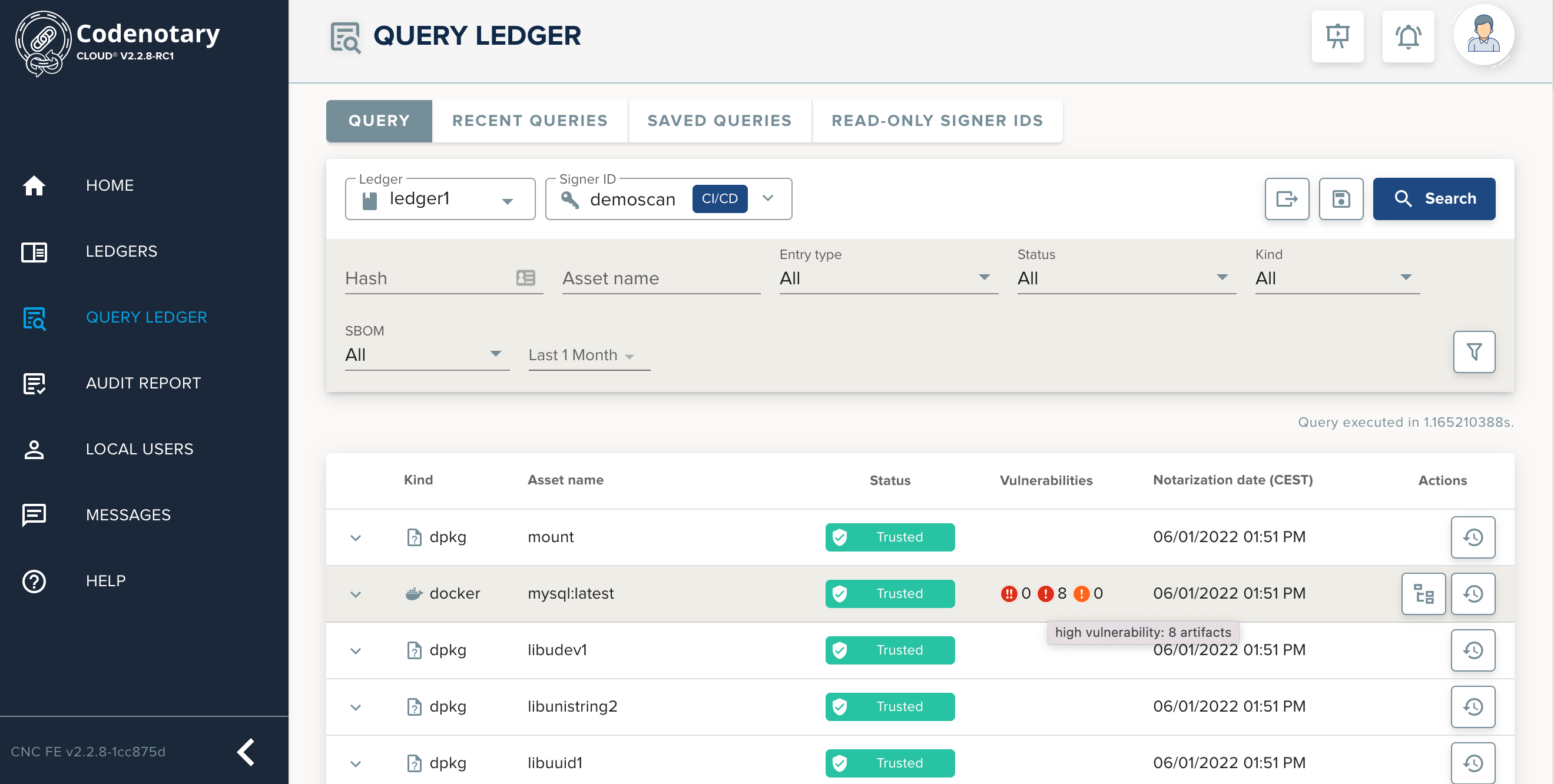
    Codenotary this week announced it has integrated support for the Supply-Chain Levels for Software Artifacts (SLSA) framework in its free notarization and verification service for ensuring the integrity of code.

    Moshe Bar, Code Notary CEO, said as the first application security platform to attain SLSA compliance, the company is making it easier for organizations to secure their software supply chains.

    SLSA is a framework defined by Google that it uses to attach binary authorization to code. In its current form, SLSA is a set of guidelines that identify how to attain four different levels of application security. The long-term goal is to create a framework that will automatically generate auditable metadata that can be fed into policy engines to create a SLSA certification.

    Codenotary provides tools for cataloging and verifying the authenticity of components used with a software development life cycle. At the core of that platform is an immutable open source immudb database that cryptographically attaches an identity to each software artifact. That capability can also be used to dynamically generate a software bill of materials (SBOM).

    The Codenotary Attestation Service can also be integrated with the continuous integration/continuous delivery (CI/CD) platform that DevOps teams use to build and deploy applications using those artifacts. Ideally, DevOps teams should construct a security pipeline that runs alongside their existing DevOps pipelines, noted Bar.

    In the wake of recent high-profile software supply chain breaches, the level of scrutiny being applied to how software is constructed has increased significantly. In theory, at least, developers have assumed more responsibility for application security as part of an overall shift left that provided them with more programmatic control over IT environments. Cybercriminals, however, are now becoming more adept at compromising developers’ credentials and insert malware as an app is developed.

    DevSecOps best practices are, of course, being adopted to teach developers how to better secure their application environments. The issue is that not enough developers are learning how to secure applications fast enough. The volume of attacks against the software supply chain continues to grow at a rate that is now much faster than organizations can thwart simply by educating developers.

    There is a now clear need to embed more cybersecurity guardrails within DevOps workflows, noted Bar. Rather than attempting to achieve that goal in a piecemeal fashion, Bar said Codenotary is making a case for an integrated platform that can be invoked as a natural extension of a DevOps workflow.

    In general, Bar said there’s now a greater sense of urgency when it comes to software supply chain security. Many of the reviews of those processes are, arguably, long overdue. One way or another, there will be a lot more questions asked about how software is actually developed. The organizations that consume this software are starting to appreciate how vulnerable they are as the overall dependency on software continues to increase. The only real question now, unfortunately, is how many more breaches there might be before those software security issues are thoroughly addressed.

  • Armory Aims to Turn Continuous Delivery Into a Service

    Armory Aims to Turn Continuous Delivery Into a Service

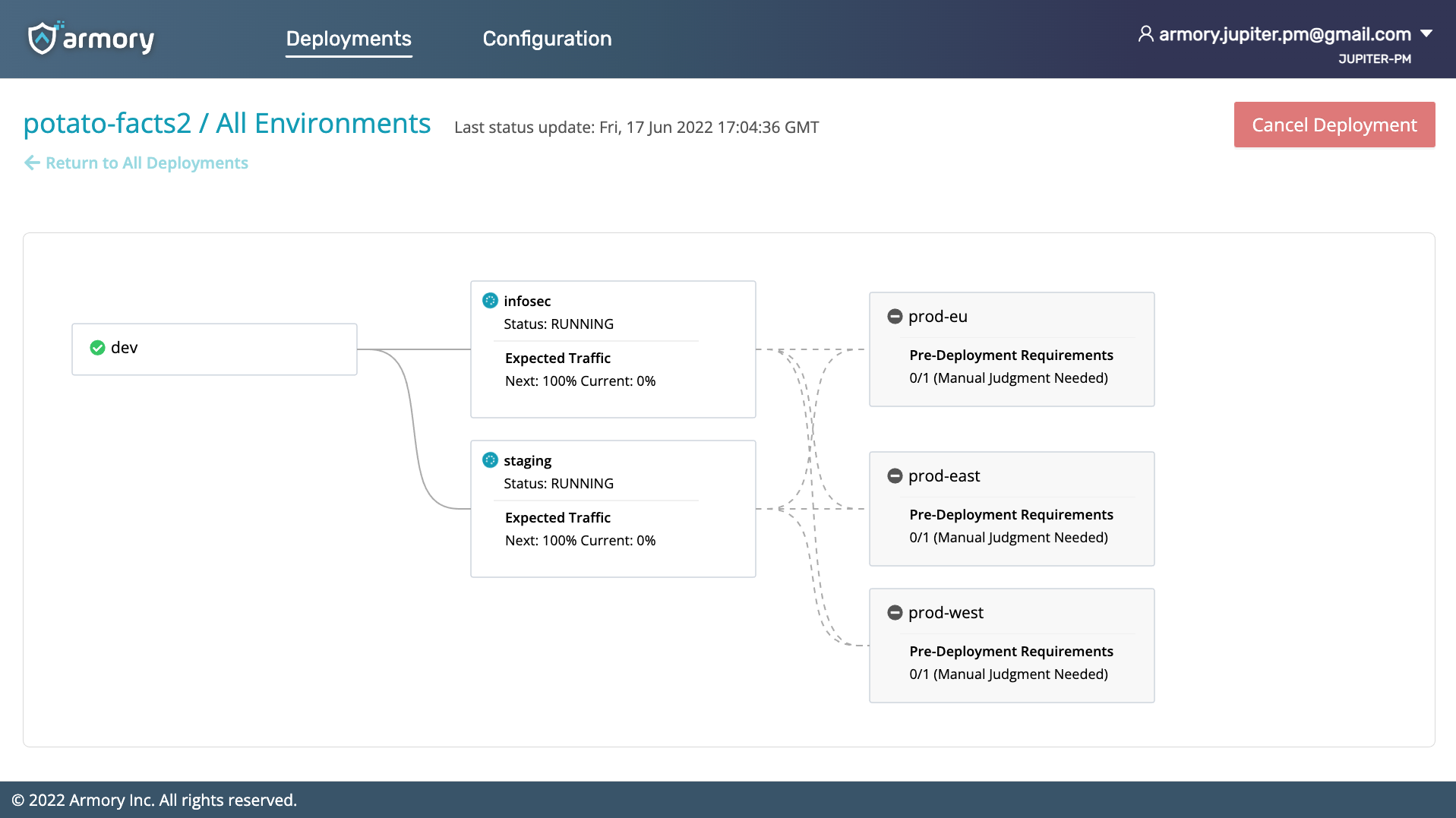
    Armory this week made generally available a continuous delivery-as-a-service (CDaaS) offering that promises to make it simpler for a much wider range of organizations to programmatically deploy applications.

    The Armory Continuous Deployment-as-a-Service platform has been available in beta since March. It differs from Armory’s existing open source Spinnaker continuous delivery (CD) platform in that it is based on a proprietary declarative platform that is designed to integrate with third-party continuous integration platforms.

    Armory CEO Jim Douglas said the goal is to meet organizations that have invested in CI where they are versus requiring them to rip and replace their entire DevOps platform. The company is still committed to providing a curated instance of Spinnaker, but it’s become apparent there are many organizations that want to experience the benefits of a more opinionated CD platform that is more accessible via a cloud service, he added.

    The Armory Continuous Deployment-as-a-Service offering applies many of the best practices that have emerged for the Spinnaker CD platform without requiring organizations to have a dedicated team in place to just manage the CD platform, noted Douglas. IT teams can start using the service to deploy applications in less than 30 minutes, he noted.

    The first edition of Armory Continuous Deployment-as-a-Service is optimized for deploying microservices-based applications on Kubernetes clusters, but Armory will soon extend the reach of the service to platforms running monolithic applications, said Douglas. The company also plans to make available an on-premises edition, he added.

    In either scenario, IT teams will be able to engage in everything from canary testing of deployments to automatic rollbacks in the event an application fails, said Douglas.

    The number of organizations that routinely make use of a CD platform is still relatively small. Historically, each platform used to run applications has been unique, so automating delivery has been problematic. CI platforms, in some cases, have been extended using custom scripts to automate application delivery, but those efforts don’t typically scale across an extended enterprise.

    Douglas said that as more IT teams start to build and deploy microservices-based applications, it’s only a matter of time before CD becomes a more distinct IT discipline. The challenge is enabling IT organizations to achieve that goal without necessarily having to hire a small army of site reliability engineers (SREs). There will still be plenty of DevOps teams that will prefer to deploy Spinnaker, but Douglas said there will also be plenty of instances where a less complex approach to CD will suffice.

    It’s hard to say whether there might soon be varying levels of DevOps platform services that organizations might invoke depending on the complexity of the project and their own internal cultural preferences. However, as the pace of application development continues to accelerate, the need to automate CD will become a more pressing issue. There may be many ways to achieve that goal, but if history is any indication, the path of least resistance is likely to be via the cloud.

  • TechStrong Con 2022: Exploring What’s Next in Tech

    TechStrong Con 2022: Exploring What’s Next in Tech

    We have become increasingly reliant on technology and it’s hard to imagine life without all the great tech inventions we use in our daily lives. As technology keeps progressing, more is expected of IT teams, and security is a top priority.

    While we are still trying to get used to the new normal, the IT community continues to shine as a beacon, demonstrating how humans are leveraging technology to overcome the many challenges we face. On June 21, business and tech leaders who are working on transforming the world and moving it forward will come together at TechStrong Con Virtual Summit to celebrate the power of technology, share their stories, provide practical insights and lend valuable advice to help other professionals succeed in their careers. More than a virtual event, it is a community gathering that offers learning, networking and upskilling opportunities. Now in its third year, TechStrong Con continues to serve as a testament to the ways in which technology can improve human existence.

    Things You’ll Learn

    The agenda features a mix of topics including live coding, cloud-native, cybersecurity, digital transformation, observability, DevOps, open source and more. Attendees will have the opportunity to learn from some of the brightest minds in the industry about:

    • Managing the security of APIs
    • Key observability trends for 2022
    • How to accelerate digital transformation
    • Habits that will help improve your security posture
    • The state of the software supply chain post-Log4Shell
    • The distributed cloud
    • The future of data engineering
    • Building a diverse cybersecurity workforce
    • Crypto and NFTs
    • Low code and citizen development
    • The value of feature flags
    • How DevOps must be part of your future to attract the right talent
    • Managing and motivating teams in a hybrid environment

    Meet the Speakers

    The speaker lineup features globally recognized business leaders, DevOps, cybersecurity and IT experts including:

    • Sholmi Ben Haim, co-founder and CEO at JFrog
    • Chenxi Wang, founder and general partner at Rain Capital
    • John Willis, senior director of the global transformation office at Red Hat
    • Caroline Wong, CSO at Cobalt
    • Thomas Krane, principal at Insight Partners
    • Lisa Plaggemier, executive director at National Cyber Security Alliance
    • Tami Mazel Shackar, CEO at Incredibuild
    • Tom Sweet, VP in IT solutions at GM Financials

    Visit the Exhibit Hall

    In addition to the sessions, attendees can visit the virtual exhibit hall to interact with partner sponsors including Chronosphere, ConnectALL, Tidelift and TechStrong Research. The expo hall will be open throughout the event, giving attendees the opportunity to chat with the sponsors and download information at any time.

    Registered attendees will also receive a link to access the virtual environment on-demand. To see the full agenda and to register for free, please visit the TechStrong Con website.

  • Cloud Giants Shun Wind Power? | LaMDA not Sentient? | MS IE RIP?

    Cloud Giants Shun Wind Power? | LaMDA not Sentient? | MS IE RIP?

    Welcome to The Long View—where we peruse the news of the week and strip it to the essentials. Let’s work out what really matters.

    This week: Warren Buffett asks too much for wind energy, it’s “completely ridiculous” to say Google’s chatbot LaMDA is sentient, and Microsoft finally kills Internet Explorer. (more…)

  • Survey Surfaces Raft of Application Security Issues

    Survey Surfaces Raft of Application Security Issues

    A global survey from ReversingLabs found 87% of respondents agreed that software tampering has become a more frequently-used cybersecurity attack, but only 37% said they have any means to detect it.

    The survey, which polled 300 IT and security professionals, was conducted by Dimensional Research on behalf of ReversingLabs, a provider of a platform for analyzing any file, binary or object. Despite software tampering’s frequency, only 7% of survey respondents said they could detect software tampering at each phase of the software development life cycle.

    Just as troubling, only slightly more than half (51%) reported being able to protect their software supply chain with only a third being able to actually check for tampering once an application is final and deployed, the survey found.

    Overall, more than half of respondents (54%) said their organization knowingly released software with potential security risks. Nearly every respondent (98%) also acknowledged that reliance on third-party software use, including open source software, increases security risks.

    On the plus side, more than three-quarters of respondents (77%) said they appreciated the value of a software bill of materials (SBOM) that makes it possible to ascertain what software artifacts are being employed within an application. However, only 27% of respondents said their organization currently generates and reviews SBOMs. A full 90% said they are finding it increasingly difficult to create and review SBOMs. Nearly half of the survey respondents reported that SBOM processes today involved manual steps.

    Other SBOM hurdles respondents cited included lack of expertise (44%) and inadequate staffing to review and analyze SBOMs (44%).

    ReversingLabs CEO Mario Vuksan said that while it’s still early days as far as SBOM capabilities are concerned, a series of high-profile zero-day vulnerabilities has forced the issue into the spotlight. Organizations are now spending months looking for every possible instance of newly discovered vulnerabilities because no one is quite sure what application components are running across an extended enterprise, he noted.

    However, as DevSecOps best practices continue to evolve and mature, it’s also clear that SBOMs will play a critical role in securing software supply chains, Vuksan added. The challenge is that in the age of microservices, application environments are now much more dynamic as components are ripped and replaced with greater frequency, he added.

    SBOMs, of course, are just one element of what will be required to secure a software supply chain. Many organizations are now reviewing their software development processes and uncovering uncomfortable truths about how software is currently built and deployed. The ultimate goal is not to slow down the rate at which software is developed but to make sure there are guardrails in place that prevent insecure software from being deployed in the first place. Far too many developers today still view cybersecurity reviews as tasks to be avoided in the name of meeting an application deployment deadline.

    Hopefully, that won’t continue to be the case as more responsibility and accountability for applications security shifts left toward developers and DevOps teams. In the meantime, however, when it comes to application security, it’s apparent there’s still much room for improvement.