Category: Blogs

  • IaC Frameworks: Vendor-Specific or Multi-Cloud?

    IaC Frameworks: Vendor-Specific or Multi-Cloud?

    Over the past few years, I have been watching the shift to infrastructure as code (IaC) frameworks closely. With the shift from monolithic to microservices, and with the shift from mostly virtual machines (VMs) to cloud-native architecture, applications are much more complicated, making it much more important to automate infrastructure to respond with speed.

    In that sense, I refer to IaC as “The third cloud revolution.” Looking at the history of cloud transformation, the shift from physical servers to virtual machines (led by VMware about 20 years ago) would be the first cloud revolution. The move from virtualized data centers to the public cloud (led by AWS about 10 years ago) would be the second cloud revolution. With the shift to public clouds, people were suddenly able to click buttons to provision new resources, including “hardware.”

    In the last few years however, we see fewer clicks and more code. Engineers write and maintain that IaC, and something executes that code. Engineers influence the infrastructure much more than they used to – that is the third cloud revolution. We mainly see four IaC frameworks that drove this revolution – Terraform and Pulumi (both multi-cloud), CloudFormation and ARM (vendor specific).

    I recently talked with Joe Duffy, CEO, Pulumi, Mark Russinovich, CTO, Azure and Anton Babenko, AWS community hero and Hashicorp ambassador, the head of Terraform at Microsoft, the head of Terraform at IBM Cloud and one of the founders at Gruntwork. After our brainstorming session, it’s clear we all agree that IaC will have a huge effect on cloud operations. In this blog, I’ll share my point of view regarding multi-vendor IaC versus single-vendor IaC frameworks; discuss how they compare to the differences between iOS and Android and which direction I believe will win the day.

    The big cloud vendors seem to go “all-in” and create full ecosystem, iOS-style, and they have everything working nicely with the relevant services and tools. AWS just released AWS Proton, which works with CloudFormation. They say that Terraform is on their roadmap, but time will tell. Microsoft seems to offer more solutions that are ARM-based, like Bicep. When I talk with executives at those companies, they strongly believe in the great value of this vendor lock-in/closed approach. They truly believe that this will help their customers in the best way possible. Perhaps they are right.

    On the other hand, when I talk with the community, I hear different opinions. DevOps engineers at Azure customers do not debate whether to choose Terraform or ARM. DevOps engineers at AWS customers do not debate whether to choose Cloudformation or Terraform. While this was the case three years ago, it is not, anymore. Now, the real debate is whether to choose Terraform or Pulumi. Engineers prefer a language that is multi-vendor, open-source, no vendor lock-in and that is compatible with other open source solutions built on top, like Open Policy Agent and Terragrunt, to help Terraform users. This is the Android-style approach – open platform.

    Moreover, I hear new phrases from the community that make me think the future is going in this direction. Erik Osterman at Cloud Posse started using the acronym  TACOS – Terraform Automation and Collaboration Software (see the video here). It takes time, but, going forward, developers and the community will hold the key to the future of IaC, not executives and large vendors.

    You can, of course, challenge this by replying that, “iOS is a great OS.” This is obviously true, but I think there is one big difference here as to why the Android approach is winning the IaC market. The answer lies with the end user; the Apple ecosystem is a solution for the end user and consumer, and IaC is about larger-scale infrastructure decisions. Like the shift from monolith to microservices, developers prefer small and isolated parts, not one big system. With Terraform and Pulumi, developers get more freedom. Maybe the company will move from AWS to GCP or Azure or vice versa. Maybe IT will need an Auth0 provider, as well, and will want to manage it the same way. Maybe the use of Open Policy Agent to govern deployments becomes the status quo. Developers need freedom, whereas consumers just need a great product.

    But the question has still not been answered: Terraform or Pulumi? It is still too early to tell, and, frankly, there is more than enough room in the IaC space for both. Maybe more open-source and multi-vendor frameworks will emerge and one that’s yet unknown will rule the day. Terraform provides a great ecosystem of providers, support and maintainers. Pulumi has started to provide all of those, together with its imperative approach, which seems to be a bit more appealing to developers.


  • DevOps Myths Debunked

    DevOps Myths Debunked

    Leaders need not be DevOps experts, but they need to distinguish DevOps myths and realities to lead their digital transformation projects.

    As I indicated in a recent article, Engineering Practices Can Overcome DevOps Challenges, leaders need to set an inspiring DevOps directional vision for the organization, and proactively stimulate and sponsor team activities toward goals. To be credible, communication from leaders need to distinguish between myth and reality. It is easy for leaders to get confused, because there are many popular myths surrounding DevOps. It’s important to remember that, in DevOps, definitions and engineering best practices for DevOps have not entirely been nailed down.

    As Doug Miller, senior director strategic partnerships, Perforce Software, said “Working in an industry that has yet to settle on an accepted ‘definition’ for DevOps makes each day a challenge. The ever-morphing landscape makes it difficult for technology vendors and consumers alike to ensure we’re all talking about the same thing in the same way.”

    Here are some of the most important myths that leaders need to be aware of.

    Debunking DevOps Myths

    Myth: “DevOps is a cultural movement.”

    The truth is that implementing DevOps requires a careful and balanced engineering approach that considers a wide array of people, process and technology aspects. In my article, The Time Has Come for an Engineering Approach to DevOps, I explained that while culture is a critical success factor, DevOps is much more than just culture. Furthermore, DevOps is not just a movement. In the larger context of software engineering history, the word “DevOps” is new, and perhaps it will be replaced by another word someday, but the underlying engineering principles and practices that constitute DevOps could apply to almost any engineering project throughout the ages.

    Myth: “DevOps requires continuous deployments.”

    The truth is that DevOps enables continuous delivery of release artifacts to a staging environment to be ready to deploy safely, but frequent deployments to production is not always a goal. There are valid customer use cases that do not desire frequent deployments to production. For example, customers may not want to receive a new version of a software platform product frequently, because each new version may be disruptive and risky for reasons beyond the scope of the product itself. The engineering benefits of delivering complete releases to staging without deployment to production are still considerable. Each release is produced and validated in a pre-production environment, and made ready for deployment on demand without disrupting customers that do not want to take a new release.

    Myth: “DevOps applies to any software product, service or application.”

    The truth is that DevOps engineering yields high ROI in many circumstances, but some cases do not warrant investment in the people, process, and technology changes needed for DevOps. For example, applications that rarely change do not warrant the cost of DevOps changes. Organizations that are heavily siloed will find it too frustrating and counterproductive to implement DevOps. The application of DevOps to some commercial off-the-shelf (COTS) products may not yield sufficient ROI, because business-to-business barriers may behave as impenetrable organizational silos. Applications that have few tools in their toolchains suitable for DevOps may find the transition to DevOps too expensive.

    Myth: “DevOps requires Agile.”

    The truth is that DevOps and Agile can be either complementary or competitive. The notions of working with small, incremental changes is common to both Agile and DevOps. However, organizations that embrace Agile are focused on optimization of the development end of the pipeline, and may struggle with DevOps, which emphasizes engineering of end-to-end process optimizations.

    Myth: “The scope of DevOps is the same as CI/CD.”

    The truth is that a well-engineered DevOps implementation encompasses continuous integration/continuous delivery (CI/CD), but also extend beyond integration and delivery into other practice areas such as planning, operations, governance, disaster recovery and other practices that must work together with CI/CD to accomplish business goals.

    Myth: “DevOps does not apply to platform products such as software code embedded in manufactured products.”

    The truth is that DevOps does apply to embedded code products, as well as web services, business applications and other types of products. It even applies to development of software and services for DevOps itself! In the case of platform products, typically, deployments are planned. They are not continuous, but, instead, continuous deliveries of candidate releases are delivered to a staging environment to make sure the changes implemented for the platform are fully developed and verified as the platform is built, instead of waiting for a big-bang release.

    Myth: “DevOps is an elimination of IT operations.”

    Jeremy Bosch, in his article, Top 9 Debunked DevOps Myths, “As per the NoOps concept, the IT sector will become so automated that it will not require any in-house team to manage the software. However, no matter how automated the services may become, there will always be a need for operations. Although there may be changes in operations, they will still hold significance in DevOps.”

    There are many persistent myths about DevOps, such as the examples in this article, that can confuse and misdirect uninformed leaders. Leaders that learn to distinguish between DevOps myths and realities are better able to communicate realistic goals to lead their digital transformation projects.

  • Scarf Gateway Tracks Open Source Software Usage

    Scarf Gateway Tracks Open Source Software Usage

    Scarf today exited stealth to launch a gateway that makes it simpler for individuals or organizations to track usage of open source software.

    Avi Press, founder of Scarf, said the Scarf Gateway is an online service through which providers of open source software can redirect downloads from a wide range of repositories and registries. That extra step then provides those entities with data and insights about the type of individuals and organizations using their software.

    Fresh off raising initial seed funding, Press said the Scarf Gateway will make it easier for developers of open source software to employ multiple repositories to distribute their code, because they won’t become overly dependent on metrics shared by the provider of a single repository.

    Most of those registries today only provide download counts for packages. Scarf Gateway will provide insights into, among other attributes, downloads by version, platform, location, company and cloud environment(s).

    The majority of organizations making open source software available don’t have a lot of visibility into how their offerings are being employed until organizations using the software sign up for commercial support. Armed with more insights into how their software is being used, many of those providers would be able to more proactively collect feedback, in addition to promoting their commercial services.

    Many open source project maintainers have a difficult time prioritizing what capabilities to add or fix, simply because they don’t know enough about how their software is being employed, Press said.

    The ability to more granularly track usage comes at a time when tensions over open source monetization and compensation are rising. In many cases, providers of open source software are changing the way they license their software to prevent cloud service providers from reaping most of the benefits of their work. Startups, typically funded by venture capitalists, make their software available as open source code in an effort to build a customer base on the strength of their support services. Cloud service providers have discovered they can take the code these vendors create to launch their own service. Those cloud service providers may contribute code to the project, but the startup vendor doesn’t typically enjoy any of the economic benefits.

    Many individual contributors don’t work for a company that sponsors their contributions, and also want to be paid for their efforts. A survey of 4,440 developers who actively participated in open source projects in 2020 finds more than half (54%) of respondents said they feel individuals should be paid for their contributions to open source projects. The survey, conducted by Digital Ocean, a cloud service provider, found only 14% of respondents are currently paid for their contributions.

    It’s too early to say what impact the ability to track usage of open source software may have. Many individuals using open source software may prefer their current level of anonymity. Others might participate more in a project if engaged. Like it or not, however, large swaths of the open source community want to know the degree to which their efforts are making an actual difference.

  • Lightrun Tool Now Debugs On-Premises Apps

    Lightrun Tool Now Debugs On-Premises Apps

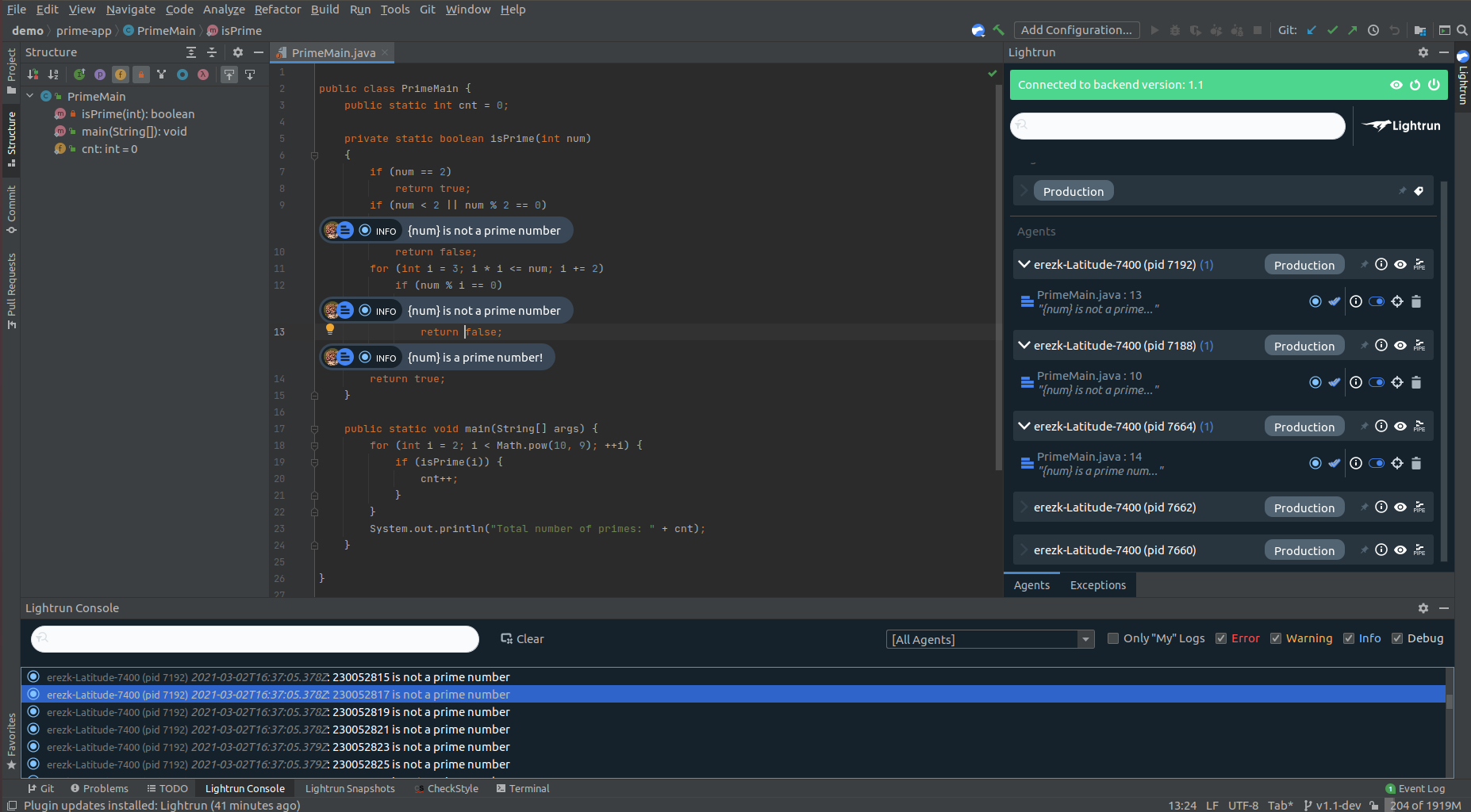
    Lightrun today announced it has made its namesake debugging tools available for applications deployed in on-premises IT environments that, for one reason or another, can’t be deployed on a cloud platform.

    lan Peleg, CEO of Lightrun, said Lightrun is unique in that software teams can capture live production data from software installed on their customers’ sites via a set of command line interfaces (CLIs). That approach eliminates the need for the end customer to set up a separate environment to troubleshot an application, said Peleg.

    Instead, software teams can troubleshoot their software without requiring on-site visits by support engineers or even a phone call, Peleg said.

    Lightrun makes it possible to add logs, virtual “breakpoints” and metrics while an application is running. Those capabilities are critical because many applications are not fully instrumented. Lightrun makes it simpler to triage issues by adding a missing log line, instrumenting a new metric or taking a snapshot of an application as it runs in a production environment. Those capabilities make it possible to find bottlenecks and errors without requiring the application to stop running.

    The performance impacts of Lightrun range from tens to hundreds of microseconds per invocation to minimize overhead, Peleg said.

    In general, Peleg said, debugging applications is becoming more challenging. Monolithic applications continue to grow in size while emerging microservices-based applications have dependencies that make them challenging to debug. Many organizations are employing application performance management (APM) platforms and other observability tools to try and address these issues. However, those platforms require IT teams to continuously collect data, and even then there is no guarantee the insights needed to troubleshoot an application will be surfaced. Lightrun, conversely, makes it possible for developers to troubleshoot an application and capture the metrics needed in real-time. That data can then be shared with an APM platform to make it easier to address similar issues if required, Peleg said.

    As developers become more accountable for application performance, many of them are not going to want to employ the same tools and processes that IT operations teams have historically relied on. Lightrun provides a lighter-weight approach to troubleshooting applications, within the context of a DevOps workflow, that doesn’t require as much overhead, said Peleg.

    Although observability is a core DevOps principle, many organizations have been unable to achieve it in a meaningful way. There is no shortage of tools for monitoring IT environments, but correlating all the data those tools generate is problematic. It’s not uncommon for organizations to spend weeks trying to identify the source of an issue that only takes a few minutes to fix. Now that developers are assuming more responsibility for managing the entire lifecycle of an application it is likely different approaches to achieving observability will be considered.

    In the meantime, as the number of applications deployed in production environments continues to increase, different approaches to debugging software will be required. Otherwise, at the current rate of deployment, it won’t be long before developers find themselves spending most of their time debugging existing applications, versus actually writing new code.

  • Value Stream Management Consortium Makes Debut

    Value Stream Management Consortium Makes Debut

    A consortium dedicated to advancing the adoption of value stream management best practices is being launched today with backing from Digital.ai, HCL Software, Plutora, ServiceNow and Tasktop.

    The Value Stream Management Consortium (VSMC) will create an open community around which organizations that are seeking to expand DevOps workflows and processes across functions and organizations can more easily collaborate.

    VSMC chair Helen Beal said that while value stream management has been around as a concept for years, the number of organizations that have fully embraced the concept remains relatively small. The VSMC is dedicated to enabling organizations to orchestrate software development processes more flexibly, she said.

    VSMC Chair Helen Beal

    That goal has proven elusive, because it requires a level of collaboration between release managers, DevOps managers and product managers as well as IT and business leaders. Value stream management provides a framework for enabling organizations to embrace value stream management concepts as they become more adept at employing DevOps workflows to manage multiple application development initiatives simultaneously.

    Initially, Beal said, the VSMC will function as a central hub of information and education pertaining to value stream management. Ongoing research will track how organizations measure value. Eventually, the VSMC will provide certified training, Beal added.

    The concept of value stream management traces its lineage back to lean manufacturing methods, which called for each step of a manufacturing process to be continuously measured. As software development has evolved from being a craft to a process that is automated as much as possible using DevOps best practices, an appreciation for the value of monitoring things such as the impact of missed software development deadlines on the business is growing steadily as organizations realize how dependent on software they have become.

    As organizations come to terms with this new reality, many also realize there is a much greater need to align software development with their core business processes. Value stream management platforms automatically take technical metrics, gathered via a DevOps process, and match them to a set of key performance indicators (KPIs) defined by business leaders. The challenge many organizations still face is making sure they have the tools in place to collect the appropriate technical metrics and then define the KPIs that truly matter to the business. Once those metrics are gathered and KPIs established, organizations are then able to apply advanced analytics to the massive amounts of DevOps data they collect.

    Business leaders are especially anxious to understand how any software development project delay might impact future revenue projections. Rather than being a set of tools employed mainly by IT leaders to track software development projects, value stream management platforms make it possible for other stakeholders to track KPIs spanning multiple software development projects. It then becomes easier to make informed decisions about how to reassign resources across various projects as different bottlenecks are encountered.

    It may be a while before organizations achieve that level of DevOps sophistication, but as software continues to eat the world it’s only a matter of time before value stream management becomes the table stakes organizations will need to survive and, hopefully, thrive.

  • Cybersecurity 2021: Are You Really Prepared for a Cyberattack?

    Cybersecurity 2021: Are You Really Prepared for a Cyberattack?

    As the majority of businesses are increasingly moving to the online world, employees keep working remotely and more cyberattacks keep happening all over the globe, there is no doubt that embracing DevSecOps should be the new normal for every company. Organizations need to be able to adopt DevSecOps practices and adapt to new and evolving threats in order to protect their data and systems from malicious attacks.

    At Cybersecurity 2021: The New Normal Virtual Summit, taking place March 4 and 5, the brightest minds in the security and IT industry will come together to discuss new security threats, empower DevOps teams with the latest security tools and provide practical tips and guidance to help developers and ops teams make the right security decisions to keep their data secure.

    The two-day virtual event features thought-provoking discussions, networking opportunities and educational sessions focused on:

    • DevSecOps tools and practices
    • The main challenges of security and development teams when it comes to AppSec
    • Identity and Access Management (IAM)
    • Passwordless and the long-term future of identity management
    • Policy-as-Code and how it impacts security
    • How security threats changed with COVID-19 and what to expect in 2021
    • How to manage AppSec
    • How to mitigate API vulnerabilities
    • How to break the silos and advance towards DevSecOps maturity
    • How to expand your security program through low-to-no cost initiatives
    • Time series database for security monitoring
    • Machine identity management
    • Top 10 Hacks From the Past Decade
    • Runtime observability techniques for security and compliance
    • Securing AWS credentials on DevOps machines

    Cybersecurity 2021 features an outstanding lineup of industry leaders, including:

    • Ira Winkler, author and president at Secure Mentem
    • Chenxi Wang, founder and general partner at Rain Capital
    • Ron Gula, president at Gula Tech Adventures
    • Richard Stiennon, founding member of The Analyst Syndicate and chief research analyst at IT-Harvest
    • Joe Levy, CTO at Sophos
    • Rajat Bhargava, founder and CEO at JumpCloud
    • Myla Pilao, head of security research communications for TrendLabs at Trend Micro
    • Upasna Gupta, senior product marketing manager for Prisma Cloud at Palo Alto Networks
    • Julian Waits, general manager of cyber business unit and public sector at Devo
    • Joseph Feiman, chief strategy officer at WhiteHat Security
    • Ian Murphy, founder and CEO at CyberOff
    • Mike Jones, security researcher at H4unt3d Hacker Podcast
    • Rhys Arkins, director of product management at WhiteSource
    • TJ Jermoluk, co-founder and CEO at Beyond Identity
    • Jim Ducharme, general manager of the anti-fraud business unit at RSA

    Attendees will have the chance to enter a raffle for a chance to win a free copy of “You can Stop Stupid” by Ira Winkler and another one for a free copy of “Security Yearbook 2020” by Richard Stiennon. There will be valuable resources available for download and attendees will be able to interact with sponsors to learn more about their security tools and services.

    To see the full agenda and to register, please visit the Cybersecurity 2021 website.

  • How to Build Actionable Logging Systems

    How to Build Actionable Logging Systems

    Logging is often considered an automatic process that doesn’t require much thought. We see logs, in general, from any system and take for granted that those logs have the information that’s needed. However, thinking through a logging strategy and architecture is extremely important for troubleshooting and performance efficiency. Regardless of how you log, the most important part of logging, after simply having logs in the first place, is having logs you can actually use. Actionable logs provide enough information, enough detail and enough history to ensure you can use the logs to get something done.

    Let’s examine an example system. This example system is an application, with a microservices architecture, running on a Kubernetes cluster that lives on top of an RHEL box. By default, you get logs from the operating system and Kubernetes. But to get logs for the different microservices, you have to program those logs into your application while building the codebase. So how do you set up useful, actionable logs successfully?

    Three Main Considerations

    Consider the following elements when you think about building actionable logs.

    Enough Information

    Your logs should provide enough information to answer ‘when,’ ‘who’ and ‘where’ for any event. As an example, let’s say you want access logs. If there was an access event for your system, the log line for that access event should tell you when that access occurred; this is known as the timestamp. The log line should also include information about who accessed the system. Often, this detail comes in the form of an IP address or other identifier, and the ‘who’ should include not just human interaction, but also actions by other systems. Always log every access! Finally, the log line should include the location from where the system was accessed, meaning which service or which part of the platform was accessed.

    Enough Details

    Your logs should provide enough details to tell you exactly what happened during any single event. Simply answering the who, when and where doesn’t actually tell you what happened, and a basic answer such as “This pod started,” doesn’t provide enough detail to differentiate a code change triggering a pod restart from a system crash triggering the orchestrator to restart pods.

    Enough History

    Finally, your logs should provide enough history to understand why something happened. Logs, overall, help you understand the context of the action that was taken. Writing log lines to a terminal somewhere without storing them is pointless. A single log line doesn’t provide you with enough context to understand the “why” for any action or event. How could you tell if an event was normal for a system without an easily accessible history?

    All three of these components are necessary to create a plan that will lead to actionable logs—logs you can actually use to understand what happened, why it happened, and how you can act to handle the situation. If you can answer who, what, where, when and why from your logs, you probably have actionable logs, and are well on your way to meeting or exceeding logging best practices.

    Next-Level Considerations

    Once you’ve thought through those higher-level considerations, you can think about the nitty-gritty of your logs themselves. When I think about the practicalities of logging, I think about these main considerations: log levels and data needs, format and structure and security and compliance

    Log Levels and Data Needs

    Using log levels properly ensures that you collect and store the data that you need, and only that data. Logging can get very noisy, very fast in modern environments. Log levels provide the ability to fine-tune your logs to store only what you need; this can help you find information quickly in an emergency, rather than digging through the haystack for the proverbial needle. In addition, someone is more likely to keep logging capabilities turned on when it gets noisy if they have the ability to reduce the noise and fine-tune the information, versus having only an on-off switch.

    Different programming languages use different combinations of log levels, but all of them have general categories of major, minor and debug logs. Major logs, as you might guess, should be on for all environments. Minor logs, generally, are turned on in environments for which you need to be able to understand the data flow without necessarily knowing the minute details. Finally, debug logs are generally turned on in dev or QA environments, and only when you need to know every detail – such as when you’re looking for issues that could turn into problems later on. You will need to ensure the necessary log levels are set in your code, as they aren’t necessarily automatic, but taking this extra step is worthwhile.

    Format and Structure

    You need to think about who or what is the primary audience of your logs. If you anticipate sifting through the logs yourself, you’ll likely not mind a text-based format. However, most modern logging uses machines to parse the logs and make the mounds of data more useful. In that case, you should use structured logging; JSON is the standard for structured logs due to the plethora of tools available for working with the standard.

    Security and Compliance

    Logging for security and compliance could be (and has been!) a full article, on its own. The short version, however, is that logging is a key pillar of a compliant system that is aware of, and actively monitoring, its security. If your stack doesn’t log everything to one or more append-only log files, stored in secure location(s) with a read-only archive stored in a separate location, then you’re at risk of an attacker coming in and modifying or deleting logs so you can’t track their actions across your system.

    Your logging processes shouldn’t store personally identifiable information (PII) in clear text or behind an easily broken cypher, either. It’s better to keep that PII in a secured and hashed database, with a unique identifier (UID) that correlates to the database, if you definitively need to keep that PII in your logs in some form, or strip it out if you don’t need it.

    Working Together

    All of these tips are fine and dandy, until you realize that you cannot get enough buy-in from others to ensure everyone follows the same best practices. It’s generally best to come to an agreement as to logging standards and practices across an organization. That will also help, as anyone working on a different system will start from the same baseline, and not have to understand another team’s standard, if they come in to help in an emergency. Ops teams working across many systems will appreciate the standards, as well. To get everyone to the table in the first place, start by appealing to each of their needs. Ask about people’s problems with logging and listen to responses. You likely will need to address assumptions folks make, misconceptions, complacency and resentment. The key is listening; you won’t get buy-in until everyone feels heard and validated.

    To get everyone on the same page, you should first identify, as an entire organization, the needs you have from your logs based on the components of actionable logs. Ensure everyone has a seat at the table and the ability to discuss and unearth all needs, so no one is tempted to go around the team’s decision. One team’s needs will not match another’s, so you need to ensure that all viewpoints are heard and accounted for. Then, organize related needs and set standards for those needs. Once you’ve agreed to your new standards, work together to update your systems. This will take time, just like it does with resolving any technical debt! Start with smaller systems, or less-critical systems, so you can monitor how the standards are surfacing in real life, and how well everyone’s needs are met. Adjust, if you need to, with everyone’s agreement. Needs and standards will change, just like your systems will, and they need to adapt to fulfill the needs of your teams. If you take the time to get everyone to the table and make sure everyone is on board, you’ll be better off.

    What You Need to Succeed

    Logging may seem like simple magic that ‘just works,’ but there’s a lot to think about before you can have a successful, useful system. You need actionable logs that have enough information, details and history to be useful. You need to think about the data you need for all of your various systems, how you’ll structure that data and how you’ll ensure you stay secure and compliant. Finally, you need to ensure your team is on board with standards so logging can be as useful as possible. If you do all of that, though, you’ll find logging becomes a great way to communicate across teams and organizations to ensure you deliver the best product possible.

  • Languages and DevOps: Web Development

    Languages and DevOps: Web Development

    Web development has changed a lot since DevOps first hit the scene. The languages used have shifted, where languages are used has shifted, the likely back-end hosting environment has changed – but DevOps has folded these issues in and just kept plugging along.

    We’re going to approach this from two angles – what languages you’re likely to use, and what DevOps offers. This is not a “Best Billion Web Development Languages for 2021!” article; there are plenty of those out there, and you are more than welcome to read them. This is more about using these languages in a DevOps environment, which has become standard for web apps more than any other type of development.

    We’ll start by observing that your web app is, more than likely, going to have at least three parts – HTML, CSS and JavaScript. This is not news to those of you doing it daily, but we’re just setting the bar, here. Other languages may be used to generate or populate any/all of the above, but, in the end, these three languages get sent to the browser, so will be part of the equation.

    Backends add an incredible amount of complexity to this equation. I’ve done Ruby backends that did most of their work in C++ and Java; I’ve done pure Java backends that spit out the required three components; I’ve done Node backends that had very little actual HTML/JavaScript source code, but generated a ton of both – it’s all there. And the hosting environments for backends have changed. When DevOps started, most hosts were virtual machines (VMs) or hardware, whereas now we’re mostly running cloud instances or containers. Those backends have to be configured and managed, too, along with all of the dependencies that your application requires. When you think about it, we really have created quite a messy environment.

    But DevOps has risen to this challenge.

    I’ve long been an Atlassian fan, and find them to be a great tool for managing the agile side of DevOps. Add in Ansible, for the operations side, and you have a good thing going. I recently looked into GitLab, and GitOps – through GitLab – offers a compelling alternative to Atlassian’s offerings; more so since Atlassian made some rather unpopular changes right about the time I was wrapping up my look at GitLab.

    The key is that Git holds all the code. By adding in the scripts to spin up those increasingly complex backends and secure the entire infrastructure, you get an “App in a (virtual) box.” No matter what DevOps toolchain you use, tying this in is simple, because it already works well with Git and associated tools.

    Developers tend to care more about the development side of the equation (imagine that!), so let’s talk a bit about what’s going on out there.

    PHP is hanging on solidly, with a bulk of applications and (perhaps more importantly) libraries to keep it in the running. PHP is one of the original “generate an HTML page” languages, and is slowly being displaced. It isn’t a bad choice for your web projects, but it isn’t the only – or at this point, the most popular – choice.

    Java is still somewhat popular, and while it offers good support for web development, it is … heavy? Is that the word? It’s something for this type of development, and has ceded ground to other languages when it comes to pure-play web development. The skills are transferrable to other targets, so it is a good broad-use language. Like the other serious players in this space, there are web-centric libraries and frameworks that make Java hum. I’m a fan of Spring, but the options are pretty broad.

    JavaScript wins this race today. It is used on both client and server, there are a ton of developers and DevOps people available who can be productive in JavaScript from day one, and it is increasingly used in other contexts – meaning skills could transfer to other projects. Like any language, there are trade-offs, but the portability aspect makes the trade-offs things that many are willing to work to overcome. Libraries and frameworks abound to make JS development faster and more dynamic. Personally, I like Node for server-side development, and Angular for clients that need more than straight HTML/CSS offers (probably because it’s the one I’ve used the most).

    Python is definitely a contender in this space, as it is in most others today. With Django (or whatever your framework of choice), it functions well for web development, and its popularity has given it a host of support libraries to get things done. Developers are easy to find, and skills are broadly applicable, as Python is used in most areas of Dev and Ops at this point.

    Windows aficionados are still using C#, and it does have good hooks into Microsoft DevOps tools, so any Microsoft shop should include it in evaluations. I’ve done C# on Azure for web apps, and for me it was … different, but not broken. In a Microsoft shop, C# will be familiar, and at this point, most developers are familiar with web clients, so merging the two is only a tiny bit of a learning curve, but not a major one.

    Ruby does seem to have ceded its spot to Python. It is unlikely you’ll find a steady flow of ruby developers to fill those positions, but it is a highly intuitive language that you can train Java, and even Python developers in, if necessary. Ruby is well-supported for web development; indeed, it feels more natural using Ruby for web work than command line tools (at least to me, YMMV). There are web frameworks to make Ruby more intuitive in web development, and jRuby offers deep integration with Java to make use of already existing Java classes.

    All in all, JavaScript should be the strong contender for a new project today, but any of these tools will serve the need. They are all well-supported, and DevOps tools start with integration to most of these languages. Do what’s best for your environment, and keep rocking it.

  • Helping Bring Balance, Diversity to the IT Workforce

    Helping Bring Balance, Diversity to the IT Workforce

    It’s a fact: Minorities and women traditionally have been underrepresented in the IT space. According to the Brookings Institute, less than 7% of computing and math-related jobs are held by people who are Black and Latino. And while women are faring better, they still only represent about 30% of the workforce in computer and mathematical occupations, according to the institute. Clearly, there is more work to be done in creating a balanced, diverse IT workforce.

    At MediaOps, one of the traits I believe helps define this company is inclusiveness, recognizing the value each person in our organization brings to the table. Different educations, different backgrounds, different perspectives … they all help us see the world in a different light and make decisions that are rooted less in biases and more with a deeper understanding fomented by the populations each of us represents. This, I believe, is fundamental in achieving balance; by recognizing and celebrating our differences, we create a strong, unified organization.

    Be the Change

    It is with the goals of diversity and inclusiveness that MediaOps is proud to announce “Engineer the Change,” a scholarship program in conjunction with Boca Code, an immersive coding school that provides in-depth technical training. MediaOps will sponsor two scholarships annually to students from disadvantaged communities interested in pursuing a career in the tech industry. The scholarships, each valued at $10,000, will enable students to enroll in the flagship Software Engineering Career Course at Boca Code.

    The “Engineer the Change” scholarships will be awarded to two deserving recipients on an annual basis. To be eligible, applicants must be 18 years or older and be part of an underrepresented community. To be considered, applicants will be required to submit an essay detailing how they can serve as role models to other disadvantaged individuals hoping to acquire the skills to become successful tech workers, and what type of career in the tech industry they are hoping to pursue. While the idea is to help the South Florida tech community, applicants can apply from anywhere, as long as they include in their application essay why they are coming to South Florida to launch their tech career.

    Submissions for the first scholarship for the Software Engineering session, taking place April 5-June 4, are now open. The deadline to apply is March 15. The second scholarship application process will open Aug. 1 for the session taking place Sept. 20-Dec. 3.

    To learn more about how to apply for the scholarship, please visit: https://mediaops.com/engineer-the-change/

    Get Involved

    MediaOps is offering these scholarships because we believe diversity enriches everything. We encourage other companies to do their part to help promote diversity and inclusiveness, both within their organization and through programs targeting underrepresented communities locally or regionally. It is time for the IT sector to do its part in promoting technology to women, minorities and other traditionally underrepresented groups; only by getting involved today will we help shape the next generation of technology workers.