Category: IT as Code

  • Report: SD-WAN Shift to the Cloud Accelerates

    Report: SD-WAN Shift to the Cloud Accelerates

    The rate at which software-defined wide area networks (SD-WANs) are being consumed as a cloud service appears to be accelerating in the wake of the COVID-19 pandemic.

    A global survey of 750 IT professionals conducted by the market research firm Vanson Bourne on behalf of Barracuda Networks finds over half of respondents (52%) are looking to acquire an SD-WAN solution via a cloud provider, with Microsoft Azure being cited as the most preferred option.

    Only 16% said they prefer an SD-WAN from an independent vendor, while 15% would opt for a telecommunications provider. Another 12% said they would rely on a reseller.

    Klaus Gheri, vice president of network security for Barracuda Networks, said the survey suggests that as application workloads move into the cloud, more IT organizations want to centralize acquisition of networking services alongside compute and storage. As such, he said, providers of SD-WAN appliances such as Barracuda Networks will need to evolve to extend the basic SD-WAN capabilities provided by cloud service providers.

    At the same time, Gheri noted that way applications are being accessed is also evolving as more employees are working from home. Rather than directly accessing applications running in a local data center or office, many organizations are routing access requests to those applications through their cloud service provider. That approach reduces costs by using a public internet connection to access to cloud service, which then routes that request over a virtual private network (VPN) to a local data center.

    Given the egress charges a cloud service provider requires, that approach may not reduce costs in the case of every workload. However, it may reduce costs by reducing the amount of network traffic moving across a leased MPLS line, he noted.

    Gheri said the rise of the cloud as a networking conduit illustrates how varied SD-WAN implementations have become. Organizations increasingly need some capability at the client level to automatically determine which network path makes the most sense for any request based on cost and latency requirements.

    In the meantime, frustrations with VPN clients continue to mount. Most VPN implementations were designed to support a small percentage of employees for occasional access. With more employees working from home more frequently, many organizations are reconsidering their SD-WAN strategies. In addition to being able to scale services more easily, Gheri noted SD-WANs also afford organizations the opportunity to implement zero-trust networking services to better isolate application environments in the event of a security breach.

    Over the last few years, SD-WANs have been one of the fastest-growing categories in IT. The Barracuda survey found 23% of respondents have already deployed SD-WAN, with another 51% either in the process of deploying or expecting to deploy one within the next 12 months.

    Clearly, competition between cloud service providers, telecommunication carriers and independent providers of SD-WAN services will intensify in the months ahead. The challenge facing IT teams now is determining to what degree they want to be directly involved in managing SD-WAN networks versus simply consuming SD-WAN services on an as-needed basis.

  • Why the Success of Edge Computing Relies on a Linux Legacy

    Why the Success of Edge Computing Relies on a Linux Legacy

    At this point you’ve certainly heard rumblings of the promises of edge computing and may wonder if it’s right for your organization and how to assess its viability. The way we think about edge is as a decentralized extension, or evolution, of cloud computing, enabling many of the same technologies and applications to be leveraged in areas/locations that weren’t possible before.

    I believe that the promise of edge computing and the opportunity it unlocks is valuable enough to be a major driver in our industry over the next decade. Here’s how to think about implementing edge computing in your organization. 

    Getting Started

    Since edge is an evolving space, the exploration of edge computing should start as soon as possible, and we’d recommend a phased implementation approach to help deal with change as it comes. 

    Many of the companies we work with who delayed their cloud initiatives found that it contributed to their falling behind from a technology standpoint. Given the choice, it’s better to deal with some sharp edges — no pun intended — than to fall behind your competitors in reaping the benefits.

    Edge requires careful life cycle analysis at the beginning of the journey, rather than an afterthought. The decentralized nature of edge computing raises the stakes and amplifies any potential problems you would have in other computing scenarios. So as you begin, keep in mind issues such as adaptable infrastructure, security and life cycling between hardware and software.

    The Value of Adaptability, Linux and Open Source

    Twenty-five years ago, innovation was a slow, laborious, bug-filled crawl — with any advances crippled by proprietary technology. The breakthrough that paved the way for the continuous, rapid pace of innovation possible today was Linux.

    We need to heed the lessons from the early days around private cloud adoption and, more recently, Linux containers with regards to adaptability. Many man-hours were lost in slash-and-burn style rebuilding of infrastructures. The logistics at the edge make it impractical to have the same learn-as-we-go freedom we had inside the datacenter. 

    As we’re likely to see edge computing evolving quickly, the only adaptable architectures will be the ones that can avoid a total tear-down. Adaptable architectures will also be well-positioned to take advantage of the newer capabilities as they become available. 

    Remember, Linux has a strong history in the embedded world and is well adept at tackling a number of the historic challenges in this space. The more immediate impact is being felt at the distribution level. Our distributions, for example, have objectives around minimization and we expect to see more low-level enablement work on the security side for edge happening in the near future.

    For edge computing to reach its full potential, we need to be completely driven by open source and open standards. What we’ve learned from previous technology waves is that while most proprietary technologies have their merits, they miss out on the multipliers that can come from a thriving community.

    Final Considerations

    Security is a longer topic on it’s own, but given that we’re giving up many of the security barriers that are easy to take for granted in the datacenter and cloud (physical access, networking perimeter, security groups/policy, etc.), we are going to rely more and more on lower-level hardware and operating system security.

    No company wants to risk a common vulnerability across a hundred thousand nodes. This makes it our job to keep enterprise deployments from following the pattern of some consumer-grade devices that are long out of software maintenance.

    For edge computing innovation, we need to be thinking more about how we create sustainable solutions and technologies given how many deployments will require a longer life cycle and are more tightly bound to hardware and equipment refreshes. The path of innovation leads from Linux to and through the network edge. Companies that follow this approach will be better positioned to leverage the promise and power of the edge while avoiding fragmentation and lock-in.

  • Making SD-WAN More Secure and Flexible

    Making SD-WAN More Secure and Flexible

    Cloud and managed services enable companies to focus scarce IT resources on business outcomes. According to Gartner, the “market size for cloud is growing exponentially, and cloud is projected to be a $317 billion industry by 2022.”

    Managed service providers (MSPs) leverage the power of software-defined wide area networks (SD-WAN) to offer higher quality services and reduce branch network costs. SD-WAN offers compelling advantages for distributed organizations with critical branch operations, including the benefits of business agility, improved application performance and lower bandwidth costs.

    MSPs invest considerable time and energy in ensuring that their servers, applications, data centers and people are always available. The same amount of attention needs to be paid to managing customer connectivity, as connectivity issues will result in customer support and retention issues, together with increases in cost and decreases in monthly recurring revenue.

    While bringing connectivity to the data center is viewed as a customer-driven activity —  meaning that MSPs are relying on end-users and carrier networks to deliver their customer experience — managing that connectivity is primarily, but not always, the responsibility of the MSP.

    However, the quality, performance and security of carrier networks can be outside of the MSP’s control, creating vulnerability in the MSP’s service delivery and revenue process. Many MSPs are, therefore, rightly concerned about the safety of end-user data as it passes over the carrier networks. Outsourcing security measures and data assurance for end-users’ critical data can sometimes be undesirable and, thus, should be considered as part of a risk mitigation strategy.

    Making SD-WAN More Secure and Flexible

    A challenge that most MSPs face is ensuring that their customers’ data is encrypted safely in an SD-WAN environment and the integrity and confidentiality of that data is assured.

    An on-premise, scalable encryption management solution that can integrate into an SD-WAN without disrupting an MSP’s environment provides the flexibility MSPs are seeking. In addition, the utilization of micro-segmentation using cryptography to prevent lateral movement of threats between segments can protect the confidentiality and integrity of the end-user’s data providing the security both parties need.

    A viable encryption solution that makes the SD-WAN environment more secure and flexible provides the data assurance MSPs and their end-users are seeking, while mitigating risk and reducing the attack surface for everyone.

    Data Assurance with Separation of Duties

    Layer 4 encryption provides data assurance and eliminates risk for both the MSP and the end-user with the separation of duties, allowing the end-user to encrypt and protect their data prior to sending it over the MSP/carrier networks. Through crypto-segmentation, fine-grained policies are defined and enforced to protect the confidentiality and integrity of the end-user’s data.

    In practice, this means that MSPs do not take on the risk of having to manage and protect the confidentiality and integrity of their customers’ data, nor do they have to accept risk to protect end-user data when it’s on their network — it remains the responsibility of the end-user.

    Similarly, the end-user can eliminate risk to their data from both the MSP and whatever carriers they, or the MSP, may be using for the connectivity; they do not have to trust the carrier team or network to be secure.

    Ensuring Fine-Grained Regulatory Policies with Crypto-Segmentation

    Most MSPs will have enterprise, government and high assurance customers, all of whom are under varying data protection regulations. The end-user can now use crypto-segmentation to create separate policies and data flows, thus eliminating risk by defining fine-grained policies that are difficult to infiltrate.

    Crypto-segmentation enables MSPs with customers who must adhere to different or multiple industry and/or government regulations — for example, to generate these fine-grained policies by each customer and regulation (GDPR, PCI, CJIS, NERC CIP) etc. 

    Scalable Implementation Into Any Network or Transport

    Lastly, a scalable, network agnostic overlay which integrates easily and sits on top of SD-WAN can make the SD environment more secure for MSPs and their customers without disrupting the current network architecture and with zero impact to performance. This solution should be fully interoperable with the SD-WAN, scale to support the breadth and depth of the customer’s environment and operate without impacting the SD-WAN core functionality. 

    Conclusion

    MSPs and their end-users need to mitigate the risks and vulnerabilities associated with multiple carrier networks. In order to achieve this, it is essential that MSPs investigate flexible and secure data assurance solutions that help both carriers and end-users to take advantage of the management services provided by MSPs and provide critical separation of duties to mitigate risk for both parties.

  • SonicWall Adds Multi-Gigabit Switches to SD-Branch Portfolio

    SonicWall Adds Multi-Gigabit Switches to SD-Branch Portfolio

    SonicWall has added a line of multi-gigabit switches to its software-defined (SD)-branch offering that unifies the management of wireless access points and firewalls that include software-defined wide area network (SD-WAN) capabilities.

    Dmitriy Ayrapetov, vice president of platform architecture for SonicWall, said the switches will replace a series of switches that SonicWall had been reselling from Dell Technologies. SonicWall spun out of Dell at the end of 2018 after being acquired in 2012.

    SonicWall has been making a case for unifying the management of remote office networking via a central management console dubbed Capture Security Center. To achieve that goal, the company embedded SD-WAN capabilities in its firewalls while expanding its portfolio to include wireless access points and switches.

    Ayrapetov said in the wake of the COVID-19 pandemic, interest in centralizing the management of remote offices has increased for two reasons: First, IT teams are no longer inclined to travel to remote offices unless there is an absolute requirement; and second, following the economic downturn brought on by the pandemic, there’s more interest in reducing costs—an issue SonicWall addresses by consolidating the management of networking and security.

    As part of its SD-Branch offering, SonicWall also makes available client software in multiple forms, providing IT teams with capabilities such as URL filtering to block access to malicious websites that can be applied to any device on the network, including systems that employees are using to work from home. That capability makes it possible for IT organizations to enforce cybersecurity policies regardless of where employees are located or what network they are using to access IT resources in a branch office, said Ayrapetov.

    Longer-term, Ayrapetov said it’s clear organizations are moving toward zero-trust networking architecture to better ensure cybersecurity using SD-WANs and other technologies to access cloud applications. However, in the short-term, most organizations will continue to rely on virtual private networks (VPNs) to access IT resources located in a branch office, on-premises data center or public cloud.

    SonicWall has been making a case for its Boundless Cybersecurity platform, which can be broadly applied across a distributed computing environment. At the core of that platform is its Capture Advanced Threat Protection (ATP) cloud sandbox service that relies on deep memory inspection in real-time, machine learning and cyber threat intelligence to identify malware and other potential threats.

    As part of that architecture, SonicWall also provides zero-touch deployment capabilities, which eliminate the need for extensive cybersecurity expertise to deploy its appliances and services.

    It’s not clear to what degree organizations will be consolidating the management of networking and cybersecurity. However, the smaller the organization, the more likely one team is managing both networking and security. As the number of cybersecurity threats organizations face continues to rise at a time when IT budgets are under massive pressure, chances are high many larger IT organizations soon also will be consolidating the management of networking and security.

  • Aruba Injects AIOps Into Network Management

    Aruba Injects AIOps Into Network Management

    Aruba, a Hewlett Packard Enterprise (HPE) company, this week launched a platform that leverages artificial intelligence (AI) to identify and remediate networking issues before they have an impact on end users.

    Patrick LaPorte, senior director of cloud and software solutions marketing, said the Aruba Edge Services Platform (ESP) applies algorithms to data collected for customer networks and aggregated by Aruba in the cloud. That approach enables the company to apply AIOps to automate the management of both software-defined wide area networks (SD-WANs) and Wi-Fi access points.

    Aruba has been making a case for converging the management of SD-WANs and Wi-Fi access points in remote offices for a couple of years now. With the downturn in the economy brought on by the COVID-19 pandemic, the need to reduce the total cost of networking is even more pressing, LaPorte said.

    The Aruba ESP platform further reduces the total cost of networking by augmenting network administrators with AIOps capabilities that will enable a smaller team to centrally manage via the cloud a much larger number of network services being delivered to remote offices, he said.

    At the same time, Aruba enables IT organizations to implement zero-trust network security by providing built-in support for role-based access, dynamic segmentation of network services and identity-based intrusion detection to authenticate, authorize and control every user and device connected to the network, said LaPorte.

    The Aruba approach to AIOps revolves around Aruba Central, a cloud service based on Kubernetes the company relies on to manage networking equipment that runs ArubaOS services. Aruba claims to have more than 65,000 customers using Aruba Central to manage network services.

    Aruba Central has been enhanced to include AI Search, a data discovery service based on a natural language processing (NLP) engine that enables IT teams to employ English-language queries to extract user and device information from the data lake created by Aruba ESP. The company has also added user-centric analytics to better identify client, application and network performance issues.

    Aruba has also added a faster Aruba CX 6200 Switch Series that includes built-in analytics and automation capabilities.

    Finally, Aruba has launched Developer Hub, which provides access to its application programming interfaces (APIs) and documentation to applications that leverage the Aruba ESP platform.

    The way network services are being managed and delivered to remote offices is dramatically changing as applications become more distributed. At the same time, the entire definition of what constitutes a remote office in the age of COVID-19 is being transformed as more employees work from home. Aruba is addressing that challenge by making it easier to set up network tunnels between home offices and remote offices managed by Aruba Central, said LaPorte.

    As networking continues to evolve there is no doubt IT organizations will be relying more on automation and AI to deliver network services as scale. Less clear is the degree to which IT organizations will be willing to standardize on networking equipment from a single vendor to achieve that goal. In theory, IT organizations can reduce their total cost by standardizing on a single vendor. In practice, however, many IT environments are comprised of a dizzying array of networking equipment from multiple vendors.

    Regardless of what path forward is chosen, it’s already apparent the current networking status quo will not hold for much longer.

  • A10 Networks Allies with Dell for ADC Infrastructure

    A10 Networks Allies with Dell for ADC Infrastructure

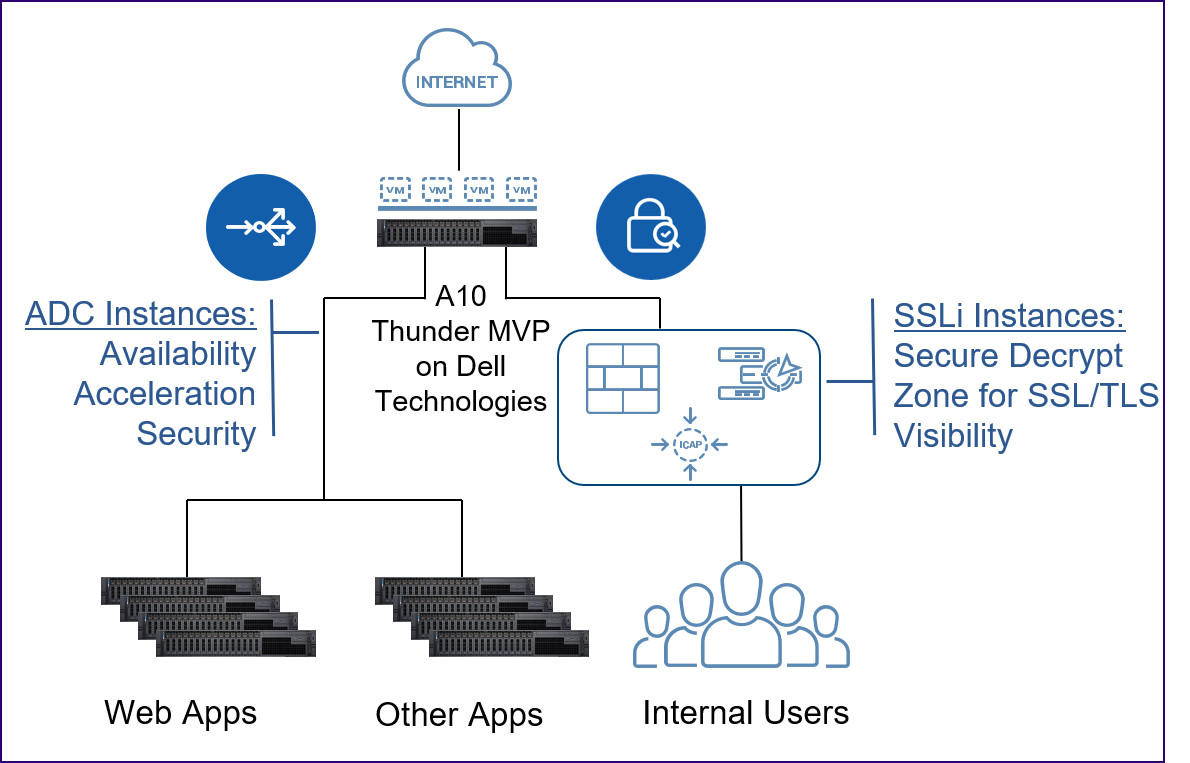
    A10 Networks announced today it has partnered with Dell Technologies to make its application delivery controller (ADC) and A10 Thunder Multi-tenant Virtual Platform (MVP) available on Dell servers.

    Gunter Reiss, vice president of worldwide marketing for A10 Networks, said this alliance reduces the cost of deploying ADCs in on-premises IT environments by taking advantage of industry-standard hardware platforms based on x86 processors beginning in the third quarter. Those servers, however, will only be available in the Americas market.

    Specifically, the A10 Thunder ADCs are designed to run on Dell EMC PowerEdge R640XL and R740XL servers, as well as Dell EMC Virtual Edge Platform 4600. The A10 Thunder MVP is designed to run on Dell EMC PowerEdge R640XL and R740XL servers. IT teams can move A10 ADC licenses across these platforms as they best see fit, said Reiss.

    In the wake of the economic downturn brought on by the COVID-19 pandemic, A10 Networks expects more IT organizations will look to rationalize their server portfolio, he said, noting as a major supplier of those servers, partnering with Dell affords A10 Networks an opportunity to expand the base of potential customers.

    Standardizing on a single server platform also affords some organizations the opportunity to reduce their carbon footprint in the data center, he added.

    It’s too early to say how aggressively IT organizations will be consolidating IT infrastructure. However, the total cost of IT increases whenever an organization adds a new platform or vendor. Many IT organizations have already standardized on a single server vendor as part of an effort to reduce management costs. In fact, Reiss said A10 is betting rival ADC vendors will be shut out of IT environments if they require IT organizations to acquire dedicated hardware.

    In the meantime, the number of ADCs required by IT organizations is increasing as the application environment becomes more complex. The rise of microservices-based applications is requiring IT teams to focus more on application latency issues that occur when more modules of code are sharing access to the same IT infrastructure.

    A10 Networks helps address that issue by embedding analytics into that A10 Harmony Controller that is employed to centrally manage all A10 ADCs deployed in a distributed computing environment. That capability makes it simpler for IT organizations to embrace best DevOps practices, Reiss noted.

    ADCs are also playing a larger role in security by first offloading encrypted SSL/TLS traffic and then providing visibility into that traffic to prevent data leakage.

    In general, Reiss said DevOps teams are exercising more ownership of ADC platforms. Network and security operating teams still play a major role; however, it’s clear IT functions are starting to converge, he said.

    It remains to be seen to what degree those roles will ultimately converge. Each IT organization is likely to pursue a slightly different path toward converging network operations and DevOps. The challenge and the opportunity will be overcoming the inherent cultural challenges associated with bringing together IT teams that historically have not had much cause to interact with one another.

  • MongoDB, Storj Labs Work to Reduce Data Security Costs

    MongoDB, Storj Labs Work to Reduce Data Security Costs

    MongoDB Inc. and Storj Labs announced today they have jointly created a backup service for the open source MongoDB database that leverages a global network for excess storage capacity.

    Storj Labs has created a Tardigrade Decentralized Cloud Storage Service based on an open source object storage system that is compatible with the S3 application programming interface (API) defined by Amazon Web Services (AWS). That object storage system distributes 80 slices of a file across a subset of thousands of nodes that each contain only a slice of the data required to reconstruct that file when needed. Only 29 of those slices are needed to reconstruct a file, which enables IT teams to secure data without having to manage encryption keys.

    Via a connector from Storj Labs, the Tardigrade Decentralized Cloud Storage Service now can be invoked via MongoDB DevOps Manager, which is made available in the commercially supported enterprise edition of the open source databases provided by MongoDB Inc.

    Storj Labs CEO Ben Golub said the Tardigrade Decentralized Cloud Storage Service provides a less expensive alternative to backup and recovery platforms based on the cloud, as excess capacity on devices ranging from servers to individual desktops is readily available, The challenge has been finding a way to marshal all that excess capacity in a way that makes it simple for IT organizations to consume, he said.

    IT organizations, Golub said, should expect Storj Labs to build additional connectors to databases and other platforms that require a less expensive approach to data protection. In the wake of the economic downturn brought on by the COVID-19 pandemic, he noted, more organizations than ever are open to innovative approaches to reducing storage costs.

    Of course, most IT teams are well-used to employing a range of data protection platforms to back up and recover data. The Tardigrade Decentralized Cloud Storage Service is likely to be viewed as one more option that might find traction at a time when the number and types of databases being deployed across the enterprise continue to expand rapidly. Developers are especially fond of adopting open source document databases that don’t require a database administrator (DBA) to get approval for a license from a central purchasing organization. It’s usually not too long, however, before developers look for help from central IT to manage all those databases, especially after an application is deployed in a production environment.

    Naturally, not all those applications are of equal value, so given the current economic climate, there might be a greater willingness to at the very least experiment with alternative approaches to data protection.

    Regardless of platform, however, the one thing that is clear is data protection alongside the rest of IT infrastructure is being driven more by APIs. As such, responsibility for data protection is also being pushed further left toward DevOps teams, who have the expertise required to continuously automate back up and recover using APIs. That might not always sit well with traditional IT administrators who have been using tools based on graphical user interfaces (GUIs) for decades. Nevertheless, IT times are clearly changing.

  • Should I Stay or Should I Go? A Cloudy Decision

    Should I Stay or Should I Go? A Cloudy Decision

    If you’ve been operating in the cloud for some time now, chances are your business has changed since you first made that move and particularly during the current climate. Has your cloud usage grown considerably — and your OpEx costs? Is that just the cost of doing business in the cloud?

    It doesn’t have to be. Here’s how you can rationalize your infrastructure and determine if there are cloud expenses you can reclaim and even if it makes sense to move some of your cloud deployments into colocation.

    The rush to the public cloud has now slowed as organizations realized that it is not a one-size-fits-all solution. The main issue is the lack of deep visibility into the performance of applications provided by the host. Our own research has recently revealed that 32% of public cloud resources are currently under-utilized, and without proper direction and guidance, this will remain the case. What is needed is real-time data and intelligent recommendations to lower costs and assure performance.

    In order to optimize cloud resources, a third-party AIOps based resource is needed. This will provide an independent and granular view of how applications are using capacity and if it is right-sized. In addition, it will monitor the performance of the applications in real-time and provide metrics and analytics to eliminate bottlenecks. The allocated capacity can also be monitored to ensure an accurate match to workload requirements via real-time performance data.

    Although the major hosts provide cost optimization tools, these are not very accurate. Analysis of billing and how it matches capacity over time — as well as in real-time — is what is needed for the cloud to remain a vital part in IT infrastructure. Armed with this information you can plan capacity purchases and discover wasted spend. By using a single platform for cloud management, you can monitor your infrastructure, plan capacity and eliminate performance risks. Performance bottlenecks can be predicted before they affect clients and SLAs with multi-conditional alerting powered by advanced anomaly detection.

    Cloud solutions are not only publicly provided by the likes of AWS and Azure. Colocation is also a strong option where your applications are managed on your behalf by a system integrator. This is increasingly becoming a stronger option for more business-critical applications. But to determine which is best for you, you need to start with the facts. 

    The cloud promises IT organizations unprecedented value in the form of business agility, faster innovation, superior scalability and, most importantly, cost savings. For many organizations, it is at the core of their IT digital transformation strategy. It is a disruptive force that requires application workload behavior knowledge, careful planning and collaboration from well-informed, trusted advisors.

    As a first step, enterprises frequently target a subset of their less critical on-premises applications for migration to the public cloud. Typically, organizations will take one of two paths to the cloud:

    1. Going Cloud Native. Rewrite your application to use resources offered by a cloud provider.
    2. Lift and Shift. Very minimal or zero code changes to the application. Largely, just replicate the application in the cloud.

    The faster time-to-production choice is to lift and shift the targeted applications to a cloud service provider’s Infrastructure as a Service (IaaS). In the lift and shift option, the advantage is a reduction in the cost incurred in the physical infrastructure such as hardware, floor space, cooling, security, etc., and the management of that infrastructure. Savings will differ depending on your unique computing resource needs, workload refactoring and business models.

    Even in its simplest form, IaaS migrations must be carefully planned requiring answers to some fundamental questions:

    1. Will my application perform as expected in a public cloud? (Application Fitness)
    2. How much will it cost to run my applications in a public cloud? (OpEx)
    3. Which cloud service provider is the best choice for my applications? (Cost and Fit)

    IT managers need answers to these questions before the actual migration is performed. As most internal IT organizations don’t have deep cloud expertise, the question is: Who can you trust to provide you with the answers and help you make better business decisions?

    As technology and the cloud stands to play an ever-increasing role throughout organizations, ensuring that you’re adopting the right type of infrastructure specifically for your business has never been more vital for continued success. Choosing a service that provides the answers to your key questions, before the actual migration takes place and prepares you with vital insights into your applications and workloads targeted for cloud migration, has to be an important part of the decision-making process.

    As organizations continue to battle the COVID-19 storm, understanding the product that will overhaul your IT infrastructure, before you fully buy into it, is going to provide the confidence and assurance you need to make that decision a little less cloudy.

  • NetApp Acquires Spot to Rein in Cloud Costs

    NetApp Acquires Spot to Rein in Cloud Costs

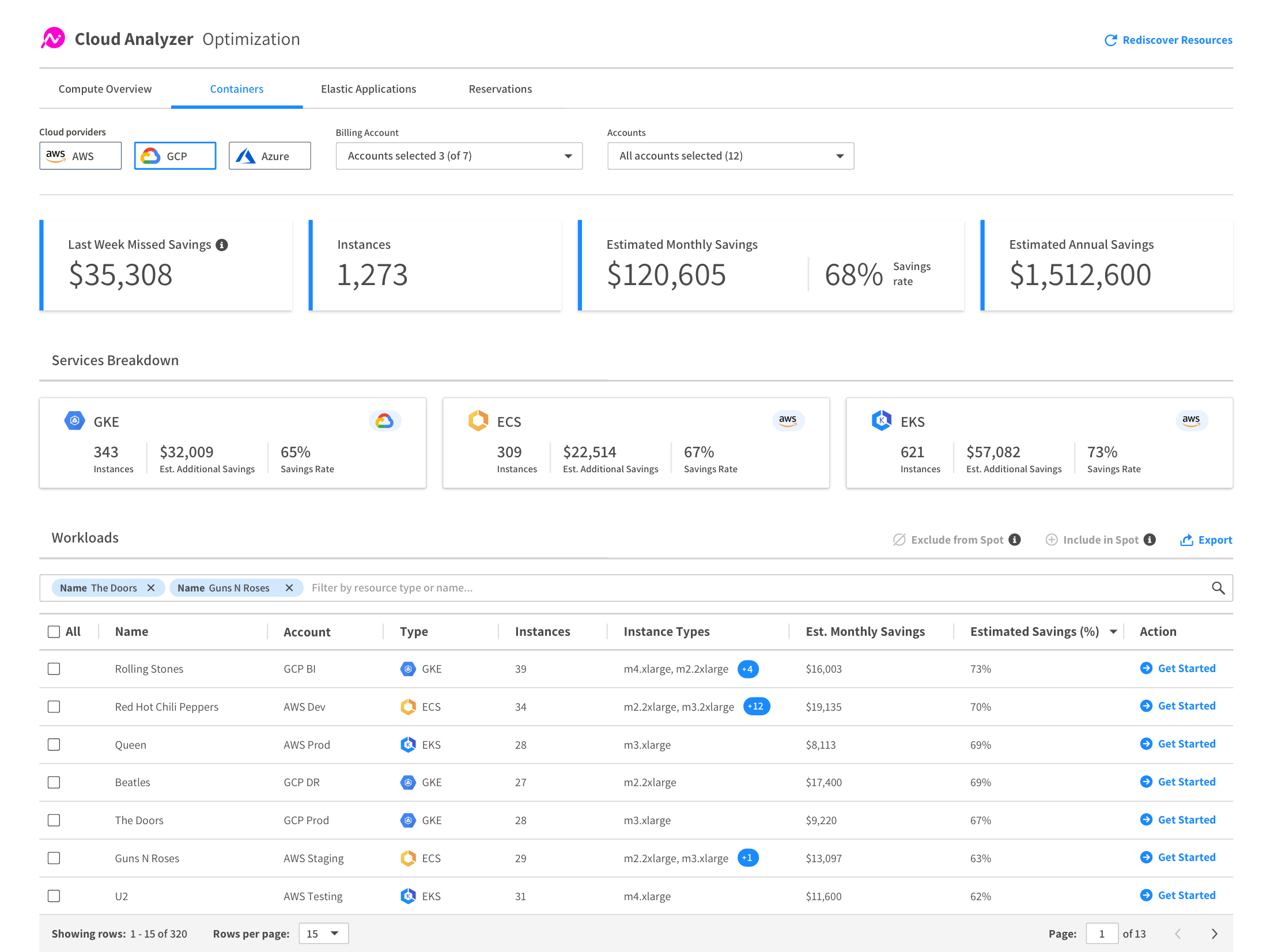
    NetApp this week announced it has acquired Spot, a provider of a service that enables IT teams to continuously optimize costs for cloud workloads.

    Anthony Lye, senior vice president and general manager for public cloud services at NetApp, said the Spot service is based on an application programming interface (API) that IT teams add to each application workload. That API then makes regular calls to Spot, which leverages algorithms that determine when and on what types of instances a workload should run to reduce cloud costs.

    The Spot service will then move workloads automatically between on-demand, reserve and spot instances on Amazon Web Services (AWS), Microsoft Azure or Google Cloud Platform (GCP). It is not designed to enable arbitrage across different cloud services; rather, it optimizes the allocation of compute resources on whatever cloud platform an IT team decides to deploy a workload on.

    Lye said cloud computing often winds up being more expensive than on-premises IT environments because IT teams don’t have the tools required to cost-optimize cloud platforms in real-time. Developers often programmatically deploy workloads in the cloud without understanding many of the implications of using one tier of service versus another. Even when they do appreciate the cost, most IT teams don’t provide them with the tools needed to do anything about it. In fact, it’s usually assumed the IT operations team will find some way to optimize costs as they monitor the cloud environment.

    Then, at the end of the month, the IT operations and finance teams receive a bill from a cloud service provider that is all but indecipherable in determining what workloads consumed what level of compute resources and when. In the absence of the Spot service, Lye said the best IT teams could hope for was an analytics report that offered suggestions about how to optimize cloud instances after the fact.

    NetApp views Spot as a complement to its approach to optimizing the consumption of cloud storage resources by deploying its software on a public cloud to manage those resources, said Lye. Collectively, those offerings enable IT teams to address what has now become the single largest cost in the enterprise.

    In addition, Lye noted that Spot can play a key role in enforcing service level agreements (SLAs) because, among other things, it automatically detects whenever a spot instance of a virtual machine is going away. It then automatically spins up additional instances to ensure a workload remains available.

    The debate over the real cost of cloud computing has been going on for years. Initially, most cloud service providers claimed cloud platforms were less expensive than on-premises IT environments because compute resources were paid for on a consumption basis. While that proved to be true for workloads that ran for a finite amount of time, longer-running workloads have proven to be in most cases more expensive to run in the cloud.

    As organizations look to the cloud to deploy cloud-native applications that are more flexible and resilient in the wake of the COVID-19 pandemic, which has made many on-premises IT environments less accessible, the debate over costs is flaring up again. While organizations need a more flexible approach to IT, they are simultaneously trying to reduce the total cost of IT in the wake of the economic downturn brought on by the pandemic.

    It’s too early to say to what degree IT organizations will embrace continuous optimization alongside continuous integration (CI) and continuous delivery (CD). However, given the current economic climate, it’s more now a question of when, not if, cloud cost optimization will become a major area of focus for IT teams large and small.

  • It’s Time to Take a Customer-First Approach to AIOps

    It’s Time to Take a Customer-First Approach to AIOps

    Artificial intelligence for IT operations (AIOps) has several use cases that IT operations managers can’t deny: reduce alert noise with statistically significant outcomes (up to 80%), correlate alerts and events to uncover the critical business issues immediately, analyze data across environments to find root causes and resolve routine issues (like patching) automatically. Gartner predicts that large enterprise use of AIOps tools to monitor applications and infrastructure will rise from 5% in 2018 to 30% in 2023.

    I’ve been working in the AIOps field for a few years now, and I’ve learned that many organizations, even with relatively modern IT operations management (ITOM) software, are behind the curve. Vendors keep releasing new algorithms, yet the original ones are barely being used or worse, still sitting on the shelf in the customer’s environment. This is because it can be difficult to understand when and how to use artificial intelligence (AI) tools in the daily workflow, and because IT professionals may not inherently trust (or even want) machine-driven recommendations and actions. 

    AI and machine learning technologies are upending traditional assumptions and conventions in many industries – and IT is no exception. In the land grab to bring to market the latest sensational AIOps capabilities, vendors have unwittingly deprioritized customer adoption. This has resulted in a chasm: The technology is getting ahead of the customer’s willingness and ability to implement these solutions in their production environment. 

    The feature-first perspective in the software industry is nothing new, yet for AIOps to reach its full potential, it’s time to take a customer-first perspective.

    Let’s walk through a few ideas to minimize barriers to adoption and speed up time to value for AIOps:

    Start on Adoption During Build

    Machine learning developers and product managers need to understand potential customer barriers during the design and test phase and put themselves in the user’s shoes. How will an individual interact with the system and what level of transparency is appropriate to ensure a frictionless experience? This is a best practice for any software development team, but given the mystique of AI software, it’s even more important. Document expectations for the user experience by giving users early access to the software, such as a beta program, where they can freely deliver feedback on UI, workflows and outcomes of AIOps features.

    Connect the Dots with Visualizations

    A significant barrier for any machine learning application is that users may not fully understand the use cases nor trust what the algorithms are doing. Ensure that software-driven actions and recommendations are transparent at the moment and location they occur in the application. It should be easy for users to see the cause and effect of machine-driven actions as well as how the AI reached a conclusion.

    The concept of “explainable AI” has become popular in the last year and vendors can help by introducing visualizations into their tools.  For instance, you could have graphs showing the progression of a model being trained or the learned sequences in alert correlations. In-app simulation tools can help a customer see the impact of an AI-delivered recommendation without actually making the change.

    Amp Up Training

    Create internal-facing white papers or videos to demonstrate the workings behind algorithms to your technical staff and tools especially designed for users. The best way to learn is by doing, so designing visual cues and tutorials within the application will be most effective. Ensure that you have dedicated AIOps subject matter experts who can guide customers through implementations and be on call for advice as needed. Common questions include, when should the AI be allowed to automate an action or decision and how can you override an automated decision? It’s not a bad idea to involve machine learning developers in creating training sessions and guides. Finally, the age-old concept of nurturing power users within the customer organization can go a long way.

    Diffuse Concerns Over Jobs

    Nobody wants to use a new technology which might eventually replace them. For the most part, AIOps is not going to jettison IT operations staff. Instead, AIOps will empower operations and support teams to handle increasing alert volume and complexity with existing staff, while ensuring that expensive engineers such as SREs can focus on higher-level data performance analysis and optimization initiatives.

    Design Algorithms for Flexibility

    Machine learning algorithms break if they cannot respond to the dynamic nature of modern workloads. For instance, if you design the algorithm based on rules dictating actions between specific applications and infrastructure components, what happens when those technologies disappear or are replaced, as they often do in the cloud? Now you’ve got gaps that could result in a catastrophic system failure and an AIOps tool that requires heavy maintenance. Algorithms should be responsive to environmental changes – such as incorporating neural net technology that can adapt to the shifting sands of the IT landscape.

    A survey conducted in April by OpsRamp found that nearly 70% of IT operations leaders plan to invest in AIOps to improve incident diagnosis, troubleshooting and resolution. By all accounts, the year 2020 has raised the bar for IT expectations around resiliency and user experience. AIOps promises to be a pivotal strategy for IT operations success, but it all depends upon user satisfaction and adoption of the technology. Vendors that incorporate customer adoption and value tactics into their development processes will be instrumental in pushing this market forward in a positive way.