Category: IT as Code

  • Is Your Infrastructure Ready for Edge Computing?

    Is Your Infrastructure Ready for Edge Computing?

    Like many IT innovations, edge computing began with engineers as a natural extension of technology to address a growing need. The concept isn’t new; distributed computing has been around for decades. But, at the same time standards began to converge and edge hardware started making the rounds at trade shows, the hype machine saw an opportunity. It amplified edge’s considerable promise in reducing latency, offering software-defined deployment, decreasing cloud networking costs and more. But as is too often the case, the bold feature bullets ignored the production concerns businesses must address, including edge computing’s rough spots and the additional operations complexity it adds.

    Of course, edge computing will survive a little overexcited promotion, just like many of the once improbable technologies before it. People used to say, “What? Abstract all my data center applications away from the hardware as virtual servers? Impossible!” A decade later, we can’t imagine how we’d deliver traditional enterprise services, cloud computing, online retail, media streaming and everything else in between without exactly this. Virtualization survived its awkward hype adolescence, and edge computing will, too. The needs edge computing addresses are only growing.

    Thanks to engineers and operations teams, the edge distributed model is moving toward practical use. It’s proving itself capable of meeting requirements for new levels of network performance through reduced latency, scalability and, more importantly, manageability. For some businesses, it’s even reducing costs over the long haul.

    Not All Data Is Created Equal

    With the proliferation of connected devices and a growing focus on 5G-enabled technology, tech pros should set aside their natural reluctance to wade through the edge hype and consider it a genuine possibility. Its adoption is following the rise of emerging technologies and the applications taking best advantage of it: 5G, augmented reality, autonomous vehicles, IoT and smart manufacturing. These environments require not only low upstream latency, but high-performance compute and timely result data. Light only travels so fast, pushing infrastructure closer and closer to consumers for faster, more seamless processing in the form of brand-differentiating user experiences.

  • Chef Adds Support for Arm Graviton 2 Processors on AWS Cloud

    Chef Adds Support for Arm Graviton 2 Processors on AWS Cloud

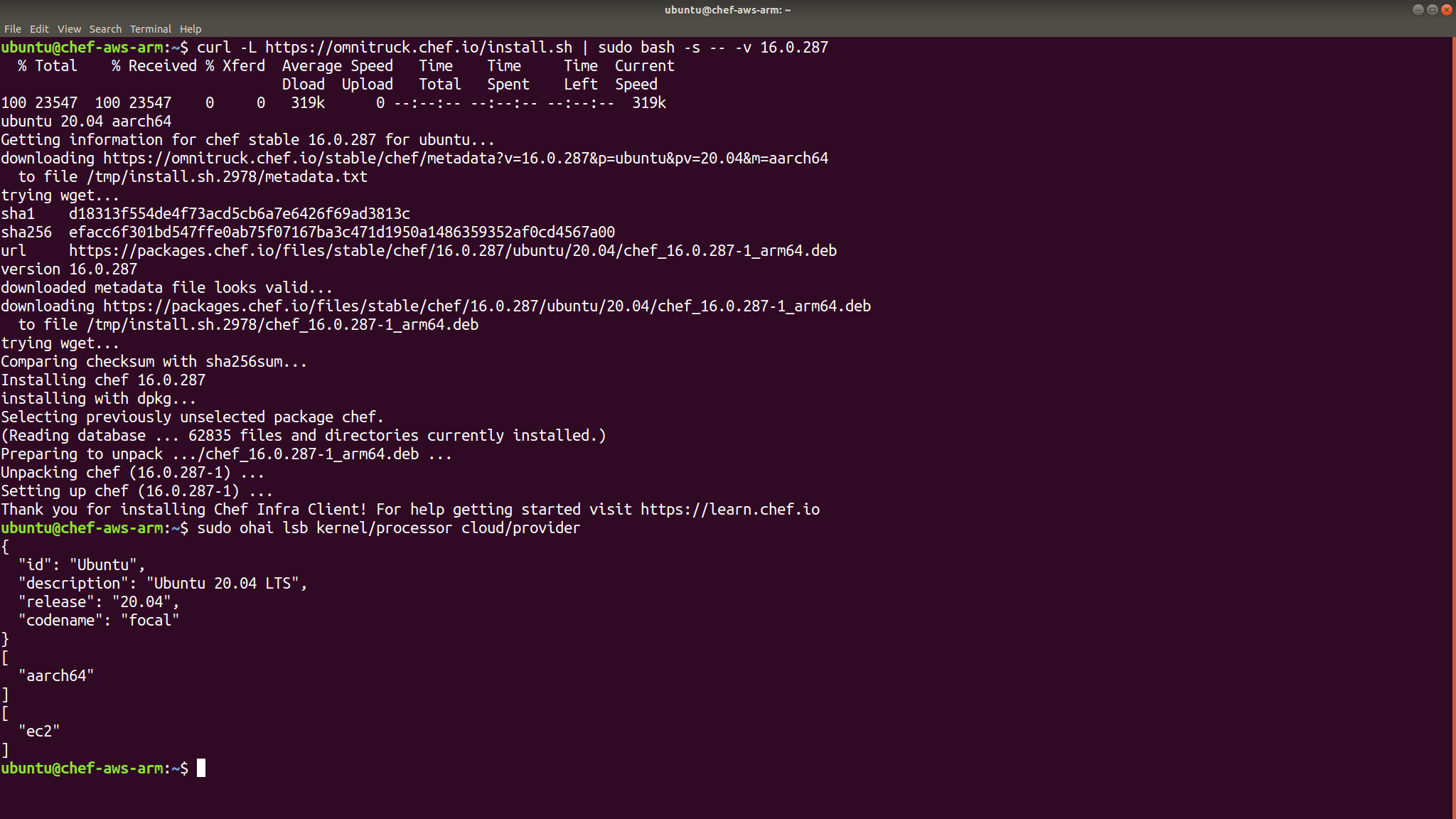
    Chef announced this week that its offerings for managing and testing infrastructure as code now support Graviton 2 processors from Arm on the Amazon Web Services (AWS) cloud.

    AWS this week announced the availability of an M6g instance of processors on its public cloud. Based on a 64-bit Arm Neoverse N1 architecture, the M6g processors were jointly designed by Arm and Annapurna Labs, a unit of Amazon.

    According to AWS, during a preview program platforms such as Honeycomb consumed 30% fewer instances on M6g than the widely employed AWS C5 instances. Treasure Data, a provider of data analytics software, reported a 30% performance increase while seeing a 20% cost reduction compared to similarly sized M5 instances. The Amazon ElastiCache service team found that M6g instances deliver up to 50% throughput improvement over M5 instances on Redis.

    In addition, AWS this week revealed it also plans to add compute-optimized C6g instances and memory-optimized R6g instances based on 64-bit Arm processors.

    The Arm processors in the cloud are expected to provide a foundation for building hybrid internet of things (IoT) applications spanning AWS cloud services and instances of Arm processors that are widely employed in embedded systems. Previously, AWS launched an AWS Greengrass initiative through which it encourages developers to build and deploy cloud-enabled IoT applications on edge computing platforms.

    Vikram Ghosh, vice president of business development for Chef, said DevOps teams can now automate the provisioning of Arm processors using the same Chef tools they employ to provision instances on other types of processors running on the AWS cloud.

    It won’t be long before 64-bit instances of Arm processors start showing up on other cloud computing platforms, noted Ghosh. In fact, between the rise of Arm processors alongside graphical processor units (GPUs) the types of processors readily available in the cloud have never been more diverse, which Ghosh said is driving increased demand for tools to manage infrastructure as code.

    It’s still early days as far as adoption of best DevOps practices to build and deploy IoT applications is concerned. However, the highly distributed nature of IoT applications—which in many cases will need to be updated frequently—lend themselves to being managed more efficiently using DevOps processes. In most cases, these IoT applications represent “greenfield” applications where there is no legacy process in place that potentially would create a culture clash.

    Forecasting demand for edge computing applications in the wake of the COVID-19 pandemic is difficult. However, the general expectation remains that more application code will be moving closer to the point where it is being consumed, especially when 5G wireless networking services become more available. In fact, many of those applications are being built now in anticipation of those networking services being able to connect edge computing applications with backend cloud resources.

    Once those applications are built, the next big challenge will be finding a way to secure and continuously update them. In the meantime, however, the number of edge computing applications being built today in the cloud for edge computing platforms based on Arm processors is about to increase substantially.

  • HashiCorp Extends Consul Service Mesh Reach

    HashiCorp Extends Consul Service Mesh Reach

    HashiCorp today made available an update to its Consul service mesh that makes it easier to integrate legacy and modern applications.

    Service meshes have emerged as a framework for documenting and controlling how application services interact with one another. Most of the adoption of service meshes thus far has involved applications built using microservices. With potentially hundreds or even thousands of microservices to manage, a service mesh framework becomes essential.

    HashiCorp Consul 1.8 extends the reach of the Consul service mesh by making available additional gateway and compliance features that make it easier to integrate any service into any mesh, in addition to adding support for audit Logging and single sign-on (SSO) capabilities.

    Amith Nair, vice president of product marketing for HashiCorp, said organizations that adopt Consul can apply a service mesh to both microservices and monolithic applications. That approach also eliminates the need to deploy a service mesh such as Istio, which only works when deployed in conjunction with a Kubernetes cluster.

    In general, Nair said Consul enables IT organizations to gain the benefits of a service mesh without being required to retire existing application services or manage them in isolation from modern cloud-native applications.

    Longer-term, Nair said HashiCorp expects an ecosystem to develop around Consul as technology partners extend the core capability of a service mesh to add, for example, application firewall services.

    It’s too early to say to what degree IT organizations will embrace service meshes as a technology. However, as IT environments become more complex many enterprise IT organizations are shifting toward managing services rather than individual applications. That approach enables IT organizations to align their IT strategy more easily with specific business outcomes.

    At a time when many organizations are also trying to accelerate a transition to digital business processes in the wake of the COVID-19 pandemic, most of those digital business processes are typically a collection of loosely coupled application services that could be managed via a service mesh.

    Nair said while it’s still early in terms of adoption, most enterprise IT organizations are now at least aware of what a service mesh does and why they might need to deploy one. The challenge, of course, will be getting IT organizations to prioritize the deployment of a service mesh when many IT budgets have become suddenly constrained. It’s also not clear who inside of those IT organizations will fund service mesh projects, which benefit a variety of application projects—application owners tend not to directly fund centralized IT management services, which leaves it up to IT leaders to fund. The challenge is, most IT budget dollars are already allocated.

    In the meantime, developers will continue to embrace everything from Kubernetes to serverless computing frameworks. However, the rate at which new applications are deployed generally far exceeds the rate at which applications are retired. As such, IT organizations should expect to find themselves managing a wide array of different types of application services for many years to come.

  • Cisco Aligns With Google to Meld DevOps and NetOps

    Cisco Aligns With Google to Meld DevOps and NetOps

    The extension of a partnership between Cisco Systems and Google to drive tighter integration between their respective software-defined wide area network (SD-WANs) offerings and cloud platforms promises to accelerate the convergence of NetOps and DevOps.

    John Apostolopoulos, vice president and CTO for Intent-Based Networking Group at Cisco, said in the wake of the COVID-19 pandemic it’s clear more organizations will be employing SD-WANs as an alternative to virtual private networks. Many of those SD-WAN deployments, however, will be on public clouds rather than in a traditional on-premises data center, he added.

    As that transition occurs, DevOps teams will increasingly invoke SD-WAN services via application programming interfaces (APIs) residing in the cloud to provide users with access to cloud applications, noted Apostolopoulos.

    Cisco and Google have a technology alliance in place that spans everything from Kubernetes to cloud management software. That partnership is now being extended to include forthcoming deployments of Cisco SD-WAN software on Google Anthos, a cloud platform based on Kubernetes that can be deployed on any cloud or on-premises IT environment, sometime in the first half of 2021.

    The availability of SD-WAN services from Cisco on multiple cloud platforms will naturally have significant implications for NetOps teams. Rather than having to manage individual routers and switches, the future of SD-WANs is moving more toward being a set of software services that are programmatically invoked. It’s not clear to what degree NetOps teams might be folded into DevOps teams as that transition occurs. IT teams will always require networking experts to optimize networking services to one degree or another, said Apostolopoulos. However, the days when DevOps teams had to wait days or weeks for a NetOps team to manually provision network services on their behalf are coming to an end.

    Apostolopoulos said in the wake of the COVID-19 pandemic, flexibility has become a highly prized IT asset. As such, more applications will soon be deployed in the cloud than ever. Cisco is betting that rather than having to manage multiple cloud network services, more organizations will prefer to extend enterprise networking services from Cisco across multiple clouds. That approach will enable IT organizations to more easily centralize the management of network services via a management console built on top of a consistent set of APIs, he noted.

    Just as importantly, Cisco will provide the integrated tools needed to secure those network services, added Apostolopoulos.

    In effect, Cisco is betting that enterprise IT organizations are going to consolidate networking and security services as part of an effort to reduce the total cost of IT. Cisco may not always be the least expensive provider of an individual router or switch. However, the total cost of integrating networking and security offerings from multiple vendors can add up quickly. The degree to which organizations have the political will and economic capital required to achieve that goal, of course, remains to be seen. Nevertheless, it’s also clear that maintaining the current networking and security status quo is not going to be able to hold for very much longer.

  • How to Leverage Elastic Services for Cost Optimization

    How to Leverage Elastic Services for Cost Optimization

    Due to the current pandemic, business continuity for many organizations has suffered a great deal. Organizations, primarily those in manufacturing, agriculture, transport, hospitality, energy and retail sectors, have been affected by the unanticipated change in the business landscape. Some companies in these sectors have been experiencing massive losses in revenue, which is why their primary requirement at this point is cost reduction.

    The other side of the crisis is that organizations in sectors such as medical, government and financial services, which are providing essential services, have experienced higher operational demands than usual–again leading to increased operational costs. Irrespective of the industry you belong to, and whether it is experiencing reduced or increased operations, cost optimization is a reality for you to ensure a sustained existence.

    One of the most reliable measures for cost optimization at this stage is to leverage elastic services designed to grow or shrink according to demand, such as cloud and managed services. For example, a well-positioned organization with a cloud native architecture can scale up or scale down cloud consumption to mitigate lost operational demand. Organizations that employ managed services providers can repurpose full-time staff members from impacted business units or product lines to more strategic initiatives.

    The Need for Cost Optimization: Now and Later 

    From observations of the economic impact of the crisis, many organizations have not been well positioned or in a state to leverage elastic services during the current crisis. In the absence of a flexible operational model, they are exposed to risks caused by:

    • A sudden disruption in business continuity.
    • Loss of business or revenues.

    To ensure that they are ready, should another disaster strike, companies need to start planning now. Partnering with a seasoned managed services provider to plan and leverage the consumption and subscription services is advisable, so that they can immediately adjust expenditures that are no longer relevant and can prepare for long-term cost reduction to conserve cash.

    Optimizing Costs with Elastic Services 

    One thing that the impact of the pandemic on businesses has made very clear is that investment toward IT strategy and planning services pays in good times, as well as bad times. Therefore, organizations, whether they are experiencing loss or profit at this stage, should consider long-term investment toward IT strategy and planning services, and thoroughly plan the “new normal” expenditures needed to scale demand/revenue.

    Elastic cloud and managed services can help these organizations strike a balance between the rapid changes in the demand and need for expenditure.

    • With consumption services, organizations can choose to pay only for the services and resources they use. 
    • With subscription services, organizations can choose flexible payment terms that often afford advantageous pricing the longer one commits. Choose the timeframe that balances the risk and reward.
    • Since most enterprises will freeze hiring and try to avoid long-term or substantial capital investments at this stage, they can meet their operational demands by contracting managed services and re-platforming their applications to use cloud services.

    The Three-Step Approach to Successfully Implementing Elastic Services 

    Given the requirements of each business are different, and the way they plan their expenditure varies as well, there is no one-size-fits-all strategy to ensure the successful implementation of elastic services for cost optimization. In order to ensure that elastic services help optimize costs in your organization in an efficient manner, you should follow the three-step approach described below:

    1. Discover: First, collect all your operational revenue and expenses over a three-year period. Understand seasonality lows and highs (these are elastic needs). Perform a business-impact-analysis (B-I-A) to understand the critical business processes and then map them to risk scenarios that can cause business disruption. Capture and arrange the risks and then determine how to build a risk mitigation plan with your strategic IT leadership and advisors.
    2. Analyze: Adapt your existing architecture to identify your business goals and how it has changed due to the new circumstances, and then perform a gap analysis and capabilities assessment. 
    3. Plan: Based on your business goals, revisit how and where it makes sense to use elastic services to fit seasonal fluctuation better, and risk scenarios where rapidly declining operational demand may occur.

    Given the pace and scale of how the business landscape is changing, a traditional wait-and-watch response is not going to work in the long run. Engaging with a strategic leadership partner that can help you analyze your current infrastructure and implement elastic services is a smart move to meet your business objectives.

  • OpsRamp Offers Users Free IT Management Services

    OpsRamp Offers Users Free IT Management Services

    OpsRamp announced today that IT organizations that subscribe to its discovery and monitoring tools will now also receive free access to the company’s AIOps and remote access management service tiers for one year.

    Ciaran Byrne, vice president of product for OpsRamp, said the decision to provide free access to additional tiers of service is a direct response to the economic downturn brought on by the COVID-19 pandemic. IT teams are under pressure to reduce the total cost of ownership of IT at a time when they need remote access management capabilities more than ever, he said.

    With so many IT teams now working from home—what may become the new normal—OpsRamp is looking to make it less expensive to transition to a cloud-based platform for managing IT operations, he added.

    One of the byproducts of the pandemic, Byrne said, will be to accelerate the rate at which IT teams are automating processes. Many IT leaders are unsure how many members of the IT team they may be able to retain during a downturn. As such, many of them have already begun to aggressively automate many more processes as part of an effort to enable a potentially smaller IT team to remain effective, he said.

    OpsRampThe challenge, of course, is that the IT environment itself is increasingly complex to manage. In fact, as IT teams look to deploy cloud-native platforms to make applications more flexible and resilient, the IT environment is likely to become even more complex. In fact, according to a recent OpsRamp survey, as of the start of the economic downturn, 69% of respondents expect their organization to invest more in AIOps.

    It’s unclear to what degree the OpsRamp decision to make additional services available for free represents the start of a battle among SaaS IT management platform providers to gain market share. IT teams can expect that, given the current economic climate, these providers will be a lot more willing to negotiate terms and conditions.

    Of course, the biggest inhibitor to adopting a SaaS-based platform to manage IT has been inertia within the IT organization. The rate at which organizations now determine whether to migrate to a SaaS-based platform for managing IT will have a significant impact on the degree to which IT vendors will be willing to negotiate. Of course, incumbent providers of IT management platforms deployed in on-premises IT environments are also likely to be more aggressive in response.

    Not every IT organization will be able to make a fast transition to the cloud during the economic downturn. However, at a time when the pressure to transition to an opex versus capex financial model for IT increases, one of the easiest places to start making that transition is with the software employed to manage IT systems regardless of where they happen to be located.

  • NVIDIA Aims to Drive Disaggregation Following Cumulus Networks Buy

    NVIDIA Aims to Drive Disaggregation Following Cumulus Networks Buy

    Adoption of open source networking may be about to get a boost following the forthcoming acquisition of Cumulus Network by NVIDIA.

    The acquisition of the provider of a network operating system (NOS) based on Linux follows an earlier move by NVIDIA to acquire Mellanox, a provider of networking and storage systems.

    Kevin Deierling, senior vice president of marketing for the NVIDIA networking business unit, said Cumulus Networks adds a programmable NOS to the provider of graphical processor units (GPUs) that should find greater adoption as more organizations disaggregate the acquisition of network software and hardware. That trend toward disaggregation is especially strong in data centers and cloud computing environments that are building artificial intelligence (AI) applications based on NVIDIA GPUs, he said.

    As the worlds of DevOps and network operations (NetOps) continue to converge, NVIDIA is betting interest in a programmable NOS that is designed to scale will increase as well, added Deierling.

    Cumulus Networks has been trying to drive the adoption of Cumulus Linux since 2010 with mixed success. Cumulus Linux runs on more than 100 hardware platforms, including switches from Mellanox. While cloud service providers and some high-performance computing (HPC) environments have disaggregated networking software and hardware, most enterprise IT organizations continue to buy switches from Cisco Systems and Juniper Networks that come integrated with a NOS.

    Cumulus Networks CEO Josh Leslie said in time it’s apparent more enterprise IT organizations will be moving toward disaggregation of network software and hardware, especially as more application workloads move into the cloud. A NOS that is not tied to proprietary ASIC technologies embedded in a switch from Cisco or Juniper Networks makes it feasible for IT organizations to benefit from Moore’s Law as each new x86 processor generation is added, he noted.

    At the same time, he added, the tools for programming a NOS based on Linux are a lot more familiar and accessible to developers than tools designed for proprietary NOS platforms.

    It’s too early to say to what degree DevOps teams are going to need programmable access to shared networking resources. Ideally, developers will want more programmatic control over network resources as applications become more distributed than ever. That approach would enable them to also provision network resources to applications via application programming interfaces (APIs) without having to wait for network administrators to provision them manually.

    However, network bandwidth is a shared resource inside many organizations, and the concern is that one application will consume all the available network bandwidth at the expense of every other application on the network. As such, network administrators have been embracing automation and self-service portals to make network resources more readily accessible to developers without ceding total control of the network.

    Regardless of the approach, networking is becoming more agile. NetOps and DevOps teams may not necessarily converge; however, as networking becomes another class of infrastructure that can be treated as code, it’s clear the days when networking services are largely managed in isolation from the rest of the IT environment are coming to a close.

  • Low-Code Development: The Future of Communications Experiences

    Low-Code Development: The Future of Communications Experiences

    The benefits of embedding real-time communications features into business and consumer applications are well-known. When it comes to customer service, most people would much rather click-to-call from within a web experience, social media site or business application to connect with another person, than find their phone to dial a number and wait in a queue. 

    In today’s new digital world–where instant gratification comes when consumers can choose their communication channel of choice and get their issues resolved more quickly–businesses only stand to benefit from delivering better service with fewer intermediaries. Customer service isn’t the only beneficiary of innovation in communications platform as a service (CPaaS)–web developers can add options to get answers automatically, or from an expert, without the presence of a full contact center. Even small businesses with limited staff can interact with customers through communications channels embedded into their websites or mobile apps, automatically directing questions about specific products, orders or services to the right person through text messaging, email or voice.

    This is all made possible through CPaaS–and this is where the future of customer communications experiences lies.

    Breakthroughs in CPaaS Are Powering Embedded Communications

    CPaaS is one of those industry acronyms that has been tossed around for a few years now, but what exactly is it? CPaaS is a cloud-based platform that enables developers to add real-time communications features to their own applications without the complexity of building infrastructure typically required when developing apps. 

    The ability to embed communications capabilities directly into apps or websites enables businesses of any size to engage customers more effectively across different communications channels, including mobile, web and desktop environments. The result is a much-improved customer experience leading to increased customer satisfaction, customer loyalty and recurring revenues.

    Breakthroughs in CPaaS are making it increasingly easier to embed voice, video, messaging, chat, presence and collaboration into experiences than ever before. Instead of building backend infrastructure and interfaces, CPaaS-based applications are made accessible through low-code development platforms. These platforms allow developers to access the robust application logic within the CPaaS with just a few lines of code, made possible through APIs. These APIs empower developers to quite literally copy and paste code by dragging and dropping application components and connecting them together to create a mobile or web app.

    As an industry, we’ve spent the better part of the last few years building out embedded real-time communications solutions. With low-code development, new communications capabilities take only minutes to create and launch, versus years, months, weeks or even days. By making it easier to add immersive communications solutions into existing applications, low-code development allows companies to introduce innovations such as communications-enabled business processes and automate any component of business processes.

    The Future of Communications Experiences

    There’s no doubt–the future is low-code solutions. In our digital world, with the right CPaaS technology, and a little creativity and planning, businesses can now accomplish things that would have been impossible without the support of APIs. 

    We are just at the beginning of even more exciting and valuable applications. By accessing the massive compute and software application capabilities of CPaaS through just a few APIs, harnessing the power of artificial intelligence and natural language processing is possible. Applications including voice recording, transcription and analytics for greater insights will be made a reality. Bots that sound like humans and can speak in multiple languages, with multiple choices for voices, will leave old breakthroughs like interactive voice response in the dust.

    We’re still early in the cycle, but the benefits and applications of low-code development continue to grow. Jump in–you may be surprised how easy it is to roll out new services that customers will love, and your business will thank you for.

  • Citrix Makes Case for VPN Alternative

    Citrix Makes Case for VPN Alternative

    Citrix this week announced it will make its remote access tool that enables users to efficiently access their desktop PCs more widely available via the cloud.

    Gabe Carrejo, senior program manager for Citrix, said Remote PC Access provides a more efficient alternative to the virtual private networks (VPNs) that most organizations currently rely on to enable employees to remotely access their desktops.

    To use Remote PC Access, an IT administrator installs a small client on the remote systems. The client provides access to a range of networking services that Citrix makes available on top of its Independent Computing Architecture (ICA) remoting protocol to create a Secure Sockets Layer (SSL) tunnel, which Citrix markets collectively as High-Definition Experience (HDX) Technology.

    To make it easier to access a desktop PC remotely, Remote PC Access installs agent software that IT teams can now push out to an endpoint as long as they have licensed any one of several Citrix services, said Carrejo. In most cases, IT teams will employ a platform such as Microsoft System Center to deploy agent software on an endpoint.

    In the rush to provide employees with remote access almost overnight to help combat the COVID-19 pandemic, many organizations turned to VPN offerings they were using to provide a small number of employees with remote access. However, with almost every employee trying to access the same VPN, many of those IT teams have encountered network bandwidth issues. What’s more, many of the desktop applications installed in the office are not especially tolerant of the latency a VPN adds to the equation.

    Citrix has long been making the case for ICA as a more efficient protocol for providing remote access to desktops. Now, in response to the COVID-19 pandemic, the company is making it easier for IT teams to distribute HDX agent software across as many remote endpoints an IT organization needs to support. End users can then access applications on their office desktops remotely via any HTML5-compatible browser or virtual desktop software provided by Citrix.

    Carrejo said more organizations are re-evaluating their reliance on VPNs as it becomes clear that what once viewed as business disruption has become the “new normal.” Many organizations are looking closely at how many employees they need to come into an office when their job role may not require it. Remote computing is now a core element of a larger business continuity strategy. As such, Carrejo said many organizations are looking to find a way to provide more efficient remote access to office-based desktop systems while contemplating a possible transition to a virtual desktop infrastructure (VDI) platform deployed in a local data canter or in the cloud.

    It’s too early to say to what degree Windows desktops will be moving to VDI platforms. In the meantime, however, the remote access protocols that IT teams rely on suddenly matter a lot more.

  • 4 Things to Do When Running the Iot Zoo

    4 Things to Do When Running the Iot Zoo

    Zoos are fascinating places. In just a few acres you can encounter all kinds of interesting, rare and exotic animals from different parts of the world and from different ends of the food chain. But, what keeps the tigers from eating the zebras or even the visitors? Segmentation. Walls, fences, cages and other barriers that keep every critter safe and well behaved. The same concept is vital to the proper security of Internet of Things (IoT) and operational technology (OT) devices. As these devices proliferate, it is segmentation that keeps them all safe and well behaved.

    Here’s what I mean.

    The modern enterprise consists of a huge variety of network-connected devices that play different roles in making the network operate properly, provide services to customers and partners, and that allow employees to do their jobs quickly and efficiently. Once deployed, however, it can be difficult to track and monitor IoT devices—and you can’t manage what you can’t see.

    Using the zoo analogy, if your devices are allowed to roam freely, some will be forgotten and others will act in unexpected ways. There will be unmanageable chaos. But, if the animals are categorized, monitored, segmented and cared for, the zookeeper can keep things operating in an orderly manner.

    If you are among those struggling to keep your IoT and OT device menagerie in line, I have bad news. Your challenges aren’t getting any easier. According to some estimates, there will be between 41.6 billion and 83 billion IoT devices connected to networks by 2025. Those estimates were made before the outbreak of the COVID-19 pandemic. Now that a Pandora’s box of remote work has been opened, there’s a strong chance trends like distributed workforce, manufacturing automation and mobility will result in a sharp acceleration in the use of IoT devices, pushing those numbers higher. Making matters worse, many of those devices will connect to networks unnoticed, unmanaged and unsecured.

    Healthcare is already among the industries feeling the effects of most sharply. Healthcare organizations rely on connected devices to perform their jobs and deliver the highest quality of care possible. It’s not just medical devices like insulin pumps, EKG machines and ventilators. Sophisticated healthcare facilities rely on connected devices for security monitoring and access control, administration, environmental control and IT operations management. The health, security and usage of non-medical devices can impact patient care so, for instance, IP-enabled elevator systems are needed to transport patients while HVAC systems can impact air quality in operating rooms. Protecting and managing IoT and OT devices is especially important in healthcare organizations post COVID-19, as we will be dealing with the aftermath of a surge of new devices being deployed.

    Right now, roughly 15 million IoT devices are being used by healthcare professionals worldwide. Hospitals use an average of 10-15 devices per bed, collecting and communicating highly sensitive protected health information (PHI). It’s no surprise, then, that 82% of healthcare organizations have had their IoT devices targeted. The risk increases when devices used by medical personnel cross from professional to personal use. A tablet used to enter a patient’s PHI and check email makes the network it’s connected to more vulnerable to phishing scams and ransomware. Unfortunately, with hospitals focused on responding to the pandemic, some malicious actors see it as an opportune time to strike.

    What can be done to mitigate the risk? If I ran the IoT zoo, there are four steps I’d take to figure out what was running wild and wrangle everything into its pen.

    Discover and Inventory

    You can’t manage what you can’t see, so complete, real-time discovery of IoT devices is critical. Step four of segmentation is unachievable without proper visibility and classification of devices. The fidelity of visibility and classification of devices is key, and needs to consider ephemeral assets that may go online and be brought up in a different physical or network location. We’ve seen this situation be exacerbated during the COVID-19 pandemic as new network-connected devices are rushed into service. 

    Baseline and Monitor Behavior

    Once you’ve taken inventory, you need to map how devices communicate and with what. Devices use a variety of protocols and communication patterns. Baselining what is normal is crucial to identify when devices start behaving badly. For example, without proper traffic monitoring, we won’t know that the baboons are attacking the pangolins every night. 

    Identify Risks

    With a baseline for recognizing bad behavior, you can identify anomalies that signal potential compromise, high-risk devices such as those running obsolete operating systems and devices with medical or FDA-advisories. The fragile, rare or highly valuable animals can be managed differently than a common “low value” asset, like a sparrow. Look out for solutions that tout their cybersecurity prowess with threat alerts but without providing ways to resolve the issues.  

    Segment and Secure

    Finally, with devices visible and categorized, and associated risks identified, your next step is to secure them. Since you cannot deploy endpoint agents, devices need to be properly secured using appropriate segmentation policies. The key is doing this in an automated manner that is scalable and operationally feasible, and uses the infrastructure that the organization has already invested in—networking products, firewalls and network access controls (NAC).

    And, with apologies to Dr. Seuss, I’ll leave you with a final thought:

    It’s an IoT zoo, said the young CIO, but the people who run it, don’t know what to do. 

    If I ran this zoo, said the young CIO, I’d make a few changes. That’s just what I’d do. 

    The monitors, HVACs and all of that stuff, are not secure or well managed. It’s not good enough! 

    I’d ID and segment, assign policies, too. The old ways just don’t cut it. Time for something new!