Category: Infrastructure/Networking

  • AppDynamics Survey Reveals High IT Stress

    AppDynamics Survey Reveals High IT Stress

    A global survey published today by AppDynamics, a unit of Cisco, suggests the last year took a substantial toll on IT teams at a time when many organizations either launched or accelerated digital business transformation initiatives.

    The survey, of 1,050 IT professionals in organizations with revenue of more than $500 million, finds organizations, on average, implemented digital business transformation initiatives three times faster in 2020 than they did in 2019 in response to the economic downturn brought on by the COVID-19 pandemic. That increased level of activity, however, appears to have come at a significant cost. The survey found 89% of respondents felt they are under immense pressure at work, with 84% admitting to having difficulty switching off after work.

    The survey also found stress levels are, not surprisingly, rising as well, with 81% of respondents experiencing increased frustration and 63% conflicting more with colleagues.

    The root cause of these issues cited most often include new sets of priorities and challenges (80%), technology sprawl and a patchwork of legacy and cloud technologies (78%), acceleration to cloud computing (77%) and multiple, disconnected monitoring solutions (74%).

    A full 85% also identified cutting through noise generated by increasing volumes of data to identify root causes of performance issues will represent a significant challenge in the year ahead. A total of 92% also noted the ability to link technology performance to business outcomes will be what’s really important to delivering on innovation goals over the next year.

    Three-quarters (75%) of respondents said they are already struggling to manage overwhelming “data noise.” Nearly three-quarters (73%) also noted they fear the inability to link IT performance with business performance will be detrimental to their business in 2021. Three-quarters (75%) of respondents also noted their organization needs to connect full-stack observability to business outcomes within 12 months in order to remain competitive. Two-thirds of respondents (66%), however, said right now they do not have the resources and support they need.

    AppDynamics regional CTO Gregg Ostrowski said the survey makes it clear that existing approaches to merely monitoring IT platforms are not going to be sufficient, at a time when observability across the full stack of IT platforms being employed is now absolutely essential. Rather than convening war rooms where IT teams responsible for different platforms compare reports in the hopes of identifying the root cause of an issue, Ostrowski said modern observability platforms provide a holistic view of IT environments that IT teams need to proactively resolve issues before they impact the business.

    That level of visibility will also play a crucial role in reducing the stress levels of IT teams that, in many cases, are now in danger of suffering from burnout, Ostrowski added. Of course, the more fatigued an IT team is, the more likely it is mistakes will be made.

    It’s not clear to what degree IT teams are embracing observability as a core IT management concept. The AppDynamics survey noted that 71% of respondents are wary of misleading claims from vendors who are re-labelling monitoring tools as observability platforms. Regardless of how observability is achieved, the general consensus remains: whatever observability means within the context of IT, most organizations lack it.


  • The Digital Transformation of Decision-Making

    The Digital Transformation of Decision-Making

    The ability to make effective business decisions has historically relied on factors such as experience, qualifications, talent and, in many cases, luck. Strategic and tactical choices are also informed by ‘borrowing’ the insight and knowledge of others. In many situations, ‘follow the leader’ can be an effective approach, and one need only study any sector of industry or commerce to see organizations everywhere mimicking each other, with competitive advantage based on relatively small acts of incremental innovation.

    Today’s ambitious businesses have many more options at their disposal to inform decision-making than previous generations. The extent, for instance, to which businesses can now collect, store and analyze data has been transformed by improvements in technology. The result is many businesses are now sitting on enough data for advanced analytics to inform smarter, more efficient decisions.

    The Role of Advanced Analytics

    Stepping back for a moment, advanced analytics is a set of tools and techniques that use existing data to develop insights to inform business decision-making – in particular, improving the accuracy of predicting future events based on certain actions. In practical terms, it is particularly useful when organizations are planning to implement a new business activity, where it is employed ahead of legacy processes that simply can’t deliver the same levels of insight.

    Online shopping is a prime example. When a consumer clicks on various items on a website, they will often be given other suggestions – sites often will present this information with the words ‘Frequently bought together,’ for example. This is based on what has already been viewed and uses advanced analytics to predict what else the shopper might be interested in. It’s just one of many ways retailers now rely on advanced analytics to intelligently cross-sell, and as many people will know, it’s very effective.

    In a wider sense, advanced analytics can be used in a huge variety of scenarios, irrespective of industry, market or type of customer. In doing so, businesses stand to reap a number of potential benefits, including:

    • Smarter decision making. By generating data based on strong logic and reliable information, advanced analytics can draw on both past and present data to make more reliable, more confident choices about what to do in the future.
    • Focused knowledge. By understanding the factors that improve business outcomes alongside those that are negligible, leaders can focus their attention and investment on what is more likely to deliver the desired impact.
    • Risk management. In an era of heightened risk, and the need for greater risk management, advanced analytics can identify risk based on available data, helping to inform business models that minimize risk, or help businesses make decisions based on insight rather than hope. This can also help improve governance and mitigate regulatory and compliance risk.
    • Strategy automation. Because advanced analytics takes care of analyzing data, teams have greater flexibility and time to focus on wider strategic considerations, which can help make the business better.

    Advanced Analytics in Action

    Advanced analytics employs various techniques across an ever-increasing range of use cases. For example, data mining is applied to ensure organizations make use of the most relevant data, extracting what is useful from the raw data. This data can then be subjected to further analysis for a multitude of objectives, such as understanding customers better or building more effective strategies.

    In addition, ‘big data’ analytics can be applied to both structured and unstructured data, and can be particularly helpful when the data generated isn’t in a proper format, or for organizations with massive data volumes to process.

    Then there’s predictive analysis, where machine learning algorithms are applied to current and past data to identify relationships and patterns. The algorithms then build a prediction model that can inform decision making. In general, the more data that is available, the more accurate predictions will be. It can’t, however, deliver 100% accuracy, and random, unpredictable factors such as a mass healthcare crisis illustrate the obvious limitations on predictive analysis.

    Taking this a step further, prescriptive analysis helps determine the best way to implement a business decision. Even when a decision is close to being made, there can be more than one possible implementation path to follow. Prescriptive analysis uses current and past data to suggest possible outcomes before actions are set in stone, recommending the best implementation options.

    Advanced analytics is a rapidly growing niche of the technology industry, regularly described by industry experts and commentators as among the most important, transformational IT trends. Given the pivotal role of decision-making across every organization, this perhaps shouldn’t come as a surprise, and for businesses everywhere, it’s now only a question of when they apply it to improve their fortunes, not if.

  • EraDB Launches Log Management Alternative

    EraDB Launches Log Management Alternative

    EraDB today launched EraSearch to provide IT teams with an alternative to open source ElasticSearch software for managing logs at scale.

    Todd Persen, EraDB’s CEO, said EraSearch is based on a modern database that decouples storage and compute. In this way, EraSearch can scale more efficiently than ElasticSearch, while providing IT teams with the same familiar construct for managing logs.

    Persen said EraDB also uses true zero-schema data representation, and an indexing engine based on machine learning algorithms, to enable EraSearch to scale better. This approach also cuts cloud and operational costs by as much as 30% and 70%, respectively, by relying, in part, on object-based storage systems to store log data.

    As IT environments become more complex and continue to scale, organizations that standardized on ElasticSearch are discovering that a platform based on decades-old search engine technology is not keeping pace with their needs.

    EraSearch provides an alternative, based on a commercial time-series database platform that EraDB created, to address such use cases as an alternative to database platforms such as InfluxDB.

    The question is whether IT organizations, that have relied on ElasticSearch for years, are ready to abandon an open source platform in favor of a proprietary platform, even if it provides a similar user experience. EraDB, however, is betting there are enough IT organizations willing to make that shift to justify its investment in EraSearch.

    Persen said one issue with ElasticSearch is that, as log volumes increase beyond a few terabytes, the platform becomes inefficient and difficult to efficiently scale. That leads to higher costs in terms of both raw storage, as well as all the manual effort on the part of software engineers, required to maintain the platform.

    EraDB, of course, is making a classic case for a proprietary platform over an open source platform: that open source, while free, often proves more expensive to support. Persen said EraDB decided to eschew the open source model altogether, because it is too difficult to prevent nullification of the benefits open source could bring to a small company by open source project forks.

    The ElasticSearch community, meanwhile, is roiled by Elastic’s decision to change the licensing terms under which it makes ElasticSearch available. Elastic is shifting away from an Apache license to a dual-license strategy that includes a Server-Side Public License, or SSPL, along with an Elastic License. That shift was made to help ensure more of the revenue generated by Elastic search winds up in the hands of Elastic, rather than cloud service providers, such as Amazon Web Services (AWS), that routinely launch paid services based on open source code. AWS responded to the Elastic move by announcing plans to fork ElasticSearch code that it will now curate.

    Regardless of how that battle ends, however, EraDB is making it clear it views its platforms as too critical to its customers’ IT operations to get caught up in a similar maelstrom over business models and associated licensing terms.

  • Dynatrace Extends Reach of Observability Platform

    Dynatrace Extends Reach of Observability Platform

    Dynatrace this week updated its observability and software intelligence platform as part of an effort to expand its reach across modern enterprise IT environments.

    Announced at the online Dynatrace Perform 2021 conference, the company’s namesake platform can now capture logs from Kubernetes and Red Hat OpenShift as well as Amazon Web Services, Google Cloud Platform and Microsoft Azure cloud platforms.

    In addition, Dynatrace is adding support for open source log data frameworks such as Fluentd and Logstash. Those logs can now be centrally viewed via a Dynatrace Log Viewer that enables IT teams to search, analyze and segment both real-time and historical log data.

    Dynatrace also added a Cloud Automation Module based on Keptn, an open source tool for automating configuration of observability tools, orchestrating code tests and quality checks. Keptn was created by Dynatrace and is being advanced under the auspices of the Cloud Native Computing Foundation (CNCF).

    The company also launched a Software Intelligence Hub to make it easier to access more than 500 pre-configured integrations, as well as access tools for creating integrations without having to write code.

    Dynatrace also announced it has extended a previously launched Application Security Module to now include support for Node.js applications. In addition, the module includes the ability to enforce security policies against applications instrumented with its agent software, and offers extended capabilities to enable the detection of Kubernetes cluster vulnerabilities, as well.

    Finally, Dynatrace has added a Session Replay capability to its Digital Experience Module to enable IT teams to capture a mobile application experience.

    Steve Tack, senior vice president of product management at Dynatrace, said the company is moving quickly to add support for platforms and technologies widely employed within cloud-native applications to provide IT teams with a single platform through which they can manage monolithic and microservices-based applications.

    With the rise of microservices, IT environments are becoming too complex to manage without some type of observability platform. Historically, cost concerns limited IT teams to employing application performance management (APM) platforms, such as Dynatrace, only for their most mission-critical, monolithic applications. It’s now become apparent that observability platforms capable of correlating log and telemetry data captured from applications and infrastructure are required to effectively manage a modern IT environment.

    As part of that effort, Dynatrace is now collecting data from additional sources alongside the agent software it provides. That data is then fed into an observability platform, that Dynatrace has augmented with a Davis AI engine, to identify anomalies and other potential issues by employing machine learning algorithms.

    It’s not clear to what degree IT teams completely trust the recommendations surfaced by any AI engine. However, as platforms such as Dynatrace collect more data from an IT environment, the more accurate AI models tend to become. In fact,  IT teams that don’t have access to AI capabilities might soon be at a distinct disadvantage, compared to other IT teams that do.

    In the meantime, the battle for observability supremacy continues to intensify, as incumbent providers of APM platforms such as Dynatrace look to forestall a host of startup rivals, all promising greater visibility into IT environments at a lower cost. The challenge now is determining what level of visibility is achieved, and at what total cost.

  • New Relic Adds Visualization Tool to Observability Platform

    New Relic Adds Visualization Tool to Observability Platform

    New Relic announced today it has added a visualization tool, dubbed New Relic Explorer, to make it simpler for IT professionals to discover the root cause of issues that adversely affect application performance.

    Buddy Brewer, global vice president and field CTO for the Americas, New Relic, said the goal is to make it simpler for IT professionals to navigate and, ultimately, act on, all the metrics collected by the New Relic One observability platform.

    New Relic Explorer includes a New Relic Lookout capability that enables IT teams to drill down into telemetry data gathered from New Relic One, as well as other third-party sources, and a New Relic Navigator capability for determining the health of relationships between services, said Brewer. These capabilities make it possible to more easily identify correlations, abnormal history and traces that would be, for example, indicative of blind spots or unknown relationships between IT services, Brewer said.

    Just as importantly, IT professionals can more easily discover recent changes to an IT environment, which are most likely the cause of any new issue that is adversely affecting the IT environment, Brewer added.

    New Relic Explorer requires no configuration, and will be included as part of the existing New Relic Full-Stack Observability offering to give IT teams a single unified view of their IT environments, said Brewer.

    As IT environments become more complex, the amount of time spent looking for the root cause of an issue that might only take a few minutes to fix has substantially increased. As a result, organizations are allocating a significant amount of time to convene “war rooms” to identify the source of problems; those problems can now be more readily identified using New Relic Explorer.

    In general, Brewer said, New Relic remains committed to opening up the platform to external telemetry sources, including data collected using open source tools, such as Prometheus and OpenTelemetry agent software, both advanced under the auspices of the Cloud Native Computing Foundation (CNCF).

    New Relic, like providers of similar tools, has recently begun repositioning itself as a provider of an observability platform, rather than of application performance management (APM) tools, that provides insights into both applications and the infrastructure on which they depend. That approach promises to provide IT teams with more context any time an issue arises. As part of that shift, New Relic is making it clear that while it views its agent source as a richer source of telemetry data, its platform can consume relevant data wherever it can be found. New Relic will also remind customers that its agent software, and the other data collection tools it provides, are simpler to install and update.

    The tradeoff, of course, is cost. While open source software itself is free, the total cost of implementing and managing that open source software can be substantial. Regardless of approach, however, the days when IT teams only applied application monitoring tools to their most mission-critical applications because of cost concerns are coming to an end. It has become impossible to manage a modern IT environment made up of both monolithic and microservices-based applications without such capabilities.

  • Understanding Data Storage: Lakes vs. Warehouses

    Understanding Data Storage: Lakes vs. Warehouses

    Now more than ever, companies are looking for new ways to incorporate data analytics into their daily operations and leverage data-driven insights to improve business functions. They are frequently turning to complex data for tasks like machine learning and artificial intelligence, which are becoming necessary to understand and reach customer segments across industries. However, understanding data storage is a key factor in developing a successful strategy. The two most common storage formats are data lakes and data warehouses – but there are benefits and pitfalls to each that organizations must understand in order to properly capitalize on them.

    Data Lakes vs. Data Warehouses Use Cases

    One effective way to better understand the different functions of data lakes and data warehouses is to focus on the end use case. Typically, there are three types of data consumers: farmers, explorers and executives.

    • Farmers need data and information to execute their day-to-day activities. They must report on the key performance indicators (KPIs) required to execute their job by providing data in a structured format.
    • Explorers are users who want to experiment with data, look at new types of data pools and gather specific insights. If data is presented in a fixed format, it hinders their progress, as they seek data that doesn’t have a pre-defined structure.
    • Executives are responsible for making business decisions, and often require information presented at different aggregates, with the ability to narrow in on data subsets as needed. However, they require information that is somewhat structured, and speed is critical for them.

    If we look at these perspectives more broadly, they essentially boil down to two key types of data usage – the exact needs that data warehouses and data lakes are designed for. Farmers and executives are largely served through data warehouses, which require information to be timely and structured. Some of the main use cases for data warehouses include operational analytics, business intelligence and predictive analytics for data science and machine learning applications. Explorers are best served through data lakes, since the data formats are not predetermined. Data lakes are often most effective for use cases like a centralized data catalogue that enables organizations to view all sources of data in a single place, or recent advances in AI application development that require the processing of unstructured data, such as text, images, video and audio.

    Challenges and Convergence of Storage Formats

    Despite the differences, most companies can use both data lakes and data warehouses for their various analytics needs. However, to successfully capitalize on the benefits, it is also important to understand the challenges. In particular, data lakes present difficulties when it comes to parsing data. They were initially designed to capture data across the enterprise in its natural format, without enforcing schema, so that users could garner more insights; a fundamental aspect in creating a data-driven culture across the organization. However, without a predetermined use case, data lakes can quickly become data swamps. End users were historically unable to figure out whether the data was stale, and ownership was not well established. This has been remedied by taking a use case-driven approach and only including data that has defined use cases or ownership.

    Now that many of the issues surrounding data lakes have been resolved, the two storage formats must complement each other to meet the varying needs of the customer. This has contributed to blurred lines between data lakes and data warehouses. Data lakes are now capable of schema enforcement and answering rapid business intelligence queries, which were traditionally qualities of data warehouses. Data warehouses have separated compute and storage and can read directly from big data file systems, enabling users to read semi-structured data. As such, we are rapidly moving toward integrated data environments and the convergence of data lakes and data warehouses.

    Supporting Data-Driven Initiatives

    For initiatives like artificial intelligence and machine learning to succeed, data must be presented as an immutable entity that can be used for experimentation. With data lakes, it is crucial to separate the data into different zones and maintain a refined zone after transformation. Then, in the refined zone, companies can enforce schema and allow the schema to evolve to ensure the data is ready for machine learning and data science needs. Most importantly, they must catalog the data and enforce metadata management, data quality and governance. Data warehouses, on the other hand, excel in providing data sets ready for discovery and consumption. Companies should integrate these data sets with an interactive data catalog so they are discoverable – this is the most important step in making artificial intelligence and machine learning possible.

    If organizations can learn how to best capitalize on data warehouses and data lakes for their intended purposes, they will be well equipped to uncover key data-driven insights to help guide their business strategy. This will help enable use of other advanced technologies and help transforming them into data-driven companies.

  • Thread is the Future of Wireless Mesh

    Thread is the Future of Wireless Mesh

    Over the last decade or so, interest in IoT technology and connecting devices to one another, and to the internet, has increased. Of course, one of the key elements necessary to connect devices is wireless communication. There are several wireless interfaces, such as cellular, Wi-Fi, Bluetooth, ZigBee, LoRa etc., that are prominently used in different industries to make these connections. However, choosing the right wireless technology is vital for the success of any product. One should consider several factors before zeroing in on the right wireless technology for your goals. Some of the factors to consider include:

    • Wireless range/ coverage
    • Throughput
    • Power consumption
    • Scalability
    • Security
    • Ease of provisioning

    Selecting the right technology to get the best results and satisfy all your requirements is a challenge, and what’s “right” may vary depending on use case. For instance, cellular technology is often preferred for a mobile device used in logistics applications, as it has excellent coverage. However, cellular technology is power-hungry; it would be difficult for the battery-powered device to operate for long periods of time. Similarly, LoRa, with a wide wireless range and low power consumption, is an excellent choice for applications such as smart metering. But it has a relatively low data throughput, and therefore may not be the ideal choice for certain industrial applications.

    What is Thread?

    One of the recent entrants to the wireless communication space is Thread. Thread is an IPv6-based, low-power, open source, mesh networking protocol for connected devices, backed by Nest Labs (a subsidiary of Google) and other industry bigwigs. Like ZigBee, it uses IEEE 802.15.4 wireless mesh protocol, but, being internet protocol (IP)-based means a Thread network can seamlessly connect to the internet without needing a translator or a gateway in between. Thread operates on the 2.4GHz ISM radio band, the same as ZigBee, and offers a throughput of 250 kbits/s with a typical range of about 30 meters. It employs spread-spectrum techniques to provide immunity to interference. Thread’s low power consumption means that a coin cell could power it for almost two years.

    Thread as a Mesh Network

    As a mesh network, Thread can have several hundred devices communicating with each other and the cloud. A typical Thread network would consist of an endpoint device, router node and a border router. A typical endpoint would be a battery-powered device that communicates with a parent router. A router node would receive packets from devices on the network and forward them to the rest of the network. The border router is a device that facilitates communication between a Thread network and a non-Thread network, such as Wi-Fi or Ethernet, by forwarding packets.

    Benefits of Thread

    Because Thread is a self-healing mesh network, it offers many benefits. One is avoidance of a single point of failure. That is, if any router in the network fails, another router automatically takes its place. Unlike ZigBee, for example, Thread devices can be linked to multiple border routers, making the network more reliable. Another advantage is that, being mesh, the Thread network is highly scalable. Each Thread network can scale to hundreds of devices. Thread also benefits from being built on IPv6 to take advantage of end-to-end routing and addressability. Any two IPv6 endpoints, whether on the same Thread mesh or across networks, can communicate, end-to-end, with easy and well-understood internet routing mechanisms moving packets from one endpoint to the other.

    One of the biggest benefits of Thread is that it can provide a high level of security. Security breaches associated with IoT and connected devices are on the rise, and are a major barrier to legacy device connectivity. All devices in a Thread network are automatically authenticated and communication is encrypted. Thread networks use a secure, financial-class encryption and the technology has plugged the obvious security loopholes found in other wireless protocols.

    An IoT device should be easy to deploy in the field, which is another factor in selecting the right wireless technology. Thread devices can be easily set up using a smartphone or a tablet. Users can securely connect devices to each other, and to the cloud, for easy control and access from anywhere.

    Thread is built on 6LoWPAN, which is the same radio protocols as that of ZigBee; an IEEE 802.15.4-based specification for high-level communication used to create personal area networks with digital radios. It’s possible that, with just a software upgrade, an existing ZigBee module can be converted to a Thread module. For legacy ZigBee users, it would be relatively easy to migrate to Thread technology. Availability of OpenThread, an open-source implementation of Thread, is likely to accelerate the development of products that leverage Thread. However, the limited availability of off-the-shelf border routers, and the use of less preferred mesh topology, is a challenge for its adoption into IoT devices.

    The Future of Service Mesh

    Thread has great potential, and can be considered a very good alternative to existing wireless communications options with the added benefit of Wi-Fi-like features. Because it’s open source and backed by large semiconductor manufacturers and technology heavyweights, Thread technology is poised to gain substantial momentum over the next few years. It may eventually emerge as the primary choice for medium throughput, low power IoT applications.

  • Esri Unveils PaaS Environment for Calling Geospatial Data via APIs

    Esri Unveils PaaS Environment for Calling Geospatial Data via APIs

    Esri today unveiled a platform-as-a-service (PaaS) environment through which developers can embed geospatial capabilities into their applications by making an application programming interface (API) call to a cloud service.

    Euan Cameron, CTO for developer technology at Esri, said the ArcGIS Platform will make it simpler for developers to incorporate mapping capabilities enabled by a geographic information system (GIS) system with, for example, a mobile application. The entire ArcGIS software stack can be accessed by those applications by making an API call. Previously, IT teams would have to stand up the entire Esri platform on their own to provide development teams with access to the Esri geospatial platform.

    The PaaS environment also makes it possible for developers to access professional-grade geospatial content that can be plugged directly into their applications, Cameron said.

    Geospatial platforms gained prominence with the popularity of mobile applications that require mapping capabilities. With the expansion of 5G wireless networks, the number of applications that require similar capabilities will continue to grow, Cameron said. A PaaS environment that abstracts the complexity of managing a geospatial platform behind a set of APIs will make it easier to build those applications at scale, Cameron said.

    There are, of course, other approaches to making geospatial databases available as a service. However, Cameron said Esri has long history of providing these capabilities alongside content it curates across a wide range of consumer and business applications. Those capabilities are now an API call away from any application, Cameron said.

    Of course, DevOps teams will need to integrate a PaaS environment that can be invoked as a cloud service within their overall workflow. Esri is committing to making its PaaS offering available on a global network of data centers to minimize latency for applications making API calls to its platform.

    These days, it’s hard to imagine an application that doesn’t require at least some degree of geospatial capabilities. Time and place have become critical elements of any application experience. The total cost of providing those capabilities drops considerably when the geospatial platform required to enable them is managed by its provider. In fact, as application development continues to evolve, DevOps teams often find themselves orchestrating a broad range of API calls to external services. Each one of those calls is simple enough, but over time, the sheer number becomes challenging to manage. Nor is the quality of the APIs surfaced by each service always of the same quality.

    Regardless of how geospatial capabilities are integrated into an application, the days when dedicated teams managed complex GIS platforms may finally be coming to an end.

  • Moving Legacy Applications to the Cloud

    Moving Legacy Applications to the Cloud

    Even in 2021, many companies still run business-critical, legacy applications on-premises, just as they have for the last 20 to 30 years.  The midrange server hardware, and their unique architecture, on which many of these applications run is both their biggest drawback and biggest advantage; the benefits of being able to vertically scale a platform were measured against the drawbacks of the necessary custom hardware. Migrating the workloads running on these types of systems to the cloud, which can potentially offer huge benefits, presents some unique challenges – here are four strategies for doing this, with pros and cons for each.

    Option 1: Lift and Shift

    The “lift and shift” option means you’re simply representing the on-premises network within a cloud service provider. This is the easiest and quickest option.

    Until recently, this was not an option for most legacy applications. This was because the main hyperscale clouds did not offer dedicated infrastructure as-a-service (IaaS) implementations for several common data center operating systems. The process required purchasing a vast amount of dedicated hardware to offer as-a-service to customers, and it wasn’t clear if the demand warranted that cash outlay.

    Recently, however, it’s clear that the only way for organizations can leave behind the data center is by moving business-critical applications to the cloud. There are now hyperscale cloud providers that offer lift and shift options for even the most demanding workloads.

    Despite these benefits, it’s important that a lift and shift approach is carefully planned before executing. Even a couple of seconds of downtime in traditional application workloads can cost businesses thousands of dollars. Finally, organizations should understand that they won’t be using the cloud to its full potential simply by recreating their on-premises environment.

     Option 2: Rewriting or Refactoring

    Refactoring a traditional application into a cloud native application has been the de facto migration option for many years. It provides greater long-term cost savings than other options, because previously underprovisioned data center resources can now be consumed on-demand in the native FaaS offerings of hyperscale cloud providers. The compute capacity is nearly limitless, and only scales as resources are being used.

    However, refactoring to cloud native services does have major risks, such as high short-term costs. Refactoring an existing business-critical application is typically much more complex than a simple lift and shift. Also, an application that has been part of the core business stack will have likely accrued many dependencies and interfaces with other systems and added modules that must be accounted for.

    Another consideration is that legacy interfaces must appear identical to other systems post-migration, otherwise you must expand the scope — including other systems in the migration project that originally weren’t planned. Many of the hyperscale cloud providers do not support legacy interfaces in their cloud native services. Scope creep can become a real issue in this scenario, and your organization could lose sight of the migration timeline.

    An enterprise service bus (ESB) is one potential solution to the problem of legacy interfaces. An ESB is typically deployed as a “bus” between various business applications, ensuring that all those interfaces use a common interface. The ESB handles the network, transport, routing and delivery of messages and content. However, ESBs add yet another layer of complexity, increasing the risk of failure for the overall refactoring project.

    Option 3: Dynamic Lift and Shift (Reshape)

    Reshaping an application to the cloud typically lies somewhere between the lift and shift and the refactoring strategies. It’s similar to lift and shift, but usually involves some minor modification to the application to take advantage of native tools within the cloud infrastructure. An example is adding automated launch and tear down of development and test environments.

    One of the main advantages of a reshaping is that it is cost-effective. An organization will see significant cost savings over a simple lift and shift, for example, by only having to pay for the hours that the development and testing machines are powered up and running.

    It also means that the development teams are free to experiment with refactoring certain applications without a hard deadline (such as a data center exit.) Finally, a dynamic lift and shift strategy allows development teams to leverage cloud native functionality, such as infrastructure as code, to automate traditional workloads without retraining on a whole new development stack.

    Option 4: Drop and Replace with COTS

    Another option is to replace your custom application for one that is commercial off the shelf (COTS). For example, replacing a custom-built customer relationship management (CRM) system with a vendor’s product.

    This is not feasible for some organizations because of their business environment constraints, but it is recommended when possible. COTS products (that are typically SaaS) usually have a repository for various connectors to different legacy applications; however, this is largely dependent on the size and maturity of the COTS product.

    It’s important to note that one of the largest risks of considering a COTS application is the skills within the organization. If the current development team’s skillset lies with custom, traditional applications, they will need extra time to retrain and develop the extensions to integrate the COTS product with their existing environment.

    Migrating any application to the cloud is a large undertaking. There will always be risks when moving existing on-premises applications to the cloud, but in general, the overall positive impact of moving legacy applications far outweigh any risks, regardless of the approach you decide to take.

  • OpsRamp Extends AIOps Reach to the Network

    OpsRamp Extends AIOps Reach to the Network

    OpsRamp today announced its AI-enabled IT operations management (AIOps) platform now has the ability to analyze network flows and communications traffic.

    Ciaran Byrne, vice president of product management for OpsRamp, said the new analytics capabilities will make it possible for IT teams to correlate the IT events OpsRamp already tracks on servers and storage systems against multiple types of traffic moving across a corporate network.

    OpsRamp is based on a software-as-a-service (SaaS) platform that simplifies IT adoption of AIOps without having to build and maintain their own management platform or install an AIOps platform on their own infrastructure.

    Rather than acquiring a separate platform to analyze network traffic, OpsRamp is adding an OpsRamp NetFlow monitoring module, for analyzing packets using the NetFlow protocol developed by Cisco, and an OpsRamp Unified Communications monitoring module, for analyzing voice and collaboration data.

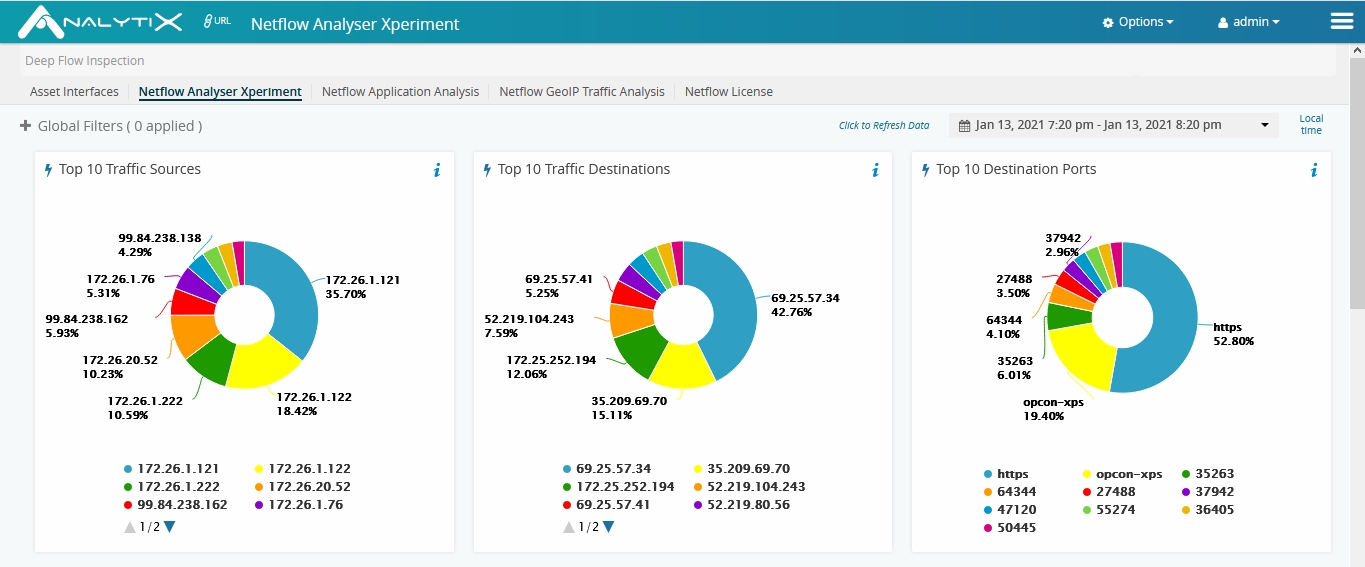
    OpsRamp NetFlow provides real-time diagnosis of network latency across wide area networks (WANs). It generates alerts based on network traffic utilization, and delivers insights into network utilization patterns by identifying source, destination, protocols and applications that impact services.

    OpsRamp Unified Communications works in a similar way, surfacing alerts and insights about traffic patterns impacting, for example, Zoom or Microsoft Teams.

    With more employees working remotely, the need to analyze network traffic has become more acute, said Byrne. Network performance degradations can have a major impact on overall application experience, Byrne said.

    Communications and collaboration platforms like Microsoft Teams pose particularly stubborn challenges, because they offer IT teams little to no visibility into that traffic, Byrne said.

    It’s unclear whether – and to what degree – networking and other IT operations will converge, but as AIOps platforms become more accessible, the ability to correlate IT events across multiple infrastructure classes as they transpire will steadily improve. While that may not lead to IT role consolidation anytime soon, it should enhance the level of collaboration teams can achieve.

    In the meantime, AI is poised to have a profound impact on how IT environments are managed. The amount of time spent in “war rooms” performing root cause analysis can be sharply reduced through the use of machine learning. As algorithms surface insights, IT teams will be better able to proactively address issues before they have a major impact on application performance and user experience. It may take time for IT teams to fully trust AIOps platforms, but in the near future, IT professionals will avoid working for organizations that don’t have such platforms in place. For IT professionals, keeping complex application environments running without AIOps platforms will be nearly impossible.

    Of course, transitioning to any type of new IT management platform is no small undertaking. However, as AIOps platforms continue to evolve, the overall cost of managing IT should also decline as leadership justifies the costs of these tools.