Category: Infrastructure/Networking

  • The Role of APIs in Mainframe Modernization

    The Role of APIs in Mainframe Modernization

    Mainframes are historically clunky systems. They are incredibly secure and can process impressive calculations, yet they are complex to manage and challenging to extract data from. This reality is at odds with modern cloud-native infrastructure, which emphasizes distributed computing and portable microservices. So, how can existing mainframes adapt to this connected, data-driven economy?

    I recently met with Dr. Alex Heublein, president at Adaptigent, to talk about the state of legacy modernization. According to Heublein, many mainframes are here to stay for the foreseeable future. However, enterprises are continuing to get value from these systems by adding an integration layer on top of them. By using a REST API layer on top of a mainframe, enterprises could finally open up these systems. This could facilitate bidirectional communication with newer cloud-native services, enable phase migration and edge closer to real-time processing.

    State of Mainframe Modernization

    The software industry changes every day. “Nothing in the tech field is permanent,” said Heublein, yet some legacy technologies will persist into the foreseeable future. In terms of mainframe adoption, Heublein sees a couple of categories of users. First are the large financial services organizations, such as large banks and insurance companies, which are considerably invested in their mainframe architectures and which will likely continue to rely on mainframe environments for their policy management and core infrastructure. “I think there’s a lot of good reasons for that,” explained Heublein. “If you want to process billions of transactions a day, [mainframe] is still a good option.”

    That said, regulations and market pressures are influencing a global movement toward open banking. For example, PSD2 mandates open banking in Europe and industry consortiums like Financial Data Exchange (FDX) are directing it in the U.S. market. These initiatives are encouraging financial services to transform their legacy environments and spurring cloud migration, especially for applications that aren’t mission-critical.

    Heublein pointed out a few different patterns in enterprise mainframe modernization. One approach is that enterprises are rewriting or re-architecting old COBOL applications and keeping them on-premises. Or they are porting and re-platforming the application; moving a COBOL app to a Windows or Linux system, for example. Finally, some are shifting straight to the cloud. For solutions that don’t need to be on the mainframe, enterprises may shift toward cloud-native to free up capacity.

    APIs Enable Legacy Modernization

    Distributed cloud technology is helping businesses scale to the right level. Yet, it’s difficult to jump off the mainframe entirely, noted Heublein. “Very rarely can you take all your stuff and move it all at once,” he said. “It’s a tough pill to swallow.” It’s especially difficult to move core banking infrastructure to a distributed environment—an instant shift could introduce security risks. For this reason, he recommended a ‘phase migration’ approach in which individual components are slowly migrated. For example, an insurance provider may shift their claims engine, policy engine and ratings engine to the cloud one at a time.

    As a result of phase migration, however, engineers must simultaneously support both on-premises and cloud-based applications. They must also ensure bidirectional communication so that these systems can exchange data. This is where a REST API transactional layer is necessary, Heublein explained. Such a layer could enable bidirectional communication between the mainframe and cloud-native applications, abstracting complexity when calling out to the modern world, or intercepting cloud data and filtering it into a format mainframe technologies can process.

    To increase developer usability, abstracting complexity from the mainframe integration process will be the key to building out connectivity. This could involve a codeless development approach with a COBOL sub-routine to call external systems, Heublein said. Automatic restructuring of data will be necessary to enable fluent bidirectional communication, too.

    Four Business Drivers of Mainframe Integration

    So what is the end result of putting an integration layer on top of mainframe systems? According to Heublein, there are four key business benefits of using such an abstraction layer:

    1. Orchestration: Software ecosystems often need to make multiple calls to different applications to collect and transform data. Yet, mainframe environments are very complex and challenging to integrate with. More usable integration fabric for mainframe systems could enable better orchestration of workflows in a developer-friendly manner. By using a REST interface, all apps could be calling the same interface, thus greatly simplifying orchestration between disparate services.
    2. Sustained Adaptability: The world is rapidly accelerating, and enterprises need to maintain and modify these APIs very quickly. Organizations require “sustained adaptability” to adapt and survive in the digital world, said Heublein. Mainframe systems, however, were not designed for the 21st century. Thus, low-code integration layers are critical to empowering rapid development.
    3. Data Transformation: Data is powerful for the business. Data is not only a commodity in and of itself but also is required for AI and machine learning. However, mainframes have a completely different way of encoding data. Thus, there is a need to transform this data into a modern format that businesses can consume. An integration layer between these systems can deliver an improved data consumption model.
    4. Real-Time Processing: You may think online payments happen in real-time; however, payment apps like Venmo are really just an abstraction layer over bank transactions, which may clear as little as twice a day. In short, mainframes are not great at real-time processing. However, more usable integrations to this infrastructure could enable user-facing applications to interact more closely to real-time.

    Another concern is security. Opening up mainframe environments that house core financial infrastructure must be done with extreme care—especially as API attacks remain the number-one rising threat in the software landscape. All organizations building out new integrations will require a secure layer from an outbound standpoint. Heublein said this often involves placing an API management layer or gateway in front of the integration layer. This system enables authorization and functions like a firewall between the internal and external world. It can also enable logging and prevent denial of service attacks, he explained.

    Improving Agility for Legacy Systems

    Legacy systems are entrenched in older technology and carry lots of technical debt, forcing operations to move at a slower pace. Maintainers are also culturally a bit different than the newer breed of cloud-native engineers. “Mainframe people are not … fast,” said Heublein.

    DevOps folks want to build, test and promote projects to production very quickly and, arguably, this agility is necessary to satisfy rising digital innovation demands. Improving integration capabilities for on-premises systems could enable businesses to better utilize preexisting investments while also improving agility.

    Low-code/no-code capabilities could also increase collaboration potential, Heublein added, which could bridge the gap between on-premises engineers and fast-moving business folks. When adopting low-code/no-code tools for mainframe integration, he cautioned against general-purpose citizen developer frameworks. Whereas universal integration layers can work well for many situations, he stressed that a very specific boundary box is best for building APIs for mission-critical applications.

    How is your organization approaching modernization for legacy systems? Let us know in the comments below!

  • Red Hat Extends Scope of Ansible Automation Ambitions

    Red Hat Extends Scope of Ansible Automation Ambitions

    During the online Ansiblefest, Red Hat announced the availability of a preview edition of Red Hat Ansible Automation Platform 2 that is intended to make it easier to automate IT processes at scale.

    Richard Henshall, senior manager for Ansible product management at Red Hat, said previously most IT teams have been automating individual processes, but as organizations become more adept at creating playbooks to automate processes, they now need to find ways to manage multiple automations that are often dependent on one another.

    Ansible Automation Platform 2 also enables IT teams to automate processes that span both monolithic as well as cloud-native applications based on containers using an automation controller, formerly known as Ansible Tower, that is more tightly integrated with Red Hat OpenShift, an application development and deployment platform based on Kubernetes, using Red Hat Operator tools. There is also an automation mesh capability that connects disparate automation components together and provides status checks.

    Ansible Automation Platform 2 also introduces automation execution environments within Ansible Engine that make it possible to create self-contained automation spaces that can be easily replicated and repeated across an organization.

    Red Hat also includes an automation content navigator to helps teams validate that automation content is working as it should across even the largest environments, along with updates to the Red Hat Insights analytics service that enable issues that might occur with automation controllers to be surfaced and eliminated by automatically applying policies.

    Henshall said going forward, IT teams should expect to see Red Hat focus more on enabling events to be the catalyst for triggering automation. Today, most automated processes begin with an IT administrator triggering the process. However, as digital business transformation initiatives mature, it’s become apparent there will be a need to trigger automation when specific events occur.

    Henshall said while there are still many organizations that are just starting to automate IT processes, there are also many that are entering the next phase of maturity. As such, they now require an automation platform that makes it simpler to manage automation at scale.

    In general, Ansible is designed to make it possible for developers and IT operations teams alike to declaratively create automation without much programming expertise required. However, creating a playbook that works reliably still requires a deep understanding of the processes that are being automated. Most IT teams would be well advised to closely monitor processes when they are first automated to make sure they are performing tasks as anticipated.

    Ultimately, it’s now a question of when rather than if most IT processes will be automated. DevOps teams, of course, have always been at the forefront of automation, but now it’s clear that as IT environments become more complex—with the rise of both the cloud and edge computing platforms—enterprise IT teams need to embrace automation more aggressively. The biggest barrier to automation is simply finding someone who has the passion to automate a process to lead the charge, said Henshall.

    Naturally, most of those efforts will initially focus on repetitive, tedious and manual IT tasks, but the potential to automate IT processes at levels of unprecedented scale has never been greater.

  • 4 Benefits of Integrating a Language With a Database

    4 Benefits of Integrating a Language With a Database

    One of the hallmarks of a truly modern programming language is the coupling of a language—for creating applications, devising algorithms and solving business problems—with an underlying database. When there is practically no separation between a database and its programming language, developers immensely increase their productivity, maximize the effectiveness of the code they write and provide unparalleled speed and flexibility in supporting business needs.

    Predicating a programming language on a database delivers these advantages by enabling developers to treat data as if it is in-memory, liberating them from the burden of manipulating how data is represented in the underlying database. This one simple advantage exponentially increases the flexibility for addressing business problems and, when used with advanced logic languages, enables developers to write applications in a fraction of the time and with less effort than it would otherwise require.

    Specific benefits of tightly coupling a database with its programming language include eliminating the time-honored mismatch between data structures and database representations, smart caching with transactional technologies for committing or rolling back database changes and automatically changing object definitions.

    These benefits remove the database as an otherwise complicating factor in supporting business use of data by freeing developers to flexibly innovate solutions—and speedily implement them.

    In-Memory Manipulations

    Developers focus on manipulating data structures to solve business problems. Traditionally, this concern was hamstrung by the onus of translating those structures into how data are represented in the database, a time-consuming necessity detracting from programmers’ attention to business problems. By fully integrating an object-oriented database or graph database with its programming environment, users can manipulate data objects in memory and they’ll automatically persist to storage. Developers can solely focus on working with data structures for business objectives without spending just as much, if not more, effort wrangling data’s representation in the database.

    Programming languages create this effect when they are imbued with an intelligent caching layer that persists in-memory data manipulations into the database. This advantage requires basing the programming language on a specific database. It eliminates the mismatch between working on data structures and toiling to get the underlying data to and from disk.

    Smart Caching

    The caching layer also tames the inherent difficulties in data objects pointing to other objects, which is a hallmark of object-oriented systems and graph databases. These databases require intelligent caching because one object can conceivably include the majority of the database by pointing to objects that, in turn, point to additional objects. Tight coupling between that language and its database fixes this issue so developers cache what is needed to work on data in memory while automating its impact on disk. Such caching is significantly improved with transactional technologies so developers can specify when they want their modifications saved in the database.

    This way, if they make a mistake they can simply go back in time before it was made and undo it. Conversely, after successfully completing their work, they can easily commit changes to the database. Like the other advantages, this benefit boosts developer productivity to match that of business requirements. It adds to the flexibility programmers need to innovate solutions for mission-critical objectives by writing or integrating applications.

    Object and Class Definitions

    The third boon of basing a smart programming language on a database is the capacity to dynamically change the definition of data objects. With conventional approaches, this task requires developers to stop writing or operating applications and manually write code to adjust the classification, which may involve either reading or writing the data in and out again. But with no separation between the database and its sufficiently smart programming language, such coupling can effectively keep track of classifications while automatically modifying them as needed.

    Developers can seamlessly add or delete features without manual coding, which also furthers their productivity. For example, if they add an attribute to an object, the next time they see it it’ll magically have the new feature. Alternatively, if they create a new feature of an old classification and decide to delete it, they won’t see it anymore. Best of all, these changes occur without rewriting the classification.

    Advanced Logic

    There is one more capability of very smart programming languages: They can combine these advantages with advanced logic languages such as Prolog. Prolog, or a subset of Prolog called Datalog, can instantly be used as a query language. In addition, it becomes very easy to create rule-based applications with Prolog because one can write declarative, logic-based rules with minimal coding. For example, they can specify a series of event-based rules detecting customer churn, money laundering or any important business outcome without being impeded by unnecessary database concerns to deliver time-to-value that’s unmatched without this method.

    Basing a programming language on a database improves developer efficiency and effectiveness by letting developers work on data in memory and persisting changes to storage, intelligently caching data and rolling back changes as required, and dynamically adjusting definitions.

  • Progress Expands Chef Automation Portfolio

    Progress Expands Chef Automation Portfolio

    In advance of its ChefCon 2021 conference, Progress today unveiled a series of enhancements to its Progress Chef automation platform that includes managed services and a software-as-a-service (SaaS) edition of its offerings as well as tighter integration with cloud services and other third-party tools.

    Sudhir Reddy, vice president of engineering for the Chef business at Progress, said the SaaS platform, now available in beta, combined with the managed services provided by Progress will make the automation platform much more accessible to a wider range of organizations.

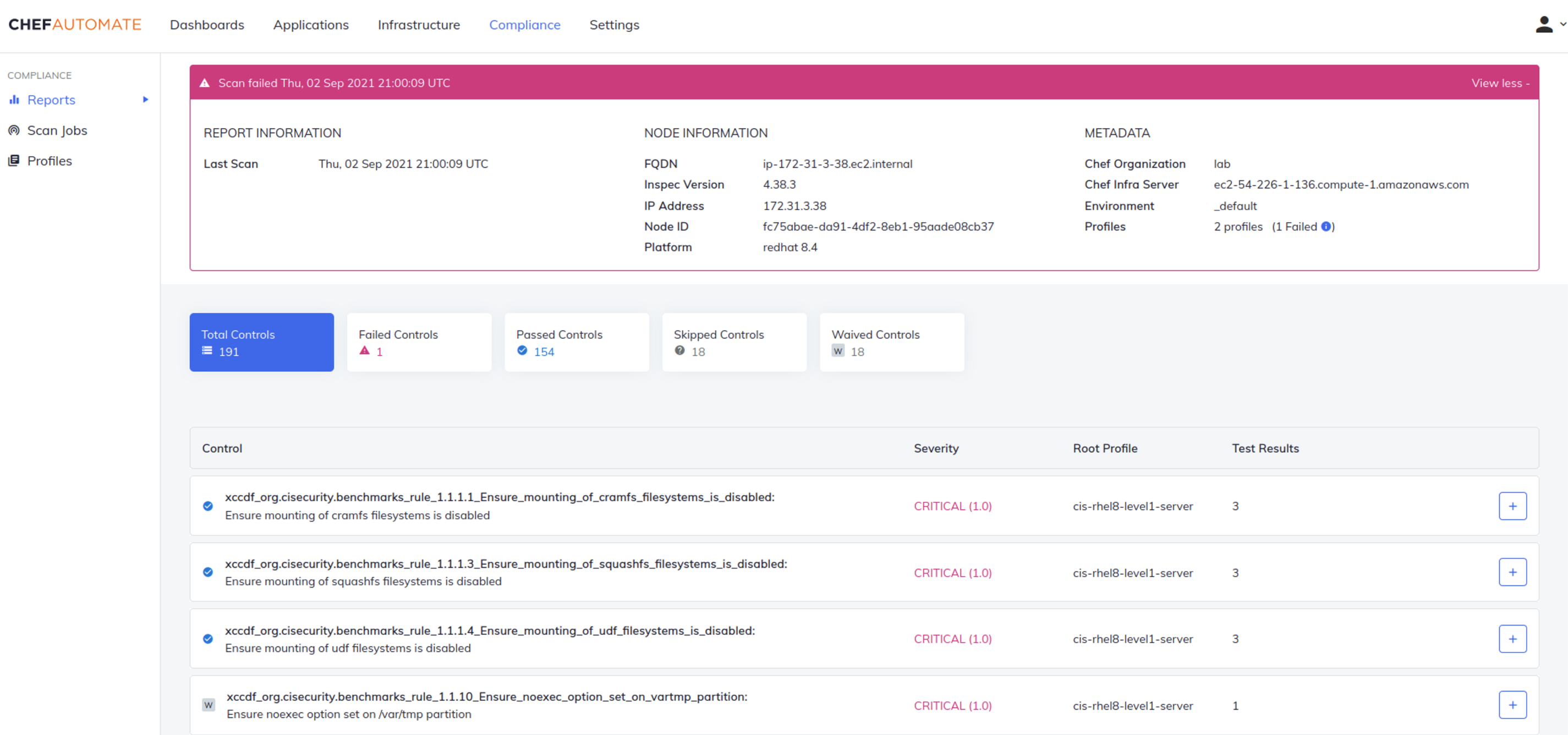
    Progress is now also extending the reach of its Chef Compliance Automation for Cloud Resources offering across Amazon Web Services (AWS), Microsoft Azure and Google Cloud Platform (GCP) to include Chef premium content that aligns with best practices for each cloud environment in addition to providing integration with Azure Policy, a suite of tools from Microsoft that compares resources to a set of business rules that define how cloud infrastructure should be employed.

    Chef

    Finally, Progress has enhanced Chef Enterprise Automation Stack to provide tighter integration between compliance and infrastructure automation along with adding infrastructure operations dashboard, support for Windows patch management, integration with third-party secrets management tools, and improvements to Chef Workstation and Chef Test Kitchen to simplify testing within application development processes.

    With the release of a SaaS platform and the availability of managed services, Chef is joining a long list of IT vendors that are removing responsibility for deploying and securing their platforms from internal IT operations teams. It’s clear more organizations now want to spend more time on building and deploying software than managing the platforms that automate those tasks on their behalf, said Reddy.

    It’s not clear how many IT teams that have already deployed a platform might shift over to a SaaS platform or rely on an IT vendor to manage that platform on their behalf. However, in the wake of the COVID-19 pandemic, many IT teams continue to work from home to help combat the spread of the virus. Many of those organizations have either shifted platforms to the cloud themselves, adopted SaaS platforms or outsourced the management of IT platforms altogether. There are also many small organizations that simply don’t have the internal expertise and resources required to stand up an IT automation platform on their own.

    That approach also makes it simpler to converge security, compliance and IT operations management within the context of a larger DevSecOps workflow, noted Reddy.

    The great paradox of IT automation has always been the level of expertise required to achieve it. Organizations that lack the expertise required to create automated playbooks, for example, don’t derive much value from an IT automation platform. It’s only been larger companies that have mostly derived the most benefit from investments in IT automation. However, as IT automation becomes more accessible via SaaS platforms and managed services, the level of expertise required to benefit from it naturally drops. In fact, with the advent of artificial intelligence (AI) for IT operations (AIOps), many manual IT tasks are increasingly being automated.

    It’s too early to say whether the IT industry as a whole is on the cusp of the next wave of automation, but the raw ingredients that make up the primordial soup needed to achieve that goal is, at this point, only awaiting a catalyst.

  • How to Achieve Cloud Operational Excellence

    How to Achieve Cloud Operational Excellence

    Cloud operational excellence means delivering the right mix of cloud-based services at the optimal cost and quality to support your organization’s mission and strategy. You might be thinking, “Why go to the trouble? Isn’t ‘almost good enough’ sufficient?” It turns out that it matters—a lot. The difference between the top 10% and the bottom 10% in cost per relevant delivery metric can vary by an order of magnitude or more.

    In the mid-1990s, Gartner acquired an IT metrics firm called Real Decisions. They offered benchmarking services so customers could compare their IT efficiency with similar organizations. With hundreds of “Global 2000”-sized customers, their database was rich. Over time, the Real Decisions team refined their catalog of metrics and enriched their data with repeat studies over time, to develop indices of efficiency. 

    Within their user population, the difference in cost per unit of productive work was 11 times better in the top 10% compared with the bottom 10%. That doesn’t mean 11% better, it means 1,000% better. 

    Note that the user base was self-selected. All participants wanted to get objective metrics of performance relevant to their business goals and paid for extensive studies involving questionnaires, financial audits and technical benchmarks. Notably, all participants had cost recovery programs (beyond chargeback) in place. The bottom 10% of this segment is still within the top 10% of the IT industry—and their score is 11 times worse than the best of the best. 

    Which raises the question: What is the industry average for IT efficiency? Is it possible that the hundreds of benchmarking users are all doing IT wrong, and the search for relevant metrics is misguided? I think not. 

    Choosing the Right Metrics

    In 1911, Fredrick W. Taylor published The Principles of Scientific Management, which discussed approaches to optimizing two important variables: Output quality and worker compensation. Taylor recognized that successful firms work collaboratively, with management and workers jointly setting goals and developing methods and tools to achieve both profitability and proportionate compensation. Nowhere in this text—or in any of his recorded speeches or documents—does he say, “If you can’t measure it, you can’t manage it.” He never said that for two reasons: First, he did not believe it; second, it is not true. What he did emphasize was that if you do measure it, you will manage it. That was a warning: Pick the right metrics or you will exert effort pursuing a meaningless goal. 

    Here are some potential cloud performance metrics compiled from several cloud providers and users across various industries, not-for-profits and governmental agencies: 

    • Service Metrics 
      • Reliability – mean time between failure (MTBF)
      • Availability – Uptime, expressed as a meaningful percentage of demand
      • Serviceability – Mean time to repair (MTTR)
    • IT Metrics
      • Capacity 
      • Latency
      • Bandwidth
      • Response time
    • Strategic Metrics  
      • Business agility 
      • Customer engagement 
      • Customer reach 
      • Financial impact 
      • Solution performance 

    The journey to cloud excellence starts with developing the metrics that are most relevant to your business goals. Picking the right metrics with the right scale matters. As a rule of thumb, generally right beats precisely wrong. 

    Sustaining Excellence 

    After you agree on a set of metrics that are both statistically reliable, repeatable, objective and aligned with your firm’s mission, how do you achieve and sustain excellence? 

    In the 1970s, the U.S. Department of Defense bought a lot of custom software. Sometimes it worked well, other times it didn’t. So, the DoD funded research on code quality. It turns out that the key difference between great and mediocre quality code flowed from how the organization managed problems. More specifically, how did the team react to an unexpected event? The spectrum runs from confusion and dismay through fire drill chaos to calm, rational assessment and remediation. That methodology gets baked into the code itself. This study produced the Capability Maturity Model (CMMi), which was created by the Software Engineering Institute at Carnegie Mellon University. 

    The CMMi framework identifies five levels of process maturity. A simplified assessment of an organization’s process maturity level comes down to two questions. First, is there current comprehensive documentation for the process, including how to deal with defects? If the answer is yes, the organization is at level three or higher. If the answer is no, the second question is, “Does anyone know what’s going on?” If the answer is yes, that’s level two; if no, level one. 

    A level one organization has no standard method in place to deal with problems. When something goes wrong, everybody grabs tools and tries to figure out what went wrong and how to fix it. Organizations like this do not spend much on training or analysis. Their focus is continuing to produce whatever they are trying to make. Over time, an individual may develop expertise in diagnosing a component, and when things go wrong, the call goes out to “Get Fred in here!” to troubleshoot the problem. Organizations with pockets of expertise are moving into level two. Most organizations fall within one of these two levels. 

    Organizational transformation is very difficult, and often requires significant changes in the management team, as well as funding different activities. Training and communications skills are crucial to proceeding beyond level two. Management rewards heroes who can shoot the most difficult bugs. They get the big bonus, the promotion, the better office, a parking space near the door. This behavior reinforces the culture of heroes. But moving forward requires the heroes take on a new role.  

    Once the organization creates documentation, it is on the path to level three. Note that these transformations are wrenching. It is not easy to tell the heroes that their greatest value to the organization is now how well they can write or teach. But with proper management attention, it can be done. And the benefits of moving forward are many: 

    • Dramatically fewer crises. Staff could make plans and keep them – no emergencies interrupting a family gathering, a school event, or a get-together with friends. 
    • High quality code. Maintenance tasks became much simpler, and customers experienced improved reliability. The documentation was helpful, and troubleshooting became routine rather than overwhelming. 
    • Reliable planning. In a mature organization, plans hold true because they are based in proven metrics, continuously validated processes and uniformly high competence within the team. Project estimates are accurate because the data stems from reliable, repeatable evidence. 

    Cloud excellence is not a phantom or an unachievable goal. It is the result of clear thinking and sound documentation. Over time, practices improve, skills build. To quote Macklemore, “The greats weren’t great because at birth they could paint, the greats were great because they painted a lot.”  With practice and focus, your organization can achieve cloud excellence.

  • Infrastructure-as-Code Security will Improve Your Cloud Security

    Infrastructure-as-Code Security will Improve Your Cloud Security

    Moving to the cloud creates a tremendous opportunity to get security right and reduce the risk of a data breach. Most organizations start their cloud security efforts by ‘shifting security left’ thereby addressing issues in the CI/CD pipeline. Fixing known vulnerabilities and risky configurations before pushing images to production makes sense. But there is an opportunity to shift security even further left—as you set up your cloud infrastructure—to reduce risk. Infrastructure-as-code (IaC) security allows you to define security controls as you configure your cloud infrastructure.

    Getting Started on Your Cloud Journey

    Before we dive into IaC security, let’s talk about why platform teams want to deploy infrastructure-as-code as they move through their cloud journey. Most organizations have not yet tackled IaC. They start their journey by experimenting with cloud configurations until they have defined a stack that works for their teams. In this early stage, application teams may be defining their own cloud stacks. They are manually configuring infrastructure or using scripts. Configurations may not be standardized across teams.

    Standardization of Infrastructure Saves Time

    Although experimentation is reasonable early on in the journey, standardization of infrastructure saves time. Cloud services are no different than applications that run on premises. When your teams are using different versions of tools in their stack, getting an application up and running can be a nightmare. Interoperability between services is challenging, and it can feel like you are fixing a different flavor of the same problem over and over.

    Mature cloud platform teams typically prefer to create a ‘golden image’ with a baseline set of services for development teams. They may create a menu of a few standard options to meet different teams’ needs. Because they are standardized, the platform team can take time to validate that they interoperate and are secure. For example, these golden images will be regularly scanned for vulnerabilities and updated to ensure they meet internal security standards and any relevant regulatory requirements.

    IaC security cloud

    Automating Infrastructure Deployment Reduces Errors

    Manually configuring the environment in the cloud for each team is tedious. Once these configurations have been standardized, the cloud infrastructure can be provisioned as code using templates. A declarative approach defines the desired end state, whereas an imperative approach defines the detailed steps to achieve the end state. The templates are normally stored in a Git repository and version controlled. Automating the configuration of infrastructure not only saves time but also reduces errors that can disrupt operations.

    IaC Security Shifts Security Further Left

    Once you have templates that define your infrastructure, standardizing permissions and access rights for services-as-code is a logical next step. The security team typically defines the guardrails or policies for accessing cloud services. These policies can then be defined as code along with the infrastructure configurations. This IaC security is a further ‘shift left’, allowing security to be embedded into infrastructure, even before an application can be deployed. Implementing policy-as-code minimizes the opportunity for human error in configuring security services. By defining these policies and enforcement guidelines together, the DevOps and security teams can establish a trusted partnership.

    Although some organizations may start their journey by implementing IaC security, for most organizations it happens later in the cloud journey. The order is less important than ensuring you take a DevSecOps approach and embed security at each stage to manage risk. Be sure to address the following areas as part of your cloud and container security program:

    Continuously Check Cloud Permissions and Configurations

    Even if you have IaC templates, you need a program to regularly take inventory of all cloud assets and confirm permissions and configurations. The Center for Internet Security (CIS) benchmarks are commonly used to check passwords and access rights. Beyond enforcing these best practices for security on cloud services, continuously checking for changes to permissions and suspicious activity is critical. The cloud vendors capture logs across all of their services, and your security tool should continually monitor and alert using those logs.

    Scan Images for Vulnerabilities and Risky Configurations

    Scanning for vulnerabilities and ensuring configurations use best practices allows you to shift security left into the development pipeline. Scan everywhere you have images—including within registries, pipelines and also check for new vulnerabilities identified for images running in production. Be sure to scan hosts as well as containers. Defining scanning policies and enforcing through the development process creates guardrails for the development team and clarifies expectations. Most regulatory compliance standards have image scanning requirements as well.

    Detect Threats and Respond to Alerts

    Prevention is fundamental but must be supplemented with threat detection and response. Alerting on unexpected behavior can identify the presence of a threat. Initially, teams may use out-of-the-box detection rules as a way to get started and then customize rules over time. Checking configs against dockerfile best practices is a good way to get started. Overly permissive access rights for containers is common in Kubernetes environments and should be allowed only when required.

    As your team develops more expertise with containers and Kubernetes, you can also implement zero-trust network security policies to block unexpected communication between pods, services and applications.

    Some DevOps teams handle triage of alerts, as they can quickly determine if the issue is a configuration issue or an indicator of compromise. Teams often map detection rules to the MITRE ATT&CK framework, allowing their security teams to manage alerts consistently across their environment. For any team to effectively respond to a security alert, it is important to capture a detailed record of exactly what happened before, during and after that event. This visibility can be particularly challenging with containers but it is critical because containers have short lives. The 2021 Sysdig Container Security and Usage Report revealed that about half of containers live less than five minutes.

    Complying with Regulatory Standards

    Complying with regulatory standards can be painful. Some standards were written with cloud computing in mind, like NIST 800-53 and SOC2, and others were not. With those broader standards, it is important to understand the controls that are relevant to containers and the cloud.

    As you consider your compliance program, be proactive—don’t wait until you are ready to roll into production. Start early by engaging your compliance team and helping them get up to speed. Your role is to provide evidence of compliance to pass an audit at any time using the documentation from your security platform.

    Getting Cloud and Container Security Right

    The move to the cloud creates a tremendous opportunity to get security right and reduce risk. The fact that physical security and a chunk of operations are delegated to cloud vendors frees up security and development teams to focus on their more narrow scope within the shared security model. By taking a secure DevOps approach and inserting security into every stage of the application life cycle, your team can confidently and securely run cloud and containers.

  • Where Do SREs Go From Here?

    Where Do SREs Go From Here?

    Charlene O’Hanlon talks with Leo Vasiliou, director of product marketing at Catchpoint, about the results of a study the company fielded with VMWare Tanzu and DevOps Institute of nearly 300 site reliability engineers (SREs). This year’s report underscores the challenges of multi-cloud, calls out the underutilization of AIOps and shows a systemic shift in core baselining data. The video is below, followed by a transcript of the conversation.

    Announcer: This is Digital Anarchist.

    Charlene O’Hanlon: Hey, everybody. Welcome back to TechStrong TV. I’m Charlene O’Hanlon, and I’m here now with Leo Vasiliou who is the Director of Product Marketing over at Catchpoint. Leo, thanks so much for joining me today. Really appreciate it.

    Leo Vasiliou: Oh, of course, Charlene. Thank you very much for allowing us to have the conversation today.

    O’Hanlon: Absolutely, absolutely. I want to talk to you about a recent survey study that you guys put out in conjunction with VMware Tanzu and DevOps Institute. What were you guys looking at?

    Vasiliou: Well, from an existential perspective, we hope that the survey that we do leads into the annual report and we’d like for it to be the most data-backed set of insights in its community. There are sort of three underlying constructional essences of the report. One is to provide a core baselining data for the key SRE tenants. So DevOps, who had an amount of time, would call in reported levels of toil. The other essence is to look at what’s trending. And then the third one will generally be around the IT to business relationship. And then with each one of those constructional essences, the context and line items within each section will change from year to year.

    O’Hanlon: Gotcha. Alright. So this one focuses on site reliability engineering and what they’re seeing and what they’re dealing with on kind of a daily basis. Is that right?

    Vasiliou: Yes, yes.

    O’Hanlon: Okay. Alright, great. So tell me a little bit about some of the findings in the study. I know you guys do these, as you just said, reports yearly. So I’m interested in knowing what’s changed from year to year and what really surprised you in this year’s report.

    Vasiliou: Well, I like to say SREs are double struck with challenges because the SRE is essentially two jobs in one, right? They have to increase the efficiency of their operational activities while mitigating the risk of their transformational activities. So one of the key findings this year, which by the way this may be the most provocative dataset we’ve published just because some of the findings conflict with some popular theories in the market, but take the first one just as an example of that, is as part of the baselining set of data there was a self-reported drop in toil, which is the word they use to define repeated, mundane, busywork that doesn’t have any inherent value, of 15 percent. And one of the reasons this is such an insightful nugget to lead us into our various conspiracy theories is it was across the entire distribution of data, across all of their percentiles, as well as across all of the geographies that we looked at.

    O’Hanlon: Wow.

    Vasiliou: And so for me, when I had the blessed opportunity to do the research and sit down and co-write the report, having been stuck in the house for, let’s just call it a year and a half at this point, there was just something different about working on a piece like this and it just felt a bit more meaningful. And the conspiracy theory there or the hypothesis is that if people return to work, or return to the office I should say or some type of hybrid environment, will those reported levels of toil increase again next year as people adjust to the hustle and bustle of commutes just adding to frustration in how they think about things?

    O’Hanlon: That is a really, really fascinating thought process there. We could do an entire conversation about just that and whether what happens this year is going to be indicative of what happens in the future or if this year is going to be like a reset year. So from an SRE perspective though, the fact that the level of toil decreased 15 percent, that seems pretty significant. If you look at the entire spectrum of what they have to deal with on a daily basis, 15 percent, good lord, that’s huge in the SRE space.

    Vasiliou: Yeah. It is huge. I agree. It’s also based on the response of hundreds of survey participants year over year. And what’s interesting, Charlene, is one of the unique tactics we took in this year’s report is before we publish the reports and post survey pre report, we actually showed the results to various industry, let’s just call them, leaders. One of them we shared this particular section to had an alternative theory on why levels of toil dropped, and it had to do essentially with the fact that if people are not in the office, maybe does the very act of them not being observed compel them to do less busywork.

    So there was an alternative theory. But bringing us back to and leading into one of the other essences of the report, which is kind of the trends piece, it had to do with the amount of monitoring data sources, like the volume, variety, velocity of data, and the number of multi same-service platforms, e.g. multi CDN, multi DNS, et cetera, in use. And so will the return to work and the promise of AI ops help them keep toil levels low? Which leads us into the next sort of surprising finding, which is that SREs and their implementation or shift to AI ops is quite slow to maybe what we might be reading about in the industry, which was probably the second most provocative finding in the report.

    O’Hanlon: Yeah. So why do you think it is so slow then? Were there any trends that kind of came out of that? Any reasons why organizations are kind of slow to adopt AI ops?

    Vasiliou: Well, there is obviously a deluge of information and rhetoric in the market on the internet today. We need to seriously consider this idea of an information diet, which is a concept I first heard about a couple years ago. When we think about the idea of the hype cycle versus the challenges SREs face on a day-to-day basis, sometimes the market and the promise of what these types of solutions will offer might outpace actual implementation capabilities from, hey, we’re an SRE, let’s go implement this. I think part of the challenge here is probably the concept of AI ops is too broad and too large for consumption. It’s the idea of just saying, “Hey, let’s go solve world hunger or, hey, let’s go solve or implement AI ops,” right?

    O’Hanlon: Right, right.

    Vasiliou: You’ve got to break it down into smaller components and incrementally develop capabilities from there. Otherwise, how the heck are you going to baseline your progress for when you’re done? I think it’s too big, too broad, and some of the vendor promises may be of self-healing, auto remediation, maybe they were a little more on the hype side, where some of the other AI ops of components like root cause analysis or even correlation, maybe those are truthfully more on the hope and promise side.

    O’Hanlon: Okay. Do you think that AI ops – to your point, it is broad – do you think it just means different things to different people and so somebody actually may be implementing some type of AI ops and actually not realizing it?

    Vasiliou: The short answer is yes. So when we asked the question what monitoring tools or practices are used today, they were presented with seven options, ranging from application, infrastructure, experience monitoring, AI ops, and it was the fifth lowest, meaning that almost 40 percent of respondents said they’d never used it in the first place. The second question we asked is very simply what is the received value from AI ops, where one was the low value, nine was the high, and the range evenly spanned the value scale that was presented in the survey. What was interesting is there were a subset of people who said they never used AI ops but that they still received value, which was an additional dimension we didn’t think about when writing the survey.

    But it kind of brings me back to the essence of your question, which is are you user versus a consumer? And then go back to the previous comments about how big and broad this quote/unquote AI ops idea is, and there’s absolutely a propensity that people hear and think completely different things, unfortunately.

    O’Hanlon: Interesting. Interesting. So one of the things that we’ve been talking about in the SRE space over the last couple years is really how the role is kind of morphing and changing along with the market in general and to address a lot of organizational needs as well. Are there any findings from this year’s study that kind of bear out how an SRE role is changing and even if it is changing?

    Vasiliou: That will go back to what we were saying just a moment ago about mitigating the risk of their transformational activities. When you were asking the question, I’ll just cite the stat from our very first SRE report. We said that 85 percent of respondents said that in order to be successful in this role you have to commute into an office. So that got topsy-turvy turned upside down on its head.

    O’Hanlon: Right. Yeah. [Laughs]

    Vasiliou: But to get back to the essence of the question here, when we looked at the quantity of data sources and the prolific rise of the use of multiplatform providers, we sort of looked at this correlation between how SRE orgs are structured. Are you decentralized, are you centralized, or is there some type of hybrid in between? And then the decentralized piece was broken down even further by stack component, by platform component, or by business product or service. The vast majority of SREs said they are currently decentralized by business product or service, but I think the transformational piece here, which is something we’ll look at next year when we write the report, is because of the prolific rise of multiple third party and multiple same-service third party providers, there is a huge, gigantic spotlight to shift the primary dimension of org structure from product and service to a platform basis.

    And we talk about it like this. If you’ve got 10 different teams assigned to 10 different products or services and one member from each of those SRE teams developing capabilities that happen to be the exact same capabilities in development by those other nine teams, that’s the scalability and efficiency _____ that we start to lead in and talk about in this year’s report. So I think the transformational piece will be the assignment of SRE development engineering resources from product and service as a primary dimension to a platform – for example, cloud, CDN, DNS, API – as the primary dimension where those capabilities will be normalized and developed. Even though underlying platform structures will be different, those capabilities will then be offered as part of, let’s call it, an internal marketplace for use by multiple teams to kind of get away from that concept of silos and being segmented by product or service. So a bit of a long answer but all contextual to the key part there, which is the trend and the transformational piece that we wrote about this year.

     O’Hanlon: Right. Yeah, well it really is food for thought there if you consider how the SRE role was established and how it’s kind of – if you go down that path, how it seems to be changing and evolving as the more technology is adopted and more things are moved out to the edge and the need for SREs at basically all points on the network if you think about it. So great stuff there. Well, Leo, I know we could talk about all of the findings and have a much larger conversation, but unfortunately that’s all the time that we have for this one. But I do want to thank you very much for going through some of the survey findings. If folks are interested in taking a look at the study itself, is it readily available?

    Vasiliou: It is, it is. So it’s available at Catchpoint.com. Just head over to our learning and research section and enjoy the read. Charlene, one of the sentiments we wanted to leave readers with this year was this concept of baselining against Google’s definition of SRE, but we hereby declare by the power vested in us by absolutely nobody at all that you are hereby free to be an SRE.

    O’Hanlon: Oh, wow. Just one more thing to add to my plate. [Laughs] Well Leo, thanks again. I really do appreciate your time, and it’s a pleasure talking to you. I’m sure that we’ll talk again in the future about future studies that you guys have going on. So, thanks again. Really appreciate it.

    Vasiliou: You are quite welcome. Thank you for your time, Charlene.

    O’Hanlon: Alright, everybody. Please stick around. We’ve got lost more TechStrong TV coming up, so stay tuned.

    [End of Audio]

  • What It Will Take To Bring Cloud Gaming to Fruition?

    What It Will Take To Bring Cloud Gaming to Fruition?

    The gaming industry is booming. There are 211 million people gaming in the U.S., and it’s one of the fastest-growing forms of entertainment on the planet. In the age of Twitch streaming, gaming has even upstaged traditional sports viewership. On average, young gamers between the ages of 18 and 25 spend a full hour more watching online gaming than watching traditional sports.

    Gaming has also become a way of connecting with others—65% of players say they play with others online or in person. Some software development teams even encourage gaming in the workplace to increase productivity. For this reason, there has been a massive shift toward online cooperative games, RPGs and sandboxes like Minecraft. Also, games are becoming more cloud-based, with purchases, downloads and game saves occurring in the cloud. Still, many people lack the hardware necessary to run complex games locally. All these factors are harbingers of a coming shift away from PC and console-based processing.

    I recently met with Noam Salinger, product manager, Granulate, to learn about the future of gaming and how software teams in the gaming industry can prepare. To Salinger, “cloud gaming is the next step.” The move away from consoles and toward cloud-based, remote processing will have huge ripple effects. Lowering the barrier to gaming could introduce millions of more players into the ecosystem and further balloon the industry. However, cloud gaming presents significant hurdles. The transition will require a substantial reduction in latency, 5G networking and highly efficient computing optimizations.

    Roadblocks to Cloud Gaming

    “Cloud is an integral part of any gaming company,” says Salinger. More and more functionality associated with gaming is being pushed online. There are already online game marketplaces, cloud-based account management and remote game saves. This is especially prevalent with mobile gaming. But, what about the actual processing for computationally-intensive games—could these workloads also move to the cloud soon?

    This kind of cloud-based gaming could soon come to fruition. Yet, Salinger foresees some major roadblocks to cloud gaming:

    1. The Software Components

    A complete jump to cloud gaming will require having the proper software infrastructure in place and getting vendors on board to support it. This is perhaps the biggest obstacle to cloud gaming in the software industry, said Salinger, “It’s still not mature enough.”

    2. The Business Components

    Furthermore, gaming platform companies might refrain from cloud gaming due to fears of it cannibalizing their existing hardware sales channels. On the other hand, cloud gaming presents a big opportunity to take on more of a subscription-based model, such as allowing a user to play any game they want from an extensive suite of games. Akin to streaming services like Netflix, Hulu or Peacock, we could see similar platform styles emerging in gaming. “They will have no choice but to participate at some point,” said Salinger.

    3. The Network Components

    As most gamers can attest, online games can easily suffer from network issues that negatively affect gameplay. Salinger predicts that the ubiquity of 5G networks will be necessary to propel the cloud gaming market forward. 5G could be a universal method to enable real-time connections for a broader base of end-user gamers.

    Even if software developers optimize game processing speeds, a poor network could add enough latency to data throughput to cancel out those gains. 5G could expedite this process, but it’s taking a lot longer than expected. Some estimates place 5G finally arriving at full throttle sometime in 2023, after more antennas are constructed and pre-existing physical infrastructure is upgraded.

    4. The Latency Components

    Another significant roadblock to cloud gaming is figuring out real-time remote computing on the game vendor side. “This is where the latency aspect of things really comes into play,” said Salinger. Since game clients will be making many remote calls, optimizing cloud CPU utilization will be vital to reducing the response time to requests.

    Cloud gaming will require parallel running processes that anticipate user action. Similar to the way modern web applications simultaneously trigger multiple backend requests for authentication, geolocation, user databases and so on, real-time cloud games will require many different processes running in parallel. Servers could allocate resources before requests come in, using predictive analysis of usage patterns to trigger components in advance of user behaviors.

    To enable intelligent resource allocation, Salinger describes how an OS-agnostic kernel module could be in charge of resource allocation, continuously adapting to changes in the application workload. Low-level resource allocation at the CPU level, the allocation memory, I/O, and the sequence of execution must be optimal for each specific application, he described.

    This sort of process is already being applied in production by some ad tech companies to enable real-time ad bidding. For example, by optimizing cloud CPU utilization, Perion is able to perform faster, process more responses and use fewer machines to perform the same task—thereby reducing the roundtrip time for each request. Similar principles could be used to advance cloud gaming.

    Rendering sophisticated virtual environments is highly resource-intensive, and high-performance graphics cards are expensive. Video games are set to only increase in complexity with new AR/VR modes. Cloud gaming could help respond to rising computational needs and replace the need for local computing hardware. In the process, this move could bring in more gamers, disrupt the console wars, and nullify age-old PC-versus-Mac compatibility issues.

    Moving to a cloud-based approach is also arguably more aligned with today’s fast-paced software release cadences. Pushing more frequent patches can help resolve bugs faster. But it also could aid in retaining engagement by introducing new levels and objectives continually.

    The rise of the gaming ecosystem can’t be ignored. But as it stands now, there are still significant challenges to wider penetration of cloud gaming. Cloud computing optimizations to reduce latency, mainstream adoption of 5G and significant re-platforming of software infrastructure are just some of the many issues that will need to be tackled before truly cloud-based gaming experiences advance to the next level.

  • How to Build an Options-Based Observability Strategy

    How to Build an Options-Based Observability Strategy

    The global pandemic forced companies to accelerate their digital transformations, pushing them toward new technologies and architectures as they struggled to adapt to a changing world. Companies wanted fast development and deployment and were happy to trade off efficiency, reliability and sometimes, security, to pursue their goals. Now that the pandemic is receding in many parts of the world, the priorities are rebalancing as companies grapple with choices they made under fire.

    Observability has emerged as a way for enterprises to better understand sprawling infrastructure and application environments. According to Gartner, “Observability enables organizations to reduce the time it takes to identify the root cause of performance-impacting problems. In particular, and in contrast to traditional monitoring, operators can freely interrogate data post-hoc without the need to pre-program dashboards.”

    This sounds promising and the market responded quickly, but predictably. Large and monolithic monitoring platforms embraced the term and added new features, making them even larger and more monolithic. These monolithic platforms represent a failed choice-based strategy. They assume that all observability data is collected, centralized, integrated and only analyzed by a single tool. Enterprises following a choice-based observability strategy find themselves locked-in to multi-year investments without the flexibility to react to evolving technologies.

    While this has been good for vendors in the incumbent monitoring space, end users haven’t benefited from these enormous platform deployments because the choice-based strategy is built on the faulty assumption that a single pane of glass serves all of your monitoring and observability audiences, from SREs to DevOps and SecOps.

    A choice-based strategy also forces customers into limited options in the future as technology continues to evolve and requirements change. Defaulting to choice-based strategies also leaves little leverage for contract negotiations, data integrations and data access.

    Infrastructure and operations teams need to take a different approach to their observability strategy. Instead of focusing on buying products and making choices, teams need to shift their thinking to creating options. The choices you make today limit your options tomorrow. Tomorrow is unpredictable and uncertain. Taking an options-based approach allows you to be flexible and adaptable today and into the future.

    An options-based observability strategy is built on three pillars:

    • Establishing your observability strategy principles
    • Building composable environments
    • Staging your commitments

    Let’s look at each of these.

    Establish the Principles of Your Observability Strategy

    When asked about their observability strategy, many often leap into detailed plans covering every imaginable use case. They talk about the current state of their infrastructure and how things will be at the end of three or five years, including the skills and functions they’ll need in that time. If you’ve read the above, you’ll recognize this as a choice-based strategy: All the choices they need to make over the next several years are already laid out. This leaves little room for adaptation and options as the world evolves around you.

    Instead, think of your observability strategy as a single principle, or a collection of principles, guiding your observability strategy. Let’s say your core principle is that observability is a key enabler of operational efficiency across SREs and DevOps. We can build on that operational efficiency principle to define what key elements of our strategy has to include:

    • Data sources have utility-like accessibility; always on and available across tools.
    • Metrics are primarily driven by total cost of ownership and optimization.
    • Governance is centralized to the team distributing data to downstream systems.

    These elements are different if your core principle is something like customer intimacy or risk management.

    With principles and strategy in hand, we can focus on the next phase: Composing the observability environment.

    Compose your observability environment

    In an options-based strategy, the key success factor is avoiding large ecosystems that limit flexibility. Many vendors take a “give us everything” approach to observability. These approaches appear to start and end at the destination platform, but they begin even earlier, at data origination. It’s common to see agents only sending data to one destination, limiting the usefulness of the data by locking it into a silo.

    Staying modular means selecting tooling that abstracts the data sources from destinations and puts the power back into your hands. By using an abstraction like an observability pipeline, you can send data from one source to multiple destinations, while managing that data in any way you see fit. For example, this is where your centralized governance can occur.

    When new tools are introduced, upgraded or deprecated, an observability pipeline insulates the rest of your environment and users from those changes. A modular approach also gives you more power in contract negotiations with your other vendors because you’re less reliant on one vendor for all of your observability needs.

    Stage Your Commitments

    A choice-based observability strategy is a large commitment, often taking years. Once you start, stopping becomes impossible. That’s simply unacceptable in today’s environment of uncertainty. Choice-based strategies limit your ability to test, experiment, and learn. At the same time, our infrastructure is critical and it must be reliable.

    An options-preserving approach may involve experimenting with freemium products; only paying once the product’s value has been proven. Cloud-based options are another consideration since they are commonly subscription-based and offer easy try-before-you-buy purchasing styles. Even better, cloud-based options don’t require using your own infrastructure to test new options.

    Every IT team feels the need to react and respond to demands from the business. That urgency to make choices, to solve the immediate problem, can have long-term implications for future flexibility and agility. By structuring your observability strategy around a long-term vision based on preserving options, your team can remain adaptable as technologies and business requirements evolve.

  • Cycloid Tool Can Reverse Engineer Provisioned IaC

    Cycloid Tool Can Reverse Engineer Provisioned IaC

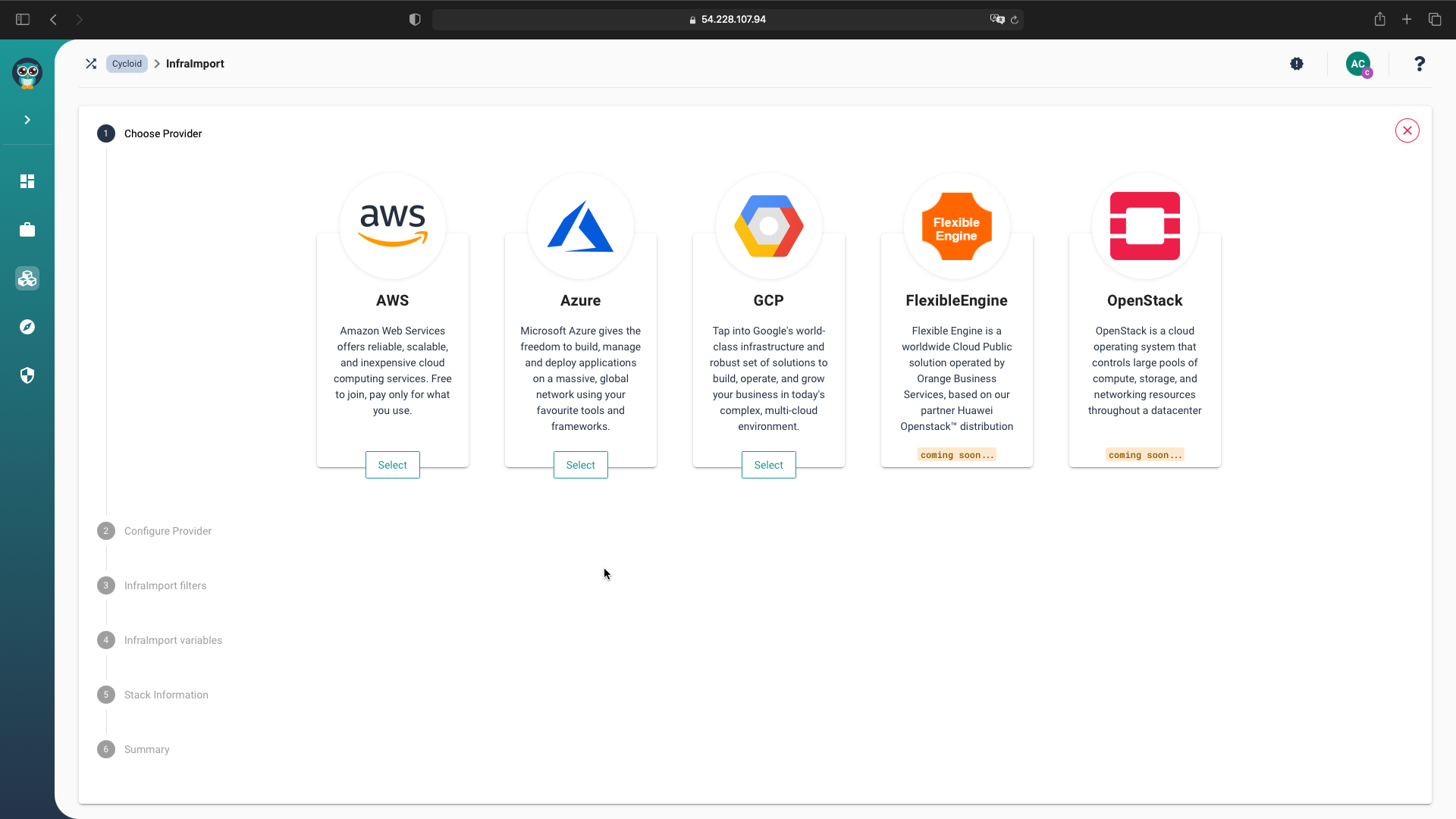
    Cycloid this week unveiled a tool that makes it possible to reverse engineer code used to manually provision cloud infrastructure. The Infra Import tool is part of an effort to create a more consistent and reliable version of that code using open source Terraform software.

    Benjamin Brial, Cycloid CEO, said Infra Import is based on Cycloid’s open source TerraCognita software, which enables IT teams to reverse engineer infrastructure-as-code (IaC) created using open source Terraform tools.

    Infra Import extends that capability to cloud platforms such as Amazon Web Services (AWS), Microsoft Azure, Google Cloud Platform or an IT environment employing the open source OpenStack cloud platform that may have been manually provisioned. IT teams can then create a configuration based on that Terraform code that could be employed across multiple clouds.

    Infra Import is designed to connect to a cloud provider and then automatically reverse engineer Terraform files and IaC stacks based on the existing deployment. It also ensures that the latest edition of Terraform is being used to create that configuration code, noted Brial. That capability eliminates the need for DevOps teams to keep track of what version of Terraform might need to be updated as new versions of the IaC tool become available.

    Just as significantly, Infra Import also makes it a lot easier to onboard new members to a DevOps teams because the tools uses valid secure configurations they know can be relied on. Misconfiguration of cloud services is one of the biggest security issues that IT teams today are wrestling with, simply because most developers lack the security expertise required to configure cloud services properly.

    Cycloid is in the process of rolling out a comprehensive suite of management tools that complement a lightweight framework it created to make DevOps best practices more accessible. The challenge is many IT organizations have already manually provisioned cloud infrastructure in a way that is, at the very least, often suboptimal if not downright insecure.

    Misconfigurations are rife across cloud computing environments, but most organizations are not prepared to manually address the issue. Automating the reverse engineering of those configurations is the first step toward enabling IT teams to address the problem at scale.

    It’s not clear to what degree configuration concerns have impacted the number of applications that would otherwise have been deployed in the cloud. Security is always listed as the top concern IT leaders have when employing cloud platforms. The issue, however, is not the security of the platforms themselves but rather the processes employed to deploy applications on the platforms. Cloud service providers have promoted a shared responsibility model for security under which developers are accountable for both securely configuring services and ensuring the overall security of the software environment. The trouble is, not every developer understands the implications of that shared responsibility model much less how to actually secure an application workload.

    It’s not likely security concerns will slow down the rate at which applications are deployed in the cloud. However, as more cloud security issues are encountered, more scrutiny will be applied.