Category: Cloud Management

  • NetApp Acquires Spot to Rein in Cloud Costs

    NetApp Acquires Spot to Rein in Cloud Costs

    NetApp this week announced it has acquired Spot, a provider of a service that enables IT teams to continuously optimize costs for cloud workloads.

    Anthony Lye, senior vice president and general manager for public cloud services at NetApp, said the Spot service is based on an application programming interface (API) that IT teams add to each application workload. That API then makes regular calls to Spot, which leverages algorithms that determine when and on what types of instances a workload should run to reduce cloud costs.

    The Spot service will then move workloads automatically between on-demand, reserve and spot instances on Amazon Web Services (AWS), Microsoft Azure or Google Cloud Platform (GCP). It is not designed to enable arbitrage across different cloud services; rather, it optimizes the allocation of compute resources on whatever cloud platform an IT team decides to deploy a workload on.
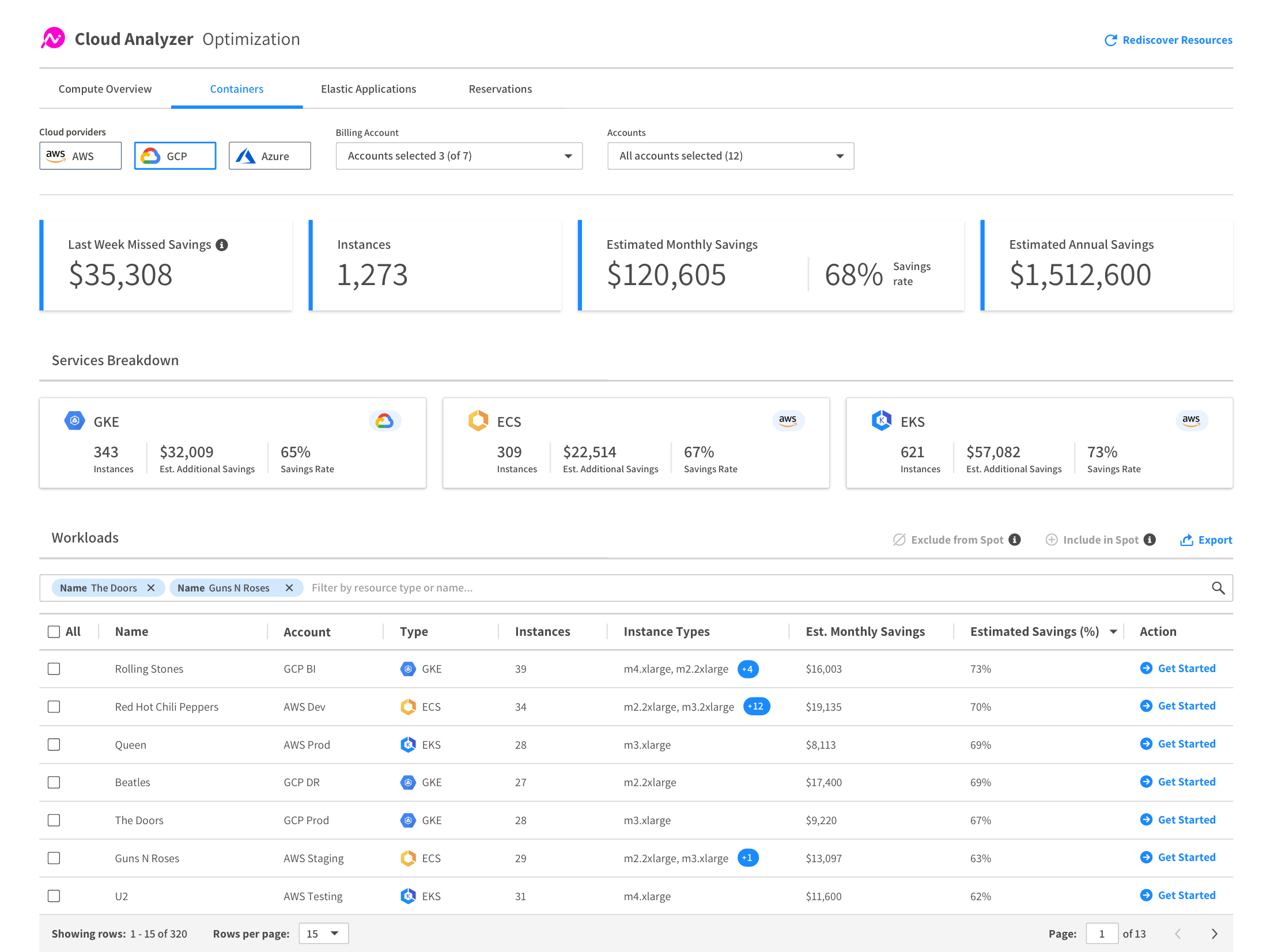
    Lye said cloud computing often winds up being more expensive than on-premises IT environments because IT teams don’t have the tools required to cost-optimize cloud platforms in real-time. Developers often programmatically deploy workloads in the cloud without understanding many of the implications of using one tier of service versus another. Even when they do appreciate the cost, most IT teams don’t provide them with the tools needed to do anything about it. In fact, it’s usually assumed the IT operations team will find some way to optimize costs as they monitor the cloud environment.

    Then, at the end of the month, the IT operations and finance teams receive a bill from a cloud service provider that is all but indecipherable in determining what workloads consumed what level of compute resources and when. In the absence of the Spot service, Lye said the best IT teams could hope for was an analytics report that offered suggestions about how to optimize cloud instances after the fact.

    NetApp views Spot as a complement to its approach to optimizing the consumption of cloud storage resources by deploying its software on a public cloud to manage those resources, said Lye. Collectively, those offerings enable IT teams to address what has now become the single largest cost in the enterprise.

    In addition, Lye noted that Spot can play a key role in enforcing service level agreements (SLAs) because, among other things, it automatically detects whenever a spot instance of a virtual machine is going away. It then automatically spins up additional instances to ensure a workload remains available.

    The debate over the real cost of cloud computing has been going on for years. Initially, most cloud service providers claimed cloud platforms were less expensive than on-premises IT environments because compute resources were paid for on a consumption basis. While that proved to be true for workloads that ran for a finite amount of time, longer-running workloads have proven to be in most cases more expensive to run in the cloud.

    As organizations look to the cloud to deploy cloud-native applications that are more flexible and resilient in the wake of the COVID-19 pandemic, which has made many on-premises IT environments less accessible, the debate over costs is flaring up again. While organizations need a more flexible approach to IT, they are simultaneously trying to reduce the total cost of IT in the wake of the economic downturn brought on by the pandemic.

    It’s too early to say to what degree IT organizations will embrace continuous optimization alongside continuous integration (CI) and continuous delivery (CD). However, given the current economic climate, it’s more now a question of when, not if, cloud cost optimization will become a major area of focus for IT teams large and small.

  • CloudBolt Acquires SovLabs to Advance Hybrid Cloud Strategy

    CloudBolt Acquires SovLabs to Advance Hybrid Cloud Strategy

    CloudBolt Software this week announced it has acquired SovLabs, a provider of a framework that extends the reach of automation frameworks from VMware.

    Company CEO Jeff Kukowski said that as a provider of a cloud management platform, the SovLabs framework will extend CloudBolt’s reach deeper into VMware environments that have already invested in automation tools from VMware.

    As IT environments become more widely distributed across a range of platforms, demand for a platform that enables IT teams to centralize the management of multiple cloud computing environments has increased, Kukowski said. The addition of SovLabs to the CloudBolt portfolio will make it easier to bridge the divide between cloud computing platforms and enterprise on-premises IT environments that have standardized on VMware.

    CloudBolt has been making a consistent effort to enable IT teams to invoke its cloud management framework via whichever IT automation framework they have adopted, including tools such as Terraform. The goal is to reduce the need for IT organizations to rely on their own custom-built code to achieve that goal, said Kukowski.

    In general, many IT organizations are now investing more heavily in centralizing the management of multiple IT environments as part of an effort to reduce the total cost of IT in the wake of the economic downturn brought on by the COVID-19 pandemic. That shift is accelerating a transition to hybrid cloud computing models that require increased reliance on IT automation.

    The challenge many organizations face is enterprise IT environments tend to have many islands of IT automation in place. CloudBolt is pursuing a strategy that enables IT teams to extend those islands of automation or access CloudBolt directly to manage hybrid cloud computing environments.

    The CloudBolt approach offers IT teams an alternative to relying on a single platform vendor to achieve hybrid cloud computing. VMware, for example, has been making a case for deploying VMware vSphere on multiple clouds versus relying on the virtual machines provided by a cloud service provider. Most of the large cloud service providers are simultaneously pushing to deploy instances of their platforms in on-premises IT environments that can be managed as an extension of a public cloud.

    It’s too early to say how this titanic battle for control over hybrid cloud computing will play out. CloudBolt, however, is betting that rather than getting locked into a single platform, many IT organizations will prefer to run toward some neutral ground to deploy a control plane capable of managing multiple clouds and on-premises IT environments.

    Of course, CloudBolt is not the only provider of a cloud management platform making this case. Competition between providers of hybrid cloud management platforms is heating up as interest in hybrid cloud computing starts to move beyond the theoretical. Regardless of the path forward chosen, history would suggest that most IT organizations in the months ahead will be seeking more control over their IT environments.

  • AWS Looks to Accelerate Windows Migrations to the Cloud

    AWS Looks to Accelerate Windows Migrations to the Cloud

    Amazon Web Services (AWS) is ratcheting up pressure on Microsoft by devoting more resources to enable IT organizations to migrate Windows workloads to the cloud.

    Fred Wurden, general manager for enterprise engineering at AWS, said a Migration Acceleration Program (MAP) for Windows, now generally available, provides IT teams with prescriptive guidance, consulting support, tools, training and service credits to help reduce the risk and cost of migrating to the cloud.

    The service is being delivered in collaboration with partners including Rackspace, 2nd Watch, Accenture, Cloudreach, Enimbos Global Services, Onica and Slalom. Wurden said AWS has been migrating Windows workloads to the cloud for more than a decade now and claims to have more than half of all Windows workloads deployed in the cloud.

    Microsoft has clearly been making strides in recent years to close the gap between it and AWS by running both Windows and Linux workloads on its cloud alongside instances of Microsoft Office 365. Microsoft most recently reported a 39% year-over-year growth in commercial cloud revenue, reaching $13.3 billion for its fiscal third quarter. However, Microsoft does not break out Azure revenue from Microsoft Office 365 revenue or disclose what percentage of the workloads running on Azure is based on Windows versus Linux.

    At the same time, Microsoft now charges more for instances of SQL Server that run on other clouds. AWS contends that decision will only accelerate the rate at which organizations are transitioning to open source databases deployed on Windows or Linux.

    Competition for Windows workloads is growing in ferocity in the wake of the COVID-19 pandemic because more workloads are being lifted and shifted into the cloud as organizations realize that on-premises IT environments can be rendered inaccessible. IT staffs in many geographies will be working from home at least through the end of the year. Many organizations are also moving workloads to the cloud in anticipation of a second potential outbreak of the pandemic.

    At the same time, the rate at which new workloads are being deployed in the cloud is also accelerating. Many of those cloud-native workloads are based on containers running on Kubernetes. Support for containers on Windows platforms is still relatively nascent when compared to Linux platforms.

    AWS and Microsoft, along with a host of rival cloud service providers, are focusing on legacy workloads because the expectation is that monolithic workloads running on Windows will be re-engineered to run as a set of microservices that can be updated more flexibly within the context of a larger digital business transformation initiative. It may be a while before that transformation fully manifests; however, it’s clear the battle for control over millions of workloads in anticipation of that transition is reaching a higher level of intensity.

    There’s no doubt many of those workloads will run on the Microsoft Azure cloud. However, the degree to which Microsoft might be winning in the cloud era may not be as great when everything that is being lost to AWS and other cloud service providers is taken into consideration.

  • Morpheus Data Automates Hybrid Cloud Management

    Morpheus Data Automates Hybrid Cloud Management

    Morpheus Data has updated to its cloud management platform by making it easier to dynamically integrate different implementations of automation tasks created using different tools and frameworks any Git or GitHub repository.

    In addition, the company has expanded the operating systems it supports to include Amazon Linux 2, Red Hat Linux 8.x and SUSE Linux, in addition to extending existing support for Microsoft Azure, Amazon Web Services, Oracle Cloud and Google Cloud Platform.

    Morpheus Data has also added support for VMware NSX-T and Unisys Stealth networking software as part of an effort to advance DevSecOps by making it easier to apply microsegmenation to networks to create a zero-trust IT environment. Interest in zero-trust IT environments is on the rise as a way to combat the lateral movement of malware once an IT asset is breached.

    Finally, Morpheus Data has updated the graphical user interface (GUI) it provides as a single pane of glass for managing multiple cloud platforms.

    Brad Parks, vice president of business development for Morpheus Data, said DevOps teams can now employ the Morpheus cloud management platform to orchestrate tasks developed in Ansible, Python, Groovy, Shell, Powershell, jRuby and even e-mail. Those tasks can then be chained together to create a workflow process, said Parks.

    The update to the GUI also makes it possible to create custom views of application instances across clouds as well as export custom datasets into CSV or JSON data formats for analysis, including chargeback, showback and project reporting. Navigation has also been streamlined with updates to global search, navigation and granular sorting of tabular data.

    Parks said in the wake of the economic downturn brought on by the COVID-19 pandemic more IT organizations will need to reduce the total cost of IT. The challenge they face is the IT environment has become more distributed than ever. The Morpheus platform makes it possible to centralize the management of multiple platforms, which should enable IT teams to substantially lower the total cost of IT by applying IT automation more aggressively across a hybrid cloud computing environment. Today most organizations have adopted multiple clouds, each of which is usually managed in isolation. That approach not only requires tools to manage each platform but also dedicated IT support specialists for each platform.

    It’s not clear to what degree IT organizations will move to centralize the management of IT in the wake of the pandemic. Many of the cloud platforms that organizations are employing have been funded by line-of-business executives rather than the central IT organization. However, now that many of those business executives are under pressure to reduce costs, the amount of discretionary spending made available to business executives might be curtailed. At the same time, however, many organizations are increasing investments in digital business transformation initiatives that most commonly involve applications being deployed on the cloud.

    Regardless of the path forward, the one thing that is clear is the current status IT quo within most organizations is not going to hold.

  • Dell Technologies Advances Hybrid Cloud Strategy

    Dell Technologies, in collaboration with VMware and Google, today advanced its hybrid cloud strategy by making its CloudFS storage system available on Google Cloud Platform (GCP) and adding support for VMware Tanzu Kubernetes Grid and VMware Cloud Foundation 4 to its VxRail hyperconverged infrastructure (HCI) platforms for on-premises IT environments.

    Varun Chhabra, vice president of product marketing for Dell Technologies, said both moves are part of Dell’s ongoing effort to provide IT organizations with a consistent cloud operating model spanning both on-premises IT environments and public clouds.

    In the wake of the economic downturn brought on by the COVID-19 pandemic, Dell is more aggressively making a case for reducing IT costs by consolidating the management of multiple clouds.

    Kit Colbert, vice president and CTO for the Cloud Platform Business Unit at VMware, said current spending levels on multiple cloud platforms are unsustainable. However, that doesn’t mean IT organizations should consolidate clouds. Rather, he said, organizations need to streamline the management of multiple clouds to reduce costs.

    VMware has been making a case for deploying its VMware vSphere platform both on-premises and on public clouds from Google, Amazon Web Services (AWS) and others to make it easier to build and deploy application workloads as organizations best see fit. Just because an application workload was created on a specific public cloud, for example, it doesn’t follow that workload needs to be deployed on that platform, Colbert said.

    At the same time, VMware has been making a case for deploying cloud-native workloads based on Kubernetes on top of VMware vSphere as well. VMware Cloud Foundation 4 provides access to a complete stack of infrastructure software that includes a distribution of Kubernetes that has been embedded in the latest update to VMware vSphere. VMware also provides a VMware Tanzu cloud service that can be employed to build, manage and deploy containerized applications across multiple distributions of Kubernetes.

    In effect, VMware and Dell are pushing to extend a management plane that is already widely deployed in on-premises IT environments to encompass both monolithic and microservices-based applications running in the cloud. There may be more workloads moving into the cloud than ever, but Colbert noted the bulk of application workloads and data still reside in on-premises IT environments.

    While Dell and VMware may have an advantage because of the number of IT organizations that already rely on its platforms to manage IT, every provider of a rival platform is making a similar hybrid cloud computing case. AWS, for example, is enabling VMware vSphere to run on its cloud while simultaneously pushing adoption of its infrastructure in on-premises IT environments as an alternative to platforms from Dell and Hewlett-Packard Enterprise (HPE).

    It may be a while before IT organizations define their hybrid cloud computing strategies. Most IT organizations today continue to manage IT environments in isolation from one another. However, the pressure to reduce the number of specialists required to manage each IT platform is mounting. Most IT organizations are being directed to do more with less regardless of how complex the IT environment becomes. The challenge now is figuring out how best to automate the management of what by any measure is now a confusing mix of platforms and workloads.

  • Lucidchart Launches Tool to Visualize AWS Cloud Environments

    Lucidchart Launches Tool to Visualize AWS Cloud Environments

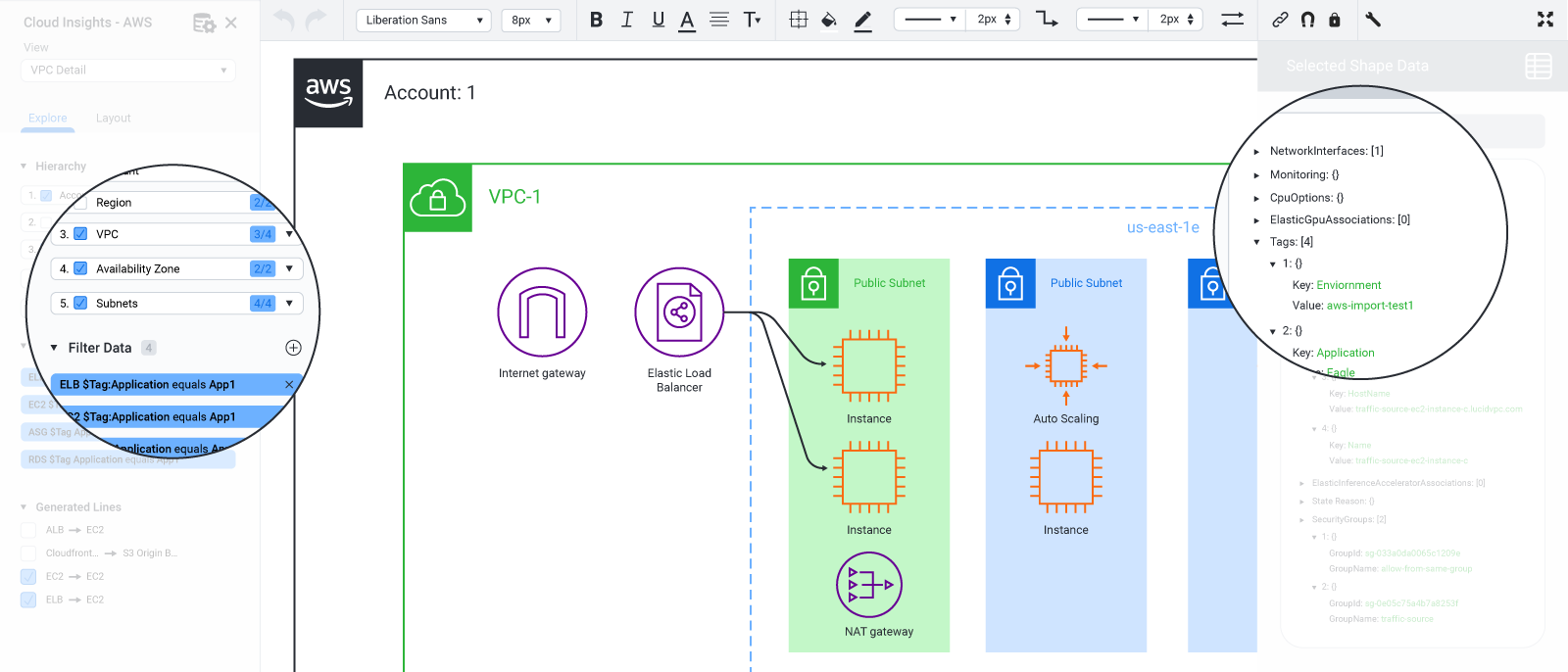
    Lucidchart today added a visualization tool that generates interactive diagrams of an IT organization’s Amazon Web Services (AWS) environment.

    Dan Lawyer, senior vice president of product at Lucidchart, said Lucidchart Cloud Insights makes it possible to automatically visualize all the services an organization is consuming from the cloud service provider, with support for other cloud platforms planned.

    One of the biggest challenges organizations regularly encounter today is the only way they have of understanding what services are being consumed is to analyze the monthly bill made available by a cloud service provider, he said.

    Lucidchart Cloud Insights is designed to make it easy to determine what services are being consumed in real-time, Lawyer said, noting IT teams can also visualize cloud governance data along and apply filters and save views.

    Armed with that information, IT organizations can then better control spending across cloud services that, in terms of costs, are often widely divergent. Developers, for example, don’t always pay close attention to which tiers of service provide the optimal level of cost of a certain class of workloads. A high-fidelity approach to visualizing how services are consumed provides an effective means to have that conversation, noted Lawyer.

    Once an issue arises it can be resolved faster because everyone involved is capable of visually inspecting the same set of interactions occurring at the same time, he added.

    Lucidchart already provides visual workspaces in the cloud that combine diagramming, data visualization and collaboration tools to make it easier for teams to collaborate. Lucidchart Cloud Insight now extends that capability into IT operations, Lawyer said, noting IT teams traditionally have relied on tools such as Microsoft Powerpoint to try and visualize consumption patterns.

    The launch of Lucidchart Cloud Insight comes at a time when more workloads are moving on to public clouds in the wake of the COVID-19 pandemic. Given the uncertainties surrounding when IT staff might be able to access an on-premises IT environment, many organizations are accelerating the rate at which application workloads are being deployed in the cloud.

    The challenge IT organizations face is that moving applications into the cloud doesn’t always yield consistent cost savings. IT teams constantly need to monitor how IT infrastructure resources are being consumed to keep IT budgets under control. The issue is that developers frequently spin up cloud services without telling anyone in IT about it until a bill shows up. Worse yet, many developers often forget to de-provision virtual machines and other cloud resources they’re no longer using.

    Of course, as more cloud platforms are invoked, the management issue only becomes that much more complex. Going forward IT teams will want to visually compare and contrast how services are being consumed across multiple clouds. Whatever the motivation, it’s a lot easier to overlook the implications of a cloud service that is presented as part of a static bill than it is one that visually presents itself as part of an interactive diagram that is always up to date.

  • Cisco Aligns With Google to Meld DevOps and NetOps

    Cisco Aligns With Google to Meld DevOps and NetOps

    The extension of a partnership between Cisco Systems and Google to drive tighter integration between their respective software-defined wide area network (SD-WANs) offerings and cloud platforms promises to accelerate the convergence of NetOps and DevOps.

    John Apostolopoulos, vice president and CTO for Intent-Based Networking Group at Cisco, said in the wake of the COVID-19 pandemic it’s clear more organizations will be employing SD-WANs as an alternative to virtual private networks. Many of those SD-WAN deployments, however, will be on public clouds rather than in a traditional on-premises data center, he added.

    As that transition occurs, DevOps teams will increasingly invoke SD-WAN services via application programming interfaces (APIs) residing in the cloud to provide users with access to cloud applications, noted Apostolopoulos.

    Cisco and Google have a technology alliance in place that spans everything from Kubernetes to cloud management software. That partnership is now being extended to include forthcoming deployments of Cisco SD-WAN software on Google Anthos, a cloud platform based on Kubernetes that can be deployed on any cloud or on-premises IT environment, sometime in the first half of 2021.

    The availability of SD-WAN services from Cisco on multiple cloud platforms will naturally have significant implications for NetOps teams. Rather than having to manage individual routers and switches, the future of SD-WANs is moving more toward being a set of software services that are programmatically invoked. It’s not clear to what degree NetOps teams might be folded into DevOps teams as that transition occurs. IT teams will always require networking experts to optimize networking services to one degree or another, said Apostolopoulos. However, the days when DevOps teams had to wait days or weeks for a NetOps team to manually provision network services on their behalf are coming to an end.

    Apostolopoulos said in the wake of the COVID-19 pandemic, flexibility has become a highly prized IT asset. As such, more applications will soon be deployed in the cloud than ever. Cisco is betting that rather than having to manage multiple cloud network services, more organizations will prefer to extend enterprise networking services from Cisco across multiple clouds. That approach will enable IT organizations to more easily centralize the management of network services via a management console built on top of a consistent set of APIs, he noted.

    Just as importantly, Cisco will provide the integrated tools needed to secure those network services, added Apostolopoulos.

    In effect, Cisco is betting that enterprise IT organizations are going to consolidate networking and security services as part of an effort to reduce the total cost of IT. Cisco may not always be the least expensive provider of an individual router or switch. However, the total cost of integrating networking and security offerings from multiple vendors can add up quickly. The degree to which organizations have the political will and economic capital required to achieve that goal, of course, remains to be seen. Nevertheless, it’s also clear that maintaining the current networking and security status quo is not going to be able to hold for very much longer.

  • Do You Trust Your Cloud Provider to Protect Your Data? Maybe You Shouldn’t

    Do You Trust Your Cloud Provider to Protect Your Data? Maybe You Shouldn’t

    Around the world, businesses are moving to the cloud at a rapid rate. But, is the cloud really the best place to store your mission-critical data and applications? Is it truly a safe place to put data and apps that need strong protection?

     The immediate answer from many companies is “yes.” A recent study by Dimension Research, found that 59% of organizations believe data backed up to the public cloud is safer than data backed up on-premises. Further, the study showed that nearly half of all organizations (46%) believe it is the responsibility of their cloud provider to recover data and applications in the event of an attack or loss.

    Are these beliefs about the safety of cloud data correct? Can organizations rely solely on their cloud service provider such as Google or Amazon Web Services (AWS) for data protection?

    Leading providers such as AWS, Microsoft Azure and Google Cloud Platform typically secure core infrastructure and services as part of their responsibility. But, when it comes to securing data, that responsibility lies squarely in the hands of customers. Organizations that overlook this simple fact face a much higher likelihood of suffering a serious data loss.

    Yet, the general perception remains that if something happens to your data, it’s not your responsibility. Too many organizations have convinced themselves that their cloud provider will take care of solving any issues for them and magically recover all their data if it’s lost.

    Unfortunately, that is not the case. Take, for instance, data generated in a cloud app like Microsoft’s Office 365. Yes, Microsoft guarantees the service, but it doesn’t guarantee the security of the data you generate when using the service.

    Office 365 does have some basic data protection schemes in place, such as a 30-day recycle bin that allows users to recover and restore deleted data within a 30-day window. That’s important because users will sometimes accidentally delete or purge their data and then realize they need it for legal reasons. After that 30-day limit, however, the data is gone for good. Microsoft, for its part, makes this clear in its terms of service: Users own their data and are responsible for what happens to it.

    This misconception around data responsibility is somewhat understandable. In particular, the StorageCraft study found that small and midsize companies are much more likely to believe that their cloud provider will bail them out in the event of a data loss. For instance, 52% of midsize companies believe their cloud provider is responsible for data recovery, compared to just 43% of enterprise companies who believe the same.

    Many of these smaller businesses trust that sophisticated, near trillion-dollar cloud providers such as Google, Microsoft and Amazon have ironclad capabilities when it comes to data protection. They think they don’t have to worry, and they’re in good hands. While that’s generally true, they don’t realize that data loss and recovery are separate issues and their own responsibility.

    There is also a strong belief among organizations with a cloud-first strategy that their data is safer in a public cloud than it is in an on-premises facility. The study found that 76% of companies with an overt cloud strategy feel their data is safer in the cloud, compared to just 37% of companies that prefer to store their data on-premises.

    Trust in the cloud also varies by culture. For instance, 71% of organizations in France believe that data backed up to a public cloud is safer than on-premises. By contrast, only 37% of German companies feel the same way. Likewise, the study found that 59% of French companies believe data recovery is the responsibility of their cloud provider, compared to just 41% of German companies.

    At the risk of overgeneralizing, one might conclude that Germans feel a greater need to be in control of their own data, while French companies have a more laissez-faire attitude toward data recovery, entrusting that their cloud providers will take care of any issues.

    But no business, wherever it’s located, should have a false sense of security. The truth is that, whether it’s an issue of data corruption, a security breach or even accidental data deletion, the onus is on you to recover that data, not your cloud provider.

    So, then the question all companies need to ask is this: When something bad happens, how are you going to get your data back? Then ask yourself what level of risk you can tolerate and what kind of data you are putting in the cloud. Is it data that’s mission-critical and can you afford to lose it? Will your business run exactly the same without that data you just lost? And if not, how bad will the impact be?

    Once organizations realize they can’t rely on their cloud provider, they start to understand what kind of data-recovery capabilities they do have and also what they might need to add to stay protected.

    The good news is there are easy-to-use, cost-effective solutions that enable organizations to simply, yet powerfully, manage their data storage and backup requirements, whether on-premises or in the cloud. Instead of mistrusting their cloud provider, organizations can simply set up a truly effective data-recovery strategy. Adding that extra, yet highly necessary, layer of protection to your cloud data could be the difference between a business that successfully responds to adversity and one that succumbs to disaster within days, while realizing that it relied on cloudy promises.

  • How to Manage Data in Hybrid Cloud Environments

    How to Manage Data in Hybrid Cloud Environments

    We’ve long-since established that multi-generational, multi-cloud environments are the new norm. But, how does one go about managing data in those environments?

    In this post, we’ll take a look at the ramifications of this hybrid cloud reality and best practices for managing your data for increased scalability and heightened availability.

    It’s All Cloud

    Whether it’s Amazon Web Services (AWS), Google Cloud or Microsoft Azure (or some combination thereof), cloud is all the rage, with a hybrid approach gaining momentum with 81% of cloud users working with two or more providers (according to a recent Gartner study). Not only does this strategy take companies out of the business of hosting their own applications, but it also leads to benefits such as avoiding vendor lock-in, reduced costs and optimized performance.

    Benefits to Mixing Cloud and On-Prem Environments

    Mixing cloud and on-prem environments means you can pick and choose where your workloads and data live—it’s really an optimization. For example, if your application is CPU intensive, you can run it on the cloud provider that gives you the most CPU for your dollar. Similarly, if your data workload requires significant storage, you can go to the cloud provider that offers the best bang for your buck on storage.

    Businesses should look at their application and database and then use the cloud provider that offers the best of class for that workload. A mixed cloud also gives you the ability to always have a low-cost secondary site recovery plan in place—you’re always ready to spin up on another cloud provider if you need to. 

    Managing Data: The Challenges of Hybrid Cloud

    The benefits of multi-cloud are many, but when it comes to managing your data, things can get tricky. Not only do you have multiple cloud providers to balance, you also have to consider data stored on-premises and how that data is accessed from the cloud. 

    You also have to consider data replication between clouds. If you’re not doing a full mirror of your data between each cloud, it’s critical you remain acutely aware of what data lives where. You’ll want to consider creating extensive documentation and diagrams of what data lives in which cloud. If you are replicating data between clouds, you also have to justify the additional operating and engineering cost to accomplish your goal. 

    How to Manage Data in Hybrid Cloud Environments

    Fortunately, there are several libraries providing abstractions for cloud services, such as object stores. Leveraging abstractions within your applications allows you to move more freely between cloud providers. 

    Companies should strongly consider storing their data in a consistent manner within each cloud, leveraging the same technologies to reduce the sprawl, maintenance and expertise required to operate those technologies. For example, use a relational database that all the cloud vendors provide—for data updated and changed frequently, it should live in the scope of the local cloud provider to reduce latency and network costs, because traffic within the cloud provider is generally free. If you were to write to a database outside the cloud provider, it’d cost more and be considerably slower.

    The leaders in the cloud provider space offer a fairly secure environment for storing sensitive data, as long as you’re following good practices and using your own source of encryption. However, it all comes down to your individual environment. For some organizations, there will be workloads that should remain on-premises—for instance, highly sensitive data for which regulations require on-premises storage.

    If data has to be stored and encrypted on-premises, many cloud providers offer a secure means of connecting your cloud environments to your on-premises environment for access to sensitive information, such as providing secure VPN connectivity to virtual private clouds. 

    Multi-cloud might not be for everyone; you have to weigh the benefits with the costs, especially as those factors relate to your individual organization. While there are pitfalls, the practices and tooling to effectively manage your data in hybrid cloud environments are all out there. Because so many of us are choosing to run our workloads on multiple clouds, collectively we’ve overcome many of the aforementioned challenges and can take advantage of all the benefits hybrid cloud provides.

  • Embracing the Journey to Public Cloud

    Embracing the Journey to Public Cloud

    One of the fascinating competitions in today’s business world is the one between the digital disruptors—companies whose business vision is rooted in technology and driven by the cloud—and the so-called incumbents.

    One sector where this competition is particularly intense is financial services. In this sector, the digital-first companies typically don’t compete with banks and other financial institutions directly. Instead, they target specific functions based on a clear—and often data-driven—understanding of what customers want. This strategy has proven particularly successful with millennials. For example, until recently the norm for giving money to a friend or family member was to write a check. Now, almost two-thirds of 20- and 30-year-olds use payment apps, such as Venmo.

    In healthcare, a different pattern is emerging, one where digital-first giants either buy or innovate their way into the sector. Examples include Amazon’s billion-dollar acquisition of the online pharmacy PillPack and the new Apple Watch, which is capable of taking electrocardiograms.

    Whatever the sector, digital disruptors have one characteristic in common. They leverage the capabilities of the cloud to the maximum extent possible. A shift in power toward digital-first companies is underway, and the cloud plays a major role in helping these companies establish themselves.

    Many incumbents are just now taking their first steps on the journey to the cloud, and still working on the challenges involved in migrating their existing legacy applications to more scalable and agile public cloud environments. While they’re engaged in this process, digital insurgents are already exploiting the full potential of the cloud to deliver solutions that meet emerging customer needs associated with today’s evolving lifestyles.

    In highly regulated industries, such as financial services and healthcare, major brands will not necessarily see an immediate decline in their customer base, nor profits. Nonetheless, digital-first companies are capturing millions of customers annually, and this growth poses a considerable challenge over time. Embracing the journey to public cloud is crucial for legacy enterprises.

    The most successful cloud-based disruptors use experimental sandboxes as a critical component of development. The public cloud can drive progress toward almost any business goal involving IT—operational transformation, new market penetration, new product launches, automation.

    Digital transformation to the public cloud is also the only way companies can leverage storage scalability and the essential innovations of the open-source community. There are still lingering concerns among executives in highly regulated, data-sensitive industries concerning privacy and regulatory compliance, and these can lead to hesitation. The face is, public clouds have been in place for over two decades now, and their security is often superior to older on-premise security. Incumbents can, therefore, tap into the public cloud to ensure safety for mission critical workloads.

    To accelerate the transition to the public cloud, consider the following best practices.

    Learning to Fail Fast and Learn from Experience More Quickly

    The Silicon Valley maxim to fail fast may run counter to incumbent corporate culture, but it is the best path to success in the new digital reality. The key is being able to learn from failures quickly and adjust accordingly.

    Partnering for Progress

    A digital native approach to business is often lacking in the corporate culture of incumbents. Cloud partners that have a digital disruption in their DNA can play an important role in driving cultural renewal at every level of the organization. A reliable cloud service partnership can accelerate concepts, pilots, staffing and other mechanisms designed to deliver value quickly and securely.

    Re-Examining Compliance Processes

    Operations should be streamlined to transform enterprise IT to be well-suited for the cloud. Companies can apply artificial intelligence to supplement human intervention, and encourage cloud adoption among employees. First, building a solid foundation, then working your way up, enables businesses to make important changes that transform the enterprise into an environment that is compliant by design.

    Successfully competing with digital natives means using the cloud to find new opportunities to streamline and better comprehend customer needs and behaviors. It also means being unafraid to change time-honored business practices. At the same time, in highly regulated and data-sensitive industries, compliance and security must be prioritized. Cloud transformation has quickly become vital for companies in all sectors and represents an essential foundation for future business success.