
Category: Cloud Management

  • Perfect Sense Open Sources Gyro to Automate Cloud Provisioning

    Perfect Sense Open Sources Gyro to Automate Cloud Provisioning

    Perfect Sense has launched an open source project dubbed Gyro that provides an alternative approach to automating cloud infrastructure provisioning and management.

    Gyro was developed as an alternative to other open source projects such as Terraform and Pulumi, said CTO Jeremy Collins. It is designed from the ground up around a programming language that allows DevOps teams to define infrastructure as code, and features logic built into configurations to make it easier to create more precise workflows, he said.

    Adding logic to create equivalent workflows in rival platforms is more complex, Collins noted, adding the ability to add logic makes it easier to not only provision cloud infrastructure but also to roll it back when necessary.

    Perfect Sense developed Gyro to make it easier to manage the infrastructure for its Brightspot content management system (CMS). As such, Gyro can support multiple cloud computing platforms.

    In addition to making it possible to add cloud platforms to an existing configuration, Collins said it can be used to create custom commands and define multiple extension points directly within the Gyro language.
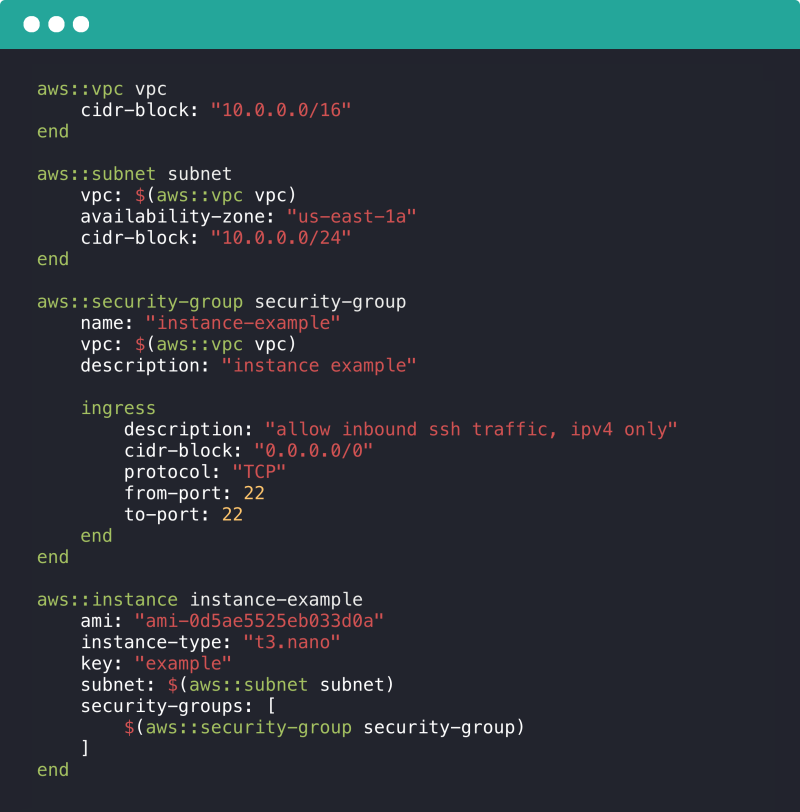
    Perfect Sense Gyro

    Perfect Sense developed Gyro to automate the provisioning of virtual machines. Since then, the company has extended its capabilities to add support for emerging cloud-native platforms such as Kubernetes.

    Collins said Gyro provides a single extensible tool spanning a broad range of DevOps processes, from provisioning infrastructure to discovering what services already exist.

    Despite the popularity of rival tools such as Terraform, it’s still early days in the adoption of infrastructure as code. Most IT organizations are a long way from standardizing on any one platform for automating the provisioning of infrastructure. In fact, it may not be uncommon for different DevOps teams within the same organization to employ different platforms for provisioning infrastructure.

    Gyro’s ultimate success will depend much on Perfect Sense’s ability to foster an open source community. The Brightspot CMS is used by the Los Angeles Times, Walmart, Mattress Firm, Univision, Sotheby’s and US News and World Report, so Collins said there is a base of support for Gyro on which to build a community. Perfect Sense is looking to build a community that will continue to extend the reach and scope of the platform by adding additional plugins.

    Regardless of the approach taken, as the number and rate at which workloads are being deployed on cloud platforms increases, it becomes critical for IT organizations to find a way to automate processes. It’s not clear to what degree those workloads will be provisioned by developers themselves versus traditional IT operations teams that have learned how to program. However, one way or another the provisioning of cloud infrastructure is going to be automated.

    — Mike Vizard

  • The Disservice of Cloud Consolidation

    The Disservice of Cloud Consolidation

    There’s no secret that over the past five years especially, the major (“tier 1”) cloud infrastructure players—Amazon, Microsoft and Google—have been snatching up smaller specialty providers, particularly cloud migration and security services.

    While this acquisition strategy immediately aims to strengthen and expand the provider’s direct and tangential cloud infrastructure offerings, the long-term goal is customer attraction and retention.

    In consolidating cloud infrastructure and related services, cloud vendors are targeting a basic human desire that often bleeds over into business decisions: convenience.

    • “Finding a cloud provider seems hard.”
    • “Switching to the cloud seems hard.”
    • “Managing more than one cloud seems hard.”
    • “Keeping up with more than one vendor seems hard.”

    The play is transparent; the marketing is already in your psyche. People don’t like doing more than they have to, whenever possible. So, why not apply that tick to the cloud infrastructure experience? Why not use a provider where everything is already in one place?

    Truthfully, the move toward cloud consolidation is a step in the opposite direction from where we should be going. The future lies in a multi-cloud approach, not a consolidated one.

    Multi-cloud approaches offer both businesses and their customers several advantages over consolidated infrastructure.

    • When a business’ cloud infrastructure exists solely with one provider, every cloud-related business activity—and every customer interaction with those activities—is beholden to the provider. A provider outage is a business-wide outage, and a business-wide outage is unacceptable.
    • Multi-cloud approaches allow businesses to take advantage of best-of-breed cloud infrastructure. A business can implement databases, containers and other virtual infrastructure in a more highly optimized way.
    • Data held in disparate systems can be better partitioned and more secure than data stored with a single provider. Also, these disparate systems can bolster adherence to existing (and likely coming) data privacy laws and compliance regulations both nationally and internationally.
    • Utilizing cloud infrastructure housed physically closer to a business or its key users can drastically influence business activities in industries where parts of seconds count (e.g., finance).

    Aside from the standard reasoning, I’d argue that there’s additional economic health in taking a multi-cloud approach. Competition naturally drives innovation, stabilizes costs and encourages improvement. Where one provider may falter, three others might specialize. If the majority of businesses consolidate their cloud resources with a single provider, though, the likelihood increases of services gradually worsening with no alternatives toward which to turn.

    Multi-cloud takes planning and coordination to properly implement, and careful monitoring to maintain. An additional tool or two, such as a cloud management platform or cloud integration solution (which, truthfully, many businesses are likely already utilizing), may be needed.

    But, the benefits far exceed the challenges. After all—to call upon Ken Jenkins’ iconic chief of medicine, Bob Kelso—nothing worth having comes easy.

    — Zack Busch