Category: DevOps Toolbox

  • Community Forums for Technical Support: Best Effort vs. Best-in-Class

    Community Forums for Technical Support: Best Effort vs. Best-in-Class

    Developer sites such as Stack Overflow have exploded in popularity with over 125 million active users per month; however, the large majority of questions are never answered. Vendor community forums lag further behind with significantly lower activity levels leading to costly support cases with average time to resolve of 14 days. As the pace and complexity of technology increases, our view is technical support needs to fully embrace community forums as the best place to get answers.

    The reality is technical people do not want to talk to a support bot and view opening a support ticket as a last resort. They want answers quickly from someone they trust and their questions are generally rich in technical detail. While today’s forums can be great gathering places to pose technical questions and connect with experts, answers provided by the community are on a “best effort” basis and quickly become out-of-date.

    Our company analyzed more than 50 forums, including 12 million unique questions and responses spanning enterprise vendors, open core software and cloud-native open source distributions. Our goal is to understand how “best effort” communities perform in solving technical questions and identify the best-in-class forums that set the bar. The results are published for anyone to browse and are regularly updated.

    Best-Effort Metrics

    The graphic below shows the key metrics for question resolution and how much of the community is engaged in generating answers. This is the average of all the forums in our current data set at the time of publishing.
    community forums
    One key takeaway is that less than one-third of the questions are ever answered and less than 20% resolved in 24 hours. This is a key risk indicator of potential unhappy users and new support cases. A second more surprising result is that only 20% of the community are generating 80% of the answers! This is a clear signal that forums on average are not doing a great job of educating and incentivizing its community members to quickly respond. The most common incentives today are individual reputation ratings and leaderboards for community contributors. Stack Overflow enables users to offer monetary bounties for challenging questions.

    The Best-In-Class Metrics

    In contrast, the graphic below shows the best-in-class result for each metric.

    community forums

    We were very excited to find a forum with 72% of the community generating 80% of the answers. This feels like a good high-water mark that all forums should strive to attain. On the other hand, the metric of 42% of questions resolved in less than 24 hours indicates a lot of upside potential to make forums the best way to get answers.

    So, who is best-in-class? As of this publish date, three of the top forums are open source communities.

    • Resolved Forum Posts: KUBERNETES
    • Resolved in less than 24 Hours: POSTGRESQL
    • Resolved with 1st Response: ALTERYX
    • Number of Experts that Resolve 80% of Questions: NGINX

    Open source technologies live or die based on high-volume adoption of free distribution, relying on peer support and education to build virality. So it’s not surprising that they rank highly on our benchmark. We did find that the discussions of hottest cloud-native technologies, including Kubernetes and its many variants and tools, happen in many different forums. This includes the hosted forum by the distribution owner (e.g., Google), Stack Overflow (sometimes many different tags) and Slack channels hosted by the Cloud Native Computing Foundation. Conversations beginning on one forum quickly are diverted to another that specializes in that topic.

    Who are the Community Forum Experts?

    Within each of these community forums, we also classified the members by level of activity in answering questions with accepted results. Our goal is to identify the most motivated experts who have the highest impact on the community experience. Typically, these experts are motivated by the implicit and explicit rewards of their personal reputation on the forum.

    The classification metrics for assessing the experts are:

    • Replies: Number of replies by an individual.
    • Resolutions: Number of resolved posts by an individual.
    • Acceptance Rate: The percent ratio of resolved posts divided by replies posted by an individual.

    Using these metrics, we created the following classifications:

    • Contributor: An individual who has resolved at least one forum post.
    • Expert: Contributors that are in the 90th percentile by number of replies and resolved posts.
    • MVP (Most Valuable Player): Experts who have posted higher than above average number of replies and number of resolved posts.
    • Rising Star: Experts who have posted below average number replies but have above average acceptance rate.
    • High Potential: The remaining experts in our classification.

    The results for the Cisco forum are shown here as an example, with NGINX following that for contrast. Note the size of each bubble represents the Acceptance Rate (%). For NGNIX, many of the experts have a greater than 50% acceptance rate even in the High Potential classification versus Cisco, where even the MVPs and Rising Stars average around 20%.

    Cisco:

    NGNIX:

    The expert classifications for all forums in our benchmark can be viewed here.

    Community Forums: To Best-in-Class and Beyond

    The community forum benchmark shows the potential to drive significant case deflection costs by transforming from the current best effort state to best-in-class metrics. We believe the key to unlocking this potential is empowering the experts who have demonstrated motivation with tools to help them answer more questions faster and with high acceptance rates. One promising approach is to apply machine learning to all prior conversations and published content to recommend the most relevant information to assist an expert while they are working on a question. Simply, as more experts create more successful answers, every forum has the potential to meet and beat today’s best-in-class metrics. And as forums thrive, they will naturally grow in question volume to become the primary technical support channel.

  • SAP Makes Available Free Cloud Tier to Build Applications

    SAP Makes Available Free Cloud Tier to Build Applications

    SAP announced that next year it will make available a free tier on SAP Cloud Platform for developers that are building applications.

    Announced at the SAP Tech-Ed conference, the free tier comes at a time when SAP is encouraging developers to use its applications as a foundation for digital business process transformation initiatives.

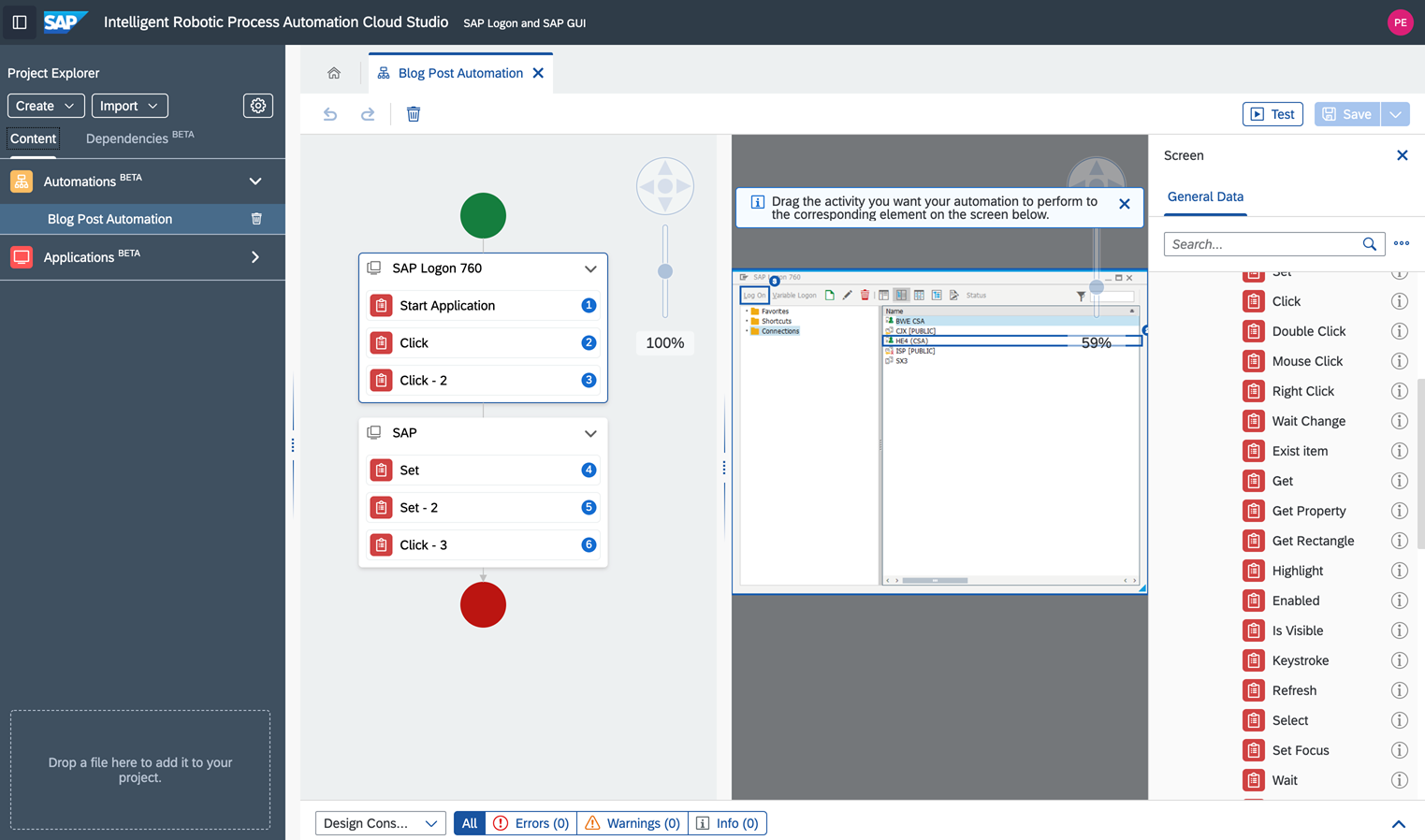
    As part of that effort, SAP is also extending the capabilities of the low-code tools it makes available to customize SAP Cloud Platform Workflow Management and SAP Intelligent Robotic Process Automation (RPA) 2.0 to make it easier to integrate these offerings with other applications. SAP beginning in January is also promised to include a limited edition of SAP Intelligent RPA in every SAP S/4HANA Cloud subscription.

    Finally, SAP is beta testing SAP Ruum, a set of no-code tools it plans to make available alongside the low-code tools it already includes in its portfolio of tools for building custom applications that extend the packaged applications it provides on-premises and in the cloud.

    At the heart of the SAP digital business transformation strategy is SAP Business Technology Platform, which makes it possible to share data across SAP applications via a common data and object model. SAP makes available SAP Cloud Platform to provide a distinct platform-as-a-service (PaaS) environment through which developers can build extensions to its applications.

    Most recently, SAP has made SAP Graph tools in beta offering as a complement to a revamped SAP API Business Hub that will be available in beta this month.

    Thomas Grassl, vice president and global head of developer relations and community for SAP, said the company is also embracing continuous integration/continuous delivery (CI/CD) platforms as it continues to encourage developers to move away from waterfall-based approaches to building and deploying applications.

    The free tier of resources SAP is providing developers will encourage organizations to experiment more at a time when many organizations are now quite certain what digital process may ultimately gain traction with their end customers and suppliers. SAP is also focusing on no-code and low-code tools to enable organizations to accelerate the development of those applications. SAP already has an existing partnership in place with Mendix, a unit of Siemens, to make available low-code tools.

    SAP’s biggest concern, of course, is that digital business transformation initiatives will revolve more around application platforms from Oracle, Salesforce, ServiceNow and Workday. Every major provider of enterprise applications offers low-code and no-code tools to customize their applications. Many enterprise IT organizations are employing these tools more widely to accelerate digital business initiatives as an alternative to building entire applications from the ground up.

    The challenge these organizations will soon encounter is that as the backlog of applications that need to be deployed starts to build, they will have to modernize their approaches to deploying applications to keep pace.

    As a dominant provider of enterprise applications, SAP is in a position to drive digital business transformation in a way that extends the reach and scope of its enterprise resource planning (ERP) portfolio. The issue is finding a way to accomplish that goal when organizations thanks to the COVID-19 pandemic have a pressing need to transform much sooner than later.

  • Eclipse Foundation Formally Releases Jakarta EE 9 Spec

    Eclipse Foundation Formally Releases Jakarta EE 9 Spec

    The post-Java Enterprise Edition (EE) era has formally begun with the release of a long-awaited Jakarta EE 9 Platform and Web Profile specification from the Eclipse Foundation.

    In addition, the Eclipse Foundation has announced that version 6.0.0 of the open source Glassfish application server has now been certified to be compliant with Jakarta EE 9.

    Functionally equivalent to the existing Java EE 8 specification, the release of a Jakarta EE 9 Platform and Web Profile specification is intended to enable IT vendors that have built offerings based on Java to shift their naming conventions to Jakarta EE 9.

    Mike Milinkovich, executive director of the Eclipse Foundation, said now that the Jakarta EE 9 specification is in place IT organizations should expect to see the members of the Eclipse Foundation that contribute to the project begin working more aggressively on a Jakarta EE 10 specification that adds more features.

    Under the auspices of the Eclipse Foundation, Milinkovich added there will be a lot more focus on developing a truly cloud-native implementation of Java EE as work on the next generation of Jakarta EE platform advances.

    The rate at which new capabilities were being added to Java under the stewardship of Oracle had become an issue given the rate at which other programming languages are being advanced. Oracle agreed to relinquish control of the Java specification to the Eclipse Foundation, which in theory should lead to a faster rate of innovation as more contributors participate in an open source project.

    However, Oracle insisted on retaining the rights to the Java trademark because it has support contracts in place for existing instances of Java that provide a significant stream of revenue. Providers of rival platforms based on Java are hoping enterprise IT organizations will shift quickly to Jakarta as part of a way to reduce their support costs at a time when IT teams are under intense pressure to reduce the total cost of IT.

    Despite the rise of a wide range of programming languages in recent years, Java is still widely employed with most enterprise IT organizations, many of whom have been using Java since it was first made available by Sun Microsystems. Reliance on Java is not likely to significantly decline anytime soon; however, most IT organizations are now making greater use of additional programming languages alongside Java. In fact, many of the applications that DevOps teams are building and deploying are made up of modules that were built using different programming languages.

    It may still be a while before a Jakarta EE platform is pervasively employed in IT environments. However, it’s clear a new era that should result in advances that make it easier to deploy applications that are compatible with Java faster has arrived. How those capabilities will manifest themselves may still be unclear, but the fact that they are being worked on should be a comfort to IT organizations that have already invested millions of dollars in training developers how to build Java applications optimally.

  • CloudBees Makes Software Delivery Management Apps Available

    CloudBees Makes Software Delivery Management Apps Available

    CloudBees, during an online event today, officially launched the first two modules of what will become a portfolio of software delivery management (SDM) tools delivered via the cloud.

    The first two modules have been previewed for the last year, now are generally available. The first is the CloudBees Engineering Efficiency module, which provides a system of record to normalize data in a way that makes it possible to surface metrics, analytics and actionable insights.

    Shawn Ahmed, senior vice president and general manager for software delivery automation for CloudBees, said the analytics application initially will pull data from CloudBees DevOps platforms and complementary third-party tools such as GitHub and Jira and eventually will expand to include data pulled from other continuous integration/continuous delivery (CI/CD) platforms. CloudBees Engineering Efficiency connects to more than 70 different DevOps tools. CloudBees is also making available an application programming interface (API) through which third parties can extend the module.

    The goal is to enable DevOps teams to make decisions that are informed by data rather than just gut feel, said Ahmed, noting that data can then be employed to coach DevOps teams in a way that allows them to become more efficient.

    The second module is CloudBees Feature Management, which gives DevOps teams control over how individual features are released. Organizations can manage features holistically by grouping and controlling sets of feature flags that determine what capabilities are exposed within an application. That capability makes it possible for organizations to de-couple the release of a specific feature from the rest of the delivery of an application.

    At a time when organizations are accelerating the rate at which applications are being developed and deployed to drive their digital business transformation initiatives, the ability to control how features are rolled out has become a critical element of managing the overall end user experience.

    SDM tools are part of what has become commonly known as value stream management applications. The debate that is currently occurring is to what degree these applications should be provided by the vendor that makes the CI/CD platform versus an independent software vendor (ISV) that aggregates data from multiple platforms. CloudBees is betting that as DevOps processes mature within organizations, more of them will prefer to deal with a single vendor capable of providing both the underlying DevOps platform and the tools required analyze and manage DevOps processes.

    Longer-term, Ahmed said the infusion of predictive analytics capabilities enabled by advances in machine learning algorithms means it won’t be long before organizations will be able to know if a build will fail even before it runs.

    It will be up to each organization to determine how they will apply analytics tools for DevOps processes. Ideally, the DevOps culture in place stresses collaboration and training. However, there may be some organizations that will look to use these applications to increase productivity by weeding out members of the DevOps team who lack the appropriate level of expertise. The applications being provide by CloudBees, however, are designed to identify issues in the aggregate rather than enable organizations to identify the faults of a specific member of the DevOps team, noted Ahmed.

    Like it or not, analytics applications soon will be applied more broadly to DevOps processes. The challenge and the opportunity now is determining the next best course of action based on the insights they surface.

  • Apollo GraphQL Offers Free API Management Service

    Apollo GraphQL Offers Free API Management Service

    Apollo GraphQL has announced the general availability of a free Development Graphs cloud service to simplify management of GraphQL application programming interfaces (APIs) at scale.

    GraphQL APIs have been gaining traction as an alternative to REST APIs because they provide developers with more control over who can access data via an API and are easier to build and maintain.

    Apollo GraphQL CTO Matt DeBergalis said that approach makes it possible to build APIs using the Agile development methodology versus the waterfall processes that typically are employed today to construct REST APIs.

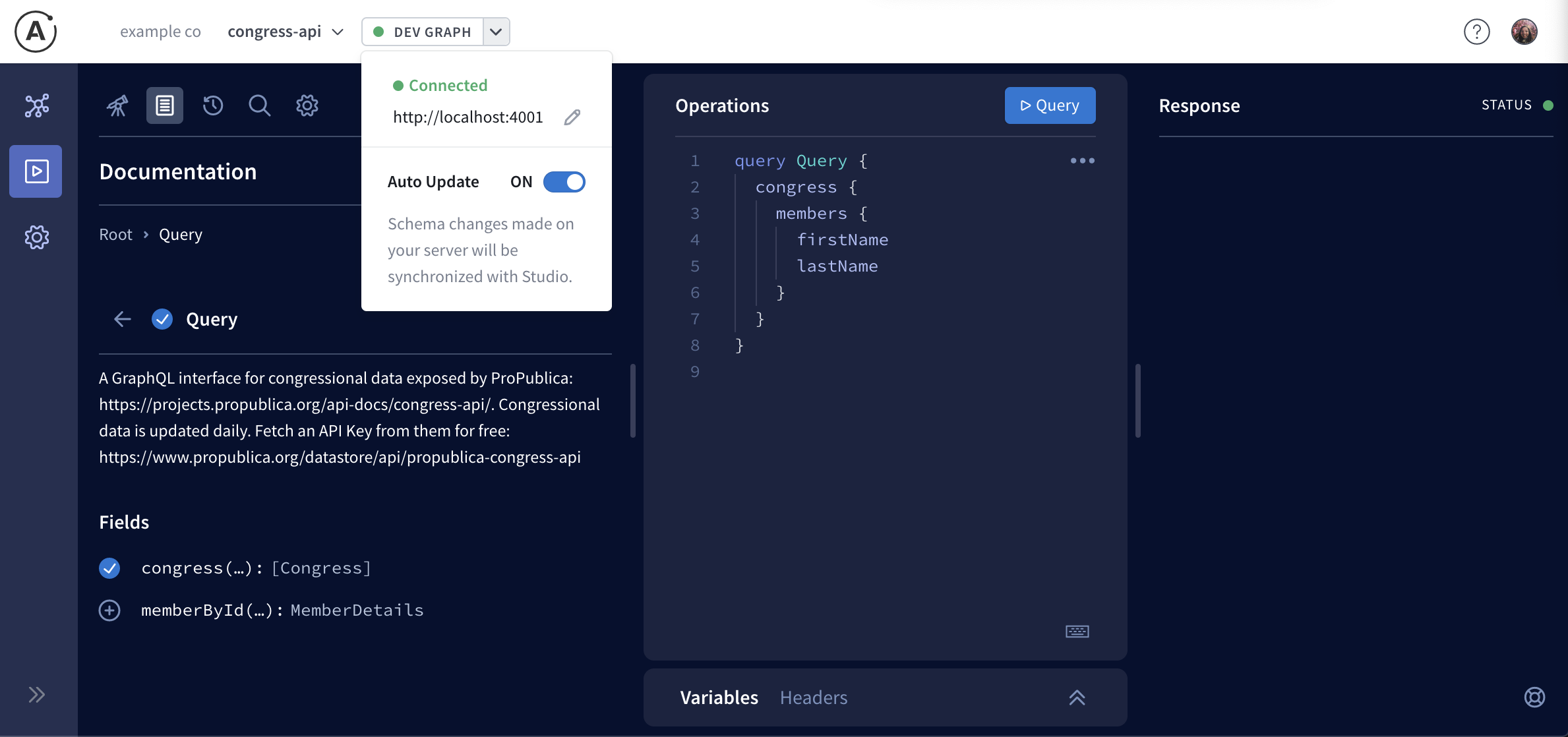
    Originally developed by Facebook, GraphQL APIs are being extended by Apollo GraphQL via a set of Studio tools based on a graph that makes it easier to discover those APIs and search GraphQL schemas. IT teams can also use the tools to launch queries against those APIs using an integrated development environment (IDE) dubbed Explorer. Developers are not required to have a deep knowledge of GraphQL syntax or the shape of a schema to launch a query. They can also copy links to share their queries with other users to copy a version of a query that can be run in the terminal as a CURL command.

    DevOps teams can also search for types and fields in a schema using tools that guide them through the process of querying any field in their schema. They also can find and add fields to a query without needing to know in advance where those schemas are actually running.

    The tools also make it possible to view samples of results to better gauge what data will be returned by a query, along with latency rates for each field in a query to better understand the overall cost of a query.

    DevOps teams can also view response data from their queries as JSON or as tables and create mock responses to queries to test operations, Finally, each request and view of every query can be viewed alongside the data returned.

    Connections to a private sandbox in the cloud for each local GraphQL server or any development environment are enabled using the Development Graphs tool.

    DeBergalis said he doesn’t expect most DevOps teams will rip and replace the REST APIs that are already strewn across most extended enterprise. Instead, most new applications will make use of GraphQL APIs that over time will become the de facto standard for building APIs. However, developers are clearly voting with their feet to abandon REST APIs in favor of a more agile approach, he said.

    Apollo GraphQL is looking to become the software development lifecycle (SDLC) platform for managing GraphQL APIs at scale, DeBergalis added.

    The challenge organizations face now is finding a way to integrate the management of those GraphQL APIs within the context of a larger set of DevOps workflows. Of course, that may wind up being more challenging than initially anticipated when they consider REST and GraphQL APIs could be employed alongside one another for years to come.

  • Copado Adds Value Stream Management to Salesforce DevOps Platform

    Copado Adds Value Stream Management to Salesforce DevOps Platform

    Copado, a provider of a DevOps platform for building applications that extend software-as-a-service (SaaS) applications from Salesforce, this week announced it has added value stream management capabilities.

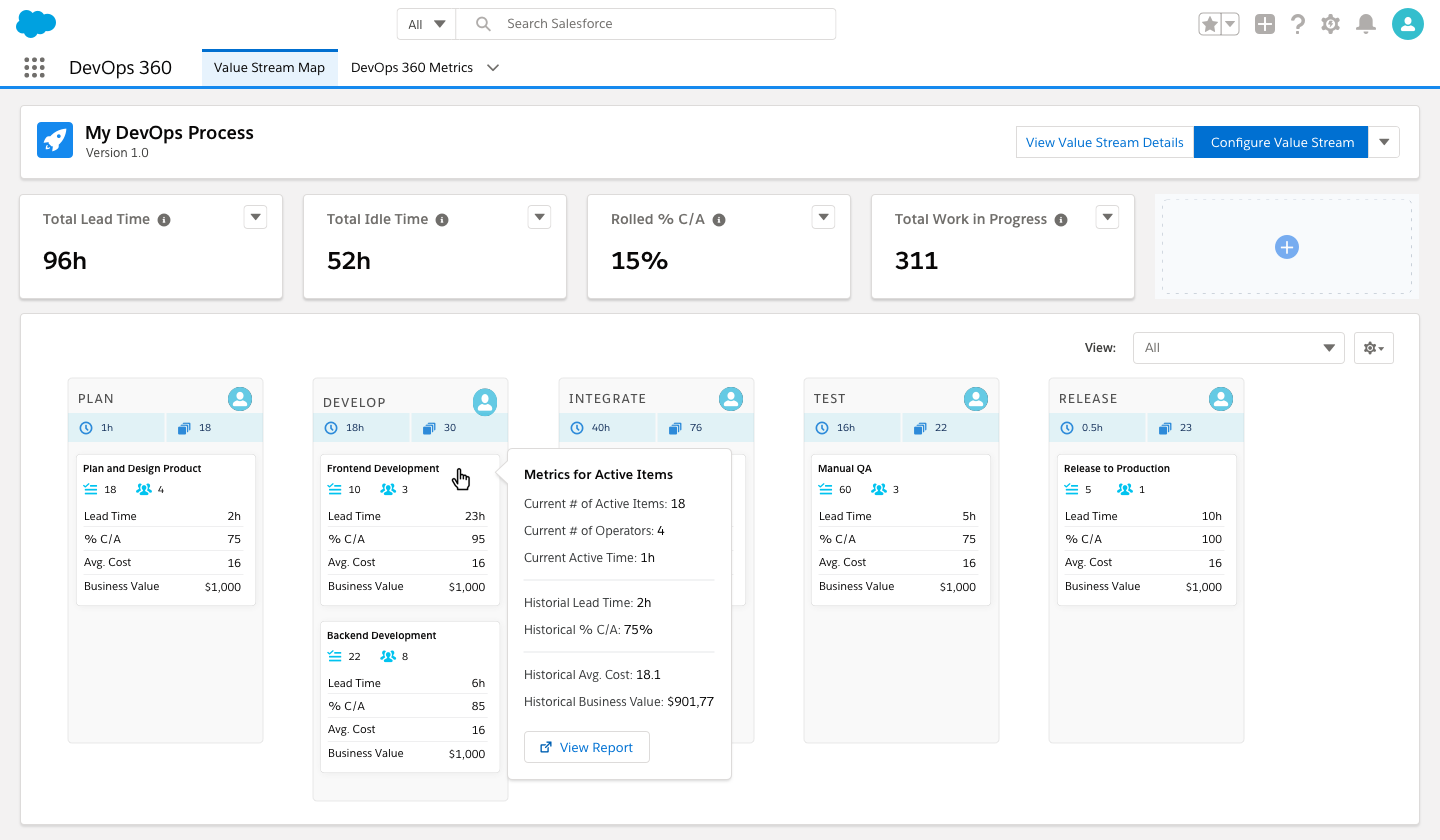
    Andrew Leigh, chief marketing officer for Copado, said providing a platform that accelerates the development and deployment of application code is no longer sufficient. The winter 2021 release of the Copado DevOps 360 platform now includes value stream management capabilities that enable organizations to better prioritize DevOps projects, he said.

    In response to the COVID-19 pandemic more organizations than ever are now relying more on SaaS applications that can be accessed easily by employees working from home. IT organizations are also now using platforms such as Salesforce to jumpstart digital business transformation initiatives. Rather than write develop entire applications from the ground up, many organizations are employing low-code tools from Salesforce and others to extend, for example, customer relationship management (CRM) platforms.

    Leigh said most of the activity revolves around professional developers who are increasingly applying best DevOps practices to build those applications. Copado has certified more than 25,000 developers on its platform, he said.

    Given the current state of the economy, Leigh said interest in DevOps platforms is rising among organizations building Salesforce applications because they want to ensure a return on investment (ROI). Organizations that are investing six figures to build these applications are especially interested in value stream management tools that help make sure these projects are delivered on time.

    The value stream management capabilities added by Copado include support for the Scaled Agile Framework (SAFe) for building complex applications more efficiently. It also provides the ability to synchronize stories from Jira and Agile Planning boards.

    The latest version of the Copado DevOps 360 platform also adds a suite of declarative pipeline builders that allow non-technical teams to define and manage value pipelines without a single line of code. That capability is intended to simplify version control and automation flows to enable developers and administrators who manage Salesforce instances to better align their efforts.

    Copado added deeper integrations to third-party testing tools that incorporate artificial intelligence (AI) and updated its static code analysis and compliance tools.

    Salesforce is clearly not the only SaaS application platform that organizations are looking to extend, but it is among the fastest-growing. For its most recent third quarter, the company posted revenues of $5.42 billion, an increase of 20% year over year. The company is now lifting its future guidance to slightly exceed pre-pandemic levels. Salesforce is projecting fiscal 2021 revenue at the end of its fourth quarter will total $21.11 billion. Revenue guidance for fiscal 2022 has been raised to $25.5 billion. Salesforce earlier this week also announced its intention to acquire Slack, a provider of a messaging platform that is used widely by DevOps teams.

    Leigh said a dedicated DevOps platform for Salesforce applications is necessary because Salesforce applications are constructed using a set of objects and tables unique to the platform versus traditional application code. Regardless of the reason for requiring a dedicated DevOps platform, interest in building and deploying custom applications on top of the Salesforce platform has increased sharply since the start of the pandemic.

  • Out of the Silo: Big Data and DevOps Meet in the Middle

    Out of the Silo: Big Data and DevOps Meet in the Middle

    Given the myriad benefits they provide, it seems crazy that big data and DevOps have been implemented independent of each other

    If you have been working from home during the recent lockdowns, you probably don’t feel like you are making many new connections, but when we come to look back on this time in a few years, it might prove to have been one of the most effective networking sessions of the past decade.

    Nowhere is this more true than in the twin worlds of big data and DevOps. It seems that being forced to work from home, far from locking engineers in both disciplines deeper within their silos, has brought them out of their shells. In recent months, we’ve seen an outpouring of speculation on how DevOps and big data can work together, and even a number of impassioned manifestos on why it is time to bring DevOps ideas to big data.

    In this article, we’ll look at why this crossover is suddenly so popular, how these two disciplines can engage in a symbiotic relationship with each other, and how they are already doing so.

    The Pandemic and the Silo

    For consumers, the experience of lockdown has accelerated internet usage trends. While some of the changes that have recently swept the online world were easy to guess, the speed at which they have taken hold has been astounding. It’s therefore no exaggeration to say, as the New York Times put it recently, that the virus has changed the way we use the internet.

    These consumer trends are driving changes throughout the software development industry, forcing firms to adapt to rapid release, testing and update cycles.

    One of the biggest changes in the way that developers collect data over the past decade has been the source of the data. This year, and largely due to the COVID-19 pandemic, we passed a notable watershed: Mobile devices and smartphones now account for more than half of all internet traffic, resulting in an increased data flow that boggles the mind and creates issues of its own. This increased data load from consumer mobile devices, rather than from corporate data acquisition systems, is forcing teams to work more closely together.

    In the words of Bill Detwiler, editor in chief of TechRepublic, in a recent CBS interview: “The COVID-19 pandemic has accelerated the blending of data analytics and DevOps, meaning developers, data scientists, and product managers will need to work more closely together than ever before.” For most firms, the way in which these consumer trends are fed into the development life cycle is via analytics teams. This has meant that, during the pandemic, analytics teams were generating actionable insights at an increased rate, and this has been the driving force behind the newly intimate relationship between big data and DevOps staff.

    Waterfall vs. DevOps

    To understand the way in which big data and DevOps teams can best work together, it’s instructive to visualize the way in which developers, operational staff and data analytics agents work.

    A decade ago, most software developers were using some form of waterfall development methodology. As the name suggests, this approach was essentially linear—the specifications for software were set in advance, and after this point multiple teams worked in tandem to deliver a continuous “stream” of software updates.

    The DevOps framework changed that by encouraging communication and collaboration between operations and development staff. The idea, in short, was to ensure that software underwent continual testing—not just in terms of usability and security, but also against the requirements of the operations staff who were charged with maintaining it.

    Now, we might be facing a shift of similar scale. Many firms have now adopted big data frameworks, but these systems generally have been seen as a way of harvesting and collating market insights. This was always a waste of potential for big data because as long as it was regarded as part of marketing, it’s utility in other parts of an organization were difficult to discern.

    Not any longer, it seems. The changes caused by the pandemic—both in consumer behavior and in the way that organizations communicate internally—have given developers an appreciation of the value of the data that analytics teams hold.

    Pioneers Show the Way Forward

    It’s also worth noting that big data and DevOps teams working in tandem is not a utopian vision; rather, this way of working was already being explored within leading companies even before the pandemic.

    In retrospect, in fact, it seems crazy that these two teams ever worked independently. If you’re a transportation company, the ability to track your loads on the road and the health and safety of the cargo that they’re carrying has become mission-critical. If you’re in the armed forces and using drones on the battlefield to conduct and report reconnaissance in real-time flyovers, the ability to adapt software parameters on-the-fly can be the difference between success and failure.

    The military is, in fact, the place to look for examples of how big data and DevOps will shortly become one process. Big data in the military has long been more advanced than that in the civilian sector and is beginning to inform everything from IT predictive analytics to real-time usage analytics.

    The Future of Big Data and DevOps

    There remain, of course, significant challenges to be overcome before the promise of DevOps working with big data teams can be realized. Perhaps the most thorny of these is the fact that computing performance is crucial for big data in a way it hasn’t been for development: The latter teams may need to build capabilities to make use of the insights generated by big data teams.

    Still, communication can only be a good thing, and if the pandemic has forced some of us to emerge from our bunkers and start to work together, then at least one good thing will have come from it.

  • Broadcom Extends AIOps Platform Reach

    Broadcom Extends AIOps Platform Reach

    Broadcom today extended the reach of its artificial intelligence for IT operations (AIOps) platform to provide full-stack observability via integrations with 15 third-party data sources including Dynatrace, Datadog, AppDynamics, PagerDuty, Splunk, ServiceNow, SolarWinds and Microsoft Systems Center Operations Manager.

    In addition, Version 2.0 of AIOps from Broadcom now captures data at the chip level to enable IT teams to triage network congestion and packet loss in real-time.

    The latest release also adds visualizations and dashboards for different IT personas along with a recommendation engine that enables IT teams to automate tasks once the root cause of an issue is surfaced by the platform.

    Sreenivasan Rajagopal, director of products and strategy for Broadcom Enterprise Software, said the new approach allows IT teams to decide what level of automation to apply based on the complexity of the problem and potential risk to the business.

    Collectively, these capabilities are intended to make it easier to align people and processes with business outcomes by creating a continuous feedback loop, he said, noting it takes about 90 days for the machine learning algorithm embedded within AIOps from Broadcom to start delivering on that promise.

    Other capabilities included as part of the latest release are additional machine learning topology and correlation capabilities, causal graphs and intelligent situational analysis for automatic root cause analysis, noise mitigation, alarm clustering and anomaly detection. Broadcom has also added a library of machine learning algorithms, natural language processing and an ontological graphical topology to enable situational correlation.

    Finally, Broadcom has added capacity analytics tools that can be applied to specific groups of services that IT teams are collectively managing and maintaining.

    Rajagopal said it’s now only a matter of time before AI is applied more broadly to enable IT teams to become more agile. AIOps won’t replace IT staff as much as it will simply augment the capabilities of the IT staff, he noted.

    AIOps also will prove vital as older members of the IT team retire, Rajagopal added. Newer members of the IT staff will be able to become productive much faster if they can rely on insights and recommendations surfaced by an AIOps platform.

    It’s not clear to what degree AIOps platforms will exist as a separate entity apart from traditional IT services management (ITSM) platforms that are also being infused with machine learning platforms. Broadcom is making a case for a distinct new IT operations platform that relies on data to align people, processes and platforms. The single biggest obstacle in terms of achieving IT agility is not the tools as much as it is people in different roles who can’t empathize with one another because there is no common source of data that every stakeholder can access, said Rajagopal.

    Regardless of the AIOps path chosen, it’s clear that many of the existing tools IT teams rely on to manage IT environments are slowly becoming obsolete. In fact, there may come a time soon when IT teams won’t even consider an IT management platform that doesn’t have some level of AI capability.

  • InfluxDB to Revamp Storage Engine for Time-Series Database

    InfluxDB to Revamp Storage Engine for Time-Series Database

    InfluxData has launched an open source InfluxDB IOx project that it said will become the foundation for the next generation of the company’s time-series databases.

    At the same time, the company has made InfluxDB Open Source 2.0 generally available. This version of the company’s database comes in the form of a single binary that makes it easier to secure.

    InfluxDB Open Source 2.0 also provides access to Data Explorer visualization tools as well as a lighter-weight Flux query language purpose-built for time series data.

    InfluxData CTO Paul Dix said while improvements are still being made to the existing database offering, the time has come to start working toward addressing a number of issues via a new project anchored around a storage engine that will make it possible to query petabytes of data across thousands of servers. The InfluxDB IOx project will address that issue by eliminating current restrictions on cardinality, data size and cluster size that are inherent in the current platform, he said.

    The InfluxDB IOx project is written in the Rust programming language and incorporates Apache Arrow, an open source in-memory analytics engine that incorporates a columnar data store that is being advanced under the auspices of the Apache Software Foundation (ASF). That approach will also make it possible for InfluxDB to natively support SQL along with InfluxQL and Flux query languages.

    The current plan is to make InfluxDB IOx an optional storage backend in a future point release. By the latter half of next year, InfluxData plans that InfluxDB Enterprise customers will have a commercially supported version of InfluxDB IOx and InfluxDB Enterprise. InfluxDB IOx will have its own builds and can be run separately. In effect, Dix noted, InfluxDB IOx will make it easier to separate compute and storage requirements.

    Dix said that while InfluxDB has served as the foundation that enables a wide range of monitoring tools to collect data in real-time, current cardinality limits that impact the number of tables that can be joined requires a new approach to add support for distributed tracing capabilities required to observe microservices-based applications. The IOx version will also employ object storage platforms to reduce the total cost of ownership while making it possible to address the requirements of distributed computing environments that now include a wide range of edge computing platforms, he noted.

    The decision to embrace Apache Arrow also opens the platform to end users who prefer to work with SQL and other scripting languages, he added.

    It may be a while before observability tools that leverage InfluxDB IOx find their way into DevOps tools. However, it’s clear that time-series databases will evolve to meet the requirements of cloud-native applications that will be based on large numbers of microservices spanning distributed computing environments. The only issue is to what degree the current rate of deployment of these applications might outpace the current ability of InfluxDB to keep pace.

  • The Future of Application Development

    The Future of Application Development

    What lies ahead for application development? Can we look forward to a less hierarchical system?

    The current state of application development has an often overlooked problem: It’s inaccessible.

    Top tier companies such as Google, Microsoft, Apple and Facebook are at a major advantage. With their large capital, they can invest in innovative development tools and round up extensive workforces of leading talent to use them—which matters, especially amid an ongoing developer drought. Meanwhile, companies lacking these privileges must make do with a leaner toolset and smaller, less cherry-picked workforce—which is not to say that they don’t make smart, creative use of what’s available to them, but that they deserve to play ball on a more equal playing field.

    Unfortunately, the pandemic compounded this issue, at times bringing even greater advantages to the tech giants. To overcome what some consider a trend of software elitism, efforts have been made to accelerate the pace of application architecture for all. Employing no-code and low-code tools, for example, could help the smaller guys compete. However, as Robson Grieve, CMO of enterprise software company OutSystems sees it, “these latest approaches are mostly point solutions solving a limited set of problems.”

    I recently invited Grieve to share more of his take on this issue and how he envisions a future of application development that works inclusively for a wider set of companies.

    Application Development: The Other 99%

    “It’s frustrating that the best, most advanced development tools have traditionally only been accessible to the largest, richest companies,” said Grieve. “Everyone else suffers with ballooning backlogs and struggles to take advantage of the latest, greatest technologies.”

    While it may sound like a platform out of a Bernie Sanders speech, recognizing the advantages of the top 1% in the application development world brings up a valid line of questioning as to whether maintaining this status quo is really how we want to go forward. After all, wouldn’t it be better if more companies had access to the best technologies? Wouldn’t we all benefit from that?

    Creating a More Equal Playing Field in Application Development

    Luckily, we are already feeling the winds change in this department, as top tier companies are beginning to lose their stronghold on the crème de la crème of development tools. What’s beginning to change, Grieve believes, is “access to the most sophisticated tools and advanced technologies are being democratized … sophisticated, feature-rich, beautiful, and mission-critical applications are no longer the sole domain of the elites.”

    How is this being realized? In many ways, it’s coming from the makers of the development tools themselves, who are bringing careful thought and creativity to tool design. Some of the strongest approaches in Grieve’s eyes include the following:

    • Holistic approaches that streamline the most critical innovations into single, integrated platforms.
    • Low-code approaches that help accelerate development while retaining the power and expressiveness of traditional code.
    • Platform approaches that offer design, development, deployment, monitoring and management capabilities in one place.
    • Multi-functional approaches that serve a diverse team, support the full DevOps life cycle and, in effect, improve productivity and collaboration. For example, platforms crafted to serve the unique needs of UI/UX experts, business analysts, professional developers and architects.
    • Automated approaches that allow applications to be continuously updated and seamlessly modified once they’ve been deployed, using an AI-powered automation layer that underpins the tool, managing application dependencies and providing self-healing capabilities to ensure that regardless of what changes are made, the tool never breaks.

    One thing that stands out here, according to Grieve, is the idea that broad, multi-functional development platforms reign supreme. As Grieve noted, “the most valuable tools are the ones that solve the broadest set of problems.” In general, approaches that keep in mind security, scalability, reliability and availability will be robust solutions for diverse teams, both large and small. A bonus is if the tool is visually appealing and model-driven for the best ease of usability and user experience.

    All for One, and One for All

    The issue of software elitism is one problem that can be seen as a clear opportunity, and that opportunity is not being missed among the smartest makers of development tools. As Grieve said, “Modern application platforms have the potential to help the vast majority of the economy succeed by offering a better approach—one that takes state-of-the-art technology and makes it more approachable, accessible and adaptable.”

    Again, we see a version of AI democracy at play. This is an exciting shift for many companies and teams that exist outside the elite tier. As an example, Grieve said that instead of “procedural code or minimalistic point solutions,” modern applications platforms “harness the power of advanced technologies and AI to create efficiencies for companies outside of the tech bubble.”

    This could be one way to level the playing field and allow companies of all sizes to complete the work needed, shrink backlogs, overcome developer drought with tools that are friendlier to citizen developers, support team collaboration, accelerate efficiency, and—for the underdogs—compete with the big dogs.

    Looking to the Horizon

    So, what does Grieve see for the future of application development? To him, it is bright if we continue on the current trajectory. “More and more,” he said, “successful development projects will require business and IT to work together and collaborate closely.”

    This means investing in sophisticated technologies, with powerful built-in AI, that can help companies ensure that even though applications are built quickly and efficiently, they are built securely and reliably—and in ways that can be easily scaled and evolved.

    If this is all to be realized, Grieve forecasts that we can look forward to “a bright future that is welcoming of a much more diverse and representative community of people who build applications together to solve all the most pressing problems.” It’s an optimistic view, but one that many will welcome as a fresh breath of air in what have been some particularly trying times.