Category: DevOps Toolbox

  • Accelerate Your Digital Transformation with IBM

    Accelerate Your Digital Transformation with IBM

    DevOps practices, processes and solutions help businesses accelerate their digital transformation by improving the speed and quality of software development. DevOps tools enable teams to do their job more efficiently by embracing automation, increasing agility and building speed, versatility and security into the framework.

    At the IBM DevOps Virtual Summit, attendees will learn how to keep their applications running smoothly with automation and data-driven solutions that can reduce mean time to resolution and explore IBM solutions to help innovate hybrid environments, disrupt cloud native development and transform existing mainframe infrastructures. The free virtual event will take place on Oct. 29 from 10 a.m. to 2 p.m. ET.

    IBM leaders will discuss the benefits of DevSecOps, how to increase business value, SRE best practices and how IBM Cloud software and services can help organizations succeed on their DevOps journey.

    The virtual event will feature four educational sessions from leading DevOps technologists:

    • “Application Modernization Enabling Hybrid Cloud with IBM Z,” by Rosalind Radcliffe, distinguished engineer and chief architect for DevOps at IBM.
    • “The Modern DevOps Manifesto,” by Andrea Crawford, distinguished engineer at IBM.
    • “DevSecOps in a Hybrid Multicloud World,” by Sunil Joshi, executive architect at IBM.
    • “Common Tooling Approaches from Kubernetes to the Mainframe,” by Eric Minick, program director at IBM.

    For more information about the virtual summit or to register, please visit the IBM DevOps Virtual Summit website.

  • Feature Flags: The Cure for DevOps Remote Work Stress

    Feature Flags: The Cure for DevOps Remote Work Stress

    Feature flags can help reduce the stress associated with DevOps during WFH

    The world has drastically changed. As a result, we have had to adapt the way we shop, socialize, educate and work. Businesses have had to adapt to keep operations going, and the biggest change they’ve had to make has been the move to remote working. For most, this has meant bringing a laptop home from the office and setting up at a home desk or dining table. For teams used to collaborating in-person, it may feel like the world has turned upside down.

    DevOps teams have been thrust into a decentralized environment at the very time they are facing record traffic and the pressure to return to or even exceed their prior cadence. The current climate has accelerated demand for fast and efficiently running online services, such as e-commerce, streaming services and video conference platforms. Digital platforms not only are facing greater demand, but they are also seen as more mission-critical than ever.

    The stress of all this can be daunting, but it’s useful to remember that the very idea of DevOps emerged as a way to move faster with greater resilience. We need to trust the patterns and tools that were emerging as the “new normal” even before the current crisis emerged.

    One of those patterns, which is sometimes referred to as progressive delivery, is the idea of decoupling deployment from release. The tool many have chosen to accomplish progressive delivery, especially to meet the needs of decoupled and decentralized teams, is feature flags.

    Feature flags allow teams to deploy new features in production while restricting access to only a subset of users. The ability to control exposure without requiring further deployments or infrastructure changes in turn makes testing in production (exposing the feature to internal dev and test users only) and canary testing (exposing the feature to a small number of real users before ramping up to 100%) straightforward and repeatable processes.

    This “fewer moving parts” way of promoting features eliminates the need for the large-scale coordination that an all-or-nothing “big bang” release requires. That’s why feature flags are particularly well-suited for teams to work remotely, in decentralized environments.

    Feature flags allow for time to make sure everything is working properly before the switch is flipped. It is the equivalent of changing the plane while you’re flying, without the passengers falling. For this reason, DevOps teams that were using feature flags prior to global shelter-in-place orders were much better positioned to continue development efforts without interruption while working remotely. Feature flags allow for DevOps teams to operate in gradual stages with the ease of experimentation and rollbacks, significantly reducing the stresses of remote work.

  • 3 Ways Atlassian Usage is Evolving in the New Normal

    3 Ways Atlassian Usage is Evolving in the New Normal

    Over the last half-year, the use of Atlassian’s tools is evolving and expanding

    COVID-19 has rapidly accelerated the digital transformation of businesses by several years. However, as companies shift to digital-only workflows, DevOps teams and the increasing number of departments they interact with face numerous challenges. Effective digital communication and collaboration are often vital to overcoming these challenges, and executives now pay a lot more attention to the tools enabling both.

    Millions of users globally rely on the Atlassian ecosystem every day. In particular, Atlassian tools such as Jira being used to improve software development, project management, team collaboration and code quality. As the world has shifted to more collaborative digital work over the last half-year, the use of Atlassian’s tools is evolving and expanding.

    We recently conducted research to understand more about how users globally are using their Atlassian tools. The “2020 State of the Atlassian Ecosystem Report” surveyed 700 professionals using these tools for their organization to find out how, where, when and with what other technology they are deploying Atlassian solutions. Many interesting findings emerged from the research, and here are three major takeaways.

    Atlassian Tool Usage Seeps Into the Enterprise

    A large proportion of Atlassian users are adopting its tools to achieve business goals from improving productivity and efficiency to change management as part of their digital transformation. This is driving the introduction of Atlassian tools beyond DevOps and into the hands of non-technical teams.

    For example, 80% of users said at least one business team in their organization uses Atlassian tools. These teams include customer support, design, sales and marketing and operations. Furthering this trend, Atlassian and Slack announced last month that they would be conducting joint app and integration development, allowing users to connect platform services. Our research found 46% of Atlassian users utilize both Atlassian and Slack solutions. These kinds of announcements will only increase the collaborative use of these tools between DevOps and the teams they collaborate with.

    Adopting Agile Development Methodologies & DevOps Strategies

    A key part of a company’s digital transformation is adopting agile methodologies and clear DevOps strategies. According to our research, 77% of Atlassian users believe their organization has implemented agile principles in some way. And 48% have a DevOps strategy in place, with an additional 29% planning to implement a clear DevOps strategy in the next three years. As workers are forced remote and developers are distributed virtually, iterative development between these teams is increasingly important. This can only happen when a clear DevOps strategy has been put in place and digital feedback can be gathered and implemented in a well-defined way.

    Taking a Hybrid Approach to Deployment

    There are several different deployment options available depending on the business needs of users of Atlassian tools. How companies choose to use, deploy and configure the tools that they use. In addition, parts of the same organization often have different business drivers for using Atlassian tools. For example, one function may need a public-facing help desk with access from anywhere in the world, while another may need a highly secure and internal-only solution.

    There isn’t a one-size-fits-all approach to address personalized organization needs. For instance, 9% of users are leveraging a hybrid model of Atlassian Cloud (SaaS) and a self-hosted solution (Server/data center), which means combining the advantages of cloud and self-hosting through multiple deployment models.

    These findings demonstrate how the Atlassian ecosystem is evolving and expanding in our new normal. As digital transformation takes hold across different organizations of every size, industry and level of technical sophistication, the need for flexibility is only going to increase to accommodate more digital-only workflows.

  • Sumo Logic Extends Observability Reach

    Sumo Logic Extends Observability Reach

    Sumo Logic, at its online Illuminate conference today, announced the availability of a bevy of extensions to its observability and security information event management (SIEM) cloud services that span everything from hybrid cloud computing to cloud-native platforms such as Kubernetes.

    The company also announced the general availability of a free Software Development Optimization (SDO) service, a business intelligence application that integrates and analyzes data collected from multiple DevOps tools to provide insights into software development pipelines in real-time. Based on metrics defined by DevOps Research and Assessment (DORA), a research arm of Google, SDO comes integrated with Jira, GitHub, Jenkins, Bitbucket, PagerDuty and OpsGenie and can be extended to other DevOps tools.

    Sumo Logic also updated its Application Observability service to be able to consume data generated by open source Prometheus monitoring tools as well as both Telegraf and Open Telemetry agent software for collecting and correlating traces with relevant logs and metrics. Dashboards and topology and entity models also have been added to create more intuitive workflows and cross-linking among troubleshooting playbooks.

    The company also announced the Sumo Logic Multi-cloud Observability service, which provides monitoring and troubleshooting capabilities across Amazon Web Services (AWS), Microsoft Azure, Google Cloud Platform (GCP) and hybrid cloud environments. In addition, it announced the general availability of Sumo Logic AWS Observability, a service that automatically ingests, collects, unifies and analyzes telemetry data from AWS services such as Application Load Balancer, Amazon Elastic Compute Cloud (EC2), Amazon Relational Database (RDS), AWS Lambda, Amazon DynamoDB and Amazon API Gateway. It is designed to detect anomalous events, including the timeline and scale of those anomalies, and then employs machine learning algorithms to surface the root cause of the issue.

    Sumo Logic is also making generally available a Kubernetes Observability service that automatically instruments and discovers topology and entities of microservices-based applications and automatically collects logs, metrics, traces and metadata to populate preconfigured dashboards and alerts. The company also launched a Sumo Logic Web and Edge Observability service to monitor and troubleshoot content delivery network (CDN) services from Akamai, CloudFlare and Fastly, as well as similar services provided by AWS, Microsoft Azure and GCP.

    Finally, Sumo Logic has enhanced its SIEM service to add support for chain, threshold and aggregation rule types and the ability to schedule searches of specific types of security events. The reporting and data ingest capabilities of the platform have been enhanced as well.

    Bruno Kurtic, vice president of product management and strategy for Sumo Logic, said observability takes traditional monitoring to the next level because as applications are instrumented, observability becomes a property of the application. That approach provides IT teams with the context required to resolve issues faster. Existing monitoring tools are isolated silos that generate data which IT teams then must correlate on their own to find the root cause of an issue. That approach results in time wasted that could otherwise be applied to more value-added tasks, such as developing applications faster, said Kurtic.

    Fresh off raising capital by becoming a public company, Sumo Logic is differentiating itself via a more unified approach to observability that provides deeper analytics, is more secure, and affordable through the usage of credits that IT teams and purchase and apply to any service as they see fit, Kurtic said.

    Of course, Sumo Logic is not the only IT vendor aiming to take IT monitoring to the next level. DevOps teams have no shortage of observability options. The challenge now is determining how best to act on that intelligence once it’s presented.

  • How to Consolidate Your IT Operations Management Tools

    How to Consolidate Your IT Operations Management Tools

    If your organization has more than 20 tools for IT operations management and DevOps, you’re not alone. According to one source, nearly 40% of IT teams are using more than 10 monitoring tools. There comes a time when you simply must clean house. This can be a painful chore, akin to cleaning out the garage or basement after a few years of neglect. It requires deep analysis, an in-depth understanding of business requirements and political finesse.

    Operations Management Tools: Cleaning House

    Avoiding this exercise can be fraught with danger. Your organization is likely wasting money and time maintaining and integrating legacy and/or disconnected tools that aren’t worth the effort. As well, operations management tools overload contributes needlessly to data noise rather than focusing on the data sets that are most critical to maintaining healthy service levels for the business. In this article, I’ll discuss the major battles and offer some ideas to simplify and accelerate a tools rationalization and consolidation exercise.

    Battle 1: Politics

    I’ve worked in enterprise architecture and IT operations for more than 15 years, as an internal team member and directly with clients. I can say with confidence that in most cases, 75% of the tools deployed in an IT organization have redundant capabilities or are considered to be nearing the end-of-life road map by the vendor. I understand the reluctance that team members have in letting go of tools they are comfortable using, as well as the time and effort it takes to learn completely new technology and the feeling of a loss of control when the business owner of a tool changes hands. Yet, a regular tools assessment and consolidation exercise is best for the organization over time.

    Typically, the unstated issue of teams not wanting to change tools relates to control. The teams that have the most data or the most important data tend to get more budget. It can be tough to relay the message that simplifying the tools ecosystem and centralizing access to larger data sets for everyone in the know can bring long-lasting benefits to both the organization and to individual careers.

    This is why it’s imperative for the senior IT or engineering leader to lead the charge in operations management by communicating the goal of the tools consolidation initiative and benefits to individuals, teams and the business at large. Here are a few of those benefits:

    • Eliminate unnecessary tools to reduce maintenance spend/time and complexity.
    • Develop a framework for evaluating future tool acquisitions.
    • Bring more control and visibility into bugs, issues and infrastructure/code status with the right set of tools.

    Battle 2: Inventory

    Maybe you already have your tools categorized and qualified in an asset management system such as a CMDB—but maybe you don’t or the information is outdated and incomplete. Doing an inventory is not just about categorizing tools by functionality and teams but also providing even more detail that can help make a data-driven assessment. With better data, IT organizations will be able to rationalize tools without heavy politics. Here’s what to include:

    • Primary and secondary functionality.
    • Product road map.
    • EOL dates.
    • Core user groups.
    • Relationship to business service/applications.
    • Customer support contracts.
    • Required skills/internal staff for support and maintenance.
    • Existing issues.
    • Vendor relationship.
    • TCO/ROI metrics.

    In enterprise architecture circles we call this application portfolio management/rationalization and it can be quite a task if you’ve never embarked on it before. It’s fine to start the process using Excel but whatever tool you use, be sure to share the inventory document with all of your stakeholders for enrichment and feedback. Arriving at the TCO or ROI analysis may not be easy for legacy applications, but do your best to collect as much data as possible for your calculations; information around previous support and maintenance contracts, hours to support issues, patch and maintain; and the hardware and software costs required to support will help provide an understanding of the TCO.

    From there, determining the “R” in your ROI will be based upon many factors, both tangible and intangible. For example: Does the tool save significant manual time to do the same process and eliminate toil? Does the tool increase accuracy, thereby minimizing rework? Does the tool improve the work-life balance or morale of employees?

    Battle 3: Review Board

    A technical or architectural review board helps evaluate and approve requests for new tools and technologies. Typically, these boards have cross-functional employees from operations, application development, application management, EA and even security. The job of the board is to understand the business requirement for the request and mitigating factors such as cost, time to implement and security considerations. The board also ensures that a similar tool already in place in the organization couldn’t satisfy the request. While boards with the right individuals can defuse politics and ensure a balanced approach to evaluation, boards can also encourage politics if special favors are granted. Senior IT leaders should discourage that behavior (obviously).

    Battle 4: Shadow IT

    It is true that employees can easily find workarounds these days to processes that you put in place, no matter how objective and sensible they are. Technical folks love to experiment with new tools, and it’s difficult to break the habit. One idea is to apply control by prohibiting the use of personal credit cards to make purchases and requiring review board assessments and security reviews prior to acquisition. Employees who choose to violate those requirements will face certain consequences. You may also want to reward those who follow the rules with bonuses or other perks.

    Battle 5: Predicting the Future

    At the rate of change and unpredictability in business today, it can be difficult to plan too far ahead. But some part of planning is necessary because business and overall IT requirements drive the tools strategy. Understanding the 12-month technology road map is reasonable, but if you can extend your vision further to 24 months or longer, it can provide important decision-making factors. For instance, if your organization is planning to embark on a cloud migration effort in the future but need to upgrade a legacy system now, delaying the expense of a pricey upgrade and expediting the cloud migration initiative would be an easy way to reduce IT risk and deliver more sustainable capabilities for the future.

    Modernizing Operations Management Tools

    In summary, everything revolves around the data. If you leverage concepts of enterprise architecture and application portfolio management, you’ll quickly be on your way to helping your organization make better IT decisions. Through EA and APM disciplines, you’ll learn how to establish governance processes to reduce IT risks and vulnerabilities, cut operational spend through rationalization and make the IT organization more agile for future go-to-market strategies by reducing support and maintenance complexity.

  • Pinpoint Simplifies Managing Remote Dev Teams

    Pinpoint Simplifies Managing Remote Dev Teams

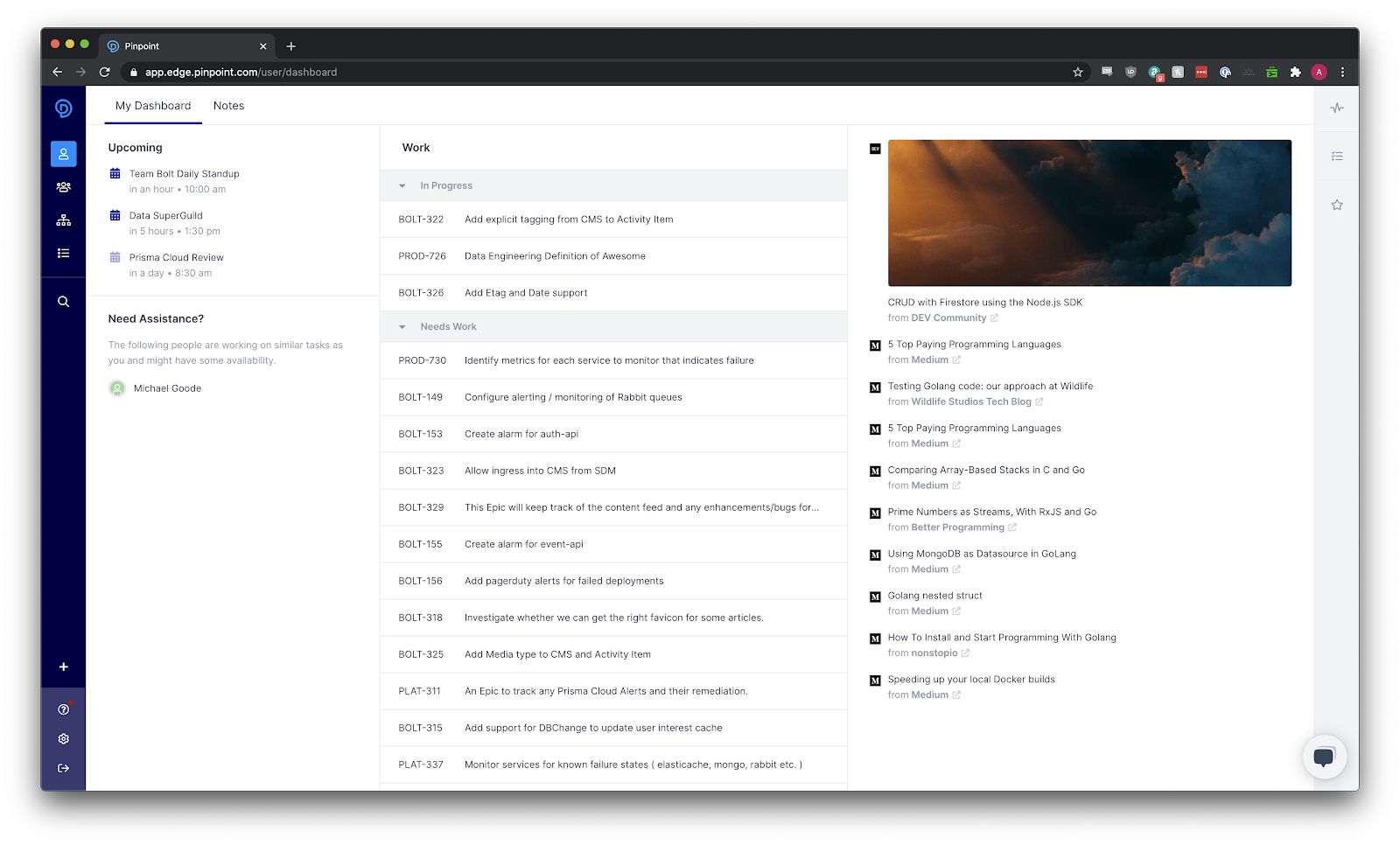
    Pinpoint today added a User Dashboard to its namesake platform for managing software projects that makes it easier for remote developers to stay focused.

    Company CEO Jeff Haynie said the User Dashboard provides developers with a personalized view of their work priorities and schedule for the day. It also provides a means to employ their Pinpoint Profile to highlight personal achievements and engage other engineers on the Pinpoint Platform.

    The Pinpoint platform is designed mainly to identify software development bottlenecks that could delay a project. Most recently, the company added machine learning algorithms and advanced analytics to surface additional insights and recommendations.

    This latest update extends the use of machine learning algorithms via a Recommended Content feed that curates content from blogs, podcasts and other media based on the observed interests of developers. Much like a built-in RSS feed, Recommended Content is an experiment to see whether the platform can save developer time by eliminating the need to scroll through less-relevant news, said Haynie.

    In the wake of the COVID-19 pandemic, he said, many organizations are struggling even more to manage distributed or remote developers. It’s also now much easier for developers to become isolated from the rest of their team. The User Dashboard provides a way to engage developers through the same platform managers employ to track projects.

    While there is no shortage of collaboration tools, Haynie noted they all tend to be tied to a specific DevOps platform. Pinpoint is designed to automate the process of collecting data from multiple tools, which the platform then analyzes to surface potential bottlenecks in the software development process. As software development projects become more complex, there is a need for a tool to visualize how hidden dependencies might upend delivery schedules, he said.

    The User Dashboard now extends that framework out to individual developers, who can view how to prioritize their specific tasks in keeping with a larger set of goals, Haynie added.

    Developers don’t typically have a lot of visibility into how their efforts ultimately impact the organization. In the absence of that information, it can become difficult to stay motivated, especially when working from home. Project leaders are now always going to be able to personally engage each developer every day, especially if members of the development team are located in different time zones.

    The User Dashboard isn’t a substitute for personal interactions, but it does provide a means for developers to quickly learn at a glance what needs to be done next in a way that serves to minimize miscommunications. It’s not all that uncommon for developers to lose valuable time by being told to do one thing when they should have been focused on a different task.

    Less clear is to what degree Pinpoint might be able to flatten management hierarchies within development teams. As a general rule, the fewer managers required the more an organization can allocate funds to hiring developers who, with the aid of the right platform, might one day manage themselves.

  • TechStrong TV: strongDM With Betterment

    TechStrong TV: strongDM With Betterment

    Betterment is a goal-based financial advisory company that provides robo-advising services to help customers make the most of their money, taking away all the complexities of investing and saving.

    In this interview for TechStrong TV, strongDM co-founder and CEO Elizabeth Zalman and Chris Becker, SRE manager at Betterment, joined us to discuss how strongDM helps make things faster, automated and easy at Betterment by tracking and auditing all changes on their system.

    Chris was the project lead for implementing strongDM at Betterment. During this segment, Chris shared his journey of becoming manager of the SRE team at Betterment and the reasons why they chose strongDM to secure access to their data.

    Check out the interview below and follow along with the transcript to find out more.

    Transcript

    Alan Shimel: Hey, everyone. We’re back here at TechStrong TV, and for our next segment. For this segment, we have one of our semi-regulars back here, Liz Zalman of strongDM. Hi, Liz—how are you?

    Elizabeth Zalman: Hi, Alan. I’m well, thank you.

    Shimel: Good, thanks for joining us. And joining Liz and I today is Christopher Becker, SRE with Betterment. Is that correct, Chris?

    Chris Becker: Yep, SRE manager at Betterment.

    Shimel: Very cool. So, Chris, you know, I got a little background on Betterment before we started recording today, but why don’t you share with our audience—what’s Betterment? What do you guys do?

    Becker: So, yeah, the elevator pitch for us is that we’re a robo-advising platform that helps you make the most of your money. So, the idea with us is, we take away all the complexities of investing and saving and we’ve turned it into a goal based platform that lets you invest your money, save for what you’re going for, and try and make the most on top of the market and everything like that.

    So, we—yeah, we try and take all the trouble of saving and all that, we dynamically balance portfolios and things like that for you and, as Liz said, it kinda removes all the distracting stuff with money.

    Shimel: Very cool. And, you know, what’d kinda unique about it is, it’s very goal based, right? So, you gotta tell Betterment what are your goals, what are you saving for, here? I wanna buy a house, I wanna buy a car, I wanna put money away for retirement.

    Becker: Mm-hmm.

    Shimel: I wanna go on—I wanna take 180 days off and cruise around the world. That would be mine, but anyway. [Laughter]

    Zalman: [Laughter]

    Shimel: You know, so, it’s a pretty unique kind of thing like that, and it’s—I guess it’s kinda uniquely situated for, I’m gonna assume, a lot of your customer base is sorta Millennial, Gen Z kinda folks, or do you get, you know, old people like me?

    Becker: [Laughter] We have everyone, all over the gamut. I think—yeah, like, you mentioned the goal based investing, and that’s what’s super important to us. And it helps us sort of like—it helps us make the calculations about how we balance everything.

    Me, for instance, I have a goal that’s like saving for a house, and that’s a much different trajectory than something like retirement for me, based on my age and my income and everything like that. And what Betterment helps you do is just save in the best way to hit those goals. So, if you’re trying to get X amount of dollars by Y date, there’s sort of a formula that does that, and if you’re saving for retirement, there’s a different formula that works with that. It’s all kind of within our platform.

    Shimel: Cool. So—and, of course, the website, let’s get that out of the way, B-E-T-T-E-R-M-E-N-T dot com?

    Becker: You got it.

    Shimel: Okay.

    Zalman: And there’s a mobile app.

    Becker: And there’s a mobile app. [Laughter]

    Shimel: [Laughter] There’s an app. And we should also—hey, full disclosure, Liz has told me not only is Betterment a customer of strongDM but Liz is a customer of Betterment, so.

    Becker: [Laughter] Exactly.

    Zalman: It’s a great product. [Laughter]

    Shimel: Take it with a grain of salt—take it with a grain of salt. [Laughter] Anyway, Chris, let’s talk a little bit about your background, though, now. So, you are manager SRE there, and our audience is very, very familiar with SRE and SREs in general. But how does one become a manager of the SRE team?

    Becker: Absolutely. My background is particularly interesting. I guess, rewinding the clock a little bit, I was—I got into sort of computers and computer management and server stuff, like, way back in high school. I come from a pretty, I guess you could say, classical IT background. I actually have, like, a Microsoft MCP, if you can believe that, like, from back in the day.

    Shimel: I do.

    Becker: [Laughter] Yeah, Server 2003 Active Directory, so.

    Shimel: Mm-hmm.

    Becker: That’s—yeah, I went to a high school with a really great computer program that let a lot of the students get hands on access to stuff, and by my sophomore year, me and my other classmates were sort of managing our computer labs and learning about how to do all that kinda stuff.

    So, that’s like—yeah, I guess I was fortunate in that I got into this really early and it was something that I was really excited about and I was kind of like, you know, that guy in high school with my buddies, we built computers and things like that as well.

    But yeah, and then right out of high school, I went to college and studied Information Technology as well. And one of the things that, like, for me, I’ve always sort of been, I guess, the jack of all trades when it comes to technology—everything server management, a little programming, and things like that. And then out of college, I actually got a job at Warby Parker doing office support, so like, IT support.

    And that’s kind of, for me, where, I guess you could say the automation bug, I got bit by that. Because we were doing a lot of software installations and things like that on people’s machines and we wanted a way to, like, with our two person IT team scale out to support, like, you know, 300 people at Warby at the time.

    So, it was like investigating, you know, more things that we use in the SRE world today, like, things like Ansible and things like automation scripts and stuff like that. I was kind of, like, getting introduced to that as a way to just make it so that our small team could manage and automate installations on a bunch of work stations.

    And then from there, actually, within Warby Parker, I had the opportunity to change to what they called an infrastructure engineer role which, looking back on it now, it was essentially, like, DevOps, right? You know, because DevOps is, I guess, the big umbrella that covers a lot of different disciplines and stuff like that.

    So, from there, I really—I leveled up a lot of my programming skills as well, writing automation scripts and stuff to set up developer work stations. But what was important, I think, in that role for me is that I had a really good relationship with sort of internal customers, as I like to call them, for my IT role where my sort of stakeholders of the things that I built weren’t people that were the traditional customers of the business but rather those that, people that worked or the business.

    So, I think a lot of—like, one of the reasons why I like DevOps and SRE and things like that is because it allows you to have a really close relationship with your customers, because they’re in the same company as you are a lot of the time, so.

    And yeah—and then after Warby Parker, I got a job as an SRE at Betterment and our team was similarly very small. There was, I think when I started, there was four of us and we were supporting an engineering organization of around 80 folks and then, from there, our engineering team grew as well as our SRE team. And now, I’m the manager of that team and so, having been on that team for two years and change before becoming the manager, I had a really good sense of what we liked to do, things we wanted to build or our engineers and platform things as well. So, now, I’m kind of like at the helm and get to control that, which is really, really cool.

    Shimel: Excellent, man. Great story. You know what, Chris, I don’t think your journey is that unusual, to tell you the truth. I mean, I spend my life talking to people like you and Liz and—I mean, what’s different is, you know what, my high school didn’t have a computer lab, my college had punch cards. But, you know, my children, for instance, our local high school here in West Boca Community High, they actually do have, they have actually a Microsoft Certified program. So, a lot of—you know, you become Office certified, big deal, as a freshman. But by the time you graduate, you are Microsoft Certified.

    They might have, I don’t know if they’ve moved over to Google stuff now and more cloud-based kinda things, but there’s a cyber security area of concentration they call it, which is pretty cool, too. And, you know, it’s good. I mean, because so many people of my generation who—look, we took the Internet commercial, right, and built what you see here. But so many of them are self-taught, especially in things like DevOps or cyber or, you know, those kinds of things. And so, it’s good to hear people with real academic backgrounds in this stuff. I think it bodes well for the future.

    But, you know, part of what you guys are doing, obviously, is, you called it infrastructure engineering or at Warby Parker, DevOps. But the real thing here is that we’ve moved, in your lifetime, right, in your career—I don’t know if they ever had the concept of the server closet and the data center on prem. Everything is SaaSOps, right, or cloud or some sort of hybrid of that, right? There might be some third party data center you use where you’re running, let’s say, a private cloud kinda thing. You mentioned Ansible—well, that was back at Warby, so I don’t know if you’re using OpenShift or anything like that.

    But clearly, right, it’s not—this is today’s infrastructure, today’s kinda new stack as I like to call it. What about Kubernetes, cloud native, any of that stuff?

    Becker: Yeah. So, that’s like, at Betterment, we’re using Kubernetes. We’re on top of AWS as well. And I think it’s—I like that you mentioned sort of like old server clouds and stuff. I think the last time I interacted with a physical rack server was probably in college. But, I mean, I grew up punching Ethernet cables and racking and stacking and configuring, you know, Ratarays and things like that. And I think what—

    Shimel: Fun times. [Laughter]

    Becker: Yeah, right? [Laughter] Well, not with Ratarays, but I think—yeah, what I really like about sort of my, I think where my background has been really helpful for me is like, you know, when you enter this new world of AWS and cloud configurations and Kubernetes and stuff like that, like, it’s all still based on the fundamentals. And I feel like I got a really good sense of, and a really good education in networking fundamentals and things like that. Which, if you look under the hood, Kubernetes abstracts a lot away from you, but you still might have to do some kind of site or notation calculations, right? Or figure out, like, some [Cross talk]—

    Shimel: It’s been a long time since did CIDR.

    Becker: [Laughter] And it’s—and things like, yeah, and figuring out, like, we were debugging an issue with network connections and being able to Wireshark and look at the TCP handshake and figure out why we were dropping packets or getting RSTs or something like that. Like, being able to sort of zoom into those things that we don’t necessarily think about a lot these days when we sort of turn on a server in AWS and we don’t really think about—like, being able to sort of lean on that knowledge is incredibly helpful in those head scratching debugging moments and stuff like that.

    Shimel: Yeah. No, no, it’s always good to understand what the underlying technology is about. But part of what—and this is really something strongDM does, right? Part of what we’re doing here is, we want to make it chimp simple. We want it to be fast, automated, easy. That’s a big part of the SRE kinda mantra as well, right?

    Becker: Yeah.

    Shimel: And so, let’s talk a little bit about strongDM over at Betterment, right? How did—was it there when you got there? It sounds like you’ve kinda built the thing, though, you brought it in. Talk to us about the use case, here. What made you go with strongDM, why, what problem were you trying to itch, here—or, yeah, what scratch were you trying to itch?

    Becker: Absolutely. Yeah, no, for us—so, I was actually the Project Lead for implementing strongDM at Betterment. So, I absolutely love it, first of all. It’s one of my favorite apps because I don’t have to think about it ever, and that’s like—if I forget, like, it’s something so seamless and it is so well run that I forget about it, those are my favorite kind of pieces of software. [Laughter]

    Shimel: Well, no, that goes to what we just said. We wanna make it that simple, man.

    Becker: Easy, simple, automated.

    Shimel: I don’t wanna do CIDR calculations.

    Becker: [Laughter]

    Shimel: [Cross talk] [Laughter]

    Becker: Yeah, no—so, for us, we had a need at Betterment, obviously, we’re a financial institution, we have regulations that we abide by and these things, one of these things is auditability and we need to make sure that any changes to any systems that we have and that we run and we operate are auditable, it’s tracked, it’s logged.

    So, for us, strongDM was sort of like the perfect picture, because it allowed us to use that platform to get auditability, we could track and log everything as well as push everything with SSH at the time through one system, which was really nice. And it also had the added goal of not being dependent on our VPN, which we’re trying to get rid of as well, for a lot of reasons. [Laughter] strongDM, yeah, allowed us…

    And also, the thing that I’ve said amongst my team and one of the reasons why I really like strongDM is, it sort of abides by what I like to call the Unix philosophy, right? Like, it does one thing and it does it well. And it’s very predictable in its command line, it’s very predictable in the way that—its interface and it interacts with other servers and things like that. And it was really easy for us to build out this entire system with, you know, literally running two EC2 instances and they’re able to get into hundreds and hundreds of servers every day and have never had an issue, so.

    Shimel: So, Liz, five interviews—this is the longest I’ve ever heard you go without speaking. What’s up? What can you tell us about this?

    Zalman: What I can tell you is that Betterment, I think, is, I’m gonna say top three in terms of forward thinking customers that we have. They’ve pushed the envelope in a variety of ways. They were using SSH, I think, where they had requirements for how they wanted engineers to interact with SSH that we didn’t yet support in the platform. I think the same thing went for kubectl as well or usage of Kubernetes. They were the first to really stress our system—not stress our system in terms of, like, we went down, but stress in terms of, “I wanna automate stuff like this, and you’re doing this, and I need you to get to this.”

    I can’t count the number of times that Chris asked for a REST API. Have you used it yet, by the way?

    Becker: [Laughter]

    Shimel: Tell the truth, have you?

    Zalman: Have you used it yet?

    Becker: Oh, yeah—no, we have. Yeah, we used it.

    Zalman: Okay—good, good, good. [Laughter]

    Becker: Yeah.

    Zalman: They had requirements in terms of directory syncing—yeah, so, it was a pleasure to work with them. And I actually don’t recall—did we meet when you were at Warby, or were you just sort of aware of that relationship?

    Becker: You actually, I think you came in to meet the infrastructure team, like, the Ops team at Warby at one point.

    Zalman: Yeah.

    Becker: Because I remember we were piloting strongDM at one point. I don’t think I was there when the implementation happened or anything like that.

    Zalman: Oh, yeah.

    Becker: But I was familiar with the product from Warby, actually.

    Zalman: Yeah. And Alan, it’s actually interesting—Chris is part of a, Chris used to be based in New York City and in New York, there is this group of infrastructure folks that stays within sort of the B2C world in my opinion and goes to the unicorns. And it was almost borne out of Warby, some went to, like, Harry’s for shaving, some went to Peloton, some went to Betterment—I’m sure I’m missing a couple companies. And they’re almost more forward thinking than our traditional B2B clients are. It’s a very interesting trend.

    Shimel: Yeah. You know, one of my good friends is a guy named Brad Feld out of Boulder, and Brad, he founded TechStars and Foundry Group. He used to be—he’s a big VC. But he’s also an author and he’s written this whole series around what they call startup communities, and it really talks about, Liz, what you were just saying, right? Generally, you get a pool of talent, right, in a geographic region—within a community; it doesn’t have to be geographic, actually, but within a community. And that talent, it’s almost like the six degrees of separation, right? You can see a company has a liquidity event, people make money and they start other companies. Or they develop some really great expertise—in this case, kinda B2C, using real edgy kind of…I gotta stop using the word edgy, because it’s now meaning The Edge. But, you know, kind of cutting edge is what I mean—technology players.

    And they do, that—you can almost trace the DNA, if you will, right, from company to company to company because it’s that same, the same roots of people. And that’s what makes a startup community, because along the way, right, more people get added into the tribe, if you will, right? And that tribe continues to grow. And that’s how—I mean, that’s how tech centers are born, right? You can trace—like Boulder, for instance; Boulder, Colorado—you can trace a lot of what came out of, what’s coming out of Boulder by from when the storage folks were there and IBM had a big facility there and the University of Colorado and Brad coming in and investing a lot of money. There were a handful of companies that had really great outcomes or liquidity events, and it gave rise to this whole—Austin the same way, I mean, by the way.

    Anyway—strongDM. So, Chris, what are you guys using it for? Liz mentioned some REST APIs and stuff like that, but how—what are you using it for, how is it working out, what do you see?

    Becker: Yeah, so, we’re using it for, our sort of highest level use case is any time a developer needs to access a server or a database or a cluster, a Kubernetes cluster that we run and operate, they go through strongDM. And for us, like I said before, that was super important, because we want to make sure that all of the changes to our systems are tracked and audited.

    So, we have—we actually started out just implementing sort of the SSH back end, and like Liz alluded to, we had some very interesting requirements around directory services. So, we use Okta as our identity provider and directory service.

    Shimel: Sure.

    Becker: And strongDM helped us wire that together so that a person on the team, their e-mail address and their Okta identity is used by strongDM so that we can sort of tie all those things together.

    We also had, like, another thing that Liz alluded to was sort of like, we had a ton of servers and one of our unique use cases was, at the time, we were heavily using autoscaling groups within AWS. So, one of the big things with us and strongDM was that the server inventory was extremely dynamic, depending on load of our servers, depending on deployments and things like that. We might have 100 servers in inventory, we might have 200 servers. And they were coming up and down sort of all day.

    So, for us, one of the other interesting requirements is, we needed some kind of automation so that when an AWS would turn on a new server to handle extra server load that that server was automatically enrolled and registered in the strongDM platform.

    So, yeah, again, we worked with strong a lot on sort of nailing down that interface and we’ve written some automation scripts and things like that to get it to register and everything like that, and their admin, their admin token API and everything like that made that a breeze. And then our most recent implementation is actually, we use strongDM for Kubernetes. So, we basically have a, when you need to get access to our Kubernetes cluster or debug an application in our cluster, we actually live provision a container and then your proxy through strong, like, right into that container and all of that is audited as well.

    And all of our developers, actually, they don’t even—the best part is, they don’t even understand, like, they can connect to an old system or a new system and for them, it’s completely transparent. But yeah, it all runs through strong and it all is—and for our compliance reasons, that’s all audited and tracked and logged, which is great.

    Shimel: That’s nice. Two things I wanna highlight here and then Liz, I’m gonna ask you to expand on it. Number one is that, by using strong, what Chris’ team is able to do, as he mentioned, they use Okta—they don’t have to worry about hooking up this person’s identity maybe via e-mail with their Okta identity for purposes of IAM, right, across their disparate network infrastructure, right?

    strongDM here, as part of the proxy process, is lining up that person’s real identity, right, their e-mail or whatever you wanna use as their real identity with their IAM identity—I call it an IAM because it could be Okta it could be others, right? And then—but the person doesn’t have to think about that, and quite frankly, Chris, neither do you or your team, right? strongDM just makes that—again, chimp simple, easy, done.

    Becker: Yep.

    Shimel: That’s number one. Number two—and Liz, this is where I really, I’d like you to comment in—the idea of using it in this Kubernetes system and containers, as Chris is referring to, is that the norm now, or do you think this is kind of an advanced use case?

    Zalman: It’s an interesting question. And yeah, I think to your first point, it’s, we’re acting as an infrastructure API, right? We don’t care what Chris is using as his identity store. We don’t care where his infrastructure is, we’re just connecting the dots.

    Shimel: Yep.

    Zalman: Kubernetes was—I mean, we’ve seen different instantiations of Kubernetes over the years, right? Docker tried with Swarm and it didn’t stick and Kubernetes did. And maybe people were using it, they were trying it on. And I remember, like, the month that it hit production workloads, because I think we got seven or eight requests in one week. It’s like—why don’t you have support for this protocol? And we said, “Okay, time to build kubecl support.”

    Shimel: Time to do that, yeah.

    Zalman: Yeah.

    Becker: Yeah, guilty. [Laughter]

    Zalman: Yeah, you were one of them. [Laughter] It was like plain, plain, plain, plain, plain—mainstream. And so, I think everybody is trying to find some way to systematize and puppeteer everything that’s going on and abstract away a lot of complexity.

    So, no, to me, Kubernetes is certainly here to stay. I see everybody using it.

    Shimel: But is their—because it sounds like their Kubernetes installation, if you will, the way they’re using strongDM is maybe a little different than—is that the standard way that people are using strongDM and Kubernetes or is theirs a little different?

    Zalman: I think Betterment has a particular approach to locking down access which is, you literally get this much access or this much access or this much access or over here, maybe this much access. It’s highly tailored and fine-tuned, and I think that is the—that’s sort of the forward thinking way. Like, people talk about lease privilege and Betterment has actually implemented it across the board for every single thing that somebody needs access to.

    Shimel: That’s great, man. That’s—and Chris, kudos to you and your team for that, right? Because that is—look, you’re in the financial industry, you’ve gotta do what you’ve gotta do there, but that’s an excellent thing.

    Guys, we’re over time, to tell you the truth, but I kind of enjoyed the conversation today, so I let it go. But we need to break out of here. Chris, enjoy—I know you’re about to take, you said, like a week off over that at the shore and enjoy it. I see maybe you’ll get that oar off the wall and actually do something.

    Becker: [Laughter] Some paddle boarding.

    Shimel: Yeah, that sounds cool. Anyway, I’m just thinking, I’m supposed to be going out on the boat tomorrow, but it’s also supposed to rain, so I’m not sure. But anyway, enjoy your week off. Thanks for joining us, thanks to Betterment for allowing you to tell your story here today.

    Liz, always a pleasure to have you on and hear more about strongDM and this whole kind of—you know, these new companies, not necessarily new like today new, but a new way of doing things and a new way of making it easy to bring people on and access assets wherever the infrastructure is, so—fantastic.

    We’re gonna wrap. This is Alan Shimel for TechStrong TV. We’re going to be right back with our next guest.


  • Microsoft Advances DevOps Agenda

    Microsoft Advances DevOps Agenda

    Microsoft, at its online Ignite 2020 conference, has launched a bevy of updates that collectively further adoption of best DevOps practices on the Microsoft cloud platform, including for the first time a preview of an ability to store artifacts created using low-code Power Apps tools on GitHub.

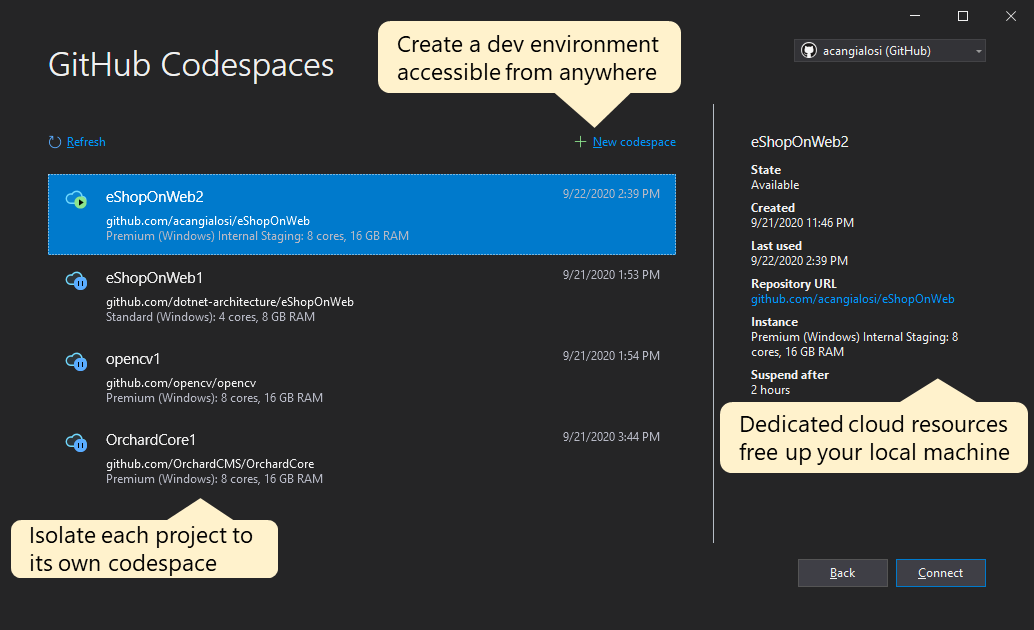
    In addition, Microsoft announced a preview of an update to Visual Studio 2019 16.8 that will add support for GitHub Codespaces, a previously announced capability that automatically creates repositories on GitHub. GitHub Codespaces is currently available in beta and soon will be accessible directly from within Visual Studio.

    Microsoft also revealed it has enhanced the Git tooling experience in Visual Studio to enable more asynchronous collaborations. A GitHub extension for Visual Studio Code enables developers to work with GitHub Issues and Pull Requests directly in the editor. Development teams that need to work in real-time alternatively can employ Visual Studio Live Share.

    A publish experience in Visual Studio also now has the option to generate a GitHub Actions workflow for continuous integration/continuous delivery (CI/CD) environments in Azure resources using the deployment secrets configured in a GitHub repository. GitHub Actions for Azure can now also scan Azure resources for policy violations and vulnerabilities in container images and issues involving Azure Resource Management (ARM) templates.

    Microsoft CEO Satya Nadella told conference attendees the velocity at which applications are developed and deployed has become even more critical as organizations embrace digital business transformation in the wake of the economic downturn brought on by the COVID-19 pandemic.

    GitHub support for Power Apps is especially significant because it will make it easier for so-called citizen developers to collaborate with professionals developers as they jointly develop applications, he said.

    Other notable updates to the Microsoft tools portfolio include a preview of an instance of the Azure Logic Apps workflow platform that can be deployed as a containerized runtime.

    A .NET 5 Release Candidate is also now available, with general availability expected next month. This update adds support to smaller, faster single-file applications that use less memory when employed within microservices and containerized applications. It also includes significant performance improvements, support for Windows ARM64 and new releases of C# 9.0 and F# 5.0 languages.

    Microsoft also announced several updates to App Service to make it easier and more cost-effective to migrate and modernize .NET web apps on the Azure cloud. A new Premium v3 (Pv3) App Service Plan can handle large-scale web apps, supporting more apps per instance and larger, memory-intensive apps with up to 32GB per instance. Microsoft is also making Windows Containers support in App Service generally available and will soon make Reserved Instance (RI) Pricing for App Service available to reduce costs.

    Finally, Microsoft made several Kubernetes enhancements, including a preview of a start/stop cluster feature that will be added to Azure Kubernetes Service (AKS), and announced general availability of an Azure Policy add-on for AKS, which makes it possible to audit and enforce policies across Kubernetes clusters. Microsoft also made generally available Bridge to Kubernetes extensions for Visual Studio and Visual Studio Code that allow teams to develop against microservices within a running AKS cluster to enable debugging existing services without having to reconfigure or deploy a new cluster.

    Nadella said keeping track of developer velocity and overall “tech intensity” within an organization is critical to success. It’s not yet clear how many organizations have put the metrics in place to measure either. However, it is clear that organizations that have yet to fully embrace best DevOps practices are already being left behind.

  • 3 Ways Traceability Boosts Decision-Making, Accountability

    3 Ways Traceability Boosts Decision-Making, Accountability

    Traceability can be a key tool to allow for a streamlined process of complex decision-making

    New software is being developed at an incredible pace to help make our lives easier. This doesn’t change the fact that humans are still held accountable for product development decisions, whether these are made with or without advanced analysis tools. To make informed choices, product development professionals need tools that allow them to see comprehensible information in real-time as change is happening, both within the team’s structure and throughout the system in which their product exists.

    Modern traceability makes it possible to both manage and respond to change in a systematic, auditable and confidence-enhancing way. Below, we will discuss three ways traceability has evolved to support key decision-makers in a number of industries.

    Modern traceability captures when you make a decision

    Decisions often have varying levels of durability. Sometimes, when you make a decision, you know then and there it’s final. Other times, you make what seems to be a minor choice and you end up dealing with the repercussions for years to come. With this level of uncertainty, it is essential to have mechanisms that allow you to see when decisions are made. As I discussed in a previous article, “5 Ways Traceability is Changing to Bolster the Remote Workforce,” this process can be compared to a map. By leading a team through every step of their processes, modern traceability helps product developers reach their goals without any surprises.

    Often, products are expected to be maintained for years. This is significantly more challenging when you can’t properly track where a ruling originated or a change was made. While the team may move quickly in the development process, the record should always live on to provide future context where it’s needed.

    Modern traceability provides people the context of what they’re working on as they go, not after the fact

    Rather than rely on sharing often lengthy and disparate documents or running time-consuming general meetings, traceability allows teams to streamline their collaboration. Mapping out work items, including owners and contributors, gives people a reason to care and to trace those items carefully. It helps everyone know why they’re there, what they are discussing and how to address it.

    Many smaller companies are fortunate to get by using Word documents and other legacy tools for their traceability measures. However, as these companies grow, so do the complexities. That’s why traceability has been evolving to account for the multi-dimensional nature of requirement, test and risk management. For a company that is seeing major growth to be truly successful, all related variables must work together continuously, at scale and across teams. Legacy tools simply do not provide the agile capabilities that modern traceability does.

    Traceability captures and tracks past decisions and allows users to access them

    Traceability is all about relationships. Each product in development has its own particular set of customers, stakeholders and internal team members associated with it. Therefore, traceability is only possible if these individuals can be accurately connected to the items for which they are responsible.

    Knowing who made a decision and what information they accessed is equally as important as the information itself. If you can’t quickly piece that together, your traceability is incomplete. The responsible thing to do is to ease the process by keeping useful records. It doesn’t need to be forced behavior if it’s captured along the way as a byproduct of doing your job.

    Overall, accountability is incomplete and past decisions can’t easily be seen, learned from or built upon without robust, modern traceability tools. It’s much harder to legitimately hold someone accountable when they’re working in the dark. However, when done correctly, traceability can be used as a key tool to support genuine liability and allow for a streamlined process of complex decision-making.

  • TechStrong TV: How strongDM Helps Fintech MANTL With Access Management

    TechStrong TV: How strongDM Helps Fintech MANTL With Access Management

    The fintech space is growing by leaps and bounds, as more consumers shift their financial transactions online for both convenience and necessity during the COVID-19 pandemic. MANTL is a fintech startup providing banks and credit unions with the technology they need to meet the demands of their customers who want to do their banking from anywhere and on any device.

    In this TechStrong TV interview, we speak with Ben Conant and James Qualls of MANTL and Elizabeth Zalman of strongDM to understand how strongDM’s technology is helping MANTL with access management for its backend systems to enable a strong user experience.

    Check out the interview below and follow along with the transcript to find out more.

    Transcript

    Alan Shimel: Hey, everyone. Thanks for joining us for another episode of TechStrong TV. In this segment, we’ve got three people, as you can see, and let me introduce them to you. I’m gonna start with the lady, Elizabeth, Liz Zalman of strongDM. Hey, Liz—welcome back.

    Elizabeth Zalman: Thanks, Alan. Great to be here.

    Shimel: Okay, and then we’ve got two guys. The guy up in space there is Ben Conant—he’s not really up in space, he’s in Tenafly, New Jersey, but hey, you know, with the magic of Zoom, he could be anywhere. Hey, Ben, welcome to TechStrong TV.

    Ben Conant: Hey, Alan, thanks for having me.

    Shimel: My pleasure. And then last but not least, we have James Qualls. James, I didn’t even ask you pre-hand—where are you from? Where are you coming in from today?

    James Qualls: I’m in Harrison, New Jersey.

    Shimel: Okay, so, we’ve got a bunch of Northeast—Liz is up in New York and I probably have the biggest New York accent of all of you guys, so, there you go.

    But anyway, so, we have not—I don’t think we’ve ever covered MANTL on our show or even in any of our DevOps.com, Security Boulevard, Container Journal, I don’t think we’ve covered MANTL before. So, let’s start off with a little bit about who MANTL is and then, as part of that, James and Ben, tell us what your roles are at MANTL.

    Conant: Sure. So, I’ll start. I’m Ben Conant, I’m the CTO and co-founder of MANTL, and MANTL is a fintech startup that provides banks and credit unions with the technology they need to meet the demands of modern customers. So, you can kinda think of us like Shopify, but instead of helping sort of medium-sized retailers have an online store without an engineering department, we do the same thing for American banks and credit unions.

    So, like, there’s actually 13,000 financial institutions in America, and 96% of those financial institutions are not Chase or Bank of America or SoFi that pump millions if not billions of dollars into technology. And these financial institutions really don’t have access to technology vendors that they like, want to work with, or provide them with what they need.

    So, that’s why MANTL exists. We are trying to reimagine what it can be to be a small bank, medium-sized bank in America or a credit union by providing technology that meets what they need.

    Shimel: Very cool. James, do you wanna—what’s your role at MANTL?

    Qualls: Yeah, so I’m the Director of Engineering here at MANTL and primarily responsible for infrastructure or liability engineering. I have the pleasure of architecting everything that MANTL runs on and we have the opportunity to run on a very modern cloud infrastructure. So, we use Kubernetes, everything’s configuration as code, running as Terraform. You know, we take advantage of as many cloud products as we can.

    Shimel: Excellent. And then Liz, we’ve had strongDM before, but for people who may not be familiar, give us the strongDM story.

    Zalman: The strongDM story is that the way people manage access to infrastructure has fundamentally changed since cloud. You’ve got an explosion of servers, database management systems, cloud providers. Kubernetes came into existence, and so doing it by hand or relying only on Active Directory, it doesn’t work anymore, and so strong creates a single control plane for you to both manage and audit the access of anybody who works for you—a contractor, an employee, service account to any infrastructure that is yours.

    Shimel: Cool. So, for purposes of setting up the discussion of how strongDM works with MANTL, Ben, I’m gonna ask to give us an example of some of this technology and apps that you guys are creating or helping maintain and power for your fintech clients, for your small and medium banks, credit unions, stuff like that.

    Conant: Yeah, so, the first product that we decided to develop for this market of sort of medium-sized banks and credit unions is a way for those banks to have a kind of open an account dot bank dot com website that was completely white-labeled and personalized to their brand, but really felt like signing up for Robinhood or Acorns or one of the sort of big fintechs that have a really slick sign up ________. Because a lot of these banks, you know, they don’t—in order to achieve the kinda deposit growth that they want to achieve, they have to go online, but they’re really suffering from not having a website that anyone would want to sign up for a bank account on, right? So, that was a very specific product, but there’s a huge market for it, so we decided to start with that.

    And then, you know, from a technical perspective, what does that mean? It means, for us, we have node microservices running in a Kubernetes cluster. We’re also talking to post press data stores in GCP, and then we need to control access and have firewalls and UAT environments for the banks to test stuff out using Cloudflare.

    So, you know, strongDM kind of ties into that, because as we grew and as we scaled, we needed to manage internal access to different pieces of our infrastructure, and we were actually thinking about building out our own little app to do this and have SQL access provisioning stored up in a database, but then, you know, through looking at vendors and finding strongDM, it seemed way better to sort of go with a company that was dedicated to providing that.

    Shimel: Very cool. Now, it would seem to me and, you know, I’m not the expert here, you guys are, but Liz, you know, when they’re setting up this sort of account opening app or online account opening app, that seems like something that strongDM would definitely be of much help to, no?

    Zalman: I think it was. I remember, James, I think, in our first conversation, you had very, I think the interesting thing about the MANTL team—whatever, it’s interesting about all my customers, but MANTL has a very clear point of view on the way that they want to do something in order to honor what their customers need. And so, James has always had a very clear point of view of, “We need something implemented like this, for these business reasons. I’ve tried on these other solutions. They don’t work for reasons X, Y, and Z, and so actually, MANTL is one of our most sort of forward-thinking, pushing the boundary customers that exist.

    I remember, James, when it came to setting up HTTP access for your internal employees and talking about header redaction and—I think it was Vault?

    Qualls: Vault.

    Zalman: The hosting of Vault, yeah. I was like, “Alright!”

    Shimel: Secrets.

    Zalman: “Gotta upgrade that.” [Laughter]

    Shimel: Yeah, no—Vault’s huge, right? I mean, you know, Vault is a little-known power—not little-known, but to those in the industry, it’s little-known, but outside of it? I mean, Vault may be HashiCorp’s biggest, you know, product, and they have some great products.

    But so, James, you know, Elizabeth’s kinda thrown you under the bus here, a little bit—it all comes to you. [Laughter] So, you know, how did the mission—you know, what else did you look at? What are the kinds of things, right, and how did you come on strongDM?

    Qualls: Yeah, so, I would say that we have, I would say the top three resources that we needed to gain access to—one, obviously, Vault, which, you know, it’s an HTTP based product, but you know, we could’ve gone with Cloudflare Access, ______ we could’ve gone with Google’s Identity-Aware Proxy. But the bottom line is that it’s much easier to manage and provision access if the system that you’re using is consolidated into one product, and I don’t want to have to manage access to these resources across three or four different products.

    So, we continued to look around and when we found strongDM, the first thing that we provisioned access for was databases. That’s something that no other product on the market does better than strongDM. strongDM covers a number of database protocols, we happen to be obsessed with Post Press. But strongDM supports things like Cassandra, things like BigQuery—so, you’re not necessarily limited in terms of protocol.

    There was an alpha that they were running where we got immediate access to the ability to not only proxy to databases through strongDM but also to proxy to HTTP based workloads. Vault happened to be the use case, and the e-mail that Liz is referring to is when I was talking about the audit logs and strongDM actually logging the Vault tokens in the early alpha and I requested that we have some kind of header redaction. And her team took our feedback immediately and within a very short period of time, they had implemented a fix or that. And to be honest, even in the alpha, the product was very usable. We were able to use it immediately and no one really knew that we were in an alpha, the product just worked. So, essentially, we were able to consolidate access to resources that we had actually been using private tunnel, a Pritunl, to run a VPN to those resources.

    After migrating to strongDM and after finally providing access to all of our resources, we use Post Press, Kubernetes, Vault, and there are some other internal resources that we provide access to all through strongDM, we were finally able to kill that VPN. So, we are an entirely identity-aware system at this point, purely because of strongDM. And then we have an added benefit when COVID hit, we were able to entirely go remote, because we didn’t have to scale a VPN. And this product is super high performance. We haven’t run into any bottlenecks, either, so you know, we’ve quickly grown over the last two years from 11 to almost 50 people now. And we’re all—all of us are presently remote, and all of us are using strongDM.

    Shimel: Very cool, very cool. And I don’t know the answer to this, and I hate asking questions I don’t know the answer to, but is there an application to use strongDM outside of MANTL’s own internal workforce for some of these banks, credit unions, you know, small to medium banks and credit unions as they—because, you know, there’s all kinds of financial regulations that you’ve gotta deal with here from q compliance standpoint and everything else. So, do you use strongDM beyond the internal MANTL team?

    Qualls: Liz and I have had a conversation about that, about potential applications for strongDM’s technology. I would say that probably MANTL’s biggest technical hurdle, when we’re integrating with a new bank is setting up network connectivity. And traditionally, that is, it’s by and large, it is usually an ________ VPN that we’re connecting to. And I see a potential application for strongDM there, although we haven’t attempted to see if it would work, or if one of our customers would actually be—or find that acceptable. [Laughter]

    Shimel: Ben, I’m curious what you think about that.

    Conant: Yeah, I think there is a huge market of banks that, you know, beyond just connecting to MANTL and allowing MANTL to operate with their sort of legacy systems, there is a huge market within banks where they have exactly the same problem, right? Like, people who are analysts at banks need to access lots of different data that’s all siloed in different data sources and different sort of network resources. We’ve heard a lot of our customers really struggling to set up or scale their own VPN solutions. And we’ve also worked with them to kind of, like, try and help mitigate those issues.

    But I think that strongDM is definitely a product that banks themselves should consider adopting, right? Because in the same way that it helps MANTL employees have highly compliant and secure and easy to manage access to the resources they need to do their jobs, banks have that problem but almost way larger than MANTL because they are 500 person organizations or 1,000 person organizations instead of a 50 person, you know, software company.

    Shimel: Yeah. I mean, because that was my thought on it, too, is these banks—I mean, the kinds of issues you’re talking about, James, that you guys are dealing with at MANTL and why you would use a strongDM kind of solution, you know, the small banks, community banks, credit unions—they got this, they have the same issues, right? Maybe some of them still are, you know, on legacy infrastructure, but if anything, I would imagine this whole COVID thing is accelerating their transformation there as well.

    Qualls: Absolutely. When COVID initially hit, you know, we had several banks, you know, just scrambling to scale their VPN infrastructure or bank—you know, some people were not actually even able to go beyond a certain point and they had to reconfigure their entire network topology as everyone was forced to go remote.

    In terms of, you know, in terms of how strongDM can be applied, I think that with COVID being a driving force behind that, I think that there’s definitely an opening for banks to start adopting newer technology, and strongDM is so easy to operate. It’s literally a don’t even think about it product. When we deploy it, we have the pleasure of deploying it on Kubernetes, so, we literally don’t even think about it. Scheduling and everything happen automatically. But strongDM is very well packaged. It’s a small binary, you give it a token, and you start it on any server you want. Yeah.

    Shimel: You know what, Liz, it sounds to me like James is giving you your new sales channel.

    Zalman: I actually just wrote that down. “Kubernetes—we literally don’t think about deploying it.” [Laughter]

    Qualls: Yeah. [Laughter]

    Zalman: No, customers have the best way—customers are the best from a product marketing perspective because they perceive the industry as they perceive it as a practitioner, and I’m—well, we’re practitioners, we’re also vendors. And so, their language is always the best. And they always know the right way to do things, I think.

    So, I can actually think of two product changes that James had requested. One was the header redaction in Vault, but the other thing was when strongDM deployed support for Terraform. The very first thing that James asked for was, “So, it’s great that you have a provider, but I need to be able to read in all of my configurations before I go and add strongDM to it, so when are you gonna support Terraform import?”

    And so, it’s very similar, right? You have practitioners, you have very forward thinkers for, like, “This is the right way to do things, and can you help me align to that?”

    Shimel: Excellent. Hey, Ben, I got a question for you. You know what? I love doing interviews with people like James and Elizabeth and we knock around things like, you know, Kubernetes and Terraform and Istio and maybe Cloudflare and stuff like that.

    But Ben, you know, you’re CTO and co-founder, you’re going to talk to these small community banks and credit unions, and even their IT departments, do they, you know, when you start bandying about stuff like this and this is—you know, does that resonate with them, or do they just say, “Hey, that’s why we have you here. You deal with that stuff. We’re not interested in what Kubernetes and strongDM is”?

    Conant: I think that there’s a very real sense in which the banks that are our customers are really purchasing as a service a large part of their company’s technology stack, right? So, if I’m the CTO or the CIO of the bank, you know, I’m trying to figure out, how do I move to the cloud in a way that is gonna make sense, right? And one big way to do that is to simply purchase MANTL. Because now your entire account opening stack is actually hosted on GCP, and you get all of the security benefits of that. And in the same way, you know, your—you want to be very involved with the decisions of, like, “Well, what technology is my vendor actually running?” Right?

    So, I think that the forward-thinking banks really do take it seriously and ask a lot of questions about our stack. I think maybe more importantly, you know, there is a very intense vendor due diligence process that even the smallest banks in America go through before allowing themselves to work with a technology vendor, right?

    And so, one thing that strongDM really helps us do is, you know, maintain a state of what we call perpetual compliance, right? So, we have an amazing Director of Security at MANTL, and we undergo SOC 2 audits, PCI audits, and other types of security audits every year. And, you know, having the capabilities that strongDM comes with out of the box allows us to, at a moment’s notice, produce the documentation that’s required for a SOC 2 audit for a lot of the stuff that we do. And that keeps our customers very happy. Because not only are they concerned with, “Oh, wow, you guys are on GCP, you’re using Kubernetes, you’re way ahead of the curve relative to the other vendors that we could go with,” but they also like the fact that we sort of breeze through these audits and are able to provide them with answers to the tough vendor due diligence questions that they do ask in the sales process.

    Shimel: Excellent stuff, man. Liz, I’m wondering if what Ben says he’s seeing kinda is parallel to what you guys see as well that, you know, especially dealing within the financial industry and fintech, there is sort of a high bar of due diligence in terms of is strongDM really secure, compliant, no back doors or—you know, I’m not creating a bigger problem by solving, trying to solve another problem.

    Zalman: Certainly. I think it’s twofold. So, companies get to a certain size where—and we’ve experienced this in fintech where they’ve rolled their own for some time, and then it gets to the threshold with respect to security RFIs they need to answer or they’ve hit a threshold in terms of employee base where they say, “Okay, I actually don’t wanna develop a core competency in identity and access management, and I want to offload that to a service provider.” Similar to how MANTL solves, essentially, a hosted web app and flow for credit unions to come into the 21st Century.

    And then, certainly, as part of any diligence process with us, we get asked, “What are your security—you know, what do you attest to? What are the results of your pen tests?” We did SOC 2 type 1 when we were eight people large, because it was such a core part of the sales process. I think customers want to be able to buy something that they have confidence in every aspect—that it provides the services, that it’s high availability and doesn’t go down and that it is as secure and people do what they say. So, certainly, that’s been a big part of the software since 2016.

    Shimel: Wow. That’s a while. Alright. Guys, we’re about out of time, but I realize MANTL, for people who want to get more information on a hot fintech startup out of Jersey there, where can they go on the web?

    Conant: Well, MANTL.com, M-A-N-T-L dot com, and you can actually see on James’ shirt it has the correct spelling of our name. But that—

    Shimel: Nice billboarding, James—good work.

    Conant: [Laughter] If we were both wearing that shirt, then it would’ve been a little bit weird, but I’m glad that it’s James and not both of us.

    Shimel: It wouldn’t go on the ISS anyway, so you know, you’re dressed appropriately, Ben—we’ll let it go.

    Conant: MANTL.com is a great place, there’s also been a number of industry publications about us, talking about how we’re helping in American Banker and others, helping community banks really become fintech companies, which we believe is their future, right? We think that all these fintech companies are trying to become banks. If you look at SoFi or you look at Simple Bank or any of these up and comers—really, you’ve got these small banks that, if they just had a platform to move and really innovate from a technology perspective, they are going to become the fintech, you know, [Cross talk] of the future.

    Shimel: It’s funny, they just, from both sides of the spectrum, converging on a common market is what you’ve got there. But Elizabeth, strongDM, for people who may not know, where do we go to get more information?

    Zalman: strongDM—S-T-R-O-N-G-D-M. Here at strongDM, the DM stands for Dragon Matrix. [Laughter]

    Shimel: Okay.

    Conant: I did not know that. That’s awesome.

    Zalman: Yeah, it came up at our last on-site—although, I gotta say, everybody wants T-shirts, and I’m like, “No, no, no. No T-shirts, I want a trucker hat.” But then that would look weird on camera—James’ shirt is much more effective on camera, so.

    Conant: [Laughter]

    Shimel: Yeah, no—the shirt works, James. Good work. Hey, guys, we’re gonna call it a wrap on this segment here for TechStrong TV. James Qualls, Ben Conant—did I mispronounce it? yeah okay—from MANTL, and of course, Liz Zalman, from strongDM. Thanks for joining us. This is Alan Shimel—we’ll be right back with our next guest.