Category: DevOps Practice

  • Real-Life BDD: Getting the Best Out of Dev Teams

    Real-Life BDD: Getting the Best Out of Dev Teams

    If we want our software to have value, we need to improve it every day, rather than wait three months for the next release. If someone finds a bug and we know how to fix it, we want to deliver the fix that day. The challenge is deploying to production many times a day.

    If the developer is coding right now, we want to see their work in production today. However, when you increase the speed of delivery, you need to be sure that the code you deploy works. To increase speed and quality at the same time, you need a safety net and a lot of automation.

    Sometimes we need to change the mindset of developers. This affects interactions between the developers and product management. It also changes the way developers code and how they approach their work.

    Break It Down

    Behavior-driven development (BDD) helps all of my teams. My mature teams use the three stages of BDD: discovery, formulation and automation. To increase speed and quality in a team that isn’t as mature (not much test automation, a lot of manual testing), one of our challenges is to develop small pieces of code they can deliver.

    When we groom an item in the backlog, the product owner (PO) explains what’s needed, but sometimes when the developers start working, they find other stories that may take two weeks each. With BDD discovery, the PO and developers can reach a shared understanding of what’s needed before coding starts. If the story is too large, example mapping helps them split it. They need to obtain stories that will take less than three days.

    More Ideas, More Examples, More Agile

    To simplify collaboration between the engineering and business units, the product team needs to understand the size of the ask for the developer. You can improve communication by showing all the different cases that exist for this feature and by using example mapping.

    Here’s an example of how this works in practice: the product team asks for a feature and explains it in about 10 minutes. The developers say this will take two to three weeks. However, after the developers completed user story mapping and example mapping and began to split the big features into smaller stories with examples, they realized it would take much longer. There were simply too many things the product team hadn’t known about.

    The product team had lots of ideas, but ideas take time to implement. Now that they had more examples, they could make better decisions about what was mandatory and what would be great but was not essential. Working in this way allows us to be more agile.

    The particular aspect of BDD that helps here is discovery with example mapping. I like to use user story mapping to see different versions of the same feature to understand the value brought by the feature’s different potential iterations.

    Whenever Possible, Push Live Code

    I’ve transformed the way my team works to help them to release more often. The key is to add a continuous integration server with the first automated test and a staging environment where the code is deployed many times per day. This allows us to automate the process from the code, so when a developer pushes the code, we have the beginning of a safety net. When the safety net says everything is okay, deployment is triggered to a staging production environment. The production can be a staging production, but it’s better when it’s live. When it’s not possible to deploy directly in production, then you should at least deploy in a staging environment.

    From the developer’s point of view, when they push the code, there’s an impact on production, even if it’s just within a staging production environment. For the next step, they need to create the first unit test each time they have to add code. In other words, every time you write code, you need to have an automated test at the same time. These tests should be run by the continuous integration server.

    Once you have that, the next question is about the size of the code you push. If you wait a few days to push or use another branch, you won’t have the value to see the increment of the code you’ll push.

    Developers Should Own Quality

    Quality has traditionally been the responsibility of the QA team, but it should be owned by the developers. As a developer, you can’t wait for someone else to read your code and tell you it’s okay and then talk to the QA team to make sure you didn’t introduce a bug. If more unit tests are needed, you should write them and you should be using test-driven development (TDD) and BDD. You also need a lot of feedback. You need to be the owner of quality, and help your team achieve it.

    To summarize, here are my top three tips:

    • Automate the process of deployment with continuous integration/continuous delivery
    • Create examples with all the stakeholders of the project together—product, development and testers
    • Create small stories that you can deliver in less than three days
  • Google Unveils Tool to Better Secure GitHub Repos

    Google Unveils Tool to Better Secure GitHub Repos

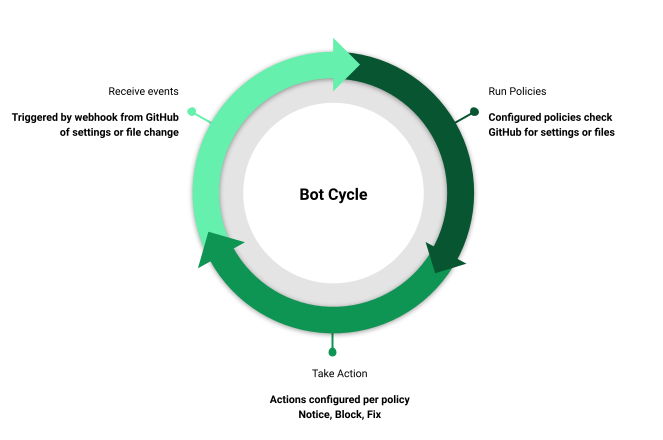
    Google today launched a GitHub app that provides automated continuous enforcement of security best practices for GitHub projects.

    Kim Lewandowski, a product manager for open source software security at Google, said the Allstar application enables IT teams to assess any project on GitHub to check for security policy adherence. In addition, Allstar sets desired enforcement actions and automatically applies those rules when triggered by a setting or file change in a repository.

    The goal is to provide the open source community with a tool that makes it possible for organizations to have more confidence in the open source software that is being employed within a software supply chain, said Lewandowski.

    Allstar is intended as a companion application for Security Scorecards, a tool that Google made available last year to assess whether, for example, an open source project employs branch protection to ensure that malware isn’t inadvertently committed to a project. Allstar continuously checks expected GitHub API states and repository file contents against security policies and the enforcement actions defined by an IT organization. After it detects a policy violation, the tool can be configured to simply send an alert or to automatically enforce a specific policy to remediate the issue, said Lewandoski. Specifically, she said the options available are to log the security policy violation without taking any additional action, open a GitHub issue or modify the GitHub setting to match the original Allstar configuration.

    At present, Allstar provides a limited number of security policy checks, but more will be made available over the coming months, said Lewandowski. Current security policy checks include branch protection, vulnerability disclosures, access controls and detection of binary artifacts that can’t be scanned. Additional checks that will be added include automatic dependency updates and frozen dependencies.

    Lewandowksi said Allstar and Security Scorecards are part of an ongoing Google effort to give back to the open source community that is being targeted by cybercriminals attempting to compromise software supply chains. Just about every application is now dependent on open source components, to some degree. The maintainers of those projects, however, don’t always have the tools or expertise required to check for malware that has been injected into a codebase, she noted.

    In general, Lewandoski noted that achieving DevSecOps best practices will require a lot more automation of application security. It’s not possible for each developer to become a world-class cybersecurity expert. The challenge is finding a way to introduce that automation into the application development process as early as possible, which, she noted, in many cases starts with open source components that are incorporated in applications.

    It may take a while for every maintainer of an open source project to revamp the processes through which code is added to their project. However, the easier it becomes to continuously review that software, the more confidence organizations that use it will have in its security. In fact, the maintainers of those projects should expect the downstream users of that software to be asking some pointed questions about how security is being managed in the wake of a series of recent high-profile breaches of software supply chains.

  • Continuous Delivery: The Secret to 5G’s Success

    Continuous Delivery: The Secret to 5G’s Success

    New technologies are evolving the way societies function, and as a result, how businesses are carried out. In the networking industry, these emerging technologies coupled with the long-lasting impact of the past year–such as remote working–are changing the way customers and communication service providers (CSPs) interact. To that end, these shifts in behavior subsequently bring in a new demand for how communication services are delivered.

    Networking technologies have made some remarkable leaps in recent years. For example, system-on-a-chip advancements have elevated IoT devices to the next level. Moreover, edge computing, high-performance computing and a revolution in software, analytics and AI gave real-time local data processing a dramatic boost in its value proposition. But perhaps it is 5G that has brought forth some of the most astounding enhancements. 5G connectivity enables secure and reliable commercial and industrial operations–all of which can occur with zero latency and in real-time–that are driving the acceleration of OT/IT convergence and more.

    With every new generation of wireless networking, CSPs are bound to ask the burning question: What’s the “killer app” that will help bring in more customers and revenue? In the past, each generation found its answer in the evolution of mobile device usage. However, 5G has changed the game as we know it. Through 5G, CSPs can now tap into various new opportunities in previously inaccessible enterprise markets. Because of this, there is no single killer app that fits all verticals. For example, a 5G killer app in the transportation industry will look very different to one in the health care sector.

    So then, what is the killer app for 5G? To start, we should take a step back and recognize that for 5G, the killer app will be the network itself. This is because the network enables the rapid creation and launch of tailor-made 5G services to meet unique customer needs and use cases across different vertical markets. In the 5G era, the ability to bring new services with faster time-to-market while optimizing costs is the key to generating real business value.

    Achieving the flexibility and agility needed for 5G services will first require an established foundation. A critical step to build that foundation is establishing a cloud-native network core and adopting automation-driven continuous integration and continuous deployment (CI/CD) functions. That way, CSPs can begin to add real value to their networks.

    Why a 5G Cloud-Native Core is Mission-Critical

    Cloud automation isn’t just a buzzword, and it’s becoming increasingly important. With 4G, a cloud-native core may have been a preferred option, but for 5G services–which enables a range of applications and will continually need updated capabilities–a cloud-native design is mission-critical. Through a 5G cloud-native core, the possibilities are endless, as it enables services-based architecture, improved session management, end-to-end network slicing and access-agnostic connection for seamless mobility and more.

    5G networks with cloud-native cores will also continue to offer new communication features and services, of which automation will be a key enabler. This is where DevOps comes in. DevOps can improve automation to a greater extent, and help CSPs automate delivery, installation and testing. Thus, CSPs ought to embrace continuous delivery as the basis of DevOps, as DevOps automation becomes more cloud-centric. Today, many public and private cloud computing providers support cloud DevOps systems on their platforms, such as continuous integration and continuous development tools. When you consider connectivity services’ high complexity–with multi-vendor and multi-domain software supply chains and multiple production environments–an added level of process focused on delivery operations is crucial.

    Embracing Continuous Delivery to Harness 5G’s Power

    Continuous delivery may be a familiar concept to the cloud world, but it’s fairly new to the telecom industry. For CSPs, embracing continuous delivery in telecom networks requires the capability to meet the needs of distinctive environments and their associated challenges. One way CSPs can do that is by implementing a delivery operation (DelOps) solution: A reimagined DevOps. What makes DelOps ideal for telecom environments is its ability to leverage a many-to-many delivery and operations process–complete with design, deploy, test and operate phases.

    In the telecom industry, each network and operational environment is unique; therefore, solutions aren’t “one size fits all.” For CSPs, implementing the best DelOps CI/CD solution requires them to form the right partnerships with operators. That way, they can establish a CI/CD architecture that is flexible, complements their operational environment and can be integrated with any cloud architecture.

    With DelOps CI/CD solutions, seamless automation in delivery and operations can become a reality. It is the “secret sauce” to 5G success as it:

    • Leverages agile processes to reduce rollout cycle times and product/services time-to-market
    • Ensures the CSP’s network is up-to-date and launches new services efficiently and swiftly
    • Requires less effort to conduct acceptance testing, tracking and management of release features
    • Resolves issues rapidly to ensure seamless customer experience and satisfaction

    As the 5G era continues to grow and evolve, the adoption of CI/CD services by CSPs should be done sooner rather than later to achieve a smooth operational journey. In doing so, CSPs can evolve their networks to the best possible level of performance—ultimately boosting their competitiveness to generate new revenues and achieve long-term success.

  • Should You Hire a Clojure Engineer?

    Should You Hire a Clojure Engineer?

    Quite often, when developing applications, it becomes necessary to execute long-running code at the same time as performing other tasks. More recently, to run a program on the Java virtual machine (JVM) it was necessary to write the program in Java. Those days are long gone due to the wide variety of programming languages ​​for the JVM. Clojure is a general-purpose dynamic language developed by Rich Hickey for the JVM. One of the main goals of an engineer who speaks this language is to simplify the process of writing a program with multiple threads that are accessing data simultaneously. What, exactly, is the role of a Clojure software engineer and how can they improve the functionality of its products?

    What Problems can a Clojure Software Engineer Fix?

    A good programming language should help us write transparent and straightforward programs. The software systems that humans create are inherently changeable. In development, it is impossible to foresee all situations in advance, especially when the system’s complexity only grows over time. Even the slightest code change can potentially lead to significant changes in overall system behavior. As a developer, it’s necessary to study carefully, analyze the code and predict each shift’s side effects. Over time, and with greater complexity, it becomes close to impossible to thoroughly analyze all the possible consequences of our changes.

    The Clojure language was created to overcome these challenges. Clojure has a more convenient and modern syntax that orients the user to the functional paradigm as much as possible. Despite the dynamic typing of the language, Clojure programs are compiled into JVM bytecode and integrate seamlessly with existing Java programs. Clojure has now been implemented for several platforms, the most notable of which are the JVM, .Net, and JavaScript. Because it runs on the JVM, Clojure code is portable, stable, reliable and secure. Each operation in Clojure is implemented in three forms: function, macro or special form.

    Typically, complexities in computer programs cause side effects. This language helps to localize those and makes writing functions cleaner. This makes testing easier for the developer, too, since they don’t have to try different queues and find the correct state of the inputs.

    What to Look for When Hiring

    Large companies in particular value senior full-stack Clojure software engineers who can work across a number of tasks from analytics to coding, testing and DevOps.

    Among the problems that a Clojure software engineer can solve for an enterprise are:

    • Development of front end and back end systems
    • Creation of algorithms for load distribution by competencies/user workload
    • Design of modules for forecasting the load users create on systems
    • Machine learning in Clojure.

    Here is the example of a Clojure engineer’s résumé:

    Clojure is also an expression of a developer’s ideas about how simple a programmer’s tool should be. Clojure typically uses only four data structures: list, vector, display and set. The main API is built around these four structures. The main abstraction in Clojure is a pure function that has no side effects and is therefore much more reusable.

    To date, many libraries have been written for Clojure, including those for developing simple and modular web applications. A Clojure program is an open architecture constructor, which means developers can choose for themselves which libraries to use regardless of which others they may have chosen previously.

    Clojure Engineer Salary

    Salaries for Clojure software engineers in the U.S. average $129,887, while a Clojure software engineer’s salary in the UK is $69,910. In Canada, the typical Clojure engineer’s salary is $61,780 and in Germany, $69,089. Clojure software engineers in Ukraine earn an average salary of $38,000.

    Value to the Enterprise

    Enterprise software performance requirements dictate the need to use parallel computing to interact with each other and work at the same time. Existing languages ​​are poorly suited for parallelizing tasks. They contain many object and state dependencies, which translate to systems with unpredictable behavior in parallel interactions. Solutions based on locks and traffic lights do not greatly simplify the implementation of these tasks; the fundamental problem of the system’s state’s dependency on the sequences of object interaction remains.

    By using Clojure in web development, a programmer can develop using other minor, task-focused languages. ClojureScript, for example, compiles quickly to JavaScript and runs in the browser. All of this provides an entirely new approach to building client applications.

    Since Clojure seamlessly integrates with any Java code and can be deployed on standard Java application servers, it is well-suited to web application development, too. The flexibility of the language and its incredible expressiveness allows developers to create fully functional web applications very quickly.

    All a developer needs to work with Clojure is the JDK and the Clojure library which are contained in a single JAR file. There are two standard ways to develop and run Clojure programs: The most common way is to use a simple interactive REPL, a read-compute-print loop.

    Since Clojure is a general-purpose language, it is not difficult for a programmer to find a use for it. Since it is based on the JVM, there is already a massive selection of libraries available, which significantly lowers the entry threshold for developers skilled in other languages and removes the need for developers to write code from scratch.

    Clojure can be used wherever modern, efficient, stable data structures are needed. Of course, there is no one-size-fits-all tool that can handle all types of development tasks. However, the fact that a Clojure developer can use the language for client-server communication is yet another advantage.

  • A New DevOps Test Environment Platform is Needed

    A New DevOps Test Environment Platform is Needed

    Test environment management is bottlenecking DevOps transformations and is driving the need for a new test environment management platform solution. On-demand test environments in which developers and testers do not have to wait for a shared environment are sorely needed.

    The evidence is clear. In my book Engineering DevOps I indicated that finding and setting up test environments is a primary source of bottlenecks in DevOps value streams.

    In my February 2021 webinar with Plutora, I presented Best Practices for Developing Test Management Environments. I indicated that orchestrating and managing test environments is often a primary source of delays and waste within value streams.

    The State of Testing Report 2020 by PractiTest indicates that DevOps practices increased 57%; from 26% in 2017 to 41% in 2020. The report revealed that 46% of testing has shifted to using CI/CD processes, 55% are actively involved in shifting testing left and 36% are testing in production. This is clear evidence that DevOps testing is on the rise.

    Wolfgang Platz’s December 2019 article Why Software Testing Remains a Bottleneck indicates that testing is responsible for more delays than any other part of the development process – accounting for 52% of the bottlenecks in the development process. And  53% of respondents to the World Quality Report 2020-21 indicated that test environments are not available when needed, 67% lack the capability to book and manage test environments and 71% lack visibility of available test environments.

    An article by Velocity echoes the problems with pre-production environments. “With the rise of microservices and cloud-native applications, environments are becoming more complex. Often you need to wait or compete to get access to develop on a specific microservice, or can spend time waiting to deploy to a shared staging environment only to realize something already changed, and you’re back to square one.”

    The Continuous Testing Report – 2020 by Capgemini defines test environment management (TEM) as managing infrastructures, test data and applications to support testing on demand. These environments are one of the greatest impediments to continuous testing. In this report, 36% of respondents said they are spending more than half their time building and managing test environments; 44% of respondents indicate they spend weeks of their time searching, managing and generating test data.

    Test environments should be regarded as functions to be spun up or destroyed at will, with virtualization, infrastructure-as-code (IaC)  practices, service virtualization, containerization and improved test data management.

    Given all the above evidence, it is clear that a new approach to DevOps test environment management is needed.

    The following are examples of benefits that DevOps test environment management platforms need to offer:

    • Compatible with current tools:
      • Automatically map and configure application infrastructure to develop and test multiple services in an environment that runs just like it would in production. This needs to be fully agnostic to cloud and tech stacks, such as Kubernetes and other environments.
      • The platform needs to work on applications in parallel without disrupting others, with full access to data and third-party dependencies.
    • Automatic configuration and maintenance:
      • The platform needs to automatically configure and update any changes within the production infrastructure’s mapping in real-time so ephemeral environments will always be synced with what is in production. Instead of having to spend time making sure any changes are configured, the platform will ensure the right environment that replicates production, without having to wait.
    • Data and third-party dependencies:
      • The platform needs to load the relevant data and third-party resources that are vital parts of the environment to test, work and debug against, so test environments will, as closely as possible, mimic working in production.
    • Team collaboration:
      • The platform needs the capability to share ephemeral test environments with other stakeholders so they get visibility and can collaborate for faster feedback cycles. This is also important for collaborating for debugging.

    What This Means

    DevOps testing is on the rise, and test environments are a major bottleneck for DevOps testing. A new DevOps test environment management platform is needed to reduce the bottlenecks. On-demand test environments in which developers and testers do not have to wait for a shared test environment are needed. Such a solution would improve agility and reduce wasteful orchestration bottlenecks in test, improve quality and risk management through comprehensive and automated testing and enable continuous improvement by providing more intelligent insights and feedback.

  • Establishing Trust in Multi-Cloud Environments

    Establishing Trust in Multi-Cloud Environments

    Modern applications are transforming enterprises into digital innovation factories. However, the distributed nature and complexity of modern apps have made it extremely difficult for organizations to maintain trust and compliance across multi-platform, multi-cloud environments. 

    Although Kubernetes is the standard for application platforms today, each cloud service provider (CSP) has a different offering for infrastructure-as-a-service (IaaS) or their own platform-as-a-service (PaaS) with varying capabilities and APIs. Not only are these APIs incompatible (with the exception of Kubernetes if no vendor extensions are used), each infrastructure and platform are treated and managed in silos. These silos act as an isolated and non-overlapping administrative boundary,  preventing cross-boundary visibility and trust between microservices.  This makes it much harder for enterprises to know and consistently remediate their security posture across clouds and platforms, opening them up to attacks.

    To solve this problem, organizations are extending enterprise security controls to cloud environments. The problem is that application teams and security teams have traditionally had competing goals—agility versus risk and control—and security operations have not evolved at the same pace as application operations. This creates friction between the teams and forces application operation teams to make a choice: 

    1) Slow down application delivery and operations to reduce risk and miss out on the transformative benefits of multi-cloud or 

    2) Continue to develop and ship applications as quickly as possible without considering security and compliance. 

    Neither is a good option. To unlock the power of modern applications running in multi-platform and multi-cloud environments, organizations need to find a way to integrate security seamlessly throughout the software delivery life cycle at the speed users expect.

    Integrating Zero-Trust into the Application Delivery Cycle

    The key to securing applications in a multi-cloud world is zero-trust. Building zero-trust principles directly into modern applications allows organizations to identify threats early, reduce attack surfaces and ship security functions alongside the rest of the application stack—regardless of the underlying application platforms and cloud stacks underneath.

    In this use case, one of the key components of zero-trust is application segmentation; in other words, how to make access decisions between different applications or components of applications. Zero-trust must provide identity-aware, adaptative and on-demand access to any app from any user or app in a way that improves the flexibility and the agility of application access through a scalable model.

    Application segmentation must be provided to application operation teams so that they can embed it into their application quality processes as another gate. Application operation teams can do this by implementing application segmentation policies that identify workloads as they are created through rich, dynamic attributes. The more intrinsic/static attributes (IPs, digital certificates, namespaces, labels, etc.) and extrinsic/dynamic attributes (user behavior, workload behavior, network behavior, etc.) that are identified, the more fine-grained your access decisions can be. 

    Incredibly, application segmentation today continues to be done manually. But with millions of transactions happening across multiple cloud environments, there’s no way a person—or even a team of people—can manually assign policies to each workload. Organizations need a way to deliver zero-trust application segmentation in a scalable, transparent and automatic fashion. 

    A Connectivity and Security Platform 

    The way to do this is through the use of a modern application connectivity and security platform. Through a service mesh, an attribute-based access control (ABAC) model consolidates multiple third-party tools that provide visibility and security across application platforms and multi-cloud environments. This single view operational model gives application teams the ability to seamlessly and simply orchestrate security services across multi-cloud environments, automatically and at scale. 

    Unfortunately, granular policy management through microsegmentation increases complexity, which is the enemy of security. Suddenly, an organization may find itself with thousands of policies that dictate how different workloads access and interact with entities inside the network. These policies need to be continually updated and maintained, creating massive headaches for both application and security teams.

    When a workload is deployed, the associated policies are created along with it and move through the environment with the workload until the workload reaches the end of its life and is decommissioned. As applications run over time, they are being characterized by their unique behavior. This runtime security characterization allows policies to be automatically selected and applied directly to the workload.

     However, for a service mesh to work and enable secure applications in a multi-cloud environment, it needs to follow zero-trust principles without adding complexity and without slowing down the agile delivery cycle. Here’s how you do that:

    1. Baselining trust: A modern app connectivity and security platform should have native observability and self-discovery capabilities, such as being able to automatically discover APIs, catalog APIs and generate API documentation based on the OpenAPI standard. The modern app connectivity and security platform should be able to continuously baseline application behavior and detect anomalous application behaviors. This needs to alert on unknown and zero-day attacks, especially exfiltration of sensitive data.
    2. Establishing trust: It is critical to define the interconnectivity needs of different pieces of the application right off the bat. This explicit declaration of intent is typically done manually by application teams during the deployment of the application as part of a CI/CD pipeline. Another option is to automatically discover the connectivity intent during the testing phase of the application and allowing the service mesh to identify and record the resulting communication flows between microservices’ APIs. These are the basis of the application’s segmentation policies.
    3. Enforcing trust: There also must be a mechanism to automatically apply the appropriate application segmentation policies to enable the necessary communication for the application to run as intended. In the microservices model, different pieces of the application are spun up and down dynamically to enable the application to run as intended. It’s critical that the application segmentation policies that govern accessibility also adapt to these changes. This is done through the service mesh control plane that interacts with the application platform to gather the inventory of workloads.
    4. Dynamically adjust trust: As the applications run over time and clients interact with them, they are being characterized by a behavior. In this case, a security behavior. Observing this behavior can be accomplished through various runtime analysis tools that organizations already have in place that detect process, container, network and user behavior to provide security context. However, to maintain trust, there needs to be a way to integrate these tools through the service mesh to create a single source of truth. 
    5. Extending the trust model to the edge: Applications also interact with software-as-a-service (SaaS) platforms such as Salesforce or SAP, and other apps outside the data center. Ideally, the service mesh/zero-trust application segmentation model can integrate with other security solutions in the cloud such as secure access service edge (SASE), secure web gateway (SWG), cloud access security broker (CASB) and other zero-trust security components. This standardizes the processes for establishing trust across the data center, multiple cloud service providers, SaaS platforms and web apps—ensuring consistent security and compliance posture across the entire organization.

    Modern applications are transforming how business works by enabling agility and real-time decision making, but they will never reach their full potential unless application teams work with security teams to protect users, data and applications in multi-cloud environments. It’s clear that organizations need an evolved security model that application teams can use to seamlessly establish trust and orchestrate application segmentation across multi-cloud, multi-platform environments. Service meshes can provide the visibility and control needed to establish and continually evaluate trust.

  • EP 16: How DevOps has Changed Testing Forever

    EP 16: How DevOps has Changed Testing Forever

    DevOps has changed the game in almost every aspect of testing: who, what, when, where and even why. What’s working, what needs to change immediately, and what challenges—and opportunities—lie ahead?

    In this DevOps Unbound episode, hosts Alan Shimel and Mitch Ashley are joined by Abel Wang from Microsoft, Tracy Miranda from CDF, Caroline Wong from Cobalt, Kurt Chase and Ben Simo from Tricentis to share a variety of perspectives on how testing fits into the ever-evolving world of DevOps. The video is below, followed by a transcript.

    DevOps Unbound is sponsored by Tricentis, the world wide leader in automated testing. DevOps Unbound airs biweekly on TechStrong TV, with all episodes available on Digital Anarchist. There is also a live monthly roundtable open to audience participation.

    Alan Shimel: Hey, everyone. Thanks for joining us on this special edition of DevOps Unbound. You’re watching this, probably, at the Tricentis Virtual Event and we are happy to have you join us, happy that you’re attending the event, and we’ve got what we think is gonna be a great discussion on testing and all of its various facets and what does the future – or near future – hold. We’ve got a great lineup of speakers that I’d like to introduce you to who are on our panel today. Let me first start with – she’s on the top of my screen – is Caroline Wong. Caroline, why don’t you say, “Hello” and introduce yourself?

    Caroline Wong: Hello. My name is Caroline Wong. I’m the Chief Strategy Officer at Cobalt. So, at Cobalt, what we do is pen testing as a service. We build a security software platform – like a lot of DevOps companies.

    We have data-driven product-based teams. We have – we really value automation and failing fast. I’ve spent 15 years in the information security industry. I wrote a book called Security Metrics. I host a podcast called Humans of InfoSec, and I teach the OWASP Top 10 Learning Path on LinkedIn Learning, and super excited to be here with this group today. Thanks for having me.

    Shimel: Thank you, Caroline. Next up, we have Kurt Chase.

    Kurt Chase: Hey, everyone. I’m Kurt Chase. I’m currently Head of Release Management and Engineering Services at Tricentis. Engineering Services is a group that supports the engineering function so, we do our own type of testing – testing all the processes and everything we use – to deliver our software at Tricentis. So, prior to Tricentis, I spent some years at Splunk and at AutoDesk. It’s great to be here with all of you today.

    Shimel: Fantastic.

    Chase: Be here today with all of you.

    Shimel: We got what you meant, Kurt. It’s okay. Next up, we have Ben Simo. Ben, why don’t you introduce yourself?

    Ben Simo: Hi. I’m Ben Simo. I’m a software tester of 30 years and past president of the Association for Software Testing who has recently stepped into a product management and product research role at Tricentis trying to discover and develop our testing platform of the future and bring new things to Tricentis customers and hopefully introduce new people to Tricentis with new products that enable new ways of testing.

    Shimel: Okay. Happy to have you here. Next up, Tracy Miranda. Tracy – well, I’m gonna let you introduce yourself. Go ahead.

    Tracy Miranda: Hi, everybody. I’m Tracy Miranda. I’m the executive director at the Continuous Delivery Foundation. It’s an open source organization that’s part of the Linux Foundation, and also home to projects to like Jenkins and Spinnaker, and our members include companies like Netflix and Google. And I have over 20 years of experience in open source so, I love open source and I’ve worked in it as a developer – also in QA and all different facets. So, yeah. Big fan.

    Shimel: Thank you, Tracy. Last, but not least, is my co-host on DevOps Unbound – my partner in crime here, Mitchell Ashley. Mitchell, why don’t you introduce yourself?

    Mitch Ashley: Thanks, Alan. Yes. I’m CEO of Accelerated Strategies Group, which is an analyst firm that focuses on, in addition to cyber security, digitial transformation, DevOps, and cloud-native kinds of applications, which really matches my background very well. I’ve been both a product creator CEO/CTO as well as running IT, CIO, CSO – that kind of thing. So, currently, I’m also CTO with MediaOps – I guess CSO at MediaOps, too, so, I’m trying to collect as many three or four-letter titles as I can. So far so good.

    Shimel: Alrighty. So, first of all, thank you all for coming on today. Secondly, testing – what a wild, mixed-up world we have in testing, right? Just from looking at the folks on our panel today, we have security testing – pen testing, in particular. We have the world of open source and what a factor that is in testing.

    We have product testing, right? We have sort of new product testing – taking testing to new heights. And you know, that variety is sort of a double-edged sword, right? Because it’s like jack of all trades, master of none type of thing. There’s so many aspects of testing, right?

    Even in our audience here at this virtual event, we have testers who come from, you know, what’s called old line QA testing, right, to DevOps enabled testing to visual testing – testers who, if it’s not an open source testing platform, they won’t use it, to proprietary systems. Through it all, though, a lot of times, all of this testing becomes sort of a red-headed stepchild or a whipping boy, if you will, right, to the whole application development system operations teams. It’s like, at the same time, their best friend and their worst enemy, right? They want everything tested, but they don’t want to give you the time, the budget, or the resources to do it, and then, when something doesn’t work, they said, “Well, we should have tested more, right?” So, how – first of all, do we agree that testing has been sort of the whipping boy of a lot of what we’ve seen go down in app dev and operations? Anybody want to jump on that?

    Chase: Well, I think it’s certainly gotten a bad name. I think some of that comes from prior to the digital transformation. A lot of the engineering was waterfall, and testing was always that last stop before the software went out live, you know? Nowadays, I think everyone’s come to realize the speed and scale at which we develop things, you have to do the testing up front at the very beginning. You can’t wait till the end, you know?

    You’re gonna be too slow. So, I think, from that perspective, absolutely. I think that’s why testing has really, I think, gotten a bad name, because they’re kind of the blockers to getting anything out into the public domain, whereas nowadays, you have to enable that up front because you want to get it into the public domain yesterday.

    Shimel: Yeah. And so, in many ways, to me, that sounds like, well, DevOps has been the best thing that ever happened to testing, right? In many ways, DevOps has been the best thing that’s happened to security testing, right? We’ve certainly seen that shift left, if you will. But has that shift left helped – has that rising tide lifted all boats?

    Miranda: I still see –

    Shimel: Oh, okay, Tracy. Go ahead.

    Miranda: I’m gonna jump in and say one thing that strikes me as funny. Like, we have, in our industry, everybody has embraced the DevOps terms, and then, you start to see all these spinoffs to put emphasis on things like, for security, we have DevSecOps, and you’ve got every variant of something with ops. But when it comes to testing, you know, there’s no TestOps. There’s no new buzzwords and it kind of speaks to how much it’s being neglected. Like, we had a conference on continuous delivery, and we asked for talks of everything in the life cycle, and we got lots and lots of submissions except for testing.

    So, again, I think it still is really under-appreciated and just not given the due credit for what it stands for.

    Shimel: Very –

    Simo: Yeah. And I think some of this comes from, as Alan mentioned, that testing is a very broad and diverse subject, and I’ve often watched people argue about testing that each interpret it to their piece of what they do with testing. And things like CI and some of the DevOps practices have helped us improve with the checking that our software can work – you know, demonstrating that it can work – and there’s a lot of people – if you primarily wear a developer hat, you’d look at that’s what testing is. And we’ve automated that.

    There’s been huge improvements in tooling and technology to do that, but sometimes, along with that is we throw out that we need someone involved that’s looking at things from a critical perspective that’s concerned about the safety and efficacy of what we’re delivering that is the, I guess, the one questioning and searching for information that they raise issues that we need to deal with that are reasons to not push things out to production now – so that we can make informed decisions. So, often, I think just that critical side gets thrown out as we improve the other side of testing, which is being able to demonstrate that things can work.

    Shimel: Anyone else?

    Ashley: You know, Alan, one of the ways you can tell who drew a diagram is to look at what’s in the center. And so, if we think about CICD, we kind of surround testing, but we don’t talk about testing. So, in some ways, it’s elevated, and some ways, it still sort of abstracts it out of DevOps. But my experience has been not really, because most teams know that testing has to get automated as part of that process, ’cause you can’t have this automated checking and automated deployment, then let’s kind of let a bunch of manual things happen. And not that testing hasn’t been automated – it has been – but I think it has elevated, at least in part, I think a good deal.

    My experience has been. I haven’t worked in every environment, maybe, where test still isn’t thought of very highly. By the way, the thing that the – it isn’t the last thing in the chain. Documentation is the last thing.

    Chase: That’s true. That’s true.

    Ashley: Let’s give documentation –

    Chase: And release notes. It’s true. I have tech doc’s team, too. You’re right. [Laughs]

    Shimel: And that hasn’t really changed much either, though testing has. No. No. But you know what? Caroline, I’d like you to focus in specifically.

    I mean, I think about – you know, Mitchell and I co-founded a security company, and we came out with a product in 2003 of just a vulnerability assessment and manager – “VAM”, we called it – and at that point, look, we used to beg people to scan their infrastructure at least once a year, right, if not quarterly. We were really pushing for quarterly. And you know, the idea of scanning and testing applications before you deployed them – unheard of. It was unheard of, right? We didn’t have the security tools or people.

    We did that after the fact. Now, that’s not normal anymore, right? Today, at least 85 percent of applications are tested prior to deployment. I don’t know who those other 15 percent are, but that’s a whole nother story. But talk to us.

    You’ve lived through this, Caroline. What do you think?

    Wong: Sure. So, you know, I think there needs to be an acknowledgment. There’s sort of these like, first order priorities and these second order priorities. When I think about security – and I think some of these concepts apply to testing more broadly – there’s a saying that, “You don’t take a $200.00 fence to protect a $5.00 asset.” I think security is about you have something of value and so, you want to test it – rather, so, you want to secure it.

    Testing, I think, is like you made something new and so, you want to test it. You’re not gonna test something unless you have something new. You’re not gonna secure something unless you have something of value. So, it’s okay that security and testing are not sort of the number one thing, you know? Inherently, by their definition, it’s sort of a second order attribute, if you will.

    Now, I think, you know, each of us has been through a version of annual organizational budgeting. You know, each organization says, “Okay. Here are the goals for the years. We’ve got limited resources and budget to accomplish those goals. How are we gonna allocated those resources?”

    And there are some things that, for a lot of organizations, are very clear. You know, even if I take a step way back and I say, “Okay. Most organizations might think about budget allocations in three buckets. Number one – general and accounting; number two – sales and marketing; number three – research and development.” You know, nowhere in those words is either security or testing.

    And that’s okay, you know? I think, Alan, when you share your story about VAM, you know, Vulnerability Assessment and Management, I agree that over the last, I would say, decade-two decades – so, when I started my security career 15 years ago, we were almost trying to convince folks that breaches really happened – that this was really a thing to be worried about. You know, today, everyone knows because it’s on the media headlines every day. This is real. And so, that has been a shift in the perception, I think, in our industry.

    There’s also been a big compliance driver. So, the – in the area that I’m very familiar with, security pen testing, a lot of that pen testing is actually driven by external compliance requirements – things that say, “Because of compliance framework A, B, C, you must actually conduct manual pentest on your application, for example, once a year.” You know, doing it more often than that is often because of perhaps what a lot of this group might think of as a really good thing – trying to actually secure your software, trying to actually test your software to ensure it does what you think and what you intend for it to do, but that’s not necessarily the first thing that comes to an executive’s mind when they’re thinking about budgeting, and there’s a variety of reasons for that, right? There’s an external perception thing. I think there’s also a lot of learning, certainly, that the security industry can do to be more approachable and to really understand better what is the software development methodology that we’re engaging with.

    What is the specific methodology and behaviors of these individuals? And how can we actually collaborate with them most effectively?

    Shimel: Fair enough. I mean, look, I don’t want to be the pessimist in the group or the bluebird of happiness here, but we have had success over the last 5-10 years, Caroline. You’re right. Especially in security, but not just security. We’ve had success in testing across the board.

    Tracy, to your point, the fact that we don’t have DevTestOps, I think, is, you know, testament to the fact that we’ve recognized that testing is so critical to the CICD process that it’s part of it. I mean, you can’t have DevOps, you can’t have CICD without a level of continuous automated testing in there – in my mind, anyway. I mean, prove me wrong. But, you know, I think that has been probably one of the biggest successes that the DevOps movement has brought – has been responsible for.

    Miranda: Yeah. And I really like Caroline’s analogy with security because, you know, that’s something else we think of as fundamental to DevOps, but it’s sort of elevated itself and, in a relatively short space of time, went from being ignored to being, you know, headline news. And I think there’s a lot of lessons there. And I – like, I will say, I do think testing is going through that journey and we’re probably on the cusp of it kind of really exploding and watching a few players in the industry and companies starting to do really interesting work in testing. I think that’s gonna turn around very shortly.

    So, yeah, there’s an exciting space that I think its moment is coming – just like securities has.

    Chase: Yeah. I think it’s all about the testing now, quite honestly. I mean, when you look at the future with low-code/no-code, it all becomes question-question mark ops, you know? Any function in a company could actually put something together and run it, and they’re gonna have to test it, you know, and it becomes less about all the engineering and more about the test patterns and things like that that are needed as you get to these future states. So – and speed and scale is gonna continue, I think.

    That’s driven everything with the digital transformation. It’s speed and scale. Everything needs to come faster, and we want more of it, you know? And so, I think that really pushes the envelope, and that’s what DevOps has responded to and, I think, addressed very, very well, but it’s not over. We’re gonna continue to scale up and go even faster.

    So, we have to be prepared for that, and I think it becomes more about testing in the future, and less about, you know, we’re gonna have these pre-built components – APIs you can piece together however you want – then, testing becomes, I think, almost first order, to Caroline’s point. And security, especially. I think security, we’re seeing that change now. If you’re a SAS company especially, security has to be top in line, ’cause you just can’t put something out there and not have it tested from a security perspective. And, furthermore, with compliance, it’s not just ISO and GovCloud and those programs, but large corporations now are saying, “Hey, if you want software in my ecosystem, these are my rules and I want to see your pentest reports and I want to see this.”

    So, I think more and more people are realizing that if the software’s not tested, it’s not worth it. And so…

    Simo: And, in my experience, part of adopting a DevOps culture and not just tool set is putting testing at the forefront. Some of the most productive teams that I’ve worked with that deliver some of the highest quality software I’ve seen – testing was center to absolutely everything that everyone on those development teams did.

    Ashley: Hm-hmm.

    Chase: Yep.

    Shimel: Yeah.

    Miranda: Yeah. We think – go ahead.

    Ashley: I’m just gonna jump in and say – there’s another factor that actually works to our benefit and that is not only to speed through automation and DevOps process, but contemporary software architectures, containerized micro-services, service mesh – we’re releasing smaller bits of code in encapsulated forms, which means, you know, we’re not testing monolithic applications all the time anymore so, we’re not having to run two weeks’ worth of tests just to get one pass through.

    Chase: Yeah.

    Simo: Right. _____ container solved the “It works on my machine” problem because we can ship the developer’s machine.

    Chase: Yep.

    Shimel: Yeah. That was always a big problem, right? Tracy, you were gonna say something though.

    Miranda: Yeah. No. I think the direction we see it heading is we’ll start breaking the testing monolith to talk about what is unit test, what is system test, and appreciate that is a specialization in itself. And the other things I’m starting to see from some of the end user teams we talk to is this real focus on culture – you know, a continuous quality culture – and seeing that hand in hand as part of the testing movement and again, _____ back to security – you know, the security first culture went hand in hand with that whole emphasis on security so, similarly, the continuous quality culture is starting to be something that – like, the really high performing teas we see pay a lot of attention to.

    Shimel: Absolutely. You know, Kurt, you said something there about low-code/no-code and how that could be a game changer. You know, some people refer to that as the rise of the citizen developer, and I’m wondering if maybe what we need is the rise of the citizen tester, right? Is testing too hard?

    Chase: Yes. I waste gonna say – the one thing we haven’t touched upon – I think Caroline did – is testing is hard. Security testing is super hard. And when you look at today’s modern environment and a lot of the ISVs – at least the ones I’ve seen and been associated with – you have a legacy of monolithic applications that you have to support that are bringing in a ton of revenue, and, at the same time, you’re transitioning – you know, going through your own digital transformation. So, that adds complexity after complexity in testing, and I do think, in the future, testing – you know, a lot of us, like Ben said, to his point, we have to push testing up – you know, shift left, move it far left as we can.

    And that’s gonna continue. I think that has to be the norm. To Caroline’s point, it has to become first order. And I think it’s starting to right now. I really do. Especially the – all the SAS solutions that are out there – you know, shipping code daily, hourly. You need excellent testing to do that and do it with competence.

    Shimel: Yeah. I think you do. But we do have to – and it’s funny that we’re talking about making testing easier because – not security testing, right? Security testing, pentesters – they were always sort of the hired guns of the security space, right? There were SAS or – there weren’t companies like Cobalt, right?

    The pentesters that I knew growing up – growing up – you know, that I knew coming up in the security space were gun slingers. These were, you know, white hat/gray hat folks who would come in and they’d do a little social engineering and pen testing using some open source tools, and you know, they give you a report. But you know, these were folks who traveled around the world doing that kind of thing. You know, we didn’t have a company like Cobalt that did this as a service, so to speak. So, it’s very different.

    But here’s the underlying thing with like, QA kind of testing – and, you know, I don’t mean any disrespect to anyone in our audience today, but for too long, a lot of folks in testing were viewed as failed developers or people who couldn’t be really good developers did testing or maybe testing was a weigh station on the way to becoming a real developer – like a Pinocchio stop or something, right, where you’re not a real boy yet. But that’s not true. There’s also – there’s a whole cadre of professional testers. And you know, in their capable hands, you could do great things. But I guess the question is – does testing have to be so hard that we need professional testing – professional testers to do testing?

    Or can we make testing automated enough that you – I’m not saying it has to be the dunces who don’t become developers. That’s ridiculous. But can we broaden the base of people who do testing? And that includes security testing? I’ll throw it out. Ben, you were a big-time guy in the testing industry. Tell us – what do you think?

    Simo: So, I think we can expand who’s involved in testing and that more people than those currently doing testing can learn to do testing. I don’t know _____ developers learning to become better testers and test their stuff. But I will say that ultimately, the part of the work that is the testing cannot be automated. Tasks that we do in testing can be automated. So, whether – not matter what hat someone primarily wears, if it’s a developer, you know, writing tests to demonstrate their code works or someone’s using TDD and they’re building some tests and then, building some code that matches it, the testing is the critical evaluation that’s going on in their mind of solving the problem and demonstrating that it’s solved – or evaluating how something might go wrong and coming up with some approach to demonstrate that it may go wrong and check for that.

    So, those things, whether you’re doing it automated or the execution is automated or done manually, the actually testing work, I’d argue, is the cognitive work that people are doing. And there is some – that we can never automate away. There are some ways that I think AI can help us. There’s also some ways that may lead us astray. But ultimately, I think we need people to learn to be critical thinkers to understand the technology, to understand the domain of the users and the problems that are being solved, and applying that critical thinking is the testing.

    Of course, then, we want to use tools to help us with some of our tests so, when we come into DevOps and CI, executing those demonstrations of the software working is a key part of that. Now, whether we do it as part of our, you know, building to those tests or we create them afterwards, then they can, at the very minimum, act as changed detectors going forward. But there was some testing in people’s minds that was going on that created those.

    Shimel: Caroline, what about – okay.

    Wong: I agree with quite a lot that Ben is saying. You know, I can’t help but think to myself that – I actually have this sort of visual in my mind, and it’s actually at a circus of a trapeze artists, you know? I think about these people, and they’re sort of like, whirling in the air and they’re doing these like, really incredible feats, you know, and they just do whatever they do, you know? But there’s like, a safety net to catch them if something goes wrong. It also reminds me of a metaphor that is often used in security that says, “We put brakes on a car so that you can go fast.”

    You know, when Mitch said earlier, you know, “These days, we’re releasing smaller pieces of code, modules of code” and there’s a way in which, yes, each small piece of code – each module – can be tested and some of that can be automated. We should automate performance testing. We should automate unit testing. But, to Ben’s point, there’s a lot that can’t be automated. There’s a lot of testing that actually depends on things like human judgment and opinion and it actually requires a person’s decision, you know?

    So, I think there’s – I think there’s a couple of frameworks for us to consider, right? If the first order is about creating value and making something new and the second order is about testing to make sure it does what you wanted it to do and protecting the value created, there’s also this spectrum that says there’s smaller bite-size stuff that may be a good candidate for automated testing, but, I think it’s super important to recognize that these small pieces of code – these modules that Mitch was talking about – it’s also super important to test what happens when they come together. So, to the extent that security folks need to be able to test chained exploits and business logic flaws, you know, those are exactly the types of things that will never be automated – is what I think, anyway.

    Shimel: I don’t disagree. I think security in particular is just there’s some things you’re just not gonna automate. I don’t care what you say. But that’s okay. Anyone else?

    Chase: I do want to make a comment on something you said. This was a long time ago now, when I was a dev manager, that I used to sense that when my developers – you know, if you were on my team, if you wanted to really get me mad, treat your tester badly. Treat them, you know, a bit, like you said, like they’re not quite at the level you are. I would be incensed as a manager. You know, that was a long time ago.

    Fortunately, I don’t see that as much nowadays. I think that role has been elevated where I don’t feel that at all on my teams, and if I do, that is, again, to this day, I’ll get super mad about that because I think it takes all kinds to develop software today and ship software. Testing role is just as critical as an engineering role, just as critical as the ops’ role, the security role. So, yeah, that was one thing that would drive me nuts ’cause I did sense that and go through that, and this back in, you know, the late ’80s-’90s, if you will, before the year 2000 – I’m dating myself – but it definitely was palpable in some of the large ISVs, you know? And as a manager, that was something that would drive me nuts.

    Shimel: Agreed. Agreed. Tracy, open source – look, testing has been inexplicably wound up with open source for as long as I’ve been around, right? Whether it’s security – open source security testing and you know, things like Metasploit and Nessus and Nmap or you know, in QA testing kind of stuff, it’s a rich history of open source testing tools. How do – and part of your mission at CICD is – at the CICD Foundation – is to nurture that, I’m going to assume, correct?

    So, how do you guys nurture that? What are you – what do we do to maintain that rich, open source tradition here?

    Miranda: Yeah. No. Absolutely. And, as I say, we at the Continuous Delivery Foundation, we want to look across the entire software delivery life cycle, and I think it is safe to say, you know, that testing hasn’t risen to the top. We’re actively – like the board wants it to be a more focused-on topic, the technical committee wants to encourage folks to bring us more projects in open source and with testing, but we’re still having to kind of fight through all the noise around other projects.

    And one of the ways we’re approaching it is, for example, our technical oversight committee wants to set out a landscape of the types of projects in each kind of bucket and say, “Okay, look. We need to have something in security. We need to have something in testing that covers these different aspects.” Almost like a call to action to say, “Bring us your testing projects and –” like my favorite saying about testing is, “There’s two key problems in testing – not enough tests and too many tests.” And yeah, I think we’re starting to see some really good frameworks around test generation.

    I’d love to see more open source options for that. And Kohsuke Kawaguchi, the famous creator of Jenkins, move on to focus on testing so, that says a lot about the importance of this area getting more open source focused. So, yeah, I’m excited to see what could come out, but we do have to actively encourage folks to come join us and have those conversations and not to, you know, have it assumed it’s all focused on delivery of pipelines for delivering software.

    Chase: I think another thing you’re seeing today is a lot of people, when they start developing an app, when they start creating something new, that’s the question they ask up front. “How are we gonna test this? How are we gonna automate it? How are we gonna pentest it?” I think those things, at least, are starting to bubble up a lot stronger in the cycle – you know, early on. ‘Cause I know that’s something we recommend highly – is that if you’re developing something new or need to head down a digital transformation, think about the testing. How are you gonna test that up front, you know? And products are actually being developed with that mindset now.

    Simo: And with short iterations, it’s how are we going to test this tomorrow, next week? It can’t be left off for months later to be someone else’s problem. So, people, I think, are learning to deal with those questions about testing from the start of their discussions about what the requirements are.

    Chase: The other thing I love – and in Caroline’s world, has been very successful – I know it is specialized skill set, but trying to teach that throughout your troops – you know, throughout the engineering team. Show them what, you know, across _____ scripting errors. What does it look like in code? That’s super successful. That really, really helps make – ’cause security is difficult, you know, no matter how you slice it.

    Even when you’re looking at product development – if you want to invest in fixing security defects or add a cool new thing for your users, you know, a lot of times, the cool new thing is gonna win out. But that’s starting to change as well, too. I think people are starting to value security – especially in today’s modern world, you know? It has to be up front, really.

    Ashley: Yeah. It’s all about AppSec at the moment. That’s one of the hot topics as well. You know, someone mentioned AI earlier. I just want to offer a perspective about that because we always seem to focus on the shiny new object.

    I know I have. I often do. But I think what we’ll see with AI is select applications when it comes to testing. The sort of vertical place is where it’s really well suited. When we say, “Yeah, AI”, we really mean machine learning in most cases, which is machine learning algorithms, and there’s two types – there’s supervised/unsupervised.

    Supervised is, “That’s a car. That’s a car. That’s not a car, right? That’s a bug. That’s a bug.”

    And unsupervised takes massive amounts of data and intellectual patterns and learnings from that. So, I think that as we’re taking our test automation and our test tools, there may be some of that, and it might be really useful for AI. I wouldn’t get worried about people being replaced as testers. Not in my lifetime, that’s for sure. It is still a – there’s very much a craft to it, just like there is software design.

    There is a craft to testing and a skill and a mentality about it that’s unique, just like with security.

    Shimel: No doubt. Caroline – oh, go ahead, Ben. I’m sorry. No, no, Ben. Go.

    Simo: Yeah. I was gonna say – and with any other sorts of automation – even you know, not learning automation that’s come before AI and machine learning based things, is that it not only has potential, in some cases, to replace some of the mundane work we do, but to enable to the skilled people to focus their work and apply their brain power to the things that really matter. So, I think there’s great potential for AI to help direct people’s attention to the things that maybe should be of concern and help deal with that big question of testing out of infinite possibilities of PaaS and data variations. Which one’s gonna show me the problem? And I think there’s huge potential for AI to help us find that if we’re also aware it may guide our eyes away from something that we do want to see.

    Shimel: Caroline, how does that relate to security, though? I mean, is AI helping Cobalt with pen testing? Be honest.

    Caroline Wong: So, the type of software that we’re building today is actually workflow and collaboration software. So, what we’re trying to do, is we’re trying to bring security folks and developers and penetration testers all together sort of in one place where they can collaborate. The technology piece, for us, is not about automating defect discovery. It’s not – I mean, if we’re gonna us ML or AI in the future, honestly, what we’re gonna do is we’re gonna use it to say, “What are the characteristics of this organization that wants us to do a test on this particular type of asset? What are the attributes of that asset and how might we match that to our talent pool – something that we do totally manually today?”

    I think that’s the opportunity. I don’t think that we’re gonna get to a point where we’re using the AI and the ML for automating the defect discovery itself. Frankly, I think that even if I take a step away from pen testing and I look at the security scans that are in existence today, I think, you know, whether or not they’re referred to as using AI or ML techniques, they’re just simply imperfect, you know? And there’s a super important place for them, but there’s a lot of false positives. There’s a lot of interpretation of data.

    And I think that’s always gonna be the case. I think that no matter what, when it comes to humans and machines, the machines can add a lot of value, but I don’t know that when it comes to software development testing and security in particular that there’s every gonna be a complete substitution. I don’t think that – I don’t think that makes sense.

    Shimel: Absolutely. So, guys, we’re coming up on the end of our time. I need to wrap up. Tracy, let me say this for you, if you don’t mind – and if I’m wrong, correct me. For you testers out there, the CICD Foundation – or CD Foundation, actually; I keep – we always say “CI” like it’s attached at the hip – but the CD Foundation is looking to hear from the testing community.

    Probably some companies – including Tricentis – may want to look into becoming involved with CD Foundation because if you don’t have a seat at the table, you don’t have a right to complain about not being heard. And so, you know, when we look at foundations like Linux Foundation and the CD Foundation, CNCF, we need the testing community – vendors, professionals, folks in it, you know – to be involved and get involved. Be heard and be part of it. So, I’m gonna extend that out there to everyone. But, short of that, though, Caroline, Tracy, Kurt, Ben, and, of course, Mitch, thank you so much for joining us on this special edition of DevOps Unbound.

    We hope everyone enjoys the rest of their Tricentis Virtual Summit. This is Alan Shimel for MediaOps, DevOps.com, Security Boulevard, Container Journal, Tech Strong TV. Have a great day, everyone, and thanks for joining us.

    [Musical outro]

    [End of Audio]

  • 4 Steps to More Agile Operations

    4 Steps to More Agile Operations

    After over a year of business disruptions, modern enterprises have realized that speed and agility are the only way forward. In fact, according to Gartner’s Top Strategic Technology Trends for 2021 eBook, “Organizations that don’t focus on efficiency, efficacy, and business agility will be left behind.”

    In order to stay future-ready, organizations across all industries are moving to adopt an operating model that is agile and competitive.

    Roadblocks on the Path to Agility

    Driving operational agility is easier said than done. Enterprises face a variety of challenges when it comes to streamlining their end-to-end processes, including a lack of visibility into business gaps, monolithic legacy systems, siloed departments and evolving regulatory requirements.

    Enterprises have no choice but to overcome these hurdles and streamline their operations or else they will fall behind their competition.

    Now more than ever, business and IT leaders must recognize the importance of investing in business agility when it comes to their bottom line. Especially since, as the Gartner report said, “agile software development practices are fueling software innovations globally. Agile techniques create more value for the business, and faster, than do traditional methods.”

    The real question is: how can enterprises seamlessly shift to a more agile operating model?

    Agile Operating Model: The Four-Step Approach

    Understand Business Needs

    An effective agile operating model is rooted in a comprehensive and deep understanding of an enterprise’s needs and gaps. This goes beyond identifying business goals, requiring organizations to analyze the nuances of their operations, the challenges impacting day-to-day functions and all their expected outcomes.

    Based on this holistic picture, business leaders can begin to recognize which technologies and strategies to implement and where to generate the most return on investment (ROI).

    Connect, Collaborate, Contextualize!

    The bedrock of agility is a connected enterprise, and so bridging operational and departmental silos is of the utmost importance. Every relevant stakeholder across the organization must have complete visibility as well as access to collaborative tools such as live dashboards, remote and mobile functionalities and personalized user interfaces.

    By leveraging modern technologies to enable anytime, anywhere collaboration, enterprises can make intelligent decisions and changes without compromising on speed or quality.

    Focus on Generating Value

    Of course, the overarching goal of implementing an agile operating model is to generate business value; however, to ensure that expected outcomes are met, enterprises must clearly define—and periodically redefine—how value and ROI are assessed.

    By leveraging process analytics and monitoring tools, business leaders can maintain complete visibility into their operations, quickly readjusting their approach whenever necessary.

    Empower Employees with Modern IT Infrastructure

    Organizations can drive continuous improvement and increase productivity by embracing modern technologies and low-code development capability.

    To respond to the evolving business needs, enterprises can leverage new-age technologies, including cloud, robotic process automation, artificial intelligence and machine learning while maintaining a well-integrated IT infrastructure.

    Furthermore, with low-code, enterprises can empower their employees by helping them easily develop applications per business requirements, with less dependence on IT.

    Agility: The Need of the Hour

    There is no slowing down for modern enterprises. To successfully navigate growing competition, heightened customer expectations, and a continuously evolving market, organizations must prioritize business agility.  In fact, “with the speed of change expected to continue, the need has never been greater for an operating model that can keep up.”

    And so, for business and IT leaders with their eyes on the future, the time is now to take steps toward establishing a more agile enterprise.

  • Sophos Acquires Refactr to Advance DevSecOps

    Sophos Acquires Refactr to Advance DevSecOps

    Sophos this week revealed it has acquired Refactr, a provider of an automation platform that makes it simpler to add static and dynamic security scanning and application testing to a DevOps pipeline. Terms of the deal were not disclosed.

    Joe Levy, Sophos CTO, said Sophos will extend the Refactr DevSecOps automation platform to add security orchestration automation and response (SOAR) capabilities. This will provide DevOps teams with access to its managed threat response (MTR) and extended detection and response (XDR) platforms. The goal is to make it simpler for DevOps and cybersecurity teams to collaborate once those integrations are achieved in early 2022, added Levy. Sophos will also continue to develop the Refactr platform as a standalone offering in addition to maintaining the current community edition of the platform, noted Levy.

    Refactr Sophos

    Sophos has acquired a range of cybersecurity companies since it rearchitected its core platform to create an extensible security framework known as the Adaptive Cybersecurity Ecosystem. That platform is built on a modern microservices-based architecture that simplifies integration of acquisitions. Collectively, those acquisitions enable Sophos to collect a wider range of data that can be used to train artificial intelligence (AI) models and continuously better automate DevSecOps processes, noted Levy.

    Recent Sophos acquisitions include Capsule8, a provider of a platform for securing containers and BrainTrace, a provider of managed security services. Sophos also acquired Rook Security, another managed security services provider, in 2019.

    In general, Sophos is making the case for a security platform that both DevOps and cybersecurity teams can navigate. In addition to integrating with continuous delivery and continuous deployment (CI/CD) workflows via application programming interfaces (APIs), the Refactr platform can also be accessed via visual tools that can be employed to create launch tests using a drag-and-drop tool.

    In the wake of a spate of high-profile software supply chain breaches, there’s now more focus on implementing DevSecOps best practices. The challenge organizations face is finding a way to achieve that goal without unduly slowing down the rate at which applications are built and deployed. Achieving that goal requires finding more ways to automate, for example, scans of code during the build process.

    In the meantime, however, a recent Sophos Active Adversary Playbook 2021 illustrates how organizations find themselves outgunned by their cybercriminal adversaries. The report details how 37 different attack groups used more than 400 different tools between them to launch cyberattacks. The attackers’ median dwell time before the attacks were detected was 11 days.

    It’s clear that without advances in automation and AI, the odds of securing software supply chains are slim to none. The challenge organizations face is finding a way to affordably tap into AI and automation technology and expertise. Individual organizations are not really in a position to build, for example, AI models capable of automating a cybersecurity process. Most organizations will wind up using APIs to invoke advanced security services delivered via the cloud within the context of a DevSecOps workflow. The issue is determining which service provider offers the most integrated and robust capabilities at the lowest cost.

  • Where Do SREs Go From Here?

    Where Do SREs Go From Here?

    Charlene O’Hanlon talks with Leo Vasiliou, director of product marketing at Catchpoint, about the results of a study the company fielded with VMWare Tanzu and DevOps Institute of nearly 300 site reliability engineers (SREs). This year’s report underscores the challenges of multi-cloud, calls out the underutilization of AIOps and shows a systemic shift in core baselining data. The video is below, followed by a transcript of the conversation.

    Announcer: This is Digital Anarchist.

    Charlene O’Hanlon: Hey, everybody. Welcome back to TechStrong TV. I’m Charlene O’Hanlon, and I’m here now with Leo Vasiliou who is the Director of Product Marketing over at Catchpoint. Leo, thanks so much for joining me today. Really appreciate it.

    Leo Vasiliou: Oh, of course, Charlene. Thank you very much for allowing us to have the conversation today.

    O’Hanlon: Absolutely, absolutely. I want to talk to you about a recent survey study that you guys put out in conjunction with VMware Tanzu and DevOps Institute. What were you guys looking at?

    Vasiliou: Well, from an existential perspective, we hope that the survey that we do leads into the annual report and we’d like for it to be the most data-backed set of insights in its community. There are sort of three underlying constructional essences of the report. One is to provide a core baselining data for the key SRE tenants. So DevOps, who had an amount of time, would call in reported levels of toil. The other essence is to look at what’s trending. And then the third one will generally be around the IT to business relationship. And then with each one of those constructional essences, the context and line items within each section will change from year to year.

    O’Hanlon: Gotcha. Alright. So this one focuses on site reliability engineering and what they’re seeing and what they’re dealing with on kind of a daily basis. Is that right?

    Vasiliou: Yes, yes.

    O’Hanlon: Okay. Alright, great. So tell me a little bit about some of the findings in the study. I know you guys do these, as you just said, reports yearly. So I’m interested in knowing what’s changed from year to year and what really surprised you in this year’s report.

    Vasiliou: Well, I like to say SREs are double struck with challenges because the SRE is essentially two jobs in one, right? They have to increase the efficiency of their operational activities while mitigating the risk of their transformational activities. So one of the key findings this year, which by the way this may be the most provocative dataset we’ve published just because some of the findings conflict with some popular theories in the market, but take the first one just as an example of that, is as part of the baselining set of data there was a self-reported drop in toil, which is the word they use to define repeated, mundane, busywork that doesn’t have any inherent value, of 15 percent. And one of the reasons this is such an insightful nugget to lead us into our various conspiracy theories is it was across the entire distribution of data, across all of their percentiles, as well as across all of the geographies that we looked at.

    O’Hanlon: Wow.

    Vasiliou: And so for me, when I had the blessed opportunity to do the research and sit down and co-write the report, having been stuck in the house for, let’s just call it a year and a half at this point, there was just something different about working on a piece like this and it just felt a bit more meaningful. And the conspiracy theory there or the hypothesis is that if people return to work, or return to the office I should say or some type of hybrid environment, will those reported levels of toil increase again next year as people adjust to the hustle and bustle of commutes just adding to frustration in how they think about things?

    O’Hanlon: That is a really, really fascinating thought process there. We could do an entire conversation about just that and whether what happens this year is going to be indicative of what happens in the future or if this year is going to be like a reset year. So from an SRE perspective though, the fact that the level of toil decreased 15 percent, that seems pretty significant. If you look at the entire spectrum of what they have to deal with on a daily basis, 15 percent, good lord, that’s huge in the SRE space.

    Vasiliou: Yeah. It is huge. I agree. It’s also based on the response of hundreds of survey participants year over year. And what’s interesting, Charlene, is one of the unique tactics we took in this year’s report is before we publish the reports and post survey pre report, we actually showed the results to various industry, let’s just call them, leaders. One of them we shared this particular section to had an alternative theory on why levels of toil dropped, and it had to do essentially with the fact that if people are not in the office, maybe does the very act of them not being observed compel them to do less busywork.

    So there was an alternative theory. But bringing us back to and leading into one of the other essences of the report, which is kind of the trends piece, it had to do with the amount of monitoring data sources, like the volume, variety, velocity of data, and the number of multi same-service platforms, e.g. multi CDN, multi DNS, et cetera, in use. And so will the return to work and the promise of AI ops help them keep toil levels low? Which leads us into the next sort of surprising finding, which is that SREs and their implementation or shift to AI ops is quite slow to maybe what we might be reading about in the industry, which was probably the second most provocative finding in the report.

    O’Hanlon: Yeah. So why do you think it is so slow then? Were there any trends that kind of came out of that? Any reasons why organizations are kind of slow to adopt AI ops?

    Vasiliou: Well, there is obviously a deluge of information and rhetoric in the market on the internet today. We need to seriously consider this idea of an information diet, which is a concept I first heard about a couple years ago. When we think about the idea of the hype cycle versus the challenges SREs face on a day-to-day basis, sometimes the market and the promise of what these types of solutions will offer might outpace actual implementation capabilities from, hey, we’re an SRE, let’s go implement this. I think part of the challenge here is probably the concept of AI ops is too broad and too large for consumption. It’s the idea of just saying, “Hey, let’s go solve world hunger or, hey, let’s go solve or implement AI ops,” right?

    O’Hanlon: Right, right.

    Vasiliou: You’ve got to break it down into smaller components and incrementally develop capabilities from there. Otherwise, how the heck are you going to baseline your progress for when you’re done? I think it’s too big, too broad, and some of the vendor promises may be of self-healing, auto remediation, maybe they were a little more on the hype side, where some of the other AI ops of components like root cause analysis or even correlation, maybe those are truthfully more on the hope and promise side.

    O’Hanlon: Okay. Do you think that AI ops – to your point, it is broad – do you think it just means different things to different people and so somebody actually may be implementing some type of AI ops and actually not realizing it?

    Vasiliou: The short answer is yes. So when we asked the question what monitoring tools or practices are used today, they were presented with seven options, ranging from application, infrastructure, experience monitoring, AI ops, and it was the fifth lowest, meaning that almost 40 percent of respondents said they’d never used it in the first place. The second question we asked is very simply what is the received value from AI ops, where one was the low value, nine was the high, and the range evenly spanned the value scale that was presented in the survey. What was interesting is there were a subset of people who said they never used AI ops but that they still received value, which was an additional dimension we didn’t think about when writing the survey.

    But it kind of brings me back to the essence of your question, which is are you user versus a consumer? And then go back to the previous comments about how big and broad this quote/unquote AI ops idea is, and there’s absolutely a propensity that people hear and think completely different things, unfortunately.

    O’Hanlon: Interesting. Interesting. So one of the things that we’ve been talking about in the SRE space over the last couple years is really how the role is kind of morphing and changing along with the market in general and to address a lot of organizational needs as well. Are there any findings from this year’s study that kind of bear out how an SRE role is changing and even if it is changing?

    Vasiliou: That will go back to what we were saying just a moment ago about mitigating the risk of their transformational activities. When you were asking the question, I’ll just cite the stat from our very first SRE report. We said that 85 percent of respondents said that in order to be successful in this role you have to commute into an office. So that got topsy-turvy turned upside down on its head.

    O’Hanlon: Right. Yeah. [Laughs]

    Vasiliou: But to get back to the essence of the question here, when we looked at the quantity of data sources and the prolific rise of the use of multiplatform providers, we sort of looked at this correlation between how SRE orgs are structured. Are you decentralized, are you centralized, or is there some type of hybrid in between? And then the decentralized piece was broken down even further by stack component, by platform component, or by business product or service. The vast majority of SREs said they are currently decentralized by business product or service, but I think the transformational piece here, which is something we’ll look at next year when we write the report, is because of the prolific rise of multiple third party and multiple same-service third party providers, there is a huge, gigantic spotlight to shift the primary dimension of org structure from product and service to a platform basis.

    And we talk about it like this. If you’ve got 10 different teams assigned to 10 different products or services and one member from each of those SRE teams developing capabilities that happen to be the exact same capabilities in development by those other nine teams, that’s the scalability and efficiency _____ that we start to lead in and talk about in this year’s report. So I think the transformational piece will be the assignment of SRE development engineering resources from product and service as a primary dimension to a platform – for example, cloud, CDN, DNS, API – as the primary dimension where those capabilities will be normalized and developed. Even though underlying platform structures will be different, those capabilities will then be offered as part of, let’s call it, an internal marketplace for use by multiple teams to kind of get away from that concept of silos and being segmented by product or service. So a bit of a long answer but all contextual to the key part there, which is the trend and the transformational piece that we wrote about this year.

     O’Hanlon: Right. Yeah, well it really is food for thought there if you consider how the SRE role was established and how it’s kind of – if you go down that path, how it seems to be changing and evolving as the more technology is adopted and more things are moved out to the edge and the need for SREs at basically all points on the network if you think about it. So great stuff there. Well, Leo, I know we could talk about all of the findings and have a much larger conversation, but unfortunately that’s all the time that we have for this one. But I do want to thank you very much for going through some of the survey findings. If folks are interested in taking a look at the study itself, is it readily available?

    Vasiliou: It is, it is. So it’s available at Catchpoint.com. Just head over to our learning and research section and enjoy the read. Charlene, one of the sentiments we wanted to leave readers with this year was this concept of baselining against Google’s definition of SRE, but we hereby declare by the power vested in us by absolutely nobody at all that you are hereby free to be an SRE.

    O’Hanlon: Oh, wow. Just one more thing to add to my plate. [Laughs] Well Leo, thanks again. I really do appreciate your time, and it’s a pleasure talking to you. I’m sure that we’ll talk again in the future about future studies that you guys have going on. So, thanks again. Really appreciate it.

    Vasiliou: You are quite welcome. Thank you for your time, Charlene.

    O’Hanlon: Alright, everybody. Please stick around. We’ve got lost more TechStrong TV coming up, so stay tuned.

    [End of Audio]