Category: DevOps Practice

  • 22 Engineering Leaders Weigh in on APIs

    22 Engineering Leaders Weigh in on APIs

    Every business today is a digital business … and if it’s not, it will be soon.

    A recent survey by Deloitte found that digitally mature companies are better able to navigate rapid change and, as a result, perform much better financially.  Nearly two-thirds of survey respondents asserted that organizations that don’t digitize in the next five years will be “doomed.”

    Application programming interfaces (APIs) are the cornerstone of these digital transformation efforts. APIs aren’t just technical conduits that let applications communicate with each other. In a software-driven world, they allow developers to build services more quickly, enable innovation, open up new markets and drive competitive advantage.

    A new State of the API report from Postman, which surveyed 28,000 developers and other tech pros, offers a vivid snapshot of APIs’ central role in modern organizations. It showed that API-fueled innovation has helped companies respond to the pandemic; that the global API ecosystem is growing; that developers are spending more time than ever with APIs and that almost everyone believes investment of time and resources into APIs will increase or stay the same in their organizations for the next 12 months.

    To learn more about APIs’ status in the enterprise, I’ve spent part of 2021 interviewing 22 engineering leaders from various companies for my podcast, Breaking Changes. I wanted to dive deeper into how and why these leaders view APIs as critical to business strategy and hear what lessons they’d share with others.

    Here, in 20 bite-sized chunks, are the recurring themes:

    Business. The greatest value generated from API operations is rarely directly from any single API, but around the partner enablement APIs make possible. Over and over, companies see that building an API ecosystem helps extend their business’s reach and deepens the connection with partners and customers.

    Strategy. Without proper planning, an organization will always be stuck in reactive mode when it comes to the applications that API operations are powering. It’s much better to have a comprehensive API strategy.

    Third-party relationships. Reliance on third-party systems—the vast supply chain of partners and vendors that organizations share data with via cloud-based technology—is exponentially increasing, pushing organizations to develop a more formal and external API strategy.

    Resources. The resources surrounding API operations need to speak to developers, support them and help make their lives easier as they work with a company’s APIs.

    Governance. It’s important to be cautious in automating governance at the pipeline level before developing relationships across teams and a centralized API governance approach is vital, too. API governance is the practice of applying common rules and security policies for APIs. 

    Management. The management of APIs is a continuous journey and not a destination, requiring a significant amount of planning and attention to reach desired objectives.

    Global. We are all increasingly reaching a global audience with APIs, and every organization’s message and resources need to reflect the increasingly diverse audience.

    Multi-Protocol. The future of APIs is multi-protocol, requiring a diverse toolbox of API protocols and patterns to properly grow ecosystems over the next decade.

    Enablement. Companies need to be enabling their API development teams, not governing them; making sure they have what they need to do APIs well while also failing safely.

    Regulations. API regulations are here and are pushing mainstream enterprises to become technology companies, requiring that they have an API strategy for the future.

    Mobile. The world reached a milestone in 2019: There are now more cellphones than people. APIs are how digital resources are made available on these devices in both leading and emerging markets.

    Opinionated. Informed and opinionated approaches to the API life cycle will make a bigger impact than any single technology used in the infrastructure stack.

    Intelligence. There is a massive opportunity in deriving intelligence in aggregate across the millions of API requests we make each day across core business applications.

    Quality. Organizations should prioritize not just testing APIs but testing the API tests themselves. This ensures a level of quality and reliability across all APIs, regardless of the team working with them.

    Education. Ensuring that teams have the proper ongoing training and education around the API life cycle must be a top-line priority across API operations.

    Authentication. The authentication layer of the API infrastructure holds a wealth of intelligence. Having humans study this dimension is critical for security.

    Data. Challenges and opportunities at the API data layer are massive, and machine learning is giving teams an exoskeleton to support failing and iterating faster during development.

    Privacy. Ensuring that privacy is a basic building block of the API life cycle helps developers focus on what they do best, resulting in higher-quality applications that also respect privacy.

    Observability. API analytics have matured in the last few years; becoming much more about observability across the API infrastructure and helping organizations see and respond to what matters.

    Open Source. Open-source technology is an essential part of growing and supporting an API ecosystem, providing both the technical and human nutrients needed to be healthy.

    By keeping these 20 points in mind, organizations can maximize APIs’ role as an extremely powerful mechanism for leveraging data and application functionality for business success. APIs will underpin digital transformation for many years to come, so it’s important to cover all the bases.

  • Sumo Logic Extends Observability Reach to AWS Lambda

    Sumo Logic Extends Observability Reach to AWS Lambda

    At the AWS re:Invent conference this week, Sumo Logic announced that in addition to collecting log data, metrics and traces, it now can collect telemetry data from the Lambda serverless computing service provided by Amazon Web Services (AWS).

    In addition to collecting telemetry data, Sumo Logic also revealed that the Sumo Logic Continuous Intelligence Platform hosted on the AWS cloud can now analyze how functions used on the AWS Lambda service perform during transactions.

    That data can then also be correlated against the performance of other AWS services that Sumo Logic tracks via integrations with the AWS CloudWatch and AWS CloudTrail monitoring services.

    George Gerchow, chief security officer for Sumo Logic, said the company is making extensive use of the OpenTelemetry agent software created under the auspices of the Cloud Native Computing Foundation (CNCF) to make it simpler to instrument IT environments. That data is not only being used to improve application performance but also to surface anomalies indicative of a security breach, he added.

    As part of this ongoing security effort, Sumo Logic this week also added Sumo Logic AWS Quick Start integrations for rapid access to security and compliance insights along with support for Amazon Inspector, a vulnerability management service provided by AWS.

    AWS this week named Sumo Logic as its independent software vendor (ISV) partner of the year. The two companies have a longstanding relationship that began with Sumo Logic’s decision more than 10 years ago to build a monitoring platform hosted on the AWS cloud.

    As IT monitoring tools continue to evolve into observability platforms, Gerchow said it’s becoming much easier to leverage machine learning algorithms and open source agent software to identify the root cause of an issue before it results in a major disruption.

    Most IT teams today are still relying on legacy monitoring tools that only tack a set of predefined metrics to identify when a specific platform or application is performing within expectations. The metrics tracked generally focus on, for example, resource utilization. In contrast, observability combines metrics, logs and traces—a specialized form of logging—to instrument applications in a way that makes it simpler to troubleshoot issues.

    Observability, of course, in one form or another, has always been a core tenet of DevOps best practices. Initially, DevOps teams focused on continuous monitoring as the most effective way to proactively manage application environments. However, it can still take days (and sometimes weeks) to discover the root cause of an issue. Observability platforms promise to make it easier to manage IT environments even as the overall complexity of those environments continues to increase.

    It’s not clear at what rate IT organizations will be transitioning to observability platforms. However, it generally takes only one major outage before IT organizations start looking for better tools to manage their IT environment. As those IT environments become more complex, the probability that there will be a significant disruption is now higher than it’s ever been. The challenge and the opportunity is to find a way to instrument applications more widely; the expectation being that an observability platform will be able to analyze telemetry data to reduce the number of issues that lead to service disruptions.

  • Is TypeScript the New JavaScript?

    Is TypeScript the New JavaScript?

    While JavaScript is frequently the language of choice for all sizes of frontend and backend applications, it’s not the only option; nor is it necessarily the most efficient or cost-effective. Increasingly, TypeScript is becoming the go-to language for app development—particularly for larger apps. The time- and cost-saving benefits are significant enough that some organizations are even taking projects initially started in JavaScript and migrating them to TypeScript. 

    What is TypeScript?

    While the number of programs written in JavaScript has grown exponentially, the programming language’s ability to express the relationships between different units of code and mitigate coding errors early on hasn’t kept pace. Along with JavaScript’s inconsistent semantics, this makes JavaScript-driven app development difficult to manage at scale.

    Released in 2012, TypeScript was created to address JavaScript’s deficiencies in developing large-scale apps. It’s an open source, strongly typed programming language that builds on JavaScript by adding optional static typing. Types enable structuring and validating code before it’s executed, which is beneficial when developing large apps. They also provide additional information about code, which serves as better documentation for other developers and facilitates collaboration.

    TypeScript is a superset of JavaScript, which means any JS code is also valid TS code—provided the TS configuration is set to be compatible with it. It outputs code in pure JavaScript and allows developers to liberally use JS libraries, tools and frameworks. It runs on Node.js or any browser that supports ECMAScript 3 or higher. It also supports object-oriented programming features. 

    JavaScript Drawbacks

    JavaScript is one of the world’s most popular programming languages and works extremely well for small projects. However, its disadvantages—many of which affect project costs and code delivery time—make a strong case for considering alternatives such as TypeScript, particularly for larger projects.

    Most of these drawbacks have to do with the lack of types and compile-time error checks, making JavaScript less than desirable for server-side code in enterprises and large codebases. The following are just a few of its disadvantages:

    • JavaScript employs dynamic typing, which means scripts can compile even if they contain errors that can prevent them from properly running.
    • Because JavaScript is dynamically typed, it allows one variable to have multiple properties assigned to it. It doesn’t instantly let developers know what a variable can contain. That makes it easy to assign the wrong properties.
    • Since JavaScript is an interpreted language, errors can only be found during runtime. Code needs to run before being tested and validated, so it can take considerable time to find bugs and errors in JavaScript code.
    • To eliminate inaccuracies, it’s necessary to manually verify types and the syntactic correctness of the code. This lengthens development time and extends the delivery cycle to production, increasing development costs.
    • JavaScript code is executed on the client side so it’s viewable to the user. As a result, bugs and oversights have the potential to be exploited for malicious purposes. 
    • Lengthy onboarding of new developers can result because developers must figure out the properties of the structures they’re working with, as well as the data types. While JSDoc can be used for documenting code and annotating types, there’s still the need to synchronize the actual code and documentation. The lack of synchronization, in turn, can mislead developers and complicate the introduction of new, business-requested features.
    • JavaScript is prototype-based, not class-based. It’s not considered a pure object-oriented programming language, although it can follow some object-oriented programming principles.

    The TypeScript Advantage

    TypeScript is a superset of JavaScript. If a developer knows JavaScript, there’s not much of a learning curve to take advantage of the features TypeScript offers that make up for many of JavaScript’s deficiencies—and it can offer additional benefits.

    For example, with JavaScript, variables can start as one property, and then change into an object or a string. These inconsistencies can generate problems that are difficult to resolve in large apps. TypeScript, on the other hand, analyzes the code and tries to determine proper variable types prior to runtime. Once a variable type is assigned, it stays unchanged. TypeScript’s compiler also helps shorten the QA and testing process in later stages of development.

    TypeScript also helps developers quickly figure out the purpose of a variable within the code. It can also suggest available properties in functions, classes or components. Being able to quickly look up a variable is important because it reduces the likelihood of calling the wrong function or accidentally skipping a variable declaration. Any reduction in bugs and errors reduces the time required for fixing those issues and, therefore, reduces overall development time. That gives developers more time to work on app logic and fix errors that can be detrimental to in-app performance and usability. According to a postmortem analysis by Airbnb, 38% of bugs they encountered were preventable with TypeScript after the company adopted it throughout the organization. 

    As a static language, TypeScript performs type checks upon compilation, flagging type errors and helping developers spot mistakes early on in development. Reducing errors when working with large codebases can save hours of development time.

    Clear and readable code is easy to maintain, even for newly onboarded developers. Because TypeScript calls for assigning types, the code instantly becomes easier to work with and understand. In essence, TypeScript code is self-documenting, allowing distributed teams to work much more efficiently. Teams (and individual developers) don’t have to spend inordinate amounts of time familiarizing themselves with a project.

    TypeScript’s integration with editors also makes it much easier to validate the code thanks to context-aware suggestions. TypeScript can determine what methods and properties can be assigned to specific objects, and these suggestions tend to increase developer productivity.

    TypeScript is widely used to automate the deployment of infrastructure and CI/CD pipelines for backend and web applications. Moreover, the client part (for example, when using Angular) and the backend can be written in the same language—TypeScript. This flexibility allows an engineer who knows one programming language to cover all parts of the system.

    Because TypeScript essentially transpiles to JavaScript, migrating existing code to TypeScript is easy and fast. It can typically be accomplished simply by running the compiler and adding typing where it’s not recognized by the language. There’s no need to make changes to the code.

    The benefits of TypeScript have been noticed by developers. TypeScript was used by 78% of the 2020 State of JS respondents, with 93% saying they would use it again. TypeScript continues to grow in popularity. It was voted the second most-loved programming language in the Stack Overflow 2020 Developer survey. 

    TypeScript & AWS: Better Together 

    There’s another compelling reason to consider TypeScript for large-scale app development projects. It’s fully supported by AWS, the leading cloud platform for modern app design and development as noted in Gartner’s Magic Quadrant for Cloud Infrastructure and Platform Services.

    The following services and tools have seamless integration out-of-the-box with TypeScript, enabling you to use this language for a vast number of tasks:

    • AWS CDK provides infrastructure-as-code (IaC) to automatically deploy the entire infrastructure in one click. You can also automate the creation of CI/CD pipelines for the future launch of specific jobs on demand.
    • AWS Lambda allows you to run computation tasks in serverless mode using automatic scaling and an efficient pricing scheme.
    • Amazon EC2, ECS and EKS can cover any of your tasks and provide a wide range of solutions for running apps written in TypeScript—from bare metal servers to complex clusters of hundreds of Docker containers.

    Optimize Your Application Development Projects

    All decisions made during an application development project can impact overall costs and time to market. That includes going with the right programming language and using the most appropriate cloud platform and resources. 

    When approaching an app dev project, a one-size-fits-all approach rarely works. Take the time to define your needs and priorities and select the best resources to deliver the best results.

  • Why Trust and Integrity Are Critical to IoT

    Why Trust and Integrity Are Critical to IoT

    We hear a lot about how the IoT is transforming people’s work and daily lives, but for me, its impact goes deeper. As a Type I diabetic, I depend on data from an IoT device to stay healthy. If I can’t trust my latest blood sugar reading, the results can be catastrophic. Health care use cases like mine represent some of the many examples that underscore the importance of data integrity. Stacey Higgenbotham expressed it perfectly in a recent post: “If a business or consumers can’t trust the data, the IoT fails.”

    The IoT is all about making better, more informed decisions, and data is the foundation that makes those decisions possible. As the IoT gains maturity, we’re seeing its impact across more and more industries and use cases. 

    In agriculture, smart sensors are in widespread use for real-time crop monitoring to help farmers track the state of their products. Tools like motion detectors, light detectors and moisture sensors can be brought together to support predictive analysis and enable smarter, more automated decisions. IoT sensors are also tracking the location and health of livestock to help farmers detect disease outbreaks and isolate animals if needed. 

    Most of us have seen how the IoT has revolutionized the safety and efficiency of the home, providing unprecedented control over appliances, heating and cooling systems, smart metering and lighting. Security cameras, alarm systems and smart locks are strengthening physical security and bringing residents peace of mind. As these smart home systems mature, they are also becoming increasingly integrated, personalized and automated.

    The global pandemic is also helping shape IoT adoption. Forrester predicts that manufacturers, pharmaceutical firms and utilities are increasingly switching to remote experts and technicians for support. To manage and repair their assets without extended downtime and costly travel, these industries have begun connecting previously disconnected machines.

    What do these diverse use cases have in common? Without trusted data from connected sensors and devices, all of them become vulnerable and the decisions they support become questionable. Inaccurate moisture data from a sensor could cause a farmer’s crops to fail. A compromised smart lock could leave a home vulnerable to theft. In a manufacturing environment, inaccurate telemetry from a connected machine could lead to factory floor shutdowns or damaged assets. The positive business outcomes enabled by the IoT all hinge on working with accurate, timely and trusted data.

    Signing Is Key to Strengthening IoT Data Integrity

    Establishing data trust should be top of mind for IoT device manufacturers, and it is imperative that they take steps to ensure that data is not being manipulated in transit or at rest. This protection applies not only to data packets exchanged by the devices and applications but firmware updates and supply chain processes.

    The recent executive order signed by president Biden underscores the need for measures like code signing. Focused on improving the nation’s cybersecurity, the EO presented guidelines and general best practices for federal departments, agencies and contractors. However, its impact is also likely to extend to technology and infrastructure companies. 

    Some of the strongest direction in the EO is intended to improve the security of software as well as supply chains for technology manufacturers. The order establishes baseline security standards for the development of software sold to the government, including requirements for improved visibility into that software and making security data publicly available. The order acknowledges that too many devices and software releases contain vulnerabilities that bad actors could exploit. 

    Effective Code Signing Requires Strong Management 

    Fortunately, a proven solution is available today to help manufacturers ensure data authenticity, confidentiality and trust for their IoT solutions. Best practices like code signing can help manufacturers bake security into each and every stage of their development processes. By applying digital signatures, organizations can assume full control of their development. They can confirm the integrity of their code before it moves further along in the development cycle and is put out in the field for devices and their customers. 

    Code signing is only as effective as the processes and best practices that support its implementation. To make the most of digital signatures, developers and engineers need a holistic approach to management. The signing process should be seamlessly built into their development processes to simplify and ease adoption. 

    A common management platform should enable manufacturers to fully protect private key usage and signatures, as well as monitor and manage access to digital keys. The process should also enable organizations to support granular monitoring of their code signing processes and include historical tools like reporting and auditing for full accountability and compliance. With a process in place to continually sign firmware, software updates and other components that can ensure data integrity in device interactions, manufacturers can be assured that their IoT solutions will work as intended, using data their end customers can trust. 

    There’s no question that as the IoT continues to extend deeper into our business and personal lives, the importance of data integrity is also rising. The stakes will only increase as more systems, processes and life-or-death decisions rely on trusted IoT data. To sustain the soaring growth of IoT use cases and solutions, it’s up to manufacturers to build security into the supply chain. With a strong data foundation underpinning today’s rapid innovation, the potential of the IoT revolution is limitless.

  • Why Do You Need GitHub Backup?

    Why Do You Need GitHub Backup?

    You’ve probably heard the joke that there are two types of people in IT: Those who do backups and those who will start. Though it’s still valid, this joke has become less relevant to businesses and professionals. The IT industry has been increasing expenditures on security for years, and backup is a critical area. However, despite the growing awareness of the need for backups and the wide availability of modern backup solutions, the problem still exists. The number of security breaches is growing, and the topic of data security looks like an endless arms race. So what can organizations do?

    First, let’s analyze some data and trends. Year over year, the number of cyberattacks, especially ransomware, is increasing. The year 2020 saw attacks intensifying due to the pandemic and the sudden shift to remote work, for which, unfortunately, not everyone was prepared. Once organizations got better at enabling effective work-from-home models, the hope was that everything could settle into a new normal. Unfortunately, the new norm became these increased attacks.

    It’s a bit like the metaphysical yin and yang—two opposing but complementary forces. One drives the other. Suffice it to say that the estimated cost of the global damage caused by ransomware in 2021 is as high as $20B! And a ransomware attack occurs, on average, every 11 seconds around the world.

    According to an Identity Theft Resource Center (ITRC) report, by the end of September 2021, there were more incidents of this type than during all of 2020. The authors of the report emphasized that they found 26 cases where cloud databases were unsecured. As a result, hackers were able to access confidential data belonging to 99 million people.

    Git Threats: Are my Bitbucket/GitLab/GitHub Repositories Secure? 

    Back in May 2019, ransomware attacks impacted hundreds of repositories on GitHub, GitLab and Bitbucket. The attack wiped away all the data and left only one piece of information: The amount of ransom demanded and a method of payment. Eventually, most of the data was recovered but the cost and the amount of time spent recovering from the attack was enormous.

    According to the Cisco Benchmark Study, approximately 40% of companies experienced downtime longer than eight hours due to a major failure. And 39% reported that at least half of their systems had been affected by a serious breach. According to IBM, the total average cost of a data protection breach on a global basis is as much as $3.86M, and the highest ransom demanded by cybercriminals in 2020 was $15 million. These numbers are scary. On the other hand, in most cases of successful ransomware attacks, the ransom is ultimately not paid; even if organizations do not pay the ransom, the mere fact that they fell victim and experienced failure or downtime can be very expensive.

    GitHub as Backup Tool

    GitHub provides many useful security tools. However, we must be aware of two things: What does GitHub backup really mean and what are its features? And what responsibility do cloud services providers have versus users’ responsibility for security? Let’s start with the latter.

    Most cloud service providers (including Amazon, Microsoft, Google, IBM, Salesforce, GitHub or Atlassian) operate on the basis of the so-called shared responsibility model. Users of cloud services most often assume that providers are fully responsible for their protection. However, providers are primarily responsible only for ensuring the security and availability of infrastructure, software and access, period. Users are responsible for the security of the business data stored as part of these services. So users themselves have to take care of backup and disaster recovery plans and solutions. In short: Providers are responsible for the security of the cloud itself and users are responsible for data security in the cloud. And at this point, it is worth pointing out that, according to data from the UK’s CybSafe, in 2019, 90% of data breaches were caused by user error.

    It can happen to any of us—a ransomware attack, phishing, loss of access to a GitHub account or an entire computer or simply overwriting another developer’s work in a repository. It affects both individual users and large corporations. In July of 2019, Ubuntu Security reported that the credentials for a company-owned GitHub account were compromised. Hackers used these compromised credentials to create repositories, issues, pull requests, etc. The attack did not cause a major crash, but repairing the damage took some work and restoring some repositories or issue trackers to the previous state was difficult.

    There are some common features any good backup should have:

    • Automation (i.e. daily backups)
    • AES encryption with its own encryption key
    • Versioning
    • Long-term data retention
    • Disaster recovery process
    • Easy monitoring (audit logs, email notifications)
    • Central management
    • Multi-tenancy (to manage admins, privileges and roles)
    • Scalability

    Based on these criteria, GitHub (and other similar hosting services) cannot be considered a proper backup tool. GitHub is a great open source project, but its purpose is completely different.

    How to Back Up Manually

    Since the cloud service itself is not enough, how can you take care of GitHub backup? Well, you could do it on your own. And often, especially in small businesses, this is the preferred method. It may seem like a good idea at first. Knowing Git well, we can create appropriate scripts that create backups for us that give us full control over what is happening without having to pay anyone for it. But this is very risk and not profitable in the long run. Disk space costs money; our employees’ time to create scripts and perform the backup is another cost. And the most important thing, in this case, is that these scripts must be maintained and updated all the time, so they constantly generate additional costs. Any change in such a script may cause an error and, as a result, deprive an organization of a working backup. Of course you could also create an appropriate mechanism to test it, but that’s an additional cost. Manual GitHub backups do not end with writing a single script.

    I’ve experienced this myself. In one project, backups were generated using such a script and then kept on our own servers. It was cheaper this way. But we did not have any validation of the created backup. One day, while updating the backup scripts, we did a manual test and it turned out that we had a serious problem—the backup was created correctly but its name did not change, so we kept overwriting the same archive constantly! The effect? It turned out that we didn’t have any copies older than one month! Luckily for us, they weren’t needed because the systems and databases were working properly at that time and there weren’t any incidents, but it makes me cringe just thinking about “What if …?”

    All in all, manually writing backup scripts is not a very good idea for many reasons. The low cost of this solution is only theoretical; with time, the cost of maintaining this mechanism increases and, in practice, often only one or two people are responsible for it, which creates additional risk. Okay, you might have more control, but overall you are wasting time and money. The backup itself is also not enough, because you need a proper restoration solution for systems or data in the event of an incident. There’s also the question of how to create a backup of the script that creates the backup? Are you sure you cannot make better use of your employees’ working time?

    How Much Does it Cost?

    It is difficult to accurately measure this; it all depends on the level of complexity of systems, the number of repositories, the skills of your team, etc. However, you can estimate how much the lack of access to services or programmers’ downtime will cost. You can also calculate the development and maintenance costs of writing, testing, maintaining and updating your own backup scripts. The history of GitHub attacks and crashes shows that the data is usually recoverable, which is good news. On the other hand, the time when services are unavailable or when teams are unable to work can be very costly.

    Third-Party GitHub Backup Tools

    Another solution—and, in my opinion, a better one—is to use third-party backup software.

    In fact, in the GitHub documentation, it is recommended:

     “Backing up a repository: You can use the API or a third-party tool to back up your repository.”

    If you can use the GitHub API, why do you need a third-party GitHub backup tool? Well, first of all, such applications are created by experts in a given field who have knowledge, experience and stay up-to-date on the current security trends. Second, these solutions are ready and available right away; you don’t have to spend time and money reinventing the wheel. Yes, there is a cost, but in the long run (taking into account the factors described earlier) the cost usually turns out to be much lower than a bespoke solution. Outsourcing backup management responsibilities may be incredibly beneficial and will allow us to focus on developing our business instead of managing GitHub repository backup all over again.

    When it comes to backup, be smart. If external third-party tools allow us to develop our products faster and more efficiently, then we should not hesitate to use them. And never forget to implement proper backups and disaster recovery plans. Taking care of it today will help ensure a more secure future.

  • Bridging the Developer Experience (DevX) Gap

    Bridging the Developer Experience (DevX) Gap

    They say our past experiences have an impact on how we view life and our general outlook. Routine behaviours and patterns become a program that we follow day in, day out. We stop using our minds to their fullest potential and become trapped in unquestioning, continual cycles of process and emotion.

    The same could be said of our experiences in the present—our worlds shaped by the environments around us. The people, practices, tools and culture. Only by challenging these accepted patterns can we start to think about changing our mindsets.

    DevOps is a mindset; a way of forming an agile relationship between development and operations teams to speed up delivery of software to support business operations and improve customer experience. By and large, it has been successful. Companies react to change more effectively; software is developed and deployed swiftly. It has become a necessity across most organizations.

    There are challenges, as we all know, however. The State of DevOps Report 2021 found that 83% of organizations are implementing DevOps practices, but most are still failing to scale adoption. It’s a situation that hasn’t changed for four years. Why? Among other things, the report states there are too many silos, not enough skilled people, a saturated market with too many tools—and a culture that prohibits scale.

    Given that the end goal of DevOps is to generate untrammelled innovation across an organization, getting the culture right is critical. Developers need an environment where they have the confidence to innovate and contribute back to their community, help grow the business, improve their skill sets and further their careers without being limited by the people, practices and tools around them.

    Above all, it’s about creating the best possible developer experience (DevX) in which to thrive.

    The Developer Experience Gap

    Stephen O’Grady at Red Monk, the developer-focused analyst firm, originally wrote about a DevX (developer experience) gap in this post back in October 2020.

    Stephen likened the experience you get from an iPhone to the expectations of developers. The iPhone’s closed SDK created an environment that allows all developers to work in a consistent way. Functions are tightly integrated so that, for example, it would be easy to ensure the music volume lowers when you receive a call. A basic function, but one that we expect to work seamlessly with any app we install.

    Since then, developers have been served a vast array of tools and services with more and more software arriving on a daily basis. The challenge is that, where the phone and music player teams were controlled in a way that would make them work well together, modern development infrastructure doesn’t have that capability. In most cases, the toolchain is a “patchwork quilt” of products and services from different suppliers. And it is up to developers to build and maintain that quilt.

    This means that developers are being forced to take time away from writing code—the reason why they are employed in the first place—to dedicate valuable time and resources toward understanding and managing issues associated with highly complex, multi-cloud toolchains that are often being held together by nothing more than sticky tape and string.

    In other words, the very same market that is telling developers they can have anything they want to do their jobs more efficiently is simultaneously telling them that piecing the whole thing together is their problem. This is the gap for developers: It’s a gap between expectations and current reality. And a bridge across that gap needs to be built for organizations to get the most out of DevOps.

    Delivering the DevX Factor

    Attracting the best people is about showing that the experience they will have in your organization is both rewarding and liberating, so expecting developers to spend the bulk of their time not developing is clearly not an optimal experience. Creating better DevX will not only influence your ability to attract new people but enhance your ability to hold on to, empower and upskill the teams you already have.

    Where to start? Well, contrary to popular belief, you don’t need an army of DevOps engineers to reach your goals. Instead, you need to empower your existing teams to reach their full DevOps potential, supporting their progress with the right tools and training for their experience and role.

    As with any work culture (remote or hybrid), the importance of knowing where to find what you need and how to collaborate with other teams has never been so important. Tooling is a good place to start. DevX is affected by the tools they use, so organizing them in a way that helps with the culture is a step forward. In a multi-cloud, multi-vendor environment, there isn’t going to be one tool that does it all so the key is to allow teams to use the tools they love and automate as much as possible to remove the repetitive tasks.

    Automation is also a critical element in the race to reduce time-to-market and improve quality where concepts such as shift left are adding complexity and increasing the responsibilities piled on developers. Having access to testing automation in a consistent way will improve the overall experience for DevOps teams.

    And finally, think about starting your DevX journey by using a self-service platform, where information, tooling and automation can be centralized and made available to developers on demand. For overworked specialists, access to a platform that connects to any tool and creates an on demand environment that automates much of the repetitive work will create more time for them to do what they were originally employed to do: Develop.

  • Will Automation Fill Gaps Left by the ‘Great Resignation’?

    Will Automation Fill Gaps Left by the ‘Great Resignation’?

    Between burnout, job-hopping and the ongoing pandemic, labor shortages will surely get worse before they get better, and automation is increasingly sought after as a way to mitigate the ripple effects of understaffed IT departments.

    For DevOps, automation has several benefits, from freeing up employees to work on more constructive tasks to minimizing software bugs and technical debt.

    However, starting off slow and learning how automation will help address staff shortages without complicating processes is a critical factor.

    “There’s still a lot of teams that are struggling with far too many manual or repetitive tasks,” said Rich Lane, chief strategy officer at Netenrich, a digital IT and security operations company. “Obviously, trying to do your day job of delivering features and functionality into the wild can be challenging with the speed that business needs demand.”

    Lane, a former senior research analyst at Forrester Research, pointed out that slowing down in the present to do foundational work that can lead to higher levels of automation in the future can be hard to sell to digital services stakeholders.

    “And yet, without doing so, it becomes increasingly difficult to meet commitments in the event a team becomes shorthanded or delivery requirements increase,” he said.

    Generalist or Specialist?

    Cody Michaels, application security consultant at nVisium, said when it comes to hiring people for a DevOps environment, you have one of two options: You can hire someone with a wide range of knowledge that spans the entire process or you can hire someone with expertise in one core area like programming or deployment.

    “At an individual level, a generalist will be better than an expert, however, a team of experts will outperform a team of generalists,” he said. “Not only can automation fill in gaps between an expert’s area of influence, but it can also serve as a permanent fixture on the team. As a result, the turnover rate won’t affect any automation so long as it’s implemented properly.”

    From Lane’s perspective, the main areas DevOps teams should be looking to automate are continuous integration and continuous delivery (CI/CD), IaC and AIOps-enabled incident management platforms.

    “By taking the manual nature of day-to-day work off of DevOps engineers’ plates, they are freed to focus on digital transformation,” he said. “The number-one stumbling block is not starting with process.”

    Lane noted unless you understand all the steps in a procedure that you’re trying to automate, it is very difficult to maximize the power of automation tools.

    “Much of the process that is still adhered to today is outdated for the digital age,” he said. “Spend the time up front to map out what you hope to achieve with an automation project, what all the touchpoints are and how one can measure the quality of automation when it’s implemented.”

    Michaels added that while the internet is flooded by companies shouting they have the “best” tools, that proclamation of “best” is going to be determined by budget and known languages.

    “The top tools that I would recommend are Jenkins, Docker, Git and Jira, since these four play very well together with regard to automation,” he said.

    Git, for example, has hooks that can trigger upon performing certain actions, like freshly submitted code, while Jenkins has automation as its middle name and it’s used in building, testing and deploying, which in turn facilitates CI/CD.

    Meanwhile, Docker provides virtualization of operating systems and running applications in a secure manner in conjunction with containers.

    “Lastly, Jira is one most don’t think about, but the platform has a lot of macros and filtering functionality that can update the work process automatically from events like code passing a test before it’s deployed, for instance,” he said.

    Michaels said a couple of core considerations organizations need to make when approaching the idea of automation and AI are time as well as safety nets in place.

    “Automation will take time to set up before you can benefit from it, but in the case of smaller teams, it won’t be too time-consuming to configure it all in one fell swoop,” he said. “But if you’re working with a lot of technical debt, unfortunately, it’s going to be payback time. If this is the case, my best advice would be to start small and not overhaul everything at once.”

    Minor Automation Improvements Have Major Benefits

    He said he thinks incremental improvement will be the best route for most organizations, and that even minor improvements will compound far faster than waiting a year to see if a redesign will work for you.

    “As I mentioned previously, it’s imperative to have safety nets in place,” Michaels said. “Make sure you have a contingency plan if something goes wrong in the process to recover back to a working state. However, strictly speaking, everyone should make it a practice to have a recovery plan in their software development life cycle (SDLC).”

    As the DevOps world moves into 2022, organizations choosing to embrace automation could find themselves in a win-win situation—for both developers and operations.

    “The more automation takes over the ‘housekeeping’ items of the process, the more time will be freed up to improve the process as a whole,” Michaels said. “As a result, taking time to go back and clean up technical debt can now be set aside between sprints and maintenance.”

    He pointed out that senior roles can tackle optimizing the architecture, which will ensure fewer bugs and a healthier work-life balance for all: Just imagine a world where developers can focus on perfecting their craft—instead of waiting hours or days for server reboots or disrupting their flow to update a ticket status.

    “It really comes down to the fact that organizations can no longer make automation an afterthought,” Lane added.

    He pointed out that given the difficulties in recruiting and retaining staff today, DevOps leaders must make their teams as efficient as possible—and automation can help achieve that goal.

    “The number-one way to achieve this is applying as much intelligent automation throughout the IT environment as possible so that the highly-skilled engineers can focus on transforming the business,” Lane said.

  • A Pro Football Approach to Agile Vs. DevOps

    A Pro Football Approach to Agile Vs. DevOps

    Enterprises and professional football teams have a lot in common. The pressures of being more agile, more resilient while ensuring performance is felt both on and off the field. For CIOs, surviving and thriving requires a serious focus on operations tied to business mandates and growth.

    I am frequently asked questions around infrastructure and operations (I&O) with organizations looking to solve ITOps, DevOps and DevSecOps challenges.

    • How do we shift from legacy ITOps models to transformative digital operations?
    • How do we align process, people and tools for closer integration, consolidation and correlation?
    • How are we structured as teams across functions—ITOps, DevOps, SecOps?
    • How do we transform to analytics-driven operations at speed and efficiency?

    Historically, Agile and DevOps teams face off on the IT playing field as adversaries; both sides want to advance their plans, execute plays and reach the end zone. Disconnects happen when teams are not aligned, goals are not defined and resources are constrained.

    To effectively deliver digital services, teams must focus on the essentials of clear communication, unified culture and measures to ensure resiliency, performance and availability if they are to be effective.

    Traditional I&O teams often operate independently, and knowledge is not shared nor available to cross-functional teams. Attempts to respond and resolve critical incidents can take longer. With DevOps or even DevSecOps, the ideal is for groups to align across functions by breaking down silos of tooling and responsibility.

    In a hybrid ops environment, a lack of integration and coordination between DevOps roles can easily misalign efforts and priorities. Whether it’s hybrid in terms of IT environment or hybrid in support model, there are unique challenges that must be addressed. Not being able to huddle around the same data sets while troubleshooting incidents poses a huge challenge when implementing proper analytics comes into play. Legacy IT operations management (ITOM) tools simply cannot support DevOps’ use of cloud-native services nor support remote IT teams working globally.

    For successful DevOps and traditional Agile teams to coexist and be successful, IT leaders need to change existing mindsets and implement new practices in order to scale.

    • DevOps and ITOps groups have to feel supported by the entire IT organization.

    Often DevOps starts as an experiment with a small group of people working on one application. Everyone in IT, from the leaders to IT workers, needs to understand what the end goals are for integrating new methodologies. Deep realization sets in when DevOps finishes a project and pushes to production which is still supported in traditional ITOps models. It becomes obvious that operations needs to adapt to frequent change.

    • Plan and implement DevOps practices to avoid disruptions.

    With legacy systems still in practice for delivering digital services, DevOps teams cannot disrupt critical day-to-day operations by driving new support models without taking into account migration considerations. Instead, teams will need to work in a hybrid model using application development delivery methods.

    • Collaboration and planning tools are essential.

    The use of collaboration and planning tools alongside automation capabilities is essential in hybrid organizations. Start by automating alerts to generate tickets for the appropriate team(s) to handle versus having Level 1 support process all alerts independently.

    • Build or buy scalable data analysis systems.

    These systems will aggregate and correlate data across infrastructure and digital/cloud-native technologies to deliver contextual insights to problems and provide corrective steps to resolve them.

    Scaling and modernizing operations and creating agile practices is an ongoing process that needs constant planning, testing and adapting. Streamlining DevOps and ITOps processes using automation starts the process as teams begin to work together versus working in traditional silos.

    For winning football franchises, dynasties weren’t built in a single season; the same is true for your digital ops transformation. It takes challenging the status quo—taking a hard look at the deeply embedded ways ITOps has always been done—and reimagining the whole process focused on data-driven digital operations.

  • Digital Transformation Driving VSM Adoption

    Digital Transformation Driving VSM Adoption

    The number of organizations using value stream management (VSM) to bridge the divide between DevOps and the rest of the business is expected to dramatically increase over the next two years. The shift is due, in part, to investments in digital business transformation initiatives.

    A survey of more than 500 executives, IT and business leaders conducted by Dimensional Research on behalf of Broadcom, a VSM platform provider, finds the percentage of organizations employing VSM will rise from 42% today to 70% in the next two years. Nearly three-quarters of organizations (72%) that are not currently using VSM plan to do so in the next 18 months or more.

    The survey also finds that 85% of organizations are collecting some subset of value stream metrics today as part of an effort to deliver solutions faster (56%), improve decision making (55%) and increase transparency (54%).

    Laureen Knudsen, chief transformation officer at Broadcom, said that as organizations embrace DevOps best practices more broadly to drive digital business transformation initiatives, they need more visibility into the application development process. VSM surfaces the insights required to not only identify bottlenecks but also track how changes in application delivery timetables will impact key performance indicators (KPIs).

    VSM traces its lineage back to lean manufacturing methods, which called for each step of a manufacturing process to be continuously measured. As software development has evolved from being a craft to an automated process using DevOps best practices—and as organizations realize just how dependent they are on software—an appreciation for the value of monitoring the impact of missed software development deadlines on the business is growing steadily. VSM platforms automatically collect technical metrics from DevOps tools that are then correlated against the KPIs the organization decides to track.

    The Broadcom survey found more than 96% of respondents’ companies are already in the process of adopting digital transformation. Strategic objectives include increasing efficiencies (70%), improving product quality (67%) and improving customer value (63%).

    Most respondents (92%), however, are anticipating product development challenges for 2022. The biggest product development challenge cited is a lack of visibility throughout the product life cycle (45%) followed by inefficient processes (44%), lack of resources (42%) and enterprise-wide lack of understanding of how products deliver customer value (42%). A full 89% of the business leaders surveyed also noted they continue to struggle with organizational silos between strategic development and operations; 93% noted that better alignment between teams would improve their organization’s overall return on investment (ROI) in software development. A total of 95% said they believed VSM would optimize their product life cycle processes.

    Knudsen said that, in time, artificial intelligence (AI) technologies will increasingly be infused into VSM platforms to enable automated feedback loops between the business and DevOps teams. In the meantime, DevOps teams should be prepared to adjust project priorities based on the needs of the business and to endure a higher level of scrutiny as business stakeholders become more involved in setting the software development agenda.

  • ServiceNow Acquires DotWalk to Gain AI for App Testing

    ServiceNow Acquires DotWalk to Gain AI for App Testing

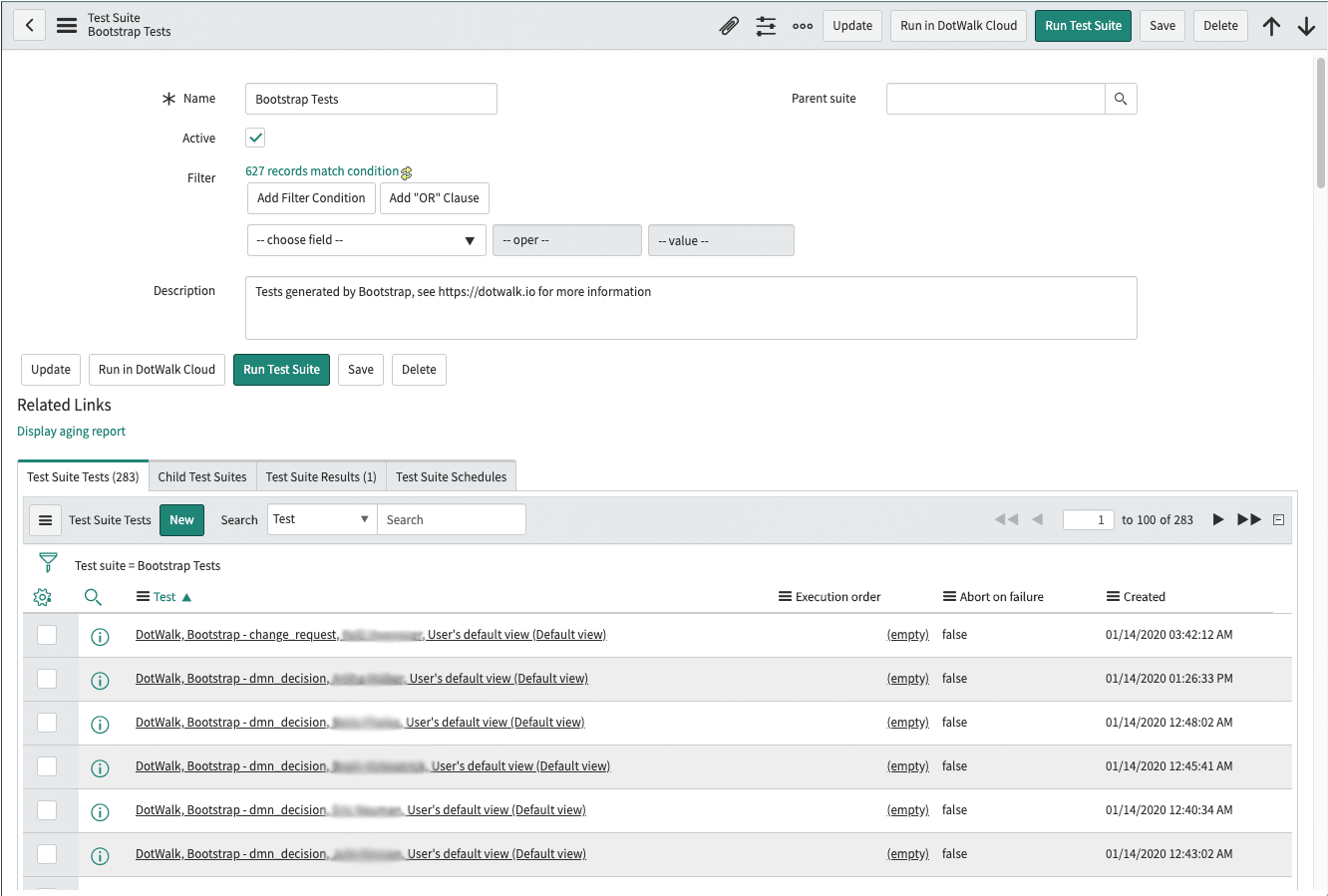
    ServiceNow today revealed it has acquired DotWalk to gain an artificial intelligence (AI)-infused application testing capability that runs natively on its software-as-a-service (SaaS) platform.

    Joe Davis, senior vice president for platform engineering at ServiceNow, said that testing capability will be made available free of charge to all organizations that build custom applications on the company’s platform.

    The number of custom applications being built on the ServiceNow platform has risen sharply since the start of the pandemic. Many organizations have taken advantage of the low-code tools provided by ServiceNow to build a range of applications that use the company’s SaaS applications as a foundation. That approach enables them to more quickly build applications that drive a wide range of digital business transformation initiatives.

    Davis said ServiceNow is committed to enabling organizations to improve the quality of those applications using a DotWalk testing capability that eliminates the need for developers to build and run tests themselves or for organizations to hire dedicated application testing teams.

    ServiceNow

    ServiceNow decided to acquire DotWalk because the company built a testing platform using machine learning algorithms specifically for the ServiceNow platform, noted Davis. The DotWalk tools also analyze logs in the background to identify and validate error sources that can arise during any application upgrade process.

    While there are a large number of professional developers that build applications on the ServiceNow platform, the company is also trying to encourage more so-called citizen developers to build applications. The challenge is many of the end users building applications lack an appreciation for design, security and what it takes to make sure an application scales as more users employ it. Testing tools infused with AI should make it easier for developers, regardless of experience, to build enterprise-class applications.

    Of course, professional developers will also benefit from AI-infused testing tools. Many developers have a tendency to cut short the application development process as they rush to meet application delivery deadlines. The end result, however, is that an application must be updated almost immediately after it has been deployed in a production environment. Testing tools that make use of AI will enable professional developers to more easily run tests they don’t have to build and then maintain, said Davis.

    One way or another, the number of custom applications built on SaaS platforms will increase as organizations digitize more processes. In the last year, more organizations have become adept at extending these platforms using a wide range of low-code tools that automate many aspects of application development. A significant percentage of those organizations are now also adopting DevOps best practices to better manage the pace at which those applications are developed and deployed.

    In the meantime, it’s too early to say precisely how AI will transform application testing. However, one thing that is certain is that even as the number of custom apps grows, applications will be more thoroughly tested before being deployed in a production environment.