Category: DevOps Practice

  • Log4j Puts Effective IT Operations at Center Stage

    Log4j Puts Effective IT Operations at Center Stage

    News of the Apache Log4j vulnerability exploit is striking fear into the hearts of both software makers and users. Log4j is the most popular Java logging service used today, with over 400,000 GitHub downloads and has been embedded in most internet services and products from companies all over the world, including Apple, Amazon, Cloudflare, Steam, Tesla, Twitter and Baidu, just to name a few.

    Exploiting this vulnerability is simple and allows threat actors to control Java-based web servers and launch remote code execution (RCE) attacks. New variations of the original exploit are being introduced rapidly—over 60 in less than 24 hours. The attack surface grows by the minute. Good credential management and advanced authentication will not help as this exploit is pre-authentication, which means an attacker doesn’t need to authenticate to your web applications to attack. Your web server is vulnerable.

    The good news is your organization likely has a team of seasoned IT operations pros that can help protect against the worst of Log4j’s devastation.

    How IT Operations Can Protect Against Log4j Vulnerabilities

    Step One: Find Log4j Wherever it Exists

    You need to investigate every internet-facing application, website and system that you own or use. This includes self-hosted installations of vendor products and cloud-based services. Focus on systems that are internet-facing that contain sensitive data. Once you’ve completed assessing your hosted apps and vendor systems, move on to endpoint applications. Java-based apps like WebEx, Minecraft, Citrix and many more.

    Step Two: Patch, Patch, Patch

    Patch in the same order as above: Internet-facing applications, websites and systems. If no patch is yet available for your apps and systems, uninstall.

    The pandemic has forced many endpoints into workers’ home environments, which creates extra challenges for patching those endpoints and keeping them compliant. Operations teams can’t rely on work-from-home folks to patch their own systems, even if they’re given clear instructions. Many of them will just ignore those directions, so you need to adopt systems that enforce continuous compliance.

    Step Three: IT Operations is Essential

    Communicate with your senior leaders. They should be in the know about this one! Senior leadership needs to position their IT operations teams among their most vital employees. Don’t think this is going to go away any time soon—we’re just starting to get a glimpse of what is being tried out there in the wild. Buckle up. 


  • U.S. Govt. CX EO | Mozilla Revenue | Log4j Latest

    U.S. Govt. CX EO | Mozilla Revenue | Log4j Latest

    Welcome to The Long View—where we peruse the news of the week and strip it to the essentials. Let’s work out what really matters.

    This week: Improving U.S. government CX, how much money Mozilla makes, and the latest on the Log4j/Log4Shell débâcle.

    EO: “Transforming Federal Customer Experience”

    First up this week: The Biden–Harris administration makes an executive order directing its Federal agencies to make 36 specific customer experience (CX) improvement commitments. Much of this involves using technology to improve what DevOps teams would call UX—but government doesn’t like the language of “users.”

    Analysis: Customer-centricity FTW

    Remarkably, a lot of interaction with government still involves paper forms. But this EO shouldn’t merely be about putting existing processes online. Work also needs to be done to solve the underlying complexity and fragmentation of services: Focusing on CX is a helpful frame.

    Brett Samuels: Biden to sign order to streamline government services

    [The] executive order [is] intended to cut back on the bureaucracy around government services for the public such as renewing passports, applying for loans or changing names. [It] affects 36 “customer experience improvement commitments” across 17 federal agencies, [targeting] travel, retirement, business, health and updating personal information.
    …
    For example … to renew their passports online rather than dealing with print forms. [It] will create a single portal for … student loan debt, and small-business owners will have a more streamlined process for … loans, grants and certifications.
    …
    Survivors of natural disasters will also no longer be required to complete forms with several agencies when applying for assistance … and they will be able to file smartphone photos and use virtual inspections when filing claims. [That] could be critical as natural disasters become increasingly devastating, as evidenced by the tornadoes that ravaged Kentucky over the weekend, killing dozens of people and destroying communities.


    Is this a technology problem? Yes, in part—but it’s also a government problem, argues Jennifer Pahlka:

    Surely laws like the 21st Century IDEA Act … which required agencies to … “eliminate or consolidate websites or web pages that are duplicative or overlapping … and ensure that each website or digital service is designed around user needs,” made life easier for the customers of those agencies? What’s that you say? You’re not sure you’ve noticed that? Turns out you’re not alone.
    …
    An EO is one of the many mechanisms our government has at its disposal for what I like to call “magic words.” [But there’s a] gap between magic words and the changes they are supposed to compel. [Failures] happen at such a staggering scale they have become entirely expected.
    …
    We tend to assign the blame … to government technology [but] at some point, you can only improve the customer experience by addressing [underlying] complexity. … Most of the Kafka-esque nightmares people get stuck in happen because each service sees only the burden they impose, and not [what] the customer experiences.


    If, like me, you’re inherently cynical about government efficiency, you’d expect this effort to be a huge failure. But let’s not be too cynical: Warning of “the hazards of selection bias,” here’s ShanghaiBill:

    In the olden days, I took half a day off work to go to DMV and renew my DL. Now I can do it online in 5 minutes. … I pay my property tax online. I renew my business licenses online. I incorporated online.


    $500 Million per Year—But for How Long?

    The Mozilla Foundation has unveiled its revenue forecasts for this year. As in previous years, Mozilla makes the lion’s share of its cash from Google—by making it the default search engine. But there are new revenue sources.

    Analysis: And not a moment too soon

    The future of the browser market should be a strategic focus for DevOps teams. Mozilla’s Googley cash cow might not last. It’s often assumed the maker of Chrome keeps Mozilla alive so it can point to Firefox as “competition.” But with Microsoft’s browser Edging up the usage charts, that might no longer be true.

    Frederic Lardinois: Mozilla expects to generate more than $500M in revenue

    For 2021, the organization forecasts revenue of more than $500 million. What’s maybe most important, though, is that Mozilla’s new products like its Mozilla VPN service, Firefox Relay Premium, Pocket and other commercial initiatives are slowly but surely starting to pay off.
    …
    But for all intents and purposes, Mozilla remains fully dependent on Google for the time being. Diversifying its revenue sources is really the only way for Mozilla to decrease its reliance on a search deal with a company that is both a competitor, thanks to its dominant Chrome browser, and is increasingly out of alignment with Mozilla’s overall philosophy.
    …
    There is a window here for a non-Chrome browser, with users increasingly skeptical about Google’s motivations and Microsoft’s Edge team making a few missteps in recent months. Yet at the same time, Mozilla’s efforts to bring sponsored suggestions and ads to Firefox haven’t necessarily endeared the organization to its own users either.


    Why is Google funding its competitor? u/SerAaron:

    Google is Mozilla’s biggest donor. … It’s basically to avoid any monopoly allegations—so they can point to Firefox and say “look, we have competition”.

    Mozilla takes their money, sure, but … they don’t sell data, and they aren’t beholden to Google.


    But don’t count on that cash continuing to flow, says Maelwryth:

    That money is probably under threat now with Edge going for the market. Why give Mozilla hundreds of millions to show competition when you have actual competition from Microsoft?


    Log4j/Log4Shell Seems Worse Every Time We Look

    The list of popular DevOps tools vulnerable to Log4Shell grows by the hour. Merely finding your exploitable services can be an impossible task—let alone patching them.

    Analysis: Defense in depth is key

    Searching for and patching your vulnerable code is not enough. You’re also going to need to shore up your network defenses, by auditing internet-visible services and by tightening your application firewall rules. And—ironically—keep a close eye on your logs for signs of attempted exploits and IoCs.

    Steven J. Vaughan-Nichols: We Are in So Much Trouble

    Log4j is used a lot. And, when I say a lot, I mean it’s used in hundreds of applications [including] Druid, Dubbo, Flink, Flume, Hadoop, Kafka, Solr, Spark, Struts, Apple iCloud, … LogStash, GrayLog2, … Steam, Twitter, and … VMware.
    …
    Log4Shell is both easy to exploit and can be used to grab complete control of vulnerable servers. … Even as you’re reading this, odds are decent you’re being attacked. [But] even if you patch it in your systems, it’s all too likely to be hiding in other applications.
    …
    Log4Shell may be the worst security problem in a generation. … This is going to be a long, hard ride.


    Hyperbole? Even December 25 isn’t close enough for government work. Catalin Cimpanu:

    The US Cybersecurity and Infrastructure Security Agency has told federal civilian agencies to patch systems affected by the Log4Shell vulnerability by Christmas Eve. … Federal agencies have ten days … to test which of their internal apps and servers utilize the Log4j Java library, check if systems are vulnerable to the Log4Shell exploit, and patch affected servers.
    …
    Despite being a recent vulnerability, it is already considered one of the worst security flaws ever discovered, primarily due to its near-ubiquitous use among enterprise software makers, its simple and easy-to-use exploit, and the ability to hijack systems remotely. … Days after being disclosed, the vulnerability has been massively abused. … The first attacks were seen on December 1.


    There’s always another shoe. Here’s Teri Robinson:

    Maybe Log4j vulnerabilities are like rats—for every one that’s visible, multiple others scurry beneath the surface. … Apache said the fix addressing “CVE-2021-44228 in Apache Log4j 2.15.0 was incomplete in certain non-default configurations,” according to … CVE 2021-45046.


    The Moral of the Story: In the end, the love you take is equal to the love you make.


    You have been reading The Long View by Richi Jennings. You can contact him at @RiCHi or tlv@richi.uk.

    Image: Bernd Dittrich (via Unsplash)

  • Stacklet Embeds Collaboration in Compliance-as-Code Platform

    Stacklet Embeds Collaboration in Compliance-as-Code Platform

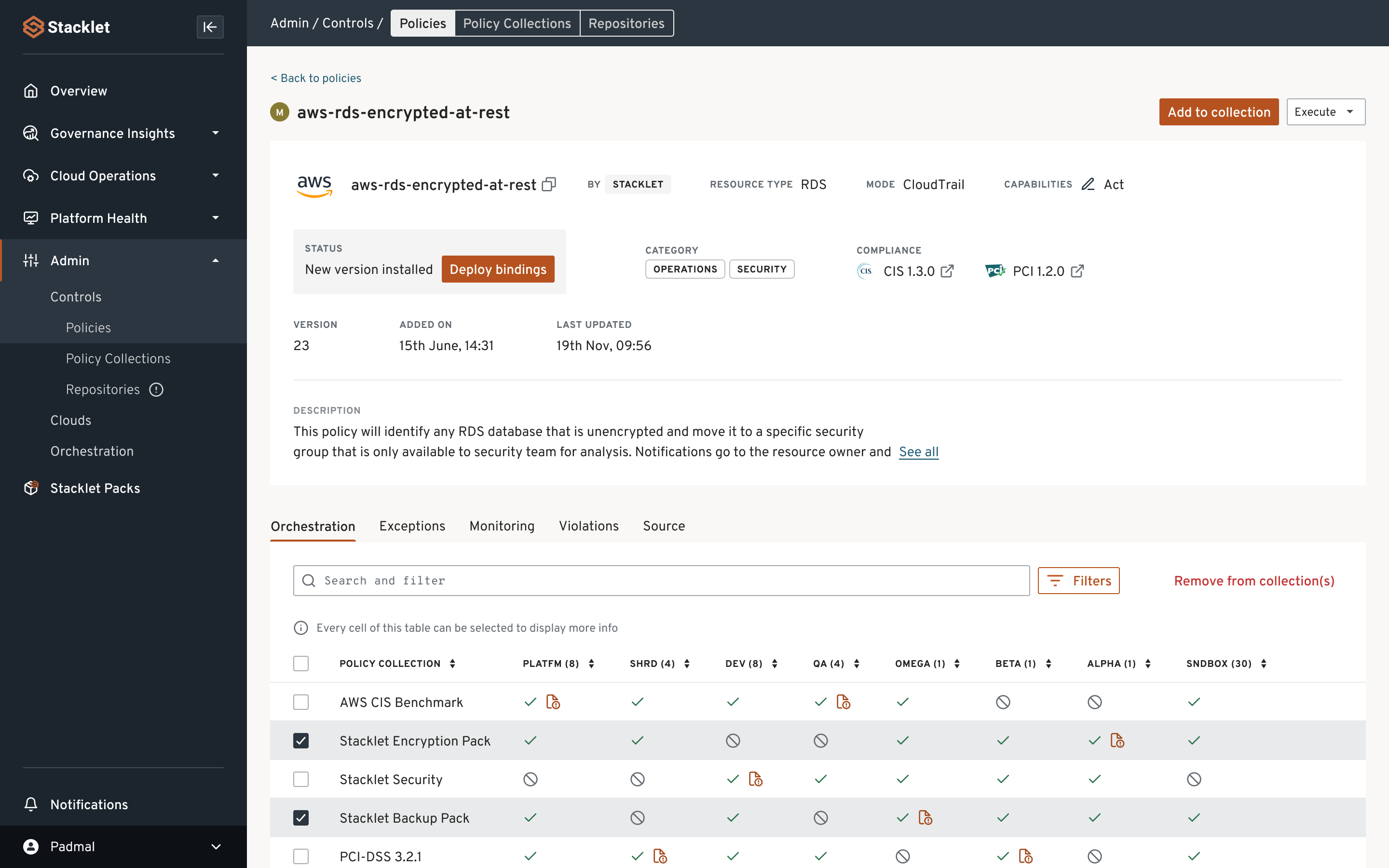
    Stacklet has added collaboration capabilities to its security and compliance platform that automatically groups related notifications, routes them to the right stakeholders and integrates with existing workflows and collaboration tools.

    The Stacklet platform is based on Cloud Custodian, an open source project that provides access to a domain-specific language that enables an IT team to employ YAML files to manage compliance-as-code.

    Stacklet CEO Travis Stanfield said that approach makes it simpler for organizations that have embraced DevSecOps best practices to comply with a wide range of mandates by shifting responsibility for achieving compliance further left toward DevOps teams.

    The latest version of the Stacklet Platform adds communications capabilities that leverage cloud resource configuration and policy metadata to automatically route notifications and escalations. Customizable notification templates add context for teams to collaborate either via email or integrations with Slack, Microsoft Teams and Symphony instant messaging. The Stacklet Platform can also trigger external workflows in tools such as Jira and ServiceNow to track issue resolution and generate reports.

    Ultimately, the goal is to make it simpler for IT teams to prioritize their compliance remediation efforts by keeping everyone involved continuously updated, said Stanfield.

    The number of compliance and security issues that organizations are experiencing in cloud computing environments is especially problematic. Developers often employ infrastructure-as-code (IaC) tools to provision cloud infrastructure. Unfortunately, they typically lack security and compliance expertise, which then results in large numbers of misconfigurations.

    The Stacklet platform is designed to give DevOps teams a way to prevent compliance and security issues using a compliance-as-code framework that spans multiple cloud platforms rather than requiring DevOps teams to employ a different set of compliance tools for each cloud platform on which applications are deployed.

    It’s not clear yet how far left responsibility for compliance will shift. In theory, organizations could avoid penalties if compliance issues are addressed before an application is deployed in a production environment. However, the teams that manage compliance in larger enterprises today are even further removed from DevOps teams than their cybersecurity counterparts. It may be several years before the cultural divide between these teams is bridged. In the meantime, many DevOps teams are taking it upon themselves to manage compliance as code to prevent unexpected issues from arising at the last minute before deployment.

    Overall, the goal is to enable DevOps teams to enforce compliance policies without slowing down the rate at which applications are built and deployed. The hope is that the adoption of compliance-as-code and DevSecOps best practices will address that issue. In fact, as the pace at which applications are deployed continues to accelerate to support digital business transformation initiatives, the number of potential compliance issues steadily increases. More troubling still, the greater the number of compliance issues there are, the more likely it becomes that cybercriminals will find a vulnerability to exploit.

  • How Developers Can Handle the FinServ Data Deluge

    How Developers Can Handle the FinServ Data Deluge

    A decade ago, if you were to ask developers what the biggest challenges in commercial banking were, they would likely cite the difficulty of accessing and collating high-quality data on the day-to-day operations of banking institutions. Today, that’s completely changed.

    Or it has to some extent, at least. Developers working in the banking industry certainly have access to more data than ever before. But this has created challenges of its own. With so much data being collected, stored and at least partially processed, some developers have started to talk of a “data deluge”—an unstoppable torrent that overwhelms the developer’s ability to process and use it.

    In this article, we’ll try and make sense of this. We’ll also explore what it is being used for and what this means for the future of the banking industry.

    Promises and Challenges

    Before we get too deeply into the specifics, however, let’s take a moment to note that the data deluge is not entirely new and that it will be with us for quite some time to come.

    In fact, most guides to technology in the banking sector note that many of our current issues are caused by the sheer amount of data being collected. It has become acutely apparent that our data harvesting capabilities have grown far more rapidly than our ability to ensure accuracy or to label it in accordance with legally-mandated compliance frameworks.

    And, of course, this is only going to get worse. No one knows yet how the global COVID-19 pandemic and ensuing economic downturn will affect the global payments market, but it was previously predicted to reach $2 trillion by the end of 2025, with a compound annual growth rate of 7.83%. Even realizing a portion of that growth will create real challenges for developers in the banking sector.

    Using the Data Deluge

    With all that said, however, let’s also recognize that this is a ‘good problem.’ It’s not necessarily a bad thing that we have access to so much data—the issue is making sure that it’s accurate, safe and useful.

    And when it comes to doing that, three opportunities are already apparent. Here they are.

    1. Increased Velocity

    Many of the new approaches to leveraging data in the banking sector are focused on increasing speed. Indeed, the ability to access real-time intelligence in banking operations was one of the original promises of the big data revolution, albeit one that has taken some years to come to fruition.

    There are several reasons for that, but one of the most important is the fact that banks have lagged when it comes to updating their hardware and software to correlate with the amount of information they are collecting. Most banks now undertake significant levels of quantitative analysis on business and customer data, for instance, but few do so in real-time.

    Instead, many banking systems are still run on monthly data-processing schedules, meaning that it can take even the most technologically advanced bank 30 days to spot consumer or business trends. Implementing new technologies such as Apache Spark is one potential solution to this problem. Like Hadoop, it’s an open source big data analytics engine, but it’s faster, more scalable and easier to use.

    2. More Reliable Governance

    Another challenge when it comes to managing the deluge is that of governance. With so much data flowing in, it can be a challenge for developers and operations staff alike to keep track of its source and how it should be managed within data compliance frameworks.

    This is one reason, as we’ve long argued, that banking should consider DevOps. By uniting developers and operations staff, both can come to a deeper understanding of data compliance and how this must be integrated into every aspect of the contemporary banking industry.

    This is one area, however, in which more data is not necessarily a bad idea. Rather than pausing data harvesting because of concerns that it will create compliance issues, developers should aim to build systems that can carefully and reliably label this data throughout the custody chain.

    3. Focus on the Customer

    Finally, developers shouldn’t lose sight of the ultimate aim of collecting data—improving the customer experience. Data can be used to do this in two primary ways.

    The first is to put data to work in your customer-facing systems. This is the approach recently pioneered by Western Union, which offers an omnichannel approach that tailors and personalizes customer experiences by processing more than 29 transactions a second and integrating all that data into a single platform for statistical modeling and predictive analysis.

    Secondly, data can be used to inform strategic decisions. Just as consumers are now more savvy about the way that their data is used, leadership needs to understand that this type of data-based decision-making is the future of the industry.

    In other words, banks must be able to move faster to transform their data into intelligent insights and then put those insights into action to improve customer service, connect customers to information and products when and where it’s needed most and protect sensitive data and customer accounts from threats.

    The Bottom Line

    The data deluge creates challenges for developers and leaders alike. These challenges are only going to grow as our ability to harvest consumer and industry data continues to expand. If we are going to realize the promises of technology-driven banking, we need to improve the way in which data is managed and processed and ultimately improve our ability to extract meaningful insights from that data.

    And just as this challenge is not new, neither is the outcome—a better banking experience for the customer.


    If you want to learn more about financial services and FinTech development, operations, architecture and leadership through expert-led talks, panel discussions and keynotes, check out FinCon DX—now available on demand!

  • Sentry Acquires Specto to Add Analytics Tool for Observability

    Sentry Acquires Specto to Add Analytics Tool for Observability

    Sentry this week announced it has acquired Specto, a provider of a set of tools for analyzing the performance of mobile applications.

    As the number of mobile applications being deployed continues to expand, developers are being asked to manage them as part of a general shift left that requires them to take on more accountability for how well their applications run in a production environment.

    Sentry CEO Milin Desai said today the Specto tools are focused on making it easier for developers to determine how mobile applications are running, but that the plan is to expand that analytics capability to a wider range of applications.

    As the responsibility for applications continues to shift left toward developers, the need for observability and monitoring tools that developers can easily use is becoming more acute. Sentry already provides a JavaScript software development kit that enables developers to insert a small amount of code in their application to track, for example, how many times an application failed. The Specto tools will take those observability capabilities to a deeper level by enabling developers to analyze a wider range of metrics collected, said Desai.

    Of course, DevOps teams are already collecting metrics, as well. Sentry has worked with partners such as GitLab and GitHub to provide a plug-in that makes it possible for DevOps teams to see the same metrics that developers are now using to manage applications. The goal is to make it easier for developers and IT operations teams to collaborate around a common set of metrics, said Desai.

    The rate at which responsibility for the management of applications is being shifted left, of course, varies widely. Some organizations continue to prefer to have developers mainly focus on writing code. However, Desai said Sentry is encountering more instances where site reliability engineers (SREs) are providing Sentry tools to developers as part of an effort to provide them with more insight into how their applications are running in a production environment.

    Historically, IT operations teams have relied on application performance management (APM) platforms to manage IT operations. Those platforms are now evolving into observability platforms that promise to provide more context by correlating events as they occur across both applications and IT infrastructure platforms. That approach, however, typically requires developers to insert agent software into their applications. Once inserted, that agent software needs to be maintained and updated within the context of a larger DevOps workflow.

    The Sentry approach provides developers with a tool for collecting data from an application that, after being embedded in the application, consumes just tens of kilobytes of memory. That approach eliminates the need to rely on much larger agent software to achieve observability.

    Regardless of how developers go about instrumenting their applications, the overall state of observability clearly needs to improve as application environments become more complex. The issue now is determining how best to achieve that goal in a way that benefits both developers and DevOps teams alike.

  • AWS Outage Exposes Weaknesses of DevOps Resilience

    AWS Outage Exposes Weaknesses of DevOps Resilience

    The December 7, 2021 Amazon Web Services (AWS) outage severely disrupted services from a wide range of businesses for more than five hours and highlighted just how reliant businesses have become on internet-delivered services. The outage mostly impacted web services in the eastern U.S., yet the implications are universal: It’s a reminder that many businesses blindly ignored the old axiom about putting all your eggs in one basket and instead are relying on a provider with a single point of failure.

    Services ranging from airline booking systems to streaming video to e-commerce were disrupted during the outage, causing millions of dollars in lost revenue and countless hours in productivity. One of the more interesting aspects of the outage is the impact it had on services from collaboration vendors such as Slack, Trello, Asana and Smartsheet—tools that many development and DevOps teams have come to rely on.

    Furthermore, core AWS services, such as the company’s Elastic Compute and DynamoDB cloud tools were also impacted, disrupting many third-party services and severely hampering business processes that use those services. While the obvious victims of the outage are well known, like Amazon’s own e-commerce operation, there is a troubling undercurrent: The disruption to DevOps frameworks and those using them.

    AWS has been rather tight-lipped about the root cause of the outage thus far; however, there are still many lessons to be learned for the DevOps community and questions that must be asked such as “Can the DevOps process survive during IaaS/SaaS disruptions?” and “Can multi-cloud failover solutions be baked into the applications DevOps builds?”

    There are no simple answers to those questions, but the outage highlights the need to understand the underlying architecture and framework of a deployed DevOps system. Take, for example, how many developers in the DevOps community have embraced SaaS tools to accelerate the development process and to feed CI/CD pipelines. SaaS applications such as code scanners, pipeline orchestration and even IDEs have become common in the world of DevOps. But has anyone bothered to ask what happens if a single one of those tools fails?

    What’s more, the reliance on SaaS tools in the development process has led to the creation of potential liabilities in the applications created by DevOps developers. DevOps applications have come to rely on APIs, are often driven by microservices and are frequently deployed into containers that run on SaaS. If any of those elements become non-functional, numerous applications could fail, ultimately putting the onus on developers to explain why they are creating applications with a single point of failure.

    Moving forward, the DevOps community needs to take a serious look at the components of their frameworks and determine if there are any single points of failure—including their IaaS/SaaS providers. While it may be impossible to remediate every single one, there is a lesson to be learned about how fragile the development process can become if no one bothers to build an inventory of the tools used and take into account how a failure of any one of those tools could impact workflow. There are numerous examples of how an external failure of a single component impacted the functionality of an application, while the discovery process of the root cause has taken days or even weeks. This can be mostly attributed to not only a lack of knowledge, but a lack of visibility into the components used.

    Those lessons can be extended to the development process itself, where the best practice of rooting out single points of failure can be extended to the applications themselves. Leveraging that intelligence starts with understanding the concept of a software bill of materials (SBoM), a piece of supporting documentation that is becoming increasingly important to the purveyors of applications. A properly-defined SBoM reveals all of the components (libraries, APIs, etc.) that are baked into an application and can be used as a map to define where weaknesses may lie.

    For the DevOps community, the recent AWS outage has become a clarion call to look inward and discover how the applications they are building may be part of the problem. With continuity and resiliency becoming major topics in the IT and business realm, it’s about time that DevOps practitioners start to look at how they can support both of those business-critical needs. The days of finger-pointing to shift blame must come to an end, and if businesses that rely on software want to grow, someone needs to take responsibility for providing answers when outages occur and learn from those outages to create applications that are more resilient.

  • Vercel Acquires Turborepo to Gain Build System

    Vercel Acquires Turborepo to Gain Build System

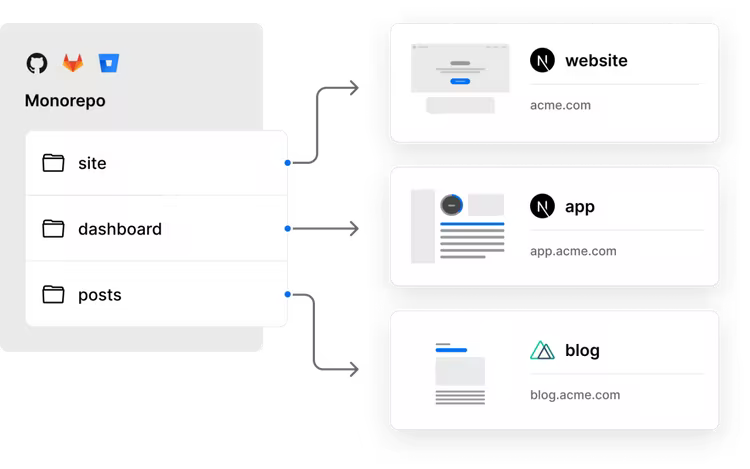
    Vercel today announced it has acquired Turborepo, a provider of a build system for JavaScript and TypeScript applications that provides developers with access to an easy-to-use monorepository for their code.

    In the wake of that acquisition, the command line interface (CLI) for accessing Turborepo will now be available under an open source license.

    Jared Palmer, creator of Turborepo and other popular open source projects including Formik and TSDX, will continue working on accelerating Turborepo’s capabilities as the new leader of a build performance team at Vercel.

    The goal is to move existing users of the Turborepo cloud service to a Vercel platform for building applications using the Next.js framework, which makes it possible to build web applications based on the React library for creating user interfaces that enable both static site generation (SSG) and server-side rendering (SSR).

    Palmer said monrepositories such as Turborepo not only make it easier for developers to manage builds but also reduce the amount of time required to process those builds using a continuous integration/continuous delivery (CI/CD) platform.

    Rival build systems are also much more complex to configure and manage, which Palmer said is a primary reason many developers have not yet set up their own mononrepositories.

    As the number of applications that organizations want to build and deploy in the digital business transformation era increases, the focus on developer productivity is intensifying. Rather than having to maintain a complex build system, Turborepo is designed to be simple to configure. As a result, more developers can reduce build times by as much as 50%, noted Palmer.

    In effect, front-end developers are able to more easily become full-stack developers by combining that build system with the Next.js framework, he added.

    DevOps teams will need to adjust to applications capable of providing richer application experiences without relying as much on backend infrastructure. That shift has implications for everything from the amount of network bandwidth consumed to the performance of web applications. The Vercel platform employs caching, routing and a React framework to optimize application performance in a way that reduces the dependency on backend infrastructure to optimize application performance.

    As web application development continues to evolve, the overall rate at which they web apps are built should increase significantly. Naturally, DevOps teams will need to consider the implications of having more applications move through DevOps pipelines and the need to continuously update those after they are deployed.

    It’s not clear whether or how much DevOps teams will nudge developers toward frameworks such as Next.js to develop web applications that might not tax backend infrastructure as much as previous generations of applications. In effect, developers can take advantage of frameworks that enable them to treat the underlying IT infrastructure as if it were serverless whenever possible with tools that have a familiar JavaScript construct. Vercel claimed there are already more than 30,000 sites running Next.js in production at organizations like Airbnb, Hulu, Nike, Ticketmaster and Uber.

    One way or another, it’s clear that the way web applications are being built is fundamentally changing. The only issue now is determining to what degree the rest of the IT organization is prepared to absorb that level of change.

  • Digital Business Transformation Driving More API Adoption

    Digital Business Transformation Driving More API Adoption

    A global annual survey of 2,200 developers published today by RapidAPI, a provider of an application programming interface (API) hub, finds digital business transformation initiatives have led to an increase in reliance on external-facing APIs.

    According to the survey results, nearly three-quarters of developers (74%) are using APIs for internal applications. However, nearly half (49%) said they are working on third-party APIs, with 44% working on partner-facing APIs. That’s up from 35% a year ago.

    RapidAPI CEO Iddo Gino said it’s clear APIs are a key enabling technology for driving digital business transformation initiatives.

    More than three-quarters of developers (75%) indicated that participating in the API economy is a top priority for their organization now or in the near future, according to the survey results. Companies are realizing the opportunity for new revenue streams, with growth in API monetization strategies increasing to 41% from 35% in 2020.

    In addition, more than two-thirds of developers (68%) said they expect to increase API use in 2022, with 61% relying on APIs more in 2021 than in 2020.

    However, well over half (56%) noted that a shortage of developer talent is a top concern, followed by lack of internal prioritization around digital transformation efforts (34%), lack of API development resources and tools (32%) and lack of alignment with other departments (29%). A full 90% also noted that security and data privacy is a key issue to consider when employing APIs.

    The results also show the use of REST and SOAP APIs in production environments fell 3.7% and 1.4%, respectively, in 2021. That drop reflects the rise of alternative API technologies such as GraphQL and Async APIs, said Gino, However, he noted it’s unlikely any new class of APIs is likely to supplant legacy APIs anytime soon; instead, most organizations will be employing a wide range of APIs for many years to come.

    The survey results reveal that JavaScript is the most used (71.6%) and preferred (51.9%) programming language for building APIs. TypeScript is also gaining traction in terms of usage (20%) and being preferred (12%).

    The most troubling aspect of the survey, however, may be the fact that well over half of respondents (56%) said they are open to switching jobs. The top five reasons developers said they might switch jobs are higher compensation or improved benefits (60%), interest in a specific product or technology at a different company (54%), desire for a more flexible working environment (38%), interest in a specific company or market (25%) and an opportunity to work with former teammates or friends (17%).

    It’s not clear to what degree the so-called Great Resignation phenomenon might be impacting DevOps teams in general. However, it’s apparent no class of jobs is immune from a general sense of restlessness that pervades the market as the global economy continues to recover from the COVID-19 pandemic. The challenge and the opportunity for DevOps leaders is to encourage the best talent available to join and then remain with their organization versus pursuing a job somewhere else that, at least from afar, appears to have greener pastures.

  • Iterative Adds Experiment Versioning to MLOps Platform

    Iterative Adds Experiment Versioning to MLOps Platform

    Iterative today added an experiment versioning capability to an open source platform for managing machine learning operations (MLOps) using GitOps workflows.

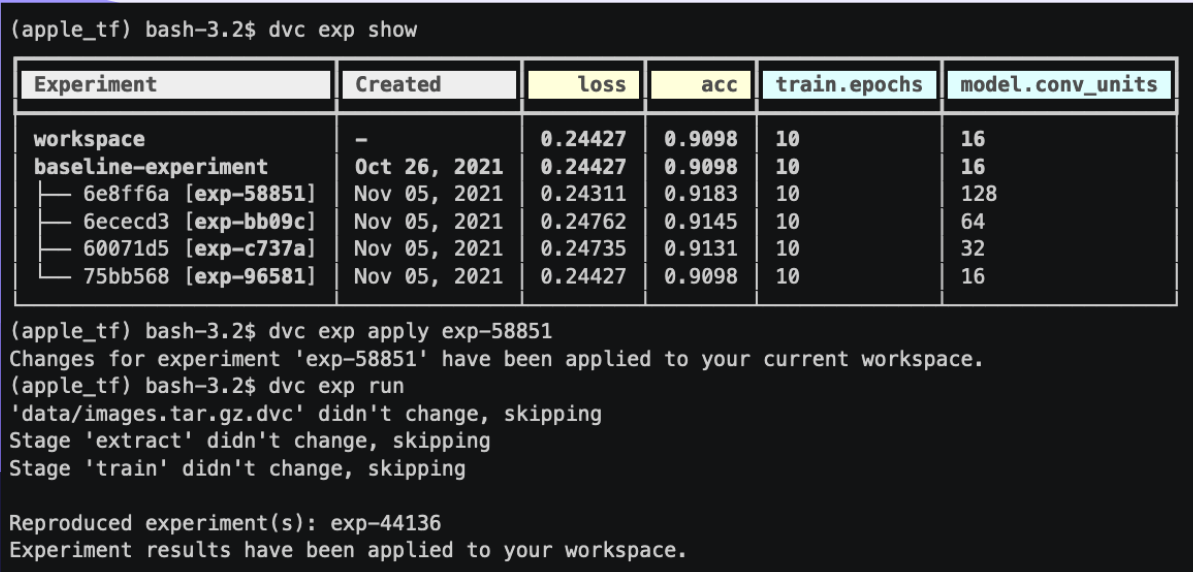
    Dmitry Petrov, Iterative CEO, said the latest version of the Data Versioning Control (DVC) platform makes it simpler to save, compare and reproduce machine learning (ML) experiments at scale without requiring organizations to set up an additional repository to track them. Instead, organizations can store those experiments alongside other software artifacts in a Git repository, he said.

    As a result, IT teams will no longer need to try to keep track of experiments using spreadsheets or notebook tools such as Jupyter, he noted. Organizations that are building AI models for applications constructed using DevOps workflows will also find it easier to comply with a wide range of existing and forthcoming compliance mandates, added Petrov.

    The DVC platform makes use of a Git-like interface to enable organizations to track multiple versions of data sets, models and pipelines across an MLOps workflow. That capability is being extended to make it easier to manage the experiments data science teams create during the construction of an AI model.

    Iterative is at the forefront of an emerging debate over how best to infuse AI models into applications. Providers of platforms used by data science teams are making a case for separate repositories for tracking the artifacts used to construct an AI model. Iterative, on the other hand, is arguing for the use of an AI model build framework that uses the same Git repositories where any other type of software artifact is stored and shared. Iterative’s argument is that, in effect, AI models are just another type of software artifact, noted Petrov.

    In addition to reducing the total cost of building AI models by reducing the number of platforms required, a Git-based approach also makes it simpler for DevOps and data science teams to collaborate because the DevOps team will have more visibility into what AI models will eventually need to be incorporated into an application.

    It may be a while before the development of AI models and applications fully converges. Data science teams today typically have defined their own workflow processes using a wide range of graphical tools. However, as it becomes obvious that almost every application is going to be infused with machine learning and deep learning algorithms to some degree, the need to bridge the current divide between DevOps and data science teams will become more acute.

    In the meantime, DevOps teams should assume that many more AI models are not only on the way but that those models will need to be continuously updated. Each AI model is constructed based on a set of assumptions; however, as more data becomes available, AI models are subject to drift that results in less accuracy over time. Organizations may even determine that an entire AI model needs to be replaced because the business conditions on which assumptions were made are no longer valid. One way or another, the updating and tuning of AI models is likely to soon become just another continuous process being managed via a DevOps workflow.

  • DevSecOps for Databases: Data Masking, Cloud Backup, WAF and More

    DevSecOps for Databases: Data Masking, Cloud Backup, WAF and More

    DevSecOps is everywhere. More and more organizations realize that the traditional separation between DevOps and security is wasteful and dangerous. As a result, they are rushing to integrate security into all their software development processes. 

    Adding security to containerized applications, cloud resources and other parts of modern DevOps infrastructure is already well understood. But what about databases? Databases were always—and remain—a critical system component and a prime target for attackers. Here, I’ll review the basics of modern database security and show you how to create a continuous security process for databases in a DevSecOps organization.

    What is DevSecOps?

    DevSecOps incorporates security practices into the DevOps methodology. DevSecOps promotes a ‘security-as-code’ approach via the partnership between release engineers and security teams. Similar to DevOps, the DevSecOps approach focuses on creating innovative solutions for complex software development processes. Teams complete this within the framework of an agile approach.  

    DevSecOps aims to close the gap between security and IT teams while ensuring the speedy and safe delivery of code. Organizations replace the siloed development method with a new approach that promotes the shared responsibility of security tasks during the delivery process. 

    In DevSecOps, two supposedly opposite aims—delivery speed and secure code—are united into one effective process. 

    Database Security Basics

    The term “database security” is an umbrella term used to describe all of the tools created to develop and preserve database availability, integrity and confidentiality. A key responsibility for any DBA is to ensure that the information stored in databases is always secure.

    The goal of database security is to protect:

    • Database management systems
    • Applications that access database information
    • Datastores within databases
    • Hardware servers
    • Virtual database servers, such as cloud-based servers
    • Network access points

    It is critical to strike a balance between security and usability. While you must prioritize data security, information needs to be accessible to offer value to the organization. The more access you provide to the information retained in a database, the more vulnerable the information is. However, an overly secure database is neither practical nor functional.   

    A good way to achieve a balance between accessibility and security is to create meaningful security protocols, create tiered levels of information access and invest in a robust database security and activity monitoring tooling. 

    Common Threats and Challenges

    Here are some of the most common types of database attacks:

    • Insider threats—These involve privileged users misusing their access credentials. An insider could be a negligent employee who unwittingly exposes the database to attack, a malicious insider who abuses the database on purpose or an outside infiltrator who steals credentials to breach the database. The risk of a breach increases as more employees hold privileged access credentials.
    • Injection attacks—These involve inserting arbitrary attack strings into the database queries that HTTP headers or web applications serve. These attacks can be SQL or NoSQL. Secure coding practices and regular vulnerability tests should help protect you against injection attacks.
    • Database software vulnerability exploits—Database software providers regularly release security patches for vulnerabilities in their software. However, if you don’t apply the patches quickly, you prolong your exposure and run the risk that hackers will exploit vulnerabilities in your database. 
    • Backup attacks—If you don’t protect your backup data with sufficient controls, you expose your database to an attack on your backups. 

    The following challenges can exacerbate these threats:

    • Large volumes of data—Organizations must adequately manage increasingly large volumes of data using scalable tools and practices.
    • Sprawling infrastructure sprawl—Organizations are increasingly shifting to hybrid and multi-cloud environments, making their networks more complex and security harder to manage. 
    • Evolving regulations—With the global regulatory landscape changing and growing more complex, it is increasingly challenging to maintain compliance.
    • Skill shortage—The demand for cybersecurity personnel far outstrips supply, and this shortage is only likely to increase in the future. 

    4 Techniques for Continuous Database Security With DevSecOps

    A DevSecOps approach calls for continuous database security during all stages of database development and usage. Let’s explore a few techniques for achieving continuous security.

    Data Masking

    Data masking technology lets you create a structurally similar, anonymized version of an organization’s data. You can use this data for user training or software testing. The aim is to safeguard the real data while using a functional substitute for use cases in which the actual data is not needed.  

    In data masking, you keep the format of the data the same. You only change the values of the data. You can alter the data in various ways including character shuffling, encryption and word or character substitution. Whichever method you choose, you have to modify the value in some way that makes reverse engineering or detection impossible. 

    Use data masking when presenting data to users (whether inside or outside the organization) who don’t need to access the data as part of their role. You should apply data masking to all sensitive information before displaying it in public forums. 

    Use Web Application and Database Firewalls

    Protect your database server from security threats using a firewall that stops access to traffic as a default. The only traffic permitted should come from particular web servers or applications that require access to the information. The firewall must also prevent your database from establishing outbound connections unless they are specifically needed. 

    Protecting the database using a firewall is not enough. You should also deploy a web application firewall (WAF). That’s because SQL injection attacks, which target web applications, can be employed to delete or exfiltrate data from the database. A database firewall may not stop this from occurring if attacks are initiated from an application that is a permitted source of traffic. However, a web application firewall likely will stop attacks of this nature because it can analyze traffic at the application layer and identify malicious query patterns.

    Cloud Backup

    Database backup solutions help organizations safeguard their data with backup database copies in the event of user error, physical hardware failure, data corruption or ransomware attacks. Organizations can ensure their information is always accessible by using database backup tools, even if their central database fails or is compromised. 

    Cloud backup services allow you to send a database copy to an off-site, secondary location for safekeeping if there is a disaster or failure. A third-party service provider typically hosts the secondary data storage systems and servers. This provider bills the backup customer based on capacity used or storage space, number of users, data transmission bandwidth, number of times the information is accessed or the number of servers. 

    Using cloud data backup can help you improve data protection without overwhelming IT staff. This labor-saving advantage could be significant and may even offset some of the added costs connected with cloud backup, including data transmission costs. 

    Secure Database User Access

    You must strive to limit the number of individuals with access to the database to the extreme minimum. Administrators should only have minimal privileges—those they require to carry out their job and only when they require access. 

    For small organizations, this might be difficult to achieve because employees have multiple roles, and there may be only one or two database administrators. However, you should at least manage permissions using roles or groups rather than granting access directly.  

    If you have a large organization, you must think about automating access management via access management software. Access management software can give authorized users a provisional password with the privileges they require every time they want access to the database. This software also logs the activities conducted during that time and stops administrators from sharing their passwords. 

    It is critical to lock down any form of password sharing—this is a common practice by administrators and database users, but it makes accountability and effective database security nearly impossible. 

    In addition, you should follow standard account security procedures: 

    • Enforce the use of strong passwords
    • Store, encrypt and salt password hashes
    • Lock accounts after three or four login retries
    • Deactivate accounts when employees leave or switch to different roles

    DevSecOps and Database Security

    In this article, I explained the basics of DevSecOps and database security, covered the primary threats facing database systems in a modern IT environment and provided four ways you can implement continuous security for databases:

    • Data masking—All modern RDBMS systems offer data masking mechanisms that can reduce the impact of compromised accounts.
    • Using WAFs and database firewalls—Firewalls provide excellent runtime protection and visibility for application-layer attacks.
    • Cloud backup—Backing up databases in the cloud is a continuous process that can enhance availability and reduce the impact of ransomware attacks.
    • Secure database user access—Using least-privilege principles can dramatically reduce the threat surface of a database.

    I hope this will be useful as you extend your DevSecOps practices to critical database systems in your environment.