Category: DevOps Practice

  • To Prevent Supply Chain Attacks, Build Secure Code

    To Prevent Supply Chain Attacks, Build Secure Code

    More than a year after the massive SolarWinds cyberattack, targeted companies continue to feel its ramifications in both reputation and financial cost. Moreover, the global software supply chain remains vulnerable to severe attacks, whether from a hostile nation-state like Russia–now increasingly in the cybersecurity spotlight due to fears of retaliation due to U.S. sanctions–or from any other cybercriminal party. 

    As long as the world continues to choose fast over secure, nothing is safe. No one knows how many potential backdoors the SolarWinds attack alone created, which could allow the persistent presence of malicious actors on a seemingly infinite number of networks; nor do we know when the next attack will happen with potentially more dire consequences. For example, six months after the discovery of the Log4j vulnerability and its associated patches, we know that networks and products all over the world remain unpatched, vulnerable and exploitable in all sorts of companies both big and small.

    This must change. And that change must start from the inside out; meaning programmers, developers and DevOps teams should start building code more securely in the first place. That also means that those who use cloud services, third-party black box software or the services of hub companies, whose networks connect both suppliers and customers, should better understand how code development affects security. This increased focus on the underlying technology itself will not completely prevent attacks, but it will reduce the number of attacks.

    There are signs that the industry is moving in this much-needed direction—or that there are at least more discussions about it. The White House recently hosted meetings with technology experts focused on this very topic. And this spring, the SEC announced that it may begin requiring some companies to report cyberattacks within four days and also provide details about their cybersecurity posture. This increased government attention is raising awareness and could also open the door to regulations, or at least universal best practices for coding protocols. But regardless of eventual, still-hypothetical regulation, developers—and cybersecurity professionals at hub companies—should give serious thought to the process they use to securely build their products. 

    Beyond Open Source Code

    Of course, an oft-recommended solution is to move to open source software (OSS). Although open source code is still vulnerable to attacks, the processes and practices involved in creating OSS code are transparent, which goes a long way toward crippling the ability of bad actors to conceal themselves. But such an approach will never work on a large scale in the private sector as there is no way to prevent programmers from simply copying others’ novel code, leaving no way to protect intellectual property among software developers.

    However, there are other steps that could be nearly as effective, including integrating security features and testing into development tools and processes. For example, making gray and black box penetration testing a routine part of the software production process would go a long way in helping find vulnerabilities in the code that outsiders could find and access. Ideally, developers could then also remedy or repair these vulnerabilities. Also, assessing security at every step of the development process could give crucial insights into vulnerabilities before they are discovered in the wild by malicious actors.

    Code-Signing and Scanning Innovations

    Implementing other methods to spot security flaws in code, including in open source code, would also help. Using innovations like code-signing would alert developers if any changes were made to the code before they use it, helping to spot hackers or backdoors before the code is implemented into the product. In addition, developing better source code scanning technology is important for flagging vulnerabilities. Developers should also undergo training focused on building a product with a secure life cycle and implementing security protocols for merging and accessing the product code; this could prevent cyberattacks from occurring as a result of a faulty (or nonexistent) SDLC process—the same way an electrical engineer couldn’t design a building electric plan without formal training and certification and participating in regular continuing education and recertification. 

    CISOs Need to Be Proactive

    CISOs and IT professionals also have an active role to play. They need to evaluate the security of their products’ underlying code , taking full advantage of the software bill of materials (SBOM), which lists all components of software (and that could soon be required by law) but that is only one side of it. This needs to be coupled with measures like code signing, scanning for flaws and keeping an updated list of components to spot newly-published weaknesses and vulnerabilities in libraries and frameworks. And it is increasingly important to make sure that contracts with software service providers specify they are adhering to secure development practices. 

    With the world on high alert and the private sector especially vulnerable to state-sponsored cyberattacks, there has never been a better time to focus on building more secure code. This does not mean that all of the other aspects of cybersecurity—including  threat intelligence, incident response plans and hiring and retaining talented professionals—will be any less important. But if the code underlying the software can itself become more secure, these attacks could become fewer in number and their damage less far-reaching. 

  • Deloitte Aligns with Dynatrace for Observability

    Deloitte Aligns with Dynatrace for Observability

    Deloitte has expanded its cloud observability practice to include the Dynatrace Software Intelligence platform.

    Jay McDonald, managing director and co-chair for modern delivery at Deloitte, said the IT services provider will now provide traditional DevOps and observability consulting expertise along with a set of instances of the Dynatrace Software Intelligence Platform that it will manage on behalf of organizations.

    Deloitte opted for the Dynatrace platform because it employs a single agent for collecting metrics, logs and traces that are then analyzed by its Davis artificial intelligence (AI) engine to enable observability, said McDonald.

    While there is a growing appreciation for observability to enable DevOps teams to identify the root causes of IT issues before they become major problems, deploying an observability platform requires a lot of specialized expertise. Many organizations are opting to rely on third-party organizations such as Deloitte to manage that task within the context of a larger DevOps workflow, said McDonald.

    Managing those workflows has become especially challenging for many organizations to deploy and maintain as they move to build and deploy microservices-based applications, he added.

    Michael Allen, vice president of worldwide partners for Dynatrace, said there are now already more than 4,000 organizations using the Dynatrace Software Intelligence Platform, a number that will continue to increase as observability platforms are consumed as a service.

    It’s not clear at what rate DevOps teams are embracing observability. The concept has always been a core DevOps principle, but, for the most part, more mature DevOps teams have only been able to achieve what amounts to continuous monitoring of pre-defined metrics. Observability platforms promise to surface anomalies indicative of IT issues before they escalate; DevOps teams can then launch queries to better determine their root cause and potential severity.

    One of the benefits of the Davis AI engine is that machine learning algorithms surface the root cause of many of those issues without requiring DevOps teams to know exactly how to construct the right query, noted Allen.

    However, the biggest challenge many DevOps teams encounter is they lack the skills required to deploy and manage observability platforms. In fact, many of them are now relying on third parties to manage a wide range of DevOps platforms so they can concentrate their efforts on actual workflows. Hiring and retaining DevOps professionals also has become more challenging as the total number of applications being built and deployed expands beyond DevOps teams’ abilities to effectively manage.

    One way or another, the days when IT teams determined the root cause of an IT issue by process of elimination are finally coming to an end. DevOps teams are gaining more visibility into their application environments in ways that surface more meaningful actionable intelligence, regardless of who sets and manages the observability platform. The opportunity to employ that intelligence to improve overall application resiliency and drive a wide range of digital business transformation initiatives is well within DevOps teams’ reach.

  • Why More Incidents Are Better

    Why More Incidents Are Better

    Ask most SREs how many incidents they’d have to respond to in a perfect world, and their answer would probably be ‘zero.’ After all, making software and infrastructure so reliable that incidents never occur is the dream that SREs are theoretically chasing.

    Reducing the number of actual incidents as much as possible is a noble goal. However, it’s important to recognize that incidents aren’t an SRE’s number-one enemy. What matters more than the number of incidents you experience is how effectively you respond to each one.

    Plus, there’s value in incidents. They are a learning opportunity. If your business never experienced them, it would arguably be facing more risk, not less.

    We know: These ideas may sound a little counterintuitive. You might even accuse us of being “pro-incident”—which we sort of are. Allow us to explain.

    The Silver Lining

    In many respects, incidents are inherently bad. When one occurs, it means something broke. That’s bad. It may also mean that users were disrupted, operations halted or money was lost. Those things are even worse.

    On the other hand, incidents aren’t all bad. They actually benefit SRE teams for several reasons:

    • Learning opportunities: Incidents are opportunities to figure out what went wrong and prevent it from recurring. They can also help teams learn how to react more quickly or efficiently the next time something fails.
    • Get ahead of bigger issues: Sometimes, working through one incident means you can avoid another that’s even worse. Perhaps one server fails, for example, and your response revealed that the failure was due to a larger issue that would have eventually caused a worse outage if left unaddressed. But thanks to the incident, you detected the larger issue before it triggered a more massive failure.
    • Reinforce team culture: Nothing breeds camaraderie or a spirit of collaboration like working alongside other engineers to respond to a crisis in the middle of the night. Although being in this setting may not be anyone’s first choice, it does often have a positive impact on your team’s culture and esprit de corps.
    • Demonstrating value: Assuming you handle them well, incidents are an opportunity for SREs to prove how valuable they are to the organization. If incidents never happened, it’s a safe bet that some bosses would start to wonder why they need SREs in the first place. (It would be a flawed train of thought, of course, because SREs would deserve credit for preventing incidents, but it’s a thought that may float around some C-level brains nonetheless.)

    We could go on, but the point is clear: Although incidents cause problems in some respects, they actually create value in others.

    Focus on Response, Not Avoidance

    This is not to say that you should welcome incidents with open arms. Obviously, any decent SRE should focus first and foremost on being proactive and preventing incidents from happening whenever possible. They should use chaos engineering to identify problems that could be lurking unseen in production environments. They should leverage IaC to minimize risks. And so on.

    That said, what ultimately matters more than incident frequency is the effectiveness of incident response. It’s better to experience ten incidents that you resolve in under an hour each than one incident that takes mission-critical systems offline for a week.

    So, in addition to investing in tools and processes that mitigate the risk of incidents, SRE teams should place equal emphasis on ensuring that they can react quickly and effectively when an incident happens. This means having the ability to share information efficiently, define clear roles, know what to prioritize when working through complex incidents and have clear plans in place that spell out how you’ll handle a problem as soon as you detect it. Without these abilities, you’re at risk of letting incidents that should be small turn into major outages.

    ‘Zero Incidents’ is not Realistic

    It’s important to recognize, too, that while it can be fun to imagine a world where zero incidents occur, the reality is that such a world will never exist. If it could, we wouldn’t see new records set each year for the number of security incidents that businesses collectively suffer, for example.

    Nor would we see headlines about major outages at huge enterprises like Facebook or AWS on a recurring basis. If those companies, which have world-class reliability teams and virtually endless resources at their disposal, can’t reduce incidents to zero, neither can anyone else.

    Conclusion

    The bottom line: There is no such thing as total incident prevention, no matter how hard you try. And even if there were, that wouldn’t actually be a good thing, for the reasons explained above.

    So, by all means, undertake reasonable proactive efforts to prevent as many incidents as you can from happening. But don’t let investment in prevention cause under-investment in response. Being prepared to handle incidents when they happen—which they inevitably will—is what matters most.

  • The Future of Low-Code Development

    The Future of Low-Code Development

    Fear of automation (automation anxiety) has existed since the 16th century. It has been a major driver of negative attitudes toward technology and machines (also known as technophobia). With more sophisticated low-code and no-code development solutions on the horizon, even software developers face bouts of disquietude related to their job security. 

    While low-code solutions have the power to improve customer experiences rapidly by automating redundant business processes, can they replace developers altogether? The following guide will attempt to peer into the future of low-code development by analyzing current trends and upcoming advancements. 

    Understanding Low-Code Development’s Recent Popularity 

    Low-code describes tools, platforms, and other technologies that allow you to build applications with as little coding as possible. Many of these platforms let you build entire web or phone applications through a drag-and-drop interface.

    However, most small-to-medium size enterprises use these low-code tools to build simple background services to help optimize employee workflows. Recently, we have seen the popularity of rapid software development and deployment methodologies such as Agile and DevOps.

    Many businesses have begun to integrate cross-functional collaboration models to optimize these pipelines. This has spawned multidisciplinary development teams known as fusion teams. These teams often consist of a mixture of software developers and non-tech business analysts who may not have coding experience.

    IT leaders have found that the best way to bridge the gap between fusion team members is through low-code development platforms. Many of these platforms have begun to roll out new features to facilitate smooth collaboration between fusion teams as well.

    Low-code platforms have always been used to create rudimentary solutions to urgent business problems. However, recently, they have advanced to address new problem domains.      

    A Brief History of Low-Code

    Microsoft Access is one of the earliest examples of a commercial no-code/low-code tool. It allows you to build databases using forms and other graphical tools. The tool was originally intended to help users build small personal databases without using SQL (or Transact-SQL). However, workers began sharing these Access-created databases among their peers.

    Eventually, large companies would start building entire workflows around these databases. There are many reasons why this may become a liability for these companies. Using a fully specialized relational database management system such as Microsoft SQL or MySQL is the safer bet. 

    Organizations must still use the services of experienced software developers and database administrators. These professionals can ensure that databases are secure and compliant with standards such as HIPAA and the EU’s General Data Protection Regulation (GDPR).

    Thus, despite Microsoft Access allowing non-technical users to create databases without any knowledge of SQL, programmers were still required to connect the dots. Low-code tools such as Access allowed business users to develop concepts and prove markets before bringing in developers to expand on the core ideas.

    Developers would then remodel the data (for optimization) and build applications around these Access databases.  

    The Current State of Low-Code Development

    Today, more involved and sophisticated low-code development platforms (LCDPs) can be used to build desktop and mobile apps. We have seen low-code tools empowered by cloud-native SaaS applications, allowing users to build scalable architectures easily. These LCDPs can allow you to build custom mobile, desktop and web apps that can satisfy advanced use cases such as accepting payments or simple ones such as restricting access to certain content.  

    A software developer’s focus is to write code; that is their daily life. Thus, they may not have the on-the-job experience of the professionals or the use cases they write applications for. Who is more equipped to write robust medical apps than doctors and other medical staff? Who can fully sympathize with the plight of construction workers better than other construction workers? 

    That’s why the “citizen developers” movement has become so prominent. In fact, research conducted by Gartner revealed that over 41% of non-IT professionals customize or build their own software solutions to address business problems. Despite these statistics, businesses still need the input of developers. The problem domain has just evolved.

    Where Do We Go from Here?

    As sophisticated as LCDP and NCDP tools are becoming, they still have their limitations. In the future, businesses will be able to address these limitations in a couple of ways. 

    Artificial Intelligence and Machine Learning

    Machine learning and artificial intelligence will be highly influential in the direction of low-code/no-code technology. Platforms like Microsoft’s AI builder already provide a low-code approach to building machine learning-powered automated software. You can then integrate these template-built ML models into your business applications or software stack. 

    We have seen how they have been used in medical and veterinary communication software to automate scheduling and communications. Thus, LCDPs can be used to make machine learning more accessible to non-coders. 

    However, machine learning can also make low-code platforms more effective. For instance, ML-powered data mining can be used to find the latest updates and the best solutions to business problems. It will allow NCDPs/LCDPs to provide more relevant and tailor-made suggestions to citizen developers.  

    In the future, it may be possible to build an automation process or application by simply supplying a specification through text, a UML use-case diagram, or speech. This allows for more flexible project composition options.  

    Improving the user experience is one of the most important priorities of IT leaders today. Machine learning paired with low-code will help businesses rapidly address these challenges.   

    Hiring Professional Developers to Overcome Low-Code’s Limitations

    Eventually, business owners and non-IT staff run into problems that low-code solutions simply cannot address–at least not out of the box. In these situations, it would be best to hire a developer.

    Enterprises will still require the services of professional application developers for more involved and complicated use cases. This will be the case even with machine learning and artificial intelligence powering future low-code solutions. 

    The truth is while business users may hold a deeper understanding of the relationship between business objects, only trained and experienced software developers can efficiently implement these concepts in code.

    Thus, no-code will not bring about the extinction of the professional developer. Instead, it will facilitate improved collaborations between citizen developers and professional developers. This is especially important for medium to complex projects.

    Security Must be Addressed

    The industry’s recent trends and heavy emphasis on cybersecurity and network security are another reason why software developers will not become obsolete. For instance, many developers have found that they need to pay more attention to API security, thanks to uncovered vulnerabilities in APIs such as Log4j. 

    As such, they must integrate security earlier in the development pipeline to prevent any possible data leaks and breaches. Most low-code tools use APIs to build applications. Unfortunately, citizen developers cannot secure their applications the same way professional application developers can. Even as LCDPs receive security updates regularly, it may not be enough to protect business applications from future cyberattacks.

    Again, this is why collaboration between citizen and professional developers is so important. Only the latter can truly ensure that business software is secured appropriately.

    Better Collaboration is the Future of Low-Code

    Future no-code and low-code tools must be able to easily promote collaboration between professional developers and non-developers. These platforms should provide relatively easy and secure ways for developers to access code to modify and extend it as freely as possible.  

    In most cases, software developers already have frameworks and tools that they prefer to use for their workflows. From IDEs, CI/CD automation to testing software; low-code platforms should be able to plug into or interface with these established environments and tools. 

    Again, this attribute is extremely important, especially with the sweeping popularity of development and delivery methodologies such as Agile and DevOps. These techniques and models require smooth collaborative action between cross-functional teams. The more flexible an LCDP, the better. We’ve seen how unnecessary programming constraints of modern LCDPs can obstruct progress in cross-functional settings. These shortcomings must be addressed. If LCDPs/NCDPs fail to do this, their existence in the market will most likely be short-lived.

    Conclusion

    We do not see low-code platforms completely deprecating professional software developers in the near (or far) future. However, they will change how developers build software. Business and job requirements for programmers will evolve too as low-code has the potential to improve collaboration between developers and non-developers. 

    Citizen developers can use low-code tools to model what they want for their final product before allowing experienced developers to expand and build upon these ideas. Thus, these low-code development platforms must be accessible and easier to use for citizen developers but less restrictive and more flexible for professional application developers. They must allow professional devs to code more freely. This will be the focus of low-code platform developers in the coming years.

  • JFrog Integrates DevOps Portfolio With Microsoft Teams

    JFrog Integrates DevOps Portfolio With Microsoft Teams

    JFrog this week announced it has integrated its DevOps portfolio with Microsoft Teams to enhance collaboration.

    Deep Datta, a senior product marketing manager for JFrog, said JFrog Artifactory repository and the JFrog Xray software composition analysis (SCA) tool have been integrated via a JFrog App for Microsoft Teams tool that is now available.

    The goal is to make it simpler for DevOps teams to collaborate with other members of an organization that has standardized on Microsoft Teams for collaboration, said Datta.

    In general, as more organizations are realizing how dependent their business is on software, individuals ranging from application owners to cybersecurity professionals are now looking to collaborate with DevOps teams, noted Datta. In fact, in many cases, business process workflows now need to align with DevOps workflows as businesses become more dependent on software, he added.

    While many DevOps teams already use a range of collaboration tools, many of those same teams also need to access Microsoft Teams to engage individuals outside of those teams, said Datta.

    The emerging challenge is the number of communication channels that DevOps teams now find themselves using. Each new communication channel added doesn’t necessarily supplant existing platforms; it’s not uncommon for DevOps teams to use Microsoft Teams alongside Slack as well as traditional email depending on the type of messaging and collaboration required. In some cases, for better or worse, DevOps teams find themselves required to juggle multiple collaboration platforms over the course of any application development project.

    In general, the relationship between DevOps teams and the rest of the business is evolving in the age of digital business transformation. The pace at which applications are delivered and updated now has a material impact on business goals. Organizations are finding they need to align everything from marketing and customer support to financial planning with software development. A delay in one software development project can have a cascading effect that impacts every aspect of the business. The sooner information is shared via a collaboration platform the easier it becomes for the rest of the business to adapt and respond.

    Naturally, not every DevOps team is excited about the level of transparency required. Many issues a software development team would previously have handled internally are now exposed to the agenda of the board of directors. Application delivery and update deadlines are influenced more heavily by revenue goals than the available developer expertise. The key to managing all those expectations is to communicate more frequently. However, all that communication can also take time away from building applications. It’s important to isolate development teams from distractions—like a constant barrage of messages shared with multiple lines of business and across multiple communication channels.

    Of course, the only thing worse than all those messages is a failure to communicate critical information in a timely fashion. The challenge is to find a way to filter out all the noise and get critical information to the right person at the right time.

  • Red Hat CEO: Out | Blind Users: Revolt | ARM: Google Joins Party

    Red Hat CEO: Out | Blind Users: Revolt | ARM: Google Joins Party

    Welcome to The Long View—where we peruse the news of the week and strip it to the essentials. Let’s work out what really matters.

    This week: Matt Hicks is the new Red Hat CEO, visual accessibility is in focus, and Google Cloud rolls out ARM instances. (more…)

  • Scribe Security Unveils Pair of Tools to Secure Software Supply Chains

    Scribe Security Unveils Pair of Tools to Secure Software Supply Chains

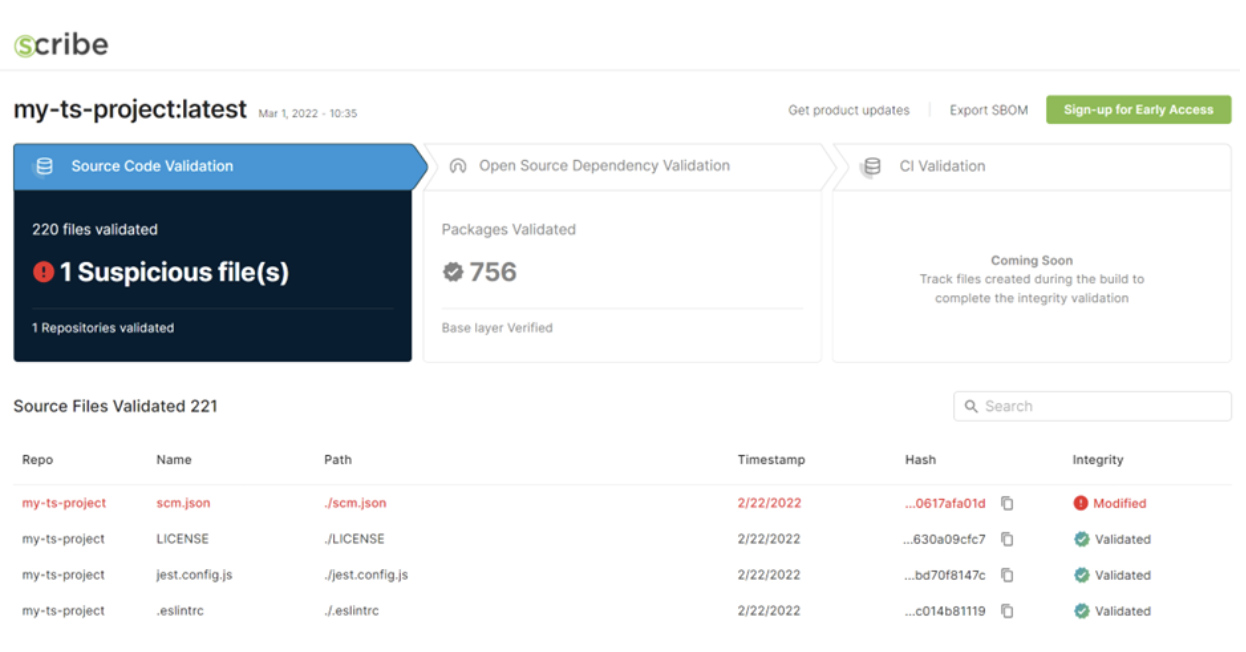
    Scribe Security today unveiled a Scribe Integrity tool that scans software artifacts to make sure they comply with IT organizations’ security policies before they are integrated into an application.

    The Scribe Integrity tool authenticates open source and proprietary source code before it is uploaded into a build. It assumes that all artifacts are “guilty” until they can prove their innocence, said Rubi Arbel, CEO of Scribe Security. That approach makes it possible to ensure the integrity of the overall software supply chain is maintained in a way that doesn’t adversely impact the productivity of developers, he added.

    In addition, the company launched GitGat, an open source policy-as-code tool based on Open Policy Agent (OPA) agent software that enables DevOps teams to periodically run reports that surface insights into the security posture of code residing in GitHub repositories.

    Arbel said that, in time, GitGat’s reach will be extended to add support for additional continuous integration/continuous delivery (CI/CD) platforms.

    The first release of Scribe Integrity addresses Node.js code and the npm package manager with support for additional types of code planned.

    The Scribe Integrity tool also identifies all dependencies to enable DevOps teams to generate an accurate software bill of materials (SBOM) as each software artifact is included in the application, he noted. That’s critical because it enables developers, IT operations and cybersecurity teams to simultaneously see what artifacts, including containers, make up an application, noted Arbel. In the future, the company plans to make available a Scribe Hub that will make it easier to share insights into those software artifacts, he added.

    A series of high-profile security breaches clearly demonstrated cybercriminals’ skill at injecting malware into software artifacts and compromise any application that incorporates that artifact into an application. That malware can then be activated at some later date to potentially compromise any number of downstream applications.

    Those incidents resulted in a greater appreciation for DevSecOps best practices to maintain the integrity of software supply chains. The issue that DevOps teams are trying to address is how to build more secure applications without slowing down the rate at which those applications are built and deployed. As such, DevOps teams are adding tools to the application development process that make it easier for developers to scan code before it is included in an application and verify the integrity of any software component that becomes part of a DevOps workflow.

    It’s unknown how long it may be before the adoption of DevSecOps best practices has a meaningful impact on application security. However, waiting to focus on security until after an application has been deployed is way too late. Cybercriminals today can discover flaws and misconfigurations in applications in a matter of minutes. As more applications are deployed, developers can find themselves spending more of their time fixing vulnerabilities than they do writing new code. A new approach to building applications that are secure from the ground up is clearly required.

  • Resolving CI/CD Permissions Issues to Address Delivery Needs

    Resolving CI/CD Permissions Issues to Address Delivery Needs

    Security concerns and DevOps process issues can stall CI/CD operations. DevOps teams are familiar with the frustrations plaguing their pipelines, whether regulatory or process-based. Operational hurdles are all too common in DevOps pipelines, leading to miscommunication between team members and the broader organization. One of the leading operational issues DevOps teams encounter is permission issues. Permission issues are a seemingly small yet significant roadblock to smooth CI/CD pipelines. Fail to address them and the result is a lack of cohesion between development and organizational objectives.

    Here’s how to streamline these processes, boost security integration within the broader CI/CD framework, and maintain robust security postures.

    Review Pipeline Tools for Permissions and Access

    The DevOps life cycle often contains multiple tools, all with different access needs and permissions. As such, this situation is a security nightmare. Jeremy Hess, head of DevRel at secrets management platform Akeyless, called this a “secrets sprawl.”

    “The combination of proliferation and decentralization of secrets creates an operational burden, if not a nightmare,” he said. “For organizations that operate in both a cloud-native environment and classic IT infrastructure, a duplication issue is created due to having their own secrets managed with different tools and cloud-native solutions.”

    There is also the risk of these tools exposing user credentials and permissions to malicious actors. For instance, configuration tools like Jenkins use plugins to determine access and artifact deployment. Because these tools communicate with other pipeline tools, credential details can often be present in configuration details.

    Developer passwords are not visible on the frontend but could accessible from the system backend. Any user with ‘configure’ permissions could request any credential and then inject them into agents. The result is that AWS keys, Git credentials and/or passwords are at risk.

    To mitigate this issue, the first step involves deleting hard-coded secrets from CI/CD tool files. Distributing secrets between multiple tool configuration files also reduces the possibility of attack while easing developer and engineer access. Password managers are also a good choice, but validate them for security before implementing a solution.

    Practice Least-Privilege Access 

    Access and permission issues often create a lot of frustration among DevOps teams as they are forced to assign blanket access to the majority of users, regardless of members’ roles or job functions. While this situation encourages rapid development, it also creates massive security issues.

    Balancing security with CI/CD needs is tough to get right. That’s where the principle of least privilege comes in. Team members receive access to secrets on a need-to-know basis. Note that this principle applies to everything from apps to systems and connected devices.

    While most teams put this principle into practice, they make the mistake of leaving their process intact. The lack of access audits creates DevOps frustration, not the level of access. CISOs should regularly involve DevOps teams when reviewing access to mitigate issues quickly.

    For instance, embedding a security role within every delivery team will mitigate access-related risks quickly. The security team member will have insights into risk-based access needs and can quickly approve or reject requests.

    Creating an access management repository will also remove any confusion related to role-based access. In addition, record time-based and task-based access permissions in the repository. The result is every DevOps team member understands their access paths before projects get started. It allows them time to offer feedback and request one-off access to sensitive secrets.

    Review segmentation rules within your systems when assigning role-based access. Often, these rules will have to change depending on delivery timelines. Involving all stakeholders in these discussions is good practice and prevents frustration down the road.

    Implementing OTPs and other authentication factors is also a good idea when validating user access to secrets.

    Review OSS Projects

    Open source software (OSS) projects are essential to industry growth but might pose security risks if access is mismanaged. Zan Markan, developer advocate at CI platform CircleCI, summarizes the problem aptly.

    “Often, the company that initiated and that owns a popular OSS project continues to employ the core contributors,” he said. “They will probably be joined by other regular contributors and maintainers that are not part of that company. And then there is everyone else—anyone who occasionally might contribute a fix or a feature.”

    As user access grows, security concerns grow exponentially. Enforcing rigid user-based access is unrealistic and detrimental to an OSS project. However, CISOs or other security-focused managers must review whether sensitive secrets are being passed during builds for pull requests. Monitoring permissions—and who can place requests and roles that review them—will ensure a good level of security.

    Establishing machine identity is also critical, given the degree of non-human access pipelines face. Authentication can be based on verifying whether client runtime container attributes match the characteristics of the valid container. Once authenticated, role-based access can take over, limiting access to secrets.

    It’s also a good policy to destroy containers and VMs after they’ve been used.

    Streamlining DevOps Operations is a Top Security Priority

    DevOps is critical to every organization’s success. Access and permission-related issues are common occurrences, but are easily avoided. Reviewing access and establishing a balance between delivery and operational needs is essential to maintaining a competitive edge.

  • Styra Unfurls Cloud Service for Implementing Compliance-as-Code

    Styra Unfurls Cloud Service for Implementing Compliance-as-Code

    Styra, Inc. today launched an authorization service based on the Open Policy Agent (OPA) software that can be invoked via an application programming interface (API).

    Torin Sandall, vice president of open source for Styra, said the Styra Run cloud service will make it much simpler to embed enterprise-grade authorization capabilities within applications. Today, developers spend too much time building, maintaining and operating their own authorization platforms to manage permissions across multiple applications.

    In addition to enabling developers to access pre-built OPA logic, Sandall noted the service also offloads storage and global replication of end-user permissions data to a cloud service.

    The service itself currently runs on Amazon Web Services (AWS), but Styra plans to make the service available on other cloud platforms in the future, he added.

    OPA makes use of a general-purpose policy enforcement engine that developers can embed within applications using the Rego language. OPA is now being advanced under the auspices of the Cloud Native Computing Foundation (CNCF) and is gaining traction among cloud-native application developers. OPA provides a means to enforce compliance-as-code across a wide range of microservices that now routinely access a wide range of distributed data.

    However, Styra Run should make OPA more accessible to a wider range of organizations, especially those that are looking to shift responsibility for security and compliance further left toward developers as part of a set of DevSecOps processes, noted Sandall. Developers that don’t have a lot of compliance expertise can now rely on a cloud service that enables them to focus more of their time and effort on writing code, he added.

    The arrival of Styra Run also comes at a time when more organizations are reviewing their software supply chain processes in the wake of a series of high-profile security breaches. It’s not clear to what degree compliance and cybersecurity teams have developed an appreciation for OPA, but as more organizations embrace compliance-as-code, the pressure on those teams should decrease as those applications are inherently more secure than legacy applications.

    There will, of course, be some developers that prefer to embed OPA into applications themselves, but a cloud service accessed via API will be the path of least resistance for most developers building software-as-a-service (SaaS) applications, said Sandall. The issue may simply be making developers aware that another low-latency option exists; one that doesn’t require them to deeply master the Rego programming language for the sole purpose of achieving compliance, he added.

    Regardless of approach, the general expectation going forward is that applications will more easily be able to meet a wide range of compliance mandates without requiring IT teams to deploy and maintain dedicated compliance infrastructure. As such, there may soon come a day when any application that doesn’t use some type of compliance-as-code framework will simply be rejected out of hand.

  • How Automated Testing Closes the Development and Delivery Gap

    How Automated Testing Closes the Development and Delivery Gap

    For the past two years, companies have leaned into digital transformation projects to keep their digital offerings at pace with their in-person operations. Rather than become a stopgap, this digital approach became the new standard for the modern employee and customer experience. It also creates friction between a company’s development team and its user base. How long should customers wait for new or updated applications in our increasingly fast-paced business environment? Companies need time for development and testing to deliver quality products, but will the demands of their users force them to cut corners?

    Consider each stage of a customer’s journey. Visiting a website or app and putting something into the shopping cart is only the beginning. Behind the scenes, systems that monitor availability, sourcing, loyalty and promotions come into play. Following checkout and payment, there are systems for picking the product, packing it and delivering it with timely notifications along the way.

    Businesses find themselves in a bind when they have to decide which of those areas to cut back on. There’s really no good answer—enter the continuous delivery mindset. We like to say there is no continuous delivery without continuous testing, but those two areas are often at odds with each other.

    The good news is that there is a way to close the gap between customer demand and necessary development time: Test automation. Here are three ways that test automation can help companies satisfy both the needs of their business and their customers.

    Relieving the Testing Bottleneck

    Moving fast is becoming a competitive advantage for many companies. That speed-to-market opportunity has been heightened as cloud-based, low-code/no-code apps like Salesforce, MS Dynamics, Workday and Oracle have become an industry standard. Today, while plenty of development activities may be handled by low-code/no-code platforms, the test automation of these apps remains a high-code, high-maintenance activity.

    To keep from becoming a bottleneck, teams should plan automation and testing strategies early in the process. This is where continuous development includes continuous testing. Suppose companies can make test automation accessible to more people by removing the need for specialized knowledge and daunting technical constraints. In that case, they will be able to streamline ongoing development cycles.

    Ensuring Higher-Quality Output; Aligning Development and Testing

    One of the keys to putting out a higher-quality product is by adopting in-sprint testing, which aligns development and testing efforts. Each feature is tested and automated as soon as it is implemented so that teams can more easily catch errors early rather than at the end of a development phase.

    The automation also elevates the area of regression testing, as teams make sure new changes haven’t broken existing functionality. As automation moves into the mainstream, a wider range of collaborators become more involved in testing each additional feature.

    Creating a Better User Experience

    Historically, testing has been extremely focused on function and is very technical while user experience efforts remain focused on the stylistic and usability end of the spectrum. But creating satisfying end-to-end user experiences is a critical part of any application adoption, so the two sides should work toward a common goal.

    That common link lies in a company’s business processes. Each process is the starting point for building and designing a test scenario. From start to finish, everyone understands the user’s journey and works together toward making that path as effortless as possible.

    Conclusion

    Today’s modern customers don’t expect a measurable difference in experience between online and in-person. Expectations are at an all-time high, leading companies to push updates to their websites and apps more quickly and more frequently. As companies increase their dependence on software, the way to test that software is evolving to keep pace with development speeds.

    Automated testing can simplify and speed up the testing phase, catching many of the basic errors and leaving testers to focus on more complex functionality.