Category: AI

  • AIOps Builds Organizational Efficiency, Survey Finds

    AIOps Builds Organizational Efficiency, Survey Finds

    Enterprises entered 2020 with big plans. Post-pandemic, AIOps could help them achieve those goals, according to a new research survey from Digitate and CorporateLeader.

    Enterprises entered 2020 with the best-laid plans; many had efforts lined up to expand their use of cloud services and continue their steady efforts to digitally transform their businesses. Then the pandemic happened, and business and IT teams found themselves scattered and with a new playbook: make the organization as effective as it can be while working remotely.

    This sudden shift to remote work exacerbated existing challenges within organizations, from managing hybrid environments, personnel management challenges and teams finding themselves struggling to adjust. Meanwhile, enterprises still had to focus on staying ahead of their competitors technologically. All of these challenges meant there was no room for wasted or time-consuming efforts to manage the underlying business-technology systems.

    To help increase efficiencies, some contend that the answer is artificial intelligence for IT operations, or AIOps. Proponents of AIOps say that AI is needed to augment human decision-making today because of the complexity of modern enterprise environments. Today’s environments often find their operational data spread across on-premises and multiple cloud systems. The result is difficulty in managing infrastructure issues as they arise, and the considerable time it takes to identify and fix IT issues.

    According to a survey of leading European IT analysts and advisories, conducted in fall 2020 by operations automation software provider Digitate and executive network forum CorporateLeaders, the drudgery of managing routine tasks was the most commonly cited reason for turning to AIOps, which was followed by “no proactive capability of detection and correction of system issues” at 64% and “no flexibility to scale with business needs,” also cited by 64% of respondents.

    When respondents were asked to identify the key benefits of AIOps, they highlighted common strategic and operational issues that hinder performance. According to respondents, these include the removal of manual processes (91%), improvements in agility and reliability (82%) and reach predictability (73%). More swift problem resolution also was cited by 73% of respondents.

    In a case study shared within the CorporateLeaders report, Marion Fokkinga, technology advancement manager at Netherlands-based semiconductor maker NXP explained that NXP’s move to AIOps was driven by the company’s swift expansion. “Since 2015, we have been busy with multiple merger and acquisition projects,” Fokkinga explained. “As a result of this, there was less time for innovation and transformation in IT and in the business.”

    The company set out to automate routine operations tasks with AIOps so that their resources could be freed to focus on higher-value tasks. According to Fokkinga, AIOps enables tasks, such as report generation, that previously consumed half a workday to be completed in several minutes. Saving time is the most significant result, said Fokkinga. With AIOps, NXP reports a 97% improvement in incident response time and a 95% reduction of manual effort in some of its supply chain planning work.

    Of course, in the current treacherous business environment, there’s a lot more at stake than simply building enterprise operational efficiencies. Over time, it may come down to the very success of the organization. According to the survey, a full 82% of respondents said that AIOps is necessary to the future growth and transformation of their business. “Respondents who went on to give qualitative answers later in the survey explained that the complexity of hybrid and multi-cloud infrastructures, increasing transactional volumes and the criticality of online business systems make it impossible for traditional IT systems to manage every application and infrastructure without recourse to automation. It was highlighted that the overwhelming amount of data in today’s Operations are simply beyond human analysis capacity,” the report stated.

    One respondent said that, through AI, the performance of some tasks and decisions were improved, as routine tasks were eliminated. That has to be welcome news to enterprises struggling to remain competitive while simultaneously striving to remain productive and agile during a global pandemic.

  • Accelerating AIOps with the Mainframe

    Accelerating AIOps with the Mainframe

    AIOps uses artificial intelligence by combining big data, analytics and machine learning to enhance IT operations. To successfully adopt and scale AIOps, it is critical for enterprises to add the mainframe to the equation. Adopting AIOps requires a holistic approach focused on business processes and workflows. The resiliency of a workflow depends on the health of every link in the chain. In order to be successful, you need visibility and insight throughout the entirety of the workflow.

    In this interview, Maneesh Goyal, AIOps Offering Management program director at IBM, explains how AIOps is changing IT operations and why the mainframe is so critical to the success of AIOps adoption.

    Maneesh is a DevOps expert with over 24 years of experience leading operations and management across hybrid and public cloud environments, including IBM Z. He is also one of the distinguished speakers presenting at Open Mainframe Virtual Summit, along with Mürsel Taşgın, mainframe systems manager at Credit Bureau of Turkey. During their session, Maneesh and Mürsel will discuss how organizations such as Credit Bureau of Turkey are accelerating AIOps by leveraging the wealth of operational data on IBM Z to make quick and accurate decisions in order to improve resiliency.

    Learn more about IBM’s AIOps framework and assessment to determine the next step for your business by attending Maneesh and Mürsel’s session at Open Mainframe Virtual Summit on Feb. 11. To check out the full agenda or to register for free, visit the Open Mainframe website.

  • Using Automation to go All-Digital, Fast

    Using Automation to go All-Digital, Fast

    Before the pandemic, digital transformation was a five-year plan for many companies — or in some cases, a distant vision that kept getting kicked down the road. Now, companies in every industry face an urgent imperative to adapt to an increasingly online-first world: If you don’t go digital, fast, you’re simply out of the game.

    Increasing productivity has been critical for companies as they make this shift. But too often, speed is hindered by time-consuming and repetitive processes that companies can and should easily automate. By automating mundane tasks, employees and businesses can focus on what really matters — increasing scale in today’s work-from-anywhere world, and improving experiences for both employees and customers.

    The Benefits of Automation

    Fundamentally, automation is about digitizing existing business processes to streamline results, and it will be a key element in helping businesses survive and get back to growth. Until now, many companies have focused on applying these tools to the front office: sales, marketing, commerce and supply chains. With most employees now working remotely, it’s harder than ever for team members to do their jobs efficiently. Automating the back office and improving the employee experience is key for businesses to achieve the speed they need to thrive right now.

    Here are three key advantages of bringing automation to the back office:

    1. It improves productivity.In virtually every industry and role, employees are still spending hours every week on mundane and labor-intensive tasks, such as data entry. Automation can speed up these repetitive tasks and streamline lengthy processes, freeing employees up to focus on the “human” aspects of their jobs, like interacting with customers, planning ahead, making decisions or learning new skills. By taking over routine tasks and allowing employees to concentrate on what matters most, automation makes workers more efficient and productive.
    2. It increases scale.There’s only so much an employee can do manually. The time-consuming processes that worked yesterday can’t scale to meet the demands of an all-digital environment.  Automating repetitive tasks means that employees can achieve more in the same amount of time, allowing them to scale their workloads. With time-consuming tasks being taken care of in the background, workers can spend their time on more meaningful work and customer relationships.
    3. It enhances employee experience.Nobody enjoys entering numbers into a spreadsheet. An often overlooked aspect of automation is that it leaves employees more satisfied and engaged with their companies and their jobs. Having fewer tedious tasks on their plates gives employees the chance to tap the skills that machines aren’t as good at, like creativity, communication and decision-making. This is especially beneficial at a time when most employees are juggling more responsibilities at work and at home. Making a more valuable contribution and more meaningful connections is not only rewarding for employees, but also translates to higher satisfaction among the customers they interact with.

    Real-World Examples

    Not everything can be automated, but there’s a lot of room to take the drudgery out of most roles. Take onboarding, for example. Traditionally, when a new hire started, everything happened in person: They attended an orientation, picked up their laptops at the tech bar, met with benefit providers — all of which required orchestration on the part of human resources. With automation, all of this manual coordination can be replicated with an intelligent workflow capable of guiding employees through an onboarding process customized to their specific role and location.

    In another example, HR departments are facing an unprecedented volume of queries about policies around caring for children and other dependents. Using low-code development, companies can easily set up automated, online bots to handle frequently asked questions and guide employees through processes needed to enroll in new services. Automating these queries with bots not only makes the employees themselves more productive, but it also delivers better experiences for both the HR team and the employees seeking answers.

    Automation is Here to Stay

    In today’s world, there is no alternative to a digital business model. Automation is the recipe that will help companies achieve the speed they need to survive now and the edge they need to thrive in the future.

    And there is no turning back — automation is here to stay, regardless of the trajectory of the pandemic. The process of change is never easy, but done right, automation not only leads to a more agile workforce, but also to a happier one.

  • Atlassian’s Shift to the Cloud Gets Underway

    Atlassian’s Shift to the Cloud Gets Underway

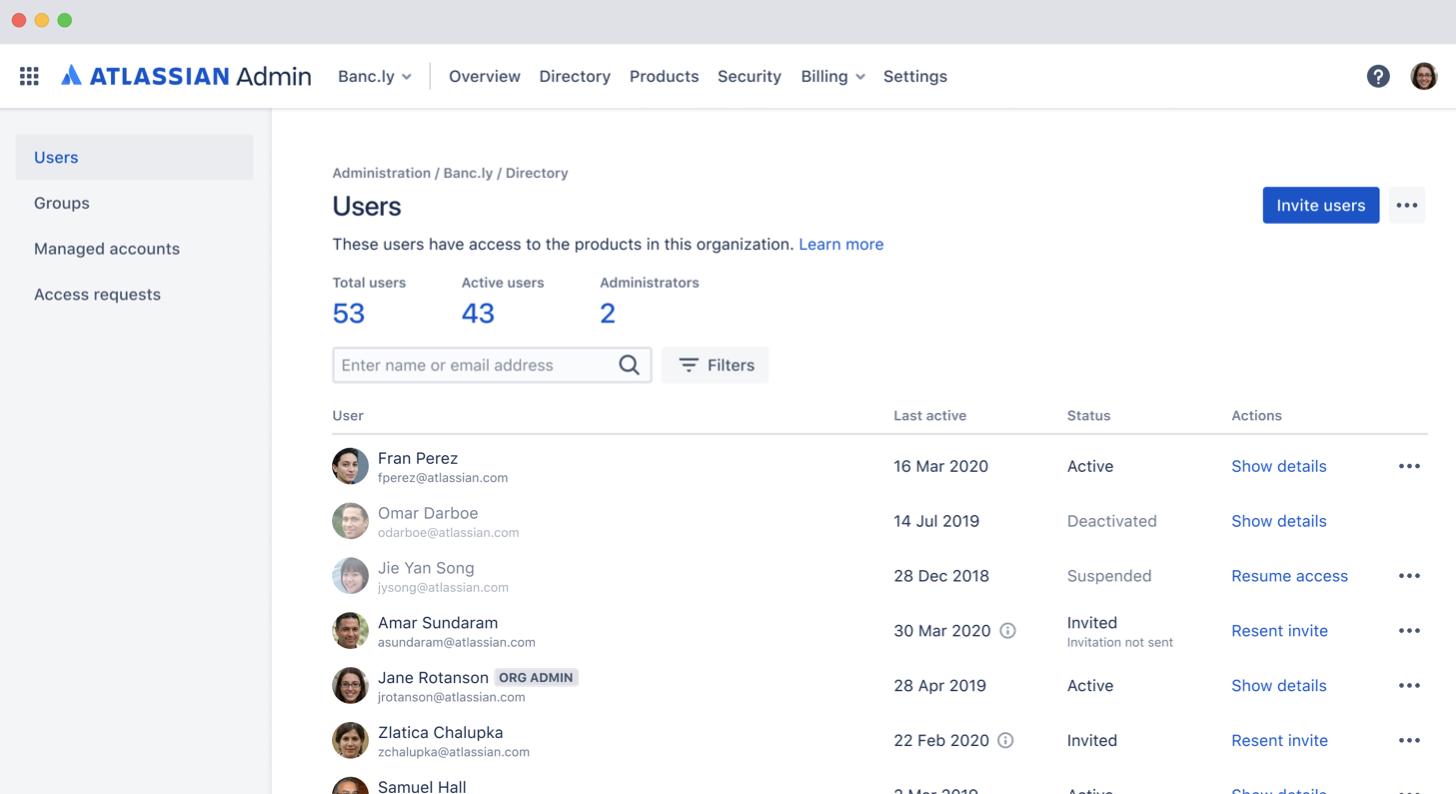
    Atlassian today announced the general availability of Cloud Enterprise, a cloud-based service through which organizations can mix and match the company’s various offerings under a single subscription.

    The company has signaled its intention to shift toward cloud services for months; now, the initial Cloud Enterprise subscription will cover the company’s Jira Software, Confluence and Jira Service Management offerings.

    Bala Venkatrao, head of product for Enterprise Cloud at Atlassian, said the goal is to make it more cost efficient for organizations to consume the company’s software versus merely acquiring a license to deploy software in an on-premises IT environment.

    The company is also making controls available that enable governance of user and change management via a centralized admin hub. Administrators can assign users to instances, configure security policies and monitor usage trends through the hub. There are also built-in integrations with third-party identity-as-a-service providers, to enable administrators to automate provisioning and de-provisioning.

    Administrators can also set up and customize multiple application instances; they can keep data pinned to different regions to customize those instances with specific marketplace applications or configurations for compliance purposes.

    Finally, a marketplace will allow IT organizations to expand the number of applications they consume from Atlassian and its partners. A smart links and app switcher capability for Jira and Confluence Cloud enable easy collaboration across different instances of Atlassian applications.

    Atlassian currently has more than 194,000 customers, so it may take some time to transition the existing installed base to this model. In the meantime, Atlassian is pushing as many new customers as possible toward a cloud platform that makes it easier for Atlassian to keep customers current on the latest release of its software. Atlassian plans to support up to 20,000 users per application instance by later this year.

    Venkatrao said while the Atlassian portfolio is frequently consumed by individual end users, the Cloud Enterprise offering is designed to appeal to CIOs, and other senior level executives, that want to centralize billing for application services now accessed via the cloud. That approach will make it easier for large organizations to take advantage of discounts they may qualify for as overall usage increases, Venkatrao said.

    While Atlassian may be a little late to the software-as-a-service (SaaS) application game, Venkatrao noted that the Cloud Enterprise platform will make it simpler for Atlassian to apply AI to the metadata it will collect. Atlassian has already leveraged AI to improve document search within Confluence and Jira, in addition to employing predictive analytics to surface recommendations for including personnel on a project.

    It may be a slow transition to the cloud for Atlassian, but that transition is clearly underway.

  • OpsRamp Extends AIOps Reach to the Network

    OpsRamp Extends AIOps Reach to the Network

    OpsRamp today announced its AI-enabled IT operations management (AIOps) platform now has the ability to analyze network flows and communications traffic.

    Ciaran Byrne, vice president of product management for OpsRamp, said the new analytics capabilities will make it possible for IT teams to correlate the IT events OpsRamp already tracks on servers and storage systems against multiple types of traffic moving across a corporate network.

    OpsRamp is based on a software-as-a-service (SaaS) platform that simplifies IT adoption of AIOps without having to build and maintain their own management platform or install an AIOps platform on their own infrastructure.

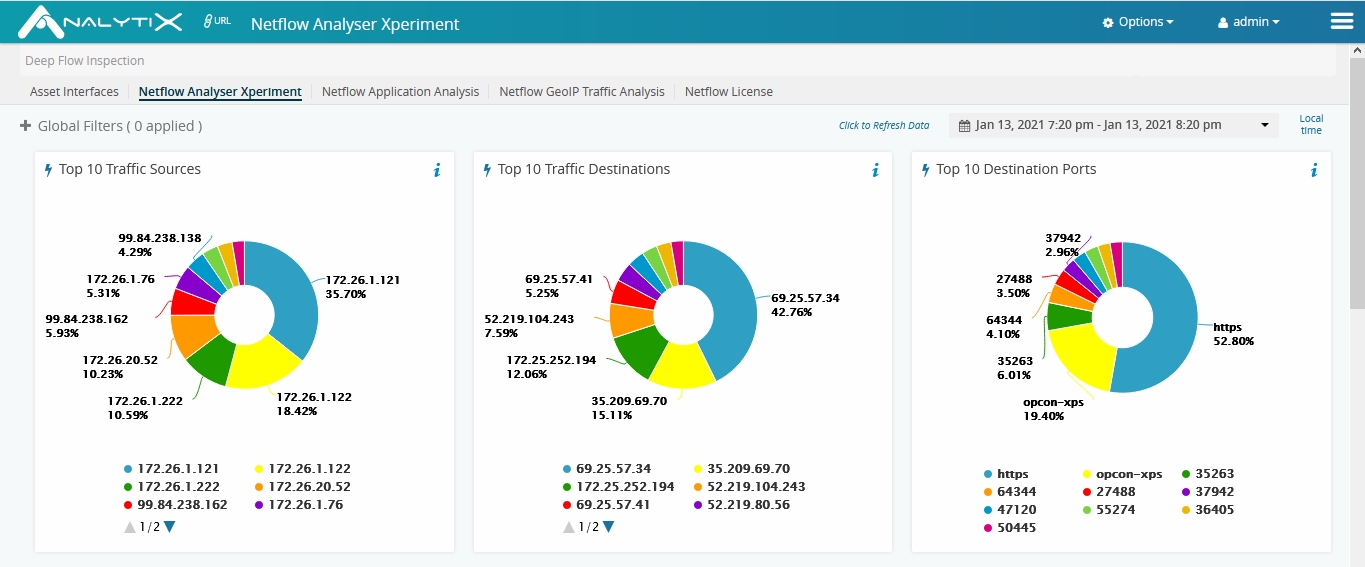
    Rather than acquiring a separate platform to analyze network traffic, OpsRamp is adding an OpsRamp NetFlow monitoring module, for analyzing packets using the NetFlow protocol developed by Cisco, and an OpsRamp Unified Communications monitoring module, for analyzing voice and collaboration data.

    OpsRamp NetFlow provides real-time diagnosis of network latency across wide area networks (WANs). It generates alerts based on network traffic utilization, and delivers insights into network utilization patterns by identifying source, destination, protocols and applications that impact services.

    OpsRamp Unified Communications works in a similar way, surfacing alerts and insights about traffic patterns impacting, for example, Zoom or Microsoft Teams.

    With more employees working remotely, the need to analyze network traffic has become more acute, said Byrne. Network performance degradations can have a major impact on overall application experience, Byrne said.

    Communications and collaboration platforms like Microsoft Teams pose particularly stubborn challenges, because they offer IT teams little to no visibility into that traffic, Byrne said.

    It’s unclear whether – and to what degree – networking and other IT operations will converge, but as AIOps platforms become more accessible, the ability to correlate IT events across multiple infrastructure classes as they transpire will steadily improve. While that may not lead to IT role consolidation anytime soon, it should enhance the level of collaboration teams can achieve.

    In the meantime, AI is poised to have a profound impact on how IT environments are managed. The amount of time spent in “war rooms” performing root cause analysis can be sharply reduced through the use of machine learning. As algorithms surface insights, IT teams will be better able to proactively address issues before they have a major impact on application performance and user experience. It may take time for IT teams to fully trust AIOps platforms, but in the near future, IT professionals will avoid working for organizations that don’t have such platforms in place. For IT professionals, keeping complex application environments running without AIOps platforms will be nearly impossible.

    Of course, transitioning to any type of new IT management platform is no small undertaking. However, as AIOps platforms continue to evolve, the overall cost of managing IT should also decline as leadership justifies the costs of these tools.

  • Measuring the Business Benefits of AIOps

    Measuring the Business Benefits of AIOps

    Staffing levels within IT operations (ITOps) departments are flat or declining, enterprise IT environments get more complex by the day and the transition to the cloud is accelerating. Meanwhile, the volume of data generated by monitoring and alerting systems is skyrocketing, and Ops teams are under pressure to respond to incidents more quickly.

    Faced with these challenges, companies are increasingly turning to AIOps – the use of machine learning and artificial intelligence to analyze large volumes of IT operations data – to help automate and optimize IT operations. But before investing in a new technology, leaders want assurances that it will bring value to end users, customers and the business at large.

    Leaders looking to measure the benefits of AIOps and build KPIs for both IT and business audiences should focus on key factors such as uptime, incident response and remediation time and predictive maintenance to prevent outages that could affect employees and customers.

    AIOps KPIs include employee productivity, customer satisfaction and web site metrics such as conversion rate or lead generation. AIOps can help companies cut IT operations costs through automation and rapid analysis; it can support revenue growth by enabling business processes to run smoothly and deliver excellent user experiences.

    Specific IT and Business Benefits

    AIOps can digest operational data and spit out actionable recommendations for keeping important systems running at peak efficiency. These are the most-cited benefits of the technology:

    • Alert management: In most cases, the first problem AIOps systems will address is reducing the volume of noise: the torrent of alerts that inundate IT operations. AIOps uses clustering and pattern matching algorithms to eliminate as much as 90% of false alarms and other redundant or irrelevant alerts, making it far easier for staffers to focus on what really matters.
    • Incident prioritization and routing: AIOps systems can learn, over time, which types of alerts should be sent to which teams, reducing redundancy and confusion when, say, networking and database teams both get the same alert related to an incident.
    • Event correlation: AIOps can correlate alerts and event data to identify the root cause of an outage or application slowdown so that IT teams can respond faster.
    • Advanced anomaly detection: AIOps systems can identify anomalies to proactively detect abnormal conditions and relate them to business impact. For example, AIOps can predict if a system will run out of disk space based on projected growth or seasonal patterns, even if the growth is non-linear. Or, if there’s a sudden increase in the number of failed server requests, the technology can determine whether the server in question is handling a mission critical task or simply performing routine backups.
    • Automation: AIOps can be used to handle routine tasks such as backups, server restarts and other low-risk maintenance activities which otherwise involve heavy manual effort.
    • Predictive analytics: A more advanced use case could involve predicting events before they happen – such as detecting when network bandwidth is reaching its limit or storage capacity is nearing threshold.

    Seven KPIs for AIOps

    These common KPIs can measure the impact of AIOps on business processes:

    1. Mean time to detect (MTTD): This KPI refers to how quickly it takes for an issue to be identified. AIOps can help companies drive down MTTD through the use of machine learning to detect patterns, block out noise and identify outages. Amid an avalanche of alerts, ITOps can better understand the importance and scope of an issue, which leads to faster identification of an incident, reduced downtime and better performance of business processes.
    2. Mean time to acknowledge (MTTA): Once an issue has been detected, IT teams need to acknowledge the issue and determine who will address it. AIOps can use machine learning to automate that decision-making process and quickly make sure that the right teams are working on the problem.
    3. Mean time to restore/resolve (MTTR): When a key business process or application goes down, speedy restoration of service is key. ITOps plays an important role in using machine learning to understand if the issue has been seen previously and, based on past experiences, to recommend the most effective way to get the service back up and running.
    4. Service Availability: Often expressed in terms of percentage of uptime over a period of time or outage minutes per period of time, AIOps can help boost service availability through the application of predictive maintenance.
    5. Percentage of automated versus manual resolution: Increasingly, organizations are leveraging intelligent automation to resolve issues without manual intervention. Machine learning systems can be trained to identify patterns, apply solutions, such as previous scripts that were executed to remedy a problem, and take the place of a human operator.
    6. User Reported versus Monitoring Detected: IT operations should be able to detect and remediate a problem before the end user is even aware of it. For example, if application performance or web site performance is slowing down, ITOps should get an alert when the issue can be measured in milliseconds; they can then fix the issue before the slowdown worsens and affects users. AIOps enables the use of dynamic thresholds to ensure that alerts are generated automatically and routed to the correct team for investigation, or automatically remediated when policies dictate.
    7. Time savings and associated cost savings: The use of AIOps, whether it’s to perform automation or more quickly identify and resolve issues, will result in both operator time savings and business time-to-value improvements. These have a direct impact on the bottom line.

    These seven AIOps KPIs can be correlated to business KPIs around user experience, application performance, customer satisfaction, improved e-commerce sales, employee productivity and increased revenue. ITOps teams need the ability to quickly connect the dots between infrastructure and business metrics so that IT is prioritizing spend and effort on real business needs. In the future, as machine learning matures, AIOps tools may even recommend ways to improve business outcomes or provide insights as to why digital programs did or did not succeed.

  • DARPA Enlists GrammaTech to Apply AI to Reverse Engineer Code

    DARPA Enlists GrammaTech to Apply AI to Reverse Engineer Code

    The Defense Advanced Research Projects Agency (DARPA) has awarded a research contract to GrammaTech for low code technology that will make it possible for end users to leverage artificial intelligence (AI) without requiring intervention from the original software developer.

    GrammaTech’s AI tool, dubbed ReMath, aims to ease application updates by automatically inferring high-level mathematical representations from existing binaries in systems and embedded software. The tool is currently in development.

    Dr. Alexey Loginov, vice president of research for GrammaTech, said development teams spend a lot of time using low-level tools such as disassemblers, debuggers and decompilers to manually analyze binaries. ReMath will accelerate that reverse engineering process by recovering and converting machine language into representations that end users can directly manipulate, said Loginov.

    The goal is to free developers up to build new software, rather than continuously updating software that has already been deployed, noted Loginov. This approach should ultimately reduce the backlog of application and software development projects organizations have, added Loginov.

    GrammaTech

    The ReMath project is the latest in a series of DARPA contracts awarded to GrammaTech. In general, the company is working towards applying AI to advance DecSecOps via a static application security testing (SAST) tool that identifies vulnerabilities in code. The ReMath project focuses on applying AI to use cases involving, for example, industrial control systems. These systems could benefit from allowing domain experts, with no coding expertise, to maintain and update them on their own, said Loginov.

    Other DARPA projects GrammaTech is actively researching include a type-ahead capability that automatically recognizes existing artifacts in a software repository, said Loginov. This capability will make it simpler for developers to reuse code within the context of a GitOps process without inadvertently introducing additional errors, Loginov said.

    In the future, the potential impact of AI on software development could be profound, as more reliable code moves into production environments. The percentage of code graduating into those environments on the first attempt should increase considerably in the years ahead. That should enable more reliable delivery of application code via continuous integration/continuous delivery (CI/CD) platforms.

    As software development becomes more efficient, the current developer shortage should also ease, and open up resources to launch a greater number of application development projects. Rather than spending time on manual tasks that provide no differentiated value, Loginov said software engineers will be able focus more of their time and energy on process innovation.

    In the meantime, developers should expect to see a rash of development tools with AI capabilities in the months ahead. None of those tools are likely to eliminate the need for developers any time soon; however, much of the drudgery involved in writing code today is likely to be sharply reduced as machine learning algorithms and other forms of AI are applied to software development.

  • AI Everywhere Requires MLOps and NetDevOps to Intersect

    AI Everywhere Requires MLOps and NetDevOps to Intersect

    As xOps workflows become more prevalent in IT, it’s inevitable to see overlap and intersection between them. In networking, NetDevOps has been a hot topic for the past three years. NetDevOps focuses on bringing automation, simulation and validation workflows to network operations. The goal is to reduce errors in production configuration deployment, reduce time to production and create a collaborative workflow across cross-functional teams and network team members.

    MLOps followed a similar trajectory, but with a focus on machine learning workflows. As networking evolves and machine learning and artificial intelligence (ML/AI) start to become more prevalent in all of IT, it’s inevitable that these different operational workflow methodologies start to intersect. NetDevOps evolved out of DevOps, applying lessons learned from software development workflows and applying them to network development. As the conversation shifts to ML/AI, the question currently facing many cutting-edge networking professionals in the data center space is, “Where do NetDevOps and MLOps intersect?”

    The Intersection of MLOps and NetDevOps

    Machine learning and artificial intelligence are most commonly applied to networking in three basic ways:

    • Autonomic networks
      • Intent-based configurations
      • Network devices that self-configure based on contextual information
    • Self-healing networks
      • React to network events to mitigate downtime
    • Telemetry analysis and correlation
      • Take streaming telemetry data and correlate it in a meaningful way

    All the above applications can be implemented in fairly simple ways, and many networks today have at least some variation of these technologies already applied. The challenge is that the majority of these current implementations don’t use true ML/AI. They tend to use decision trees or switch-case conditionals to create conclusions. These conclusions are reached by feeding in a pre-coded set of expected outputs. This requires large datasets, which already exist for fields like image recognition. For instance, it’s fairly easy to confirm the technology is seeing pictures of a banana; although, if the data set is, say, 100,000 images, it may take a very long time to do so manually. ML engineers tend to use existing datasets for this exact reason, but the problem is, few of these datasets exist today in the networking realm.

    Creating a solid, structured ML workflow requires a model that can be trained. This model can iterate multiple times and derive conclusions that do not need to be preprogrammed. In essence, we are trying to create these big datasets ourselves (using automation, of course) instead of relying on existing ones. But to develop such a model, certain foundations are required.

    NetDevOps Foundations

    The first foundation required for ML workflows in NetDevOps is a structured configuration model. This is mostly implemented using automation and standardized data structures. While models like OpenConfig and YANG exist, they are not comprehensive across all features commonly implemented in data centers, so most data models will have to be customized for the use case. Using this data model, and implementing it with automation technology, the ML workflow has an easy way to deploy configuration across an entire network’s fabric without having to configure each node by hand.

    The second foundation required is an environment that allows idempotent configuration iteration so the model can train itself. Idempotence refers to any function you can repeat several times without changing the final result. This is where network simulation is critical. A comprehensive network simulation platform allows the ML system to apply the standardized configuration model, and iterate over configuration evolution. That allows the application to make small configuration tweaks to allow for a nearly unlimited dataset.

    Finally, a good foundation in network MLOps requires telemetry. Historically, telemetry was used as a method to correlate logs and identify problems. Most telemetry solutions have fallen short, though, when it comes to root cause identification and action plan recommendation. These problems are much harder to solve.

    One approach could use a simulation platform to iterate configurations and architectures that eventually lead to matching production logs with simulation attempts. This methodology would train the AI model to identify which triggers affect which nodes. In this methodology, we have two independent tracks; the first to correlating logs to identify patterns and trends in the data, and the second iterating on a network architecture until the logs generated match those from production.

    This solution creates many interesting parallels to existing AI/ML solutions. For instance, iterating on a network would be equivalent to IBM’s DeepBlue learning chess, or AlphaGo learning to play Go. The model trains by playing games, in simulation, against themselves, over and over. With every iteration, they learn something new about how each decision influences an outcome. Given enough iterations, the machines become unbeatable. Matching logs from simulation to production is similar to AI/ML in facial and voice recognition, too. In recognition software, pattern matching is used to train a model that becomes increasingly efficient at identifying images the more data it is fed.

  • BMC Expands Scope of Mainframe Management Portfolio

    BMC Expands Scope of Mainframe Management Portfolio

    BMC this week updated its portfolio of mainframe tools as part of an effort to make mainframe platforms more accessible to IT operations teams and developers.

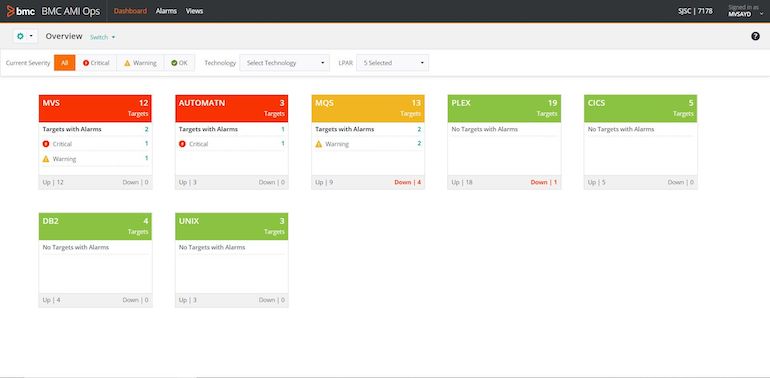
    At the core of these offerings is BMC Automated Mainframe Intelligence (AMI), which embeds machine learning algorithms in mainframe platforms to automate a wide range of processes. BMC AMI supplants the company’s existing MainView tools with a framework that promises to make artificial intelligence (AI) more accessible via a revamped user interface.

    BMC AI Ops

    John McKenny, senior vice president and general manager for ZSolutions at BMC, said an AI model based on the data collected by BMC AI can now be spun up in a matter of minutes, and can identify a potential issue days before it might otherwise occur.

    BMC AMI also exposes a REST application programming interface (API) through which more mainframe tasks will be automated.

    McKenny said as organizations accelerated digital business transformation initiatives in the last year, the need to modernize mainframe platforms became more acute. Mainframes are now the backend for multitier application environments that need to be managed in concert with other platforms, McKenny said.

    BMC is also adding Compuware zAdviser dashboards to the DevOps platform it gained with the acquisition of Compuware last year. BMC also updated Compuware Topaz for Total Test to streamline test creation for mainframe applications. There’s a growing need for better tools to test digital business processes created for the mainframe, noted McKenny.

    Other updates include Control-M job scheduler and Compuware ThruPut Manager integration, to ensure jobs run at or before their expected times on a mainframe, and an update to BMC AMI Data for IMS that simplifies database management in mainframe environments.

    Finally, BMC updated the BMC AMI Security offering with the Compuware Application Audit tool; this update allows for better capture of relevant user access and behavior data.

    McKenny said while mainframes remain one of the most secure platforms available, administrators must ensure security policies are properly implemented. IT organizations should avoid complacency and ensure zero-trust security in mainframe environments, McKenny said.

    McKenny added that, despite their long tenure and the rise of cloud computing, mainframes remain relevant. Many organizations determined that the fastest way to achieve their digital business transformation goals is by extending their mainframe platforms – platforms many of them already rely on to process and analyze transactions.

    What’s changing is the IT professionals that manage mainframes alongside other platforms, such as the cloud. Many of those IT professionals naturally expect integrated AI capabilities that enable the average IT administrator to manage a platform that was once the sole realm of dedicated IT specialists.

  • AIOps: Enabling the Customer Experience Evolution

    AIOps: Enabling the Customer Experience Evolution

    How can IT organizations make sure they’re equipped to resolve operational issues quickly and drive better business outcomes? That’s where artificial intelligence for IT operations, or AIOps, comes in. With the increasingly vast amounts of data generated by infrastructure and business applications, and teams often working in disconnected silos, managing and improving operations through automation — including monitoring and service desk processes — is essential.

    AIOps, a term coined by Gartner Research in 2016, refers to the use of analytics and machine learning to aggregate and leverage historical data from a variety of IT operations tools. AIOps platforms can react to issues in real-time, providing intelligent insights that help teams continuously improve core IT functions and prevent future errors.

    Most IT operations, particularly since the coronavirus pandemic, have migrated to online processes (for example, performance monitoring) that gather ever-increasing amounts of data. At the same time, organizations are under mounting pressure to immediately address any infrastructure problems that arise. In a nutshell, the demands and requirements of today’s IT environments far exceed humans’ abilities to identify, act on information and react to issues at scale and speed. To ensure success, these processes require automation.

    AIOps platforms offer IT organizations this essential operational agility. By moving data out of silos, increasing scalability and speed, IT operations can become more agile – this is particularly beneficial to complex global service and logistics operations with massive data sets.

    In addition, AIOps platforms lower costs by reducing dependence on multiple on-premise solutions, as well as eliminating outsourcing costs. The technology allows organizations to scale infrastructure seamlessly, helping the entire service delivery ecosystem run more effectively and efficiently, and thus improving the customer experience. After all, disruptions in manufacturing production or distribution centers could be devastating, both for customer service and the bottom line. By intelligently automating operations, organizations can boost accuracy, predictability and ultimately, customer retention.

    How to Take Advantage of AIOps

    At the heart of an AIOps platform is big data. That means there is a significant amount of preparation necessary to put the pieces of the AIOps puzzle together so your organization can best take advantage of the platform. Here are the most important steps:

    Collect extensive and diverse data. Data serves as the foundation of implementing a successful AIOps effort, so it is essential to understand how data can be brought together and used effectively. IT organizations should collect data from various sources, including on-premise systems, cloud platforms and applications. Ultimately, the data should be stored in a centralized data lake. An AIOps platform does just that, enabling better decision-making and more meaningful analysis that is quick and thorough, thanks to the use of AI.

    Segregate data into meaningful categories. As data is ingested, it needs to be restructured based on the organization’s operational needs. This is important both for historical data as well as real-time ingested data. Depending on the AIOps use case, you should define categories that align with business rules. For example, for a pharmaceutical device manufacturing company, meaningful categories could include equipment health data, device efficiency data and environmental factors.

    Apply AIOps machine learning to initial big data test cases. Any transformation initiative benefits from starting small. The same is true for AIOps efforts: begin by capturing knowledge, applying machine learning capabilities to limited test cases and iterating at greater scale from there.

    Improve prediction accuracy with measurement and feedback. Once the AIOps platform knows the data pattern(s), it can intelligently predict what comes next, including extrapolation from real-time data. The organization can test and measure; supplying feedback to the model to improve predictions. The AIOps platform can then apply logic to the segregated data and design to define the next, best action. AIOps platforms use historical data, as well as learning from new data, to continuously improve and achieve more accurate decision-making. Ultimately, AIOps is about building a continuous feedback and improvement cycle.

    The Journey to AIOps platforms

    Gartner predicts that large enterprises’ use of AIOps, and other digital experience monitoring tools, to monitor applications and infrastructure will rise from 5% in 2018 to 30% in 2023. That trend is only escalating post-pandemic, as the IT landscape migrates even more to online services and operations. Analyzing data, and intelligently automating operations based on that data, will help organizations achieve greater success.

    Finally, it’s important to understand that it doesn’t take a lot of work to successfully enable AIOps. IT organizations already have the data and the means to extract it. A successful AIOps initiative simply requires the right AIOps platform, an experienced development partner and a defined use case based on a desired business benefit.