Category: AI

  • AIOps and the Myth of ‘Move Fast and Break Things’

    AIOps and the Myth of ‘Move Fast and Break Things’

    Observability through AIOps enables developers to find problems faster by cutting through the noise

    Years and years ago, a little-known entrepreneur named Mark Zuckerberg uttered the phrase, “Move fast and break things,” to his development team. Since then, dev teams have stuck to this “move fast and break things” mantra, where fast development far outweighs dealing with a few bugs down the road. Under this mindset, finding and fixing problems is essentially the last step in the development process.

    The Problem With Breaking Things

    This way of working has served dev teams well over the years as consumers continue to demand speedier innovation. But as end user expectations around deliverability speed rise, so do expectations around service reliability. Customers now want better products faster. Not only does the “break things” way of development lead to extra work for the dev teams down the road, but it also degrades customer trust over time as issues, from a buggy user experience to major security concerns, pop up once the product is already shipped.

    Even Zuckerberg realized this years later, admitting, “What we realized over time is that it wasn’t helping us to move faster because we had to slow down to fix these bugs and it wasn’t improving our speed.” He realized this so much so that the Facebook team officially changed their mantra to “move fast with stable infra” in 2014. Sure, Zuckerberg shouldn’t be our role model after everything that has happened, but if he can realize the need for stable infrastructure, so should we.

    So, how do dev teams meet growing end user expectations while cleaning up the now hurried development process for more stable systems?

    Observability With AIOps and the Development Process

    This is where observability strengthened by AIOps (artificial intelligence for IT operations) comes into play. Observability—or simply making data readily available from a system that you want to monitor—enhanced through AIOps allows dev teams to automate their monitoring. This automation can include applying AI/ML algorithms to all data; eliminating noise; detecting anomalies; correlating relevant metric anomalies, traces, changes and log events triggered by incidents; using contextual data to surface incidents; and identifying probable root causes of those incidents. This gives the teams a more complete picture of what’s happening in their systems, where the bugs are and how to resolve issues quicker, ultimately speeding the development processes overall.

    Through observability with AIOps, dev teams can actually build systems faster by finding problems earlier, cutting out the time-consuming process of retroactively fixing mountains of problems after the product has already shipped. On top of that, finding these problems earlier ultimately leads to more reliable services—and reliable services mean happier customers. When the product actually works the first time around and there’s a system in place to find and fix evolving issues, there’s less legwork to make customers happy. It’s a win-win.

    Observability with AIOps also means freeing developer time and effort to focus more on innovation and less on operations. And who doesn’t want to work on higher impact projects more often instead of spinning their wheels making sure the work they’ve already done is actually functioning correctly?

    We Need to Stop Stalling

    It’s easy to get stuck in your ways, but that is the only reason dev teams haven’t improved their processes to streamline workflows and build better products. Simply put, we have to stop stalling on making this change because, finally, moving fast doesn’t have to mean breaking things.

    We can continue to move fast while building products that are better quality and keep customers happier if we change our mindset around the development process. As developers, it’s our responsibility to evolve with the best strategies for our team, customers, and business—and we now have a way to do so by embracing observability with AIOps.

  • Granulate Applies AI to Linux Server Optimization

    Granulate Applies AI to Linux Server Optimization

    Granulate today announced that a platform that leverages machine learning algorithms to optimize Linux server environments running on-premises or in the cloud is now generally available.

    The Granulate platform employs agents, dubbed gAgents, that install machine learning algorithms to continuously optimize deployments across a server environment, said company CEO Asaf Ezra. The company also launched gCenter, a portal through which IT teams can manage the deployments of those agents.

    The Granulate agents automatically learn the specific resource usage patterns and data flow of any applications. By analyzing CPU scheduling order, oversubscribed locks, memory, network and disk access patterns, the agent also identifies over-subscribed resources, bottlenecks and prioritization opportunities. It then tailors scheduling and prioritization decisions regarding CPU, locks, caches and network access at the operating system level to improve the application performance.

    Ezra said the agents created by Granulate will then automatically optimize the server environment based on parameters defined by IT teams using gCenter. That capability not only enables IT teams to reduce costs by 60% but it also results in a 40% improvement in response times and a 5X improvement in overall throughput without any changes to application code being required, he said.

    According to the company, more than 40,000 instances of gAgent have already been deployed by IT teams at PicsArt, Perion, AppsFlyer and Coralogix.

    The gAgents are designed to install easily using a single command line on any Linux server. Once installed, Ezra said, it’s not long before IT teams discover they can significantly reduce their cluster size and downsize their machines.

    In the wake of the economic downturn brought on by the COVID-19 pandemic, IT teams are under more pressure than ever to reduce costs. IT environments, however, have often become too complex to optimize without relying on some form of artificial intelligence to automate IT operations (AIOps).

    While many IT teams may have initially been dubious of the effectiveness of AI, it’s become increasingly apparent that optimizing IT environments without relying on machine learning algorithms to some degree isn’t feasible.

    The challenge, of course, is making sure that whatever form of AI employed is making the right optimization decisions. As such, most IT teams tend to launch small AIOps projects initially until they can verify that the decisions being made are valid. Once a level of trust is established, many of the tedious tasks that IT teams that once were performed manually are either eliminated or, at the very least, reduced sharply.

    It’s not clear exactly what impact AIOps in all its forms will have on IT jobs. In theory, smaller IT teams should be able to manage larger IT environments. However, rather than eliminating positions, most organizations appear to be increasing the volume of applications they can deploy as the overall IT environment becomes more automated.

    Like it or not, IT is becoming more automated. The issue now is determining precisely where the interface between IT administrators and machines that can manage themselves now lies.

  • Snyk Acquires DeepCode to Apply AI to DevSecOps

    Snyk Acquires DeepCode to Apply AI to DevSecOps

    Snyk today announced it has agreed to acquire DeepCode as part of an effort to apply artificial intelligence (AI) to DevSecOps.

    DeepCode has developed an interpretable machine learning semantic code analysis tool that scans code anywhere from 10 to 50 times faster than existing approaches. DeepCode currently supports Java, JavaScript, Python, TypeScript and C/C++ programming languages. Developers get started by connecting the DeepCode bot to their GitHub, BitBucket or GitLab accounts or directly within their integrated development environment (IDE). DeepCode then immediately starts reviewing each commit with no additional coding required. The bot is currently free for teams of up to 30 developers.

    Snyk CEO Peter McKay said those machine learning algorithms dramatically reduce both false negatives and false positives as they learn the application environment. That code scanning occurs in real-time, thanks to a Datalog solver developed by DeepCode, which McKay said means code scanning can now keep pace with the rate at which applications are being developed.

    While there’s widespread agreement that more responsibility for application security needs to shift left toward developers as part of any effort to embrace best DevSecOps processes, getting the right security tools into the hands of developers has been a challenge. Developers tend to resent having to wait for security scans to be completed, especially at a time when the rate at which applications are being developed and deployed has been accelerated as organizations embrace digital business transformation more aggressively.

    In effect, code scanning as implemented today is often viewed as a bottleneck. That issue goes away, however, if scanning can occurs in real-time. Armed with that data, it then becomes possible to also prioritize which vulnerabilities to address in code first in addition to in, some cases, automating bug fixes.

    In an ideal world, security will become a natural extension of any quality assurance process implemented by a DevOps team. The challenge right now is bridging a cultural divide between DevOps and cybersecurity teams that have workflows that operate at dramatically different cadences. The more automated the code scanning process becomes at the front end, the fewer security issues will need to be addressed by theses teams as applications are either being deployed or, worse yet, after they are already running in a production environment.

    Fresh off raising an additional $200 million in funding that was used in part to acquire DeepCode, Snyk claims there are already 1.5 million developers using its tools worldwide and that its revenue grew 275% in the last year. Privately held, Snyk claims to have a valuation of $2.6 billion. The next challenge is to expand adoption of Snyk tools across the roughly 24 million developers that are writing code today, said McKay. As part of that effort, Snyk recently formed technology alliances with both Red Hat and Docker Inc.

    Naturally, it may take some time for that goal to be realized. However, with more developers now being held accountable for security, the chances are good that many of them will soon be looking to ruthless automate security in much the same way they are moving to automate every other aspect of IT.

  • PagerDuty Applies AIOps to IT Incident Management

    PagerDuty Applies AIOps to IT Incident Management

    PagerDuty, at its online Summit20 conference today, unveiled a bevy of updates that apply machine learning algorithms across a wide range of workflows across the PagerDuty incident response platform.

    In addition, PagerDuty today announced it will acquire Rundeck, a provider of an IT automation platform that auto-remediates incidents by enabling playbooks to automatically execute whenever there is an issue, for $100 million.

    Jonathan Rende, senior vice president of products for PagerDuty, said the overall goal is to make IT teams more efficient by applying AIOps at a time when organizations are trying to reduce to the total cost of managing increasingly complex IT environments.

    At the same time, Rende said PagerDuty is also moving to reduce the fatigue that inevitably ensues when trying to determine the relationship between the thousands of alerts that all the elements of an IT environment can now generate. The goal is to provide IT teams with more context and actionable intelligence, said Rende.

    As part of that effort, PagerDuty is now integrating change events that occur in code repositories via new integrations with GitHub, Puppet and Evolven. The bulk of IT incidents stem from changes made to the IT environment so via these integrations it will become easier to identify the most likely root cause of an issue, said Rende.

    PagerDuty has also added new capabilities to its Service Directory that employs machine learning algorithms to dynamically surface dependencies between people, changes, incidents and services in real-time. As IT environments become more complex thanks to the rise of microservices, he said it’s now more critical than ever to track relationships across workflows spanning multiple IT teams. The challenge is that existing manual processes can keep pace with the rate of change now occurring in IT environments, Rende added.

    PagerDuty is also moving to reduce the number of alerts that are generated by enabling the PagerDuty Event Intelligence module to surface recommendations generated by machine learning algorithms that suggest ways to group alerts to better streamline incident responses. In addition, IT teams can now pause alerts if they decide to allow systems to auto-remediate before they decide to intervene.

    The company is also extending the reach of an application programming interface (API) for analytics it created to enable IT teams to launch queries against the data collected by PagerDuty. In addition, PagerDuty is making available an Analytics Maturity Model that provides access to benchmark data from more than 13,300 customers to both compare their efforts with other IT teams and discover additional best practices.

    PagerDuty today also announced one-click integration with the Zoom video platform to enhance collaboration, as well as extending its existing integration with Microsoft Teams to include a similar one-click capability.

    Finally, PagerDuty also launched an instance of its platform for customer service teams that also provides enhanced integrations with Zendesk and Salesforce Service Cloud. With more organizations dependent on digital business processes to survive, Rende said the need to automate customer service processes has never been more pressing.

    At the same time, IT teams are struggling to keep pace with the rate of tickets being generated by employees who are now working from home. Put it all together and it becomes abundantly clear that continuing to rely on legacy approaches to IT incident management will simply not suffice.

  • Puppet Deepens Windows Integration

    Puppet Deepens Windows Integration

    Puppet today announced it has extended support for Windows environments across its portfolio of IT automation tools by adding a Group Policy Migration capability that enables multiple Windows configurations to be tracked simultaneously and offering to assist organizations seeking to deploy the open source Chocolately package manager.

    In addition, Puppet has extended its support for Microsoft tools by adding a Puppet PowerShell Desired State Configuration (DSC) Builder module, through which the Powershell tools Microsoft relies on to configure operating systems are directly exposed.

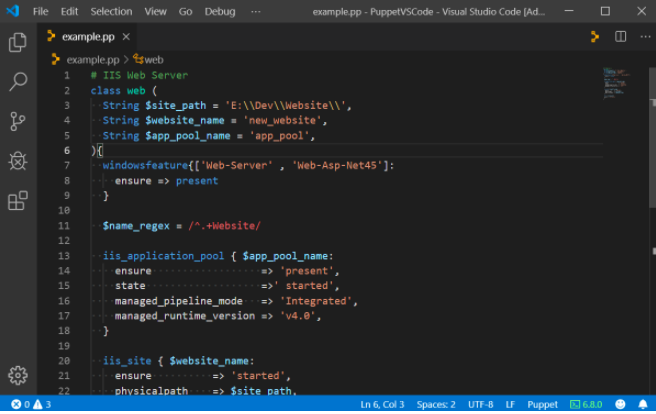
    Finally, Puppet has also added a Puppet VSCode Extension that gives Windows administrators the ability to invoke the Puppet Domain Specific Language (DSL) to access capabilities such as Intellisense and error-checking using their existing user interface and text editor for Windows.

    Puppet CTO Abby Kearns said interest in IT automation has significantly increased in the wake of the downturn brought on by the COVID-19 pandemic. While IT organizations that have been running instances of Linux have had access to a broad range of IT automation tools for years, Windows environments have not enjoyed the same level of parity even though half the workloads organizations are trying to manage today are based on Microsoft.net code, she said.

    With more pressure to automate than ever, Puppet sees an opportunity to fill that void, Kearns added.

    By relying on Puppet tools to automate both Linux and Windows platforms, an opportunity to reduce the total cost of IT also presents itself as organizations look to either limit or reduce IT headcount. Puppet claims there are already more than 40,000 organizations using its tools, including more than 80% of Global 5,000 organizations.

    It’s not clear to what degree Microsoft is invested in IT automation tools, especially compared to IT vendors that make managing infrastructure as code both inside and out of the cloud their sole focus. However, since it launched Azure Microsoft has been investing in tools to manage infrastructure as code. The depth of the Puppet portfolio enables IT organizations to also apply IT automation to operating systems and now to applications via Chocolately.

    Less clear is to what degree IT organizations may finally unify the management of Windows and Linux systems as part of an effort to reduce costs in the wake of the downturn. Most organizations continue to manage Windows and Linux systems in isolation. However, as IT organizations embrace IT automation more broadly, many are looking to standardize on a common set of best DevOps practices whenever possible.

    In the meantime, the opportunity to extend IT automation into the midmarket remains significant. Most enterprise IT organizations have already embraced IT automation to a significant degree. Midmarket IT teams have generally not had the skills and resources required to manage infrastructure as code. However, as IT automation tools become more accessible to the average IT administrator, there may come a day soon when broad swaths of IT systems deployed by midmarket IT organizations will finally be automated.

  • NVIDIA to Create AI Powerhouse by Acquiring Arm for $40B

    NVIDIA to Create AI Powerhouse by Acquiring Arm for $40B

    NVIDIA has announced its intention to acquire Arm from SoftBank for $40 billion as part of an effort to create a juggernaut that will build processors optimized for artificial intelligence (AI) applications that span edge computing deployment to the cloud.

    Under the terms of the proposed deal, Arm will operate as a subsidiary of NVIDIA and will continue to headquartered in Cambridge, UK. NVIDIA will pay to SoftBank a total of $21.5 billion in NVIDIA common stock and $12 billion in cash, which includes $2 billion payable at signing. SoftBank will retain a 10% stake in NVIDIA.

    NVIDIA CEO Jensen Huang during a conference call also committed to licensing the software NVIDIA uses to make graphical processor units (GPUs) using the same licensing model Arm has employed to encourage manufacturing partners to create processors based on its designs. In theory, that approach could substantially lower the cost of GPUs once the deal closes.

    However, because of all the regulatory approvals required, Huang said NVIDIA could not commit to a timeframe for the close of the deal. Previously, Huang noted it took NVIDIA a year to close the acquisition of Mellanox, a provider of storage and networking infrastructure.

    In addition to providing processors that drive gaming and CAD/CAM applications, GPUs from NVIDIA are widely employed to train AI models more efficiently than x86 processors from Intel or AMD. Processors from Intel are used more often to run the inference engines for an AI model once it is deployed. With the acquisition of ARM, NVIDIA gains access to processor technology that is emerging as a rival architecture for deploying AI models on a wide range of server and mobile computing platforms. Currently, Arm is best known for providing processors for mobile computing devices such as smartphones, which eventually will also be infused with a wide variety of machine and deep learning algorithms.

    In the meantime, many organizations continue to struggle with implementing AI. It typically takes a team of data scientists six months or more to build an AI model. Once that model is built, it then needs to be incorporated into an application as part of a DevOps workflow. In the meantime, business assumptions may change, rendering the AI model irrelevant. That requires the data science team to build a new AI model. In addition, as new data sources become available, AI models need to be updated. Most organizations are just now defining the processes for building and deploying those models, otherwise known as machine learning operations (MLOps), using many of the principles that were first defined by DevOps teams.

    Once those MLOps processes are defined, of course, IT teams then need to meld MLOps and DevOps workflows to keep applications that are updated more frequently synchronized with the AI model on which those applications increasingly depend.

    At this point, it’s clear every application will incorporate some level of AI. However, the speed at which AI might become pervasive is not likely to be all that fast anytime soon.

  • Algorithmia Looks to Meld MLOps and DevOps

    Algorithmia Looks to Meld MLOps and DevOps

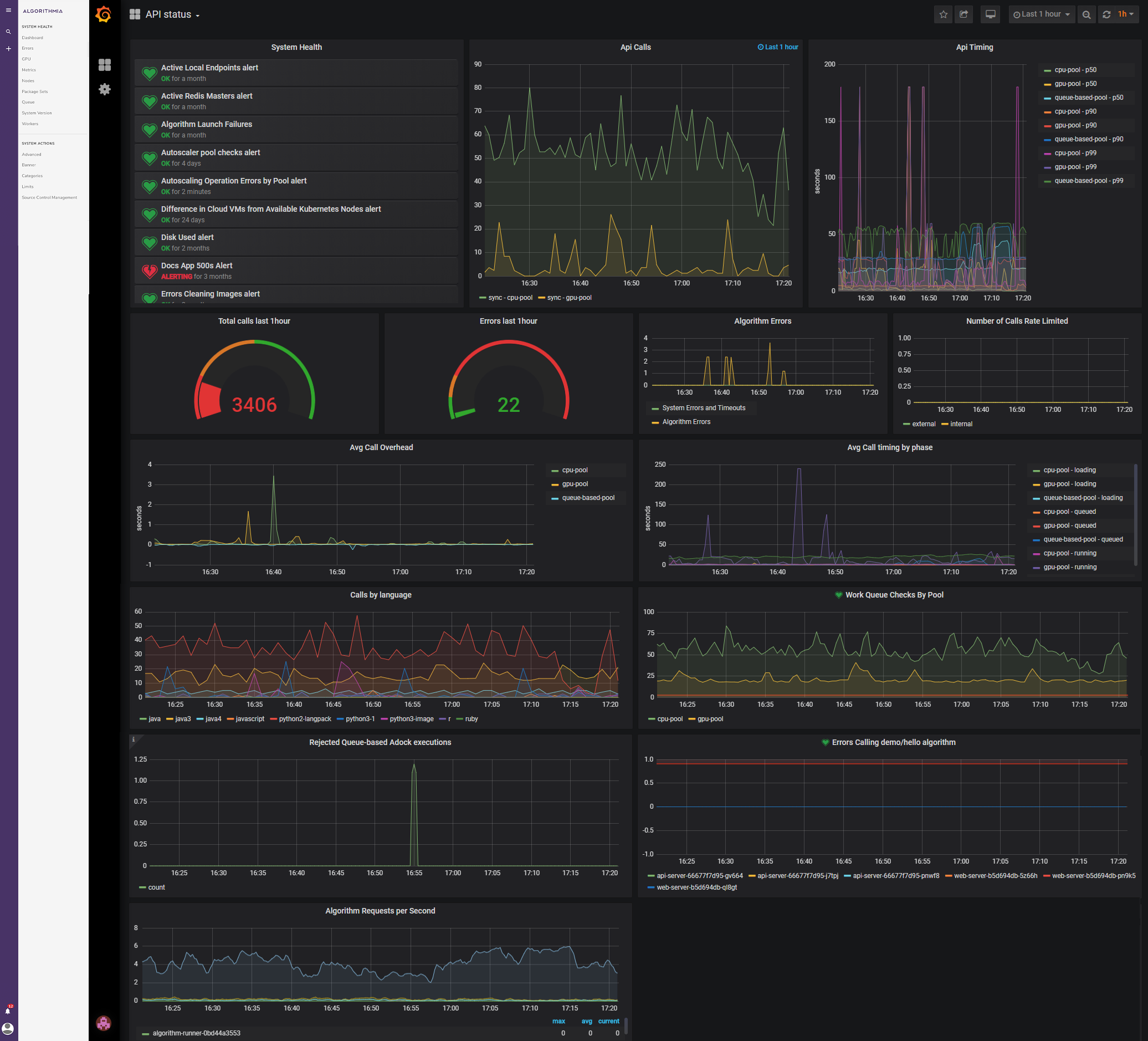
    Algorithmia, in the latest update to the enterprise edition of its namesake machine learning operations (MLOps) platform, is enabling software development lifecycle practices to be applied to the building of algorithms by making it possible to debug them using desktop tools that are widely employed.

    The enterprise edition of Algorithmia will enable users to write and run local tests for algorithms as shared local data files. Desktop developer tools that can now integrate with that process include PyCharm, Jupyter Notebooks, R Shiny, Android, iOS, Cloudinary, Datarobot and H2O.AI.

    In addition, Algorithmia MLOps has extended its support for the latest graphical processor units (GPUs) available on Amazon Web Services (AWS) and Microsoft Azure.

    Finally, the company has added support for AWS C2S, a private cloud for intelligence services, and AWS GovCloud.

    Algorithmia CEO Diego Oppenheimer said IT teams building artificial intelligence (AI) applications are applying many of the same best DevOps practices employed elsewhere in the organization. Making it possible to debug those applications on a local desktop makes it easier for organizations to construct those DevOps workflows, he said.

    The Algorithmia platform enables IT teams to control the provenance of all components of ML operations, including certificate authorities, operating systems, container images, code, dependencies and ML models employed.

    Many organizations today are struggling with how to meld MLOps and DevOps processes. The rate at which AI models are created and updated is typically much slower than the rate at which the applications those models are infused is typically much slower. Data scientists are now coming to terms with how to deploy and update AI models within the context of a larger set of DevOps processes.

    In the wake of the COVID-19 pandemic, interest is AI is rising. Organizations are looking for ways to leverage machine learning algorithms to both drive down costs and increase revenue by automating a wide range of tasks. A recent global survey of 2,737 information technology and line-of-business executives conducted by Deloitte finds nearly two-thirds of the survey respondents (61%) said AI will substantially transform their industry in the next three years. More than half (53%) also noted they have spent more than $20 million during the past year on AI technologies and the talent required to master them.

    However, the same survey noted over half the respondents (56%) said their organization is slowing adoption of AI technologies because of the emerging risks. Obviously, improving the debugging process for applications that incorporate machine learning algorithms could go a long way toward reducing those risks.

    It’s not clear to what degree AI might one day transform the application experience. It is safe to say that eventually, almost every application will incorporate machine and deep learning algorithms to automate one or more processes. Those algorithms won’t eliminate the need for humans as much as they will automate rote processes that today consume more time than anyone prefers. The challenge, of course, will be making sure algorithms perform those tasks consistently as more data becomes available.

  • OpsRamp Adds Synthetic Monitoring to AIOps Platform

    OpsRamp has extended the capabilities of its namesake AIOps platform to include synthetic monitoring capabilities alongside existing tools for monitoring end user experiences.

    Bhanu Singh, senior vice president of engineering and DevOps for OpsRamp, said the Summer 2020 Release of the software-as-a-service (SaaS) platform adds synthetic monitoring that not only identifies bottlenecks across multi-step transactions but also correlates transaction performance such as page responsiveness and page timeouts with business metrics such as conversion rates and completion rates.

    By combining synthetic and end user monitoring capabilities, OpsRamp is effectively reducing the total cost of monitoring at a time when many organizations are under increased pressure to reduce costs, noted Singh.

    The OpsRamp Summer 2020 Release also improves monitoring with transaction latency breakdown for each step that contributes to user experience issues.

    It also adds visualizations for event correlations enabled by machine learning algorithms, support for HTTP response header logging for web performance insights and the ability to customizable transaction steps to provide more context.

    The OpsRamp Summer 2020 Release also adds 22 monitoring integrations for Amazon Web Services (AWS), including AppStream, Cognito, EventBridge, GuardDuty, Lex, OpsWorks and SageMaker.

    OpsRamp has added alert integrations with AppDynamics, Microsoft Systems Center Operations Manager, Sumo Logic and Sysdig. In addition, OpsRamp can now consume Sysdig events.

    Finally, OpsRamp is making it possible to access alert sequencing explainers that describe how the machine learning algorithms work. Alert sequence policy status shows model training progress at each stage of the event management life cycle.

    Singh said this latter capability is critical if IT teams are to gain confidence in AIOps platforms such as OpsRamp. In the wake of the downturn brought on by the COVID-19 pandemic, the need for AIOps has never been more pronounced. IT organizations are now under more pressure than ever to automate IT operations as part of a larger effort to reduce costs.

    The challenge they face is IT environments have arguably never been more complex. In many IT environments, the level of complexity is no longer feasible to manage IT processes manually. Automating IT processes is challenging because in most cases the IT environments have been customized extensively. AIOps presents an opportunity to employ machine learning algorithms to learn how each application environment functions and then automate it based on best practices.

    At this juncture, it’s more of a question of the degree to which IT organizations will be relying on AIOps. It may be a while before IT teams gain confidence in AIOps tools. However, with each passing day, machine learning algorithms become a little bit smarter. They may never have the intelligence of a human IT administrator; however, they never forget what they learn, require time off or quit to take another job.

    On the downside, of course, is that should machine learning algorithms make a mistake, the potential damage to an IT environment could be significant given the level of scale machine learning algorithms operate on. As such, IT organizations will always be well-advised to make sure the appropriate level of human supervision is always available.

  • Micro Focus Extends AI Testing Tools Reach

    Micro Focus Extends AI Testing Tools Reach

    Micro Focus has extended the capabilities of a family of Unified Functional Testing (UFT) testing tools infused with artificial intelligence (AI) to include support for both web-based and mobile applications.

    In addition, UFT testing tools will now allow a single script to automatically run on multiple platforms and browsers, eliminating the need to create multiple scripts for each platform.

    A crowdsourced feedback mechanism to improve recognition of objects such as a new widget has also been added to improve the AI model embedded in Micro Focus testing tools ability to recognize unique user interface paradigms.

    Finally, Micro Focus is making available an AI software development kit (SDK) and natural language processing (NLP) engine that makes it possible for both technical and non-technical users to create tests.

    Archie Roboostoff, product director for Micro Focus, said the natural language capability will make it possible to include end users of an application more easily in the functional testing process.

    As the responsibility for testing continues to shift left, he said, it’s become more important to automate as much of the functional testing process as possible. Developers and end users typically don’t have the time or often the expertise needed to build these tests.

    The challenge organizations face is the more application code they build and deploy, the more time they often spend on debugging applications. Many organizations wind up diverting resources from application development projects just to keep pace with the rate at which applications are now being built and deployed, noted Roboostoff.

    The paradox is that diversion of resources conspires to constrain the rate at which any additional applications are built. AI can play a critical role in breaking that logjam by reducing the time need to surface issues faster, said Roboostoff.

    At the same time, Micro Focus UFT tools further streamline the testing process by applying the AI capabilities it developed for mobile applications to web-based applications, he added.

    It’s not likely AI will eliminate the need for humans to test applications anytime soon. However, there are many routine issues that regularly manifest across different application development projects. As developers test more of their own code before it is officially promoted within the context of a DevOps process, it should be possible for development teams to rely on AI tools to surface issues they can address long before anyone knows they even existed.

    As is the case with every AI tool, an IT organization will need to gain confidence in the AI model embedded within any testing tool. The more AI tools are exposed to code, the more accurate they become.

    Regardless of the level of comfort with AI, it’s apparent application testing needs to become more automated. In the wake of the economic downturn brought on by the COVID-19 pandemic, most organizations will not be in a position to throw more bodies at application testing. The issue, of course, is most organizations have never been more dependent on applications to drive revenue at a time when most individuals are working and shopping from home more than ever to help contain the spread of COVID-19.

    The difference between success and failure during this so-called “new normal” will often come down to the level of testing applied to the applications on which many businesses are now almost solely dependent.

  • VMware’s Blue Medora Buy Advances AIOps

    VMware’s Blue Medora Buy Advances AIOps

    VMware has announced it will acquire Blue Medora, a provider of a service for integrating data collected by IT monitoring tools, to expand its efforts to advance the adoption of artificial intelligence to automate IT operations (AIOps).

    Roy Ritthaler, vice president of cloud management for VMware, said Blue Medora provides VMware with a software-as-a-service (SaaS) platform that is employed to inform VMware vRealize, an IT automation suite that is now being used by more than 400 customers.

    The data Blue Medora collects will also be employed within Project Magna, a research and development initiative that applies machine learning algorithms and other forms of artificial intelligence (AI) to automate IT operations, he said. Project Magna is based on a reinforcement learning engine that automates the tuning of multiple sub-components of the overall IT environment, resulting in what VMware calls “self-driving data centers.”

    Ritthaler said the goal is not to replace IT professionals as much as it is to eliminate rote tasks while making it easier to manage increasingly complex IT environments at scale. It then will become feasible for a smaller number of IT professionals to manage hybrid cloud computing environments, he noted.

    Blue Medora’s True Visibility Suite provides VMware with visibility not just into IT infrastructure but also all the way up the application stack.

    Ritthaler said it’s only a matter of time before most management frameworks are accessed as service, given all the data that needs to be collected and then analyzed to surface meaningful insights. It’s not clear how roles with IT organizations will evolve once those insights are surfaced regularly. Most enterprise IT organizations today rely on multiple specialists to optimize all the components that make up the IT environment. In theory, AIOps will make it possible for IT generalists to manage an IT environment without having to rely on so many specialists.

    AIOps undoubtedly will also have a profound impact on DevOps processes. As more IT operations become automated, the amount of time and effort spent managing IT infrastructure should decline.

    Interest in IT automation is on the rise in the wake of the COVID-19 pandemic. With many IT professionals working from home as much as possible, organizations are looking to automate rote IT processes to make them easier to manage remotely. In many cases, achieving that goal will require IT teams to rely more on tools that are accessed as a cloud service.

    Regardless of the path forward, it’s apparent the management of IT is about to be utterly transformed.

    It’s not that IT organizations will suddenly have a greater appreciation of IT automation. However, the pandemic has added more urgency to an IT transition that was already underway prior to the pandemic. The issue now is not so much whether to embrace IT automation as it is determining what can be automated for a consistent outcome across IT environments that frequently are made up of a diverse yet not especially well-integrated range of platforms.