Author: Mike Vizard

  • Lucidchart Launches Tool to Visualize AWS Cloud Environments

    Lucidchart Launches Tool to Visualize AWS Cloud Environments

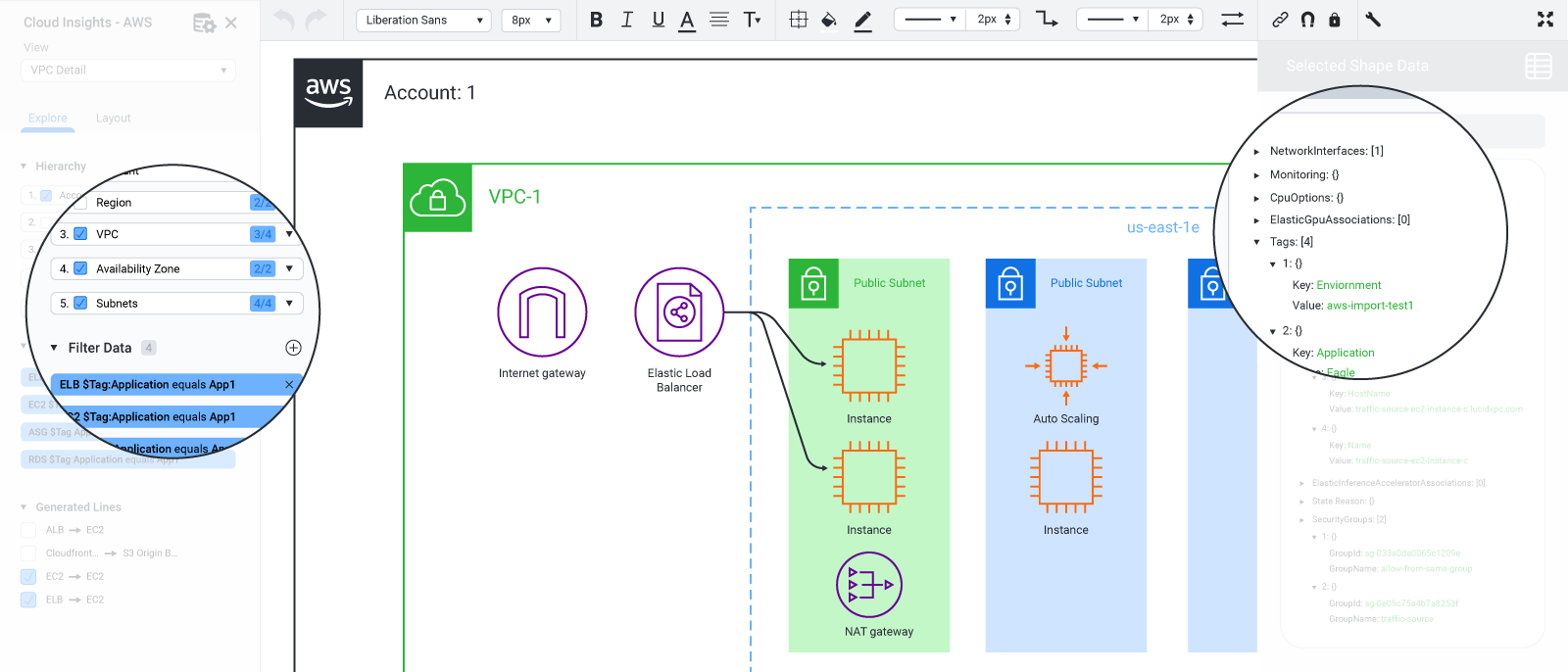
    Lucidchart today added a visualization tool that generates interactive diagrams of an IT organization’s Amazon Web Services (AWS) environment.

    Dan Lawyer, senior vice president of product at Lucidchart, said Lucidchart Cloud Insights makes it possible to automatically visualize all the services an organization is consuming from the cloud service provider, with support for other cloud platforms planned.

    One of the biggest challenges organizations regularly encounter today is the only way they have of understanding what services are being consumed is to analyze the monthly bill made available by a cloud service provider, he said.

    Lucidchart Cloud Insights is designed to make it easy to determine what services are being consumed in real-time, Lawyer said, noting IT teams can also visualize cloud governance data along and apply filters and save views.
    Armed with that information, IT organizations can then better control spending across cloud services that, in terms of costs, are often widely divergent. Developers, for example, don’t always pay close attention to which tiers of service provide the optimal level of cost of a certain class of workloads. A high-fidelity approach to visualizing how services are consumed provides an effective means to have that conversation, noted Lawyer.

    Once an issue arises it can be resolved faster because everyone involved is capable of visually inspecting the same set of interactions occurring at the same time, he added.

    Lucidchart already provides visual workspaces in the cloud that combine diagramming, data visualization and collaboration tools to make it easier for teams to collaborate. Lucidchart Cloud Insight now extends that capability into IT operations, Lawyer said, noting IT teams traditionally have relied on tools such as Microsoft Powerpoint to try and visualize consumption patterns.

    The launch of Lucidchart Cloud Insight comes at a time when more workloads are moving on to public clouds in the wake of the COVID-19 pandemic. Given the uncertainties surrounding when IT staff might be able to access an on-premises IT environment, many organizations are accelerating the rate at which application workloads are being deployed in the cloud.

    The challenge IT organizations face is that moving applications into the cloud doesn’t always yield consistent cost savings. IT teams constantly need to monitor how IT infrastructure resources are being consumed to keep IT budgets under control. The issue is that developers frequently spin up cloud services without telling anyone in IT about it until a bill shows up. Worse yet, many developers often forget to de-provision virtual machines and other cloud resources they’re no longer using.

    Of course, as more cloud platforms are invoked, the management issue only becomes that much more complex. Going forward IT teams will want to visually compare and contrast how services are being consumed across multiple clouds. Whatever the motivation, it’s a lot easier to overlook the implications of a cloud service that is presented as part of a static bill than it is one that visually presents itself as part of an interactive diagram that is always up to date.

  • Datical Embraces Liquibase Identity

    Datical Embraces Liquibase Identity

    Datical today announced that it will now operate under the moniker Liquibase to better reflect the open source tool it provides for automating database releases.

    At the same time, the company is promising to make it easier to upgrade from the Liquibase Pro edition of its software to Liquibase Business, a new edition that provides enhanced visibility into code changes across the pipeline to improve workflows across teams.

    Dion Cornett, formerly president of Datical, has been appointed CEO of Liquibase. Current Datical CEO Derek Hutson will remain an advisor to Liquibase.

    Company CTO Robert Reeves said since Datical took control of Liquibase in 2012, the open source project has steadily gained traction to the point where it now makes sense to rebrand the company. Since 2012, there have been more than 15 million downloads of Liquibase, he said.

    The company now offers four editions of Liquibase ranging from Liquibase Enterprise, formerly known as Datical DB, and Liquibase Business to Liquibase Pro and Liquibase Community, a free offering. Liquibase Pro and Liquibase Community are aimed at developers, while Liquibase Enterprise and Liquibase Business are aimed at IT operations teams, said Reeves.

    Previously, developers were able to upgrade from Liquibase Community to Liquibase Pro via a single click. The company is now committing to providing the same level of frictionless upgrade path between Liquibase Pro and Liquibase Business, he added.

    In general, Reeves said there is a much greater appreciation for database schema change management and version control among organizations that have adopted best DevOps practices. Many database providers sometimes promote their databases as being platforms that developers can simply download and manage on their own, he noted; however, from a practical perspective, DevOps teams need a tool to consistently manage both database schema updates spanning multiple types of databases.

    Historically, databases were managed by database administrators. However, in recent years developers have been downloading a variety of open source databases to build applications that in most cases are simple to set up and don’t require someone to approve a purchase order. As those databases proliferate, however, DevOps teams need a tool to manage databases that have proliferated across the environment. Liquibase provides a tool for managing databases that is designed from the ground up for DevOps workflows, Reeves said.

    Most organizations are still working through the respective roles DevOps teams and DBAs will have as DevOps processes are adopted more widely. As IT environments become more complex, there is a clear need for more automated approaches to managing fleets of databases. In the wake of the economic downturn brought on by the COVID-19 pandemic, many organizations may not have the IT staff that would allow them to manage databases in any other way.

    The paradox, of course, is that the time and effort to automate database management often requires the expertise of members of the IT team who are many times too busy keeping the IT lights on to really think through how to automate the update process once and for all.

  • Grafana Labs Update Aims to Simplify Observability

    Grafana Labs Update Aims to Simplify Observability

    Grafana Labs today released an update to the open source Grafana project that adds a viewer that simplifies tracking the path of a single request through a distributed system.

    Version 7.0 also adds a plug-in for Amazon CloudWatch Logs along with support for Apache Arrow, a unified data and plugin framework that promises to make it easier to build plug-ins for the analytics and monitoring tools that are widely employed in DevOps environments to provide observability.

    The latest release also adds a range of automatic rendering options for a variety of formats, including tables and non-time-series charts alongside panel plugins for maps, pie charts and gauges.

    Ryan McKinley, vice president of applications for Grafana Labs, said Grafana has gained traction in DevOps environments in part because it makes it easier to query and analyze multiple types of data without having to pull it all into a central repository. All queries are launched against data wherever it resides, he said, noting by chaining a set of simple point-and-click transformations, users will be able to join, filter, rename and calculate all in the same platform.

    That approach makes it easier for DevOps teams to set up observability platforms using any mix of tools and services without much help from internal IT operations teams. That approach is now also starting to gain traction outside of DevOps environments as business analysts look for easier ways to also analyze data from different classes of applications, McKinley added.

    While observability has always been considered a core tenet of DevOps, achieving it has been challenging for most organizations. Simply setting up all the underlying platforms required has proven too challenging for many IT teams. Grafana has emerged as a tool that enables DevOps teams to visualize relevant data within the context of a custom-built observability platform.

    It’s not clear to what degree Grafana might emerge as a de facto standard. However, during an economic downturn, it’s not uncommon for IT organizations to rely more on open source tools to reduce costs. Rather than having to lay off an analyst or developer, many organizations will first look to reduce their reliance on commercial software licenses. Many of those same organizations have been wrestling for years with a fragmented approach to analytics software that often can yield conflicting insights.

    McKinley said one of the benefits of Grafana is that it reduces the cost of developing different models that enable organizations to explore different potential scenarios. Too often organizations are wedded to specific models that might not reliably reflect a new business trend simply because the cost of creating a new model is too high or takes too much time.

    Whatever the analytics path forward, the one thing that is clear is that as IT continues to become more complex thanks in part to the rise of microservices, DevOps teams will no longer be able to function without some form of observability platform being readily accessible. The only real question now is how best to go about building and maintaining that observability platform.

  • Fortanix Adds Platform to Manage Confidential Computing on Azure

    Fortanix Adds Platform to Manage Confidential Computing on Azure

    Fortanix today announced that a software-as-a-service (SaaS) platform for managing instances of confidential computing on the Microsoft Azure cloud is now generally available.

    Confidential computing is an emerging approach to encrypting data while it is running in memory. Today encryption is only applied to data at rest. Confidential computing makes it possible to set up secure enclaves for processing encrypted data in memory, which has become an increased source of concern for vulnerabilities in IT environments.

    Faiyaz Shahpurwala, chief product and strategy officer for Fortanix, said Confidential Computing Enclave Manager provides IT teams with a SaaS platform that enables them to provision a confidential computing environment, verify the integrity of those environments and manage the application life cycle for secure enclaves. Applications running on secure enclaves are built using Docker containers and images.

    Fortanix, along with Alibaba, Arm, Baidu, Google Cloud, Huawei, Intel, Microsoft, Red Hat, Swisscom and VMware, is a member of the Confidential Computing Consortium, an arm of The Linux Foundation. Confidential Computing Consortium projects include a Software Guard Extensions (SGX) software development kit (SDK) from Intel, an open source Open Enclave framework that allows developers to build Trusted Execution Environment (TEE) applications using a single enclaving abstraction, and Enarx, a project providing hardware independence for securing applications using TEEs.

    Microsoft earlier this month made available a DCsv2-series of virtual machines (VMs) that provide access to a TEE based on Intel SGX. Fortanix, for its part, already makes available a Fortanix Self-Defending Key Management Service on Azure.

    Shahpurwala said over time most applications will take advantage of trusted computing environments. Most of the initial use cases will focus on applications in which data privacy and securing personally identifiable information (PII) is critically important, he said.

    In the meantime, cloud service providers are racing to make available platforms for building and deploying TEE applications. Less clear is to what degree those environments will be integrated with DevOps platforms. The Confidential Computing Enclave Manager provides a management framework from which to begin that process. The Confidential Computing Enclave Manager also provides tools to convert applications to enable them to run on Intel SGX.

    There may come a day when confidential computing makes security a core element of any DevOps process. As such, the idea that there needs to be a distinct approach to DevSecOps may in time fade away as security becomes a series of infrastructure capabilities that are invoked programmatically. As that approach matures, application security would simultaneously evolve to become a natural extension of any quality assurance process.

    Of course, it may be a while before confidential computing is employed pervasively. Not every IT team has made the switch to containers to build applications. However, given all the focus these days on data privacy regulations it’s clear the requirements for protecting data within an IT environment are becoming more stringent with each passing day. The challenge now is finding a way to address those concerns during the entire application lifecycle management process in a way that doesn’t slow down the rate at which applications are being built and deployed.

  • GitLab Survey Sees DevOps Gains as Developers Exercise More Control

    GitLab Survey Sees DevOps Gains as Developers Exercise More Control

    A global survey of 3,650 software professionals published by GitLab respondents indicates developers are exercising more direct control over IT environments.

    More than a third of respondents (35%) said developers define and/or create the infrastructure their applications run on, with 14% actually monitoring and responding to infrastructure events. Additionally, 18% of developers instrument code for production monitoring, while 12% serve as an escalation point when there are incidents.

    More than 25% of developers reported feeling solely responsible for security, while 33% of security team members say they own security. A total of 29% said they believe everyone should be responsible for security.

    A quarter of respondents said their organizations have been practicing DevOps for three to five years, while 37% said they have been practicing for one to three years. Nearly 60% of respondents said their organizations deploy code either multiple times a day, once a day or once every few days, a 15% increase over the previous year.

    Brendan O’Leary, senior developer evangelist for GitLab, said that massive jump in the number of organizations capable of deploying code at faster rates indicates many more organizations are starting to move further along the DevOps maturity curve. For example, the survey finds 70% of developers can now provision their own IT environments.

    Well over a third of respondents (38%) said their DevOps implementations include a continuous integration/continuous delivery (CI/CD) platform. Almost 59% of those surveyed use GitLab, while 23% use GitHub and 11% use BitBucket. For builds, 60% use GitLab and 38% use Jenkins. A total of 29% said their DevOps implementations include test automation, while 16% said they have embraced DevSecOps.

    Almost 40% of survey takers said they “partially” use microservices, while a quarter (26%) said they fully use them. Well over a third (38%) have also adopted Kubernetes.

    Despite that progress, however, the survey makes it clear there is still much work to be done. More than 42% said testing still happens too late in the life cycle. In fact, 47% identified testing as the top DevOps bottleneck for the second year in a row. Only 12% said they have completely automated testing.

    When it comes to security, well over a third (36%) find it hard to understand, process and fix any discovered vulnerabilities. About a third (31%) said prioritizing vulnerability remediation is still an uphill battle.

    O’Leary said when it comes to security the most challenging issue remains determining what vulnerabilities to prioritize alongside a long list of other bugs and issues that often need to be addressed. Cybersecurity teams all too often continue to send developers a list of vulnerabilities they have discovered with no context, he noted. Many developers are only made aware of an issue after their code has been merged, which O’Leary said makes it more difficult for them to address a specific security issue.

    It’s not clear any organization will ever achieve complete DevOps nirvana. However, as organizations become more proficient it’s clear the return on investment in DevOps is starting to be achieved as more organizations deliver code faster. The challenge now, of course, is making sure the right secure code is delivered at the right time.

  • Rubrik Looks to Meld Data Management and DevOps

    Rubrik Looks to Meld Data Management and DevOps

    During its FORWARD Digital Summit event last week, Rubrik made a case for the melding of DevOps and data management.

    The company announced that its Polaris Data Management Platform, delivered as a software-as-a-service (SaaS) platform, has added the ability to protect workloads running on virtual machines on the Google Cloud Platform (GCP). Rubrik already provides support for Amazon Web Services (AWS) and Microsoft Azure clouds.

    In addition, Rubrik announced it has extended its AWS data protection support to include the Amazon Relational Database Service along with support for the OneDrive cloud service from Microsoft. Rubrik already provides support for Microsoft Office 365.

    While most of the revenue Rubrik generates comes from data protection delivered as a service, president Dan Rogers said Rubrik is really a provider of a data management platform. With more applications heading into the cloud, it’s now only a matter of time before DevOps teams start to leverage the Rubrik application programming interface (API) to make the Polaris platform a vehicle for accessing large amounts of data, he said, noting Polaris is built from the ground up using GraphQL APIs and metadata that make it programmatically accessible.

    Of course, Polaris today is accessed most often by IT operations teams via a graphical user interface (GUI). That approach allows Polaris to bridge legacy approaches to data management alongside emerging DevOps environments. It’s not clear to what degree DevOps teams are programmatically invoking platforms such as Polaris, but as applications are developed and deployed at faster rates DevOps teams have a vested interest in a platform that makes it easier to access the data those applications require.

    Rogers also noted data protection platforms play a major role in application development and testing environments. Developers need to be able to recover the previous iteration of the application following a crash.

    IT teams are also making extensive use of the backup capabilities provided by a data protection platform to migrate data from on-premises IT environments into the cloud.

    Rubrik is not the only provider of a data management platform being delivered via a set of SaaS applications. The company has been making a case to initially replace on-premises data protection offerings with a cloud approach that in addition to data protection software makes data management tools available to address tasks such as data governance and compliance as well as metadata management.

    It’s not clear to what degree data management and protection will be automated. However, in the wake of the COVID-19 pandemic, Rogers noted more organizations will be accelerating the rate at which IT management platforms of all types are accessed as a cloud service. With many IT operations teams now working from home for what may be an extended time period, organizations will be migrating to platforms that lend themselves more easily to being remotely accessed, he said. In fact, it’s already apparent that in some cases IT teams—like it or not—may never be returning to an office again.

  • Report: Software Delivery Slowed During Pandemic

    Report: Software Delivery Slowed During Pandemic

    A survey of more than 500 IT and development professionals conducted by Atlassian finds two-thirds of respondents have slowed down the frequency of software delivery since the advent of the COVID-19 pandemic.

    Patrick Hill, head of reliability process at Atlassian, said while developers may be creating more code than ever while they work from home, IT operations teams working from home are struggling to keep pace.

    In fact, the survey finds more than half of respondents (51%) reported incident response times have been slower since they began working remotely. At the same time, there’s been a 73% increase in demand for the digital services being provided, the survey finds.

    It’s too early to say to what degree slowing down the application delivery process might be a byproduct of the “new normal.” It’s more likely that IT operations teams need more time to re-engineer processes to return to the software release levels typically achieved prior to the pandemic, said Hill.

    In many cases, IT teams may also need more time to shift toward cloud-based frameworks for managing application release cycles that can be accessed from anywhere. Hill said Atlassian has seen a significant increase in the use of its IT management platforms since March. New signups have increased by approximately 125%, he noted.

    It’s also unclear to what degree an application release backlog may be building inside organizations. While developers may be launching more projects, Hill said many of those projects may be only to address bug fixes. As such, it may not take that long for IT operations teams to recover from the disruption caused by the pandemic.

    Nevertheless, Hill said most organizations are still coming to terms with the human impact of the pandemic. Many organizations, for example, might not decide to bring IT teams back into the office at all. In fact, there may not be any office to return to—many organizations might conclude there is no need, especially if productivity levels have not declined substantially. No doubt many organizations consequently will be closely monitoring application release cycles in the weeks and months ahead to determine to what impact working from home is having on IT productivity.

    Of course, not every member of the IT team is cut out to work from home. While many IT professionals may be introverts by nature, there are also a great many distractions at home that adversely impact productivity. Conversely, some IT professionals might even discover they have begun to work longer hours.

    In the meantime, Hill said IT managers would be well-advised to focus more on outcomes than metrics. The amount of code being released in a given week is not likely to be as important as making sure the right code is being released at the right time. With more demand than ever for application services, the greater the need there is for DevOps teams to focus their efforts on the components of an application that make the most critical difference to the business.

  • Chef Adds Support for Arm Graviton 2 Processors on AWS Cloud

    Chef Adds Support for Arm Graviton 2 Processors on AWS Cloud

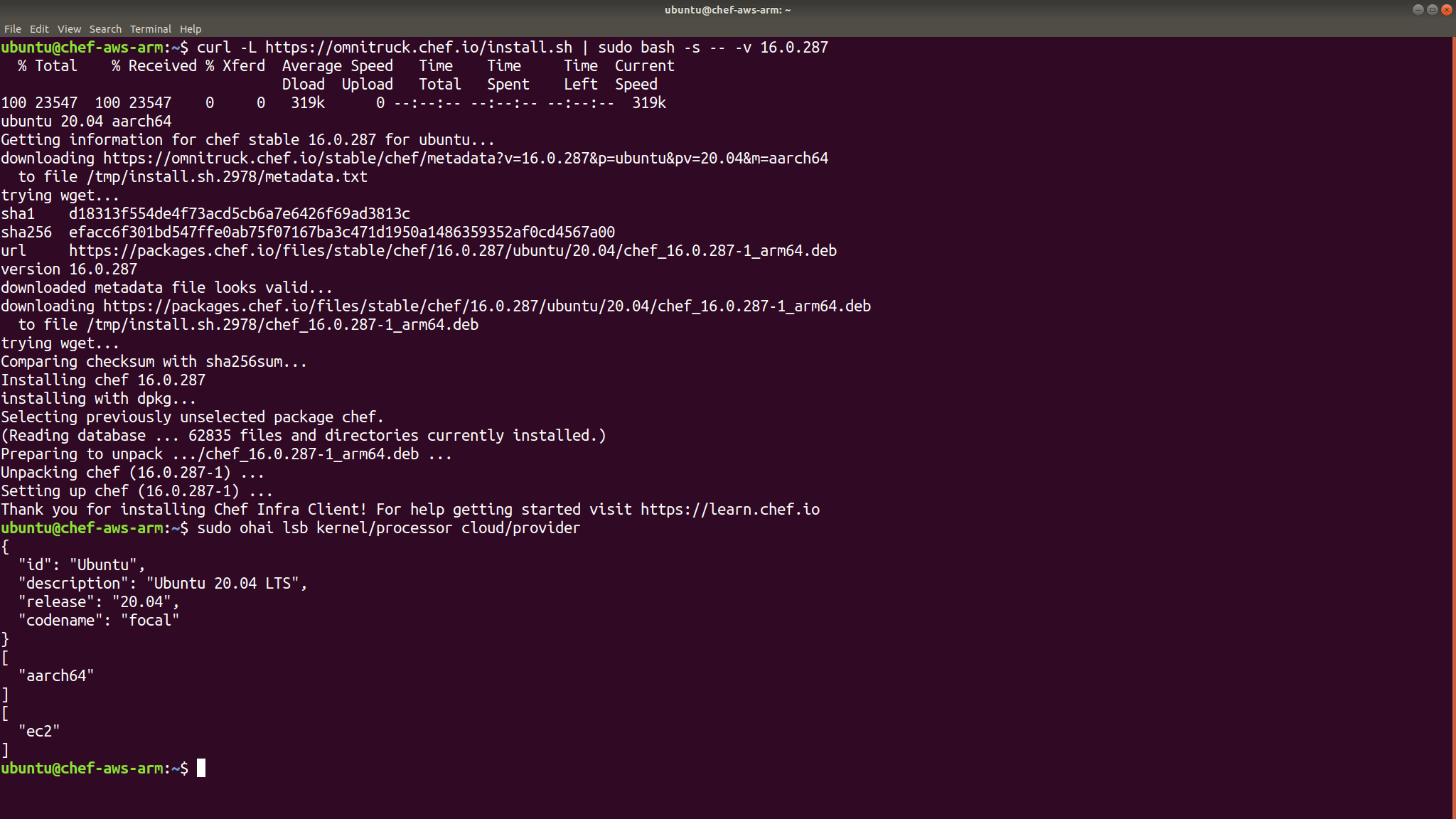
    Chef announced this week that its offerings for managing and testing infrastructure as code now support Graviton 2 processors from Arm on the Amazon Web Services (AWS) cloud.

    AWS this week announced the availability of an M6g instance of processors on its public cloud. Based on a 64-bit Arm Neoverse N1 architecture, the M6g processors were jointly designed by Arm and Annapurna Labs, a unit of Amazon.

    According to AWS, during a preview program platforms such as Honeycomb consumed 30% fewer instances on M6g than the widely employed AWS C5 instances. Treasure Data, a provider of data analytics software, reported a 30% performance increase while seeing a 20% cost reduction compared to similarly sized M5 instances. The Amazon ElastiCache service team found that M6g instances deliver up to 50% throughput improvement over M5 instances on Redis.

    In addition, AWS this week revealed it also plans to add compute-optimized C6g instances and memory-optimized R6g instances based on 64-bit Arm processors.

    The Arm processors in the cloud are expected to provide a foundation for building hybrid internet of things (IoT) applications spanning AWS cloud services and instances of Arm processors that are widely employed in embedded systems. Previously, AWS launched an AWS Greengrass initiative through which it encourages developers to build and deploy cloud-enabled IoT applications on edge computing platforms.

    Vikram Ghosh, vice president of business development for Chef, said DevOps teams can now automate the provisioning of Arm processors using the same Chef tools they employ to provision instances on other types of processors running on the AWS cloud.

    It won’t be long before 64-bit instances of Arm processors start showing up on other cloud computing platforms, noted Ghosh. In fact, between the rise of Arm processors alongside graphical processor units (GPUs) the types of processors readily available in the cloud have never been more diverse, which Ghosh said is driving increased demand for tools to manage infrastructure as code.

    It’s still early days as far as adoption of best DevOps practices to build and deploy IoT applications is concerned. However, the highly distributed nature of IoT applications—which in many cases will need to be updated frequently—lend themselves to being managed more efficiently using DevOps processes. In most cases, these IoT applications represent “greenfield” applications where there is no legacy process in place that potentially would create a culture clash.

    Forecasting demand for edge computing applications in the wake of the COVID-19 pandemic is difficult. However, the general expectation remains that more application code will be moving closer to the point where it is being consumed, especially when 5G wireless networking services become more available. In fact, many of those applications are being built now in anticipation of those networking services being able to connect edge computing applications with backend cloud resources.

    Once those applications are built, the next big challenge will be finding a way to secure and continuously update them. In the meantime, however, the number of edge computing applications being built today in the cloud for edge computing platforms based on Arm processors is about to increase substantially.

  • HashiCorp Extends Consul Service Mesh Reach

    HashiCorp Extends Consul Service Mesh Reach

    HashiCorp today made available an update to its Consul service mesh that makes it easier to integrate legacy and modern applications.

    Service meshes have emerged as a framework for documenting and controlling how application services interact with one another. Most of the adoption of service meshes thus far has involved applications built using microservices. With potentially hundreds or even thousands of microservices to manage, a service mesh framework becomes essential.

    HashiCorp Consul 1.8 extends the reach of the Consul service mesh by making available additional gateway and compliance features that make it easier to integrate any service into any mesh, in addition to adding support for audit Logging and single sign-on (SSO) capabilities.

    Amith Nair, vice president of product marketing for HashiCorp, said organizations that adopt Consul can apply a service mesh to both microservices and monolithic applications. That approach also eliminates the need to deploy a service mesh such as Istio, which only works when deployed in conjunction with a Kubernetes cluster.

    In general, Nair said Consul enables IT organizations to gain the benefits of a service mesh without being required to retire existing application services or manage them in isolation from modern cloud-native applications.

    Longer-term, Nair said HashiCorp expects an ecosystem to develop around Consul as technology partners extend the core capability of a service mesh to add, for example, application firewall services.

    It’s too early to say to what degree IT organizations will embrace service meshes as a technology. However, as IT environments become more complex many enterprise IT organizations are shifting toward managing services rather than individual applications. That approach enables IT organizations to align their IT strategy more easily with specific business outcomes.

    At a time when many organizations are also trying to accelerate a transition to digital business processes in the wake of the COVID-19 pandemic, most of those digital business processes are typically a collection of loosely coupled application services that could be managed via a service mesh.

    Nair said while it’s still early in terms of adoption, most enterprise IT organizations are now at least aware of what a service mesh does and why they might need to deploy one. The challenge, of course, will be getting IT organizations to prioritize the deployment of a service mesh when many IT budgets have become suddenly constrained. It’s also not clear who inside of those IT organizations will fund service mesh projects, which benefit a variety of application projects—application owners tend not to directly fund centralized IT management services, which leaves it up to IT leaders to fund. The challenge is, most IT budget dollars are already allocated.

    In the meantime, developers will continue to embrace everything from Kubernetes to serverless computing frameworks. However, the rate at which new applications are deployed generally far exceeds the rate at which applications are retired. As such, IT organizations should expect to find themselves managing a wide array of different types of application services for many years to come.

  • Cisco Aligns With Google to Meld DevOps and NetOps

    Cisco Aligns With Google to Meld DevOps and NetOps

    The extension of a partnership between Cisco Systems and Google to drive tighter integration between their respective software-defined wide area network (SD-WANs) offerings and cloud platforms promises to accelerate the convergence of NetOps and DevOps.

    John Apostolopoulos, vice president and CTO for Intent-Based Networking Group at Cisco, said in the wake of the COVID-19 pandemic it’s clear more organizations will be employing SD-WANs as an alternative to virtual private networks. Many of those SD-WAN deployments, however, will be on public clouds rather than in a traditional on-premises data center, he added.

    As that transition occurs, DevOps teams will increasingly invoke SD-WAN services via application programming interfaces (APIs) residing in the cloud to provide users with access to cloud applications, noted Apostolopoulos.

    Cisco and Google have a technology alliance in place that spans everything from Kubernetes to cloud management software. That partnership is now being extended to include forthcoming deployments of Cisco SD-WAN software on Google Anthos, a cloud platform based on Kubernetes that can be deployed on any cloud or on-premises IT environment, sometime in the first half of 2021.

    The availability of SD-WAN services from Cisco on multiple cloud platforms will naturally have significant implications for NetOps teams. Rather than having to manage individual routers and switches, the future of SD-WANs is moving more toward being a set of software services that are programmatically invoked. It’s not clear to what degree NetOps teams might be folded into DevOps teams as that transition occurs. IT teams will always require networking experts to optimize networking services to one degree or another, said Apostolopoulos. However, the days when DevOps teams had to wait days or weeks for a NetOps team to manually provision network services on their behalf are coming to an end.

    Apostolopoulos said in the wake of the COVID-19 pandemic, flexibility has become a highly prized IT asset. As such, more applications will soon be deployed in the cloud than ever. Cisco is betting that rather than having to manage multiple cloud network services, more organizations will prefer to extend enterprise networking services from Cisco across multiple clouds. That approach will enable IT organizations to more easily centralize the management of network services via a management console built on top of a consistent set of APIs, he noted.

    Just as importantly, Cisco will provide the integrated tools needed to secure those network services, added Apostolopoulos.

    In effect, Cisco is betting that enterprise IT organizations are going to consolidate networking and security services as part of an effort to reduce the total cost of IT. Cisco may not always be the least expensive provider of an individual router or switch. However, the total cost of integrating networking and security offerings from multiple vendors can add up quickly. The degree to which organizations have the political will and economic capital required to achieve that goal, of course, remains to be seen. Nevertheless, it’s also clear that maintaining the current networking and security status quo is not going to be able to hold for very much longer.