Author: Mike Vizard

  • Instana Discovers Root Cause of a Microservices Crash

    Instana Discovers Root Cause of a Microservices Crash

    Instana has added an automated process crash and root cause detection capability to its namesake application performance management (APM) platform optimized for microservices.

    Microservices prevent application outages by automatically rerouting application traffic in the event any microservice becomes unavailable. The overall performance of an application will degrade gracefully instead of allowing the entire applications to crash—assuming, of course, there is no single point of failure. However, the performance of the overall application will generally stay suboptimal until the microservice that failed is discovered and updated.

    Chris Farrell, technical director and APM strategist at Instana, said in the absence of an APM platform that can automatically detect when a specific process has crashed, a DevOps team can spend a significant amount of time and effort looking for the root cause. That can be especially frustrating when it turns out the microservice itself only takes a few minutes to repair, he said.

    The Abnormal Process Termination Detection capability is available at no additional charge in the agent software Instana provides for both the software-as-a-service (SaaS) and on-premises editions of its platform. Instana claims it is the first provider of an APM platform to provide this capability.

    Farrell said containers deployed on Kubernetes clusters coupled with serverless computing frameworks based on functions are driving the next wave of cloud-native applications. The inherent complexity of those applications requires a different approach to APM based on real-time analytics and distributed tracing capabilities, he said, adding relying on log data and sampling is no longer sufficient.

    When integrated with a third-party incident management system, it then becomes possible for extended IT teams to proactively resolve many application performance issues before most end users ever notice, he said.

    IT organizations are embracing microservices at scale because they need to build applications faster that are both more flexible and resilient. The challenge they encounter is microservices-based applications can become unwieldy to manage. Dependencies between microservices can create a maze of connections that can be difficult to monitor and maintain. It’s inevitable at some point one or more microservices may become unavailable because of, for example, an application programming interface (API) that has been updated or hardware failure.

    Regardless of the root cause, the sudden loss of a microservice should not result in catastrophic application failure. It can, however, adversely impact the end user experience. Most DevOps teams are committed to resolving such issues before they trigger a set of potential cascading problems that result in time being wasted in “war rooms” to diagnose the root cause of a problem. At a time when most DevOps teams are working remotely, there’s naturally a real incentive to reduce the number of virtual meetings DevOps team members might be called upon to attend. Most IT organizations are already struggling to manage complex IT environments at a time when organizations are trying to limit headcount in the wake of the economic downturn brought on by the COVID-19 pandemic.

    Of course, an APM platform isn’t going to eliminate the need for every meeting. It could, however, make the ones that members of the DevOps do need to attend a lot more pleasant for all concerned.

  • Survey: Cloud Security, DevOps Emerging as Enterprise Priorities

    Survey: Cloud Security, DevOps Emerging as Enterprise Priorities

    A survey published today by 2nd Watch, a provider of IT services, finds that in the wake of the COVID-19 pandemic, cloud security and DevOps have emerged as the top two priorities for large enterprise IT organizations.

    The survey queried more than 100 IT directors working at companies with at least $500 million in annual sales and IT budgets of at least $50 million per year, Three-quarters of respondents (75%) said they are prioritizing cloud security, followed by cloud-native culture change, also known as DevOps, (60%) and conferencing/collaboration (51%).

    Chris Garvey, executive vice president of product for 2nd Watch, said the report shows that not only are more large enterprises accelerating cloud adoption, but the projects being launched are also more strategic to the business.

    The survey finds 60% of respondents said they are prioritizing projects with potentially large payoffs over cost-conscious projects. Nearly half (47%) said now is the time to position their company for the long haul, while 39% said they are accelerating the use of the cloud to deliver digital products. As part of those efforts, more than a third (34%) said they are accelerating the migration of applications to the cloud.

    A total of 93% of respondents use at least two cloud platforms, with Microsoft Azure being the most widely employed.

    Cloud computing platforms, however, are not without their challenges. Most respondents (82%) said they’ve experienced cloud-related challenges, with 77% reporting those issues have caused them to alter their cloud strategies. Nearly half (46%) said experiencing cloud security-related challenges, while 48% said cloud computing turned out to be more expensive than initially anticipated.

    The top challenges identified are providing remote workers access to corporate systems (63%), providing remote worker support (57%) and conferencing/collaboration systems that haven’t worked as expected (47%). Half said they are accelerating the use of the cloud to support remote employees, with 58% expecting at least half of their company’s employees will become full-time remote workers in 2021.

    Overall, nearly two-thirds (64%) said their IT related budgets have stayed the same or grown since COVID-19 began, and 59% said their cloud budgets would increase over the next 12 months. A total of 80%, however, acknowledged they are concerned COVID-19 will continue to impact their IT strategy and only half (50%) said they were confident in their organization’s ability to adjust.

    Primary areas of focus over the next 12 months include databases (42%), internet of things (39%), data warehousing (35%), artificial intelligence/machine learning (34%) and data lakes (26%).

    Garvey said large enterprises are clearly looking to take advantage of their deeper pockets to accelerate digital transformation initiatives at a time when smaller rivals may not be able to invest. However, because the pandemic has impacted some verticals more adversely than others, the level of digital business transformation occurring across different vertical sectors is uneven, he noted.

    It may be a while before the winners and losers are identified in the wake of the pandemic. However, it’s clear large organizations are betting on IT now more than ever to differentiate themselves. As large organizations assess the damage from the pandemic, it’s likely that the future of many of these companies will depend on the degree to which they can adopt a wide array of not just emerging technology platforms, but also the processes required to master them.

  • Spotify Adds Custom Deployment Templates to Service Catalog Project

    Spotify Adds Custom Deployment Templates to Service Catalog Project

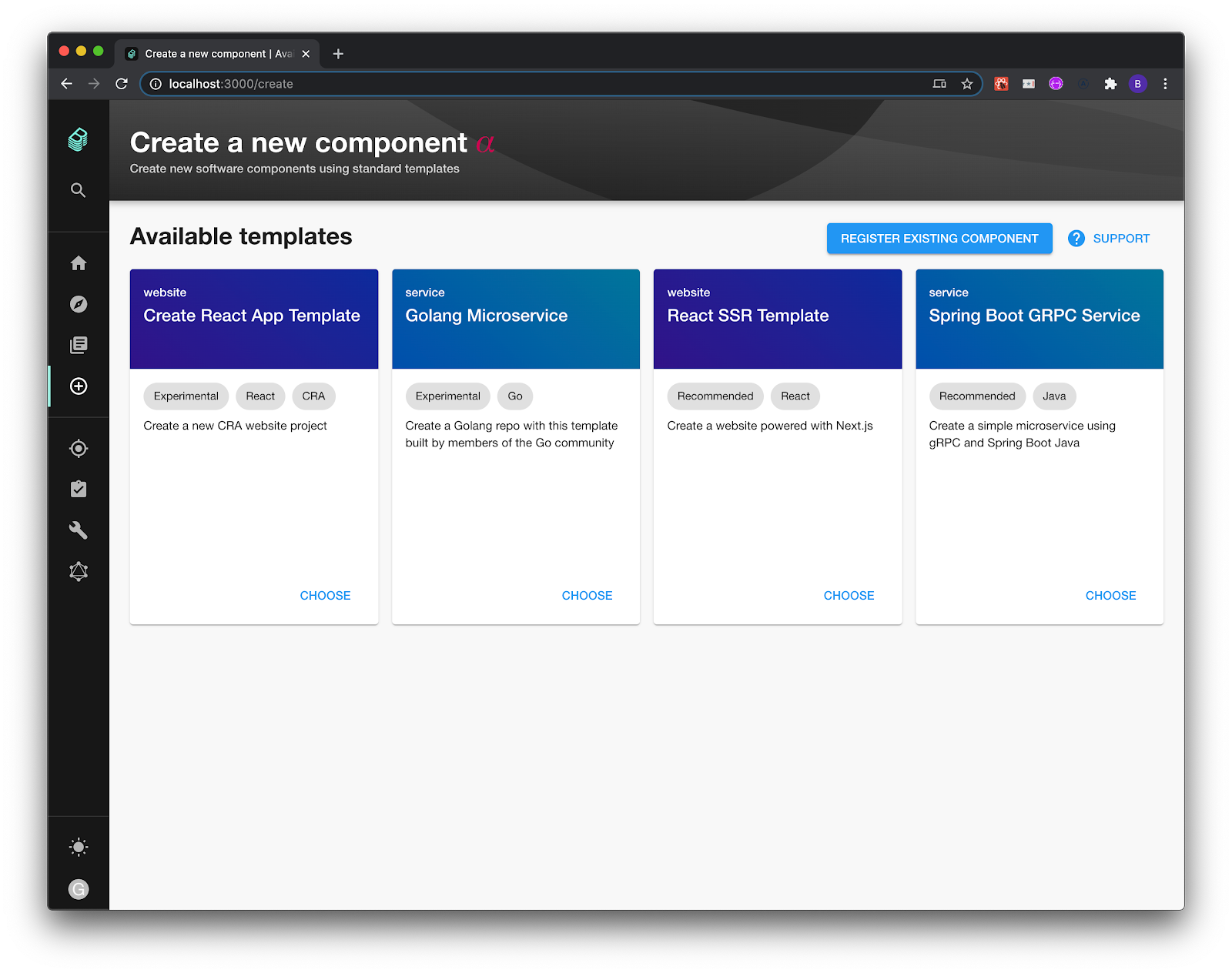
    Spotify has entered the next phase of the open source Backstage catalog project by adding support for templates through which the process of deploying software components now can be automated.

    Backstage was developed by Spotify to create an open source catalog through which DevOps teams could build portals through which developer tools are centrally managed.

    Stefan Ålund, platform developer experience product lead for Spotify, said the goal is to bring some order to what otherwise would be a chaotic IT environment. By standardizing the tools made available to developers, Backstage enables IT organizations to develop more consistent workflow processes, he noted.

    Ålund said DevOps teams via custom templates can automate those workflows to the point where a microservice, website or other software component can be deployed via a single click. That approach also serves to encourage reuse of both developer tools and the modules those tools were used to create, he said.

    In some instances, those templates will eliminate the need to depend on site reliability engineers (SREs) to deploy the same code over and over, he added.

    Spotify is currently proposing to make Backstage a sandbox-level project that would be further developed under the auspices of the Cloud Native Computing Foundation (CNCF).

    In the meantime, Alund said Spotify will continue to refine a service catalog that has been widely employed across DevOps teams for the past four years on top of a core instance of the open source Jenkins continuous integration/continuous deployment (CI/CD) platform.

    It’s not clear how DevOps-mature an organization must be to realize the need for a catalog through which modules of code could more easily be reused. In some cases, the transition to microservices may inevitably force the issue. Rather than having developers potentially reinventing the microservices wheel, a portal would make it easier to discover what software assets already exist and deploy them automatically.

    A catalog also provides the added benefit of making it easier to track the provenance of a project as well as who currently has operational responsibility for it within the context of a larger software supply chain enabled by best DevOps practices, Alund noted.

    Regardless of the level of DevOps maturity inside an organization, the need for a catalog to track services quickly becomes apparent as the number of microservices developed increases. It’s said that every company is now a software company. If software is to be managed as a digital business asset, then it’s critical for organizations to determine what modules of code they have and then determine which modules are the most valuable to the organization.

    Only then can every company that aspires to be a provider of software that happens to manufacture something or provide a service be managed like a true software company. Anything short of that goal is just a mere statement of aspiration.

  • VMware Expands Reach of IT Management Portfolio

    VMware Expands Reach of IT Management Portfolio

    VMware today announced a bevy of updates to its portfolio of IT management tools that is now at the heart of its overall approach to both DevOps and AIOps.

    VMware vRealize Operations 8.2 and VMware vRealize Operations Cloud, the on-premises and software-as-a-service (SaaS) editions of the same IT automation platform, provide deeper support for Kubernetes distributions, including the VMware Tanzu Kubernetes Grid, as well as tighter integration with application performance management (APM) platforms from AppDynamics, Datadog and Dynatrace.

    VMware is also providing tighter integration with its VMware vRealize Network Insight to bridge the divide between IT and network operations and tools to better monitor instances of VMware software running on the Amazon Web Services (AWS) public cloud.

    Enhancements to the capacity and cost management tools that VMware makes available as part of the platform include more visibility into daily virtual machine (VM) costs, enhanced metering capabilities and support for non-VMware vRealize Automation workloads.

    At the same time, VMware is making updates to VMware vRealize Automation and VMware vRealize Automation Cloud. The latest updates to the VMware automation platform add support for VMware Cloud Templates, a way to manage infrastructure as code that is compatible with configurations created using Terraform tools.

    Other enhancements include self-service provisioning of Kubernetes namespaces via the service catalog, including support for VMware vSphere with Kubernetes, as well as more granular role-based access controls and application programming interfaces through which policies for VMware NSX network virtualization software can be applied.

    Updates to VMware vRealize Log Insight and vRealize Log Insight Cloud add enhanced Kubernetes support, deeper integration with VMware Cloud on AWS and other usability enhancements.

    Finally, VMware is streamlining the onboarding process for VMware Skyline, a predictive analytics tool the company makes available as an extension of its operations management portfolio.

    Ken Lee, senior director of product marketing for VMware, said VMware vRealize Cloud Management portfolio is evolving in a way that makes it accessible to both traditional IT administrators and DevOps teams. Each function in the platform can be invoked via a graphical user interface or application programming interface (API), he said.

    At the same time, VMware is infusing machine learning algorithms across the portfolio to enable AIOps, eliminating the need for IT organizations to acquire a separate IT management platform to employ AIOps or embrace best DevOps practices, he said.

    While the number of IT organizations that employ virtual machine software from VMware numbers in the hundreds of thousands, the number of organizations employing its IT operations platform is still measured in the hundreds. The company clearly enjoys the inside track in terms of relationships with those customers. However, it’s clear that the number of IT organizations relying on tools other than those provided by VMware to manage their environments is significant.

    As IT organizations look to modernize those IT environments, however, there is clearly an opportunity for VMware to gain additional traction. The challenge is the race to embed AI and DevOps practices into IT operations platforms is already quite heated.

  • Accurics Adds Compliance Control Support to Code Analyzer

    Accurics Adds Compliance Control Support to Code Analyzer

    Accurics, at the online KubeCon + CloudNativeCon 2020 conference today, launched an update to its open source Terrascan static code analyzer that adds support for Open Policy Agent (OPA) engine to make it easier for developers to create custom compliance policies in addition to leveraging more than 500 out-of-the-box policies based on the CIS Benchmark.

    In addition, Terrascan is now available as a GitHub Action and is included in the popular Super-Linter GitHub Action. It can be installed as a pre-commit hook to help detect issues before code is pushed into a repository as part of a DevOps workflow.

    Cesar Rodriguez, head of developer advocacy at Accurics, said the latest version of Terrascan has also been rewritten in the Go programming language to improve overall performance.

    Terrascan analyzes the code created to manage infrastructure as code for vulnerabilities as well as indicators of drift. It then creates a threat model for cloud application workloads and, if necessary, will share data with third-party tools to automatically roll back cloud settings to their last known approved state. Once the model is constructed, Accurics monitors the application workload for changes that introduce risks and generates a topology for each workload in real-time to identify any potential indicators of drift.

    A recent report based on an analysis of cloud services published by Accurics finds misconfigured cloud storage services are commonplace in a stunning 93% of the cloud deployments analyzed, with most also having at least one network exposure in which a security group was left wide open.

    The report also finds hardcoded private keys turned up in 72% of the deployments analyzed. Unprotected credentials stored in container configuration files were found in half of these deployments. A total of 41% of the organizations had high privileges associated with hardcoded keys. In 100% of deployments, an altered routing rule exposed a private subnet containing sensitive resources such as databases to the internet.

    Overall, the report suggests that only 6% of cloud configuration issues are being addressed using manual remediation processes.

    Ideally, developers should be implementing cybersecurity and compliance controls as they deploy applications in the cloud. The challenge is that while developers have ready access to tools to automate the configuration of those services, not many of them have tools to verify whether those services have been implemented properly.

    IT organizations will still need to scan for vulnerabilities in runtime environments. However, tools such as Terrascan will enable IT teams to advance the adoption of best DevSecOps practices by providing developers with access to scanning tools that can be incorporated easily with a continuous integration (CI) workflow.

    Of course, the biggest DevSecOps issue remains culture. However, most developers don’t intentionally want to deploy insecure cloud applications. If given access to the right tools, most developers will do the right thing as long as it feels like a natural extension of an existing workflow rather than an unnatural act that was defined by a cybersecurity team that has little to no idea how applications are actually constructed.

  • Oracle Launches Managed JSON Database Service

    Oracle Launches Managed JSON Database Service

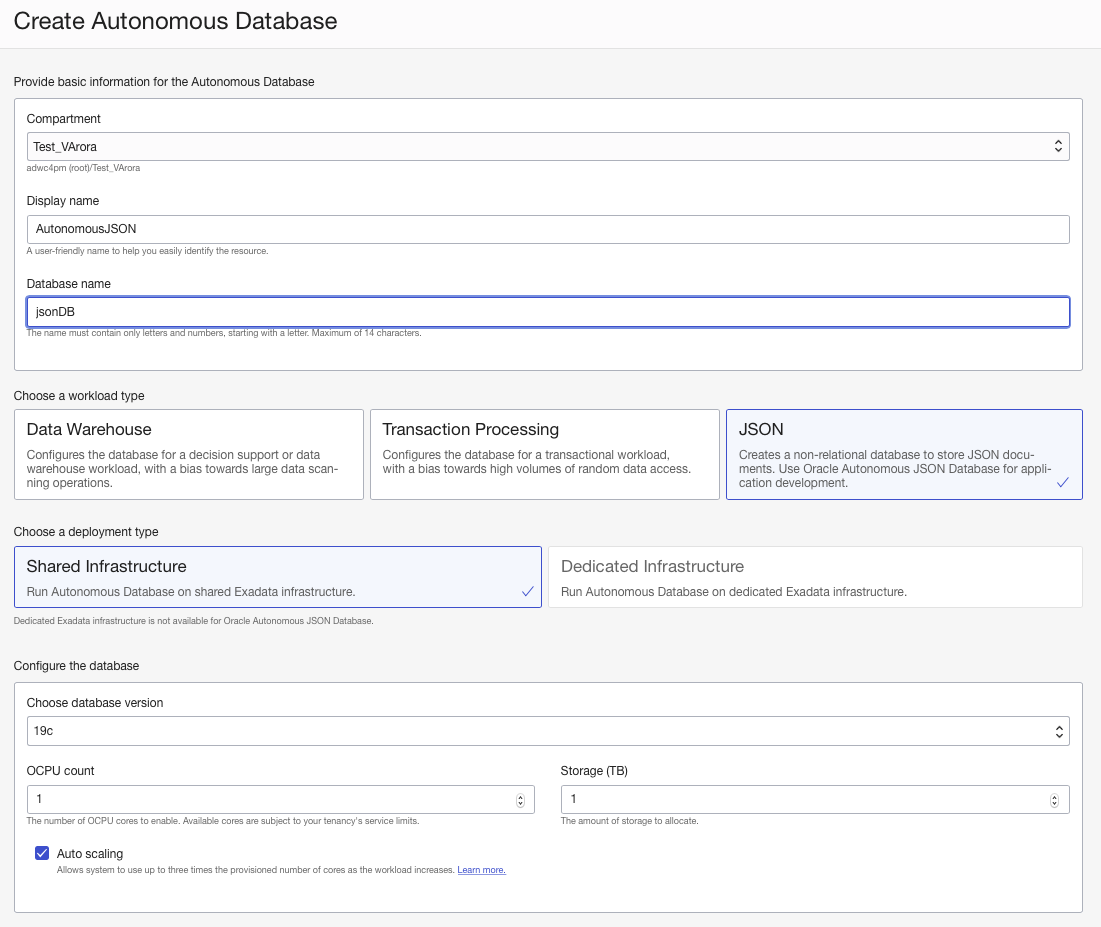
    Oracle today unfurled as standalone Autonomous JSON Database service that it will manage on behalf of developers that require a document database.

    Gerald Venzl, a developer evangelist and distinguished product manager for Oracle, said the Autonomous JSON Database service is based on support for JSON data types that Oracle currently provides in its Autonomous Database service based on its relational database.

    Priced at a quarter of Oracle Autonomous Database service, Oracle is also targeting rivals such as MongoDB by also pricing Autonomous JSON Database service at roughly 30% less than rival managed database service, Venzl noted.

    In addition, because Autonomous JSON Database service is based on the same platform Oracle employs to deliver its Autonomous Database Service, developers can add support for a wide variety of other data types by upgrading to the Autonomous Database Service with a single click, added Venzl.

    That approach provides developers with more flexibility should their data requirements change, or they simply initially chose the wrong type of database for their application, said Venzl.

    Other capabilities provided by the Autonomous JSON Database include support for built-in machine learning algorithms and spatial queries; fine-grained access controls; a server-side procedural language; low-code development tools; support for ACID-compliant transactions with no time or transaction size limits, support for cross-collection joins and/or aggregations and a search index for JSON documents.

    Oracle also makes available an open source document store application programming interface (API) dubbed Simple Oracle Document Access (SODA) that makes it simpler for developers to employ programming languages such as Java, JavaScript and Python to build applications on top of a JSON data store. Autonomous JSON Database stores JSON documents in a native tree-oriented binary format that Oracle claims is optimized for fast reads simplified updates.

    It’s not clear to what degree IT organizations will embrace managed database services. Oracle is making a case for managed database services that essentially eliminates the need to rely on database administrators to manage the infrastructure the database is deployed on as well as any upgrades made to the database itself.

    Developers in recent years have embraced document databases in part because they are easier for them to provision. In most cases, developers download a document database that they at least initially manage themselves. The challenge IT organizations inevitably encounter is the number of document databases that need to be supported grows rapidly. Developers who are focused on building applications don’t always have the time required to manage fleets of databases.

    Oracle is, of course, making a case of managing a variety of classes of databases. As enterprise applications continue to evolve in organizations the number of data types organizations are supporting continues to expand. A managed service focused on only one class of database may not be as appealing as a suite of managed service options.

    Regardless of approach, it’s clear database management is getting more automated. The opportunity and challenge now are finding the best way to incorporate database management with a larger set of DevOps practices.

  • HashiCorp Adds Business Tier to Managed Terraform Service

    HashiCorp Adds Business Tier to Managed Terraform Service

    HashiCorp today announced it has added a Business tier to the HashiCorp Terraform Cloud that expands the managed service in a way that provides advanced security, compliance and governance capabilities along with the ability to execute multiple runs concurrently and take advantage of more flexible service level agreement (SLA) options.

    Meghan Liese, director of product marketing for HashiCorp, said this new tier addresses the requirements for enterprise IT organizations that are looking for a way to enable teams of developers to more securely provision IT infrastructure using open source Terraform tools.

    For example, the Business tier of the service provides integration with single sign-on tools provided by Okta, while auditing of logs is provided via integration with tools from Splunk. This tier also provides access to private networks with fixed IP addresses as well as self-hosted agents to interact with other management planes if required.

    HashiCorp reported that since launching a managed service last year for IT organizations that don’t want to provision the servers, it is now adding more than 5,000 new users per month, with 500,000 runs to provisioning infrastructure executed monthly.

    The other two existing levels of services provided by HashiCorp are free instances aimed at individual developers and a Team and Governance services that can be employed to create teams that manage and govern reusable instances of configurations.

    Liese said HashiCorp launched the Business tier in part to respond to the needs of enterprise IT organizations looking to automate the provisioning of IT infrastructure at scale. While there is a lot of free-rein usage of open source Terraform tools, Liese said enterprise IT organizations need to ensure security and meet compliance requirements.

    Those same enterprise IT teams also tend to provision IT infrastructure concurrently, which, Liese noted, means waiting for one configuration to be completed before another is launched isn’t practical.

    Terraform has gained a lot of traction among individual developers who have shown a tendency to prefer open source tools to provision IT infrastructure. That momentum has enabled HashiCorp to provide IT organizations with both commercial support for instances of Terraform they deploy and manage as well as via a service through which instances of Terraform are managed and updated by HashiCorp.

    Regardless of the path chosen, the number of IT teams provisioning IT infrastructure as code has increased substantially. Less clear is to what degree that provisioning is being done by developers versus IT operations staff who have mastered Terraform. At a time when many organizations are unable to add more IT personnel, the need to automate the provisioning of IT infrastructure has never been more acute.

    Of course, there are still more than a few IT teams who prefer to rely on IT administrators to provision IT infrastructure using legacy tools. However, as the pressure to become more agile continues to steadily increase, it’s now only a matter of time before the manual workflows constructed using those tools are rendered obsolete.

  • Datadog Expands Scope of Monitoring, Analytics Services

    Datadog Expands Scope of Monitoring, Analytics Services

    Datadog, at its online Dash conference today, launched an incident management platform along with additional analytics tools to identify application errors and performance and compliance issues.

    Amit Agarwal, chief product officer, said these latest additions to the Datadog platform are intended to further consolidate IT management and monitoring. IT organizations should not find themselves acquiring and support 20 different tools that essentially all do the same thing, he said.

    The Datadog Incident Management service accomplishes that goal by streamlining incident response workflows by unifying alerting data, documentation and collaboration in a centralized pane of glass. Those workflows can then be used to create playbooks that automate incident responses.

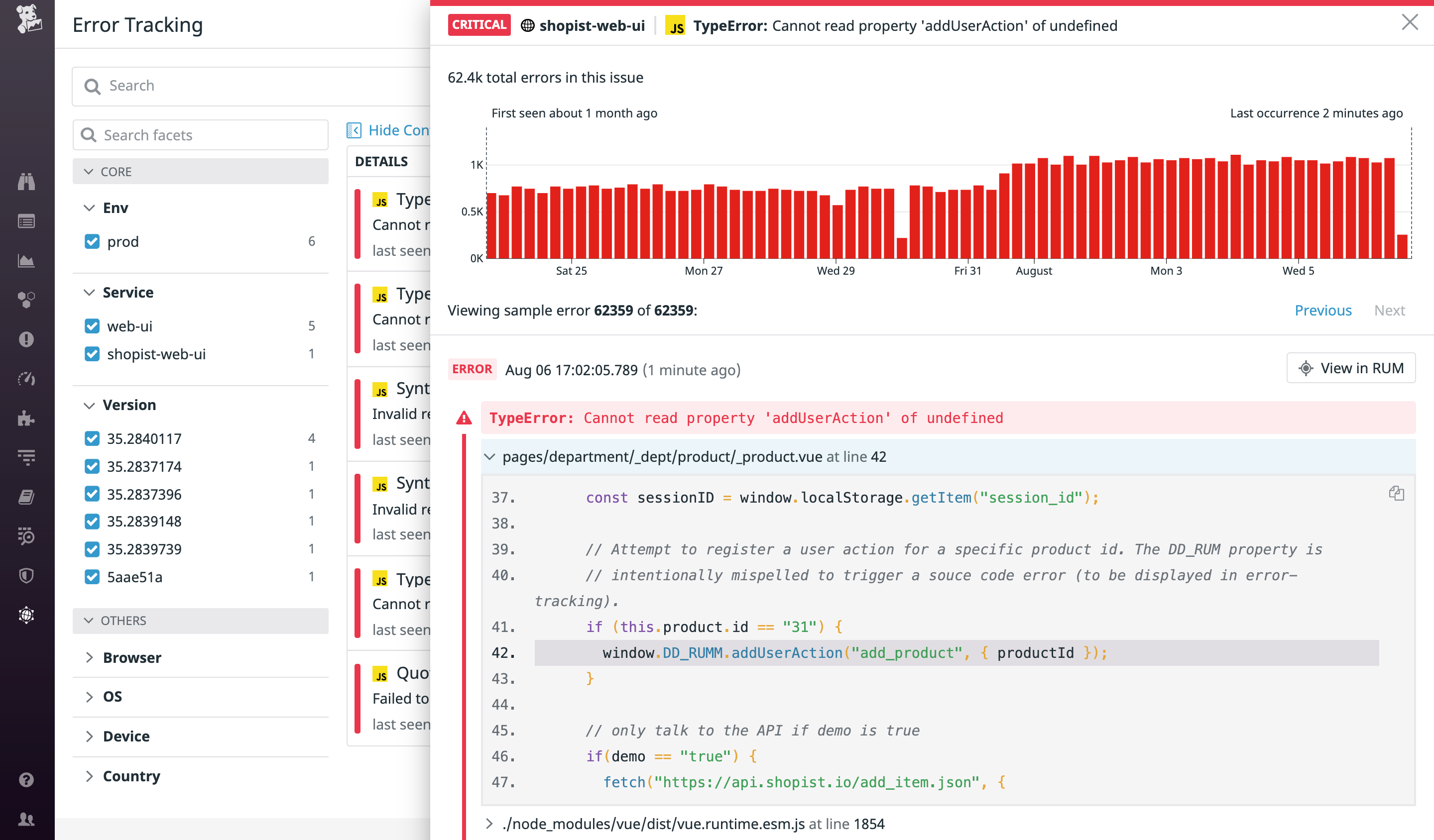
    At the same time, Datadog has made generally available Continuous Profiler, to specifically measure the performance of code in a production environment, and launched Error Tracking, which automatically aggregates all related application errors in real-time to surface actionable issues more easily within the context of a DevOps workflow process enabled by the command-line interface (CLI) that Datadog provides.

    Datadog is also launching Compliance Monitoring, a service designed to identify misconfigurations that cause compliance-issue drift as soon as they occur. Once problems are identified, Datadog Compliance Monitoring immediately alerts the DevOps team.

    Finally, Datadog has launched a marketplace to make complementary third-party applications more accessible to end customers. Participants in the Datadog marketplace include Fairwinds, Trek10, RapDev and IO Connect.

    As more organizations embrace observability as a core tenet of best DevOps practices, Agarwal said the need to consolidate monitoring tools to provide greater context is great. Those tools need to address application issues not only in IT infrastructure management but also in security and compliance requirements, added Agarwal.

    Given the cost of maintaining all those platforms, however, it makes more financial sense for IT teams to rely on a service that makes all those capabilities available via a single integrated platform, he said.

    In the wake of the economic downturn brought on by the COVID-19 pandemic, Datadog is making a case for consolidating IT monitoring and management to reduce total costs. The company is betting many DevOps teams would prefer to allocate resources to developing applications rather than provisioning and maintaining DevOps tools.

    More IT organizations are simultaneously expected to embrace unified monitoring as they make the transition to microservices-based applications. Given the dependencies that exist between all the microservices that make up a modern application, monitoring is now a requirement for almost any cloud-native application. A cloud service provides the added benefit of being able to scale monitoring infrastructure resources and up and down as required.

    Of course, Datadog is not the only provider of unified monitoring tools with the same ambitions. However, it does have a significant base of customers that provides a foundation from which it can continue to expand. The only real issue is determining to what degree organizations will be willing to consolidate management functions, given all the vested interests involved.

  • CircleCI Adds to Salesforce CI/CD Orbs Collection

    CircleCI Adds to Salesforce CI/CD Orbs Collection

    CircleCI today announced it has extended its CI/CD support for DevOps teams building applications that extend the software-as-a-service (SaaS) platform from Salesforce.

    Company CEO Jim Rose said interest in building applications that complement the Salesforce platform is rising sharply in the wake of the economic downturn brought on by the COVID-19 pandemic. Rather than build entire applications from scratch, IT teams are advancing digital business transformation initiatives by leveraging the core suite of applications Salesforce makes available as a cloud service, he noted.

    Many of those applications are built by professional developers that have embraced best DevOps practices, Rose said.

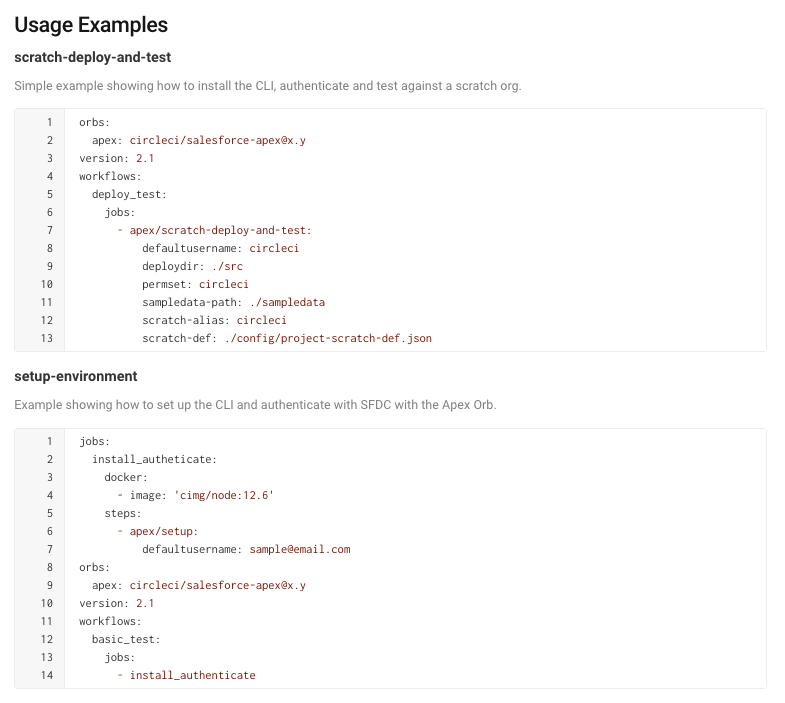
    To reduce friction for those DevOps teams, CircleCI is now adding support for a Salesforce Apex orb. An orb is a set of pre-configured connectors that CircleCI makes available for its continuous integration/continuous delivery (CI/CD) platform. The company has created more than 1,600 CircleCI orbs. Salesforce Apex is a proprietary object-oriented language that Salesforce makes available to developers.

    The Salesforce Apex orb automatically deploys changes to a production application, runs unit tests that are displayed using the Salesforce Platform user interface and tracks version control on commit.

    CircleCI has also updated its existing Salesforce command-line interface (CLI) orb to tighten integration.

    Rose said that as the pace of application development continues to accelerate, more IT teams are applying best DevOps practices to how they build and deploy applications as part of an effort to make the whole organization more resilient to change. Others are simply looking to modernize existing DevOps workflows that currently run on legacy CI/CD platforms.

    In either case, Rose said most end customers would prefer providers of CI/CD platforms to focus on making DevOps teams more efficient rather than moving into adjacent market segments to increase the size of their total addressable market. Those latter strategies are, in many cases, trying to drive consolidation of the overall DevOps market to woo potential investors rather than focusing on customer interests, he noted.

    It’s too early to say how the DevOps platform wars will play out. The size of the overall market continues to expand as the rate at which mergers and acquisitions are occurring accelerates. Regardless of the outcome, more IT organizations are under pressure to deliver more robust software faster, said Rose, noting the Salesforce application developer community represents only one segment of that expansion.

    Each organization will, of course, need to chart its own DevOps course. It’s not uncommon for different teams with the same organization to have standardized on multiple DevOps platforms. There may come a day when the need to reduce costs may force those organizations to rationalize DevOps platforms. However, as long as the rate at which high-quality software is delivered continues to improve, just as many organizations may conclude it’s just as well to leave something alone that doesn’t appear to be broken.

  • Nutanix Brings HCI Platform to AWS

    Nutanix Brings HCI Platform to AWS

    Nutanix today announced that Nutanix Clusters are now available on bare-metal instances of the Amazon Elastic Compute Cloud (Amazon EC2) provided by Amazon Web Services (AWS).

    Manoj Agarwal, senior vice president of engineering for Nutanix, said Nutanix Clusters on AWS will provide IT organizations with access to hyperconverged infrastructure (HCI) capabilities based on Nutanix virtual machine that AWS doesn’t provide today on a public cloud.

    IT organizations that already have Nutanix clusters deployed in on-premises IT environment will not have to refactor them to lift and shift them into a public cloud, he said, noting IT teams will also be able to provision Nutanix Clusters on AWS using the same Nutanix Prism management tools they currently employ in on-premises IT environments.

    IT teams will also be able to employ on AWS add-on tools from Nutanix such as Files to manage unstructured data, Calm to orchestrate applications and Era to manage databases.

    Agarwal declined to reveal whether Nutanix plans to support other public clouds. However, deploying HCI software on multiple clouds will provide IT organizations with the opportunity to deploy workloads without having to be concerned about being locked into a specific cloud service, he said.

    In the wake of the economic downturn brought on by the COVID-19 pandemic, IT teams are under even greater pressure to reduce total costs. Many IT teams prior to the pandemic managed cloud and on-premises IT environments in isolation. As part of the effort to reduce the total cost of IT, more organizations are now looking to embrace a heterogeneous hybrid cloud strategy that would enable them to manage multiple platforms via a common management plane. IT teams may not dynamically move workloads between clouds, but they will eventually move toward a common management framework that enables workloads to be more easily managed independent of the underlying IT infrastructure.

    Nutanix, of course, is not the only provider of an IT platform aiming to become the provider of that management plane. Rather than rely on separate compute and storage services, Nutanix is making the case for an HCI platform that converges the management of compute, storage and networking.

    Of course, providers of cloud service are simultaneously making available on-premises instances of cloud platforms they will manage on behalf of customers. The Nutanix approach enables IT teams to automate the building and managing of their own hybrid cloud computing environments without having to cede control to a cloud service provider, noted Agarwal.

    It’s still early days as far as hybrid cloud computing is concerned, but it’s clear that the pace at which IT teams are moving toward them will accelerate in the wake of the downturn. The issue now is determining how best to achieve that hybrid cloud goal given the relative maturity of the management frameworks that would be used to manage multiple platforms. Regardless of the path selected, however, there will eventually be one IT team to rule them all.