Author: Mike Vizard

  • Atlassian Adds Asset Management to ITSM Portfolio

    Atlassian Adds Asset Management to ITSM Portfolio

    Atlassian this week announced it has acquired Mindville, a provider of IT asset management software that the company plans to integrate with its Jira ServiceDesk platform.

    Edwin Wong, head of product for IT at Atlassian, said Mindville will extend the reach of its IT service management (ITSM) portfolio, which includes Opsgenie for incident management, Jira for project management and the recently acquired Halp software for conversational ticketing.

    Mindville, which already makes its software available on the Atlassian marketplace, has more than 1,000 customers including NASA, Spotify and Samsung. The acquisition of Mindville presents an opportunity for those IT teams to manage IT assets within the Jira ServiceDesk platform, which is widely employed as a help desk to manage interactions with end users, said Wong.

    Atlassian has been steadily bolstering its ITSM portfolio at a time when competition across the sector is fierce. In the wake of the COVID-19 pandemic, many IT organizations are re-evaluating their IT help desk platforms now that it has become apparent many employees will be working from home much more regularly.

    At the same time, IT organizations are looking to reduce the total cost of IT, which becomes easier to achieve if they acquire all their ITSM tools from a single vendor. Going forward, Wong said IT teams should expect Atlassian to continue to tighten integration across both its ITSM and DevOps tools portfolio. The goal is not so much to converge every offering into a single platform as much as it is to seamlessly share data between all the tools that make up that portfolio, he said.

    Atlassian this week disclosed it generated $1.6 billion in revenue for the fiscal year, a 33% increase over the prior year. Total revenue was $430.5 million for the fourth quarter of fiscal 2020, up 29% from $334.6 million for the fourth quarter of fiscal 2019. Atlassian ended the fourth quarter of fiscal 2020 with a total of 174,097 customers based on an active subscription or maintenance agreements. The company said it added 3,046 net new customers during the quarter. However, it recorded a net loss of $385.2 million for the fourth quarter of fiscal 2020, which included a non-cash charge of $382.7 million.

    Atlassian tools can be deployed on-premises or in the cloud and the company has been offering discounts to IT organizations as an incentive to entice customers to shift to the cloud. In the wake of the economic downturn, it’s not clear to what degree organizations will prioritize spending on ITSM tools. However, with more employees and IT administrators now working from home, the need for cloud-based tools to manage a highly distributed IT environment has never been more apparent. One of the things that will differentiate Atlassian is the teams-centric approach the company takes toward ITSM and DevOps, said Wong.

    In the meantime, as the Atlassian ITSM and DevOps portfolio expand, IT teams should expect the divide these two distinct approaches to managing IT to continue to narrow.

  • SAP Aligns With Tricentis on Continuous Testing

    SAP Aligns With Tricentis on Continuous Testing

    Tricentis this week announced an alliance with SAP under which a continuous testing platform that employs machine learning algorithms is being incorporated into the SAP Application Lifecycle Management (ALM) portfolio.

    Jonathan Boswell, director of strategic content for SAP and packaged applications for Tricentis, said via this initiative SAP customers will be able to take advantage of a testing platform infused with machine learning algorithms to accelerate the rate at which they upgrade to the latest editions of SAP applications.

    Many of SAP’s customers still run older versions of its software, much of which has been customized. Those customizations make it difficult to migrate to the latest version of SAP applications because in many cases SAP has extended the range of functions provided with SAP applications, thereby eliminating the need for those customizations.

    The Tricentis tools enables IT teams to map existing custom functions to the standard capabilities that SAP provides now under a so-called Model Company initiative. Tricentis identifies the aspects of an upgrade that are likely to have the most risk to the business and surfaces issues involving integrations between SAP and third-party applications. Tricentis automates 90% of tests to help ensure the entire chain is tested, in addition to employing load testing to optimize SAP application user experience, added Boswell.

    While many organizations employ SAP applications extensively, many of them are struggling with upgrades. In an ideal world, more organizations would take advantage of the latest packaged SAP application features to drive digital business transformation initiatives. Right now, however, it can take organizations months to perform an impact analysis on the SAP upgrade process, he said.

    Tricentis shortens that time by employing machine learning algorithms to discover the difference between two application environments versus relying on legacy approaches based on testing scripts, said Boswell.

    Ultimately, he noted, the goal is to enable more organizations to focus more on business processes rather than application quality assurance.

    It’s not clear to what degree IT organizations will continue to customize SAP applications. SAP now provides a separate cloud platform that it encourages organizations to employ to build custom applications that extend SAP applications without ever having to touch SAP application code. Getting SAP customers to make that transition has become much more of a journey for many customers than SAP originally anticipated. However, as best DevOps practices continue to be adopted by SAP, the rate at which custom functions are built should accelerate. The challenge is creating and deploying those customizations in a way that doesn’t impede a SAP packaged application update cycle that happens every quarter.

    Regardless of the path forward, machine learning algorithms and other forms of AI are positioned to play a major role in application testing. They may never replace the need for human testers, but the days when business users needed to be recruited to help test every low-level function in an application may finally be coming to a merciful end.

  • GitLab Extends Scope, Reach of CI/CD Platform

    GitLab Extends Scope, Reach of CI/CD Platform

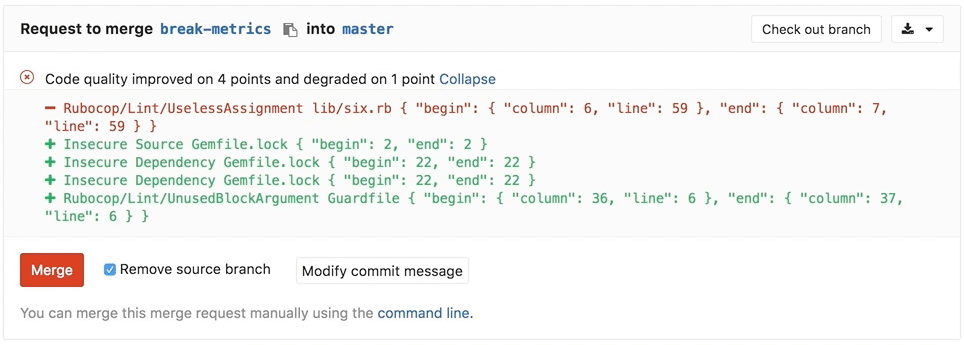
    The latest update to the GitLab continuous integration/continuous delivery (CI/CD) platform adds a bevy of additional capabilities spanning multiple capabilities, from being able to manage application development and deployment projects in smaller chunks to allowing remote teams to work more efficiently.

    Brendan O’Leary, senior developer evangelist for GitLab, said a Minimal Viable Change (MVC) capability in version 13.2 enables DevOps teams to break down work into smaller, more manageable chunks that are less disruptive. At the same time, GitLab is further reducing disruption by enabling deeper integration with Jira project management software from Atlassian. DevOps teams can provide bulk updates to projects using Jira in addition to creating confidential “epics” that only a limited number of users can access, said O’Leary.

    GitLab Geo has also been updated to improve replication performance to ensure local content is fresh. That capability has become especially crucial for DevOps teams that now routinely have large numbers of members who are working from home to help combat the spread of COVID-19. Many DevOps teams were already often working remotely prior to the pandemic; now large organizations are moving to extend those efforts at scale because it’s not clear when, if ever, DevOps teams might be heading back into an office, noted O’Leary.

    Other new capabilities include CI test results within a Release Evidence module for tacking compliance data; a global search tool for GitLab.com; tools for tracking designs stored in GitLab; and the ability to run custom load tests as part of a CI/CD pipeline more easily.

    DevOps teams can now associate Feature Flags with related issues; invoke container host monitoring and blocking; track changes to wiki pages; drive feedback into web-based integrated development environments (IDEs) in real-time; enable PHP developers to access a Composer Repository to discover dependencies; and employ a Code Quality Merge Request widget.

    Finally, DevOps teams can run the GitLab Runner tool to launch jobs on instances of z/OS running on IBM mainframes. O’Leary said that capability is especially critical as more organizations that have mainframes embrace best DevOps practices to drive digital transformation initiatives.

    In general, digital business transformation initiatives are fueling adoption for DevOps as organizations look to accelerate these initiatives to reduce overall costs and potentially increase revenue. As part of those efforts, O’Leary said organizations are looking for a highly integrated DevOps platform that minimizes the amount of time and effort DevOps teams need to spend integrating components and managing the platform. That urgency is also driving more organizations to embrace the software-as-a-service (SaaS) edition of GitLab, he added.

    In the meantime, competition among CI/CD platform providers continues to intensify in the wake of an ongoing wave of consolidation. The paradox is that consolidation is not being driven by declining demand; rather, many IT organizations are looking to streamline DevOps processes by standardizing on a single platform. As such, the race to add as many capabilities to a CI/CD platform as possible has never been more heated.

  • MuseDev Offers DevOps-Optimized Security Code Analyzer

    MuseDev Offers DevOps-Optimized Security Code Analyzer

    MuseDev today announced it has made available on GitHub under an early access program a code analysis tool dubbed Muse that is designed to surface cybersecurity issues as pull requests are made from the repository.

    Company CEO Stephen Magill said rather than waiting to discover cybersecurity issues after an application is deployed, Muse makes it easier for IT teams to consistently employ best DevSecOps practices.

    There’s general agreement DevOps teams should assume more responsibility for application security as part of any quality assurance process. However, DevOps teams have lacked access to tools that would make it easier to incorporate security analytics within the context of existing application development and deployment workflows, said Magill.

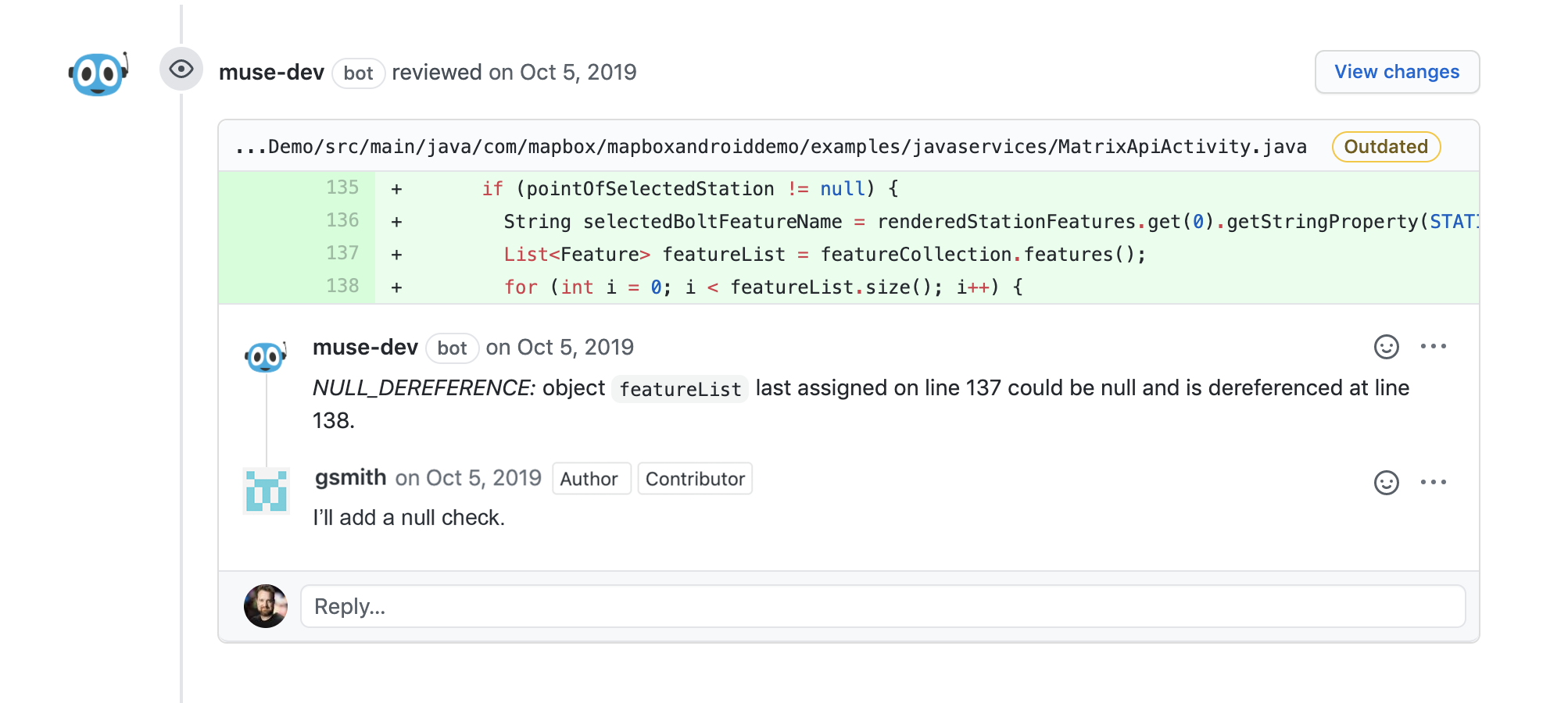
    Muse is also designed to surface cybersecurity issues in a way that makes it easier for developers to comprehend, said Magill. MuseBot automatically analyzes each pull request and delivers bug reports in GitHub as code review comments. In contrast, he noted, code analysis tools employed by cybersecurity teams tend to surface lists of vulnerabilities without providing developers with enough context to remediate or even prioritize.

    Muse is also designed to provide a faster alternative that generates results in about 20 minutes, which means DevOps teams can address issues within a workflow versus waiting for a report from a cybersecurity team, noted Magill.

    Too often code analysis tools will also generate too many false positives, he said. Muse includes a broad set of tools such as ErrorProne, Infer and Pyre for various cloud platforms that are customized and configured to reduce alert noise. Muse also provides access to an open application programming interface (API) that makes the platform fully customizable, Magill added.

    Muse is available as a GitHub app that the company is promising will be free always for open source projects and other public GitHub repositories. Analysis of private repositories is also available at no cost. A self-hosted Enterprise version available for GitHub, Bitbucket and GitLab, scheduled to be generally available by the end of the year, is also available as a private beta. MuseDev is also making available a professional services team to help organizations implement the platform.

    The company itself was spun out of Galois, a research and development firm that specializes in cybersecurity.

    In general, it can cost organizations as much as 10 times more after an application is deployed in a production environment to address cybersecurity issues. Despite widespread awareness of that issue, adoption of best DevSecOps practices within many organizations remains relatively nascent. There’s a lot of interest in DevSecOps as a goal, but few organizations have been able to put the tools that are needed to construct security workflows into the hands of DevOps teams.

    However, as more DevSecOps tools become available, chances are a lot of progress soon will be driven from the bottom up in most organizations rather than from the top down.

  • New Relic Makes Revamped APM Platform More Affordable

    New Relic Makes Revamped APM Platform More Affordable

    New Relic has revamped its application performance management (APM) platform as part of an effort to make observability more accessible and affordable.

    Bill Staples, chief product officer for New Relic, said New Relic One has been updated to provide a new user interface designed to make it easier to navigate and explore an observability platform that now monitors both applications and IT infrastructure.

    At the same time, New Relic has reduced costs by adding a free tier with no hidden costs or credit card required, he said. It provides one free license to 100GB of data every month. The first 100 million application transactions per month free as are the first 1,000 incident events per month.

    Initial pricing for the next level tier is at 25 cents per GB of ingest on a per-seat basis with applied intelligence priced per transaction or event.

    Staples said New Relic is further reducing costs by leveraging open source agent software to collect data, which along with the revamped New Relic One platform will make observability ubiquitous.

    The move to reduce observability costs coincides with the rise of microservices-based applications that by definition have many dependencies that need to be monitored continuously. Historically, many IT organizations have limited use of APM platforms to only their most mission-critical monolithic applications because of the costs involved. Given their inherent complexity, however, microservices-based applications require IT teams to employ an observability platform. They also drive organizations to embrace best DevOps practices, of which observability is a core tenet.

    Staples said it’s still early days in terms of the adoption of observability platforms, noting in light of their absence, most of the adoption of DevOps thus far could be described as a half-measure.

    To further that goal, Staples said New Relic One will also make it more cost-effective for IT organizations to embrace distributed tracing as an alternative to application sampling without having to incur massive storage costs. Distributed tracing monitors all requests between services with each segment recorded as a span. All the spans of a request are combined into a single distributed trace to provide a method to monitor an entire request.

    Competition among provides of APM platforms is now nothing short of fierce. New Relic today has a significant share of the market, but as demand for observability platforms continues to expand, it has more rivals than ever. In the wake of the economic downturn brought on by the COVID-19 pandemic, IT organizations are also pressuring vendors to reduce costs. The challenge IT organizations face is that while they are trying to reduce costs, they are also rolling out more cloud-native applications based on microservices that require deeper levels of observability.

    It’s unclear how the battle of the future of observability will play out. The good news, however, is the cost of proactively monitoring IT environments appears to be dropping by the day.

  • Juniper Networks Brings AI to SD-WANs

    Juniper Networks Brings AI to SD-WANs

    Juniper Networks today announced it can now apply the same artificial intelligence (AI) engine it uses to automate the management of wireless local area networks (LANs) to software-defined wide area networks (SD-WANs).

    Based on an AI engine that Juniper Networks gained when it acquired Mist Systems, the Juniper Mist WAN Assurance cloud service streams telemetry data gathered from Juniper SRX devices to an AI engine that advises IT teams on how to best set WAN service levels as part of a larger transition to intent-based networking.

    As part of that initiative, Juniper Networks is also providing access to a Marvis conversational interface originally developed by Mist to enable IT teams to verbally issue commands, replacing the traditional command-line interface (CLI).

    Christian Gilby, director of product marketing for Juniper Networks, said as the number of remote branch offices that IT organizations need to manage increases at a time when travel is limited, the need to apply AI to SD-WANs has never been more apparent.

    Rather than return to central offices in the wake of the COVID-19 pandemic, Gilby noted, many organizations are shifting staff to smaller remote offices to enable collaboration while continuing to minimize potential exposure to anyone who might be infected.

    The challenge is that many IT teams tasked with managing the WANs that connect those remote offices aren’t growing during the downturn caused by the pandemic. AI provides a way to troubleshoot and optimize WAN performance without having to increase network operations headcount, Gilby said.

    Platforms such as the Juniper Mist WAN Assurance cloud service provides the added benefit of never forgetting anything they learn or taking a day off.

    Gilby said it’s not likely AI systems will replace the need for network operations teams anytime soon. However, Juniper Mist WAN Assurance is part of a larger wave of AIOps technologies that are augmenting existing IT staff. It may take a while for them to trust the optimizations being made by AIOps platforms, but the more data those systems collect, the more accurate they become over time.

    In the case of a cloud service, the machine learning algorithms that drive the AI models are being trained continually using anonymized data collected from thousands of systems.

    The launch of Juniper Mist WAN Assurance comes at a time when more organizations are looking to embrace SD-WANs as a way to more easily scale the delivery of network services when employees are working from home for the foreseeable future. In many cases, IT teams are now dropping Mist wireless routers into home offices to extend the reach of SD-WAN services in a way that can be managed and optimized using the same core AI technologies, said Gilby. In its most recent quarter, Juniper Networks reported a 170% rise in orders year-over-year for Mist wireless LANs.

    It remains to be seen how much or how quickly networking operations will be transformed by AI. However, at this point, that transformation is all but inevitable.

  • Survey: DevOps Haves Benefiting Over Have-Nots

    Survey: DevOps Haves Benefiting Over Have-Nots

    A global survey of 400 global IT executives and practitioners conducted by Longitude, an arm of Financial Times Group, on behalf of New Relic suggests organizations that have embraced best DevOps practices are starting to enjoy material financial benefits over rivals that have not yet made similar investments in modernizing application development processes.

    The survey finds 25% of respondents are leaders when it comes to application development, with 90% of those respondents identifying the development and deployment of more perfect software as a strategic priority. Over a third of those respondents report their organizations have seen a 10% more increased revenue over the last three years.

    Those same survey respondents have also adopted continuous integration/continuous delivery (CI/CD) platforms (98%) and have made observability a key tenet of their software development efforts (94%).

    The survey also finds 77% of developer time on average among leaders is spent on innovation rather than on fixing issues. Leaders also find out about system and software interruptions via observability platforms (78%) versus needing to be informed by end users. A full 99% of leaders say they are able to quickly understand the results of changes to software, which also accounts for why leaders have fewer than five major software or systems outages per month (83%).

    Leaders are also more likely to have adopted chaos testing (77%) and automated remediation (89%). Three-quarters of leaders (75%) have an average resolution time of less than 30 minutes.

    On average, the survey finds leaders run 66% of their software and systems in the cloud, with a total of 96% having adopted a cloud-native approach to application development.

    The top barriers to greater cloud adoption for the leaders were reported as being security concerns and regulations.

    Buddy Brewer, global vice president and general manager for digital experience monitoring at New Relic, said more organizations today are focusing on applications that are most critical to the business, which includes digital business initiatives that enable organizations to engage customers during the current COVID-19 pandemic.

    IT organizations are also breaking up into smaller teams to enable them to collaborate more effectively when building and deploying these applications, he added. As organization dynamics change, Brewer said those small teams need access to a broad range of cloud-based tools to manage highly distributed applications.

    There’s obviously time for IT laggards to close the current DevOps gap between themselves and DevOps leaders. However, as leaders move further down the DevOps maturity curve, the gap between leaders and laggards appears to be widening. Many organizations in the wake of the pandemic have doubled-down a DevOps process that makes it easier for small teams to collaborate as needed.

    Of course, during the downturn brought on by the pandemic, not every organization may be able to make strategic investments in IT tools and processes. The catch-22 is that it’s even less clear is just how those organizations will recover after the economy rebounds if they are still dependent on archaic tools and processes.

  • Veritas Looks to Reduce Data Protection Costs

    Veritas Looks to Reduce Data Protection Costs

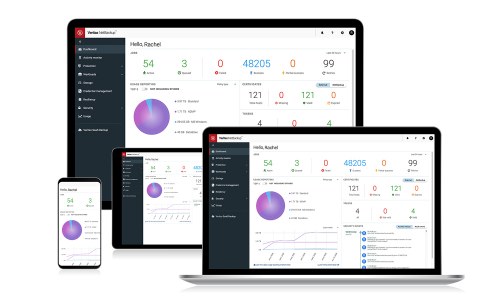
    Veritas has extended the capabilities of the company’s NetBackup software as part of an effort to reduce the total cost of data protection.

    Version 8.3 of NetBackup now includes Veritas Resiliency Platform (VRP), a disaster recovery tool, and CloudPoint, a tool for backing data up on a public cloud. All of these tools are part of what Veritas calls its Enterprise Data Services Platform (EDSP).

    In addition, Veritas has integrated hardened NetBackup appliances and vendor-agnostic immutability for storage via its NetBackup OpenStorage Technology (OST) to help organizations recover from a ransomware attack more easily.

    Veritas is also adding support for 2048-bit encryption and integration with third-party key management systems (EKMS) along with more flexible enhancements to the role-based access control (RBAC) it provides.

    Other capabilities in this release of NetBackup include more granular recovery of virtual machines, the ability to orchestrated rehearsals to verify effectiveness of recovery procedures, and the ability to move data between cloud platforms.

    Veritas has also extended discovery, backup, restore and automation at scale for Microsoft SQL, Oracle and Oracle Real Application Clusters (RAC) to simplify data protection processes spanning multiple classes of databases.

    Finally, Veritas claims with this release, data protection via auto-discovery of resources and load balancing is now 25% faster and the discovery of VMware vCenter and vCloud platforms is 50% faster.

    Doug Matthews, vice president of data protection and compliance for Veritas, said with the expansion of EDSP it’s now much more cost-effective to protect data residing on multiple platforms. In the wake of the economic downturn brought on by the COVID-19 pandemic, there’s much greater sensitivity to IT costs, he said.

    At the same time, Matthews said Veritas is seeing DevOps teams become much more involved in automating data protection processes. Veritas has defined more than 600 application programming interfaces to enable DevOps teams to programmatically invoke its data protection software, he said.

    Cybersecurity teams are also becoming more involved as backup and recovery becomes a core element of ransomware defense strategies, Matthews added. In an ideal world, anytime a ransomware attack occurs, a pristine copy of any impacted data would be readily available on another unaffected platform.

    The convergence of data protection and cybersecurity has been a long time coming. Symantec once owned Veritas in the hopes of achieving that goal. Now Veritas is working with a much broader array of third-party partners to achieve that same goal, Matthews said. It may wind up being the rise of DevOps that finally forces that issue as data protection becomes one more IT task to be automated.

    In the meantime, IT organizations may want to revisit their entire approach to data protection. Chances are good that most of them have multiple redundant data protection tools and services in place that have been acquired over time. Consolidating those functions ultimately not only reduces licensing costs, but it also creates an opportunity to automate a set of mundane tasks that all too often IT staff forget to perform consistently at a time that will prove crucial.

  • RackN Transforms Bare-Metal Servers Into a Cloud

    RackN Transforms Bare-Metal Servers Into a Cloud

    RackN is making available an update to the RackN Digital Rebar Platform that will make it easier to employ tools such as Terraform to configure bare-metal servers.

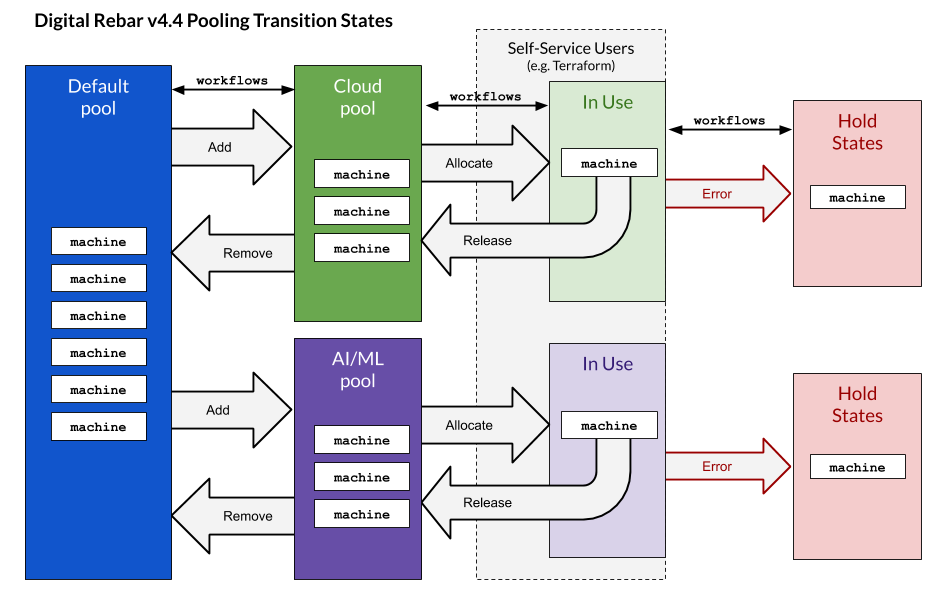
    Company CEO Rob Hirschfeld said version 4.4 of the platform adds an application programming interface (API) that enables bare-metal servers to be abstracted into resource groups. IT administrators can request a machine based on an attribute map to provision a collection of bare-metal servers as if they were a cloud platform, he said, noting RackN is also making available workflows to enable IT teams to automate the allocation and reallocation processes more easily.

    At the same time, the latest release of RackN Digital Rebar Platform adds support for Trusted Platform Module (TPM) Secure Boot, an industry standard that ensures only software that is trusted can be loaded onto a machine. Most automation platforms don’t support TPM Secure Boot, which forces IT teams to choose between the benefits of automation and having a secure platform. RackN Digital Rebar Platform is the only automation framework to support (TPM) Secure Boot in VMware environments, Hirschfeld claimed.

    Out-of-band management passwords, TLS certificates and VLANs will also be secure by default with this latest release, he said.

    Hirschfeld said IT teams want to be able to provision bare-metal servers as if they were code in much the same way they provision virtual machines. Just as importantly, they require an automation tool that enables them to just as easily de-provision those machines when it comes time to reallocate them to another workload.

    Achieving that goal, however, should not require IT organizations to hire a site reliability engineer (SRE), he said, noting the RackN Digital Rebar Platform is designed to be employed by the average IT administrator. An SRE could define workflows within the RackN Digital Rebar Platform that are reused by IT administrators; in fact, RackN plans to add support for Git repositories that will make it easier to share workflows, Hirschfeld added.

    While the reasons for deploying workloads in the cloud versus on-premises IT environments are varied, the automation advantage cloud platforms historically have enjoyed over on-premises IT environments is narrowing at a time when interest in deploying Kubernetes clusters on bare-metal servers is rising. It may be a while before most IT teams are able to manage bare-metal servers as if they were just another cloud resource. The main obstacle for achieving that goal now, however, is likely to be a lot more cultural than it is technical.

    In the meantime, IT teams should expect to see bare-metal servers employed more widely in the age of containers. There will, of course, always be a need for virtual machines, at least in the foreseeable future. The challenge is the IT infrastructure environment itself is becoming more diverse as new classes of cloud-native application workloads emerge.

  • Xen Project Team Updates Open Source Hypervisor Project

    Xen Project Team Updates Open Source Hypervisor Project

    The team behind the open source Xen hypervisor announced today provided an update to the project that adds better nested performance, more robust live patching capabilities, improved security and support for Linux subdomains that make it possible to execute code within a specialized domain.

    In addition, Xen Project Hypervisor 4.14 adds the ability to run Xen as a guest under Hyper-V, the hypervisor Microsoft employs on the Azure cloud.

    George Dunlap, Xen Project Advisory Board Chair, said that latter capability will make it easier to create centrally managed hybrid cloud computing environments that span lightweight instances of Xen at the network edge and instances of Xen running in the Microsoft Azure Cloud. Xen is a core component of the Edge Virtualization Engine (EVE) being developed by LF Edge, which, like the Xen Project, is being developed under the auspices of The Linux Foundation.

    Dunlap also noted IT teams can employ Xen Project Hypervisor to run containers on top of virtual machines, which makes it possible to centrally manage the deployment of containerized applications from the edge to the cloud.

    Xen Project Hypervisor 4.14 also extends Raspberry Pi 4 support for devices with 4GB and 8GB of RAM, in addition to supporting the next-generation AMD EPYC processor, codenamed Milan.

    Finally, Xen Project Hypervisor 4.14 adds support for faster introspection of malware; the ability to live-patch security fixes in a way that ensures they are implemented in the right order; and control flow tools to combat Return-Oriented Programming (ROP) attacks.

    Dunlap noted the Xen team continues to work on Secret-free Xen, which prevents memory from being mapped as part of a side-channel attack.

    Golang bindings are also been expanded to make it easier to develop code on top of Xen using the Go programming language, and add the ability to migrate virtual machines with no drivers or broken drivers.

    While there is no shortage of options when it comes to virtual machines, Dunlap said the more they are viewed as a commodity the more likely organizations will opt to rely on an open source project, as many organizations are deciding there isn’t enough differentiated value to warrant paying for a commercial license.

    It’s too early to say how much organizations will continue to rely on virtual machines. Many IT teams do so now to provide a layer of isolation that is often deemed critical for security. Other IT teams are starting to rely more on containers deployed on bare-metal servers or a lighter-weight instance of a virtual machine that serves only to isolate workloads.

    Regardless of the path forward, the more platforms that run a common layer of virtual infrastructure, the easier it is to manage a hybrid IT environment. The real challenge is being able to enforce that level of IT discipline in an era where developers often spin up virtual machines wherever they find them.