Author: Mike Vizard

  • Instana Applies DevOps to APM Agent Management

    Instana Applies DevOps to APM Agent Management

    Instana has announced it has become the first provider of an application management platform (APM) to enable IT teams to automate the deployment of agent software to monitor IT environments using any Git repository of their choice.

    Jim Hirschauer, director of product management and sales enablement for Instana, said agent software used to instrument an IT environment, including software and infrastructure, can now use a Git repository to automate the configuration of agent software during startup and reboot in addition to being able to pin a specific version of Instana agent software to a branch within a Git repository.

    One of the challenges any DevOps team faces when instrumenting an IT environment is the agent software employed to collect data and metrics needs to be managed like any other piece of software. By adding support for Git repositories, Instana is making it possible to apply DevOps processes to the management of that agent software, he said.

    The ability to configure agents as code also means DevOps teams can turn on and off agents as part of an effort to reduce agent management fatigue, he added.

    By embracing GitOps practices Instana is looking to distinguish itself from rival APM platform providers by “walking the talk” when it comes to best DevOps practices, Hirschauer said.

    The ability to configure agents as code follows a recent update to the Instana APM platform that, among other things, added support for Redis Enterprise Monitoring Sensor, IBM MQ Monitoring Sensor and NGINX tracing, which automatically integrate with Instana End User Monitoring (EUM) to natively extract tracing requests.

    Although competition across the APM space is crowded, Instana as a startup is trying to take advantage of two macro trends to supplant rivals. The first is the shift toward converging the management of software and IT infrastructure. The Instana APM platform discovers all application service components and application infrastructure and then automatically deploys monitoring sensors that trace all application requests and profiles every process. It then detects application and infrastructure changes in real-time, adjusting its own models and visualizing the changes and any performance impact without requiring any human configuration or even application restarts.

    The second trend is the rise of microservices. Historically, IT teams have used APM platforms to only monitor their most mission-critical applications because of the cost of deploying agent software. However, given the inherent complexities of microservices-based applications, IT teams are employing APM platforms more broadly to monitor dependencies.

    It’s too early to say how this latest round in the APM platform wars will play out. However, there are more organizations than ever evaluating APM platforms, many of which would never have employed one before. The good news is that as open source agents become more widely available, the cost of employing APM platforms should come down. However, open source agents are still not quite as simple to configure and deploy as most proprietary agent software. DevOps teams will need to decide for themselves how much that convenience is worth.

  • CNCF Provides Jaeger Distributed Tracing Update

    CNCF Provides Jaeger Distributed Tracing Update

    The Cloud Native Computing Foundation (CNCF) has made available a report detailing the progress being made around the open source Jaeger distributed tracing software. Among other things, the report notes there are now more than 300 organizations contributing to the project.

    Jaeger is designed to provide a framework for monitoring microservices-based applications in a way that captures every interaction as part of an effort to simplify troubleshooting.

    Originally developed by Uber, Jaeger has almost 2,000 contributors. Developers from Uber and Red Hat make the bulk of those contributions., while other developers work at Ryanair, IBM, Ticketmaster and CloudBees.

    Thus far, there have been nearly 40,000 contributions, 4,300 code commits and 3,200 pull requests for Jaeger.

    Yuri Shkuro, a software engineer at Uber who created and maintains the Jaeger project, said as open source agent software in the form of OpenTelemetry, a separate sandbox-level initiative also hosted by the CNCF, gains traction, the more feasible it will become for DevOps teams to embrace distributed tracing. Currently, most DevOps teams are dependent on sampling techniques typically employed via an application performance management (APM) platform. While that approach can indicate there might be an issue, distributed tracing makes it easier to pinpoint the precise problem.

    That’s critical because many DevOps teams can spend hours, if not days, trying to identify the source of an issue that often only takes a few minutes to fix. The trade-off is that distributed tracing collects a lot more data than sampling, so IT teams will need to decide how long they may want to store that data. Most organizations will only store tracing data that identifies anomalies based on a reasonable retention schedule rather than allocating storage resources to what could become massive amounts of tracing data, noted Shkuro.

    Providers of commercial observability platforms have been embracing OpenTelemetry to provide distributed tracing services, so it’s not clear to what degree IT organizations will opt to deploy Jaeger on their own or access a managed Jaeger-based service.

    Regardless of how they are invoked, next-generation observability platforms based on Jaeger should become more affordable at a time when microservices-based applications are being more widely deployed. Given the inherent complexity of those applications, observability platforms that are a core tenet of any best DevOps practice become a requirement. In comparison, the use of ALM platforms was typically limited to only the most mission-critical applications because of the costs associated with deploying proprietary tools.

    It may be a while before every application is instrumented by default. In the meantime, Shkuro said the Jaeger project is looking to recruit additional maintainers. As is often the case with any open source project, there are plenty of contributors. IT professionals willing to volunteer to maintain a project are often more scarce.

  • GitLab Makes Economic Case for DevOps Platform

    GitLab Makes Economic Case for DevOps Platform

    GitLab is advancing its case for integrating as many DevOps processes as possible on a single platform by making available an economic analysis that claims organizations can improve application development and delivery by 87%, resulting in a savings of more than $23 million.

    Based on an analysis conducted by Forrester Consulting on behalf of GitLab, the report concludes organizations can save as much as $3.7 million by reducing the number of DevOps tools they need to acquire by a factor of four.

    The report also claims organizations can also see a 12x increase in the number of revenue-generating application releases in a year, resulting in $12.3 million in additional revenue, while at the same time reducing code defects to generate more than $16.8 million in savings.

    Overall, the report says there is a 407% return on investment (ROI) in the GitLab platform.

    GitLab has made available an online DevOps cost estimator based on the Forrester Consulting report.

    Colin Fletcher, manager for market research and customer insights for GitLab, said the core GitLab platform is designed from the ground up to make every integrated tool a natural extension of the existing DevOps workflow.

    IT organizations are also focusing on productivity and workflow now that it’s apparent most DevOps teams will be working from home to help combat the spread of the COVID-19 pandemic well into 2021. That shift is requiring some organizations to reorganize DevOps teams around specific development projects, he noted.

    In the wake of the economic downturn brought on by the pandemic, there is also naturally a lot more focus on costs. At the same time, many organizations are trying to accelerate the rate at which applications are developed and deployed as part of a larger digital business transformation initiative. The more business processes become digitized, the more dependent organizations become on software.

    The issue many IT leaders are trying to navigate is finding a way to reduce costs without forcing every member of the DevOps team to standardize on the same set of tools. While it’s arguable there are too many tools employed in a DevOps process today, it’s also clear that most members of those teams prefer to select their own tool whenever possible.

    It’s too early to say to what degree IT organizations may be willing to re-engineer their DevOps processes. Most have spent a significant amount of time and effort tailoring existing platforms to fit their needs. The level of inertia surrounding existing DevOps workflows inside an IT organization is considerable, so IT leaders would have to exercise a considerable amount of political will to switch DevOps platforms. There are, however, often multiple DevOps platforms in use within the same organization. The pressure to rationalize those platforms increases in a downturn.

    In the meantime, there are plenty of IT teams that have still not embraced DevOps. As the size of the DevOps market continues to expand, competition among providers of DevOps platforms is intensifying. For the average IT organization, that’s usually a good thing until a key vendor is acquired by a rival that is not as committed to a platform on which the DevOps team depends.

  • Algorithmia Looks to Meld MLOps and DevOps

    Algorithmia Looks to Meld MLOps and DevOps

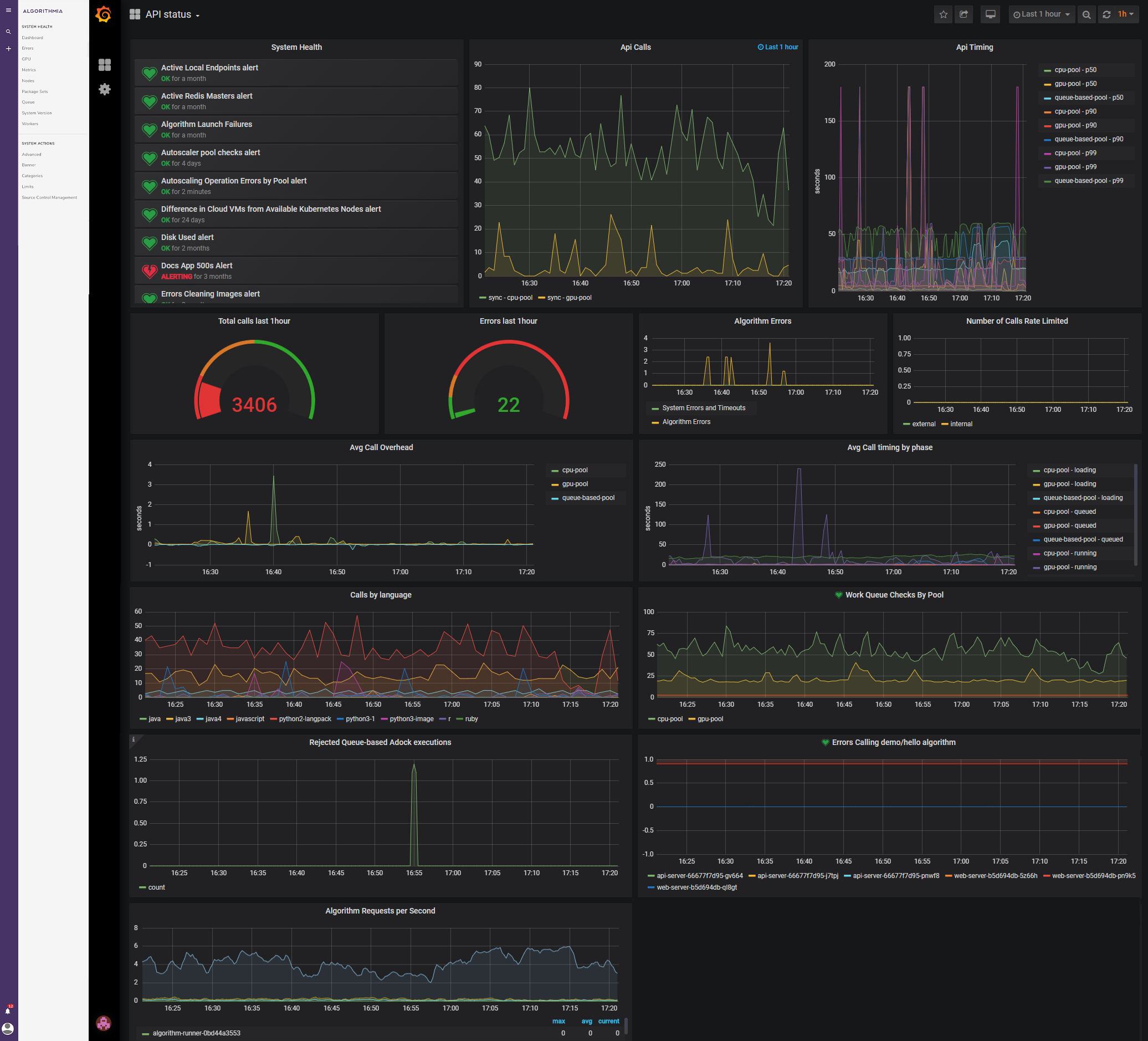
    Algorithmia, in the latest update to the enterprise edition of its namesake machine learning operations (MLOps) platform, is enabling software development lifecycle practices to be applied to the building of algorithms by making it possible to debug them using desktop tools that are widely employed.

    The enterprise edition of Algorithmia will enable users to write and run local tests for algorithms as shared local data files. Desktop developer tools that can now integrate with that process include PyCharm, Jupyter Notebooks, R Shiny, Android, iOS, Cloudinary, Datarobot and H2O.AI.

    In addition, Algorithmia MLOps has extended its support for the latest graphical processor units (GPUs) available on Amazon Web Services (AWS) and Microsoft Azure.

    Finally, the company has added support for AWS C2S, a private cloud for intelligence services, and AWS GovCloud.

    Algorithmia CEO Diego Oppenheimer said IT teams building artificial intelligence (AI) applications are applying many of the same best DevOps practices employed elsewhere in the organization. Making it possible to debug those applications on a local desktop makes it easier for organizations to construct those DevOps workflows, he said.

    The Algorithmia platform enables IT teams to control the provenance of all components of ML operations, including certificate authorities, operating systems, container images, code, dependencies and ML models employed.

    Many organizations today are struggling with how to meld MLOps and DevOps processes. The rate at which AI models are created and updated is typically much slower than the rate at which the applications those models are infused is typically much slower. Data scientists are now coming to terms with how to deploy and update AI models within the context of a larger set of DevOps processes.

    In the wake of the COVID-19 pandemic, interest is AI is rising. Organizations are looking for ways to leverage machine learning algorithms to both drive down costs and increase revenue by automating a wide range of tasks. A recent global survey of 2,737 information technology and line-of-business executives conducted by Deloitte finds nearly two-thirds of the survey respondents (61%) said AI will substantially transform their industry in the next three years. More than half (53%) also noted they have spent more than $20 million during the past year on AI technologies and the talent required to master them.

    However, the same survey noted over half the respondents (56%) said their organization is slowing adoption of AI technologies because of the emerging risks. Obviously, improving the debugging process for applications that incorporate machine learning algorithms could go a long way toward reducing those risks.

    It’s not clear to what degree AI might one day transform the application experience. It is safe to say that eventually, almost every application will incorporate machine and deep learning algorithms to automate one or more processes. Those algorithms won’t eliminate the need for humans as much as they will automate rote processes that today consume more time than anyone prefers. The challenge, of course, will be making sure algorithms perform those tasks consistently as more data becomes available.

  • Survey: Organizations Knowingly Deploy Vulnerabilities

    Survey: Organizations Knowingly Deploy Vulnerabilities

    A survey published today by Synopsys, a provider of electronic design automation (EDA) and application security tools, finds nearly half (48%) of respondents admit they consciously push code with known vulnerabilities into production because of time constraints.

    Based on a survey of 378 cybersecurity professionals conducted by Enterprise Strategy Group (ESG) on behalf of Synopsys, the survey also finds 65% of respondents said developers in their organization are participating in a formal security training program.

    However, only a third (34%) are employing application security tools across more than three-quarters of their codebase. And, as the rate at which code is created increases, only 30% expect they will be able to protect more than three-quarters of their codebase 12 months from now despite the fact that more than half (56%) said they apply highly integrated sets of security controls throughout their DevOps process.

    Nearly three-quarters (72%) also said their organization makes use of 10 or more application security tools.

    Patrick Carey, director of product marketing for the Software Integrity Group at Synopsys, said the survey shows many organizations are making trade-offs between potential risks to the business and the desire to deliver software faster. As the rate at which updates to applications are being delivered increases, thanks largely to the adoption of best DevOps processes, Carey noted it becomes easier to justify knowingly allowing vulnerable code to be deployed in a production environment. The assumption is that most severe vulnerabilities will be prioritized while less critical vulnerabilities are addressed over the course of the application lifecycle management process.

    In most organizations, the survey finds either a development manager or the application security analyst is responsible for making these decisions. Just under a third of organizations make both jointly responsible. More than three-quarters (78%) also report their security analysts are directly engaged with their developers. Just under a third (31%) work directly with developers to review individual features and code, compared to 28% who work with developers on threat modeling and 19% that participate in daily scrums.

    The survey finds that integrations that complement high-velocity application development process are critical for 43% of respondents. As a result, more organizations are looking for application security tools that can be directly embedded within an integrated development environment (IDE), noted Carey.

    However, the fact that application security tools are shifting further left does not mean organization won’t also have to invest in other tools that are embedded within DevOps platforms that manage runtime deployments, added Carey.

    As is always the case when it comes to best DevSecOps practices, the two biggest challenges are getting the right tools in the hands of developers and then aligning workflows between development and cybersecurity teams. The survey suggests substantial progress has been made on the latter, while tools for developers are increasingly becoming available. After all, most developers want to do the right thing when it comes to application security. The issue is determining what precisely that means.

  • VMware Brings Hybrid Cloud Computing to Virtual Desktops

    VMware Brings Hybrid Cloud Computing to Virtual Desktops

    VMware has updated its desktop and application virtualization platform to make it easier for IT teams to support end users who need to regularly shift between working in the office and from home.

    The latest version of VMware Horizon adds support for an instant clone capability that rapidly provisions personalized virtual desktops and applications enabled by the VMware vSphere platform.

    VMware Horizon is also now available on the Google Cloud VMware Engine service as well as on-premises servers from Dell EMC, a sister company of VMware. It is also committing to adding support for Microsoft Azure in addition to existing support for Amazon Web Services (AWS).

    VMware is also adding REST application programming interfaces (APIs) to make the platform more programmatically extensible.

    The company has also optimized audio and video support for Microsoft Teams and is making it possible to publish Linux applications on the platform.

    Finally, VMware has launched a beta of VMware Workspace ONE Proximity, which leverages Bluetooth Low Energy (BLE) beacons to give employees insight into how to better maintain social distancing in the workplace. A forthcoming Workspace ONE Campus will also enable employees to leverage that same beacon infrastructure to book meeting rooms and determine how best to optimally move about a larger work environment.

    Jeff McGrath, senior director for VMware End User Computing, said interest in hybrid cloud implementations of VMware Horizon has risen sharply. IT teams want to be able to drive application traffic to on-premises servers to minimize latency whenever employees are in the office. When those same employees are at home, however, it may make more sense to drive that traffic to a cloud-based instance of VMware Horizon. As employees move between environments, McGrath said VMware Horizon makes it possible to maintain a consistent digital workspace experience for end users.

    Interest in virtual desktops has been rising since Microsoft changed Windows licensing terms in advance of launching its own Windows Virtual Desktop (WVD) service. The VMware Horizon platform is significantly more robust in terms of both the hybrid cloud computing scenarios it supports and the management tools provided to IT teams, said McGrath.

    In the wake of the COVID-19 pandemic, it remains to be seen how many desktops will shift into the cloud. Most IT organizations were simply content to provide access to desktops applications over a virtual private network (VPN) when the pandemic first hit. Now that it appears more employees will be working from home on a semi-permanent basis, many IT organizations are revisiting their entire IT strategies.

    Of course, there is no shortage of options when it comes to desktop and application virtualization. VMware is betting a large installed base of IT organizations that have already standardized on VMware vSphere in both on-premises and now cloud computing platforms will result in more enterprise IT organizations embracing VMware Horizon. Regardless of the outcome, the one thing that is clear is virtual desktops in the age of COVID-19 are now well on their way to becoming the preferred default option for many organizations.

  • Sumo Logic Expands Observability Platform Scope, Reach

    Sumo Logic Expands Observability Platform Scope, Reach

    Sumo Logic announced today it has extended the reach of its monitoring platform to provide deeper insights across application and infrastructure logs, metrics, traces and metadata in real-time.

    The latest additions to the company’s suite of software-as-a-service (SaaS) offerings include Sumo Logic AWS Observability Solution, which focuses exclusively on AWS services, and additions to the Sumo Logic Software Development Observability Solution that provide support for GitHub, Jenkins and PagerDuty alongside existing support for Jira, Bitbucket and OpsGenie. The Sumo Logic Software Development Observability Solution is based on a key performance indicator (KPI) methodology developed by the DevOps Research and Assessment (DORA) organization, an arm of Google.

    observabilityIn addition, Sumo Logic has launched a closed beta for a Distributed Transaction Tracing service based on the OpenTelemetry standard that will integrate logs, metrics and metadata. Finally, the company has added more tracing capabilities to its existing Microservices Observability Solution.

    Sumo Logic got its start by providing a cloud service for analyzing logs as an alternative to Splunk. Since then, the company has extended the scope of its services to address a wider range of observability requirements for DevOps teams.

    Ben Newton, director of field evangelism for Sumo Logic, said the company is trying to engage IT organizations at any level of maturity by providing access to a range of offerings from log analytics to observability tools for various platforms including Kubernetes. Those offerings now span the application life cycle from coding to grave, he said.

    Sumo Logic also differentiates a pricing model based on data tiers that enables IT teams to analyze logs, metrics and traces across a variety of use cases without monthly limits, peak provisioning or on-demand charges for data volume overages or exceeding custom metrics limits.

    In the wake of the economic downturn brought on by the COVID-19 pandemic, the rate at which DevOps tools have been shifting into the cloud has accelerated. With more DevOps teams working from home, cloud-based services are more flexible. At the same time, more organizations prefer to treat IT costs as an operating expense at a time when the overall economic outlook remains uncertain. The entire IT organization needs to be able to respond to rapidly changing business conditions in a more agile manner, noted Newton.

    Less clear is whether the economic downturn might also drive consolidation across what today is a spectrum of observability tools spanning log analytics to application performance management (APM) platforms used primarily to sample application traffic. It’s even less clear whether the rise of distributed tracing capabilities might reduce dependency on application sampling altogether.

    What is apparent is IT teams have never had more visibility into IT environments that increasingly are more complex. The challenge and opportunity now is determining how best to apply a wide range of observability tools to turn all that insight into actionable intelligence.

  • Harness Acquires Drone CI Project

    Harness Acquires Drone CI Project

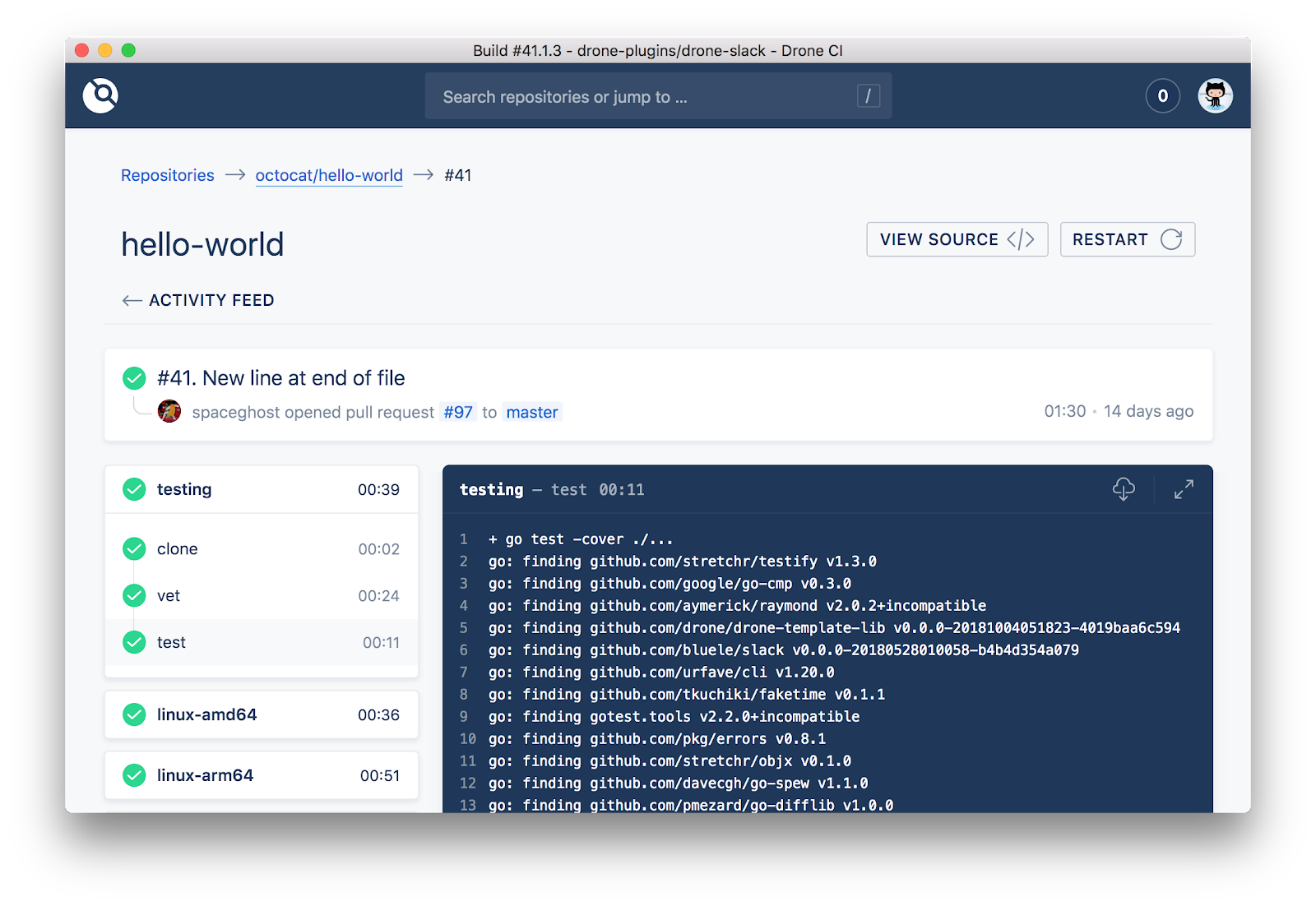
    Harness announced it has acquired Drone.io, creator of the open source Drone continuous integration (CI) project.

    Company CEO Jyoti Bansal said Harness, which provides a continuous delivery (CD) platform delivered as a service, will offer Drone to organizations that want a CI platform alongside a CD service from a single vendor. However, Harness will also continue to facilitate the integration of its namesake CD platform with other CI platforms.

    Drone will continue to be freely available as open source software and will be re-christened Harness CI Community Edition. Drone Enterprise will be sold as Harness CI Essentials Edition. Later this year, Harness plans to introduce Harness CI Enterprise Edition, which will extend the core platform.

    The two companies claim there are currently more than 50,000 active Drone community users for a project that is supported by 250 contributors. Organizations that have adopted Drone include eBay, CapitalOne, Cisco Systems and VMware. Instead of requiring scripts, continuous integration pipelines created in Drone can be declared and managed as code in Git. That approach creates a standard syntax for pipelines that are easier to create, use, maintain and troubleshoot. The two companies claim that reduces the time and cost of continuous integration by a factor of five to 10 over rival platforms.

    Analyst firms are projecting the DevOps software market will generate $15 billion in revenue by 2023, signaling an opportunity to provide a more modern CI platform that is easier for organizations to employ, Bansal said. Jenkins, the most widely used CI/CD platform today, traces its lineage back to 2004.


    While the overall market continues to grow, however, there’s been a wave of consolidation among vendors attempting to construct end-to-end DevOps platforms. Many enterprise IT organizations tend to prefer to rely on as few vendors as possible to reduce integration costs, which is an issue Harness in part is trying to address by acquiring Drone.io.

    Harness is a member of both the Continuous Delivery Foundation (CDF) and the Cloud Native Computing Foundation (CNCF). Drone is already available on a wide variety of platforms, including Kubernetes, and it’s not clear if either arm of the Linux Foundation will play a major role in advancing the development of Drone. The CNCF has thus far accepted Argo, an open source CD platform for Kubernetes, as an incubation-level project.

    In the meantime, competition among providers of CI/CD platforms is intensifying. Jenkins, originally developed by CloudBees, is now being advanced under the auspices of the CDF along with Jenkins X, a CI/CD for Kubernetes environments, and Spinnaker, a CD platform originally developed by Netflix. GitLab, Microsoft and its GitHub subsidiary, JFrog and CircleCI all have established major rival CI/CD ecosystems of their own.

    Ultimately, it will be up to each IT organization to decide which CI/CD platform makes the most sense for them. It’s even possible many departments within the same organization will make use of multiple CI/CD platforms. Over time, however, most enterprise IT organizations are expected to adopt a CI/CD standard to better facilitate collaboration across multiple DevOps teams.

  • CDF Officially Graduates Jenkins CI/CD Platform

    CDF Officially Graduates Jenkins CI/CD Platform

    The Continuous Delivery Foundation (CDF) announced today that the open source Jenkins continuous integration/continuous delivery (CI/CD) has officially graduated.

    Jenkins was donated last year to the CDF, an arm of The Linux Foundation, along with Jenkins X, a CI/CD platform for Kubernetes; Spinnaker, a CD platform; and Tekton, a framework for building pipelines that will be employed as the foundation for next-generation CI/CD platforms.

    Tracy Miranda, CDF Governing Board Chair and director of open source community at CloudBees, said that although Jenkins traces its lineage back to 2004, the CDF wanted to make sure the same requirements that are being applied to graduate other projects are applied to Jenkins despite its obvious maturity. The CDF requirements for graduating a project are to demonstrate growing adoption, have an open governance process, feature maturity and a strong commitment to community, sustainability and inclusivity.

    The CDF also today published a public road map for Jenkins. Key features include improving the user/administrator experience and tighter integration with cloud platforms. Work has also begun on Operator tools for simplifying the deployment of Jenkins on a Kubernetes cluster.

    Longer-term, the CDF is focused on expanding the adoption of Tekton-based Trigger pipelines across both Jenkins and Spinnaker. Tekton pipelines are easier to create and can be reused across multiple platforms. Jenkins X already employs Tekton-based pipelines, which were originally developed by Google.

    The founding members of the CDF are CloudBees, Google, CapitalOne, CircleCI. Fujitsu, Huawei, IBM, JFrog, Netflix and Salesforce.

    In the nearer term, Miranda said the CDF is also attempting to standardize the glossary of terms applied to DevOps processes. The goal is to provide something akin to a “Rosetta Stone” that will help make DevOps more accessible to IT professionals just starting their journey.

    In theory, at least, platforms such as Jenkins X accelerate the development of microservices-based applications running on Kubernetes clusters. In practice, however, many IT teams continue to use Jenkins and other CI/CD platforms to build both monolithic and microservices-based applications.

    As Kubernetes gains momentum, however, the way applications are deployed may also evolve. Today most DevOps teams push application code from a CI/CD platform on to a target system. However, if Kubernetes is deployed on multiple platforms it may become easier to automate the delivery of code by enabling Kubernetes clusters to pull code from CI/CD platforms on demand.

    As organizations transition to building and deploying microservices-based applications, it’s also apparent there will be a much greater need to rely on best DevOps practices to manage all the dependencies that will exist between each microservice. Legacy application development processes will not be able to keep pace with the rate at which microservices based on containers are ripped and replaced.

    Of course, it’s not clear to what degree organizations may prefer to stay with Jenkins, which is built on a Java virtual machine, versus adopting Jenkins X or a CD platform such as Spinnaker. However, as the interoperability between these platforms continues to improve, it may not be surprising to one day find DevOps teams employing a mix of all of them across different application development projects.

  • Red Hat Updates Virtualization Platform

    Red Hat Updates Virtualization Platform

    Red Hat today announced an update to its virtual machine platform that now can run on the latest version of Red Hat Enterprise Linux (RHEL).

    Version 4.4 of Red Hat Virtualization can now run on version 8.2 of RHEL. In addition, Red Hat has added Grafana-based dashboards for its Data Warehouse (DWH) service that IT teams can employ to track performance and analyze workloads.

    Finally, Red Hat Virtualization 4.4 simplifies configuring network services using its NetworkManager console.

    Peter Lauterbach, a product manager in the Cloud Platforms group at Red Hat, said support for RHEL 8 is core to the company’s overall strategy to enable IT teams to run microservices-based applications simultaneously with existing monolithic applications.

    Red Hat envisions IT organizations will deploy RHEL on bare-metal servers running Red Hat OpenShift, an application development and deployment platform based on Kubernetes that can run applications built using containers. In addition, Red Hat OpenShift supports kubevirt, open source software that enables kernel-based virtual machines (KVMs) such as Red Hat Virtualization to run on top of a Kubernetes cluster. Made available as Red Hat OpenShift Virtualization, that software makes it possible to run legacy monolithic applications alongside microservices-based applications on the same Kubernetes cluster as needed, said Lauterbach.

    That approach not only is easier to manage from an infrastructure perspective, Lauterbach noted it also can reduce latency between monolithic applications and microservices. Many IT teams in the wake of the COVID-19 pandemic have accelerated the rate at which they are moving applications into the cloud by encapsulating entire monolithic applications into containers that then can be ported to a cloud platform without the need to refactor them. They then can begin to modernize those applications by breaking them up into smaller microservices.

    Lauterbach also noted it has become a lot easier to leverage Kubernetes to move applications between platforms because interoperability between storage and networking services has improved significantly, thanks to the Container Storage Interface (CSI) and Container Network Interface (CNI) that have been made available by the Kubernetes community. In fact, Lauterbach said standards in infrastructure are living up to their interoperability promise.

    Red Hat, of course, has been making the case for open source virtual machines for decades now. However, in the wake of the economic downturn brought on by the COVID-19 pandemic, there will be many more organizations looking to reduce costs by relying on commercial virtual machine software. In addition, Lauterbach noted that now that cloud service providers such as Amazon Web Services (AWS) support KVM, it is a lot easier to create a hybrid cloud computing environment by deploying Red Hat Virtualization in a local data center than it is to replicate a VMware environment in a public cloud.

    It’s too early to say how the battle for hybrid cloud computing will play out in the months and years ahead. The one thing that is certain is the more diverse the IT infrastructure environment is, the more difficult it is to manage.