
Author: Mike Vizard

  • NVIDIA to Create AI Powerhouse by Acquiring Arm for $40B

    NVIDIA to Create AI Powerhouse by Acquiring Arm for $40B

    NVIDIA has announced its intention to acquire Arm from SoftBank for $40 billion as part of an effort to create a juggernaut that will build processors optimized for artificial intelligence (AI) applications that span edge computing deployment to the cloud.

    Under the terms of the proposed deal, Arm will operate as a subsidiary of NVIDIA and will continue to headquartered in Cambridge, UK. NVIDIA will pay to SoftBank a total of $21.5 billion in NVIDIA common stock and $12 billion in cash, which includes $2 billion payable at signing. SoftBank will retain a 10% stake in NVIDIA.

    NVIDIA CEO Jensen Huang during a conference call also committed to licensing the software NVIDIA uses to make graphical processor units (GPUs) using the same licensing model Arm has employed to encourage manufacturing partners to create processors based on its designs. In theory, that approach could substantially lower the cost of GPUs once the deal closes.

    However, because of all the regulatory approvals required, Huang said NVIDIA could not commit to a timeframe for the close of the deal. Previously, Huang noted it took NVIDIA a year to close the acquisition of Mellanox, a provider of storage and networking infrastructure.

    In addition to providing processors that drive gaming and CAD/CAM applications, GPUs from NVIDIA are widely employed to train AI models more efficiently than x86 processors from Intel or AMD. Processors from Intel are used more often to run the inference engines for an AI model once it is deployed. With the acquisition of ARM, NVIDIA gains access to processor technology that is emerging as a rival architecture for deploying AI models on a wide range of server and mobile computing platforms. Currently, Arm is best known for providing processors for mobile computing devices such as smartphones, which eventually will also be infused with a wide variety of machine and deep learning algorithms.

    In the meantime, many organizations continue to struggle with implementing AI. It typically takes a team of data scientists six months or more to build an AI model. Once that model is built, it then needs to be incorporated into an application as part of a DevOps workflow. In the meantime, business assumptions may change, rendering the AI model irrelevant. That requires the data science team to build a new AI model. In addition, as new data sources become available, AI models need to be updated. Most organizations are just now defining the processes for building and deploying those models, otherwise known as machine learning operations (MLOps), using many of the principles that were first defined by DevOps teams.

    Once those MLOps processes are defined, of course, IT teams then need to meld MLOps and DevOps workflows to keep applications that are updated more frequently synchronized with the AI model on which those applications increasingly depend.

    At this point, it’s clear every application will incorporate some level of AI. However, the speed at which AI might become pervasive is not likely to be all that fast anytime soon.

  • Micro Focus Strengthens Hybrid Cloud Hand

    Micro Focus Strengthens Hybrid Cloud Hand

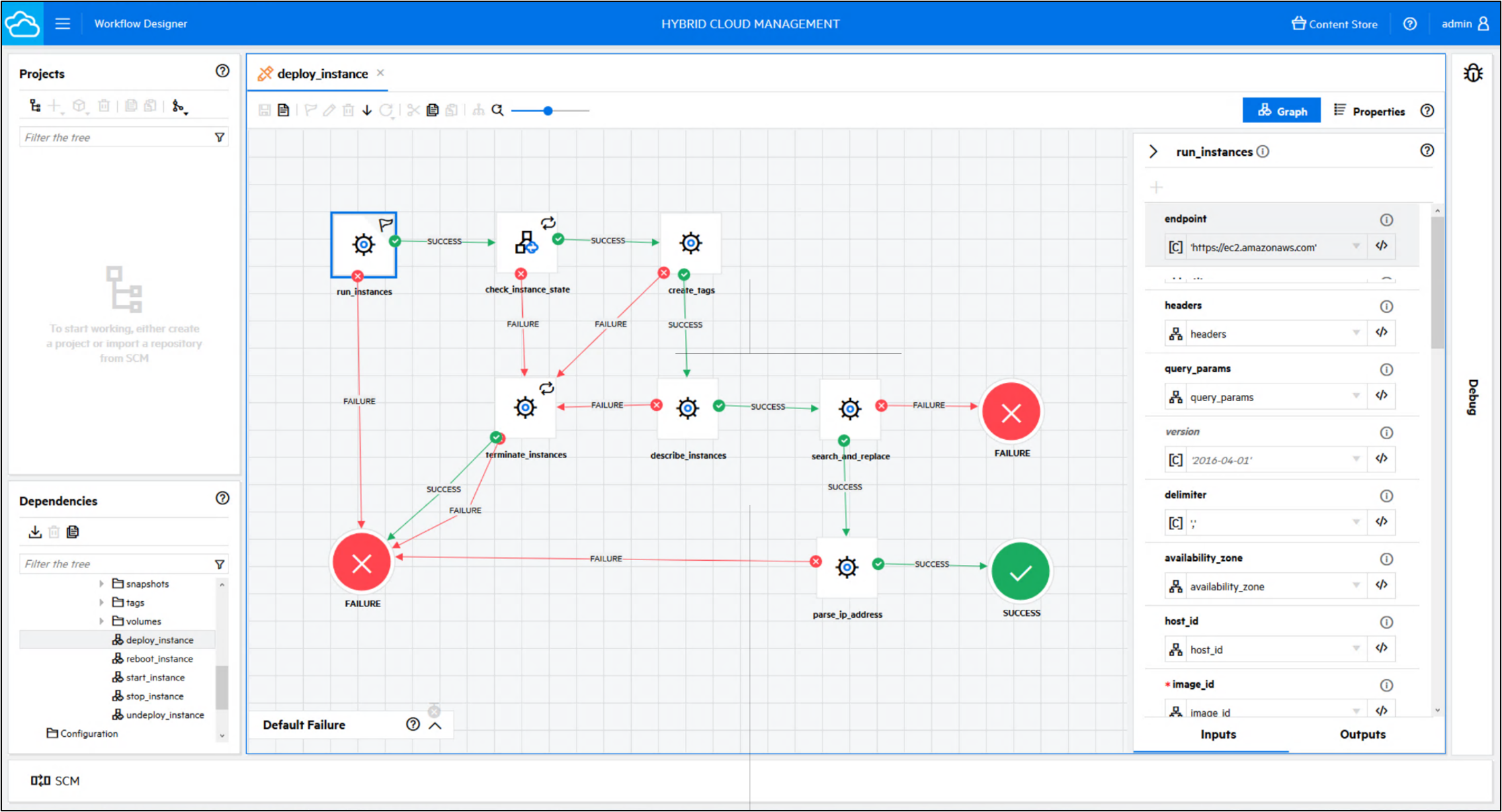
    Micro Focus has made available a multi-tenant cloud management platform that can be deployed in a public cloud or on-premises IT environment.

    Travis Greene, senior director for IT operations management at Micro Focus, said the Hybrid Cloud Management X (HCMX) platform makes it possible to unify the management of IT services across a hybrid cloud computing environment spanning a diverse range of platforms, including public clouds and VMware environments.

    At its core, HCMX is a unified portal and service catalog through which IT teams can find, request and consume information and enterprise services. It is built on the same framework as Service Automation Framework, X (SMAX), an IT service management (ITSM) platform also offered by Micro Focus. As such, HCMX can also leverage the same natural language engine, search and virtual agent technologies that Micro Focus makes available on SMAX.

    HCMX also provides a library of reusable workflows through which IT teams can automate processes along with a set of governance policies that automatically trigger workflows based on events or input from an IT administrator that would, for example, limit usage of a specific cloud service.

    In the wake of the economic downturn brought on by the COVID-19 pandemic, there is more pressure than ever to rein in IT costs. One way to reduce those costs in the multi-cloud era is to centralize the management of those environments under a common control plane. Most IT organizations today rely on separate tools and consoles to manage IT platforms in isolation from one another. Not only are licensing fees incurred for each management platform, but also IT often has to hire specialists to manage each individual platform. As hybrid cloud computing platforms continue to mature, it becomes possible to rely on a fewer number of IT generalists to centralize the management of IT.

    Of course, transitioning to a single hybrid cloud computing environment requires a significant amount of time and effort. IT organizations need to make a multiyear commitment to a single platform to reduce the total cost of IT. Many organizations simply lack the ability to enforce the adoption of a single management platform across multiple divisions within an organization regardless of potential savings. However, organizations that do make the transition should be able to not only reduce the total cost of IT but also more flexibly choose where to deploy their next generation of application workloads based on the cost and merits of one platform over another.

    In addition, at a time when the parent company of any one of the major cloud service providers might become a direct competitor overnight, many organizations now prefer to keep their IT options open. The challenge, of course, is making sure workloads deployed on any of those platforms are not dependent on a proprietary interface that doesn’t exist anywhere else.

    Micro Focus, of course, is not the only provider of IT management tools focused on hybrid cloud computing. The decision IT organizations need to come to terms with is determining which of these platforms provides the greatest amount of flexibility at a cost that organizations can absorb.

  • Progress Acquires Chef to Expand DevOps Portfolio

    Progress Acquires Chef to Expand DevOps Portfolio

    Progress today announced it has acquired Chef for $220 million in cash as part of an effort to advance adoption of best DevOps and DevSecOps practices in the midmarket.

    Once the deal is completed next month, Chef will operate as an independent business unit led by Sundar Subramanian, who currently is a senior vice president and general manager at Progress.

    Progress CEO Yogesh Gupta said IT automation technologies developed by Chef will be incorporated into monitoring and debugging platforms and tools that Progress currently provides. By moving into areas such as compliance and security, Chef has already embarked on an effort to make its offerings more accessible to IT personnel, who often lack programming skills, especially in midmarket IT organizations that make up the bulk of the Progress customer base.

    As a private company owned by venture capitalists who monetized open source software mainly via commercial support agreements and enterprise editions of its software, Chef has been able to generate roughly $70 million in revenue. As an arm of Progress, Chef joins a public company with more than $500 million in revenue that has a market capital in excess of $2 billion.

    Chef should be in a better financial position to compete against rivals such as Puppet and Red Hat. Following its acquisition by IBM, Red Hat has been plowing consider resources into a declarative Ansible automation framework that tends to appeal to traditional IT teams. In comparison, Chef has been a pioneer in automating IT using programming tools that especially appeal to DevOps teams managing infrastructure as code.

    In general, most midmarket IT organizations don’t have a lot of DevOps expertise. As an independent arm of Progress, Chef will continue to focus on IT operations, compliance and security, while Progress focuses more of its efforts on the application development and deployment requirements of midmarket organizations, said Gupta. As midmarket IT environments become more complex, the number of touchpoints between Progress and Chef involving cookbooks and recipes created by Chef will increase over time, he added.

    The acquisition of Chef is the latest in a wave of consolidation across the DevOps category. While adoption of DevOps tools and platform continues to grow, traditional enterprise IT organizations are now moving to acquire many of the larger vendors in the DevOps category. That trend is only likely to accelerate during an economic downturn brought on by the COVID-19 pandemic. At the same time, the number of startup companies being launched continues to expand the overall size of the DevOps/DevSecOps ecosystem.

    It’s too early to say at what rate best DevOps practices will gain further traction among traditional midmarket IT organizations. However, at a time when many of those organizations are being asked to do a lot more with even less, it’s only a matter of time before existing rigid IT processes begin to incorporate more agile approaches to managing IT as a matter of survival.

  • Survey Shows Most IT Teams Adapting in New COVID-19 Normal

    Survey Shows Most IT Teams Adapting in New COVID-19 Normal

    A survey of 122 IT professionals published today by SolarWinds in advance of IT Pro Day next week, finds that while IT teams are enjoying greater respect within their organizations in the wake of the COVID-19 pandemic, nearly a third (31%) admit there’s a need to rethink internal processes to better accommodate rapid change.

    Overall, nearly two-thirds (64%) of respondents said despite contending with challenges such as reduced budgets, greater decision-making responsibilities and longer hours, they were instilled with a new sense of confidence in the wake of the pandemic. Just under half (46%) also said they feel empowered to bring more ideas to the table, while 58% said they now feel more prepared to succeed in similar unexpected situations. Another 29% reported feeling prepared to manage change but require additional resources, training and support. In addition, 40% said they believe they will now be involved in more business-level meetings.

    Patrick Hubbard, head geek at SolarWinds, said in the wake of the pandemic it’s clear the historic divide between IT and the rest of the business has narrowed considerably. The challenge will be maintaining that closer alignment in the era of the new normal, added Hubbard.

    In general, IT teams have proven themselves to be more adaptable than might have been anticipated prior to the pandemic. Many respondents also reported working longer hours due to stretched teams (29%), more responsibility (28%) and decision-making requirements (28%). However, only 22% of respondents said they were experiencing job-related stress.

    However, it’s also clear organizations will need to revisit their IT strategies as workers continue to work from home well into 2021. It’s also clear that while many employees will eventually return to the office, many of them will also be working from home more frequently. As such, the need to create digital workflows spanning a highly distributed workforce will require new approaches to networking and security, among other things.

    Just over a quarter of IT professionals (26%) said it was necessary to learn new skills to support their organizations’ transitions to a remote workforce. However, it would appear additional training is required. Systems management (55%), network management (50%), security policy and compliance (43%) and hybrid IT monitoring/management tools and metrics (28%) were identified as the top skills in need of development. Nearly half of respondents said they received the training they needed to learn these new skills, but (25%) said they are still waiting for training resources to be made available.

    That skills shortage may prove to be especially crucial when it comes to security, which Hubbard noted is usually the last thing to get funded. In the rush to enable remote networking, for example, many organizations did not pay much attention to the need to secure endpoints that were frequently accessing cloud applications, which aren’t protected by a corporate firewall.

    It’s still not clear to what degree the pandemic may drive more organizations to adopt best DevOps practices to enable IT teams to become more flexible. However, it’s apparent to all that when it comes to IT in post-COVID-19 era, there has never been a greater need for speed.

  • Lenovo Updates Diverse HCI Platform Portfolio

    Lenovo today announced a bevy of updates to its server portfolio that expand the number of options organizations have when it comes to bundling stacks of software with Lenovo hyperconverged infrastructure (HCI) platforms to reduce the total cost of on-premises IT.

    For example, Lenovo in collaboration with Nutanix and AMD, today launched a Lenovo ThinkAgile HX HCI based on AMD EPYC processors, which promises to reduce by 50% the number of servers required to run the Nutanix HCI software stack.

    Lenovo in collaboration with Microsoft today also unveiled Lenovo ThinkAgile MX Azure Stack HCI Edge appliance based on Azure Stack HCI software. That platform runs the same software stack on-premises that Microsoft employs in its Azure cloud to simplify hybrid cloud computing environments.

    In addition, Lenovo added a Diamanti SR630 appliance to its lineup based on storage software developed by Diamanti optimized for instances of Kubernetes running on bare-metal servers.

    Finally, Lenovo in collaboration with VMware added a Lenovo ThinkAgile VX HCI offering that comes bundled with SAP HANA databases running on top of VMware vSphere.

    Kamran Amini, vice president and general manager of server, storage and software-defined infrastructure for the Lenovo Data Center Group, said rather than optimizing HCI infrastructure for one single platform such as VMware, the Lenovo portfolio is designed to provide IT organizations with the flexibility to enable organizations to deploy stacks of Nutanix, Microsoft, Kubernetes or VMware software as they best see fit.

    The economic downturn brought on by the COVID-19 pandemic has been especially challenging for providers of IT infrastructure platforms deployed in local data centers that many IT teams have been not been able to visit in recent months. However, those IT teams have been relying more on the ability to manage Lenovo servers remotely rather than attempting to migrate existing application workloads to the cloud overnight, he noted.

    It’s too early to say what the impact COVID-19 will have had on IT strategies. While many new applications are being deployed in the cloud, there is still a plethora of performance, security and compliance requirements that make it preferable to deploy some classes of workloads in on-premises IT environments. After more than a decade of having public clouds available as an option, the bulk of application workloads in the enterprise continue to run in on-premises IT environments. If it remains relatively simple to remotely manage those systems from home, the pressure to lift and shift workloads to the cloud becomes less intense.

    Amini said the COVID-19 pandemic essentially served as a wake-up call for organizations to modernize IT management processes using platforms that are designed to be managed from anywhere.

    Now that it’s apparent many IT teams will be working remotely a lot more often, many organizations are revisiting their IT strategies. There’s no doubt public clouds will play a larger role in IT going forward. However, the future of IT in general and cloud computing in particular will be, if anything, more hybrid than ever.

  • Postman Employs Browsers to Simplify API Collaboration

    Postman Employs Browsers to Simplify API Collaboration

    Postman today announced it is making its namesake platform for managing application programming interfaces (APIs) available via a browser to make it easier to share and inspect APIs. Previously, Postman required DevOps teams to download a desktop application to access the Postman platform.

    Kin Lane, chief evangelist for Postman, said agent software developed by Postman makes it possible to create a proxy application to facilitate API request-sending at scale that overcomes the cross-origin resource sharing (CORS) limitations of browsers.

    DevOps teams can now simply attach a URL to an API that is shared with any other member of the team. Clicking on that URL exposes the API in a way that makes it possible to not only visually inspect it but also employ the Postman platform to make sure rules and policies have been applied appropriately.

    That capability also makes it possible to onboard new users to an API project in addition to eliminating the need to manage updates to the desktop application, added Lane.

    Now that more organizations have adopted an API-first approach to building and deploying applications in the age of microservices, those APIs need to be managed as discrete projects. Postman provides a means of achieving that goal now through a browser interface that can be accessed more easily by members of DevOps teams working remotely.

    Postman claims its platform has now enabled more than 1 billion API requests, with more than 48 million API collections now running on Postman. Overall, the company claims there are now more than 11 million users from roughly a half-million organizations on its platform. As the number of microservices-based applications being deployed increases, the number of internal-facing APIs that need to be managed increases exponentially. New functionality can be added to the application without changing the API. In fact, changes to the API are likely to be more disruptive than changes to the application.

    At the same time, cybercriminals are now targeting APIs that are often misconfigured in a way that exposes potentially sensitive data via an open port. As such, security teams are starting to focus more on ensuring processes are in place that ensure APIs have been reviewed before being deployed in a production environment.

    Fresh of raising another $150 million in funding to create a $2 billion valuation, Postman has emerged as a major API management platform in a crowded field that has experienced a wave of consolidation over the last few years involving acquisitions made by Red Hat, Oracle, Salesforce and Microsoft. Each of those acquisitions was made to enhance the API management capabilities of a specific platform. However, it would appear a large percentage of organizations prefer to manage APIs independently of any specific platform.

    Clearly, APIs are core to the implementation of DevOps processes. If those APIs are flawed, the impact on DevOps process can be far-reaching. Continuously validating APIs as they are deployed and updated is not just a best practice,  but it’s also a matter of survival at a time when complex distributed application environments have never been more loosely coupled.

  • Fastly Sets DevSecOps Strategy After Signal Sciences Buy

    Fastly Sets DevSecOps Strategy After Signal Sciences Buy

    In the wake of acquiring Signal Sciences for $770 million, Fastly is gearing up to expand the range of security services it offers as part of an effort to advance adoption of best DevSecOps practices.

    Artur Bergman, chief architect for Fastly, said a forthcoming wave of edge computing applications will require web applications firewalls (WAF) that can be deployed and managed remotely to protect them. As a provider of a content delivery network (CDN), Fastly will leverage the WAF platform developed by Signal Sciences to secure edge computing platforms within a forthcoming Secure@Edge service that promises to unified web application and application programming interface (API) security.

    Fastly has been gaining ground as a provider of CDN services that are programmatically designed from the ground up to shift control over networking and security services further left toward DevOps teams, said Bergman. In many cases, the only way to secure workloads running on an edge computing platform is for DevOps teams to be able to programmatically deploy a WAF to protect the workloads on that platform, he noted.

    Edge computing platforms are especially vulnerable to distributed denial of service (DDoS) attacks that are increasing in both size and sophistication as cybercriminals become more adept at targeting specific servers and platform, added Bergman. No one can prevent a DDoS attack from being launched, but a CDN can play a critical role in mitigating its impact.

    The acquisition of Signal Sciences comes on the heels of Fastly’s move to expand its the ability to collect metrics from edge computing platforms that will be employed to extend the reach of monitoring tools employed by DevOps teams to edge computing platforms.

    Zane Lackey, chief security officer for Signal Sciences, said the two companies share a similar history and commitment to best DevOps practices. The WAF from Signal Sciences is based on a runtime application self-protection (RASP) architecture that only runs when an application fires up, which Lackey said makes it a natural extension of any DevOps toolchain.

    The Signal Sciences WAF is unique in that it can support multiple classes of monolithic and microservices-based applications and that 95% of organizations that employ it do so in full blocking mode because the number of false positives the WAF generates is limited, added Lackey.

    Naturally, Fastly is not the only provider of a CDN services looking to woo DevOps teams. Organizations have been deploying web-based applications on CDNs for years. However, CDNs that simplify the deployment of applications within the context of a DevOps workflow are gaining traction.

    It’s too early to say how this battle will play out. In addition to providers who have built their own global networks, cloud services providers also now offer CDNs that promise to optimize cloud application performance while enhancing security and simplifying deployment. Regardless of the path forward, it’s clear that as more latency-sensitive applications are deployed across distributed computing environments, the more inclined DevOps teams will be to rely on external network services that can adapt quickly to changing application requirements.

  • Volterra Service Mesh Service Automatically Discovers APIs

    Volterra Service Mesh Service Automatically Discovers APIs

    Volterra announced today it has updated a service mesh it makes available via a software-as-a-service (SaaS) platform to include the ability to automatically discover all the application programming interfaces (APIs) in an application using machine learning algorithms, then automatically apply all the whitelist policies that apply to those APIs.

    Service meshes add a programmable layer of abstraction above a proxy server that makes it easier for IT teams to provision networking and security services on demand. The challenge is service meshes tend to be complex to deploy and between the service mesh itself and the underlying proxy server software also consume a significant amount of resources.

    Company CEO Ankur Singla said Volterra addresses that issue by making VoltMesh available as a service that DevOps teams can invoke remotely to simplify the provisioning of network services without having to deploy and maintain a service mesh on their own. Volterra claims VoltMesh has already been embraced by more than 50 enterprise IT organizations and service providers. VoltMesh can also be globally extended to clusters across multiple cloud providers via an application delivery network (ADN) that the company also manages.

    Singla said VoltMesh is shifting control over networking and security services left toward DevOps teams by employing a network fabric delivered as a service that eliminates the need to deploy separate load balancers, API gateways and web application firewalls for each cluster. That network fabric also provides DevOps teams with a zero-trust architecture for networking services that better ensures application security because it is managed by Volterra, added Singla.

    In general, service meshes are emerging as a critical linchpin in the convergence of network operations and DevOps processes. Most DevOps teams can provision virtual machines in a matter of minutes. However, outside of a public cloud it can still take days or sometimes weeks to provision networking and security services. Service meshes provide a mechanism for programmatically exposing networking and security services to APIs without requiring networking staff to manually provision each individual appliance, router and switch using command-line interfaces (CLIs) that are unique to each device.

    It’s too early to say to what degree IT organizations may decide to rely more on external networking services. However, more organizations are showing a marked preference for devoting more of their limited resources to developing and deploying applications. Everything required to run those applications simply becomes yet another cloud service that can be programmatically invoked.

    Naturally, the implications of that transition for network operations teams could be profound. Many organizations have “sunk costs” in enterprise networks measured in multiple millions of dollars. However, at a time when DevOps teams are being challenged to deliver applications faster than ever, tolerance of rigid networking services is declining. Many DevOps teams will simply opt to rely on external networking services in much the same way they opt to employ virtual machines in the cloud versus waiting for internal IT teams to make resources available in a local data center. When it comes to traditional approaches to networking, time and patience are running out.

  • Instana Applies Continuous Profiling to Distributed Traces

    Instana Applies Continuous Profiling to Distributed Traces

    Instana today announced it has added a continuous profiling capability to its application performance management (APM) that makes it easier for DevOps teams to leverage distributed traces to troubleshot issues.

    Chris Farrell, technical director and APM Strategist at Instana, said that while distributed traces make it easier to identify bottlenecks, continuous profiling makes it possible to drill down into profiles to identify to identify, for example, specific CPU, memory and concurrency issues.

    Based on technology that Instana gained when it acquired StackImpact last year, Farrell said the continuous profiling capabilities are being added to the Instana APM platform at no extra cost.

    Rather than having to build, maintain and deploy a monitoring platform that can consume distributed traces, Instana is making the case for a software-as-a-service (SaaS) platform that offloads all the back-end management of an observability platform from the DevOps team, including the cost of collecting and storing distributed traces.

    Farrell said the profiling capability continuously maps individual traces directly to applicable process profiles. Whenever there is an issue, those profiles are instantly available. In contrast, rival approaches to employing distributed traces seek to replicate the bottleneck issue discovered in the hopes of pinpointing where the issue is, which Farrell noted is still a hit-or-miss proposition for DevOps teams attempting to resolve an issue. However, he said, hope is not an attribute of a sound engineering process.

    The Instana APM platform is optimized for applications based on microservices but it can also be applied to monolithic applications. However, as organizations deploy microservices-based applications dependencies become more complex, which in turn necessitates employing some type of observability platform. Historically, most IT organizations have limited APM platform use to their most valuable monolithic applications because of the costs associated with employing them.

    Farrell said the Instana platform will consume trace data generated by its own agent software as well as by open source projects seeking to reduce the total cost of instrumenting applications. Instana automatically deploys sensors for each part of the application technology stack and traces all application requests without requiring any human configuration or application restarts. It also detects application and infrastructure changes in real-time, adjusting its own models to visualize changes and assess performance impact in seconds.

    Ultimately, Farrell said the goal for adopting any APM platform should be to reduce mean time to resolution for IT teams that are increasingly tasked with managing complex applications. The challenge is that not only are there more complex applications than ever, but also organizations are more dependent than ever on applications. In the wake of the economic downturn brought on by the COVID-10 pandemic, many organizations have been forced to accelerate digital business transformation initiatives that are wholly dependent on the rate at which applications can be built, deployed and maintained successfully.

    Of course, Instana is not the only provider an APM platform racing to embrace distributed tracing to make it easier to manage application environments. The issue now is determining which APM platform won’t make its customers pay extra for the privilege.

  • Mendix Adds Git Repository Support to Low-Code Platform

    Mendix Adds Git Repository Support to Low-Code Platform

    Mendix today updated its low-code development platform to add support for Git repositories as part of an effort to make it easier to share and reuse code, as well as a visual conflict resolution capability that enables developers to easily see the differences between multiple versions of the same code.

    Announced at its online Mendix World 2.0 conference, Mendix 9 also now provides access to a Data Hub based on a searchable Mendix Data Hub Catalog, an open, standards-based metadata repository designed to help developers discover data more easily.

    The Data Hub Connect tool enables organizations to populate that Data Hub. The first connectors being made available are an open source oData connector and connectors to Siemens Teamcenter and SAP applications. Mendix is a subsidiary of Siemens. Mendix is also including an External Entities capability that presents data from remote systems as if they were local resources.

    Sheryl Koenigsberg, global director of marketing at Mendix, said the Data Hub Catalog is designed to make it easier for developers to drag-and-drop data into applications as part of an effort to streamline processes.

    Mendix today also unveiled a Workflow Editor, through which development teams can invoke workflow templates for both machine-executed and human-executed processes. These workflows can be accessed via a central task manager, and pre-configured dashboards to track and manage workflows are available.

    In addition, Mendix has enhanced Mendix Assist, the artificial intelligence (AI) tool within the platform to include a bot specifically focused on performance issues. Mendix Performance Assist analyzes applications against known best practices to either suggest or automatically implement changes that ensure solutions don’t implement anti-patterns that deprecate application performance.

    Mobile application development is being improved with support for Progressive Web Apps (PWAs). Developers now can deploy different types of mobile applications using, for example, a highly interactive React Native framework alongside a traditional browser-based framework within the same solution using the familiar Mendix modeling tools.

    Finally, Mendix is making available augmented reality (AR) widgets to make it much easier to build the next generation of exciting business applications. Developers can now easily create a user interface, including 3D objects, images and marker detection.

    Koenigsberg said Mendix is squarely focused on accelerating the development of critical digital business applications. In the wake of the COVID-19 pandemic many organizations are turning to low-code tools to allow professional and citizen developers to build applications faster. From a DevOps perspective, low-code tools such as Mendix 9 accelerate the velocity at which applications are being built and ultimately deployed using low-code tools that abstract away much of the complexity associated with building those applications.

    Mendix 9 effectively represents an effort to extend the reach and scope of that layer of abstraction across a much broader swath of the application development life cycle, added Koenigsberg.

    It’s too early to say to what degree the COVID-19 pandemic has driven organizations to embrace low-code tools more broadly. However, at a time when many DevOps teams are under pressure to deliver more code faster than ever, chances are good low-code platforms are building many of the digital business applications that organizations now need to survive and ultimately thrive.