Author: Mike Vizard

  • Puppet Deepens Windows Integration

    Puppet Deepens Windows Integration

    Puppet today announced it has extended support for Windows environments across its portfolio of IT automation tools by adding a Group Policy Migration capability that enables multiple Windows configurations to be tracked simultaneously and offering to assist organizations seeking to deploy the open source Chocolately package manager.

    In addition, Puppet has extended its support for Microsoft tools by adding a Puppet PowerShell Desired State Configuration (DSC) Builder module, through which the Powershell tools Microsoft relies on to configure operating systems are directly exposed.

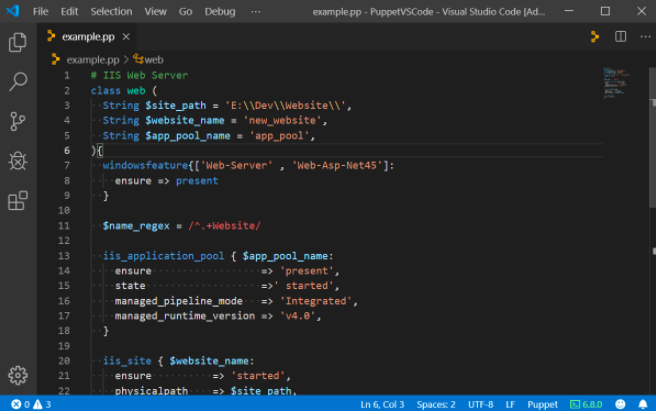
    Finally, Puppet has also added a Puppet VSCode Extension that gives Windows administrators the ability to invoke the Puppet Domain Specific Language (DSL) to access capabilities such as Intellisense and error-checking using their existing user interface and text editor for Windows.
    Puppet CTO Abby Kearns said interest in IT automation has significantly increased in the wake of the downturn brought on by the COVID-19 pandemic. While IT organizations that have been running instances of Linux have had access to a broad range of IT automation tools for years, Windows environments have not enjoyed the same level of parity even though half the workloads organizations are trying to manage today are based on Microsoft.net code, she said.

    With more pressure to automate than ever, Puppet sees an opportunity to fill that void, Kearns added.

    By relying on Puppet tools to automate both Linux and Windows platforms, an opportunity to reduce the total cost of IT also presents itself as organizations look to either limit or reduce IT headcount. Puppet claims there are already more than 40,000 organizations using its tools, including more than 80% of Global 5,000 organizations.

    It’s not clear to what degree Microsoft is invested in IT automation tools, especially compared to IT vendors that make managing infrastructure as code both inside and out of the cloud their sole focus. However, since it launched Azure Microsoft has been investing in tools to manage infrastructure as code. The depth of the Puppet portfolio enables IT organizations to also apply IT automation to operating systems and now to applications via Chocolately.

    Less clear is to what degree IT organizations may finally unify the management of Windows and Linux systems as part of an effort to reduce costs in the wake of the downturn. Most organizations continue to manage Windows and Linux systems in isolation. However, as IT organizations embrace IT automation more broadly, many are looking to standardize on a common set of best DevOps practices whenever possible.

    In the meantime, the opportunity to extend IT automation into the midmarket remains significant. Most enterprise IT organizations have already embraced IT automation to a significant degree. Midmarket IT teams have generally not had the skills and resources required to manage infrastructure as code. However, as IT automation tools become more accessible to the average IT administrator, there may come a day soon when broad swaths of IT systems deployed by midmarket IT organizations will finally be automated.


  • DevOps Deeper Dive: IPO Frenzy Heralds Consolidation

    DevOps Deeper Dive: IPO Frenzy Heralds Consolidation

    A spate of initial public offering (IPOs) has resulted in billions of investment dollars being poured into JFrog, Snowflake and Sumo Logic and is likely to fuel of wave of merger and acquisition activity in the months ahead.

    While each of these software companies addresses fundamentally different IT requirements, they are all tapping into a massive amount of liquidity now available, as investors dump the stocks of companies in other sectors that have been adversely impacted by the economic downturn brought on by the COVID-19 pandemic.

    In fact, the reason all these IPOs appear to be occurring all at once now is the plans to go public that many software companies had earlier this year were delayed by the onset of the pandemic. The backlog for potential IPOs is already staggering. Currently there are more than 400 private startup companies with valuations in excess of $1 billion, which according to the financial research firm CB Insights officially makes them “unicorns.” Familiar names of software companies on that list include GitLab, Docker Inc., HashiCorp, Snyk, Postman, OutSystems, Digital Ocean, Auth0, Redis Labs, Databricks, Collabra, Cohesity, Tanium, Rubrik, SentinelOne, Illumio, Netskope and Kaseya.

    The reasons IT organizations should pay attention to these IPOs are twofold. The first is that it signals the company now has ready access to a stream of investment dollars required to fund ongoing innovation, said Scott Bickley, principal research director at Info-Tech Research Group.

    The second, he noted, is that many enterprise IT organizations tend to limit their amount of reliance on a startup company. Venture capitalists that fund these companies often sell them to other companies to recoup their investment as an alternative to launching an IPO. Most enterprise IT organizations don’t want to wake up one morning to discover a key vendor has been acquired by a vendor they would prefer to not do business with, said Bickley.

    That issue can be especially problematic when cloud service providers such as Amazon, which has operations that reach well beyond IT, are involved, he added.

    In fact, one of the reasons many organizations prefer to rely on IT vendors that are public companies is they have a lot more visibility into the overall viability of the vendor, said Bickley.

    “Assessing risk is part of the due diligence process,” he said. “With public companies, there’s a lot more data available.”

    Of course, public companies do get acquired. The fact that they are public companies usually makes the effort a comparatively expensive proposition, depending on the stock price and the number of shares outstanding.

    However, one of the first things many companies do once they go public is to look to acquire other companies that enable them to expand their overall portfolio, said Mitch Ashley, CEO and managing analyst at Accelerated Strategies Group, a market research firm.

    The DevOps sector in particular has seen a wave of acquisitions of late that have been funded in part by IPOs, noted Ashley.

    “We’re in a bit of a roll-up period right now,” he said.

    Many enterprise IT organizations tend to welcome those acquisitions because it allows them to deal with fewer vendors, Ashley noted, adding support also tends to improve because the larger vendor typically has more resources.

    On the downside, he said, large vendors tend to raise prices after acquiring smaller vendors in part to help cover the cost of the acquisition.

    Like it or not, however, mergers and acquisitions are now a fact of IT life that organizations just need to accept, Ashley said.

    Based on the amount of capital available at the moment, IT leaders should also assume the pace of merger and acquisition activity is about to accelerate, even more as more fuel in the form of capital is added to the fire.

  • Catchpoint Acquires Webpagetest.org Service

    Catchpoint Acquires Webpagetest.org Service

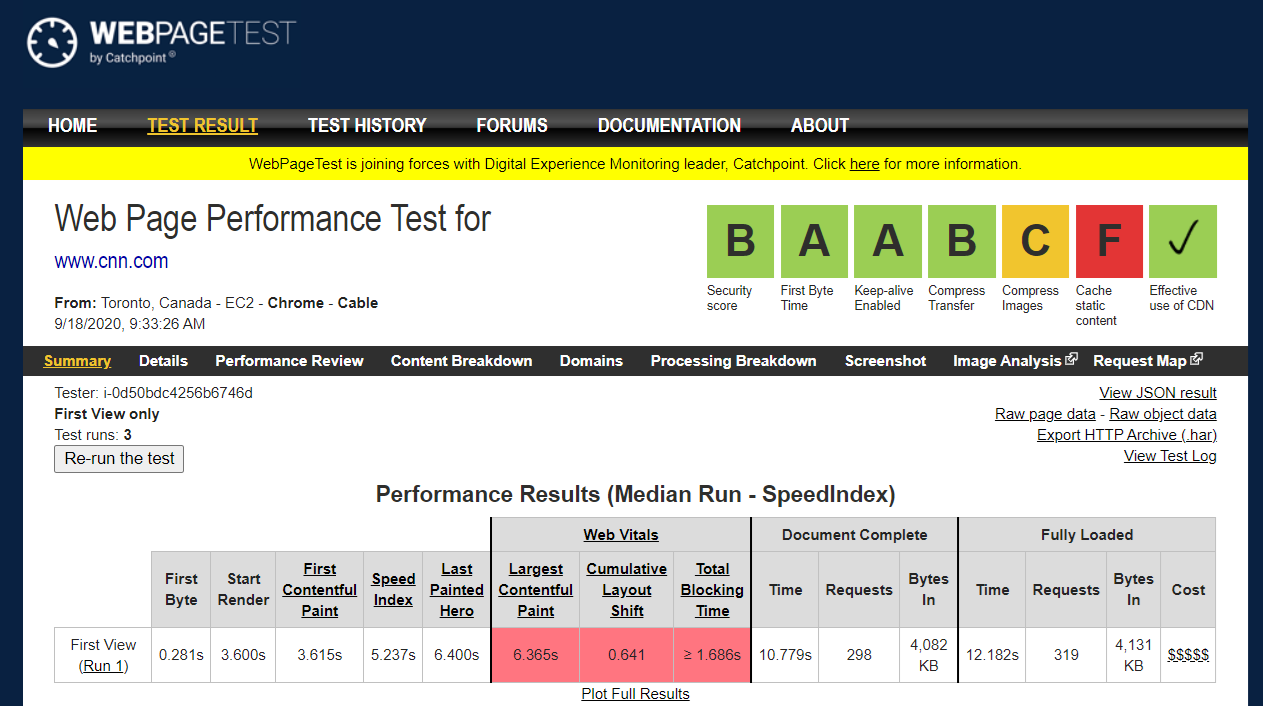
    Catchpoint this week announced it has acquired Webpagetest.org as part of an effort to expand use of the open source web performance testing service.

    Led by Patrick Meenan, the Webpagetest service is already relied on by more than 1 million users per month to instantly run tests of websites and applications from various locations, which are surfaced via a detailed audit that can be shared with developers.

    Meenan has been personally supporting Webpagetest as a side project while working for a series of IT organizations and vendors starting with America Online (AOL). Now, with Catchpoint’s acquisition of Webpagetest.org, he will have a staff of contributors as a full-time employee.


    Catchpoint CEO Mehdi Daoudi said the company will also incorporate Webpagetest into the tools it provides for monitoring digital experiences. The most appealing aspect of the Webpagetest service is that, rather than focusing on individual backend platforms, it tracks the actual performance that users experience across multiple types of browsers.

    Daoudi said that as organizations accelerate the rate at which they are building and deploying digital business applications in the wake of the COVID-19 pandemic, there’s now more focus on web application performance than ever. The experience any user has when accessing these applications now impacts everything from their willingness to complete a transaction to their perception of the corporate brand, he noted.

    In fact, a recent survey of 200 CIOs and 200 work-from-home managers conducted in July by ReRez Research on behalf of Catchpoint finds application performance is at the top of the list of concerns (66%), followed by network reliability, work-from-home technologies and security, at 63% each. Application performance is at the top of that list because both online revenue and employee productivity are now increasingly directly impacted by the overall application experience, said Daoudi.

    There’s never been a shortage of tools for testing application performance. The issue is how those tools are often employed, he noted. Too many IT organizations are monitoring individual application components rather than the actual user experience.

    Organizations that focus on end user experience in the age of digital business will, in time, separate themselves from rivals that merely make applications available online. A zealous appreciation for application performance needs to be ingrained in the culture of the organization for it to ultimately succeed, Daoudi said, noting that every employee, not just the DevOps teams, needs to be aware of the impact application performance has on the business.

    That challenge is as IT environments become more complex and distributed, ensuring application performance becomes more challenging than ever. Cloud-native applications based on microservices may be easier to deploy and manage, but the dependencies between all those microservices can conspire in ways that degrade application performance over time. Determining the root cause of intermittent application performance issues can take weeks. The maddening thing is, many of the fixes required to address that issue once it’s discovered can be deployed in minutes.

    Performance tools that surface those issues sooner than later are invaluable in a digital age, where time now quite literally is money.

  • ServiceNow Extends Reach Into DevOps Ecosystem

    ServiceNow Extends Reach Into DevOps Ecosystem

    ServiceNow this week, as part of a massive Paris update to its core software-as-a-service (SaaS) platform for managing IT operations, has extended its DevOps integration efforts by adding connectors for Microsoft Azure DevOps (ADO) and Atlassian Jira platforms.

    Pablo Stern, senior vice president for IT workflow products at ServiceNow, said those connectors are the latest in a series of moves that ServiceNow is making available to bridge the divide between traditional IT service management (ITSM) and DevOps processes.

    ServiceNow this week also announced it adding a Process Automation Designer tool to its App Engine platform for building applications on the ServiceNow platform. IT teams will be able to use that tool to create workflows spanning ITSM and DevOps processes, noted Stern.

    In addition, ServiceNow announced enhancements to its Flow Designer and IntegrationHub tools to simplify the building of workflows, and unlocked a Source Control function across its application portfolio.

    Finally, Service Now is now bringing third-party data into the ServiceNow Service Graph and Configuration Management Database to make it easier to integrate ServiceNow tools with those from partners such as SolarWinds.

    Stern said the ServiceNow strategy is not to build a DevOps platform, but rather to foster interoperability across what has become a broad DevOps ecosystem. Most IT teams are now trying to create workflows that span traditional ticket-based approaches to manage IT processes and DevOps teams that routinely leverage programming tools to automate those processes, so the goal is to enable each organization to strike a balance between those approaches as they best see fit, said Stern, citing JP Morgan as a customer using ServiceNow connectors to DevOps platforms to achieve that goal.

    Very few IT organizations are relying on DevOps processes end to end to manage IT. Organizations have been managing IT using processes based on the ITIL framework for several decades. The challenge they face is ITIL-based processes are not often agile enough to support digital business initiatives that typically require rapid responses to any event, especially when the application involved generates revenue for the business. Every second of downtime or sub-optimal performance impacts the bottom line. Minimizing disruptions to those applications requires more reliance on both automated DevOps and DevSecOps processes.

    Naturally, the arguments over the merits of DevOps versus ITIL approaches to managing IT will remain unabated for years to come. Proponents of ITIL approaches often note there are applications that are so critical to the business that a more deliberate approach to rolling them out and updating them is an absolute requirement.

    Regardless of IT philosophy, it’s clear IT and DevOps processes will be employed side-by-side for many years come. The number of IT operations professionals who have the programming skills required to automate IT processes is still fairly limited compared to the total population of IT administrators. As such, IT teams might want to focus less on the debate itself in favor of determining where they are on the maturity curve when it comes to managing IT. Once that’s determined, it then becomes a lot easier to discern the next step in their IT journey.

  • JFrog Sets Future Course Post-IPO

    JFrog Sets Future Course Post-IPO

    Another milestone in the march toward mainstream adoption of best DevOps practices was reached this week, with JFrog becoming a public company.

    JFrog CTO Yoav Landman said the funding that the provider of a continuous integration/continuous development (CI/CD) platform is receiving from investors is a clear vote of confidence in DevOps. The next major DevOps challenge will be finding ways to further automate the distribution of software across what is rapidly becoming a much more extended enterprise now that IT organizations are embracing various types of edge computing platforms, he said.

    JFrog CTO Yoav Landman

    The injection of funding will be used in part to enable JFrog to address that challenge through a combination of internal product development and inorganic acquisitions, said Landman. The last few years have witnessed a wave of consolidation as providers of DevOps platforms expand their reach into adjacent categories.

    At the same time, Landman said IT teams should expect to see JFrog investing more in various forms of artificial intelligence (AI) to further accelerate software development and deployment.

    JFrog, as a leading proponent of DevOps, has been making a case for focusing specifically on application binaries rather than just source code. The building and deployment of application binaries is at the root of any digital business transformation initiative, noted Landman. As such, any organization that now views itself as some type of software company needs to master DevOps processes to succeed.

    That requirement is also accelerating the rate at which CI and CD processes need to converge, he added. Most organizations that have embraced DevOps tend to master CI. CD has proven more challenging because each platform on which software is deployed is unique. JFrog addressed the challenges associated with CD first via its JFrog Artifactory platform before adding on the CI tools required to automate DevOps processes on an end-to-end basis.

    In general, Landman noted there is now more focus on software supply chains as more organizations come to appreciate how dependent they are on applications to differentiate themselves from competitors. That issue is one of the main reasons the senior leadership of more companies are becoming more aware of the processes required to build and deploy quality applications consistently across an expanding number of platforms. In fact, it’s conceivable there might one day be more software running on edge computing platforms than in either local data centers or public clouds.

    JFrog reportedly has more than 5,800 customers currently. It’s not clear to what degree organizations that have already embraced DevOps might be willing to replace their CI/CD platform or, in some cases, consolidate the multiple CI/CD platforms they already employ. However, as the number of organizations that are embracing best DevOps practices continues to grow there appears to be plenty of opportunity for providers of CI/CD platforms to grow as well.

  • xMatters Streamlines Incident Management

    xMatters Streamlines Incident Management

    xMatters today announced it has expanded the capabilities of its incident management platform to better address the requirements of more complex IT environments.

    New capabilities include an Incident Console to better visualize and triage incidents, automate responses, improve collaboration and access to richer analytics to optimize response times. Incident metrics are now also automatically collected from integrated systems and surfaced along with the notification to improve resolution times.

    IT teams can also use a Flow Designer tool to automatically keep related systems current with one another, including issue tracking systems, service desks and status pages.

    xMatters CEO Troy McAlpin said the updates are part of an effort to unify IT incident management at a time when the adoption of new applications and systems to enable organizations to have employees working from home has increased.

    A survey of 300 IT leaders and business professionals published today by xMatters revealed nearly three-quarters of respondents (72.3%) now spend at least half of their time resolving incidents, with more than a quarter (27.3%) of those respondents saying they their team spends at least 80% of that time resolving incidents. A total of 43% of respondents said their organization still relies on less sophisticated processes to manage IT incidents, such as alerts, email, paging, conference bridges and physical outreach.

    IT incidents are also starting to have a bigger impact on the business, noted McAlpin. The survey finds 20% of companies with 1,001-5,000 employees are budgeting more than $10 million on digital transformation initiatives. Each IT incident involving those applications now typically involves not just employees but also end customers, he noted.

    As IT becomes more complex, he said, the need to modernize IT environments has become crucial. One of the many reasons IT organizations find it difficult to automate IT management is there are still many unique platforms running isolated applications. IT teams would be well-advised to ask themselves if these unique instances of a platform are truly warranted. If not, that application workload should be retired or shifted to a platform that is more easily automated.

    Longer-term, McAlpin said artificial intelligence (AI) will increasingly be employed across IT operations, otherwise known as AIOps. Those advances won’t replace the need for humans to manage IT, but it will allow IT teams to better automate responses to routine incidents that today require too much time.

    Even as IT becomes more complex, the simple truth is most organizations are not looking to expand the overall size of the IT department. In fact, in the wake of the economic downturn brought on by the COVID-19 pandemic, there are many organizations that need to reduce the size of their IT organizations. Regardless of motivation, there are a host of mind-numbing tasks that IT teams are asked to perform every day that, in keeping with best DevOps practices, should be ruthlessly automated.

  • NGINX Expands Portfolio to Include Service Mesh

    NGINX Expands Portfolio to Include Service Mesh

    NGINX at its online Sprint conference today launched a bevy of offerings including a service mesh as part of an expanded effort to meld network and security operations within the context of a larger DevOps workflow.

    Rob Whiteley, chief marketing officer for the subsidiary of F5 Networks, said NGINX Service Mesh 1.0 provides an easier alternative to deploy a service mesh based on the open source NGINX proxy server software already widely employed in enterprise IT environments. That lighter-weight service mesh is also integrated with the NGNIX ingress controller to enable it to be employed across microservices spanning both legacy virtual machine environments and Kubernetes clusters, he said.

    In general, Whiteley noted, most organizations will not need a service mesh unless they are looking to integrate more than a thousand microservices. If an organization only has hundreds of microservices, an ingress controller should suffice, and anything involving less than a hundred microservices can be handled by proxy software.

    NGINX Service Mesh 1.0 will be offered by NGINIX and F5 Networks will continue to offer a service mesh based on the Istio project for Kubernetes environments that relies on Envoy proxy software, which is not as lightweight as the NGINX platform, noted Whiteley. DevOps teams will have to decide which service mesh to deploy.

    In the meantime, NGINX is also updating its NGINX Controller to add support richer analytics, a declarative application programming interface (API) for continuous integration/continuous delivery (CI/CD) integration, role-based access controls and enhancements to the developer portal for API management.

    NGINX is also driving tighter integration between Controller and NGINX App Protect, a web application firewall that will inherit the API, analytics and self-service capabilities of Controller. NGINIX App Protect is also now being integrated with NGINX Ingress Controller for Kubernetes. The Controller App Security tool that enables those integrations is in private beta now, with general availability expected by end of 2020.

    Finally, NGINX is now leveraging services made available by F5 Networks via software-as-a-service (SaaS) platforms in the form of NGINX Analytics Cloud, which replaces NGINX Amplify. That capability will be available in the first quarter of 2021.

    In general, Whiteley said NGINX is trying to serve the needs of traditional network operation teams that want to provide self-service capabilities to development teams as well as via programmatic interfaces to DevOps teams. In many cases, enterprise IT organizations are employing both approaches to expose network services, noted Whiteley.

    Of course, the issue that ultimately might drive the convergence of NetOps and DevOps is the rise of the service mesh. In addition to integrating microservices, the service mesh provides developers with a consistent set of interfaces for invoking network and security services spanning a dizzying array of servers and appliances. As that transition occurs, IT teams will become much more agile than they are today. The challenge, of course, will be melding network operations and DevOps cultures that today don’t have all that much in common.

  • OutSystems Employs More AI to Accelerate Low-Code Development

    OutSystems Employs More AI to Accelerate Low-Code Development

    OutSystems today at its online NextStep 2020 conference announced it is making more extensive use of artificial intelligence (AI) to accelerate the building and deployment of low-code applications.

    The company unveiled AI Assist to automate, guide and validate processes throughout the application life cycle and Architecture Dashboard, which employs machine-learning algorithms to enable IT teams to visualize complex application architectures.

    OutSystems is also adding Workflow Builder to visually map complex business processes and automatically generate workflow-based applications, and Experience Builder, which enables developers to rapidly prototype mobile applications based on common patterns and flows.

    Finally, OutSystems has added Integration Builder to simplify integration with packaged applications such as those from SAP and Salesforce.

    Mike Hughes, senior director of product marketing for OutSystems, said the AI capabilities being added extend an existing TrueChange capability based on machine learning algorithms that checks for bugs and architecture errors, analyzes the impact of changes to components and application dependencies, provides team and architectural governance and monitors performance in real-time. The goal is to automate as much of the DevOps process as possible on behalf of developers of low-code applications, he said.

    In general, he noted, low-code tools are being embraced by professional developers to accelerate the development of even the most complex applications. In fact, while low-code tools may make it possible for end users to participate in the development process, there are not many so-called citizen developers building low-code applications on their own.

    Adoption of low-code platforms is accelerating at a time when many organizations have increased their reliance of software-as-a-service (SaaS) applications. While each SaaS platform makes available either a low-code or no-code tool for customizing the application environment, Hughes says enterprise IT organizations require tools that enable them to build and deploy custom applications and workflows than span multiple SaaS platforms and on-premises applications. That issue becomes especially apparent to any organization looking to accelerate digital business transformation initiatives in the wake of the COVID-19 pandemic, added Hughes.

    In fact, he noted, the one thing the pandemic has reminded everyone is that change is the only constant. IT organizations need flexible application development and deployment tools more than ever.

    Of course, there’s no shortage of options when it comes to low-code and no-code tools. In fact, Hughes said the distinction between these tools is starting to blur as platforms such as OutSystems make different capabilities available to different classes of developers depending on the use case.

    In the meantime, as the number of low-code applications that are being developed continues to increase, organizations should make sure they have the DevOps processes in place needed to deploy and update these applications more frequently. After all, it doesn’t take long for a backlog of low-code applications waiting to be deployed by an IT team to build.

  • Oracle Proposes Replacing Mercurial SCM for Java With Git

    Oracle Proposes Replacing Mercurial SCM for Java With Git

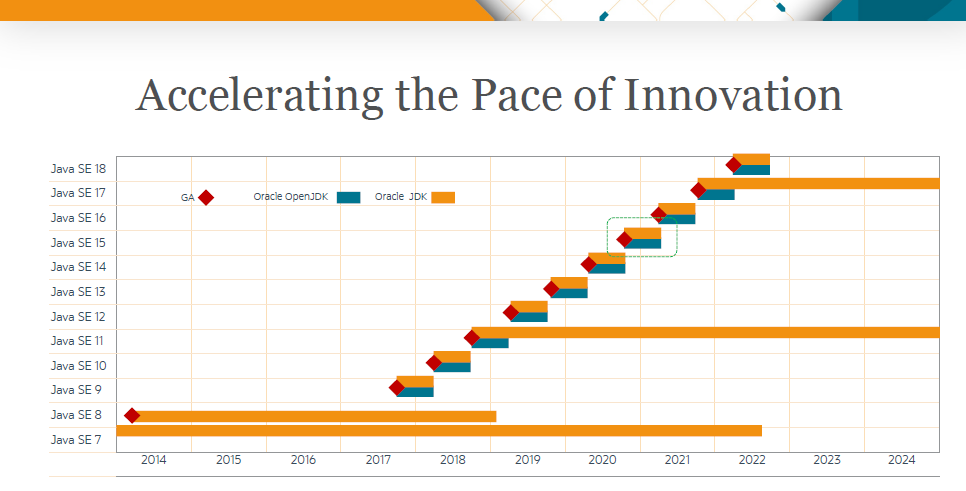
    Oracle today at its Oracle Developer Live—Java event proposed making a bevy of updates to Java that includes replacing the Mercurial source code management (SCM) platform, which is the repository Oracle created to share updates to the Java community, with Git starting with the initial availability of Java 16 and then migrating the project itself to GitHub.

    In addition, Oracle has developed server-side tooling compatible with GitHub and GitLab and client-side tooling compatible with Git and Mercurial to aid in the migration. The effort is based on the Project Skara initiative, which already provides read-only Git mirrors of all active and consolidated lines of development for the Mercurial SCM repository.

    Oracle is also proposing to add a Vector application programming interface (API), along with enabling some C++ features in Java 16.

    Oracle today also announced enhancements to Java 15, including support for Edwards-Curve Digital Signature Algorithm, hidden classes and reimplementing the legacy Datagram Socket application programming interface (API). In addition, support for a more advanced garbage collection tool as well as text blocks has been finalized.

    Other capabilities that have been advanced but are not finalized in Java 15 includes support for sealed classes, enhanced pattern matching, records and an API for accessing foreign memory.

    Chad Arimura, vice president of Java developer relations, said collectively the latest innovations show the venerable programming language is still vibrant. Despite a plethora of options most enterprise IT organizations still rely mainly on Java to build applications even as they transition to building microservices-based applications based on containers deployed on Kubernetes clusters. As such, Java is not in danger of suffering the same fate as the COBOL programming environment, which from a pace of innovation has grown comparatively stale, noted Arimura.

    Many of those organizations are also well down the path toward adopting best DevOps practices that revolve around a Git repository. Adoption of Git as the SCM repository for the Java project will further those efforts by simplifying workflows for organizations that have standardized on Git repositories, he said.

    While Java continues to dominate development of applications in the enterprise, it’s also true organizations of all sizes are employing a wider range of programming tools. By embracing Git and GitHub, the Java community will be able to more fluidly coexist with a wide range of open source projects being created using a diverse range of programming tools. Enterprise developers are clearly still relying on Java to write most of their server-side applications, but more client-side code is being developed using frameworks based on, for example, JavaScript.

    In the meantime, however, IT organizations looking to modernize application portfolios should be able to count on the fact that nearly 30 years after its initial launch, Java remains relevant. The challenge now is determining where best to rely on Java alongside a plethora of other programming tools that developers of all ages now regularly employ.

  • Tricentis Extends Testing Reach to ServiceNow Applications

    Tricentis Extends Testing Reach to ServiceNow Applications

    Tricentis has extended the reach of its portfolio of testing tools to now include software-as-a-service (SaaS) applications from ServiceNow.

    Martin Klaus, vice president of product marketing for Tricentis, said testing has become a larger issue because in addition to patch updates ServiceNow is now on a cadence to deliver to two major updates to its platform a year.

    More IT organizations are now leveraging the ServiceNow platform to build and deploy custom applications. Rather than build an entire application from the ground up, many organizations are accelerating digital business application deployments by extending functionality already provided by a SaaS application provider. All the updates regularly made to those applications create a testing automation challenge that can be addressed using Tricentis Test Automation for ServiceNow, said Klaus.

    Deployed natively on the ServiceNow platform, Tricentis Test Automation for ServiceNow provides access to capabilities such as point-and-click recording, real-time playback of tests and automatic test case creation, he said. The goal is to speed up the testing process for ServiceNow applications by running hundreds of tests generated by machine learning algorithms in seconds versus what previously would have required days to complete, Klaus added.

    At present, there are more than 6,200 enterprise customers running ServiceNow applications, many of which are employing DevOps processes to build and extend ServiceNow applications. ServiceNow has also extended its DevOps focus via alliances with providers of DevOps platforms.

    The bulk of the use cases for ServiceNow involve IT service management (ITSM). However, ServiceNow as of late has been expanding its focus on digital business applications by, among other things, adding additional workflows applications, including a workplace contact tracing application aimed at human resources (HR) teams.

    The more ServiceNow applications an organization adds, the more complex the testing challenge becomes, especially as workflows start to extend across SaaS applications from different providers. For example, it’s not uncommon for organizations to build and deploy custom applications spanning ServiceNow and SAP platforms, said Klaus. Tricentis provides a set of testing tools that can be applied across both multiple SaaS application platforms as well as the custom applications a DevOps teams builds and deploys on their own, he noted.

    As organizations depend more on digital business applications, disruptions caused by updates to the underlying software components upon which a workflow depends becomes a bigger issue. In many cases, it’s not employee productivity that is affected. Organizations are now driving revenue through digital business applications that can’t be generated if the application isn’t available. As a result, there’s a growing focus on testing updates to digital business applications.

    It’s hard to say to what degree SaaS application platforms will become part of a larger DevOps pantheon. However, the number of applications being built and deployed using low-code/no-code tools that extend these platforms has increased. There might even come a day soon when the backlog for deploying these applications becomes a bigger issue than it is today. In the meantime, it’s clear many DevOps teams are going to have to expand their definition of what constitutes a deployment platform.